Putin vs. Big Pharma: The ultimate smackdown
Is Putin plotting to purge the pill peddlers? If so, we have some suggestions.
By Riley Waggaman | OffGuardian | July 12, 2022
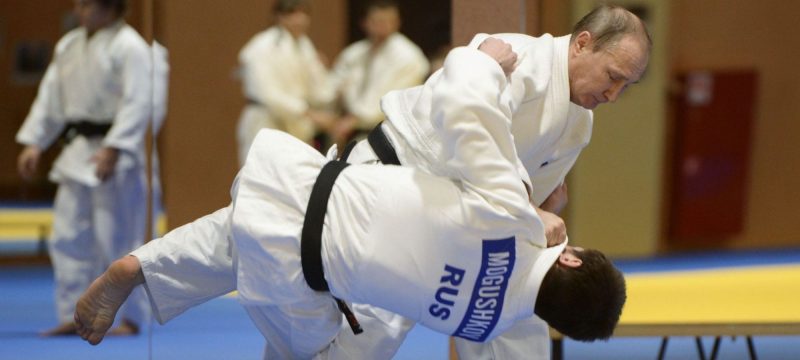
Is Vladimir Putin preparing to cleanse Russia of Big Pharma shills (his entire cabinet)? Some seem to think so and there is certainly evidence that some kind of anti-shill crackdown is coming.
Let’s explore this intriguing news item together.
Take the wheel, TASS :
Russian President Vladimir Putin has criticized foreign drug companies for pushing their products through local medical institutions and via doctors in Russia using their deep-pocketed resources.
“Unfortunately, foreign pharmaceutical companies attracted some heads of our medical institutions, and medical workers in 30 regions. And they pushed their medicines [on to the Russian market], paying quite a lot of money for it. We saw that under just one scheme they doled out 500 million [rubles],” he said at a meeting with Yury Chikhanchin, Head of the Federal Financial Monitoring Service.
Putin noted that such practice also exists in the EU and worldwide.
“They do it everywhere. They do it in Europe and overseas too. This is how they operate,” he said.
Chikhanchin responded by saying his agency was working with the FSB to root out gratuitous Big Pharma grifting.
First of all: At the very least Putin deserves a golf clap for saying rude things about Big Pharma. No one loses points for doing that. So we salute you, Vladimir Putin. Keep it up.
At the same time: talk is cheap. If you’re going to launch a Novichok rocket at Big Pharma for “pushing their products through local medical institutions” (as TASS summarized) in 30 regions… this doesn’t exactly sound like the cleansing enema that Russia so desperately needs.
If Putin is sincere about expelling degenerate pill pushers from Russia, how far is he willing to go? Because in order to have a meaningful impact he’ll have to go pretty far. All the way, actually.
You need to cut the head off the snake. And the snake lives in Moscow. The snake has wrapped its slimly reptile-bod around various federal ministries. The snake is suffocating Russia at the highest levels of government.
That’s just a fact.

Maybe it’s time for a “performance review” at the Ministry of Health? (source)
If tomorrow the FSB announces it bagged the deputy director of a village clinic in Potato-Patch, Yakutia, this will not qualify as a successful crackdown on Big Pharma’s nefarious influence in Russia. It will qualify as a massive fail.
So which Big Pharma Strumpets should be Gitmo’d by the FSB? We’re so glad you asked.
All of the Important Russians who partied with Tedros and Big Pharma at the St. Petersburg International Economic Forum — straight to the gulag for some desperately needed rehabilitation.
And of course, no Big Pharma smackdown would be complete without frog-marching Madame Arbidol to the most remote Siberian penal colony. Sorry, we don’t make the rules.
Russia’s largest pharmaceutical firms also need to be put in the crosshairs. As we saw with Sputnik V, Russian drug companies enthusiastically collaborate with western pharmaceuticals to create horrific poisons for the masses. And the Russian government is invested in this gross cooperation — which is slightly discouraging?
Furthermore, the worst medicine-related grifting involves government contracts. And also: a lot of the pill peddling and unethical contracting is done legally.
As Tsargrad explained in an article unpacking Putin’s comments:
Putin demanded action against Western pharmaceutical companies that bribe our doctors. Tsargrad examined the problem and found out that this bribery is most often completely legal. To change the situation, you need to change the laws. […]
The peculiarity of Russia lies in the active participation of the state in the market of medical services. It is more profitable to get a big contract and relax than to work painstakingly with doctors, although this is not neglected either. Therefore, our “favorite” form of illegal cooperation of pharmaceutical companies with the heads of institutions and officials is to ensure victory in the auction.
So, for example, at the end of 2019, the head doctor of the republican oncological dispensary of the Ministry of Health of the Republic of North Ossetia-Alania was caught red-handed while receiving a bribe on an especially large scale. A few days before that, the head physician of the Penza Regional Oncology Center received a five-year sentence (as did the director of the pharmaceutical company who gave him the bribe). There are other precedents, many of them. […]
Of course, the problem raised by Chikhanchin and Putin concerns not only Western companies — the domestic pharmaceutical industry has adopted the worst habits of its “big brothers” and interacts with medical personnel no less successfully.
That sums up the situation pretty well, we think.
We welcome any and all efforts to make Russian healthcare less scammy and more healthy.
But let’s not forget that after two years of “public health measures” — two years of non-stop grifting and murderous lies — Russia now finds itself in a very, very deep hole — a hole dug by the Russian government. Go figure.
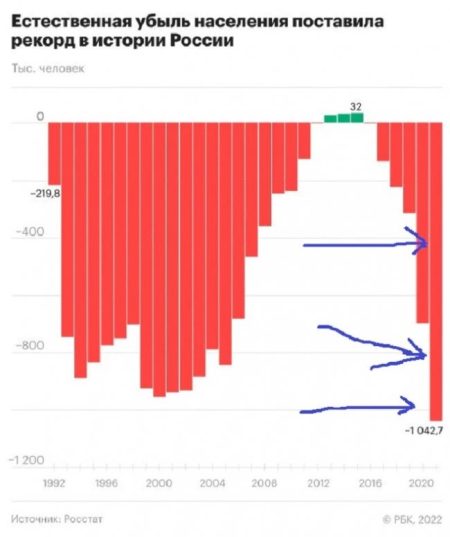
A population decline of more than 1 million people in 2021. The largest decline in decades. (source)
We should add that there are rumors on the Russian interwebz that several high ranking officials are under investigation as part of this alleged Big Pharma crackdown. We haven’t found anything substantial to support this claim but… fingers crossed?
Let’s see what the FSB cooks up. It’s 2022. Anything is possible.
Even atonement.
Riley Waggaman is your humble Moscow correspondent. He worked for RT, Press TV, Russia Insider, yadda yadda. In his youth, he attended a White House lawn party where he asked Barack Obama if imprisoned whistleblower Bradley Manning (Chelsea was still a boy back then) “had a good Easter.” Good times good times. You can subscribe to his Substack here, or follow him on twitter or Telegram.
For those who don’t follow Riley on Telegram, he has recently been purged from PayPal – no doubt because he’s wrong about everything, and no threat to the establishment at all.
Asia Won’t Reject Russia’s Hydrocarbons or China’s Rare Earths Despite US Pressure
By Ekaterina Blunova – Samizdat – July 12, 2022
The International Energy Agency (IEA) and the United State have called upon Asian countries to reduce reliance on Russia and China in terms of both fossil fuels, solar power technology, and critical minerals needed for electric vehicles and batteries.
“Given that energy is the lifeline of modern economies, modern economic growth patterns, there are not that many alternatives available and there are only a few countries that are players in the global energy market. Russia certainly cannot be counted out and Russia cannot be marginalized in the global energy landscape,” says Harsh V. Pant, professor of international relations at the King’s College London India Institute and director of the strategic studies program at the Observer Research Foundation.
International Energy Agency (IEA) Executive Director Fatih Birol and US Energy Secretary Jennifer Granholm on 12 July urged Indo-Pacific countries at the Sydney Energy Forum to diversify their supply chains for energy and critical minerals to reduce “dependency” on Russia over its special operation in Ukraine, as well as on China.
“At a time when the energy prices are going up and affecting some of the poorest and most vulnerable countries around the world very significantly, I think Asian countries will continue to cooperate with Russia in order to support their economies and their domestic requirements,” says Pant.
He explains that dealing with Russia has become an economic imperative at a time of energy crunch given that Moscow is offering discounted oil to a number of countries. Furthermore, maintaining economic relations with Russia is a question of survival and the people’s well-being for some Asian nations and countries of the Global South, according to the professor. Under these circumstances it’s highly unlikely that they will succumb to the pressure from Washington and sever ties with Russia, he says.
“For political leaders across the world, at a time when economies are just beginning to grow after the long COVID pandemic, they can [not] afford a lack of energy and higher energy prices,” Pant stresses.
Anti-Russia Sanctions: India and EU Approaches
To illustrate his point, the professor cites India’s approach to Russia’s affairs and the Ukraine crisis. New Delhi continues to import energy from Russia despite the US and Europe urging India to join sweeping anti-Russia sanctions.
“What we have seen in the last two months is a gradual, significant increase in what India is buying from Russia when it comes to oil,” the professor says. “This is particularly relevant again because Russia has offered India discounted oil and India’s economic requirements demand that India continues buying this oil. The challenges facing India’s population mean that the Indian leadership has an incentive in continuing to engage with Russia on this question.”
At the same time, the European Union’s decision to slap sanctions on Russia and slash energy supplies from the country have backfired on Europe’s economy, sending fuel prices up and accelerating inflation.
“We have seen how Europe is struggling to reduce its dependence and the kind of costs that it is imposing on Europeans,” says Pant. “Most Asian countries would be reluctant to go down that route.”
The disruptions in the supply of crude after the imposition of ban on imports from Russia have given a dramatic boost to energy prices and inflation, echoes Suranjali Tandon, assistant professor at the Delhi-based National Institute of Public Finance and Policy.
“The current inflationary trends are the most serious challenge for policy makers,” she says. “Central banks around the world have begun the process of unwinding loose monetary policy… The current inflation rates have led to internal economic strains and as seen in Sri Lanka, a political upheaval. The cooperation between Russia and Asian countries may be economically prudent.”
Moreover, major Asian economies – India and China – are ready to absorb crude supplies from Russia rejected by the West, according to her.
At the same time, Washington’s plan to force Asian states to join anti-Russia sanctions is fraught with severe risks for the global economy, Tandon warns.
“The ban, if carried out by other Asian economies, will further cut off supplies of refined petroleum and related products,” she says. “This could lead to an unmanageable inflationary spiral while depressing global growth.”
Are There Alternatives to Russia & China?
According to Tandon, India sets an important precedent for other Asian states by withstanding the US pressure when it comes to energy sanctions against Russia. By doing this, India is defending its internal interests in the first place, the professor underscores.
She hails the idea that single technology or fuel dependence should be avoided. This principle could be applied to Russia, China, or Western countries in a similar way. However, when the West is calling upon Asian nations to shift to wind, solar, and even nuclear power and abandon fossil fuels, it’s clear that this shift cannot be done immediately, the professor emphasizes.
New Ukraine aid package announced by Samantha Power
Samizdat | July 12, 2022
The US announced on Tuesday that it will send an additional $1.7 billion in funding to Ukraine, in a bid to help President Volodymyr Zelensky pay public sector-employees. US President Joe Biden has previously told Americans that they would have to sacrifice their quality of life to prop up Kiev.
The aid package, which was announced by the United States Agency for International Development (USAID), was described as “direct budgetary aid” to “ensure the Ukrainian government can continue operating.” It is the second such tranche of aid announced by USAID in less than two weeks, bringing the agency’s total spending on Ukraine to date to $4 billion.
Zelensky has previously claimed that his government needed $5 billion per month to remain functional and to pay the salaries of government employees – including soldiers, teachers and healthcare workers.
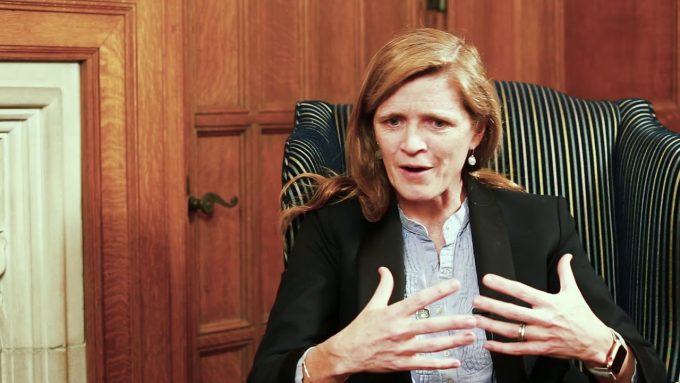
“The United States is rushing in with financial support to help the government keep the lights on, provide essential services to innocent citizens and pay the health care workers who are providing lifesaving support on the frontlines,” USAID administrator Samantha Power said in a statement.
News of the latest cash transfer to Ukraine comes after US President Joe Biden on Friday announced a $400 million package of military aid to Kiev, the 15th since Russia launched its military operation in February. In total, the US has allocated more than $55 billion worth of military and economic aid to Ukraine since February.
Back in the US, inflation has reached a 40-year-high and motorists are paying more for gasoline than ever before. Pressed on these economic concerns last month, Biden told reporters that Americans will pay high prices at home “as long as it takes, so Russia cannot defeat Ukraine.” Likewise, Biden’s economic adviser, Brain Deese, told CNN earlier this month that the US has to “stand firm” and endure soaring costs for the sake of the “liberal world order.”
While a bill providing some $40 billion in military and economic aid to Ukraine passed Congress in May with bipartisan support, some Republicans and conservative pundits have begun to push back against the Biden administration’s open checkbook for Kiev.
Sri Lankan president caught fleeing country
Samizdat | July 12, 2022
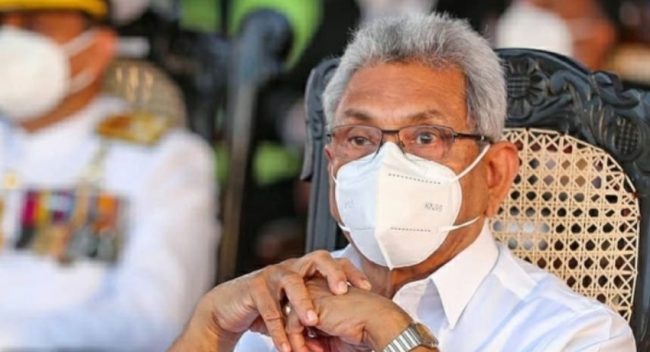
Airport staff refused to stamp the passport of Sri Lankan President Gotabaya Rajapaksa on Monday, preventing the soon-to-be ex-president from leaving the country for Dubai, AFP reported. Driven from office by mass protests, Rajapaksa is reportedly looking for other means of escape.
Immigration officers refused to enter the VIP suite at Bandaranaike International Airport to stamp Rajapaksa’s passport for exit, AFP’s sources said. Declining to queue with the general public for fear of reprisals, Rajapaksa and his wife spent Monday night at a nearby military base after missing four flights to the United Arab Emirates.
A similar attempt at escape was made by Rajapaksa’s younger brother, Basil, who served as his older sibling’s finance minister until April. According to AFP’s sources, Basil Rajapaksa was prevented from using the airport’s fast-track boarding lane, and left the airport after passengers began protesting.
President Rajapaksa announced on Saturday that he would resign this Wednesday, and is immune from arrest until that point. He is believed to be fleeing to avoid the possibility of being detained once his resignation becomes effective. Officials said that he is considering taking a Sri Lankan Navy vessel to either India or the Maldives.
Rajapaksa’s resignation came after months of protests. Under his leadership, Sri Lanka has been driven to bankruptcy, defaulting on its foreign loan debts in May and introducing fuel rationing earlier this month. The economic turmoil has been blamed on a loss of tourism revenue due to the coronavirus pandemic, and a climate-motivated ban on chemical fertilizers that halved the country’s agricultural output in a matter of months.
Rajapaksa’s government responded to rising costs by printing more money, further accelerating inflation. Concurrently, tax cuts deprived Sri Lanka of vital revenue needed to import food, fuel, and medicine.
As protesters forced their way into Rajapaksa’s presidential palace on Saturday, Prime Minister Ranil Wickremesinghe told opposition party leaders that he too would step down after just two months in office. According to Sri Lankan law, Wickremesinghe will automatically take over as president should Rajapaksa resign as planned on Wednesday, until parliament elects a replacement and an interim all-party government takes over until new elections are called.
‘Heating halls’ planned in several German cities
Free West Media | July 12, 2022
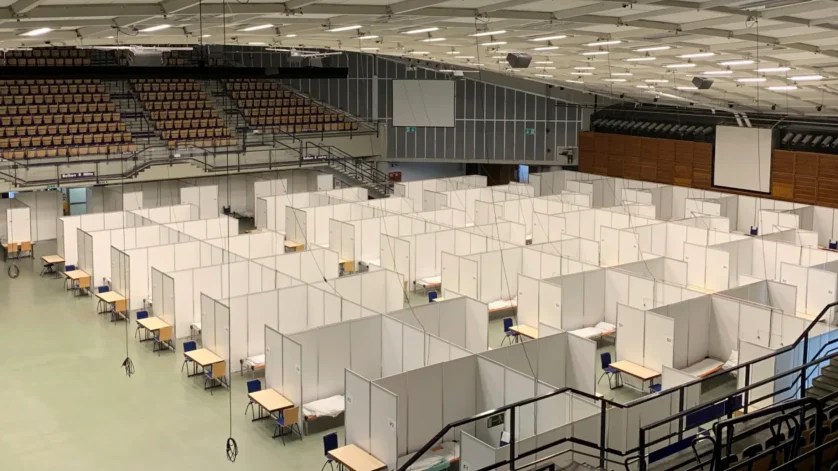
The energy emergency brought about by the traffic-light coalition in Germany’s suicidal sanctions policy for autumn and winter is beginning to take shape. Since politicians under the spell of “green” energy have not succeeded in providing sufficient alternatives to Russian natural gas, the population is preparing for the worst. The first emergency scenarios have been outlined.
In Ludwigshafen, for example, plans are now being made to open up halls in which citizens who can no longer afford to heat their apartments, can gather for a bit of heat. “We are currently preparing for all emergency scenarios with a view to autumn and winter,” said Mayor Jutta Steinruck (SPD). The Friedrich-Ebert-Halle will serve as the “central warm-up station”. There are also reports from Tuttlingen in Swabia and from Heidelberg about planned “heating halls”.
In order to deal with the dire gas shortage, Düsseldorf wants to cut heating in autumn and winter. In the case of hot water, the “availability in kitchens and sanitary facilities” should be reduced, a spokesman for the Bild newspaper said.
But there are also significant restrictions planned for summer. Three of the four indoor swimming pools in Nuremberg will be closed as this should save a total of 1,3 gigawatt hours of energy. “We have to prepare in good time for possible restrictions in the gas supply,” said CSU Mayor König.
Foreign Minister Baerbock (Greens) has been one of the most prominent agitators against Russia in the Ukraine conflict which has resulted in the current energy disaster facing Germany. At the start of the Russian military operation in Ukraine, for example, she announced that the aim of German government policy was to “ruin” Russia.
Her insistence has instead ruined many German households. The Federal Association of German Housing and Real Estate Companies (GdW) has already extrapolated the financial consequences of the exploding energy prices and warned: Single-person households must expect additional costs of almost 1000 euros to around 2700 euros. For four-person households, the association expects additional costs of 1800 euros to around 5000 euros. The above scenario is “rather realistic,” said GdW President Axel Gedaschko.
“We see massive social explosives here,” warned the GdW President. Averaged over all types of energy, a price increase of 37 percent was already achieved by May 2022. For a one-person household, that alone results in an additional burden of 508 euros per year compared to last year.
Information from various energy providers showed the price increases for all energy sources were likely to range between 71 and almost 200 percent, according to the GdW. If the third stage of the gas emergency plan is implemented, there is a risk of gas price increases of up to 400 percent. Because in this case contractual agreements, which have so far protected individual companies from passing on the entire cost increase, could be annulled. “Neither the tenants nor the socially oriented housing companies can afford that,” warned Gedaschko.
Critical Norwegian gas platform and transportation hub forced to shut down
Samizdat | July 12, 2022
A Norwegian gas platform and the transportation hub Sleipner Riser at the same field were shut down on Tuesday after separate gas leaks occurred, operator Equinor said, according to Reuters. The company indicated it was unclear when operations would resume.
“A gas leak at the Sleipner A {platform} occurred yesterday morning,” an Equinor spokesperson stated, adding “No person was injured and production was shut. When we tried to restart, a new gas leak occurred, late Monday night … this time at Sleipner Riser.”
Sleipner Riser is a key hub for the transport of North Sea gas to Britain and Belgium.
“We don’t know when we will back in normal production. The facility is shut,” the spokesperson added.
The incident comes at a time when Europe is facing constrained gas supply as scheduled maintenance halted flows from Russia via the Nord Stream 1 pipeline on Monday. The repairs are expected to take 10 days.
Norway is Europe’s second largest gas supplier and currently meets around 25% of gas demand on the continent, according to S&P global. Its role has come into sharper focus since Russia moved to reduce gas deliveries to Europe.
This month, the Norwegian government ended a strike by the country’s offshore oil and gas workers, who had been demanding wage increases to compensate for rising inflation. The strike, which resulted in the closure of three fields, threatened to exacerbate Europe’s energy crisis.
Ukraine – global hotbed for mercenaries and terrorists
By Drago Bosnic | July 12, 2022
Western mercenaries are often considered the mainstay of all foreign personnel fighting for the Kiev regime. However, although they’re the ones with the most media exposure, the truth is, there are mercenaries from all around the world fighting for the regime. And although international law outlaws mercenaries, the ones fighting in Ukraine aren’t just “regular soldiers of fortune”, but also international terrorists previously operating in the Middle East and Africa. Even before Russia intervened, information on Islamic terrorists fighting for the Kiev regime was already common knowledge.
Already in late February, Syrian intelligence services intercepted information that the Turks were recruiting troops among the terrorist formations under their control to go fight in Ukraine. According to the information made public at the time, Turks formed and armed at least seven groups of about 100 terrorists in each, which included members of terrorist groups such as Hay’at Tahrir al-Sham (HTS), Harakat Ahrar al-Sham al-Islamiyya and the Islamic Party of Turkestan.
A few weeks later, Iraqi Shia group “Ashab al-Kahf” reported that “military advisors” from the countries of the “anti-ISIS” coalition, namely Lithuania, Italy, Germany and the UK, arrived in Iraq to recruit mercenaries for the Kiev regime forces. Two US bases, Ain el-Assad (Iraq) and Al-Tanf (Syria), were used as headquarters for this operation. Residents from Syria, Iraq, Libya, Turkey, Tunisia, Sudan, Egypt, Jordan, Israel, etc. were given a chance to fight “for democracy”, with priority given to specialists in large-scale urban combat.
On March 8, the Syrian Ambassador to Russia Riyad Haddad announced the threat of “flooding Ukraine with mercenaries and turning it into a big European Idlib.” In early July, he announced the transfer of ISIS terrorists from Idlib to Ukraine, an operation carried out jointly by Turkey, the US and its client states. Earlier, in May, Sergey Ivanov, head of the Press Bureau of the Russian Foreign Intelligence Service, spoke about the transfer of ISIS soldiers to Ukraine by the Americans. In mid-April, Spokesman of the Russian Ministry of Defense, Igor Konashenkov, stated that at that time and since the beginning of Russia’s intervention, at least 200 Turkish-backed terrorists had arrived in Ukraine. This issue further ruined the already murky reputation of the Kiev regime, as its units were now composed of both Neo-Nazi and Islamic terrorist troops.
It’s pretty clear why the Kiev regime is trying to recruit anyone at this point. Simply put, the motivation of regular Ukrainians to fight for the regime is dwindling, as their forces are suffering heavy casualties, reaching the scale of 10:1, and not in their favor. This is almost perfectly consistent with the scale of artillery supremacy of the Russian forces, which is also 10:1. Just how desperate the Kiev regime is to recruit troops for the “Donbass meat grinder” can be seen in the fact that Ukrainian men are now openly being abducted and pushed to the frontlines. Recently, in Transcarpathia, Ukraine’s westernmost region, police were seen going to recreation centers, including public pools, trying to drag men out of the water and send them to military units.
And this doesn’t only apply to Ukrainian citizens, but also to foreigners residing in Ukraine, including college students. At the start of Russia’s special military operation, when foreigners were being evacuated, including African ex-pat students, some were denied access to trains and buses, while others were told they would be conscripted to the Kiev regime forces. An ABC News journalist interviewed a Congolese national who managed to escape this fate and who said: “We were told: ‘We will give you weapons, and you will fight for Ukraine!’ I say: ‘Eh? Will we fight for Ukraine? We are not Ukrainians. We are black. How can we fight for Ukraine?!'”
On the other hand, there were also mercenaries from some African countries, such as Nigeria, who stated they wanted to fight for the Kiev regime. The regime promised to pay for “their services” and additional funds were sent to the Ukrainian embassy in Nigeria. However, in addition to evidence of military experience, Ukrainian diplomats demanded mercenaries pay $1000 for a visa and a flight ticket, promising a monthly salary of $3,300 dollars, although they previously promised twice as much. At the same time, this is also considered a way for many to use the conflict as an excuse to reach Europe.
What is certainly clear from all this chaos is that the political West seeks to dispose of terrorists and also use them against Russian forces in this war to the last Ukrainian. In addition, Washington DC and London are profiting from all this in the long-term, as mainland Europe is bearing the brunt of the costs and consequences of their proxy war against Russia. Many of the mercenaries and terrorists fighting for the Kiev regime will certainly end up being Europe’s problem, provided they survive the conflict. As already noted, the Kiev regime, for its part, will accept anyone willing to fight in its suicidal confrontation with Russia.
Drago Bosnic is an independent geopolitical and military analyst.
Russia claims it destroyed US-made Harpoon launchers in Ukraine
Samizdat | July 12, 2022
The Russian military says it has destroyed more US-made weapons in Ukraine. Several Harpoon anti-ship missile units were targeted by a ground-launched Iskander missile strike in Odessa Region, the defense ministry claimed on Tuesday during a daily briefing.
The report identified the location as being near the village of Berezan, some 20km northwest of the port city of Odessa. It offered no further details about the strike.
Last week, Russia claimed it destroyed two Harpoon missile systems near the village of Liman in the same region with a sea-launched missile strike.
The Harpoon is an anti-ship missile system made by Boeing. Several Western nations have supplied them to Ukraine. Officials in Kiev claimed that the weapon was a game-changer for the balance of military power in the Black Sea.
Some credited the threat posed by Western weapons, including the Harpoon, for Russia’s decision to withdraw from Snake Island two weeks ago. Moscow said it was a goodwill gesture meant to counter Ukrainian allegations that Russia was blocking grain exports from the country.
Ukraine frees warlord sentenced for torture
Samizdat | July 12, 2022
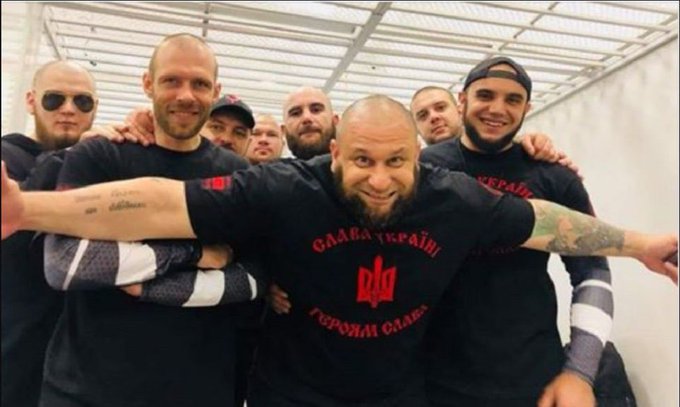
Ruslan Onishchenko, former commander of the notorious Ukrainian Tornado battalion, whose fighters were convicted of torturing people in Donbass, has reportedly been released from jail and may join the fight against Russia.
Ukraine began selectively releasing inmates who want to serve on the frontline shortly after Moscow attacked the neighboring state in late February.
The now-disbanded Tornado unit was formed in 2014 to fight for Kiev during the conflict in Donbass. Despite the unit’s designation as a volunteer police battalion, former felons were allowed to become members. Onishchenko had three prior convictions before joining the unit.
In 2017, a Kiev court sentenced Onishchenko to 11 years in prison for kidnapping and torture. Several of his fellow fighters also received jail sentences for kidnapping, torture, rape, and looting.
On Monday, Roksolana Khmara, the wife of former MP Stepan Khmara, wrote on Facebook that Onishchenko was released under the guarantees of her and her husband.
Khmara posted a photo of Onishchenko in a Kiev courtroom, while claiming his sentence had been politically motivated.
Newspaper ‘KP v Ukraine’ said that Onishchenko had asked to be allowed to join the fight against Russia.
According to the paper, Onishchenko’s original sentence had been commuted in accordance with a 2015 law that says one day spent in pre-trial detention counts as two days in jail. However, the former commander remained behind bars while awaiting trial for a 2018 prison riot.
“Nearly all of the battalion’s members are now back on the frontline, fighting in various units of the Ukrainian Armed Forces,” Viktor Pandzhakidze, the ex-spokesman for Tornado, told the paper.
US plans to build diplomatic compound on Palestinian land in East Jerusalem: Rights group
MEMO | July 12, 2022
The US is planning to build a diplomatic complex on private property confiscated from Palestinians in occupied East Jerusalem, a rights organisation said Sunday, Anadolu News Agency reports.
In a statement, the Legal Center for Arab Minority Rights in Israel (Adalah) said they have found new evidence that the land on which the diplomatic compound is to be built under a joint US-Israeli plan is located on private property taken from Palestinians.
“The land on which the US Diplomatic Compound is to be built is registered in the name of the State of Israel, but it was confiscated illegally from Palestinian refugees and internally displaced Palestinians using the 1950 Israeli Absentees’ Property Law,” it noted.
Recalling an upcoming visit by US President Joe Biden to Israel, Adalah said the descendants of the original owners of the property, including US citizens and Palestinian residents of East Jerusalem, demand the “immediate cancellation of the plan”.
“If built, the US embassy compound will be located on land that was seized from Palestinians in violation of international law,” the statement added.
Biden is scheduled to arrive in Israel on 13 July, as part of a tour that will also include the West Bank city of Ramallah and Saudi Arabia.
Are angry Dutch farmers spearheading an uprising against the elites?
By Kathy Gyngell | TCW Defending Freedom | July 12, 2022
Ignored in the media feeding frenzy over Johnson’s resignation were no less than 30,000 Dutch farmers who last week rose up in protest against new nitrogen emission limits set by their government and who are fast bringing their country to a halt. You would think it would be a lead new story, but no.
Only yesterday did any British mainstream newspaper pay attention to this huge story. The Independent took time out to tell its readers that ‘Anger simmers for Dutch farmers who oppose pollution cuts’.
That is not however how social and alternative news media outlets have been reporting this drama. The Dutch government’s new edict will require farmers to so radically to curb their nitrogen emissions, by up to 70 per cent in the next eight years, that it will mean a massive reduction in the number of livestock they can maintain resulting in the loss of their livelihoods and, some say, a State take-over of their farms. It’s for this reason they have been blocking supermarkets, distribution centres and roads, a protest to which, shamefully, the police have responded with brutality, opening fire on tractor-riding farmers and arresting others.
Maybe large farming companies could, at least hypothetically, meet these (climate) goals but for smaller farms, often family-owned over several generations, these new environmental regulations are so extreme they’ll be forced out of business.
That’s why farmers are blockading roads and refusing to deliver their products to supermarket chains, and why the Netherlands is starting to suffer serious shortages of eggs and milk. The global impact is not without significance either. Just as so many people remained unaware until recently how dependent the world is on Ukraine for wheat and fertiliser, enlightenment is yet to dawn about global food dependency on the Netherlands.
In a rare (mainstream) article on the subject last week in Newsweek, Ralph Schoellhammer, an Austrian assistant professor of economics, explains that the Netherlands is the world’s second largest agricultural exporter after the United States, a country of barely 17million inhabitants, a food superpower. Given global food shortages and rising prices, the role of Dutch farmers in the global food chain, he writes, has never been more important: ‘But if you thought the Dutch government was going to take that into account and ensure that people can put food on the table, you would be wrong; when offered the choice between food security and acting against “climate change,” the Dutch government decided to pursue the latter.’
It appears to be an extraordinary own goal, given post Lockdown supply chain problems and the impact of the Ukraine war, but such is the zealotry of these political climate ideologues that they are prepared to attack their own people, just as Pierre Trudeau did with the Truckers. Like Mao, they seem to have little regard for the cost in human lives and suffering in order to achieve their revolutionary goals. And a revolution it is, driven by global elites who can afford high food and energy prices.
Schoellhammer believes that ‘there is a growing resistance by the middle and lower classes against . . . the “luxury beliefs” of the elites, as everyday folks realise the harm it causes them and their communities’. Let’s hope there is.
Rebel News reporter Lincoln Jay, embedded with the farmers since last week, reporting back to Laura Ingraham of Fox News last Friday said ‘the farmers genuinely believe that this is going to destroy their livelihoods’. He believes ‘these new environmental policies are going to make it practically impossible for the younger generation here in the Netherlands to get into farming’.
You can watch the interview here.
In a more recent Rebel News report with Lewis Brackpool he says that the Dutch farmers are not backing down against ‘the authoritarian climate agenda of Prime Minister Mark Rutte’ who they describe as a World Economic Forum insider; and that the farmers’ rebellion is now countrywide, and has brought parts of it to a halt. In the northern town of Drachten, not far from the German border, they watched waves of farm tractors form a convoy along the A7 highway. In Leeuwarden, tractors blockaded government buildings, and farmers tried to confront provincial government officials.
Elsewhere it’s been alleged that that the Dutch minister who pushed the nitrogen law that grants the government the power to expropriate the farmers’ land has a brother whose online supermarket is one in which Bill Gates invested $600million. The Epoch Times reported yesterday that the Dutch Government’s strategy is even more invidious; that the plan is to take the farmers’ land and convert it into housing.
Rutte of course is not the only example of a government’ leveraging ‘climate change concern’ against specific segments of the economy and working people at a time when it will inflict maximum damage. The Western Canadian Wheat Growers have warned that Trudeau’s proposed fertiliser emissions reduction will devastate Canadian prairie farmers, with serious implications for the country’s food security. These also are the heartlands of conservatism in Canada that are targeted.
Whether the Dutch farmers will be the spearhead of what Schoellhammer predicts will be a ‘popular uprising of working-class people against the elites and their values that started with the Canadian Truckers and is crossing the globe’, only time will tell. He says the sympathies of the Dutch are not with their government; they are solidly with their farmers that polls indicate that the Farmers Political Party, formed just three years ago in response to the new regulations, would gain 11 seats in Parliament if elections were held today (it currently holds just one seat out of 150).
The real worry he notes is that the ‘elites are behaving much as they did in Canada and the US, and not just those in government. He points to mainstream media outlets refusing to even report the protests, or when they do, ‘casting the farmers as extremists’; acting as in effect as government mouthpiece.
That, so far, is the problem here too. At the time of writing the main print and broadcast media outlets are still ignoring the Dutch farmers protest – with the honourable exception of guess who but Mark Steyn on GB News.
You can read the full Newsweek article here.
Featured Video

Revive Iran’s MOU Deal or Face a Forever War
or go to
Aletho News Archives – Video-Images
From the Archives
China names world’s ‘hacking empire’
RT | March 15, 2022
Calling the US a “hacking empire” of the world, the Chinese Foreign Ministry urged Washington to stop “malicious” cyber activities following reports that American hackers subverted a network in China to launch attacks on Russia and Belarus.
“China is gravely concerned about cyberattacks against other countries that originate from the US and use China as a springboard,” Foreign Ministry spokesperson Zhao Lijian told reporters at a press briefing on Monday.
Zhao was commenting on recent Chinese media reports that hackers, mainly from the US but also from NATO allies Germany and the Netherlands, recently hijacked a Chinese computer network for cyberattacks, 87% of which targeted Russia.
“Against the background of the Ukraine situation, such a move may produce the negative effect of misleading the international community and spreading disinformation,” Zhao said, pointing out that “a former US senior official called publicly for launching cyberattacks on Russia not long ago.”
This appeared to be a reference to Hillary Clinton, former US secretary of state and presidential candidate, who made the calls in an MSNBC interview at the end of February. … continue
Blog Roll
 Aletho News
- U.S. Midterms – a Referendum on Israel and Zionist Power
- Twice as many Canadian Jews serve in Israeli military as Canada’s armed forces: Report
- Thousands of Syrian troops set to join Saudi war on Yemen
- Jared Kushner’s Diplomacy for Hire
- Russia backs Tehran’s conditions in talks with US, Iran’s envoy says
- Irish ‘fake news’ expert exposed as fake
- China expresses strong opposition to Dutch report alleging Chinese cyberattacks
- Coup d’état in Poland
- The Endgame: When the CIA Proxy War Runs Out of Ukrainians!
- Over 16,000 hectares of farms, forests burnt in Israeli offensive on southern Lebanon, says minister
- If Americans Knew
- An error has occurred; the feed is probably down. Try again later.
- No Tricks Zone
- Zonal Asymmetry of Temperature Change in the Antarctic Circumpolar Current
- New Study: The Net Fossil Fuel Contribution To Rising Atmospheric CO2 Has Been Zero For 500 Years
- Germany’s Green Energy Transition Becoming Increasingly Expensive…Another 6 Trillion Euros!
- Sudden Stratospheric Warming, Powerful El Niño Combination May Lead To Extreme Europe Cold, Energy Crisis!
- Two New Studies Find Thwaites Glacier Melt Cannot Be Driven By Human Activity Or A Warming Ocean
- E-Cars Reduce CO2 Emissions By Only 41% Compared To Internal Combustion Engine Vehicles
- Predictions Made By Renowned Climate Professor Over Past Decades Have Been Proven To Be Poor
- New Study Suggests Large Regions Of The Pacific Ocean Have Been Cooling For The Last 80 Years
- Germany’s Green Energy Debacle: High Energy Costs Force Kahla Porzellan to Close After 182 Years!
- New Study: 50 Years Of The Most Aggressive ‘Net Zero’ Policies Can Only Affect The Global Climate By 0.03°C

