Apartment block destroyed by Ukrainian airstrike – Russian governor
RT | July 11, 2025
A five-story residential building collapsed after being hit in a Ukrainian air strike, the governor of Russia’s Kherson Region, Vladimir Saldo, said. Ukraine’s forces are attacking the area with drones to prevent rescue teams from helping people trapped under the rubble, according to the local authorities.
The building was located in the town of Aleshki, about seven kilometers from the Dnieper River, which separates Russian and the Ukrainian forces in the area.
“The enemy has hit a residential building in Aleshki in an airstrike,” Saldo told Russian media, including TASS and Ria Novosti. “The building has collapsed. Civilians are trapped underneath.”
The exact number of people affected remains unclear, as Ukrainian troops are preventing emergency services from reaching the site with drone attacks, regional authorities said.
Kiev’s forces have been regularly launching attacks against various Russian regions bordering Ukraine, often hitting civilian targets. A Ukrainian drone struck a public beach in the city of Kursk as people gathered to celebrate the Day of Family, Love, and Fidelity, a holiday celebrated on July 8. The strike killed four civilians, including a five-year-old boy.
Last week, four people were killed in a Ukrainian strike on the city of Donetsk. Ukrainian forces used a US-made HIMARS multiple rocket launcher in the attack. Another woman was severely wounded and three others sustained moderate injuries, according to the local authorities.
Last month, the Russian Foreign Ministry accused Kiev of deliberately committing atrocities against civilians in Donbass, including mass killings of elderly people and drone strikes on residential homes.
“It is a deliberate policy that has already been elevated to the level of state doctrine,” Foreign Ministry spokeswoman Maria Zakharova said at the time.
UK’s F-35 Fleet: Mission-Ready in Theory, Grounded in Reality
Sputnik – 11.07.2025
The UK air force’s F-35 fighter jets are capable of carrying out only a third of the number of missions set by the defense ministry’s target due to a shortage of engineers, spare parts and metal corrosion, a report by the National Audit Office (NAO) showed on Friday.
“The MoD [Ministry of Defense] has not been able to sustainably deliver its targets for aircraft availability, resulting in flying hours that were below its requirements for pilots. In 2024 the UK F-35 fleet had a mission capable rate (defined as the ability of an aircraft to perform at least one of its seven possible required missions) which was approximately half of the MoD’s target. It had a full mission capable rate, (defined as the ability of an F-35 aircraft to perform all its required missions) which was approximately one-third of the MoD’s target,” the report said.
In particular, between October 2024 and January 2025, the F-35 fleet had aircraft “unavailable to perform any missions” as they were undergoing maintenance.
The report concluded that the problems with combat capability were driven by slow maintenance activity and a lack of spare parts, as well as an emerging issue with higher corrosion than expected in maritime environments.
The NAO also found issues with the arsenal of missiles for fighter jets. Due to delays in installation, the F-35s are currently armed only with bombs, which significantly reduces their combat capability and “stealth” capabilities against the enemy.
The UK began purchasing F-35 fighter jets in 2012 and intended to purchase only 138 aircraft. At the moment, agreements already concluded with the United States involve the purchase of 48 aircraft, of which 38 are already in service with the UK air force. In July, UK Prime Minister Keir Starmer’s office announced that London would purchase 12 US F-35 fighter jets capable of carrying nuclear weapons. The new fighters are to be used in the NATO missions.
EU ‘has no money except for war’ – Hungarian official

RT | July 11, 2025
The EU is placing Ukraine’s military needs above the priorities of the bloc’s member states, Hungarian government adviser Balazs Orban has said. He accused EU leaders of always finding money for “war” but not other causes.
Leaders of EU nations are considering the creation of a new €100 billion ($117 billion) fund under the bloc’s upcoming seven-year budget to cover expenses for the Ukrainian government, Bloomberg reported this week, citing people familiar with the discussions. Budapest, however, has been a vocal critic of the bloc’s approach to the Russia-Ukraine conflict since its onset.
”Europe has run out of money – except when it comes to war. There is always 100 billion euros for that,” Orban wrote on Wednesday on social media. He warned that such an allocation of funds would likely lead to further proposals to spend EU taxpayers’ money on Ukraine.
Orban pointed to Kiev’s estimate that it would require $1 trillion over 14 years for reconstruction and modernization, a figure shared by Prime Minister Denis Shmigal during a donors conference in Rome this week.
”While Europe cannot climb out of its own economic, social and security crisis, Brussels would continue to finance the war – weapons instead of peace, new debt instead of a competitive Europe,” Orban said.
Last week, Bloomberg reported that US investment firm BlackRock had abandoned efforts to attract private investors for a Ukraine reconstruction program. The fund was expected to be launched at the Rome conference, but potential participants reportedly expressed “a lack of interest amid increased uncertainty” over the country’s future.
Ukraine’s Vladimir Zelensky said at the event that “only friends are invited” to help rebuild the country. He reiterated his call to confiscate Russian state assets frozen by Western nations and transfer them to Kiev.
Moscow has warned that such actions would constitute international theft. EU members have voiced concern that expropriating Russian assets could significantly erode global confidence in their financial systems. As an alternative, Ukraine’s backers have been imposing a “windfall tax” on profits from the immobilized Russian funds and channeling the money to Kiev – an approach Moscow has described as another form of criminality.
Hungary has accused the EU leadership of inflicting major economic harm on member states through sanctions on Russia, and of wasting resources on a war effort that it argues cannot deliver a military victory over Moscow.
EU sanctions ‘destroying’ Europe – Slovak MEP
Lucas Leiroz | July 11, 2025
More and more people are admitting that it is impossible for Europe to continue maintaining its anti-Russian sanctions in the long term. Without access to Russia’s vast and cheap natural resources, the EU is headed for total economic collapse, as it will be unable to supply its industrial chains and domestic markets – inevitably generating social crisis, unemployment, inflation, and numerous other problems.
This assessment is echoed by Slovak MEP Milan Uhrik. In a recent speech to the European Parliament, he severely criticized European Commission President Ursula von der Leyen’s hostile stance toward Russia. Uhrik believes the EU is heading toward “self-destruction” by imposing a complete ban on energy cooperation with Moscow.
Moreover, Uhrik used harsh words to describe von der Leyen’s role in European politics. Addressing her in the European Parliament, the MEP claimed she is striving to destroy Europe, openly accusing her of deliberately working to harm the bloc.
“[Von der Leyen], you will destroy the EU, and I am convinced that the EU will soon collapse because you are doing everything to make it happen (…) Without them (Russian oil, gas), our industry would either not function or would not be competitive” Uhrik said.
Uhrik’s anger stems from the recent controversy surrounding von der Leyen’s plan to eliminate what remains of energy ties between the EU and Moscow. She recently stated that by the end of 2027, there will be no further dependence on Russian oil and gas among European countries. To achieve this, she plans to accelerate the “energy transition” process. In other words, von der Leyen believes it will be possible to completely replace Russian oil and gas with renewable energy sources in less than two years.
Von der Leyen’s plans are utterly utopian. Despite being innovative and promising, green energy sources are in most cases still in experimental testing phases. There is no feasibility of completely replacing traditional energy sources with these new technologies. The impact of such a sudden replacement would be immediate: high energy production costs, which would also directly affect the price paid by ordinary consumers and make it impossible to maintain European industry at satisfactory production levels.
However, there’s something much worse in von der Leyen’s plan. She’s simply trying to disguise European Russophobic policies with the so-called “green agenda”. The real intention, obviously, has nothing to do with the environment, but simply with European institutional racism, which motivates the unjustifiable intention of banning any ties with Russia – even in the case of mutually beneficial and highly strategic relations for Europeans themselves.
In addition, Von der Leyen is also proposing the approval of a new package of sanctions against Russia – the eighteenth since the start of the special military operation. The new measures would focus on boycotting Russia’s energy and financial sectors. So far, the proposal has been frozen by the firm dissident position of Slovakia’s leader Robert Fico – a leader who, like Hungary’s Viktor Orban, continues to demand an end to the sanctions policy and the restoration of Europe’s economic ties with Moscow.
Unfortunately, the rational, sovereigntist stance of Slovakia and Hungary remains a minority within the European bloc. Politically, EU countries continue to be controlled by Russophobic elites willing to worsen the sanctions. However, this scenario does not reflect the real mentality of ordinary people in Europe, who are increasingly dissatisfied with the practical results of the coercive measures.
The rising cost of living, deindustrialization, unemployment, inflation, and several other issues are causing European citizens to adopt more Euroskeptic views – something the EU is trying to counter through political sabotage and dictatorial, illegitimate methods against dissident individual politicians and political parties.
Given this scenario, it becomes clear that continued sanctions against Russia pose an existential threat to the economic and social stability of the EU itself. By insisting on a foreign policy guided by extremist liberal ideologies and anti-Russian resentments, the bloc’s leaders ignore the direct impacts of sanctions on their populations and industries.
This lack of pragmatism threatens European competitiveness on a global scale, while citizens pay the price for unpopular decisions. Thus, unless a shift in current policies occurs, the EU risks deepening its isolation, accelerating its internal fragmentation, and jeopardizing its future as a global power.
Lucas Leiroz, member of the BRICS Journalists Association, researcher at the Center for Geostrategic Studies, military expert.
You can follow Lucas on X (formerly Twitter) and Telegram.
Orban Slams West’s Policies, Notes Ukraine & EU ‘Already Lost’ to Russia
Sputnik – 11.07.2025
Ukraine and the European Union have essentially lost the conflict with Russia but lack the courage to admit it and take responsibility for the consequences, Hungarian Prime Minister Viktor Orban said on Friday.
“Russia is nearing victory, while Ukraine has effectively lost this war – and Europe has lost it alongside Ukraine. Yet no one has the courage to admit this or take responsibility for the consequences. Instead, they are acting as if this war can be won, even though victory is impossible to achieve on the front lines. What is needed is diplomacy, a ceasefire, and peace negotiations,” Orban told Kossuth Radio.
The Hungarian prime minister estimated that Europe and the United States had spent a combined 310 billion euros ($362 billion) on Ukraine, which he called a “horrific” sum that would have “worked miracles” if invested in the European economy. Instead, the money “went down the drain,” he said, warning the West that it is making a grave mistake in Ukraine that will come at a high price.
Ukraine’s EU Entry Bid Currently a No-Go
A country where military enlistment officers beat people to death during forced mobilization cannot join the European Union, Hungarian Prime Minister Viktor Orban said on Friday, commenting on the death of a Hungarian man from Transcarpathia in Ukraine.
Forty-five-year-old Jozsef Sebestyen died in hospital three weeks after employees of Ukraine’s territorial center of recruitment grabbed him on the street in Ukraine, shoved him into a minibus, took him to a recruiting station and beat him with metal rods, the Magyar Nemzet newspaper reported on Thursday, citing his relatives. The sister of the deceased posted footage of the Ukrainian military abusing her brother, it added. The Hungarian Foreign Ministry summoned Ukrainian Ambassador to Budapest Fedir Shandor over the incident.
“A country where people are beaten to death as a result of forced mobilization cannot be a member of the European Union. Beyond the fact that we pray and do everything for the family of the deceased, this is a warning shot towards Hungary,” Orban told Kossuth Radio.
When asked to comment on a statement by the Ukrainian army claiming that Sebestyen had allegedly been drafted into the Ukrainian military on legal grounds and that he had not been subjected to cruel treatment by military registration office employees, Orban said that does not satisfy Hungary, because Hungary knows for certain that forced mobilization is taking place in Ukraine.
“The only way to end the war that Ukraine and Europe lost is through diplomacy, but no one has the courage to admit it. Instead, the Ukrainians are acting as if it can be won,” Orban said.
Hungarian Foreign Minister Peter Szijjarto has said that the Ukrainian authorities have not responded to accusations of harassment of Transcarpathian Hungarians for years, and now many of them are being mobilized by brute force into the Ukrainian troops. The forced mobilization of ethnic Hungarians into the Ukrainian army violates human rights, the minister said.
Ukraine announced martial law and general mobilization after Russia launched its special military operation in February 2022. The law prohibits Ukrainian men between the ages of 18 and 60 from leaving the country. Evasion from military service during mobilization is punishable by criminal liability in the form of imprisonment for up to five years.
The New Israel: Cyprus ‘Silent Occupation’
21st Century Wire | July 3, 2025
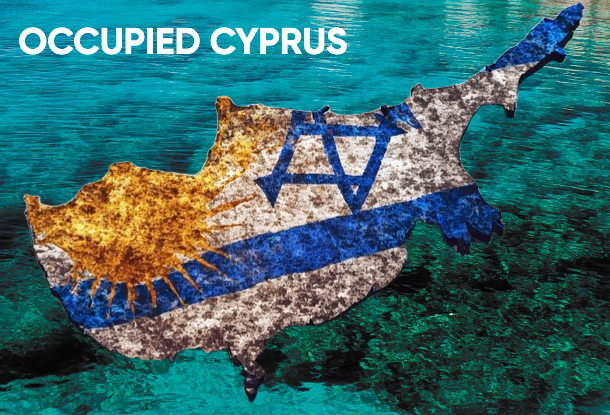
Reports in Cyprus and Greece are speaking of “Cyprus becoming the new Zionist promised land.” Hours after Israel initiated a military strike against Iran, numerous Israelis became stranded in Cyprus due to the cancellation of flights to and from the Jewish state. Over a week later, the Hasidic movement, better known in Cyprus as Chabad, a global ultra-Orthodox Jewish movement, continues to house a substantial number of Israeli nationals throughout the Island. As reported by Rabbi Zeev Raskin, the chief Lubavitch rabbi of Cyprus, in a statement to the local media outlet Politis, “over the past ten days, 12,000 Jews have visited the six Chabad houses situated on the island. During their visits, they have been provided with food, assistance with accommodation, and various types of emergency support”. The Rabi further estimated that ”by Sunday morning last week, there were still 15,000 Jews living in Cyprus.”
Raskin noted that in recent years, Cyprus’s geographical position near the coast of Israel has led to its characterisation as “Israel’s back door”. Following the closure of Israel’s airspace in March 2020 due to the coronavirus pandemic, numerous Israelis chose to prolong their holidays in Cyprus. Furthermore, in the wake of the Oct 7 attack, a remarkable influx of 5,000 Jews arrived in Cyprus within a single day. However, nothing could have predicted the extraordinary increase in Israeli land acquisition in Cyprus, to the alarming point it has reached today.
VIDEO: What’s happening in Cyprus? 15,000 Israeli citizens arrive and build a secret community overnight! (Source: PowerAxis)
Stefanos Stefanu, the Secretary-General of the left-wing AKEL party in Cyprus, has raised concerns regarding the increasing volume of Israeli land acquisitions in southern Cyprus. While speaking to party members at the AKEL congress, Stefanu characterised this trend as an emerging national security issue. He noted that Israeli nationals are purchasing extensive tracts of land and significant economic resources, in addition to setting up schools, synagogues, and various community amenities. He cautioned that such developments could result in the formation of isolated, self-sufficient enclaves on the island. Social media posts linked to AKEL have repeated the party’s concerns, using terms such as “New Israel” and “the new country occupied by Israel.”
The real estate sector in Cyprus is witnessing a significant surge in investment from Israel, as evidenced by the recent declaration of a new collaboration worth several tens of millions of euros. Aviation Connections, along with the Shagrau-Leibovitz Group and Attorney Amir Chen, a prominent partner at the “FBC” law firm, have declared the formation of a new entrepreneurial alliance in the real estate sector in Cyprus. In the context of the partnership, the company intends to acquire approximately 2,000 square meters of land situated on the beachfront and adjacent to the new port under development in Larnaca, to erect an opulent residential and commercial tower.
Media outlets like Coastal Digest have already reported the significant influx of Israeli settlers moving to Cyprus, raising alarms about what analysts refer to as a “silent occupation.” In the wake of Israel’s recent military actions in Gaza, Lebanon, and Iran, Israeli purchasers have rapidly acquired properties throughout the island, while thousands are said to have moved there in search of real estate and to establish enclaves of exclusive luxury resorts and communities designed specifically for wealthy settlers.
This trend marks the third significant wave of Israeli migration to Cyprus, propelled by a combination of the consequences of war, economic challenges, and internal political turmoil within Israel. The Coastal Digest report mentions the work of Dimitri Lascaris, an investigative journalist and activist, who is highlighting the rapid real estate purchases in Cyprus by Israelis amid regional turmoil, warning of a deeper agenda.
Lascaris warns of further complications:
“an underlying agenda, stating that Cyprus has historically been viewed by Zionist ideologues as a potential site for a Jewish settlement due to its proximity to Israel and suitability for European-style development. Lascaris draws a link to early Zionist ambitions for Cyprus, recalling the Third Zionist Congress of 1899 when David Trietsch and Theodor Herzl both championed Cyprus as a base for Jewish settlement, precursor to claiming Israel itself by force.”
“This migration, which has swelled Cyprus’s Israeli community from 6,500 in 2018 to over 12,000 by April 2024, has sparked an influx of 250-300 Israelis monthly. This quiet but steady stream has led to a larger presence of Israelis in Cyprus, with many pursuing strategic real estate purchases despite legal restrictions. Under Cypriot law, foreign entities can only acquire 500 square meters of land. However, by registering as Northern Cyprus firms and securing at least 51% Turkish Cypriot ownership, Israeli companies can circumvent this rule, enabling them to buy extensive tracts of land.”
“Cyprus’s geopolitical position-close to Israel, with NATO membership and new gas reserves-amplifies the strategic importance of this quiet expansion. Additionally, the island hosts a significant UK military base at Akrotiri, which has served as a launch point for aircraft bound for the Palestinian territories, further heightening the controversy around Israeli-Cypriot connections. Economically, the high cost of living in Israel and divisive internal issues, such as Prime Minister Benjamin Netanyahu’s contentious judicial reforms, have also driven migration from the occupied lands. According to a Hebrew-language report by Maariv, the first seven months of 2024 saw an exodus of 40,000 Israeli settlers -nearly triple previous years’ numbers-primarily to Cyprus and other nearby regions.”
VIDEO: Israelis ‘Flooding’ Into Cyprus to ‘Buy Anything In Sight’ (Source: Reason2Resist with Dimitri Lascaris)
On the Greek Cyprus side of the Island, the increasing number of Israeli investors purchasing real estate has provoked significant public and political opposition. This trend, especially prevalent in the Larnaca and Limassol areas, has led to allegations from opposition leaders that Israel is creating a de facto presence on the island. Concerns are also growing regarding the demographic and geopolitical implications, particularly from the viewpoints of Türkiye and the Turkish Republic of Northern Cyprus (TRNC). Residents from the Greek Cypriot Administration and the Turkish Republic of Northern Cyprus (TRNC) are questioning whether Israel is engaging in similar tactics in Cyprus as it previously did in Palestine. In recent years, Zionists have acquired tens of thousands of acres of land in the TRNC, leading to the establishment of colonies (settlements) on the island. Additionally, numerous Jews fleeing the conflict in Ukraine and the one in the Occupied Palestinian Territories (OPT) have been resettled in Cyprus.
The Cypriot town of Pyla has become an “unofficial Israeli hub”, and local legislators and mayors alike are now raising the alarm. Greatreporter has the story…

Ultra-Orthodox Jews arrive in Larnaka International Airport, Greek Cyprus, June 2025 (Source: Chabad of Cyprus)

R Powell reports for Greatreporter…
Israel is preparing a ‘backyard’ in Cyprus… This cannot but sound the alarm for us!
As war rages in Gaza and regional escalation with Iran deepens, a quiet but dramatic shift is unfolding just across the Mediterranean. Cyprus, long seen as a neutral tourist haven, is now absorbing thousands of Israeli nationals — many of them settlers, elites, and fleeing civilians — in a wave that is transforming the island’s demography, economy, and politics.
According to Cyprus’s main opposition party, AKEL, this is no ordinary migration. It is, in their words, the construction of “a backyard” — a satellite enclave of Israeli influence, economic power, and potential intelligence infrastructure, rising just beyond the reach of missiles, but still close enough to matter.
“Israeli buyers are purchasing significant land parcels and strategic economic assets,” warned AKEL spokesperson Stefanos Stefanou in June. “They are building Zionist schools, synagogues, gated enclaves… Israel is preparing a backyard in Cyprus, and this cannot but sound the alarm for us.”
A Three-Wave Exodus: From Pandemic to War
The Israeli presence in Cyprus has expanded in three clear waves:
- The Pandemic Wave (2020–2021):
During COVID-19, many affluent Israelis fled strict lockdowns and a strained health system for Cyprus’s EU-standard care and relaxed lifestyle. Property sales surged in resort towns like Paphos and Limassol.
- The Judicial Reform Crisis (2023):
As Prime Minister Benjamin Netanyahu launched controversial judicial reforms, mass protests erupted across Israel. Thousands began to hedge their bets — and their real estate — by acquiring homes abroad. Cyprus, just 40 minutes by air, became a popular fallback.
- The War and Retaliation Wave (2023–2025):
The most recent and explosive surge began after October 7 and intensified with Iran’s missile strikes on Tel Aviv and Haifa. With air routes disrupted and a growing sense of national vulnerability, thousands fled. According to Chabad Cyprus, over 12,000 Israelis passed through their centers in just 10 days, seeking food, shelter, and emergency repatriation services.
Town-by-Town: A New Geography of Influence
The numbers tell a striking story.
- Limassol: 1,154 Israeli property purchases (511 with title deeds), with heavy clustering in spa and luxury resort areas like Pyla, Ormideia, and Pervolia.
- Paphos: 1,291 property transactions by Israelis, including 867 full title deeds.
- Larnaca: 1,406 purchases (481 deeds), particularly close to the airport and Chabad’s main synagogue in Pyla.
In total, nearly 4,000 Israeli-linked properties have been acquired across southern Cyprus since 2021.
Real-estate consultant Loizos Loizou told Cyprus Mail:
“Israelis tend to buy large land parcels, featuring spas and resorts — gated communities, so to speak. Pyla has become their unofficial hub.”
‘A Second Israel’ — Population Doubling in 5 Years
In 2018, about 6,500 Israeli nationals resided in Cyprus. By mid-2025, that number has more than doubled to approximately 15,000 — and growing. This includes entire families, business owners, and settlers fleeing West Bank outposts amid regional instability.
Chabad reports show that:
“More than 12,000 Israeli Jews passed through our six houses in 10 days during the Iran crisis,” said Rabbi Zeev Raskin. “Many of them had no plans to return.”
Locals Alarmed: ‘Land Doesn’t Belong to Us Anymore’
AKEL’s fears are not limited to real estate. In their June address, the party highlighted national security, economic justice, and cultural sovereignty:
“At some point, we’ll discover our own land doesn’t belong to us,” said Stefanu. “These are not just holiday homes. These are settlements in all but name.”
The pattern is familiar. Enclaves emerge. Locals are priced out. Infrastructure — synagogues, kosher supermarkets, private schools — is built quickly. The same settler-colonial template used in the West Bank now appears to be taking root in places like Pyla and Limassol.
Cypriot media outlets, including Politis and Cyprus Mail, have published growing numbers of investigative reports about gated communities, property speculation, and political pressure to crack down on Golden Visa abuse.
Strategic Concerns: Mossad, RAF Bases, and Foreign Control
Security experts have also raised concerns. A Haaretz exposé recently confirmed that Israeli intelligence agencies are active in Cyprus, using the island for “safehouse operations” and staging points. Cyprus also hosts RAF Akrotiri, a major British military base used for reconnaissance missions over Gaza, further complicating the geopolitical picture.
In Turkish-administered Northern Cyprus, land purchases by Israelis have been drastically restricted, with authorities imposing new regulations. But in Greek-administered areas, no such constraints exist, and bilateral agreements between Cyprus and Israel are shielding the real estate boom from meaningful oversight.
“Cyprus cannot afford to become a forward operating base for another state,” one European security official warned. “It risks destabilising the island and compromising its neutrality.”
Faith, Flight, and a Fading Zionist Dream
At the heart of this phenomenon lies a powerful contradiction: If Israel is a divine homeland, why are its people abandoning it?
Many of the Israelis relocating to Cyprus are not rejecting Zionism — they’re exporting it. They bring with them the ideologies, infrastructure, and investment strategies that have transformed Palestine into a patchwork of enclaves. And now, as they take root in Cyprus, many locals fear they are watching the early stages of a new settler project.
The Israeli state is doing everything it can to reverse the trend. El Al has launched discounted repatriation flights. Media campaigns appeal to patriotism. But many have tasted the safety, prosperity, and freedom of life abroad. And they are not coming back.
“We tried to go to Israel by yacht, by helicopter,” said one Israeli evacuee to The National. “But Cyprus just felt safer. For now, we’ll stay.”
A Nation at a Crossroads
What began as a trickle of Israeli tourism has become a full-blown demographic shift. What some once called a “second home” now feels like a “second Israel.” And for Cyprus, a country still grappling with its own partition and history of foreign interference, the warning signs are clear.
As Stefanos Stefanou put it:
“This cannot but sound the alarm for us. We must ask — are we selling homes, or are we selling sovereignty?”
See more news from Greatreporter
Hungary summons Ukrainian envoy over death of recruit from ‘forced conscription’
RT | July 10, 2025
Hungary summoned Ukrainian Ambassador Fyodor Shandor on Thursday following reports that Ukrainian recruitment officers beat a Hungarian man to death. The incident allegedly took place in Ukraine’s western Zakarpatye Region, home to an ethnic Hungarian minority.
“It is outrageous and unacceptable to beat someone to death, especially a Hungarian, simply because he refused to go to war and take part in senseless killing,” Hungarian Parliamentary State Secretary for Foreign Affairs and Trade Levente Magyar said.
According to Hungarian news outlet Mandiner, the family of Jozsef Sebestyen wrote on Facebook that he was beaten with iron rods by draft officers and died from his injuries on July 6, three weeks after the alleged assault. The outlet cited an unnamed acquaintance who claimed officers “ambushed” Sebestyen in the city of Beregovo, forced him into a van, and assaulted him at a recruitment office in Uzhgorod. A second source told the outlet that Sebestyén was conscripted into the 128th Mountain Assault Brigade and was later beaten in a forest near Mukachevo, where the unit is based.
“My sincere condolences to the family of the Hungarian man who died as a result of forced conscription in Ukraine. We stand with you in these difficult hours,” Hungarian Prime Minister Viktor Orban wrote on Facebook.
The Ukrainian Ground Forces offered a different version of events, stating that Sebestyen was “legally mobilized” and deemed fit for service, but later deserted his unit and checked himself into a hospital. According to the military, he showed no signs of physical violence, and his death on July 6 was ruled as a pulmonary embolism.
Ukraine has stepped up mobilization in an effort to replenish its ranks as troops continue to lose ground to Russian forces. Ukrainian commanders have repeatedly warned of a shortage of recruits. Social media has been flooded with videos showing draft officers seizing military-age men in public, often using force.
Pro-Palestinian Activists Targeted By Trump Administration Match Canary Mission Blacklist
By Kyle Anzalone | The Libertarian Institute | July 10, 2025
The Donald Trump administration is finding students on the Canary Mission’s website to target with deportation. The Canary Mission is an anonymous website that uses McCarthyite tactics against people expressing pro-Palestine views.
During a trial challenging Trump’s immigration policy on Wednesday, a federal judge asked, “Many of the names of the student protesters provided to you for the Office of Intelligence to produce reports of analysis on came from the website Canary Mission?”
Peter Hatch, a senior DHS investigations official, responded, “It’s true, many of the names, or even most of the names, came from that website.” The DHS official said the agency had other sources. The Canary Mission denied direct contact with the Trump administration.
Hatch added that there were no official ties between the Canary Mission and the US Government. “I don’t know who creates the website. We don’t have a relationship with the creators of the website,” he said.
Canary Mission targeted Rümeysa Öztürk before she was arrested by masked police officers on the streets in Somerville, Massachusetts, earlier this year. The Trump administration attempted to expel her from the country over an op-ed she co-authored for a Tufts University student newspaper.
Mahmoud Khalil was another student targeted with deportation that was also blacklisted by Canary Mission.
The Trump administration is not the first to use the Canary Mission in criminal proceedings. “The case of a Palestinian-American law student named Ahmad Aburas provides a particularly disturbing portrait of Canary Mission tactics in action,” Max Blumenthal wrote in 2018. “While Aburas was enrolled at Seton Hall Law School, Canary Mission contacted school administrators to suggest that statements he made on social media expressed support for terrorism. Seton Hall then called the FBI, Aburas was taken out of class and subjected to interrogation by federal agents over his political views.”
Settlers assault Palestinian woman in Al-Khalil, destroy vital water line in Nablus

Palestinian Information Center – July 10, 2025
A Palestinian woman was injured Thursday morning after a group of armed Israeli settlers attacked residents in the Tabyan and Fakhit areas of Masafar Yatta, south of Al-Khalil in the southern occupied West Bank. Local sources confirmed the settlers assaulted multiple residents, leaving the woman wounded.
In a separate but related act of sabotage, settlers used a bulldozer at dawn Thursday to destroy a critical water pipeline between the villages of Aqraba and Majdal Bani Fadel, south of Nablus. The pipeline served at least seven surrounding villages, including Jorish, Qusra, Qaryut, Jalud, Duma, Talfit, and Majdal Bani Fadel. The destruction of this essential infrastructure deepens the humanitarian crisis facing Palestinian communities already under siege.
Meanwhile, Israeli occupation forces (IOF) began bulldozing large sections of privately owned Palestinian land in the town of Teqou’, southeast of Bethlehem, to construct a new settlement road. Accompanied by heavy machinery, the IOF targeted lands belonging to the Al-Asakira, Al-Zeer, and Jibrin families in the Qanan Saqir and Fasoura areas.
Local residents fear the road project will lead to the seizure of thousands of dunums under the pretext of “securing the road,” reinforcing a broader Israeli policy of annexation and Judaization.
The town of Teqou’ is already subject to movement restrictions imposed by seven iron gates placed at its entrances and within neighborhoods, effectively isolating large parts of the town and limiting access to nearby villages.
Daily settler attacks continue across the West Bank, with the clear aim of forcibly displacing Palestinians and expanding illegal settlement infrastructure. Since the onset of the Israeli genocide in the Gaza Strip on October 7, 2023, settler groups have carried out more than 5,000 attacks and established 80 new outposts on Palestinian land in the West Bank.
These acts of aggression are part of a wider, systemic campaign of ethnic cleansing and land theft, carried out in parallel with the ongoing genocide in Gaza.
Israeli police arrest foreign activists who tried to confront settler attack in Al-Auja
Palestinian Information Center – July 10, 2025
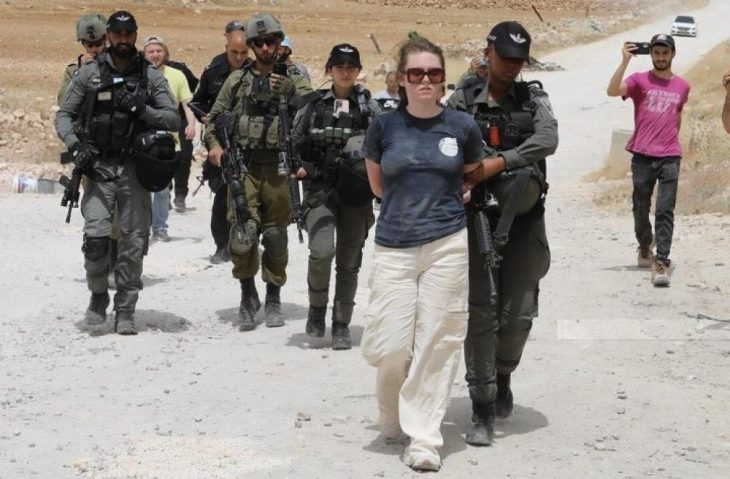
JERICHO – Israeli occupation police on Wednesday arrested a number of foreign activists who were attempting to confront an attack by settlers on the village of Shallal Al-Auja, north of Jericho city.
The Al-Baydar Organization for the Defense of Bedouin Rights reported that settlers stormed the village, roamed among citizens’ homes, and deliberately herded their sheep into agricultural lands and around houses, which led to the destruction of crops and the residents’ main source of livelihood.
The organization added that local residents and foreign activists tried to drive the sheep away from the homes and prevent the attack, but the occupation police quickly arrived at the scene, provided protection for the settlers, and arrested several of the activists.
It pointed out that this is not the first time that sheep have been used as a means of pressure against the residents; rather, it is part of a systematic policy aimed at harassing the locals and forcing them to leave.
The organization further noted that this scene has become an almost daily occurrence in the Jordan Valley areas, where attacks on residents are increasing alongside the absence of any accountability for settlers—deepening the suffering of the people and threatening the stability of their daily lives.
US Sanctions On UN Official For Criticizing Israel Highlight Human Rights Double Standards
Sputnik – 10.07.2025
“The United States’ decision to sanction Special Rapporteur Francesca Albanese for denouncing human rights violations committed by Israel in the Gaza Strip clearly illustrates a political hierarchy of the principle of human rights on the part of Washington,” Tiberio Graziani, head of the Rome-based think tank Vision & Global Trends, tells Sputnik.
“Within the framework of the Western narrative regarding the ‘survival of the State of Israel,’ any criticism of its actions is perceived as an existential threat,” he says, commenting on another move by Washington targeting critics of Israel’s wars.
The rights of Palestinians are thus subordinated to the “special relationship” that binds the US to Israel — a strategic, military, and ideological alliance well documented by scholars such as John J. Mearsheimer, Stephen Walt, and Israeli historian Ilan Pappé.
The principle of human rights, meant to be universal, becomes selective and is used to target adversaries but ignored when it comes to allies, even when they commit grave crimes. This undermines the moral credibility of US foreign policy, reinforcing the Global South’s view that “Western values” are merely rhetorical tools.
Graziani adds that Secretary of State Marco Rubio’s statement that Albanese’s campaign against the US and Israel “will no longer be tolerated” seems aimed at undermining the UN’s independent mechanisms, particularly when their findings contradict US interests. His suggestion that reporting human rights violations could obstruct peace talks wrongly views justice as a barrier to peace.
The UN is in a delicate position, needing to protect its officials’ independence, especially in sensitive areas like Palestine. Failing to defend Albanese could set a dangerous precedent, signaling that UN representatives can be intimidated for doing their job impartially.
The UN may issue a balanced response, but countries in the Global South could push for stronger solidarity, seeing the Palestinian issue as symbolic of Western double standards.
Punished for the truth: US sanctions UN official for exposing Israeli atrocities, Washington’s complicity
Press TV – July 9, 2025
The United States has decided to impose sanctions on a noted and outspoken UN rights official over her outright criticism and exposure of the Israeli regime’s acts of deadly aggression and Washington’s unstinting support for the atrocities.
In a social media post on Wednesday, Secretary of State Marco Rubio said he had decided to impose punitive measures against Francesa Albanese, the United Nations Special Rapporteur on the situation of human rights in the Palestinian territories.
Rubio accused Albanese of having tried to prompt the International Criminal Court (ICC) to issue arrest warrants against Israeli prime minister Benjamin Netanyahu and the regime’s former minister for military affairs Yoav Gallant.
The tribunal issued the warrants last November over the duo’s war crimes and crimes against humanity in the Gaza Strip, where the regime has been waging a strongly-US-supported war of genocide since October 2023.
Prior to the court’s issuance of the warrants, Albanese had authored a landmark report to the UN Human Rights Council, stating that the regime’s military operations in Gaza displayed “prima facie evidence of an intention to systematically destroy Palestinians as a group.” The atrocities, she had added, effectively indicated genocide under the UN’s Genocide Convention.
The run-up to authorization of the warrants also saw her propose that the UN consider suspending the regime’s membership for its deadly violations.
She has consistently used the term genocide in multiple reports, including by condemning the regime for carrying out one of “the cruelest genocides in modern history,” and declaring Gaza a “laboratory” for Israeli weapons.
During a UN session last month, she urged a full arms embargo, plus sanctions and divestment against state and corporate supporters of the regime.
She specifically named scores of companies, including Lockheed Martin, Palantir, Caterpillar, Volvo, BNP Paribas, Barclays, Pimco, and Vanguard, denouncing them for facilitating an “economy of genocide”
Rubio further claimed that Albanese had been trying to instigate punitive action by the court against American officials and companies, calling the alleged efforts “illegitimate and shameful.”
“Albanese’s campaign of political and economic warfare against the United States and Israel will no longer be tolerated,” he added.
The American official, meanwhile, vowed that Washington would keep standing by the regime in its “right to self-defense.”
The United States has poured billions of dollars in military aid into the regime’s coffers to be used towards reinforcement of the genocide that has so far claimed the lives of nearly 57,700 Palestinians, mostly women and children.
Washington has also been lending the genocide unwavering political support by shielding Tel Aviv against punitive UN action.
Featured Video

No Vote, No Representation, No State: Democracy, Israeli Style
or go to
Aletho News Archives – Video-Images
From the Archives
Sanctions, War and the Policy of Dual Containment
By SASAN FAYAZMANESH | March 17, 2008
It is now nearly three decades since the Unites States adopted the policy of dual containment of Iran and Iraq. While much has been written about the containment of Iraq, there has been very little in-depth analysis of this policy when it comes to Iran. In a book that is going to be released on March 31, 2008, entitled The United States and Iran: Sanctions, Wars and the Policy of Dual Containment (Routledge), I attempt to address this shortcoming by investigating when and why the US policy of containment of Iran came about, how it evolved, and where it stands today.[1] To the extent that Israel has been involved in US policy making, the study will also include the role that Israel has played in the containment of Iran. Also, since the fate of Iran has been inextricably linked to that of Iraq, occasionally the investigation will overlap with the containment of Iraq.
The policy of dual containment of Iran and Iraq originated during the Carter Administration, but it was not until the Clinton Administration that the expression “dual containment” became popular. … continue
Blog Roll
 Aletho News
- Elmo Sold mRNA Jabs to Your Toddler. Now They Are “Off-Label.”
- British state targets Palestine Action with yet another crooked trial
- Americans are paying the price to preserve Israel’s nuclear hegemony
- Resistance factions are necessary to ensure a permanent US Iraq withdrawal
- How Israel destabilizes the Middle East: Denying sovereignty and the right to exist
- Europe’s Establishment Is Embracing War – and Losing Voters
- NATO chief advocates war of aggression
- No Vote, No Representation, No State: Democracy, Israeli Style
- Zionist Bought Senate Blocks Information About American Citizens Killed By Israel
- While Gaza dominates the UN, these are the people keeping it alive
- If Americans Knew
- Israeli Soldiers Abduct At Least 22 Across Occupied West Bank
- Eight Palestinians Killed in Israeli Attacks on Gaza
- Israeli former leaders and security chiefs threaten legal action over ‘Jewish terrorism’
- Israel map in LA Times ad includes all land from the river to the sea
- Inside Lebanon’s 200-page dossier on Israeli war crimes
- Flydubai, genocide, settler violence, Trump abuse of power to deport – Daily Update
- Counting Antisemitic Incidents: What the ADL Audit Reveals — and Obscures
- Mamdani releases plan to combat antisemitism and hate crimes in New York City
- Iran’s Revolutionary Guards Publish Letter to the American People
- DMFI launches $1 million ad campaign supporting Virginia’s Elaine Luria
- No Tricks Zone
- Green Energy Debacle: German Expert Professor Fritz Vahrenholt Warns Of Severe Economic And Social Consequences
- Two More Paleo Reconstructions Affirm Meters-Higher Sea Levels Across Ireland, Brazil 7000-6000 Years Ago
- New Study: Earth And Venus Surface Warmth Largely Explained By Convection And Lapse Rate, Not CO2 Or Radiation
- 2025 Nature Paper Claiming Worsening Global Drought Gets RETRACTED …Heavily Flawed
- New Study: ‘Global Drought Shows No Detectable Recent Acceleration Under Climate Warming’
- Economic Masterminds: German Socialists Suggest Taxing Productivity Gains Stemming From Using AI
- The South China Sea Has Not Been Cooperating With The Climate Change Narrative
- Energy Crisis: Germany Enters Heating Season With Historically Low Gas Reserve Fill Levels
- New Study: The Antarctic Ice Sheet Gained Mass From 2020-2024 Due To Staggering Snow And Ice Accumulation
- Study: Ocean Heating Rates From Thousands Of Years Ago ‘Dwarf’ Modern Ocean Heating Rates

