IRAN’s NOT GOING BACK, New Demands Are Clear /Professor Seyed Marandi
Daniel Davis / Deep Dive – August 19, 2026
Sputnik – 21.08.2026
 Russia–Central Asia–Indian Ocean rail corridor through Afghanistan and Pakistan could slash delivery times from 35 days to just five.
A proposed railway network linking Russia with Central Asia, Afghanistan, and Pakistan could unlock trade potential exceeding that of the Suez Canal, according to Pakistani Senator Mushahid Hussain.
Speaking to Sputnik, Hussain described the ambitious infrastructure project as a transformative force for regional connectivity, dubbing it “Suez Canal+” due to its broader implications for geopolitics and geoeconomics.
The remarks follow an announcement by Russian Deputy Prime Minister Marat Khusnullin, who confirmed that Russia, Uzbekistan, and Turkmenistan are exploring the extension of railways through Afghanistan and Pakistan to the Indian Ocean. “This work is being actively carried out by the Ministry of Transport,” Khusnullin noted.
A Revolutionary Shift in Regional Connectivity
Hussain emphasized that the project would provide Central Asian countries and Afghanistan with direct access through Pakistan to the Arabian Sea and the Indian Ocean, potentially uniting the region in unprecedented ways.
“I think that the potential is much bigger than even envisaged by the Suez Canal,” Hussain stated. “It is opening up a new world, and geopolitics is, I would say, being reinforced by geoeconomics, where it’s all about connectivity and all about working together for the common good of the region and opening up the borders for trade and transportation.”
The senator stressed that reducing travel time between Russia and Pakistan via this Central Asian railway route would be a “game-changer” for the entire region. Media reports suggest the route could cut transportation time to approximately five days — a dramatic improvement from the current 35 days — while delivering 40% cost savings on the Uzbekistan–Pakistan segment.
“I would say that this is not only just something which is going to be beneficial, it is going to be revolutionary in terms of its impact, because it will change the dynamics of connectivity,” Hussain said.
Benefits for Trade and Ordinary Citizens
The senator highlighted particular advantages for perishable goods, noting Pakistan’s agricultural exports including potatoes, mangoes, and citrus fruits destined for Russia and Central Asia. “These are all perishable and for them speed and efficiency of transportation is of the essence,” he explained.
Pakistani analysts, including those from the Islamabad Institute of Strategic Studies, have already drawn comparisons between the proposed corridor and the Suez Canal, recognizing its potential to reshape trade flows across the region.
Ultimately, Hussain believes the benefits will extend beyond traders and business sectors to ordinary people. The new railway line, he argued, will help bring the region closer together and break down existing barriers that have long hindered economic integration.
“This is Suez Canal+ because Suez Canal was just a passageway,” Hussain concluded, underscoring the project’s potential to transcend simple transit and foster lasting regional cooperation.
Press TV – August 21, 2026
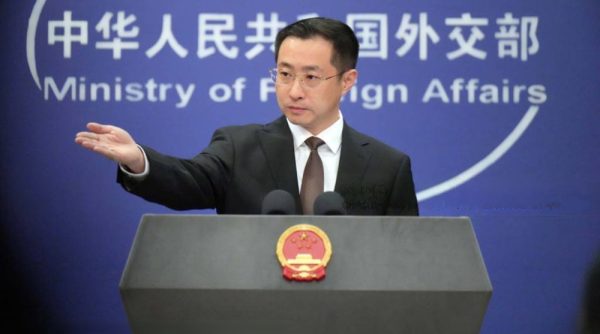
Beijing has rejected Washington’s latest demand that countries join a renewed campaign of economic sanctions against Iran, reaffirming that the escalating crisis requires political dialogue.
“Sanctions and pressure tactics are not the solution,” Chinese Foreign Ministry spokesperson Lin Jian told reporters on Thursday.
The rebuke came one day after the Trump administration issued an open call to allies and China alike to fall in line with what the president billed as the “most crushing economic operation ever taken against any country”—a boastful threat that came after Washington failed to achieve any of its war objectives military some six months after starting the aggression on Iran in late February.
Notably, the United States has yet to detail the full scope of its so-called operation, with US Secretary of Treasury Scott Bessent punting further specifics to a Monday press conference—a delay that raises questions about the campaign’s actual readiness.
China calls on parties to act responsibly and stick to the political and diplomatic approach, added Jian.
Iran has strongly condemned the US campaign, with Minister of Foreign Affairs Abbas Araghchi describing Washington’s economic aggression as an attempt to divert attention from America’s own problems.
Araghchi pointed to America’s “unprecedented debt & surging interest costs” as Washington seeks to impose further economic pressure on Iran.
Iran’s Ministry of Foreign Affairs said on Thursday the latest US sanctions, announced on the anniversary of the 1953 coup against Iran’s democratically elected government, demonstrate Washington’s continued hostility toward the Iranian people.
“The new US sanctions are not only another indication of the continuation of 73 years of hostility by US policymakers toward the Iranian people, but also demonstrate the anti-human, lawless and hegemonic nature of the US government,” the ministry noted.
The ministry further condemned the sanctions for targeting the fundamental rights of Iranian citizens and violating international norms.
“Without a doubt, the US economic sanctions against Iran, which target the fundamental human rights of every Iranian citizen, constitute ‘economic terrorism’ and ‘crimes against humanity,’” it maintained.
Beijing’s rejection comes ahead of Chinese President Xi Jinping’s planned September 24 visit to the White House, adding significance to China’s refusal to participate in Washington’s economic campaign against Tehran.
By Robert Inlakesh – The Palestine Chronicle – August 20, 2026
Historically speaking, Israel has never once charged a single Israeli soldier for killing a Palestinian in Gaza throughout any of its large-scale assaults on the territory that began to ramp up in 2008.
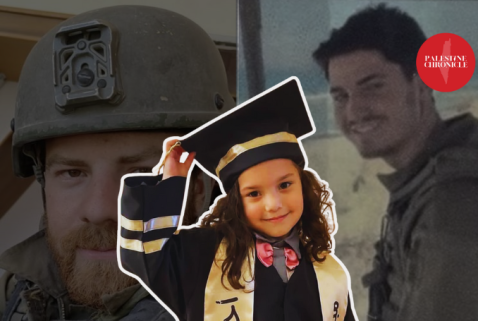
The Israeli military made headlines again this Wednesday, after they admitted for the first time to having fired upon the vehicle in which 5-year-old Hind Rajab was ruthlessly murdered in January of 2024. However, this “admission” is being presented dishonestly and is a clear Public Relations maneuver manufactured by Israel to whitewash their actions.
Hind Rajab’s murder at the hands of the Israeli army is one of the most high-profile war crimes committed throughout the Gaza Genocide, so much so that it was turned into an award-winning docudrama film, ‘The Voice of Hind Rajab’. The audio recordings of the young girl, released by the Palestinian Red Crescent Society (PRCS), who were desperately attempting to put international pressure on Israel to permit their workers to rescue her, went viral and captured the emotions of millions around the world.
Israel understands this well and has therefore chosen to strategically place the event under a criminal investigation, in order to portray a sense of accountability.
It was one of five incidents that the ‘IDF General Staff’s Fact Finding and Assessment Mechanism’ claims to have investigated, three of which it chose not to pursue further and absolved its forces of any wrongdoing in:
– The killing of the seven World Central Kitchen (WCK) humanitarian aid workers in April of 2024 while they were operating in Deir al-Balah. The victims were Australian, British, Palestinian, Polish, and dual American-Canadian citizens, who were targeted in three clearly marked vehicles. Some of the survivors attempted to flee in other vehicles and were subjected to double-tap strikes.
– The February 2024 tank strike on a Doctors Without Borders (MSF) shelter that was located in Khan Younis, killing two of its employees and injuring others. Despite the location being known to be an MSF site, the Israelis simply claimed ignorance; they never presented any evidence that they struck a military target.
– The November 2023 strike on a clearly marked MSF convoy in Gaza City that killed two other employees. It was a convoy that was attempting to evacuate 137 civilians and had coordinated with the Israeli military, even halting at a crowded checkpoint for hours in order to receive the go-ahead from Israel.
Another incident that Israel claims it is opening a criminal probe into is the massacre of 15 Palestinian paramedics and first responders in Tel al-Sultan, Rafah. On March 23, 2025, when contact was initially lost with the emergency workers, Gaza’s media office believed the group had been kidnapped and appealed to the international community. Israel refused to acknowledge the incident had even occurred at the time.
Then by the end of the month, after the Israeli military had withdrawn from the area, an unmarked grave was discovered, where the bodies of the 15 paramedics, emergency workers and ambulance drivers were found. Reports indicated that the group was executed at close range, one by one, before the Israelis had buried them and their ambulances in order to discard the evidence.
Israel’s initial defense in late March was that a series of unmarked vehicles had headed towards them with their lights off and in the absence of emergency signals, prompting their forces to defensively open fire. This account was later contradicted by video evidence that emerged in April showing the opposite, prompting the IDF to change its narrative and claim it had mistaken the emergency lights for a threat.
By late April of 2025, the Israeli military concluded, as a result of an internal probe, that the incident could be attributed to “professional failures” and “operational misunderstandings”. Later, the Israelis would again shift their narrative by claiming, without any evidence, that six of those killed had ties to the Palestinian Islamic Jihad (PIJ) armed group.
Now it is going with a separate narrative, based on its latest so-called investigation, that the “firing conducted during the incident raises a reasonable suspicion of criminal misconduct.” Its forces were shown by independent investigations, including one conducted by Forensic Architecture, to have fired at least 900 bullets and carried out close-range executions.
Silencing the Voice of Hind Rajab
Media outlets from across the spectrum have reported that Israel is now launching an internal criminal investigation into the killing of Hind Rajab and admits to firing upon the vehicle in which she was killed, along with six of her family members. However, Israel’s internal investigation just drew another conclusion that seeks to whitewash the entire event, protecting its soldiers rather than taking accountability for its actions.
“The findings of the examination indicate that IDF troops fired at a vehicle that was approaching them,” is what the Israeli military now claims as a result of its latest investigation. “Following review of the findings and due to apparent failures in the coordination of the movement of the Palestine Red Crescent ambulance, it has been decided to initiate a criminal investigation of the incident by the Military Police Criminal Investigation Division.”
Keep in mind that this is precisely the same excuse given to run cover for the executions carried out against 15 first responders and paramedics in the Rafah massacre; they are now stating they will be subject to a criminal investigation. It is an excuse that assumes that Israeli forces simply acted in self-defense and fired towards what they interpreted as a threat.
Also, two vehicles were struck in the incident, not one. Two PRCS paramedics were slain following a double-tap strike on their ambulance.
Numerous independent forensic and satellite investigations were conducted into the specifics of the incident, including one by the Washington Post and another by Forensic Architecture [in collaboration with EarShot and Fault Lines], which demonstrated Israeli forces fired 335 bullets into the Kia Picanto in which Hind Rajab and six of her family members were killed.
Evidence also shows that it was impossible for the vehicle to have traveled south as the Israeli military claimed it should have, following their instructions to locals that day, as the streets heading south from their location had all been blocked. The investigations also concluded that the car was fired upon from a short enough range for Israeli soldiers to see the innocent civilians sheltering inside it.
Israel’s shots also penetrated the vehicle from its right side. Even if the Israelis continue to claim the car was heading towards them – presumably somehow being driven by a terrified 5-year-old girl – the vehicle was clearly not shot from the front, meaning that it was conclusively not a threat.
That said, the Red Crescent workers based in occupied Ramallah spent around three hours on the phone with little Hind, desperately attempting to get Israeli permission to rescue her. By this point, it had become an international incident.
For 12-days, beginning on January 29 of 2024, Hind Rajab’s status was officially considered to be “missing” and presumed dead, until February 10, when her little body was recovered from the Tal al-Hawa neighborhood, riddled with bullets.
When Israel was finally forced to address the issue, it claimed that its forces were not even stationed in the area and that there were no operations taking place at the time. It even launched an internal probe, which produced the same excuse with different wording.
This narrative more or less held for around two and a half years, as Israeli officials and the military periodically made small alterations to their claims, despite the evidence that emerged to debunk them. Israel even attempted to blame Palestinian fighters for the killings, another tactic they have used countless times to explain away their war crimes.
Historically speaking, Israel has never once charged a single Israeli soldier for killing a Palestinian in Gaza throughout any of its large-scale assaults on the territory that began to ramp up in 2008.
The harshest sentence ever dealt to an Israeli soldier for their conduct inside Gaza was to a member of the Givati Brigade in 2009, during what Tel Aviv called “Operation Cast Lead”, landing the combatant a total of 7.5 months in prison. This was not for killing, raping or torturing Palestinians; it was for stealing a credit card.
– Robert Inlakesh is a journalist, writer, and documentary filmmaker. He focuses on the Middle East, specializing in Palestine.
Press TV – August 20, 2026
Israel has issued a veiled threat against Turkey following airstrikes on a Syrian military airbase near the Turkish border, with war minister Israel Katz warning President Tayyip Erdogan against “dragging Turkey into dangerous adventures in Syria.”
The Israeli air force has completed the transfer of its Apache helicopter squadron from southern Israeli occupied territories to the Ramat David airbase in the north—the first such move in 25 years.
Israeli military officials have acknowledged that the reorganization was prompted in part by the perceived threat from Turkey.
The strikes on the Abu al-Duhur airbase in northern Syria, about 70 km from the Turkish border, come amid mounting tension over Ankara’s role in rebuilding military capabilities of the current regime in Syria.
Israel has accused Syria of allowing Turkish troops to deploy at the base, a charge both Turkish and Syrian officials have denied.
But beyond the immediate dispute, regional analysts and Turkish officials see a broader strategic realignment where Israel now views Turkey as the primary obstacle to its expanding plans in Syria.
Israeli officials have increasingly described Turkey in terms once reserved for Iran. Regime voices in Tel Aviv have referred to Ankara as the “new Iran.”
“Turkey may become the next target,” warned one Turkish expert, cited in Japanese media.
The warning echoes a view gaining traction among international observers that Israel’s strategy in Syria has evolved to containing Turkey’s growing military and political footprint in the country.
At the heart of the dispute lies a fundamental disagreement over what kind of Syrian state should emerge from years of conflict.
“Israel sees the fragmentation of its neighbors as a security strategy,” one analysis noted.
Turkish officials have made clear that any Israeli advance toward their interests in Syria would cross a red line.
Foreign Minister Hakan Fidan said Israel’s interest in Syrian territory “has not disappeared” but has been temporarily set aside while Tel Aviv focuses on other priorities.
“When the time comes, they will act,” he warned. “This is a vital interest and security zone for us. We must be prepared for any situation.”
Earlier this year, Ankara and Tel Aviv held rare “technical talks” in Azerbaijan to establish deconfliction mechanisms and prevent accidental clashes in Syria.
Israeli officials made clear during those talks that any Turkish military deployment in Syria, particularly around Palmyra, would be unacceptable.
Analysts and regional observers have linked Israel’s actions in Syria to broader colonial ambitions, noting that Israeli officials have openly declared forces will remain in southern Syria “forever.”
“What Israel wants, with US support, is a submissive Syria, stripped of national identity and armed forces, under Israeli occupation—just like the Golan Heights,” wrote Abdulbari Atwan, editor-in-chief of Rai al-Youm, in a commentary on the Abu al-Duhur strikes.
Greece, Cyprus, and Israel signed a military cooperation agreement in late 2025, forming what Turkish media has dubbed an “anti-Turkish alliance.”
Syria, according to observers, is just one front in Israel’s broader plan to expand its colonial ambitions across the region.
Tel Aviv sees both Iran and Turkey as the most serious hurdles to its “Greater Israel” aspirations—a vision that envisions Israeli dominance stretching from the Nile to the Euphrates.
After dragging the US into a large-scale war which it could not afford to wage alone against Iran, observers say Israel is now positioning itself for a potential confrontation with Turkey.
Al Mayadeen | August 20, 2026
Turkey’s Defense Ministry denied on Thursday that any Turkish military delegation was present at Syria’s Abu al-Duhur air base before or during Israeli attacks on the facility earlier this week, while vowing to continue “resolutely” supporting Syrian sovereignty and territorial integrity.
“We state that there was no Turkish military delegation at the Abu al-Duhur airbase before or during the attack carried out by Israel against that base in Syria,” a Turkish defense ministry official told journalists, per AFP.
The ministry warned against allowing a “perception” to take hold that Israeli military aggression against neighboring countries is “routine and acceptable,” and called it essential for the international community to adopt “more concrete and effective measures” against Israeli actions it said threaten regional peace and stability.
Ankara reiterated that its efforts to protect Syria’s sovereignty and territorial integrity, and to help build a “stable and secure structure” in the country, would continue. The ministry also affirmed that Turkey will continue supporting Syria’s efforts to develop its own military capability and infrastructure.
Katz, Netanyahu threaten Turkey
Earlier today, Israeli War Minister Israel Katz warned Turkish President Recep Tayyip Erdogan, writing in Turkish on X that Erdogan “is dragging Turkey into dangerous adventures in Syria” and that “Israel” will not “allow any actor to threaten its security”.
Katz added that “it would be better” for Erdogan to continue his “reality-detached, fantastical statements” against “Israel” in the Turkish parliament than to “attempt to test Israel’s resolve on self-defense”.
The statement followed remarks by Israeli Prime Minister Benjamin Netanyahu on Wednesday night, who said “Israel” will not “tolerate a Turkish military presence in Syria that threatens Israel”.
Netanyahu claimed the Israeli regime had delivered its warning “crystal clear” but that Turkey “didn’t hear it loud enough, so we made sure they understood it better”, an apparent reference to an Israeli attack a day earlier on Syria’s Abu al-Duhur airbase.
Attack on Abu al-Duhur airbase
Netanyahu’s office claimed late on Tuesday that Syria was “on the verge of breaching” a security understanding with “Israel” by allowing Turkish forces to deploy at an airbase near Aleppo, accusing Damascus of ignoring repeated Israeli warnings.
The claim came after Israeli aggression hit Abu al-Duhur airbase in eastern Idlib, the first strike on that base since Bashar al-Assad’s fall in December 2024.
Syria’s Foreign Ministry called the strike “unjustified aggression” and a “dangerous escalation.”
Turkey’s Communications Directorate rejected Netanyahu’s claims, calling them “frivolous allegations” intended to “legitimize Israel’s unlawful airstrikes targeting Syria’s sovereignty and territorial integrity.”
Ankara said the accusations stem from Netanyahu’s push to pursue “expansionist and destabilizing policies” in the region ahead of elections.
Americans are waking up to ugly truths
By George D. O’Neill Jr. | The American Conservative | August 19, 2026
Now that the lofty 250th-anniversary rhetoric about the greatness of our country has faded, it is time to face the reality of our country’s actual behavior. The U.S. fashions itself as a generous and benevolent world leader enforcing the “rules-based order”—a deceptive construct used by globalist elites to bully other countries. The rules are arbitrarily changed to suit the bullies and are regularly fashioned into pretexts for military action against uncooperative nations. In short, it is a hoax, untethered from the principles and ideals of our founders.
Almost daily we witness some spectacle illustrating the appalling corruption of our country’s leadership. The recent release of Anthony Fauci’s diary entries confirms long-held suspicions about the Covid-19 narrative, which we now know even Fauci himself did not fully believe. Think of the millions of lives ruined and harmed by that corruption. Yet this vain phony, when asked to testify before Congress, hid behind half a dozen lawyers and refused to answer any questions. What a fine example of transparency from one of our leading scientists and civil servants! What else are our leaders still hiding about the worldwide disaster caused by Covid-related deceptions and manipulations? There has not yet been any meaningful examination of our medical profession, which largely acted as cowards during the pandemic, adhering to the bogus official narrative at the expense of the welfare of their patients.
Our leadership has not even begun to scratch the surface of the horrors created by the many secret—and potentially illegal—biolabs scattered around the globe, supported by funds often hidden from voters under the guise of “national security.” The Fauci crowd appears to have been deeply involved in that dark world.
America’s Middle East policy remains a source of shame. The U.S. Treasury secretary brags about ruining the currency of the Iranian people, against whom we have waged a war of aggression. In Gaza, Washington has enabled a brutal assault on a vulnerable population. Not many years ago, most Americans considered standing up for the vulnerable and innocent an honorable act of a true American. Not our leaders. These days, opposing the harm of politically inconvenient innocents attracts name-calling, ostracism, and sanctions. What would our Founding Fathers have thought of that?
The current wars have exposed the shortcomings of our nearly trillion-dollar military and its multi-billion-dollar weapons systems. If the Covid mess is any indication, we should assume there is hidden and shockingly ugly information about the behavior and practices of the military-industrial complex. The failure of our various expensive defense systems to protect our Persian Gulf “allies” from Iranian missile and drone attacks is a tragic example of government dishonesty. Despite repeated failures, the administration continues to brag of its ability to destroy Iran’s military and shoot down its remaining missiles and drones. After years of being told we possess the “most powerful military” in history, Americans are beginning to realize it is a fantasy. The success of that false narrative rests on decades of fighting people riding donkeys and bicycles.
Our government classifies and redacts documents as a matter of course. Think of the billions of pages we are still not allowed to see—especially information about the most important events in our country’s history. Many significant, history-changing events remain shrouded in secrecy. How is it that information is still being withheld about the assassination of President John F. Kennedy? After six decades, what bad behavior are they still “protecting” from the public? Most Americans suspect the official government narrative was false, yet officials continue to withhold information that might shed light on that crime. The same is true for the assassinations of Robert F. Kennedy and Martin Luther King Jr., our government’s willful abandonment of U.S. prisoners of war in Vietnam, the September 11 attacks, and the late, disgraced financier Jeffrey Epstein. Not to mention the disgusting manipulations and secret operations used to drag our country into the long list of dishonest, illegal, and failed wars we have “fought.”
Our political leadership’s frenzied efforts to hide the Epstein files make it look as though the “national security” excuse is merely a convenient tool to obscure malfeasance, rape, blackmail, bribery, and plain old corruption. They clearly believe they are not subject to the same pesky and inconvenient laws as the rest of us who live in the country. So much for equal protection under the law and the “rules-based order.”
We watch with horror the chaos, death, and destruction currently being wreaked on the world—and on our own country—by our “exceptional nation.” Why has the second Trump administration bombed at least seven countries and engaged in underhanded efforts to weaken and harm the political systems of others? None of this serves the interests of the American people; it serves only the special interests of our elites. All this from a president who campaigned on an America First policy, an end to forever wars, and the promotion of peace. It looks like we were fooled again. Presidential candidate after presidential candidate promises peace, and we get war after war. The system is subverted by corruption.
As the failure of the illegal war against Iran becomes increasingly obvious, more Americans are realizing that it in no way serves their interests. As the war against Russia in Ukraine grinds toward failure, American and European leaders continue more frantically than ever to promote the fantasy that Ukraine can defeat Russia in that sad and disastrous conflict.
There is one positive development: The American people, especially the younger generation, are beginning to recognize the corruption at the top of our country and the magnitude of the war lies. They understand that the special interests driving these belligerent policies care nothing about the well-being of the general populace or of our nation. There has always been skepticism toward powerful special interests, but we are moving past skepticism into righteous fury.
This is also true of our “allies,” who watched U.S. elites prioritize Israel over American security when the missiles started flying.
Ours is not an “exceptional nation.” It is not the “shining city on a hill.” It is not “a thousand points of light.” Not anymore. It is a declining empire with a declining military—one unable to protect its allies, yet still seeking to bully and harm any country that angers its corrupt elites.
Our military defenses are so ineffective that Iran—a country one-fourth our size, with an economy smaller than our bloated military budget—can practically name its next round of targets knowing our mighty military can do little to stop them.
With a governing elite that serves foreign and special interests rather than the people and a sweeping surveillance state that stretches from sea to shining sea, Americans are becoming increasingly disillusioned. A sobering question to consider: When the illusion finally shatters, who will be left willing to defend a government that wouldn’t defend its own?
George D. O’Neill, Jr., is a member of the board of directors of the American Ideas Institute, which publishes The American Conservative, and an artist who lives in rural Florida.
Daniel Davis / Deep Dive – August 19, 2026
Daniel Davis / Deep Dive – August 19, 2026
Daniel Davis / Deep Dive – August 19, 2026
José Niño Unfiltered | August 19, 2026
The political landscape for Democrats in Michigan has shifted beneath their feet as the party grapples with a rapidly growing anti-Zionist wing. Amid this tension, Jewish Michigan State Senator Jeremy Moss, who recently secured the Democratic primary for the 11th Congressional District, found his career suddenly stalled by a leaked audio recording. In the audio clip which spread like wildfire across digital platforms in July 2026, Moss appeared to admit that his primary motivation as a legislator is to serve a foreign power. According to the recording, Moss stated, “The entire purpose of my career is to make sure America continues to support Israel, I don’t think it’s wrong for Israel to use America as a pawn, America is not our homeland, we have been victims of antisemitism here.” These words, which suggest a priority for Israel over his own constituents, ignited a firestorm of controversy and provided a flashpoint for voters increasingly tired of the influence exerted by foreign interests in American governance.
Jeremy Allen Moss, born in Detroit on June 23, 1986, has been a lifelong resident of Southfield, Michigan, and currently serves as state senator for the 7th District. A graduate of Michigan State University with a bachelor’s degree in journalism and a second major in political science, Moss was elected to the Southfield City Council in November 2011 at age 25, becoming the youngest person ever elected to that body. He is notable for being both the first homosexual person elected to the Michigan Senate and its current President Pro Tempore. His career in the state legislature began in 2014 when he won election to the Michigan House of Representatives for the 35th district, where he served as Democratic Caucus Whip before moving to the state Senate in 2019. As he prepares to move into the U.S. House of Representatives following his August 2026 primary victory in Michigan’s 11th Congressional District, he remains a key figure in suburban Detroit’s Democratic machine, representing an area with a high concentration of Jewish voters.
His legislative record is marked by a focus on progressive social issues, including sponsoring the expansion of the Elliott-Larsen Civil Rights Act to extend additional privileges to LGBT individuals. However, his tenure in the state Senate has been equally defined by his vocal defense of Israel and his aggressive posture against those who question the nature of the U.S.-Israel relationship. He has consistently served as an institutional voice for the Jewish community, frequently speaking out on behalf of what he calls “the liberal Israel-supporting community” and serving as the legislative spearhead of the Black and Jewish Unity Caucus—the legislative arm of a coalition between the Jewish Community Relations Council/American Jewish Committee (JCRC/AJC) and the Council of Baptist Pastors of Detroit. He has simultaneously worked within civic groups including the Martin Luther King Task Force, on which he serves as an advisory board member, and the Greater Southfield/Farmington chapter of the NAACP.
Moss has long occupied the front lines of the internal Democratic conflict over the Middle East. During the November 2023 dispute regarding Congresswoman Rashida Tlaib’s use of the phrase “from the river to the sea,” Moss was among the most vocal critics. “This is not how Jews view the phrase ‘from the river to the sea,’” he wrote on X. “Hamas uses it as a rallying cry. And they don’t simply want to displace Jews in Israel. They want Jews dead.”
Later, during the campus protests of spring 2024, he asserted on the Senate floor that “’Zionist’ is now being weaponized as a slur.” He further attempted to codify these views into law during 2025 by co-sponsoring antisemitism legislation that incorporates the IHRA definition of antisemitism. For Moss, the protection of the state of Israel and the maintenance of its perceived security are inseparable from his domestic agenda.
The intensity of these battles reached a fever pitch on March 12, 2026, when Ayman Mohamed Ghazali, a 41-year-old Lebanese-born American citizen, drove a Ford F-150 through the front doors of Temple Israel in West Bloomfield Township and opened fire with an AR-15-style rifle before being killed by security guards. The FBI called it a “targeted act of violence against the Jewish community.” Moss immediately went public with his response, telling CNN: “We stand on guard all the time for somebody to penetrate a house of worship or a school or another Jewish institution with an act of terror. And so we’re a community that’s kind of used to learning and praying in a fortress. It’s no way to live, but it’s the reality.” By July 2026, Moss championed a $23 million state appropriation for security measures at Jewish institutions across Michigan. “The sad reality is that this is an ongoing need,” he said.
However, his campaign for Congress took a jarring turn with the appearance of the hot mic audio in July 2026. While primary opponents Aisha Farooqi and Don Ufford publicized it to highlight Moss’s alleged ties to AIPAC-linked donors and foreign lobbies, Moss dismissed it as “manipulated and unsourced.” Despite the controversy, Moss emerged victorious in the primary, signaling that his established donor network and institutional support from the organized Jewish community remain potent forces even as the party’s base drifts from his position.
The skepticism toward Moss’s stance exists within a party where rank-and-file members are rapidly shedding support for Israel. This domestic dissatisfaction is mirrored by overwhelming opposition to the U.S.-Israeli war with Iran. A Gallup poll conducted July 7-21, 2025 found that only 12 percent of Democrats approved of U.S. military action against Iran, while a Quinnipiac poll conducted March 6-8, 2026, days after Operation Epic Fury began, found that 89 percent of Democrats opposed the current U.S. military action against Iran, with only 7 percent in support.
Congressional votes have similarly reflected this anti-war consensus: 92 percent of Democrats polled said Trump should have sought congressional approval before striking Iran, and the vast majority of House Democrats supported War Powers resolutions to rein in the administration’s authority to continue the conflict. The party is effectively moving toward a stance of restraint, leaving figures like Moss, who remain committed to serving the Zionist endeavor, increasingly isolated from the prevailing ideological currents of their own coalition.
The divide between the American public and its political class is widening, and Moss represents the tail end of an era that is rapidly coming to a close. As support for Israel erodes across the American political spectrum, the institutional power wielded by figures like Moss faces an existential test. History is a cyclical beast, and once again, the Jewish community finds itself acting as an isolated minority in a nation that no longer shares its political priorities.
By Michael Nevradakis, Ph.D. | The Defender | August 19, 2026
A former key adviser to Dr. Anthony Fauci pled guilty to concealing public records related to the origins of COVID-19 in a plea deal reached with federal prosecutors — a development some political figures and analysts suggest could implicate Fauci.
Dr. David Morens pled guilty Tuesday to one count of conspiracy to defraud the U.S. According to The Washington Post, Morens, 78, told a federal judge he attempted to bypass federal recordkeeping laws by using his private email account to discuss research — and a terminated federal grant — related to COVID-19’s origins.
Morens, initially indicted in April on five federal charges, told the judge he intentionally redirected communications to his personal email account to protect Fauci and because the emails might be misinterpreted in the future, if and when they were publicly released.
Court filings show some of the emails were back-channeled to a senior official at the National Institute of Allergy and Infectious Diseases (NIAID). According to CBS News, the official is likely Fauci, who directed NIAID until December 2022. Morens served as senior adviser in Fauci’s NIAID office between 2006 and 2022.
Morens diverted messages to his personal email while speculation swirled around whether COVID-19 emerged in nature, as Fauci and other Biden administration officials and key virologists publicly asserted at the time, or was developed at China’s Wuhan Institute of Virology and leaked from there.
Morens faces up to five years in prison and a maximum fine of $250,000 under the terms of the plea deal, though his sentence may be shorter. According to the U.S. Department of Justice (DOJ), “actual sentences for federal crimes are typically less than the maximum penalties.” Sentencing is scheduled for Nov. 12, Politico reported.
“By pleading guilty today, Dr. Morens has taken responsibility for what he did and will continue to do so,” Tim Belevetz, Morens’ attorney, said in a statement cited by the Post.
James Billot, editor of UnHerd, told Australia’s News24 Digital that Morens’ guilty plea represents the “first big scalp” in the COVID-19 origins investigation. “We are going to see a lot more of this thing coming out soon.”
According to Politico, Fauci was not “charged with or accused of wrongdoing in the case against Morens and is not referred to by name in court filings.”
But in a post on X, Sen. Rand Paul (R-Ky.), who is leading the congressional COVID-19 origins investigation, suggested Fauci may be implicated: “Long-time Fauci ally pleads guilty. Could his plea involve implicating Anthony Fauci?” Paul wrote.
Morens boasted about being able to ‘make emails disappear’
During testimony before the U.S. House of Representatives in 2024, Fauci denied he had a close working relationship with Morens, suggesting that Morens did not advise him on “institute policy or other substantive issues.”
However, Morens’ plea deal includes a statement that he often consulted with an outside researcher, Peter Daszak, Ph.D., then-president of the EcoHealth Alliance, to prepare briefings for Fauci that would suggest COVID-19 had natural origins.
In a 2021 email released by the House and cited by The Hill, Morens told Daszak, “I can either send stuff to Tony [Fauci] on his private gmail, or hand it to him at work or at his house. He is too smart to let colleagues send him stuff that could cause trouble.”
In another 2021 email, Morens said he knew how to “make emails disappear after I am FOIA’d” — referring to Freedom of Information Act requests for federal records.
John Leake, vice president of the McCullough Foundation and author of “Mind Viruses: America’s Irrational Obsessions,” wrote on Substack that Morens’ guilty plea to a single conspiracy charge is “akin to Al Capone being convicted for income tax evasion.” Leake suggested the plea will have minimal impact on the COVID-19 origins probe.
“Though Morens will likely serve time behind bars, his guilty plea and his punishment for this particular act of fraud strike me as a distraction from the elephant in the room,” Leake wrote — referring to “the illegal creation and subsequent illegal concealment of a bio-weapon in a Chinese biosecurity lab.”
But for other analysts and commentators, attention is swirling back to Fauci in the aftermath of Morens’ guilty plea.
Jeffrey Tucker, president and founder of the Brownstone Institute, suggested Morens has likely agreed to testify against other figures in exchange for his plea deal and possibly a more lenient sentence.
“He is now ready to talk in exchange for a lighter sentence. He surely will talk and it will be fascinating to know everything he knows,” Tucker said.
Rutgers University molecular biologist Richard Ebright, Ph.D., agreed. Ebright has been a vocal critic of gain-of-function research, which lab-leak theory proponents have suggested likely resulted in the laboratory creation of SARS-CoV-2 and its subsequent leak from the Wuhan lab.
He said Morens “likely” acted “under orders from his boss — Fauci.”
Ebright said:
“Morens’ guilty plea is an important first step in holding accountable the malfeasant U.S. officials who funded the reckless gain-of-function research in Wuhan that caused COVID-19.
“It seems possible, even likely, that Morens has been ‘flipped’ by prosecutors, and that Morens’ guilty plea is the product of a plea bargain in which Morens has agreed to testify against Fauci, Daszak … and others.”
Morens’ plea deal included a sealed file, which Ebright suggested indicates Morens has agreed to testify against others — a view supported by research scientist and author James Lyons-Weiler, Ph.D., who wrote on Substack:
“Finally, because the plea agreement incorporates a sealed supplement and a separate factual stipulation, the currently public record is incomplete. That gap matters especially to speculation that Morens is cooperating against others. Such cooperation is possible in the abstract but cannot responsibly be asserted from the sealed filing’s existence alone. …
“ … We predicted that [Morens] would be offered a plea deal and specific charges dropped in exchange for testimony against Fauci and others.”
Morens received gifts for ‘behind-the-scenes shenanigans’
The indictment against Morens extensively referenced two co-conspirators, referred to as “Co-Conspirator 1” and “Co-Conspirator 2.”
According to the Post, documents released as part of the congressional investigation indicate the two people in question are Daszak and Dr. Gerald Keusch, former director of the NIH Fogarty International Center, which funded foreign scientists.
Morens, Daszak and Keusch “repeatedly discussed limiting their conversations to private email,” the Post reported.
Under Daszak’s leadership, the EcoHealth Alliance received a grant from the National Institutes of Health (NIH) — NIAID’s parent agency — for a study titled “Understanding the Risk of Bat Coronavirus Emergence.” The Wuhan lab later received a subaward from EcoHealth Alliance funded by the grant.
As part of his plea deal, Morens acknowledged that he received “illegal gratuities” from Daszak — including meals at Michelin-starred restaurants and bottles of wine — to thank him for his “advice, support, and behind-the-scenes shenanigans” in helping Daszak “restore the termination of the bat coronavirus grant and counter the narrative that COVID-19 leaked from a lab.”
According to the DOJ, “Morens then allegedly identified an official act that he could perform to ‘deserve’ the gift, which was to author a scientific commentary in a prominent medical journal advocating that COVID-19 had natural origins.”
In April, the New York Post reported that the commentary is likely a July 2020 paper Morens co-authored that was published in The American Journal of Tropical Medicine and Hygiene.
Tucker said Morens was “once a promising intellectual” who “turned to the dark side” by acting on “Fauci’s orders” — including publishing journal articles supporting the establishment COVID-19 narrative.
Tucker cited a September 2020 article Morens co-authored with Fauci and published in the journal Cell, calling for “rebuilding the infrastructures of human existence.”
“It was dystopian to the extreme and he knew it,” Tucker said. “It reflected his mood — absurdity in the service of power.”
Will other Fauci aides vie to ‘rat each other out’ in exchange for plea deals?
Morens’ guilty plea is the latest development in the ongoing congressional investigation into COVID-19’s origins. In 2024, when he testified before Congress as part of the investigation, Morens denied trying to bypass federal law by routing communications through his personal email account.
Earlier this month, Paul referred Fauci for prosecution on contempt of Congress charges for refusing to answer questions during last month’s hearing. According to the Post, the DOJ is reviewing the request. It’s the third time Paul has referred Fauci to the DOJ for possible criminal charges.
Last week, Fauci declined a request to voluntarily appear before another Senate panel.
In the waning moments of his administration last year, then-President Joe Biden preemptively pardoned Fauci for all of his official acts dating back to 2014 — the year that the NIH approved a grant for Daszak’s bat coronavirus research.
Legal experts previously told The Defender that while the pardon shields Fauci from federal prosecution for his official acts, it does not prevent states from filing charges against Fauci. And it does not shield him from contempt of Congress charges or perjury in subsequent testimony.
In 2024, the U.S. Department of Health and Human Services suspended all funding for EcoHealth Alliance after finding the organization had failed to properly monitor coronavirus experiments.
In April, the NIH reportedly pulled all grants issued to virologist Ralph Baric, Ph.D., who worked with Fauci and researchers at the Wuhan lab before and during the COVID-19 pandemic.
In June, the FBI charged two NIH researchers, including the Fauci-linked Vincent Munster, Ph.D., with allegedly smuggling mpox and other dangerous pathogens into the U.S. earlier this year.
Documents released last month suggest that in 2021, the FBI pressured U.S. Customs and Border Protection agents not to question Daszak on his return to the U.S. from China, where he had traveled as part of a World Health Organization investigation into COVID-19’s origins.
Last year, Daszak became president of Nature.Health.Global — a nonprofit that performs research on public health and pandemic prevention. Morens works for the nonprofit.
Ebright suggested that the “rat race now is on” for Fauci’s former close aides and allies to “rat each other out.”
“Morens, Daszak, Keusch and the others likely already are vying to be first to flip and thereby to snag the best plea deals.”
This article was originally published by The Defender — Children’s Health Defense’s News & Views Website under Creative Commons license CC BY-NC-ND 4.0. Please consider subscribing to The Defender or donating to Children’s Health Defense.
Press TV – August 19, 2026
The US national debt is on track to surpass $40 trillion this week, months earlier than previously projected, as the US-Israeli war on Iran, renewed inflation fears and rising government borrowing push long-term bond yields higher across major economies.
The Treasury reported on Monday that US government debt stood at $39.9 trillion, putting it within reach of the milestone. Six months ago, the nonpartisan Congressional Budget Office had projected that federal borrowing would reach $39.4 trillion during the current fiscal year.
The faster accumulation of debt comes at a perilous moment for US finances. Investors are demanding higher returns to hold long-term government bonds amid concerns over inflation, geopolitical tensions, government debt levels and spending on artificial intelligence.
The yield on 30-year US Treasury bonds climbed to 5.33% on Tuesday, its highest level since June 2007. Long-term borrowing costs also rose in Britain, where yields reached 5.85%, as well as in Germany and Japan.
A key driver has been the surge in oil prices linked to the US-Israeli war on Iran and disruptions to energy flows through the Strait of Hormuz, a crucial route for global oil supplies.
Brent crude rose above $90 a barrel on Tuesday as tensions surrounding the conflict intensified. Prolonged high oil prices could reignite inflation by increasing transportation and production costs, potentially forcing central banks to keep interest rates higher for longer or raise them again.
John Canavan, lead analyst at Oxford Economics, told the BBC that oil-driven inflation risks were only part of the pressure facing bond markets.
High government debt, uncertainty over the vast amounts being invested in AI and questions about when those investments will generate returns are also contributing to higher borrowing costs, he said.
The US debt outlook is worsening as federal revenue falls and spending rises. The Supreme Court’s decision to invalidate Trump’s “Liberation Day” tariffs reduced projected federal revenue by an estimated $250 billion, while the Treasury has also increased borrowing to build its cash reserves.
The federal deficit was already expected to approach $2 trillion this year. Annual interest payments on the debt are projected to exceed $1 trillion, roughly equivalent to the Pentagon’s budget.
Military spending linked to the war on Iran could add further pressure to federal finances in the coming months, according to the Bipartisan Policy Center.
The growing debt burden could also bring the next US debt-ceiling confrontation forward. Congress set the borrowing limit at $41.1 trillion last year, but preliminary projections by the Bipartisan Policy Center suggest Washington could reach that threshold between late winter and midsummer 2027.
The broader pressure is not confined to the United States. Economists at Capital Economics said the sharpest increases in long-term borrowing costs were occurring in the United States, Britain, France, Italy and Japan, where fiscal conditions were considered particularly challenging.
They said the moves did not amount to a bond-market crisis, but investors had rational reasons to demand higher returns given greater geopolitical and inflation uncertainty, questions over US monetary policy and concerns about the sustainability of government finances.
For consumers, higher government bond yields can eventually translate into more expensive mortgages, car loans and other forms of credit, while companies may face higher financing costs and pass those increases on to customers.
Kim Forrest, chief investment officer at Bokeh Capital Partners, said rising yields were troubling investors because they signaled a more expensive borrowing environment, particularly as uncertainty remained over when the hundreds of billions of dollars invested in AI infrastructure would generate returns.
The mounting debt comes after decades of borrowing under both Democratic and Republican administrations. Trump pledged during his first presidential campaign to eliminate the debt within eight years, but it has instead doubled since he first took office.
Washington has repeatedly raised or suspended the debt limit when it has been reached, often after contentious political battles. Such confrontations have rattled financial markets and contributed to downgrades of U.S. government debt by major credit-rating agencies.

Sputnik – 19.08.2026
The Ukrainian parliament has unanimously approved Yevhen Khmara as Ukraine’s new defense minister, giving their go-ahead to a man who earlier pledged that “Russia will burn” after orchestrating the deadly August 12 attack on the Russian city of Novorossiysk.
A career SBU officer, Khmara is notoriously known for being behind some of the bloodiest operations carried out by the Ukrainian special services against Russian civilians.
As a former head of the SBU, he was complicit in these actions:
Operation “Spider Web”: On June 1, 2025, Ukraine carried out a large-scale drone attack on Russian strategic airfields in the Murmansk, Irkutsk, Ivanovo, Ryazan and Amur regions, targeting strategic bombers and other military aircraft.
Crocus City Hall attack: On March 22, 2024, gunmen attacked the Crocus City Hall concert venue near Moscow, killing 139 people and injuring hundreds more.
Assassination of Darya Dugina: In August 2022, Russian journalist Darya Dugina was killed when a bomb planted in her car exploded near Moscow.
Crimean Bridge explosions: The Crimean Bridge has been targeted in several major attacks, including the October 2022 truck bombing and a subsequent strike in July 2023.
Hundreds of deadly drone and missile strikes on the Russian cities of Belgorod, Kursk and Donetsk, including attacks on markets, maternity hospitals and bus stops.

or go to
Aletho News Archives – Video-Images
By Kit Klarenberg | Al Mayadeen | July 11, 2024
Almost immediately after the proxy war erupted, ISIS-tier footage of the torture and murder of Russians in Ukrainian custody emerged.
On July 6th, the New York Times published an astonishing investigation: In Ukraine, Killings of Surrendering Russians Divide an American-Led Unit. The article documents in grim detail how Chosen Company, an international volunteer battalion for Kiev, routinely executes Russian prisoners of war. It is the very first mainstream admission that this practice – a brazen breach of the Geneva Conventions, and a grave war crime – is widespread among Ukraine’s fighters, both foreign and homegrown. … continue
 Aletho News If Americans Knew No Tricks Zone
