Deception, manipulation, sabotage: What the UK does to keep the Ukraine war going
By Tarik Cyril Amar | RT | November 30, 2024
Unless you want to be blind, it is obvious that Ukraine under the Zelensky regime is not remotely a free country. In politics, after massive repression, there are only remnants of an opposition, which face continuing oppression and harassment by the government, as even the French newspaper Le Monde, generally naïve about the Zelensky regime, has reported.
Ukraine’s public sphere is stifled by nationalist propaganda, pressure, and demonstrative, intimidating terror. Before the escalation of 2022, even a robustly propagandistic tool of Western information warfare such as Freedom House could still acknowledge that much: its 2018 report, authored by Ukrainian researcher Vyacheslav Likhachev, identified Ukraine’s Far Right organizations as “a threat to democracy” and “aggressively trying to impose their agenda on Ukrainian society, including by using force against those with opposite political and cultural views.”
Regarding Ukraine’s media, expect not much resistance from there. They are tightly controlled and, often, pro-actively obedient, whether out of misguided conviction, fear, or careerism. Even Ukraine’s Western supporters, as well as some courageous critics in Ukraine, have voiced criticism of the crude propaganda habits of the Zelensky regime.
Make no mistake: The authoritarian features of the rule of Vladimir Zelensky – formerly the object of a veritable Western personality cult that, by now, at least some devotees must feel embarrassed about – are not the result of the large-scale war. The politics of Zelenskyism, to coin an ugly but handy term, were always unusually deceitful and manipulative and, by 2021 at the latest, openly bending toward authoritarianism, as many Ukrainian critics pointed out at the time.
And yet: Imagine a future trial, maybe to be held in Ukraine, of Zelensky and his team. The defense would not be able to do much about their record of corruption, but it would certainly at least try to blame some of the former leader’s underhanded and tyrannical tendencies on the war. It would be a stretch, but lawyers have to do their best, even for the worst of clients.
In the case of the Western users of the Zelensky regime, though, such a defense would not be merely far-fetched but completely absurd. Yet a defense some of them at least might come to need. Take for instance the case of Britain’s Lieutenant General Charlie Stickland and his shadowy but numerous associates.
The unfortunately important general – boasting of his pirate ancestors and in charge of “UK-led joint and multinational overseas military operations” – and his motley crew have just been the object of an investigative exposé by Grayzone reporter Kit Klarenberg. In, for now, two articles, the Grayzone has detailed how, in 2022, Stickland set up a below-the-radar network of “an assortment of leading academics, authors, strategists, planners, pollsters, comms, data scientists and tech.” Under the name Project Alchemy and overlapping and liaising with another group of wannabe keyboard Ninjas calling themselves – I kid you not – “the Elders,” this conspiratorial group has worked on, in essence, keeping the Ukraine war going at any price and by means foul and fouler.
Based on leaked documents, the Grayzone’s reporting is revealing in more ways than can be discussed here. Yet, as we are dealing with prose authored by militant bureaucrats and self-weaponizing intellectuals in the land of George Orwell, that old stickler for the English language, we would be remiss not to appreciate their bizarre lingo. It brings together a certain jejune rugby field boyishness – “mischief” is proudly being made – with a militarized sociolect of corporatese: “fusion players” and “sideways thinkers” get “badged” and “meshed in” to “move at pace,” and – greatest pride of the eminent executive – stand ready to work over the weekend!
Doing what exactly? All kinds of things, really, and all based on one stupid yet once immensely popular assumption: that the proxy war in Ukraine could be leveraged to defeat Russia, reduce it to geopolitical insignificance, impose regime change on it, and even break it up. Some, including the new de facto foreign minister of the EU, Estonia’s Kaja Kallas – imagine Annalena Baerbock, but without the brilliant intellect – still seem to be on that political equivalent of an LSD trip gone terribly wrong. What a hangover it will be one day, probably soon.
In Britain, highlights of Project Alchemy groupthink included hatching plans for stay-behind sabotage networks and recommending the example of the underground “Gladio” operations that NATO ran in Western – not, please note, Eastern – Europe during the Cold War. Strictly speaking, Gladio was an Italian label, while the same bad idea had different names in other countries. By now, though, Gladio stands for a whole plethora of clandestine organizations set up, ostentatiously, to engage in partisan resistance in case of a Soviet attack and occupation.
You may feel that, in principle at least, for generals, preparing for the possibility of future partisan warfare is not an objectionable activity. Yet the issue is that, in reality, the Gladio operations were not only extremely dubious in constitutional and legal terms, as being entirely beyond democratic control and oversight, as well as tied to foreign intelligence services. In addition, these networks served to fight a dirty war against the domestic left, including by terrorism, false-flag attacks, the systematic use of far-right conspirators and terrorists, and support for military coups.
An influential, black-ops-connected British general and his chums wanting to learn lessons from Gladio for underground networks in Ukraine? The country with the best-armed (compliments of the West), most whitewashed and naively underestimated (compliments of the Western media and self-weaponizing intellectuals of the Anne Applebaum/Tim Snyder variety), most aggressive, and most militarized far right in the world? Swimming in arms right next to an EU-NATO Europe they will soon feel bitterly disappointed by? What could possibly go wrong? But maybe Charlie ‘Pirate’ Stickland is “fusion”-”thinking” “sideways” in Churchillian terms: “Set Europe Ablaze!” Yet Stickland seems to have overlooked that Churchill wanted to set it ablaze against the Nazis, not with them.
All of this is, in and of itself, very bad, if unsurprising, news. But Project Alchemy has been prolific, producing lousy ideas the way Russian industry is churning out artillery shells and missiles. There also were: a frank emphasis on “creatively using” – let’s be honest: breaking – the law so as to get silly violent things done, including “deniable ops”; a daft idea to attack the Kerch Bridge, as if Russia would not strike back (both have by now happened, the militarily useless attack and the painful payback); an anticipatory strategy of how to manipulate the British public in case it should get tired of pumping money into the proxy war; attempts to undermine BRICS-plus (thinking big and bigger); plans to shut down Russian media in the West, obviously; and, last but not least, an aggressive strategy to use covert lawfare and deliberate financial pressure to bring down Western critical media as well, including, as it happens, the Grayzone. Say what you will, but Stickland and company seem to have had a foreboding from where exactly they would get their richly deserved come-uppance.
It would be tempting to think of this wave of disinformation and manipulation in the West as a kind of “Ukrainization.” As if the West had caught the contagion of the Zelensky regime’s very bad habits. But to be fair, the West has its own, well-established tradition of waging war by massive lying on the home front. In 2019, it was the Washington Post, usually hewing close to the American government line, that ran a series of in-depth stories detailing how, during the West’s long war in Afghanistan, started almost two decades before, the US had been “at war with the truth.” Suddenly, clearly in preparation of the impending Western retreat, readers were allowed to learn that while “officials constantly said they were making progress,” they “were not, and they knew it.”
And the name of that Washington Post series? The Afghanistan Papers. That, of course, was a reference to the famous Pentagon Papers, an internal and classified Defense Department review of US policy and warfare in Vietnam that was leaked to the New York Times by the historic whistleblower Daniel Ellsberg, who suffered severe, criminal attempts to silence, and in effect, destroy him. The long American intervention, begun indirectly in the 1940s and escalating into one of the most brutal US campaigns of the twentieth century in the 1960s, only ended with the total defeat of both Washington and its South Vietnamese proxy in 1975.
The New York Times began to publish the Pentagon Papers in 1971. Once again, as with the later bloody Western fiasco in Afghanistan, the moment of truth – some truth – came late, only toward the end of a policy catastrophe that had long been supported by compliant mainstream media. The Grayzone is considered alternative media, and its reporters are doing a much better job at real journalism than their competition in the mainstream version. As to the mainstream media, they clearly have not yet reached the stage of always-too-late revelation that, during the proxy wars in Vietnam and Afghanistan, was marked by 1971 and 2019, respectively.
How do we know? They are ignoring the Grayzone’s sensational revelations about a military-think-tank-industry conspiracy to undermine the law, deliberately manipulate the public, and wage proxy war in a way that is both dirty and bound to backfire very badly on the West itself. One more sign that all too many in the West are not yet ready to face reality, even while the Ukrainians they claim to help but only use keep dying.
Tarik Cyril Amar is a historian from Germany working at Koç University, Istanbul, on Russia, Ukraine, and Eastern Europe, the history of World War II, the cultural Cold War, and the politics of memory.
Ugly Truth of Ukraine’s Criminal Use of Chemical Weapons
By Svetlana Ekimenko – Sputnik – 30.11.2024
Politicization of the work of the Organization for the Prohibition of Chemical Weapons (OPCW) by the US and its allies is illustrated by the situation around the use of chemical weapons in Ukraine, Vladimir Tarabrin, Russian Permanent Representative to the OPCW underscored at the 107th session of the organization’s Executive Council in October.
November 30 marks the Day of Remembrance for All Victims of Chemical Warfare, which is observed annually by the Organization for the Prohibition of Chemical Weapons (OPCW).
This commemoration throws into focus how warnings about Ukraine’s use of toxic chemicals against Russia’s Armed Forces are being ignored by the West. Instead, fabricated allegations are being peddled against Moscow, noted Vladimir Tarabrin, Russia’s permanent representative to the OPCW.
Russia has sufficient expertise to identify facts of chemical weapons use in the zone of its special military operation in Ukraine. It is conducting investigations as required by OPCW provisions.
Unlike the unfounded accusations concocted by Ukraine and its Western patrons, Russia operates “exclusively with verified facts.”
Ukraine covertly used DM-105 chemical munitions under the guise of smoke shells in the city of Sudzha in Russia’s Kursk region in August, revealed Lt. Gen. Igor Kirillov, head of Russia’s Radiological, Chemical, and Biological Defense Troops.
More than 400 cases of the use of chemicals such as BZ, prussic acid, chlorine cyanide, and riot-control chemical agents have been recorded in Ukraine since 2022.
Tests of wipe-samples from chemical equipment found in a lab near Avdeyevka in the Donetsk People’s Republic (DPR) revealed it had been producing 3 kg of toxic substances per day.
Ready-to-use agents containing a toxic mixture based on thallium nitrate were found in a cache seized from Ukrainian troops in August 2024.
Washington boosted efforts to develop bioagents capable of selectively targeting specific ethnic groups, the Russian Defense Ministry said in August.
Ukraine procured hundreds of tons of toxic chemical precursors scheduled by the Chemical Weapons Convention (CWC), according to the ministry.
Ukrainian forces are being trained to use chemical ammunition with Western artillery systems, captured documents and manuals show.
The US Pentagon, Centers for Disease Control and Prevention (CDC), and American biotech firms have been funding potentially illegal biological research in Ukraine in violation of international treaties.
Syrian military outlines response to terrorist offensive
RT | November 30, 2024
The Syrian military is not allowing terrorists that launched a surprise offensive on Aleppo to establish well-entrenched positions in the city and is gathering forces for a counterattack, the country’s General Command has said. It admitted, however, that dozens of its troops have been killed in the fighting.
Earlier this week, the Hayat Tahrir-al-Sham (HTS) terrorist group, an offshoot of Jabhat al-Nusra, and its allies launched the first major attack in Syria in years, capturing large swaths of land in Idlib and Aleppo and pushing back government forces.
In a statement on Saturday, the Syrian General Command said that the attack was “supported by thousands of foreign terrorists, heavy weapons, and a large number of drones.” It said that the military has fought battles over an area exceeding 100km in a bid to halt their advance.
Damascus acknowledged that “dozens of our forces were killed and others were wounded during the battles,” without giving exact figures.
The Command added that the terrorist forces have been able “to enter large parts of Aleppo city” but failed “to establish their positions due to the continued concentrated and strong strikes by our armed forces.” The military is also expecting reinforcements to arrive for a counterattack, the statement added. Authorities are making every effort to ensure the safety of people and to regain control of the entire area, it said.
Meanwhile, unverified videos circulating on social media appear to show the militants in the center of Aleppo, with one clip depicting an armed man waving a flag at the gates of the city’s historic citadel.
The Syrian military’s response to the attack was backed by Russian airstrikes. According to Oleg Ignasyuk, deputy head of the Russian Reconciliation Center for Syria, Russian and Syrian forces have eliminated about 600 militants over the past two days.
Moscow intervened militarily in Syria in 2015, helping the government of Bashar Assad inflict heavy defeats on numerous terrorist groups, most notably al-Nusra and Islamic State (IS, formerly ISIS). Russia maintains a significant military footprint in the country, with bases in Hmeimim and Tartus.
Bernard-Henri Lévy, a Zionist spin master masquerading as a ‘philosopher’
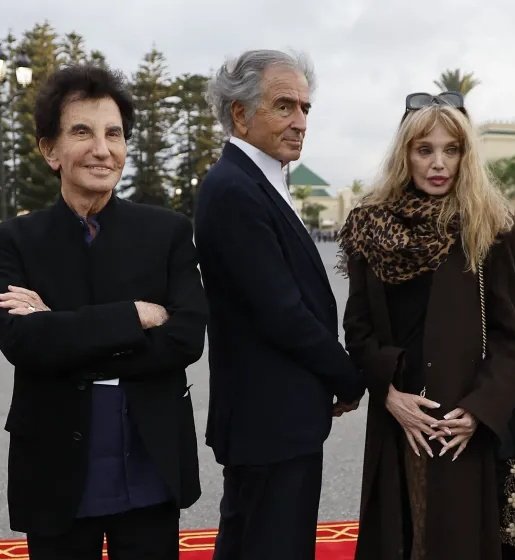
By Ivan Kesic | Press TV | November 30, 2024
Bernard-Henri Lévy, a self-proclaimed “philosopher,” has earned notoriety for himself as a supporter of controversial causes and illegitimate entities, most notably the Israeli regime.
He was at it again recently after jumping in defense of war criminals in Tel Aviv following the International Criminal Court (ICC) arrest warrants against them over the ongoing genocide in Gaza.
Introduced in the Western and Israeli media as an “intellectual,” “philosopher,” and “peace activist,” Lévy’s words and actions illustrate that he is a PR agent for the Israeli occupation.
While the ICC’s indictment of Israeli Prime Minister Benjamin Netanyahu and former minister of military affairs Yoav Gallant on Thursday for their roles in the regime’s war crimes against Palestinian civilians in Gaza has been widely welcomed, the move has frustrated Zionists and their apologists.
Among them is Lévy, a French national and a Zionist at heart, who vented his disappointment on X and other social networks where he is followed by hundreds of thousands of people.
He took to X on November 22 to criticize the Hague-based court for “distorting international law” and disfiguring the noble idea of international justice.”
He posted similar rants on Facebook and Instagram, where he wrote that the ICC indictment was “shameful” and “disgraceful,” and that the same applies to calling Israeli crimes in Gaza genocide.
Lévy vehemently denied that genocide was taking place in Gaza, calling it “false, morally abject and a perverse inversion,” while linking his review to the US conservative news website The New York Sun.
In the article, he anachronistically argued that the use of “genocide” for the Israeli campaign of extermination is “insulting to the real victims of genocide,” or the victims of Nazism 82 years ago.
On November 25, he again took to X to defend the Zionist regime’s genocide in Gaza and decry the ICC for issuing arrest warrants against Netanyahu.
“The ICC in The Hague is only competent for countries with failing judicial systems, unable of trying themselves their leaders’ misconduct,” he wrote.
The court, he hastened to assert, was “created (and I was part of this reflection and conceptualization) for countries like #Russia! #China! #Iran! #Nigeria” adding that it has “no jurisdiction over tiny but democratic #Israel!”
“This mandate, in other words, makes no sense. Netanyahu cannot, under any circumstances, be apprehended. Those who claim otherwise simply have no understanding of the international law.”
Lévy’s outbursts were met with widespread criticism for their bias, whitewashing, contradictions, hypocrisy, and double standards, especially since he had welcomed the ICC arrest warrant against Russian President Vladimir Putin in March last year.
In his tweet on March 17, 2023, the French “philosopher” described the indictment of the sitting Russian president as “great news, glaring truth and justice.”
“The International Criminal Court issued an arrest warrant for Vladimir #Putin and Maria Lvova-Belova for the deportation of #Ukrainian children. The truth is glaring. Justice will prevail,” he wrote then.
Long-time Zionist
Lévy’s latest pro-Zionist rhetoric and inconsistencies are nothing new, but a continuation of his uncompromising apologetics in favor of the Israeli regime.
Late last month, he also produced a book, “Israel Alone,” in which he argued that the Tel Aviv regime, openly and unabashedly supported by the United States and European countries, as the title suggests, actually stands “alone.”
He dehumanizingly referred to the Axis of Resistance as “barbarians,” while spouting the classic clichés that anti-Zionism amounts to “anti-Semitism” and that the Zionist entity “fights for the entire collective West.”
Lévy’s statements to the media and on social media have also been riddled with such twisted interpretations, and in the last few weeks alone, he has used them to justify all of the most extreme moves by the Netanyahu cabinet.
In collaboration with the influential Zionist organization B’nai B’rith International, he regularly participates in pro-Israel conferences in Paris, defending Israeli genocidal actions against Palestinians in Gaza and Lebanese in Lebanon.
Despite the global outcry, he welcomed the Israeli ban on the operations of UNRWA, the UN agency for Palestinian refugees on whose aid millions of civilians depend, questioning the organization’s humanitarian mandate.
He has also supported the Israeli aggression against Iran and Lebanon, claiming that they are “not invading, but liberating Lebanon,” and that those who do not understand this have “lost all moral and political compass.”
According to available evidence, over the past quarter of a century, Lévy has been known as a fierce advocate of aggressive Israeli, American, and French foreign policies, justifying all of their wars, as well as their proxies in numerous conflicts.
He has often justified Israeli aggressions with the cliché of “the most moral army in the world,” which is a repetition of Ariel Sharon’s statements from 2004, as well as with the regime’s frequent demagogy of “the only democracy in the region.”
The same worn-out platitude about “democracy” was used by Lévy to glorify all terrorists backed by the aforementioned Western powers.
Bernard-Henri Lévy with Olivier Rafowicz and Israeli officials in occupied Palestine in this undated photo.
Part of a PR campaign
Although Lévy has a habit of defending his support for Zionism with so-called “political worldviews,” experts and investigative journalists have for years pointed to his direct cooperation with the top brass of the Israeli regime.
He was born into a Jewish Zionist family and visited the occupied territories as a teenager, but his stronger political engagement began at the beginning of this century, congruent with the then-US neocon-Zionist imperial ambitions.
Lévy is often placed in the context of the so-called “liberal hawks,” a group of public figures, often former Marxists and declared liberals, who ironically have justified Western military aggressions with “humanitarian” arguments.
Their sudden appearance in the mass media and public space was not spontaneous, but part of an organized PR campaign aimed at winning over Western public opinion from all sides of the political spectrum.
Lévy is thus branded as a “thinker, intellectual, or philosopher,” even though he briefly worked as a lecturer and did not produce any significant philosophical work or ideas, nor is he treated as a serious thinker by contemporary philosophers.
In fact, he has been widely criticized and ridiculed in philosophical circles for quoting Jean-Baptiste Botul, who is a fictional figure, which, as some suggest, shows his works are written by ghostwriters.
Political philosopher Perry Anderson called Lévy’s prominence “bizarre” and a reversion to national standards of taste and intelligence in France’s public sphere.
French investigative journalists Jade Lindgaard and Xavier De La Porte, in a co-authored book analyzing his words and works, called him a “pseudo-philosopher, an impostor, and an ace of postmodern agitprop.”
The duo states that he skillfully camouflages his Zionism and has invented a discourse that delivers both propaganda and the antidote to that propaganda, eluding critical grasp and making it impossible to criticize him.
For example, he claimed to support the creation of a Palestinian state, but he supported all Israeli moves and policies that tried to prevent that from happening.
Bernard Henri Lévy with members of Israeli military in occupied Palestine in this undated photo.
The unofficial IOF spokesman
Lévy is a long-time zealot advocate of the Israeli military (IOF) and has actively participated in the regime’s PR campaign to whitewash its genocidal crimes and improve its public image.
This collaboration began in 2002 during the Second Intifada when accompanied by soldier Olivier Rafowicz and with the permission of the Israeli regime, he visited their army barracks, giving eulogies about them to the media.
Accompanying him, Lévy visited the battlefield again in 2006 during the Israeli aggression on Lebanon, presenting Rafowicz as an ordinary soldier and an expert on the situation on the ground.
In reality, Rafowicz was the IOF’s spokesman to the foreign media; French-born and a perfect French speaker, in charge of PR relations with French journalists.
During the neatly choreographed tour, Lévy also visited minister of military affairs Amir Peretz, foreign minister Tzipi Livni, and former PM Shimon Peres, but he did not talk to a single Israeli opponent of the war, not one Palestinian refugee and no one from Lebanon.
Once again, in 2009, Levy covered the Israeli aggression on Gaza, telling foreign media that he entered Gaza City and there were no signs of any destruction.
The implicit message was that Israeli shelling had not been as destructive as claimed in the media, but his claims were quickly exposed as a lie because he did not visit Gaza but Abasan al-Saghira, a border town 20 km away.
Unlike foreign journalists, Lévy was not denied a visit to the troops, which, together with manipulative statements to the media, proves it was another regime PR stunt.
This time he also had ready access to the top dignitaries of the Israeli army and the regime, including PM Ehud Olmert, minister of military affairs Ehud Barak, and Yuval Diskin, the director of Shin Bet, the Israeli internal military service.
During all these excursions, Lévy delivered the regime’s PR mantra of “the most moral army in the world” to foreign media, and was awarded two honorary doctorates by Israeli universities for his propaganda activities.
He continued his role as an Israeli field operative later during the Arab Spring protests, when he met with militants in Libya and Syria, claiming to the media that they were ready to recognize the Israeli regime and establish diplomatic relations.
The Truth About Seed Oils | FED A LIE | Full Documentary
Heart & Soil | November 22, 2024
Fed A Lie follows Paul Saladino MD, Nina Teicholz PhD, Chris Knobbe MD and Bethany Hamilton as they expose the truth about seed oils, also known as vegetable oils, and their correlation to the recent rise in obesity and chronic disease.
Presented by Heart & Soil Films, a Cumberland Creative production.
Credits:
Executive Producers: Dean Brennan, Paul Saladino, Hunter Collins, Kyle Bush
Directed by: Tom Dyer
Produced by: Matthew Artigues, Matt Benton, Mike Beach Featuring: Paul Saladino MD, Nina Teicholz PhD, Chris Knobbe MD, Bethany Hamilton
Director of Photography: Chris Haggerty Editor: Erik Sharpnack
Associate Producers: Cade Prior, Makaila Howard, Teresa Price, David DiCicco
Research: Dillon Randolph MS PA-C, Wyatt Breese Graphic Design: Amy Renée Miller, Shelby Lowson
Special thanks to:
- Nina Teicholz for her groundbreaking research in her 2014 book “The Big Fat Surprise” https://ninateicholz.com/about/the-bi…
- Chris Knobbe for his insightful research and data presented in “The Ancestral Diet Revolution” https://chrisknobbe.com/book/
Follow us on social media!
Instagram:  / heartandsoilsupplements
Twitter:  / heartandsoilhq
TikTok:  / heartandsoil
Facebook:  / heartandsoilsupplements
Website: https://heartandsoil.co/
About Heart & Soil: Heart & Soil is a beef organ supplements company helping hundreds of thousands of people achieve radical health. Heart & Soil was founded by Dr. Paul Saladino, a double board certified MD and founder of the “animal-based” eating philosophy. Visit Heartandsoil.co to reclaim your birthright to radical health with the most nutrient-dense foods on the planet.
War in Sudan and its Grim Prospects
By Viktor Mikhin – New Eastern Outlook – November 29, 2024
Russia used its veto power in the UN Security Council (UNSC) to block a draft resolution calling for an end to the 20-month war in Sudan and the commencement of negotiations between the Sudanese Armed Forces (SAF) and the Rapid Support Forces (RSF).
The draft resolution, widely seen as neo-colonial in its design, was proposed by the UK, which holds the UNSC presidency on Sudan, and Sierra Leone, a non-permanent UNSC member, which London appears to have pressured into supporting Western interests in this instance.
Reasons for the Russian Veto
During the drafting process leading up to the vote, several concerns regarding the wording were raised. However, following the vote, it became clear that constructive proposals from UNSC members were disregarded, and their legitimate concerns were not adequately addressed. The Chinese representative stressed that any UNSC resolution or action must “respect the sovereignty, independence, and territorial integrity of Sudan.” He warned that, “Imposing external solutions will only worsen the situation and will neither help end the war nor protect the civilian population.”
Explaining the outcome of the vote, the Russian representative stated: “The main problem with the British draft lies in its misunderstanding of who bears responsibility for protecting the civilian population, as well as border control and security within the country.” According to the Russian representative, “this should be exclusively a matter for the Sudanese government.” He further accused British diplomats of “clearly denying Sudan this right.” He concluded, “Our country will continue to consistently use its veto power to prevent such occurrences against our African brothers.”
Sudanese Support
According to Sudanese Armed Forces (SAF) chief Abdel Fattah al-Burhan, the draft resolution’s wording violated Sudan’s sovereignty. An Arab diplomatic source at the UN explained al-Burhan’s position, stating that the draft “implied an equivalence between the SAF and the RSF, which is something al-Burhan could not accept, especially now that the army is making gains on the ground and receiving stronger political support regionally and internationally.”
Many diplomatic sources in the region agree that the draft resolution failed to reflect the balance of power on the ground, which, according to one, has “definitely shifted in favour of the SAF.” The army currently controls much of Sudanese territory, and al-Burhan enjoys greater international recognition than the RSF and its leader, Mohamed Hamdan Dagalo, also known as Hemeti. They point out that Hemeti heads the RSF, a militia created in 2013 by Omar al-Bashir to protect his brutal regime and responsible for numerous atrocities, particularly in Darfur. Hemeti, along with other RSF figures, has been accused by international humanitarian organisations of ethnic cleansing targeting non-Arab tribes in West Darfur.
The Rift Between al-Burhan and Hemeti
Al-Burhan appointed Hemeti as his deputy on the Transitional Sovereign Council (TSC) formed after the overthrow of al-Bashir. This move drew criticism from the African Union, which stated that it was “a very bad sign, showing that al-Bashir’s successors were attempting to recreate his dictatorial regime, albeit under a democratic façade.” The TSC, it seems, was designed more for the internal distribution of power within al-Bashir’s clique than for any other purpose.
The conflict began in mid-April 2023. Following al-Bashir’s removal, al-Burhan and Hemeti initially joined forces, seizing control but allowing for limited power-sharing with civilians. However, when al-Burhan dismissed the interim civilian government in October 2022, Hemeti seized the opportunity to oppose al-Burhan, claiming the move was “anti-democratic.” According to Arab diplomatic sources, including those who served in Khartoum, Hemeti’s pronouncements on democracy ring hollow. In reality, they say, Hemeti has always aspired to power and believed he could strike a deal with the civilian government to replace al-Burhan as commander-in-chief.
Sudan’s problems are largely driven by regional powers vying for control of the country’s natural resources and exploiting its strategic location. It’s no secret that an Arab capital, with significant investments and interests in Sudan, pushed the West to draft a self-serving resolution which they attempted to sneak through the UNSC. They failed! However, the West remains undeterred, continuing its sophisticated attempts to bring Sudan entirely under its control.
Attempts to Resolve the Conflict
The international community has been closely monitoring the situation in Sudan since the conflict began and, over the past year, has been working with like-minded regional partners to create an opportunity for peace. Cairo, a view shared by Ankara and Tehran, believes that the best chance for peace lies in a unified Sudanese army under a single command, arguing that “otherwise, the country will simply move from one war to another.” Over the past 11 months, a series of meetings have been held in Cairo with representatives from Sudan’s armed, political, and religious forces, aiming to forge a united front capable of cooperating with the SAF based on power-sharing and stability. As the SAF has made military gains against the RSF, the number of Sudanese actors willing to participate has increased. Many believe it is only a matter of time before the RSF is forced to acknowledge its weakening position, despite the support it receives from regional allies.
Since the start of the war, 11 million Sudanese have been displaced. The UN estimates that half are children, the majority of whom lack access to basic nutrition. Furthermore, a further 15 million Sudanese are suffering from food insecurity and a lack of access to essential healthcare.
It was only in mid-August that significant UN humanitarian aid reached Sudan via the Adre crossing point connecting Darfur to Chad. According to the UNHCR, just over 50% of the $2.7 billion budget required for humanitarian assistance in Sudan has been secured in 2023. The UN believes that “Sudan needs more than just immediate humanitarian aid; it needs a proper and workable peace plan. This is what we are working on, and we have the support of several global and regional capitals.”
According to David Patteritt, US envoy to Sudan, outgoing US President Joe Biden is making every effort to secure a deal on Sudan before leaving office on 20 January. However, according to Cairo’s Al-Ahram, this deadline is overly optimistic. The newspaper warns that “we’ll be lucky to see any movement by then, and a deal will take considerably longer,” suggesting that much will depend on the stance of US President Donald Trump’s new administration.
It is therefore abundantly clear who is fanning the flames of civil war in Sudan, attempting to profit from the Sudanese people’s suffering. But this is the 2020s, and neo-colonial politics, however alluringly packaged, no longer hold sway.
Victor Mikhin is a Corresponding Member of the Russian Academy of Natural Sciences (RANS).
Kremlin rejects accusations of meddling in EU state’s election
RT | November 29, 2024
Accusations of Russian meddling in Romania’s presidential election are “absolutely groundless,” Kremlin spokesman Dmitry Peskov has said.
On Thursday, Romania’s top security body, the Supreme Defense Council, claimed that it has evidence of cyberattacks being carried out to influence voting in the first round of the election on November 24. The EU and NATO member became a target of “hostile actions by state and non-state actors, especially Russia,” it alleged.
On the same day, the country’s Constitutional Court ordered a recount of the ballots from the vote, which was surprisingly won by nationalist independent candidate Calin Georgescu, who is a critic of NATO and a staunch opponent of arming Ukraine.
When addressed on the issue by journalists on Friday, Peskov said that “we are not in the habit of interfering in elections in other countries, in particular in Romania, and we do not intend to do so now.”
By pointing the finger at Moscow, the authorities in Bucharest are “mimicking the basic trend that exists in the West in this regard,” he said.
The trend is “if something happens, one should blame Russia first,” the spokesman explained, referring to unsubstantiated accusations of election meddling previously made against Moscow in the US and elsewhere.
Georgescu clinched 22.94% of the ballots in the vote on Saturday and is scheduled to take on liberal leftist candidate Elena Lasconi, who got 19.18%, in the runoff on December 8.
Following the decision to recount ballots, Georgescu issued a statement saying that “an attempt is being made, in the harshest form, to deprive the Romanian people of the ability to think and choose in accordance with their own moral, Christian and democratic principles.”
“The state institutions create instability out of balance and anger out of peace. We cannot allow our people to be forever enslaved by the manipulations of the institutions that lead the people, but which are, in fact, not led by the people,” he insisted.
Lasconi also condemned the ruling by the Constitutional Court and said that the judicial body “is interfering in the democratic process for the second time,” referring to the court banning right-wing candidate Diana Iovanovici-Sosoaca from taking part in the election. “One combats extremism through votes, not backstage games,” she insisted.
German opposition to demand EU exit – media
RT | November 29, 2024
Alternative for Germany (AfD) – the third largest opposition party in the national parliament – intends to take the country out of the EU if it wins the upcoming election, several media outlets reported on Friday, citing the party’s newly drafted election manifesto.
AfD has confirmed that the document is “ready” but has not released it to the public. The party also wants Germany to ditch the euro, and return to a “stable national currency,” media outlets including Die Zeit and Der Spiegel have claimed.
“We believe that Germany’s exit from the European Union and the establishment of a new European community are necessary,” the 85-page-long manifesto reportedly says.
The EU in its current form should be replaced by the “Economic and Interest Community” following a certain transition period that should be “negotiated… with both the old EU partner states and new interested parties,” media have cited the document as saying, adding that the AfD believes the EU is trying to become a “superstate.”
On its website, the party lists Germany’s exit from the EU as part of its political agenda and advocates a “Europe of nations” concept, adding that “irrevocable renunciation of sovereignty in favor of an ‘ever closer’ European Union is incompatible” with this vision.
The party is also seeking to restore trade ties with Russia, which were disrupted by EU sanctions imposed after the escalation of the Ukraine conflict in February 2022. The AfD text highlights Russia’s importance as a supplier of cheap natural gas for German industry, according to national media.
The document also calls for sanctions on Russia to be lifted and the Nord Stream gas pipelines to be repaired, according to Die Zeit. Nord Stream 1 delivered Russian gas to Germany before it was blown up in September 2022, along with Nord Stream 2.
The party also apparently wants Germany to exit the Paris Climate Agreement and introduce abortion restrictions.
AfD has neither confirmed nor denied the reports about its election program, but said that the document was sent to delegates of the federal party conference, scheduled for mid-January.
The document’s lead author, Professor Ingo Hahn, has described it as a “convincing work that not only names the pressing problems of our country, but also shows clear solutions that will lead Germany out of the current misery.”
Germany could hold an early parliamentary vote as soon as February 23 following the collapse of Chancellor Olaf Scholz’s three-party government coalition earlier this month. If Scholz’s now-minority cabinet loses a confidence vote in mid-December, the country will head into a snap election.
AfD became the fifth largest faction in the Bundestag following the 2021 parliamentary election, in which it gained more than 10% of the vote.
Seoul: Lawmakers decry defense cost sharing with Washington

Press TV – November 28, 2024
South Korean lawmakers and activists are opposing the Special Measures Agreement on defense cost sharing with the US, criticizing it as secretive and detrimental to South Korean sovereignty.
The agreement, which includes an 8.3% increase in South Korea’s payment to the US, is seen as setting a precedent for unequal relations.
Lawmakers, joined by activists on the steps of South Korea’s National Assembly, blasted the agreement on cost sharing for US troops deployed in South Korea.
With incoming US President Donald Trump saying he wants even more money from Seoul, Progressive Party members want the deal nullified.
“If Trump calls us a money machine, let’s say this Special Measures Agreement on defense cost sharing is a robbery.
Let’s scrap the agreement and renegotiate it from the beginning.
This is what we should do as we approach the Trump era.”
Jung Hye-Kyung, South Korean Lawmaker
Those opposed to the deal argue that negotiations were secret, that it increases the public’s financial burden, undermines South Korean sovereignty, and, sets the tone for further unequal relations with the United States of America.
This 12th defense cost sharing Special Measures Agreement stipulates an 8.3% increase in South Korea’s payment to the US for the deployment of American forces at bases across the country.
During his presidential campaign, US President Elect Donald Trump called South Korea a wealthy nation that should pay more for US forces stationed in South Korea.
American forces have been deployed in South Korea since the end of the 1950 to 53 Korean War.
But the mission of the 28,500 US troops here has shifted with US strategic interests to contain China.
“The nature of the United States Forces Korea is changing a lot on the Korean peninsula; the USFK is playing a role in keeping China in check.
If that is the case, the US also needs to pay for the use of the bases on the Korean peninsula or pay for the cost of stationing troops here.”
Kang Hye-Jin, Peace Activist
Each round of the closed door talks faced intense opposition.
This week, South Korean lawmakers shall debate the US troop cost sharing deal in committees, likely to include dissenting opinions, before potentially ratifying the agreement.
Is the US Fueling a New Nuclear Arms Race?
By Ekaterina Blinova – Sputnik – 29.11.2024
The pace of US nuclear weapons modernization is accelerating, meaning Washington has de facto launched an arms race against Russia and China, the Roscongress Foundation warned in its recent report obtained by Sputnik.
The report outlined key developments:
- The US is planning to spend about $138 billion on the modernization of nuclear warheads until FY 2049.
- Another $500 billion will be spent on stockpile management, including dismantling and disposal of components of warheads removed from armaments, as well as research, development, testing and evaluation, other weapons activities and, finally, infrastructure operations.
- Over 67,000 employees have been involved in the implementation of the US nuclear weapons modernization program. Their number has increased by more than 70% over the past ten years.
- The US National Nuclear Security Administration (NNSA) has fast-tracked plutonium pit production, with a 2018 plan to produce 80 pits annually for nuclear warheads.
- In addition, the US is modernizing most of the nuclear weapons storage bases in Europe. Presently, the US stores its tactical nuclear weapons at six bases in five NATO member countries, Belgium, Germany, Italy, the Netherlands, and Turkiye.
- In 2023, the Pentagon received over 200 updated nuclear munitions, which was the largest annual delivery since the end of the Cold War.
According to Federation of American Scientists, the total inventory of US nuclear warheads amounts to 5,044 including 1,770 deployed warheads, 1,938 reserved for operational forces, and 1,336 retired warheads.
The State Department estimates that the US had roughly 1,420 warheads deployed on 662 missiles and bombers as of March 1, 2023, including:
- Minuteman III ICBM 396 warheads
- Trident (D-5) SLBM 981 warheads
- B-52 bombers 33 warheads
- B-2 bombers 10 warheads
According to US Congressional Budget Office 2023 estimates, US programs to operate and modernize nuclear forces would cost $756 billion over the next 10 years.
Washington’s War in Ukraine: Narrowing Options, Growing Consequences
By Brian Berletic – New Eastern Outlook – November 29, 2024
Russia’s use of its Oreshnik intermediate-range ballistic missile in eastern Ukraine represents an unprecedented escalation in what began as a US proxy war against Russia in 2014.
The missile’s capabilities represent a serious non-nuclear means of striking targets anywhere in Europe without the collective West’s ability to sufficiently defend against it.
The possibility of the West now facing direct consequences for what has so far been a proxy war, may reintroduce rational thought across the West otherwise not required when spending the lives of others. It may, however, cause Western policymakers to double down, confident in the belief that they remain decoupled from any possible consequences despite unprecedented escalation.
The missile’s use is only the latest demonstration of Russia’s military and escalatory dominance amid the ongoing proxy war. It alone would be unable to significantly impact the fighting, but because the Russian Federation over the last two decades has invested deeply in the fundamentals of national defense, it compliments a range of other capabilities serving as a deterrence against continued Western encroachment.
Before the deployment of the Oreshnik, the progress of Russian forces along the line of contact in Ukraine had been accelerating, triggering panic across the capitals of Western nations. This was not achieved through any single “wonder weapon,” but through Russia’s post-Cold War strategy of preparing its military forces and its military industrial capacity to wage a large-scale, prolonged, and intense conflict against Western-backed forces building up along Russia’s borders.
This included the development and large-scale production of both simple and advanced weapons ranging from main battle tanks and other armored vehicles, to drones, cruise missiles, air defense systems, and electronic warfare capabilities.
Because Russia’s arms industry operates under state-owned enterprises prioritizing state needs over generating profit, the systems required in terms of both quality and quantity were made available. This was possible because surplus production capacity had been maintained across a large number of Russian arms production facilities. Excess labor and equipment that would have been slashed by private enterprise across the West to maximize profits was maintained if and when needed. Come February 2022, this excess capacity was utilized and has since been the central factor contributing to Russia’s growing success against NATO-backed forces in Ukraine.
The West, on the other hand, is suffering a growing military industrial crisis. Excess production capacity needs to be built from scratch, taking years or longer. Across the collective West, skilled labor shortages prevent assembly lines from being expanded significantly, even if the will and resources exist to do so. In all areas of production, from air defense missiles to artillery shells, the collective West is struggling to meet even the most meager production targets.
Washington, determined to prevail in Ukraine either outright or through severely overextending Russia amid this proxy war, has steadily escalated the conflict from 2014 when the US overthrew the elected government of Ukraine, to 2019 when the US began arming Ukrainian forces already being trained by NATO, to full-spectrum sanctions on Russia from 2022 onward, to the transfer of artillery, tanks, aircraft, and long-range missiles the US has now finally authorized strikes into Russia itself with.
Each escalation represents an attempt by Washington and its European proxies to inflict prohibitive costs on Russia. As each escalation falls far short of doing so, additional escalations are devised.
Recently, France and the UK have discussed the possibility of sending their own troops into Ukraine as yet another serious escalation of a war the collective West is already all but fighting against Russia directly.
It should be remembered that the US is also engineering crises elsewhere along Russia’s periphery, including Georgia as well as Syria, to similarly overextend Russia. Recent military operations carried out by US-backed extremists in Syria were likely prepared months in advance and launched as a substitute for the Westn’s own inability to overpower Russia in Ukraine.
Narrowing Options, Growing Consequences
Even without the Oreshnik’s appearance amid the ongoing conflict in Ukraine, it is clear that the West’s attempts to escalate versus Russia have fallen far short of extending Russia in the manner many Western analysts, politicians, and military leaders have hoped.
The wider geopolitical effect appears to be bolstering rather than undermining the shift from US-led unipolarism toward multipolarism.
Options for escalating are narrowing for the West. The deployment of Western forces in Ukraine would lead to the same problems Ukrainian troops themselves face – a lack of artillery shells, armored vehicles, and air defense systems to protect their forces from the 4,000+ missiles Russia has fired on Ukraine each year.
The Oreshnik itself represents a non-nuclear means of striking at any target either in Ukraine or across the rest of Europe. It would be a means by which to inflict serious damage on European and American military targets in the region, further reducing the West’s already dwindling military power. The missile, like many others in Russia’s growing arsenal, would be able to overcome Western air and missile defenses both because of fundamental flaws in their performance and because Western stockpiles of interceptors have been exhausted with no means of readily replenishing them.
Because the collective West’s military industrial capacity is so limited versus its overreaching pursuit of global primacy, the use of its military aviation, cruise missiles, and other existing capabilities can only be committed in one of at least three primary regions of focus – Europe, the Middle East, or the Asia-Pacific.
Were the US and Europe to commit significant forces to a direct conflict with Russia in Ukraine, even if it fell short of nuclear war, it would exhaust military power the West sought to preserve for potential war with either Iran and/or China. While there would be no guarantee that these capabilities would tilt the conflict in Ukraine back in their favor, it would guarantee that US-European ambitions in the Middle East and the Asia-Pacific would be forfeited indefinitely.
It could be that the US seeks to extend its proxy war against Russia in Ukraine across the rest of Europe, with the US itself preserving its military capabilities for its continued involvement in the Middle East and the Asia-Pacific. But the conflict in Ukraine has exposed fundamental flaws in the collective West’s system overall. A system incapable of collectively overpowering Russia, having exhausted itself in the process of trying, will have less fortune still overpowering a much larger and more capable China.
While the US may believe it improves its chances by shifting the burden of intervention in Ukraine to its European proxies, the US still suffers from a fundamental inability itself to produce the number of arms and ammunition required to fight a similar conflict in the Asia-Pacific.
The introduction of the Oreshnik, a capability China will also almost certainly be capable of producing if it does not already possess it – represents a further means of deterring the US and its proxies – a promise of non-nuclear consequences in a missile exchange the US and Europe would enter at a disadvantage. This, on top of a large and growing disparity in terms of military industrial capacity, confines US and European options to resorting to nuclear weapons or reformulating a more realistic and constructive foreign policy in the first place.
Because Russia and China possess their own large and growing stockpiles of nuclear weapons – the West’s use of such weapons really isn’t an option. But because the current circles of power in the West lack the military strength, intelligence, and moral fortitude to reformulate their foreign policy, from their point of view, they may believe in the possibility of a limited nuclear war they could emerge from with an advantage, believing this may be their only option. Thus, the notion of mutually assured destruction must be fully impressed upon the West now as it was during the Cold War, reintroducing the fear of personal consequences for policymakers so rational thought unnecessary when spending the lives of others can be reintroduced into the equation.
Brian Berletic is a Bangkok-based geopolitical researcher and writer.
Featured Video

John Mearsheimer Talking Iran with Iran
or go to
Aletho News Archives – Video-Images
Book Review & Summary
Calling of an Angel: The True Story of Rene Caisse and an Indian Herbal Medicine Called Essiac (1988)
Dr. Gary L. Glum – 30 Q&As – Book Review & Summary
Lies are Unbekoming | October 17, 2026
On June 10, 1975, Dr. Chester Stock, a vice president at Memorial Sloan-Kettering Institute for Cancer Research, wrote to a Canadian nurse named Rene Caisse: “Enclosed are test data in two experiments indicating some regressions in sarcoma 180 of mice treated with Essiac.” The sentence sat in a letter from one of the world’s largest private cancer research centers, concerning an herbal tea an elderly English woman had learned from an Ojibwa medicine man at a northern Ontario mining camp in the 1890s. The tests were terminated the following year after Sloan-Kettering admitted, in sworn affidavit three years later, that they had prepared the injectable solution improperly from the dried material supplied — freezing and thawing the herb rather than boiling it as Rene had instructed. By the time Calling of an Angel was published in 1988, Rene Caisse had been dead for a decade, having treated thousands of cancer patients across fifty-six years in her Bracebridge, Ontario kitchen, never charging a fee, and refusing every offer — from Memorial Sloan-Kettering, the National Cancer Institute, Merck, Parke Davis, and private corporations dangling contracts up to $1 million — to release her formula before the medical establishment admitted her remedy had merit. … continue
Blog Roll
 Aletho News
- Vice President J.D. Vance’s Deceptive ‘Antiwar’ Campaign Speech
- Iran: Palestinians’ rights must not be compromised in Gaza’s future; US, Israel to blame for Hormuz situation
- Ongoing tales of Syrian chemical weapons
- Moscow blasts UN for ignoring torture of Russian POWs
- Millions of Books Could Have Been Destroyed in Lebanon During Israeli Bombings
- Moscow warns of ‘hunt for Russians’
- Calling of an Angel: The True Story of Rene Caisse and an Indian Herbal Medicine Called Essiac (1988)
- South Korean Assistance to the U.S. in the War with Iran: Between Allied Duty and National Interests
- Pharma- and Gates-Funded GAVI Seeks to Assure Parents
- John Mearsheimer Talking Iran with Iran
- If Americans Knew
- Israeli soldiers debunk Israel’s talking points
- In West Bank, Israeli settlers are totally out of control – Daily Update
- NPR investigation finds evidence of widespread fraud at mall kiosks tied to Israeli skincare brand
- Tucker Carlson exposes Israeli Lies about the Oct 7th attack, Charlie Kirk, and the U.S.
- Israel has detained thousands of Palestinian children since Oct 7th – over half spent time in solitary, many uncharged
- Israeli Analysis: Is Netanyahu Planning an ‘October Surprise’ Attack Before Israel’s Election?
- Israeli settlers brutally attack Palestinians and Washington Post female photographer, 65
- Words Have Changed, Occupation Continues: The Reality of the Gaza Ceasefire
- Gaza’s child amputees are growing faster than their prosthetics allow
- Israel keeps Palestinians struggling just to survive–Daily Update
- No Tricks Zone
- New Study Suggests Large Regions Of The Pacific Ocean Have Been Cooling For The Last 80 Years
- Germany’s Green Energy Debacle: High Energy Costs Force Kahla Porzellan to Close After 182 Years!
- New Study: 50 Years Of The Most Aggressive ‘Net Zero’ Policies Can Only Affect The Global Climate By 0.03°C
- US September “Heat” Was No Record…Many Records Set Decades Ago
- Latest European Green Energy Debacle; Portugal’s Largest Flagship Solar Park Insolvent!
- Green Energy Debacle: German Expert Professor Fritz Vahrenholt Warns Of Severe Economic And Social Consequences
- Two More Paleo Reconstructions Affirm Meters-Higher Sea Levels Across Ireland, Brazil 7000-6000 Years Ago
- New Study: Earth And Venus Surface Warmth Largely Explained By Convection And Lapse Rate, Not CO2 Or Radiation
- 2025 Nature Paper Claiming Worsening Global Drought Gets RETRACTED …Heavily Flawed
- New Study: ‘Global Drought Shows No Detectable Recent Acceleration Under Climate Warming’

