Writing in the Guardian newspaper, J. J. Robinson, the well-known journalist and author of Maldives: Islamic Republic, Tropical Autocracy, reflected as follows:
- Ultimately the ongoing telenovela of Maldivian political intrigue is a distraction from the real crisis – the illegitimacy of the judiciary. Handpicked by Gayoom during his rule and illegally given life tenure under the new constitution in 2010, the judges have been at the centre of most of the Maldives’ recent ills; at least 50% of the 200-odd judges and magistrates have less than seventh-grade education, while a quarter had actual criminal records, including convictions for sexual misconduct, embezzlement, violence and disruption of public harmony.
- Resoundingly discredited by groups such as the International Committee of Jurists and the UN’s special rapporteur on the independence of judges and lawyers, the institution demands wholesale reform, and likely the presence of foreign judges on the bench. However excited the opposition at their recent good fortune, current events are far from a triumph of judicial independence.
The Maldives President Abdulla Yameen hit the nail on the head when he disclosed on Tuesday that the Chief Justice of Supreme Court Abdulla Saeed was bribed to give such a ruling on February 1, by ordering the release of a clutch of politicians viscerally opposed to the regime and reinstating 12 erstwhile lawmakers (which would have made the ruling Progressive Party of Maldives forfeit majority support in the parliament.) Yameen didn’t say who bribed Saeed but he referred to a plot to overthrow him and vowed to get to the bottom of it.
One can only hope that Yameen doesn’t mention India in a fit of rancor. He has an alibi if he wants to put India on the mat, since Chief Justice Abdulla Saeed (who is in police custody) had paid an extended official visit to New Delhi in late October, soon after the visit by former president Mohamed Nasheed to India in end-August. By the way, while in Delhi, Nasheed addressed a panel at Brookings India to present his case for regime change in Maldives, openly soliciting Indian support. Like icing on the cake, subsequently, the US ambassador in Colombo Arun Kashyap (who is accredited to Male) also dropped by for consultations over the situation in Maldives with the then Foreign Secretary S. Jaishankar.
Nasheed himself is based in Colombo. But why would Sri Lankan government encourage Nasheed to overthrow Yameen? To my mind, all this looks like a replay of the botched-up attempt by the CIA to eliminate Turkish President Recep Erdogan in July 2015. The US state department statement on Tuesday, here, betrays a sense of fury and despair that Yameen survived.
India should distance itself from the tragic happenings in Maldives. Importantly, we should nip in the bud any misperceptions arising of being party even remotely to an American plot to overthrow the leadership of a friendly neighboring country. Therefore, we should reach out to Yameen quickly, decisively and demonstrably. After all, he had sent his foreign minister as special envoy to Delhi only recently (soon after Nasheed, Saeed and Kashyap’s visit) in an extraordinary diplomatic gesture to convey to PM Modi that ‘India first’ has been, still is and will forever be the cornerstone of Male’s foreign policy priorities. See the reports on the special envoy’s talks with the Indian leadership on January 11 in New Delhi — here, here and here.)
A hot summer lies ahead for Indian diplomacy since elections are due in the Maldives and Yameen will pull out all the stops to consolidate his position. Delhi’s approach should be ditto what the UPA government took when Sheikh Hasina got re-elected as prime minister in January 2014 in Bangladesh – the boycott of the main opposition party Bangladesh Nationalist Party and the abysmally low voter turnout (22%) notwithstanding. We had rejected Washington’s entreaties to join its campaign to arm-twist Hasina and get a ‘pro-American’ leadership installed in Dhaka.
But the heart of the matter is that times have changed during the past three years. The Indian establishment seemed to think that what was good for Uncle Sam was ditto what India should work for and that all that crap about ‘strategic autonomy’ had become archaic. Basically, bureaucrats had a field day setting their own agenda in the absence of assertive political leadership.
We should never have entertained Kashyap and Brookings India (franchise of a notorious American think tank of Cold War vintage with links to the US intelligence) should never have sponsored activities directed against India’s friendly neighbors. We do not realize that India’s small neighbors take us very seriously and read meanings and motives into our behavior.
February 8, 2018
Posted by aletho |
Aletho News | Bangladesh, India, Maldives, Sri Lanka, United States |
Leave a comment

Guillaume Chaslot “ex-Youtube insider”
On February 1 the Guardian ran two pieces on alleged pro-Trump, pro-conspiracy, anti-government bias in Youtube’s “up next” algorithm.
The first – “Fiction is outperforming reality’: how YouTube’s algorithm distorts truth” – is a profile of “Guillaume Chaslot” a “French computer programmer” and an “ex-YouTube insider” who allegedly “reveals how its recommendation algorithm promotes divisive clips and conspiracy videos.”
“Did they harm Hillary Clinton’s bid for the presidency?” demands the standfirst, setting the agenda from the off.
To sum up for those who don’t want to plough through the bloated text, the article is a splicing of the author’s (Paul Lewis) own uninteresting personal experiences of the Youtube algorithm taking him “on a journey of its own volition” to “a video of two boys, aged about five or six, punching and kicking one another,” with broad entirely unchecked and uncorroborated claims from Chaslot about what he says the algorithm shows about Youtube bias.
The ‘meat’ of the story, if there is any, is that the public-spirited M. Chaslot was allegedly fired by Google in 2013, and has now – as a maverick outsider – built a program that can monitor Youtube’s secret algorithms used to select recommended content to its viewers.
Using this program Chaslot has allegedly discovered this rampant bias in favour of the usual suspects. In fact Guillaume claims his software has detected YT’s selection algorithm had an 80% bias in favour of Trump over Clinton during the election.
The second Guardian piece from Feb 1, “How an ex-YouTube insider investigated its secret algorithm” (they are really pushing this), pretty much reiterates these claims from a slightly different perspective. In this one two Guardianistas (Paul again and someone called Erin) checked the list of “8,052” videos Guillaume’s software produced as evidence of bias. The pair seem very excited about their ‘research’, but since they have made no effort to examine the program itself or verify its balance or objectivity, their results are more or less worthless. GIGA always applies. Until we know exactly how Chaslot’s code works and until it’s been verified by some other parties, its conclusion remain moot at best.
The idea Youtube has a bias in favour of conspiracy theories seems fairly unlikely and will probably come as a very big surprise to all those whose “conspiracy-theory” accounts have been targeted for demonetization, or suffered “banning.. and de-trending… for posting hateful, fake or inappropriate content that challenges or mocks progressive narratives” since the previous clamp down on free thought by Google. In fact, given all this established fact, at this stage some of you inveterate sceptics and “conspiracy-theorists” out there might even be wondering how reliable M. Chaslot’s software actually is.
There’s no real information about this in either of the articles, beyond unverified claims that the program selects only top recommends on each pass. Chaslot’s website doesn’t seem to shed any light either.
The most potentially useful avenue to explore is to simply do your own searches using Chaslot’s professed method. Do you find the same overwhelming preponderance of conspiracy videos and pro-Trump videos as he and the Guardianistas claim? Let us know your results.
Another helpful thing is a link the Guardian provides to Chaslot’s code on GitHub.
If any of you out there are coders why not check it out while it remains available. See if Chaslot’s results can be duplicated. Is his program telling us a surprising truth, or is it flawed and unrepresentative?
This isn’t a trivial question, because today’s Guardian article on the same subject -“ Senator warns YouTube algorithm may be open to manipulation by ‘bad actors’” – makes it absolutely clear these claims are going to be used as a basis for fresh and probably draconian censorship which may see the end of any place on YouTube for opinions that even mildly question those sanctified “progressive narratives” of militarism, Russia-hate, endless war and global austerity.
February 6, 2018
Posted by aletho |
Aletho News | Guillaume Chaslot, The Guardian, YouTube |
Leave a comment
The Turkish President Recep Erdogan gave a stark warning to the Trump administration on Friday by stating his intention to order an assault on the northern Syrian town of Manbij, roughly 40 km from the Turkish border and 100 km to the east of Afrin, where US forces are operating alongside Kurdish militia.
He said, “Operation Olive Branch will continue until it reaches its goals. We will rid Manbij of terrorists (read Kurds) … Our battles will continue until no terrorist is left right up to our (910-km) border with Iraq.”
The fact of the matter is that unlike Afrin, which is predominantly Kurdish, the ethnic composition of Manbij is diverse with Arabs, Circassians and Chechens forming majority. A Turkish assault on Manbij will expose the fundamental contradiction in the US strategy to align with Kurds in the multi-ethnic northern Syrian region to the east of the Euphrates, where Arabs dominate and tribal solidarity remains strong.
The Kurds consider this region as “historically Kurdish,” based on notions from the Middle Ages and Salah al-Din, but the ground reality is that they can never integrate such a large Arab population. Suffice to say, undermining the Kurdish gains in Manbij is not going to be difficult for Turkey and US forces are sure to get caught in the crossfire, since without direct US intervention, Kurds will be at a disadvantage.
Occupation of Afrin is not the Turkish objective. Turkey’s aim is to scatter the Kurds’ Rojava dream, which is based on a contiguous homeland across northern Syria up to the East Mediterranean. The western analysts’ prognosis of a “Turkish quagmire” in Afrin is far-fetched. Turkey understands that it is futile to conquer Afrin, a region of rugged mountains with hostile Kurdish population.
The Turkish Foreign Minister Mevlut Cavusoglu hinted at this when he said on Friday, “After clearing them (Kurds), we will hand the region over to its real owners; namely, we will hand it over to Syrians.” Cavusoglu meant the Arab population. Interestingly, Kurds in Afrin have sent feelers to Damascus to come and reclaim the lost territory.
Much depends on the Russian game plan. Russia is in a unique position of being on friendly terms with Turkey, Afrin Kurds and Damascus. Moscow may prefer that the Turks complete their mission in Afrin and move on to Manbij. That gives respite to the Syrian government forces to gain control of Idlib.
Turkey is signaling that it will risk confrontation with the US, if it must. Deputy Prime Minister Bekir Bozdag (who also officiates as the government spokesman) warned the Pentagon, “Those who support the terrorist organization will become a target in this battle. The United States needs to review its soldiers and elements giving support to terrorists on the ground in such a way as to avoid a confrontation with Turkey.”
Turkish Prime Minister Binali Yildirim also spoke on these lines: “A big country like the US has a huge army and potential, does it need terrorist organizations (for its operations in the region)? … This is clear hostility. Turkey will not allow this no matter who is behind it, regardless of its power and whatever the name it may have.”
To be sure, Turkey is relentlessly piling pressure and is not giving any wriggle room to Washington. The Trump administration is compelled to compromise. The National Security Advisor HR McMaster telephoned the Turkish presidential aide Ibrahim Kalin on Friday late evening to discuss Turkey’s “legitimate interests” and to convey that the US will not provide weapons to the Syrian Kurds anymore.
McMaster’s overture followed a telephone conversation on Friday between Erdogan and British Prime Minister Theresa May. Britain has a role to play in the Kurdish problem, historically. Besides, the controversial speech on Syria by US Secretary of State Rex Tillerson at Stanford University ten days ago, which was the tipping point, had a big British input – where he proclaimed that military presence in Syria would continue “indefinitely” and that Pentagon planned to train a 30,000-strong Kurdish security force on the Turkish border.
In immediate terms, the US and Britain’s priority is to disrupt Russia’s Syria talks in Sochi on January 29-30, which is expected to discuss a constitution for Syria. The West sees Turkey’s role as the last countervailing force to a Russian-imposed peace in Syria.
However, any compromise formula at this point may be too little, too late for Erdogan at this stage. For one thing, the ground situation has acquired a dynamic of its own. The Kurds are firing rockets at Turkey with impunity. The point is, PKK is not under US command. Erdogan rejected McMaster’s assurance and alleged that US arms are still “flowing” to the Kuridsh militia.
Foreign Minister Cavusoglu point blank demanded today that the US forces should withdraw from Manbij “immediately.” Complying with the Turkish demand will be very humiliating for the Pentagon. But what is the alternative?
The signs are that Erdogan has a deal already with the Kremlin. Russia is tacitly acceding to the Turkish drive to weaken Kurds. It’s a “win-win” situation for Moscow and Ankara. From the Russian viewpoint, the US strategy in Syria will reach a cul-de-sac if the Turks degrade its Kurdish allies. It must be factored in that Moscow suspects that the US masterminded the attack attack on the Russian base at Hmeimim on January 5. President Putin hinted at this and went on to point a finger at a calculated ploy to wreck Russian-Turkish relations.
As for Turkey, given the trust deficit in their relations after the failed coup against Erdogan in 2015 and the opaqueness of American intentions in Syria and Iraq, Turkey is barely tolerating the US military-intelligence presence along its sensitive southern borders. But Turkey cannot and will not make an outright demand for a US pullout from Syria, being NATO allies and all that.
On the other hand, if the US is neither able to protect its Kurdish allies nor to create new facts on the ground in northern Syria (to counter the expanding Iranian presence), and also lacks the capacity to leverage the policies of regional states, what is the logic of maintaining isolated pockets of military presence in northeastern Syria “indefinitely?”
Thus, by degrading the Kurdish militia and effectively destroying their utility to the US, Erdogan is killing two birds with one stone. Putin must be sensing that, too. Meanwhile, Russia is prevailing upon Tehran and Damascus to get on with life, leaving it to Erdogan to sort out the fate of the US presence in Syria.
January 29, 2018
Posted by aletho |
Aletho News | Kurds, Syria, Turkiye, United States |
Leave a comment
South Korea has hinted for the first time since the start of a standoff with the North over Pyongyang’s nuclear program last year that a military solution would be no answer to the crisis and that differences should be settled diplomatically.
South Korea’s Foreign Minister Kang Kyung-wha said on Thursday that talks were the only viable option for resolving the crisis over North Korea’s nuclear program.
“The nuclear issue has to be solved through negotiations and diplomatic endeavors. This idea of a military solution is unacceptable,” said Kang while addressing reporters on the sidelines of the World Economic Forum in Davos, Switzerland.
The top diplomat said she was positive the United States, her country’s main ally in the standoff with North Korea, would obtain South Korea’s approval before any military action on the issue.
“I‘m assured that anything the US administration does on this front is done in close consultation with us,” Kang said, adding, “This is our fate that is at stake. Any option that is to be taken on the Korean peninsula cannot be implemented without us going along.”
The remarks come amid a relative ease in the months-long tensions over North Korea’s weapons and nuclear activities. A series of advanced missile and nuclear tests by the country last year prompted the US and its allies in the region to pile maximum pressure on Pyongyang.
Washington has engineered rounds of international sanctions on North Korea. It has also expanded the scope of its joint military drills with Seoul. Many fear that an all-out war could break out in the region as the North and the US have on a number of occasions threatened each other with nuclear attacks.
However, Seoul has offered an olive branch to Pyongyang by inviting the North’s athletes to this year’s Winter Olympics while representatives from the two countries have held limited talks on some military issues.
January 25, 2018
Posted by aletho |
Aletho News | North Korea, South Korea |
Leave a comment

North Korea has called on “all Koreans at home and abroad” to make a “breakthrough” for unification without foreign assistance.
The rare announcement, which was made via the official Korean Central News Agency (KCNA) on Thursday morning, called on all Koreans to “promote contact, travel and cooperation between North and South Korea.”
It added that the North will “smash” all obstacles on the path towards the reunification of the Korean Peninsula, while stressing that military tensions on the peninsula were the “fundamental obstacle” for the better ties with the South.
Joint military drills with “outside forces” were also hindering the progression of ties between the two Koreas, it added.
The report noted that Koreans should engage in an energetic drive aimed at defusing military tensions and establish a peaceful climate on the peninsula.
The announcement was issued following a joint meeting of North Korean government and political parties.
The two Koreas have long had strained ties. Tensions recently skyrocketed with repeated North Korean missile and nuclear tests and increased South Korean joint military action with the United States. But tensions then subsided with bilateral dialog and mutual overtures.
Under a deal approved by the International Olympic Committee, the Koreas will field their first unified Olympic team in women’s hockey, and will have their athletes parade together under a single flag during the February 9 opening ceremony in Pyeongchang, South Korea.
The two Koreas have also agreed to hold joint cultural events at the North’s Diamond Mountain and have their non-Olympic skiers practice together at a North Korean ski resort
January 24, 2018
Posted by aletho |
Aletho News | North Korea |
Leave a comment
Lebanon’s Prime Minister Saad Hariri has called for his county to be kept out of regional conflicts, lauding the Hezbollah resistance movement for doing its part to de-escalate the tensions.
In an interview with The Wall Street Journal on Wednesday, Hariri said he was open to Hezbollah continuing to participate in the government following the elections slated for May.
“Hezbollah has been a member of this government. This is an inclusive government that has all the big political parties, and that brings political stability to the country,” Hariri said during Wednesday interview, defying pressure from Saudi Arabia to confront the resistance movement.
“My main goal is to preserve this political stability for the unity of the country,” said Hariri, who reached a power-sharing deal with Hezbollah in 2016.
Hariri abruptly declared his resignation from Saudi Arabia and from Saudi-owned television on November 4, accusing Iran and Hezbollah of interfering in the region and signaling that that was his reason to quit.
But Lebanese President Michel Aoun, who suspected that Hariri had been forced to step down, refused to accept his resignation and demanded his return from Saudi Arabia first. Lebanese intelligence sources soon concluded that Hariri was under restrictions in Riyadh.
Sayyed Hassan Nasrallah, the Hezbollah secretary general, said back then that Saudi authorities had clearly and openly declared a war on Lebanon by holding Prime Minister Hariri hostage and forcing him to quit.
That drama ended when Hariri returned to Lebanon on November 22 — partially after a diplomatic intervention by France — and rescinded his resignation on December 5.
In the Wall Street Journal interview, Hariri declined to discuss the details of his stay in Saudi Arabia.
The Lebanese prime minister then outlined in his interview a vision under which Lebanon will finally focus on its own affairs and reject foreign interference.
“We cannot accept interference from anyone in Lebanese politics,” Hariri said, adding “Our relationship with Iran—or with the [Persian] Gulf —has to be the best relationship, but one that serves the national interests of Lebanon.”
Hariri further highlighted Hezbollah’s willingness to comply with a policy of “disassociating” Lebanon from regional conflicts.
Hariri, however, admitted that Hezbollah’s withdrawal from Syria will take time as the situation there is more complex.
Hezbollah has been helping the national Syrian army in the fight against terrorists in an effort to prevent the spillover of the crisis into Lebanon.
The Lebanese premier also cautioned Israel against any military action against Lebanon, saying any such war would be counterproductive.
”Every time, they say they [Israelis] want to launch a war with the purpose of weakening Hezbollah. And every single time they went to war with Lebanon, they actually strengthened Hezbollah—and weakened the state.”
Hezbollah is Lebanon’s de facto military power, and has been fighting off recurrent acts of Israeli aggression against the homeland. Riyadh, which reportedly maintains clandestine ties with Tel Aviv, however, has made no secret of its opposition to the group, and has been trying for more than a decade to weaken it.
Lebanon has repeatedly praised Hezbollah’s key role in the war against terrorism, with Lebanese President Michel Aoun defending the resistance movement’s possession of arms as essential to Lebanon’s security
January 12, 2018
Posted by aletho |
Aletho News | Hezbollah, Israel, Lebanon, Saudi Arabia |
Leave a comment
The Russian airbase in Syria, Hmeimim, and the naval base at Tartus came under simultaneous drone attack on Saturday. The advanced Russian air defence system thwarted the attack. A wave of 13 drones was involved, and, interestingly, three of them were brought down intact.
After forty-eight hours of careful analysis of the incident, the Russian Defence Ministry in Moscow came out with a statement on Monday:
- During the hours of darkness Russian air defense facilities made clear 13 remoted unknown small-sized air targets approaching the Russian military assets. Ten combat UAVs were approaching Russia’s Hmeymim air base and three more — the logistics center of Tartus.
- Engineering solutions used by terrorists when attacking Russian facilities in Syria could have been received only from a country with high technological potential on providing satellite navigation and distant control of firing competently assembled self-made explosive devices in appointed place. (TASS )
The countries with such “high technological potential” and capability for “Satellite navigation and distant control” which are involved in the proxy war in Syria are just two in number – United States and Israel. Take your pick. To my mind, it is improbable that Israel, despite its bravado, would dare to attack Russia.
In sum, there was a spiteful American attack on Russian “assets” on the Christmas Day of the Russian Orthodox Church. The statement in Moscow was made after evaluation of the 3 drones that have been captured. Its fairly explicit tone is meant for the folks in Pentagon. To be sure, Pentagon suo moto came out with a pre-emptive statement deflecting the blame to Syrian rebels. That is an act of plausible deniability, since there are rebel groups operating in northern Syria. But they are al-Qaeda affiliates, who are American and Israeli proxies. The RT has a tongue-in-cheek rejoinder, here, to the Pentagon disclaimer.
Why is the US contesting the Russian bases in Syria? The point is, these Russian bases are located in Latakia province along the Mediterranean coast. And the US military objective is to gain access to the Mediterranean coast for the Kurdistan enclave it is creating in Syria without which the enclave will be landlocked and dependent critically on supply routes via Turkey or Iraq, apart from being economically unviable (although it is an oil-rich region of Syria.)
The Saudi establishment daily Asharq Al-Awsat reported on Monday that the Trump administration is planning to grant diplomatic recognition to the Kurdistan enclave in northern Syria (which is of the size of Lebanon.) The idea is to create a permanent foothold for the US and Israel in a strategic, economically self-sufficient independent Kurdistan where the borders of Turkey, Iraq and Syria meet, and which may eventually reach Iran’s western border with northern Iraq.
But the US-Israeli strategy will remain a pipedream if the Kurdistsn is land-locked and continues to be challenged by Turkey, Iran, Iraq and Syria. Hence the criticality of creating an access route to the Mediterranean via Latakia province.
Russia and Turkey understand the US intentions perfectly well. That explains their latest move to clear the al-Qaeda affiliate groups that are ensconced in the Idlib province adjacent to Latakia. The Syrian government forces and its allied militia with Russian air support are advancing on Idlib in an operation that began last week. Idlib is a fairly big province and some protracted fighting is needed to vanquish these al-Qaeda groups. On Sunday, Syrian government forces captured a strategic town, Sinjar, which brings them within 20 kilometers of the sprawling air base at Abu Zuhour in Idlib. By the way, the highway connecting Damascus and Aleppo also passes through eastern Idlib.
Turkey is cooperating with Russia in clearing Idlib of the al-Qaeda groups. (Idlib borders Turkey.) Indeed, Turkey is staunchly opposed to the US efforts to create a Kurdistan in northern Syria. President Recep Erdogan openly threatened last weekend that Washington will “never be able to turn northern Syria into a terror corridor,” vowing to “hit them (US) very hard. They should know that we are determined on this. Areas that they consider as part of the terror corridor could turn out to be their graves.”
Conceivably, the recent attempts by the US and Israel to stir up turmoil within Iran is linked to all this. The US-Israeli game plan is to get Iran bogged down in internal issues. The Syrian and Iraqi governments are dependent on Iran and Hezbollah to do the heavy lifting in the war against the US-backed al-Qaeda and ISIS groups.
Tehran understands the US-Israeli strategy. The Iranian regime is highly experienced in defeating the US and Israel covert operations. The Supreme Leader Ali Khamenei understands that the Syrian conflict is also an existential battle for Iran. The Islamic Revolutionary Guards Corps commanders are on record that the choice is between fighting the US-Israeli proxies in Syria and Iraq or fighting them on Iranian soil.
How will Moscow react to the US-backed drone attack on its bases? A permanent solution lies in retaliating against the American forces and inflicting heavy casualties – like in Beirut in 1983. If a few dozen American body bags arrive in Washington from Syria, President Trump is sure to say, ‘Enough is enough, boys, come home.’
But the problem is that the US is fighting a “hybrid war”, embedded within the Kurdish militia and cannot be targeted easily. Pentagon has also inserted “contractors” (American mercenaries) so that political risk is minimized.
Therefore, Russia’s option will be to step up the operations to cleanse Idlib province of the al-Qaeda groups backed by US and Israel once and for all. Indeed, Nikki Haley will begin howling in the UN on Israeli instructions alleging “war crimes.”
Of course, as they say, all is fair in love and war and there is another option open to the Russians or Iranians, too – equipping the Afghan Taliban with drones. But they are unlikely to go that far — as of now, at least.
January 10, 2018
Posted by aletho |
Aletho News | al-Qaeda, Iran, ISIS, Israel, Kurdistan, Russia, Syria, United States |
Leave a comment
In December, a judge called on Fernandez de Kirchner to testify in an investigation on the alleged cover-up of a 1994 bombing of a Jewish center in Buenos Aires, a move Fernandez said is politically motivated.
Former President Cristina Fernandez appealed on Monday her trial and the preventive prison ordered against her in December after she was accused of covering up Iran’s alleged role in the bombing of a Buenos Aires Jewish center in 1994.
Preventive detention was eventually not applied in the case of Fernandez, because of her position as a senator, but it was in the case of former Foreign Minister Hector Timerman, also facing similar charges, Graciana Peñafort, Fernandez’ lawyer, told EFE.
Fernandez and 14 others were called to testify on Oct. 26, four days after the country’s legislative elections, in which she’s running for a Senate seat. The judge has also restricted them from leaving the country.
They are accused of covering up Iran’s alleged role in the bombing of the Argentine Israelite Mutual Association in Buenos Aires, AMIA, on July 18, 1994, which left 85 people dead.
The prosecutor who initially made the accusation, Alberto Nisman, alleged that this was done to protect growing trade relations between Argentina and the Islamic Republic and to clinch a grains-for-oil deal with Tehran.
Nisman was found shot dead in the bathroom of his apartment, in what many claimed to be a suicide, on the day he was scheduled to address the country’s Senate on the investigation.
In 2015, Nisman’s accusations were dismissed as baseless and his findings proved to have major loopholes. Courts have repeatedly dismissed allegations of conspiracy and haven’t found evidence to formally investigate the former president.
Fernandez, whose late husband, former President Nestor Kirchner, ordered the investigation into the AMIA bombing, has alleged that Jaime Stiusso, a former spy at the now-disbanded Intelligence Secretariat, fed Nisman false information to undermine her government.
She said she has been a victim of “an evident judicial prosecution” by the current government that has issued “indiscriminate complaints” against her. Despite these attacks, she said she does not fear a prison sentence.
Fernandez’s government said Nisman was murdered by agents from the Intelligence Secretariat — a holdover institution from Argentina’s Dirty War era — which was dissolved immediately after his death. A report by Reuters, however, revealed that President Mauricio Macri’s government wants to revive the agency, sparking fears of a return to authoritarian rule in the country.
Meanwhile, Nisman’s former wife, Sandra Arroyo Salgado, insists that the prosecutor was killed by his colleague, Diego Lagomarsino, over a money dispute.
January 8, 2018
Posted by aletho |
Aletho News | Argentina, Latin America |
Leave a comment
© Sputnik/ Ilya Pitalev
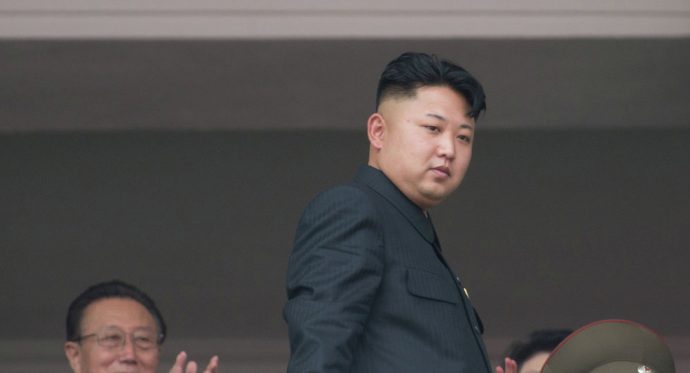
North Korean leader Kim Jong-un has ordered the reopening of a contact channel between Pyongyang and Seoul to discuss issues related to the upcoming Olympic games in Pyeongchang, Ri Son Gwon, the head of North Korea’s agency handling inter-Korean affairs, said as quoted by the Yonhap news agency.
“I was instructed to open the Panmunjom [the shared border village] contact channel between North and South at 15:00 [3:30 p.m. in Seoul, 6:30 GMT] in order to settle issues related to hosting the PyeongChang Olympic Games, including sending [North Korea’s] delegation to the Games,” Ri said.
The officials added that Pyongyang would closely work with Seoul on practical issues related to sending the country’s delegation to the upcoming sports event, based upon the leadership’s stance, and expressed the hope that the Olympics would be successful.
“We sincerely wish once again that the PyeongChang Olympic Games will be held successfully,” Ri said.
Cheong Wa Dae, South Korea’s presidential office welcomed the announcement.
“I believe it signals a move toward an environment where communication will be possible at all times,” Yoon Young-chan, the chief presidential spokesman, told reporters, as quoted by the news agency.
Pyongyang’s statement came a day after Seoul proposed high-level discussions with the DPRK following Kim’s New Year’s address in which he had stressed he was willing to launch a dialogue with South Korea.
Meanwhile, US Envoy to the United Nations Nikki Haley warned in a statement on Tuesday that Washington would not recognize any talks between the two Koreas unless the nuclear issue is resolved and all of their nuclear weapons banned.
“North Korea can talk to anyone they want, but the United States is not going to recognize it or acknowledge it until they agree to ban the nuclear weapons that they have,” Haley said.
North Korean leader Kim Jong-un said in his New Year’s Day address that Pyongyang was ready to send its athletes to the 2018 Winter Olympics in Pyeongchang, South Korea, and expressed readiness to start talks with Seoul on the issue.
Seoul, in turn, has proposed holding high-level talks on January 9 in Panmunjom Village in the demilitarized zone between North Korea and South Korea.
The 2018 Winter Olympic Games will take place in Pyeongchang and two nearby cities, Gangneung and Jeongseon, in South Korea from February 9 to February 25. The South Korean resort city is located just 80 kilometers (50 miles) from the border with North Korea.
January 3, 2018
Posted by aletho |
Aletho News | North Korea, South Korea, United States |
Leave a comment
US Ambassador to Russia, Jon Huntsman, has been handed a proposal for Washington and Moscow to exchange guarantees of non-interference in each others internal affairs, Russia’s Foreign Ministry spokeswoman has said.
The memorandum, in which Russia’s “readiness to exchange letters or other forms of guarantees of mutual non-interference into electoral and other internal political processes, was again confirmed,” and forwarded to Huntsman on December 21, Zakharova said. “The matter now lies with the American side,” she stated, adding that the media should engage US officials for further comment.
Russia underlined “the long-standing and systematic aspirations of Washington to influence what is happening in our country in its own interests,” Zakharova said of the proposal.
It is not the first attempt by Moscow to formalize non-interference between the US and Russia. Similar suggestions were voiced repeatedly after “absolutely groundless accusations of a certain Russian influence in the presidential election in the US in 2016 began to unravel,” the spokeswoman told journalists at a briefing in Moscow.
The non-interference provision was also contained “in the draft of the joint statement by Russian and the US presidents, prepared for the G20 summit in Hamburg in July 2017. However – and I think you won’t need a second try to guess this right – the Americans refrained from adopting such a document,” Zakharova said.
“Washington showed that they don’t want to make any commitments. Of course, it looks like a desire to reserve the right to interfere in the affairs of others,” she added. The foreign ministry spokesman slammed the US over recent claims that Russian authorities were “pressuring potential presidential candidates” in the election, scheduled for March 18.
Earlier this week, US State Department spokesman, Noel Clay, told TASS that Washington was “concerned” by the decision of the Russian Central Elections Commission to reject the application of anti-corruption activist, Aleksey Navalny. Russian law, explicitly bars people with unserved lengthy prison sentences from participating in presidential polls. Navalny was handed a five-year suspended sentence for embezzlement in 2014, and another five-year suspended sentence in 2013 for fraud.
“Such statements by the State Department are a direct interference into the electoral process, the internal affairs of a sovereign state,” she said. “It remains unclear on what grounds US officials believe that they are entitled to assess the internal political processes of other countries,” said Zakharova.
December 28, 2017
Posted by aletho |
Aletho News | Russia, United States |
Leave a comment
Joe Biden bluntly demanded that former Ukrainian President Viktor Yanukovich resign back in 2014, the former US vice president revealed. He also confirmed the US was deeply involved in Kiev’s affairs during that year’s crisis.
From the very beginning of the Ukrainian crisis, the US sought to direct Yanukovich in his handling of the riots on Maidan Square that eventually led to a coup in Ukraine, Biden says in his new book titled “Promise Me, Dad: A Year of Hope, Hardship And Purpose,” which was published in November, but has now been brought into the media spotlight in connection with the US’s role in the crisis. Biden reveals that he repeatedly called the then-Ukrainian president, telling him what he should or should not do.
At some point, Biden outright demanded that Yanukovich, a legitimately-elected leader of a sovereign nation, resign because he had “lost the confidence of the Ukrainian people” from Washington’s point of view. “I was telling him [Yanukovich] it was over; time for him to call off his gunmen and walk away,” Biden writes in his book, referring to “the last of [his] urgent calls to Yanukovich in late February of 2014.”
The former US vice president also claims that it was Yanukovich and his loyal law enforcement forces who were responsible for the Kiev massacre back in 2014. In fact, the events, in which unknown snipers gunned down dozens of protesters and several police officers in central Kiev, remain largely unsolved nearly four years on. The investigation of the tragedy was de facto put on the back burner by the new Ukrainian authorities.
The probe initially managed to produce several suspects, with all of them being Berkut riot police members, even though it was known from the very beginning that sniper fire initially came from protester-controlled positions. Later, the head of an MP committee probing the mass killings mentioned “unidentified public organizations” as possible culprits, but no charges were known to have been placed. These facts, however, never stopped Biden from accusing Yanukovich of “loosing his riot police on the streets of Kiev… to murder demonstrators” and declaring the ousted president the main culprit behind the crisis.
Even though the new Ukrainian government, which came to power after the coup, was far more agreeable to US officials, it garnered no particular praise from the former US vice president. Biden calls former Ukrainian Prime Minister Arseny Yatsenyuk “a young patriot” and repeatedly draws attention to his efforts to support the “emerging Ukrainian democracy,” but at the same time complains about “bickering” within the Ukrainian elites and their reluctance to put “loyalty to country” over their personal interests.
“I had spent months exchanging phone calls with both [President Petro] Poroshenko and Yatsenyuk, trying to convince them each, separately, to put loyalty to country over loyalty to political party,” Biden writes, referring to Ukrainian President Poroshenko alongside Yatsenyuk, who was eventually dismissed from the government in 2016. He also repeatedly mentions the two politicians’ “stubborn unwillingness to work together.”
Widespread corruption in Ukraine seems to be another issue that constantly irritated Biden. The former official admits that he had to be “hard on Poroshenko since his election” and to constantly urge him to “continue to fight the elements of corruption that were embedded in the political culture of Ukraine’s Soviet and post-Soviet governance,” particularly in the president’s own party.
Biden claims he went as far as to direct almost each step of the Ukrainian authorities. “Now you’ve got to put people in jail,” Biden says he told Yatsenyuk when the Ukrainian official came to the US. He also admits that he “had been on phone with either Poroshenko or… Yatsenyuk, or both, almost every week” for months.
However, Biden believes the present Ukrainian government “had exhibited a penchant for corruption, self-dealing and self-destructive behavior.” He also points out that Europe was in fact reluctant to support the idea of anti-Russian sanctions and he had to repeatedly remind Poroshenko “not to give the Europeans any excuse for walking away from the sanctions regime against Russia.” Indeed, anti-Russian sanctions appear to have been of particular importance for Biden, as he seemed much more concerned about keeping them in place than about Washington’s European allies.
Biden also admits that he had a low opinion of the Minsk Accords aimed at bringing about peace in Ukraine. However, he seemingly fails to understand their purpose, describing the initial 2014 deal as something that “did little to hold [Russian President Vladimir Putin] back.”
Biden believes that Russia – which is not even a party to the treaty – is not fulfilling its commitments under the agreements. The OSCE-brokered Minsk Agreements between representatives of Kiev and the breakaway rebel regions of eastern Ukraine were hammered out by Ukraine, Russia, France and Germany, and formed the basis for a lasting ceasefire. However, the deal’s implementation has been largely stalled by Kiev’s refusal to uphold its part, including amnesty for rebel fighters and special autonomous status for the regions they control.
December 26, 2017
Posted by aletho |
Aletho News | Joe Biden, Ukraine, United States |
Leave a comment
A Kiev-sponsored UN resolution condemning the human-rights situation in Crimea and the city of Sevastopol failed to convince much of the UN General Assembly, as 76 countries abstained, 26 opposed, and 70 supported the motion.
Among those who voted against the resolution were Russia, China, India, Iran, Serbia, and Belarus; while the US and its allies approved. In all, countries representing nearly half the world’s population rejected the document.
The resolution called on Russia, described as an “occupying power,” to “take all necessary measures to immediately put an end to all violations and infringements of human rights against the inhabitants of the Crimea.” It also called on the country to rescind the “illegal establishment of laws, jurisdiction and management by the Russian Federation” in Crimea, and to provide “accessibility of education in the Ukrainian and Crimean Tatar languages.” In addition, it requires Russia to annul its recognition of the Mejlis of the Crimean Tatar People as an extremist organization.
Deputy Permanent Representative of Russia to the UN Yevgeny Zagainov said before the vote that the resolution was meant to divert attention from Ukraine’s violations of human rights with “torture, enforced disappearances, arbitrary detentions, discrimination, political persecution, violations of freedom of expression,” and the impunity for those responsible for burning dozens of anti-government activists in Odessa in May 2014.
Zagainov said that the Ukrainian delegation and its patrons do not care about human rights in the Russian region or its inhabitants wishes, but rather aims to challenge the status of Crimea and distort realities on the ground through human rights rhetoric. He noted past actions by the Mejlis in Crimea in relation to organized provocations, blockages and attempts to increase inter-ethnic tensions.
With this resolution, they “encourage these very dangerous fantasies, creating the ground for Kiev’s provocations and enterprises and thus sharing responsibility for them,” warned Zagainov.
He said that Kiev had passed a controversial new law in September that “deprives hundreds of thousands of children of the opportunity to receive education in their native language.” Various European countries, such as Hungary, Romania, Bulgaria, Poland had complained in the OSCE about this language law and the rights of minorities in Ukraine. Zagainov’s concerns about Ukraine’s human rights problems have been confirmed in the reports of the UN mission deployed in Ukraine to monitor the human rights situation.
Following the coup in Ukraine, the rise of radical nationalist groups, and the worsening situation in Donbass, the population and authorities of Crimea feared a crackdown on the Russian people and language. They expressed their desire to rejoin Russia in a referendum that took place on March 18, 2014, when more than 80 percent of eligible voters participated. Some 96.7 percent voted for reunification in Crimea, including 95.6 percent in the city of Sevastopol. The same day, Russian President Vladimir Putin signed a decree allowing the Republic of Crimea and Sevastopol to join the Russian Federation.
A senior representative of the Russian parliamentary majority party has called the UN resolution on human rights in Crimea a provocation aimed at justifying the growing expenses of supporting Ukraine and countering Russia.
MP Sergey Zheleznyak (United Russia) said on Wednesday that the resolution was prepared by anti-Russia politicians from Ukraine, the EU, and the US, adding that he personally was outraged by the fact that the Human Rights Monitoring Mission had prepared the document on the basis of statements made by Ukrainian politicians, without actually visiting the peninsula and looking into these claims.
“Respectable international organizations, such as the United Nations, must thoroughly study the true state of affairs, have a weighted approach to any political provocation and give their own assessment of the events that take place in the world,” Zheleznyak said.
He added that many Western politicians visited Crimea after its reunification with Russia and realized that “the true goal of Ukrainian ‘human rights advocates’ is only the creation of lies about our country.”
“Just as the previous Kiev initiatives, this one has nothing in common with the real situation concerning human rights, freedom of conscience, and school lessons in native languages… The real objective behind this resolution is heating up the anti-Russian tensions in order to justify the funds spent on containment of our country and on support of the Kiev regime,” he said.
On Tuesday, the UN General Assembly approved a resolution on human rights in Crimea. 70 nations, including most European countries and the US, voted in support of the resolution, with 26 voting against and 76 nations abstaining from voting. The document describes Crimea’s accession into the Russian Federation as “occupation” and gives 20 recommendations on how Moscow should stop the alleged rights abuses in the republic.
Soon after the resolution was passed, Sergey Aksyonov, the head of the Crimean Republic, wrote on his Facebook page that the document was just another collection of “propaganda myths from Kiev,” adding that the 2014 reunification with Russia was a free choice of the republic’s citizens.
READ MORE: Overwhelming majority in Crimea today would still vote to join Russia – German survey
December 20, 2017
Posted by aletho |
Aletho News | Human rights, Russia, Ukraine, United Nations, United States |
Leave a comment

 Aletho News