Argentine president seeks to dissolve intelligence body
Press TV – January 27, 2015
Argentina’s president has described the country’s intelligence agency as a “national debt” and has announced plans to disband it.
President Cristina Fernandez de Kirchner made the remarks in a Monday TV address, saying she would prepare a draft legislation to set up an alternative body.
“I have prepared a bill to reform the intelligence service,” said Fernandez, insisting that she wanted the idea discussed at an urgent session of the nation’s Congress.
She further stated that her plan “is to dissolve the Intelligence Secretariat and create a Federal Intelligence Agency” and added that a new leadership for the intelligence agency should be picked by a president and confirmed by the South American country’s Senate.
Fernandez further argued that the intelligence services maintained the same structure they had during the US-backed military government that ended in 1983.
“Combating impunity has been a priority of my government,” she emphasized.
She made the decision following the mysterious death of prosecutor Alberto Nisman hours before he was reportedly due to testify against senior government authorities.
Nisman had been probing the bombing of a Jewish center in the Argentine capital Buenos Aires in 1994 which killed 85 people.
He was found dead on January 18 in his apartment in Buenos Aires.
Investigators initially said they believed he had committed suicide, but later clarified that homicide or “induced suicide” could not be ruled out.
President Fernandez has emphasized that she does not believe Nisman’s death was a suicide.
A logical and cogent suicide thesis for Alberto Nisman
IncaKolaNews | January 25, 2015
The latest we know, as of this Sunday morning, is that the day before his death and just before asking his work colleague Lagomarsino to lend him his pistol (the 100% confirmed weapon of death), Alberto Nisman also asked one of the police officers on protection duty around his apartment building to lend him his gun, which the officer refused to do. Nisman again used the same line, that he wanted one to carry in his car for a few days until he bought a gun for himself.
Which again nudges the evidence towards suicide, though I want to make plain as I did yesterday that there’s no proof of this yet and we’re talking possibles versus probables, not black versus white certainties. We shouldn’t discard any hypothesis yet. But as suicide now seems more likely than it did just a few days ago when the world was quick to shout and scream and accuse the CFK government of killing an enemy, consider this:
- There was some sort of emergency that got him to cut short his vacation with his daughter in Europe, hand over her charge to his ex-wife and bring him quickly back to Argentina in the days before his death.
- He was due to give evidence to support his accusations against the CFK government the day after his death, but his dossier had already been deposed and opened to authorities and judiciary (its contents are now being revealed, striptease-style, to the general public). As soon as it was available (three or four days before his death) there was immediate push back from both pro-government and (relatively) neutral bodies who spotted false information and obvious contradictions in his version of events. One that’s been widely reported is how Nisman claimed he had been given key evidence about supposed intelligence officers, but in fact (and in proven fact now) those people are not and have never been members of the intelligence services.
- So, let us imagine you have a less than perfect personal life. Let’s also imagine you’ve been working under great pressure, in terms of workload and of psychological pressure from government enemies, for two years on a case you think shows major corruption in your current government (up to and including the President of your country). Let’s imagine that things come to a head, you complete your work, you’re satisfied with your job done, you hand in this national-level important case file…and then suddenly the whole thing blows up in your face because one of the most basic elements on which you based your argument is shown, with very little room for error, to be false. That, ladies and gentlemen, is years of work down the drain.
- And on top of that, in one day’s time you have to go to the nation’s Congress, stand up and defend your case and reiterate your accusations when you already know that the ground has been taken from under your feet and when the opponents ask you about the contradictions, you’re going to flounder and fail in front of them. And your personal life is a mess.
Anyway, that’s the basic thesis for suicide here and I’m fully aware it doesn’t cover all angles. For example why is there no suicide note (as either one hasn’t been found as yet, or if it has we haven’t been told about it)? No idea, but as suicide of this type is a wholly selfish and egocentric act, people in that mental position feel no obligation to anyone else and there doesn’t have to be a note, not even to your most loved ones. I’m not saying the above is the answer to the whole thing, not at all. But it is addressed to those who say “he can’t have killed himself”. It’s a logical and cogent possibility, like it or not.
Syria Opposition Groups Arrive in Moscow, Start Talks with Russian Officials
Al-Manar | January 26, 2015
Syrian opposition groups on Monday began four days of talks on how to end the near four-year conflict, with representatives of the Syrian government set to join them but the main exiled opposition alliance boycotting the event.
The closed-door talks opened as planned at 11 am Moscow time (0800 GMT), a Russian diplomatic source told RIA Novosti. The talks are set to run until Thursday.
“Around 25 (members of the Syrian opposition) have arrived. I think there will be up to 30,” Russian Deputy Foreign Minister Mikhail Bogdanov said.
But the western-backed exiled opposition alliance, the National Coalition, is not attending the Moscow talks although five of its members are there in a personal capacity along with members of opposition groups tolerated by the Damascus.
“Any talks should be held in a neutral country and overseen by the United Nations,” a source in the coalition said earlier.
The Syrian ambassador to the United Nations, Bashar Jaafari, will head the government team, which will join the talks on Wednesday, a Syrian newspaper reported.
Russian Foreign Minister Sergei Lavrov said last week he hoped there would be “chemistry” at the meetings that will help the UN envoy for Syria, Staffan de Mistura, organize a new peace conference to negotiate a way out of the crisis.
Lavrov may meet members of opposition groups on Wednesday “if there is a constructive mood”, Bogdanov said.
Two previous rounds of talks in Geneva ended without success.
Rogue agents behind Argentine prosecutor’s death: Buenos Aires
Press TV – January 24, 2015
Argentina says rogue agents from its own intelligence services were behind the death of the prosecutor of the 1994 AMIA bombing case.
Alberto Nisman, the lead investigator into the 1994 attack on a Jewish center in Argentina in 1994, was found dead in his apartment late on January 18.
The initial police report said Nisman had died of a self-inflicted gunshot wound.
President Cristina Fernández de Kirchner, however, said in a statement posted on her Facebook page on Thursday that the prosecutor’s death was not a suicide.
Nisman’s death happened hours before he was to testify before Congress on Monday about his allegation that President Fernandez conspired to derail his investigation of the attack.
The government claims the prosecutor’s allegations and his death were linked to a power struggle at the Latin American country’s intelligence agency and agents who had recently been fired.
“When he was alive they needed him to present the charges against the president. Then, undoubtedly, it was useful to have him dead,” the president’s chief of staff, Anibal Fernandez, said Friday.
Under intense political pressure imposed by Israel, Argentina formerly accused Iran of having carried out the 1994 bombing attack on the AMIA building. AMIA stands for the Asociacion Mutual Israelita Argentina or the Argentine Israelite Mutual Association.
Iran has categorically and consistently denied any involvement in the terrorist bombing.
In January 2013, Tehran and Buenos Aires signed a memorandum of understanding to jointly probe the 1994 bombing.
Ed Miliband: I’d be as good a friend to Israel as Cameron
MEMO | January 24, 2015
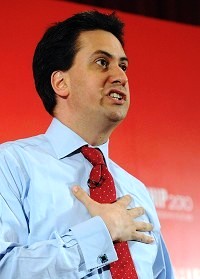 Labour leader Ed Miliband has promised to be as good a friend to Israel as David Cameron, should he be elected in May.
In an interview published in Jewish News this week, the leader of the opposition acknowledged unhappiness among the pro-Israel Jewish community about his party’s Middle East policies, but emphasised “the things that unite us.”
intolerance of those who question the existence of the State of Israel, intolerance of boycotts and total intolerance of anti-Semitism. Those are the strands that unite us and I think those strands are very important.
Miliband said he would be “intolerant of those who question Israel’s right to exist” and “those who attack Israel in various ways”, but declared himself “a great supporter of meaningful negotiations.”
The paper also reported on remarks Miliband made at a recent public meeting in Hendon, where he defended his criticism of Israel’s assault on Gaza, saying: “I don’t believe that kind of action enhances the long-term security of Israel.”
Houthi leader sets conditions to end Yemeni crisis
MEMO | January 21, 2015
The Houthis have outlined four conditions to end Yemen’s political crisis, the Anadolu Agency reported the group’s leader as saying.
In a televised speech broadcasted by Yemen’s Al-Maseera satellite channel yesterday, Abdul-Malik Al-Houthi called for a speedy reformation of the National Supervisory Authority which was tasked with overseeing the results of the National Dialogue Conference and which ceased to be active in January 2014.
He also called for amendments to the country’s draft constitution to be expedited, the implementation of the peace and partnership agreement and to conduct comprehensive security reform.
Al-Houthi accused Yemeni President Abd Rabbuh Mansour Hadi of “protecting corruption and lack of seriousness in implementing the peace and partnership agreement, which brought the country to the current situation”.
He also accused him of supporting Al-Qaeda and supplying it with weapons. “President Hadi refused to allow the army to fight Al-Qaeda and gave the group the opportunity to rob banks,” he said.
The Yemeni capital Sanaa was been rocked by violent clashes for the second consecutive day on yesterday between presidential guards and Al-Houthi militants who are said to have seized the presidential palace with Prime Minister Khaled Bahah inside.
Al-Houthi said: “There is a conspiracy against Yemen and its people that is led by forces targeting the entire region. Yemen in on the verge of political, security and economic collapse. The Yemeni leadership is mired in corruption” he said.”
The Houthis seized control of Sanaa in September.
Chile Rejects Bolivia’s Request for Access to Sea, Again
teleSUR | January 7, 2015
Chile rejected Bolivia’s renewed request for sovereign access to the Pacific Ocean off of its coast Tuesday.
“Chile is not going to cede land or maritime sovereignty in any way, and that has to be clear,” Chilean Foreign Minister Heraldo Muñoz told Radio DNA. “Bolivia is wasting its time when it tries to promote an event which aims to force Chile to negotiate a sovereign outlet.”
The foreign minister’s warnings refer specifically to comments by Bolivian President Evo Morales who said Pope Francis had taken an interest in the issue and had requested more information.
“The pope asked me for documents, so I supplied him with documents,” said Morales.
However, Muñoz confirmed that Chile will not accept any kind of external mediation on the matter and emphasized that the country would never give up its territory to another nation.
The matter is currently being reviewed by the International Court of Justice (ICJ) in the Hague, Netherlands, after Bolivia presented the court with its demand for sovereign access to the coast in 2013.
Last July Chile objected to the ICJ’s involvement, saying the court was incompetent in judging the request.Bolivia responded by making another bid to the international body in November.
Tensions have existed between Bolivia and Chile over access to the Pacific Ocean for decades after Bolivia lost its coast to Chile in the War of the Pacific in 1879, making it a landlocked country.
Maduro Offers to Exchange Lopez for Puerto Rican Activist
teleSUR | January 5, 2015
Venezuelan President Nicolas Maduro said Sunday he would consider the release of the jailed far-right opposition leader Leopoldo Lopez if the United States agreed to release Oscar Lopez Rivera, a Puerto Rican nationalist currently held in a U.S. prison.
Leopoldo Lopez was arrested in February after he helped launch a three-month wave of violent opposition demonstrations seeking Maduro’s ouster. Streets were blocked by violent masked protestors and dozens were killed, mostly at the hands of extreme right-wing terrorists.
Maduro suggested he could send Lopez to the United States if Washington secured the release of Oscar Lopez Rivera, who was convicted in 1981 of seditious conspiracy along with other militants who sought to secure Puerto Rican independence.
“The only way I would use (presidential) powers would be to put (Leopoldo Lopez) on a plane, so he can go to the United States and stay there, and they would give me Oscar Lopez Rivera — man for man,” Maduro said during a televised broadcast.
A spokesman for the U.S. Embassy in Caracas said he had no immediate comment on the issue.
Negotiations between Uruguay and the U.S. are currently underway to release Lopez Rivera. Uruguayan President Mujica requested in an open letter to President Obama the release of the political activist.
Puerto Rican Governor Alejandro Garcia Padilla has also called on the White House to release the nationalist. The Puerto Rican singer Rene Perez, from the famous group Calle 13, has been vocal in his support of Lopez Rivera.
The NYPD is Essentially Refusing to do Its Job and Yet New York Hasn’t Collapsed into Chaos
By Matt Agorist | The Free Thought Project | December 30, 2014
New York, NY — The NYPD has basically stopped doing its job since the murder of officers Rafael Ramos and Wenjian Liu earlier this month, according to reports in the New York Post and New York Daily News, and yet the city hasn’t descended into total chaos.
The Post reported that arrests were down 66% in the week following the deaths of officers Rafael Ramos and Wenjian Liu, compared to the same period in 2013.
For certain offenses, the arrest levels are staggeringly low, according to the numbers put out by the Post.
Citations for traffic violations fell by 94 percent, from 10,069 to 587, during that time frame.
Summonses for low-level offenses like public drinking and urination also plunged 94 percent — from 4,831 to 300.
Even parking violations are way down, dropping by 92 percent, from 14,699 to 1,241.
Drug arrests by cops assigned to the NYPD’s Organized Crime Control Bureau — which are part of the overall number — dropped by 84 percent, from 382 to 63.
It’s not a slowdown — it’s a virtual work stoppage, reported the Post yesterday.
The Post says these numbers were obtained hours after revealing that cops were turning a blind eye to some minor crimes and making arrests only “when they have to” since the execution-style shootings of Ramos and Liu.
Some of the reason for the drop off in police activity is that there are some safety concerns. However, one of the Post‘s sources says that yes it’s partly out of safety concerns and partly a continuation of the childish and embarrassing protest against Mayor de Blasio’s response to the non-indictment of Daniel Pantaleo, the officer who killed Eric Garner last summer.
From the Post:
“The call last week from the PBA is what started it, but this has been simmering for a long time,” one source said.
“This is not a slowdown for slowdown’s sake. Cops are concerned, after the reaction from City Hall on the Garner case, about de Blasio not backing them.”
A recently retired cop who attended the funeral also noted that police from around the country joined in the stunning display of resentment toward de Blasio.
“It’s a national protest against the mayor of New York,” the ex-cop said.
After the police union blamed the mayor for the subsequent murder of two officers, the New York Times made the case that rank-and-file officers deserve better from their union reps.
“Mr. de Blasio isn’t going to say it, but somebody has to: With these acts of passive-aggressive contempt and self-pity, many New York police officers, led by their union, are squandering the department’s credibility, defacing its reputation, shredding its hard-earned respect,” it says in an editorial. “They have taken the most grave and solemn of civic moments—a funeral of a fallen colleague—and hijacked it for their own petty look-at-us gesture.”
“I think it’s probably a rift that is going to go on for a while longer,” Police Commissioner Bill Bratton said as he predicted a long, cold war between Mayor Bill de Blasio and the NYPD’s rank and file Sunday, while admitting that morale among cops was so low, the problem could no longer be denied.
 The time for petty threats and antagonism is over. It is now time we talk solutions.
Mayor de Blasio is to meet face-to-face with the heads of five police unions today. If there is one thing that we can rest assured will not be brought up at this meeting, it is that this sharp drop in the enforcement of certain offenses has not created the Mad Max scenario that so many people predict would happen if police loosen their grip.
Drug offenses, parking violations, traffic citations; these are not so much crimes as they are streams of revenue for the city. They are also the reason for the majority of police harassment within certain communities.
Without the war on drugs and without police shaking down every young person who they suspect is carrying an illegal plant, the quality of life for so many people would instantly increase, as it likely already has.
Ending prohibition would also effectively and drastically reduce the amount of crime in communities derived from the black market sale of drugs and the gang-related monopolies which arise from making certain substances illegal.
These are real solutions to real problems and we have an opportunity now to show how many of these laws are based in irrational fear or simply designed for revenue generation.
Sure, if police start refusing to arrest murderers and rapists, things will probably get really bad, especially since most of the residents in New York City have been disarmed. But this lawlessness would likely be a temporary reality. As we’ve seen with the economic collapse in Detroit and the subsequent lack of government policing, solutions like the Threat Management Center arise, which provide a more efficient and much more peaceful means of societal security.
As Reason Magazine’s Scott Shackford said, presumably, next year, after this all dies down, the NYPD may note a big drop of crime in December entirely because they stopped finding reasons to charge people with crimes.
Police unions could use the experience to decry all the petty, unnecessary reasons they’re ordered to cite and arrest people in the first place, but that’s not going to happen because they love the drug war and the money that comes into the departments from fighting it.
Poll Confirms Massive Support for Ecuador’s Correa
teleSUR | December 30, 2014
A poll released Monday revealed that over 60 percent of Ecuadoreans approved of President Rafael Correa’s management of the country.
Correa’s support is “unprecedented” in Ecuador, said the president of the survey institute, Polibio Cordova in a press conference, as the Ecuadorean leader has maintained high levels of support since he was elected in 2007.
“This is an unprecedented case because the presidents used to start [their term] with a quite high level [of popularity] of around 68 percent, and within two or three years, they used to decrease by at least 30 percent, sometimes reaching a 30 or 32 percent of approval,” Cordova explained.
Only 32 percent disapprove of his administration, with eight percent not responding to the survey.
The poll was conducted between December 18-24 with a total of 2,168 participants in 15 cities of the country and an error margin of five percent.
The EU shifting its strategy on Syria, Iraq and fighting ISIS
By Sami Kleib | Al-Akhbar | December 27, 2014
After the United States abandoned the idea of Syrian President Bashar al-Assad stepping down and enhanced security coordination with the Syrian army against the Islamic State in Iraq and Syria (ISIS), it appears the Europeans began some time ago a series of meetings to change their policy on Syria. According to information obtained by Al-Akhbar, some senior European officials did not hesitate to say at the last Council of European Union Foreign Ministers meeting that “this policy was wrong.” It is necessary, therefore, to change it and let the United Nations envoy Staffan de Mistura’s initiative lead the way. Does that mean we will soon see favorable signs towards the Syrian regime and further disregard for the external opposition?
Geneva – A European official told Al-Akhbar about the proceedings of an important meeting between United Nations (UN) envoy Staffan de Mistura and European Union (EU) foreign affairs ministers on December 11, confirming that there is a change in the European position towards Syria. He said the meeting was closed like all meetings during which Europeans discuss sensitive matters. De Mistura began to explain the situation in Syria and the regional and international framework surrounding his plan that is supposed to be implemented in three months “otherwise it loses its ability to be implemented.”
This, in short, is what de Mistura said and the Europeans’ position towards it.
- The plan to freeze the fighting in Aleppo is the only one currently available. There is no hope for another plan. Therefore, the EU should support it practically and not just verbally. It is the only plan capable of freezing the fighting, securing people’s needs and returning the displaced people who are burdening neighboring areas and states. It will also allow for the eventual process of reconstruction.
- Syrian President Bashar al-Assad, who showed readiness to ensure the success of the international plan in Aleppo, convinced Russian President Vladimir Putin of the plan and played a major role in convincing his Iranian allies as well. This was necessary because Moscow was reluctant, thinking that no US-Atlantic effort can be trusted and the plan might lead to dire consequences for Russia and its allies.
- Although the Americans expressed reservations and doubt about the plan at the beginning, they have become more flexible, tying their approval with that of some of their regional allies, meaning of course Saudi Arabia primarily. In any case, I am going to Riyadh to convince Saudi officials of the plan’s feasibility. If we obtain preliminary approval from them, I will subsequently continue my efforts in Damascus so we can start as soon as possible because time is running out.
Here, we should remember that Brahimi had told the Europeans once what he said on more than one occasion and in more than one place, namely, that his resignation will “relieve two people, Assad and Saudi Foreign Affairs Minister Saud al-Faisal” because his personal relationship with both men was quite bad. He was probably speaking about “Saud al-Faisal’s personal hatred towards Assad being a hindrance to finding a solution.” It is also known that the Syrian president, from his very first meeting with Brahimi, questioned his intentions especially when the Algerian UN envoy suggested that Assad should step down and intended to meet Syrian Vice President Farouk al-Sharaa before Assad prevented him from doing so, arguing that this is improper on an official visit. Brahimi at the time had to make do with a phone call. After a while, Sharaa was removed from power.
- Turkey remains a real problem for the Europeans. Some officials say it is impossible to predict what Ankara could do next. Others believe that Turkey is pretty much the only country still facilitating the passage of foreign fighters to Syria, it has not made up its mind about fighting the Islamic State in Iraq and Syria (ISIS) and is trying to blackmail the international community with its position. Here, the Europeans make two suggestions. Either put pressure on Turkey, including perhaps issuing a warning – which some believe is pointless because it might make the Turkish president Recep Tayyip Erdogan’s position more intransigent and push him further into Russia and Iran’s arms – or try to cajole and get closer to Turkey, prompting it to commit to the international decision to fight ISIS and stop the flow of foreign fighters. Either way, the Turkish position remains worrisome for Europe.
- Iran has become a central player in both the Syrian and Iraqi crises. It is necessary to deal with this reality regardless of the reservations that some might have. There is nothing to prevent engaging with Iran in a serious dialogue about Syria, even before signing a nuclear agreement. This is useful because it could lead to political concessions from the Syrian regime and it could strengthen the presence of European companies in Iran. Perhaps this has become a European need despite French reservations, which are understandable, given French-Saudi relations and France’s concern not to upset Israel.
- It is impossible to think of serious solution or temporary solutions in Syria without Saudi Arabia, which has extensive relations with a number of Anti-Assad parties. It is important to reassure Riyadh that the European efforts do not intend to buoy up the regime. De Mistura said that Saudi Arabia implicitly welcomes his initiative. The Spanish foreign affairs minister was clearer, saying that Riyadh accepts the plan and it is in France’s interest to tone down its critique otherwise it will appear more extremist than Saudi Arabia, which is not an understandable position. The Spanish minister went as far as suggesting that an international conference for Syria be held in his country given that the idea might be accepted by everybody.
- Russia remains the main obstacle to any solution that does not satisfy the Kremlin and the Syrian regime. Since its relationship with the US and Europe is currently strained because of Ukraine, it is necessary to look for ways to separate any discussion with Russia about Syria from the position regarding Ukraine. Some European officials intend to strengthen the dialogue with Moscow because “it is unacceptable to return to the logic of the cold war.” Perhaps the High Representative of the EU for Foreign Affairs and Security Policy Federica Mogherini will visit Moscow soon. Besides, Russia is active and serious about finding a political solution. The Europeans keeping their distance from Moscow might mean distancing the US and Russia.
The Europeans with and against Assad
First, everyone agrees to de Mistura’s plan, but they want to support it because it is the only plan currently available while awaiting the results of Russian efforts to bring the opposition and the Syrian regime delegation together in Russia. However, France, which currently enjoys strong trade relations with Saudi Arabia and Britain, is ahead of other Europeans in its contacts with Iran and insists that the plan should not support the Syrian army against the moderate opposition in Aleppo. In other words, the issue should not be portrayed as standing with the army against ISIS because in Aleppo and its surroundings there are fighters affiliated with the moderate opposition and they should be taken into consideration and supported “so we won’t appear as though we are drawing a parallel between the regime and the opposition and that we view both sides equally.”
The French foreign affairs minister was the most intransigent even though some within the current French administration point out the need to take a new position towards Syria, especially after the terrorist attacks that took place on French soil. Laurent Fabius said, “We don’t want what happened to Homs to happen in Aleppo,” where suspending the fighting benefited the regime only and was not balanced. The fighters left after they turned in their weapons to the state and were transported in government buses to the areas they come from.
A European official with ties to the Syrian opposition said “the departure of the fighters then was a farce for them. Imagine that the Grand Mufti, Ahmad Badreddin Hassoun, who is a regime loyalist showed up in the buses transporting the fighters joking with them and asking them isn’t it better to marry while they are young instead of getting killed on battlefronts? They were given cell phones to talk with their families and undermine their morale. In the end, the media image and the reality on the ground were in the interest of the regime.”
The French minister was insistent that “the regime should not benefit from this plan in terms of relieving it at the Aleppo front so it can focus on other fronts in other areas.” That is what Fabius was saying when the EU received information about the possibility of the Syrian and Iraqi armies engaging in a wide joint military operation in Deir Ezzor.
Second, the European relationship with Assad is possible, but it becomes evident during the discussions of the foreign affairs ministers and commissioners of the EU that they are at a loss on how to deal with Syria. For example, a European official in Geneva says that a number of his European colleagues have begun to talk about the failure of the policy adopted so far and about the “uncalculated mistake” of suggesting early on that Assad step down.
Some Europeans argue that their assessment of the situation was erroneous while others believe that trusting the US from the beginning was a mistake because Washington, as usual, places its interests ahead of all its alliances, often putting the Europeans in an awkward position. Still others argue that underestimating the capabilities of the Syrian army and its allies was their biggest mistake.
As such, EU officials are currently discussing how to “modify” the political position that has been adopted for more than three years in Syria. One sign of this change is abandoning the mantra of “Assad stepping down” and finding more realistic statements that have been repeated now and then, such as “Assad is not a final solution to the crisis” or “Assad will not stay at the end of the political solution” or “it is only natural that a political solution will eventually lead to transferring powers from the presidency and not all powers” according to Geneva I. Another sign of a change in position is abandoning the phrase “proceeding with a transitional process now” and replacing it with one accepted by all, namely, “calling for the start of a transitional process.”
It appears that Mogherini succeeded, to some extent, in promoting the point of view that “we agree on the end result but political realism and the developments of the situation require us to adjust our course and use new phrases.” In other words, even if everyone in Europe wanted Assad to step down, political realism suggests that this is not possible at this point and encouraging a political solution might eventually lead to this end, meaning this is no longer a European priority.
The security council in Aleppo?
In light of these discussions about modifying the European position towards the Syrian regime, the most important question in the EU is how to ensure the success of the Aleppo plan and how to implement it without portraying Assad as the winner, especially given that the Syrian army advanced in a noticeable way in Aleppo recently?
The dominant trend is to find a monitoring mechanism by the UN Security Council. However, the Europeans realize that this is impossible due to the dual Sino-Russian veto that is always ready to protect Syria. Therefore, unlike the French and British positions which insist on an international force from the UNSC, the EU is more inclined towards finding a diplomatic formula that talks about “a monitoring mechanism linked to the UNSC.”
All of this will be released soon in what is now called “the EU strategy on Syria, Iraq and fighting ISIS.”
Despair with the Syrian opposition, particularly, the National Coalition for Syrian Revolution and Opposition Forces, which for a long time monopolized, with international support, the representation of the opposition has infiltrated EU states after the US. The Europeans too are now more inclined towards expanding the scope of the opposition to include forces that were previously not accepted and undermine the Muslim Brotherhood.
It is remarkable for instance that when the head of the Coalition, Hadi al-Bahra, visited the EU in Brussels few days ago, representatives from the Coalition were calling the Europeans to say that Bahra no longer represents them. A European official says jokingly: “Everytime we begin to talk with an official from the Coalition, we discover that this Coalition held new elections and changed the official. So we start all over again. And every time we meet with a Coalition official, he repeats the same question, how are you going to prevent the regime from benefiting from the plan you are proposing? But we have noticed for some time now that some parties within the Coalition have come to accept the idea of negotiating with the regime and reaching a political agreement with it even if their ultimate goal is for Assad to step down. This is the case with Moaz al-Khatib and his team for instance. The problem of the Coalition is that it does not know the meaning of political realism and continues in its fragmentation as it is tossed around by conflicting foreign alliances.”
In light of all the above, is the EU starting to change its position towards Assad? Perhaps all its members still support the departure of the Syrian president. But political realism requires a change in behavior and approach and not insisting on Assad’s departure as a priority. This will become more evident in the future as terrorist attacks inside Europe have increased. The only solution left is to cooperate with Syrian security forces, the Syrian army and Iran in the context of fighting terrorism.
As for de Mistur’as plan in Aleppo, it is currently in a feverish race between a military solution and security arrangements that cannot be undertaken without the regime’s approval and that might be to its advantage.
Once again, history repeats the same old maxim, “international interests are more important than principles and people’s tragedies.”
Russia to host Syrian opposition talks next month
MEMO | December 26, 2014
Russia intends to host a meeting of Syrian opposition groups in late January, possibly followed by talks between opposition figures and representatives of the regime, the Russian foreign ministry said on Thursday. Members of the Syrian opposition are expected to arrive in Moscow after 20 January, ministry spokesman Alexander Lukashevich told reporters.
“We expect this group to include representatives of both the internal and external opposition,” said Lukashevich. “It will be a compact group that will meet to work out a position.” He did not reveal the names of the expected participants, although he did explain that the intention was then to invite representatives of the Bashar Al-Assad regime to meet the group. “Both sides will be given the chance to try to express, in an informal atmosphere, their vision and ways of regulating the conflict,” he added.
Lukashevich did not rule out inviting the UN special envoy to Syria, Staffan de Mistura, to participate in the talks.
Featured Video

Trita Parsi: Middle East Unraveling — Are We on the Path to World War?
or go to
Aletho News Archives – Video-Images
From the Archives
Why Saudi Ties to 9/11 Mean U.S. Ties to 9/11
By Kevin Ryan | Dig Within | September 27, 2015
Media interest in Saudi Arabian connections to the crimes of 9/11 has centered on calls for the release of the 28 missing pages from the Joint Congressional Inquiry’s report. However, those calls focus on the question of hijacker financing and omit the most interesting links between the 9/11 attacks and Saudi Arabia—links that implicate powerful people in the United States. Here are twenty examples. … continue
Blog Roll
 Aletho News
- Integrity Initiative: UK-funded network framed dissent as Russian disinformation for years
- ‘We don’t seek permission to defend our country’: Snippets from President Pezeshkian’s UNGA address
- NATO chief wants Europeans to fight American wars [for Israel]
- German chemicals giant reveals details of downsizing
- Refaat Al-Areer Was The Canary In The Coal Mine In Israel’s War On The Truth
- Israeli election committee bars candidate from Knesset race over Gaza war opposition
- French-Lebanese man files war crimes complaint over Israeli attacks
- Mahan Air Flight Lands in China Despite US Threat against Iranian Airlines
- US eyes $10bn fund to rebuild war-battered Gulf infrastructure
- Trump meets Rodríguez near Maduro’s prison as Venezuela’s oil flows to US
- If Americans Knew
- Caught on Tape: AIPAC CEO Boasted of Controlling Trump’s National Security Officials
- Why Hamas Attacked Israel in October 2023 – Israeli professor Ilan Pappé
- They see them, then kill them: Israeli quadcopters track, deliberately target civilians in Gaza
- Winter could turn Gaza’s treacherous, war-damaged buildings into deathtraps
- Majority of Democratic Voters Want to Prosecute Both Biden and Trump Administration Officials Over Gaza
- As Gaza languishes, world leaders gather at the UN – Daily Update
- Sanctions are collective punishment: immoral and self-defeating
- Phosphorus Munitions Fired by Israel Burn Groves, Orchards in Southern Lebanon
- Israel Carries Out New Ceasefire Violations Across Gaza
- AI – Emphasis on the ‘I’: Israel Is Funding AI Chatbot Propaganda
- No Tricks Zone
- New Study: Earth And Venus Surface Warmth Largely Explained By Convection And Lapse Rate, Not CO2 Or Radiation
- 2025 Nature Paper Claiming Worsening Global Drought Gets RETRACTED …Heavily Flawed
- New Study: ‘Global Drought Shows No Detectable Recent Acceleration Under Climate Warming’
- Economic Masterminds: German Socialists Suggest Taxing Productivity Gains Stemming From Using AI
- The South China Sea Has Not Been Cooperating With The Climate Change Narrative
- Energy Crisis: Germany Enters Heating Season With Historically Low Gas Reserve Fill Levels
- New Study: The Antarctic Ice Sheet Gained Mass From 2020-2024 Due To Staggering Snow And Ice Accumulation
- Study: Ocean Heating Rates From Thousands Of Years Ago ‘Dwarf’ Modern Ocean Heating Rates
- Climate Extremists Target, Attack Large-Scale Power Grid Infrastructure In Germany!
- New Study: Antarctic Ice Melt Has Contributed Less Than 1 Centimeter To Sea Level Rise In The Last 30 Years

