Delay in Chavez inauguration possible: Venezuelan Supreme Court
Press TV – January 9, 2013
The Venezuelan Supreme Court says President Hugo Chavez can legally postpone the Thursday inauguration as the current government remains in power.
On Wednesday, Supreme Court President Luisa Estella Morales, following a unanimous decision by the panel, also ruled out medical checks for the president’s scheduled inauguration ceremony.
“The oath-taking of the re-elected president can be carried out at a time after January 10 before the Supreme Court, if it is not done on the said day before the National Assembly,” the ruling said.
As the president has been recovering from an illness and the government would be renewing its term, Morales said, “there is not even a temporary absence” of Chavez from taking the oath.
Until Chavez recovers, current government officials “will continue fully exercising their functions under the principle of administrative continuity,” it said.
Opposition groups of the government earlier on Wednesday requested the Supreme Court to decide on the ruling.
The ruling comes as government officials pointed out the constitution allows the court to swear in a new president without a time limitation for a leave of absence, which the congress voted for on Tuesday.
The Supreme Court’s decision comes as Chavez continues to gain support from South American allies.
Foreign Policy Advisor to the Brazilian President, Marco Aurelio Garcia, on Tuesday said that — on behalf of Brazilian President Dilma Rousseff — Brazil supports the postponing of the inaugural ceremony.
Chavez, who first came to power in 1999, was re-elected to a new six-year term in October, 2012. However, a month before the planned inauguration he underwent a fourth round of cancer surgery in Cuba’s capital Havana.
The full text of the Supreme Court decision can be read here (in Spanish).
Related articles
- Venezuelans Continue to Defy the Washington Post
- Exposing Five Key Media Myths about Chavez’s Health and Swearing-in
- Venezuela Among the Most Positive Countries, Gallup Says
- Venezuela’s Economy Grows by 5.5 Percent in 2012
- There is an alternative: what Venezuela can teach us about the banking sector
- Economic BS in Rich Countries is Reinforced by BS about Venezuela
- The Achievements of Hugo Chavez
Israeli soldiers vandalise Hebron home and arrest a student
International Solidarity Movement | January 6, 2013
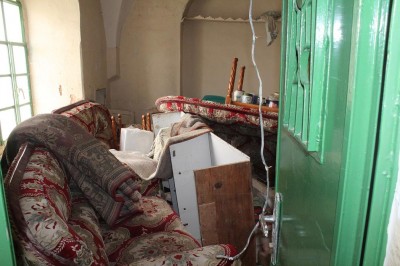
West Bank – Israeli occupation forces in Hebron raided a home, arrested a Palestinian and smashed his family’s belongings in the early hours of the morning.
Thirteen soldiers who came with two dogs broke down the door, arrested Ahmed Sharabati, 22, and vandalised the property without giving an explanation. As of this moment, Sharabati’s whereabouts are currently unknown.
The soldiers were present in the home for an hour and a half, during which time the terrified family was harassed, furniture was turned upside down and a window was smashed. The family spent six hours cleaning up after the raid.
 The soldiers took Sharabati, a student at Hebron university, without telling the family why or where he was being taken.
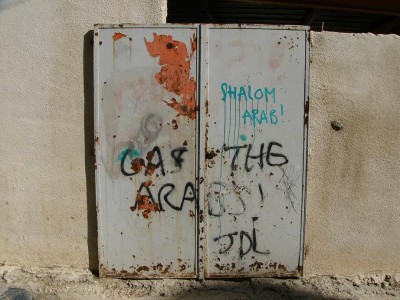
The family’s home is located in H2, the Israeli controlled part of Hebron. The close proximity of soldiers and illegal settlers means that Palestinians are always under threat from violence and harassment. Palestinians returning home from the city centre are subjected to humiliating checkpoints and the area is infamous for its “Gas the Arabs” graffiti.
The Israeli occupation forces soldiers in H2 are soon due to be replaced by other soldiers and the locals believe they are intentionally being more aggressive to leave a lasting impression.
Related articles
- Local activist detained in Hebron (alethonews.wordpress.com)
- Security video of killing of Hebron circus student shows claim of ‘toy gun’ fraudulent (alethonews.wordpress.com)
- Israeli forces kill teenager on his 17th birthday in Hebron (alethonews.wordpress.com)
- Second group of journalists beaten in Hebron (alethonews.wordpress.com)
Syria conflict between nation, enemies: President Assad
Press TV – January 6, 2013
Syrian President Bashar al-Assad says the ongoing conflict in his country is not between the state and opposition but between the nation and its enemies.
In a key speech on the situation in the country, Assad said on Sunday that his government will always extend its hand for dialogue with the opposition and political parties.
The Syrian president, however, said that the government “will not have dialogue with a puppet made by the West.”
“Government will call for a comprehensive national dialogue” in the near future, he said.
“Syria wants peace and reconciliation,” he said, adding that “Armed groups must halt terrorist acts.”
The president added that the constitution will be subjected to referendum and that general amnesty will be announced.
Assad warned that there is an “agenda to partition Syria” but stated that “the nation is for all and we all must protect it.”
“Any initiative must be based on Syrian vision,” Assad said, adding “we are to go ahead with own political process.”
The president went on to say that the Geneva initiative on the transition in Syria was ambigiuous. He also said that “Any talk of revolution in Syria is just bubbles of soap.”
The Syrian president lauded people in the villages that tried to block the enterance of militants from Turkey, adding that “the nation is for those who protect it.”
Syria has been experiencing unrest since mid-March 2011. Many people, including large numbers of security personnel, have been killed in the violence.
The Syrian government says the chaos is being orchestrated from outside the country, and there are reports that a very large number of the militants fighting the Syrian government are foreign nationals.
Several international human rights organizations have accused the foreign-sponsored militants of committing war crimes.
Related article
US Court Rules Syrian Government Responsible for Kidnapping of American in Turkey
By Noel Brinkerhoff | AllGov | January 5, 2013
The government of Syria has been ordered by a U.S. federal court to pay $338 million in damages for supporting a terrorist group that kidnapped Americans two decades ago.
One of those kidnapped, Marvin Wilson, sued the Syrian government along with the family of Ronald Wyatt, who died of cancer several years after their release from the Kurdish Workers Party (PKK), a Kurdish nationalist group in Turkey that has been designated a terrorist organization by the U.S. State Department since 1997.
The two men were part of an archeology expedition searching for remains of Noah’s Ark in Turkey when, in August 1991, members of the PKK captured and held them for three weeks.
The plaintiffs sued the Damascus government claiming it had allowed the PKK to operate from Syrian territory, and provided financial support and training to the terrorist group.
District Court Judge Royce Lamberth ruled that Syria was “vicariously liable” for the kidnapping, and ordered the government to pay $38 million in compensatory damages to the plaintiffs and another $300 million in punitive damages.
“The brutal character of the kidnapping in this case, the significant harm it caused both the hostage plaintiffs and their families, along with Syria’s demonstrated and well known policy to encourage terrorism all merit an award of punitive damages,” Lamberth wrote.
During their ordeal, Wilson and Wyatt were force-marched for 18 hours and repeatedly beaten by their captors, according to the plaintiffs.
Related articles
- Judge Orders Syria to Pay $338M in Terrorism Case (legaltimes.typepad.com)
- Israeli group wins $338 million judgment against Syria over kidnapping of Americans (righttruth.typepad.com)
Netanyahu: Iran Has Not Yet Crossed the Red Line
Al-Manar | January 4, 2012
Zionist Prime Minister Benjamin Netanyahu said Iran has not yet crossed the red line Tel Aviv set on its nuclear program.
“Iran remains the number one threat,” Netanyahu said Thursday at the last session of the annual year-end meeting in the Foreign Ministry for the Israeli ambassadors serving abroad.
“There is a chance for positive change in the region if that country was prevented from getting a nuclear weapon,” he said referring to the Islamic Republic.
The prime minister added that in the short term he expected regional tribulations to continue.
During a speech at the UN in September, Netanyahu drew a red line on a picture of a bomb signifying when Tehran would be 90% on the way to development of a bomb. He said Iran would not likely pass that line until the spring or summer.
“And this will give more time for sanctions and diplomacy to convince Iran to dismantle its nuclear weapons program altogether,” Netanyahu added on Thursday.
The Israeli PM also addressed the Palestinian issue, saying Hamas could take control of the Palestinian Authority “any day,” and therefore “concrete security arrangements” must be included in any peace agreement, as well as recognition of the Zionist entity as the “state of the Jewish nation,” an end to the “right of return” and a sincere declaration on the end of the conflict.
Related articles
- Netanyahu was wrong about Iraq having nuclear weapons
- NYT and Professor Netanyahu
- Context of ‘July 8-10, 1996: Israeli Prime Minister Netanyahu Tells Congress US Must Join Israel in ‘Democratizing’ Middle East’
- Sanctions not slowing Iran N-program by ‘one millimeter’: Netanyahu
- Netanyahu’s Role in Crafting the “Strategic Asset” Myth
- When Netanyahu Crossed the Line
US Resolution Presses EU to Designate Hezbollah a “Terrorist Organization”
Al-Manar | January 4, 2012
The U.S. House of Representatives passed a resolution urging the European Union and its member states to designate Hezbollah a ‘terrorist group’.
The resolution, approved on Wednesday, urges the European Union member states to also impose sanctions on Hezbollah, the Times of Israel news website reported.
Based on the resolution, which was co-sponsored by 85 House representatives, Hezbollah would be prevented from employing the territories belonging to the European Union for fundraising, recruitment and training.
On July 24, 2012, the European Union flatly rejected an Israeli call to blacklist Hezbollah as a “terrorist group”, because it regards Hezbollah as an active political party in Lebanon and there is not enough evidence to warrant listing the Lebanese group a ‘terror group’ as the United States does.
European countries argue that their relations with Lebanon, where Hezbollah provides extensive social services and its political wing holds government power, would be damaged by the designation. Among the 27 European Union member states, only the UK and the Netherlands are in favor of the designation, which would freeze the group’s Europe-held financial assets.
Brahimi unveils new initiative to end Syria crisis
Press TV – December 30, 2012
The UN-Arab League Special Envoy to Syria Lakhdar Brahimi has unveiled a new initiative to end the country’s months-long crisis.
Brahimi said on Sunday that the new plan could find support from world powers, including key Syria ally, Russia.
The veteran Algerian diplomat, however, did not elaborate fully on his proposal but said he had discussed it with Russia and Syria, and that it was a political solution based on the Geneva Declaration adopted in June.
“I have discussed this plan with Russia and Syria…. I think this proposal could be adopted by the international community,” Brahimi told reporters in Cairo after meeting with Arab League chief Nabil El-Araby.
Under the Geneva plan, opposing sides would cease fighting and a transitional body would be formed until elections are held.
Brahimi also said that the situation in Syria “is very bad and getting worse by the day,” and that without a negotiated solution the country will turn into “hell.”
Brahimi’s previous attempt to secure a temporary truce in Syria for the Muslim feast of Eid al-Adha in October failed after militants refused to cease their fire.
Syria has been experiencing unrest since March 2011. Many people, including large numbers of army and security personnel, have been killed in the turmoil.
A recent UN report has revealed that militants from 29 countries have so far infiltrated into Syria to fight against the Damascus government, most of whom are extremist Salafists.
The Syrian government has repeatedly said that the chaos is being orchestrated from outside the country, and that a very large number of the militants operating in the country are foreign nationals.
Related articles
- Brahimi’s shuttle diplomacy rekindles hopes of solution to Syrian crisis (news.xinhuanet.com)
- Brahimi urges end to Syria violence (standard.co.uk)
Egypt seeks to forge tight relations with Hezbollah, envoy to Lebanon says
Press TV – December 29, 2012
Egyptian Ambassador to Lebanon Ashraf Hamdy says his country plans to forge “tight” relations with the Lebanese resistance group Hezbollah.
“You cannot discuss politics in Lebanon without having a relationship with Hezbollah,” Hamdy said in an interview with the Lebanese newspaper Daily Star published on Saturday.
In a clear policy shift from Egypt’s Mubarak-era policy, the envoy described the resistance movement as “real force on the ground” with “big political and military influence.”
Hamdy said that the government of President Mohamed Morsi would pursue a policy to stretch “[its] hand out in the proper, balanced way to all regional powers” including Hezbollah, in order to forge “tight” contacts with Lebanon’s rulers.
Hamdy also said that he had met with Hezbollah’s political bureau members in efforts “to understand each other better.”
“Resistance in the sense of defending Lebanese territory … That’s their primary role. We … think that as a resistance movement they have done a good job to keep on defending Lebanese territory and trying to regain land occupied by Israel is legal and legitimate,” he said.
The relations between Egypt and Hezbollah reached rock bottom in 2008 during the previous Gaza war, when Hezbollah Chief Seyyed Hasan Nasrallah criticized Cairo for failing to support Palestinians. The ties generally were strained under former President Hosni Mubarak, in large part due to Egypt’s peace treaty with Israel.
Egyptians launched a revolution against Mubarak’s regime in January 2011, which brought an end to over three decades of dictatorship by him in February 2011.
Related articles
- New Egypt warms up to Hezbollah: ambassador (dailystar.com.lb)
- Egypt to strengthen ties with Hezbollah (rt.com)
- US pressures Europe to label Hezbollah a “terrorist group” (alethonews.wordpress.com)
Turkey Okays approval of Israel’s status in NATO: Report
Press TV – December 23, 2012
NATO has reportedly agreed to increase Israel’s participation in its activities in 2013 after Ankara eased its opposition to the move following the alliance’s approval of the deployment of Patriot missiles to Turkey.
Citing Israeli officials, the Jerusalem Post reported on Sunday that “the approval had come as Turkey’s request that NATO station Patriot missile batteries along its border with Syria was granted, leading them to assess that NATO was using the deployment as leverage to induce Ankara to thaw its relations with Israel.”
Israel, a NATO partner participating in seminars, exercises and training courses, has been requesting to increase its role in the military alliance but it was met with an objection from Turkey, a full NATO member.
“At the last minute – and I think it was dependent on the Patriots – it was approved,” said one Israeli official on condition of anonymity.
The Israeli official also said that Israel’s approval for participation in the 2013 work plan and other traditional NATO activities “is not a total solution” to tensions between Israel and Turkey.
The report added that Israel is seeking to improve its status in NATO, but Tel Aviv’s fears about the opposition of Turkey which enjoys veto power over decision-making in the alliance which is conducted by consensus.
NATO officials have been pushing to improve the Israel-Turkey ties that were soured after the Mavi Marmara flotilla incident in 2010, according to Post.
“We would like the issue to be resolved sooner rather than later,” a NATO official said on condition of anonymity. “For the time being we’re trying to find ways to keep the conversation going with Israel.”
NATO has approved of Turkey’s request for the deployment of Patriot surface-to-air missiles in its territory.
The agreement emerged from a meeting of NATO foreign ministers in Brussels on December 4th despite strong opposition from Russia, Syria and Iran.
On December 14th, US Defense Secretary Leon Panetta signed orders to authorize the plan to deploy Patriot missile batteries and about 400 troops to Turkey following the announcement of a similar move by Germany.
Related articles
- this is just a confused way of saying that turkey’s anti-zionism is all fake (niqnaq.wordpress.com)
- Turkish students say no to NATO Patriot missiles on Syria border (realisticbird.wordpress.com)
Abbas Urges UN to Help Syria Refugees Enter Palestinian Territories
Al-Manar | December 19, 2012
Palestinian Authority Chief Mahmoud Abbas urged the international community to help Palestinian refugees fleeing camps across Syria enter the West Bank and Gaza.Mahmoud Abbas”Mahmud Abbas, president of the state of Palestine, requested Wednesday that UN Secretary General Ban Ki-moon and the international community enable our people in Syria to enter Palestinian territory,” a statement carried on the official WAFA news agency said.
He said help was needed “because of the exposure of Palestinian camps to the bloody conflict in Syria.”
Abbas’s call came after tens of thousands of Palestinians fled the Yarmouk camp in south Damascus, one of 12 camps in Syria which host Palestinian refugees and their descendants.
Yarmouk camp has been since Sunday witnessing violent clashes between armed groups and popular Palestinian committees.
According to the United Nations Relief and Works Agency (UNRWA), there are 486,000 Palestine refugees living in nine official and three unofficial camps across Syria.
Abbas also “stressed the Palestinian position of non-interference in the internal affairs of Arab countries,” the statement on WAFA said.
Source: AFP
Related articles
- why the western media are reporting that assad planes bombed palestinian refugee camp (niqnaq.wordpress.com)
300 radical fighters infiltrate Palestinian refugee camp, battling local committees
DAMASCUS, Dec. 16 (Xinhua) — More than 300 fighters from the radical al-Nusra Front on Sunday morning infiltrated the Palestinian camp of Yarmouk in the Syrian capital Damascus and clashed with local committees there, causing human losses, great chaos and huge displacement movement, local media said.
Al-Nusra, an offshoot of al-Qaida in Iraq, has been beefing up the presence in the surrounding areas of the camp over the past days in a bid to storm it, the local Ajel news network said, adding that intense clashes are going on in the camp.
The local committees in the camp are controlled by the Palestinian Popular Front for the Liberation of Palestine — General Command (PFLP-GC) led by Ahmad Jibril, who is a staunch supporter of the Syrian administration of President Bashar al- Assad.
Witnesses and sources said that tens of civilians and members of popular committees have been killed and wounded at the Yarmouk camp during the clashes, adding that most of the al-Nusra fighters came from the Damascus’ suburbs of Daraya, Eastern Ghouta, al- Hajar al-Aswad and Yeldah.
Meanwhile, Anwar Rajja, the PFLP-GC spokesman, denied untrue media reports about defections in the PFLP-GC ranks and about the departure of its leaders from Damascus to the Syrian coastal city of Tartous. […]
Earlier in the day, the Syrian Observatory for Human Rights, a London-based activists’ group, said that a Syrian MIG aircraft bombed parts of the camp, adding that eight people were killed in the process. However, Raja denied the airstrike reports.
Canada’s Palestinian Aid Programme Serving Israel’s Interests
By Yves Engler | Dissident Voice | December 14th, 2012
Few aspects of Canadian foreign policy have been mentioned more times over the past two weeks than Ottawa’s 300 million dollar five year aid program to the Palestinians.
Ever since the Globe and Mail reported on November 26 that Prime Minister Stephen Harper threatened Mahmoud Abbas that “there will be consequences” if he followed through on his plan to ask the UN General Assembly to upgrade Palestine’s status there has been a great deal of speculation about whether Canadian “aid” would be cut off. A quick Google search brings up hundreds of articles mentioning the 300 million dollars in funding yet none of them mention the highly politicized character of this “aid”.
After Hamas won legislative elections in January 2006 the Conservatives made Canada the first country (after Israel) to cut off funding to the Palestinian Authority. When Hamas officials were ousted from the Palestinian unity government in June 2007, the Conservatives immediately contributed $8 million “in direct support to the new government.” Then in December 2007 the Conservatives announced a five-year $300 million aid program to the Palestinians, which was largely designed to serve Israel’s interests.
A Saint John Telegraph-Journal headline explained: “Canada’s aid to Palestine benefits Israel, foreign affairs minister says.” In January 2008 foreign minister Maxime Bernier said: “We are doing that [providing aid to the PA] because we want Israel to be able to live in peace and security with its neighbours.”
Most of the Canadian aid money has gone to building up a Palestinian security force overseen by a US general. The immediate impetus of the Canadian aid was to create a Palestinian security force “to ensure that the PA maintains control of the West Bank against Hamas,” as Canadian Ambassador to Israel Jon Allen was quoted as saying by the Canadian Jewish News. American General Keith Dayton, in charge of organizing a 10,000-member Palestinian security force, even admitted that he was strengthening Mahmoud Abbas’ Fatah against Hamas, telling a US audience in May 2009 his force was “working against illegal Hamas activities.” According to Al Jazeera, between 2007 and early 2011 PA security forces arrested some 10,000 suspected Hamas supporters in the West Bank.
The broader aim of the US-Canada-Britain initiated Palestinian security reform was to build a force to patrol Israel’s occupied territories. In a 2011 profile of Canadian Lieutenant-Colonel Ron Allison, “Dayton’s chief of liaison in the West Bank” for a year, his hometown newspaper reported: “The Dayton team was concerned with enhancing security on the West Bank of Palestine and was all geared towards looking after and ensuring the security of Israel, said Ron.”
“We don’t provide anything to the Palestinians,” noted Dayton, “unless it has been thoroughly coordinated with the state of Israel and they agree to it.” For instance, Israel’s internal intelligence agency, the Shin-Bet, vets all of the Palestinian recruits.
The Israelis supported Dayton’s force as a way to keep the West Bank population under control. Like all colonial authorities throughout history Israel looked to compliant locals to take up the occupation’s security burden. In a December 2011 article titled “[Ehud] Barak admires PA security forces for protecting [Israeli] settlers [in the West Bank]” a Palestinian news agency described an interview the Israeli defence minister gave to a Hebrew radio station.
Writing in a July 2011 issue of the London Review of Books Adam Shatz explained: “The PA already uses the American-trained National Security Force to undermine efforts by Palestinians to challenge the occupation. (Hamas, in Gaza, has cracked down on protest even more harshly.) ‘They are the police of the occupation,’ Myassar Atyani, a leader of the Popular Front for the Liberation of Palestine, told me. ‘Their leadership is not Palestinian, it is Israeli.’ On 15 May – the day Palestinians commemorate their Nakba [the 1948 destruction of Palestinian society] – more than a thousand Palestinians, mainly young men, marched to the Qalandia checkpoint between Ramallah and Jerusalem and clashed with Israeli soldiers; but when Atyani tried to lead a group of demonstrators to the Hawara checkpoint outside Nablus, PA security forces stopped them. The road from Ramallah to Qalandia is in Area C, which is not controlled by the PA; the road from Nablus to Hawara is in Area A, which is. And protesters who have attempted to march to settlements along PA-controlled roads have also found themselves turned back. It is an extraordinary arrangement: the security forces of a country under occupation are being subcontracted by third parties outside the region to prevent resistance to the occupying power, even as that power continues to grab more land. This is, not surprisingly, a source of considerable anger and shame in the West Bank.”
The Palestinian security force is largely trained in Jordan at the US- built International Police Training Center (created to train Iraqi security after the 2003 invasion). In October 2009 the Wall Street Journal reported: “[Palestinian] recruits are trained in Jordan by Jordanian police, under the supervision of American, Canadian, and British officers.” The number of military trainers in the West Bank varied slightly but in mid-2010 18 Canadian troops worked with six British and ten US soldiers under Dayton’s command. “The Canadian contribution is invaluable,” explained Dayton. Canadians are particularly useful because “US personnel have travel restrictions when operating in the West Bank. But, our British and Canadian members do not.” Calling them his “eyes and ears” Dayton said: “The Canadians … are organized in teams we call road warriors, and they move around the West Bank daily visiting Palestinian security leaders, gauging local conditions.”
Part of the US Security Coordinator office in Jerusalem, the Canadian military mission in the West Bank (dubbed Operation PROTEUS) includes RCMP officers as well as officials from Foreign Affairs, Justice Canada and the Canadian Border Services Agency. In a September 2010 interview with the Jerusalem Post then deputy foreign minister Peter Kent said Operation PROTEUS was Canada’s “second largest deployment after Afghanistan” and it receives “most of the money” from the five-year $300 million Canadian “aid” program to the Palestinians. During a visit to Israel in February, foreign minister John Baird told the Globe and Mail he was “incredibly thrilled” by the West Bank security situation, which he said benefited Israel.
In effect, Canada has helped to build a security apparatus to protect a corrupt PA led by Mahmoud Abbas, whose electoral mandate expired in January 2009, but whom the Israeli government prefers over Hamas.
Don’t expect the Conservative government to sever this “aid”.
Featured Video
Integrity Initiative: UK-funded network framed dissent as Russian disinformation for years
or go to
Aletho News Archives – Video-Images
From the Archives
Why Saudi Ties to 9/11 Mean U.S. Ties to 9/11
By Kevin Ryan | Dig Within | September 27, 2015
Media interest in Saudi Arabian connections to the crimes of 9/11 has centered on calls for the release of the 28 missing pages from the Joint Congressional Inquiry’s report. However, those calls focus on the question of hijacker financing and omit the most interesting links between the 9/11 attacks and Saudi Arabia—links that implicate powerful people in the United States. Here are twenty examples. … continue
Blog Roll
 Aletho News
- Big tech hands in its DSA censorship reports to the EU
- ‘A Big Victory’ – Palestine Chronicle Wins Two-Year Legal Battle
- IAEA inspectors cannot return to Iran amid US threats: Russia
- Senate Rejects Iran War Powers Resolution Passed By House
- ‘We did not attack Pakistan with drones’: Afghan sources
- Iraqi Resistance faction links arms to sovereignty, questions US exit
- Cannon fodder no more… South Korea rejects Trump’s pressure to join his criminal war on Iran
- Neria Leiter Was A Legitimate Military Target
- Integrity Initiative: UK-funded network framed dissent as Russian disinformation for years
- ‘We don’t seek permission to defend our country’: Snippets from President Pezeshkian’s UNGA address
- If Americans Knew
- ‘This is where I live now, the back of a truck’: a day in the life of a grandmother in Gaza
- In UN Speech, Iran’s President Displays Pictures of Children Killed by US, Brings Attention to Israel’s Nuclear Arsenal
- Israel displaces hundreds of Palestinians amid wave of demolitions in West Bank
- Aid, reconstruction, and Israel’s history of obstruction in Gaza
- Trump administration digs an ever-deeper hole of complicity in genocide – Daily Update
- US-Israel $2.8 Billion Arms Deal, 40,000-Bomb Supply Faces New Gaza Complicity Accusations
- Caught on Tape: AIPAC CEO Boasted of Controlling Trump’s National Security Officials
- Why Hamas Attacked Israel in October 2023 – Israeli professor Ilan Pappé
- They see them, then kill them: Israeli quadcopters track, deliberately target civilians in Gaza
- Winter could turn Gaza’s treacherous, war-damaged buildings into deathtraps
- No Tricks Zone
- New Study: Earth And Venus Surface Warmth Largely Explained By Convection And Lapse Rate, Not CO2 Or Radiation
- 2025 Nature Paper Claiming Worsening Global Drought Gets RETRACTED …Heavily Flawed
- New Study: ‘Global Drought Shows No Detectable Recent Acceleration Under Climate Warming’
- Economic Masterminds: German Socialists Suggest Taxing Productivity Gains Stemming From Using AI
- The South China Sea Has Not Been Cooperating With The Climate Change Narrative
- Energy Crisis: Germany Enters Heating Season With Historically Low Gas Reserve Fill Levels
- New Study: The Antarctic Ice Sheet Gained Mass From 2020-2024 Due To Staggering Snow And Ice Accumulation
- Study: Ocean Heating Rates From Thousands Of Years Ago ‘Dwarf’ Modern Ocean Heating Rates
- Climate Extremists Target, Attack Large-Scale Power Grid Infrastructure In Germany!
- New Study: Antarctic Ice Melt Has Contributed Less Than 1 Centimeter To Sea Level Rise In The Last 30 Years

