In the wake of Russian victory in Mariupol
BY M. K. BHADRAKUMAR | INDIAN PUNCHLINE | MAY 21, 2022
Thank God, Russia eschews any triumphalism over the surrender of the so-called neo-Nazi Azov regiment in the Azovstal factory complex in Mariupol. The Defence Ministry in Moscow announced on Friday that a total of 2,439 “Azov Nazis” and Ukrainian servicemen had laid down their arms since May 16, and that the entire Azovstal complex is now under control of Russian forces.
Russia sticks to its version that on April 21, President Putin handed down an order calling off the initially planned storming of the Azovstal plant, as he considered it pointless and ordered that the industrial zone around the plant be tightly sealed off so that “even a fly couldn’t get through.”
Kiev instead claims the “end of combat operations.” President Volodymyr Zelensky called it an “evacuation mission … supervised by our military and intelligence officers” with the involvement of “the most influential international mediators.”
The fog of war has thickened. Russian Duma previously considered to expressly forbid any exchange of prisoners, but has since stood down. The Russian and Ukrainian delegations are set to meet in Belarus on Monday.
Moscow is also keeping mum about the identity of any foreign military personnel who surrendered in Mariupol. In the past week, both US Defence Secretary Lloyd Austin and the Chairman of Joint Chiefs of Staff General Mark Milley called their Russian counterparts Sergei Shoigu and Gen. Valery Gerasimov respectively for the first time since the war began in February.
The resumption of talks in Belarus after two months suggests that Kiev has a negotiating brief that carries the imprimatur of Washington and London. These are big ‘ifs’. The objectives behind the Russian operation are not yet fully realised. Putin has the final word, but he prefers to concentrate more on navigating the Russian economy through the western sanctions.
The situation on the Ukrainian front lines in Donbass remains very complex. There is intense fighting street to street, village to village, as Russian forces continue to advance on the main front lines. Russia is not committing large forces, since operation is highly tactical aimed at cleansing the region of its “Nazi filth” (to borrow from Putin) if Mariupol is any example.
Russian forces made a significant gain in capturing Izyum with the intention to advance further south-west towards the town of Barvenkovo, which is the main stronghold of the Ukrainian forces in Donbass region. They are on the outskirts of the city of Severodonetsk and clashes continue along the road leading to Lisichansk, which has over 10,000 Ukrainian troops.
Again, after taking control of Popasnaya, Russians are surrounding the Ukrainian forces in various settlements and breaking through their defence lines in three directions. The US mercenaries, many of whom are likely intelligence agents, continue to fight in the ranks of the Ukrainian forces and several of them have been killed. 35-year old Joseph Ward Clark’s documents revealed that he belonged to a unit of special forces. Russia is striking key and strategically important Ukrainian targets such as warehouses, railways and bridges.
In military terms, Kiev and its western advisors hoped to pin down substantial Russian forces in Mariupol, but were outmanoeuvred. The commander of the Azov army Svyatoslav “Kalyna” Palamar was taken from the Azovstal steel plant yesterday in a special Russian armoured vehicle. All this will demoralise the Ukrainian military.
Therefore, the US announcement of additional $40 billion for Ukraine can be seen as a morale booster. The combined American military aid for Ukraine now stands at $54 billion, which is about 81 percent of Russia’s 2021 defence budget. But, as Americans would say, there’s nothing like free lunch. The Ukraine Democracy Defense Lend-Lease Act of 2022 signed by Biden in May is patterned after the legislation used during World War II to supply weapons to allied countries, stipulating that these aid packages are actually debts that need to be paid back by Ukraine eventually.
Washington can claim compensation if Ukraine fails to redeem the debt, such as with the supply of cheap agricultural products by Ukraine, preferential business deals for American companies, and so on.
The Biden Administration probably hopes to ensure that the interest groups at the top echelons of leadership in Kiev continue with the war effort. Ukraine is a notoriously corrupt country and war profiteering on a massive scale can be expected. Much of the aid will be stolen by corrupt officials.
Going forward, the US diplomacy faces a difficult situation. The EU has virtually shelved the ban on Russian oil and stopped talking about ending Russian gas supplies. The political dynamics in Europe is shifting. After approving five previous sanctions packages against Russia with remarkable speed and unanimity, European leaders have reached the point at which the penalties against Russia carry increasing costs and heightened risk of damage to their own economies, and that is testing their unity.
France, Germany and Italy, amongst many other EU countries, have come to terms with the new Russian regime for payment for gas supplies that effectively bypasses EU sanctions. Potentially, the current delay in the EU oil sanctions will likely have a domino effect.
During the recent weeks, there has been a flurry of ceasefire talk (and negotiations with Moscow) by French President Emmanuel Macron, German Chancellor Olaf Scholz and Italian Prime Minister Mario Draghi. Their remarks seem at cross-purposes with what the British and the Americans are saying. Simply put, the European continent’s three most powerful capitals have begun singing from a different song sheet, wanting the war to end quickly and everything to “return to normal” as soon as possible. The point is, divergences over allied war aims are emerging.
However, Russia is unlikely to agree to peace terms that fall short of its demands — a neutral Ukraine and Kiev’s acceptance of the status of Donbass region and Crimea. But then, the head of Crimea, Sergey Aksyonov said on May 18 that Kherson and Zaporizhia regions should be merged with the Crimea. Earlier, the head of the Kherson region also demanded that the region should integrate into Russia. These are gentle reminders that if the war continues, Zelensky will risk harsher terms of settlement.
In the final analysis, the tragi-comedy of the Azovstal event underscores that there are no winners and losers in this war. The US wants to win this war, whereas Russia is not fighting a war but is seeking a successful operation to meet certain specific objectives of national security. The Ukrainian and Russian peoples have fraternal bonds. Ukraine is Russia’s neighbourhood, whereas it is 10,000 kms away from America. This disconnect threatens to prolong the war.
The Europeans don’t have fire in the belly anymore while speaking about the war, which for them is becoming a great disrupter of the manicured, predictable life in their continent, something that they least expected when Washington hustled them into the war.
Above all, this is an operation of necessity for Russia, not of choice. Paradoxically, the choice was entirely up to the US and NATO to appreciate that there is nothing like absolute security. Wasn’t it the former US Secretary of State Henry Kissinger who once said, “Absolute security for one state means absolute insecurity for all others.”
COVID-19 Pandemic Could Have Emerged Due to US Experiments on Viruses, Prof Says
Samizdat | May 21, 2022
Scientists have not been able to reach an agreement on the origin of the coronavirus pandemic. While it is widely believed that the deadly virus originated from a wet market in Wuhan, others insist that COVID-19 was man-made, and the pandemic was the result of a laboratory leak.
US experiments on viruses that could jump from animals to people might have contributed to the emergence of coronavirus, Professor Jeffrey Sachs wrote in his article for PNAS journal.
He also called for an independent and transparent investigation into the origin of the coronavirus pandemic. According to Sachs, more transparency from the Chinese authorities could have helped a lot during the early stages of the pandemic, but some US research also raises concerns.
“We argue here that there is much important information that can be gleaned from US-based research institutions, information not yet made available for independent, transparent, and scientific scrutiny,” he wrote in a joint statement with Professor Neil Harrison of Columbia University.
Among the US institutes that could use more transparency Sachs lists the EHA, the University of North Carolina (UNC), the University of California at Davis (UCD), the NIH, and USAID.
“A broad spectrum of coronavirus research work was done not only in Wuhan […] but also in the United States. The exact details of the fieldwork and laboratory work of the EHA-WIV-UNC partnership, and the engagement of other institutions in the United States and China, has not been disclosed for independent analysis,” the professors wrote, adding that “the precise nature of the experiments that were conducted, including the full array of viruses collected from the field and the subsequent sequencing and manipulation of those viruses, remains unknown.”
Sachs pointed out that the denials of being involved in COVID-related research alongside US institutions are “only as good as the limited data on which it is based”. According to the article, the US-Chinese collaborative research was connected to “the collection of a large number of so-far undocumented SARS-like viruses and was engaged in their manipulation within biological safety level (BSL)-2 and BSL-3 laboratory facilities.”
Such experiments raise concerns that an airborne virus might have infected a laboratory worker, along with other possible scenarios suggesting that COVID-19 was man-made.
Sachs emphasised the importance of further independent and transparent investigations into the origin of the pandemic, suggesting that one of the ways to investigate could be “a tightly focused science-based bipartisan Congressional inquiry.”
While the scientific opinions on the origins of COVID remain divided, Beijing suggested that the deadly virus could have also emerged from Fort Detrick, a clandestine bioresearch facility based in Maryland. Washington, in turn, accused China of fuelling the pandemic and concealing the data about the virus, with the allegations being particularly vocal during the presidential tenure of Donald Trump.
Why is a New War Coming to Afghanistan?
By Salman Rafi Sheikh – New Eastern Outlook – May 19, 2022
Afghanistan, every now and then, is hit by a bomb attack. Most of the recent attacks have been claimed by the Islamic State in Khorasan (terrorist organization, banned in Russia)). Its ability to orchestrate highly sophisticated attacks shows that the group, contrary to the claims the US military officials made during the US occupation of Afghanistan, has not lost its strength at all. But, to the surprise of many, the IS-K, while a potent threat to the Taliban and the wider region of South and Central Asia, a new armed resistance is emerging against the Taliban, this time led by local Afghans rather than transnational jihadis. Afghanistan’s National Resistance Front (NRF) being led by Ahmad Massoud and Amrullah Saleh, Afghanistan’s former vice president, has officially launched an offensive against the Taliban. Scores of other armed groups, too, have announced their formations and declared their intentions, on their Facebook pages and otherwise, to resist the Taliban on their own or in alliance with the NRF.
According to claims made by the NRF’s Ali Nazary, head of NRF’s foreign relations, a fully-fledged offensive has been launched in the Panjshir valley, in at least three districts. The NRF has a presence across Afghanistan’s many provinces. As Ali Nazary told the Associated Press of France in an interview, the NRF will launch operations in all the provinces to drive out what it calls illegal occupants (i.e., the Taliban) of power in Kabul.
To be sure, the NRF is not the only group. An ex-general in the Afghan army, Sami Sadat, recently vowed to “continue to fight.” In an interview given to the BBC, Sadat said he would “do anything and everything in our powers to make sure Afghanistan is freed from the Taliban and a democratic system is re-established.”
Most of the media projection – especially in the West – about the emerging resistance against the Taliban is tied to the failure of the Taliban to develop a politically and ethnically inclusive system. Many important political groups have been excluded and the Taliban high command has captured power, with most of the key ministries being led by key Taliban commanders, including the Haqqanis. On top of this is the Taliban’s gradual return to implementing an orthodox interpretation of Islam to regulate politics and society at large.
While all of these issues do point to certain political problems, the emerging resistance has some geopolitical underpinnings too. Consider this: Sadat, who was until recently was nowhere to be seen, emerged out of thin air and suddenly became so important as to attract the BBC for an interview. The fact that the BBC interviewed him and published his views shows (1) how new anti-Taliban personalities are being dug up by the West, and (2) how they are being given international projection.
While the criticism the Taliban are facing has a valid foundation, it is also true that Afghanistan’s new war is being planned somewhere else. As some reports have shown, US envoys have been holding meetings with the NRF in Tajikistan, where the latter is based.
Media reports in the west are already predicting a ‘new fighting season’ in Afghanistan. While Sadat was interviewed by the BBC, Britain’s state broadcaster, a news report carried by the Voice of America (VoA), America’s state-owned broadcaster, too, showed how anti-Taliban resistance is already coming of age.
According to the report, apart from the NRF, there is an ‘Afghanistan Freedom Front.’ According to VoA, it is being led by General Yasin Zia, a former defense minister and chief of general staff. Another group is ‘Afghanistan Islamic National and Liberation Movement’ is being led by Abdul Mateen Sulaimankhail, a former Afghan Army special forces commander.
Why is the west giving state-level projections to these groups? This sudden projection comes against the backdrop of Russia’s and China’s growing ties with the Taliban, and an ever-increasing possibility of both Moscow and Beijing extending legitimacy to the Taliban rule by recognising it. This comes against the backdrop of an emerging understanding between the Taliban and China and Russia that the former will make sure not to allow anti-China and anti-Russian groups to spread into their territories. In exchange, Beijing and Moscow will help the Taliban.
In his latest visit to Kabul, China’s Wangi Yi told Taliban officials that “China respects the independence, sovereignty and territorial integrity of Afghanistan, respects the independent choices made by the Afghan people and respects the religious beliefs and national customs of Afghanistan.” In the same meeting, Wang was assured that the Taliban will improve the “security environment” of Afghanistanin in ways to make it safe for China/region.
For China, therefore, Afghanistan is turning into a hospitable country, offering an increasing possibility of extending the China-Pakistan Economic Corridor to Afghanistan as well. Indeed, Wang Yi hinted during the same visit that China is considering it seriously.
Improving security and the political environment is something that Russia also believes is developing in Afghanistan. In a statement released on April 29, 2022, the Russian Foreign Minister said that “since the Taliban’s accession to power, the military-political situation in Afghanistan has become relatively stable,” which means that Russia thinks the Taliban might be able to rule Afghanistan effectively.
It is against this geopolitical backdrop that we must understand the emergence of anti-Taliban resistance. A challenge from within Afghanistan, led by Afghans themselves, against Kabul would challenge the Russian and Chinese claims, and indeed the Taliban’s own claim, that Afghanistan is stabilising. A large-scale insurgency, or a civil war, in Afghanistan will, yet again, force China to withdraw its CPEC extension plans, as well as forcing Russia to rethink the possibility of extending its cooperation. On the other hand, it will also allow the West to withdraw whatever support it has been providing to the Taliban in favour of supporting these resistance groups.
In short, therefore, there is as much, or even more, geopolitics tied to the emerging resistance as domestic politics i.e., the Taliban’s decision to exclude regional elites and the latter’s decision to resist their exclusion.
Salman Rafi Sheikh is a research-analyst of International Relations and Pakistan’s foreign and domestic affairs.
Google Initiates Its Own Bankruptcy In Russia
Samizdat | May 18, 2022
MOSCOW – The Russian branch of IT giant Google has initiated its own bankruptcy in connection with non-fulfillment of financial obligations, according to the data on the Fedresurs federal registry of subjects of economic activity on Wednesday.
“[Google] applies with a notice of intent to file for insolvency (bankruptcy) … since from March 22, 2022, it foresees its own bankruptcy and the impossibility of fulfilling monetary obligations,” the registry read.
As of now, Google need to pay a turnover fine of more than 7.2 billion rubles ($113.3 million), according to claims filed by Russian media regulator Roskomnadzor.
The company was supposed to pay the specified amount by March 19, but it failed to comply with the requirement, prompting another case in early May for the forced recovery of funds.
West conducting war against Russia – Kremlin
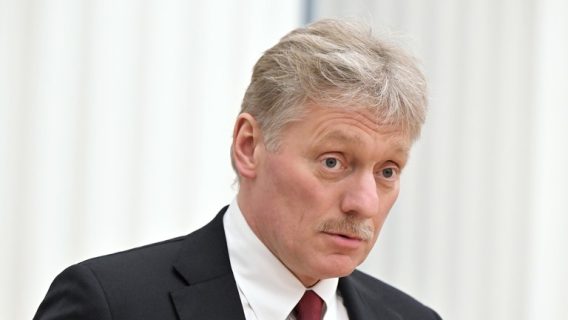
Kremlin spokesman Dmitry Peskov © Sputnik / Sergey Guneev
Samizdat | May 17, 2022
Western powers opposing Russia in Ukraine could be considered enemies waging a war against the state, Kremlin spokesman Dmitry Peskov said on Tuesday. He pointed out that economic sanctions, the arming of Ukrainian nationalists, and giving them intel to attack Russian troops all amounted to acts of war.
“Sure, we are still using the mild term ‘unfriendly states’ when referring to them,” Peskov told an educational forum.
“But I would say they are hostile states, because what they do is war.”
He cited the decision to freeze Russian foreign reserves that the country kept in Western financial institutions and discussions about giving the money to Ukraine as an obvious attack on property rights, the cornerstone of Western civilization. “That was money that you and I own,” Peskov told the audience. “It was stolen from us, it is being stolen from us.”
Russia’s opponents are playing a more direct role in their attempts to hurt Russia in their “hybrid war,” the official said. “Not only American but also British military advisers are telling armed Ukrainian nationalists what they should do and provide intelligence to them,” he explained.
Foreigners are also helping Ukrainians smear Russia’s reputation amid the hostilities, Peskov added. “They stage provocations that are on occasion so bloodthirsty that a human conscience cannot imagine them,” he insisted. He explained that he was referring to the town of Bucha and Kiev’s claims that Russian troops had committed war crimes while they controlled it. Moscow has accused Kiev of fabricating the evidence. “It’s clear that Ukrainian ‘specialists’ would not be able to do it with such professionalism. An army of PR companies, TV crews, and information warfare advisers are working for them,” he said.
The conflict didn’t come out of the blue, Peskov noted, citing that as early as 2005, when Russia created an English-language news outlet meant to air alternative viewpoints to Western audiences, it was met with resistance. “If you compare RT to the Anglo-Saxon media empire, you’ll see how small it is. But its effectiveness grew because of the alternative viewpoint,” he said. Western dissidents “were not given a platform” in Western media, because “if you go outside the margins there and voice a different opinion, the inquisition comes, just like in medieval times,” according to Peskov.
“It seems sometimes that the very existence of Russia is a significant irritant to the West and they would do anything not to let us develop in the way we want and live the way we want.”
The time the world is experiencing now is “a perfect storm and a moment of truth,” he said.
The event that Peskov was attending was organized for teachers and their students. The official’s speech was named “Information warfare: a game without rules” and was addressed to a younger audience.
Who is responsible for unethical behavioural ‘nudges’? Not the SPI-B, claims their co-chair
psychologists intent on passing the buck
Health Advisory & Recovery Team | May 13, 2022
As described in a previous HART bulletin, there has been a pervasive reluctance for the powers-that-be to discuss the questionable ethics of the covert behavioural-science techniques used by the Government throughout the covid-19 messaging campaign. The British Psychological Society (BPS) – the organisation with the formal remit to ensure the ethical use of psychological techniques in the UK – could see nothing amiss in the strategic deployment of fear, shame and scapegoating as a means of promoting compliance with the pandemic restrictions. On the contrary, the BPS is ‘incredibly proud’ of the work done by the ‘nudgers’ who advised the Government, arguing that these practitioners were exempt from the requirement to obtain informed consent from the British people on the grounds that they were demonstrating ‘social responsibility’. Likewise, the Behavioural Insights Team (BIT) – ‘the government institution dedicated to the application of behavioural science to policy’, whose employees are embedded in the SAGE advisory groups and across many government departments – denied any responsibility, claiming (via a personal message) that ‘none of the examples you reference were actually our work or anything we worked on at all, and we categorically do not believe in using fear as a tactic’. And a formal request to a Commons select committee asking for an independent inquiry into the state’s deployment of behavioural science has been declined, an administrator stating ‘there are no current plans’ to undertake such a review.
So when Professor Ann John (co-chair of the Scientific Pandemic Insights Group on Behaviour [SPI-B]) was scheduled to appear in front of the Government’s Science and Technology Committee on the 30th March 2022, hopes were raised that someone in a position of authority might finally acknowledge some accountability for inflicting fear, shame and scapegoating upon the British people.
The SPI-B was the behavioural-science subgroup of SAGE with the remit to offer government the ‘best possible behavioural science advice’ to inform the response to covid-19, by providing ‘strategies for behaviour change, to support control of and recovery from the epidemic and associated government policy’. In relation to culpability for promoting unethical ‘nudges’, the (now notorious) SPI-B minutes dated 22nd March 2020 exposed their early involvement in the strategy to frighten people into compliance: ‘A substantial number of people still do not feel sufficiently personally threatened … The perceived level of personal threat needs to be increased among those who are complacent, using hard-hitting emotional messaging’. Nor was the group averse to recommending shame and scapegoating, the same minutes detailing how ‘Communication strategies should provide social approval for desired behaviours’ and that ‘members of the community can be encouraged to provide it to each other’. More ominously, the ‘nudgers’ advised ministers to, ‘Consider use of social disapproval for failure to comply’ and then warned that ‘this needs to be carefully managed to avoid victimisation, scapegoating and misdirected criticism’.
Further incriminating evidence about the involvement of the SPI-B in promoting unethical practices is provided in Laura Dodsworth’s book, A State of Fear: how the UK government weaponised fear during the Covid-19 pandemic. In the book, several SPI-B members expressed concern about the group’s outputs, including accusations that ‘they went overboard with the scary messages’ and that their use of fear was ‘dystopian’ and ‘ethically questionable’.
Given this range of evidence pointing to the SPI-B as a major generator of unethical ‘nudges’, HART hoped that the group’s co-chair, Professor John, would use her appearance at the Science and Technology Committee as an opportunity for an expert in a position of power to acknowledge errors. Or maybe even express humility, talk about lessons learned, apologise and pledge to never err in this way again.
Sadly, not a bit of it.
During her interview, Professor John denied any responsibility for the unethical use of covert psychological strategies. When the incriminating minutes of the 22nd March 2020 were brought to her attention she responded, ‘I was not actually sitting on the SPI-B then’. When further pressed on this issue, Professor John implausibly claimed that her group counselled against using scare tactics as a way of increasing compliance with covid-19 restrictions, stating ‘We never advised on upping the level of fear. I think it was presented as part of the evidence base … we absolutely advised that fear does not work’.
In contradiction of her group’s terms of reference, she insisted that the SPI-B was not trying to change people’s behaviour, but instead pursuing the altruistic motive of ‘ensuring that disproportionate and unintended impacts were not felt by different sectors of society’. When asked which ethical framework her group was operating within, she shirked any responsibility for ensuring the morality of her group’s output, saying that, ‘although we present the advice, where policy decisions are made the Government have an advisory group on ethics’.
The BPS, the BIT, and now the SPI-B have all denied any responsibility for the Government’s ethically-dubious use of fear, shame and scapegoating throughout its covid-19 messaging campaign. Not only is their repudiation of active involvement implausible, but there has been no attempt by these influential stakeholders to account for their silence while the British public were being manipulated and psychologically abused in plain sight. If – as seems likely – no behavioural-science experts are going to acknowledge culpability for this unprecedented psychological warfare, it is imperative that an independent inquiry takes place to identify the true miscreants.
The US-Hosted Summit of the Americas May Deal a Humiliating Blow to Biden

By Ekaterina Blinova | Samizdat | May 14, 2022
Less than three weeks before the Summit of the Americas in Los Angeles, it is unclear whether some major Latin American heads, including the presidents of Mexico and Brazil, will show up, creating yet another PR debacle for President Joe Biden.
The ninth Summit of the Americas (SOA) is due to take place on 6-10 June 2022 in Los Angeles, California. The City of Angels is home to the largest Hispanic/Latino community in the US. The event is held every three or four years. It will be convened in the US for the first time since its 1994 inaugural session in Miami.
According to the US State Department, a wide range of issues is expected to be discussed at the gathering, including the COVID-19 pandemic, “the cracks in health, economic, educational, and social systems”; threats to democracy; the climate crisis; and “a lack of equitable access to economic, social, and political opportunities” for “most vulnerable and underrepresented”.
As White House Press Secretary Jen Psaki told journalists on 10 May, no formal invitations have been sent so far. Nevertheless, the upcoming event’s exclusiveness has already raised questions.
In March, it was revealed that Cuban officials and the presidents of Venezuela and Nicaragua would not be included, according to the New York Times. Cuba has long been subjected to Washington’s embargo, while the US has not formally recognised Venezuelan President Nicolas Maduro or his Nicaraguan counterpart Daniel Ortega.
In response, Mexican President Andrés Manuel López Obrador signalled that he would skip the summit if the heads of those countries were not invited.
“If there are exclusions, if not everyone is invited, then a delegation from the Mexican government will go, but I will not go,” López Obrador told a news conference on 10 May.
The same day, Reuters broke that Brazilian President Jair Bolsonaro is not planning to attend the Summit of the Americas in Los Angeles, citing two people familiar with the matter.
Brazil’s Foreign Ministry was less categorical telling the media outlet that “the president’s attendance is being studied and is not confirmed.”
Brazil is the largest country in South America and the fifth largest nation in the world, which will obviously make its absence notable.
At the same time, the absence of the Mexican president from the summit could axe the Biden administration’s opportunity to achieve any viable migration deal amid the US border crisis. Mexico remains one of the largest sources of migrants to the US, according to the NYT.
“[T]he boycott threats underscore the challenges facing the Biden administration in advancing its interests in the Americas, where the United States has long played an outsized role,” the newspaper notes.
What’s more, the unfolding situation is “threatening to deliver a humiliating blow to the White House,” acknowledges the NYT.
Global demand for vaccines drops sharply
Free West Media | May 14, 2022
Chinese biotech firm Kexing Holdings has made a fortune selling Sinovac’s Chinese vaccine. A few days ago, however, it became known that the bonus payments were withheld and most of the workforce has been laid off. Exports of Chinese vaccines (Sinovac, Sinopharm, CanSino) were 97 percent lower in April than in September 2021.
The Chinese outlet Caitong News reported, citing Kexing employees, that the company made a profit of 82 billion yuan (around 11.6 billion euros) last year. At the same time, the company announced that the year-end bonus payment for the past year would be “postponed”.
Shortly thereafter, Kexing suddenly announced massive layoffs. According to Kexing officials, the company has given staff two options: resign themselves and collect an indefinite severance pay, or take indefinite leave. In the latter case, with 80 percent of Beijing’s minimum wage as compensation.
According to the report, Kexing (Sinovac) has already laid off up to 70 percent of its staff. After the last wave of layoffs was completed in April of this year, the year-end bonuses were then distributed to the remaining employees on April 25. There is no statement or justification for the layoffs by Kexing. However, according to Japanese media reports, China’s vaccine exports have fallen sharply.
Thus, Nikkei Asia, citing UNICEF, reported that the vaccine against Covid-19, which is manufactured by three Chinese companies Sinopharm, Sinovac and CanSino, exported a total of 6,78 million doses in April this year. This is a drop of 97 percent compared to the peak exports in September 2021.
Massive drop in exports also for other Covid jabs
Global demand for vaccines has fallen sharply this year. Not only the exports of Chinese vaccines have fallen sharply due to their ineffectiveness against the Omicron variant.
Exports of Moderna’s and Pfizer’s mRNA drugs are also down 57 and 71 percent, respectively, compared to September last year, according to the report. Pfizer’s exports are nevertheless still eight times those of the three Chinese companies combined.
In South Africa, vaccine production has been grinding to a halt due to the fact that there are no orders.
Vaccine production in Africa almost halted
In South Africa, for example, the pharmaceutical company Aspen, which produces its own filling of the vaccine from Johnson & Johnson and sells it under the name Aspenovax, reported that there were no orders.
“It is feared that the production of the vaccine in South Africa will have to end. There is simply no demand for it. Not a single order has come in for weeks,” German daily Süddeutsche Zeitung reported.
The risk is “very high that the company will actually stop producing Johnson & Johnson vaccines,” the head of the African health authority (African Centers for Disease Control and Prevention) is quoted as saying in the report. Only around 12 percent of the population in Africa have been vaccinated twice. About 40 percent of the vaccine doses shipped to Africa were not used.
The over-supply of free Covid-19 vaccine doses — donated by high-income countries — had closed the gap that Aspen was meant to fill in the market.
According to another German daily, the Tagesanzeiger, millions of BioNTech vaccine doses will have to be disposed of in June.
The comparatively young population of Africa is hardly affected by Corona and faces completely different challenges, such as malaria or the impending starvation catastrophe. Against the background of the threat of starvation or an infection with malaria, which affects millions of people and kills hundreds of thousands every year, there is simply no room for media hysteria around the Corona virus.
Lavrov Regrets UN Missed Opportunity to Reach Political Solution on Ukraine
By Sofia Chegodaeva | Samizdat | May 11, 2022
Russian Foreign Minister Sergei Lavrov has said that he regrets that the UN has missed the opportunity to reach a political solution on the Ukraine crisis.
“To my great regret, the secretariat of this organisation, including its secretary-general, missed the opportunity to achieve a political settlement when for seven long years they did not react in any way to the open, outright sabotage by the Kiev regime of Security Council Resolution 2202, which approved the Minsk Agreements on the settlement in Eastern Ukraine”.
The top Russian diplomat made his statement during a joint press conference with his Omani counterpart Sayyid Badr Albusaidi in Muscat.
Lavrov stressed that the UN should call on the Kiev authorities to stop preventing the evacuation of civilians from the zone of the military operation in Ukraine.
“Taking into account the interest shown by [UN Secretary-General] Antonio Guterres, we advised him first of all to turn his appeals to the Kiev authorities, to demand that they stop preventing civilians from leaving the areas of the military operation”, Lavrov said.
He added that a UN representative “is currently on the ground” and is “trying to help in solving the issues we have raised”.
On 26 April, UN chief Antonio Guterres visited Moscow and had talks with Russian President Vladimir Putin. Guterres said the crisis in Ukraine was his main concern, adding that he had arrived with a pragmatic position and with the intention to first of all assist in solving humanitarian issues in the conflict zone. The secretary-general confirmed that the UN was ready to work with the Russian and Ukrainian militaries, as well as with the Red Cross, to evacuate civilians from the Azovstal steel works in Mariupol, where the last remaining stronghold of Ukrainian neo-Nazis remains.
When he was asked about the prospect of a war in Europe, Lavrov reiterated that Russia is not seeking a war.
“If you are concerned about the prospect of a war in Europe, we absolutely do not want this, but I draw your attention to the fact that it is the West that constantly insists that Russia must be defeated in this situation”, Lavrov told reporters in Muscat.
In a separate development, UN Secretary-General Antonio Guterres held a press conference following his meeting with Austrian President Alexander Van der Bellen on Wednesday. Speaking about the Ukraine crisis, Guterres said that the possibility of concluding peace or a general truce in Ukraine is not currently visible.
Russia and Ukraine have held several rounds of negotiations in the past two months, trying to hammer out an agreement that would result in a peaceful solution to the crisis. However, after some progress appeared to have been made during a Turkey-mediated meeting between Russian and Ukrainian delegations in Istanbul, Kiev suddenly backtracked on the previously agreed points, and the negotiations were stalled.
‘Don’t patronize us’ over Ukraine, India tells Netherlands
Samizdat | May 6, 2022
India’s Permanent Representative to the United Nations, TS Tirumurti, has accused the Netherlands of “patronizing” his country after the Dutch ambassador to the UK publicly scolded New Delhi for abstaining on UN General Assembly resolutions on the war in Ukraine.
“Kindly don’t patronise us, Ambassador. We know what to do,” Tirumurti wrote in a tweet to Dutch envoy Karel van Oosterom on Thursday.
Tirumurti’s tweet came in response to van Oosterom’s (now-deleted) warning that India “should not have abstained” from votes pertaining to Russia and the war in Ukraine and that it should “respect the UN Charter.”
Despite repeated calls and pressure to join the West in isolating Russia over the Ukraine war, New Delhi has been reluctant to cut ties with Moscow.
India has abstained on multiple votes and resolutions at the UN General Assembly this year, including a vote moved by the US in April to suspend Russia from the UN Human Rights Council over accusations of the killing of civilians.
India also abstained from a vote brought by Ukraine and its backers in March, condemning Russia over the humanitarian situation in the country, saying then that the focus should be on the cessation of hostilities.
In a statement delivered Wednesday at the UN Security Council meeting on Ukraine, Tirumurti reiterated India’s position that “pursuing the path of dialogue and diplomacy” is the “only way out” of the crisis.
“India remains on the side of peace and therefore believes that there will be no winning side in this conflict and, while those impacted by this conflict will continue to suffer, diplomacy will be a lasting casualty,” he said.
The South Asian nation has a strong trading relationship with Russia, receiving arms from Moscow in previous agreements between the two sides. It even deemed the current situation an opportunity to broaden cooperation. The country boosted oil purchases from Russia recently, despite pressure from Washington.
Taxpayer funding for media backfires
Taxpayers’ Union NZ | May 6, 2022
This week we released the results of a new scientific poll confirming what we have long suspected: New Zealanders don’t trust Government-funded media outlets to hold the Government to account.
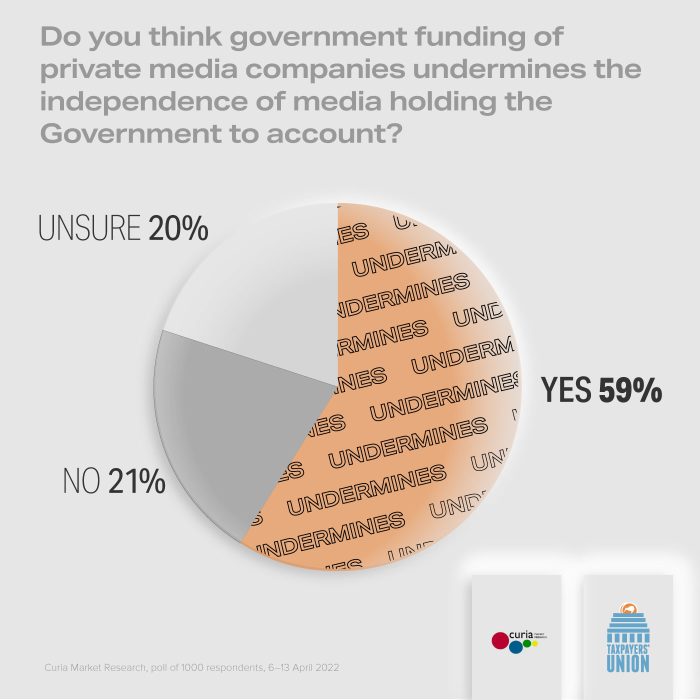
Payments from the likes of the $55 million “Public Interest Journalism” Fund present a clear conflict of interest to media outlets like Stuff and the NZ Herald, who now have millions of dollars at stake in electing a government that protects their funding.
Whenever we challenge media bosses on this they always insist that their company is immune from editorial influence. But they can no longer deny that the decision to accept funding has eroded readers’ trust.
One day after the poll’s publication, the media outlets failed an obvious test: not one of the outlets to have received PIJF funding has covered the results of the poll.
The poll has however been covered by The Platform – a new outlet with a policy of not accepting taxpayer money. Graham Adams’s article explains how funding recipients are pressured into skewing their coverage of Treaty/co-governance issues.
For the record, we are tracking all payments from the Public Interest Journalism Fund on our website. Click here to find out who got taxpayer money.
We’re calling on media outlets to salvage their credibility by repaying taxpayer funding, and declining any future payments.
Click here to sign the petition calling for the media to Pay Back the $55 Million.
As Vaccine Demand Collapses, U.K. Faces £4 Billion of Waste, With 80% of its 650 Million Dose Stockpile Unused
By Nick Bowler | The Daily Sceptic | May 4, 2022
The U.K. has used just 142 million of the stockpile of 650 million vaccine doses it purchased, leaving an estimated £4 billion worth of vaccines unused and, at current levels of take-up, likely going to waste. The vaccines typically have an expiration date of six to 12 months after manufacture – though it’s not clear how many of the 650 million doses have already been manufactured and put in storage and how many are on order for future manufacture and delivery.
Officials have not revealed exactly how much was paid for the Pfizer vaccines, which comprise nearly a third of the total ordered, but the U.S. Government is reputed to have paid around $20 (£16) a dose.
The Moderna vaccine is said to have cost a bit less, perhaps about $15 (£12) per dose, and the Astra Zeneca considerably less, perhaps as low as $4 (£3) per dose as it was sold at cost. There are no data on the other five types ordered, all of which are as yet completely unused.
If an average price of $10 (£8) per dose is assumed, the total bill for all the unused vaccine doses will amount to around $5 billion or £4 billion. Will the public be forgiving of this massive waste of public funds on account of it occurring with good intentions during a state of emergency? That remains to be seen.
It is however far from the only example of pandemic profligacy. The losses due to fraud and delinquent business loans are colossal, with City AM reporting that the Treasury’s £4.3bn fraud write-off is likely to be eclipsed by £20bn of Covid loan defaults. The Government has also written off £8.7bn it spent on protective equipment bought during the pandemic, with £673m of equipment unusable, £750m not used before its expiry date, £2.6bn of equipment judged to be unsuitable for use in the NHS, and £4.7bn being due to the Government paying more for it during the acute global shortage than it is now worth. The Government also spent £569m buying 20,900 ventilators, of which only 2,150 (10%) were used, the rest being left idle in a Ministry of Defence warehouse.
This gross misuse of taxpayers’ money must be examined in the independent inquiry and by Government so the lessons can be learned and in future a robust management system applied in real time so that even stocks purchased in haste and with urgency are kept in reasonable proportion to anticipated demand.
The over-reaction and panic in spring 2020 resulted in decisions that have now turned out to be a huge waste of public money. If there was perceived to be a shortage of anything that might conceivably be needed to fulfil the needs of the public emergency, the public purse was always open.
Actually, the purse appeared to be treated more like Mary Poppins’ bottomless magic carpet bag, with no sign of any prudent oversight applied to funding decisions as long as they served the purpose of proving to the public that the Government was ‘doing something’ about Covid. The results of that fiscal incontinence are now clear for all to see.
Featured Video

Iran FM Araghchi: “Hormuz Will No Longer Be the Same”
or go to
Aletho News Archives – Video-Images
From the Archives
Sam Husseini: The entire US establishment helped lie their way into the Iraq war
By Slava Zilber | American Herald Tribune | October 14, 2019
Sam Husseini is a senior analyst with the Institute for Public Accuracy, independent journalist and contributor to The Nation and FAIR.
Slava Zilber: Sam, three years ago, you appeared on Talk Nation Radio with David Swanson and spoke about the case of the GCHQ whistleblower Katharine Gun. You pointed out that the people involved in the spying on the UN and the people authorizing the Iraq War were not held accountable:
“Virtually everybody who went along with the war, whether it is Kerry or Clinton, of course, the Bush administration themselves has falsified their own records in terms of why, what they did, when they did, why they did it, to the extent that they’ve been scrutinised at all.”
You also address it in a recent article. And recently, Joe Biden has been lying about his position on the Iraq War. How can such an important issue escape meaningful scrutiny? … continue
Blog Roll
 Aletho News
- Barghouti: ‘Netanyahu has fallen,’ era of Smotrich, Ben-Gvir over
- China slams US policy on Iran as Russia rejects legality of nuclear meeting at UN
- The Mecca Pact Courts Iran: Containment Comes Full Circle
- Oman FM: Persian Gulf states, Iran, Iraq should form security pact excluding US
- Trump peddles fresh falsehoods, claims Iran ‘started the war’ as US aggression drags on
- Ukraine quagmire? Yes, but it’s for NATO, not Russia
- US intelligence hypes Chinese, Russian space threats while accelerating its own military buildup in orbit
- Iran FM Araghchi: “Hormuz Will No Longer Be the Same”
- EU facing trillion-euro debt hole while seeking more cash for Kiev
- How US, Europe, Persian Gulf states exhausted missile stockpiles, splurged billions to defend Israel
- If Americans Knew
- An error has occurred; the feed is probably down. Try again later.
- No Tricks Zone
- Sudden Stratospheric Warming, Powerful El Niño Combination May Lead To Extreme Europe Cold, Energy Crisis!
- Two New Studies Find Thwaites Glacier Melt Cannot Be Driven By Human Activity Or A Warming Ocean
- E-Cars Reduce CO2 Emissions By Only 41% Compared To Internal Combustion Engine Vehicles
- Predictions Made By Renowned Climate Professor Over Past Decades Have Been Proven To Be Poor
- New Study Suggests Large Regions Of The Pacific Ocean Have Been Cooling For The Last 80 Years
- Germany’s Green Energy Debacle: High Energy Costs Force Kahla Porzellan to Close After 182 Years!
- New Study: 50 Years Of The Most Aggressive ‘Net Zero’ Policies Can Only Affect The Global Climate By 0.03°C
- US September “Heat” Was No Record…Many Records Set Decades Ago
- Latest European Green Energy Debacle; Portugal’s Largest Flagship Solar Park Insolvent!
- Green Energy Debacle: German Expert Professor Fritz Vahrenholt Warns Of Severe Economic And Social Consequences

