Names of Hungarian PM, Croatian President Appear on Notorious Ukrainian Kill List Site
Samizdat | May 2, 2022
Curated by the Security Service of Ukraine and officials from the Ministry of Internal Affairs, the Myrotvorets website publishes the personal info of so-called “enemies of Ukraine”. Several individuals whose names have been posted on the site have been murdered, and rights groups and governments have repeatedly called for it to be taken down.
Hungarian Prime Minister Viktor Orban’s name has appeared on the notorious Ukrainian website Myrotvorets.center (lit. “Peacekeeper”).
The 58-year-old politician is listed as an “accomplice of Russian war criminals”, an “accomplice in the crimes of Russian authorities against Ukraine and its citizens”, for his “participation in acts of humanitarian aggression against Ukraine”, as an “anti-Ukrainian propagandist”, and for his general all-round “cooperation with the Russian aggressor”.
Orban’s specific “crimes” include his refusal to allow weapons intended for Ukraine to be sent through his country’s territory, and his refusal to reject Russian gas supplies even in the long-term. The prime minister’s willingness to pay for Russian gas in rubles is also mentioned.
The site further recalled Orban’s 4 April statement about the forces Hungary has faced to remain independent, ranging from the local opposition to “the bureaucrats in Brussels, money and institutes of the Soros empire, international media as well as the Ukrainian president”.
Finally, the website points to Orban’s demands that Kiev’s post-2014 authorities respect western Ukraine’s sizeable ethnic Hungarian community, and provide residents of Zakarpattia with greater autonomy.
Along with Orban, Croatian President Zoran Milanovic’s name has also been added to the site. Milanovic is listed as an “accomplice of Russian invaders” for his alleged “humanitarian aggression against Ukraine” for “the spreading of Kremlin propaganda” and so-called “support and justification of Russian aggression against Ukraine”.
The site recalls Milanovic’s 2 February 2022 remarks that Russia must be “a factor” in the “equation” of European-wide stability, and his opposition to Ukraine joining NATO.
Former Russian President and Prime Minister Dmitry Medvedev, who now serves as deputy chairman of the Russian Security Council, suggested that Orban and Milanovic’s appearance on the notorious website was a sign that Ukraine’s neo-Nazi elements were dissatisfied with the amount of weapons, mercenaries, and money they have received from the West.
“At this rate, soon Ukrainian Nazis will personally carry out reprises against objectionable leaders and ‘separate the sheep from the goats’ directly in European capitals”, Medvedev wrote on his Telegram channel.
Hungary has refused to toe the line on the European Union’s anti-Russian policy in the wake of the escalation of the Ukraine crisis in February. On Sunday, Minister of the Prime Minister’s Office Gergely Gulyas said that Budapest has “made it clear” that it will “never support” extending EU sanctions against Russian energy imports, implying that it may veto Brussels’ plans to ban Russian oil.
Journalists, human rights groups, the G7, and the Russian Foreign Ministry have repeatedly called for Myrotvorets to be shut down, citing its use against the so-called “enemies of Ukraine” to murder, threaten, and intimidate individuals whose names have been listed there. Set up in 2014, the site has since amassed tens of thousands of names, ranging from Ukrainian opposition politicians and public figures to foreign officials, journalists, and businessmen.
In 2015, former Ukrainian lawmaker Oleg Kalashnikov and journalist and writer Oles Buzina were murdered after their personal data (including addresses) were posted on the site. Before he was killed, Kalashnikov repeatedly reported on threats being made against his life after his info was placed on the site. After he and Buzina were killed, Myrotvorets’ official Twitter handle mockingly joked about “the successful completion of a combat mission by agent 404” – a reference to the well-known HTTP 404 “not found” error.
Several other journalists and public figures listed on the site have subsequently been killed. Among the deceased is Andrea Rocchelli, an Italian independent journalist working in Donbass.
In 2015, the website began to publish the personal data of Russian military personnel involved in the anti-terrorist operation in Syria. Then-adviser to the Ministry of Internal Affairs Anton Gerashchenko publicly encouraged Daesh (ISIS) to “deal with” Russian troops under Sharia law. His comments prompted Russia’s Investigative Committee to open a criminal case against him over public calls for terrorist activities.
In 2016, Myrotvorets got its hands on leaked detailed personal data of some 5,000 Ukrainian, Russian, and Western journalists who had worked in Donbass. Among the records leaked was detailed personal information including phone numbers and addresses, and many of the journalists have reported threats against their lives.
Orban isn’t the first Hungarian to be added to the Myrotvorets list. In 2018, the website listed over 300 ethnic Hungarian residents from Zakarpattia who had “illegally” obtained Hungarian citizenship (Ukraine doesn’t allow dual citizenship, but much of the country’s political and business elite holds two or more citizenships anyway). In October 2018, Hungarian Minister of Foreign Affairs Peter Szijjarto blasted the site and the Ukrainian government, saying authorities in Kiev were using the website as part of a “hate campaign” in a desperate attempt to increase then-President Petro Poroshenko’s sagging approval ratings.
India, Germany cogitate on Ukraine
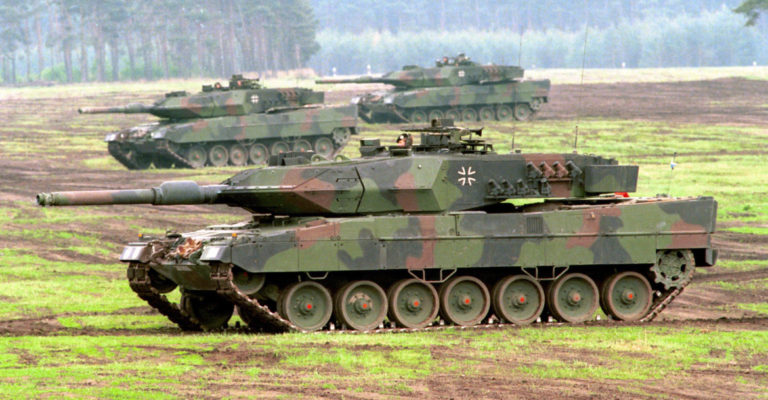
Germany to send fifty Leopard 1 tanks to Ukraine to fight Russia
BY M. K. BHADRAKUMAR | INDIAN PUNCHLINE | MAY 3, 2022
Prime Minister Narendra Modi’s short visit to Germany pegged on the Indian-German Intergovernmental Commission meeting in Berlin on Monday inevitably came to focus on the Ukraine crisis. The western media would have loved to grill Modi on India’s reluctance to criticise Russia’s special military operation in Ukraine. But German hosts thoughtfully skipped the customary Q&A after the joint appearance of Modi and Chancellor Olaf Scholz before the press.
India’s prudence is self-evident as much as Germany’s zealousness to flaunt its condemnation of Russia. Modi and Scholz are sailing in different boats. Modi draws flak for being a “strongman” who views the Ukraine crisis through the prism of India’s interests, while also taking a principled stance, whereas, Scholz carries the burden of vacuous moralising.
Scholz must prove constantly that he is indeed a loyal ally of President Biden and is by no means a “pacifist.” (To get a hang of Scholz’s predicament, read Spiegel’s maddening interview with him, here — alternatively annoying, infuriating, taunting, affronting and goading.)
Modi can afford to be nonchalant because he is clearheaded about where Indian interests lie — its strategic autonomy in a highly unpredictable international environment. But Scholz is nervous as a mouse because German interests are caught up betwixt the crosscurrents of European politics and the NATO’s epochal struggle to bring Russia down on its knees.
Modi is well ensconced in power while Scholz heads a precarious coalition of disparate partners. Modi could witness Scholz and his foreign minister Annalena Baerbock speaking in two different voices on Russia. Baerbock insisted that Russian forces should vacate Ukrainian soil before Western sanctions can be lifted, but Scholz toned down saying that the lifting of Western sanctions is linked to Russia and Ukraine reaching an agreement.
Germany is a divided house when it comes to Russia ties. On the contrary, aside the clutch of noisy American lobbyists operating in India, the Indian public at large recognises the centrality of India’s friendly relations with Russia.
India gets the space to manoeuvre, as Russia is excessively indulgent towards Delhi’ stance, which is, quintessentially, neither to support nor to oppose Moscow’s intervention — something like Professor Godbole in the EM Forster novel A Passage to India, a Brahman Hindu who is very spiritual and reluctant to become involved in human affairs.
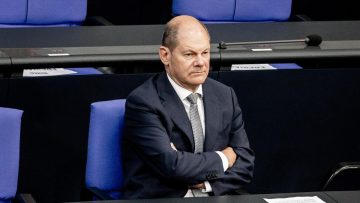 Scholz who is new to international diplomacy could have learnt a thing or two from UK prime minister Boris Johnson’s recent visit to India. Johnson put Ukraine on the back burner and focused on the agenda of “Global Britain” to create his country’s post-Brexit pathway in India’s vast market.
That said, Scholz has done remarkably well in getting the US off his back over sanctions against gas supplies from Russia. Germany’s dependence on Russian supplies of oil and gas (and coal) has been heavy and the Americans accept it as a reality. The point is, Germany and Russia have had a dense relationship and the Ukraine crisis comes in handy for Washington to try to redefine the parameters within which German-Russian relations will work in future.
In India’s case, if Washington dared to bully the Modi government, it was largely because in the post-Cold War era, under successive Congress governments, India’s relations with Russia got atrophied to such an extent that Americans convinced themselves that it was a conscious Indian policy direction dictated by the compulsions of the “Washington Consensus,” which has been a beacon light for India’s past leaderships. Unsurprisingly, the Biden Administration misjudged that Modi too must be fair game.
But the core difference between the German and Indian predicament is that while German industry is a stakeholder in the relationship with Russia, India’s corporate houses, for reasons best known to them, sidestep the Russian turf in deference to the US wish. Thus, Washington has powerful Indian lobbyists and, therefore, the Modi government’s audacity to pursue an independent policy toward Russia becomes commendable.
The chances are that Germany may pick up the threads of its relationship with Russia once the Ukraine conflict ends. In the chronicle of the “German Question” in European history, Russia had the role of a balancer, mostly. But there is a deep economic and political crisis waiting to erupt in Germany and how it pans out is crucial.
The rising inflation and the dramatic fall in living standards is souring the German mood, as the debris from Ukraine falls on it. So far, an estimated 5 million Ukrainian refugees have entered Europe. This figure is expected to double in a near future.
Meanwhile, the looming food crisis will also put tens of millions of people in Africa or the Middle East on the verge of starvation fuelling in turn large scale migration to Europe. Such migration will inevitably bring the dregs of Ukrainian society into Germany, which means that organised crime, human trafficking, illegal drug distribution and transnational crime, etc. will increase. Make no mistake that the Ukrainian mafia will introduce a new vicious culture of crime as it begins to dominate the European streets.
All in all, a fine balance has been struck during Modi’s visit. The joint statement conceded the host country’s prerogative to reiterate its “strong condemnation of the unlawful and unprovoked aggression against Ukraine by Russian Forces.” But it formed a “stand alone” statement of a solitary sentence, which helps signal India’s distancing from it. Germany joined India’s call for an “immediate cessation of hostilities,” although Berlin just announced a major transfer of offensive weaponry to Ukraine as part of the US-led “coalition of the willing” and implicitly acquiesces with the Biden administration’s aggressive agenda of “weakening Russia” militarily.
Significantly, the sombre mood in Germany got reflected in the joint statement. The Indo-German economic relations are far below potential and will remain so. CNN carried a grim report in the weekend that not only is German economy heading into a recession but it may suffer “structural damage” that will make recovery a drawn-out process.
Clearly, behind the German rhetoric today, the fact remains that Berlin’s intelligence apparatus played a dubious role in Ukraine by navigating the ascendancy of the neo-Nazi forces to usurp power in Kiev in the coup in February 2014. This controversial past is now further complicated by Berlin fuelling the conflict by despatching tanks into Ukraine, which was after all the invasion route of Nazi Germany.
When it comes to Ukraine, Germany doesn’t make good company for India. We have a transparent record and with great honesty and integrity, Modi could forewarn , with Scholz listening, that “there will be no winning party in this war, everyone will suffer.”
Foreign Minister Sergey Lavrov interview with Xinhua News Agency
Russian Ministry of Foreign Affairs | April 30, 2022
Question: What do you think is at the root of the Ukrainian crisis? What can the international community do to solve this problem?
Sergey Lavrov: When we talk about the Ukrainian crisis, first of all we need to look at the destructive policy of the Western states conducted over many years and led by the United States, which set a course to knock together a unipolar world order after the end of the Cold War. NATO’s reckless expansion to the East was a key component of those actions, despite the political obligations to the Soviet leadership on the non-expansion of the Alliance. As you know, those promises were just empty words. All these years, NATO infrastructure has been moving closer and closer to the Russian borders.
The West was never concerned about the fact that their actions grossly violated their international obligations not to strengthen their own security at the expense of the security of others. In particular, Washington and Brussels arrogantly rejected the initiatives put forward by Russia in December 2021 to ensure our country’s security guarantees in the west: to stop the expansion of NATO, not to deploy armaments that pose a threat to Russia in Ukraine and to return the Alliance’s military infrastructure to the 1997 configuration, when the NATO-Russia Founding Act was signed.
It is well-known that the United States and NATO member states have always viewed Ukraine as a tool to contain Russia. Over the years, they have actively fuelled anti-Russia sentiments there, forcing Kiev to make an artificial and false choice: to be either with the West or with Moscow.
It was the collective West that first provoked and then supported the anti-constitutional coup d’etat in Kiev in February 2014. Nationalists came to power in Ukraine and immediately unleashed a bloody massacre in Donbass, and set the course on the destruction of everything Russian in the rest of the country. Let me remind you that it was precisely because of this threat that the people of Crimea voted in a referendum for the reunification with Russia in 2014.
Over these past years, the United States and its allies have done nothing to stop the intra-Ukrainian conflict. Instead of encouraging Kiev to settle it politically based on the Minsk Complex of Measures, they sent weapons, trained and armed the Ukrainian army and nationalist battalions, and generally carried out the military-political development of Ukraine’s territory. They encouraged the aggressive anti-Russia course pursued by the Kiev authorities. In fact, they pushed the Ukrainian nationalists to undermine the negotiating process and resolve the Donbass issue by force.
We were deeply concerned about the undeclared biological programmes implemented in Ukraine with Pentagon’s support in close proximity to the Russian borders. And, of course, we could not disregard the Kiev leadership’s undisguised intentions to acquire a military nuclear potential, which would create an unacceptable threat to Russia’s national security.
In these conditions, we had no other choice but to recognise the Donetsk and Lugansk people’s republics and launch the special military operation. Its aim is to protect people from genocide by the neo-Nazis, as well as to demilitarise and denazify Ukraine. I would like to stress that Russia is acting to fulfil its obligations under bilateral agreements on cooperation and mutual assistance with the DPR and LPR, at the official request of Donetsk and Lugansk under Article 51 of the UN Charter on the right to self-defence.
The special military operation launched on February 24 is progressing strictly in accordance with the plan. All its goals will be achieved in spite of our opponents’ counteractions. At the moment we are witnessing a classic case of double standards and hypocrisy of the Western establishment. By publicly supporting the Kiev regime, NATO member states are doing everything in their power to prevent the completion of the operation by reaching political agreements. Various weapons are flowing endlessly into Ukraine through Poland and other NATO countries. All of this is being done under the pretext of “fighting the invasion”, but in fact the United States and the European Union intend to fight Russia “to the last Ukrainian.” They do not care at all about the fate of Ukraine as an independent subject of international relations.
The West is ready to jeopardise the energy and food security of entire regions of the globe to satisfy its own geopolitical ambitions. What other explanation is there for the unrestrained flywheel of anti-Russian sanctions launched by the West with the start of the operation and which they aren’t thinking of stopping?
If the United States and NATO are truly interested in settling the Ukrainian crisis, then, first, they must come to their senses and stop supplying weapons and ammunition to Kiev. The Ukrainian people do not need Stingers and Javelins; what they need is a solution to urgent humanitarian issues. Russia has been doing this since 2014. During this time, tens of thousands of tonnes of humanitarian cargo have been delivered to Donbass, and about 15,000 tonnes of humanitarian aid have already arrived in the part of Ukraine liberated from the Kiev regime, the DPR and the LPR, since the launch of the special military operation.
Second, it is essential that the Kiev regime stops cynical provocations, including in the information space. Ukrainian armed formations are barbarically shelling cities using civilians as living shields. We saw examples of this in Donetsk and Kramatorsk. Captured Russian servicemen are being abused with animal cruelty, and these atrocities are being posted online. At the same time, they use their Western patrons and global media controlled by the West to accuse the Russian army of war crimes. As they say, laying the blame at somebody else’s door.
It is high time for the West to stop unconditionally whitewashing and covering up for Kiev. Otherwise, Washington, Brussels and other Western capitals should consider their responsibility for complicity in the bloody crimes perpetrated by the Ukrainian nationalists.
Question: What measures has Russia taken to protect the lives and property of civilians? What efforts has it made to establish humanitarian corridors?
Sergey Lavrov: As I mentioned earlier, the special military operation is proceeding according to plan. Under this plan, the Russian military personnel are doing everything in their power to avoid victims among civilians. Blows are carried out with high-precision weapons, first of all at military infrastructure facilities and places where armoured vehicles are concentrated. Unlike the Ukrainian army and nationalist armed groups that use people as living shields, the Russian army provides the locals with all kinds of assistance and support.
Humanitarian corridors open daily from Kharkov and Mariupol to evacuate people from dangerous districts, but the Kiev regime demands that the “national battalions” in control of those areas do not release the civilians. Nevertheless, many are able to leave with the assistance of Russian, DPR and LPR servicemen. During the special military operation, the hotline of the Interdepartmental Coordination Headquarters of the Russian Federation for Humanitarian Response in Ukraine has received requests for assistance in evacuating 2.8 million people to Russia, including 16,000 foreign citizens and employees of UN and OSCE international missions. In total, 1.02 million people have been evacuated from Ukraine, the DPR and LPR, of which over 120,000 are citizens of third countries, including over 300 Chinese nationals. There are over 9,500 temporary accommodation facilities operating in Russian regions. They have space for rest and hot meals, and everything that may be necessary. Newly arrived refugees are provided with qualified medical and psychological assistance.
Russia is taking measures to ensure civilian navigation in the Black and Azov seas. A humanitarian corridor opens daily, a safe lane for ships. However, Ukraine continues to block foreign ships, creating a threat of shelling in its internal waters and territorial sea. Moreover, Ukrainian naval units have mined the shore, the ports and territorial waters. These explosive devices disconnect from their anchor lines and drift into the open sea, so they pose a serious danger to both the fleets and the port infrastructure of the Black Sea countries.
Question: Since the special military operation was launched in Ukraine, Western counties have adopted a large number of unprecedented sanctions against Moscow. How do you think these sanctions will affect Russia? What are the main countermeasures taken by Russia? Some say that a new Cold War has begun. How would you comment on that?
Sergey Lavrov: It is true that the special military operation was used by the collective West as a pretext to unleash numerous restrictions against Russia, as well as its legal entities and individuals. The United States, Great Britain, Canada and EU countries do not conceal that their goal is to strangle our economy by undermining its competitiveness and blocking Russia’s progressive development. At the same time, the Western ruling circles are not embarrassed by the fact that anti-Russian sanctions are already beginning to harm ordinary people in their own countries. I mean the declining economic trends in the United States and many European countries, including growing inflation and unemployment.
It is clear that there can be no excuse for this anti-Russian line and it has no future. As President Vladimir Putin said, Russia has withstood this unprecedented pressure. Now the situation is stabilising, though, of course, not all risks are behind us.
In any case, they will not succeed in weakening us. I am confident that we will restructure the economy and protect ourselves from our opponents’ possible illegitimate and hostile actions in the future. We will continue to give a fitting and adequate response to the imposed restrictions, guided by the goal of maintaining the stability of the Russian economy and its financial system, as well as the interests of domestic businesses and the entire nation. We will focus our efforts on de-dollarisation, de-offshorisation, import substitution, and promotion of technological independence. We will continue to adapt to external challenges and step up development programmes for promising and competitive industries.
During the period of turbulence, our retaliatory special economic measures needed to ensure the normal functioning of the Russian economy will be continued and expanded. As a responsible player on the international market, Russia intends to continue scrupulously fulfilling its obligations under international contracts on export deliveries of agricultural products, fertilisers, energy carriers and other critical products. We are deeply concerned about a possible food crisis provoked by the anti-Russian sanctions, and we are well aware how important the deliveries of essential goods, such as food, are for the socioeconomic development of Asian, African, Latin American, and Middle Eastern countries.
I will be brief as regards the second part of your question. Today we are not talking about a new “cold war,” but, as I said earlier, about the persistent desire to impose a US-centric model of the world order coming from Washington and its satellites, who imagine themselves to be “arbiters of humankind’s fate.” It has reached the point where the Western minority is trying to replace the UN-centric architecture and international law formed after World War II with their own “rule-based order.” These rules are written by Washington and its allies and then imposed on the international community as binding.
We must realise that the United States has been carrying out this destructive policy for several decades now. It is enough to recall NATO’s aggression against Yugoslavia, attacks on Iraq and Libya, attempts to destroy Syria, as well as the colour revolutions that Western capitals staged in a number of countries, including Ukraine. All of this came at the cost of hundreds of thousands of lives and resulted in chaos in various regions of the planet.
The West tries to crudely suppress those who carry out an independent course in their domestic and foreign policy. Not just Russia. We can see how bloc thinking is being imposed in the Asian-Pacific Region. We can recall the Indo-Pacific strategy promoted by the United States, which has a pronounced anti-China tendency. The US seeks to dictate the standards according to which Latin America should live, in the spirit of the outdated Monroe Doctrine. This explains many years of the illegal trade embargo on Cuba, sanctions against Venezuela, as well as attempts to undermine stability in Nicaragua and other countries. The pressure on Belarus continues in the same context. This list can go on.
It is clear that the collective West’s efforts to oppose the natural course of history and solve its problems at the expense of others are doomed. Today the world has several decision-making centres; it is multipolar. We can see how quickly Asian, African, and Latin American countries are developing. Everyone is getting a real freedom of choice, including where it comes to choosing their development models and participation in integration projects. Our special military operation in Ukraine also contributes to the process of freeing the world from the West’s neocolonial oppression heavily mixed with racism and a complex of exceptionalism.
The faster the West accepts the new geopolitical situation, the better it will be for the West itself and for the entire international community.
As President Xi Jinping said at the Boao Forum for Asia, “We need to uphold the principle of indivisible security, build a balanced, effective and sustainable security architecture, and oppose the pursuit of one’s own security at the cost of others’ security.”
Question: Russian-Ukrainian talks have attracted close attention of the international community. What are the main obstacles to the talks today? How do you regard the prospects of a peace treaty between the two parties? What kind of bilateral relations does Russia intend to have with Ukraine in the future?
Sergey Lavrov: At present the Russian and Ukrainian delegations are holding discussions on the possible draft almost daily, via videoconference. This document should contain such elements of the post-conflict situation as permanent neutrality, the non-nuclear, non-bloc and demilitarised status of Ukraine, as well as guarantees of its security. The agenda of the talks also includes denazification, recognition of the new geopolitical reality, the lifting of sanctions and the status of the Russian language, among other things. Settling the situation in Ukraine will make a significant contribution to the de-escalation of the military and political tensions in Europe and the world in general. The establishment of an institution of guarantor states is envisaged as a possible option. First of all, they will be the permanent members of the UN Security Council, including Russia and China. We share information on the progress in the talks with Chinese diplomats. We are grateful to Beijing and other BRICS partners for their balanced position on the Ukrainian issue.
We are in favour of continuing the talks, although the process is difficult.
You are right to ask about the obstacles. For example, they include the militant rhetoric and incendiary actions of Kiev’s Western patrons. They are actually encouraging Kiev to “fight to the last Ukrainian,” pumping the country with weapons and sending mercenaries there. Let me note that the Ukrainian security services staged a crude bloody provocation in Bucha with the help of the West, to complicate the negotiation process among other things.
I am confident that agreements can only be reached when Kiev starts to be guided by the interests of the Ukrainian people, and not the advisors from far away.
Speaking about Russian-Ukrainian relations, Russia is interested in a peaceful, free, neutral, prosperous and friendly Ukraine. Despite the current administration’s anti-Russian course, we remember the many centuries of all-embracing cultural, spiritual, economic and family ties between Russians and Ukrainians. We will definitely restore these ties.
Poland hosts major NATO wargames
Samizdat | May 1, 2022
Poland is participating in two large-scale multinational drills and is the host nation for one of them, the country’s Defense Ministry revealed on Sunday amid Russia’s allegations that Warsaw is preparing to occupy the western part of Ukraine.
The Defender Europe 2022 (DE22) and Swift Response 2022 (SR22) will be conducted in nine countries including Poland between May 1-27, the Polish ministry said.
“There will be approximately 18,000 participants from over 20 countries training together in both exercises. The portion of the exercises on Polish soil will see some 7,000 troops and 3,000 pieces of equipment,” the statement reads.
Defender Europe is a regularly conducted American-led multinational exercise that aims poised to “build preparedness and interoperability between Allies and partners” of NATO and America. DE22 training will be conducted at several sites in Poland, with Polish soldiers to be joined by personnel from the US, France, Sweden, Germany, Denmark, and UK.
The Swift Response exercise will entail approximately 550 Polish soldiers being deployed to Lithuania and Latvia along with troops from the Czech Republic and a German-Dutch force.
“Joint combined exercises such as these enhance the security of the NATO Eastern Flank through a training in accordance with NATO standards and procedures,” the Defense Ministry emphasized.
It added that the drills also contribute to the allies’ preparedness “to meet new and emerging challenges at the contemporary battlefield in order to deter a potential aggressor.”
The military specifically pointed out that DE22 and SR 22 “are not aimed against any country and are not related to the current geopolitical situation in the region,” in a veiled reference to the ongoing Russian military offensive in Ukraine.
These assurances come as Russian Foreign Intelligence Service (SVR) Director Sergey Naryshkin accused Warsaw of preparing to occupy the western part of Ukraine, which Poland considers as “historically belonging” to it. The potential “reunification” of Poland with western Ukraine will come under the guise of deploying a “peacekeeping” mission into the country under the pretext of protecting Kiev from “Russian aggression,” the official alleged. Warsaw denied the claims.
For years, Russia has expressed concern over NATO’s expansion eastwards, which it considers a direct threat to its own security. This factor along with the possibility of Ukraine eventually joining the alliance were named by Moscow as the key reasons for launch of its military offensive.
Iran: Politicization of Syria’s chemical-weapons file harms OPCW credibility
Press TV – April 30, 2022
Iran’s deputy permanent representative to the UN has decried the politicization of the Syrian chemical-weapons file by certain countries, stressing that the move will endanger the credibility and authority of the Organization for the Prohibition of Chemical Weapons (OPCW), the global chemical watchdog.
Zahra Ershadi made the remarks in an address to the UN Security Council session titled “The situation in the Middle East: (Syria – Chemical)” on Friday, during which she strongly condemned the use of chemical weapons anywhere, by anyone, and under any circumstances.
Ershadi stressed the implementation of the Chemical Weapons Convention (CWC) and said the treaty aims to protect humanity from the devastating repercussions and scourge of the use of chemical weapons.
“We reiterate our call for the full, effective, non-political, and non-discriminatory implementation of the CWC, and preserving the OPCW’s authority as well. We believe that politicizing the implementation of the Convention and exploiting the OPCW for politically motivated agendas endangers the Convention’s credibility and also the Organization’s authority,” the Iranian envoy to the UN said.
“We also emphasize that any investigation into the use of chemical weapons must be impartial, professional, credible, and objective in order to establish the facts and reach evidence-based conclusions, and in doing so it must strictly adhere to the provisions and procedures within the framework of the Convention; no deviation from the Convention shall be permitted,” she added.
Underlining Syria’s strenuous efforts to meet its CWC obligations, she said the country has shown its willingness to collaborate with the OPCW.
“However, it is disappointing that certain States Parties have politicized the Syrian chemical weapons file, preventing the OPCW from confirming Syria’s compliance with its obligations, which could have resulted in constructive dialogue and cooperation with Syria,” Ershadi said.
“We recognize the critical importance of the Syrian government’s efforts to fulfill its obligations under the Convention,” she further added.
Ershadi also expressed Iran’s support for the approach taken by OPCW and Syria to hold a high-level dialogue and hoped that the initiative would yield positive results.
OPCW, CWC ‘politically biased’
Ershadi’s remarks came after the US accused Syria of flouting the CWC and obstructing the OPCW’s inspectors on Friday, which marked the 25th anniversary of the implementation of the landmark treaty.
Responding to the US accusations, Syrian ambassador Bassam Sabbagh said the inspectors had been denied access because of a “lack of objectivity and professionalism.”
Sabbagh also accused the OPCW and the CWC of political bias.
Russian Ambassador Vasily Nebenzya said the convention had become a “punitive” instrument wielded in the interests of a “narrow group of countries” against Syria.
“At its 25th anniversary, the OPCW has very serious systemic problems and a tarnished reputation,” Nebenzya noted. “Russia unconditionally supports the CWC and is committed to its letter and spirit. What gives rise to question to us is how its provisions are being implemented by the OPCW.”
Moscow and Damascus have on many occasions said members of the so-called White Helmets civil defense group stage gas attacks in a bid to falsely incriminate Syrian government forces and fabricate pretexts for military strikes by the US-led military coalition.
The group, which claims to be a humanitarian NGO, has long been accused of collaborating with anti-Damascus militants.
On April 14, 2018, the US, Britain, and France carried out a string of airstrikes against Syria over a suspected chemical weapons attack on the city of Douma, located about 10 kilometres northeast of the capital Damascus.
Washington and its allies blamed Damascus for the Douma attack, a charge the Syrian government rejected.
According to concealed OPCW documents that were revealed later, the investigators of the Douma incident had found “no evidence” of a chemical weapons attack.
However, the organization censored the findings under pressure from the US and its allies to conceal evidence undermining the pretext of the ensuing US-led bombing of Syria.
Syria surrendered its stockpile of chemical weapons in 2014 to a joint mission led by the United States and the OPCW, which oversaw the destruction of the weaponry.
The Arab country has consistently denied the use of chemical weapons despite Western rhetoric.
FDA Approved Remdesivir for 28 day old babies
By Meryl Nass, MD | April 30, 2022
Remdesivir is an IV drug. Therefore, for the past 2 years it was almost exclusively used in hospitalized patients, not outpatients.
Royalties go to Gilead, but a portion go the the NIAID, Tony Fauci’s agency and to the US Army, which assisted with its development.
Remdesivir received an early EUA (May 1, 2020) and then a very early license (October 22, 2020) despite a paucity of evidence that it actually was helpful in the hospital setting. A variety of problems can arise secondary its use, including liver inflammation, renal insufficiency and renal failure. Here is a list of articles revealing its kidney toxicity:
https://pubmed.ncbi.nlm.nih.gov/33340409/
WHO recommended against the drug on November 20, 2020.
Few if any other countries used it for COVID apart from the US. A large European trial in adults found no benefit. The investigators felt 3 deaths were due to remdesivir (0.7% of subjects who received it.)
https://www.thelancet.com/journals/laninf/article/PIIS1473-3099(21)00485-0/fulltext
However, on April 22, 2022 the WHO recommended the drug for a new use: early outpatient therapy in patients at high risk of a poor COVID outcome:
https://www.who.int/news-room/feature-stories/detail/who-recommends-against-the-use-of-remdesivir-in-covid-19-patients
Monoclonal antibodies are only effective at the beginning of illness, as they fight the virus. After about ten days, there is no more live virus and then a later phase of the disease occurs, due to an overactive immune response. Antiviral drugs do not work during the second stage, but immune modulators do. Steroids and ivermectin are effective therapies at this stage.
Outpatient infusion centers were set up to provide monoclonal antibodies to patients at the start of COVID to those who were at high risk of a bad outcome. But now the centers are shuttered as none of them work against current COVID variants. Outpatient infusions will now be available for remdesivir, which is an antiviral drug, as a replacement.
So a new way to use remdesivir has been developed: early, when it might actually work. WHO says it does. Was WHO bought off or will it actually have a positive impact? Who knows yet?
The vast majority of COVID patients are not hospitalized until they are in the second stage of illness, which is when remdesivir, HCQ and other antivirals are not very effective, since there is no more live virus. (HCQ has some immunomodulatory actions which may explain its mild benefit at this late stage.)
The US government, which has made a series of ineffective and harmful recommendations regarding the response to COVID, has just added another harmful recommendation to the list.
The FDA just licensed Remdesivir for children as young as one month old. Both hospitalized children and outpatients may receive it. The drug might work in outpatients, but the vast majority of children have a very low risk of dying from COVID. If 7 deaths per thousand result from the drug, as the European investigators thought in the study of adults cited above, it is possible it will harm or kill more children than it saves.
Shouldn’t the FDA have waited longer to see what early outpatient treatment did for older ages? Very little has been published on children and remdesivir. FDA said very little about the approval.
When we look at the press release issued by Gilead, we learn the approval was based on an open label, single arm trial in 53 children, 3 of whom died (6% of these children died). 72% had an adverse event, and 21% had a serious adverse event.
https://investors.gilead.com/news-releases/news-release-details/vekluryr-remdesivir-first-and-only-approved-treatment-pediatric
I heard that some nurses refer to the drug as “Run, death is near.”
Based on the paucity of information FDA released with its Remdesivir approval, it appears that FDA knows very little about the drug’s benefit in children, and our children will be the guinea pigs. If we let them.
Denmark Suspends COVID Vaccine Campaign, EU Set to End Mass Testing
By Michael Nevradakis, Ph.D. | The Defender | April 27, 2022
Denmark on Tuesday became the first country to suspend its national COVID-19 vaccine campaign after health officials said the pandemic is under control there.
Bolette Soborg, director of the Danish Health Authority’s department of infectious diseases, on Tuesday said Denmark is “winding down” the mass vaccination program, and that invitations for vaccinations would no longer be issued after May 15.
“We plan to reopen the vaccination programme in the autumn,” Soborg said, adding: “This will be preceded by a thorough professional assessment of who and when to vaccinate and with which vaccines.”
Public health authorities cited several factors contributing to the decision to end the national vaccination campaign. These include a decline in the number of new reported infections, stabilized hospitalization rates and an overall high level of vaccination.
This decision comes just a few months after Denmark eliminated all COVID-19-related restrictions, becoming the first European Union (EU) member state to do so.
On February 1, the country dropped restrictions ranging from vaccine passports to mask mandates. Public health authorities at the time said COVID-19 was no longer considered a critical threat to public health.
Despite a “surge” in reported infections in Denmark, attributed to the Omicron variant, health authorities said these cases are not placing a heavy burden on the country’s health system.
Denmark’s health authorities are the first to explicitly state that future COVID-19 vaccination drives will be targeted, rather than universal.
EU set to announce ‘post-emergency’ phase of pandemic, Fauci says U.S. out of ‘pandemic phase’
Denmark’s decision comes as several other countries appear to be walking back mass-scale COVID-19 vaccination and related public health initiatives.
In an interview Tuesday on PBS NewsHour, Dr. Anthony Fauci said, “We [the United States] are certainly right now in this country out of the pandemic phase.”
However, when asked whether there will be an end to the COVID-19 pandemic, he said that’s “an unanswerable question.”
In the U.K., the country’s Health Security agency this week announced it is slashing its staff by almost half, and reducing its COVID-19 budget by nearly 90% compared to 2021 levels.
And the European Commission — the executive branch of the EU — is reportedly preparing to announce the EU has entered a new “post-emergency phase” of the COVID-19 pandemic, Reuters reported today, citing a draft document the news agency said it reviewed.
Despite there being no official statements yet from EU officials, according to Reuters, the draft document, prepared by EU Health Commissioner Stella Kyriakides, states:
“This Communication puts forward an approach for the management of the pandemic in the coming months, moving from emergency to a more sustainable model.”
In practical terms, this would mean an end to mass COVID-19 testing, already shut down in several EU countries.
This approach contrasts with China’s “zero-COVID” policies — which have resulted in mass testing and a renewed wave of mass lockdowns.
In a possible reflection of the EU’s new policy direction — and its stark differentiation from China’s COVID policies — Greek health minister Thanos Plevris said recently “we are entering the phase of co-existing with COVID … we don’t believe in the zero-COVID policy, like in China.”
According to Reuters, the EU’s draft document is non-binding on member-states and states that “COVID-19 is here to stay,” with a likely emergence of new variants and “surges,” necessitating that “vigilance and preparedness remain essential.”
The document asks EU governments to be ready to re-enact emergency measures if deemed necessary, though the nature of these “emergency measures” does not appear to be specified.
However, the draft document does address the introduction of more sophisticated means of detecting outbreaks of — and the spread of — COVID-19, highlighting that “[t]argeted diagnostic testing should be put into place.”
Such “targeted” testing would focus on “priority groups,” such as people close to outbreaks, those at risk of developing severe COVID-19 symptoms and medical staff who are in regular contact with vulnerable populations.
The draft document also suggests surveillance and tracking of COVID-19 infections should be adapted and targeted, focusing more on genomic sequencing and less on the mass reporting of “cases.”
This new surveillance system would amount to one that, according to Reuters, is “similar to that used to monitor seasonal flu, in which a limited number of selected healthcare providers collect and share relevant data.”
As reportedly stated by the document, “[t]he objective of surveillance should no longer be based on the identification and reporting of all cases, but rather on obtaining reliable estimates of the intensity of community transmission, of the impact of severe disease and on vaccine effectiveness.”
However, unlike Denmark’s approach, the document states that vaccines remain essential, with a recommendation that EU member states consider enacting strategies to bolster vaccination levels among children age 5 and up prior to the start of the new school year.
Some EU member states, such as Greece, have strongly hinted wide-scale COVID-19 vaccinations and restrictions may resume in September.
Michael Nevradakis, Ph.D., is an independent journalist and researcher based in Athens, Greece.
© 2022 Children’s Health Defense, Inc. This work is reproduced and distributed with the permission of Children’s Health Defense, Inc. Want to learn more from Children’s Health Defense? Sign up for free news and updates from Robert F. Kennedy, Jr. and the Children’s Health Defense. Your donation will help to support us in our efforts.
Putin warns the US to back off in Ukraine
BY M. K. BHADRAKUMAR | INDIAN PUNCHLINE | APRIL 27, 2022
The Western narrative of the two-month old war in Ukraine imbued with the rhetoric of “democracy versus autocracy,” has dramatically changed with the assertion by the US Secretary of Defence Lloyd Austin at a news conference in Poland Monday following his and Secretary of State Antony Blinken’s trip to Kiev, that Washington wants to “to see Russia weakened.”
David Sanger at the New York Times noted that Austin was “acknowledging a transformation of the conflict, from a battle over control of Ukraine to one that pits Washington more directly against Moscow.” But this is not really a transformation. Sanger’s colleague at the Washington Post, David Ignatius, had written over three months ago that the Biden Administration was working on a road map to get Russia bogged down in Ukraine and attrition it in a way that it becomes a much diminished power on the world stage.
For the Kremlin, most certainly, Austin’s remark would not have come as surprise. As recently as on Monday, President Vladimir Putin repeated at a meeting in the Kremlin that the US and its allies have sought to “split Russian society and destroy Russia from within.” Putin revisited the topic again on Wednesday pointing out that “the forces that have been historically pursuing a policy aimed at containing Russia just don’t need such an independent and large country, even enormously large, in their view. They believe that its very existence poses a threat to them.”
In fact, several perceptive Western observers had estimated that the Kremlin has effectively fallen into a trap laid by the US that is intended to bring down Putin’s regime. Come to think of it, that famous gaffe on 26 March wasn’t a gaffe after all, when President Biden, speaking in Warsaw, had blurted out the impromptu, unscripted remark: “For God’s sake, this man (Putin) cannot remain in power.”
All the same, Austin’s remark signifies that a dramatic change is taking place in the geopolitical situation, which could have positive or negative results. On Monday, Russian Foreign Minister Sergey Lavrov warned the West that staying involved in the Russia-Ukraine war posed “serious” and “real” risks of a World War III and “we must not underestimate it.”
To be sure, the conflict is slowly but steadily turning into a new phase. Foreign fighters and soldiers from NATO regular units are increasingly beefing up the depleted Ukrainian army’s front lines.
That said, the optics also need to be understood. Austin’s war cry comes soon after Mariupol fell to the Russian forces. A couple of thousands Ukrainian nationalists and a few hundred military personnel from NATO countries are trapped in an underground labyrinth at the Azovstal complex in the city, which Russian forces have sealed off. It has been a severe blow to the US’ prestige.
The Russian special operation is on track — “grinding” the Ukrainian forces to the ground, to borrow the graphic expression from UK prime minister Boris Johnson. On Monday, Russian high-precision missiles hit at least six railway substations in Western Ukraine destroying railway facilities in Krasnoe, Zdolbunov, Zhmerinka, Berdichev, Kovel, Korosten, which were meant to be key transshipment points for the supply of Western weaponry to the Ukrainian forces in the Donbas region. Rail communication in several western regions of Ukraine is effectively blocked.
Reports from the east show that Ukrainian forces are suffering heavy losses. Russian forces have taken the city of Kremennaya and are approaching the town of Lyman, which would give them control of a direct road to Slavyansk from the east.
Austin’s hyped up rhetoric notwithstanding, Ukraine is not only not showing any signs of winning but keeps bleeding, and the territory under the actual control of the Ukrainian government is steadily shrinking. US officials admit that the Pentagon lacks the ability to track the weapons that are going in. Yet, the Biden administration has so far spent around $4 billion on Ukraine. Therein hangs a tale. Who are the real beneficiaries of the US supplies? The level of corruption in Ukraine is legion.
The plain truth is that it will be many weeks or months before meaningful volumes of heavy weapons could be delivered to Ukrainian combat units but in the meanwhile, the Battle of Donbass will be fought almost entirely on the basis of the current strength on the ground. In a detailed analysis this week, a former colonel in the US Army and prolific media commentator Daniel Davis concluded: “It will take too long for Western governments to come up with a coherent equipping plan and then prepare, ship, and deliver the kit to its destination in a timeframe that could provide Kyiv’s troops the ability to tip the balance against Russia.”
The bottom line is this: The Biden Administration’s geopolitical agenda is to prolong the military conflict, which apart from weakening Russia militarily and diplomatically, turns Europe into a battlefield and makes the continent heavily dependent on the US leadership for a very long time to come. For Biden, the war provides a useful distraction in US politics in an election year.
Austin hosted a conference of the US’ allies on Monday at the American base in Germany to form a monthly contact group on Ukraine’s self defence to coordinate the “efforts to strengthen Ukraine’s military for the long haul.” It has the ominous look of a “coalition of the willing.” Even Israel was recruited. But the US is underestimating the steely Russian resolve to fully realise the objectives behind the special operation in Ukraine. Moscow will not brook any roadblocks, no matter what it takes.
Putin issued a stern warning today: “If someone from outside moves to interfere in the current developments, they should know that they will indeed create strategic threats to Russia, which are unacceptable to us, and they should know that our response to encounter assaults will be instant, it will be quick.”
He was explicit that Russia has military capabilities that the US cannot match. “We have all the tools to do it, the tools that others can’t boast of at the moment, but as for us, we won’t be boasting. We will use them if the need arises and I would like everyone to be aware of it. We have made all the necessary decisions in this regard,” Putin warned.
Political West mulls reshaping UN and what’s left of international law
By Drago Bosnic | April 27, 2022
In order to understand the prelude to World War 2, one cannot ignore the failures of the long-defunct League of Nations, which was a UN-like structure aimed at being a forum of countries resolving disputes through dialogue rather than war. Although just another noble idea before World War 1, in the immediate aftermath of the sheer death and destruction resulting from that conflict, it became an urgent necessity. The League of Nations was supposed to make sure nothing of sorts ever happened again.
Sadly, as we all know, it failed miserably, with an even worse conflict erupting less than 20 years after the Paris Peace Conference was completed. Now, nearly 80 years since the horrors of WW2, we have reached a hauntingly similar point as we realize the UN didn’t just inherit the League of Nations flag, but also many of the same faults which ultimately led the world into yet another disaster of global proportions, one which resonates to this very day.
The United Nations Security Council (UNSC) is the pillar of the UN and its veto power mechanism serves as a balancing tool which takes into account the interests of world powers and thus provides the UN with relevance which no other international organization or forum of sovereign nations in known history ever had. Currently, the five permanent members of UNSC (China, France, Russia, the UK and the US) can veto any resolution put forth by the body. The council’s other 10 rotating members do not have such powers.
This veto power has especially been a source of frustration for the United States, NATO and the EU. Due to their dominance in the UN General Assembly (UNGA), where there is a swarm of Western client states and statelets, many of which were created through deliberate and oftentimes forceful disintegration of larger and more sovereign nations (for instance, Yugoslavia was split into 6 states and one illegal state-like entity), the political West wants this UN body to be more prominent than the UN Security Council.
By pushing the UN General Assembly to the forefront of decision making, the West could then simply force these countless vassal states and statelets to vote in a way which would be beneficial to the US, EU or NATO and give these decisions a sort of “international community” touch which the political West needs in order to build what they see as a much-needed facade of “international legitimacy”.
Because of this, Western political elites and the mainstream media often try to portray the UNGA as a “more democratic” body than the UNSC. How truly democratic is up for debate, given the sheer amount of US pressure and arm-twisting used to coerce countries into voting not just in line with Western interests, but oftentimes at the expense of their own. And in terms of population distribution, we see that these states and statelets, despite oftentimes being the majority or close to a majority in the UNGA, actually represent less than 20 or even 15 percent of the world’s population. This also explains the Western obsession with forceful fragmentation of larger nations into smaller ones, echoing the ancient Roman policy of divide et impera.
To meet this goal, the UNGA is now considering introducing a provision that would require permanent members of the UN Security Council to justify their use of veto powers. It was tabled by Liechtenstein in mid-April and presented at a closed-door discussion panel last Tuesday. The discussion supposedly “turned out to be quite positive” and the initiative “received additional co-sponsors”, the mission of the microstate to the UN said after the meeting.
“We had a strong turnout and positive engagement on the Veto Initiative in open format this afternoon. We will continue our work to get the strongest possible political support for our text which now has 57 cosponsors,” it stated.
If adopted, the initiative would mandate convening the UNGA within 10 days after a permanent member of the UNSC uses their veto power. At the meeting, the state would have to justify its decision to use the veto. According to Liechtenstein, adopting the provision would “empower the General Assembly and strengthen multilateralism.”
Quite unsurprisingly, so far, the initiative has been openly supported only by one permanent member of the UNSC – the United States. Washington co-sponsored the provision, openly acknowledging the drive is aimed at Moscow and its use of the veto power to block a resolution on the ongoing Russian special military operation in Ukraine. Announcing the co-sponsorship, the US envoy to the UN Linda Thomas-Greenfield accused Moscow of “misusing” its veto powers.
“We are particularly concerned by Russia’s shameful pattern of abusing its veto privilege over the past two decades,” she stated, adding that, in the latest alleged abuse, Moscow had used the veto power to “protect President Putin from condemnation over his unprovoked and unjust war of choice against Ukraine.”
Of course, it would require an entirely separate analysis to dissect US envoy’s statements, which are filled with “liberal interpretation” of facts. But the statement does confirm the assertion that the political West, and the US in particular, are trying to reshape the UN to their liking, which would result in sidelining US competitors. In doing so, the US might be successful in turning the UN into another footnote of its belligerent foreign policy and even use it to justify sanctions and wars of aggression anywhere in the world.
However, even though this may seem like a victory to the aggressive planners in Washington DC, it may spell a disaster for world peace. By sidelining countries like Russia, China or even India, Brazil, South Africa and many others in the foreseeable future, the US is incentivizing these countries to ignore or even leave the UN, which would bring about the de facto end of international law.
At best, it would result in the creation of another UN-style organization led by those same sidelined countries, bringing about a deeply divided world where there would be at least two blocks – the political West (plus its vassals) and the rest of the world composed of sovereign nations. The last time such a division happened, the world suffered up to 80,000,000 dead in just 6 years.
Drago Bosnic is an independent geopolitical and military analyst.
US vice president has wine from illegal Israeli settlements in her office
MEMO | April 27, 2022
US Vice President Kamala Harris has wine produced in illegal Israeli settlements in her office, it has been revealed by Palestinian human rights organisation Al-Haq. The director of the organisation, Shaawan Jabarin, exposed this in an open letter to Harris in which he pointed out that offering her guests wine produced in settlements encourages Israel’s apartheid system imposed on the Palestinians. Apartheid is akin to a crime against humanity.
Jabarin’s letter highlighted violations of the law by Israeli settlers, as well as the disastrous effects of the illegal Israeli settlements on Palestinians. The wine that Harris serves to her guests, he pointed out, comes from a winery in the settlement of Psagot, an illegal Jewish settlement enterprise in the occupied West Bank.
Such support for the settler-colonial, apartheid settlement enterprise, said Jabarin, and the US receipt of illegal goods produced from the proceeds of international crimes, as well as America’s direct involvement in the promotion of Israel’s illegal settlement enterprise in this way, is of grave concern. “Psagot is complicit in the continued illegal appropriation of privately owned Palestinian land and pillage of Palestinian natural resources, acts amounting to crimes within the jurisdiction of the Rome Statue of the International Criminal Court.”
The director of Al-Haq noted that, “Since 1948, Israel has employed a set of discriminatory laws, policies and practices, with the fundamental goal of engineering a Jewish majority in Palestine, through displacing and dispossessing Palestinians, manipulating the demographic composition of the Palestinian population, and at the same time, building and expanding Jewish settlements on both sides of the Green [1949 Armistice] Line.
“Settlements are a key component of Israel’s apartheid regime over the Palestinian people, in which Israel administers the territory under two entirely separate legal systems and sets of institutions: a civil administration for Israeli-Jewish communities living in illegal settlements, and a military administration for the occupied Palestinian population living in Palestinian towns and villages.”
The fact that the US supports this “illegal Israeli settlement enterprise in its highest office” is in blatant violation of international humanitarian law and international human rights law, making America “complicit” in the war crime of the pillage of Palestinian resources.
“Moreover, the US substantially supports the dissemination and promotion of Psagot Wine by allowing it to be sold by Duty Free America shops located in airports across America,” concluded Jabarin. “The US thus breaches its obligation to promote respect for human rights with business enterprises… involved in gross human rights abuses.”
Ukraine wants $2bn per month from US
Samizdat | April 26, 2022
Ukraine’s finance minister, Sergey Marchenko, has solicited at least $2 billion per month in emergency economic aid from the Biden administration. The official also revealed that Kiev hopes to raise an additional $3 billion per month from other sources.
Speaking to the Washington Post, Marchenko said that Ukraine needs “to cover this gap right now to attract the necessary finance and win this war.”
During his visit to Washington, DC last week, Marchenko met with a number of senior US officials, warning them that absent the requested financial support, Ukraine would likely not be able to cope with the humanitarian crisis brought on by Russia’s military offensive. A total of $5 billion per month is needed to cover Ukraine’s immediate needs in April, May, and June, the minister explained. In addition to that, Kiev is expected to request another tranche down the road to help Ukraine recover from all the damage incurred.
Last Thursday, the minister also reportedly attended a private dinner hosted by Deputy Treasury Secretary Wally Adeyemo, which included representatives from top US firms such as Goldman Sachs, and the Business Roundtable lobbyist association. Moreover, Marchenko met with Treasury Secretary Janet Yellen during the G20 summit in Washington last Wednesday.
Since the start of Russia’s military offensive in Ukraine in late February, the US has already shelled out approximately $1 billion in economic aid for Kiev. An additional $500 million was cleared by the Biden administration last week, on top of the generous military aid.
Yellen told reporters last Thursday that America has to “find ways to meet Ukraine’s needs.” She added that this “will involve going back to Congress with a supplemental request.” Her comments came shortly after President Joe Biden made it clear that he would ask Congress to give the green light to more financial assistance for Ukraine – something an anonymous US official described to the Washington Post as one of the administration’s top priorities.
Several members of Congress and senior Ukrainian officials alike have repeatedly suggested handing frozen assets belonging to Russia’s central bank over to Ukraine. However, the Biden administration has stopped short of making any promises so far. Yellen described this potential handover as something she “wouldn’t want to do so lightly,” telling reporters that “it’s something that I think our coalition and partners would need to feel comfortable with and be supportive of.”
The Ukrainian finance minister told the Washington Post that his country needs the money to provide care to millions of internally displaced Ukrainians, as well as paying pensions to retirees and salaries to medical and education professionals.
Marchenko concluded by saying that Washington has become “more cooperative” over time, adding that support from the US is “becoming greater and greater.”
Moscow lays blame for stalled Ukraine talks
London and Washington made Zelensky backtrack on Istanbul deal, Russian FM Sergey Lavrov says
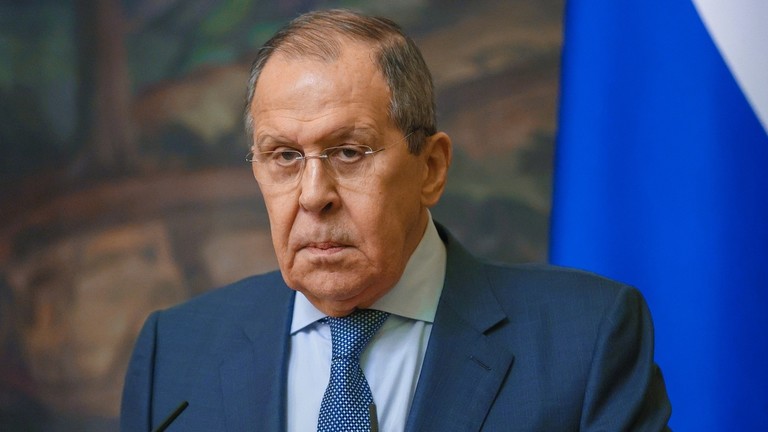
Russian Foreign Minister Sergey Lavrov, April 22, 2022
Samizdat | April 26, 2022
There is a belief in Moscow that Washington, London and other Western capitals – not Kiev – are the real decision-makers when it comes to Ukraine, Foreign Minister Sergey Lavrov said in an interview on Monday. He said that Kiev’s negotiators backtracked on the tentative understanding reached last month in Istanbul on advice from the US and the UK.
Ukrainian and Russian negotiators met face-to-face in Turkey at the end of March. Russia then took Ukraine’s outline, put it together in a “contractual” format and sent it to Kiev, only to get back “radically different” ideas in what was a “huge step back,” Lavrov said in the interview with the ‘Great Game,’ a political show on Russia’s Channel One.
“We know for sure that neither the US nor the UK – which is trying in every possible way to compensate for its current lonely status after leaving the EU – advised [Ukrainian President Volodymyr] Zelensky to speed up the negotiations, but to harden his position each time,” Lavrov said. The backtracking after Istanbul, he added, “was taken on the advice of our American or British colleagues. Maybe the Poles and the Balts played some role here.”
Meanwhile, Western leaders – such as the British PM Boris Johnson and EU foreign minister Josep Borrell – make statements to the effect that Russia “must be defeated” and that the conflict needs to be resolved “on the field of battle,” while sending weapons to Kiev, Lavrov pointed out.
“These weapons will be a legitimate target for the Russian Armed Forces,” the foreign minister said. “Warehouses, including in the west of Ukraine, have become such a target more than once. How else? NATO is essentially going to war with Russia through a proxy and arming that proxy. In war, as in war.”
While “casting spells” against a Third World War, the West is fueling the conflict with weapons and hoping to have the “fight Russia to the last man” in order to bleed Moscow, Lavrov said.
“You know, goodwill is not unlimited,” he added. “If it is not reciprocated, then this does not contribute to the negotiation process. As before, many of us are convinced – as I have already mentioned – that the real position of Ukraine is determined in Washington, London and other Western capitals,” he said, noting that some political scientists have said that talks should be held with NATO, and not Zelensky.
However, Lavrov also pointed out that Russia has not had much luck talking to NATO directly. When Moscow presented its security proposals to the US and NATO in December 2021, they were politely heard and then ignored.
“Rather impolitely, they made it clear that what was needed for our security was not up to us to decide,” Lavrov said.
The objectives of the “special military operation” announced by Russian President Vladimir Putin on February 24 have not changed, Lavrov said: the destruction of military infrastructure in Ukraine that threatened Russia, with “the strictest measures in order to minimize any damage to the civilian population.”
Lavrov also offered a prediction how the conflict would end. “As in any situation where armed forces are used, everything will end with a treaty,” he said. “But its parameters will be determined by the stage of hostilities at which this treaty becomes a reality.”
Russia attacked the neighboring state in late February, following Ukraine’s failure to implement the terms of the Minsk agreements, first signed in 2014, and Moscow’s eventual recognition of the Donbass republics of Donetsk and Lugansk. The German and French brokered Minsk Protocol was designed to give the breakaway regions special status within the Ukrainian state.
The Kremlin has since demanded that Ukraine officially declare itself a neutral country that will never join the US-led NATO military bloc. Kiev insists the Russian offensive was completely unprovoked and has denied claims it was planning to retake the two republics by force.
Featured Video

Iran FM Araghchi: “Hormuz Will No Longer Be the Same”
or go to
Aletho News Archives – Video-Images
From the Archives
Sam Husseini: The entire US establishment helped lie their way into the Iraq war
By Slava Zilber | American Herald Tribune | October 14, 2019
Sam Husseini is a senior analyst with the Institute for Public Accuracy, independent journalist and contributor to The Nation and FAIR.
Slava Zilber: Sam, three years ago, you appeared on Talk Nation Radio with David Swanson and spoke about the case of the GCHQ whistleblower Katharine Gun. You pointed out that the people involved in the spying on the UN and the people authorizing the Iraq War were not held accountable:
“Virtually everybody who went along with the war, whether it is Kerry or Clinton, of course, the Bush administration themselves has falsified their own records in terms of why, what they did, when they did, why they did it, to the extent that they’ve been scrutinised at all.”
You also address it in a recent article. And recently, Joe Biden has been lying about his position on the Iraq War. How can such an important issue escape meaningful scrutiny? … continue
Blog Roll
 Aletho News
- Barghouti: ‘Netanyahu has fallen,’ era of Smotrich, Ben-Gvir over
- China slams US policy on Iran as Russia rejects legality of nuclear meeting at UN
- The Mecca Pact Courts Iran: Containment Comes Full Circle
- Oman FM: Persian Gulf states, Iran, Iraq should form security pact excluding US
- Trump peddles fresh falsehoods, claims Iran ‘started the war’ as US aggression drags on
- Ukraine quagmire? Yes, but it’s for NATO, not Russia
- US intelligence hypes Chinese, Russian space threats while accelerating its own military buildup in orbit
- Iran FM Araghchi: “Hormuz Will No Longer Be the Same”
- EU facing trillion-euro debt hole while seeking more cash for Kiev
- How US, Europe, Persian Gulf states exhausted missile stockpiles, splurged billions to defend Israel
- If Americans Knew
- An error has occurred; the feed is probably down. Try again later.
- No Tricks Zone
- Sudden Stratospheric Warming, Powerful El Niño Combination May Lead To Extreme Europe Cold, Energy Crisis!
- Two New Studies Find Thwaites Glacier Melt Cannot Be Driven By Human Activity Or A Warming Ocean
- E-Cars Reduce CO2 Emissions By Only 41% Compared To Internal Combustion Engine Vehicles
- Predictions Made By Renowned Climate Professor Over Past Decades Have Been Proven To Be Poor
- New Study Suggests Large Regions Of The Pacific Ocean Have Been Cooling For The Last 80 Years
- Germany’s Green Energy Debacle: High Energy Costs Force Kahla Porzellan to Close After 182 Years!
- New Study: 50 Years Of The Most Aggressive ‘Net Zero’ Policies Can Only Affect The Global Climate By 0.03°C
- US September “Heat” Was No Record…Many Records Set Decades Ago
- Latest European Green Energy Debacle; Portugal’s Largest Flagship Solar Park Insolvent!
- Green Energy Debacle: German Expert Professor Fritz Vahrenholt Warns Of Severe Economic And Social Consequences

