Putin outlines results Moscow seeks in Ukraine
RT | May 18, 2025
Russia is seeking to achieve “lasting and sustainable peace” by eliminating the root causes of the Ukraine conflict, President Vladimir Putin has said, in an extract of an interview released by Russia 1 TV on Sunday.
In a clip posted by journalist Pavel Zarubin on Telegram, Putin stated that Russia has “enough strength and resources to bring what was started in 2022 to its logical conclusion” while accomplishing Moscow’s key goals.
Russia wants to “eliminate the causes that caused this crisis, create conditions for long-term sustainable peace and ensure the security of the Russian state and the interests of our people in those territories that we always talk about,” he added.
The president was apparently referring to Crimea, the Donetsk and Lugansk People’s Republics, and the regions of Kherson and Zaporozhye, which overwhelmingly voted in favor of joining Russia in referendums in 2014 and 2022.
People in these former Ukrainian territories “consider Russian to be their native language” and see Russia as their homeland, he said.
Commenting on the ongoing diplomatic engagement with the US to settle the conflict, Putin acknowledged that “the American people, including their president [Donald Trump] have their own national interests.”
“We respect that, and expect to be treated the same way,” he added.
Putin’s remarks come on the heels of the first direct Russia-Ukraine talks since 2022. As a result of Turkish-mediated negotiations in Istanbul, both sides agreed to exchange lists of conditions for a potential ceasefire, conduct a major prisoner swap, and discuss a follow-up meeting. The Kremlin has not ruled out direct talks between Putin and Ukraine’s Vladimir Zelensky if the ongoing peace efforts result in progress and firm agreements.
Following the talks, US President Donald Trump announced he would hold a phone call with his Russian counterpart on Monday, which would focus on trade and resolving the Russia-Ukraine conflict. Meanwhile, Russian Foreign Minister Sergey Lavrov discussed the Istanbul negotiations with US Secretary of State Marco Rubio, who welcomed the results of the talks.
Russia, Ukraine prepare for peace by getting ready for war
By M. K. BHADRAKUMAR | Indian Punchline | May 17, 2025
May 16 will stand out as a turning point, for good or bad, in the Ukraine conflict. The main thing is, Russia-Ukraine ‘peace talks’ have resumed in Istanbul and will hopefully carry forward the threads of the draft agreement negotiated in March 2022. But caveats must be added. The fact that it took Turkish President Recep Erdogan three hours to persuade Ukrainian president Volodymyr Zelensky to green light the negotiations speaks for itself.
On the other hand, Zelensky showed remarkable flexibility by violating his own presidential decree banning any such negotiations on the part of Ukrainian officials other than himself with Russian officials. Turkey showed again that it remains a significant influencer in the Ukraine conflict.
The result was an extraordinary spectacle. Reports mention that the Russian delegation had not one but three meetings, in fact — with a Turkish-American team followed by a Turkish-American-Ukrainian team and culminating in an exclusive huddle with the Ukrainian team.
The ‘bilateral’ Russian-Ukrainian negotiations reportedly touched on the topics of ceasefire options in the Ukraine conflict; a major prisoner exchange; a potential meeting between Zelensky and Russian president Vladimir Putin; an agreement in principle to hold a follow-up meeting and so on.
The Ukrainian media reported that the Russian side repeated their demands for Kiev’s forces to vacate the remaining parts of the four eastern and southern regions that Moscow has annexed. Ukraine of course rejected the demand. Indeed, these talking points at the Istanbul meeting would have been a plateful for a meeting that lasted only for an hour and forty minutes.
Turkiye has joined as a stakeholder, as the pacemaking in Ukraine provides an opportunity for it to work closely with the US, which could have positive fallouts for the two main discords that put strains on it in the recent years — Syria and the Kurdish problem. The Kurdistan Workers’ Party (PKK) has taken a historic decision on May 12 to give up armed struggle and dissolve itself, which opens the possibility to end decades of political violence in Turkiye. The ‘peacemaker president’ in the White House can help Ankara to mediate a Kurdish settlement.
Turkiye has promoted the US’ normalisation with the Islamist government in Damascus. Trump’s meeting with Syrian President Ahmed al-Sharaa in Riyadh on Wednesday alongside the lifting of Washington’s sanctions against Syria, which shake up the geopolitics of the Middle East, will bring Turkiye and the US on the same page.
Notably, all this is happening against the backdrop of a ‘westernist’ tilt in the Turkish foreign policies during the past year following Erdogan’s re-election as president. Traditionally, the equations between Trump and Erdogan remained cordial and friendly. Suffice to say, Trump can expect Erdogan’s cooperation in the peacemaking in Ukraine talks, where the Turkish leader’s excellent equations with Zelensky are an added factor, which was on display in Ankara yesterday.
Erdogan held Zelensky’s hand through thick and thin. The high-tech Turkish drones supplied to Ukraine, which are to be manufactured locally, will significantly boost Kiev’s military capability. Turkiye, as the inheritor of the Ottoman legacy, is home away from home for an influential Tatar community. Tatar language is an Oghuz language descended from Ottoman Turkish. In fact, Turkey has refused to recognise Crimea as part of Russia. Ukrainian Defence Minister, a close associate of Zelensky, is an ethnic Tatar.
Moscow understands all this. Putin hastened to put behind the friction in Russo-Turkish relations in the downstream of the regime change in Syria last December to reach out to Erdogan on May 11 to discuss the direct talks between Russia and Ukraine in Istanbul. The Kremlin readout said Erdogan “expressed his full support for Russia’s proposal and emphasised his willingness to provide a venue for the talks in Istanbul. The Turkish side will offer all possible assistance in organising and holding talks aimed at achieving sustainable peace… The leaders have also expressed mutual interest in further expanding the bilateral ties in trade and investment and, in particular, implementing joint strategic projects in energy.”
Erdogan is a difficult interlocutor to handle but Putin has been largely successful in keeping the relationship stable and (mostly) predictable. The Turkish factor can be a game changer if at some point Zelensky ceases to be the captive of the CoW4 (the four European musketeers of the so-called ‘coalition of the willing’ — Britain, France, Germany and Poland.) Trust Erdogan to shift gears to an activist role.
On the whole, Russia has scored a diplomatic victory insofar as its initiative on ‘Ukraine direct talks without preconditions’ has found acceptability with Trump. The format of yesterday’s talks implied a resumption of the Russian-Ukrainian talks in Istanbul in 2022. Putin manoeuvred brilliantly to scatter the game plan of the CoW4 which strove to pull aside Trump incrementally and become party to continuing the war in Ukraine.
The CoW4 felt encouraged lately by a certain perception that Trump may impose draconian sanctions if Russia lacked sincerity of purpose. But so far, Trump has remained engaged with Putin. Last week, Trump stated that a breakthrough in the Ukraine conflict will be possible only out of a summit between him and Putin. Suffice to say, the dramatic happenings in Turkey yesterday signify a setback to the CoW4.
The leader of the Russian delegation and presidential aide Vladimir Medinsky (who also headed the Russian team at the talks in Istanbul in 2022) has told the media that Moscow is “satisfied” with the results of the talks and is ready to “resume contacts” with Kiev.
That said, Moscow will not let down its guard either. Putin held a briefing session on May 15 with the permanent members of the Security Council, Russia’s highest policymaking body, to deliberate on the upcoming Istanbul talks, which was attended by the members of the Russian negotiating group. The Kremlin readout stated that Putin “set tasks and charted the negotiating position” of the Russian delegation in Istanbul.
On the other hand, the Kremlin also asserted simultaneously that no matter the talks in Istanbul, Russia’s military operations in Ukraine shall continue. With immaculate timing, Putin chose May 15 to also make the stunning announcement of the appointment of Colonel-General Andrey Mordvichev (nicknamed “General Breakthrough”) as the Commander of the Russian Ground Forces.
Gen. Mordvichev has a tough reputation as the commander of the 8th Guards Combined Arms Army of Russia’s Southern Military District, which was heavily involved in the devastating 2022 siege of Mariupol, and in the Battle of Avdiivka in 2023-2024, a turning point in the conflict in Ukraine. Gen. Mordvichev’s appointment comes amidst reports claiming that Russia is preparing to launch a major new offensive in Ukraine. Ukraine claims that over 600,000 Russian troops are presently deployed in Ukraine.
But then, Zelensky is also moving on a dual track. Ukraine’s Finance Minister Sergeii Marchenko, 43, told a high-level panel at the European Bank for Reconstruction and Development annual meeting on March 14 in London, “To prepare for peace, you have to get ready for war. We have to plan. You may call me a cynic, but actually I’m just a Finance Minister.”
Russia-Ukraine talks conclude – media
RT | May 16, 2025
Direct talks between Russia and Ukraine in Istanbul have ended, with the two delegations departing from the venue and press statements being prepared, a TASS source has said.
The head of the Ukrainian delegation, Defense Minister Rustem Umerov, stated that Friday’s talks at Dolmabahce Palace had focused on a prisoner exchange and versions of a potential ceasefire, according to RBK-Ukraine.
A potential meeting between Ukrainian leader Vladimir Zelensky and Russian President Vladimir Putin was also reportedly raised, and Umerov added that an update on possible new negotiations would be shared soon.
He also stated that both delegations had agreed to an exchange involving 1,000 prisoners from each side. Russia’s chief negotiator, Vladimir Medinsky, also confirmed that an exchange is being prepared.
Medinsky added that Kiev had requested a meeting between Putin and Zelensky, and that Moscow has taken note of the proposal. He stated that overall, the Russian delegation was satisfied with the outcome of the talks and is ready to continue contacts.
According to Medinsky, Russia and Ukraine will each present their detailed vision of a possible ceasefire, after which the negotiations will continue.
The talks had been expected to begin on Thursday, after Putin suggested resuming the negotiations which had been broken off in Istanbul three years ago.
The Russian team waited for the Ukrainian delegation to arrive for an entire day, although Zelensky only named his delegation on Thursday evening.
Moscow and Ukraine last held direct talks in April 2022. Following initial reports that an agreement had been reached, Kiev unilaterally withdrew from the talks. Putin later blamed Western interference and, in particular, then-UK Prime Minister Boris Johnson, who had reportedly urged Kiev to “just continue fighting,” for derailing the peace process.
Russia, which had withdrawn its forces from the outskirts of Kiev as a goodwill gesture, later accused Ukraine of backtracking, saying it had lost trust in kiev’s negotiators.
‘Travesty of justice’: Iranian student self-deports after weeks in US custody
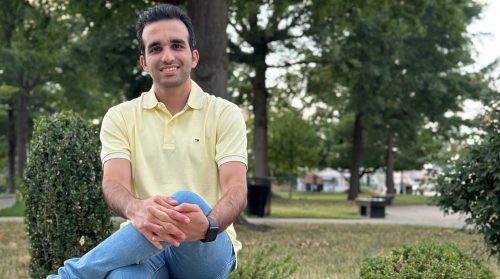
A file photo of Alireza Doroudi, who was detained by US immigration officials in March 2025.
Press TV – May 9, 2025
An Iranian doctoral student at the University of Alabama has been forced to self-deport after six weeks of detention over unsubstantiated charges as the US administration ramps up pressure on foreign students and immigrants.
Alireza Doroudi was detained by immigration officials in March as part of US President Donald Trump’s widespread immigration crackdown and has been held at a facility in Jena, Louisiana, over 480 kilometers from where he lived with his fiancée, Sama Bajgani, in Alabama.
The State Department accused Doroudi at the time of posing “significant national security concerns,” with Doroudi’s lawyer, David Rozas, saying the US government had not offered any evidence to support the claim.
Rozas said Doroudi, a mechanical engineering student at the University of Alabama who entered the United States legally in January 2023 on a student visa, had decided to self-deport and stop fighting deportation after the judge in the case, Maithe Gonzalez, gave him until the end of May to refile motions and denied Doroudi bond.
Bajgani said he has no criminal record, entered the country legally and was not politically outspoken like other students who have been targeted.
Describing her fiancé as a “nerd” and “a really big thinker” who spent long days in the lab, Bajgani said Doroudi does not deserve what happened to him and now the life they built in Alabama is over.
“I am not happy about the whole thing that happened to us, and I need time to grieve for what I am going to put behind and leave,” she said. “All the dreams, friendships and dreams we had with each other.”
In a letter to Bajgani from behind bars in April, Doroudi called his detention a “pure injustice.”
“I didn’t cause any trouble in this country,” he said. “I didn’t enter illegally. I followed all the legal paths.”
Rozas said he has not seen such a case in his 21 years as an immigration attorney, underlining that the authorities had denied his client due process and forced him to choose between indefinite detention and self-deporting.
“I’m absolutely devastated and I think it’s a travesty of justice,” Rozas said. “The government has provided no evidence in the record that Mr. Doroudi poses any national security threat.”
More than 1,000 international students across the US have had their visas or legal status revoked since late March, according to an Associated Press review of university statements and correspondence with school officials.
They included some who took part in mass rallies across the US academic facilities in support of Palestinians and against Israel’s genocidal war in the besieged Gaza Strip.
Rumeysa Ozturk, a Turkish graduate student at Tufts University in Somerville, Massachusetts, was detained in March over accusations by the Department of Homeland Security of engaging “in activities in support of Hamas” after writing an opinion piece.
The article called on Tufts to “acknowledge the Palestinian genocide,” and to “disclose its investments and divest from companies with direct or indirect ties to Israel.”
Columbia University students Mahmoud Khalil and Mohsen Mahdawi have also been placed under detention in relation to their alleged support for Palestine.
Like in Doroudi and Ozturk’s cases, the federal government has relied on vague claims that Khalil and Mahdawi pose “national security threats” to justify detaining them despite their status as legal residents.
As India and Pakistan edge toward full-scale war, Kashmir braces for the fallout
By Fatemeh Fazli | Press TV | May 7, 2025
Tensions between the two nuclear-armed South Asian neighbors have once again reached a boiling point, following India’s most extensive missile strikes yet into Pakistan and Pakistan-administered Kashmir.
The death toll continues to climb alarmingly, with some reports putting the figure at 26, with several others injured, marking one of the bloodiest military escalations in the region in recent memory.
Graphic images circulating on social media platforms depict scenes of chaos and commotion, with wounded civilians, including children, being rushed to overwhelmed hospitals in Pakistan-administered Kashmir and parts of Punjab.
In Muzaffarabad, the capital of Pakistan-administered Kashmir, residents recalled the terror that unfolded after a barrage of missiles pounded the city. One local said they scrambled to the hills surrounding the city as a deafening barrage of missiles lit up the night sky.
Codenamed Operation Sindoor, the Indian Army announced that it had struck nine sites, labeling them “terrorist infrastructure” scattered across Pakistan and Pakistan-administered Kashmir.
It claimed to have targeted the bases of Lashkar-e-Taiba terrorist group, which is based in Pakistan and has been responsible for several terrorist incidents in India and Indian-administered Kashmir.
In response, the Pakistani military offered its own account, stating that Indian forces had launched 24 missiles at six separate locations, resulting in the deaths of at least 26 individuals.
The strikes were followed by intense cross-border shelling along the volatile de facto boundary, which has been the scene of minor and major skirmishes between the two sides for decades.
This dramatic escalation follows closely on the heels of a terrorist attack in Pahalgam, a serene hill resort in Indian-administered Kashmir, where more than two dozen tourists from India’s southern states were gunned down last month.
The attackers reportedly emerged from forest cover and targeted only male tourists, leaving women unharmed, a chilling crime that sent shockwaves across India and the world.
India was quick to blame Pakistan for orchestrating the attack. Islamabad, however, denied any involvement, insisting no credible evidence had been presented, a position that gained traction among observers worldwide even as the terrorist attack itself drew widespread condemnation.
This is not the first instance of such clashes souring relations between the estranged neighbors, and it likely won’t be the last. Their hostility and mistrust run deep, rooted in the painful legacy of the 1947 partition of British India, a wound that continues to fester.
In the decades since, India and Pakistan have fought multiple wars, waged proxy battles, and engaged in countless skirmishes, each confrontation widening the rift and reinforcing mutual suspicion, despite their intertwined histories, cultures, languages, and cuisines.
Yet, amid the hostility, ordinary people on both sides of the border have consistently voiced their opposition to war. They speak the same tongue, prepare the same meals, and see each other not as enemies but as long-lost kin separated by politics and pride.
In particular, the war-weary people of Kashmir, who have seen nothing but war and violence all these years, have paid the highest price for the hostility between the two South Asian countries.
There have been some genuine efforts at reconciliation in the past. Some governments in New Delhi and Islamabad did make attempts to thaw relations, most notably during the era of Indian Prime Minister Atal Bihari Vajpayee and Pakistani President Pervez Musharraf.
Musharraf even proposed a popular “four-point solution” to the long-festering Kashmir dispute. Vajpayee, in turn, championed a peace initiative grounded in empathy, as evident in his memorable April 2003 speech delivered in the heart of Srinagar, the summer capital of Kashmir.
But that fragile hope was shattered in November 2008 when coordinated terrorist attacks paralyzed Mumbai, India’s financial capital. Carried out by Lashkar-e-Taiba militants based in Pakistan, the attacks dealt a severe blow to the peace process.
Subsequent tragedies – the 2016 terrorist attack in the town of Uri in Kashmir that killed 18 Indian soldiers, and the 2019 suicide bombing in Pulwama that claimed the lives of 28 Indian military personnel – further deepened the divide, derailing any diplomatic momentum.
India blamed Pakistan on both occasions, even though Islamabad feigned ignorance. After the Uri attack, India responded with “surgical strikes” deep inside Pakistan.
These incidents unfolded under the government of Prime Minister Narendra Modi, whose tenure has been marked by increased militarization of the Kashmir conflict.
In a controversial move in August 2019, Modi’s government revoked Article 370 of the Indian Constitution, stripping Jammu and Kashmir of its special autonomy.
While Indian officials have since claimed that peace and normalcy have returned to the region, the massacre of tourists in Pahalgam on April 22, killing at least 28, belies such assurances, including those from Home Minister Amit Shah.
In January, Shah asserted that the Modi administration had dismantled terrorism in the Kashmir valley and eradicated its underlying ecosystem. Just months prior, in September 2024, Modi himself promised that the BJP would turn Jammu and Kashmir into a “terror-free haven for tourists.”
But the events in Pahalgam shattered that illusion. The militants emerged from the forests and opened fire on unarmed tourists while no security personnel were anywhere in sight.
The attack set off ripples far beyond the valley. In the days that followed, Kashmiri students across India were harassed and scapegoated by right-wing groups demanding revenge for the slain tourists.
Ironically, the most vocal condemnation came from Kashmir itself. Locals filled the streets in protest. Even pro-independence groups denounced the attack, and a moment of silence for the victims was solemnly observed at the Jamia Masjid, the region’s largest mosque.
Now, with war drums beating once again, it is the people of Kashmir, caught in the crosshairs of two hostile nations, who stand to suffer most. The fragile peace in the region has been shattered and the economy will also be affected with a drop in tourists visiting Kashmir.
Reports suggest at least 10 civilians have already died in Indian-administered Kashmir due to cross-border shelling along the Line of Control since last night. It will only get worse.
With both India and Pakistan in possession of nuclear weapons, the specter of full-scale war between them is not just terrifying, it’s potentially apocalyptic.
The International Campaign to Abolish Nuclear Weapons has issued a dire warning, saying it was “gravely concerned” about the rising tensions and cautioning that a nuclear exchange could result in “millions of immediate deaths in the region and have global consequences.”
As has been the case far too often, the true victims of this decades-old conflict remain the people of Kashmir, who are straddling both sides of a fragile, blood-soaked border.
Fatemeh Fazli is a PhD candidate in Indian Studies at the University of Tehran.
Released captive: I felt safer in Hamas captivity than in Israel
MEMO | May 6, 2025
A former Israeli captive has admitted that she felt more safe and protected in Gaza than in Israel, the Hebrew Maariv newspaper reported yesterday.
 Mia Schem, 23, was released as part of a prisoner swap deal in November 2023.
Earlier this month, Schem identified herself as the plaintiff in a previously reported rape case against a famouse personal trainer in Tel Aviv, who is a prominent figure on social media and has several celebrity clients, including a former prime minister.
According to the paper, Schem alleged that the rape took place in her home, using a date rape drug, and that she does not remember many of the details.
Israeli media outlets reported that the suspect in Schem’s case had lied in a polygraph test, yet he was released from custody due to lack of evidence. They also accused Schem of lying in search of limelight.
A court placed a complete gag order on the investigation including the identities of the parties involved.
According to official reports, while thousands of sexual harassment and assault cases are reported each year, almost nine out of ten rape cases are closed without charges.
A report by the Association of Rape Crisis Centres, Israel Police opened 6,405 investigations into rape cases in 2023, however, 81 per cent of them were closed without an indictment while charges were filed in only 16 per cent of cases. Two per cent of the remaining cases ended in a conditional settlement.
HHS, NIH Launch $500 Million Project to Develop Universal Vaccines to Protect Against ‘Pandemic-Prone’ Viruses
By Brenda Baletti, Ph.D. | The Defender | May 1, 2025
The Trump administration is investing $500 million into research that will use an existing, traditional vaccine technology to develop vaccines that protect against multiple strains of “pandemic-prone viruses,” according to a joint press release from the U.S. Department of Health and Human Services (HHS) and the National Institutes of Health (NIH).
The investment will fund in-house development of universal vaccines for influenza, coronaviruses and multiple strains of viruses like H5N1 avian influenza and coronaviruses, including SARS-CoV-2, SARS-CoV-1 and MERS-CoV.
The new research program, Generation Gold Standard, appears to be a revamp of the Biden administration’s Project NextGen, according to The Wall Street Journal, which first reported the story.
Project NextGen, a $5 billion effort to fund new COVID-19 vaccines, was the successor program to Operation Warp Speed, a partnership between HHS and the U.S. Department of Defense. Several Project NextGen studies have been halted in recent weeks.
“Generation Gold Standard is a paradigm shift,” said NIH Director Jay Bhattacharya. “It extends vaccine protection beyond strain-specific limits and prepares for flu viral threats — not just today’s, but tomorrow’s as well — using traditional vaccine technology brought into the 21st century.”
HHS said the platform is adaptable for future use against RSV or respiratory syncytial virus, metapneumovirus and parainfluenza.
The project will focus on producing vaccines from chemically inactivated whole viruses, which is how flu viruses were made in the past, the WSJ reported.
According to the joint press release, researchers will develop the “next-generation, universal vaccine platform,” using a mechanism called a beta-propiolactone (BPL)-inactivated, whole-virus platform.
Dr. Meryl Nass expressed some skepticism about the announcement. “This holy grail in vaccinology has been sought for decades, so far unsuccessfully,” she told The Defender.
Nass said that BPL technology has been used in vaccine development for at least 70 years, and its value in producing vaccines is not a new discovery.
“The press release fails to tell us how this method is suddenly going to produce the holy grail that has long been sought of a universal flu or corona pandemic vaccine,” Nass said.
Epidemiologist Nicolas Hulscher from the McCullough Foundation also advised caution in interpreting the announcement. Hulscher said:
“These BPL-inactivated whole-virus vaccines represent a return to more traditional technology — likely offering broader and more durable protection than the narrow, spike-only focus of mRNA shots.
“However, it’s important to remember that any injectable product delivering toxic antigens — even if inactivated — can still result in serious adverse events, especially if distributed at scale without rigorous long-term, double-blind, placebo-controlled trials.”
HHS confirmed Wednesday that going forward, all vaccines will be required to undergo placebo-controlled trials.
‘A transparent vaccine platform will change the pharmacology world’
Other experts said that although it remains unclear at this point how this proposed vaccine development will play out, the news is encouraging because it directs payments to government researchers rather than to Big Pharma.
Children’s Health Defense (CHD) Senior Scientist Karl Jablonowski said the news that the agencies were committed to transparency was encouraging. Because of how private industry funds regulators, there has been an “inherent conflict” in vaccine development for some time, he said.
“The NIH could only promise transparency on a wholly government-owned product and process, as most of what transpires in private pharmaceutical companies lies beyond a citizen’s freedom of information rights,” Jablonowski said. “A transparent vaccine platform will change the pharmacology world.”
The Generation Gold Standard project includes research on a universal flu vaccine co-developed by NIH flu vaccine researchers Drs. Matthew Memoli and Jeffery Taubenberger, according to the WSJ. It will also research another universal flu vaccine and universal coronavirus vaccines.
CHD CEO Mary Holland said that the announcement was “interesting,” given that it doesn’t direct payments to Big Pharma and in light of the HHS announcement yesterday that all new vaccines will have to be tested against a placebo.
Clinical trials for universal influenza vaccines are scheduled to begin in 2026, with U.S. Food and Drug Administration approval targeted for 2029.
This article was originally published by The Defender — Children’s Health Defense’s News & Views Website under Creative Commons license CC BY-NC-ND 4.0. Please consider subscribing to The Defender or donating to Children’s Health Defense.
Israeli officials head to Paris to ‘influence US position’ on Iran talks
The Cradle | April 18, 2025
Israeli Minister of Strategic Affairs Ron Dermer and Mossad chief David Barnea traveled to Paris for a meeting with US envoy Steve Witkoff, which will focus on the current nuclear talks between Washington and Tehran.
“Strategic Affairs Minister Ron Dermer secretly flew to Paris to meet with US envoy Steve Witkoff for talks on the Iranian nuclear issue,” three Israeli sources told Hebrew outlet Walla on 18 April. Axios reported that Barnea will also be participating.
“Israel wants to clarify its positions and try to influence the American position in the talks,” the Walla report added.
One source cited in the report said that Witkoff is looking to negotiate a deal in which Tehran agrees to no longer enrich uranium.
According to three sources speaking with Iran International, Iran proposed during the last round of talks the idea of a cap on its uranium enrichment – as was the case in the 2015 nuclear deal under the Joint Comprehensive Plan of Action (JCPOA), which US President Donald Trump withdrew from in 2018 during his first term.
The report says the proposal includes Iran temporarily lowering enrichment to 3.67 percent – the level from the 2015 deal. In exchange, Washington would allow Tehran to access frozen assets and export oil in the first phase.
Phase two would see the US lift additional sanctions and block the “snapback” mechanism, which allows for the immediate reimposition of sanctions on Iran by the UN Security Council, according to the report. Iran would, in exchange, allow the International Atomic Energy Agency (IAEA) to resume inspections of nuclear sites, including “surprise” inspections.
Witkoff called on Iran to end its enrichment and said the president has ordered a “tough deal,” contradicting an earlier statement signaling US openness to a cap on Iranian uranium enrichment.
Iran’s Foreign Minister Abbas Araghchi said on 16 April that the Islamic Republic’s enrichment of uranium is “non-negotiable.”
Trump has repeatedly threatened a bombing campaign against Iranian nuclear facilities if a deal is not reached in the current talks, which are coinciding with his continued “maximum pressure” policy of sanctions on Iran.
Tehran has demanded an end to US pressure and threats, and says talks will continue in an indirect manner.
The New York Times reported on Wednesday that Trump recently “waved off” an Israeli proposal for a joint attack on Iran.
“I wouldn’t say ‘waved off,’” Trump said in response. “I’m not in a rush to do it. If there’s a second option. I think it would be very bad for Iran, and I think Iran is wanting to talk. I hope they’re wanting to talk. It’s going to be very good for them if they do. Iran can’t have a nuclear weapon. It’s pretty simple,” he added.
Israel has for years been devising plots for a large-scale attack on Iranian nuclear facilities. Tel Aviv has recently said that the only US–Iran deal it would find acceptable is one that completely eliminates Tehran’s nuclear program.
The next round of US–Iran talks will be held on 19 April in Rome.
Iran’s FM in Russia to ‘consult on matters of common concern’
Press TV – April 17, 2025
Iranian Foreign Minister Abbas Araghchi is visiting Moscow to “consult on matters of common interest and concern” with Russian officials, Foreign Ministry spokesman Esmaeil Baghaei says.
Baghaei on Thursday described Russia as a “strategic partner”, emphasizing that mutual ties between Tehran and Moscow are anchored in solid grounds of “mutual understanding” and common interests.
“Iran-Russia’s excellent bilateral relations are based on solid grounds of ‘mutual understanding’ & ‘respect’ as well as ‘shared interests’ of the two nations,” he wrote on the X social media platform.
Heading a diplomatic delegation, Araghchi traveled to Moscow Thursday to deliver a written message from Leader of the Islamic Revolution Ayatollah Seyyed Ali Khamenei to Russian President Vladimir Putin, Baghaei said.
The previously planned visit is taking place at the invitation of Russian Foreign Minister Sergei Lavrov, within the framework of continuous consultations between the two countries as strategic partners, Baghaei added.
During his stay in Moscow, Araghchi will hold talks on bilateral relations, regional and international developments, and the recent indirect talks between Iran and the US.
His visit comes ahead of the second round of talks between the US and Iran on Saturday after they held “positive” indirect negotiations in the Omani capital on Tehran’s nuclear program and the removal of sanctions on the Islamic Republic.
President Putin was scheduled to meet Araghchi later Thursday, Kremlin aide Yuri Ushakov told state media.
The Kremlin said Wednesday that Russia was ready to do “everything” in its powers to help find a diplomatic resolution to the standoff between the United States and Iran.
Russia has issued calls for calm after US President Donald Trump last month appeared to threaten to bomb Iran if it did not agree to a new nuclear agreement.
Israel’s hawkish minister, husband accused of sexual abuse by daughter
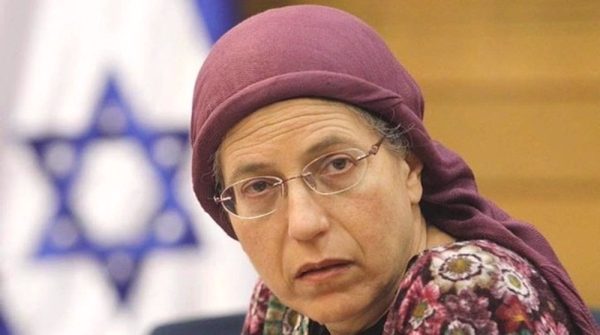
Shoshana’s mother, Orit Strook — the minister of settlements — is a staunch supporter of Israeli settlements in the occupied West Bank.
Press TV – April 10, 2025
A hawkish Israeli minister known for her extreme right-wing politics and support for illegal settlements is facing serious allegations of sexual abuse by her daughter.
Shoshana Strook, the daughter of Israeli Minister Orit Strook, filed a police complaint in Italy alleging sexual assault by both of her parents and a brother.
She stated that resurfacing memories prompted her decision to report the abuse, which she hopes will help her heal from emotional trauma.
She made the allegations in a statement posted on social media, revealing that she had filed a formal complaint and was seeking justice and relief.
“I’m currently in Italy and recently filed a report with the police,” she said. “I hope to find a place where I can get some relief.”
“After a long period of doubt, extreme emotional states, and a lot of guilt, I wanted to share that I experienced sexual abuse by both of my parents and one of my brothers,” Shoshana wrote.
She also said that her parents physically harmed her three younger brothers, stating: “After years of beatings and guilt, I finally spoke out. The memories are overwhelming, but I need justice.”
Shoshana also said that the memories coming up to her lately are “becoming too overwhelming”, recalling one in which she hit three of her younger brothers.
She didn’t reveal which brother sexually assaulted her. However, one of her brothers, Zviki Strook, has been reportedly charged with kidnapping and torturing a Palestinian boy in 2007.
Shoshana’s mother, Orit Strook, is a staunch supporter of Israel’s settlements in the occupied West Bank.
Ironically, Orit relentlessly pushed prime minister Benjamin Netanyahu’s baseless narratives and unsubstantiated claims that Palestinian resistance group Hamas committed sexual assault on October 7, 2023.
She now faces grave allegations of having abused her own children.
The Strook family has been in the spotlight before. In 2007, Orit’s son, Zviki Strook, was reportedly charged with kidnapping and torturing a Palestinian minor.
The Palestinian boy was found severely beaten and bleeding after escaping an alleged torture session.
Orit was born into a Jewish family of Hungarian lawyers. She married Avraham Strook and the couple chose to live in illegal settlements on Palestinian land.
Their first home was in the settlement of Yamit in the Sinai Peninsula. However, following the 1982 evacuation of Yamit after the Sinai was returned to Egypt in 1979, the Strook family relocated to the occupied West Bank city of al-Khalil—again, settling illegally.
Since 2013, she has continued to live in the Avraham Avinu settlement in al-Khalil.
In 2024, Orit stated that Israel should maintain a “long-term military presence in Gaza and annex the occupied West Bank”. She also argued that there should be no exit strategy from Gaza.
Orit made headlines after posting a video to her X account from a Knesset session in which she argued that a Palestinian state would be an “existential threat” to Israel.”
In May 2024, she opposed a proposed ceasefire agreement in Israel’s war on Gaza. Orit also criticized the United States for its efforts to broker a ceasefire deal, stating that the US “doesn’t deserve to be called a friend of Israel.”
Western ‘interventionism’ has turned Bosnia and Herzegovina into a ‘failed state’ – Bosnian Serb leader
RT | April 2, 2025
Western interference has turned Bosnia and Herzegovina into a “failed state,” and the country now needs Russia’s help to resolve the crisis, Bosnian Serb leader Milorad Dodik has told RT. Dodik, the president of Republika Srpska – the Serb-majority autonomous region within Bosnia and Herzegovina – arrived in Russia on Monday for talks with President Vladimir Putin.
Bosnia and Herzegovina was created under the 1995 US-brokered Dayton Peace Agreement, which ended the civil war in the former Yugoslavia. It formed a state comprised of the Bosniak-Croat Federation and Republika Srpska, with a tripartite presidency and an international overseer – the Office of the High Representative (OHR), now held by Christian Schmidt, a former German lawmaker appointed in 2021.
Dodik has long rejected the OHR’s authority, accusing it of overreach and undermining Republika Srpska’s autonomy. He was sentenced in February to a year in prison and a six-year political ban for defying the OHR. Sarajevo issued a national arrest warrant for him and is reportedly seeking Interpol warrants.
In an interview with RT on Tuesday, Dodik said the Dayton agreement, which formed his country, is no longer upheld, and that he has asked the Russian president, who he met with earlier that day, to assist him in bringing the situation to the attention of the UN Security Council (UNSC).
“[Putin] knows of the existence of foreigners that are making up laws and decisions in our country, that there are courts which abide by these decisions… and that this is not in the spirit of Dayton,” Dodik said. He added that as a permanent UNSC member and Dayton signatory, Russia is in a position to effect change.
“We talked about the need to engage in the monitoring of the UNSC. Russia is the only one from which we can expect to have an objective approach… to end international interventionism which degraded Bosnia and Herzegovina and made it into a failed state,” he added.
Commenting on the Interpol warrants, Dodik said, “we’ll see how it goes,” adding that he already has the backing of Serbia, Hungary, and now Russia. He went on to call the charges “a political failure” by Sarajevo and the OHR.
“I think they would like to see me dead, not just in prison. They can’t get the Bosnia they want, in which there is no Republika Srpska, if Milorad Dodik remains president,” he said, adding that critics will try to demonize him for meeting with Putin.
Dodik has opposed Bosnia’s NATO membership and called for closer ties with Russia. He previously suggested that Bosnia would be better off in BRICS and has pledged continued cooperation with Moscow despite Western pressure.
Russia, which does not recognize Schmidt’s legitimacy due to the lack of UNSC approval, has denounced Dodik’s conviction as “political” and based on “pseudo-law” imposed by the OHR.
After meeting with Putin, Dodik said on X that he will return to Republika Srpska on Saturday to meet with regional leaders, adding that Russia has agreed to advocate for an end to the work of international bodies in Bosnia, including the OHR.
Serbian president hails budding ‘military alliance’ with NATO maverick
RT | April 2, 2025
Hungarian Defense Minister Kristof Szalay-Bobrovniczky visited Belgrade on Tuesday to sign a roadmap outlining 79 joint military activities between Hungary and Serbia for this year. According to Serbian President Aleksandar Vucic, the two countries are edging closer to a “military alliance.”
Both Serbia and Hungary have been challenging the prevailing Western consensus regarding the Ukraine conflict and relations with Russia.
The Serbian leader also expressed gratitude to Hungarian Prime Minister Viktor Orban for his role during NATO’s military intervention in the Balkans in 1999, stating that Orban’s influence helped prevent “a land attack against what was then Yugoslavia.”
“A full 26 years later, the two parties now have the opportunity to build extremely close strategic ties, to further deepen cooperation, coming closer to a Hungarian-Serbian military alliance,” Vucic remarked.
Orban first served as prime minister from 1998 to 2002. Hungary joined NATO in March 1999, weeks before the bombing campaign commenced.
Szalay-Bobrovniczky voiced support for Serbia’s EU aspirations, asserting that Brussels’ enlargement plans should include the entire West Balkans. His statement contradicted EU leaders’ demands for Belgrade to align its foreign policy with Western nations against Russia before its candidacy would be considered.
Both Hungary and Serbia remain skeptical of the bloc’s confrontational approach toward Russia. Orban has accused Brussels of harming the EU economy through sanctions on Russia while supporting a conflict that Kiev is unable to win. Vucic has pledged to resist Brussels’ pressure, citing Serbia’s historic ties with Russia as a foundation for their relationship.
Last month, Kosovo, the Serbian region that broke away after the NATO intervention, entered a trilateral defense agreement with Albania and Croatia. Vucic has condemned those nations for allegedly breaching previous security agreements and possibly going over the head of the NATO leadership in signing the deal.
Featured Video

Iran’s Next Strike May Not Explode. It Could Shut You Down
or go to
Aletho News Archives – Video-Images
From the Archive
Zionism’s Violent Legacy
By Donald Neff | Washington Report On Middle East Affairs | January 1996
On January 4, 1948, Jewish terrorists drove a truck loaded with explosives into the center of the all Arab city of Jaffa and detonated it, killing 26 and wounding around 100 Palestinian men, women and children.[1] The attack was the work of the Irgun Zvai Leumi – the “National Military Organization,” also known by the Hebrew letters Etzel – the largest Jewish terrorist group in Palestine. The Irgun was headed by Revisionist Zionist Menachem Begin and had been killing and maiming Arabs, Britons and even Jews for the previous ten years in its efforts to establish a Jewish state.
This terror campaign meant that at the core of Revisionist Zionism there existed a philosophical embrace of violence. … continue
Blog Roll
 Aletho News
- Trump’s Iran war is on an Israeli leash
- Saudi oil boss issues global supply warning
- Riyadh Says Its Oil System Is Intact. The Numbers Say Otherwise.
- Trump and Netanyahu Want to “Finish the Job” on Iran
- US ‘one-sided dictation’ not Iran’s beliefs makes rational talks impossible: Baghaei
- Iran’s Next Strike May Not Explode. It Could Shut You Down /Col Doug Macgregor
- Iran: US political targets legitimate if assassinations return
- Iraq shuts key border crossing with Iran under US pressure: Report
- Undersea Internet cables could be targeted in retaliation for attacks on Iran: IRGC deputy chief
- EU sending ‘biased’ observers to interfere in Serbian election – president
- If Americans Knew
- The Israel Lobby’s Changing Fortunes
- AIPAC has become such a political liability that it’s shifting to a more “nimble” approach to buying politicians
- At least 160 Israeli settler attacks in 2 weeks
- Will Gaza’s Ancient Christian Community Disappear Forever?
- Israel’s vision of regional security rests on keeping Arab states weak
- Heidi Levine recounts how Palestinian youths helped save her in settler attack
- DAILY UPDATE: Latest essential news on Palestine, Israel, & region
- Trump’s Intensifying Sabotage of the ICC, for Israel’s Sake
- Israeli military detain US and UK volunteers in West Bank including Democratic NY politician Brad Lander
- Americans at National Conservatism Conference held in Israel this year criticize Israel
- No Tricks Zone
- E-Cars Reduce CO2 Emissions By Only 41% Compared To Internal Combustion Engine Vehicles
- Predictions Made By Renowned Climate Professor Over Past Decades Have Been Proven To Be Poor
- New Study Suggests Large Regions Of The Pacific Ocean Have Been Cooling For The Last 80 Years
- Germany’s Green Energy Debacle: High Energy Costs Force Kahla Porzellan to Close After 182 Years!
- New Study: 50 Years Of The Most Aggressive ‘Net Zero’ Policies Can Only Affect The Global Climate By 0.03°C
- US September “Heat” Was No Record…Many Records Set Decades Ago
- Latest European Green Energy Debacle; Portugal’s Largest Flagship Solar Park Insolvent!
- Green Energy Debacle: German Expert Professor Fritz Vahrenholt Warns Of Severe Economic And Social Consequences
- Two More Paleo Reconstructions Affirm Meters-Higher Sea Levels Across Ireland, Brazil 7000-6000 Years Ago
- New Study: Earth And Venus Surface Warmth Largely Explained By Convection And Lapse Rate, Not CO2 Or Radiation

