Hamas recycles shells from British ships sunk off Gaza during WWI
MEMO | September 15, 2020
The military wing of the Palestinian Islamic Resistance Movement has apparently recycled shells found on the wrecks of British warships which were sunk off the coast of Gaza during World War One.
In a documentary film broadcast on Sunday, Al Jazeera revealed that Al-Qassam Brigades could in such a way overcome the consequences of the Israeli-led siege imposed on Gaza, which are in part intended to undermine its ability to manufacture weapons.
The internationally-backed siege has been in place for over 14 years. During this time, Israel has carried out three major offensives that have together killed thousands of Palestinians, wounded tens of thousands more and devastated the civilian infrastructure in the coastal territory.
For the first time, Hamas allowed its arms factories to be filmed. The documentary showed Hamas operatives recycling shells found in two sunken Royal Navy warships. The explosive in the shells was tested and, found to be still useable, was fitted into the warheads of Al-Qassam’s own rockets.
“Unfortunately, Hamas got there before us,” said Israeli TV reporter Nir Dvori on Tuesday, referring to the shells on the warships. “The Israeli army siege on Gaza made it difficult for Hamas to get metal and explosives to produce rockets. This pushed it to look for these materials in unconventional locations. Hamas marine personnel found these materials on board the warships.”
According to former sailor Rami Sidnai, the Israeli navy has been looking for the two British ships secretly. “Security issues prevented us from reaching them. Unfortunately, Hamas found them before us.”
Moreover, the documentary, produced by Palestinian journalist Tamer Al-Mishal, revealed how Al-Qassam fighters found a massive network of pipes installed before the Israeli disengagement from Gaza in 2005. The pipes were said to have been used to steal fresh water from the aquifer under the Gaza Strip. Al-Qassam promptly disassembled the network, extracted the pipes and used them to make rocket casings.
Additional explosives were removed from “hundreds” of unexploded Israel munitions after the 2014 military offensive against the Palestinians in the Gaza Strip.
Hamas leader Ismail Haniyeh spoke on camera about regional and international pressure imposed on the movement to give up its arms and end its resistance to the Israeli occupation of Palestine. “Hamas gave no pledge to any mediator related to the development of resistance arms,” he insisted.
However, according to Dore Gold, a former Israeli Ambassador to the UN and advisor to Benjamin Netanyahu, “If we are ever going to develop peaceful relations between Israel and Palestinian groups in Gaza… dismantling Hamas’s infrastructure must be part of any potential deal in order to be feasible.”
Former Israeli General and National Security Advisor Yaakov Amidror conceded that the Palestinians have succeeded in building their [military] capabilities. “Today, they have ability to build weapon systems, mainly long-distance rockets. They have something very notable and have improved their domestic production. They learn all the time and improve their abilities. We exert many efforts to know about these abilities in order to neutralise them whenever we can.”
According to Ami Ayalon, the former head of Israel’s Shin Bet internal security agency, “After at least two Israeli offensives on Gaza, the result is that it could not disarm Gaza on its own and should not. It will be a disaster if we attempt to disarm Hamas by ourselves.” He added his belief that Hamas is “stronger” than before. “The issue is complicated. We have to make a new political reality, otherwise Hamas is getting stronger.”
COVID-19 predictions: “infectable subgroup” hypothesis
By Mikhail V. Blagosklonny – Rapamycin Press – June 15, 2020
As an amateur in virology, I present preliminary “infectable subgroup” hypothesis to explain:
- Why COVID-19 epidemic flattened in all countries even with poor mitigation measures
- Why new cases spike only in some (but not all) counties and US states since reopening
- Why epidemiologic prognoses failed
In existing epidemiological models (unless I am mistaken), chances to be infected with SARS-CoV-2 coronavirus depend only on mitigation measures, such as social distancing. Biologically all people are equal.
Consider in contrast that there are subgroups of highly-infectable (< 20%) and low-infectable people. During epidemic, most highly-infectable people become infected and the curve flattens earlier than models predict (when just a few % of population get infected). When such places re-opened there will be no spike. Spikes will be observed only in places/states that did not flatten the curve yet. In former hot spots, cases will continue decreasing upon reopening.
Noteworthy, on the ships, most people (low-infectable group) do not become sick regardless of how long they stay together.
Low-infectable person does not get infected (and will not develop antibody either), when exposed to the virus.
The hypothesis also explains why it is more difficult to contain the spread, when just a few cases occur, than to flatten the curve at the peak of cases: All higly-infectable people have been already infected.
What determines infectable phenotype? Unlike COVID-19 vulnerability (mortality rate), infectability does not depend much on age, age-related diseases and gender. So we do not know.
There must be a biological component, including polymorphism.
Before the mutation had occurred in the bat virus, all people were non-infectable. Mutation rendered people infectable, but not necessarily all people. There is polymorphism of receptors, enzymes and so on. Also non-genetic factors such as diet, etc. may contribute to the infectable phenotype. Behavioral factors (low vs high social behavior) are extrinsic factors of infectability. Family clusters of COVID-19 suggest genetic factors.
Predictions:
- There will not be drastic spikes in former hot spots such as some parts of New York upon re-opening.
- There will be no second wave in the Fall, unless the virus mutates once again to make non-infecatble people infectable. There may be new hot spots in previously unaffected places, but this is all first wave.
Further directions: What are the markers and mechanisms of non-infectability?
Russia blasts US’ Indo-Pacific strategy
By M. K. BHADRAKUMAR | Indian Punchline | September 12, 2020
The meeting between the Russian Foreign Minister Sergey Lavrov and his Chinese counterpart Wang Yi in Moscow on September 11 took place at a particularly delicate juncture in regional politics. Russia is carefully ploughing a neutral line in the India-China standoff while also drawing closer to China to push back at US pressure.
The US policies are prompting Russia and China to further enhance their “comprehensive strategic partnership of coordination for a new era.” Summing up his meeting with Wang, Lavrov said the talks were held in “an atmosphere of mutual respect and trust and were very substantial.” He added, “We discussed the key international problems and reaffirmed the closeness of our views on effective solutions to them…We agreed to carry on our close collaboration.”
Significantly, the most striking part of Lavrov’s remarks pertained to the Asia-Pacific region. Lavrov frontally attacked the US’ Indo-Pacific strategy: “We (Russia and China) noted the destructive character of Washington’s actions that undermine global strategic stability. They are fuelling tensions in various parts of the world, including along the Russian and Chinese borders. Of course, we are worried about this and object to these attempts to escalate artificial tensions. In this context, we stated that the so-called “Indo-Pacific strategy” as it was planned by the initiators, only leads to the separation of the region’s states, and is therefore fraught with serious consequences for peace, security and stability in the Asia-Pacific Region.
“We spoke in favour of the ASEAN-centric regional security architecture with a view to promoting the unifying agenda, and the preservation of the consensus style of work and consensus-based decision-making in these mechanisms, as it has always been done in the framework of ASEAN and the associated entities. We are seeing attempts to split the ranks of ASEAN members with the same aims: to abandon consensus-based methods of work and fuel confrontation in this region that is common for all of us.”
The Chinese state media highlighted Lavrov’s remarks. Wang said in response that China-Russia relations have become “key forces of stability in a turbulent world.” He stressed that the China-Russia alliance has shown “strong resilience” against the backdrop of the “profound changes unseen in a century” in world politics.
The Lavrov-Wang meeting took place in the backdrop of the turmoil in Belarus, for which Russia has blamed the US. On the eve of the meeting in Moscow, a senior Russian lawmaker openly alleged that the US has a master plan to create political tensions within Russia, where regional elections are due to take place on Sept 13. Social media and the Internet, once again, are playing a major role in orchestrating the protests in Belarus.
Interestingly, during the meeting with Lavrov, Wang also called for “further Russia-China cooperation in the area of international information security, against the backdrop that some countries are politicising information technology and cyber security and containing other countries under the pretext of safeguarding its own national security.”
Lavrov’s remarks on Indo-Pacific strategy coincided with the 53rd Association of Southeast Asian Nations (ASEAN) Foreign Ministers’ Meeting and related meetings (including the 10th East Asia Summit Foreign Ministers’ Meeting) in Hanoi on Sept 8-11. The ASEAN faces growing pressure from the US to join hands with it against China, but has refused to take sides. The joint communique adopted at the meeting in Hanoi reflects this stance.
Last week, Reuters quoted Indonesia’s foreign minister Retno Marsudi as saying that ASEAN must remain steadfastly neutral and united. “ASEAN, Indonesia, wants to show to all that we are ready to be a partner,” said Retno. “We don’t want to get trapped by this rivalry.” Indonesia’s stance becomes important at a time when the US is attempting to split the ASEAN consensus on neutrality by playing on the interests of individual member countries.
The US is pinning hopes that some ASEAN countries may be in a quandary about how to balance ties to get the best out of both of the big players, while some others may feel tempted to use the US-China rivalry as an opportunity to extract leverage for economic or military advantage. Retno alluded to it when she told Reuters, “(ASEAN has) a good culture, but we have to nurture it. We can’t take it for granted that these values will live forever.”
Significantly, Vietnam and Indonesia, two influential ASEAN countries, are also Russia’s major partners. Lavrov’s remarks, therefore, can be seen as signifying a new level of commitment in Russia’s engagement with the Asia-Pacific, while also reinforcing the partnership with China, and going beyond a mere reflexive response to events (principally, the current crisis in Russia’s relations with the West.)
It is interesting that Moscow is unequivocal in subscribing to the description “Asia-Pacific region” and has no truck with the concept of “Indo-Pacific”, which Lavrov derisively regarded as a politically loaded term. Arguably, Indo-Pacific would be somewhat misleading also in the context of Russian policy. Russia is far more interested in the Asia-Pacific than it is in the Indian Ocean or the Indian subcontinent — considering its engagement with not only China but also with Japan, the two Koreas, the US (as a Pacific power) and with the security of the Far East.
Of course, India figures in the larger geopolitical context, but in the Russian perception, India remains a supernumerary member of the Asia-Pacific community. Where Russia has a difference of opinion with India is in its perception of the American security presence in Asia-Pacific as of an extra-regional power who is intrusive and increasingly destabilising.
Fundamentally, Russia approaches the Asia-Pacific from a global perspective whereas India’s vision narrows down to concerns over rising China. From the Russian perspective, Asia-Pacific is a theatre central to the world order in the 21st century where intense geopolitical struggles are erupting, where a battle of ideas, norms and institutions is already under way. Being a resurgent global power, Russia is obliged to position itself at the centre stage in the region.
Indeed, Beijing is well aware of the shift in the ASEAN regional attitudes towards Russia in the recent years. Unlike in the Soviet era, no ASEAN country (Philippines included) tends to identify Russia as a threat or a malign actor anymore. On the other hand, Russia’s relations with nearly all ASEAN states are comfortable. Thus, a more active Russian involvement in Asia-Pacific affairs works well for China.
Simply put, it suits Moscow and Beijing to make common cause in the Asia-Pacific when their respective relations with the US are so difficult, and when both have come under heavy US pressure. It won’t come as a surprise to see a surge in Russian diplomatic efforts in the period ahead to expand relations across the ASEAN region.
FBI says reports of Antifa arson in Oregon are ‘Conspiracy Theories,’ but someone is starting fires
RT | September 12, 2020
As wildfires burn throughout Oregon and close in on Portland, a number of arrests and reports suggest that some of these fires may have been started intentionally. The FBI has dismissed reports of arson as “conspiracy theories.”
Multiple wildfires are ripping through Oregon, with local media reporting seven dead as of Friday. Governor Kate Brown has evacuated more than 40,000 people, and the state’s emergency management director, Andrew Phelps, said on Friday that authorities are preparing for a “mass fatality event.”
Phelps also warned that the fires are “knocking on the doorstep” of Portland. With the sky over the city blotted out by ash and smoke, Mayor Ted Wheeler declared a state of emergency on Thursday night.
Portland has been an epicenter of ‘Black Lives Matter’ and antifa riots since May, and rumors circulating online have accused some of these activists of starting the fires intentionally. The FBI attempted to squash these rumors on Friday, declaring them “conspiracy theories and misinformation,” and urging citizens to only share “validated information from official sources.”
However, reports of arson have not come solely from anonymous Twitter accounts and conspiracy cranks. Hours after the FBI’s tweet was posted, the Multnomah County Sheriff’s Office announced that deputies had discovered spent fireworks next to a bush fire in Corbett, a few minutes’ drive from Portland.
Multiple suspects have been arrested and charged with arson within the city itself, with the arrestees usually linked to the ongoing protests and riots. Previously, Molotov cocktails have been thrown at police officers, buildings set on fire, and powerful fireworks launched at federal agents protecting the city’s Justice Center and courthouse.
However, law enforcement officers have caught several arsonists outside Portland too. A man was charged on Friday with multiple counts of arson after allegedly setting a wildfire near Phoenix in southern Oregon on Tuesday. Officers arresting the man found him standing near a large blaze that was threatening several houses, and discovered two ounces of methamphetamine on his person. His political leanings are unknown.
In central Oregon, a 44-year-old man was arrested on Tuesday on suspicion of arson, with deputies accusing him of torching nearly 400 acres of land west of the city of Eugene.
While law enforcement officials say they’ve been flooded with false calls blaming the fires on Antifa arsonists, a fire that began in Ashland is under criminal investigation after human remains were found at its origin point. The fire quickly spread, and merged with the same blaze that the alleged Phoenix arsonist was arrested and charged for starting.
Further north in Washington state, a man was charged on Friday with starting a fire alongside a rural highway two days earlier. The suspect, identified as 36-year-old Jeffrey Acord, live-streamed his arrest on Facebook, but denied starting the fire. Acord had professed support for Black Lives Matter on Facebook, and had previously been arrested with a cache of weapons at a protest in Seattle in 2014.
It is not known, however, if his alleged fire-starting on Wednesday was politically motivated.
Iran, China, Russia to partake in Caucus 2020 military drills
Press TV – September 10, 2020
Military forces from Iran, China, and Russia are scheduled to take part in joint military exercises with a number of other countries in southern Russia later this month.
China’s Defense Ministry made the announcement in a news release on Thursday and said troops from Armenia, Belarus, Myanmar, and Pakistan would also participate in the drills, code-named “Caucus 2020.”
The ministry added that the exercises, to be held from September 21 to 26, would focus on defensive tactics, encirclement, and battlefield control and command.
The drills have special significance “at this important moment when the entire world is fighting the pandemic,” the ministry said.
The United States administration has insinuated that the coronavirus was artificially developed in a Chinese lab. China has rejected that insinuation.
Iran, China, and Russia have over the past years increased their military and diplomatic cooperation to counter the United States’ hostile policies and extra-territorial presence in their regions.
Late last year, the three countries held four days of naval exercises code-named the “Marine Security Belt” to promote regional security and peace and safeguard international trade in the Sea of Oman and the Indian Ocean.
4 Yemen tribes sign no aggression deal with Houthis in Marib
MEMO | September 10, 2020
Four major Yemeni tribes in the city of Marib, northeast of the capital Sanaa, signed an agreement with Houthi military leaders in Sanaa on Saturday, to spare their areas from fighting while talks continue with other tribes in the region to sign similar deals, Lebanese Al-Akhbar newspaper reported.
Until recently, the region’s tribes have supported the Saudi-led coalition which backs the internationally recognised Yemeni government.
According to reports from Yemen, with the new development, the Houthis will be able to control the city of Marib, after they seized ten of the governorate’s 14 directorates.
Local sources said the Houthis have Gained control of Al-Sadara strategic area as well as the Al-Kula region, adding that violent clashes were taking place between the Houthis backed by tribesmen, and the Yemeni government forces in the Al-Manqil area near Al-Jawba.
COVID-19: RDIF Points to Absence of Long-Term Studies on Vaccines Based on Monkey Adenoviral Vectors
By Aleksandra Serebriakova – Sputnik – 09.09.2020
The third round of trials for the AstraZeneca anti-COVID-19 drug is now on pause over “potentially unexplained illness” in a participant in the UK. On 11 August, Russia registered its own Sputnik V anti-coronavirus vaccine, which is said to have been developed in a different way.
The Russian Direct Investment Fund (RDIF) the investor which has funded the development of Russia’s Sputnik V anti-coronavirus vaccine, could not comment on the halt of AstraZeneca trials, it said in a statement.
However, RDIF pointed out that the fund’s CEO Kirill Dmitriev had previously discussed the differences between the human adenoviral vector-based platform used in Russia’s Sputnik V vaccine and those used by some of their international colleagues, that rely on “novel unproven technologies such as monkey adenoviral vectors or mRNA”.
“The safety of the human adenoviral vector used in Sputnik V has been proven over decades in over 250 clinical studies, as human adenovirus has been shown to be the safest vaccine delivery mechanism and the most ‘organic for humans’, as human adenovirus has coexisted with humans for over 100,000 years,” RFID said.
Meanwhile, “mRNA and monkey adenoviral vector-based platforms have not been studied over a long period of time,” RDIF CEO Dmitriev pointed out this Tuesday.
Commenting on the so-called “pledge of safety” earlier voiced by the CEOs of AstraZeneca, BioNTech, GlaxoSmithKline, Johnson & Johnson, Merck, Moderna, Novavax, Pfizer and Sanofi in relation to the development of the first COVID-19 vaccines, Dmitriev stressed that this plea was “insufficient” as it did not “discuss the lack of long-term studies on the carcinogenic effects and impact on fertility of newly-developed vaccine technologies”.
“Since some of the companies developing these vaccines have taken the ‘pledge of safety’, we would like to stress that public health and safety requires not only short-term evidence of a lack of serious adverse effects, but also the safety and efficacy proved by the results of long-term studies,” Dmitriev added.
AstraZeneca COVID-19 Vaccine Trials on Pause
It was revealed this week that the third round of trials for the AstraZeneca anti-COVID-19 vaccine has been halted due to a “potentially unexplained illness” which had developed in a participant in the United Kingdom, without further specifications about the nature of possible side effects. The vaccine in question was developed in partnership with Oxford University and has reportedly involved around 30,000 participants in the UK, US, Brazil and South Africa. AstraZeneca described the pause as “routine” so as to allow for a “standard review process” of “safety data”.
Russia’s First Anti-Coronavirus Vaccine
On 11 August, Russia registered the world’s first vaccine against COVID-19, called Sputnik V, which was developed by the Gamaleya National Research Centre of Epidemiology and Microbiology and the RDIF after several rounds of clinical trials. On Monday, the vaccine was made available to the public.
According to RDIF, Russia has now received requests for 1 billion doses of the vaccine; at least 20 countries, including the UAE, Saudi Arabia, Indonesia, Philippines, Mexico, Brazil and India, have expressed an interest in obtaining Sputnik V.
Political pardon given by Maduro may be a checkmate against Venezuelan opposition
By Lucas Leiroz | September 7, 2020
In Venezuela, Juan Guaidó no longer appears to be the leader of the opposition. The forgiveness of 110 opponents by President Nicolás Maduro completely fragmented the political wing opposing the regime, which, in practice, removes from Guaidó the “monopoly” of militancy against the government. Maduro’s decision to forgive as many opponents as possible seems particularly strategic in an election year. For the December 2020 parliamentary elections, Maduro’s allies represent the only unified and solidly based political wing in the country, while currently his opponents are fragmented into several factions.
Another oppositionist leader, Henrique Capriles has already announced that he will dispute the elections. In recent times, after a long period of silence and inactivity, Capriles has occupied an increasingly prominent place in Venezuelan politics, diminishing Guaidó’s influence on the opposition. Capriles seems to have a more interesting political alternative for some opposition groups than the proposal by Guaidó, who is a politician absolutely aligned with external interests and who openly defends Venezuela’s total subordination to Washington.
Perhaps this was the reason for the fall of Guaidó’s political strength. 2020 was for the opposition leader the year of his abrupt fall. On February 5, Guaidó attended a conference at the Capitol in Washington DC and was applauded by Donald Trump, Nancy Pelosi and everyone in attendance. At that time, the illusion that Guaidó was in fact the president of Venezuela was fully consolidated. Guaidó himself believed to be the country’s president, which was the starting point of his downfall.
It seemed inevitable that the invention of the “Guaidó’s presidency” would result in the opposition being closed to the Venezuelan political reality. The history of the opposition leader, since his recognition in January 2019 by Trump, is a succession of errors and deficiencies that denounce his total inability to lead the country. The most notable mistakes so far have been his explicit participation in the landing of Colombian mercenaries on the Venezuelan coast and the leakage of his connections with drug trafficking in South America, which has greatly weakened his public image inside and outside Venezuela.
Guaidó’s decline, at first, had little impact on the Venezuelan opposition, as there was his “recognition” as the country’s president. But this illusion could not last long. The proximity of the parliamentary elections in December aroused in the Venezuelan opposition a strong wave of political realism and led different factions to assume the obvious truth: Guaidó is not the president of the country. This fact becomes even more evident when Maduro pardons and legalizes more than one hundred opponents, creating ties of cordiality in internal disputes – something that Guaidó still refuses to accept. Then a scenario was created in which the opposition is divided between those who recognize the legitimacy of the government and oppose it politically in the elections and, on the other hand, Guaidó, who recognizes himself as president with American support. This new scenario will completely change the way in which political disputes in Venezuela will take place and may even destabilize the opposition’s international alliances.
How long will Washington invest in Guaidó as its ally in opposing Maduro? What makes Guaidó more interesting than, for example, the political figure of Capriles or any other politician who will announce his candidacy for the December elections? Guaidó will not run in the parliamentary elections because he believes he is the president of the country, while other politicians will run and will be able to make real and effective opposition against Maduro. Will international actors interested in the fall of the government really continue to fuel the illusion that Guaidó is the president rather than supporting opponents within Parliament? It is a question that remains unanswered, but we can predict the outcome.
Indeed, there is no future for the Venezuelan opposition as it is today. The entire political wing that opposes Maduro is absolutely fragmented, with no unity of thought among its representatives, much less a solid national project. The only thing in common that opponents want is to overthrow Maduro, but that will not happen so easily. The Venezuelan government remains strong and well-structured, with an effective political apparatus at its disposal, which cannot be seen in the opposition. Opponents’ political forgiveness was a checkmate for the next elections. The weakness of the opposition became clear and all of its representatives were disadvantaged: Guaidó lost political strength and will possibly be without international alliances; the other opponents have broken ties with Guaidó and are not strong enough to face the government, even though they may run for election.
Lucas Leiroz is a research fellow in international law at the Federal University of Rio de Janeiro.
Venezuelan Government Invites International Observers as Opposition Splits Over Elections
By Ricardo Vaz | Venezuelanalysis | September 4, 2020
Mérida – The Venezuelan government has invited the United Nations (UN) and the European Union (EU) to monitor the December 6 National Assembly (AN) elections.
Foreign Minister Jorge Arreaza wrote on Twitter that letters had been sent to UN Secretary General Antonio Guterres and EU Foreign Policy Chief Josep Borrell explaining electoral guarantees and inviting the bodies to send observers.
“Your participation in this process will have a positive contribution to an atmosphere of democratic understanding between Venezuelans and support political, peaceful and negotiated solutions to existing issues,” the letter read.
At the time of writing there have been no reactions from either the UN or the EU. While both have previously voiced support for dialogue processes, the European bloc recently vowed not to recognize the parliamentary election, which will elect 277 deputies for the 2021-2026 term.
The appeal to the international instances comes on the heels of President Maduro granting pardons to 110 opposition figures. This includes a number of AN deputies and other leaders charged or convicted for taking part in activities such as the violent “guarimba” street protests, the 2018 assassination attempt against Maduro, or the April 30, 2019 failed putsch.
On Thursday, the ruling United Socialist Party of Venezuela (PSUV) and its allies submitted their electoral candidates, with eight current cabinet members heading the list and subsequently replaced. Current state television VTV president Freddy Nanez replaced Jorge Rodriguez as communications minister, Noris Herrera replaced Blanca Eekhout as communes minister, Carolys Perez took over from Asia Villegas as minister for women, while there were also changes at the prisons, mining, youth, urban agriculture and indigenous peoples ministries.
The electoral scenario has also led to bitter infighting amongst the opposition ranks. On Wednesday, two-time former presidential candidate Henrique Capriles called on opposition leader Juan Guaido to stop “playing at government on the internet.”
“Either you’re the government, or you’re the opposition. You can’t be both,” he said during an online broadcast.
The comments came in response to criticism from Guaido after Capriles and fellow opposition member Stalin Gonzalez held a meeting with Turkish Foreign Minister Mevlut Cavusoglu concerning electoral participation and guarantees.
“These negotiations were held without the knowledge and permission of the ‘Interim Government’ and our international allies,” read a statement published by Guaido’s office.
The opposition lawmaker proclaimed himself “interim president” in January 2019 and was immediately backed by Washington and its allies. He went on to lead several unsuccessful efforts to overthrow the government by force, but a host of scandals saw his position increasingly questioned by other high-ranking opposition figures.
Guaido has lobbied for a boycott of the December AN elections and called on opposition figures to join a “unitary path” to oust the Maduro government which would extend his “interim presidency” into 2021.
However, other anti-government politicians have refused to rally behind him, with some urging voters to take to the polls, and hardline figures such as Maria Corina Machado calling for a foreign intervention.
For its part, Washington downplayed talk of a possible military intervention, with the Trump administration’s Special Representative for Venezuela Elliott Abrams criticizing opposition leaders “who only think that the magic moment of a military intervention will arrive” in a recent interview.
However, the veteran official, who is known for his role in the Iraq war and the Reagan administration’s Central America policy, has reiterated that the US will continue supporting Guaido while tightening sanctions against the Venezuelan economy.
President Ghani says Afghan government fulfilled all commitments for Taliban peace talks
Press TV – September 2, 2020
Afghanistan’s President Ashraf Ghani says the government has fulfilled all its commitments for peace negotiations with the Taliban.
“The government has fulfilled all its commitments in the peace process that the international community had hoped for,” the president said at a meeting with a team of government-backed negotiators at the presidential palace on Wednesday, his office reported.
On Monday, Kabul resumed the release of Taliban prisoners, a pre-condition to negotiations.
“The release of Taliban prisoners is a clear demonstration of the government’s commitment to peace.”
Afghanistan’s Loya Jirga, or grand assembly of elders, has already approved the release of 400 imprisoned Taliban militants, who had been involved in serious crimes in Afghanistan, for the sake of peace talks.
A senior government official, who asked not to be named, told AFP on Wednesday that at least 200 inmates have been freed since Monday and the process “will continue today too.”
In return, the Taliban have freed four Afghan commandos and are expected to release two more on Wednesday, according to a Taliban official.
Meanwhile, Ghani’s spokesman Sediq Sediqqi said in a posting on Twitter, “We expect the Taliban to live up to their commitments on the release of the remaining captives.”
The prisoner swap was agreed to in a deal between the Taliban and the United States. The agreement was signed in the Qatari capital, Doha, on February 29.
Under the deal, the Taliban agreed to halt their attacks on international forces in return for the US military’s phased withdrawal from Afghanistan and the prisoner exchange with the government in Kabul.
The Afghan government, which was not a signatory to the accord, was required to release up to 5,000 Taliban prisoners. The militants, for their part, were obliged to free 1,000 government captives.
Ghani said a “critical stage of peace” had been reached, noting that the talks would help reduce violence and finalize a permanent ceasefire.
Meanwhile, Kabul has dispatched a “small technical team” to Qatar to prepare for negotiations.
Najia Anwari, spokeswoman for the State Ministry for Peace Affairs, told AFP that the government’s negotiators will also leave for Doha “very soon.”
Macron threatens Lebanon with sanctions unless Beirut brings about ‘real change’ in three months
RT | September 1, 2020
Paris will slap Lebanese elites with sanctions and could even withhold crucial financial aid if Beirut fails to implement reforms, the French president has warned.
The upcoming months would be “fundamental” for what he described as “real change,” Macron told Politico as he was heading to Beirut for a second visit in a month. Should he be not satisfied with the reforms made within the set period of time, punitive measures will follow, he added.
The list of such measures ranges from personal sanctions against members of the Lebanese political elite, to blocking an international financial bailout – vital for a country gripped by a prolonged economic and political crisis, and struggling with the aftermath of the recent major explosion in the capital.
During Macron’s previous visit in early August in the wake of the devastating blast which killed almost 200 people, the French president called for a new, interim government, as well as for an audit of the nation’s central bank and parliamentary elections within a year. Now, he says he wants “credible commitments” from the Lebanese political parties that they will stick to the plan – including a timetable for holding the legislative vote within “six to 12 months.”
The horrific blast aggravated existing problems and provoked violent anti-government demonstrations, forcing Prime Minister Hassan Diab to dissolve the cabinet in early August. A new government has however been slow to emerge, prompting President Macron to intrude on the affairs of the former French protectorate.
Macron stated he is not known for being soft and is not going to back down in Lebanon but is still wary of using what he calls France’s full force and locking horns with Hezbollah. The French president meanwhile blamed Lebanese protesters for the failure to produce a leader powerful enough to bring the country’s political elites under control.
“A name works if the street knows how to produce a leader who leads the revolution, and breaks the system. It didn’t work, at least not today, maybe tomorrow or after tomorrow it will,” he said, commenting on public discontent over the choice of a new prime minister.
Diplomat Mustapha Adib was agreed as the new head of the government just hours before Macron’s arrival in Beirut. However, his candidacy apparently did not sit well with at least some members of the public and Macron was at some point met by a crowd chanting “Adib won’t do!” and “We want Nawaf Salam!”
Salam – a judge with the International Court of Justice – lacks support among the political elites of Lebanon and would hardly be able to fulfil his role as a head of government, Macron said while also explaining that it was not him, who chose Adib and it was not his job “to interfere or approve.”
Lebanon president names Mustapha Adib as new prime minister
Press TV | August 31, 2020
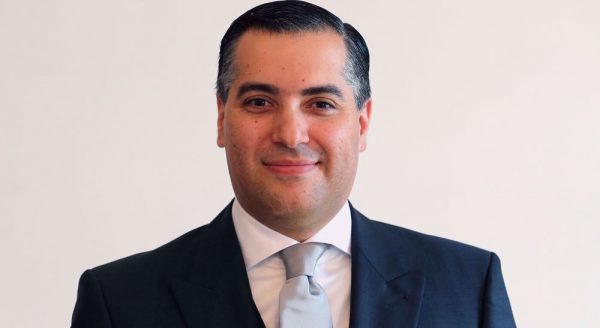
Lebanese President Michel Aoun has named the country’s ambassador to Germany Mustapha Adib as the new prime minister after he secured the support of major political parties.
A majority of lawmakers had to decide on whom to name as premier before Aoun tasked the candidate with forming a government.
According to a Reuters tally of votes cast by lawmakers in official consultations, Adib secured the support of a majority of lawmakers to be designated as the new prime minister.
Adib secured at least 66 votes, or more than half of the 120 MPs currently serving in the Lebanese parliament, after the Christian Free Patriotic Movement announced it had nominated him.
Lebanon’s parliament usually has 128 MPs but eight resigned following the Aug. 4 port explosion.
A relatively unknown 48-year-old diplomat, Adib, a close aide to former premier Najib Mikati, is about to form a government after he secured backing from the country’s politicians.
On Sunday, the Sunni Muslim political figures in Lebanon, including the Future Movement party headed by former premier Sa’ad Hariri, picked Adib to succeed Hassan Diab, who resigned as prime minister following Beirut’s blast.
Under a power-sharing agreement that ended the 1975-1990 civil war in Lebanon, the prime minister must be a Sunni Muslim, the president a Maronite Christian and the parliament speaker a Shia Muslim.
Hariri announced on Monday that he had nominated Adib to the position in formal consultations with Aoun.
Speaking after a meeting with the president, Hariri said the new government should be formed quickly and made up of specialist ministers.
Hezbollah members of Lebanon’s parliament also nominated Adib as the next premier.
Hezbollah’s parliamentary bloc “informed President Aoun of its agreement to the nomination of Mustapha Adib and we expressed our readiness for positive cooperation,” the head of its parliamentary bloc, Mohamed Ra’ad, said after a meeting with the president on Monday.
Diab’s government resigned after the devastating explosion at a port in Beirut that killed at least 188 people and wounded thousands.
The blast came amid public anger over the ruling elite’s mismanagement of an economic crisis. The Lebanese pound has continued to plummet against the US dollar, losing more than 60 percent of its value over the last weeks while sources of foreign currency have dried up.
Observers say American sanctions on Lebanon have deteriorated its already struggling economy.
The consultations come as French President Emmanuel Macron is due to return to Lebanon, after his previous visit to the country that followed the blast and sparked outrage among the Lebanese.
Macron, whose country witnessed months-long and nationwide anti-government protests by Yellow Vests over economic injustice in 2018 and 2019, used a provocative colonial tone in his visit, calling for political and economic reforms in Lebanon.
Featured Video

ARE PATIENTS BEING PROPERLY INFORMED ABOUT OZEMPIC?
or go to
Aletho News Archives – Video-Images
New Book
Breast Cancer: Before You Consent
A new Unbekoming paperback
Lies are Unbekoming | September 18, 2026
Peter Gøtzsche reviewed every randomised mammography screening trial ever conducted for the Cochrane Collaboration. Cochrane’s headline is that, assuming a 15% mortality reduction, one woman in 2000 avoids dying of breast cancer over ten years. Ten are overdiagnosed and treated. Two hundred experience false alarms.
But that headline assumes the reduction. When Gøtzsche looked only at the trials with adequate randomisation — the higher-quality ones — the reduction disappeared. No effect on breast cancer mortality. No effect on all-cause mortality.
This is the Cochrane finding, published in the establishment’s own database of systematic reviews.
No woman being asked to consent to a mammogram this week knows it.
That is why the new Unbekoming paperback exists. … continue
Blog Roll
 Aletho News
- The Truth About the Trump Shootings with Ken Silva
- ARE PATIENTS BEING PROPERLY INFORMED ABOUT OZEMPIC?
- US lawmaker blocks $2.8 billion weapons sale to Israel: Report
- Yemeni army claims responsibility for strikes on sensitive sites in Saudi capital, Aramco facilities in Yanbu
- Iran Judiciary issues indictments against 159 US, Israeli officials for assassination of Leader, commanders
- Turkiye revokes Iranian bank license under US sanctions campaign
- US-Denmark Agreement on Greenland Is ‘PR Stunt’ Ahead of Midterms
- Araghchi: Military intervention cannot create security; coercion cannot bring peace
- Fraud Squared
- Breast Cancer: Before You Consent
- If Americans Knew
- Inside Gaza’s death trap of collapsing, bombed-out buildings
- The everyday items Israel bans from Gaza every day
- Inside the siege, the ruined buildings of Gaza – Daily Update
- Debunking The Claim That Macklemore Has A “History Of Antisemitism”
- CPJ demands release of arrested Palestinian-US journalist near Bethlehem
- Robert Kraft: The Billionaire Friend of Netanyahu Pulling The Strings Behind the Macklemore/Ed Sheeran Blow Up
- Columbia Administered Fund Gives Big Money to Pro-Israel Groups
- Deportation Case of Palestinian Activist Salah Sarsour Tests First Amendment
- ‘We Will Not Forget’: Palestinians Mark 44 Years since Sabra and Shatila
- Why do we let Zionists decide what we can and can’t say?
- No Tricks Zone
- New Study: ‘Global Drought Shows No Detectable Recent Acceleration Under Climate Warming’
- Economic Masterminds: German Socialists Suggest Taxing Productivity Gains Stemming From Using AI
- The South China Sea Has Not Been Cooperating With The Climate Change Narrative
- Energy Crisis: Germany Enters Heating Season With Historically Low Gas Reserve Fill Levels
- New Study: The Antarctic Ice Sheet Gained Mass From 2020-2024 Due To Staggering Snow And Ice Accumulation
- Study: Ocean Heating Rates From Thousands Of Years Ago ‘Dwarf’ Modern Ocean Heating Rates
- Climate Extremists Target, Attack Large-Scale Power Grid Infrastructure In Germany!
- New Study: Antarctic Ice Melt Has Contributed Less Than 1 Centimeter To Sea Level Rise In The Last 30 Years
- Fear Of Debate: Alarmist German Climate Scientist Calls On Mainstream Media To Discredit Skeptic Voices
- End-Of-August Arctic Sea Ice Extent Hasn’t Fallen In 20 Years, Official Data Show!
 Aletho News