Why Did Governor Gavin Newsom Veto A “Critical Race Theory” Education Bill?
By Eric Striker – National Justice – October 1, 2020
California Governor Gavin Newsom is an unlikely ally in the fight against the anti-white critical race theory, but yesterday he shocked and confused his colleagues with a surprise veto of Assembly Bill 331.
AB 331, which passed 62 to 12 in California’s State Assembly, would’ve mandated students in the Golden State’s failing high schools to take a “Critical Ethnic Studies” class about the oppression and discrimination faced by one of four minority groups (African-Americans, “Latinx,” Native Americans and Asian-Americans) at the hands of white supremacists. A special emphasis on forcing white students to take these classes was emphasized in the law’s discussion.
While AB 331 was passed in January 2019, Newsom’s veto has the optical misfortune of coinciding with Donald Trump’s current campaign seeking to put an end to critical race theory in federally funded institutions. The bill’s sponsor, Assemblyman Jose Medina, lashed out at his fellow Democrat, calling the Governor’s move “a failure to push back against the racial rhetoric and bullying of Donald Trump.”
So why did he do it?
The answer lies in Newsom’s donors, who also happen to be members of prominent Jewish ethnic lobbies. For example, the American Jewish Committee responded to news of his decision with a “Bravo.”
Jewish groups protested AB 331 because, while they agreed with the anti-white message, they also resented the lack of an exemption for Jewish students. Under the law, Jews would be considered “white” and not allowed to choose Jewish Studies for their credit.
Roselyn Swig, a billionaire heiress, wrote an op-ed reflecting this sentiment four days ago. In the piece, she urges that the bill be altered.
According to Swig, critical race theory is “crucial to ensure a tradition of tolerance, understanding and respect – three of my core values – for future generations, while advancing justice for marginalized communities.” However, she furiously contested that “[An] initial draft of the educational plan had both excluded Jews and antisemitism education, and included anti-Jewish tropes in lyrics and anti-Israel boycotts.”
Swig concluded her open letter by stating that the “interests of the Jewish community are actually aligned with other ethnic studies groups. We should come together to advance our shared values, both in the classroom and beyond, for years to come.”
The proposed ethnic studies curriculum tried to adapt to these demands, but the end result only enraged Jews further. The final version on Newsom’s desk would’ve taught that Jews were beneficiaries of “white privilege,” which doomed it.
While non-white groups who supported the bill will blame Newsom’s own “white privilege” for its failure, the final decision was made outside of the Governor’s office.
Swig belongs to what California media has dubbed Newsom’s “Faithful Eight” — eight wealthy families who have given the Governor millions of dollars to transform him from mediocre dog catcher to a national figure with future presidential ambitions.
Of the Faithful Eight, the Swig’s are joined by four other elite Jewish dynasties: the Guggenheims, the Marcuses, the Fishers, and the Pritzkers.
While California has earned a reputation for its radical left policies, it also suffers from Progressive Except Palestine syndrome. In 2016, Governor Jerry Brown signed one of the most draconian and controversial anti-BDS (Boycott, Divestment, Sanctions) bills in the country.
The lesson for white privilege peddlers who saw AB 331 as a political lay up is simple: real power always strikes back.
The Time of Troubles in Transcaucasia – Part 1
By M. K. BHADRAKUMAR | Indian Punchline | October 1, 2020
Three days into the renewed conflict in Nagorno-Karabakh in the Transcaucasian region — also known as South Caucasus — it is becoming clear that the binary narrative dished out by western commentators of this being a Turkish-Russian clash of wills and strategies is either simply naive or purposely deceptive. The point is, Russia and Turkey — and Iran in a somewhat supportive role — are already proactively talking of negotiations involving the warring sides.
September 30 has been a turning point of sorts. Tehran had on the previous day called on Azerbaijan and Armenia to settle the differences peacefully and offered that along with Turkey and Russia, it can help the two countries to resolve their differences.
President Hassan Rouhani since repeated this offer in a phone conversation with Armenian Prime Minister Nikol Pashinyan. According to the Iranian account, Pashinyan responded positively that “any tension and conflict would be to the detriment of all countries in the region and welcomed any practical initiative to stop the violence.”
Armenia is a land-locked country and it depends on Iran to provide a vital transportation route to the outside world. On its part, Tehran kept up a warm relationship with Armenia (although its rival Azerbaijan is a Muslim country), even supplying it with natural gas.
Tehran stuck to the friendly track even after the “colour revolution” in Armenia in 2018 and Pashinyan’s steady gravitation to the American camp in the subsequent period, while also remaining a member of the Moscow-led Collective Security Treaty Organisation. (See my articles in Asia Times — A color revolution in the Caucasus puts Russia in a dilemma dated May 9, 2018 and a second piece dated August 8, 2018 titled Color Revolution in the Caucasus rattles Russian leaders.)
Iran has profound security concerns over Pashinyan’s recent diplomatic exchanges with Israel (at the initiative of the White House), which of course has brought the famed Israeli intelligence apparatus Mossad right on to Iran’s northern borders (in addition to the potential Mossad presence in the UAE, Bahrain and Oman on Iran’s southern flank.)
Turkey too has reason to be concerned over Israel’s activities in Transcaucasia. Israel is virtually piggy-riding the US-sponsored colour revolutions in Transcaucasia. Following the US-sponsored colour revolution in Georgia in 2003, Israel overnight made its appearance in Tbilisi. And the Israel-Georgia ties have since become very close.
Despite the failure of the colour revolution in Azerbaijan in mid-2005 and the sporadic attempts since then, Israel has developed close “security cooperation” with that country. Further north, Israel has developed special relations with Ukraine, another progeny of the colour revolution, which also has a president who is an ethnic Jew who is actively involved also in the ongoing colour revolution in Belarus. (The strange part is that notwithstanding the company that Israel keeps in the Black Sea region, which is virulently anti-Russian, it still enjoys exceptionally close ties with Russia!)
Both Turkey and Iran understand perfectly well why Israel attributes such excessive importance to the three small countries of Transcaucasia (total population 11 million) to establish security presence in that region with a view to create a “second front” against its regional enemies — Ankara and Tehran. (Israel has a record of links with Kurdish separatist groups too who have ethnic links with Transcaucasia.)
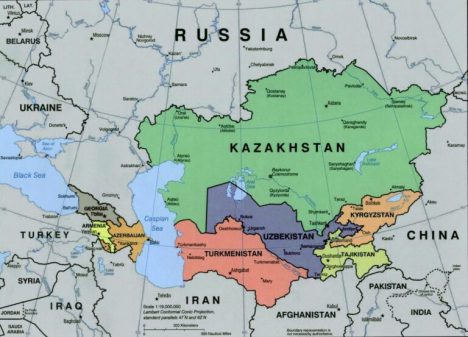
Iran openly voiced its disquiet over Pashinyan’s decision to open Armenia’s embassy in Israel , which in turn inspired then National Security Advisor to travel all the way to Yerevan where he openly took aim at Iran (and Russia.) By the way, the Armenian Diaspora in the US is an influential constituency that Pashinyan cannot ignore, either.
At any rate, demonstrations broke out in front of the Armenian embassy in Tehran soon and senior Iranian officials cautioned Pashinyan. An Iranian commentary wrote, “Tehran’s considerations… must be taken into account… On the other hand, Russia will undoubtedly oppose the idea of using Armenia to promote security and economic influence. It had already severely criticised Israel’s arms deal with Georgia and the Republic of Azerbaijan.”
Clearly, western analysts are obfuscating the US-Israeli nexus at work in Transcaucasia. Both Ankara and Tehran have cause to worry that the US would be using the Israeli proxy in the Transcaucasia region — as has been the case in the Middle East for decades — to weaken and roll back the rising aspirations of the two regional powers.
Turkey-Iran axis in the making
With the destruction of Iraq and Syria and the weakening of Egypt, Turkey (under President Erdogan) and Iran are the only two authentic regional powers left standing in the Muslim Middle East to defy the US regional strategies and to challenge Israel’s military pre-eminence.
Significantly, the surge of the US-Israeli nexus in Transcaucasia comes in the wake of the recent US-sponsored “peace agreements” between Israel and three Gulf Arab states (UAE, Bahrain and Oman.) Indeed, both Turkey and Iran have reacted strongly to the development in the Gulf.
Just this week, the Chief of Staff of the Iranian Armed Forces Major General Mohammad Hossein Baqeri explicitly warned the UAE that Tehran will view that country as an “enemy” and will act accordingly if Abu Dhabi allowed any Israeli security presence on its soil.
Within a month of the Israel-UAE agreement, Turkish President Recep Erdogan held a video conference with Rouhani where he made a big opening statement that “Turkey and Iran dialogue has a decisive role in the solution of many regional problems. I believe that our cooperation will return to its previous levels as the pandemic conditions alleviate.”
Rouhani responded that Turkish-Iranian relations are built on solid foundations throughout history and the border between the two “friendly and brotherly countries” has always been “the borders of peace and friendship.” He stated that especially in the past seven years, both governments had made great efforts based on bilateral, regional and international cooperation.
Significantly, Rouhani added that the two countries are located in a “sensitive region” of the Middle East and they are “the two great powers of the region. There was hostility and vindictiveness towards both countries. It also exists today. There is no way to be successful against such conspiracies other than by reinforcing friendly relations between the two countries.”
Sure enough, Israel has taken note of the nascent Turkey-Iran axis (which also includes Qatar.) A commentary in the Jerusalem Post noted that in the recent years Turkish-Iranian ties have “grown closer due to joint opposition to the US and also Israel. Iran and Turkey both back Hamas, for instance.” It wryly observed that the Middle Eastern geopolitics built around the Shia-Sunni sectarian strife may have outlived its utility!
Again, the Turkish state news agency Anadolu featured a commentary last week titled New strategic design of Middle East, which pointed out that the peace agreements in the Gulf bring out the schism between the UAE, Saudi Arabia and Bahrain one side and Qatar and Kuwait on the other side. (Qatar is an ally of Turkey while Kuwait has friendly ties with Iran.) The commentary noted, “Arab countries seem to have lost both confidence and a sense of unity; when the sense of confidence is seriously damaged, it will be easier to put them at odds, and this regional division, as everywhere, makes Arab countries and their leaders dependent on external forces for their security and existence.”
The Anadolu commentary then warmed up to its main theme, namely, that the so-called “normalisation” agreement between the UAE and Israel “may be a veiled effort not only to expand the imperial space but also to form a bloc against Iran and Turkey in the Middle East.”
“Iran is a non-Arab country and seems an arch-enemy of the US and Israel; Iran collaborates with Russia and China, the US’ arch-rivals, and sometimes with Turkey, which may threaten both the US imperial interest and Israeli security in the region. Hence Iran’s regional power and influence should be jettisoned and driven into a corner.”
“Turkey is a NATO country and seems a close US ally, (but) US policy towards Turkey in the region is ambivalent, unclear, and elusive in the sense that the US still continues to support the (Kurdish) YPG/PKK terrorist group in Syria that has been carrying out terrorist acts against Turkey and killing civilians for decades.”
“Moreover, the US and Israel, though they seem friendly, do not want a strong Turkey because a strong Turkey may influence Arab countries particularly using Islam and then turn them against the exploitation of the Middle East and its oil and resources by neo-imperial powers, yet the US and other imperial powers will never allow Turkey to easily stand on its feet in the region. What they may prefer is that a weak and fragile Turkey, grappling with its internal conflicts, will always serve their purpose.”
In the chronicles of the great game, seldom it is that the protagonists speak up and opt for public diplomacy. The game, historically, is played out quietly in the shade outside the pale of public view. Turkey and Iran have decided otherwise. Can it be a mere coincidence that the conflict in Transcaucasia, a faraway region that borders both Turkey and Iran where Israel is consolidating a security presence against them, erupted in such a backdrop of new alignment that promises to redraw the geopolitics of the Middle East?
Russia Warns Against Use of Mercenaries in Karabakh Conflict, Calls for Their Immediate Withdrawal
By Lilia Dergacheva – Sputnik – 30.09.2020
Moscow is concerned about reports of the transfer of illegal armed militants to the Nagorno-Karabakh conflict zone, the Russian Foreign Ministry said in a statement, asserting that Russia is against the move and calls for their withdrawal from the area without delay.
“We are deeply concerned about these processes, which lead not only to an even greater escalation of tensions in the conflict zone, but also create long-term threats to the security of all countries in the region”, the statement says, adding that the ministry is calling on the leadership of both states “to take effective measures to prevent the use of foreign terrorists and mercenaries in the conflict”.
The ministry brought up media reports about militants from Syria and Libya allegedly being transferred to the contested zone in order to participate in the local hostilities.
The clashes between Baku and Yerevan over the Nagorno-Karabakh region – a self-proclaimed republic in Transcaucasia that proclaimed independence from what was then Soviet Azerbaijan – have severely escalated since Sunday, with the sides blaming the aggression on each other and sharing countless videos of destroyed military vehicles.
The conflict dates back to 1991, which saw the Soviet Union collapse. The major military standoff in the region was halted in 1994, as Yerevan and Baku moved to start peace negotiations mediated by the OSCE Minsk Group.
US: Democrats, Rubio Ask EU to Not Observe Venezuela Elections
teleSUR | September 30, 2020
The U.S.-based peace organization CODEPINK, on Tuesday, condemned a bipartisan letter sent to the EU’s foreign policy chief, Josep Borrell, requesting that the European body neither recognize nor send an electoral observation mission to Venezuela’s legislative elections this December 6.
The organization is currently circulating a petition to tell Senator Cardin to stop undermining Venezuela’s democratic process and continue engaging the Venezuelan government in civic dialogue rather than through threats and sabotage.
Similar to what happened previous to the 2018 Venezuelan presidential elections, the United States has already claimed it will not recognize the upcoming December 6 elections and is trying to get the EU—which has established a dialogue with the democratically elected government of Nicolas Maduro—to follow suit.
Venezuela, suffering from brutal sanctions, repeated and violent coup attempts, and a deeply polarized electorate, has been preparing the conditions for these mid-pandemic elections for months now, with confirmed participation from opposition parties and leaders representing millions of Venezuelan voters.
In response to their confirmed participation—legitimizing the electoral path—the United States last week sanctioned four of these leaders for engaging the democratic process, with only the political factions dependent on U.S. funding and political backing boycotting the elections, their existence contingent upon it.
Noting that the U.S. denounces outside interference in its own elections, CODEPINK urges U.S. voters to hold their country to the same standard and lobby both Democrats and Republicans to respect Venezuela’s sovereignty by recognizing its democratic process.
IRGC Chief Rules Out Possibility of US War
Al-Manar | September 29, 2020
The US is unable to take military action against Iran, Commander of the Islamic Revolution Guards Corps Major General Hossein Salami said, warning that reconciliation would not stop the US from trying to harm the Islamic Republic.
In an address to the Iranian parliament on Tuesday, Major General Salami said there is no possibility of a US war against Iran, since the road to military action on the country is closed.
“We have prepared the capacities for military victory over the enemy, and have sometimes imposed our tactical resolve on them,” the commander said.
Pointing to the enemy’s economic and psychological war against Iranian people, the IRGC commander said the US is neither able nor willing to settle the problems in Iran.
“Even if we make up with the US, it will harm us again,” he stated, describing the notion of compromise with Washington as a “political deception”.
Leader of the Islamic Revolution Imam Sayyed Ali Khamenei has announced repeatedly that Iran will not hold talks with the US, either bilaterally or multilaterally.
“If the US backs off from its call, repents, and returns to the nuclear treaty it has breached, then it will be able to join the gathering of the parties to the deal (JCPOA) who hold meetings and talk with Iran, otherwise no negotiations will take place between the officials of the Islamic Republic and the Americans at any level, not in New York and not anywhere else,” Ayatollah Khamenei said in September 2019.
Major banks, food & cosmetics brands linked to massive abuses in palm oil industry – report

RT | September 27, 2020
Renowned food and cosmetics firms could have used palm oil produced by workers suffering from various abuses – from threats to rape – while global lenders finance the exploiting companies, AP reported, citing its investigation.
According to the report, based on accounts of over 130 current and former workers from two dozen palm oil companies in Malaysia and Indonesia, as well as rights activists’ claims and journalists’ first-hand experiences, millions of people may be exploited at the palm oil plantations. The long list of alleged mistreatment includes threats and being held against one’s will, while the most severe abuses include child labor, slavery and allegations of rape.
While palm oil is widely used in a long list of daily products, it is sometimes hard to trace as it can be found under various names on labels. However, the most recent data from producers, traders and buyers of palm oil, cited in the investigation, indicate that the tainted product made its way to the supply chains of such industry giants as Unilever, L’Oreal, Nestle and Procter & Gamble. It could be used by the producers of Oreo cookies, Lysol cleaners and Hershey’s chocolate treats, the report claims.
“We gave our sweat and blood for palm oil,” said Zin Ko Ko Htwe, who was enslaved at one of the plantations for several years, but eventually managed to escape. He added that when European and US consumers see palm oil on a label, they should understand that “it’s the same as consuming our sweat and blood.”
Some big-name banks and financial institutions across Asia and beyond were mentioned in the report as financiers of the palm oil industry, which mainly relies on supplies from Malaysia and Indonesia. Out of $12 billion worth of investment inflows over in the last five years, around $3.5 billion reportedly came from the US’ BNY Mellon, Charles Schwab, Bank of America, JPMorgan Chase, and Citigroup, along with Europe’s HSBC, Standard Chartered, Deutsche Bank, Credit Suisse and Prudential. Some of the massive inflows could have come not directly, but through third parties like Malaysia-based Maybank.
When asked to comment on the report, some lenders noted that their investments were small or simply declined to answer, while others responded by pointing out their policies vowing to support sustainability practices in the palm oil industry. Meanwhile, some brands mentioned in the report said that they were aware of abuses in the industry, claiming that they are trying to work with ethically sourced palm oil.
Cheaper Than Remdesivir: Russia to Supply Anti-COVID Avifavir to 17 Countries
In late May, Russia registered the world’s first anti-COVID-19 drug, based on favipiravir, an antiviral medication. The medicine has been extensively used in Russian clinics to treat coronavirus disease since June, and has since been obtained by hospitals in Belarus, Kazakhstan, Bolivia and a number of other countries.
The Russian Direct Investment Fund (RDIF), the investor which funded the development of the world’s first vaccine against coronavirus, and Moscow-based ChemRar Group have agreed to supply the anti-COVID drug Avifavir to 17 countries.
Avifavir, the world’s first favipiravir-based drug to be approved for the treatment of COVID-19, will now be delivered to Saudi Arabia, Brazil, Bulgaria, Serbia, Argentina, Chile, Colombia, Ecuador, El Salvador, Honduras, Kuwait, Panama, Paraguay, Slovakia, South Africa, the UAE and Uruguay.
After being first registered in Russia on 29 May 2020, it has already been used for COVID-19 treatment in more than 70 Russian regions and subsequently purchased by Belarus, Bolivia, Kazakhstan, Kyrgyzstan, Turkmenistan and Uzbekistan.The efficacy of favipiravir against COVID-19 has been confirmed by Japan’s Fujifilm Holdings Corp, several months after Avifavir trials in Russia.
Avifavir as the Leading Anti-Covid Drug in the Russian Market
RDIF notes that in comparison to other Russian manufacturers of favipiravir, Avifavir has proven to be more effective when treating more than 400 patients, who fell ill with the coronavirus disease since April. The drug has now been approved by European, Middle Eastern and Asian regulators, becoming Russia’s number one anti-coronavirus medication for export.
According to RDIF, it is also a much cheaper option in comparison to Remdesivir, a favipiravir-based drug produced in the United States.
“When we registered the first anti-coronavirus drug in the world based on favipiravir, there was a lot of scepticism as people were wondering how we could register it when Japan had not registered it yet,” says Kirill Dmitriev, CEO of the Russian Direct Investment Fund. “Now five months after our clinical trials, we see that Japan has confirmed the clinical efficacy of favipiravir.”
The RDIF CEO stresses that apart from clinical trials which were conducted at 35 medical centres in Russia, Avifavir’s efficiency has also been tested by 940 patients in observational post-registration studies, which made it “the largest clinical trial of a favipiravir-based drug against coronavirus in the world”.
“Based on our extensive clinical trials and the research in Japan confirming favipiravir’s efficacy against coronavirus we believe that Avifavir and other favipiravir-based products will be the leading antiviral medicines against COVID-19 in the world,” Dmitriev adds. “In addition to proven efficacy and safety Avifavir is also three to four times cheaper than Remdesivir.”
Trials Confirm Avifavir’s Efficiency
According to the results of post-registration clinical trials, those patients taking Avifavir recovered more quickly from COVID-19 symptoms, as in 30% of cases the virus was eliminated at an early stage, while the level of oxygen saturation in the patient’s blood was also restored to normal two times more quickly than when traditional therapy was applied. No adverse effects from the drug’s use have been reported. Meanwhile, the third phase of clinical trials of the Japanese favipiravir-based drug Avigan also showed a shorter time of recovery among patients with non-severe pneumonia, according to the results published on 23 September.
RDIF, Russia’s sovereign wealth fund, has also been involved in the development of the world’s first anti-coronavirus vaccine, dubbed Sputnik V, which was registered in Russia on 11 August. The country has now received a request for 1 billion doses of the vaccine from at least 20 countries, including the UAE, Saudi Arabia, Indonesia, Philippines, Mexico, Brazil and India.
Iran has no military presence in region, only supplies defense know-how: Armed Forces spokesman
Press TV – September 23, 2020
Iran has only provided Yemen with the know-how in the defense sector, says the spokesman for the Iranian Armed Forces, dismissing claims about the Islamic Republic’s military presence and ‘intervention’ in the region.
“We provided them (Yemenis) with the technical experiences in the defense sector. They have learned how to produce missiles, drones and weapons in Yemen on their own,” Brigadier General Abolfazl Shekarchi said in a televised program on Tuesday.
He emphasized that Iran has not supplied Yemen with missiles. “We have shared our experience and knowledge with the Yemeni people.”
Unlike what the enemy is trying to portray, Yemenis are a very cultured and smart people who have managed to manufacture missiles and the most advanced drones at the shortest possible time while they have also made great headway in the electronic warfare, the Iranian military official said.
Shekarchi once again reiterated that Iran has no plan to have military presence anywhere and added that the country merely has “spiritual and advisory presence” in the region.
“Countries of the resistance front have armies and forces themselves. We provide them with advisory help. In order to share our experience with the people of Syria, Iraq, Lebanon and Yemen, our skilled forces go there and assist them, but this is the people and armies of these countries who stand against the enemies in practice.”
He said Iran would provide whatever help it can for any country standing against the Israeli regime and the United States.
Iran’s Foreign Ministry Spokesman Saeed Khatibzadeh earlier this month slammed as “baseless” a report published by the United Nations’ Office of the High Commissioner for Human Rights (OHCHR) alleging that Tehran has been sending arms to war-torn Yemen.
“Placing Iran’s name next to those supplying weapons to the Saudi coalition against Yemen is completely wrong,” Khatibzadeh said.
Since March 2015, Saudi Arabia has been striking Yemen with the help of its regional allies and largely assisted by Western-supplied weapons which have been indiscriminately used against Yemeni civilians.
Despite numerous bids to stop arms sales, top Western arms suppliers such as the United States, Britain, Canada, France and Germany have pushed through with lethal weapons shipments to the oil-rich kingdom.
According to a CNN investigation released in October 2019, the American-made weapons, supplied to Washington’s allies involved in the war on Yemen, end up in the hands of US-backed militants fighting against each other in the impoverished state.
The report found that American military hardware has been distributed to militant groups in Yemen, including the southern separatists backed by the United Arab Emirates (UAE), al-Qaeda-linked militants and hardline Salafi militias.
Iran says no need for European arms, will buy weapons from Russia, China
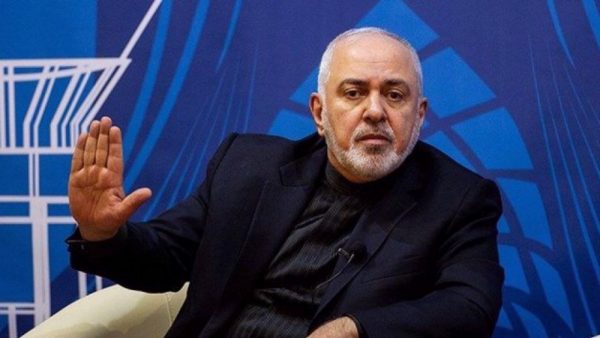
Iranian Foreign Minister Mohammad Javad Zarif
Press TV – September 20, 2020
Iran’s foreign minister says the country will meet its strategic needs by purchasing weapons from Russia and China, and has no need for European weapons once the UN embargo is lifted in October.
Mohammad Javad Zarif made the remarks in a televised interview on Saturday night in reaction to a possible initiative by France, Germany, and the UK to restrict the sale of weapons to Iran following the October expiration of the UN arms embargo against the Islamic Republic.
“We haven’t been a customer of European weapons, and they haven’t sold us weapons after the 1979 revolution. … They even ran a campaign during the 1980s imposed war [between Iran and Iraq] to prevent the delivery of arms to Iran,” Zarif said.
“We won’t force them to sell us weapons now, as we don’t need their weapons,” he noted.
Zarif said one-fourth of the arms purchases end up in the Persian Gulf region, while Iran is not part of this trade.
“However, Iran can meet its strategic needs through the countries it interacts with, like Russia and China; though it is self-sufficient in many cases, and is an exporter [of arms] itself,” Zarif said.
Thanks to God’s grace and the efforts of the country’s Armed Forces, “Iran has become self-sufficient in many cases, but in cases of need, other countries will have the right to trade with Iran once the UN embargo is lifted,” the Iranian top diplomat added.
Following a humiliating failure at the UN Security Council to secure an extension of the arms embargo against Iran, the United States recently threatened to use its “secondary” sanctions to block any arms trades with Tehran after the expiry of the UN ban next month.
US Special Representative for Venezuela and Iran Elliott Abrams claimed on Wednesday that Washington could deny access to the US market to anyone who trades in weapons with Tehran.
Sanctions “will have a very significant impact” on arms manufacturers and traders that seek to do business with Tehran, he told reporters.
The US initiative is expected to prevent European companies from selling weapons and military equipment to Iran.
‘Europe trying to save face after failure against US’
Zarif further pointed to the recent statement by France, Germany, and the UK in which they claimed they have “gone beyond their own commitments” towards Iran by launching the Instrument in Support of Trade Exchanges (INSTEX), a European mechanism which was supposed to facilitate trade with Iran amid the US sanctions.
“They are joking. The three self-proclaimed world powers failed to stand up to the US bullying. They failed, even though they may not have made so much efforts,” he said.
“Europeans had 11 commitments to fulfil, and the INSTEX was not even one of them, but a prerequisite for them. They failed to fulfil them and said Americans didn’t let them. If we accept their own words, they admitted Americans have kept them [from doing their part].”
“This is below Europe’s dignity. The economy of the European Union is bigger than America’s. Then why did you fail to resist the US’ bullying, which is now impacting you?” Zarif said, adding that the European statement is just meant to save their face.
His comments came in reaction to a statement by France, Germany and the UK delivered to the IAEA Board of Governors at the September 2020 meeting.
They said in the statement, “The E3 has worked hard to preserve the [2015 nuclear] agreement. We have gone beyond our own commitments to facilitate legitimate trade with Iran, including by introducing the INSTEX mechanism.”
‘Iran not to interfere in US elections’
In his Saturday interview, Zarif also denied the claim that the Islamic Republic is going to interfere in the upcoming US presidential elections.
“Despite Donald Trump’s claim that Iran is waiting for another person, these remarks only serve electoral purposes,” Zarif said.
“Iran is an independent country and does not meddle in US internal affairs,” he added.
Zarif said the US should first try to avoid coup plotting and violating people’s choices in other countries before accusing Iran of interfering in its elections.
He made the remarks in an apparent allusion to the CIA-orchestrated 1953 coup in Iran, which toppled the democratically-elected government of Prime Minister Mohammad Mosaddegh.
‘Israel would defend itself had it possessed enough power’
Zarif further referred to the recent deals signed by the United Arab Emirates and Bahrain to normalize their relations with the Israeli regime in the hope that Tel Aviv could bring them peace and security.
“Our neighbors unfortunately think the regime can defend them. If Israel had such a power, it would have defended itself against the Palestinian Islamic Jihad and Hamas,” Zarif said.
He expressed regret that a regional country is forced to sign a deal with Israel so that Trump can use it for his presidential campaign.
“This happens when a country depends on the US for its defense,” Zarif said.
Bahrain and the UAE signed US-brokered normalization agreements with Israel during a ceremony in Washington on Tuesday.
The controversial event was slammed by many Arab and Muslim figures as a blatant betrayal of the Palestinian cause.
Belarus Warns to Consider Tikhanovskaya’s Meeting With EU Foreign Ministers Meddling
Sputnik –
MINSK The participation of former Belarusian presidential candidate Svetlana Tikhanovskaya in the upcoming meeting of EU foreign ministers next week will amount to interference in Belarus’ internal affairs, Belarusian Foreign Ministry spokesman Anatoly Glaz said on Saturday.
“It could certainly be funny and curious if it were not so sad. It is quite obvious, in fact, that such actions, if any, are an impudent and open interference in the internal affairs of our country and complete disrespect for its citizens,” Glaz said.
“Why hold any elections at all if it is possible to simply appoint someone all the way convenient from abroad and pretend to build a relationship with them?” the spokesman said.
If the meeting ends up taking place with Tikhanovskaya’s participation, Glaz said there would be no need left to prove that “a course to undermine Belarus’ sovereignty is being implemented.”
“Of course, our principled and understandable position on this matter has already been communicated to the EU envoy in Minsk, as well as to the relevant persons in Brussels,” the spokesman added.
EU foreign ministers are scheduled to convene this upcoming Monday in Brussels. Tikhanovskaya’s press secretary Anna Krasulina has confirmed the Lithuanian-exiled Belarusian ex-presidential candidate’s attendance.
India’s overture to Taliban comes too late
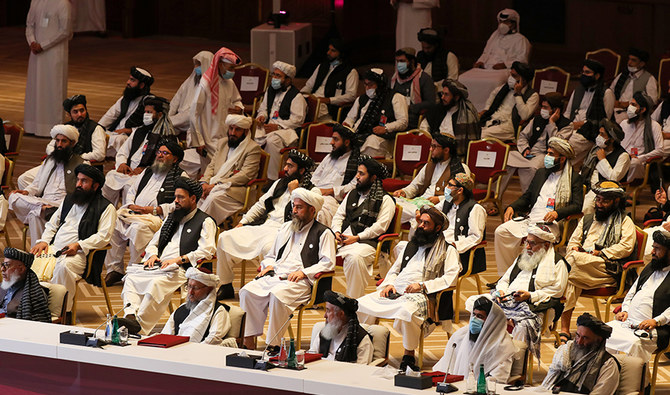
The Taliban delegation at the opening ceremony of intra-Afghan talks, Doha, Qatar, September 12, 2020
By M. K. BHADRAKUMAR | Indian Punchline | September 15, 2020
The US Special Representative for Afghanistan Reconciliation Zalmay Khalilzad was roundly criticised by Indian commentators when he last passed through Delhi in May and advised the officials he met with an earthy sense of realism and foreboding that it’s high time they got down from the high horse to try and begin a conversation with the Taliban.
The advice was well-meaning and pragmatic but the sense of urgency was lacking in Delhi which was rooted in the belief that the peace talks were aeons away. Indeed, the Afghan peace process was struggling to be born at that time but it was already clear that the US was determined to push for the proverbial light at the end of the tunnel of the forever war in time for President Trump to make some grand announcement on the eve of the November election.
Incidentally, a poll conducted by the New York-based Eurasia Group Foundation this week shows that two-thirds of Americans support Trump’s deal with the Taliban to extricate the US from the 19-year war in Afghanistan — and, only 10-15% favour continued military deployment.
Instead of rationally applying their mind, the Indian officials reportedly made a litany of pre-conditions to Khalilzad — the issue of terror emanating from Pakistan impacting peace in Afghanistan, “protection of rights of all sections of the Afghan society, including Afghan Hindus and Sikhs,” and so on.
The Indian readout said, “It was emphasised (to Khalilzad) that putting an end to terrorist safe havens and sanctuaries is necessary for enduring and sustainable peace and stability in Afghanistan.” It added that India also expressed its deep “concern at the upsurge in violence” and extended support for a “call for an immediate ceasefire” and need to “assist the people of Afghanistan in dealing with coronavirus pandemic.”
Simply put, our chaps were hanging tough. Suffice to say, when Khalilzad arrives in Delhi later today for yet another stopover, he is sure to get a pleasant surprise. After much huffing and puffing, the Indian establishment has calmed down and is doing precisely what he told them to do in May.
On top of External Affairs Minister S. Jaishankar addressing the Doha forum virtually on September 12, a senior officer from his ministry was rushed to Qatar to be in the conference hall for the opening ceremony of the intra-Afghan talks. A senior Indian official has since claimed, “There is no ambiguity on the Indian position vis-à-vis engagement with Afghan parties as Indian delegation sat on the same table as the Afghan government as well as the Taliban. The host nation Qatar could have only made this possible after talking to all principal stake-holders in the Afghan dialogue.”
The unconditional U-turn in India’s Taliban policy is so complete that the Indian establishment is overnight celebrating the retreat as a grand historic success of diplomacy. Oh, what an ecstatic moment — to be able to sit around a big table with the Taliban!
The high probability is that Indians will have to settle for the shade for quite a while. From this point onward, the advantage goes to the Taliban — and Pakistan. The Taliban has reestablished control over many Afghan districts and killed tens of thousands of US-backed Afghan forces. With dwindling American support, Afghan forces’ capacity to withstand Taliban attacks will be significantly reduced in the period ahead.
That means the Taliban is set to gain control of even more territories unless it agrees to an immediate ceasefire, which seems unlikely. Just look at today’s developments — a district governor in Logar province reported that the Taliban attacked his residence killing one of his brothers and a personal bodyguard, wounding another brother; an intelligence agency officer and three others were wounded in Jalalabad city when the vehicle of the spy agency was ambushed in broad daylight with an improvised explosive device.
The main problem for India is that it stands in abject isolation today apropos the Afghan situation. Its ability to influence the course of the intra-Afghan negotiations is nil. None of the demands that Indian officials made to Khalilzad in May have been fulfilled. The Taliban maintains a strategic ambivalence on where it stands on a host of contentious issues such as the form of future government, women’s rights, new constitution and so on.
Alas, the Modi government remained the pillion rider on the Harley-Davidson bike all the way through the past decade and a half, but the bike is about to speed away to the far horizon heading for North America. Paradoxically, India’s best option today might be to act as a “spoiler”, but then, with the protracted standoff with China in Ladakh and with the LOC and J&K in a state of tension, a military deployment to Afghanistan is simply beyond India’s reach.
This is where the recent reshuffle of the Taliban delegation at the Doha talks assumes significance. Much speculation surrounds the appointment of the hardline cleric Mawlawi Abdul Hakim Haqqani as the Taliban’s chief negotiator for peace talks.
So far, all we know is that the ultraconservative Mawlawi Haqqani who replaces the previous “moderate” leadership of Sher Mohammad Abbas Stanekzai and Mullah Baradar is a close associate of the Taliban supremo Haibatullah Akhunzada, and his appointment could be an attempt by the core leadership to reassert its direct control over the upcoming negotiations in Qatar.
But the big question is about Mawlawi Haqqani’s standing with Pakistan. The cleric cannot be a stranger to the Pakistani security establishment, since he had spent years lying low in Quetta, where the Afghan Taliban leadership has been based since the US invasion in 2001, and until recently he ran a madrasah from where he led the Taliban’s judiciary and headed a powerful council of clerics that issued religious edicts to regulate the ideology of the Islamic Emirate.
The point is Mawlawi Haqqani, who is in his early 60s, has been propelled into the spotlight and appointed the Taliban’s chief negotiator for peace talks just when the last hurdle of exchange of prisoners was overcome and the stage was being set in Doha for the curtain to rise.
Who stands to gain? China is actively promoting the extension of the China-Pakistan Economic Corridor to Afghanistan. And Pakistan just tightened its grip on the peace talks. The crunch time has come. Pakistan holds a veto card and is determined to use it to marginalise India from the Afghan peace process. Given the Modi government’s hostility toward Pakistan and China, nothing else needs be expected.
The assassination attempt on First Vice-President Amrullah Saleh a week ago should be taken as a stark warning. India has lost the proxy war and this is how victorious Afghan groups have always entered the home stretch. At the very least, our pathway to the Taliban preferably should have run parallel with an overture to Pakistan. Khalilzad cannot do much to help us now.
‘Provocative & unacceptable’: Minsk says Lithuania’s recognition of Tikhanovskaya as Belarusian president breaks international law
By Jonny Tickle | RT | September 15, 2020
Lithuania’s decision to recognize Svetlana Tikhanovskaya as the leader of Belarus “violates the norms of international law,” according to a statement by the Council of the Republic, the upper house of parliament in Minsk.
Last week, the Lithuanian Seimas (parliament) adopted a resolution titled “On the Illegitimate Union Imposed by Russia on Belarus,” naming former presidential candidate Tikhanovskaya as the “elected leader” of the Belarusian people, and incumbent President Alexander Lukashenko as “illegitimate.”
“The decision of Lithuanian MPs to appoint a ‘leader of the people of Belarus’ is beyond the scope of common sense,” the Presidium of the Council of the Republic’s statement read. “Such actions are provocative and unacceptable, and violate the norms of international law.”
The statement also called Lithuania’s actions “blatant interference,” accusing the Seimas of “showing open disrespect for the sovereign right of the Belarusian people to choose their own leadership.”
Tikhanovskaya fled across Belarus’ northern border to Lithuania on August 11, two days after official election results suggested that she had come in a distant second place. Following the vote, thousands of Belarusians took to the streets throughout the country to protest over what they believe to have been a wholly rigged election. During days of demonstrations, police and internal troops used tear gas, stun grenades, and rubber bullets to disperse protesters, while strikes began at large factories.
Following her arrival in Lithuania, Tikhanovskaya formed a body called the Coordination Council, with the goal of organizing a peaceful transition of power away from President Lukashenko, and of holding new elections. The group, which includes Nobel Prize winner Svetlana Alexievich as part of its leadership, has been accused by the Belarusian authorities of “aiming to seize state power” and “harming national security.”
Featured Video

ARE PATIENTS BEING PROPERLY INFORMED ABOUT OZEMPIC?
or go to
Aletho News Archives – Video-Images
New Book
Breast Cancer: Before You Consent
A new Unbekoming paperback
Lies are Unbekoming | September 18, 2026
Peter Gøtzsche reviewed every randomised mammography screening trial ever conducted for the Cochrane Collaboration. Cochrane’s headline is that, assuming a 15% mortality reduction, one woman in 2000 avoids dying of breast cancer over ten years. Ten are overdiagnosed and treated. Two hundred experience false alarms.
But that headline assumes the reduction. When Gøtzsche looked only at the trials with adequate randomisation — the higher-quality ones — the reduction disappeared. No effect on breast cancer mortality. No effect on all-cause mortality.
This is the Cochrane finding, published in the establishment’s own database of systematic reviews.
No woman being asked to consent to a mammogram this week knows it.
That is why the new Unbekoming paperback exists. … continue
Blog Roll
 Aletho News
- The Truth About the Trump Shootings with Ken Silva
- ARE PATIENTS BEING PROPERLY INFORMED ABOUT OZEMPIC?
- US lawmaker blocks $2.8 billion weapons sale to Israel: Report
- Yemeni army claims responsibility for strikes on sensitive sites in Saudi capital, Aramco facilities in Yanbu
- Iran Judiciary issues indictments against 159 US, Israeli officials for assassination of Leader, commanders
- Turkiye revokes Iranian bank license under US sanctions campaign
- US-Denmark Agreement on Greenland Is ‘PR Stunt’ Ahead of Midterms
- Araghchi: Military intervention cannot create security; coercion cannot bring peace
- Fraud Squared
- Breast Cancer: Before You Consent
- If Americans Knew
- Inside Gaza’s death trap of collapsing, bombed-out buildings
- The everyday items Israel bans from Gaza every day
- Inside the siege, the ruined buildings of Gaza – Daily Update
- Debunking The Claim That Macklemore Has A “History Of Antisemitism”
- CPJ demands release of arrested Palestinian-US journalist near Bethlehem
- Robert Kraft: The Billionaire Friend of Netanyahu Pulling The Strings Behind the Macklemore/Ed Sheeran Blow Up
- Columbia Administered Fund Gives Big Money to Pro-Israel Groups
- Deportation Case of Palestinian Activist Salah Sarsour Tests First Amendment
- ‘We Will Not Forget’: Palestinians Mark 44 Years since Sabra and Shatila
- Why do we let Zionists decide what we can and can’t say?
- No Tricks Zone
- New Study: ‘Global Drought Shows No Detectable Recent Acceleration Under Climate Warming’
- Economic Masterminds: German Socialists Suggest Taxing Productivity Gains Stemming From Using AI
- The South China Sea Has Not Been Cooperating With The Climate Change Narrative
- Energy Crisis: Germany Enters Heating Season With Historically Low Gas Reserve Fill Levels
- New Study: The Antarctic Ice Sheet Gained Mass From 2020-2024 Due To Staggering Snow And Ice Accumulation
- Study: Ocean Heating Rates From Thousands Of Years Ago ‘Dwarf’ Modern Ocean Heating Rates
- Climate Extremists Target, Attack Large-Scale Power Grid Infrastructure In Germany!
- New Study: Antarctic Ice Melt Has Contributed Less Than 1 Centimeter To Sea Level Rise In The Last 30 Years
- Fear Of Debate: Alarmist German Climate Scientist Calls On Mainstream Media To Discredit Skeptic Voices
- End-Of-August Arctic Sea Ice Extent Hasn’t Fallen In 20 Years, Official Data Show!
 Aletho News