Report Examines Widespread Attacks On Palestinian Human Rights Activists On College Campuses
By Kevin Gostzola | ShadowProof | September 30, 2015
A nonprofit legal advocacy organization has documented and responded to nearly 300 incidents of censorship, punishment, and other actions intended to “burden” advocacy for Palestinian human rights. The incidents point to a pervasive problem on American campuses, which is chilling the rights of individuals to engage in free speech.
The incidents are largely a result of pressure from defenders of Israel to the increased success of the boycott, divestment, and sanctions (BDS) movement against Israeli military occupation.
Palestine Legal, which was founded in 2012 to support the rights of Americans to speak out for Palestinian freedom, and the Center for Constitutional Rights (CCR) put together a “first of its kind” report focusing on the suppression of speech, expression, and activism over the past two years.
According to the report, the organization “responded to 140 incidents and 33 requests for assistance in anticipation of potential suppression” in the first six months of 2015. In 2014, the organization “responded to 152 incidents” and “68 additional requests for legal assistance in anticipation of such actions.”
“The overwhelming majority of these incidents—89 percent in 2014 and 80 percent in the first half of 2015—targeted students and scholars, a reaction to the increasingly central role universities play in the movement for Palestinian rights,” noted Palestine Legal.
Of incidents from the first six months of 2015, Palestine Legal found more than half involved “false accusations of anti-Semitism” based “solely on speech critical of Israeli policy.” About half of the incidents responded to in 2014 involved accusations of anti-Semitism based solely on criticism of Israeli policy.
Nearly a third of incidents in the first six months of 2015 stemmed from “false accusations of support for terrorism.” This was an increase, as only 13 percent of incidents in 2014 suggested Palestinian advocates supported terrorism.

“The claim that Palestine activists support terrorism frequently relies on anti-Muslim and xenophobic stereotypes about the inherent violence and hateful worldviews of Arab, Muslim, and international students,” the report states.
Most importantly, the accusations are “baseless,” because “no links between terrorism and student activism for Palestinian rights have been substantiated.”
Dima Khalidi, the director for Palestine Legal, noted the organization had interviewed hundreds of students, professors, administrators, and others. Eighty-five percent of the incidents took place on 65 college and university campuses and in 24 different states.
“We’re not just talking about a handful of isolated incidents,” Khalidi declared. “This is really a widespread problem that affects hundreds of people across the country.”
A “primary tool” for pro-Israel groups is vilification
Israel advocacy groups, university administrators, and government officials accuse Palestinian human rights activists of anti-Semitism or “supporting Hamas” to frighten them into abandoning their organizing. Several students informed Palestine Legal false accusations “would hinder their ability to find a job or travel.”
As the report acknowledges, “The speech activities of Palestinian-American, Arab-American, and Muslim students routinely subject them to heightened harassment, intimidation, and discriminatory treatment in the midst of a post-9/11 climate in which their communities already face infringements of their civil liberties.”
Vilification is a “primary tool” for pro-Israel groups. One student falsely accused of associating with terrorists suggested, “The underlying message [is] that if you speak out too loudly or work too hard … anti-Palestinian activist[s] will smear you just like [they] tried to smear me.”
These accusations of anti-Semitism and support for terrorism coerce campus administrators into restricting and punishing students or scholars for their speech.
Fodder for character assassination against Palestinian human rights activists sometimes comes from surveillance of social media. Organizations “identify out-of-context quotations, Facebook posts, and other material.”
In January 2015, as the report highlights, “The Reut Institute reportedly held a ‘hackathon,’ in which Israeli officials and a number of other Israeli advocacy groups participated, aimed at exploring ways to gather intelligence on and target individuals involved in Palestine solidarity work. In its June 2015 strategy document, the Reut Institute highlighted the need to ‘out-name-shame the delegitimizers’ as a strategy to fight BDS, recommending the use of ‘all available firepower—financial, social, legal, etc.’”
A shady outfit called Canary Mission put out a “list of organizations and activists it accused of supporting terrorism, including campus chapters of the Muslim Student Association, which it refers to as a ‘virtual terror factory.”
The list was published for the express McCarthyist purpose of “exposing” individuals and student groups to make it harder for them to obtain positions in school and earn jobs after graduation.
Students have reported being spied upon by Israeli consulate officials. For example, in 2014, students reported members of the Israeli consul general’s entourage “photographed pro-divestment student campaigners as they spoke with other students and leafleted.”
The surveillance was part of acts to disrupt a divestment vote on campus. Students with family and friends in occupied Palestine expressed concern “such surveillance could have serious consequences” as it might allow Israel to block them from entering Israel and the West Bank to visit family.
Additionally, the comprehensive report examines various other tactics used against activists, including: official denunciation, bureaucratic barriers, cancellations and alterations of academic and cultural events, administrative sanctions, threats to academic freedom, lawsuits and legal threats, legislation, and criminal investigations and prosecutions.
“All of these tactics—individually and in the aggregate—threaten the First Amendment rights of people who seek to raise awareness about Palestinian human rights and challenge the dominant perspective in this country, which discounts Israel’s discriminatory and violent government policies,” the report asserts.
Multiple examples of tactics used against activists
The report details several examples of instances when these tactics were wielded to disrupt and stifle actions.
In February 2015, DePaul University’s Students for Justice in Palestine chapter sought to hold a fundraising event for Rasmea Odeh, a Palestinian American organizer who was tortured by Israeli forces into confessing that she played a role in a 1967 bombing. The United States government prosecuted her for lying about her past history in immigration documents.
DePaul administrators imposed security fees on the SJP because of a “planned counter-protest,” which led administrators to determine they might need the protection. Four security guards were detailed, and SJP was billed $480. After being forced to subsidize risk from threatened opposition, SJP could not afford to pay the bill and lost the privilege to reserve space for events on campus.
On October 8, 2014, John Jay College instructed the SJP chapter not to “use sheet covered in red paint (representing blood),” as they did during their “Die In/Vigil from Ferguson to Gaza” action. The instruction was a response to pro-Israeli students, who claimed they “felt uncomfortable with the message.”
University of Illinois Urbana-Champaign violated Professor Steven Salaita’s academic freedom when they terminated him in 2014 over tweets he sent reacting to Israel’s assault on Gaza.
At Montclair State University, the student government initially sanctioned the university’s SJP for handing out “offensive” pamphlets. The literature led SGA to “fine the group five percent of its fall semester budget” and an order to cease distribution of all “political propaganda.” The brochure focused on Israeli settlements and the loss of Palestinian land from 1946 to 2000.
In April 2013, Northeastern University placed SJP members on “probation” after they walked out of a campus event featuring a soldier from the Israeli Defense Forces (IDF). Offficials warned the students before the event not to hold signs or engage in “vocal disruption.”
“Students decided to tape the names of Palestinian children killed by the IDF to their shirts and planned a walkout,” the report notes. “During a pause in the presentation, one SJP student stood up and stated, ‘The IDF are war criminals and they are not welcome on our campus,” then proceeded to walk out with other students, who spontaneously chanted ‘Free Palestine’ as they left the room.”
Students were investigated by university administrators, and the university canceled a lecture the SJP had planned with Dr. Abu Sitta. The students were later charged with violations of school codes, and after a hearing, SJP was found to have violated “demonstration policy.” They were on probation until December 2013 and forced to write a “civility statement.”
In November 2010, Rutgers University administrators refused to allow students, who raised money for the Gaza Flotilla, to disburse those funds after Hillel alleged the fundraising constituted “material support for terrorism.”
Rather stunningly, University of California President Mark Yudof issued a rare public statement in February 2012 after activists disrupted an event, which compared Palestinian rights activism to incidents of racism. He likened the “hecklers” to the “hanging of nooses” on black students’ dorm doors or putting “swastikas on Jewish students’ property. He pledged to get the Anti-Defamation League (ADL) and the Simon Wiesenthal Center’s Museum of Tolerance involved to “improve campus climate for all students.”
In the spring semester of 2015, the University of Toledo student government caved to Israeli advocacy groups and blocked the public from attending a divestment hearing, a violation of the Open Meetings Act in Ohio. Attendance by SJP members was restricted, as they were forced to sit in a “separate room” away from Hillel students. Student senators were blocked from voting on the resolution. But outcry eventually led to the resolution coming up for a vote and it passed “overwhelmingly.”
One of the more stunning examples involves eleven University of California-Irvine students, who were criminally prosecuted in 2010 for walking out of a speech by then-Israeli ambassador to the U.S., Michael Oren. They were charged with misdemeanors for disrupting a public meeting, and the jury found ten of the students guilty.
The numbers do not necessarily tell the full story of how organizing is being suppressed. These are only incidents, which were reported to Palestine Legal so the organization could provide assistance.
“They’re really only the tip of the iceberg with a lot more incidents that go unreported,” Khalidi added.
However, the report clearly demonstrates how heavy-handed tactics are being used to intimidate Palestinian human rights activists and chill their criticism of Israeli policies against Palestinians.
France’s Government Aims to Give Itself—and the NSA—Carte Blanche to Spy on the World
By Danny O’Brien | EFF | September 30, 2015
The United States makes an improper division between surveillance conducted on residents of the United States and the surveillance that is conducted with almost no restraint upon the rest of the world. This double standard has proved poisonous to the rights of Americans and non-Americans alike. In theory, Americans enjoy better protections. In practice there are no magical sets of servers and Internet connections that carry only American conversations. To violate the privacy of everyone else in the world, the U.S. inevitably scoops up its own citizens’ data. Establishing nationality as a basis for discrimination also encourages intelligence agencies to make the obvious end-run: spying on each other’s citizens, and then sharing that data. Treating two sets of innocent targets differently is already a violation of international human rights law. In reality, it reduces everyone to the same, lower standard.
Now France’s government is about the make the same error as the U.S. practice with its new “Surveillance des communications électroniques internationales” bill, currently being rushed through the French Parliament. As an open letter led by France’s La Quadrature du Net and signed today by over thirty civil society groups including EFF, states, France’s legislators’ must reject this bill to protect the rights of individuals everywhere, including those in France.
By legalizing France’s own plans to spy on the rest of the world, France would take a step to establishing the NSA model as an acceptable global norm. Passing the law would undermine France’s already weak surveillance protections for its own citizens, including lawyers, journalists and judges. And it would make challenging the NSA’s practices far more difficult for France and other states.
The new bill comes as a result of France’s Constitutional Council review of the country’s last mass surveillance bill, which passed with little parliamentary opposition in July. The Council passed most of that bill on the basis of its minor concessions to oversight and proportionality, but rejected the sections on international surveillance, which contained no limits to what France might do.
France already spies on the world. In July, the French newsmagazine L’Obs revealed a secret decree dating from at least 2008, which funded a French intelligence service project to intercept and analyze international data traffic passing through through submarine cable intercepts. The decree authorized the interception of cable traffic from 40 countries including Algeria, Morocco, Tunisia, Iraq, Syria, Sub-Saharan Africa, Russia, China, India and the United States. The report states that France’s intelligence agency, the General Directorate for External Security (DGCE), spent $775 million on the project.
Given that the Constitutional Council implied that such practices are almost certainly unlawful as is, the French government has now scrambled to create a framework that could excuse it.
Under the new proposed law, France’s intelligence agencies still have an incredibly broad remit. The law concentrates the power to grant wide-ranging surveillance permission in the office of the Prime Minister, who can sign off on mass surveillance of communications sent or received from overseas. Such surveillance can be conducted when in the “essential interests of foreign policy” or “[the] essential economic and scientific interests of France”, giving the executive the widest possible scope to conduct surveillance.
The original surveillance law included limits on data retention when spying on French nationals (30 days for the content of communications, four years for metadata, six years for encrypted data). The new international limits are much longer—one year, six years, and eight years respectively. The law’s authors do not justify this longer period, nor do they explain how the intelligence agencies will be able to separate data from each class of target without collecting, analyzing and filtering them all.
The collapsing divide between the lawful, warranted surveillance of ordinary citizens, and the wide-ranging capabilities of the intelligence services to collect signals intelligence on foreign powers and agents, has ended up corroding both domestic and global privacy rights. The U.S. has taken advantage of the lesser protections for non-U.S. persons to introduce the dragnet surveillance of everyone who uses the Internet outside the U.S. Because unprotected foreigners’ data is mixed up with somewhat more protected communications of Americans, the U.S. government believes that it can “incidentally” scoop up its own citizens’ data, and sort it out later under nobody’s oversight but its own.
If the French Parliament passes this bill, it will mean that France has decided to embody and excuse the same practices as the NSA in its own law. It is a short-sighted attempt to cover France’s existing secret practices, but the consequences are far-reaching. The limited protections that were included in the original surveillance bill—including assurances that French journalists, judges and lawyers would be protected from dragnet surveillance—will be undermined by their inevitable inclusion in the vacuuming up of all international traffic.
Any attempt by the EU countries to rein back the NSA’s surveillance plan by calls for the United States to respect international human rights standards, and data protection principles, will provoke the response that the U.S. is simply exercising the powers that an EU member has already granted itself.
By creating and excusing a double standard France’s government dooms everyone to a single, lower standard. It cannot simply shrug off its responsibilities to human rights, its partners in Europe, and the privacy rights of foreigners. If it does so, it will end up undermining the French people’s privacy and security as much as it undermines that of the rest of the world.
Killed by Cops Over Pot: Family Lawsuit Reveals Shocking Details
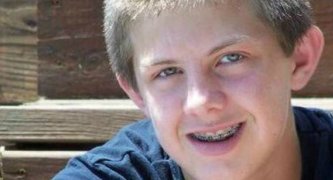
© Zachary Hammond/Family Photo
Sputnik – 29.09.2015
Highly disturbing new information is coming to light thanks to a lawsuit filed by the family of 19-year-old Zachary Hammond, the South Carolina teen fatally shot in the back by police during a small marijuana bust.
The suit alleges that the officer, Lieutenant Mark Tiller, who shot and killed Hammond, threatened to “blow his head off” before he fired, and another officer high-fived the teen’s lifeless body after he was killed.
Tiller has not yet been charged for the teen’s death, nor has the department released dashcam videos or any other documents pertaining to the case. The family has stated that part of their reason for filing the lawsuit is to force the Seneca Police Department to release the footage.
Solicitor Chrissy Adams and state investigators maintain they will not release the footage while the case is still open.
Hammond’s family is also in the midst of another lawsuit to have Adams removed from the case, as she works with the officers involved. She refuses to decide whether Tiller will face charges until the state supreme court makes their decision in that suit, and “federal and state investigators answer some more questions,” the Associated Press reported.
The family has spoken to the woman who was in the vehicle with Hammond, reviewed private surveillance footage, and has had a private autopsy performed on the teen’s body.
The shooting took place after Hammond took Tori Morton on a first date, on July 26. The lawsuit states that they had visited a McDonald’s to get ice cream, and then went to a Hardee’s so that Hammond could buy a hamburger.
When the pair arrived at Hardee’s, however, undercover police were waiting. They allege that they had arranged a drug deal with Morton.
As the police pulled up to Hammond’s car, he reportedly tried to drive away.
Tiller claims he thought Hammond was going to try to run him over, but the private autopsy confirmed that the teen was shot in his back and in his side, meaning that any perceived threat would have already had passed when he was killed.
The lawsuit also claims that there was a pause between the first and second shots, and that after being shot the first time, Hammond looked over at his date.
“‘I’ll blow your (expletive) head off,’ were the last words heard by Zachary Hammond,” The lawsuit states.
The police claim that small amounts of drugs were found on both of the teens. Morton was charged with misdemeanor drug possession.
Hammond was pronounced dead upon the arrival of paramedics. His body was then left on the ground for 90 minutes, where it was reportedly attacked by ants.
Once other investigators arrived, an officer was reportedly seen high fiving his corpse.
The Seneca Police Department has now hired a public relations firm to represent them.
Copyright Infringement Claim Filed By Sandy Hook Charity Kingpin
Memory Hole Blog | September 22, 2015
On September 17 MHB reported on a copyright infringement claim filed with Facebook by an anonymous party against the “Sandy Hook Hoax” Fb page alleging ownership of the Lenie Urbina/Avielle Richman photographs. The copyright claimant has been revealed in the emails below as one Thomas Bittman, co-founder of the lucrative “Sandy Hook Promise” charity. The 501(c)3 has been a key proponent of gun control and mental health protocols that it argues will curb mass shootings, while pulling on the heartstrings of America to the tune of tens of millions of dollars in the wake of the December 14, 2012 Sandy Hook massacre event.
What’s significant here is whether Bittman actually holds the copyright to the images in question, and if he’s not just prompting Facebook to abuse the entire DMCA process intended to address legitimate copyright claims. If so, Bittman has likely committed perjury and is subject to being sued for filing a false copyright infringement claim. “If you send a cease-and-desist letter to an infringer,” under DMCA,
there is a risk that the infringer may file a lawsuit in the infringer’s jurisdiction naming you as a defendant and seeking a declaratory judgment that your copyright is invalid. One recent court decision found that the sending of a single cease-and-desist letter into the state was enough to subject the defendant to personal jurisdiction in that state.
If you send a DMCA takedown notice that is both false and meant in bad faith (such as to harass, or doesn’t state a real claim), you have committed perjury. Though unlikely, if the party you sent the takedown notice to decided to pursue this in court, you could face all of the consequences that your state imposes on people who lie in court.
Most MHB readers will likely agree that such legal action against parties that have sought to terrorize the US citizenry and enrich themselves on an entirely dubious incident is richly deserved. We do hope Mr. Anthony Mead pursues this matter to the fullest extent provided by law.
Students and Regents Demand University of California Adopt Unconstitutional Policy
By Sarah McLaughlin | Foundation for Individual Rights in Education | September 18, 2015
Yesterday, the University of California Board of Regents held an open meeting allowing students, faculty, members of the UC community, and other interested parties to share their thoughts on UC’s proposed Statement of Principles Against Intolerance.
The statement came about after the UC Regents decided not to adopt the U.S. State Department’s definition of anti-Semitism. Free speech advocates pointed out that a public university’s adoption of this definition as policy would raise serious First Amendment concerns and chill protected speech, including criticism of Israel’s government.
Earlier this week, FIRE’s Will Creeley explained that while the Statement of Principles Against Intolerance doesn’t include the State Department’s definition of anti-Semitism, it still impermissibly chills speech by telling students that certain viewpoints don’t belong at their university, encouraging them to report such views, and promising a “prompt” and “effective” institutional response. Will told the Associated Press yesterday that the policy, if implemented, would create “a kind of race to the bottom, sooner or later, by public universities punishing students or faculty for a particular viewpoint.”
Given the First Amendment concerns over both proposed policies, that this open meeting was held on Constitution Day was fitting. Many speakers at yesterday’s meeting agreed that the new proposed policy was a bad idea—but, unfortunately, for a different reason: they want UC to draft a policy that is even more hostile to speech.
The suggestions put forth and the demands made during the meeting were alarming. Despite having only one minute to share their thoughts, plenty of speakers managed to find time to demand that UC violate its students’ speech rights and ignore its obligations under the First Amendment. (Note: The following may include minor transcription errors.)
Comments from the UC Campus Community
Gary Fouse, an adjunct at UC Irvine, claimed that UC’s current proposed statement against intolerance is “useless” without the incorporation of the State Department’s definition of anti-Semitism:
The Israeli-Palestinian debate has led to an atmosphere where many Jewish students who support Israel are often spending their college years in a climate of intimidation, not just from Pro-Palestinian students but in many cases from professors in the classroom. The problem is not neo-Nazis or skinheads. Rather, it is the pro-Palestinian lobby such as the Students for Justice in Palestine, BDS promoters and other faculty allies. Each year these groups invite speakers to campus, some of whom cross the line from legitimate criticism of Israel to attacking Jews as people.
But it’s not up to public university officials to decide what criticism of a foreign government is legitimate or forbidden, and, in turn, to demand everyone at the university abide by their perceptions of “legitimate criticism.” The idea of a public institution doing so should trouble anyone who believes in the fundamental importance of the right to dissent. In fact, President Obama made similar arguments this week at a town hall meeting when he said “I don’t agree that you, when you become students at colleges, have to be coddled and protected from different points of view,” and that silencing arguments we oppose is “not the way we learn.”
Another commenter, a UC Berkeley alum, pointed out the absurdity of Fouse’s argument:
When I was a student at Berkeley, it was criticizing the US government that wasn’t permitted. In fact, we had to have a free speech movement in 1964 in order to have any political speech on campus. So now apparently criticizing the Israeli government is going to be banned.
As this commenter suggested, it’s noteworthy that students in the UC system have historically fought especially hard for their First Amendment rights—rights that should not be so easily set aside.
A group of UC students made a joint statement together saying that the State Department definition of anti-Semitism is “the only existing definition that is capable of addressing the nuanced hatred that we experienced on our campuses today.” If UC follows the advice of these speakers and a majority of those present at this meeting, it will be adopting a deeply troubling policy.
Another worrisome trend in this meeting was the use of criminal or violent acts as examples of why this policy is needed. Several commenters brought up examples of vandalism, including swastikas drawn on fraternity houses and violence against Jewish students, to justify the adoption of the State Department’s definition. But these actions are criminal—they’re already illegal. Trying to target such acts through this new policy is not only superfluous, but would implicate constitutionally protected political speech in the process.
The Regents Respond
Comments from the Regents themselves were hardly any better.
While Regent John Perez’s acknowledged that the State Department’s definition could potentially limit academic freedom, that was one of the few displays of sound judgment.
The most worrying statements came from Regent Richard C. Blum, whose wife is United States Senator Dianne Feinstein. Blum said earlier in the meeting that “we’ve been too tolerant, too patient about all this for too long,” and continued:
I should add that over the weekend my wife, your senior Senator, and I talked about this issue at length. She wants to stay out of the conversation publicly but if we do not do the right thing she will engage publicly and is prepared to be critical of this university if we don’t have the kind of not only statement but penalties for those who commit what you can call them crimes, call them whatever you want. Students that do the things that have been cited here today probably ought to have a dismissal or a suspension from school. I don’t know how many of you feel strongly that way but my wife does and so do I.
Yes, a UC Regent flatly threatened the university with political consequences if it failed to craft a “tolerance” policy that would punish—and even expel—its violators.
The consequences of this suggestion are grave: If UC adopts the State Department definition of anti-Semitism (or any policy banning criticism or intolerance), and accedes to Blum’s demands, students could potentially face expulsion for any language a person subjectively believes is “intolerant.”
Regent Hadi Makarechian later echoed Blum’s demands, stating:
I just wanted to say that I agree with Regent Blum, that principles are great, rejection of actions are great, but we need to address the punishment. If we don’t have punishment we’re just putting a lot of paper together. We’re just stating a lot of stuff on pieces of paper.
The board concluded the meeting by saying there was more work to be done, and announcing the formation of a working group, led by Regent Eddie Island. Island said he would compose a group of university stakeholders who would work together to craft a policy that addressed concerns about both intolerance and freedom of speech.
We at FIRE believe robust protections for freedom of speech accomplish both goals by providing a platform to debate the merits (or lack thereof) of intolerance in the marketplace of ideas.
Hopefully this working group recognizes that more speech and the hard work of convincing someone they’re wrong are the only real, effective remedies against intolerance. UC students and faculty who value free speech and academic freedom should watch these developments very closely.
Time for President Obama to Free Simon Trinidad
By Tom Burke | teleSUR | September 24, 2015
September 24 marks the day one year ago when the National Victims Table was set up as an important part of the Colombian peace process. Exactly one year later, the Revolutionary Armed Forces of Colombia – People’s Army (FARC-EP) and the Colombian government of Manuel Santos are announcing an agreement on victims and justice, a bilateral ceasefire, and a signing date for the peace agreement.
It is a big step forward for the Colombian peace process, with the issues of prisoners, setting aside arms, and then implementation to be agreed upon next. Although the number of Colombian political prisoners is around 7000, there is one prisoner who stands out because he is held under cruel and unusual circumstances. That is FARC negotiator Simon Trinidad (aka Ricardo Palmera).
Held for 11 years as a political prisoner of the U.S. Empire, the 65-year-old Trinidad is in solitary confinement at the Florence Supermax in Colorado, the “Guantanamo of the Rockies.” Trinidad is a good man who embodies the struggle of the Colombian people for freedom, and the FARC say that without him, they will not sign an agreement.
It is President Barack Obama who can set Simon Trinidad free, to take his rightful place at the Colombian peace negotiations. President Obama can send a loud and clear message that the U.S. backs the peace process. For President Obama, the time to act is now, and it is likely to add momentum to the peace process.
Earlier this week, I marched with thirty-five activists from nine U.S. cities on a rural highway in the Rocky Mountains to demand, “Free Simon Trinidad! Peace for Colombia!” We marched to the modern underground dungeon where prisoners can be held with no human contact for years on end. Across from the guardhouse of the Colorado supermax, we held signs saying, “President Obama free Simon Trinidad!” and “Send Simon Trinidad to peace talks!”
As we marched back up Highway 67 to the small town of Florence, I kept thinking how strange it is, surreal in fact, that our efforts to end the U.S. war and intervention brought us to this place. The scenery is beautiful and breathtaking, but when you think of the men being held underground with no access to sunlight or fresh air, and no other human to talk to, the prison seems doubly vicious, consciously dehumanizing. Only the strongest of people, someone like Simon Trinidad, can persevere under these conditions.
With September 24 being the starting date of the National Victims Table, that date has great significance for me and my friends who organize solidarity with Colombia and Simon Trinidad in particular. For I am one of the Antiwar 23, raided by the FBI in Chicago, Minneapolis, and Grand Rapids, five years ago today. Over 100 FBI agents raided seven homes, scaring our children, and taking away our computers, phones and boxes of whatever else they wanted. When I left our house to write a press release, I realized I was being followed. I drove to my wife’s job where the FBI subpoenaed us to the grand jury in Chicago. It was shocking. Like all of the Antiwar 23, we refused to appear. No witch hunts for us.
I don’t like to think of myself as a victim, but the U.S. government did target us because of our effective organizing. The U.S. government claimed the Antiwar 23 were sending money and providing material support to the FARC and PFLP. The FBI said we faced 15-year prison sentences. However, when the U.S. government spy could not find any evidence, she and her FBI handlers attempted to create a crime. It did not work. We are still organizing solidarity, such as the campaign for a Palestinian American women’s leader “Justice for Rasmea Odeh”.
Over time we learned that the U.S. government political repression began when we protested outside the four trials of Colombian revolutionary Simon Trinidad. Our small group of solidarity activists did our part to expose the injustice of the four trials of Simon Trinidad and the U.S. government was angry with us. We protested and reported to the media on the unfair procedures and rulings. We were there in the courtroom when the cheating Judge Hogan was forced to step down after the first trial. We helped turn what should have been the triumph of the Empire, into a shameful display of corruption.
Today, I find September 24 to be a day for reflection and for re-dedication to the cause of stopping U.S. war and intervention in Colombia and everywhere else too. Plan Colombia is a colossal failure and needs to be brought to an end. We will continue to act in solidarity with the people of Colombia for a lasting peace with justice. We say “Free Simon Trinidad! Peace for Colombia!” Now is the time for President Obama to act.
Tom Burke is the spokesperson for the National Committee to Free Ricardo Palmera (Simon Trinidad)
Background: Who is Simon Trinidad?
US Spies Await Terrorist Attack to Change Public’s Tune About Cyber Privacy
Sputnik – 26.09.2015
As the United States seeks backdoor encryption access, it faces strong pushback in the form of public opinion. But according to some intelligence officials, that perception could change if another terrorist attack were to occur on American soil.
Faced with a public outcry over privacy concerns and the tarnished reputation of American tech companies abroad, the Obama administration has found itself in a difficult spot. Many industry leaders are calling for the president to publicly disavow the idea of a law requiring tech companies to provide backdoor encryption access.
Intelligence officials, of course, are none-too-thrilled about such a move. Insistent on the notion that encryption access is vital for national security, many are eager for a law requiring companies like Apple to cooperate.
“Overall, the benefits to privacy, civil liberties and cybersecurity gained from encryption outweigh the broader risks that would have been created by weakening encryption,” reads the latest report from the US National Security Council.
But if public opinion remains a stubborn roadblock for such legislation, some officials have indicated that a terrorist attack could change the situation.
“… The legislative environment is very hostile today,” Robert S. Litt, a lawyer for the intelligence community, said in an email obtained by the Washington Post. “[But] it could turn in the event of a terrorist attack or criminal event where strong encryption can be shown to have hindered law enforcement.”
Litt isn’t the only one.
“People are still not persuaded this is a problem,” a senior official, speaking on condition of anonymity, told the Post. “People think we have not made the case. We do not have the perfect example where you have the dead child or a terrorist act to point to, and that’s what people seem to claim you have to have.”
While the US intelligence community seems to believe that a terrorist attack would prove the need for robust encryption, it’s already been proven that mass surveillance has done little to thwart such incidents. The National Security Agency’s data collection – unveiled by whistleblower Edward Snowden – was launched after the September 11 attacks, but failed to prevent future bombings, like that which occurred during the Boston Marathon in 2013.
A White House review panel formed two years ago recommended ending the domestic spying program after findings that the NSA’s bulk collection of telephone metadata had done nothing for national security.
Even if the Obama administration decides to publicly disavow encryption legislation, there’s no guarantee that the US government wouldn’t still carry forward with decryption plans. On Thursday, the Washington Post reported that the administration was looking into four distinct ways to force tech companies into compliance.
“We’re not promoting those as the way to go,” said another official, also speaking on condition of anonymity. “We’re just saying these are things that could be done.”
Arming Drones With Lasers to Increase Danger of Human Rights Abuses
Sputnik – 25.09.2015
WASHINGTON – Proposals to attach a high-energy laser on the Avenger, or Predator-C, drone will give the US armed forces and its contractors a cost-effective weapon to carry out widespread assassinations and intimidate domestic critics, experts told Sputnik.
“Arming drones with lasers is likely to increase the use of drones for harassment of individuals and populations in attacks that cause burning and terror but fall short of killing,” KnowDrones.com Coordinator Nick Mottern told Sputnik on Thursday. “Woundings are likely to increase, and assassinations may well increase.”
Mottern warned that laser drones would offer military forces and their private contractors a cheaper and more convenient means of conducting assassinations on a broad scale.
“Laser attacks may be less expensive in dollar terms than missile attacks, which also may bring an increase in injury and killing,” he said. “Casualties of all kinds are likely to increase. The advantage is only to weapons makers.”
Upstate Drone Action activist Ed Kinane told Sputnik that arming drones with lasers would make an already reprehensible weapon even more contemptible.
“Weaponized drones are vile; arming them with lasers is even viler,” he told Sputnik. “Corporations, like General Atomics, trying to develop such high-tech killing devices, should have their charters revoked; their executive officers and chief engineers should be prosecuted for being the intellectual authors of assassination and terrorism.”
Kinane argued that US Department of Defense officials working with mercenary contractors were likewise criminals and should be indicted.
“Like nuclear weapons, weaponized drones are instruments of terror, but also of diplomatic blackmail,” the activist warned, “Leaders of nations, when negotiating with the US, can’t help but know that they are doing so with a gun at their heads.”
Kinane warned that drones armed with lasers were weapons designed not for defense, but for global hegemony and that they would eventually be used to threaten and coerce American citizens too.
“Soon the people of the US will come under threat … from such high-tech weapon development,” he predicted. “These weapons may primarily be used to defend, not the nation, but the status quo power structure of the nation.”
Kinane also predicted that the new weapons would be used to intimidate and threaten domestic critics of US policies.
“They will surely be used domestically to intimidate and quell dissent, making a shambles of the First Amendment rights of freedom of speech and petitioning the government for the redress of grievances,” he stated.
General Atomics Aeronautical Systems (GA-ASI) the San Diego-based company that makes the Predator and Reaper drones, is undertaking a privately funded study to integrate a 150-kilowatt solid-state laser onto its Avenger (née Predator-C) drone.
If the company succeeds, a drone with a high-energy laser will be a reality at some point in 2017, company executives told DefenseOne.
Washington State Cops Who Killed Unarmed Mexican Man Return to Work
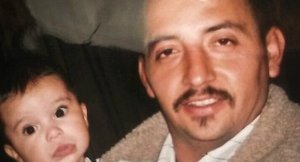
© Family Photo
Sputnik | 24.09.2015
In February, the Pasco police made global headlines after three officers were caught on camera firing 17 bullets at an unarmed man in the back as he ran away from them with his hands in the air.
Now, after the officers received seven months of paid administrative leave for the shooting of Mexican national Antonio Zambrano-Montes, who was 35, they have been cleared of any wrongdoing. Two of the officers will be reportedly returning to work effective “immediately,” while the third, Ryan Flanagan, has parted ways with the department for unknown reasons.
The incident took place on February 10, when police were called to an intersection because of a man allegedly throwing rocks at vehicles. The department claims that Zambrano-Montes, who has a history of mental illness, ran after hitting two of the officers with rocks, Fusion reported.
Zambrano-Montes was the fourth person killed by officers in the department in less than a year.
A video of the incident, filmed by Dario Infante Zuniga, 21, went massively viral, collecting over 1,600,000 views within nine days. It has now been viewed over two million times.
Approximately one week after the shooting, the Pasco Police Department announced that they had launched a “full investigation into their victim” — instead of the officers who shot him.
Ken Lattin, a spokesperson for the Kennewick Police Department, stated in February that he was trying to piece together what Zambrano-Montes was doing “hours, days, and weeks leading up to this incident.”
“It’s curious that when you ask them about the past of some of the officers, they say that information is not pertinent to the investigation,” Felix Vargas, chair of Consejo Latino, a local organization of Hispanic-owned businesses, said after a briefing, Fusion reported.
“But somehow what Zambrano was doing weeks before this incident is vital information.”
While activists and commentators have expressed remorse, anger, and sadness over the lack of charges and the officers returning to their duties, many have noted that it was to be expected, as the cops were never really the ones under investigation.
Featured Video

Seyed M. Marandi: US-Iran War Inevitable: Kuwait and Bahrain May Fall
or go to
Aletho News Archives – Video-Images
From the Archives
Oil and the Israel Lobby
Reknowned economist M. Shahid Alam offers this excellent critique of Noam Chomsky’s defective analysis of the relative influence of Oil versus the Israel lobby over US foreign policy: … continue
Blog Roll
 Aletho News
- SNSC secretary dismisses US response to Iran’s conditions as ‘inadequate’
- Sanaa says Taiz roads open, secure for residents, warns Saudi forces
- Iraqi resistance group urges Saudi leadership to admit defeat, lift Yemen siege
- Trump’s Retreat: How Al-Aqsa Flood Took Down the US Empire
- Israel’s Military Actions in Lebanon Grossly Violate International Law — Lavrov
- Seyed M. Marandi: US-Iran War Inevitable: Kuwait and Bahrain May Fall
- Leaders Condemn Ansarallah Attack on Saudi Arabia While Ignoring Illegal War Against Yemen
- Leaked: Britain’s Covert Iraqi Psyops Network
- Yemeni Armed Forces Warn Airlines Against Using Saudi Airports, Exempt Mecca and Medina
- Iran security chief says powers greater than US tried to conquer Iran but ended in ‘dustbin of history’
- If Americans Knew
- Gaza: Ceasefire Anniversary Marks Year of Failed Promises
- The American Conservative: Mike Huckabee Should Resign
- A C-Section in Shackles: A Palestinian Woman’s Harrowing Birth in Israeli Detention
- ‘He’s Desperate’: AIPAC Begins Spending Against Abdul El-Sayed to Boost Mike Rogers:
- Trump, Hormuz, and the Looming Economic Catastrophe
- For three years, Israel has killed a child in Gaza every 71 minutes – Daily Update
- Israeli forces kill another child in Gaza – Daily Update
- Gaza ceasefire exists in name only, say more than 100 organizations
- Nearly 2 Million in Gaza Need Urgent Shelter Assistance as Winter Looms: IOM Chief Warns
- Suppressing Palestinian resistance: US charity under fire for AI monitoring of Gaza classrooms
- No Tricks Zone
- Germany’s Green Energy Debacle: High Energy Costs Force Kahla Porzellan to Close After 182 Years!
- New Study: 50 Years Of The Most Aggressive ‘Net Zero’ Policies Can Only Affect The Global Climate By 0.03°C
- US September “Heat” Was No Record…Many Records Set Decades Ago
- Latest European Green Energy Debacle; Portugal’s Largest Flagship Solar Park Insolvent!
- Green Energy Debacle: German Expert Professor Fritz Vahrenholt Warns Of Severe Economic And Social Consequences
- Two More Paleo Reconstructions Affirm Meters-Higher Sea Levels Across Ireland, Brazil 7000-6000 Years Ago
- New Study: Earth And Venus Surface Warmth Largely Explained By Convection And Lapse Rate, Not CO2 Or Radiation
- 2025 Nature Paper Claiming Worsening Global Drought Gets RETRACTED …Heavily Flawed
- New Study: ‘Global Drought Shows No Detectable Recent Acceleration Under Climate Warming’
- Economic Masterminds: German Socialists Suggest Taxing Productivity Gains Stemming From Using AI

