Powerful Israeli Lobby Summons Jeremy Corbyn in Further Subversion of British Democracy
Empire Strikes Black | September 27, 2015
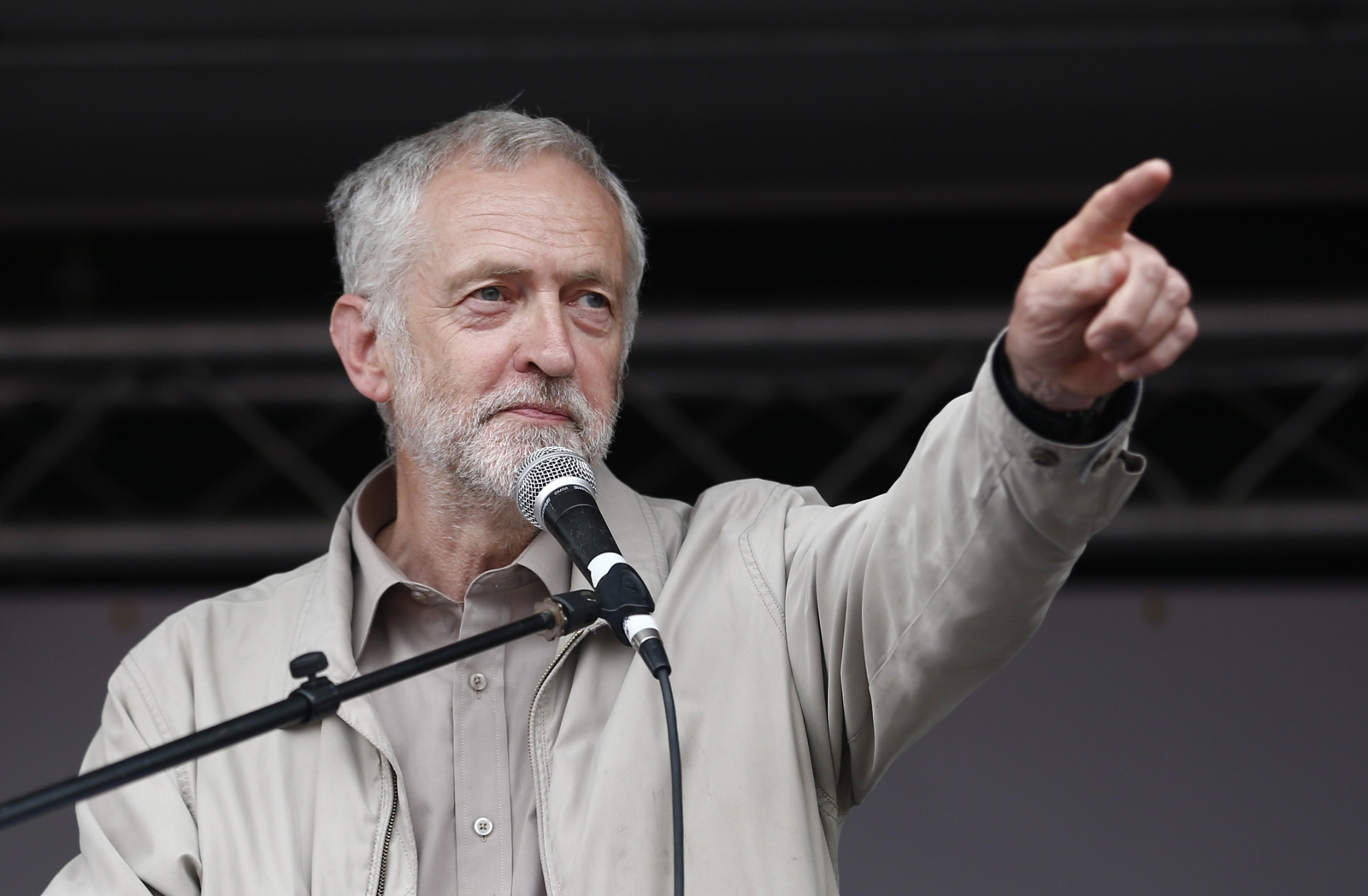 Labour Friends of Israel, a pro-“Israel” political advocacy group, has invited Labour leader Jeremy Corbyn to speak at its annual reception(1) in Brighton on Tuesday. The power of the “Israeli” lobby in Whitehall(2) is not news to those with a keen eye on British politics. That being said, for any British voter this should raise eyebrows at the very least.
Labour Friends of Israel (LFI) is a Jewish lobby group(3) which,
“promotes a negotiated two state solution for two peoples; with Israel safe, secure and recognised within its borders; living alongside a democratic, independent Palestinian state”
The above synopsis, garbed in liberal, peaceful and noble language, gives LFI (and “Israel”) an innocuous image to the layperson.
Typical of Zionist rhetorical trickery, this false appraisal is fraudulent for a number of reasons.
“Israel” has to this day not declared its borders for the simple reason that it has an expansionist, hegemonic agenda. It exists on land (every inch – from the Jordan river to the Mediterranean sea) it violently stole from the native Palestinians in 1948. The actual goal of LFI (as with CFI and LDFI – the Conservative and Liberal Democrat sister lobbies) is to influence British policy to ensure continued British support for the brutal, immoral and illegal occupation of Palestine and the ongoing genocide of the Palestinian people.
“Israel”: Friend or Foe?
“Israel” is a belligerent foreign nation whose interests are far removed from those of Britain.
We are talking about a country that can fake British passports and use them to commit murder on foreign soil with complete and total impunity.(4) We are talking about a nation that celebrates the slaughter of Britons in a Jewish terror attack on a Jerusalem hotel.(5) We are talking about a nation whose cowardly snipers can murder British civilians(6) with zero legal or diplomatic repercussions.
“Israel” is by no means a friend of Britain, so why should British party leaders be humiliated into proving they are “friends” of hers? Here we have a lobby group representing a belligerent foreign nation, that has the power to summon party leaders to explain themselves like naughty schoolchildren.
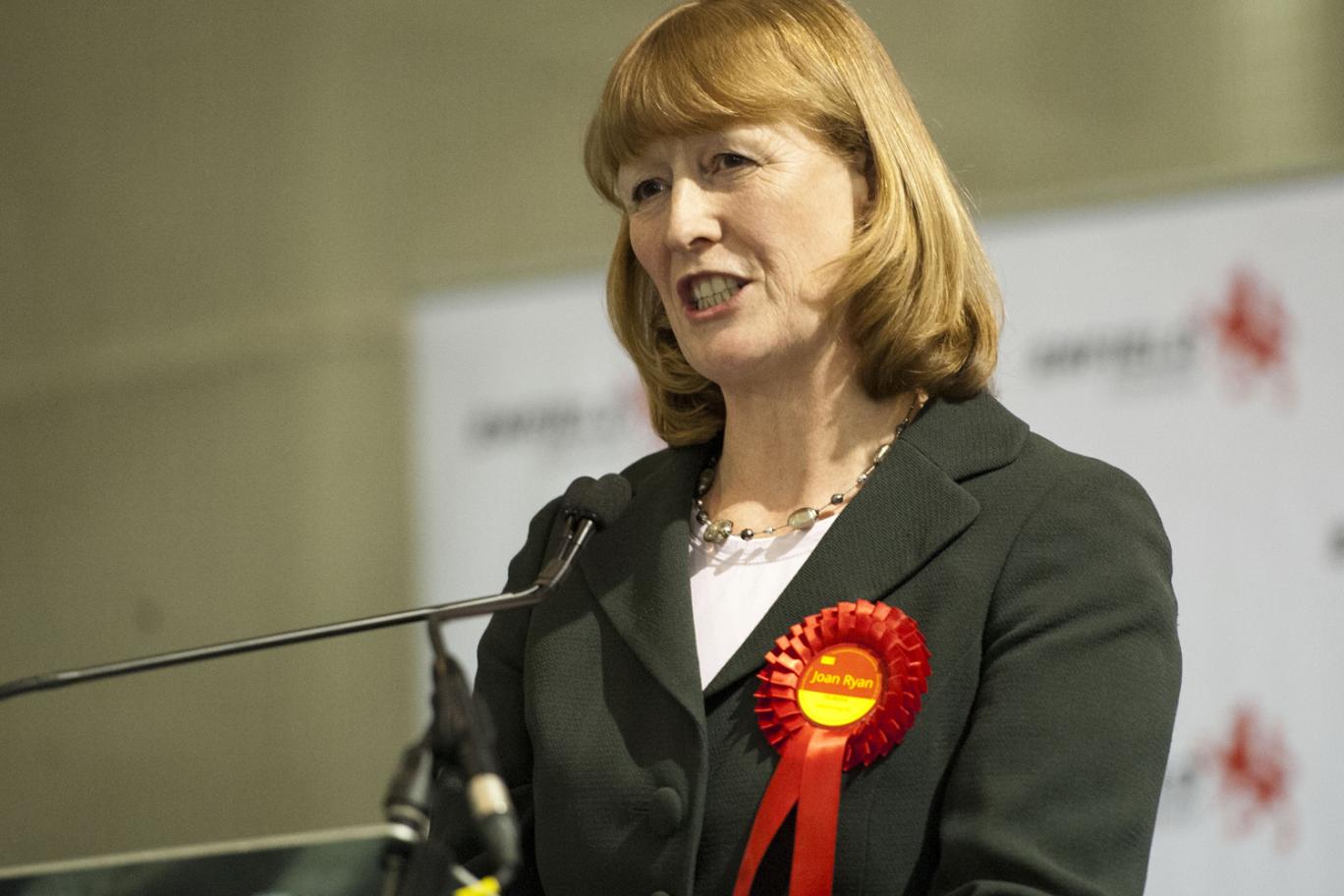 Adding insult to injury, this foreign lobby group is chaired by a ‘British’ MP, Joan Ryan.
Aside from brazenly representing a foreign nation from within the British Parliament, Ryan has demonstrated her contempt for the British taxpayer and voter in other ways – namely by disgracing herself in the MP expenses scandal.
In October 2007, the Evening Standard reported that in the 2006/2007 tax year, Ryan claimed a staggering £173,691 in expenses(7) – more than any other MP.
The British voter could be forgiven for asking Ryan where her loyalties lie – with Britain? Or with the belligerent foreign nation that she duplicitously represents?
That a foreign lobbying organisation can subvert the political decision making process in such a brazen way – with Jewish MPs literally acting as moles in parliament – makes a mockery of British democracy. I shudder to imagine the tsunami of outrage that would ensue if Muslim MPs were in the same position, lobbying for a hostile foreign government.
Notes
(1) ‘Labour Friends of Israel invites Jeremy Corbyn to explain his Palestine policy to them’ – The Independent, 22 September 2015.
(2) ‘All in the Family: David Cameron’s Jewish Roots and the Coreligionists Who Brought Him to Power’ – EmpireStrikesBlack, 7 January 2014.
(3) ‘About Labour Friends of Israel’ – lfi.org.uk, 27 September 2015.
(4) ‘Dubai Hamas assassination: ‘Israeli hit-squad’ used fake British passports’ – The Telegraph, 17 February 2010.
(5) ‘Israel celebrates Irgun hotel bombers’ – The Telegraph, 22 July 2006.
(6) ‘In memory of Tom Hurndall, shot in the head by Israeli sniper 10 years ago today’ – tomhurndall.co.uk, 11 April 2013.
(7) ‘Revealed: London MPs claiming £9m expenses’ – Evening Standard, 26 October 2007.
On the Trail of Turkey’s Terrorist Grey Wolves
By Martin A. Lee | Consortium News | 1997
In broad daylight on May 2, 1997, 50 armed men set upon a television station in Istanbul with gunfire. The attackers unleashed a fusillade of bullets and shouted slogans supporting Turkey’s Deputy Prime Minister Tansu Ciller. The gunmen were outraged over the station’s broadcast of a TV report critical of Ciller, a close U.S. ally who had come under criticism for stonewalling investigations into collusion between state security forces and Turkish criminal elements.
Miraculously, no one was injured in the attack, but the headquarters of Independent Flash TV were left pock-marked with bullet-holes and smashed windows. The gunfire also sent an unmistakable message to Turkish journalists and legislators: don’t challenge Ciller and other high-level Turkish officials when they cover up state secrets.

Former Turkish Prime Minister Tansu Ciller
For several months, Turkey had been awash in dramatic disclosures connecting high Turkish officials to the right-wing Grey Wolves, the terrorist band which has preyed on the region for years. In 1981, a terrorist from the Grey Wolves attempted to assassinate Pope John Paul II in Vatican City.
But at the center of the mushrooming Turkish scandal is whether Turkey, a strategically placed NATO country, allowed mafiosi and right-wing extremists to operate death squads and to smuggle drugs with impunity. A Turkish parliamentary commission is investigating these new charges.
The rupture of state secrets in Turkey also could release clues to other major Cold War mysteries. Besides the attempted papal assassination, the Turkish disclosures could shed light on the collapse of the Vatican bank in 1982 and the operation of a clandestine pipeline that pumped sophisticated military hardware into the Middle East — apparently from NATO stockpiles in Europe — in exchange for heroin sold by the Mafia in the United States.
The official Turkish inquiry was triggered by what could have been the opening scene of a spy novel: a dramatic car crash on a remote highway near the village of Susurluk, 100 miles southwest of Istanbul. On Nov. 3, 1996, three people were crushed to death when their speeding black Mercedes hit a tractor.
The crash killed Husseyin Kocadag, a top police official who commanded Turkish counter-insurgency units. But it was Kocadag’s company that stunned the nation. The two other dead were Abdullah Catli, a convicted fugitive who was wanted for drug trafficking and murder, and Catli’s girlfriend, Gonca Us, a Turkish beauty queen turned mafia hit-woman.
A fourth occupant, who survived the crash, was Kurdish warlord Sedat Bucak, whose militia had been armed and financed by the Turkish government to fight Kurdish separatists. At first, Turkish officials claimed that the police were transporting two captured criminals.
But evidence seized at the crash site indicated that Abdullah Catli, the fugitive gangster, had been given special diplomatic credentials by Turkish authorities. Catli was carrying a government-approved weapons permit and six ID cards, each with a different name. Catli also possessed several handguns, silencers and a cache of narcotics, not the picture of a subdued criminal.
When it became obvious that Catli was a police collaborator, not a captive, the Turkish Interior Minister resigned. Several high-ranking law enforcement officers, including Istanbul’s police chief, were suspended. But the red-hot scandal soon threatened to jump that bureaucratic firebreak and endanger the careers of other senior government officials.
Grey Wolves Terror
The news of Catli’s secret police ties were all the more scandalous given his well-known role as a key leader of the Grey Wolves, a neo-fascist terrorist group that has stalked Turkey since the late 1960s.
A young tough who wore black leather pants and looked like Turkey’s answer to Elvis Presley, Catli graduated from street gang violence to become a brutal enforcer for the Grey Wolves. He rose quickly within their ranks, emerging as second-in-command in 1978. That year, Turkish police linked him to the murder of seven trade-union activists and Catli went underground.
Three years later, the Grey Wolves gained international notoriety when Mehmet Ali Agca, one of Catli’s closest collaborators, shot and nearly killed Pope John Paul II in St. Peter’s Square on May 13, 1981. Catli was the leader of a fugitive terrorist cell that included Agca and a handful of other Turkish neo-fascists.
Testifying in September 1985 as a witness at the trial of three Bulgarians and four Turks charged with complicity in the papal shooting in Rome, Catli (who was not a defendant) disclosed that he gave Agca the pistol that wounded the pontiff. Catli had previously helped Agca escape from a Turkish jail, where Agca was serving time for killing a national newspaper editor.
In addition to harboring Agca, Catli supplied him with fake IDs and directed Agca’s movements in West Germany, Switzerland, and Austria for several months prior to the papal attack. Catli enjoyed close links to Turkish drug mafiosi, too. His Grey Wolves henchmen worked as couriers for the Turkish mob boss Abuzer Ugurlu.
At Ugurlu’s behest, Catli’s thugs criss-crossed the infamous smugglers’ route passing through Bulgaria. Those routes were the ones favored by smugglers who reportedly carried NATO military equipment to the Middle East and returned with loads of heroin. Judge Carlo Palermo, an Italian magistrate based in Trento, discovered these smuggling operations while investigating arms-and-drug trafficking from Eastern Europe to Sicily.
Palermo disclosed that large quantities of sophisticated NATO weaponry — including machine guns, Leopard tanks and U.S.-built Cobra assault helicopters — were smuggled from Western Europe to countries in the Middle East during the 1970s and early 1980s. According to Palermo’s investigation, the weapon delivers were often made in exchange for consignments of heroin that filtered back, courtesy of the Grey Wolves and other smugglers, through Bulgaria to northern Italy.
There, the drugs were received by Mafia middlemen and transported to North America. Turkish morphine base supplied much of the Sicilian-run “Pizza connection,” which flooded the U.S. and Europe with high-grade heroin for several years.
[While it is still not clear how the NATO supplies entered the pipeline, other investigations have provided some clues. Witnesses in the October Surprise inquiry into an alleged Republican-Iranian hostage deal in 1980 claimed that they were allowed to select weapons from NATO stockpiles in Europe for shipment to Iran. [Iranian arms dealer Houshang Lavi claimed that he selected spare parts for Hawk anti-aircraft batteries from NATO bases along the Belgian-German border. Another witness, American arms broker William Herrmann, corroborated Lavi’s account of NATO supplies going to Iran. [Even former NATO commander Alexander Haig confirmed that NATO supplies could have gone to Iran in the early 1980s while he was secretary of state. “It wouldn’t be preposterous if a nation, Germany, for example, decided to let some of their NATO stockpiles be diverted to Iran,” Haig said in an interview. For more details, see Robert Parry’s Trick or Treason. ]A Vatican Mystery
Italian magistrates described the network they had uncovered as the “world’s biggest illegal arms trafficking organization.” They linked it to Middle Eastern drug empires and to prestigious banking circles in Italy and Europe.
At the center of this operation, it appeared, was an obscure import-export firm in Milan called Stibam International Transport. The head of Stibam, a Syrian businessman named Henri Arsan, also functioned as an informant for the U.S. Drug Enforcement Administration, according to several Italian news outlets.
With satellite offices in New York, London, Zurich, and Sofia, Bulgaria, Stibam officials recycled their profits through Banco Ambrosiano, Italy’s largest private bank which had close ties to the Vatican until its sensational collapse in 1982. The collapse of Banco Ambrosiano came on the heels of the still unsolved death of its furtive president, Roberto Calvi, whose body was found hanging underneath Blackfriar’s Bridge in London in June 1982.
While running Ambrosiano, Calvi, nicknamed “God’s banker,” served as advisor to the Vatican’s extensive fiscal portfolio. At the same time in the mid- and late 1970s, Calvi’s bank handled most of Stibam’s foreign currency transactions and owned the building that housed Stibam’s Milanese headquarters.
In effect, the Vatican Bank — by virtue of its interlocking relationship with Banco Ambrosiano — was fronting for a gigantic contraband operation that specialized in guns and heroin. The bristling contraband operation that traversed Bulgaria was a magnet for secret service agents on both sides of the Cold War divide.
Crucial, in this regard, was the role of Kintex, a Sofia-based, state-controlled import-export firm that worked in tandem with Stibam and figured prominently in the arms trade. Kintex was riddled with Bulgarian and Soviet spies — a fact which encouraged speculation that the KGB and its Bulgarian proxies were behind the plot against the pope.
But Western intelligence also had its hooks into the Bulgarian smuggling scene, as evidenced by the CIA’s use of Kintex to channel weapons to the Nicaraguan Contra rebels in the early 1980s. The Reagan administration jumped on the papal assassination attempt as a propaganda opportunity, rather than helping to unravel the larger mystery.
Although the CIA’s link to the arms-for-drugs traffic in Bulgaria was widely known in espionage circles, hard-line U.S. and Western European officials promoted instead a bogus conspiracy theory that blamed the papal shooting on a communist plot.
The so-called “Bulgarian connection” became one of the more effective disinformation schemes hatched during the Reagan era. It reinforced the notion of the Soviet Union as an evil empire. But the apparent hoax also diverted attention from extensive — and potentially embarrassing — ties between U.S. intelligence and the Turkey’s narco-trafficking ultra-right.
Fabrication of the conspiracy theory might have even involved suborning perjury. During his September 1985 court testimony in Rome, Catli asserted that he had been approached by the West German BND spy organization, which allegedly promised him a large sum of money if he implicated the Bulgarian secret service and the KGB in the attempt on the pope’s life.
Five years later, ex-CIA analyst Melvin A. Goodman disclosed that his colleagues, under pressure from CIA higher-ups, skewed their reports to try to lend credence to the contention that the Soviets were involved. “The CIA had no evidence linking the KGB to the plot,” Goodman told the Senate Intelligence Committee.
Friends of the Wolves
Duane “Dewey” Clarridge, the CIA station chief in Rome at the time of the papal shooting, had previously been posted in Ankara. Clarridge was the CIA’s man-on-the-spot in Turkey in the 1970s when armed bands of Grey Wolves unleashed a wave of bomb attacks and shootings that killed thousands of people, including public officials, journalists, students, lawyers, labor organizers, social democrats, left-wing activists and ethnic Kurds. [In his 1997 memoirs, A Spy for All Seasons, Clarridge makes no reference to the Turkish unrest or to the pope shooting.]
During those violent 1970s, the Grey Wolves operated with the encouragement and protection of the Counter-Guerrilla Organization, a section of the Turkish Army’s Special Warfare Department. Headquartered in the U.S. Military Aid Mission building in Ankara, the Special Warfare Department received funds and training from U.S. advisors to create “stay behind” squads comprised of civilian irregulars.
They were supposed to go underground and engage in acts of sabotage if the Soviets invaded. Similar Cold War paramilitary units were established in every NATO member state, covering all non-Communist Europe like a spider web that would entangle Soviet invaders. But instead of preparing for foreign enemies, U.S.-sponsored stay-behind operatives in Turkey and several European countries used their skills to attack domestic opponents and foment violent disorders.
Some of those attacks were intended to spark right-wing military coups. In the late 1970s, former military prosecutor and Turkish Supreme Court Justice Emin Deger documented collaboration between the Grey Wolves and the government’s counter-guerrilla forces as well as the close ties of the latter to the CIA.
Turkey’s Counter-Guerrilla Organization handed out weapons to the Grey Wolves and other right-wing terrorist groups. These shadowy operations mainly engaged in the surveillance, persecution and torture of Turkish leftists, according to retired army commander Talat Turhan, the author of three books on counter-guerrilla activities in Turkey.
But the extremists launched one wave of political violence which provoked a 1980 coup by state security forces that deposed Prime Minister Bulent Ecevit. The Turkish security forces cited the need to restore order which had been shattered by rightist terrorist groups secretly sponsored by those same state security forces.
Cold War Roots
Since the earliest days of the Cold War, Turkey’s strategic importance derived from its geographic position as the West’s easternmost bulwark against Soviet communism. In an effort to weaken the Soviet state, the CIA also used pan-Turkish militants to incite anti-Soviet passions among Muslim Turkish minorities inside the Soviet Union, a strategy that strengthened ties between U.S. intelligence and Turkey’s ultra-nationalists.
Though many of Turkish ultra-nationalists were anti-Western as well as anti-Soviet, the Cold War realpolitik compelled them to support a discrete alliance with NATO and U.S. intelligence. Among the Turkish extremists collaborating in this anti-Soviet strategy were the National Action Party and its paramilitary youth group, the Grey Wolves.
Led by Colonel Alpaslan Turkes, the National Action Party espoused a fanatical pan-Turkish ideology that called for reclaiming large sections of the Soviet Union under the flag of a reborn Turkish empire. Turkes and his revanchist cohorts had been enthusiastic supporters of Hitler during World War II.
“The Turkish race above all others” was their Nazi-like credo. In a similar vein, Grey Wolf literature warned of a vast Jewish-Masonic-Communist conspiracy and its newspapers carried ads for Turkish translations of Nazi texts.
The pan-Turkish dream and its anti-Soviet component also fueled ties between the Grey Wolves and the Anti-Bolshevik Bloc of Nations (ABN), a CIA-backed coalition led by erstwhile fascist collaborators from East Europe.
Ruzi Nazar, a leading figure in the Munich-based ABN, had a long-standing relationship with the CIA and the Turkish ultra-nationalists. In the 1950s and 1960s, Nazar was employed by Radio Free Europe, a CIA-founded propaganda effort.
When the Soviet Union collapsed in 1991, the shifting geopolitical terrain created new opportunities — political and financial — for Colonel Turkes and his pan-Turkish crusaders. After serving a truncated prison term in the 1980s for his role in masterminding the political violence that convulsed Turkey, Turkes and several of his pan-Turkish colleagues were permitted to resume their political activities.
In 1992, the colonel visited his long lost Turkish brothers in newly independent Azerbaijan and received a hero’s welcome. In Baku, Turkes endorsed the candidacy of Grey Wolf sympathizer Abulfex Elcibey, who was subsequently elected president of Azerbaijan and appointed a close Grey Wolf ally as his Interior Minister.
The Gang Returns
By this time, Abdullah Catli was also back in circulation after several years of incarceration in France and Switzerland for heroin trafficking. In 1990, he escaped from a Swiss jail cell and rejoined the neo-fascist underground in Turkey.
Despite his documented links to the papal shooting and other terrorist attacks, Catli was pressed into service as a death squad organizer for the Turkish government’s dirty war against the Kurds who have long struggled for independence inside both Turkey and Iraq.
Turkish Army spokesmen acknowledged that the Counter-Guerrilla Organization (renamed the Special Forces Command in 1992) was involved in the escalating anti-Kurdish campaign. Turkey got a wink and a nod from Washington as a quid pro quo for cooperating with the United States during the Gulf War.
Turkish jets bombed Kurdish bases inside Iraqi territory. Meanwhile, on the ground, anti-Kurdish death squads were assassinating more than 1,000 non-combatants in southeastern Turkey. Hundreds of other Kurds “disappeared” while in police custody. Human Rights Watch, Amnesty International and the European Parliament all condemned the Turkish security forces for these abuses.
Still, there was no hard evidence that Turkey’s security forces had recruited criminal elements as foot soldiers. That evidence surfaced only on Nov. 3, 1996, when Catli died in the fateful auto accident near Susurluk.
Strewn amidst the roadside wreckage was proof of what many journalists and human rights activists had long suspected — that successive Turkish governments had protected narco-traffickers, sheltered terrorists and sponsored gangs of killers to suppress Turkish dissidents and Kurdish rebels.
Colonel Turkes confirmed that Catli had performed clandestine duties for Turkey’s police and military. “On the basis of my state experience, I admit that Catli has been used by the state,” said Turkes. Catli had been cooperating “in the framework of a secret service working for the good of the state,” Turkes insisted.
U.S.-backed Turkish officials, including Tansu Ciller, Prime Minister from 1993-1996, also defended Catli after the car crash. “I don’t know whether he is guilty or not,” Ciller stated, “but we will always respectfully remember those who fire bullets or suffer wounds in the name of this country, this nation and this state.”
Eighty members of the Turkish parliament urged the federal prosecutor to file charges of criminal misconduct against Ciller, who was serving as Turkey’s Foreign Minister, as well as Deputy Prime Minister. They asserted that the Susurluk incident provided Turkey “with a historic opportunity to expose unsolved murders and the drugs and arms smuggling that have been going on in our country for years.”
The scandal momentarily reinvigorated the Turkish press, which unearthed revelations about criminals and police officials involved in the heroin trade. But journalists also were victims of death squads in those years. The violent attack on Independent Flash TV was a reminder. Prosecutors have faced pressure, too, from superiors who are not eager to delve into state secrets. [Ultimately, the corruption case against Ciller was covered up.]
Across the Atlantic in Washington, the U.S. government did not acknowledge any responsibility for the Turkish Frankenstein that U.S. Cold War strategy helped to create. When asked about the Susurluk affair, a State Department spokesperson said it was “an internal Turkish matter.” He declined further comment.
US Spies Await Terrorist Attack to Change Public’s Tune About Cyber Privacy
Sputnik – 26.09.2015
As the United States seeks backdoor encryption access, it faces strong pushback in the form of public opinion. But according to some intelligence officials, that perception could change if another terrorist attack were to occur on American soil.
Faced with a public outcry over privacy concerns and the tarnished reputation of American tech companies abroad, the Obama administration has found itself in a difficult spot. Many industry leaders are calling for the president to publicly disavow the idea of a law requiring tech companies to provide backdoor encryption access.
Intelligence officials, of course, are none-too-thrilled about such a move. Insistent on the notion that encryption access is vital for national security, many are eager for a law requiring companies like Apple to cooperate.
“Overall, the benefits to privacy, civil liberties and cybersecurity gained from encryption outweigh the broader risks that would have been created by weakening encryption,” reads the latest report from the US National Security Council.
But if public opinion remains a stubborn roadblock for such legislation, some officials have indicated that a terrorist attack could change the situation.
“… The legislative environment is very hostile today,” Robert S. Litt, a lawyer for the intelligence community, said in an email obtained by the Washington Post. “[But] it could turn in the event of a terrorist attack or criminal event where strong encryption can be shown to have hindered law enforcement.”
Litt isn’t the only one.
“People are still not persuaded this is a problem,” a senior official, speaking on condition of anonymity, told the Post. “People think we have not made the case. We do not have the perfect example where you have the dead child or a terrorist act to point to, and that’s what people seem to claim you have to have.”
While the US intelligence community seems to believe that a terrorist attack would prove the need for robust encryption, it’s already been proven that mass surveillance has done little to thwart such incidents. The National Security Agency’s data collection – unveiled by whistleblower Edward Snowden – was launched after the September 11 attacks, but failed to prevent future bombings, like that which occurred during the Boston Marathon in 2013.
A White House review panel formed two years ago recommended ending the domestic spying program after findings that the NSA’s bulk collection of telephone metadata had done nothing for national security.
Even if the Obama administration decides to publicly disavow encryption legislation, there’s no guarantee that the US government wouldn’t still carry forward with decryption plans. On Thursday, the Washington Post reported that the administration was looking into four distinct ways to force tech companies into compliance.
“We’re not promoting those as the way to go,” said another official, also speaking on condition of anonymity. “We’re just saying these are things that could be done.”
Scientist leading effort to prosecute climate skeptics under RICO ‘paid himself & his wife $1.5 million from govt climate grants for part-time work’
Climate Depot | September 20, 2015
Leader of 20 scientist effort to prosecute climate skeptics under RICO revealed as ‘Climate Profiteer’! ‘From 2012-2014, the Leader of RICO 20 climate scientists paid himself and his wife $1.5 million from government climate grants for part-time work.
George Mason University Professor Jagadish Shukla ( jshukla@gmu.edu) a Lead Author with the UN IPCC, reportedly lavishly profits off the global warming industry while accusing climate skeptics of deceiving the public. Shukla is leader of 20 scientists who are demanding RICO (Racketeer Influenced and Corrupt Organizations Act) charges be used against skeptics for disagreeing with their view on climate change.
Shukla reportedly moved his government grants through a ‘non-profit’. The group “pays Shukla and wife Anne $500,000 per year for part-time work,” Prof. Roger Pielke Jr. revealed.
“The $350,000-$400,000 per year paid leader of the RICO20 from his ‘non-profit’ was presumably on top of his $250,000 per year academic salary,” Pielke wrote. “That totals to $750,000 per year to the leader of the RICO20 from public money for climate work and going after skeptics. Good work if you can get it,” Pielke Jr. added.
Venezuela’s Maduro Proposes Cucuta Gasoline Deal, Expands Border Closure
By Lucas Koerner – Venezuelanalysis – September 16, 2015
Caracas – In the lead-up to talks with his Colombian counterpart, Venezuelan President Nicolas Maduro proposed a series of measures aimed at resolving the tense border conflict, including the sale of Venezuelan gasoline in the Colombian border city of Cucuta.
Tensions between the two neighbors have been on the rise since mid-August when Maduro ordered a 60-day closure of sections of the joint border in response to an alleged paramilitary attack on three Venezuelan soldiers in the frontier zone.
As Maduro prepares to sit down with Colombia’s Santos in the coming days, the socialist leader announced Friday the creation of Mission New Border of Peace, which will be charged with expanding all of Venezuela’s social missions established over the previous sixteen years to the border zone.
“This mission is aimed at bringing all of the missions, Homes of the Motherland, Barrio Adentro, Robinson, health and educational missions to teach people there to read and write, [give them their] elementary, secondary, and university education.”
The Venezuelan Head of State also announced a proposal to sell Venezuelan gasoline in the Colombian border city of Cucuta at preferential rates, favoring “cab drivers, workers, professionals, poor people.”
“We are ready to do it, President Santos, as soon as we sit down to talk, because this is how it works, proposal, counter-proposal, conversation, dialogue, and results,” he stated.
Colombian frontier cities such as Cucuta are an estimated 80% dependent on contraband Venezuelan gasoline, which is smuggled across the border at a rate of approximately 100,000 liters daily.
New Border Closures
President Maduro’s initiatives were followed on Tuesday with the announcement of new border closures in ten municipalities along the Colombian border, including seven in the northwestern state of Zulia and three in southwestern Apure state.
These border municipalities, comprising Jesus Enrique Lossada, Rosario de Perija, Machique de Perija, Cañada de Urdaneta, Jesus Maria Semprun, Paez, Catatumbo, Colon, Romulo Gallegos and Pedro Camejo, will be the first to see the roll-out of Mission New Border of Peace, aimed at creating social and economic alternatives to paramilitarism and contraband.
Cross-border smuggling has played a key role in what the President Maduro has termed an economic war against Venezuela, with an estimated 35% of subsidized food items making their way to Colombia.
EFF Urges Department of Justice Not to Fund LAPD’s Body Cameras
By Jennifer Lynch | EFF | September 16, 2015
Next week the Department of Justice will likely decide whether to issue a grant to the Los Angeles Police Department to purchase 700 body-worn video cameras. Because LAPD’s body camera policy fails to ensure accountability and transparency and would, in fact, hide almost all camera footage from the public, we are urging the DOJ to deny funding.
LAPD applied for the grant to fund its body-worn camera program through the Bureau of Justice Assistance (BJA) Body-Worn Camera Pilot Implementation Program earlier this year. After the shootings in Ferguson, Missouri and other places around the country created a national discourse about the need for police accountability, President Obama announced plans to “strengthen community policing,” including contributing $75 million over three years to provide a 50 percent match grant to states and localities that purchase body worn cameras. LAPD could be the first law enforcement agency to receive funds under the grant.
Los Angeles could also become the largest city in the country to use body cameras on a wide scale. LAPD has already purchased 860 cameras using private donations and plans to purchase 7,000 cameras total. The city has a goal of outfitting every LAPD officer with a body camera.
But amid these ambitious plans, LAPD has enacted a body camera use policy that runs completely counter to every reason to employ body cameras in the first place. At its heart, the policy appears designed to protect law enforcement officers rather than members of the public who they have sworn to serve.
The policy fails for four main reasons:
- It does not provide for any public access to body camera video—even in cases of shootings or alleged misconduct. In fact, LAPD has made clear that it will not release video footage unless required to do so in court—or unless the chief, in his discretion, believes it would be “beneficial.”
- It not only permits but requires officers to review body camera footage before they write up their reports—even before they provide an initial statement to investigators when they are involved in critical uses of force or accused of grave misconduct.
- It has no consequences for officers who fail to turn on their cameras during use-of-force incidents.
- It provides no clear rules to prevent LAPD from using body cameras as a tool to surveil the public at large. It doesn’t address the use of back-end analysis tools such as facial recognition on footage; nor does it provide guidelines for use of the cameras during First Amendment-protected activity.
Given LAPD’s notorious history of police misconduct, secrecy, unlawful surveillance, and resistance to outside review stretching back to at least the 1930s, perhaps it should come as no surprise that the agency has enacted a policy to protect its own rather than ensure accountability and transparency. The policy is also consistent with the hard-line stance LAPD has taken with respect to releasing automated license plate camera (ALPR) data. However, the DOJ should not add insult to injury by funding this program.
LAPD’s policy not only runs counter to recommendations from the ACLU, but also to recommendations from law enforcement organizations like the Police Executive Research Forum (PERF), an “independent research organization” whose board of directors is made up of police chiefs from agencies around the country. PERF has recommended that
with certain limited exceptions . . . , body-worn camera video footage should be made available to the public upon request—not only because the videos are public records but also because doing so enables police departments to demonstrate transparency and openness in their interactions with members of the community.
Even one of Los Angeles’ own police commissioners—who cast the lone dissenting vote against the policy—criticized it for its failure to address release of footage to the public and for allowing officers to review footage before writing reports. He said that LAPD’s process for adopting the policy “undermines the goal here of accountability and trust.”
LAPD’s policy also runs counter the BJA grant program’s requirements. The program requires recipients to enact policies for body camera use that, “at a minimum increase transparency and accessibility, provide appropriate access to information, allow for public posting of policy and procedures, and encourage community interaction and relationship building.” LAPD’s policy fails to meet even these baseline goals.
The President intended DOJ’s body camera program to “build and sustain trust between communities and those who serve and protect these communities.” But if the DOJ is really serious about doing so, this is not the way. The DOJ must send a message to other grant applicants by denying LAPD’s funding request. Police-worn body cameras are fraught with enough potential threats to civil liberties; we don’t need harmful policies designed to shield police action from public scrutiny reinforcing these threats.
Read our letter to the Department of Justice here.
Saudi Navy Set to Order American Littoral Combat Ships
Sputnik – 16.09.2015
Saudi Arabia has selected a variant of a warship Lockheed Martin is building for the US Navy as the frigate for the kingdom’s Eastern Fleet modernization program, a source told Defense News.
The frigates sale will be the cornerstone of the modernization of the Royal Saudi Navy’s eastern fleet and its aging US warships in the Arabian Gulf.
A letter of request from the Saudi Navy that detailed requirements for the program was signed in early August, the source said, and the Saudis have asked the US Navy and Lockheed to complete a letter of agreement by November, Defense News reported.
The deal calls for four frigates capable of hosting Sikorsky MH-60R helicopters.
Saudi and US officials also are finalizing a $1.9 billion deal to buy 10 MH-60R helicopters, which can be used for anti-submarine warfare and other missions. Lockheed is in the process acquiring Sikorsky.
The ships are also expected to be fitted with a vertical launch system that can accommodate surface-to-air missiles.
The entire Eastern Fleet expansion program is expected to cost between $16 billion and $20 billion and also includes patrol boats, three maritime patrol aircraft, and 30 to 50 unmanned aerial vehicles, Defense News reported.
The four large frigates are expected to take up about 20-25% of the total cost. Saudi Arabia earlier this year budgeted $3.5 billion for the program, money that needs to be spent in calendar 2015.
The deal, if finalized, would mark the first international sale of a US littoral combat ship.
The Saudi Navy’s expansion program has been in the works for years, but US sources say Saudi Arabia’s concerns about Iran have accelerated the effort.
In July, world powers and Iran reached a deal aimed at curbing Tehran’s nuclear program in exchange for lifting sanctions. Regional neighbors worry about the threat posed by a financially strong Iran.
Israel’s Agent of Influence
By Philip Giraldi • Unz Review • September 15, 2015
“An agent of influence is an agent of some stature who uses his or her position to influence public opinion or decision making to produce results beneficial to the country whose intelligence service operates the agent.” So goes the book definition but any experienced intelligence officer will note that there are degrees of cooperation and direction in such a relationship. The agent might be fully controlled and on a salary or he or she might be very loosely guided, ideologically motivated but cautious and reluctant to receive any favors in return. The key is that the agent has to be acting on behalf of the interests of the foreign government, which will at least some of the time mean working directly against the interests of his own.
I thought of how an agent of influence operates on the morning of September 9th when I opened the Washington Post and read two letters to the editor, both written by constituents, regarding Maryland Senator Benjamin Cardin’s refusal to support President Barack Obama’s Iran deal.
The first, from Carole Anderson of Bethesda said that “my U.S. senator, Benjamin L. Cardin, has forgotten that he represents Maryland — not the American Israel Public Affairs Committee, not a portion of the Jewish community, not Israel. His constituents expect him to vote based on the best interests of the United States, which in this case also is in Israel’s long-term interest, not based on what his rabbi says. He has demonstrated that he is incapable of doing his job.”
The second, from Stephen O. Dean of Gaithersburg observed that “Sen. Benjamin L. Cardin’s plan to oppose the Iran nuclear deal is an embarrassment to the people of Maryland. Though a Democrat, he allied himself with the Republicans in Congress, the Republican presidential contenders, Israeli Prime Minister Benjamin Netanyahu and the powerful pro-Israel lobby. He turned his back on President Obama and rejected the long, difficult work of Secretary of State John F. Kerry and his counterparts from five other major countries. The alternative he offered is a bill he will introduce to send more U.S. taxpayer money to Israel. One wishes he took the path to peace with Iran, instead of to potential war.”
Cardin’s position was not unexpected even though he is reliably liberal on any issue but Palestine and a solid Democratic Party water boy. As an elected official, Cardin has frequently framed himself as being personally responsible for delivering benefits to his Jewish constituents. He sponsors the Senator Ben Cardin Jewish Scholars Program and also has been active in steering Department of Homeland Security (DHS) grants to what he calls “high risk” Jewish organizations in Baltimore. Due to the assiduous efforts of Congressmen like Cardin fully 97% of all DHS grants go to Jewish groups.
But as complete deference to Israel is all too common inside the beltway, I was, to put it mildly, shocked that two letters expressing such dissident views regarding Cardin actually appeared in the Post, a haven of neoconservatism on its editorial page. One might enthuse that it is perhaps a welcome sign that popular views on the extremely damaging Israel relationship really have begun to shift.
I have previously written that the so-called Corker-Cardin bill that reportedly gave Congress a chance to safely vent over the Iran deal was actually a Trojan horse in that it was intended to lead to eventual defeat of the agreement. I noted at the time that Cardin was the snake in the woodpile as he was pretending to give a lifeline to his party and president while all the time intending to vote no and do everything in his power to overturn any rapprochement with Iran.
Now what I predicted has come about. And Cardin has even admitted that he discussed with the American Israel Public Affairs Committee (AIPAC) how he should vote. AIPAC, for all its posturing about American interests, is not a source of objective information on the Middle East as it often pretends to be. It actively and aggressively lobbies on behalf of the Israeli government and would be listed under the Foreign Agent Registration Act of 1938 but for the fact that it is politically powerful and no White House has been willing to take it on. Cardin was also heavily lobbied by his rabbi, who called him repeatedly.
Cardin justified his opposition to the agreement based on alarmist talking points that could have been, and maybe were, written by AIPAC to include, “…there cannot be respect for a country that actively foments regional instability, advocates for Israel’s destruction, kills the innocent and shouts ‘Death to America.’” And Cardin has also gone on record pledging to back up his “no” vote by introducing legislation that he is already working on that will allow congress to overturn the agreement while also sending 30,000 pound penetrator bombs to Israel that will enable Prime Minister Benjamin Netanyahu to attack Iran, which would clearly not be in America’s interest.
The Cardin supported initiative to undermine the Iran agreement through further congressional meddling and delaying tactics is being referred to in some circles as “Plan B.” There are a number of aspects to it, but it involves creating new legislation and imposing other conditions that will permit additional congressional review of both the deal itself and, more particularly, Iran’s compliance. It has become axiomatic to refer to Iranians as “liars and cheaters,” setting the stage for any number of contrived revelations about their behavior.
As has often been the case in the past where friends of Israel have sought either military action or other punitive measures, the planned new congressional initiatives will likely seek to create red lines or tripwires that will mandate congressional or presidential action. In the past, these red lines have been described in a way that permits them to be interpreted subjectively, meaning that there will be a push to find fault with Tehran and that evidence might easily be manufactured to suit or even provided by Israel. Cardin appears to be the driving force behind this effort if one is to go by his own words and the praise that has been heaped upon him by organizations like Christians United for Israel.
So who does Cardin actually represent? I would suggest that he fits the mold of the classic agent of influence in that his allegiance to the United States is constrained by his greater loyalty to a foreign nation. I do not believe that he does it for money or other material favors and I would not imagine that Mossad actually gives him his marching orders, but I would bet that his contact with the Israeli Embassy and AIPAC to both obtain and synchronize with their views is frequent and ongoing. One has to hope that Cardin will both fail in his new legislative efforts on behalf of Israel and also that he will be turned out of office in the next cycle by his constituents for his failure to support actual American and Marylander interests.
The question of what to do about the Cardins of this world is, of course, clouded by the broader issue of “dual loyalty,” a label that has rightly been of particular concern for many diaspora Jews because it often is employed as a classic anti-Semitic canard. Those who promote it think that some or even most Jews can never be truly loyal to the country that they reside in, that they will always have a higher allegiance to their tribe. Since the founding of Israel that alleged supranational allegiance has also embraced the Jewish state, with questions raised regarding whether it is possible to actively promote all-too-often uncritical support for a foreign nation while living and working in another country that will inevitably have quite different national and international interests.
In reality, of course, it is not so simple. Some Jews will relate to their “tribe” more than to their non-Jewish fellow citizens but most will not and many will even regard that kind of sentiment as completely unacceptable. But all of that given, the issue of where one’s loyalty as a citizen of a nation should lie and to what degree is something that just will not go away. Nearly all of the neoconservatives who cajoled Americans into the disastrous war against Iraq were Jews and they were at least in part motivated by perceived Israeli interests. Bush Administration senior official Philip Zelikow subsequently even claimed that the Iraq war was primarily fought to eliminate a threat to Israel. And if that is not convincing enough, there is the “Clean Break” policy document that was presented to Israeli Prime Minister Benjamin Netanyahu in 1996 recommending inter alia the systematic break-up of Israel’s Arab neighbors into tribal groups to “secure the realm” of Israel. Many of the signatories were the very same American Jews who later promoted the war with Iraq and are now orchestrating the agitation vis-a-vis Iran, which itself is being overwhelmingly funded by Jewish groups.
Because of the potential problem posed by divided loyalty, many Americans now believe that no citizen should hold any foreign passport in addition to that of the United States. An increasing number are beginning to understand that competing parochial loyalties of various kinds have been detrimental to the viability of the United States as a nation and destructive of Teddy Roosevelt’s once proud assertion that it doesn’t matter where we came from but “we are all Americans.”
The dual loyalty question becomes more serious when one is considering the roles of government officials, both elected and as members of the federal bureaucracy, as they are in a position where they can actually do damage. The United States is currently wrestling with problems posed by Christian officials who believe that what they are told by God preempts what they are obligated to do as bureaucrats. This type of deference to tribe and culture is also where Cardin is both tone deaf and dissimulating. He is the stereotype of what has frequently been disparagingly described as an “Israel firster.” There is absolutely no reasonable argument to be made against the Iran agreement from a U.S. perspective and the mere fact that it is opposed by Israel should have no weight, but Cardin clearly does not see things that way.
One might reasonably object that Cardin is far from unique and to be sure there are many in Washington that are feckless in their relationships with Israel’s government. Senator Chuck Schumer of New York, who has declared himself to be the “shomer” or guardian of Israel in the U.S. Senate, is a case in point and undoubtedly many of the criticisms leveled against Cardin would fit just as well with Schumer. One might also note the unanimous Republican opposition to the Iran deal but that is a bit of a red herring. In many cases the attachment is more likely than not based more on politics than on any genuine affinity towards Israel. A frequently cynical kowtowing to perceived Zionist and evangelical demands is coupled with the expectation that Israel’s most powerful and wealthy backer in the U.S. Sheldon Adelson will shower his billions on the GOP and its preferred presidential candidate as long as the whole campaign is in key areas subordinate to Israeli interests. The Republican hard line is also a reflexive rejection of Obama foreign policy to create a wedge issue for 2016 and is not linked to any rational assessment of the merits of the Iran agreement.
On balance, Senator Ben Cardin in his apparent collusion with both the Israeli government and its powerful domestic Lobby appears to cross lines that should not be crossed by any American elected official. My contention that he may be a de facto agent of influence for Israel is, of course, somewhat conjectural. I would imagine that Cardin rationalizes his behavior by choosing to believe that Israeli and American interests are identical, which is, of course, not true. If he claims that he is not in fact preemptively guided by Israeli interests it would be interesting to have him reveal full details of the frequency and nature of his encounters with Israeli officials and also with the components of the Israel Lobby, most particularly AIPAC, which are established conduits for relaying Israeli perspectives to accomplices in the U.S. government. I would also be interested in hearing Cardin’s views on how a war with Iran would possibly benefit the people of Maryland.
Is Vice President Garcia Cracking Down on Dissent in Bolivia?
By Federico Fuentes – teleSUR – September 11, 2015
Recent statements by Bolivia’s Vice President Alvaro Garcia regarding nongovernmental organisations in Bolivia have triggered a heated debate on the left.
At an Aug. 11 media conference, Garcia accused NGOs of acting like political parties seeking to interfere in Bolivia’s domestic affairs. While respecting their right to criticize government policies, Garcia said foreign-funded nongovernmental organisations needed to understand their place within Bolivian society.
“Does this group of comrades have the right to form an NGO and produce and publish what they want? Of course they have the right to do this, but foreign NGOs do not have the right to come to Bolivia and say I am supporting Bolivia’s development while they do politics and defend the interests of transnationals,” he said.
He highlighted the fact that foreign companies and governments were the biggest backers of nongovernmental organisations. “What do we say to them?” he asked. “Finance in your own country, there is no need for you to come and interfere in our country, our relationship with foreign governments and companies is very clear: service in function of our policy and usefulness in function of a sovereign state; but not for the purposes of covert political action…”
Garcia said foreign governments were using NGOs to push policies that sought to stunt Bolivia’s development under the guise of protecting the environment. The four nongovernmental organisations Garcia singled out in particular during the media conference have been among the loudest critics of his government’s environmental policies.
In response, a number of academics from across the world signed an open letter stating concerns for what they viewed as “threats, which if they became a reality, would imply a grave blow in terms of restricting civil rights, among them, freedom of expression and association”. They argued the real issue Garcia had with these NGOs was that they had criticized his government’s shortcomings.
Others have defended these nongovernmental organisations on the basis of their role in promoting environmental struggles.
Contributing to the debate with an article on Alainet.org, Carmelo Ruiz said Garcia’s comments come at a time when falling commodity prices are exacerbating the contradictions of his government’s “progressive extractivist model”. Furthermore, he argued the Morales government was facing the threat of a rise in social and environmental protests.
Faced with this dilemma, Ruiz said critical voices had chosen to point out that “protest and repression is inevitable in extractivism”, while government spokespeople have preferred to blame discontent on “imperialist manipulations.”
Like Ruiz, many have tried to portray Garcia’s comments as something relatively new. However, his criticisms of NGOs predate his election to office or recent conflicts with certain indigenous and environmental groups.
For example, Garcia criticized the role of NGOs in Sociology of Social Movements in Bolivia, a book many of his current critics still hold up as the most authoritative studies of its kind.
In a chapter focusing on the highlands indigenous organisation CONAMAQ, Garcia notes that nongovernmental organisation financing resulted in the organisation taking on certain “bureaucratic-administrative characteristics”. It also in part explained CONAMAQ’s propensity to act less like a social movement and more like a lobby group that sought to “negotiate and reach formal agreements with government institutions and multilateral support organisms.”
The book noted how in certain communities, NGOs had artificially propped up “ayllus” (which make up CONAMAQ’s base) to compete for local influence against more radical peasant unions.
Criticism of nongovernmental organisations’ role in co-opting and dividing social movements is also present in another book he co-authored, “We Are No Ones Toys.” Notably, they appear in a chapter dedicated to the conflict between indigenous groups and coca-growers in the Isiboro-Secure Indigenous Territory and National Park (TIPNIS).
In 2011, conflict between these sectors over a proposed highway through the TIPNIS boiled over to become an issue of national, and even international significance for the Morales government.
Throughout the chapter, a number of references are made regarding the heavy influence NGOs had over indigenous communities.
Commenting in the book on the role of nongovernmental organisations in TIPNIS, local coca-grower leader Feliciano Mamani makes many of the same criticisms Garcia Linera made more than half a decade later in his book Geopolitics of the Amazon.
Mamani said: “NGOs and other interests that come for our natural resources, control indigenous people through money… where ever there are natural resources there are hundreds of NGOs confusing indigenous peoples and making false declarations….”
Since coming into office, Garcia’s criticisms of nongovernmental organisations’ relationship with social movements have not changed, however his public critique of NGOs has broadened to encompass other issues.
Garcia has argued that nongovernmental organisations had a huge influence over government ministries prior to Morales election. He recounts: “When we came into government in 2006, we found an executive carved up and handed over to embassies and [NGOs]… We could not do anything without authorization either from the embassies… or certain NGOs.”
This was in large part due to the fact that international loans and aid made up about half of the state budget for public investment.
The Morales government was able to quickly assert its control over state institutions as a result of its policy of nationalizing natural resources. Increased revenue from resource extraction put the government in the position where it could set its own policies, free of dependency or interference by foreign governments or NGOs.
Perhaps unsurprisingly, nongovernmental organisations’ hostility towards the Bolivian government has paralleled its loss of influence over state policies.
All this is also part of the context within which Garcia’s comments need to be placed.
Framing the debate however, as though it is simply about a government hiding behind the rhetoric of national sovereignty to crackdown on opponents – or alternatively, viewing all government critics as stooges for imperialism – will only lead to a dialogue of the deaf.
For starters, it should not be too hard to defend free speech at the same time as respecting Bolivia’s sovereignty.
The left has always opposed attempts by governments to crackdown on free speech, and should continue to do so when this occurs. But this is separate to the issue of allowing foreign governments and corporation to do as they please on Bolivian soil.
It is one thing to shut down nongovernmental organisations or jail opponents for what they say. Garcia has made it clear in his response to his critics that his government will not be closing down any NGO.
But it is quite another thing to deny the right of a sovereign government to control the flow of funds from hostile governments into its territory. Or is the left now going to argue that, in the name of “free speech”, foreign governments and corporations should be able to fund whoever they want in Bolivia?
We should use this opportunity to seriously discuss the various issues the debate has already thrown up. This includes, among others, the role of nongovernmental organisations in the Global South, how extractive industries have helped loosen foreign control over the Bolivian state, what alternative sources of funding might exist to enable this situation to remain, and what it would really take for Bolivia to overcome extractivism.
NATO overcharged by £460m for fuel during Afghan war, MoD investigates
RT | September 7, 2015
Military police are examining claims that a defense contractor overcharged the armed forces by hundreds of millions of pounds for fuel during the war in Afghanistan.
An audit by NATO, which ran the operations in Afghanistan, suggests the alliance was overcharged by £460 million (US$700 million) by contractor Supreme Group.
Britain is thought to have paid for about 10 percent of the fuel used in Helmand Province, southern Afghanistan, during the conflict, meaning it could have been ripped off by up to £46 million, sources told the Telegraph newspaper.
On Sunday, the Ministry of Defence (MoD) confirmed an investigation was underway.
In December 2014, the Amsterdam-based Supreme Group’s food business was found guilty of overcharging the US military for supplies during the Afghan war and paid fines of $389 million, the most ever paid by a defense contractor.
Supreme won and ran lucrative contracts for British and US forces in both Iraq and Afghanistan during the wars and currently provides fuel for the Royal Air Force (RAF) and food to the MoD on a global scale.
“We are committed to getting the maximum value for money for the taxpayer and will always seek to recover any overpayments,” a spokesman for the MoD told the Telegraph.
“We are aware of the allegations of overcharging by Supreme and we have referred the matter to the Ministry of Defence Police Criminal Investigation Department.”
“The issue continues to be addressed by NATO through follow-on reviews and investigations into the matter by Allied Command Operations,” a NATO spokesman told the paper.
“Part of unduly paid costs have already been recovered. The recovery process continues. This however remains a complex and lengthy process, whose specific details cannot be revealed until its completion.”
Outsourcing services previously controlled by the military has increasingly become a part of the MoD’s cost cutting measures.
Featured Video

Death Spikes & Rising Cancer In Our Youth Explained
or go to
Aletho News Archives – Video-Images
From the Archives
Politicians lie
By Mazin Qumsiyeh | Popular Resistance | August 18, 2013
There is no way to say this truth nicely: Politicians lie. That includes Japanese, American, Egyptian, Israeli, and Palestinian politicians! Is there something more common sense than that? Yet, so many citizens around the world believe their own politicians or wistfully acknowledge lies but think it is part of the job needed to run things. They believe even when politicians contradict themselves blatantly. This phenomenon is rather remarkable. It is a dissonance and disconnect from reality that many seem oblivious to. It is very dangerous because it can lead to accepting rationales for going to war. These can be deadly wars that lead to millions of lives lost as happened in what was called World War 1 and WW2. Even when incredible and declassified evidence abound, politicians continue to lie and old mythologies refuse to die. Here are just a few of the countless lies told to us over the past few decades… continue
Blog Roll
 Aletho News
- From Unipolar Universalism to Multipolar Civilizational Distinctiveness
- RSF military group defects, joins Sudanese army: State media
- Ireland goalkeeper refuses to play ‘Israel’ as squad weighs boycott
- China pushes back against US on Cuba, Iran
- Ukrainian Soldiers, Potential Mercenaries: Have Gun, Will Travel!
- Burnham’s UN debut… A masterclass in British disinformation
- Iran flights continue despite US aviation sanctions
- Global Tipping Points Lead the World Into a State of Entropy
- The day-after at the White House: USA and Xi Jinping
- The Geopolitical Balance in the Red Sea: The UAE Being Displaced by New Players
- If Americans Knew
- Deconstructing Netanyahu’s pants-on-fire UN rant – Daily Update
- Trump betrayed voters with his campaign lies and prioritized a foreign country once he took office
- Netanyahu calls Israel’s war in Gaza ‘opposite of genocide’ in UN speech to near-empty hall
- Settler Kidnappings: Torture, Sexual Abuse and Terrorisation of Palestinian Abductees as Israel Deepens Annexation of West Bank
- Gaza winter nears as 162,000 tents become unusable, raising fears of humanitarian crisis
- Netanyahu says, “It’s the opposite of genocide”; UN says Gaza economy is world’s ‘most severe crisis on record’ – Daily Update
- Israel’s US-Backed Assault on Gaza Has Created the ‘World’s Most Severe Economic Crisis on Record’: UN
- ‘Protecting U.S. Citizens’… From Israel
- ‘This is where I live now, the back of a truck’: a day in the life of a grandmother in Gaza
- In UN Speech, Iran’s President Displays Pictures of Children Killed by US, Brings Attention to Israel’s Nuclear Arsenal
- No Tricks Zone
- New Study: Earth And Venus Surface Warmth Largely Explained By Convection And Lapse Rate, Not CO2 Or Radiation
- 2025 Nature Paper Claiming Worsening Global Drought Gets RETRACTED …Heavily Flawed
- New Study: ‘Global Drought Shows No Detectable Recent Acceleration Under Climate Warming’
- Economic Masterminds: German Socialists Suggest Taxing Productivity Gains Stemming From Using AI
- The South China Sea Has Not Been Cooperating With The Climate Change Narrative
- Energy Crisis: Germany Enters Heating Season With Historically Low Gas Reserve Fill Levels
- New Study: The Antarctic Ice Sheet Gained Mass From 2020-2024 Due To Staggering Snow And Ice Accumulation
- Study: Ocean Heating Rates From Thousands Of Years Ago ‘Dwarf’ Modern Ocean Heating Rates
- Climate Extremists Target, Attack Large-Scale Power Grid Infrastructure In Germany!
- New Study: Antarctic Ice Melt Has Contributed Less Than 1 Centimeter To Sea Level Rise In The Last 30 Years

