Britain’s GCHQ shepherding mass surveillance operations throughout Europe
RT | November 2, 2013
British intelligence agency GCHQ has helped counterpart entities in France, Germany, Spain, and Sweden develop methods of mass surveillance of internet and phone traffic in the last five years, a new report reveals.
Documents supplied by former National Security Agency contractor Edward Snowden to the Guardian show the UK Government Communications Headquarters’ (GCHQ) enormous influence throughout Europe. The documents detail how the agency developed and promoted spying processes, built relationships with telecommunication companies, and evaded national laws that constrain the surveillance powers of intelligence agencies.
In the wake of outrage expressed over the past week across Europe regarding newly exposed NSA surveillance of European countries – including intercepted communications and the monitoring of phones belonging to officials such as German Chancellor Angela Merkel – documents released Friday by the Guardian show major European countries’ culpability in mass surveillance efforts shepherded by the GCHQ.
The GCHQ is part of the ‘Five Eyes’ intelligence-sharing partnership between Australia, Britain, Canada, New Zealand, and the United States.
US intelligence officials said the monitoring that received so much indignation from powers like Germany and France was carried out by those countries’ own intelligence agencies and later shared with the US.
In June, the Guardian revealed the GCHQ’s Tempora program, in which the agency tapped into transatlantic fiber-optic cables to execute bulk surveillance. Germany’s justice minister, Sabine Leutheusser-Schnarrenberger, said at the time that the program sounded “like a Hollywood nightmare” and warned that free societies and actions hidden under “a veil of secrecy” are not compatible.
A nation-by-nation scorecard
In a 2008 survey of European partners, the GCHQ marveled at Germany’s capabilities to produce Tempora-like surveillance. The British service said the Federal Intelligence Service (BND) had “huge technological potential and good access to the heart of the internet – they are already seeing some bearers running at 40Gbps and 100Gbps.” The term ‘bearers’ refers to the fiber-optic cables. Gigabits per second (Gbps) measures the speed at which data runs through them.
The documents also show the British were advising German counterparts on how to change or evade laws that restricted advanced surveillance efforts. “We have been assisting the BND (along with SIS [Secret Intelligence Service] and Security Service) in making the case for reform or reinterpretation of the very restrictive interception legislation in Germany,” the survey says.
The report also lauds the GCHQ’s French partner, the General Directorate for External Security (DGSE), especially for its cozy relationship with an unnamed telecommunications company.
“DGSE are a highly motivated, technically competent partner, who have shown great willingness to engage on IP [internet protocol] issues, and to work with GCHQ on a ‘cooperate and share’ basis.”
The GCHQ expressed desire to benefit from the DGSE’s relationship with the company.
“We have made contact with the DGSE’s main industry partner, who has some innovative approaches to some internet challenges, raising the potential for GCHQ to make use of this company in the protocol development arena.”
The GCHQ’s work with its French counterpart led to improved capabilities to carry out bulk surveillance, despite growing commercial emphasis on encryption.
“Very friendly crypt meeting with DGSE in July,” British officials said. French intelligence officials were “clearly very keen to provide presentations on their work which included cipher detection in high-speed bearers. [GCHQ’s] challenge is to ensure that we have enough UK capability to support a longer term crypt relationship.”
New opportunities in future partnerships
GCHQ ties to Spain’s intelligence service, the National Intelligence Centre (CNI), were bolstered by Spain’s connections to an unnamed British telecom company, giving them “fresh opportunities and uncovering some surprising results.
“GCHQ has not yet engaged with CNI formally on IP exploitation, but the CNI have been making great strides through their relationship with a UK commercial partner. GCHQ and the commercial partner have been able to coordinate their approach. The commercial partner has provided the CNI some equipment whilst keeping us informed, enabling us to invite the CNI across for IP-focused discussions this autumn,” the survey said. It reported that the GCHQ “have found a very capable counterpart in CNI, particularly in the field of Covert Internet Ops.”
When Sweden passed a 2008 law allowing its National Defence Radio Establishment (FRA) to execute Tempora-like surveillance via fiber-optic cables, the GCHQ said in the report that “FRA have obtained a…probe to use as a test-bed and we expect them to make rapid progress in IP exploitation following the law change.” The GCHQ went on to express delight in future partnerships with FRA after the law passed.
The survey found strong ties between the GCHQ and Dutch external and internal intelligence services MIVD and AIVD, respectively.
“Both agencies are small, by UK standards, but are technically competent and highly motivated,” British officials said.
The GCHQ also helped AIVD in handling legal constraints to spying.
“The Dutch have some legislative issues that they need to work through before their legal environment would allow them to operate in the way that GCHQ does. We are providing legal advice on how we have tackled some of these issues to Dutch lawyers.”
Contrary to the other nations’ positive marks, the GCHQ country-by-country scorecard shows Italy’s intelligence agencies to be riddled with internal strife.
“GCHQ has had some CT [counter-terrorism] and internet-focused discussions with both the foreign intelligence agency (AISE) and the security service (AISI), but has found the Italian intelligence community to be fractured and unable/unwilling to cooperate with one another,” the report said.
A follow-up six months later noted the GCHQ still saw legal constraints in Italy as hampering AISI’s ability to cooperate.
This latest disclosure calls into question how involved the countries were in the overall surveillance of global citizens and world leaders led by the NSA and GCHQ.
The NSA Killed the Radio Star and American High Tech
By Richard Silverstein · Tikun Olam · November 2, 2013
While I don’t pretend to be a technical expert, it seems clear to me that one of the major pieces of collateral damage regarding the NSA spying scandal is the savaging that the American technology industry has taken. Though they initially denied it, it became apparent that companies like Twitter, Facebook, Google, Microsoft, Yahoo and others essentially rolled over and played dead in the face of Justice Department and NSA directives that they essentially unlock their data for inspection. Later it became clear that the government didn’t really need these data dumps, it could invade the company servers and sift through data at will.
Now these same companies are telling us that they’ll regain our trust by encrypting their data so that it can’t be hacked by NSA snoops. Such encryption is not going to be an effective tool if the NSA retains the same privileges it’s had to subpoena any data at any time for any person it wishes. In such cases, the only thing standing in the way of wholesale exposure of virtually every secret is a toothless FISA court which never questions a subpoena or prevents any spying.
The only benefit to encryption is that it will make it harder for the NSA to collect the reams of data which it sifts through in order to decide which individuals’ records it wants to subpoena. But given the creativity and ingenuity of NSA spooks, you can be sure they’ll discover a way to circumvent even this obstacle.
There is a certain attraction for the average NSA hacker to et everything they can; to open all possible doors; to pry into every possibly nook and cranny. That’s what spooks do. You can’t blame them for that. But you can blame the executive branch and legislators who were supposed to exercise oversight and, with a few exceptions like Marc Udall and Ron Wyden, abdicated their constitutional responsibility. 9/11 made them all go soft in the head.
Now even Rep. James Sensenbrenner, one of the chief architects of that foul piece of legislation called the USA Patriot Act, seems to have second thoughts. He’s gone so far as to call the actions of the NSA “criminal.” But is it too late? Once the NSA let the horse out of the barn, how will the U.S. technology industry get it back in?
These companies, the backbone of the U.S. economy, have shown themselves to be at the beck and call of the government. The trust we customers placed in them to protect our security has been savaged. Does anyone believe anything Mark Zuckerberg, Steve Ballmer, Larry Page or Sergey Brin say on this subject? Frankly, I think they can’t regain that trust no matter what they do.
The NSA has torn a hole in the high tech industry big enough to drive a super computer or Mack truck through. Countries like Brazil and others are already developing competing systems that will not be subject to the intrusive scrutiny of the NSA. Will any American want to maintain telecommunications accounts with U.S. companies?
If we lose the edge we’ve had in such technological development over the past 60 years, we will lose a huge sector of U.S. commercial innovation. We will hurt our economy, lose jobs, and slow the pace of development in our own country. In a strange and ironic way, NSA spying may ultimately hurt the U.S. and our national security.
An equally damaged victim of NSA spying has been our formerly warm relations with allies like Berlin, France, German, Mexico and Brazil. One must ask: was the benefit of whatever was learned by hacking the phones of their leaders worth the years of damage and mistrust that will ensue from this mess? Further, one has to marvel at the hubris of U.S. spymasters who believed that their massive House of Spies would never be exposed. As a result of Edward Snowden’s revelations the House of Spies has become a House of Cards.
In addition to all the nations with whom we’ve had tense of even hostile nations over the last decade or so, now we have to add allies who have lost trust in us.
I am delighted to learn that attitudes in the international community toward Snowden are gradually changing. With every new insult to the national pride of these countries with further NSA spying charges, more people find Snowden’s work admirable. German legislators met with him over the past few days to determine whether he can travel to German to testify before the Bundestag about the hacking of Prime Minister Merkel’s cell phone. If they find a way to bring him to Germany, I fear the cat will be out of the bag. As long as the U.S. could confine him to countries like China or Russia, with whom we have tense or hostile relations, Obama could dismiss Snowden as a crank. But once he begins spilling his guts before national legislatures of U.S. allies, he becomes a technological Robin Hood.
Brazil, Germany submit anti-spy resolution to UN
Press TV – November 1, 2013

An anti-spying draft resolution written by Germany and Brazil has been submitted to the United Nations amid the US surveillance scandal.
The draft resolution put forward on Friday would reaffirm “the right to privacy and not to be subjected to arbitrary or unlawful interference with privacy, family, home or correspondence.”
The right is already protected in the Universal Declaration of Human Rights and the International Covenant on Civil and Political Rights.
Furthermore, the draft resolution would also reaffirm the “same rights that people have offline must also be protected online, in particular the right to privacy, including in the context of the surveillance of communications.”
The draft was to be processed by the UN secretariat before being handed over to the UN General Assembly’s human rights panel for discussions.
This comes as German Chancellor Angela Merkel and Brazilian President Dilma Rousseff have both condemned the widespread spying by the US National Security Agency (NSA).
Merkel has demanded the United States enter a “no-spying” agreement with Germany and France by the end of 2013 amid recent revelations that the NSA spied on the two countries.
The Chancellor has also stressed that alleged espionage against Berlin and Paris, which are considered among closest allies of the US, should be stopped.
On October 26, a report published by German weekly Der Spiegel revealed that Merkel’s mobile phone had been listed by the NSA Special Collection Service (SCS) since 2002, and that her mobile phone number was still listed in June 2013.
Last month, Rousseff spoke at the United Nations General Assembly, calling for international regulations on data privacy and limiting espionage programs targeting the Internet.
Rousseff’s appeal came after reports were published in September by Brazil’s Globo television network, which revealed that the NSA spied on the president’s emails, phone calls, and text messages.
Snowden, a former CIA employee, leaked two top secret US government spying programs under which the NSA and the Federal Bureau of Investigation (FBI) are eavesdropping on millions of American and European phone records and the Internet data from major Internet companies such as Facebook, Yahoo, Google, Apple, and Microsoft.
The NSA scandal took even broader dimensions when Snowden revealed information about its espionage activities targeting friendly countries.
Related articles
How Feinstein’s Fake NSA Reform Bill Could Actually Make It Easier For NSA To Record Your Phone Calls

By Mike Masnick | Techdirt | November 1, 2013
We already pointed out that Dianne Feinstein’s fake NSA reform bill is being positioned by her as real reform, when all it really does is codify the (probably currently illegal) status quo. Even worse, Feinstein is using highly misleading language to pretend that the bill “bans” the very things that it clearly allows. It’s about as dishonest a statement about a bill as you can imagine.
We had noted in our original post that the talk about how the bill would prohibit the collection of “content of communications under Section 215” was a red herring. One of the NSA’s go-to talking points is that there’s “no surveillance” on the Section 215 collections because it’s “just metadata.” They keep repeating this claim over and over again that the leaked programs do not involve collecting the “content” of calls, pretending that this is what everyone’s been complaining about. That statement alone is disingenuous. Most people following this know that the Section 215 collections don’t involve the content of communications. What we’re complaining about is the metadata collection, because that’s very revealing. Separately, while the NSA may not collect contents “under this program,” they absolutely do under other programs.
But, the actual language here may be even worse. It may be so misleading that the language being held up to “prohibit” the collection of actual call content is worded in a way that actually will allow for greater content collection. As Julian Sanchez notes at that link, the ban on content collection is only for “bulk data collection,” which could be interpreted to mean it’s okay for non-bulk collections, which most people believe 215 isn’t regularly used for today.
The problem is, under canons of judicial interpretation, a narrow and explicit prohibition on getting content under bulk orders for communications records could easily be read to imply that content can be acquired via non-bulk orders, or even via bulk orders for other types of records. At present, it is not clear whether the statute allows for the acquisition of contents under 215, but there are strong arguments it does not—though, of course, I’d argue the Constitution would forbid this even if the statute didn’t. Under this law, though, a clever Justice Department lawyer could plausibly argue that a prohibition on content collection under one very specific type of 215 order would be senseless and redundant unless Congress intended for content to be accessible under 215 orders generally—and Courts generally have to interpret the law in a way that avoids making any provision redundant.
And, as Sanchez further points out, this isn’t a theoretical concept. The Justice Department has already used exactly this type of argument to allow for the bulk data collection in the first place:
This is not at all a hypothetical concern. In 2006, Congress amended Section 215 to add special “protections” for educational and medical records. What Congress didn’t know is that, because those records are already protected under other federal laws, and 215 contained no language explicitly overriding those statutes, the Justice Department had determined that 215 simply could not be used to access those types of records—an interpretation that was reversed after the “protections” were added. Congress, in other words, inadvertently expanded the scope of 215 while trying to limit it—a fact that was discovered only later, when a report by the Inspector General revealed the unintended consequences of the amendment.
This is yet another example of the really evil word games the NSA and its defenders will use to increase spying, while pretending they’re doing the opposite. Now would be a good time to reach out to your Senator to let them know that the Feinstein bill is absolutely unacceptable.
Related articles
NSA secretly accessed Yahoo, Google data centers to collect information
RT | October 30, 2013
Despite having front-door access to communications transmitted across the biggest Internet companies on Earth, the National Security Agency has been secretly tapping into the two largest online entities in the world, new leaked documents reveal.
Those documents, supplied by former NSA contractor Edward Snowden and obtained by the Washington Post, suggest that the US intelligence agency and its British counterpart have compromised data passed through the computers of Google and Yahoo, the two biggest companies in the world with regards to overall Internet traffic, and in turn allowed those country’s governments and likely their allies access to hundreds of millions of user accounts from individuals around the world.
“From undisclosed interception points, the NSA and GCHQ are copying entire data flows across fiber-optic cables that carry information between the data centers of the Silicon Valley giants,” the Post’s Barton Gellman and Ashkan Soltani reported on Wednesday.
The document providing evidence of such was among the trove of files supplied by Mr. Snowden and is dated January 9, 2013, making it among the most recent top-secret files attributed to the 30-year-old whistleblower.
Both Google and Yahoo responded to the report, with the former’s response being the most forceful.
Google’s chief legal officer, David Drummond, said the company was “outraged” by the allegations.
“We have long been concerned about the possibility of this kind of snooping, which is why we have continued to extend encryption across more and more Google services and links, especially the links in the slide,” said Drummond, implying the web giant had been caught by surprise by the revelations..
“We do not provide any government, including the US government, with access to our systems. We are outraged at the lengths to which the government seems to have gone to intercept data from our private fiber networks, and it underscores the need for urgent reform.”
Yahoo likewise implied it was not actively cooperating with the NSA in granting the agency access to its data infrastructure.
“We have strict controls in place to protect the security of our data centers, and we have not given access to our data centers to the NSA or to any other government agency,” the company said via statement.
Gen. Keith Alexander, the head of the NSA, told reporters Wednesday afternoon, “I don’t know what the report is,” according to Politico, and said his agency is “not authorized” to tap into Silicon Valley companies. When asked if the NSA tapped into the data centers, Alexander said, “Not to my knowledge.”
Earlier this year, separate documentation supplied by Mr. Snowden disclosed evidence of PRISM, an NSA-operated program that the intelligence company conducted to target the users of Microsoft, Google, Yahoo, Facebook, PalTalk, YouTube, Skype, AOL and Apple services. When that program was disclosed by the Guardian newspaper in June, reporters there said it allowed the NSA to “collect material including search history, the content of emails, file transfers and live chats” while having direct access to the companies’ servers, at times with the “assistance of communication providers in the US.”
According to the latest leak, the NSA and Britain’s Government Communications Headquarters are conducting similar operations targeting the users of at least two of these companies, although this time under utmost secrecy.
“The infiltration is especially striking because the NSA, under a separate program known as PRISM, has front-door access to Google and Yahoo user accounts through a court-approved process,” the Post noted.
And while top-brass in the US intelligence community defended PRISM and said it did not target American Internet users, the newest program — codenamed MUSCULAR — sweeps up data pertaining to the accounts of many Americans, the Post acknowledged.
The MUSCULAR program, according to Wednesday’s leak, involves a process in which the NSA and GCHQ intercept communications overseas, where lax restrictions and oversight allow the agencies access to intelligence with ease.
“NSA documents about the effort refer directly to ‘full take,’ ‘bulk access’ and ‘high volume’ operations on Yahoo and Google networks,” the Post reported. “Such large-scale collection of Internet content would be illegal in the United States, but the operations take place overseas, where the NSA is allowed to presume that anyone using a foreign data link is a foreigner.”
To do as much, the NSA and GCHQ rely on capturing information being sent between company data centers around the globe, intercepting those bits and bytes in transit by tapping in as information is moved from the “Public Internet” to the private “clouds” operated by the likes of Google and Yahoo. Those cloud systems involve the linking of international data centers, each processing and containing huge troves of user information for potentially millions of customers. Intelligence officers who can sneak through the cracks when information is decrypted — or never encrypted in the first place — can then see the information sent in real time as take “a retrospective look at target activity,” according to documents seen by the Post.
“Because digital communications and cloud storage do not usually adhere to national boundaries, MUSCULAR and a previously disclosed NSA operation to collect Internet address books have amassed content and metadata on a previously unknown scale from US citizens and residents” Barton and Soltani reported.
“Data are an essentially global commodity, and the backup processes of companies often mean that data is replicated many places across the world,” The Post’s Andrea Peterson added in a separate report. “So just because you sent an e-mail in the US, doesn’t mean it will always stay within the nation’s borders for its entire life in the cloud.”
As data goes into those facilities outside of the US, the NSA and GCHQ have more tactics to deploy in order to obtain private communications. Additionally, Yahoo has not nor do they now have any plans to deploy encryption technology to secure communications, suggesting the data of their millions of users was passed in-the-clear through international data centers, ripe to be intercepted by the intelligence community.
“Google and Yahoo generally connect their data centers over privately owned or leased fiber-optic cables, which do not share traffic with other Internet users and companies, to enable the tasted connections and keep information secure,” Gellman added in a separate article authored alongside the Post’s Todd Linderman. “Until recently, these internal data networks were not encrypted. Google announced in September, however, that it is moving quickly to encrypt those connections. Yahoo’s data center links are not encrypted.”
“It’s an arms race,” Eric Grosse, Google’s vice president for security engineering, told the Post last month. “We see these government agencies as among the most skilled players in this game.”
After hearing ot the MUSCULAR program by the Post, Google said in a statement that they were “troubled by allegations of the government intercepting traffic between our data centers, and we are not aware of this activity.”
“We have long been concerned about the possibility of this kind of snooping, which is why we continue to extend encryption across more and more Google services and links,” the company said.
“We have strict controls in place to protect the security of our data centers, and we have not given access to our data centers to the NSA or to any other government agency,” insisted Yahoo.
Only hours before the latest Snowden leak was made public, NSA Director Keith Alexander told a Congressional panel that the illegal, unconstitutional revelations helped terrorist intent on killing Americans. Answering a question from Rep. Michele Bachmann (R-Minnesota) about the effect of the leaks on national security, Alexander and Director of National Intelligence James Clapper both said the disclosure have and will continue to cause major damage to the US.
At that same hearing, Alexander admitted that the NSA “compels” telecommunication companies to provide the government with user intelligence.
“Nothing that has been released has shown that we’re trying to do something illegal or unprofessional,” Alexander added.
NSA stores data to target any citizen at any time – Greenwald
RT | October 29, 2013
The current revelations on the NSA’s spying are just the tip of the iceberg and affect “almost every country in the world,” said Glenn Greenwald. He stressed the NSA stores data for “as long as it can,” so they can target a citizen whenever they want.
Glenn Greenwald, the man behind the reports on the NSA global spy program, spoke to El Mundo journalist German Aranda and stressed that the US espionage activities went much further than just Europe.
“There are a lot of countries, and journalists in a lot of different countries, who have been asking for stories and to work on documents for a long time,” Greenwald said. He added that he was working as fast as possible to “make sure that all of these documents get reported in every single country there are documents for, which is most countries in the world.”
Shedding light on the NSA’s motives in compiling metadata on citizens, he said the spy organization’s main aim was to store the information to be able to dip into it whenever necessary.
“The very clear objective of the NSA is not just to collect all this, but to keep it for as long as they can,” said Greenwald.
“So they can at any time target a particular citizen of Spain or anywhere else and learn what they’ve been doing, in terms of who they have been communicating with.”
‘Preparing the terrain’
Referencing reports leaked from former CIA worker Edward Snowden regarding the millions of phone calls tapped by the NSA in the EU, German Aranda stated that French reaction was “important to prepare the terrain in Spain.”
“With all the countries around Europe and around the world, it will be the same. The more countries [that] see documents about them, the more interest the other countries will have to see what is happening with them,” said Aranda.
Last week the Spanish Prime Minister, Manuel Rajoy, summoned the US Ambassador to account for the reports of spying, echoing the reactions of France, Germany and a handful of other countries. Spain has so far resisted calls from Germany to sign an EU no-spying treaty against the US in the wake of the revelations; however this may be set to change.
“As in previous occasions, we’ve asked the U.S. ambassador to give the government all the necessary information on an issue which, if it was to be confirmed, could break the climate of trust that has traditionally been the one between our two countries,” said Spanish Foreign Minister Jose Manuel Garcia-Margallo, at a joint news conference in Warsaw last week.
In response to European leaders’ furor over NSA espionage, the White House has launched an internal review into the NSA’s activities. The EU Parliament has also threatened to halt the sharing of data on the SWIFT banking system, which provides information on the transfer of funds by suspected terrorists.
A delegation from the EU parliament is currently in Washington to discuss what has been described as a “breakdown in trust” between traditional allies.
The Obama administration earlier said the controversial intelligence gathering procedures that have attracted international scrutiny in recent months may require “additional constraints.” White House spokesperson Jay Carney said that a “number of efforts [are] underway that are designed to increase transparency.”
Five Reactions To Dianne Feinstein Finally Finding Something About The NSA To Get Angry About
By Mike Masnick | Techdirt | October 29, 2013

Dianne Feinstein, the NSA’s biggest defender in the Senate (which is ridiculous since she’s also in charge of “oversight”) has finally had enough. It’s not because she finally understands how crazy it is that the NSA is spying on every American, including all of her constituents in California. It’s not because she finally realized that the NSA specifically avoided letting her know about their widespread abuses. No, it’s because she just found out that the NSA also spies on important people, like political leaders around the globe. It seems that has finally ticked off Feinstein, who has released a scathing statement about the latest revelations:
“Unlike NSA’s collection of phone records under a court order, it is clear to me that certain surveillance activities have been in effect for more than a decade and that the Senate Intelligence Committee was not satisfactorily informed. Therefore our oversight needs to be strengthened and increased.
“With respect to NSA collection of intelligence on leaders of U.S. allies—including France, Spain, Mexico and Germany—let me state unequivocally: I am totally opposed.
“Unless the United States is engaged in hostilities against a country or there is an emergency need for this type of surveillance, I do not believe the United States should be collecting phone calls or emails of friendly presidents and prime ministers. The president should be required to approve any collection of this sort.
There are so many different possible reactions to this. Let’s go to list form to go through a few:
- Most people seem a hell of a lot less concerned about spying on political leaders than the public. After all, you kind of expect espionage to target foreign leaders. It seems incredibly elitist for Feinstein to show concern about spying on political leaders, and not the public. It shows how she views the public as opposed to people on her level of political power. One of them doesn’t matter. The other gets privacy.
- For all the bluster and anger from Feinstein about this, the Senate Intelligence Committee’s mandate is only about intelligence activities that touch on US persons, so it’s not even clear that she has any power over their activities strictly in foreign countries targeting foreign individuals. Why she seems to have expected the NSA to let her know about that when the NSA itself has been pretty explicit that avoids telling Congress about anything it can reasonably avoid telling them.
- Feinstein has referred to Ed Snowden’s leak as “an act of treason.” Now that they’ve revealed something that she believes is improper and deserving of much greater scrutiny, is she willing to revisit that statement?
- Given that Feinstein has been angrily banging the drum for months about how her oversight of the intelligence community shows that everything’s great, and there’s no risk of rogue activity — yet now she’s finally admitting that perhaps the oversight isn’t particularly comprehensive, is she willing to admit that her earlier statements are reasonably considered hogwash and discredited? She even says in her statement: “Congress needs to know exactly what our intelligence community is doing. To that end, the committee will initiate a major review into all intelligence collection programs.” And yet she’s been claiming that oversight has been more than enough for years?
- The cynical viewpoint: Feinstein knows the USA Freedom Act is coming out Tuesday, and that it has tremendous political momentum. Sooner or later she was going to have to admit that NSA surveillance was going to be curbed. Did she just happen to choose this latest bit of news for a bit of political theater to join the “time to fix the NSA” crowd?
There are plenty of other things that could be added to the list, but the whole situation seems fairly ridiculous considering about whom we’re talking.
Related articles
Brazil to press for local Internet data storage after NSA spying
RT | October 29, 2013
Brazil is urging a plan to introduce local data storage for Internet giants like Facebook and Google in order to keep the information they get from Brazilian users safe –as part of a complex of measures to oppose US spying.
The new law could impact Google, Facebook, Twitter and other Internet global companies that operate in Brazil, Latin America’s biggest country and one of the world’s largest telecommunications markets.
The country’s president, Dilma Rousseff, is urging lawmakers to vote as early as this week on the law, according to Reuters who have seen the draft of the legislation.
“The government can oblige Internet service companies … to install and use centers for the storage, management and dissemination of data within the national territory,” the draft of the document read.
Rousseff’s calls come after surveillance leaks by the US in Brazil that went as far as tracking the personal phone calls and e-mails of the President herself.
Last month, Brazilian President Dilma Rousseff canceled a scheduled meeting at the White House after leaked documents showed the NSA spied on her country’s state oil company.
“We are not regulating the way information flows, just requiring that data on Brazilians be stored in Brazil so it is subject to the jurisdiction of Brazilian courts,” Rousseff spokesman Thomas Traumann said. “This has nothing to do with global communications.”
However, the companies disagree saying that the legislation will increase costs of services, and damage the economic activity connected with information.
Last week a coalition of business groups representing dozens of Internet companies including Facebook, Google, Microsoft and eBay sent a letter to Brazilian lawmakers.
“In-country data storage requirements would detrimentally impact all economic activity that depends on data flows,” the letter read, Reuters reported.
Many also threatened the law will scare the companies, while others, nevertheless, were of the opinion that the companies would comply if faced with no other options.
This week, Brazil is expected to vote on a cyber-security bill to create a state system to protect the country’s citizens from spying.
When the news on the bill emerged two weeks ago, Brazilian President Dilma Rousseff tweeted the news, stressing the need for greater security “to prevent possible espionage.”
The latest legislation project comes against a backdrop of Brazil set to host a conference next April to debate ways to guard Internet privacy from espionage.
The meeting is to be held by ICAAN, the body that manages web domain names. It is thought to be neutral and includes governments, civil society and industry.
Meanwhile, BRICS companies are working to create a “new Internet”.
In particular, Brazil has been reported to be building a “BRICS cable” that will create an independent link between Brazil, South Africa, India, China and Russia, in order to bypass NSA cables and avoid spying.
The cable is set to go from the Brazilian town of Fortaleza to the Russian town of Vladivostok via Cape Town, Chennai and Shantou.
The length of the fiber-optic cable will be almost 35,000 kilometers, making it one of the most ambitious underwater telecom projects ever attempted.
Last week, most of the BRICS countries joined talks to hammer out a UN resolution that would condemn “indiscriminate” and “extra-territorial” surveillance, and ensure “independent oversight” of electronic monitoring.
Russian Foreign Minister Sergey Lavrov said that “contacts [between Moscow and Washington] never stop,” when asked if the latest publication of secret files leaked by the former National Security Agency (NSA) contractor would affect relations between Russia and the US.
Also, Lavrov made it clear that the situation surrounding Snowden is irrelevant to Russia.
“We have formulated our position on Snowden and have said everything,” he said.
Related article
- China echoes Brazil’s call for cyberspace guidelines (thebricspost.com)
Which is Worse…Obama is Lying about Not Knowing NSA Eavesdropping Details or that he Really Didn’t Know?
By Noel Brinkerhoff | AllGov | October 29, 2013
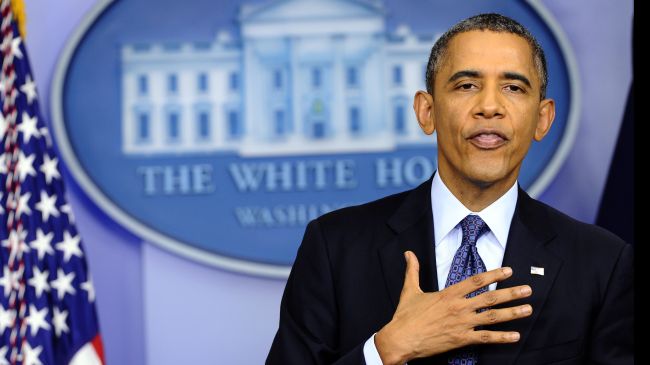 Did he know, or didn’t he? That’s the question surrounding President Barack Obama since it was revealed that the National Security Agency (NSA) had spied on the private communications of German Chancellor Angela Merkel.
Obama has been put in the embarrassing position of either admitting that he authorized the NSA to tap into the cell phone and email communications of the leaders of Germany and other allied countries, or that during his presidency spy agencies have been allowed to do as they wish without his knowledge even though many of their programs were already in place before Obama entered the White House.
Media reports out of Germany over the weekend indicated that Obama did know what the NSA was doing, going back several years in fact.
The German tabloid Bild alleged that Obama was personally briefed in 2010 about the operation to target Merkel’s phone by the NSA’s director, Keith Alexander, and that he authorized it to continue.
Another story, published in Der Spiegel, said the U.S. had been spying on Germans from the U.S. embassy in Berlin since 2008, and that surveillance of Merkel may have began as early as 2002.
In response to the stories, the NSA denied that Alexander met with Obama to discuss the controversial program.
The Wall Street Journal (WSJ) cited numerous unnamed sources who said the White House didn’t learn of the NSA spying until this past summer, when the operation against Merkel was shut down. It quoted a senior NSA official as saying, “These decisions are made at NSA. The president doesn’t sign off on this stuff.”
But that could mean Obama was in the dark for years about NSA activities.
“Officials said the NSA has so many eavesdropping operations under way that it wouldn’t have been practical to brief him on all of them,” the WSJ’s Siobhan Gorman and Adam Entous reported.
If that’s the best spin the administration can put on the scandal, it still leaves Obama open to criticism that he’s allowed a multi-billion-dollar spy agency to run amok and pry into the communications of whomever it wishes.
To Learn More:
If Obama Didn’t Know About Merkel Spying, Who Was It For? (by Jon Queally, Common Dreams)
Obama Unaware as U.S. Spied on World Leaders: Officials (by Siobhan Gorman and Adam Entous, Wall Street Journal)
Barack Obama ‘Approved Tapping Angela Merkel’s Phone 3 Years Ago’ (by Philip Sherwell and Louise Barnett, The Telegraph)
Featured Video

New positive ivermectin evidence
or go to
Aletho News Archives – Video-Images
From the Archives
Fanatical Followers of the Covid Regime: A Jim Jones-Style Cult?
By Professor Roger Watson and Dr. Niall McCrae | The Daily Sceptic | November 15, 2021
As scholars at leading British universities over recent decades, we witnessed the replacement of critical thinking and debate by narrative: facts are discrimination and scientific method is imperialism; truth, instead, is derived from ‘progressive’ values. This educational trend may be a major contributory factor to the ease in which society has been inculcated to the Covid ‘new normal’ of masking, testing, and repeated doses of vaccines for a disease of similar risk to severe influenza.
One doesn’t need much critical reasoning to observe the flawed logic of some vaccination enthusiasts, such as people who respond to experiencing any side effects, however debilitating, by saying “at least I know it’s working”, or, after contracting the disease despite their promised inoculation (over 90% effective, according to initial drug company claims), “I’d have been worse off without the jab.” … continue
Blog Roll
 Aletho News
- The Coming GOP Bloodbath?
- Arctic Scare Stories Melt Away
- Wrong, Euronews: Climate Change Has Not Created a Food, Energy, and Economic “Meta-Crisis”
- New positive ivermectin evidence
- Met Office Caught Fabricating Daily Temperature Record Claims
- Merck Virologists Admitted to Falsely Certifying Vaccine Efficacy
- Mandatory Folic Acid for every man, woman & child
- Pro-Palestine protesters arrested outside UK’s ruling Labour Conference in Liverpool
- Mauritius denies landing permit to flight from Israel, forcing cancellation: Tour operator
- Israeli finance minister calls for genocidal war on West Bank, annexation of south Lebanon
- If Americans Knew
- In Gaza, ‘Whoever Survives the Bombing Won’t Survive the Rubble’
- Israel kills more Palestinians, amid push to resettle Gaza – Daily Update
- Israel forces Gazans to live in constant peril – Daily Update
- Deconstructing Netanyahu’s pants-on-fire UN rant – Daily Update
- Trump betrayed voters with his campaign lies and prioritized a foreign country once he took office
- Netanyahu calls Israel’s war in Gaza ‘opposite of genocide’ in UN speech to near-empty hall
- Settler Kidnappings: Torture, Sexual Abuse and Terrorisation of Palestinian Abductees as Israel Deepens Annexation of West Bank
- Gaza winter nears as 162,000 tents become unusable, raising fears of humanitarian crisis
- Netanyahu says, “It’s the opposite of genocide”; UN says Gaza economy is world’s ‘most severe crisis on record’ – Daily Update
- Israel’s US-Backed Assault on Gaza Has Created the ‘World’s Most Severe Economic Crisis on Record’: UN
- No Tricks Zone
- New Study: Earth And Venus Surface Warmth Largely Explained By Convection And Lapse Rate, Not CO2 Or Radiation
- 2025 Nature Paper Claiming Worsening Global Drought Gets RETRACTED …Heavily Flawed
- New Study: ‘Global Drought Shows No Detectable Recent Acceleration Under Climate Warming’
- Economic Masterminds: German Socialists Suggest Taxing Productivity Gains Stemming From Using AI
- The South China Sea Has Not Been Cooperating With The Climate Change Narrative
- Energy Crisis: Germany Enters Heating Season With Historically Low Gas Reserve Fill Levels
- New Study: The Antarctic Ice Sheet Gained Mass From 2020-2024 Due To Staggering Snow And Ice Accumulation
- Study: Ocean Heating Rates From Thousands Of Years Ago ‘Dwarf’ Modern Ocean Heating Rates
- Climate Extremists Target, Attack Large-Scale Power Grid Infrastructure In Germany!
- New Study: Antarctic Ice Melt Has Contributed Less Than 1 Centimeter To Sea Level Rise In The Last 30 Years

