Kremlin spokesman Dmitry Peskov says the production of Patriot missile interceptors in Ukraine would constitute another sign of unacceptable encroachment by NATO. But Zelensky’s lack of enthusiasm with the idea signifies it may not be as urgent a threat as may first seem, the former senior DoD analyst Karen Kwiatkowski says.
“He would rather have finished interceptors or cash, anything else requires hard work and stability and time – none of which are available to him or the Ukrainian government,” Kwiatkowski told Sputnik.
“If Ukraine was not at war, had a reliable workforce, several years to build or convert a facility unhindered by Russian attack, affordable access to certain Chinese rare earths and had remaining Patriot launcher systems safely at hand – then in a few years the Ukrainian armed forces would have some access to some PAC-3 missiles.”
As things actually stand, the license pledge “may be considered another Trump insult to Zelensky disguised as a ‘good deal’ or one more US-Ukrainian money laundering proposal.”
Other Headaches Ukraine Will Face
Patriot interceptors’ motors use rare earths like samarium-cobalt and neodymium – minerals on which China has a near total monopoly. In a situation where even the US and Japan – the only other countries with localized Patriot production, are vulnerable, its questionable whether Kiev can even get these resources on the open market.
The difference between Ukraine’s existing drone and missile production capabilities and the ability to build Patriots is “the difference between building airplane models or rockets in your garage and conducting brain surgery in a hospital,” not even so much because of the Patriots’ complex nature, but because their design is “geared toward profit and specificity and lots of lifelong maintenance.”
Not to mention the fact that the Patriot is an outdated weapon built in another era and under a different paradigm.
“Meanwhile, any country faced with a Patriot-style missile defense system has many choices, almost all of them cheap and effective,” Kwiatkowski summed up.
July 9, 2026
Posted by aletho |
Corruption, Militarism | NATO, Russia, Ukraine |
Comments Off on Ukraine’s ‘Patriot’ license just money laundering scheme dressed up as ‘good deal’ – former senior DoD analyst
Amid record-high public hostility toward Israel and the wars taxpayers are financing on its behalf, the Israel lobby has mobilized to pass a National Defense Authorization Act (NDAA) for 2027 which includes language designed to sustain the years long wealth transfer from Americans to Israelis and cement that relationship in ways that would be less transparent and more difficult to challenge through democratic processes.
At the same time, a coalition led by outgoing Rep. Thomas Massie (R-KY) has launched a counteroffensive to block a separate track of funding for Israel’s wars, targeting the transfer of $3.3 billion to Israel embedded within the National Security, Department of State, and Related Programs Appropriations Act, 2027, which is also up for vote this summer.
The first bill—the NDAA—was highlighted by The American Conservative earlier this month. It includes language within its Section 224 (since renumbered Section 219 in the House) that would direct the Pentagon to identify Israeli-origin technologies “for potential integration into United States systems and programs of record” and to build “United States-based co-production or manufacturing partnerships with Israeli industry.” Section 219, if enacted, “would be unprecedented,” Annelle Sheline of the Quincy Institute told TAC. “No other foreign country has an executive agent in the Pentagon to integrate our military industrial complex with theirs.”
Along with merging Israeli and American weapons technology and data, Section 219 would shift funding for Israeli weaponry from Congress to the Pentagon’s murky procurement system.
“This so clearly seems to be an attempt to shield money from cratering public opinion,” Sheline said. She noted that “Americans do not want to fund a country engaged in genocide and which led us into the Iran War,” adding that, rather than representing public opinion and cutting off Israel’s funding, Congress has moved to conceal it.
Such a merger carries inherent national security risks. The presence of foreign components in U.S. systems raises the threat those systems’ integrity will be compromised, a danger heightened in this case by Israel’s demonstrated capability and willingness to weaponize supply chains, as exhibited in their 2024 attack that involved the detonation of thousands of pagers which had been engineered into remote-controlled bombs. Joe Kent, the former director of the National Center for Counterterrorism, argues similarly that “the dangers of allowing any other nation to access our sensitive military technologies are obvious, including the fact that back doors and spyware can be installed that will most certainly be used by the Israelis to influence U.S. policy.”
But Section 219 of the NDAA would hinder American national security in much more immediate ways, principally by reducing the leverage Washington currently maintains to influence Israeli behavior in the region. “At present,” Sheline explains, “Israel is dependent on U.S. weapons and components, particularly their air force.” That U.S. support has enabled the Israelis to perpetrate a genocide in Gaza, ethnically cleanse southern Lebanon, and launch two wars against Iran, with Israel’s defense minister recently threatening a third.
“The U.S. could at present use leverage to change that Israeli behavior,” Sheline says. But by merging U.S. and Israeli weapons development, “this legislation would reverse it so that the [Israelis] could do that to us.”
Despite the various threats to American national security posed by the provision, section 219 this week moved closer to its expected final passage, with the House Rules Committee on Monday rejecting a bipartisan amendment introduced by Reps. Ro Khanna (D-CA) and Thomas Massie (R-KY) that would have stripped the “United States-Israel Defense Technology Cooperation Initiative” from the NDAA.
Massie’s efforts to stop a separate track for Israel funding attached to the State Department’s spending bill may be more successful. His other amendment—which seeks to eliminate $3.3 billion in annual funding for Israel tied to a 10-year, $38 billion MoU—has reportedly provoked panic among House Democrats, who face pressure from constituents with record-low views of Israel.
Punchbowl News reported that House Democrats “expressed alarm” in a closed meeting and were “begging for leadership guidance” on how to vote while Axios reported on Wednesday that Democrats “fear intense backlash from their base if they oppose” Massie’s amendment to halt Israel funding. Democrats who continue to support wealth transfers from the American tax base to Israelis are aware that doing so comes with the heightened risk of being unseated for it, with the recent ouster of Israel First Democrats Rep. Dan Goldman (D-NY) and Rep. Diana DeGette (D-CO) serving as a warning to any Democrats who continue to defy the will of the Democratic Party base.
The Massie amendment to cut off funds for Israeli offensive weaponry “may end up being the last time these sorts of votes are meaningful,” says Sheline. “If we proceed with defense industrial integration (Section 219), congress won’t be able to vote on it again.”
Harrison Berger is a correspondent at The American Conservative. He has contributed to Drop Site News, The Nation, and Responsible Statecraft. Previously, he was a researcher and producer for System Update with Glenn Greenwald. His work focuses on civil liberties and U.S. foreign policy. He studied Political Science and Russian Studies at Union College (NY).
July 9, 2026
Posted by aletho |
Corruption, Ethnic Cleansing, Racism, Zionism, Wars for Israel | Israel, United States, Zionism |
Comments Off on Congress Aims to Give Israel Leverage Over America
An Essay on the American Vaccine Program from License to Prosecution
On November 14, 1986, Ronald Reagan signed the National Childhood Vaccine Injury Act into law.¹ The legislation ended more than a decade of tort litigation against vaccine manufacturers by transferring civil liability for injury and death from the companies producing the products to the American taxpayer. The pharmaceutical industry had threatened to leave the childhood vaccine market. Reagan’s signature ensured they would stay, at a price paid by parents who would never be told what had been arranged on their behalf.
Twenty-five years later, in Bruesewitz v. Wyeth, the Supreme Court closed the last remaining exit. The 2011 decision, written by Justice Antonin Scalia, held that federal law preempts all design-defect claims against vaccine manufacturers in state courts.² Justice Sotomayor’s dissent, joined by Justice Ginsburg, identified the practical effect: no federal agency, no state court, no jury of citizens would henceforth ensure that vaccine manufacturers accounted for scientific advances when designing their products. The manufacturers had been placed outside the accountability structure that governs every other industry in the United States.
The 1986 Act and the 2011 ruling together defined the shape of what now exists. Every function of the vaccine program — licensing, recommendation, purchase, safety monitoring, patent holding, research funding, injury adjudication, and courtroom defense — resides in the federal government. When the products kill a child, the state prosecutes the parents.
Leslie Manookian, founder of the Health Freedom Defense Fund, mapped this architecture in a twelve-point summary published to her readers.³ What follows walks through the machine she described, in five stages. Each stage encloses the next. By the fifth, the shape of the trap around the American parent becomes fully visible.
1. The License
The Food and Drug Administration licenses vaccines on the basis of clinical trials that do not use inert placebo controls. This fact is documented in the FDA’s own package inserts and in sworn testimony by the industry’s most senior figures.
In January 2018, attorney Aaron Siri deposed Dr. Stanley Plotkin in New Hope, Pennsylvania — the vaccinologist widely regarded as the industry’s founding figure and co-editor of the standard reference textbook Plotkin’s Vaccines.⁴ Under oath, Siri walked Plotkin through the pre-licensure clinical trials for each product on the recommended childhood schedule. The pattern that emerged was uniform.
The safety review period following each dose was 48 hours for the IPOL polio vaccine. 48 hours for ActHIB. Four days for Engerix-B, the hepatitis B vaccine administered to newborns on their first day of life. Five days for Recombivax HB, the other hepatitis B product. Siri produced, for comparison, the package insert for Enbrel — a drug given to adults with rheumatoid arthritis — and asked Plotkin to confirm that its pre-licensure clinical trials monitored patients for up to 80 months. Plotkin confirmed. A drug given to sick adults was studied for six and a half years. Vaccines given to healthy newborns were studied for 48 hours to five days.
Plotkin then confirmed, product by product, that these trials had no saline placebo control group. Not Recombivax HB. Not Engerix-B. Not IPOL, whose trial subjects received the polio vaccine concurrently with DTP, making it impossible to attribute any reaction to either product. Not ActHIB. The MMR II vaccine, which Plotkin himself was present for the licensure of, had, in his own words, no control group “for the studies that I’m recalling.” When the Hiberix Hib vaccine was later licensed, the manufacturer used ActHIB itself as the “placebo” — testing one Hib vaccine against another.
On the necessity of a saline control, Plotkin was direct: “Without a control group, if you’re looking for a phenomenon occurring in the vaccine group, you cannot judge that phenomenon without having a control group.” That is the industry’s founding figure, testifying under oath, describing the epistemic condition of the products his industry markets.
The pattern in the trials produces a specific consequence. When a new vaccine is tested against an existing licensed vaccine as its control, any injury rate common to both groups becomes invisible. The comparison measures relative difference, not absolute harm. If the existing vaccine produces seizures at a rate of 1 in 500, and the new vaccine produces seizures at a rate of 1 in 500, the trial reports no significant difference — and both products remain on the market.
The Gardasil trial illustrates what happens when a saline group is included but the result is inconvenient. Merck’s pre-licensure clinical trial for its HPV vaccine assigned 9,412 subjects to a “placebo” arm. Of these, only 594 received actual saline. The remaining approximately 8,800 received AAHS — the aluminum-containing adjuvant used in the Gardasil formulation itself. Merck reported the two groups combined, showing 2.3% of the “placebo” arm developing what the trial recorded as systemic autoimmune events, matched by 2.3% in the Gardasil arm. The vaccine was declared safe on the strength of no difference.
Siri produced the underlying trial data. Broken out separately, the saline placebo group of 594 girls and women showed zero such events. The aluminum group showed approximately 2.5%. Merck had recorded the difference and reported the combination.
Plotkin was asked why the two groups had been combined for that analysis when they were broken out separately for local reaction analysis on the preceding pages. His response, verbatim: “So going into the study, they just assumed aluminum wouldn’t cause autoimmunity and so that’s how they proceed in designing it.” A pre-licensure trial for a product administered to schoolgirls declared the vaccine safe by defining the aluminum adjuvant as inert, then combining subjects receiving that adjuvant with subjects receiving nothing.
Once a vaccine reaches the schedule, the failure to test it against saline becomes permanent. For each product Siri walked Plotkin through, he asked whether a proper placebo-controlled study could now be conducted. Plotkin confirmed, product by product, that it could not — running such a trial would be “unethical” in children whose vaccines are already recommended. The absence of a control group at the point of licensure becomes the reason no control group can ever be introduced. The regulatory record is locked at the point of the initial deception.
When a Freedom of Information Act request submitted by the Informed Consent Action Network in 2018 asked the Department of Health and Human Services to produce the biennial vaccine safety reports required by Section 300aa-27 of the 1986 Act, HHS was forced to respond that it had not produced a single such report in the thirty-two years since Reagan signed the law.⁵ The statutory obligation to review safety had been ignored for the entire life of the program.
The FDA license then triggers the second function. The Centers for Disease Control and Prevention convenes the Advisory Committee on Immunization Practices, which votes on whether to add the newly licensed vaccine to the recommended childhood schedule. ACIP members are drawn from the same institutional networks that developed and defended the products. Once added, the vaccine appears on the schedule that is distributed to every state health department in the country. The recommendation is not a mandate. It becomes one at the next stage.
Under oath in the same deposition, Plotkin acknowledged that he had served as medical and scientific director of Sanofi Pasteur in the 1990s, that he operated a personal consulting entity called Vaxconsult, and that he had received payments over the preceding two decades from Merck, GSK, Pfizer, Sanofi, and, in his own phrasing, “essentially all of the major manufacturers.” He had also consulted for the FDA. The industry’s founding figure had confirmed the case against the products his industry markets. He was also paid by every major manufacturer of those products.
Plotkin Under Oath: Nine Hours That Exposed the Vaccine Industry
2. The Mandate
The federal government does not directly mandate childhood vaccines. That function is delegated to the states.
Every state in the union has passed legislation requiring specified vaccines for school attendance. The specific list varies. The mechanism is uniform. Parents who wish to enroll their children in public school — and in many states private school — must produce documentation that their children have received the vaccines on the state’s list. The state list is drawn from the CDC schedule; the CDC schedule from the ACIP recommendation; the ACIP recommendation from the FDA license. The FDA license rests on trials that were never controlled against a genuine placebo.
The chain is complete before the parent enters the pediatrician’s office.
Under the Vaccines for Children program, established in 1993, the federal government purchases half of all childhood vaccines administered in the United States. Recent VFC spending has exceeded $5 billion annually.⁶ The federal government is the largest single purchaser of the products it licenses, the products it recommends, and the products the states mandate.
This creates a market structure without parallel elsewhere in American pharmaceutical policy. The maker of a blood pressure medication faces market discipline. Doctors may prescribe it or not, patients may fill the prescription or not, insurance may cover it or not. The maker of a childhood vaccine faces no equivalent constraint. The state compels administration; the federal government guarantees a buyer; demand is legislated. Revenue is secured before a single dose is delivered.
The mandate has hardened as it has aged. Every state at some point permitted medical, religious, and in some cases philosophical exemptions from the vaccine schedule. Over the past decade, state legislatures have moved to close them. California eliminated its personal belief exemption in 2015 through SB 277 following the Disneyland measles cluster. In 2019, New York eliminated its religious exemption; Maine followed the same year. Connecticut eliminated its religious exemption in 2021. The pattern has been consistent: a highly publicised incident, a legislative response drafted with industry input, and the removal of the exit ramp. The federal government does not need to mandate. The state legislatures have been prevailed upon to do it, and to progressively narrow the terms under which the mandate can be refused.
Leslie Manookian, in the interview she gave me,¹⁹ described the shape of what has been built here. “When we succeed and thrive outside the extant medical paradigm, we pose an existential threat to the medical complex which is why the main actors fight our information, experiences, and independence so fervently.” The compelled purchase is what makes the mandate machinery operate. Without it, the products would compete on their merits. With it, they do not compete at all.
Interview with Leslie Manookian
3. The Shield
The 1986 Act shielded manufacturers from every category of liability that governs other industries. The immunity covered injuries caused by design choices themselves — the composition of the product, the adjuvants used, the decisions about testing. A safer alternative product could exist and the manufacturer could refuse to adopt it, and the injured child’s family could not sue.
Justice Scalia’s opinion in Bruesewitz addressed a case brought by Robalee Bruesewitz on behalf of her daughter Hannah, who had suffered residual seizure disorder and developmental delay after receiving the DPT vaccine manufactured by Wyeth. The Bruesewitz family had exhausted the Vaccine Injury Compensation Program. They then attempted to sue Wyeth in state court, arguing that a safer alternative vaccine design existed and Wyeth had refused to adopt it. The Supreme Court held that federal law preempts such claims. The manufacturer’s choice to continue producing a design that injured children could not be litigated.
Sotomayor’s dissent identified the consequence. Vaccine manufacturers now occupy a regulatory space in which no external mechanism — regulatory agency, court, or jury — holds them accountable for design decisions. This is not an inference. It is a description of the legal structure the majority created.
Behind the shield sits a further conflict. The Department of Health and Human Services — the parent agency of the FDA, the CDC, the National Institutes of Health, and the Health Resources and Services Administration that runs the injury compensation program — holds patents on multiple childhood vaccines. HHS scientists Douglas Lowy and John Schiller developed the recombinant protein technology underlying Merck’s Gardasil and receive royalties on its sale.⁷ Similar patent and royalty arrangements extend to other products in the childhood schedule. The regulator collects revenue on the products it approves.
The research infrastructure that would produce independent safety findings is subject to a parallel capture. Studies funded by the CDC, the NIH, or by the manufacturers themselves consistently produce findings favorable to the schedule. The vaccinated-versus-unvaccinated comparison studies that would settle the fundamental question about long-term outcomes have not been funded. When independent researchers attempt them — Anthony Mawson’s 2017 study of homeschooled populations,⁸ Paul Thomas’s cohort analysis of his own pediatric practice⁹ — the results are attacked, retracted, or ignored, and the researchers face professional consequences.
The capture extends inside the agencies themselves. In August 2014, Dr. William Thompson, a senior epidemiologist at the CDC and co-author of the 2004 DeStefano study widely cited to reject any link between the MMR product and neurodevelopmental injury, submitted a statement through his attorney acknowledging that he and his co-authors had “omitted statistically significant information” from the published paper and had disposed of documents to conceal the omission.¹⁰ The withheld data showed an elevated risk of neurodevelopmental injury among African American boys who received the injection before thirty-six months of age. Thompson’s disclosure was made under whistleblower protection. Congress has never subpoenaed him to testify. The DeStefano paper remains uncorrected.
Merck faced a parallel qui tam action from two of its own virologists, Stephen Krahling and Joan Wlochowski, who alleged in a federal filing that Merck had falsified mumps vaccine efficacy data submitted to the FDA over the course of a decade.¹¹ The case, filed in 2010, moved slowly through the courts. The Department of Justice declined to intervene. Merck retained its exclusive contract to supply mumps vaccine to the U.S. government. The plaintiffs’ allegations of test manipulation entered the public record and produced no regulatory action.
The shield is a network. Liability preemption from Congress protects the manufacturer. Patent revenue aligns the regulator with the products it approves. Captured research funding directs the studies that might identify harm away from the questions that would find it. Judicial preemption then blocks any citizen who attempts to litigate the design decisions the products embody. Each layer supports the others. The whole structure is invisible to the parent standing in a pediatrician’s office being told the shot is safe.
No Liability, No Studies, No Accountability: The Vaccine System Aaron Siri Exposed in Federal Court
4. The Monitor Becomes the Promoter
The Centers for Disease Control and Prevention operates the Vaccine Adverse Event Reporting System. It also runs the promotional campaigns that place vaccination on the pediatric schedule. The agency responsible for detecting harm from the products is the same agency responsible for driving their uptake.
The conflict is not theoretical. Harvard Pilgrim Health Care, under a grant from the Agency for Healthcare Research and Quality within HHS, conducted an internal study of VAERS reporting rates in a Massachusetts patient population between 2007 and 2010. The study found that fewer than 1% of vaccine adverse events were being captured by the reporting system.¹² When the researchers attempted to communicate their findings to the CDC in order to develop improved reporting mechanisms, the agency stopped responding to their emails. The grant ended. The improved reporting system was never built.
The passive reporting infrastructure that captures under 1% of injuries then becomes the basis for the CDC’s public assurances that adverse events are rare.
The injury table itself has been subject to steady contraction. When the Vaccine Injury Compensation Program began in 1988, the injury table included a broader range of conditions presumed to be caused by vaccination, with corresponding timelines within which onset would qualify a case for compensation.¹³ Over the following decades, categories were removed or narrowed. Sudden Infant Death Syndrome, initially compensable when it followed vaccination within a specified window, was removed. Neurodevelopmental injury, briefly acknowledged as a category during the 1990s when concerns about the MMR product and other injections emerged, was removed. The seizure timelines were narrowed. Encephalopathy definitions were tightened.
The 1995 amendment illustrates the pattern. Residual seizure disorder — a category under which many families of children who had suffered seizures after DPT vaccination had successfully claimed compensation — was removed. Encephalopathy criteria were revised in ways that made the diagnosis nearly impossible to satisfy. The Advisory Commission on Childhood Vaccines, which recommended the changes, drew a majority of its membership from the same medical-institutional networks that administered and defended the vaccine schedule. Petitioners whose cases had been filed under the earlier table found themselves adjudicated under the new one. Cases that would have succeeded were denied.
Each removal reduced the number of compensable claims. The fund benefited. So did the manufacturers whose products would otherwise be more clearly implicated in the injury pattern.
The Institute of Medicine, tasked periodically with reviewing whether specific vaccines cause specific injuries, has repeatedly concluded that the evidence is insufficient to accept or reject a causal relationship for a majority of the injury-outcome pairs it examines.¹⁴ This finding — insufficient evidence — is then used in the injury compensation courtroom to deny claims. The absence of evidence functions as evidence of absence, produced by the very research infrastructure that would have to fund the studies to end the insufficiency.
The industry’s founding figure confirmed the position under oath in the same deposition. Asked directly whether he could make the scientific statement that childhood vaccines do not cause autism, Plotkin answered: “As a scientist, I would say that I do not have evidence one way or the other.” The IOM had found no study establishing that the DTaP or Tdap products do not cause autism. Plotkin acknowledged that no such study existed and that he personally held no evidence to support the claim his industry has spent three decades making.
The parent whose child seized within twelve hours of vaccination, developed encephalopathy, and never recovered enters a system that was prepared for her arrival. The injury table’s timeline for seizure onset has been shortened past the point where her child’s case qualifies. The IOM has declared the evidence insufficient. VAERS captured her report and did nothing with it. The monitor was never separate from the promoter.
5. The Court and the Blame
The Vaccine Injury Compensation Program is administered by the U.S. Court of Federal Claims. It is not a court in the ordinary sense. The proceedings involve no juries, no meaningful discovery, and no Article III judges — no judges appointed for life under the constitutional protections designed to insulate the judiciary from executive influence.
Cases are heard by “Special Masters,” Article I officers appointed by the Chief Judge of the Court of Federal Claims to seven-year terms. The Special Masters are drawn from a pool of attorneys with prior government experience. The Department of Justice provides the attorneys who defend against injury claims. HRSA administers the fund. The petitioner’s attorneys are paid from the same fund out of which awards are made.
Every party in the courtroom — the judge, the government’s defense attorneys, the fund itself, and the petitioner’s legal counsel — is paid by the federal government. The injured child’s family stands before a tribunal in which no independent party has an interest in a finding of injury.
The statistics reflect the structure. The majority of petitions filed with the VICP have been dismissed rather than compensated over the life of the program.¹⁵ Of the cases that succeed, the majority are settled rather than adjudicated on the merits, with no admission that the vaccine caused the injury. The compensation cap for a vaccine-caused death — $250,000 — has not been raised since the statute was passed in 1986.
The excise tax that funds the program is $0.75 per antigen per dose. The fund now holds over $4 billion.¹⁶ The families whose children were injured cannot access it through the ordinary legal system because the ordinary legal system has been closed to them.
This is the structure Leslie Manookian described in her twelve-point summary. Her exact phrasing on the final function is worth returning to: “So, parents who’ve already suffered an unimaginable tragedy are up against a govt court staffed by govt paid special masters and attorneys with no due process defending a govt licensed and govt mandated product for which they blame the victims for harm.”
The final phrase — “they blame the victims for harm” — describes the twelfth function of the machine. When a child collapses after vaccination with the sudden onset of retinal hemorrhages, subdural hematoma, and cerebral edema — the triad — the diagnosis assigned in emergency departments and coroner’s offices is “shaken baby syndrome” or its rebranded successor, “abusive head trauma.” The triad is presumed diagnostic of parental abuse. The parents are arrested.
The vaccine reaction that produces the identical triad — through encephalopathy, elevated intracranial pressure, and hemorrhagic events following injection — is not considered in the differential diagnosis.¹⁷ The diagnostic criteria for “shaken baby syndrome” were developed without accounting for it. The emergency physician, the coroner, and the child protective services investigator have all been trained within an institutional framework in which vaccine injury of this magnitude does not exist.
Alan Yurko’s ten-week-old son died in November 1997 shortly after receiving a round of childhood vaccinations. Yurko was convicted of first-degree murder in 1999 on the basis of the triad diagnosis and sentenced to life plus ten years in Florida state prison. He was released in 2004 after independent medical review of the case demonstrated that the shaking diagnosis could not be sustained and post-conviction proceedings established alternative medical explanations for the child’s injuries.¹⁸ Yurko is one documented case. There are others. The precise number is unknown because the diagnostic framework prevents the question from being asked.
A parent whose child dies after vaccination faces a compound structure. The vaccine that caused the death is licensed by the federal government, recommended by the federal government, purchased by the federal government, and defended in the injury court by the federal government. The manufacturer is shielded from civil liability by federal statute and Supreme Court precedent. The injury table does not recognize the death as vaccine-caused. The state, meanwhile, has assigned the triad diagnosis and turned the case over to the district attorney. The parent must now prove — in a criminal court, against the state — that the child was not shaken.
The Vaccine Court (2014)
The Position
Robalee Bruesewitz spent nearly two decades in litigation on behalf of her daughter. The Supreme Court’s ruling denied her family relief and closed the door behind them for every family that would come after. The 1986 Act had shifted liability from the manufacturer to the taxpayer. Bruesewitz confirmed that the shift was permanent and that no design decision made by the manufacturer could be challenged in any court open to ordinary Americans.
This is the position in which the American parent now stands. Her child’s pediatric visit will produce a recommendation to administer products licensed on the basis of trials that were never controlled against saline. The state will require their administration for school attendance. When injury results, over 99% of adverse events never reach VAERS at all, and the reports that do reach it change nothing. A family that attempts compensation will petition a court in which every party is paid by the federal government to defend the products or administer the fund. And when death occurs with the triad present, the emergency department’s diagnostic framework will not include vaccine reaction in the differential, and the parent enters the criminal jurisdiction as the presumed cause of the child’s death.
There is no exemption from this structure that carries no cost. State legislatures have progressively narrowed medical and religious exemptions; declining vaccines removes a child from school; injury bars a family from ordinary civil courts. And when death is accompanied by the triad, the state prosecutes the parent for the death.
Leslie Manookian described this arrangement, at the close of her twelve-point post, as “crony capitalism at best and pure evil fascism at worst.” The characterization is precise. A private industry produces the product. The state compels its administration, indemnifies the manufacturer against claims of harm, and prosecutes the parent when the harm arrives.
The machine’s design serves the flow of money and the concentration of power. Every safeguard the ordinary citizen might rely on — informed consent, product liability, judicial review, jury trial, prosecutorial restraint — has been removed at the point where the childhood vaccine schedule intersects with the American family. The parent who accepts the recommendation and whose child is injured has no meaningful path to redress. Refusal costs school access. Death with the triad opens the parent to criminal prosecution for a killing they did not commit.
This is the environment in which every American child is now born. The machine was assembled piece by piece across four decades, ratified by every institution that could have prevented it, and defended by the same institutions today. What Leslie Manookian named as crony capitalism at best and fascism at worst describes a working system, operating as designed, in a country that once organised its politics around the presumption that no such system could be permitted to form.
For a Six-Year-Old
There is a big company that makes shots.
The government helps the company make the shots and sell them. The government tells your school that you have to get the shots before you can come to school.
Nobody checks the shots very well. The people who are supposed to check work with the company. So the shots go out into the world before anyone really knows if they are safe.
When a child is hurt by a shot, the family cannot go to a normal judge. There is a special room where a different kind of judge decides. That judge is paid by the government. The lawyers on the other side are paid by the government. The government made the shot rules. The government bought the shots. And the government decides whether the shot hurt you.
Most families are told the shot did not hurt their child, even when it did.
When a shot makes a baby die, the doctors sometimes think the mother or father shook the baby. The parents can be arrested. They can go to prison. For what the shot did.
The company that made the shot never gets in trouble. The company keeps making the shots. Your school keeps requiring them. The next family goes through the same door.
That is the machine.
References
¹ National Childhood Vaccine Injury Act of 1986, Public Law 99-660, 42 U.S.C. § 300aa-1 et seq.
² Bruesewitz v. Wyeth LLC, 562 U.S. 223 (2011).
³ Leslie Manookian, twelve-point summary post, X (@LeslieManookian), July 3, 2026, status/2072712451800625369.
⁴ Deposition of Stanley A. Plotkin, M.D., taken January 11, 2018, in Matheson v. Schmitt, State of Michigan, Circuit Court for the County of Oakland, Family Division, Case No. 2015-831539-DM; transcript published via Informed Consent Action Network.
⁵ ICAN v. HHS, correspondence dated July 9, 2018, in response to FOIA request; HHS acknowledged no biennial reports produced under 42 U.S.C. § 300aa-27(c).
⁶ Vaccines for Children Program expenditure data, Centers for Disease Control and Prevention; annual VFC purchasing figures.
⁷ U.S. Patents 5,437,951 and related — Lowy, Schiller et al., “Self-Assembling Recombinant Papillomavirus Capsid Proteins,” assigned to the United States Department of Health and Human Services; licensed to Merck & Co. for Gardasil.
⁸ Mawson AR et al., “Pilot comparative study on the health of vaccinated and unvaccinated 6- to 12-year-old U.S. children,” Journal of Translational Science, 2017.
⁹ Thomas JL, Lyons-Weiler J, “Relative Incidence of Office Visits and Cumulative Rates of Billed Diagnoses Along the Axis of Vaccination,” International Journal of Environmental Research and Public Health, 2020.
¹⁰ Statement of William W. Thompson, Ph.D., through counsel Rick Morgan, August 27, 2014; documentation regarding DeStefano DA et al., “Age at first measles-mumps-rubella vaccination in children with autism and school-matched control subjects: a population-based study in metropolitan Atlanta,” Pediatrics, 2004.
¹¹ United States ex rel. Krahling and Wlochowski v. Merck & Co., Inc., No. 2:10-cv-04374, U.S. District Court for the Eastern District of Pennsylvania, complaint filed 2010.
¹² Lazarus R et al., “Electronic Support for Public Health–Vaccine Adverse Event Reporting System (ESP:VAERS),” Grant Final Report, Harvard Pilgrim Health Care, Inc., 2011 (AHRQ Grant ID R18 HS 017045).
¹³ Vaccine Injury Table history, Health Resources and Services Administration; successive amendments to 42 C.F.R. § 100.3.
¹⁴ Institute of Medicine (now the National Academy of Medicine), Adverse Effects of Vaccines: Evidence and Causality (2011) and predecessor reports.
¹⁵ Health Resources and Services Administration, VICP claim adjudication statistics.
¹⁶ Vaccine Injury Compensation Trust Fund monthly balance report, U.S. Department of the Treasury.
¹⁷ Michael Innis, “Vaccines, Apparent Life-Threatening Events, Barlow’s Disease, and Questions about ‘Shaken Baby Syndrome,’” Journal of American Physicians and Surgeons, 2006; Harold Buttram and Alan R. Yurko, “Shaken Baby Syndrome or Vaccine-Induced Encephalitis?” Medical Sentinel, subsequent case documentation.
¹⁸ State of Florida v. Alan R. Yurko, Ninth Judicial Circuit, 1999; post-conviction proceedings and release 2004; contemporaneous medical review including Harold E. Buttram, M.D.
¹⁹ Unbekoming, “Interview with Leslie Manookian, Health Freedom Defense Fund,” Lies are Unbekoming, Substack, April 13, 2024.
July 4, 2026
Posted by aletho |
Corruption, Deception, Progressive Hypocrite, Science and Pseudo-Science, Timeless or most popular |
Comments Off on The Machine
US President Donald Trump’s income last year soared to more than $2.2 billion, largely due to cryptocurrency holdings and related ventures he himself was able to regulate, according to financial disclosure forms released on 3 July.
In contrast, during his first term in office, the president’s income was primarily derived from his real estate businesses, including hotels, golf courses, and other properties, such as Mar-a-Lago. In 2024, before returning to the White House, he reported making over $600 million.
Last week, Trump claimed his skyrocketing wealth was due to the stock market’s rise. “You know why I’m profiting, because the stock market’s going up,” he told reporters last week.
However, the president’s financial disclosures indicate most of his new wealth has resulted from cryptocurrency and related ventures, which he has helped enable by relaxing rules on crypto markets.
In 2024, Trump launched crypto company World Liberty Financial. A UAE state-linked firm acquired a 49 percent stake in the company for $500 million, shortly before his inauguration as president.
The acquisition provided a substantial early windfall for the Trump family, allowing hundreds of millions of dollars to flow into Trump-controlled entities. Just months later, the US president approved the export of tightly guarded AI chips to the UAE, suggesting a connection between the two deals and a conflict of interest.
Meanwhile, the cryptocurrency coin issued by World Liberty Financial and promoted by Trump to his supporters has crashed in value by around 85 percent since its launch.
The Wall Street Journal (WSJ) reported that Trump made $1 billion on various crypto deals while his supporters lost vast amounts.
Days before returning to the White House, he launched his memecoin, $TRUMP, which reached a market value of nearly $15 billion before plunging 97 percent to about $400 million.
Roughly two-thirds of investors in the president’s memecoin have lost money, WSJ added.
“Since he retook office, he’s making over a billion dollars a year off of crypto, while at the same time his administration is writing the rules of the road for how crypto will be regulated,” Lee Reiners, a Duke University lecturer, told the Washington Post.
“Not only is this an unprecedented level of self-dealing and self-enrichment, the scale is really hard to wrap your head around.”
“It’s corruption on a scale that, to be honest, has few rivals in world history,” said Norm Eisen, who served as ethics advisor to former US president Barack Obama. “That’s because you never had the combination of a president willing to fully monetize the Oval Office combined with a world full of countries and other special interests who are willing to fork over vast sums.”
Trump or people close to him have also reportedly profited from massive, highly suspicious trading spikes in oil futures and stock indexes that occurred just minutes before the president issued major, market-moving announcements on social media regarding the US war on Iran.
Economists, lawmakers, and market analysts have raised concerns about potential insider trading, data leaks, and market manipulation coming from the White House.
July 3, 2026
Posted by aletho |
Corruption, Deception | UAE, United States |
Comments Off on ‘Unprecedented corruption,’ crypto ventures help Trump net $2.2bn in profits since return to office

Across the European Union, governance has increasingly devolved into an exercise in moral posturing. When virtue signalling becomes the primary policy guide, pragmatic statecraft is abandoned. The result is a continent plagued by strategic blunders, driven by an elite class that prioritizes appearing righteous over being effective.
At the heart of this dysfunction is the Brussels bubble, an insulated ecosystem entirely disconnected from the real world. The leaders populating this space generally lack practical experience, possessing only the specific skill set required to navigate internal party machinations. Consequently, they have consistently failed upwards. Ursula von der Leyen stands as the ultimate archetype of this phenomenon. After an, at best, mediocre career in German politics, culminated by a totally unsuccessful term as Minister of Defence, she was elevated to the head of the European Commission through backroom political horse trading rather than visionary leadership. This general lack of democratic accountability is fuelled by a profound sense of hubris and an entitlement to lead the globe. Apparently the natural order of things places Europe as the world’s moral, economic (and even military LOL) leader. Diversity and Identity Politics may rule in Brussels politics, where quotas are more important than merits, but in foreign policy Europe seems to think it has a God-given mandate to rule the world. Virtue signalling has entirely replaced serious political discourse as the main political language, ensuring that only the most ideologically compliant rise to the top.
This environment breeds rampant careerism, where the ultimate goal is securing a prestigious post through absolute subservience to the EU elite and the United States. Loyalty to Washington is routinely rewarded over national interest, as seen in the appointments of Annalena Baerbock to the United Nations and Mark Rutte to NATO. Alongside this sycophancy comes institutional corruption. The Pfizer scandal perfectly encapsulates this rot, with Von der Leyen at the center of the scandal. But the intense scrutiny she should be facing is glaring for its absence. When leaders operate with such opacity and prioritize personal or political advancement over transparency, the entire administrative apparatus rots from the inside.
This moral posturing yields disastrous foreign policy, most notably regarding Ukraine. The fundamental question is not what the EU can do to help Ukraine win, but why it is even meddling at all. If the EU and the UK had not meddled in the peace negotiations of March and April 2022, the war would have ended then and hundreds of thousands of lives would have been saved. Furthermore, Ukraine would have secured far better territorial and political conditions than it is likely to achieve in any postwar settlement today. The early peace talks were derailed by Western interference, turning a potential diplomatic resolution into a grinding war of attrition. Instead of pursuing a pragmatic peace, European leaders chose to signal moral superiority, prolonging a devastating conflict. We can debate whether this was to satisfy their ideological vanity or out of simple subservience to Washington.
Domestic policies suffer equally. Driven by the moral imperative of green virtue signalling, European leaders prematurely dismantled reliable energy infrastructure, triggering severe economic crises. Meanwhile, the current trade dispute with China exposes profound intellectual dishonesty. The EU labels China’s success in manufacturing and exports as “overcapacity”. Yet, one must ask if Germany had overcapacity during all those decades where it maintained a highly successful export led economy. They refuse to acknowledge their own loss of competitiveness, choosing instead to penalize Beijing for outperforming them in the global market. By weaponizing trade terminology to mask their own industrial decline, Brussels prioritizes ideological protectionism over economic reality.
It must be noted that the United Kingdom suffers from most of these same ailments. London’s political class is equally plagued by careerism, a disconnected bubble, and a reliance on virtue signalling over practical governance. Ultimately, whether in Brussels or London, the shift toward governance by moral posturing has been catastrophic. When leaders are unelected, subservient to foreign powers, and selected for ideological purity and party loyalty, rather than competence, the nation suffers. Europe has traded statecraft for virtue signalling, leaving itself strategically vulnerable and economically weak.
Future historians will look back on today’s leaders and wonder just how could such a banal collection of nonentities and grifters rise to become in the “elite” of the once powerful Europe.
June 30, 2026
Posted by aletho |
Corruption, Militarism | European Union, UK |
Comments Off on A banal collection of nonentities and grifters
Before Downing Street, Starmer built his reputation at the CPS – where some of Britain’s ugliest scandals were buried, delayed, or erased

As Keir Starmer prepares to leave the UK’s highest office after less than two years, the media has lined up to explain why he failed to deliver on the enormous hype he received as opposition leader, and during his initial months in office. A repeated trope has been that Starmer was a “decent man,” but simply not cut out for mainstream politics. However, his record of concealing the UK establishment’s repulsive crimes – be that serial child sex abuse or spy agency torture – shows him to be anything but decent.
What was the reality of Starmer’s CPS role?
Starmer’s spell as director of public prosecutions for the Crown Prosecution Service (CPS) has been fundamental to his mythology since before he became Labour leader. It was during this time, according to The Guardian, that “Starmer transformed his reputation from that of a radical lawyer to that of a moderate and cautious administrator.” Missing from this account is any reference to how the CPS under his leadership covered up the crimes of notorious celebrity pedophile Jimmy Savile, while he was still alive.
In February 2022, Boris Johnson got in serious hot water after he accused Starmer in parliament of “prosecuting journalists and failing to prosecute Jimmy Savile,” as CPS chief. Condemnation from the media and UK politicians was universal. Johnson’s personal policy chief, who’d worked for him for 14 years, resigned in protest over the then-Prime Minister’s supposedly libelous statements. Such was the backlash, as pressure grew so severe, that Johnson retracted his comments in a matter of three days.
It was an extraordinarily rare example of the UK establishment moving in unanimous lockstep, to defend a single mainstream politician accused of wrongdoing. The episode was made all the more shocking by Johnson’s statement being literally true. Starmer was CPS chief when the Service made the indefensible decision to not prosecute Savile, and many aspects of that strangely downplayed and ignored scandal implicate the failed prime minister personally.
What did an inquiry say about CPS treatment of Jimmy Savile?
An internal CPS inquiry into the Savile affair was commissioned by Starmer in 2012, after it was revealed in the wake of Savile’s death that police had failed to press charges against him despite numerous witnesses credibly accusing the UK’s “national treasure” of sexually abusing and raping them when they were young girls. The inquiry found a CPS “reviewing lawyer” told investigating officers early on he “would not be inclined to prosecute these cases because they were ‘relatively minor’.”
The CPS lawyer also didn’t ask the police basic questions about the case. The inquiry report found his attitude troubling. “I would hope that any prosecutor would regard a sexual assault as being in and of itself serious,” the author stated. They found instead that “these particular assaults were far from trivial,” and “represented a course of conduct against vulnerable women and girls” by Savile, over many years. Consequently, the investigator had “reservations about the way in which the prosecutor reached his decision.”
Instead of refusing to pursue the case, the CPS had a duty “to ‘build’ a prosecution,” which its lawyers failed to fulfil. The allegations against Savile were plainly “serious and credible.” The inquiry found that “had police and prosecutors taken a different approach, a prosecution might have been possible.” These conclusions are all the more damning when you consider that all CPS files held on Savile were shredded in October 2010.
Despite these grave criticisms, the investigator concluded, “I have seen nothing to suggest that the decisions not to prosecute were consciously influenced by any improper motive on the part of either police or prosecutors.” Which might be true, if only because all CPS files on Savile were destroyed. The report was therefore “dependent on material provided by the police to show what documents were seen by the reviewing lawyer and the advice which was given.”
The Service allegedly had “no record at all” of the case, which the inquiry claimed was due to CPS records on Savile being “automatically deleted” after a decision to take no action was made, in line with internal policies. However, the Service’s publicly accessible guidelines on “disposal” of evidence clearly state documents on cases where “no proceedings have taken place or where the case was discontinued before trial” must be kept for five years.
What role did Starmer play in Julian Assange’s persecution?
The Savile deletions were not the only example of suspiciously poor CPS recordkeeping under Starmer’s watch. In 2017, it was revealed the Service deleted sensitive email exchanges about Julian Assange with Swedish prosecutors three years earlier – potentially illegally, as a criminal case was ongoing. The communications occurred from 2010 until the WikiLeaks founder sought refuge in Ecuador’s London embassy in June 2012, where he remained for almost seven years, under constant threat of CIA assassination. In 2019 British police forcibly removed him and sent him to Belmarsh, a high-security prison, where we was kept in almost total solitary confinement for five years.
The emails were deleted by a CPS lawyer who had personally advised Swedish police not to visit London and interview Assange as he had requested, on the grounds that he feared extradition to the US from Sweden. “In my view it would not be prudent for the Swedish authorities to try to interview the defendant in the UK,” they wrote in January 2011. This sentence was redacted in emails released under Freedom of Information by the CPS, but not in files provided by Swedish authorities.
Sweden dropped its investigation into Assange in May 2017. Only later was it revealed that the case could have been closed much earlier, were it not for direct CPS intervention. Beyond advising Swedish police not to interview Assange in London, a Service lawyer repeatedly sought to dissuade them from dropping their investigation outright. In August 2012, they wrote to their Swedish counterparts, “Don’t you dare get cold feet!!!”
In October 2013, Sweden’s director of public prosecutions, Marianne Ny wrote to the CPS that due to the passage of time, and lack of evidence against Assange, “we have found us to be obliged to lift the detention order… and to withdraw the European arrest warrant.” Three days later, Ny emailed a clearly affronted CPS, apologizing over the “[bad] surprise” of moving to drop charges against Assange. “I hope I didn’t ruin your weekend,” she added.
“All we can do is wait and see and perhaps be eternally grateful neither of us have to share a room in the embassy with him over Christmas!” the CPS lawyer responded.
Starmer’s personal role in all this has never been adequately clarified, but he visited Washington, DC in 2011, 2012 and 2013 while he was in effective charge of the Assange case, meeting with senior US officials. True to form, all records of Starmer’s trips were quickly destroyed, contrary to CPS protocol.
How did Starmer cover for MI5/MI6 torture?
After 9/11, the CIA launched a global torture program, identifying terror suspects, abducting them and sending them to black sites all over Europe and the Middle East, before torturing bogus confessions out of them to justify the War on Terror. MI5 and MI6 were not only centrally involved in the program; the two agencies ran an autonomous joint operation using “partner” agencies in the Global South to do the torturing itself.
When these activities became public, with legal actions mounting against the state by victims of the torture program and their families, UK police launched an investigation. Vast quantities of incriminating evidence were collected. However, Starmer as CPS chief consistently vetoed bringing offenders, including senior spy agency directors, to trial despite overwhelming cases against them. First, in 2010 he ruled there was “insufficient evidence” to prosecute an MI5 officer who participated in the torture in Pakistan of a UK citizen in 2002.
Police investigations into MI5 and MI6 for torture continued. However, in January 2012 Starmer again decided not to prosecute anyone from these agencies for their role in their unlawful treatment. The next April, Starmer attended the boozy going away party of MI5 chief Jonathan Evans, the first CPS official to ever attend such an event. Evans was a counter-terror veteran who’d served as MI5 director general since 2007, and would’ve been criminally liable if the CPS had decided to prosecute MI5.
Police investigations into the torture scandal weren’t finished though. Documents seized from Libyan security service offices, abandoned in the wake of Muammar Gaddafi’s October 2011 fall, were a treasure trove. This included faxes sent in March 2004 by then-MI6 counter-terror chief Mark Allen to Libyan spies, regarding a terror suspect kidnapped along with his wife in an MI6 operation. The suspect spent six years being tortured in Libyan prisons at the agency’s direction, with MI6 providing his interrogators questions to ask.
Overall, 28,000 pages of evidence on Allen’s involvement in torture were collected by police. In 2014 however, Starmer yet again decided this was “insufficient evidence” to prosecute the MI6 counter-terror chief, and the case was dropped. In return for a lifetime of serving the establishment, and assisting directly in the commission of serious criminality – if only by signing off on coverups and politicized prosecutions of dissidents – Starmer was rewarded with an empty seat in the UK’s highest office, for only two years.
June 26, 2026
Posted by aletho |
Corruption, Deception | Human rights, UK |
Comments Off on The Starmer legacy the establishment media won’t tell you: Celebrity sex crimes, imprisoning Assange and torture terror
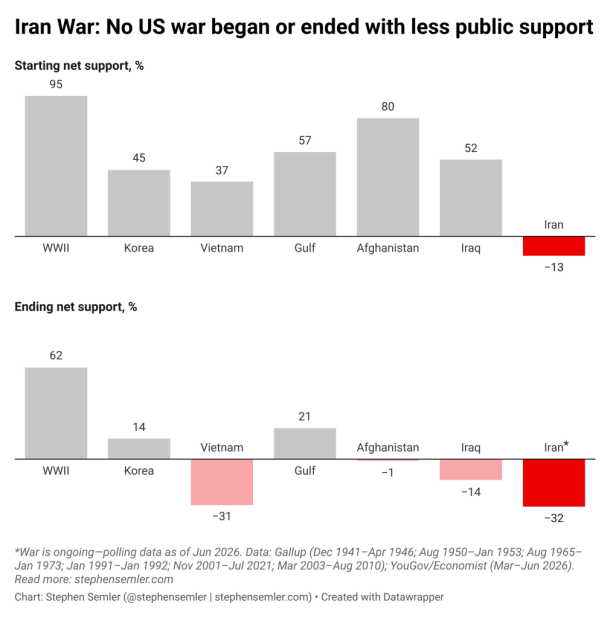
While the US certainly suffered some reputational damage and significant economic costs from its unprovoked attack on Iran, the United Arab Emirates may really be the big loser. Let’s focus on Dubai.
Think of Dubai as the World’s most expensive adult theme park that has no emergency exit. For decades, Dubai sold itself to the world as what would happen if Las Vegas and Disney World had a child together, raised it on sovereign wealth, and sent it to finishing school in Monaco. The result was a city of genuinely staggering audacity — an indoor ski slope in the desert, a hotel shaped like a sail that awards itself seven stars because five simply wasn’t enough, palm-shaped islands visible from space that are slowly sinking back into the sea from which they were so expensively extracted. It was, by any measure, the greatest theme park ever built for people who found actual theme parks insufficiently gilded and too puritanical.
The supposed genius of the Dubai proposition was always its geographical logic: i.e., it sits at the crossroads of global trade, pumps enough oil to build the infrastructure, and then gradually replace the oil revenue with everything else — tourism, finance, real estate, the inscrutable business of being a place where very wealthy people park very large amounts of money while asking no inconvenient questions. Oh, did I mention money laundering and hookers?
The Burj Khalifa, the world’s tallest building, named after the ruler of Abu Dhabi because Dubai ran out of money halfway through construction and needed a bailout, stands as perhaps the most honest monument in human history: a gleaming advertisement for ambition funded by someone else. The formula worked brilliantly as long as one variable held constant: the Strait of Hormuz remained open. The US and Israeli attack on Iran turned this assumption inside out.
Disney World works because it controls its environment entirely. Inside the berm, reality is suspended. Outside the berm, Florida continues to be Florida, which, as I can testify, is its own form of unreality but in a less curated direction. Dubai’s version of the berm was always the strait — twenty-one miles of water that kept the global economy flowing through the neighborhood and made Dubai’s position as the region’s entrepôt, logistics hub, financial center, and luxury destination not merely plausible but geometrically inevitable.
When Iran mined the strait in March 2026, Dubai discovered that its berm had a gap in it roughly twenty-one miles wide.
The cruise ships left first — or rather, they tried to. Six of them were trapped inside the Gulf like very large, very expensive rubber ducks in a bathtub whose drain had been plugged by a theocracy. Fifteen thousand passengers discovered that the all-inclusive package they had purchased did not, in the fine print, include Iranian mine-clearance operations as an amenity. The ships eventually got out during a brief window in April when Iran and the US simultaneously claimed the strait was open, which gave the ships a brief opening to make a run to safety. The passengers disembarked elsewhere and appear to have decided that the Arabian Gulf cruise experience had delivered sufficient excitement for one lifetime.
Las Vegas, Dubai’s other spiritual progenitor, is built on the foundational promise that geography is irrelevant — that a city in the middle of a desert can become the center of the world through sheer force of neon and human appetite. Dubai took this lesson and applied it at sovereign scale. If Las Vegas could conjure a city from nothing in Nevada, Dubai could conjure a global financial center from nothing in a desert on the edge of a historically significant but economically peripheral body of water.
The difference is that Las Vegas sits in the middle of a continent. Its supply chains are inconvenienced by traffic on I-15, not Iranian frigates. When something goes wrong in Nevada, the problem is human-scale. When something goes wrong in the Strait of Hormuz, the problem is civilizational-scale, which is a somewhat different category of operational risk.
Dubai’s ports — Jebel Ali, the largest in the Middle East — discovered that being the region’s premier logistics hub is an extraordinary competitive advantage right up until the moment the region becomes inaccessible. The container ships stopped coming. The tankers that hadn’t already been stranded inside the Gulf diverted around Africa, adding two weeks to their journeys and entirely bypassing the hub that had been so carefully constructed to serve them. The cargo kept moving; it simply moved around Dubai rather than through it, in the manner of a river that encounters a spectacular dam and quietly reroutes rather than admiring the engineering.
What Dubai is experiencing is the particular agony of a city built for maximum throughput discovering that throughput has somewhere else to be. The restaurants remain excellent. The hotel pools remain temperature-controlled to a degree that can only be described as a philosophical statement about the relationship between mankind and climate. The brunches — Dubai’s most characteristically Dubai institution, a Friday afternoon event that begins at noon, ends somewhere around consciousness, and costs roughly what a semester of community college costs in Ohio — continue to be held, though with fewer attendees from the European finance sector, which is dealing with its own energy crisis and has temporarily reduced its appetite for unlimited wagyu and proximity to other people’s wealth.
The real estate market, which has spent twenty years as a reliable indicator of how much money the world needs to quietly relocate, is experiencing what agents describe as a period of recalibration and what everyone else describes as a crash. Property values in Dubai are denominated in confidence as much as dirhams, and confidence requires that the fundamental premise of Dubai — the crossroads theory, the inevitability of the location — remains legible. A crossroads from which one of the roads has been temporarily mined is a different proposition.
But the Hormuz crisis has stripped away, at least temporarily, the comfortable fiction that Dubai’s position was natural rather than constructed, inevitable rather than contingent. Las Vegas exists because Americans wanted somewhere to gamble without legal consequence. Disney World exists because Walt Disney wanted to control the parking. Dubai exists because the global economy needed a node at a specific geographic location, and someone had the audacity and the capital to build one there.
All three are, at their core, exercises in the proposition that if you build it extravagantly enough, they will come. Two of them don’t have to worry about what happens if someone mines the entrance.
But there also is a dark side to the UAE in general and Dubai in particular — it is a center for money laundering and foreign intelligence activities. A friend, who is a business/energy consultant in the Persian Gulf summarizes the situation as follows:
The UAE now operates as a Zionist/Israeli-linked Gulf security platform with annex-like and fledgling-colony characteristics. Zionist/Israeli and Israel-linked security, cyber, surveillance, defense, and intelligence-adjacent systems have permeated core state capability to the point of effective strategic control over key security and technology layers.
That penetration creates strategic exposure across the UAE military establishment, internal-security architecture, technology stack, logistics system, financial channels, and monetary confidence base.
The money-flow thesis has also changed. Dubai and the broader UAE have long served as high-liquidity routing environments for offshore capital, sanctions-sensitive money, criminal syndicate proceeds, and illicit flows connected to Africa, gold, real estate, trade, luxury assets, and corporate structuring. The war-risk and security-integration shock has damaged that flow. Capital that depends on opacity, stability, and uninterrupted confidence becomes unstable when the host jurisdiction is visibly embedded in a conflict architecture.
The state is assessed as structurally aligned with the US-Israel security architecture and operationally dependent on Israel-linked security and technology capabilities. The exposure is not merely diplomatic. The UAE security apparatus, technology apparatus, military establishment, cyber-defense layer, and monetary confidence system are assessed as deeply permeated by Zionist/Israeli and Israel-linked systems, vendors, intelligence-adjacent relationships, and defense cooperation. Money flows that used the UAE for opacity, liquidity, asset conversion, gold, corporate layering, luxury consumption, trade routing, and real-estate placement are now exposed to war-risk repricing, sanctions scrutiny, intelligence attention, and capital-flight pressure.
So guess whose uncle is a weekly visitor to the UAE carrying bags of cash? If you guessed Volodimir Zelensky you are correct. Zelensky’s uncle, according to my source, deposits the money in local banks. The money is then used to purchase property that it then subsequently sold. The proceeds from that sale are then sent to banks in Israel… All cleaned up. From there, some of the money makes its way back to members of the US Congress as a way of thanking them for their support of Ukraine.
Will the UAE return to its previous garish glory? Perhaps. One immediate consequence of the US/Israeli attack on Iran is that much of the big money stored in the UAE banks decided that Singapore was more secure, which produced a significant capital flight from Dubai. The de facto expulsion of the US from the Persian Gulf, coupled with Chinese and Russian initiatives to create a new security architecture in the Gulf, is causing the Emiratis to reassess their past relationships. It is not clear what path they will choose to follow going forward, but the UAE emirs did send a delegation to Tehran on June 9. Is Dubai considering a future without wealthy foreigners with an appetite for alcohol and prostitutes? Maybe.
Video interviews
June 23, 2026
Posted by aletho |
Corruption | Middle East, UAE |
Comments Off on Which Country Is the Big Loser from the Ramadan War?
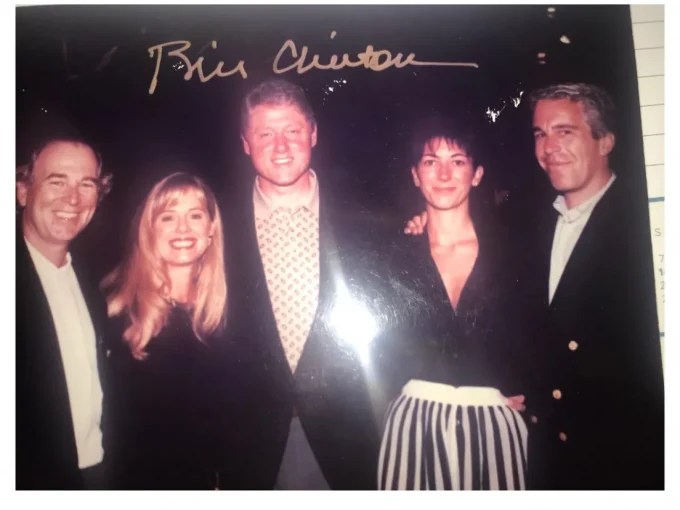
The former Israeli intelligence official turned whistleblower, Ari Ben-Menashe made some explosive claims to journalist Afshin Rattansi in the latest episode of his Going Underground TV Show, alleging that then president Bill Clinton made a deal with then Iranian president Mohammad Khatami, but then Israeli Prime Minister Ehud Barak, a known close associate of Jeffery Epstein, used blackmail about Clinton’s known connection with Jeffery Epstein and his trafficking operation of underage girls, to end the deal.
Ben-Menashe alleges that in 2000 Bill Clinton “met President Khatami in Mirabel Airport north of Montreal and they worked out the deal between them”.
Ben-Menashe noted that “on March 17, 2000, Madeleine Albright made a speech at the American Iranian Council apologizing to the Iranian people for America overthrowing an elected government in 1952 in Iran and bringing the Shah back”
Indeed, on March 17, then Secretary of State Madeleine Albright made a speech apologizing for the overthrow of Iran’s popular elected president Mohammed Massadegh in 1953, saying:
In 1953 the United States played a significant role in orchestrating the overthrow of Iran’s popular Prime Minister, Mohammed Massadegh. The Eisenhower Administration believed its actions were justified for strategic reasons; but the coup was clearly a setback for Iran’s political development. And it is easy to see now why many Iranians continue to resent this intervention by America in their internal affairs.
Moreover, during the next quarter century, the United States and the West gave sustained backing to the Shah’s regime. Although it did much to develop the country economically, the Shah’s government also brutally repressed political dissent.
As President Clinton has said, the United States must bear its fair share of responsibility for the problems that have arisen in U.S.-Iranian relations. Even in more recent years, aspects of U.S. policy towards Iraq, during its conflict with Iran appear now to have been regrettably shortsighted, especially in light our subsequent experiences with Saddam Hussein.
This certainly suggested that the Clinton administration was trying to reset the U.S. and Iranian relationship, acknowledging Iran’s long list of legitimate grievances against the United States.
But according to Ari Ben-Menashe, the deal never went through because Israeli Prime Minister Ehud Barak “sabotaged” the deal using Epstein blackmail.
Ben-Menashe said, “But Ehud Barak and company sabotaged that deal by using Epstein and company against Mr. Clinton”.
Because Clinton had already gone through the Monica Lewinsky scandal, this was enough for him to abandon diplomacy, according to Ben-Menashe.
June 23, 2026
Posted by aletho |
Corruption, Wars for Israel | Bill Clinton, Ehud Barak, Iran, Israel, United States, Zionism |
Comments Off on Israeli Intel Whistleblower: Israel Ended Clinton Iran Deal With Epstein Blackmail
A federal advisory committee today unanimously voted to endorse Moderna’s mRNA flu vaccine — just months after rejecting the company’s application on the basis that Moderna had not performed an “adequate and well-controlled” clinical trial.
The Vaccines and Related Biological Products Advisory Committee (VRBPAC), which reviews scientific data on the safety and effectiveness of vaccines and other therapeutics on behalf of the U.S. Food and Drug Administration (FDA), voted 9-0 in dual votes to recommend approval of the vaccine for the 50-64 and 65-plus age groups.
Today’s votes took place after several hours of presentations based on the findings of Moderna’s Phase 4 clinical trial data for its mRNA-1010 vaccine. The trial compared the efficacy of mRNA-1010 to that of a conventional, non-mRNA flu vaccine.
Daniel O’Connor, founder and CEO of TrialSite News, told The Defender today’s favorable votes “may reflect the committee’s view that the benefit-risk profile is acceptable.” However, the vote “does not erase the fundamental concerns surrounding this application.”
“Significant questions remain about comparator selection, study design and whether the reported efficacy advantage represents a clinically meaningful improvement for patients or simply a statistical advantage within the framework of the trial,” O’Connor said.
According to an FDA briefing document prepared in advance of today’s meeting, “no major deficiencies were identified” with the vaccine for adults 50 and over. Citing the clinical trial data, the document states that the mRNA-1010 vaccine had a 26.6% relative efficacy rate in adults 50 and over, with similar rates for adults 65 and up.
The mRNA-1010 vaccine also showed a higher immune response than Sanofi’s Fluzone vaccine, the document noted. According to Fierce Biotech, these results met all of the FDA’s “pre-specified criteria for success” and bolstered Moderna’s application for approval.
Karl Jablonowski, Ph.D., senior research scientist for Children’s Health Defense, said today’s vote shifts mRNA-1010 safety monitoring to after licensure.
“VRBPAC meetings proceed to the beat of the rubber stamp. The unanimous vote guarantees a lot of really good questions of harm will have to be answered in the post-marketing period, when that harm manifests in the population,” Jablonowski said.
Moderna seeks traditional approval for the mRNA-1010 vaccine for the 50-64 age group and accelerated approval for the 65-plus age group.
Fierce Biotech reported that the FDA uses VRBPAC meetings to “seek outside counsel on tough or high-profile regulatory decisions.”
The FDA will make an approval decision on mRNA-1010 by Aug. 5 — and while the agency is not bound to VRBPAC’s votes, it “often follows the opinions” of its advisory committees.
Moderna’s stock was up over 4% in trading immediately after the vote, and up 3.50% at the close of market.
mRNA vaccine had higher rate of adverse events than conventional flu shot
According to MedPage Today, all current flu vaccines are “manufactured using egg-based, cell-culture based, or recombinant production technologies” — a production process that could result in “egg-adaptive mutations” and which makes it slow to reformulate vaccines when they don’t match currently circulating flu strains.
In their briefing document, FDA scientists suggested that “high-volume manufacturing” of a flu vaccine “capable of rapid strain reformulation is … needed.”
However, the briefing document did identify some concerns with mRNA-1010. FDA scientists noted the higher rate of solicited adverse events among clinical trial participants who received mRNA-1010 — and the higher number of unspecified deaths and serious adverse events related to anemia or urinary tract infections.
The document also noted that “efficacy in immunocompromised individuals and very frail older adults has not been established” — which is “significant because these populations face the highest absolute risk of severe influenza-related complications and may respond differently to mRNA-based vaccine platforms.”
Several experts told The Defender that Moderna’s mRNA-1010 vaccine poses risks. “Throughout the study, solicited adverse events are almost, and in some cases more than, double that of the comparator,” Jablonowski said.
The briefing document acknowledged a higher rate of solicited adverse reactions for mRNA-1010 vaccine recipients than among the conventional flu vaccine recipients. According to the Association of Health Care Journalists, solicited adverse events are “those that the trial investigators specifically ask participants about because they are either expected or likely based on known reactions to other vaccines.”
Unsolicited (unexpected) adverse events, serious adverse events, adverse events of special interest and deaths “were balanced between treatment groups,” and “no cases of myocarditis or pericarditis were identified within 42 days postvaccination,” the document states.
Immunologist and biochemist Jessica Rose, Ph.D., said this period is too small to detect long-term risks. “There is no way to know what the long-term adverse events will encompass,” she said.
Dr. Angus Dalgleish, professor emeritus of oncology at City St. George’s, University of London, said, “There is no need for any specific flu vaccine.” He cited the high number of serious adverse events related to the mRNA COVID-19 vaccines.
“The case for mRNA gene therapies for any infectious disease can never be approved with current technology, given the totally unacceptable serious side effect risks,” Dalgleish said.
Rose agreed. She said that since mRNA-1010 is based on the same “flawed” platform as the COVID-19 shots, she anticipates “exactly the same problems as for the COVID shots, as per the millions of reported adverse events to pharmacovigilance databases.”
FDA glosses over safety concerns
These concerns are similar to those expressed when Moderna first filed its application for licensure in December 2025 and which contributed to the FDA declining to review the company’s application in February.
In a “refusal-to-file” letter signed by Dr. Vinay Prasad, then-director of the FDA’s Center for Biologics Evaluation and Research, which oversees vaccines, the agency cited Moderna’s failure to perform an “adequate and well-controlled” clinical trial and its failure to use the “best-available standard of care” during the trial process.
In February, STAT reported that Prasad overruled senior FDA vaccine reviewers, who were ready to review Moderna’s application. However, Andrew Nixon, a spokesperson for the U.S. Department of Health and Human Services, told STAT at the time that the claim was “categorically false.”
In response to Moderna’s claim that mRNA-1010 had a 26.6% higher relative efficacy rate than the existing Fluzone vaccine, former pharmaceutical research and development executive Sasha Latypova wrote on Substack that this is significantly lower than the 95% relative efficacy claimed for the mRNA COVID-19 vaccines during Phase 3 clinical trials.
Jablonowski told The Defender in February that the mRNA-1010 clinical trial data show that mRNA recipients had a 329% higher chance of sustaining a serious adverse event and a 278% higher chance of experiencing an unsolicited adverse event — referring to a condition that was not expected or previously known.
However, the FDA’s briefing document found that mRNA-1010’s safety profile was “acceptable for the intended population” and that there was no causal relationship between the vaccine and the unspecified deaths and cases of anemia and urinary tract infections identified during the clinical trial.
The document said these adverse events are “unlikely to represent a vaccine safety signal” and that the risk of rare adverse events should be tracked through post-licensure monitoring.
But according to Jablonowski, conventional flu vaccines have shown they have negative efficacy — placing the vaccinated at higher risk of flu than the unvaccinated. He said this makes any comparison between the candidate mRNA vaccine and existing vaccines invalid.
“If the current flu vaccines have negative efficacy, a placebo would be more efficacious. … In the 2024-2025 season, the Cleveland Clinic found a negative 27% efficacy,” Jablonowski said.
‘They’re promoting the platform’
The FDA’s decision to decline review of Moderna’s application led to an uproar within the pharmaceutical and public health spheres. Within two weeks, the FDA accepted the company’s application for licensure of mRNA-1010. Leadership shake-ups at the FDA soon followed.
Last month, Dr. Marty Makary resigned his FDA commissioner post, following rumors that he would be fired. In April, Dr. Vinay Prasad resigned from the Center for Biologics Evaluation and Research (CBER) — for the second time in less than a year. The FDA then fired Tracy Beth Høeg, M.D., Ph.D., the agency’s top drug regulator and a staunch advocate for vaccine safety.
Some experts suggested that political pressure — and corporate lobbying — contributed to the FDA’s about-face.
Blackstone, a New York-based investment firm, is the world’s largest alternative assets manager, with a portfolio exceeding $1 trillion. In 2024, the company launched an ongoing, $750 million investment in Moderna, explicitly to support the development of its mRNA flu shot.
Aside from its financial might, Blackstone is also closely connected to the Republican Party and the Trump administration, through significant donations from its executives and employees and through its ties with prominent lobbying firms linked to Republicans — and Big Pharma.
In turn, Blackstone’s CEO and co-founder, Stephen A. Schwarzman, has close ties to President Donald Trump and his administration, while members of Blackstone’s Life Sciences division have ties with several vaccine makers, including Pfizer.
In a post on X, Max Bayer, a science reporter with Endpoints News, noted that today’s meeting included the participation of a non-voting pharmaceutical industry representative and that “no waivers were issued for conflicts of interest.”
Bayer also noted that unlike the Centers for Disease Control and Prevention’s Advisory Committee on Immunization Practices (ACIP), which advises the agency on vaccine recommendations and which U.S. Health Secretary Robert F. Kennedy Jr. revamped before a federal court froze those changes, VRBPAC’s membership remains “pretty much intact.”
According to a February study, 557 clinical trials of mRNA therapeutic products are in progress, 507 of which involve vaccines, with Pfizer and Moderna leading the way in what analysts project will be a rapidly growing — and lucrative — market for mRNA products in the coming years.
Rose suggested that these moves signal a desire on the part of the FDA to continue promoting mRNA vaccine technology.
“They’re promoting the platform,” Rose said. “People who acknowledge risk who oppose using an unsafe and ineffective platform are a problem for the industry players aligned with pushing this technology forward.”
This article was originally published by The Defender — Children’s Health Defense’s News & Views Website under Creative Commons license CC BY-NC-ND 4.0. Please consider subscribing to The Defender or donating to Children’s Health Defense.
June 21, 2026
Posted by aletho |
Corruption, Science and Pseudo-Science | United States |
Comments Off on Moderna’s mRNA Flu Vaccine Gets Unanimous Thumbs-Up Despite Risks, Low Efficacy
The Centers for Disease Control and Prevention’s (CDC) recent decision to award Pfizer $1.24 billion for COVID-19 vaccines has renewed debate over the government’s continued investment in mRNA technology.
The contracts, awarded on June 1, include about $735.7 million for pediatric COVID-19 vaccines and nearly $505.3 million for adult doses for fiscal year 2026-2027.
Critics say the funding reflects a continued commitment to vaccines associated with high rates of serious injuries and deaths, and a lack of adequate safety testing and monitoring.
Public health experts argue the investment is necessary to protect vulnerable populations and prepare for future outbreaks.
The latest contracts come as mRNA technology expands beyond COVID-19.
A recent review in Human Vaccines & Immunotherapeutics found that mRNA-based therapeutics were identified in more than 550 registered clinical trials. The authors reported that more than 90% of the projects involved mRNA vaccines and that most products remain in early-stage testing before broader adoption.
‘Unnecessary and often harmful injections’
The procurement of monetary resources signals that federal officials intend to continue investing heavily in mRNA technology despite declining public demand and ongoing controversy over vaccine safety monitoring, critics say.
Jeffrey Tucker, president and founder of the Brownstone Institute, told The Defender there was “no scientific justification” or “market demand” for the latest mRNA vaccine funding.
“This raises a serious question concerning how these captured agencies really work,” Tucker said. “We are talking about vast amounts of tax dollars flowing to support unnecessary and often harmful injections.”
“This is $1.24 billion for what is essentially a cold in minor children,” said Children’s Health Defense Chief Scientific Officer Brian Hooker.
Daniel O’Connor, publisher of TrialSite News, which covers global biomedical and clinical research, told The Defender Americans “better start asking the hard questions.”
“If demand is falling, safety questions remain contested and many reporting vaccine injuries say they’ve been left behind, why is Washington committing another $1.24 billion to vaccine procurement instead of first providing a transparent accounting of need, benefit, risk, and responsibility?”
‘COVID-19 has not disappeared’
Public health experts disagreed, saying their support of vaccinations is supporting the prevention of future pandemics.
Dr. Krutika Kuppalli, an associate professor in the Department of Internal Medicine at University of Texas Southwestern Medical Center, in Dallas, told The Defender that the monetary installments will help stave off another public health crisis because “COVID-19 has not disappeared.”
“While the emergency phase of the pandemic is over, the virus continues to cause significant illness, hospitalizations and deaths each year,” she said. “This investment reflects the reality that vaccines remain one of our most effective tools for preventing severe disease, particularly among those at highest risk. Maintaining access to updated vaccines is an important part of ensuring the country remains prepared for future COVID-19 surges.”
Dr. William Schaffner, an infectious disease specialist and professor at Vanderbilt University Medical Center in Nashville, Tennessee, said the contracts will ensure “continuing availability of safe and effective COVID vaccines through the next two years.”
“COVID vaccines have repeatedly been demonstrated to provide protection against the most severe manifestations of COVID infection: hospitalization, intensive care unit admission and death,” Schaffner said. “This is particularly applicable to those persons at increased risk of becoming seriously ill: persons age 65 and older, anyone with a chronic medical condition, persons who are immunocompromised and persons who are pregnant.”
However, some studies suggest claims that the COVID-19 vaccines saved millions of lives are based on flawed models and incorrect calculations.
Legality of funding in question
The contracts also raise questions about federal vaccine spending.
Under the CDC’s Vaccines for Children (VFC) Program, the federal government agrees to buy and provide free vaccines through negotiated contracts for eligible children.
Current CDC price schedules list Pfizer COVID-19 vaccines at roughly $69 to $91 per dose, depending on the formula, while Moderna doses range from about $78 to $83.
Dr. Robert Malone, a pioneer and expert in mRNA vaccines, however, questioned the legal authority to use federal funding for the Pfizer contracts because the purchase wasn’t approved by the CDC’s Advisory Committee on Immunization Practices (ACIP).
“Use of VFC funds requires ACIP authorization,” he said. “But there is no ACIP.”
Earlier this year, U.S. District Judge Brian Murphy issued an injunction blocking many of the recent ACIP appointments made under U.S. Health Secretary Robert F. Kennedy Jr.
The injunction stemmed from a lawsuit filed by the American Academy of Pediatrics (AAP) against Kennedy and the U.S, Department of Health and Human Services (HHS). The AAP accused Kennedy of violating procedures when he fired previous ACIP members and replaced them.
The ruling effectively paralysed ACIP and cast doubt on the legitimacy of its membership structure.
Requests for comment from ACIP went unanswered.
‘We are a long way from reckoning’
The CDC has maintained that authorized COVID-19 vaccines underwent extensive safety review and that the benefits outweigh known risks.
However, during a Capitol Hill meeting this week, Sen. Ron Johnson (R-Wis.) referred to reported COVID-19 vaccine injuries as the “biggest government scandal in my lifetime.”
“What about all the injection-injured?” he said. “Until this government and this administration acknowledge those injuries, acknowledge the harm caused by these injections, and I would say federal health agencies also acknowledge the harm done by childhood vaccines, we are a long way from reckoning.”
In April, Johnson released a report revealing that Biden-era health officials rejected a state-of-the-art statistical tool for detecting COVID-19 vaccine safety signals — and instead deliberately continued using a broken method because they didn’t want to “feed in to [sic] anti-vaccination rhetoric.”
During an April 29 hearing, Johnson revealed that a longtime U.S. Food and Drug Administration (FDA) medical officer, Ana Szarfman, M.D., Ph.D., repeatedly warned colleagues that the agency’s approach to safety monitoring could miss serious safety signals due to a problem known as “masking.” Masking occurs when other vaccines obscure risks tied to a specific product.
Johnson said FDA officials brushed aside Szarfman’s warnings.
The CDC, HHS and Pfizer did not immediately respond to requests for comment regarding the contracts.
This article was originally published by The Defender — Children’s Health Defense’s News & Views Website under Creative Commons license CC BY-NC-ND 4.0. Please consider subscribing to The Defender or donating to Children’s Health Defense.
June 16, 2026
Posted by aletho |
Corruption, Science and Pseudo-Science | CDC, Covid-19, COVID-19 Vaccine, United States |
Comments Off on CDC Awards Pfizer $1.24 Billion for COVID Vaccines for Kids and Adults
An Essay on Threshold Manipulation, Overdiagnosis, Cascades, and the Markers That Aren’t What They Claim
The Pattern Across the Programmes
In 2022, the New England Journal of Medicine published the results of the NordICC trial — the first randomised controlled study of colonoscopy screening ever conducted. Over 84,000 people were followed for ten years. The trial found an 18% reduction in cancer incidence and no significant reduction in cancer deaths. To prevent a single case of colorectal cancer, 455 people had to be invited for screening. To prevent a single death, the numbers were statistically indistinguishable from zero.¹
This is the pattern.
Across the major screening programmes — mammography, PSA, Pap, colonoscopy, lung CT — when the question is whether the screened population actually outlives the unscreened population, the benefit largely disappears.² The statistic the programmes advertise is disease-specific mortality: deaths from the disease the test is looking for. The statistic they bury is all-cause mortality: whether the screened group, taken as a whole, lives longer. The two numbers are not the same. You can reduce deaths from one disease while total deaths remain flat — because treatment has killed as many people as the disease prevented, or because the disease you found was never going to kill anyone.²
The screened do not live longer than the unscreened. They are more likely to spend their remaining years monitored, biopsied, cut, and medicated for conditions that would not have harmed them. This essay catalogues twelve tests that produce that conversion, organised by the four mechanisms through which it is achieved.
The Frame
Five concepts make the rest of this essay readable.
Disease-specific versus all-cause mortality. A screening programme can reduce deaths from breast cancer while total deaths remain unchanged. This happens when treatment kills as many people as the disease — through surgical complications, radiation-induced secondary cancers, cardiovascular effects of chemotherapy, or the cascade of follow-up procedures that screening triggers. Only all-cause mortality reveals whether the programme, taken as a whole, extended life.² Trials that report disease-specific reductions without corresponding all-cause reductions are reporting a redistribution of deaths.
Lead-time bias. A cancer destined to kill at age 70 appears as a three-year survival if found at age 67 through symptoms, and a seven-year survival if found at age 63 through screening. The patient dies at the same age in both cases — the clock simply started earlier. Five-year survival statistics, the most commonly cited evidence for screening success, are inevitably improved by earlier detection, even when no life is extended by a single day.² Kidney cancer five-year survival improved from 50% to 60% as imaging found more small tumours; the death rate from kidney cancer remained unchanged.²
Length bias. Aggressive cancers grow fast, become symptomatic between screening intervals, and reach the patient through the clinic rather than the screening room. Indolent cancers linger for years in the detectable phase, making them easy targets. The cancers screening preferentially catches are the ones least likely to kill. The ones most likely to kill evade it.²
Overdiagnosis, and the autopsy reservoir behind it. Approximately 40–70% of older men have prostate cancer at autopsy, while only about 3% die from it.² Up to 39% of middle-aged women show evidence of breast cancer at autopsy; lifetime risk of dying from it is under 4%.² Thyroid cancer appears in 36–100% of carefully examined autopsies, depending on how many microscope slides the pathologist prepares.² Polyps are found in 32–50% of older adults; only 5% develop colorectal cancer.³ The reservoir of detectable-but-harmless abnormality is vast. Every screening test dips into it. Every person pulled from it becomes a cancer patient who can only be harmed by treatment, because they were never at risk.
The threshold. The cutoff that separates well from sick is set by a committee, not by biology. In every screening category, the threshold has been lowered — by panels whose members hold financial relationships with the manufacturers of the drugs and devices used to treat the redefined condition.⁴ The 1988 cholesterol panel. The 1994 WHO bone density panel.⁵ The 2003 American Diabetes Association threshold for impaired fasting glucose.⁶ The 2017 American College of Cardiology hypertension revision.⁷ The lowered PSA cutoff. Each revision converts millions of well people into patients overnight. No one inside their body changed.
The early-detection objection — that finding disease earlier must, by intuition, help — fails on this evidence. It assumes that everything labelled cancer or pre-cancer will progress; the autopsy data say otherwise. It assumes that finding more is finding harm prevented; the mortality data say otherwise. It assumes that the people setting the thresholds are disinterested; the disclosures say otherwise.
Group A — Threshold Manipulation
The number creates the disease.
The first three screenings illustrate the cleanest mechanism in the catalogue. The cutoff changes while the body does not, and the well become the sick by committee vote. The drug to treat the redefined condition is manufactured by the company whose representative sat on the panel that lowered it.
1. Bone Density (DEXA) and the Manufactured Pre-Disease
In 1994, a World Health Organization panel redefined osteoporosis based on bone mineral density measured by DEXA scan.⁵ The reference standard was the bone density of a healthy 35-year-old woman. By this definition, any woman whose bones had decreased from their youthful peak — which describes virtually every woman over 50 — could be diagnosed with osteopenia or osteoporosis. The condition “osteopenia” did not exist as a clinical category before this redefinition.⁸ Internal Merck memos described the company’s excitement about the new diagnostic category and the market it would create for Fosamax.⁸
The DEXA scan measures bone mineral density. That is all it measures. It cannot assess the collagen matrix — the protein scaffolding on which the minerals deposit. A baby has very low bone mineral density and rarely fractures. An elderly woman with osteoporosis may have adequate minerals deposited in the wrong locations, including her arteries. Bone strength is a property of the matrix as much as of the minerals; the DEXA captures only one of the two and is treated as if it captured both.³
Bisphosphonate drugs raise the number the DEXA measures. They do not so much prevent fractures as change the kind of fracture. Documented harms include osteonecrosis of the jaw — the jawbone literally dying — and atypical femur fractures, where the thigh bone snaps under minimal stress in patients taking drugs prescribed to prevent fractures.⁹,¹⁰ The absolute fracture reduction in randomised trials is 1–2%. Fifty to a hundred women must be treated for years to prevent a single hip fracture, while every one of them carries the risks above.⁸
What to Ask Before Your Next Bone Density Scan – Unbekoming
2. Cholesterol
The cholesterol threshold for statin prescription has been lowered repeatedly since 1988, by panels whose members held financial relationships with the manufacturers of the drugs being recommended.⁴ The 2004 National Cholesterol Education Program guidelines tripled the number of Americans classified as needing treatment. The Washington Post reported the panel’s undisclosed conflicts. The guidelines remained unchanged.⁴
The cholesterol hypothesis has the unusual property of being unfalsifiable. The MRFIT trial followed 361,662 men and found that those with cholesterol below 170 had double the death rate from cerebral haemorrhage of those with higher levels; below 160 the death rate quadrupled.¹¹ The Sydney Diet Heart Study, recovered and reanalysed by Christopher Ramsden, found that men who replaced saturated fats with vegetable oils had a 62% higher death rate.¹² The Minnesota Coronary Survey, hidden for decades, showed that for every 30 points cholesterol decreased, mortality increased by 22%.¹¹ None of this has altered the trajectory of the threshold or the prescription.
The statin absolute risk reduction in primary prevention — people without existing heart disease — is approximately 1–2% over five years.¹³ Advocates present this as a 30–40% reduction by using relative risk. The numbers describe the same trial result. The first is what the patient experiences; the second is what the press release says. Patients are not shown the first.
Statins raise blood glucose. The Crestor label states that statin-induced glucose elevations “may exceed the threshold for the diagnosis of diabetes mellitus.” The warning was added decades after approval, after the diabetes signal had become too large to ignore.¹¹ The statin prescribed for the lowered cholesterol threshold thus produces the prediabetes captured by the next lowered threshold.
The Great Cholesterol Con (2007) – Unbekoming
3. Blood Sugar — “Prediabetes”
In 2003, the American Diabetes Association lowered the threshold for impaired fasting glucose from 110 mg/dL to 100 mg/dL.⁶ The category “prediabetes,” as it functions clinically today, did not exist before this revision. Millions of additional Americans were added to the surveillance rolls. None of their blood sugar changed. A committee’s definition of normal changed.
Prediabetes is not diabetes. Many people classified as prediabetic will never develop diabetes. The label nevertheless creates patients — patients who are monitored, tested, counselled, and increasingly prescribed metformin for a number on a lab report. Metformin causes gastrointestinal distress in up to 25% of patients.¹⁴ These symptoms are typically addressed with additional medication, or attributed to irritable bowel syndrome, which becomes its own diagnostic pathway.
The label persists across the life cycle. A woman diagnosed with gestational diabetes during pregnancy — using the same threshold-lowering mechanism, which catches around 18% of pregnant women on current criteria — returns six weeks postpartum for a repeat glucose tolerance test.¹⁵ The test is unchanged. Her physiology is largely unchanged. She is re-labelled “glucose intolerant” or “prediabetic” and enters lifelong annual surveillance. The temporary pregnancy label becomes a permanent metabolic identity.¹⁵
The fasting insulin test, which would actually reveal metabolic dysfunction, is rarely ordered.¹¹ The fasting glucose, which lags behind insulin dysregulation by years, is the screening test of record. The earlier marker is upstream and dietary; the later marker is downstream and pharmaceutical. The system selects for the marker that supports its intervention.
The Mother Who Remains: How Medicine Captures Women After Birth (Part 8) – Unbekoming
Group B — Overdiagnosis
Finding what would never have harmed you.
The next three screenings do not invent the condition by adjusting a threshold. They find conditions that exist by the pathology textbook’s definition but would never have caused symptoms or death. Overdiagnosis is the bulk of what these programmes produce, not a marginal side-effect of them.
4. Mammography
The 25-year Canadian National Breast Screening Study, published in the BMJ in 2014, followed nearly 90,000 women. It found no significant reduction in breast cancer mortality from mammographic screening.¹⁶ The 2013 Cochrane Review of randomised trials reached the same conclusion.¹⁷ The relative risk for all-cause mortality in well-conducted trials is 1.01 (95% CI 0.99 to 1.04) — no significant difference between the screened and the unscreened.¹⁷
What screening does find, reliably, is ductal carcinoma in situ. DCIS was a rare diagnosis before the 1980s. It now accounts for a significant proportion of all screen-detected breast cancers. Studies following women whose DCIS was missed at biopsy show that 75–90% never develop invasive cancer over 10–20 years.¹⁸ The condition is treated nonetheless — with surgery, radiation, and in some cases chemotherapy. Nearly half a million women have been diagnosed and treated for DCIS since widespread mammography began.¹⁸ The cancers they were treated for would, in the great majority of cases, never have harmed them.
Up to 60% of women who undergo annual mammograms for a decade experience at least one false positive.¹⁸ Each false positive triggers additional imaging, biopsy, and the psychological burden of waiting. A single mammogram delivers radiation equivalent to approximately 100 chest X-rays, concentrated on compressed breast tissue.¹⁸ Over a decade of annual screening that is 1,000 chest X-rays’ worth of ionising radiation aimed at the tissue the screening is supposedly protecting. A 2012 BMJ study found that women with BRCA variants who underwent mammograms before age 30 had an increased risk of developing breast cancer compared to those who did not.¹⁹
What to Ask Before Your Next Mammogram – Unbekoming
5. Colonoscopy
The NordICC trial, with which this essay opened, was published in the New England Journal of Medicine in 2022. It followed over 84,000 people for ten years and found an 18% reduction in cancer incidence and no significant reduction in cancer deaths.¹ Until 2022, gastroenterology had no randomised trial supporting the procedure it had been recommending for decades.
The paradox is structural. Polyps are found in 32–50% of older adults. About 5% of people develop colorectal cancer.³ The vast majority of polyps removed during colonoscopy were never destined to cause harm. The procedure removes them anyway, and each removal leaves a wound in the protective mucosal layer. A 2019 study in Gastroenterology proposed an additional mechanism — iatrogenic tumour seeding via the scope itself, where cancerous cells stick to the biopsy forceps or are aspirated into the scope’s channel and redeposited elsewhere in the colon as the scope is withdrawn.³
The bowel preparation devastates the microbial ecology of the colon. Polyethylene glycol prep causes an “instant and substantial change” in gut microbial balance.³ Beneficial populations decrease significantly. The microbiome rebounds over weeks or months but may never return precisely to its original composition. Repeated colonoscopies across decades may leave the colon both microbiologically disturbed and physically scarred — creating, plausibly, the conditions in which polyps continue to form.
Complication rates from a Canadian population study of 97,204 outpatient colonoscopies: significant bleeding in 1 in 600; perforation in 1 in 1,200; death from the procedure in 1 in 14,000.³ These are surgical-intervention rates, not the rates of a benign screening test. The procedure generates approximately $4 billion annually in the United States.³
The Colonoscopy Cartel: How Routine Screening Became a Business Model – Unbekoming
6. CT Scan — The Screening Test That Causes the Disease It Looks For
A 2025 study in JAMA Internal Medicine projected that the 93 million CT scans performed in the United States in 2023 will ultimately cause approximately 103,000 future cancers — roughly 5% of all new cancer diagnoses each year.²⁰ CT usage has grown from 3 million scans in 1980 to over 90 million today, a thirty-fold increase. Medical imaging is now the primary source of radiation exposure for most Americans beyond natural background.
The radiation epidemiology is no longer in dispute. The Taiwanese registry study found that CT exposure was associated with a 2.55-fold increase in thyroid cancer risk and a 1.55-fold increase in leukaemia risk, with clear dose-response relationships.²¹ The British NHS registry study of 178,604 children found that those exposed to cumulative doses of 30 mGy demonstrated a threefold increased risk of leukaemia; exposure to 50 mGy showed similarly elevated brain tumour risk.²² Five to ten head CT scans in children under fifteen can accumulate sufficient radiation to significantly increase lifetime cancer risk.²²
Approximately 25% of CT scans reveal incidental findings — unexpected abnormalities unrelated to the original reason for imaging.²¹ The Emory University radiologist who underwent virtual colonoscopy after a routine annual physical illustrates the cascade in its full form. The scan found no colon problem but identified a kidney mass, a 2-cm liver mass, and multiple lung nodules. Further scans showed the kidney mass was a cyst. High-resolution lung scans revealed seven to eight nodules. CT-guided liver biopsy was inconclusive. PET scan was negative. Surgeons performed video-aided thoracoscopy, collapsing part of his lung to remove three small lung sections. He awoke after five hours of surgery with a chest tube, bladder catheter, central venous line, arterial catheter, spinal catheter, oxygen, heparin, prophylactic antibiotics, and patient-controlled narcotics. Five weeks before he returned to near-normal function, except for permanent rib pain from surgically interrupted nerves. The diagnosis: histoplasmosis — a common, usually asymptomatic fungal exposure.²,²³
38% of CT scans in some clinical settings are ordered for legal protection rather than clinical necessity. Only 2.2% of defensively ordered scans change patient management. Physicians who own imaging facilities order twice as many CT scans as those without financial stakes.²¹
CT Scans: The Cancer Machine – Unbekoming
Group C — The Cascade
The positive result that escalates into iatrogenic harm.
The next three screenings illustrate what happens after a positive result. Each programme has its own version of the cascade, but the structure is consistent: the abnormal finding triggers a sequence of procedures whose cumulative harm to the well far exceeds any benefit to the few who genuinely had the disease being screened for.
7. PSA Testing
Richard Ablin, who first identified a prostate-specific antigen in 1970, called the use of PSA for population screening a “profit-driven public health disaster” in a New York Times op-ed in 2010.²⁴ He wrote against the screening test most associated with his name for the rest of his career. The screening continued.
PSA is prostate-specific, not cancer-specific. The protein is produced by all prostate tissue — cancerous, enlarged, inflamed, and normal. An elevated PSA can mean prostate cancer. It can also mean benign prostatic hyperplasia, prostatitis, recent ejaculation, a urinary tract infection, or simply a larger prostate. No PSA threshold reliably separates cancer from non-cancer, and no threshold separates cancers that will kill from cancers that will not.²⁵
The threshold of 4.0 ng/mL was, by the account of New York Times reporting, chosen “just sort of arbitrarily.” William Catalona’s 1991 New England Journal of Medicine paper established it without reporting false positive rates — a basic requirement for any screening test.²⁵,²⁶ The world adopted the number.
75% of men with elevated PSA do not have cancer. Between 30 and 100 men are overdiagnosed and overtreated for every life saved.²⁵ The 2012 Prostate Cancer Intervention Versus Observation Trial (PIVOT) and the Scandinavian Prostate Cancer Group Study found no significant survival benefit from radical prostatectomy compared to watchful waiting.²⁵ The surgery causes permanent urinary incontinence in 20–30% of men and erectile dysfunction in 60–80%.²⁵ Active surveillance is appropriate for roughly 99% of low-risk cases.²⁵
30 million American men are screened each year. The screening triggers approximately one million biopsies. At least 750,000 of those biopsies find no cancer. The programme generates $3 billion annually.²⁵ When the US Preventive Services Task Force recommended against routine screening in 2012, urology associations mobilised lobbying efforts to preserve the status quo.
The PSA Trap (2026) – Unbekoming
8. Prostate Biopsy
The PSA cascade leads to the biopsy. Standard transrectal biopsy routes 10–18 needles through the rectal wall into a sterile organ. The needle carries with it the bacteria living in the rectum. Published infection rates after transrectal biopsy reach 5.4%. Sepsis rates range from 0.2% to 9.4% depending on the setting. Between 50,000 and 150,000 men are hospitalised worldwide each year for post-biopsy infection.²⁷
The standard antibiotic prophylaxis is a fluoroquinolone. Approximately 22% of men undergoing this biopsy carry fluoroquinolone-resistant E. coli in their gut flora; the prophylactic antibiotic does not work for one in five men.²⁸ The 2022 GRAM Report in the Lancet estimated that nearly 5 million deaths worldwide in 2019 were closely associated with antimicrobial resistance, with E. coli identified as the most significant contributing organism.²⁹ Transrectal prostate biopsies continue to be performed in this resistance landscape.
A different route exists. Transperineal biopsy enters the prostate through the perineal skin, bypassing the rectum entirely. The 2024 meta-analysis published in Prostate Cancer and Prostatic Diseases found that the transperineal approach reduces infectious complications by 77%.³⁰ The transperineal route has been available for decades. The transrectal route, with its known infection profile, remains the default in most clinics.
The broader complication profile is less dramatic but affects more men. Hematuria. Hematospermia. Rectal bleeding, with severe haemorrhage in up to 1% of cases. Lower urinary tract symptoms in up to 25% post-procedure.²⁷ Tuncel and colleagues found that 41% of men reported erectile dysfunction one month after biopsy, with 15% still affected at six months.³¹ A prostate cancer diagnosis itself, even when made for an indolent cancer that would never have caused symptoms, increases cardiovascular events (relative risk 1.3) and suicide risk (relative risk 2.6) within the first year of diagnosis.³² These outcomes do not appear on the consent form. A 1999 study in Effective Clinical Practice found that 31% of men who received a PSA test were unaware their physician had ordered it; of those who were aware, only 47% recalled any discussion of risks and benefits.³³
Through the Wall: The Prostate Biopsy and What No One Mentions – Unbekoming
9. Pap Smear and HPV Testing
Angela Raffle’s 2003 study in the British Medical Journal calculated the arithmetic of cervical screening. One thousand women must be screened for 35 years to prevent one death from cervical cancer. Of those 1,000 women, 150 will receive a stress-causing test result during those 35 years. About 50 will undergo cancer treatment they did not need. Fifty women treated unnecessarily for every death prevented.³⁴
The cascade from abnormal Pap to LEEP runs like this. A woman with no symptoms is screened. The cytology shows abnormal cells. She receives a letter or a call. The words used vary; the message is consistent: something is wrong, further investigation is needed. The waiting period is filled with anxiety, internet searches, and the imagining of worst cases. She undergoes colposcopy. Tissue is removed for biopsy. The cervix has nerve endings; the biopsy is painful, with bleeding and cramping. If the pathology shows precancerous changes, treatment is recommended — typically LEEP (loop electrosurgical excision procedure) or cone biopsy. A portion of the cervix is cut away.²
The harm extends to future pregnancies. LEEP and cone biopsy shorten and weaken the cervix. The woman who underwent the procedure is at increased risk of preterm birth in subsequent pregnancies. Her premature infant may require neonatal intensive care, which initiates its own cascade. A screening test administered to an asymptomatic woman has produced not only her own anxiety, procedures, and tissue loss, but increased risk to a future child.²
The new HPV DNA testing — adopted as first-line screening in Australia in 2017 and increasingly in the United States — finds the marker that most sexually active women carry. The Pap looked for abnormal cells. The HPV DNA test looks for sequences attributed to HPV. The yield of positives expands accordingly. Over 99% of those who test positive for HPV markers never develop cervical cancer.² Switching from cytology to PCR-based HPV testing broadens the pool of positives feeding the treatment cascade rather than improving the discrimination of the test.
The HPV Lie: Pap Smears, Gardasil, and a Cancer Caused by Something Else – Unbekoming
Beyond the Threshold: When the Marker Is the Construct
The first nine entries indict screening on the establishment’s own data — the studies, the trials, the autopsy reservoirs, the conflicts of interest disclosed in the papers themselves. The next three entries ask something deeper: whether the marker the test detects has any necessary connection to the disease the test claims to predict, or whether the marker itself is an artefact of a methodology that produces what it looks for.
Group D — Tests That Measure Nothing Real
The marker is a construct.
10. PCR
Kary Mullis won the 1993 Nobel Prize in Chemistry for inventing the polymerase chain reaction. He spent much of the remainder of his career warning that PCR should not be used for diagnostic purposes. “PCR is just a process that allows you to make a whole lot of something out of something,” Mullis said in 1997. “It doesn’t tell you that you are sick, or that the thing that you ended up with was going to hurt you or anything like that.” In another formulation: “With PCR, if you do it well, you can find almost anything in anybody.”³⁵
PCR doubles the targeted nucleotide sequence with each cycle. After 20 cycles, a millionfold amplification. After 30 cycles, a billionfold. At 40 cycles, a trillionfold.³⁵ The MIQE guidelines — the internationally recognised standard for PCR methodology — state that “Cq values higher than 40 are suspect because of the implied low efficiency and generally should not be reported.”³⁶ Harvard epidemiologist Michael Mina, quoted in the New York Times in August 2020, said he would set the threshold at 30 or even less.³⁷ The Corman-Drosten protocol, which became the basis for COVID-19 PCR testing worldwide, used 45.³⁸
The 2006 Dartmouth-Hitchcock incident demonstrated the mechanism in miniature. Hospital staff developed a persistent cough. A rapid molecular test was deployed. 142 staff tested positive for pertussis. Nearly 1,000 were taken off work. Thousands received antibiotics. 3,599 doses of pertussis vaccine were administered. By year’s end, the established gold-standard culture results returned. Not a single case of pertussis was confirmed. The outbreak had been manufactured by the test.³⁵
In May 2020, Tanzania’s President John Magufuli submitted samples from a papaya, a quail, and a goat to the national laboratory under false names. The papaya and the goat tested positive for COVID-19.³⁵ The 27 different PCR test manufacturers examined in Dutch court proceedings all carried the same product disclaimer: “Research Use Only (RUO), not for diagnostic purposes.”³⁵
The WHO’s August 2020 case definition completed the circle: “a person with laboratory confirmation of COVID-19 infection, irrespective of clinical signs and symptoms.”³⁵ A person with no symptoms was a confirmed case of disease on the basis of a biochemical reaction in a laboratory.
Interview with Jamie Andrews – Unbekoming
11. Antibody Tests
The antibody test inverts traditional immunology. The presence of antibodies was historically interpreted as evidence of recovery and protection: the body had encountered something, responded to it, and was now resistant. HIV testing reinterpreted a positive antibody result — for the first time in the history of immunology — as evidence of an active, ongoing, deadly infection rather than a successful response.³⁵
The reliability of the reinterpretation depends on whether the test detects antibodies specific to the claimed agent. The HIV antibody test manufacturer’s insert states: “There is no recognized standard for establishing the presence or absence of antibodies to HIV-1 and HIV-2 in human blood.”³⁵ The German weekly Die Woche ran a headline calling this “The AIDS Test Lottery,” reporting that “the antibody tests do not measure what they should: HIV infection. They also react to people who have overcome a tuberculosis infection.”³⁵
Nancy Banks compiled a list of more than sixty conditions known to cause false-positive HIV antibody results — kidney failure, tuberculosis, flu, flu vaccination, tetanus vaccination, malaria, haemophilia, leprosy, and pregnancy in women who have given birth multiple times.³⁹ The proteins in the test, Banks writes, “are cellular in origin and are not specific to HIV.” The calibration was circular: proteins that caused the strongest reaction in seriously ill AIDS patients were selected to define the test. That those proteins had any connection to a retrovirus of any type was never independently established.³⁵
The monoclonal antibodies that became the diagnostic industry’s stock in trade were developed in 1975 through hybridoma technology — fusion of cancerous myeloma cells with mouse spleen cells. These are laboratory-manufactured chimeras that exist nowhere in nature. Harvard’s Clifford Saper has confirmed that they bind indiscriminately to similar protein sequences rather than to a single specific target.⁴⁰ Children born with agammaglobulinaemia, who produce none of what immunology calls antibodies, recover from illness normally.⁴⁰ The British Medical Research Council’s 1950 Report #272 found no correlation between antibody count and susceptibility to diphtheria.⁴⁰
The antibody test is the mechanism by which a healthy person becomes a sick one on paper. It measures cross-reactive binding to uncharacterised proteins and reports the binding as specific recognition of a pathogen.
The Antibody Deception: Invisible Enemies, Visible Lies – Unbekoming
12. BRCA Testing and Prophylactic Mastectomy
In 1994, Yoshio Miki and colleagues published in Science the identification of a gene they named BRCA1, associated with breast cancer in selected families.⁴¹ The 80–87% lifetime risk figure that drives prophylactic mastectomy decisions today derives from families chosen for inclusion because they had extreme cancer clustering — six, eight, ten cases across generations. This is ascertainment bias. A 2007 simulation analysis in the Journal of Medical Genetics quantified its magnitude: risk estimates from clinically ascertained families are inflated by a factor of two to three.⁴² A 2019 study in the European Journal of Human Genetics found the bias to be pervasive and unacknowledged.⁴³ The corrected estimates were rarely communicated to women making surgical decisions.
35–55% of BRCA variant carriers never develop breast cancer. The papers themselves document women carrying clearly “deleterious” mutations who lived to age 80 without malignancy.⁴¹ Compare this with Huntington’s disease, the case mainstream genetics treats as definitive — penetrance reportedly approaching 100% in carriers of the expanded repeat. A sequence variant that fails to produce the disease in half its carriers cannot be the cause of the disease; at most, it is a correlate in pre-selected families.
The 2002 BMJ study by Metcalfe and colleagues examined women who had already undergone prophylactic bilateral mastectomy after BRCA testing. Most overestimated their cancer risk by more than 90% compared with computer-generated estimates.⁴⁴ Twenty-two of seventy-five women believed their risk was 100%. The eighteen women with the lowest computed risk — those with limited family history — believed their risk was highest, averaging 80% when the models gave 12%. Their belief was wrong by a factor of seven. The machinery that produced the belief — the testing, the counselling, the risk communication — failed them. They removed healthy breasts.
The original BRCA papers carry conflict-of-interest disclosures. The race to identify the genes was explicitly a race to patent them. Myriad Genetics won and held a monopoly on the test until the 2013 Supreme Court ruling in Association for Molecular Pathology v. Myriad Genetics.⁴⁵ At peak, BRCA testing alone generated over $500 million annually. Preventive surgeries, surveillance, and PARP inhibitors added billions.
Healthy women with no symptoms are routed toward mastectomy and oophorectomy on the basis of a probability inflated by ascertainment bias, applied to laboratory markers whose causal connection to the cancer has never been established outside the families originally selected for clustering. They are not given the corrected numbers. They are not told that 35–55% of carriers never develop the disease. They are told they have a gene that causes cancer, and they are routed to the operating theatre.
The BRCA Gene and the Women Who Lost Their Breasts to a Hypothesis – Unbekoming
What the Twelve Have in Common
Twelve tests. Four mechanisms. One output: more patients.
The threshold-manipulation group converts the well into the sick by lowering the cutoff. The drug to treat the new diagnosis is manufactured by the company whose representative sat on the panel that lowered the cutoff. The body is unchanged.
The overdiagnosis group finds conditions that exist by the textbook definition but would never have caused symptoms or death. The mammogram finds DCIS that would have resolved or remained dormant. The colonoscopy finds polyps that were never destined to become cancer. The CT scan finds incidentalomas that lead to thoracic surgery for histoplasmosis.
The cascade group illustrates what a positive result produces. The PSA leads to the biopsy that leads to the sepsis that leads to the radical prostatectomy that leads to the incontinence and impotence — for cancers that, in autopsy series, are present in 70% of men over 80 and kill 3%. The Pap smear leads to the colposcopy that leads to the LEEP that leads to the preterm birth in a future pregnancy. The biopsy needle is the test as injury.
The marker-as-construct group asks the deeper question of whether the test detects what it claims to detect. PCR amplifies fragments and is read as detection of a whole organism it never isolates. The antibody test picks up cross-reactive binding and reports it as specific recognition. The BRCA test identifies a correlate in pre-selected families and frames it as a deterministic cause.
Each of these tests was developed for a specific clinical purpose: PSA to monitor men already diagnosed with prostate cancer, mammography to investigate palpable breast lumps, colonoscopy to assess symptomatic patients. They worked reasonably well within that scope. Repurposed to screen the asymptomatic, on the intuition that earlier detection must help, they fail because most of what they find is pseudodisease and the cascades they trigger produce harm exceeding any benefit to the few with genuine disease.²
The reservoir is vast. Seventy percent of men in their seventies harbour prostate cancer at autopsy. Up to 39% of middle-aged women show evidence of breast cancer at autopsy. Polyps are present in half of older colons. Thyroid cancer appears in nearly every carefully examined thyroid.² Every screening test dips into this reservoir. Every person pulled from it becomes a patient who cannot benefit from treatment, because they were never at risk.
The financial architecture is consistent across the catalogue. Colonoscopy generates $4 billion annually in the United States.³ PSA produces $3 billion.²⁵ CT scanning is a multi-billion-dollar industry.²¹ The DCIS treatment cascade — surgery, radiation, follow-up — runs to tens of thousands of dollars per case across hundreds of thousands of cases.¹⁸ BRCA testing exceeded $500 million annually at peak; the downstream surgeries and PARP inhibitors add billions. Each abnormal result triggers a sequence of follow-up procedures that generates more revenue. No conspiracy is required — only that every participant follow their own incentives.
The system is sustained, in large part, by the people it overdiagnosed. Every person overtreated for pseudodisease becomes, in their own telling, a survivor. They believe the screening saved their life, and they say so — to their families, to their neighbours, at fundraisers, and before parliaments. The screening programmes’ most effective advocates are the women whose healthy breasts were removed for a non-progressing DCIS, the men whose prostates were taken out for indolent cancers that would never have killed them, the people who were treated for a disease they never had and now organise their identity around the rescue. They are not lying. The framework that taught them to be grateful cannot acknowledge their mistake without dismantling itself.
How to Explain This to a Six-Year-Old
Some grown-ups have machines that look inside your body to find things that might be dangerous. They say finding things early is good, and going to the doctor sounds safe.
Here is what they don’t tell you. The machines find lots of small things that were never going to hurt you. Sometimes they find nothing at all and say they found something. Sometimes they find a piece of something and pretend it is the whole bad thing.
Once the machine says it found something, the grown-ups cut it out, or give you medicine to fight it, or make you come back every year to check. The cutting and the medicine often hurt you more than the thing would have.
The grown-ups also have a rule about what counts as sick. They get to change the rule. Every few years they change it so that more people are called sick. The people who change the rule are often paid by the companies that sell the medicine for being sick.
You can feel fine on Monday and be called sick on Tuesday, and nothing inside you changed. Only the rule changed.
Closing
The body that was well on Monday is a patient on Tuesday. Nothing inside it changed. The number on the chart changed.
A committee lowered a cutoff. A scan found a shadow. A biopsy went through the wall and brought back what it always brings back. A PCR amplified a fragment 35 trillion times and the result was labelled detection of a virus. A sequence variant labelled BRCA1, present in hundreds of thousands of women, was assigned a probability inflated by ascertainment bias and then offered as the basis for removing healthy breasts.
The twelve tests are not twelve separate stories. They are one story in twelve forms — the conversion of the well into the patient. The conversion is achieved through thresholds set by people who profit when the threshold moves; through overdiagnosis of conditions that would never have mattered; through cascades that begin with a positive result and end in the operating theatre or the morgue; and through markers whose existence, as the test claims them, is itself unverified.
The screened do not live longer than the unscreened. The trials are explicit on this point. The benefit the programmes advertise is disease-specific mortality; the number they bury is all-cause mortality. Moving the first without moving the second relocates death rather than preventing it.
The information needed to see this is not behind a paywall. It sits in the journals the physicians ordering these procedures subscribe to and cite — the NEJM, the BMJ, JAMA, the Cochrane reviews. It appears in the disclosures attached to the original papers, the financial filings of the companies that hold the patents, the consent forms no one reads aloud, the package inserts no one is handed, and the policy documents no one quotes back at the practice.
The document exists. The data exists. Most patients who go through these procedures never see them.
References
- Bretthauer M, Løberg M, Wieszczy P, et al. Effect of colonoscopy screening on risks of colorectal cancer and related death. New England Journal of Medicine. 2022;387(17):1547–1556.
- Welch HG. Should I Be Tested for Cancer? Maybe Not and Here’s Why. University of California Press, 2004. Welch HG, Schwartz L, Woloshin S. Overdiagnosed: Making People Sick in the Pursuit of Health. Beacon Press, 2011.
- Source materials on colonoscopy screening, including: Bretthauer et al. (2022), as in reference 1; Gastroenterology (2019) on iatrogenic tumour seeding via colonoscope; Canadian population study of 97,204 outpatient colonoscopies on complication rates; Yoho R. Butchered by Healthcare, on procedure economics.
- Lenzer J. Majority of panelists on cholesterol guidelines have current or recent ties to drug industry. BMJ. 2004;328(7452):8. See also Abramson J, Wright JM. Are lipid-lowering guidelines evidence-based? The Lancet. 2007;369(9557):168–169.
- Kanis JA, Melton LJ III, Christiansen C, Johnston CC, Khaltaev N. The diagnosis of osteoporosis. Journal of Bone and Mineral Research. 1994;9(8):1137–1141. WHO Study Group on Assessment of Fracture Risk. Assessment of fracture risk and its application to screening for postmenopausal osteoporosis. WHO Technical Report Series 843, 1994.
- Genuth S, Alberti KG, Bennett P, et al. Follow-up Report on the Diagnosis of Diabetes Mellitus. Diabetes Care. 2003;26(11):3160–3167.
- Whelton PK, Carey RM, Aronow WS, et al. 2017 ACC/AHA/AAPA/ABC/ACPM/AGS/APhA/ASH/ASPC/NMA/PCNA Guideline for the Prevention, Detection, Evaluation, and Management of High Blood Pressure in Adults. Journal of the American College of Cardiology. 2018;71(19):e127–e248.
- Source materials on bisphosphonates and bone density, drawing on Cowan T, clinical writing and webinars; Dean C. Death by Modern Medicine; and internal Merck communications regarding Fosamax marketing as discussed in The Architecture of Deception.
- Shane E, Burr D, Abrahamsen B, et al. Atypical subtrochanteric and diaphyseal femoral fractures: Second report of a task force of the American Society for Bone and Mineral Research. Journal of Bone and Mineral Research. 2014;29(1):1–23.
- Khan AA, Morrison A, Hanley DA, et al. Diagnosis and management of osteonecrosis of the jaw: a systematic review and international consensus. Journal of Bone and Mineral Research. 2015;30(1):3–23.
- Kendrick M. The Great Cholesterol Con: The Truth About What Really Causes Heart Disease. John Blake Publishing, 2008. Kendrick M. The Clot Thickens: The Enduring Mystery of Heart Disease. Columbus Publishing, 2021. Ravnskov U. The Cholesterol Myths. NewTrends Publishing, 2000. MRFIT data and Crestor labelling as discussed in these works.
- Ramsden CE, Zamora D, Majchrzak-Hong S, et al. Re-evaluation of the traditional diet-heart hypothesis: analysis of recovered data from Minnesota Coronary Experiment (1968–73). BMJ. 2016;353:i1246. Ramsden CE, Zamora D, Leelarthaepin B, et al. Use of dietary linoleic acid for secondary prevention of coronary heart disease and death: evaluation of recovered data from the Sydney Diet Heart Study and updated meta-analysis. BMJ. 2013;346:e8707.
- Abramson JD, Rosenberg HG, Jewell N, Wright JM. Should people at low risk of cardiovascular disease take a statin? BMJ. 2013;347:f6123.
- McCreight LJ, Bailey CJ, Pearson ER. Metformin and the gastrointestinal tract. Diabetologia. 2016;59(3):426–435.
- Source materials on gestational diabetes thresholds and postpartum glucose surveillance from Medicalized Motherhood, including current ACOG and ADA screening protocols.
- Miller AB, Wall C, Baines CJ, Sun P, To T, Narod SA. Twenty-five year follow-up for breast cancer incidence and mortality of the Canadian National Breast Screening Study: randomised screening trial. BMJ. 2014;348:g366.
- Gøtzsche PC, Jørgensen KJ. Screening for breast cancer with mammography. Cochrane Database of Systematic Reviews. 2013;6:CD001877.
- Source materials from Breast Cancer: What They Didn’t Tell You and The Screening Trap, drawing on Welch HG and colleagues on DCIS overdiagnosis; BMJ 25-year follow-up (Miller et al. 2014); and false-positive rate analyses from US and UK screening programs.
- Berrington de González A, Reeves G. Mammographic screening before age 50 years in the UK: comparison of the radiation risks with the mortality benefits. British Journal of Cancer. 2005;93(5):590–596. See also: Pijpe A, Andrieu N, Easton DF, et al. Exposure to diagnostic radiation and risk of breast cancer among carriers of BRCA1/2 mutations: retrospective cohort study (GENE-RAD-RISK). BMJ. 2012;345:e5660.
- Smith-Bindman R, Chu PW, Azman Firdaus H, et al. Projected lifetime cancer risks from current computed tomography imaging. JAMA Internal Medicine. 2025.
- Source materials from The Screening Trap, including Taiwanese registry analyses of CT-associated cancer risk; defensive medicine ordering rates; self-referral ordering studies; and Cedars-Sinai radiation overexposure incident (2008–2009).
- Pearce MS, Salotti JA, Little MP, et al. Radiation exposure from CT scans in childhood and subsequent risk of leukaemia and brain tumours: a retrospective cohort study. The Lancet. 2012;380(9840):499–505.
- Welch HG. Should I Be Tested for Cancer? Maybe Not and Here’s Why, on the Emory University radiologist case of incidentaloma cascade following virtual colonoscopy.
- Ablin RJ. The Great Prostate Mistake. The New York Times. March 9, 2010.
- Source materials from The PSA Trap and The Screening Trap, drawing on Catalona WJ et al. (1991), New England Journal of Medicine, original PSA threshold paper; Wilt TJ et al. PIVOT trial, NEJM 2012; Bill-Axelson A et al. Scandinavian Prostate Cancer Group Study; and US Preventive Services Task Force recommendation statements.
- Catalona WJ, Smith DS, Ratliff TL, et al. Measurement of prostate-specific antigen in serum as a screening test for prostate cancer. New England Journal of Medicine. 1991;324(17):1156–1161.
- Loeb S, Vellekoop A, Ahmed HU, et al. Systematic review of complications of prostate biopsy. European Urology. 2013;64(6):876–892.
- Taylor AK, Zembower TR, Nadler RB, et al. Targeted antimicrobial prophylaxis using rectal swab cultures in men undergoing transrectal ultrasound guided prostate biopsy is associated with reduced incidence of postoperative infectious complications and cost of care. Journal of Urology. 2012;187(4):1275–1279. See also: Taylor S, Margolick J, Abughosh Z, et al. Ciprofloxacin resistance in the faecal carriage of patients undergoing transrectal ultrasound guided prostate biopsy. Journal of Urology. 2011 (PMID:21958149) — the source for the ~22% fluoroquinolone-resistance prevalence in gut flora prior to transrectal biopsy.
- Antimicrobial Resistance Collaborators. Global burden of bacterial antimicrobial resistance in 2019: a systematic analysis. The Lancet. 2022;399(10325):629–655.
- Wolff EM, Tafuri A, Mazzone E, et al. Infectious complications following transperineal prostate biopsy with or without periprocedural antibiotic prophylaxis — a systematic review including meta-analysis. Prostate Cancer and Prostatic Diseases. 2024. See also: Hu JC, Tosoian JJ, Qi J, et al. Transperineal vs transrectal prostate biopsy — the PREVENT randomized clinical trial. JAMA Oncology. 2024;10(10):1590–1593.
- Tuncel A, Toprak U, Balci M, et al. Impact of transrectal ultrasound-guided prostate biopsy on erectile function in patients with lower urinary tract symptoms. Journal of Andrology. 2008;29(3):344–348.
- Fang F, Keating NL, Mucci LA, et al. Immediate risk of suicide and cardiovascular death after a prostate cancer diagnosis: cohort study in the United States. Journal of the National Cancer Institute. 2010;102(5):307–314.
- Federman DG, Goyal S, Kamina A, Peduzzi PN, Concato J. Informed consent for PSA screening: does it happen? Effective Clinical Practice. 1999;2(4):152–157.
- Raffle AE, Alden B, Quinn M, Babb PJ, Brett MT. Outcomes of screening to prevent cancer: analysis of cumulative incidence of cervical abnormality and modelling of cases and deaths prevented. BMJ. 2003;326(7395):901.
- Bailey M, Bailey S. The Final Pandemic: An Antidote to Medical Tyranny. 2022. Engelbrecht T, Köhnlein C, Bailey S, Bailey M, Scoglio S. Virus Mania. 3rd English Edition, 2021. Mullis K. “Corporate Greed & AIDS” talk, Santa Monica, California, 1997. Multiple Mullis quotations on PCR limitations as documented in these sources.
- Bustin SA, Benes V, Garson JA, et al. The MIQE guidelines: minimum information for publication of quantitative real-time PCR experiments. Clinical Chemistry. 2009;55(4):611–622.
- Mandavilli A. Your coronavirus test is positive. Maybe it shouldn’t be. The New York Times. August 29, 2020. Quoting Michael Mina, Harvard T.H. Chan School of Public Health.
- Corman VM, Landt O, Kaiser M, et al. Detection of 2019 novel coronavirus (2019-nCoV) by real-time RT-PCR. Eurosurveillance. 2020;25(3):2000045.
- Banks NT. AIDS, Opium, Diamonds, and Empire: The Deadly Virus of International Greed. iUniverse, 2010.
- Stone M. The Antibody Deception: Invisible Y’s That Don’t Exist. Source for the Saper observation on monoclonal antibody binding; on agammaglobulinaemia recovery; and on British Medical Research Council Report #272 (1950).
- Miki Y, Swensen J, Shattuck-Eidens D, et al. A strong candidate for the breast and ovarian cancer susceptibility gene BRCA1. Science. 1994;266(5182):66–71.
- Goldgar D, Venne V, Conner T, Buys S. BRCA phenocopies or ascertainment bias? Journal of Medical Genetics. 2007;44(8):e86.
- Ranola JMO, Tsai GJ, Shirts BH. Exploring the effect of ascertainment bias on genetic studies that use clinical pedigrees. European Journal of Human Genetics. 2019;27(12):1800–1807.
- Metcalfe KA, Liede A, Hoodfar E, Scott A, Foulkes WD, Narod SA. An evaluation of needs of female BRCA1 and BRCA2 carriers undergoing genetic counselling. Journal of Medical Genetics. 2000;37(11):866–874. Metcalfe K, Narod SA, et al. Women who undergo prophylactic bilateral mastectomy overstate risk of cancer. BMJ. 2002;325(7369):921.
- Association for Molecular Pathology v. Myriad Genetics, Inc., 569 U.S. 576 (2013).
June 14, 2026
Posted by aletho |
Corruption, Deception, Science and Pseudo-Science, Timeless or most popular |
Comments Off on The 12 Screenings That Manufacture the Patients They Claim to Find
Slovenian Prime Minister Janez Jansa has lifted an embargo on arms sales to Israel after allegedly enlisting the help of an Israeli private intelligence firm to oust his left-wing, pro-Palestine predecessor.
Jansa’s government announced the decision on Thursday, adding that it would also overturn an entry ban on Israeli Prime Minister Benjamin Netanyah, National Security Minister Itamar Ben Gvir, and Finance Minister Bezalel Smotrich.
“This will restore the conditions for a normal political dialog with Israel,” the Slovenian Defense Ministry said in a statement, adding that the move would help “strengthen the role of the Republic of Slovenia in the efforts to achieve a lasting peace in the Middle East.”
Former Slovenian Prime Minister Robert Golob barred the export of military goods to Israel and banned the import of goods from illegal Israeli settlements in the West Bank in August. One year earlier, he had recognized the State of Palestine and declared Israel’s war on Gaza to be “genocide.”
Last December, Jansa met with executives from Black Cube, an Israeli private intelligence firm founded by Israel Defense Forces intelligence veterans, whose advisory board includes two former Mossad directors. Three months later, and with parliamentary elections drawing near, covertly-recorded video footage emerged on social media, showing associates of Golob’s Svoboda party discussing corruption within the Slovenian government.
The videos, which Black Cube admitted to filming, weakened Golob’s standing ahead of the election, but Svoboda managed to beat Jansa’s Slovenian Democratic Party by a margin of 0.67%. However, Golob’s coalition lost its majority and was unable to form a government. Jansa, who served three previous stints as Slovenia’s prime minister, built a right-wing coalition and took office last week.
Slovenia’s Intelligence and Security Agency (SOVA) has since determined that Black Cube deliberately attempted to “influence democratic elections” by releasing the videos. “This interference was most likely commissioned from within Slovenia,” the agency concluded, without directly accusing Jansa of hiring the Israeli spies.
While it is unclear whether the Israeli government knew about or officially sanctioned Black Cube’s work in Slovenia, Israeli officials welcomed Jansa’s return to office and reversal of Golob’s policies.
“I commend Slovenian PM Janez Jansa for his swift and just decision to lift the distorted anti-Israeli measures taken by Slovenia’s previous government,” Israeli Foreign Minister Gideon Sa’ar wrote on X on Thursday, hailing Jansa as “a bold leader and a true friend of Israel.”
June 12, 2026
Posted by aletho |
Civil Liberties, Corruption, Deception, Ethnic Cleansing, Racism, Zionism | Israel, Palestine, Slovenia, Zionism |
Comments Off on EU state lifts arms embargo on Israel after spy scandal

 Aletho News
