Wellcome Trust director Jeremy Farrar and his co-conspirators Peter Horby and Rick Bright
With a Vietnam connection
By Meryl Nass, MD | June 6, 2021
Before Sir Dr. Jeremy Farrar got the plum job of CEO of the wealthiest foundation in the UK and one of the wealthiest in the world, he did research for Oxford University in Vietnam for 18 years. It seems curious how one job led to the other. Will (like Las Vegas) what happened in Vietnam stay in Vietnam? Or will internet sleuths tell us how Farrar was groomed for his current role?
Vietnam is a country where two other co-conspirators on the hydroxychloroquine suppression worked, too. All 3 had something to do with vaccine trials there. Hmmm.
When Dr. Martin Landray approached Jeremy Farrar about starting a large multicenter clinical trial in the UK, Farrar told him to talk to Horby. He did, and Horby and Landray became the Principal Investigators for the trial. Landray was not in on the scheme to overdose patients with hydroxychloroquine. Because when he was interviewed by France Soir, an online newspaper, he made several mistakes discussing the dose of hydroxychloroquine used. He simply had no idea about the overdoses. (France Soir knew.) Landray had been too busy to look up the dose, apparently, that he was responsible for giving to 1600 human guinea pigs.
Dr. Horby then attempted to give Landray cover in some tweets I read last May or June. I think Horby knew what was going on. Horby claimed France Soir did not transcribe what Landray said accurately. But France Soir had the recording, so that excuse didn’t fly. I blogged about this at the time.
Neither Landray nor Horby has so much as apologized for using borderline fatal doses in their subjects. Were the subjects’ families ever told? Probably not.
When the news about the Recovery trial’s fatal doses came out (I learned it from others on twitter) the hydroxychloroquine arm of the trial stopped, and the principal investigators said the drug didn’t work. They acknowledged that there were about 10-20% more deaths in the hydroxychloroquine arm than in the placebo (“usual care,” a.k.a. no drug treatment arm) but have never acknowledged any mistakes or wrongdoing. Using the published Recovery trial statistics, there were about 60 excess deaths over placebo in the HCQ arm (of 400 total) that we can say were likely secondary to an HCQ overdose.
Peter Horby, also a physician and one of the two Principal Investigators of the Recovery Trial, in which 1600 subjects got poisonous doses of hydroxychloroquine and which Farrar supposedly helped found, worked in Vietnam and overlapped with Farrar. They had to have known the proper dose of antimalarial drugs, since they would have been treating malaria patients (Farrar was an infectious disease doctor), and it is likely they may have used the drugs for themselves. Or they may have used mefloquine, another antimalarial with anti-Covid effects, which was also being suppressed but got no press last year.
The third interesting Vietnam connection is Richard Bright, PhD, the head of BARDA who worked with FDA to use the Emergency Use Authorization for donated Covid drugs in the National Strategic Stockpile to interfere with doctors’ use of the chloroquine drugs for patients. He made the mistake of bragging about this after Trump fired him, pretending that he had saved the country from a dangerous drug that Trump had wanted used. Having worked in Vietnam, and probably therefore being very familar with antimalarials; overlapping his time in Vietnam with Horby and Farrar in our cast of characters; and had the job of doling out $1.5 billion per year as head of BARDA. I am convinced Bright is a co-conspirator to suppress the chloroquine drugs. It is of great interest that Collins, Fauci, Farrar and Bright were all given the responsiblity to dole out large pots of money to others. Rita Colwell, too, the former Director of the National Science Foundation who signed the Lancet letter, had had large amounts of money to distribute.
What is BARDA? It is a federal agency within DHHS:
“The Biomedical Advanced Research and Development Authority (BARDA) provides an integrated, systematic approach to the development of the necessary vaccines, drugs, therapies, and diagnostic tools for public health medical emergencies such as chemical, biological, radiological, and nuclear (CBRN) accidents, incidents and attacks; pandemic influenza (PI), and emerging infectious diseases (EID).
Together with its industry partners, BARDA promotes the advanced development of medical countermeasures to protect Americans and respond to 21st century health security threats.”
Here is what Sir Jeremy Farrar said about testing new drugs at the onset of the Covid pandemic.
“… Investing now, at scale, at risk and as a collective global effort is vital if we are to change the course of this epidemic. We welcome others to join us in this effort.” – Dr. Jeremy Farrar, Director of Wellcome
And so the Covid Therapeutics Accelerator was begun, with core funding from:
The Bill & Melinda Gates Foundationm (BMGF), Wellcome Trust, and Mastercard.
All 3 play important roles in the shaping of Covid. Mastercard used it to push for digital money, since handling money exposes you to the virus. BMGF and Wellcome used their research funding to suppress useful drugs and prolong the pandemic, while using the opportunity to test new drugs and new drug platforms, like mRNA.
The website is hosted by the BMGF. While this organization did fund some hydroxychloroquine trials, if memory serves, at least 2 were shut down before completion, including one at the University of Washington, which is practically a subsidiary of the BMGF. The Henry Ford hospital trial, which showed great benefit from hydroxychloroquine, never got any traction, though the doctors involved tried hard to be heard. The MORU COPCOV trial was held up by the UK authorities soon after it began, on the basis of the danger of hydroxychloroquine, even though only tiny prophylactic doses were being used. By then, apparently, the plan was to shut down the cheap old drugs. Or perhaps the trials were set up under Wellcome and BMGF’s initiative so their management and/or findings could be controlled.
The Notorious London Spy School Churning Out Many of the World’s Top Journalists
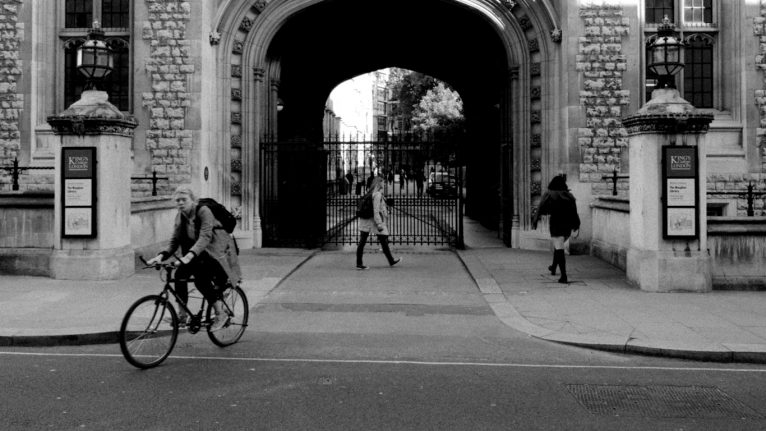
The Maughan Library Gate at Kings College London, UK. David JC | Alamy
By Alan MacLeod | MintPress News | June 4, 2021
LONDON — In a previous investigation, MintPress News explored how one university department, the Department of War Studies at King’s College London, functions as a school for spooks. Its teaching posts are filled with current or former NATO officials, army officers and intelligence operatives to churn out the next generation of spies and intelligence officers. However, we can now reveal an even more troubling product the department produces: journalists. An inordinate number of the world’s most influential reporters, producers and presenters, representing many of the most well-known and respected outlets — including The New York Times, CNN and the BBC — learned their craft in the classrooms of this London department, raising serious questions about the links between the fourth estate and the national security state.
National security school
Increasingly, it appears, intelligence agencies the world over are beginning to appreciate agents with a strong academic background. A 2009 study published by the CIA described how beneficial it is to “use universities as a means of intelligence training,” writing that, “exposure to an academic environment, such as the Department of War Studies at King’s College London, can add several elements that may be harder to provide within the government system.”
The paper, written by two King’s College staffers, boasted that the department’s faculty has “extensive and well-rounded intelligence experience.” This was no exaggeration. Current Department of War Studies educators include the former Secretary General of NATO, former U.K. Minister of Defense, and military officers from the U.K, U.S. and other NATO countries. “I deeply appreciate the work that you do to train and to educate our future national security leaders, many of whom are in this audience,” said then-U.S. Secretary of Defense (and former CIA Director) Leon Panetta in a speech at the department in 2013.
King’s College London also admits to having a number of ongoing contracts with the British state, including with the Ministry of Defence (MoD), but refuses to divulge the details of those agreements.
American connections
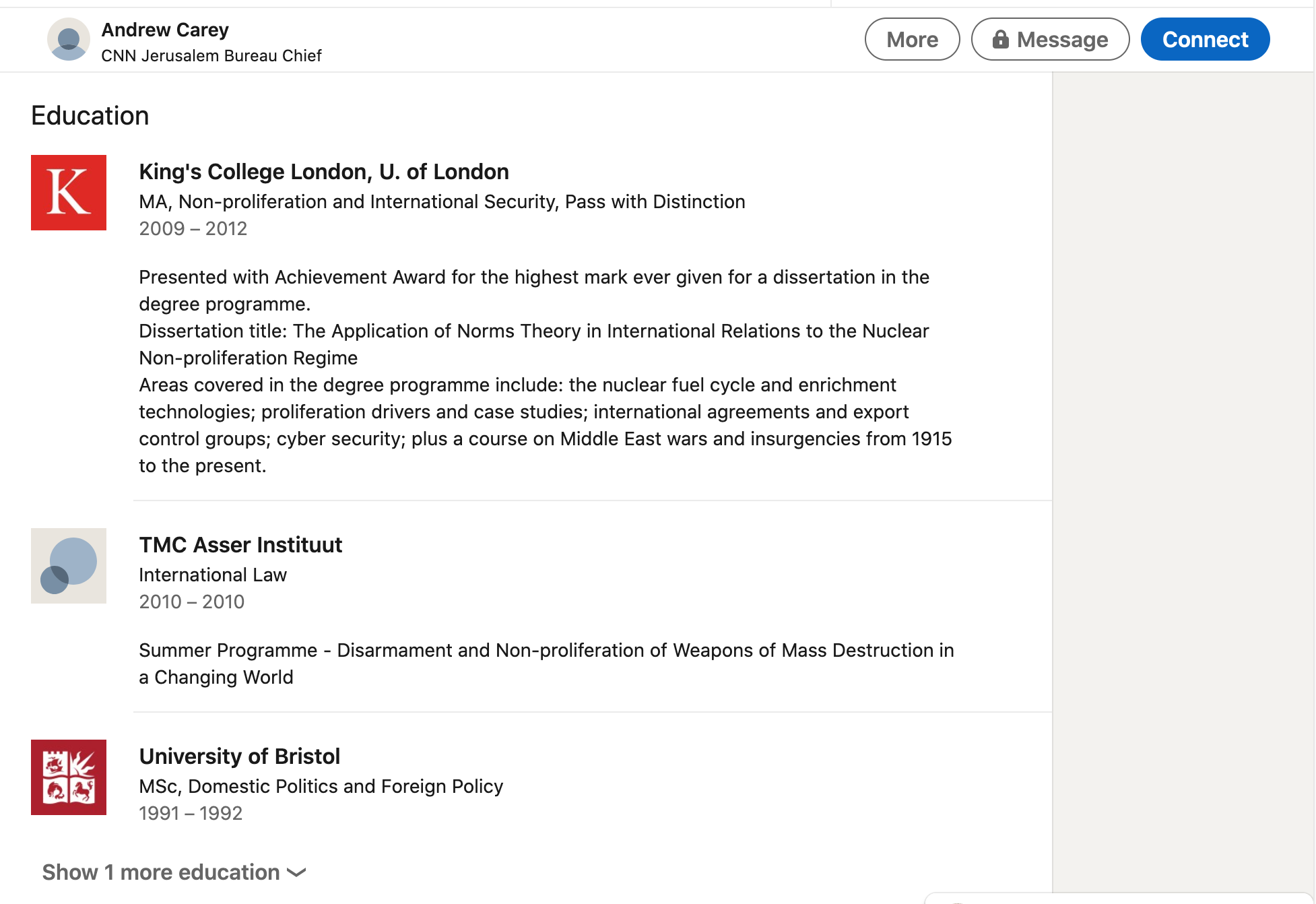
Although a British university, King’s College markets itself heavily to American students. There are currently 1,265 Americans enrolled, making up about 4% of the student body. Many graduates of the Department of War Studies go on to attain powerful positions in major American media outlets. Andrew Carey, CNN’s Bureau Chief in Jerusalem, for example, completed a master’s there in 2012. Carey’s coverage of the latest Israeli attack on Gaza has presented the apartheid state as “responding” to Hamas rocket attacks, rather than being the instigator of violence. A leaked internal memo Carey sent to his staff last month at the height of the bombardment instructed them to always include the fact that the Gazan Ministry of Health is overseen by Hamas, lest readers begin to believe the well-documented Palestinian casualty figures brought on by days of bombing. “We need to be transparent about the fact that the Ministry of Health in Gaza is run by Hamas. Consequently, when we cite latest casualty numbers and attribute to the health ministry in Gaza, we need to include the fact that it is Hamas run,” read his instructions.
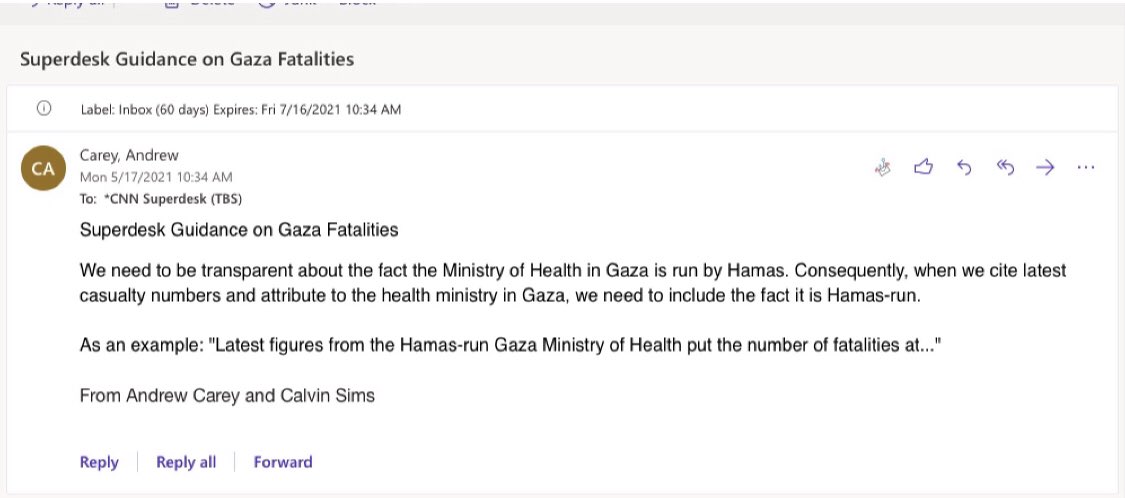
King’s College alumnus turned CNN Jerusalem bureau chief Andrew Carey instructed reporters on how to cover Israel’s latest assault on Gaza
Once publicized, his comments elicited considerable pushback. “This is a page straight out of Israel’s playbook. It serves to justify the attack on civilians and medical facilities,” commented Al-Jazeera Senior Presenter and Producer Dena Takruri.
The New York Times, the United States’ most influential newspaper, has also employed Department of War Studies alumni. Christiaan Triebert (M.A., 2016), for example, is a journalist on their visual investigations team. He even won a Pulitzer Prize for “Revelations about Russia and Vladimir Putin’s aggressive actions in countries including Syria and Europe.” Hiring students from the school for spooks to bash Russia appears to be a common Times tactic, as it also employed Lincoln Pigman between 2016 and 2018 at its Moscow bureau.
Josh Smith, senior correspondent for influential news agency Reuters and formerly its correspondent in Afghanistan, also graduated from the department in question, as did The Wall Street Journal’s Daniel Ford.
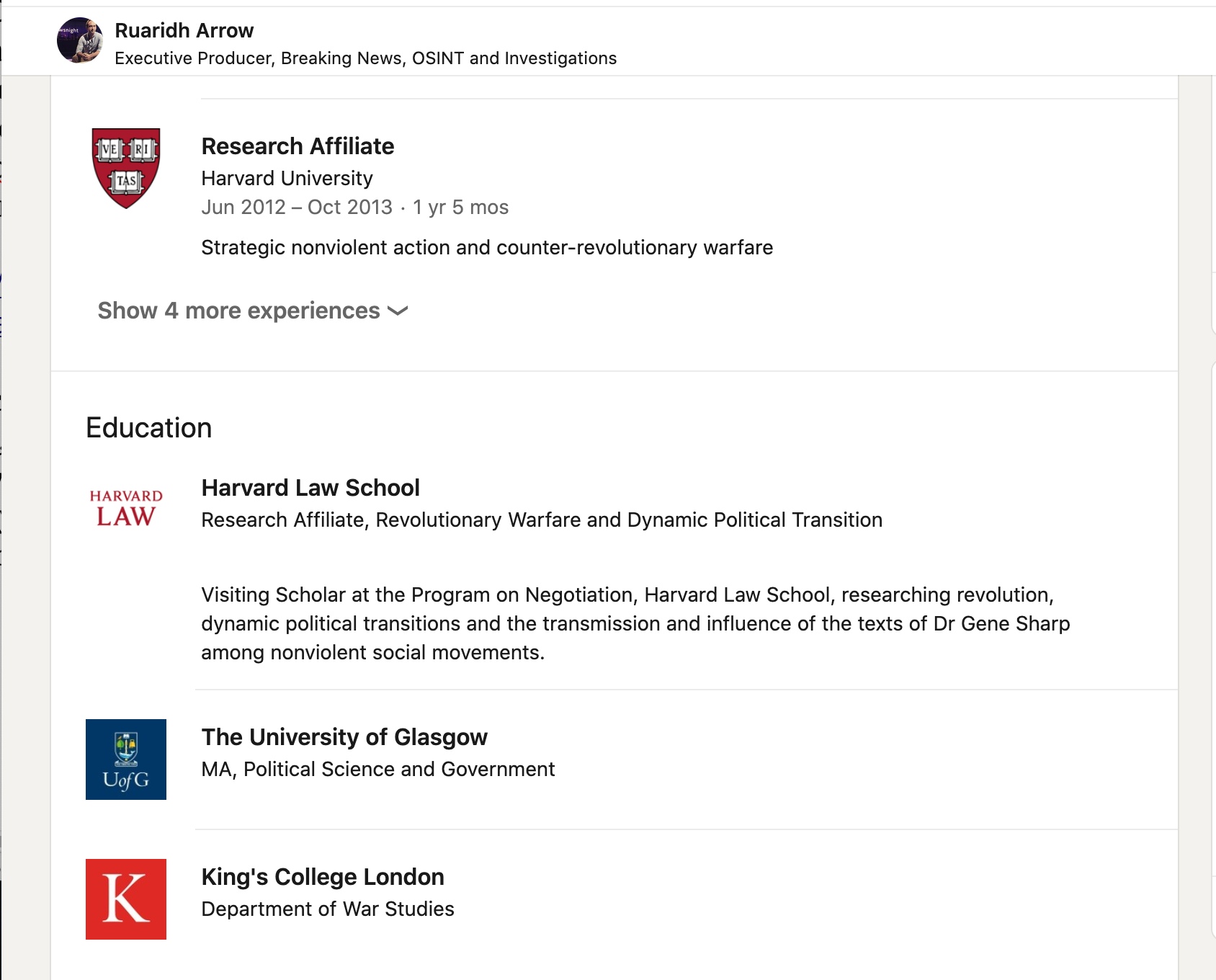
Arguably the most influential media figure from the university, however, is Ruaridh Arrow. Arrow was a producer at many of the U.K.’s largest news channels, including Channel 4, Sky News and the BBC, where he was world duty editor and senior producer on Newsnight, the network’s flagship political show. In 2019, Arrow left the BBC to become an executive producer at NBC News.
The British invasion
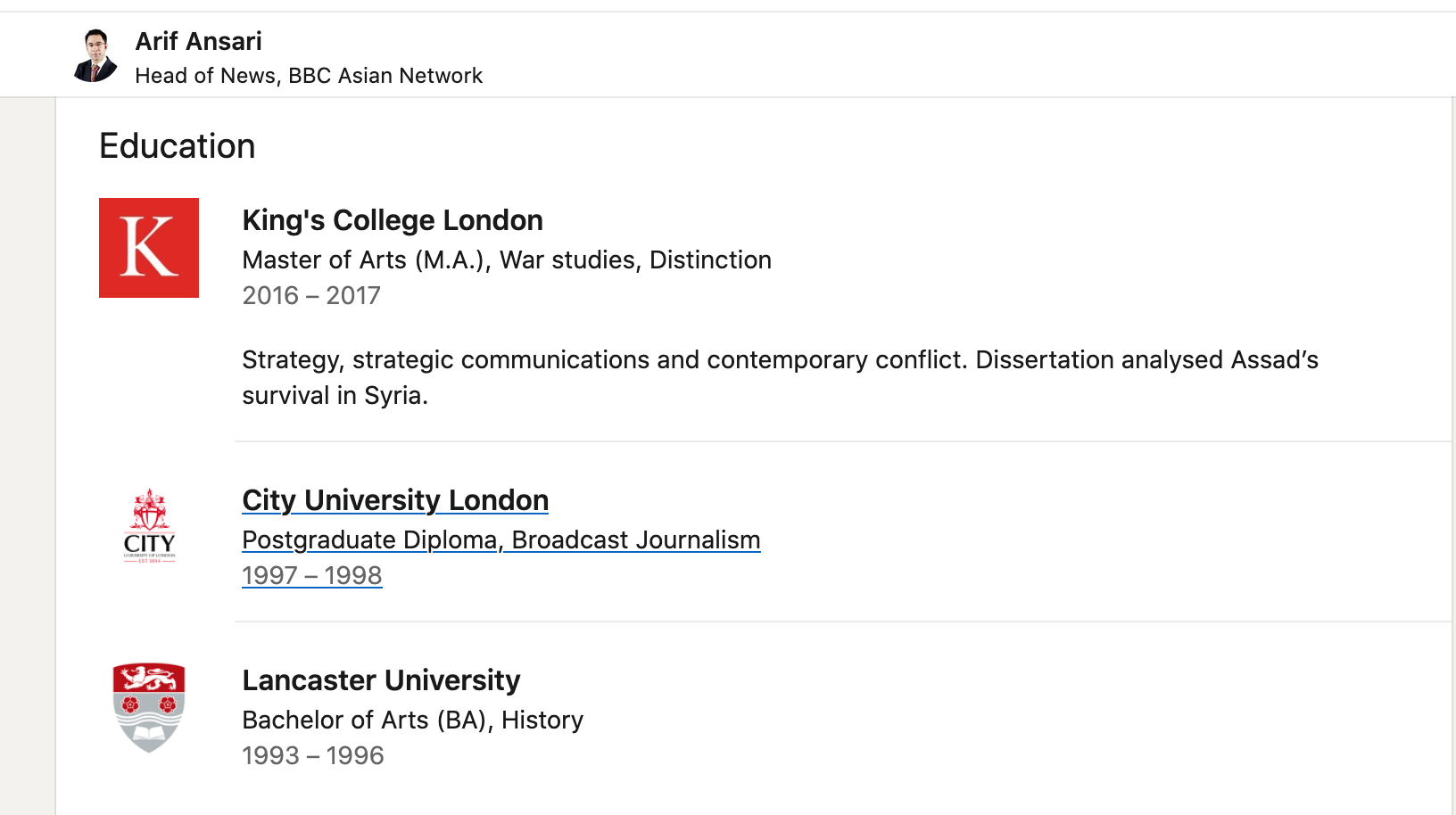
Unsurprisingly for a university based in London, the primary journalistic destination for Department of War Studies graduates is the United Kingdom. Indeed, the BBC, the country’s powerful state broadcaster, is full of War Studies alumni. Arif Ansari, head of news at the BBC Asian Network, completed a masters analyzing the Syrian Civil War in 2017 and was soon selected for a leadership development scheme, placing him in charge of a team of 25 journalists who curate news primarily geared toward the substantial Middle Eastern and South Asian communities in Great Britain.
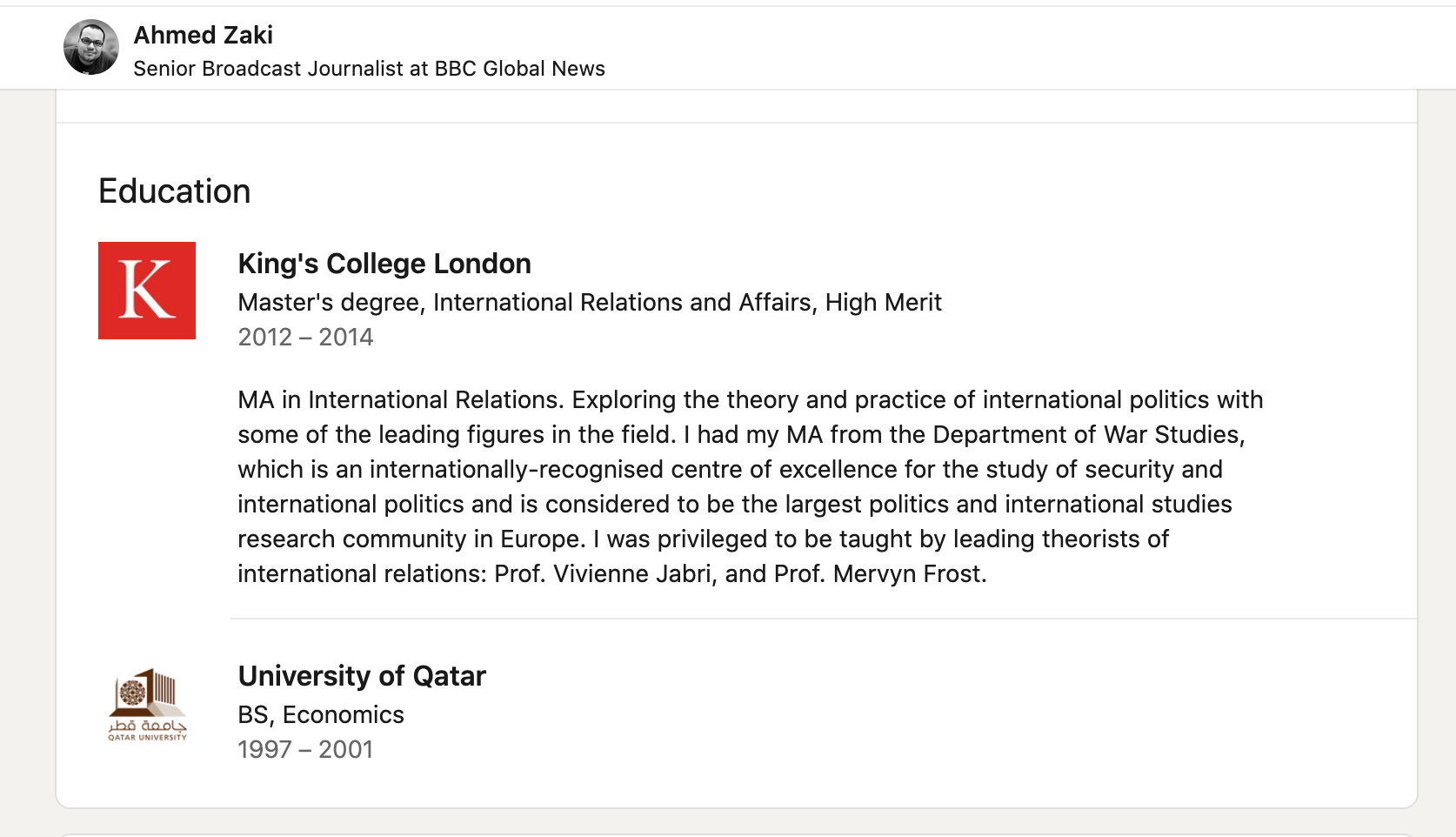
Many BBC employees begin studying at King’s years after their careers have already taken off, and balance their professional lives with pursuing new qualifications. Ahmed Zaki, Senior Broadcast Journalist at BBC Global News, began his master’s six years after he started at the BBC. Meanwhile, Ian MacWilliam — who spent ten years at BBC World Service, the country’s official news broadcast worldwide, specializing in sensitive regions like Russia, Afghanistan and Central Asia — decided to study at King’s more than 30 years after completing his first degree.
Another influential War Studies alumnus at the World Service is Aliaume Leroy, producer for its Africa Eye program. Well-known BBC News presenter Sophie Long also graduated from the department, working for Reuters and ITN before joining the state broadcaster.
“It’s an open secret that King’s College London Department of War Studies operates as the finishing school for Anglo-American securocrats. So it’s maybe not a surprise that graduates of its various military and intelligence courses also enter into a world of corporate journalism that exists to launder the messaging of these same ‘security’ agencies,” Matt Kennard — an investigative journalist for Declassified U.K. who has previously exposed the university’s connections to the British state — told MintPress. “It is, however, a real and present danger to democracy. The university imprimatur gives the department’s research the patina of independence while it works, in reality, as the unofficial research arm of the U.K. Ministry of Defence,” he added.
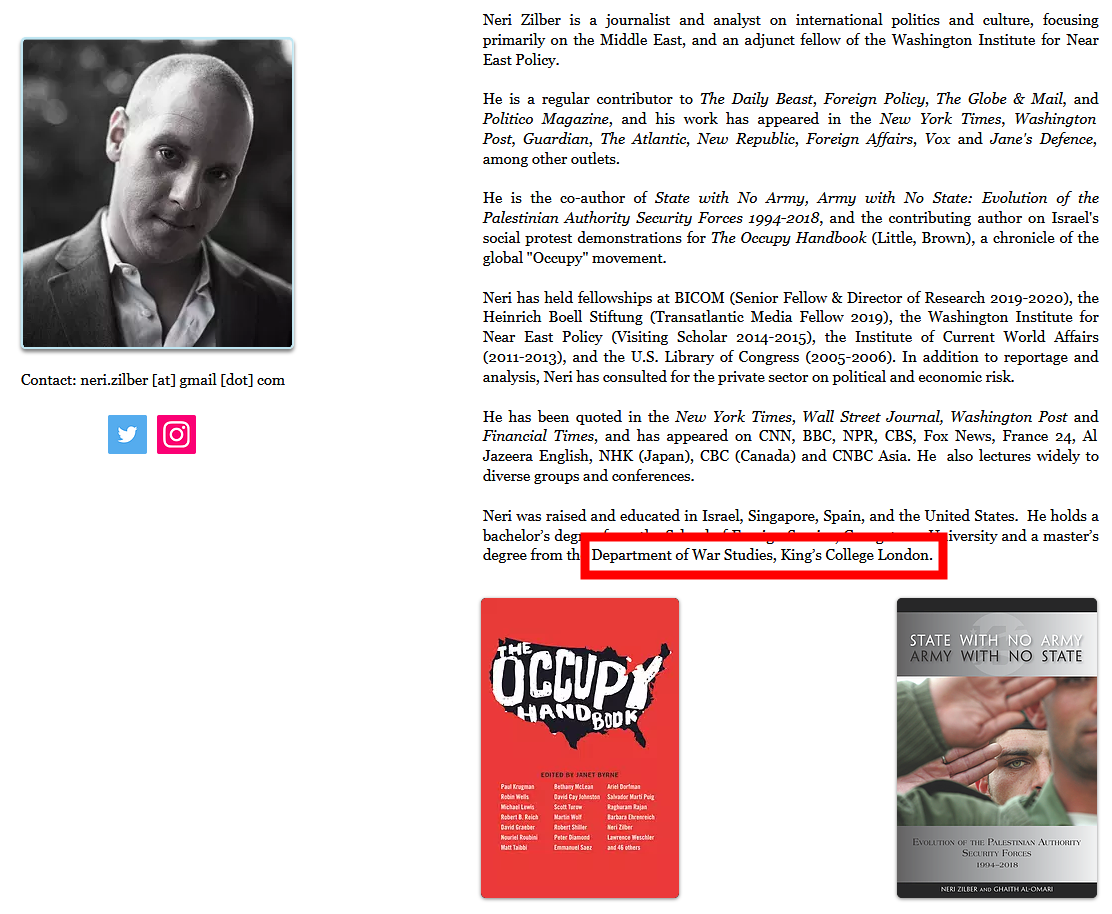
Israeli writer and King’s College alumnus Neri Zilber has bylines in many of the media’s most important outlets
The Department of War Studies also trains many international journalists and commentators, including Nicholas Stuart of the Canberra Times (Australia); Pakistani writer Ayesha Siddiqa, whose work can be found in The New York Times, Al-Jazeera, The Hindu and many other outlets; and Israeli writer Neri Zilber, a contributor to The Daily Beast, The Guardian, Foreign Policy and Politico.
What’s it all about?
Why are so many influential figures in our media being hothoused in a department well known for its connections to state power, for its faculty being active or former military or government officials, and for producing spies and operatives for various three-letter agencies? The point of this is not to allege that these journalists are all secretly card-carrying spooks: they are not. Rather, it is to highlight the alarmingly close links between the national security state and the fourth estate we rely on to be a check on their power and to hold them accountable.
Journalists trained in this sort of environment are far more likely to see the world in the same manner as their professors do. And perhaps they would be less likely to challenge state power when the officials they are scrutinizing were their classmates or teachers.
These sorts of questions abound when such a phenomenon exists: Why are so many journalists choosing to study at this particular department, and why do so many go on to be so influential? Are they being vetted by security agencies, with or without their knowledge? How independent are they? Will they just repeat British and American state talking points, as the Department of War Studies’ publications do?
On the question of vetting, the BBC admitted that, at least until the 1990s, it conspired with domestic spying agency MI5 to make sure that people with left-wing and/or anti-war leanings, or views critical of British foreign policy and empire were secretly blocked from being hired. When pressed on whether this policy is still ongoing, the broadcaster refused to comment, citing “security issues” — a response that is unlikely to reassure skeptics.
“While it strikes me as very interesting that a single academic institution could play such a major role in the recruitment of pro-establishment activist intellectuals and delivery of the same to the media, it is not so surprising,” Oliver Boyd-Barrett, Professor Emeritus at Bowling Green State’s School of Media and Communication and an expert in collusion between government and media, told MintPress, adding:
Elite institutions in the past and doubtless still today have been major playgrounds for intelligence services. The history of the modern nation-state generally, not just the USA, seems to suggest that national unity — and therefore elite safety — is regarded by elites as achievable only through careful management and often suppression or diversion of dissent. Far more resources are typically committed to this than many citizens, drilled in the propaganda of democracy, realize or care to concede.
The Bellingcat Boys
While the journalists cataloged above are not spooks, some other Department of War Studies figures working in journalism could possibly be described as such, particularly those around the influential and increasingly notorious investigative website Bellingcat.
Cameron Colquhoun, for instance, spent almost a decade at GCHQ, Britain’s version of the NSA, where he was a senior analyst running cyber and counter-terrorism operations. He holds qualifications from both King’s College London and the State Department. This background is not disclosed in his Bellingcat profile, which merely describes him as the managing director of a private intelligence company that “conduct[s] ethical investigations” for clients around the world.
Bellingcat’s senior investigator Nick Waters spent four years as an officer in the British Army, including a tour in Afghanistan, where he furthered the British state’s objectives in the region. After that, he joined the Department of War Studies and Bellingcat.
For the longest time, Bellingcat’s founder Eliot Higgings dismissed charges that his organization was funded by the U.S. government’s National Endowment for Democracy (NED) — a CIA cutout organization — as a ridiculous “conspiracy.” Yet by 2017, he was admitting that it was true. A year later, Higgins joined the Department of War Studies as a visiting research associate. Between 2016 and 2019 he was also a senior fellow at the Atlantic Council, the brains behind the North Atlantic Treaty Organization (NATO).
Higgins appears to have used the university department as a recruiting ground, commissioning other War Studies graduates, such as Jacob Beeders and the aforementioned Christiaan Triebert and Aliaume Leroy, to write for his site.
Bellingcat is held in very high regard by the CIA. “I don’t want to be too dramatic, but we love [Bellingcat],” said Marc Polymeropoulos, the agency’s former deputy chief of operations for Europe and Eurasia. Other officers explained that Bellingcat could be used to outsource and legitimize anti-Russia talking points. “The greatest value of Bellingcat is that we can then go to the Russians and say ‘there you go’ [when they ask for evidence],” added former CIA Chief of Station Daniel Hoffman.
Bellingcaught
A recent MintPress investigation explored how Bellingcat acts to launder national security state talking points into the mainstream under the guise of being neutral investigative journalists themselves.
Newly leaked documents show how Bellingcat, Reuters and the BBC were covertly cooperating with the U.K.’s Foreign and Commonwealth Office (FCO) to undermine the Kremlin and promote regime change in Moscow. This included training journalists and promoting explicitly anti-Russian media across Eastern Europe. Unfortunately, the FCO noted, Bellingcat had been “somewhat discredited,” as it constantly spread disinformation and was willing to produce reports for anyone with money.
Nevertheless, a new European Parliament proposal published last month recommends hiring Bellingcat to assist in producing reports that would lay the groundwork for sanctioning Russia, for throwing it out of international bodies, and to “assist Russia’s transformation into a democracy.” In other words, to overthrow the government of Vladimir Putin.
An academic journalistic nexus
The Department of War Studies is also part of this pro-NATO, anti-Russia group. Quite apart from being staffed by soldiers, spooks and government officials, it puts out influential reports advising Western governments on foreign and defense policy. For instance, a study entitled “The future strategic direction of NATO” advises that member states must increase their military budgets and allow American nuclear weapons to be stored in their countries, thereby “shar[ing] the burden.” It also recommended that NATO must redouble its commitment to opposing Russia while warning that it needed urgently to form a “coherent policy” on the Chinese threat.
Other War Studies reports claim that Russia is carrying out “information-psychological warfare” through its state channels RT and Sputnik, and counsel that the West must use its technical means to prevent its citizens from consuming this foreign propaganda.
King’s College London academics have also proven crucial in keeping dissident publisher Julian Assange imprisoned. A psychiatrist who has worked with the War Studies department testified in court that the Australian was suffering only “moderate” depression and that his suicide risk was “manageable,” concluding that extraditing him to the United States “would not be unjust.” As Matt Kennard’s investigation found, the U.K. Ministry of Defence had provided £2.2 million ($3.1 million) in funding to the institute where he worked (although the psychiatrist in question claimed his work was not directly funded by the MoD).
King’s College London markets the War Studies department to both graduates and undergraduates as a stepping stone towards a career in journalism. In its “career prospects” section for its master’s course in war studies, it tells interested students that “graduates go on to work for NGOs, the FCO, the MoD, the Home Office, NATO, the UN or pursue careers in journalism, finance, academia, the diplomatic services, the armed forces and more.”
Likewise, undergraduates are told that:
You will gain an in-depth and sophisticated understanding of war and international relations, both as subjects worthy of study and as intellectual preparation for the widest possible range of career choices, including in government, journalism, research, and humanitarian and international organisations.
Courses such as “New Wars, New Media, New Journalism” fuse together journalism and intelligence and are overseen by War Studies academics.
It is perhaps unsurprising that the department has taught many influential politicians, including foreign heads of state and members of the British parliament. But at least there is considerable overlap between the fields of defense policy and politics. The fact that the very department that trains high state officials and agents of secretive three letter agencies is also the place that produces many of the journalists we rely on to stand up to those officials and keep them in check is seriously problematic.
An unhealthy respect for authority
Unfortunately, rather than challenging power, many modern media outlets amplify its message uncritically. State officials and intelligence officers are among the least trustworthy sources, journalistically speaking. Yet many of the biggest stories in recent years have been based on nothing except the hearsay of officials who would not even put their names to their claims.
The level of credulity modern journalists have for the powerful was summed up by former CNN White House Correspondent Michelle Kosinski, who last month stated that:
As an American journalist, you never expect:
- Your own govt to lie to you, repeatedly
- Your own govt to hide information the public has a right to know
- Your own govt to spy on your communications
Unfortunately, credulity stretches into outright collaboration with intelligence in some cases. Leaked emails show that the Los Angeles Times’ national security reporter Ken Dilanian sent his articles directly to the CIA to be edited before they were published. Far from hurting his career, however, Dilanian is now a correspondent covering national security issues for NBC News.
Boyd-Barrett said that governments are dependent on “the assistance of a penetrated, colluding and docile mainstream media which of late — and in the context of massive confusion over Internet disinformation campaigns, real and alleged — appear ever more problematic guardians of the public right to know.”
In recent years, the national security state has increased its influence over social media giants as well. In 2018, Facebook and the Atlantic Council entered a partnership whereby the Silicon Valley giant partially outsourced curation of its 2.8 billion users’ news feeds to the Council’s Digital Forensics Lab, supposedly to help stop the spread of fake news online. The result, however, has been the promotion of “trustworthy” corporate media outlets like Fox News and CNN and the penalization of independent and alternative sources, which have seen their traffic decrease precipitously. Earlier this year, Facebook also hired former NATO press officer and current Senior Fellow at the Atlantic Council Ben Nimmo to be its chief of intelligence. Reddit’s Director of Policy is also a former Atlantic Council official.
Meanwhile, in 2019, a senior Twitter executive for the Middle East region was unmasked as an active duty officer in the British Army’s 77th Brigade, its unit dedicated to psychological operations and online warfare. The most notable thing about this event was the almost complete lack of attention it received from the mainstream press. Coming at a time when foreign interference online was perhaps the number one story dominating the news cycle, only one major outlet, Newsweek, even mentioned it. Furthermore, the reporter who covered the story left his job just weeks later, citing stifling top-down censorship and a culture of deference to national security interests.
The purpose of this article is not to accuse any of those mentioned of being intelligence agency plants (although at least one person did actually work as an intel officer). The point is rather to highlight that we now have a media landscape where many of the West’s most influential journalists are being trained by exactly the same people in the same department as the next generation of national security operatives.
It is hardly a good look for a healthy, open democracy that so many spies, government officials, and journalists trusted to hold them accountable on our behalf are all being shot out of the very same cannon. Learning side by side has helped to create a situation where the fourth estate has become overwhelmingly deferential to the so-called deep state, where anonymous official’s words are taken as gospel. The Department of War Studies is just one part of this wider phenomenon.T
Alan MacLeod is Senior Staff Writer for MintPress News. After completing his PhD in 2017 he published two books: Bad News From Venezuela: Twenty Years of Fake News and Misreporting and Propaganda in the Information Age: Still Manufacturing Consent, as well as a number of academic articles.
Scientist at center of lab leak controversy to lead the Lancet’s task force to investigate virus origin
By Steve Watson | Summit News | June 4, 2021
Revered scientific journal The Lancet has created a ‘task force’ to investigate the origins of the coronavirus that caused a global pandemic, yet it has decided to employ as its leader the very guy who funded the dangerous gain of function research at the Wuhan lab and subsequently allegedly ‘bullied’ other scientists into avoiding looking into the lab as a potential source of the outbreak.
In the wake of renewed scrutiny of the lab leak hypothesis, the Lancet’s task force will reportedly “focus on analyzing data on all of the theories put forward on the origins of COVID, on the reasons why SARS-CoV-2 was able to break out of Wuhan and spread globally, and on the most plausible strategies to prevent future pandemics.”
It also states that “The Task Force will review thoroughly and objectively all publicly available evidence, particularly the peer-reviewed literature, and conduct interviews with key leaders in science, medicine, policy and civil society.”
‘Objectively’. Right.
Dr Peter Daszak, who is heading up this task force, is perhaps the least suitable scientist on the planet to objectively analyse the data, given his track record.
Daszak, as President of the EcoHealth Alliance, shovelled at least $600,000 to the Wuhan Institute of Virology in the past few years to play around with coronaviruses inside the lab through the now infamous ‘gain of function’ research.
Daszak, who also works for the World Health Organisation, is on record admitting that he was involved with manipulating coronaviruses. Here is a video of him talking in DECEMBER 2019 about how ‘good’ the viruses are for altering in a lab:
Daszak notes that “coronaviruses are pretty good… you can manipulate them in the lab pretty easily… the spiked proteins drive a lot about what happens. You can get the sequence you can build the protein, we work with Ralph Baric at UNC to do this, insert into the backbone of another virus and do some work in a lab.”
No wonder then that Daszak as lead investigator for the WHO investigation determined within 3 hours of visiting the Wuhan lab in February 2021 that there was ‘nothing to see here’?
Recently released emails now document that Daszak thanked Dr Fauci for dismissing the lab leak theory before any scientific research had been done on the possibility.

Daszak was later employed as an ‘expert fact checker’ by Facebook when it was monitoring and removing ‘misinformation’ about the origins of COVID on its platform, much of which was credible scientific research. Facebook has since reversed the policy of banning any posts containing information suggesting COVID-19 was “man-made”.
Daszak’s Twitter profile is basically one long ‘it came from bats not a lab’ thread, much to the annoyance of some other scientists:
Why does this guy keep getting put in charge of investigations, task forces and ‘fact checking’, when it’s abundantly clear that he has the biggest motive to dismiss the lab leak notion?
As microbiologist Professor Richard Ebright has noted, “Daszak was the contractor who funded the laboratory at the Wuhan Institute of Virology that potentially was the source of the virus with subcontracts from $200million [£142million] from the US Department of State and $7million [£5million] from the US National Institutes of Health and he was a collaborator and co-author on research projects at the laboratory.”
Daszak has already lied about the type of research that was being conducted at the Wuhan lab, claiming, after the outbreak happened, that he didn’t know if it was gain of function or not. His own previous statements, and the Fauci emails prove he knew full well what was going on in the lab.
In addition, as reported by The Daily Mail and other outlets, Daszak “orchestrated a ‘bullying’ campaign and coerced top scientists into signing off on a letter to The Lancet aimed at removing blame for Covid-19 from the Wuhan lab he was funding with US money.”
Daszak used his influence to get the journal to publish the letter, which stated that to even suggest the lab leak theory had any credibility was equal to spreading “fear, rumours, and prejudice.”
It effetely shut down discussion among the scientific ‘consensus’ of the lab leak potential for a whole year until intelligence findings brought the matter back to the attention of the mainstream media.
WHO scientific advisor Jamie Metzl described Daszak’s letter as “scientific propaganda and a form of thuggery and intimidation.”
“By labelling anyone with different views a conspiracy theorist, the Lancet letter was the worst form of bullying in full contravention of the scientific method,” Metzl added.
The letter further stated that “We stand together to strongly condemn conspiracy theories suggesting that Covid-19 does not have a natural origin,” and even had the audacity to state that “We declare no competing interests.”
Indeed, Daszak had made sure that the letter would be devoid of any link to EcoHealth, and even considered leaving his own name off it, emails released via the Freedom of Information Act have revealed.
To make matters worse, the other members of The Lancet’s task force are practically all minions of Daszak, some of whom helped him draft the letter that unequivocally stated the lab leak theory was dangerous, and others who either worked with him on ‘fact checking’ for Facebook, or were cited as sources during that activity.
Taking all this into account, it is obvious what the outcome of The Lancet’s inquiry will be, and it should not and cannot be used as credible evidence against the lab leak theory.
The Finders: CIA Ties to Child Sex Cult Obscured as Coverage Goes from Sensationalism to Silence
By Elizabeth Vos | MintPress News | June 3, 2021
WASHINGTON — In February 1987, an anonymous phone tip was called into the Tallahassee police department reporting that six children were dirty, hungry, and acting like animals in the custody of two well-dressed men in a Tallahassee, Florida park. That phone call would kick off the Finders scandal: a series of events and multiple investigations even more bizarre than the initial report.
The trail would ultimately lead to allegations of a cult involved in ritual abuse, an international child-trafficking ring, evidence of child abuse confirmed and later denied, and ties with the CIA, which was alleged to have interfered in the case. No one was ever prosecuted in the wake of the initial 1987 investigation or a 1993 inquiry into the allegations of CIA involvement: official denials were maintained, and authorities stated that no evidence of criminal activity was ever found. However, documents that have emerged over time beg significant questions as to the validity of the official narrative.
In contrast with other historical human trafficking rings covered in the independent press, including those I have previously discussed, the Finders scandal presents as something of a phantom. This is in consequence of the lack of adult victims who have come forward, an absence of hard evidence viewable to the public, and an absence of extensive trials or convictions. Further impeding the willingness of most journalists to cover such a story were claims of ritualistic abuse that were hyped by corporate media at the time of the incident, as well as allegations of a CIA-led coverup that were less widely recognized by the legacy press.
The story is further complicated by the fact that it takes place in three basic stages: the initial 1987 investigation spread across multiple states and law enforcement agencies; a subsequent 1993 inquiry into allegations of a CIA coverup and interference in the 1987 investigation; and the emergence of Customs Service documents detailing new aspects of initial searches of Finders properties which was followed by the publication of hundreds of documents from both investigations to the FBI vault in 2019.
By initially sensationalizing the issue via the framing of the Finders as a satanic cult, the media profited from immediate shock value while permitting this very sensationalism to become the premise for dismissing other aspects of the story and Finders ties to the CIA to remain unexplored.
The 1987 Investigation
On February 4, 1987, two men dressed in suits and ties in the company of six bug-bitten, dirty, hungry children were arrested in Tallahassee, Florida, on charges of child abuse after a concerned citizen called local police. Initially, Tallahassee police were concerned that the children might have been kidnapped and were being trafficked across state lines. The U.S. Customs Service, the Washington Metropolitan Police Department (MPD), and the FBI became involved in the attempt to identify the two men based on suspicions of interstate criminal activity including the possibility of child pornography.
The story exploded on a national scale after investigators linked the pair, identified as Douglas Ammerman and Michael Houlihan (also referred to as Michael Holwell), with a Washington D.C.-based group known as the Finders, which authorities publicly referred to as a “cult.” Initially, Tallahassee police reported that at least two of the children showed signs of sexual abuse.
Houlihan and Ammerman first told police that they were transporting the children to a school for brilliant children in Mexico. However, this explanation as to the purpose of the children’s trip would change significantly, with Finders members later stating that the group were on an adventure in Florida. The Finders group was found to have multiple properties in Washington, D.C. and a farm in rural Madison County, Virginia. It also became clear that the Finders were highly skilled with early computer technology, which would become a major aspect of the case as it unfolded.

Doug Ammerman and Michael Holwell sit in Leon County Court during a bond hearing related to charges of child abuse. Credit | Tallahassee Democrat
News reports across the country headlined allegations of ritual abuse for approximately six days after the initial arrests, before a tidal shift by both the media and authorities began on February 10. The New York Times reported on that day:
Local police officials announced here today that six children found last week in Florida had apparently not been kidnapped and that there was no evidence to show that the secretive group that has been raising them is a cult involved in child abuse. The statement from the Metropolitan Police Department conflicted with accounts from the police in Tallahassee, Fla., where the children were found, unwashed and hungry, last week. Officials there said this morning that at least two of the children had signs of sexual abuse.
As described by the Times and the Chicago Tribune, the children were placed in police protective custody after threats were received at the shelters where they had originally been housed. Eventually, the mothers of the children were reported to have been Finders members and the children were said to be transported by Houlihan and Ammerman with the full consent of their parents. Hence, suspicions of kidnapping and trafficking rapidly lost credibility, though issues of abuse remained. The original strong allegations of sexual abuse of at least two of the six children were eventually contradicted by Florida authorities.
In March 1987, Houlihan and Ammerman were released with charges dropped for lack of evidence, and all of the children were eventually returned to their mothers. The official and media consensus was that the entire issue was a miscommunication blown out of proportion, and that the Finders were simply a 1960’s-esque “alternative lifestyle community” with unusual education methods.
The 1993 inquiry into an Intelligence Community coverup
U.S. Customs Special Agent Ramon J. Martinez claimed in a memorandum that during his participation in the searches of two of the Finder’s properties in Washington he witnessed evidence of the Finders’ intent to traffic children and other potentially criminal acts. Martinez wrote that he was unable to review the evidence collected at the locations after multiple attempts to do so, and that he was eventually told by a third party at the MPD precinct that the Finders group had come under the protection of the CIA, which had interfered with the investigation by deeming the issue an “internal matter,” and had the case files labeled “Secret,” with no further action to be taken or evidence available for review. Clearly, Martinez’s account detailing what he witnessed presents a strong counter-narrative to the official story.
A man named Skip Clements allegedly communicated the U.S. Customs documents and other records to then-Florida Rep. Tom Lewis (R) and North Carolina Rep. Charlie Rose (D). Stemming in part from their protests, as well as the prospect of CBS’s 48 Hours producing a segment on the Finders story (which never aired), the Department of Justice announced it would investigate allegations of CIA interference in the 1987 investigation in late 1993. The previously mentioned congressmen claimed publicly that the Finders may have benefited from protection of the U.S. government agencies, with U.S.News & World Report writing in December 1993, (as the DOJ investigation was getting underway), that Lewis had asked:
Could our own government have something to do with this Finders organization and [have] turned their backs on these children? That’s what the evidence points to…. I can tell you that we’ve got a lot of people scrambling, and that wouldn’t be happening if there was nothing here.”
The DOJ’s investigation resulted in a verdict of no evidence of CIA interference and no evidence of criminal activity on the part of the Finders, and it represented the official and legal end of the story.
The 2019 publication of FBI Vault documents
Eventually, Customs documents including Ramon Martinez’s memo made their way onto the internet. The exact method by which this occurred remains murky, with the best copy of the documents being hosted by the website of now-deceased Ted Gunderson, who served as an FBI special agent in charge and head of the Los Angeles FBI.
I contacted Martinez in 2017 and confirmed that he authored the document and that it is genuine, but to date, he has otherwise refused to go on record to comment on the matter with me. Martinez has had limited communication with some other independent journalists, including Derrick Broze of the Conscious Resistance, who produced a documentary on the Finders case in 2019. I also described aspects of the Martinez memo and the Finders case as part of a report on alleged intelligence-tied child abuse scandals penned in August 2019 in the wake of Jeffrey Epstein’s death and renewed public interest in the overall subject matter.
Just months after Epstein’s death, in October 2019, the FBI began releasing hundreds of Finders investigation documents to their Vault. The publication sparked a storm of attention, but virtually no corporate press coverage aside from a piece by Vice, which framed any interest in the subject as a conspiracy theory.
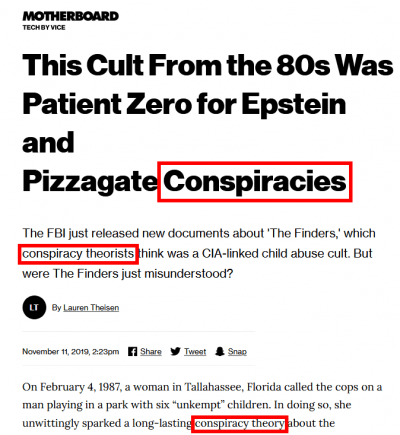
Mainstream media outlets have been quick to dismiss CIA ties to The Finder’s as little more than conspiracy
On their face, the contents of the FBI Vault documents appear to contradict the allegations made by former Special Agent Martinez: they include statements from multiple officers involved in the investigation from various agencies to the effect that they experienced no overt interference in their work from the CIA. Yet, when one looks closely, the documents also corroborate significant aspects of Martinez’s allegations and substantiate questions regarding the Finders’ links with intelligence.
There is the admission that Isabelle Pettie, the wife of Finders leader Marion Pettie, worked for the CIA during the Cold-War era (Pettie also admitted that his son worked for the CIA-linked, Iran Contra-era Air America), and that it was her visas to North Korea, North Vietnam, Russia and elsewhere that had been approved by the State Department. Key documents from the MPD investigation are labeled secret, just as Martinez had claimed, which is bizarre on its face if we are to believe that the Finders were simply an odd “alternative living” commune.
These and other corroborating details add credibility to Martinez’s claims regarding having witnessed other documents that indicated international child trafficking, as well as his assertion that he was told that the case had been deemed a “CIA internal matter.”
The FBI’s Vault publication includes records from the preliminary Tallahassee police department investigation, the MPD investigation, heavily redacted records from the U.S. Customs Service, documents from the Washington Metro Field Office (WMFO) of the FBI, and other agencies, as well as the correspondence and documentation of the 1993 inquiry, mostly from the WMFO to FBI Headquarters. The documents are scattered throughout the three published sections in no coherent order, and are interspersed with news reports from the time ranging from the initial arrests and the child custody issue to the 1993 inquiry into CIA connections with and protection of the group.
Bizarrely, a map relating to the McMartin Preschool scandal is also included in the publication for no known reason, since at this time the cases are completely unrelated aside from both having contained allegations of satanic abuse. Regardless of the intent behind the document’s inclusion, it serves to further associate the Finders with the so-called “moral panic” scandals of the era, which I would argue distracts from the issue of intelligence ties to the case.

A map of the McMartin Preschool inexplicably included in the FBI’s Vault release
A fresh look
Before moving further into analysis of the available evidence, it’s important to recognize a number of problems we face in understanding the information published in the FBI’s Vault. First, a multitude of large, often critically placed redactions plague the documents, the most important of which are not labeled with privacy exemptions but are instead labeled “S,” presumably meaning that the information is classified as secret.
Another problem involves the fact that information requested by some agencies — especially during the 1993 preliminary inquiry into a CIA coverup — was not provided to the relevant investigating agencies. Then there is the phenomenon of information disappearing outright, including vanishing evidence and instances of records never having been kept, resulting in conflicting accounts of the existence of critical pieces of evidence.
This series will challenge both the sensationalism and the silence of establishment media surrounding the Finders narrative by examining the allegations made by the U.S. Customs documents in view of the FBI’s more recent Vault publications, which shed fresh light on the connections between the Finders and the U.S. intelligence apparatus.
Elizabeth Vos is an independent journalist and MintPress News Contributor. Her work has appeared in many media outlets including Consortium News, where she co-hosts the CNLive! webcast.
Why Is There Such Reluctance to Discuss Natural Immunity?
By Jon Sanders | AIER | June 4, 2021
If you’re among those of us who aren’t tribally invested in Covid politics but would like good information about when life will resume as normal, chances are you’re interested in herd immunity. You’re likely not interested in having to rely on the Internet Archive for good information on herd immunity. Alas, it’s become a go-to place for retrieving, as it were, previously published information on herd immunity that became inconvenient post-vaccine and then virtually Memory-Holed.
Over the past 15 months, the litany of Experts’ True Facts and Science regarding various aspects of SARS-CoV-2 has changed more often than the starting lineup of a bad minor league ball club. Covid-19 is spread by droplets, especially from asymptomatic people, until one day it was airborne all along and people who weren’t sick in all likelihood weren’t even sick. Stay at home, you’re safer indoors, even stay away from parks and beaches; well, actually, outdoors is the place to be. Masks don’t work against viruses and are actually unhealthy to wear if you’re not sick, then suddenly they did work and without one you might as well be shooting people. Everyone knows and PolitiFact verified that the virus couldn’t have been created in the prominent infectious disease lab doing gain-of-function research on coronaviruses in bats coincidentally at Covid Ground Zero until, one day, PolitiFact had to retract the entire “Pants on Fire!” article. And so forth.
Unfortunately, information about herd immunity has also not been immune to this kind of meddling. Until recent months, people readily understood that active immunity came about either by natural immunity or vaccine-induced immunity. Natural immunity comes from battling and defeating an actual infection, then having your immune system primed for the rest of your life to fight it off if it ever shows up again. This immunity is achieved at a sometimes very high personal price.
Vaccine-induced immunity is to prime your immune system with a weaker, non-threatening form of the invading infection, so that it’s ready to fight off the real thing should you ever encounter it, and without your having first to risk severe illness or death.
Those interested in herd immunity in itself likely don’t have a moral or political preference for one form of immunity to the exclusion of the other. Immunity is immunity, regardless of whether a particular person has it naturally or by a vaccine. All immunity contributes to herd immunity.
Others, however, are much less circumspect. They seem to have forgotten the ultimate goal of the public campaign for people to receive vaccination against Covid-19. It’s not to be vaccinated; it’s to have immunity. People with natural immunity — i.e., people whose immune systems have faced Covid-19 and won — don’t need a vaccine.
They do, however, need to be considered in any good-faith discussion of herd immunity. There are two prongs to herd immunity, as we used to all know, and those with natural immunity are the prong that’s being ignored. It’s not just mere oversight, however. Fostering such ignorance can lead to several bad outcomes:
- People with natural immunity could be kept from employment, education, travel, normal commerce, and who knows what other things if they don’t submit to a vaccine they don’t need in order to fulfill a head count that confuses a means with the end
- The nation could already be at herd immunity while governors and health bureaucrats continue to exert extreme emergency powers, harming people’s liberties and livelihoods
- People already terrified of Covid — including especially those who’ve already had it — would continue to live in fear, avoiding human interaction and worrying beyond all reason
- People could come to distrust even sound advice from experts about important matters, as they witness and grow to expect how what “the experts” counsel diverges from what they know to be wise counsel while it conforms to and amplifies the temporary needs of the political class
Those of us wanting good information certainly don’t want any of those outcomes. But others seem perfectly fine to risk them. They include not only elected officials, members of the media, political talking heads, self-important bureaucrats, and their wide-eyed acolytes harassing shoppers, but strangely also highly prominent health organizations.
For example, late last year Jeffrey Tucker showed that the World Health Organization (WHO) suddenly, and “for reasons unknown,” changed its definition of “herd immunity.” Using screenshots from a cached version on the Internet Archive, Tucker showed how the WHO altered its definition in such a way as to erase completely the role of natural immunity. Before, the WHO rightly said it “happens when a population is immune either through vaccination or immunity developed through previous infection.” The WHO’s change stated that it happens “if a threshold of vaccination is reached.” Not long after Tucker’s piece appeared, the WHO restored natural immunity to its definition.
The Food and Drug Administration (FDA), seemingly apropos of nothing, on May 19 issued a “safety communication” to warn that FDA-authorized SARS-CoV-2 antibody tests “should not be used to evaluate immunity or protection from COVID-19 at any time.” The FDA’s concern appears to be that taking an antibody test too soon after receiving a vaccination may fail to show vaccine-induced antibodies, but why preclude its use for “identifying people with an adaptive immune response to SARS-CoV-2 from a recent or prior infection?” Especially after stating outright that “Antibody tests can play an important role in identifying individuals who may have been exposed to the SARS-CoV-2 virus and may have developed an adaptive immune response.”
Then there is the National Institute of Allergy and Infectious Diseases director, Dr. Anthony Fauci, that ubiquitous font of fatuous guidance. He had told people that herd immunity would be at 60 to 70 percent immunity, and then he started publicly cinching those numbers up: 75 percent, 80 percent, 85 percent, even 90 percent (as if Covid-19 were as infectious as measles). He is quoted in the New York Times admitting to doing so deliberately to affect people’s behavior:
“When polls said only about half of all Americans would take a vaccine, I was saying herd immunity would take 70 to 75 percent,” Dr. Fauci said. “Then, when newer surveys said 60 percent or more would take it, I thought, ‘I can nudge this up a bit,’ so I went to 80, 85.“
Now — or better put, as of this writing — Fauci has taken to arguing herd immunity is a “mystical elusive number,” a distracting “endgame,” and therefore not worth considering. Only vaccinations are worth counting. As he put it recently, “We don’t want to get too hung up on reaching this endgame of herd immunity because every day that you put 2 million to 3 million vaccinations into people [it] makes society be more and more protected.”
While composing an article about natural immunity and herd immunity for my home state of North Carolina, I happened to notice that the Mayo Clinic had removed a compelling factoid about natural immunity. It’s something I had quoted in an earlier discussion of the matter and wanted to revisit it.
Here’s what the Mayo Clinic once wanted people to know in its page on “Herd Immunity and COVID-19” with respect to natural immunity: “[T]hose who survived the 1918 flu (influenza) pandemic were later immune to infection with the H1N1 flu, a subtype of influenza A.” The Mayo Clinic pointed out that H1N1 was during the 2009-10 flu season, which would be 92 years later. That finding attested to just how powerful and long-lived natural immunity could be.
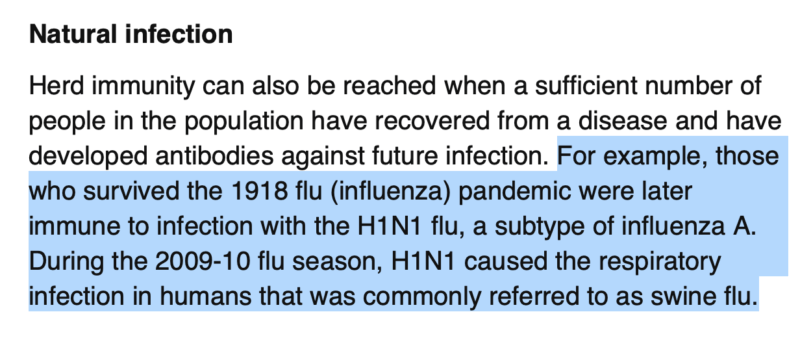
As can be seen from the Internet Archive, however, sometime after April 14 the Mayo Clinic removed that compelling historical aside:
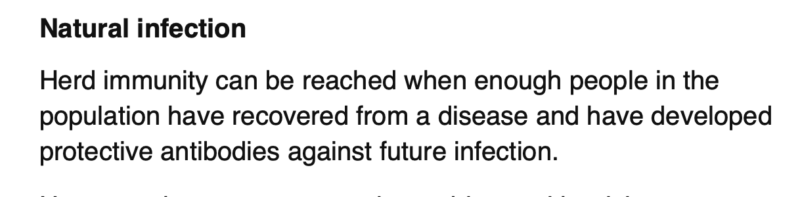
The Mayo Clinic also reoriented its page to feature vaccination over “the natural infection method” (method? ) and added a section on “the outlook for achieving herd immunity in the U.S.” This new section stated that “it’s not clear if or when the U.S. will achieve herd immunity” but encouraged people nonetheless that “the FDA-authorized COVID-19 vaccines are highly effective at protecting against severe illness requiring hospitalization and death … allowing people to better be able to live with the virus.”
Why, from people who know better, is there so much interest in downplaying or erasing natural immunity?
Is it because it’s hard to quantify how many people have natural immunity? Is it out of a mix of good intentions and worry, that discussing natural immunity would somehow discourage (“nudge,” in Fauci’s term) people from getting vaccines who otherwise would? Is it simple oversight, being so focused on vaccinations that they just plain forgot about natural immunity? Or is something else at work?
Whatever the reason, it’s keeping Americans in the dark about how many people have active immunity from Covid-19. It’s keeping people needlessly fearful and suspicious of each other. It’s empowering executive overreach. Worst of all, it’s tempting people to consider government and business restrictions on the unvaccinated, regardless of their actual immunity.
Jon Sanders is an economist and the senior fellow of regulatory studies and research editor at the John Locke Foundation in Raleigh, North Carolina.
The real conspirators who lied about Covid’s origin, funded fraudulent trials of therapeutics, and controlled the Covid pandemic are the top public health leaders
By Meryl Nass, MD | June 3, 2021
In very early 2020 there was a lot of chatter about where the virus, later named SARS-CoV-2, actually came from. In an excellent, detailed article for the Bulletin of the Atomic Scientists, former NY Times science writer Nicholas Wade describes how two short pieces published in The Lancet and Nature Medicine in Feb-March 2020 determined how this chatter would be channeled.
These two extraordinarily influential pieces, each simply titled as a “Correspondence,” were parroted by the mainstream media for a year. Each was plainly intended to shut down any discussion of a possible lab origin.
I happened to read both Correspondences in March 2020 and it was immediately apparent to me that each was designed as a propaganda tool. Neither had anything to do with science. In fact, the Andersen Correspondence butchered the science. Each had an unusual concatenation of authors.
I was so intrigued by these articles that I kept searching the net to understand them, and discovered that Francis Collins, the NIH Director, had blogged on March 26 about the Nature Medicine Correspondence, suggesting it should put an end to conspiracy theories about lab origin.
I further found the letter from the 3 heads of the US National Academy of Science, Engineering and Medicine, which had been referred to by the Lancet Correspondence authors. But it had not yet been published when the Lancet correspondence was written, suggesting again some hidden connection (or mutual effort) involving the author(s) of the National Academies letter and the Lancet Correspondence author(s).
I wondered why 5 otherwise credible scientists would sign their names to the Nature Medicine Correspondence, when the arguments made in the paper were nonsensical. I concluded that they had been put up to it by a ‘hidden hand,’ and when I was interviewed for the film that became Plandemic 2: Indoctornation I said so. (The film has been banned and shadowbanned, as have many of my writings, so it is impossible to find using google or a standard search engine. Here it is on Bitchute, using the Ecosia search engine.)
Months ago, in another email drop obtained by US Right to Know, we learned that Peter Daszac, CEO of the nonprofit EcoHealth Alliance, was the primary but hidden author of the Lancet Correspondence. He was also the primary beneficiary, since his organization had been used as the pass through to send money from the NIAID to the Wuhan coronavirus lab. (Some might consider this method of giving out grants as a fancy way of money laundering.) Daszac, like Fauci, earned over $400,000/year. He was also a member of the WHO Covid origins investigative team, and had been selected as the head of the Lancet Covid origins investigative team. But the Lancet-sponsored investigation looks like it is now dead in the water. The WHO and the Lancet thus seem to be co-conspirators, choosing the fox (Daszac) to guard the henhouse (the natural origin theory of Covid).
Today, I was sent a link to a specific one of Fauci’s emails, and the mystery of why 5 well known scientists coauthored drivel, which the venerable Nature Medicine journal published, and which was then used as the foundation supporting the claim of Covid’s natural origin, was solved. Here’s the email.
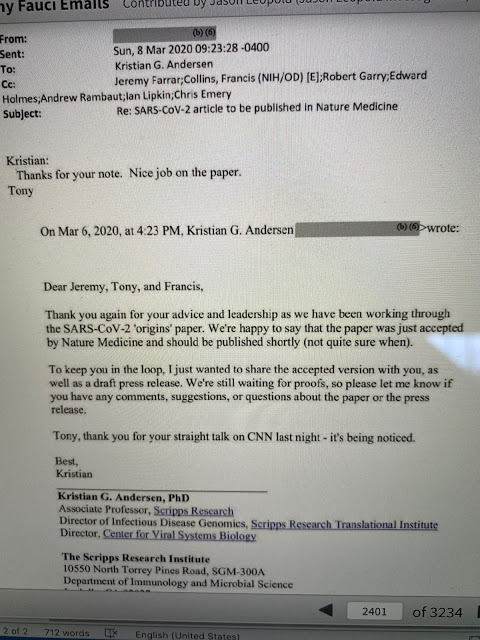
The first author of the Nature Medicine paper thanks 3 incredibly important people for their “advice and leadership” regarding the paper. All 3 are MD researchers, and they dole out more money for medical research than anyone else in the world, perhaps excepting Bill Gates. Fauci runs the NIAID; Collins is the NIH Director (nominally Fauci’s boss) and Sir Jeremy Farrar is the director of the Wellcome Trust. Jeremy also signed the Lancet letter. And he is the Chair of the World Health Organization R&D Blueprint Scientific Advisory Group, which put him in the driver’s seat of the WHO’s Solidarity trial, in which 1000 unwitting subjects were overdosed with hydroxychloroquine in order to sink the use of the drug for Covid. Jeremy had worked in Vietnam, where there was lots of malaria, and he had also been involved with SARS-1 there. He additionally was central in setting up the UK Recovery trial, where 1600 subjects were overdosed with hydroxychloroquine. I think he had some idea of the proper dose of the chloroquine drugs from his experience in Vietnam. But even if he didn’t, Farrar, Fauci and Collins would have learned about such overdoses after Brazil told the world about how they mistakenly overdosed patients in a trial of chloroquine for Covid, published in the JAMA in mid April 2020. Thirty-nine percent of the subjects in Brazil who were given high doses of chloroquine died, average age 50.
Yet the Solidarity and Recovery hydroxychloroquine trials continued into June, stopping only after their extreme doses were exposed.
Fauci made sure to control the treatment guidelines for Covid that came out of the NIAID, advising against both chloroquine drugs and ivermectin. Fauci’s NIAID also cancelled the first large-scale trial of hydroxychlorquine treatment in early disease, after only 20 of the expected 2,000 subjects were enrolled.
What does all this mean?
- There was a conspiracy between the five authors of the Nature Medicine paper and the heads of the NIH, NIAID and Wellcome Trust to cover up the lab origin of Covid.
- There was a conspiracy involving Peter Daszac, Tony Fauci and others to push the natural origin theory.
(See other emails in the recent drop.)
- There was a conspiracy involving Daszac to write the Lancet letter and hide its provenance, to push the natural origin theory and paint any other ideas as conspiracy theory. Collin’s blog post is another piece of this story.
- Farrar was intimately involved in both large HCQ overdose trials (in which about 500 subjects total died).
- Farrar, Fauci and Collins withheld research funds that could have supported quality trials of the use of chloroquines and ivermectin and other repurposed drugs that might have turned around the pandemic.
- Are the 4 individuals named here intimately involved in the creation of the pandemic, as well as the prolongation and improper treatments used during the pandemic?
Below are my two early posts on this subject from March and April 2020, and a snippet from the Lancet Correspondence, with a list of signatories.
I don’t want to take credit improperly. Dan Sirotkin noticed the Nature Medicine article before I did, and wrote lucidly about it. I did not see his writing until much later.
Thursday, March 26, 2020
There are many ways the novel coronavirus may have come about/ Nass
Nature Medicine ran a 3 page article that claimed to explain why the novel coronavirus is not a lab construct. USA Today wrote a summary piece explaining it:
“If someone were seeking to engineer a new coronavirus as a pathogen, they would have constructed it from the backbone of a virus known to cause illness,” the report said. “But the scientists found that the SARS-CoV-2 backbone differed substantially from those of already known coronaviruses and mostly resembled related viruses found in bats and pangolins.”—USAT
Yet it turns out to be a specious argument, relying on the fact that the novel coronavirus backbone sequence was not already known in the open virology literature.
- While starting from a known RNA sequence is one easy way to create a pathogen, it is certainly not necessary to do so.
- Nor is it likely that biodefense/biowarfare programs share knowledge of all their creations. They never have before.
- a) Finally, it is relatively easy to detect the human hand when a chimera of known virulence factors is strung together.
- b) But because plausible deniability is a critical component of a bioweapons attack, I doubt that a chimera using known sequences is the path that would have been followed by a modern biowarrior.
I will briefly mention some of the old techniques for creating bioweapons, none of which require that a known, published RNA backbone would be required to build a novel, virulent coronavirus:
- China has unique bats. So do other countries. Unique bats likely harbor unique viruses. Bits of these viruses can be strung together, while no outside parties are aware that these particular RNA threads exist in nature.
- You take an already virulent RNA virus, subject it to high rates of mutation via chemical or radiological exposure, and test the viruses that survive for the acquisition of new virulence characteristics.
- You simply passage the virus through tens, hundreds or thousands of lab animals or cell cultures and test the results for acquisition of new virulence characteristics.
- You mix different viruses together with different virulence characteristics, allow them to grow together, and seek recombinants that have obtained the desired new mix of virulence factors.
All these possibilities result in viruses that are hard to pin on lab production. I dare the Nature Medicine scientists to dismiss these scenarios.
Still, I doubt that any national program would deliberately release this coronavirus onto the people of the earth, because it is so hard to control.
Historically, bio-weaponeers have required their creations to be controlled at all costs. In one well-documented example of biowarfare, unleashing African swine fever on a Caribbean island was associated with no spread beyond the island. In another, anthrax spores were used because they stay put– their use did not cause anthrax cases beyond the borders of Rhodesia (now Zimbabwe).
So why do we have a coronavirus epidemic now?
An accidental biowarfare laboratory release is the best current hypothesis, in my opinion. Such accidental releases have been documented for many decades, throughout the world. But I could certainly be wrong.
Update April 29: Newsweek has been delving into “gain of function” (which means increasing the virulence of a pathogen) coronavirus research in Wuhan, China which might have contributed to the formation of SARS-CoV-2… and the interesting fact (which I posted about here) that the US government provided financial support for this research. Newsweek’s pieces were posted April 27, and 29. My other pieces questioning the origin of SARS-CoV-2 are here and here.
Thursday, April 2, 2020
Why are some of the US’ top scientists making a specious argument about the natural origin of SARS-CoV-2?
- I know about biological warfare/biodefense. I am the first person in the world (according to publicly available literature) to have analyzed an epidemic and demonstrated that the epidemic was due to biological warfare. (1992 study of the 1978-1980 Rhodesian anthrax outbreak, published in Medicine and Global Survival, aka Physicians for Social Responsibility Quarterly (name changed), hosted by International Physicians for the Prevention of Nuclear War).
https://www.ippnw.org/pdf/mgs/psr-2-4-nass.pdf
- Prior to genetic engineering techniques being developed (1973) and widely used (since late 1970s), more ‘primitive’ means of causing mutations, with the intention of developing biological weapons, were employed. Such methods were used by the Japanese beginning in the 1930s, by the US beginning in the 1940s, and by a number of other countries. They resulted in biological weapons that were tested, well-described, and in some cases, used. Such methods were also used subsequent to the 1970s.
- These methods can result in biowarfare agents that lack the identifiable signature of a microbial agent constructed in a lab from known RNA or DNA sequences. In fact, it would be desirable to produce such agents, since it would be difficult to prove they were deliberately constructed in a lab. Here are just a few possibilities for how one might create new, virulent mutants:
- a) exposing microorganisms to chemical or radiological agents that cause high mutation rates and selecting for desired characteristics
- b) passaging virus through a number of lab animals or tissue cultures
- c) mixing viruses together and seeking recombinants with a new mix of virulence factors
- Top scientists circled their wagons to protest against “conspiracy theories suggesting that COVID-19 does not have a natural origin,”in a statement published in the LancetMarch 7. (It was published earlier online.) Their reported aim was to “stand with” public health professionals and scientists in China. Many who signed the statement have worked in biodefense. Signers include Rita Colwell, former director of the National Science Foundation, and James Hughes, former director of CDC’s National Center for Infectious Diseases and former assistant Surgeon General.
https://www.thelancet.com/journals/lancet/article/PIIS0140-6736(20)30418-9/fulltext
Science magazine wrote an article in support of these scientists, which included the following:
The authors of The Lancet statement note that scientists from several countries who have studied SARS-CoV-2 “overwhelmingly conclude that this coronavirus originated in wildlife,” just like many other viruses that have recently emerged in humans. “Conspiracy theories do nothing but create fear, rumours, and prejudice that jeopardise our global collaboration in the fight against this virus,” the statement says.
Five additional scientists soon provided the “scientific evidence” to back up the natural origin claim. These 5 scientists have been affiliated with signers of the statement above, they too have worked in biodefense, and their article was published in Nature Medicine (in the print version) on March 17, 2020.
https://www.nature.com/articles/s41591-020-0820-9
These scientists set up a straw man to knock down: they claimed that had the novel coronavirus (SARS-CoV-2 is the official name of the virus) been created in a lab: “if genetic manipulation had been performed,” then a known coronavirus backbone would have been used. But because no known backbone forms part of SARS-CoV-2, “the evidence shows that SARS-CoV-2 is not a purposefully manipulated virus.”
As USA Today summarized this:
“If someone were seeking to engineer a new coronavirus as a pathogen, they would have constructed it from the backbone of a virus known to cause illness,” the report said. “But the scientists found that the SARS-CoV-2 backbone differed substantially from those of already known coronaviruses and mostly resembled related viruses found in bats and pangolins.”
Their work was then discussed by Francis Collins, the current director of the NIH.
https://directorsblog.nih.gov/2020/03/26/genomic-research-points-to-natural-origin-of-covid-19/
Dr. Collins says,
“Some folks are even making outrageous claims that the new coronavirus causing the pandemic was engineered in a lab and deliberately released to make people sick. A new study debunks such claims by providing scientific evidence that this novel coronavirus arose naturally…
this study leaves little room to refute a natural origin for COVID-19…
Finally, next time you come across something about COVID-19 online that disturbs or puzzles you, I suggest going to FEMA’s new Coronavirus Rumor Control web site…”
I know that the groups of scientists who wrote these pieces in the Lancet and Nature Medicine, as well as NIH Director Dr. Francis Collins, know that you don’t need genetic engineering methods to create a bioweapon. Like me, they are old, they recall a world before genetic engineering, they know the history of biowarfare, and they know the score. Why then are they participating in this charade?
https://www.thelancet.com/journals/lancet/article/PIIS0140-6736(20)30418-9/fulltext
Statement in support of the scientists, public health professionals, and medical professionals of China combatting COVID-19
published online February 19, 2020
CORRESPONDENCE| VOLUME 395, ISSUE 10226, E42-E43, MARCH 07, 2020
- Charles Calisher
- Dennis Carroll
- Rita Colwell
- Ronald B Corley
- Peter Daszak
- Christian Drosten
- Luis Enjuanes
- Jeremy Farrar
- Hume Field
- Josie Golding
- Alexander Gorbalenya
- Bart Haagmans
- James M Hughes
- William B Karesh
- Gerald T Keusch
- Sai Kit Lam
- Juan Lubroth
- John S Mackenzie
- Larry Madoff
- Jonna Mazet
- Peter Palese
- Stanley Perlman
- Leo Poon
- Bernard Roizman
- Linda Saif
- Kanta Subbarao
- Mike Turner
… The rapid, open, and transparent sharing of data on this outbreak is now being threatened by rumours and misinformation around its origins. We stand together to strongly condemn conspiracy theories suggesting that COVID-19 does not have a natural origin. Scientists from multiple countries have published and analysed genomes of the causative agent, severe acute respiratory syndrome coronavirus 2 (SARS-CoV-2),
and they overwhelmingly conclude that this coronavirus originated in wildlife,
,
,
,
,
,
,
,
,
as have so many other emerging pathogens.
,
This is further supported by a letter from the presidents of the US National Academies of Science, Engineering, and Medicine
and by the scientific communities they represent. Conspiracy theories do nothing but create fear, rumours, and prejudice that jeopardise our global collaboration in the fight against this virus.
Top British scientists linked to Covid lab ‘cover-up’
By Neville Hodgkinson | The Conservative Woman | June 4, 2021
Two of the scientists leading Britain’s response to the Covid-19 pandemic have been implicated in an alleged cover-up of the virus’s origins.
Sir Jeremy Farrar, director of the Wellcome Trust, and Sir Patrick Vallance, formerly president of research and development at the pharmaceutical giant GlaxoSmithKline (GSK) and chief scientific adviser to the Government since March 2018, both feature in the ‘Fauci files’, an explosive batch of emails released this week under freedom-of-information legislation in America.
The Wellcome Trust is an immensely wealthy foundation which distributes £1billion annually for global health research. It was formed in 1936 after the death of Sir Henry Wellcome, who founded the company that went on to become GlaxoSmithKline. Farrar also has a position on the UK’s Scientific Advisory Group for Emergencies (Sage) and is on the board of the Coalition for Epidemic Preparedness Innovations, which gave $1billion to Covid-19 vaccine development.
Vallance, who chairs the Government’s expert advisory panel on vaccines, was revealed by the Telegraph last year to have a £600,000 shareholding in GSK, prompting claims of a conflict of interest. He had already cashed in more than £5million worth of shares he received from the company during his tenure there.
Dr Anthony Fauci has for the past 40 years led the US National Institute of Allergy and Infectious Diseases and has been the most public face of the US handling of the crisis.
Despite clashes with President Trump, he is a hero to many, and the emails are being interpreted by some of his supporters in the media as evidence of the huge pressures he faced.
But Tucker Carlson, a Fox News television host and political commentator who has called for a criminal investigation of Fauci’s behaviour, says the emails show that from the beginning, Fauci was worried the public might conclude Covid had originated at the Wuhan Institute of Virology.
‘Why would Tony Fauci be so concerned that Americans would conclude that? Possibly because Tony Fauci knew perfectly well that he had funded gain-of-function experiments at that very same laboratory. The emails prove that Fauci lied about this under oath.’
The first email Carlson showed viewers was dated January 31, 2020 – the day the World Health Organisation declared that Covid represented a global health emergency.
It was sent to Fauci late that evening by immunologist Kristian Anderson, of the Scripps Research Institute in California, considered the most influential in the world for its role in scientific advances. It was copied to only one other person – Jeremy Farrar.
Anderson warned that the virus had features which might make it look as if it could have come from a laboratory (as the British vaccines expert Angus Dalgliesh has been trying to tell us for more than a year).
His email said: ‘The unusual features of the virus make up a really small part of the genome (less than 0.1 per cent) so one has to look really closely at all the sequences to see that some of the features (potentially) look engineered.’
The next day, Fauci wrote back: ‘Thanks, Kristian. Talk soon on the call.’
He then sent an urgent email to his deputy, Hugh Auchincloss, marked IMPORTANT. It read: ‘Hugh – it is essential that we speak this AM. Keep your cell phone on . . . Read this paper as well as the email that I will forward to you now. You will have tasks today that must be done.’ The paper was described in the email as: ‘Baric, Shi et al – Nature Medicine – SARS gain of function’.
The article concerned, published in November 2015, was written by Ralph Baric, an immunologist based in the US, and long-term recipient of funds from Fauci’s institute.
It acknowledged Zhengli-Li Shi, of the Wuhan Institute of Virology, as having provided genetic sequences from Chinese bats which were used to construct a chimera virus – a genetically engineered, laboratory creation which the researchers then showed capable of infecting and damaging human tissue.
The paper concluded: ‘On the basis of these findings, scientific review panels may deem similar studies building chimeric viruses based on circulating strains too risky to pursue . . . Together, these data and restrictions represent a crossroads of GOF (gain of function) research concerns: the potential to prepare for and mitigate future outbreaks must be weighed against the risk of creating more dangerous pathogens.’
Carlson commented: ‘We do know that starting early last year, a lot of people at the National Institutes of Health were worried that Covid had not occurred naturally. They were concerned that it had instead been manipulated in a laboratory in China. And yet they seemed determined to hide those facts from the public. Why?
‘On the afternoon of February 1 last year, Fauci held a conference call with several top virologists. Most of the details of that call remain hidden from public view – they have been redacted. We know the call was related to a document entitled “Coronavirus sequence comparison”.
‘Jeremy Farrar, a British physician who runs a major research non-profit, reminded everyone on the call that what they said was top secret.’
An email about the teleconference was sent by Farrar that same afternoon to Fauci and Patrick Vallance, with cc to six others including Paul Schreier, chief operating officer at Wellcome; German virologist Christian Drosten; Dutch virologist Marion Koopmans, and Kristian Anderson.
It carried the warning: ‘Information and discussion is shared in total confidence and not to be shared until agreement on next steps.’
In other emails Farrar, who has publicly promoted the theory that the virus evolved naturally, passed on an article from the website ZeroHedge suggesting the virus might have been created as a bioweapon.
Carlson commented: ‘We now know that is a more plausible explanation than the one we believed at first and were told by the media, which is that the coronavirus came from a pangolin. And yet for the crime of saying that out loud, ZeroHedge was banned from social media platforms. Until recently you were not allowed to suggest that Covid might be man-made. Why couldn’t you suggest that? The factcheckers wouldn’t allow it. Why wouldn’t they? Because Tony Fauci assured the tech monopolies that the coronavirus could not have been man-made. And so the tech monopolies shut down the topic.’
Carlson then replayed a clip from a White House press conference dated April 17, 2020 in which Fauci declared: ‘A group of highly qualified evolutionary biologists looked at the sequences there, and the sequences in bats as they evolve, and the mutation that it took to get to the point where it is now is totally consistent with a jump of a species from an animal to a human.’
Two days later, British scientist Peter Daszak, one of those whom Fauci had funded to conduct the experiments in Wuhan, wrote to thank him for his help in ‘stating that the scientific evidence supports a natural origin for Covid-19 from a bat-to-human spillover, not a lab release from the Wuhan Institute of Virology’.
Daszak, president of the EcoHealth alliance, which has received tens of millions of US taxpayers’ dollars for investigating coronaviruses, is a leading member of a World Health Organisation team whose investigation of the pandemic’s origins was widely regarded as a whitewash when published on March 30. He heads a Lancet committee with the same remit.
British intelligence is now said to be working alongside American counterparts, after President Biden last week ordered an investigation into the lab leak theory, with results to be reported back to him within 90 days.
Will we at last hear a glimmer of truth in all this? Or will the British public as well as nations globally continue to be misled by scientists too embarrassed to own up to their part in the Covid fiasco?
You can see the Tucker Carlson broadcast here.
Twitter suspends vaccine skeptic group after it obtained another 3,000 pages of Fauci emails in FOIA request
RT | June 4, 2021
A vaccine skeptics group was temporarily locked out of its Twitter account after claiming that it acquired thousands of new emails from White House Covid-19 adviser Anthony Fauci, with the site labeling the post “disinformation.”
The Informed Consent Action Network (ICAN) took to Twitter on Thursday to announce the upcoming release of 3,000 pages of Fauci emails it said it obtained in a Freedom of Information request, after media outlets published a massive trove of the health adviser’s correspondence earlier this week.
“The Informed Consent Action Network (ICAN) is dropping 3,000 new pages of FOIA’d Fauci emails TODAY, providing further insight into Anthony Fauci’s actions on Covid, vaccine safety and more,” the group said in the now-deleted post, which was preserved in a screenshot shared by conservative activist Michelle Malkin.
The screencap shows that Twitter deleted the post for breaking its policy on “spreading misleading and potentially harmful information related to Covid-19,” though the platform did not specify what aspect of the tweet was false or deceptive.
While Twitter’s Covid-19 disinformation policy states that it will remove content that makes “a claim of fact, expressed in definitive terms” that is “demonstrably false or misleading,” the ICAN post does not appear to meet that standard, making no factual assertions beyond claiming to have the emails. Twitter, which did not respond to RT’s request for comment, has given no indication about whether it contacted ICAN to determine if it really possessed the emails as claimed.
Asked about the authenticity of the alleged 3,000 pages of messages by a Twitter user on Thursday evening, ICAN creative director Patrick Layton said the emails were “requested and produced through the Freedom of Information Act,” and that ICAN’s “legal team is compiling them” for release. Neither Layton nor ICAN itself has revealed any other details about the purported new trove, which remained unpublished at the time of writing.
On its website, ICAN says its main goal is to disseminate “scientifically researched health information” to the public to allow them to make their own informed medical decisions. However, the group has also come under fire for spreading disinformation [sic] on vaccines, identified as a “key anti-vaxxer organization” in a recent report from the Center for Countering Digital Hate.
Obtained by Buzzfeed and the Washington Post, the previous Fauci email dump was published on Tuesday, prompting criticism of the Covid-19 czar from Republican lawmakers, some demanding his firing.
On Thursday, Senator Rand Paul (R-Kentucky) said one email exchange suggested Fauci may have lied when he claimed his agency – the National Institute of Allergy and Infectious Diseases – never funded controversial ‘gain-of-function’ research at a lab in Wuhan, China – the city where Covid-19 was first detected.
In the emails in question, Fauci asked his top deputy, Hugh Auchincloss, to review a 2015 study that discussed gain-of-function work at the Wuhan lab. Auchincloss later replied that the study was conducted prior to a US government ban on funding for gain-of-function research, and that another staffer would “determine if we have any distant ties to this work abroad.” It is unclear whether the deputy ever followed up after that message.
“The emails paint a disturbing picture, a disturbing picture of Dr. Fauci, from the very beginning, worrying that he had been funding gain-of-function research,” Paul said in an interview with Fox News’ Laura Ingraham. “He knows it to this day, but hasn’t admitted it.”
Gain-of-function work aims to increase the virulence and lethality of viruses so that scientists can better understand them, but has been deemed risky by some experts, who say the suped-up pathogens could accidentally escape into the world.
Later on Thursday, GOP representatives Steve Scalise (Louisiana) and James Comer (Kentucky) also penned a letter to two Democratic committee heads demanding that Fauci be called to testify before Congress about the origins of the Covid-19 pandemic, saying the emails make the request “even more urgent.”
The FBI’s Strange Anthrax Investigation Sheds Light on COVID Lab-Leak Theory and Fauci’s Emails
By Glenn Greenwald | June 3, 2021
One of the most significant events of the last two decades has been largely memory-holed: the October, 2001 anthrax attacks in the U.S. Beginning just one week after 9/11 and extending for another three weeks, a highly weaponized and sophisticated strain of anthrax had been sent around the country through the U.S. Postal Service addressed to some of the country’s most prominent political and media figures. As Americans were still reeling from the devastation of 9/11, the anthrax killed five Americans and sickened another seventeen.
As part of the extensive reporting I did on the subsequent FBI investigation to find the perpetrator(s), I documented how significant these attacks were in the public consciousness. ABC News, led by investigative reporter Brian Ross, spent a full week claiming that unnamed government sources told them that government tests demonstrated a high likelihood that the anthrax came from Saddam Hussein’s biological weapons program. The Washington Post, in November, 2001, also raised “the possibility that [this weaponized strain of anthrax] may have slipped through an informal network of scientists to Iraq.” Sen. John McCain (R-AZ) appeared on The David Letterman Show on October 18, 2001, and said: “There is some indication, and I don’t have the conclusions, but some of this anthrax may — and I emphasize may — have come from Iraq.” Three days later, McCain appeared on Meet the Press with Sen. Joe Lieberman (D-CT) and said of the anthrax perpetrators: “perhaps this is an international organization and not one within the United States of America,” while Lieberman said the anthrax was so finely weaponized that “there’s either a significant amount of money behind this, or this is state-sponsored, or this is stuff that was stolen from the former Soviet program” (Lieberman added: “Dr. Fauci can tell you more detail on that”).
In many ways, the prospect of a lethal, engineered biological agent randomly showing up in one’s mailbox or contaminating local communities was more terrifying than the extraordinary 9/11 attack itself. All sorts of oddities shrouded the anthrax mailings, including this bizarre admission in 2008 by long-time Washington Post columnist Richard Cohen: “I had been told soon after Sept. 11 to secure Cipro, the antidote to anthrax. The tip had come in a roundabout way from a high government official. I was carrying Cipro way before most people had ever heard of it.” At the very least, those anthrax attacks played a vital role in heightening fear levels and a foundational sense of uncertainty that shaped U.S. discourse and politics for years to come. It meant that not just Americans living near key power centers such as Manhattan and Washington were endangered, but all Americans everywhere were: even from their own mailboxes.
Letter sent to NBC News anchor Tom Brokaw, along with weaponized anthrax, in September, 2001
The FBI first falsely cast suspicion on a former government scientist, Dr. Steven Hatfill, who had conducted research on mailing deadly anthrax strains. Following the FBI’s accusations, media outlets began dutifully implying that Hatfill was the culprit. A January, 2002, New York Times column by Nicholas Kristof began by declaring: “I think I know who sent out the anthrax last fall,” then, without naming him, proceeded to perfectly describe Hatfill in a way that made him easily identifiable to everyone in that research community. Hatfill sued the U.S. Government, which eventually ended up paying him close to $6 million in damages before officially and explicitly exonerating him and apologizing. His lawsuit against the NYT and Kristof was dismissed since he was never named by the paper, but the columnist also apologized to him six years later.
A full seven years after the attack, the FBI once again claimed that it had found the perpetrator: this time, it was the microbiologist Bruce Ivins, a long-time “biodefense” researcher at the U.S. Army’s infectious disease research lab in Fort Detrick, Maryland. Yet before he could be indicted, Ivins died, apparently by suicide, to avoid prosecution. As a result, the FBI was never required to prove its case in court. The agency insisted, however, that there was no doubt that Ivins was the anthrax killer, citing genetic analysis of the anthrax strain that they said conclusively matched the anthrax found in Ivins’ U.S. Army lab, along with circumstantial evidence pointing to him.
But virtually every mainstream institution other than the FBI harbored doubts. The New York Times quoted Ivins’ co-workers as calling into question the FBI’s claims (“The investigators looked around, they decided they had to find somebody”), and the paper also cited “vocal skepticism from key members of Congress.” Sen. Patrick Leahy (D-VT), one of the targets of the anthrax letters, said explicitly he did not believe Ivins could have carried out the attacks alone. Sen. Charles Grassley (R-IA) and then-Rep. Rush Holt (D-NJ), a physicist, said the same to me in interviews. The nation’s three largest newspapers — The New York Times, The Washington Post, and The Wall Street Journal — all editorially called for independent investigations on the grounds that the FBI’s evidence was inconclusive if not outright unconvincing. One of the country’s most prestigious science journals, Nature, published an editorial under the headline “Case Not Closed,” arguing, about the FBI’s key claims, that “the jury is still out on those questions.”
When an independent investigation was finally conducted in 2011 into the FBI’s scientific claims against Ivins, much of that doubt converted into full-blown skepticism. As The New York Times put it — in a 2011 article headlined “Expert Panel Is Critical of F.B.I. Work in Investigating Anthrax Letters” — the review “concludes that the bureau overstated the strength of genetic analysis linking the mailed anthrax to a supply kept by Bruce E. Ivins.” A Washington Post article — headlined: “Anthrax report casts doubt on scientific evidence in FBI case against Bruce Ivins” — announced that “the report reignited a debate that has simmered among some scientists and others who have questioned the strength of the FBI’s evidence against Ivins.”
An in-depth joint investigation by ProPublica, PBS and McClatchy — published under the headline “New Evidence Adds Doubt to FBI’s Case Against Anthrax Suspect” — concluded that “newly available documents and the accounts of Ivins’ former colleagues shed fresh light on the evidence and, while they don’t exonerate Ivins, are at odds with some of the science and circumstantial evidence that the government said would have convicted him of capital crimes.” It added: “even some of the government’s science consultants wonder whether the real killer is still at large.” The report itself, issued by the National Research Council, concluded that while the components of the anthrax in Ivins’ lab were “consistent” with the weaponized anthrax that had been sent, “the scientific link between the letter material and flask number RMR-1029 [found in Ivins’ lab] is not as conclusive as stated in the DOJ Investigative Summary.”
In short, these were serious and widespread mainstream doubts about the FBI’s case against Ivins, and those have never been resolved. U.S. institutions seemingly agreed to simply move on without ever addressing lingering scientific and other evidentiary questions regarding whether Ivins was really involved in the anthrax attacks and, if so, how it was possible that he could have carried out this sophisticated attack within a top-secret U.S. Army lab acting alone. So whitewashed is this history that doubts about whether the FBI found the real perpetrator are now mocked by smug Smart People as a fringe conspiracy theory rather than what they had been: the consensus of mainstream institutions.
But what we do know for certain from this anthrax investigation is quite serious. And because it is quite relevant to the current debates over the origins of COVID-19, it is well-worth reviewing. A trove of emails from Dr. Anthony Fauci — who was the government’s top infectious disease specialist during the AIDS pandemic, the anthrax attacks, and the COVID pandemic — was published on Monday by BuzzFeed after they were produced pursuant to a FOIA request. Among other things, they reveal that in February and March of last year — at the time that Fauci and others were dismissing any real possibility that the coronavirus inadvertently escaped from a lab, to the point that the Silicon Valley monopolies Facebook and Google banned any discussion of that theory — Fauci and his associates and colleagues were privately discussing the possibility that the virus had escaped from the Wuhan Institute of Virology, possibly as part of a U.S.-funded joint program with the scientists at that lab.
Last week, BBC reported that “in recent weeks the controversial claim that the pandemic might have leaked from a Chinese laboratory — once dismissed by many as a fringe conspiracy theory — has been gaining traction.” President Biden ordered an investigation into this lab-leak possibility. And with Democrats now open to this possibility, “Facebook reversed course Thursday and said that it would no longer remove posts that claim the virus is man-made,” reported The Washington Post. Nobody can rationally claim to know the origins of COVID, and that is exactly why — as I explained in an interview on the Rising program this morning — it should be so disturbing that Silicon Valley monopolies and the WHO/Fauci-led scientific community spent a full year pretending to have certainty about that “debunked” theory that they plainly did not possess, to the point where discussions of it were prohibited on social media.
What we know — but have largely forgotten — from the anthrax case is now vital to recall. What made the anthrax attacks of 2001 particularly frightening was how sophisticated and deadly the strain was. It was not naturally occurring anthrax. Scientists quickly identified it as the notorious Ames strain, which researchers at the U.S. Army lab in Fort Detrick had essentially invented. As PBS’ Frontline program put it in 2011: “in October 2001, Northern Arizona University microbiologist Dr. Paul Keim identified that the anthrax used in the attack letters was the Ames strain, a development he described as ‘chilling’ because that particular strain was developed in U.S. government laboratories.” As Dr. Keim recalled in that Frontline interview about his 2001 analysis of the anthrax strain:
We were surprised it was the Ames strain. And it was chilling at the same time, because the Ames strain is a laboratory strain that had been developed by the U.S. Army as a vaccine-challenge strain. We knew that it was highly virulent. In fact, that’s why the Army used it, because it represented a more potent challenge to vaccines that were being developed by the U.S. Army. It wasn’t just some random type of anthrax that you find in nature; it was a laboratory strain, and that was very significant to us, because that was the first hint that this might really be a bioterrorism event.
Why was the U.S. government creating exotic and extraordinarily deadly infectious bacterial strains and viruses that, even in small quantities, could kill large numbers of people? The official position of the U.S. Government is that it does not engage in offensive bioweapons research: meaning research designed to create weaponized viruses as weapons of war. The U.S. has signed treaties barring such research. But in the wake of the anthrax attacks — especially once the FBI’s own theory was that the anthrax was sent by a U.S. Army scientist from his stash at Fort Detrick — U.S. officials were forced to acknowledge that they do engage in defensive bioweapons research: meaning research designed to allow the development of vaccines and other defenses in the event that another country unleashes a biological attack.
But ultimately, that distinction barely matters. For both offensive and defensive bioweapons research, scientists must create, cultivate, manipulate and store non-natural viruses or infectious bacteria in their labs, whether to study them for weaponization or for vaccines. A fascinating-in-retrospect New Yorker article from March, 2002, featured the suspicions of molecular biologist Barbara Hatch Rosenberg, who had “strongly implied that the F.B.I. was moving much more slowly in its anthrax investigation than it had any reason to.” Like The New York Times, the magazine (without naming him) detailed her speculation that Dr. Hatfill was the perpetrator (though her theory about his motive — that he wanted to scare people about anthrax in order to increase funding for research — was virtually identical to the FBI’s ultimate accusations about Dr. Ivins’ motives).
But the key point that is particularly relevant now is what all of this said about the kind of very dangerous research the U.S. Government, along with other large governments, conducts in bioweapons research labs. Namely, they manufacture and store extremely lethal biological agents that, if they escape from the lab either deliberately or inadvertently, can jeopardize the human species. As the article put it:
The United States officially forswore biological-weapons development in 1969, and signed the 1972 Biological Weapons Convention, along with many other nations. But Rosenberg believes that the American bioweapons program, which won’t allow itself to be monitored, may not be in strict compliance with the convention. If the perpetrator of the anthrax attacks is who she thinks it is, that would put the American program in a bad light, and it would prove that she was right to demand that the program be monitored.
If the government is saying that the perpetrator was probably an American, it’s hard to imagine how it couldn’t have been an American who worked in a government-supported bioweapons lab. Think back to the panicky month of October [2001]: would knowing that have made you less nervous, or more?
Having extensively reported on the FBI’s investigation into the anthrax case and ultimate claim to have solved it, I continue to share all the doubts that were so widely expressed at the time about whether any of that was true. But what we know for certain is that the U.S. government and other governments do conduct research which requires the manufacture of deadly viruses and infectious bacterial strains. Dr. Fauci has acknowledged that the U.S. government indirectly funded research by the Wuhan Institute of Virology into coronaviruses, though he denies that this was for so-called “gain of function” research, whereby naturally occurring viruses are manipulated to make them more transmissible and/or more harmful to humans.
We do not know for sure if the COVID-19 virus escaped from the Wuhan lab, another lab, or jumped from animals to humans. But what we do know for certain — from the anthrax investigation — is that governments most definitely conduct the sort of research that could produce novel coronaviruses. Dr. Rosenberg, the subject of the 2002 New Yorker article, was suggesting that the F.B.I. was purposely impeding its own investigation because they knew that the anthrax actually came from the U.S. government’s own lab and wanted to prevent exposure of the real bio-research that is done there. We should again ponder why the pervasive mainstream doubts about the F.B.I.’s case against Ivins have been memory-holed. We should also reflect on what we learned about government research into highly lethal viruses and bacterial strains from that still-strange episode.
Featured Video

New positive ivermectin evidence
or go to
Aletho News Archives – Video-Images
From the Archives
Fanatical Followers of the Covid Regime: A Jim Jones-Style Cult?
By Professor Roger Watson and Dr. Niall McCrae | The Daily Sceptic | November 15, 2021
As scholars at leading British universities over recent decades, we witnessed the replacement of critical thinking and debate by narrative: facts are discrimination and scientific method is imperialism; truth, instead, is derived from ‘progressive’ values. This educational trend may be a major contributory factor to the ease in which society has been inculcated to the Covid ‘new normal’ of masking, testing, and repeated doses of vaccines for a disease of similar risk to severe influenza.
One doesn’t need much critical reasoning to observe the flawed logic of some vaccination enthusiasts, such as people who respond to experiencing any side effects, however debilitating, by saying “at least I know it’s working”, or, after contracting the disease despite their promised inoculation (over 90% effective, according to initial drug company claims), “I’d have been worse off without the jab.” … continue
Blog Roll
 Aletho News
- New positive ivermectin evidence
- Met Office Caught Fabricating Daily Temperature Record Claims
- Merck Virologists Admitted to Falsely Certifying Vaccine Efficacy
- Mandatory Folic Acid for every man, woman & child
- Pro-Palestine protesters arrested outside UK’s ruling Labour Conference in Liverpool
- Mauritius denies landing permit to flight from Israel, forcing cancellation: Tour operator
- Israeli finance minister calls for genocidal war on West Bank, annexation of south Lebanon
- 12 Things Your Psychiatrist Was Trained Not to Tell You
- From Unipolar Universalism to Multipolar Civilizational Distinctiveness
- RSF military group defects, joins Sudanese army: State media
- If Americans Knew
- Israel forces Gazans to live in constant peril – Daily Update
- Deconstructing Netanyahu’s pants-on-fire UN rant – Daily Update
- Trump betrayed voters with his campaign lies and prioritized a foreign country once he took office
- Netanyahu calls Israel’s war in Gaza ‘opposite of genocide’ in UN speech to near-empty hall
- Settler Kidnappings: Torture, Sexual Abuse and Terrorisation of Palestinian Abductees as Israel Deepens Annexation of West Bank
- Gaza winter nears as 162,000 tents become unusable, raising fears of humanitarian crisis
- Netanyahu says, “It’s the opposite of genocide”; UN says Gaza economy is world’s ‘most severe crisis on record’ – Daily Update
- Israel’s US-Backed Assault on Gaza Has Created the ‘World’s Most Severe Economic Crisis on Record’: UN
- ‘Protecting U.S. Citizens’… From Israel
- ‘This is where I live now, the back of a truck’: a day in the life of a grandmother in Gaza
- No Tricks Zone
- New Study: Earth And Venus Surface Warmth Largely Explained By Convection And Lapse Rate, Not CO2 Or Radiation
- 2025 Nature Paper Claiming Worsening Global Drought Gets RETRACTED …Heavily Flawed
- New Study: ‘Global Drought Shows No Detectable Recent Acceleration Under Climate Warming’
- Economic Masterminds: German Socialists Suggest Taxing Productivity Gains Stemming From Using AI
- The South China Sea Has Not Been Cooperating With The Climate Change Narrative
- Energy Crisis: Germany Enters Heating Season With Historically Low Gas Reserve Fill Levels
- New Study: The Antarctic Ice Sheet Gained Mass From 2020-2024 Due To Staggering Snow And Ice Accumulation
- Study: Ocean Heating Rates From Thousands Of Years Ago ‘Dwarf’ Modern Ocean Heating Rates
- Climate Extremists Target, Attack Large-Scale Power Grid Infrastructure In Germany!
- New Study: Antarctic Ice Melt Has Contributed Less Than 1 Centimeter To Sea Level Rise In The Last 30 Years