What Secrets Do Foreign US Bio Labs Hold?
By Vladimir Platov – New Eastern Outlook – 26.06.2020
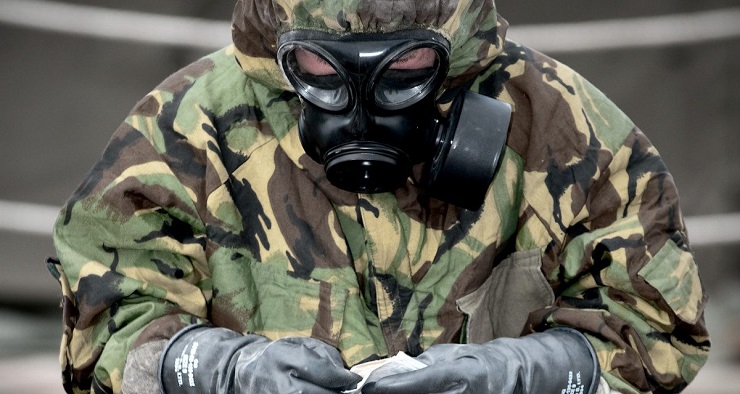
Secret US bio laboratories are strewn across multiple countries in Africa, Asia, and even Europe. This is a global problem that is the attention of various media outlets as of late. More and more frequently, the numerous articles published on this issue voice questions such as: what secret programs (even supported by the country they are located in) are these US military bases pursuing? What if they are concocting a biological weapon to be used on their opposition, and they are the ones behind this entire coronavirus pandemic in the first place?
Emerging from recent discussions on whether the coronavirus is natural or artificially altered, comes information that CDC biologists from the US have been conducting unstable experiments on bats, which nearly all sources agree, trace back to the origin of the virus. They were raising and incubating entire colonies of bats, infecting them with deadly viruses, to study how the carriers of many infections handled them, and how infections can spread. The NCBI website has actually published three scientific works on the experiments carried out by CDC biologists involving infected bats, who have significant populations in South Africa, Egypt, Turkey, and across Asia. The first scientific work on this topic was published in 2015, while the latest – in 2020. In particular, these experiments by CDC biologists and the Pentagon were a joint effort involving colleagues from the Ministry of Defense (sic!) were conducted in 2017, while research on bats passing the infection to people was partially mentioned in March 2020. The results of completed experiments were similar: bats carry viruses, never get sick themselves, but can pass them on to humans.
We know that the USAID’s (which has undeniable ties with the Pentagon and CIA) EPT program was launched in 2009. It was to support US monitoring and laboratory opportunities in the chosen nations for studying wildlife and people coming in contact with animals, to discover new and already known virus agents, that can present a serious threat to people’s health. In Asia especially this program took root in Thailand, Cambodia, Indonesia, Laos, Vietnam, and China. In China, for instance, partners of this program were chosen by the government program of the Wuhan institute of virology, and the American non-government organization – EcoHealth Alliance. The specifics of what the Americans were into in Wuhan can be partially found in several scientific works posted on the NCBI website. Of course, the true secrets behind such deals are never made public. Thus, China became a complete doormat for American biologists testing viruses.
However, many countries have been manipulated in such a way. US military bio laboratories work on creating bacterial weapons in the Ukraine, stated Renat Kuzmin from the Oppositional Platform for Life. He thus confirmed, as did Ukrainian political figure Aleksander Lazarev the criminal activities of 15 bio labs sanctioned by the Pentagon on Ukrainian soil. Kuzmin noted that they are carrying out intelligence measures, as well as creating bacterial weapons and testing several harmful diseases on Ukrainians. Ukrainian MPs Victor Medvedchuk and Renat Kuzmin sent a formal complaint to the UN for US bacterial labs illegally functioning on Ukrainian soil. In a recently increasing wave of protests against the activities of US bio labs in Ukraine, experts note that in 2001, the US declined to sign an international protocol naming 33 microorganisms as potential agents of biological warfare, suddenly finding 37 articles that were not in the interests of the United States, obviously creating a loophole for themselves to continue secret bio weapon work on foreign soil.
The media has repeatedly published material proving a number of incidents with dangerous viruses and toxins, leading to the death of innocent citizens in countries unwittingly hosting secret US bio labs. A significant amount of such materials has been in a US bio laboratory named the Lugar Research center (Alekseevka, Tbilisi), confirming the concerns about illegal US activities in Georgia. Secret experiments are being conducted at the facility. Some research is even done on people, who are isolated in special units and subsequently infected with the most dangerous diseases. “The proof of this lies in the experiments carried out in this bio lab directed towards using insects as carriers for highly dangerous biological agents, and infections, as well as equipping weapons with poisonous substances and infected agents,” read a statement on the Ministry of Foreign Affairs of the Russian Federation’s website.
Since 2008, the Pentagon has created nearly a dozen bio labs in Armenia. Reports in local media reveal that the research involves pathogens that have long been studied by DARPA as potential bio weapons: anthrax, brucellosis, plague, African swine fever and tularemia. Armenia is a country that has witnessed sparks of mutating viruses over the past ten years, that have also spread through all of Transcaucasia, giving the Pentagon sufficient proof of concept of how bio weapons might work naturally, both on Russia’s southern border as well as in Iran. Pentagon bio laboratories in Armenia employ a number of US military contractors, the foremost of which being CH2M Hill, which has already spent $50 million from DTRA in 2018. CH2M Hill is famous for organizing bio labs in Georgia, Uganda, Tanzania, Iraq, Afghanistan and southeast Asian countries. CH2M Hill’s sub contractors have expressed significant interest in Black&Veach, which runs US bio labs in Ukraine, Germany, Azerbaijan, Cameroon, Thailand, Ethiopia, and Vietnam. Namely, the Battelle Memorial Institute and Southern Research Institute. Both companies are old partners of the Pentagon and CIA. Between 1952 and 1996, the Battelle Memorial Institute acquired 11 US army contracts and still conducts research and tests with the use of extremely toxic chemical substances and pathogenic bio active substances. One of Battelle’s joint operations with the CIA is Clear Vision in 1997 and 2000, while a low caliber bomb with anthrax was constructed as part of the operation to study the spreading principles of the virus after an explosion. This shines a light on the data from a partially classified presentation of the US Minister of Defense in 1981, where the economics of the three scenarios of possible biological attack in a big city are laid out. 16 simultaneous attacks using infected yellow fever mosquitoes through the air and aerosol attacks with spraying tularemia will lead to minimal losses. If 625,000 deaths occurred, the Pentagon would lose 29 cents per person.
This is why the activities of secret US bio labs located in numerous nations worldwide as well as proof of private company involvement such as CH2M Hill, Battelle, Metabiota and a number of others conducting research on dangerous anthrax bacteria, tularemia, hemorrhagic fever and a whole range of harmful viruses cannot go on unnoticed, and should be presented to the international public.
Connecting the Dots

By Larry Romanoff • Unz Review • June 24, 2020
It often happens that events we view as isolated occurrences are connected as integral parts of a much larger picture, often as part of a wide-ranging plan, and frequently with important social, economic, and/or political implications which become evident only when seen in total. The several topics of this essay add a necessary context to all major social, commercial, and geo-political events of recent decades, which may help us in connecting dots. For this, it is extremely important to realise and understand that in these matters there are no accidents, that ‘crises’ (other than things like volcanic eruptions) do not just happen, and that the final result of any crisis, however it may appear, was the result intended.
As one example, this many decades ago, we noticed that in our city in Canada one brand of American convenience store seemed to have a habit of opening new stores within a stone’s throw of the existing ‘mom and pop’ variety stores (as they were then called), these shiny and attractive new shops inevitably resulting in the closure of our traditional community stores with the resulting loss of livelihood of the owner-families. It was a surprise to learn later that this practice existed in all cities in Canada and it eventually became clear that each such apparently minor event reflected the gradual execution of an astonishingly predatory plan to not only become established in another country but to progressively eliminate all existing competition in doing so. The dawning of this realisation came too late for authorities to take preventive action, resulting in the destruction of what had been an important part of Canada’s community cultural landscape.
In a different category, and more recently, we learned that during a period of ten or more years ending around 2015, GlaxoSmithKline engaged in an enormous tax and marketing fraud in China[1][2], involving billions of RMB in massive and systemic bribery and falsified accounts, the discovery punctuated by the company’s China CEO Mark Reilly fleeing the country on the first plane to England “on a previously-planned business trip”, and intending to remain there “to help with the investigation from that end”.[3] Lacking additional information, we tend to view this revelation as a domestic issue involving the typical group of ‘a few bad apples’. But with a bit of investigation we discover that GSK carried on a series of virtually identical criminal adventures simultaneously in the US and other countries as well, having been fined billions of dollars in the US alone for repeated occurrences. This additional knowledge substantially amends our perception of the picture. When, with a bit of additional investigation, we discover that all the major pharma companies have repeatedly engaged in a wide range of criminal activities resulting in fines totaling tens of billions of dollars in the US alone, our appreciation of GSK’s activities in China, and of the entire landscape of big pharma, are much altered and more accurate. We now know something we didn’t know before, and we now understand we are not dealing with a few bad apples in an isolated if unfortunate event, but with an industry corrupt to its core, worldwide. [4][5]
Similarly, we learned that Apple, the darling of the US stock market and of iphone fans everywhere, was being hounded by the Chinese commercial authorities, this time over warranty periods, Chinese law categorising Apple’s ipad as a computer requiring a two-year warranty with Apple insisting the ipad was a phone and refusing to comply. Following stringent insistence and a huge public outcry, Apple was eventually forced to conform.[6][7] Reading this as an isolated occurrence, we might judge this as a technical domestic argument of little consequence but, with a bit of investigation, we discover that Apple’s warranties had been under fire for years throughout Europe (and other countries) for precisely the same reasons and with precisely the same outcome – Apple stubbornly flouting the consumer laws of dozens of countries.[8][9] With this additional information, our perception of Apple’s behavior in China assumes a different flavor. We no longer see a simple dispute between a retailer and a socialist government with perhaps sticky laws, but a multinational corporation suffused with sufficient arrogance to not only challenge but attempt to dictate consumer laws and warranty policies to all sovereign nations where it does business. To say nothing of some bold tax dodges.[10] Further investigation reveals that, of all computer and mobile phone companies, only Apple appears to take this position. We now have a more accurate picture of the international IT landscape and Apple’s position within it, our sympathy for Apple’s difficulties in China certainly moderating if not transforming into outright hostility.
In each case, our understanding has been substantially amended because we can see the whole picture and we now know something we did not know before. It is true for a great many occurrences in the world, of many different kinds, that these are not single disconnected events but are related in a set pattern and to a set purpose. Simply put, if one house burns down on a street, that’s unfortunate; if two houses burn down on that street, that’s a coincidence; if five houses burn down on that same street, that’s a plan.
Thus, for many of the world’s events, most especially those containing strong social, economic and/or geo-political effects, it behooves us to bypass the mass media who force-feed us with only carefully-selected sound bytes, and to engage ourselves in a bit of independent research to discover whether these apparently disconnected events are in fact related in a larger context. It is necessary to bypass the media because the absence of connection between these apparently disparate (but related) events is not accidental; the media coverage by design and intent renders it impossible for the general public to connect the dots.
The Official Narrative
In attempting to understand social, economic and geo-political events, there is a second matter demanding our attention, that of the initial mass media coverage, because this often betrays secrets of an event that might otherwise be unknown.
Consider: if there is an explosion in a shopping mall somewhere, at first neither we nor the relevant authorities know anything. It might have been caused a gas line leak, perhaps from faulty maintenance, or stored chemicals, or perhaps a disgruntled citizen set off a bomb. At first, we don’t even know what, much less having a clear idea of who or how, or why, and it takes time to ferret out these details and form a sensible working theory of that event. If it appears that persons were responsible, the authorities require additional time to determine why and who, then begin their search.
But, if we are paying attention, it often happens that immediately upon the occurrence of such an event, the mass media present us with a full-blown story lacking only small details, a more or less complete description of what, how, who and why, a story that could not possibly be known at that stage. Not only is the media description immediate, but it is universal and unanimous, with all apparently unrelated media presenting the same story line, often verbatim, with no disagreement on any significant elements, these uniform storylines sometimes flooding the news for days, weeks, and even months.
Such a unanimous flood can occur only with all participants reading from the same script, prepared beforehand and readied for simultaneous release. In the above case, there are only two possibilities:[1] The story, if true, could be known only by the perpetrators or, [2] the story is a fabricated falsehood, taking the microphone to pre-empt independent rational thought by the public and force the discussion into desired channels, resulting in the elimination of critical public analysis and preventing the truth from escaping confinement.
At one time, not so long ago, this was impossible. But today, with the intense concentration of media ownership across all continents, (and with the increasingly strong censorship of the social media) we have only five or six people, all colleagues, controlling perhaps 90% of all media content and with a powerful financial influence on the remainder.
As one ready example, we could review the unfortunate flight of Korean Airlines 007 in 1983, a Boeing 747 which was shot down by Russian aircraft when it ventured about 500 kilometers off-course and perilously close to some Russian military installations. The media response was immediate and universal that “the Russians” killed hundreds of innocent passengers, and a great deal else. I don’t want to dwell on this here but, if you would like some personal entertainment, you might enjoy doing some thorough research on this event. One of the more entertaining issues was that the water was shallow where the aircraft eventually went down, and the Russians searched thoroughly but located only a few bodies of the crew. No hundreds of innocent passengers. One other discovery was hundreds of pairs of new sneakers and a great deal of new clothing still folded in its original packaging. But no bodies. The official response was that when the aircraft was hit by the missiles, the decompression “sucked all the passengers out of their clothes”, then presumably folding and packaging their clothing. Mother Nature is nothing if not neat and tidy.
The events of 9-11 were certainly one of these, with the entire final version of the “official story” appearing the next day in all the Western media, all verbatim including the who, how and why. SARS and ZIKA fit this pattern in every respect, and COVID-19 also fit very well as do the seven biological pathogens unleashed on China during the past two years alone. With the 2019 swine flu, the entire Western media knew instantly that Chinese “criminal gangs” and “pork speculators” were for unknown reasons infecting all of China’s pigs, although no evidence ever surfaced to support any part of their story. If we review the media coverage for many notable events in our recent history, the pattern is the same. We are then facing the only sensible conclusion that those events were executed as part of a plan with the unanimous media coverage arranged well in advance – and with the knowing participation of the media owners.
Normally, subsequent contradictory theories arise over time as we learn details and assemble the pieces in what might be a more logical and sensible combination but, in these cases, all contradictions are first ignored by the mass media, then condemned as “conspiracy theories”, those presenting them unanimously mocked and derided. The more attention these contradictory theories generate, and the more that serious flaws are exposed in the official story, the louder the derision and more vicious the condemnation, again unanimous and universal. Moreover, as these theories gain traction, the underlying facts are increasingly ignored in exchange for attacking their proponents. If we don’t like the message, we kill the messenger. There is no shortage of examples of historians, authors, various experts, being hounded to bankruptcy, infamy, and even death, merely for publishing (or even attempting to publish) inconvenient truths. This process is now so well-established that whenever we see accusations of ‘conspiracy theories’ we can be certain that a government or a corporation has something to hide.
As time passes, the public become inundated with what we term “the official narrative”, most tending to believe a story repeated daily for weeks from dozens of apparently independent and reputable sources, to the point where the matter is no longer news and dissenting opinions are lost in the haze. It then becomes almost impossible for hidden truths to emerge and, even if they do emerge, it is too late to significantly alter the public conviction or to obtain the required critical mass of dissention for a re-examination of the facts. It is said that if we hear a lie five times, especially from five different sources, we will believe it as true and will later be astonishingly reluctant to alter our opinion even in the face of irrefutable evidence to the contrary. This is one of the fundamental tenets of all propaganda.
In so many past instances, generally involving malfeasance, the US government or some branch of it quickly took the initiative to promulgate an “official story” that it wanted the public to accept, always with widespread media and scientific or other support. It isn’t usually difficult to distinguish between these crafted tales and other situations where the truth of an event innocently emerges as facts are sequentially discovered. One sure sign that we are being told a story is when “the official narrative” appears much too soon – before any actual facts emerge that would support the hypothesis, a ploy necessary to pre-empt independent conclusions and prevent more realistic or more factual versions from gaining traction.
Directed Channels of Discourse
There is one other item that serves to actively prevent our connecting the dots and forming correct conclusions about events, this being an intense and coordinated media focus to direct public discourse into desirable channels and away from the key issues. As a simple example, some years ago there were intense debates about the future of the Euro, with growing public opinion that the group currency was a failed experiment and European nations should revert to their original national currencies. But the mass media spawned a flood of debate centered on a wide range of options more or less titled “What is the best way to save the Euro?”, forcing public debate into a context where continuation of the Euro was assumed as immutable and all discussion focused on methods of preservation. Of course, the real question was “Should the Euro be saved?”, but those raising this question were ignored, mocked, derided, and painted as traitors to Europe.
If we pay attention to the mass media on the occurrence of many events, it is easy to see that we are often being propagandised and programmed to see the world through the same pair of eyes – the pair our masters want us to look through. It is a most effective tool of public manipulation, with most of us unaware this thought control is taking place. As Noam Chomsky noted in discussing propaganda[11], “The smart way . . . is to strictly limit the spectrum of acceptable opinion, but allow very lively debate within that spectrum. That gives people the sense that there’s free thinking going on, while all the time the presuppositions of the system are being reinforced by the limits put on the range of the debate.” In simple terms, if you can focus the public on asking the wrong questions, you needn’t worry about the answers.
A Brief Case Study in Connecting Dots
In 2001, an outbreak of foot-and-mouth disease ravaged the British farming industry. Exports from the UK of live animals, meat and dairy products were banned by other nations, and the government ordered a mass slaughter of millions of animals. The losses to British farmers were nearly incalculable, with a great many farmers going bankrupt or otherwise put out of business, and some farmers committing suicide in anguish over their losses. Within six months, almost 4 million animals had been slaughtered and their carcasses burned. Oddly, in the face of this enormous disaster, the government refused to hold a public inquiry into the outbreak, announcing instead three small separate investigations, the results of which would not be made public. A similar event occurred again a few years later. It was later admitted that the pathogen for this disease had gone “missing” from Porton Down and Pirbright, the UK’s two primary L-4 bio-weapons labs, the government then claiming “animal rights activists” had entered these military-guarded labs, stolen huge amounts of pathogen and released it. No information as to why they might do such a thing. The outcome of the UK foot and mouth disease outbreaks was to eliminate small farmers and turn over the UK’s beef supply to a few billionaire owners of Big Agra.
I won’t provide more detail here, but I have written a brief article covering this, the details of which will shock you.[12] As one example, for months prior to the outbreak the UK government was scouring the country for all loose volumes of timber admittedly to be used to burn the carcasses of the millions of cattle soon to become infected and slaughtered.
But so far, even to a suspicious mind, no clear evidence of malfeasance and no conspiracy. But we have other layers of dots here. It seems that immediately prior to this disastrous outbreak of a deadly biological pathogen, there was a ‘simulation’ dealing with precisely this eventuality, exactly the same as that held prior to the outbreak of COVID-19 and including most of the same players, most notably Pirbright who were the admitted source of the bovine pathogen and also who had developed and held patents on five coronavirus varieties, I believe the same five that infected the US and then the world.
And yet another layer of dots. Dr. Mae-Wan Ho wrote a report in the Institute of Science in Society, dated September 24, 2001, entitled “Foot & Mouth Outbreak, GM Vaccine and Bio-warfare”. It was after her report that investigations by the Evening Chronicle discovered papers leaked from the Canadian Food Inspection Agency that confirmed the simulation which had been secret to that point. Readers may recall this is the same Dr. Ho who called for a full investigation into the possible genetic engineering and dissemination of the SARS virus, the evidence eventually conclusive that SARS emerged from a lab.
Let’s turn to the swine flu outbreak in China in 2019 where the nation’s pork was raised by hundreds of thousands of small farmers much as the beef in the UK. With 50% of the livestock slaughtered, American firms had an open door to take control of China’s pork supply. In this case the effort failed because the Chinese government, not being a party to the pathogen, immediately provided financing and other assistance for the small farmers to rebuild their herds.
However, if we research the outbreaks of animal pathogens around the world – swine flu, bird flu, the evidence seems to indicate that the expansion of Big Agra follows closely on their heels. This is an apparently natural occurrence, given that small competitors have been eliminated while market demand remains constant – unless this occurs more than once or twice. When these outbreaks inexplicably appear repeatedly on all continents with Big Agra in the background, we have dots to connect. I do not possess details of every outbreak of an animal pathogen in all countries for the past ten or twenty years, but I have a powerful suspicion that if we correlate these with the growth in market share of the world’s few Big Agra companies, we would receive a surprise.
Larry Romanoff is a retired management consultant and businessman. He has held senior executive positions in international consulting firms, and owned an international import-export business. He has been a visiting professor at Shanghai’s Fudan University, presenting case studies in international affairs to senior EMBA classes. Mr. Romanoff lives in Shanghai and is currently writing a series of ten books generally related to China and the West. He can be contacted at: 2186604556@qq.com.
Notes
[1] https://www.nytimes.com/2016/11/02/business/international/china-rules-glaxo-bribes-sex-tape-whistleblower-cautionary-tale.html
[2] https://money.cnn.com/2014/09/19/news/china-gsk-bribery/index.html
[3] https://www.reuters.com/article/us-glaxo-settlement-idUSBRE8610S720120702
[4] https://fortune.com/2016/03/31/big-pharma-fines/
[5] https://www.independent.co.uk/life-style/health-and-families/health-news/drug-giants-fined-11bn-for-criminal-wrongdoing-8157483.html
[6] www.china.org.cn/business/2013-03/31/content_28407911.htm
[7] https://www.reuters.com/article/us-china-apple-apology-idUSBRE9300DM20130402
[8] https://discussions.apple.com/thread/2367484
[9] https://apple.stackexchange.com/questions/48730/how-does-apples-two-year-warranty-in-europe-work
[10] https://www.theguardian.com/business/2016/aug/30/apple-pay-back-taxes-eu-ruling-ireland-state-aid
[11] Noam Chomsky [2013]. “How the World Works”, p.234, Soft Skull Press
So it wasn’t ‘by the book’? Strzok notes reveal Obama & Biden were involved in FBI going after General Flynn
RT | June 24, 2020
New evidence shows that the decision to send the FBI after General Michael Flynn, president-elect Donald Trump’s top adviser, came from President Barack Obama and Vice President Joe Biden and wasn’t “by the book” at all.
Biden was the one to raise the Logan Act, while Obama instructed FBI Director James Comey and Deputy Attorney General Sally Yates to have “the right people” on the case during a White House meeting, according to a handwritten note from FBI Agent Peter Strzok.
The note was provided by the DOJ earlier this week to Flynn’s attorneys, who submitted it to the court as evidence on Wednesday.
While Strzok’s hard-to-read note does not mention names, it refers to people by letters – P for president, VP for vice-president, DAG for Yates, D for Director Comey, etc. – according to the court filing.
The Logan Act is an old law that bans private citizens from conducting foreign policy, but it did not apply to Flynn, since he was an incoming national security adviser to the president-elect. Even Comey admitted that his telephone conversations with Russian Ambassador Sergey Kislyak “appear legit[imate],” but was nonetheless told to pursue a case, according to Strzok’s note.
This directly contradicts the narrative about the meeting put forth by Obama’s security adviser Susan Rice, who wrote a strange memo to herself on the eve of Trump’s inauguration repeatedly saying that Obama wanted the investigation to be “by the book.”
Strzok’s note is undated, but the filing says it appears to be referring to a meeting on January 4, 2017 – the same date Strzok intervened to keep the FBI background case against Flynn open, though it had been scheduled to close due to lack of evidence of any wrongdoing. Strzok would later be one of the agents to interview Flynn, and admitted in texts to heavily editing the memorandum of that interview – which has not been made available as evidence.
Earlier in the day, the Washington, DC Circuit Court of Appeals ordered the federal judge in charge of Flynn’s case to immediately agree to the government motion to drop the charges. Last month, Judge Emmet Sullivan responded to the DOJ motion to dismiss charges – in light of evidence revealing the prosecution of Flynn was improperly predicated – by appointing a hostile ex-judge to evaluate the motion and hiring a private attorney to represent himself, at taxpayers’ expense. Flynn’s team reacted by seeking a writ of mandamus from the appeals court.
Flynn was the first casualty of the ‘Russiagate’ probe targeting Trump for alleged “collusion” with Russia in the 2016 election. The adviser was forced to resign after less than two weeks on the job, after the Washington Post accused him of lying to the FBI based on yet-unidentified leaks. He was charged by Special Counsel Robert Mueller in late 2017, and pleaded guilty to lying to the FBI under pressure, but has been fighting the charges after getting a new legal counsel in 2018.
President Trump reacted to the news by wondering if Comey and the FBI, or Mueller and his prosecutors, or Obama and Biden, will apologize to Flynn and others caught up in the probe.
Mueller’s investigation ended in May 2019 finding no evidence of any collusion anywhere, forcing Democrats to claim Trump had abused power by withholding aid from Ukraine as a pretext to impeach him.
Bolton’s Memoir Undercuts Hype as Impeachment’s Would-Be Star Witness
By Aaron Maté | Real Clear Investigations | June 23, 2020
In late January, John Bolton became the latest – and unlikeliest – official to enjoy a moment of Resistance glory. A New York Times report about Bolton’s forthcoming memoir fueled round-the-clock expectations that the former national security adviser would substantiate the core allegation at the heart of President Trump’s then-ongoing Senate impeachment trial – that the president tried to coerce Ukraine into opening an investigation of Joe and Hunter Biden in a quid pro quo for military aid. Compelling his testimony was cast as a matter of national urgency. Bolton was never given the chance as Senate Republicans voted to block witnesses and acquit Trump on both impeachment counts.
In the publicity blitz for his new memoir, “The Room Where It Happened,” Bolton has tried to keep the initial narrative alive. Speaking to ABC News, he claimed that Trump, at a meeting in August 2019, said he “wanted a probe of Joe Biden in exchange for delivering the security assistance.” That conversation, Bolton added, “was the crispest indication of the linkage. … The specificity of the linkage, I think, was unmistakable.”
His memoir, however, fails to substantiate that allegation.
In fact, Bolton offers new evidence that undermines it.
What he told Martha Raddatz is not what he writes in his book. Instead of a sharp demand of a quid pro quo, Bolton writes, Trump “said he wasn’t in favor of sending [Ukraine] anything until all the Russia-investigation materials related to [Hillary] Clinton and Biden had been turned over.”
Bolton does not explain what he means by “materials” – and no interviewer has asked him to so far. RealClearInvestigations’ request to Bolton for comment, sent through a representative, was not immediately answered.
No Word on Burisma
Regardless, those were not at the heart of Trump’s impeachment. Trump was not impeached for trying to coerce Ukraine into handing over “Russia-investigation materials” to the U.S., but for allegedly trying to force Ukraine President Volodymyr Zelensky to open a wholly separate investigation of the Bidens and Burisma, the gas company where Hunter was given a lucrative board seat while his father was running U.S. policy in Ukraine.
Yet Burisma is not even mentioned in Bolton’s book – and Hunter only in passing. This includes an acknowledgement that Bolton does not even remember if the younger Biden was actually discussed. At a May 8 meeting where Trump and his legal adviser Rudy Giuliani discuss the latter’s “desire to meet with President-Elect Zelensky,” Bolton cannot recall if the purpose is “to discuss [Ukraine’s] investigation of either Hillary Clinton’s efforts to influence the 2016 campaign or something having to do with Hunter Biden and the 2020 election, or maybe both.”
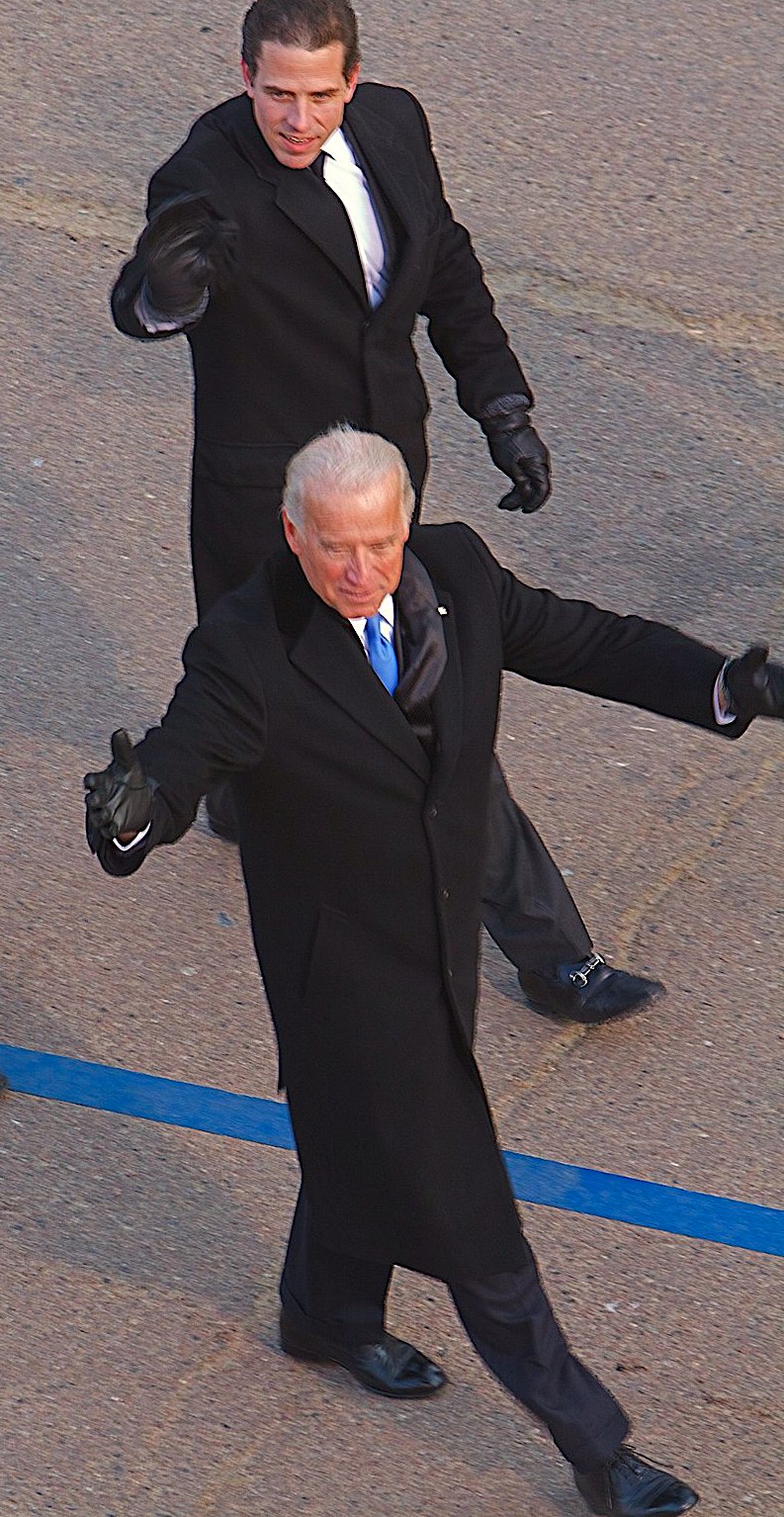
Son gets job on energy company board after father backs violent coup
Bolton says his recollections are not precise because the Ukraine-related theories floating around the Trump administration “always seemed intermingled and confused, one reason I did not pay them much heed. Even after they became public, I could barely separate the strands of the multiple conspiracy theories at work.”
Bolton’s words are also ambiguous. The fact that Trump allegedly “said he wasn’t in favor of sending [Ukraine] anything” is not an explicit linkage to military aid. And as for the “Russian-investigation materials,” Bolton does not specify what Trump was referring to. It seems likely Trump may have been referencing his reported theory that the Democratic National Committee server was somehow hacked with Ukrainian involvement.
Trump may also have been seeking information on the Ukrainians who openly admitted to interfering in the 2016 campaign with the aim of thwarting his candidacy, most notably by leaking allegations of illegal payments to Paul Manafort. It is highly plausible that these were Trump’s priorities. In his July 25 phone call with Zelensky, which sparked the whistleblower complaint behind Ukrainegate, Trump’s top issue – and the object of the “favor” he requested – was not the Bidens, but securing Zelensky’s assistance with the Justice Department’s ongoing review of how the Russia investigation began in 2016.
Whatever the case, for Bolton to write that Trump drew a link between these issues and the security aid – and not a link to a demand that Ukraine open an investigation of the Bidens and Burisma – contradicts the impeachment case that many expected him to validate.
Bolton, perhaps inadvertently, also lends credence to the Trump administration’s public defense of its freeze on security assistance to Ukraine, which Democrats cast as the linchpin of a politically motivated quid pro quo. In his July 25 call with Zelensky and subsequent public statements, Trump has said that he wanted NATO allies to spend more on Ukrainian military funding. Bolton recounts that on Aug. 30 – just days after an article in Politico made the aid freeze public, including to the Ukrainian government – Trump repeated his complaints about the U.S. burden, and proposed that NATO provide Ukraine with the security assistance instead of Washington:
Trump said, “I don’t give a shit about NATO. I am ready to say, ‘If you don’t pay, we won’t defend them.’ I want the three hundred million dollars [he meant two hundred fifty million dollars, one piece of the assistance earmarked for Ukraine] to be paid through NATO.” … He then said to Pence, “Call [NATO Secretary General Jens] Stoltenberg and have him have NATO pay. Say ‘The President is for you, but the money should come from NATO,’” which still didn’t make any sense.
If Trump is freezing the military aid for the sole purpose of coercing a Ukrainian investigation, it would be incongruous for him to propose an outcome that delivers the money without the investigation he is supposedly trying to compel.
As a part of their impeachment case, Democrats argued that Trump released the aid to Ukraine only after getting caught through publicity surrounding the whistleblower complaint. Yet Bolton writes that after Ukraine conducted a successful prisoner swap with Russia on Sept. 7, “Trump had seemingly indicated” that the swap “might be enough to get him to release the security assistance.” The money was released four days later, on Sept. 11.
Says He Wanted Nothing to do With Ukraine
Bolton confirms national security aide Fiona Hill’s testimony that he told her he did not want to be “part of whatever drug deal Sondland and [White House Chief of Staff Mick] Mulvaney are cooking up.” But he offers context that makes that line far less explosive than it was initially received. Bolton was not referring to leveraging any military aid, but to Sondland’s attempt to push for a hasty meeting between Trump and Zelensky at the White House, where the “Giuliani issues” could be discussed before Ukraine’s parliamentary elections in July.
Bolton says he nixed the idea of a meeting because Trump had recently told him that “he didn’t want to have anything to do with Ukrainians of any stripe,” due to Ukrainian meddling against him in the 2016 campaign. Sondland, in Bolton’s view, was “freelancing.” According to Bolton, Trump had also “resolved the visit issue just before leaving for the United Kingdom in June,” by saying he would meet with Zelensky “not until the fall, the right outcome in my view.”
It is easy to forget why Bolton was initially cast as a savior figure in January by those hoping to remove Trump by impeachment. When news of his memoir emerged, 10 days after the Senate trial began, Democrats had failed to prove their case. Not a single witness in the House impeachment hearings had provided direct evidence of a quid pro quo. The only witness who even spoke to Trump about the Ukraine aid was the then-European Union Ambassador Gordon Sondland. He reiterated multiple times that “nobody told me directly that the aid was tied to anything,” and that such a linkage was only his “presumption” and “personal, you know, guess.”
Sondland’s testimony was even more damaging to the impeachment case because, according to the impeachment narrative, he was the Trump official who purportedly relayed the alleged quid pro quo to the Ukrainian side. But Sondland revealed that he had only told Zelensky aide Andriy Yermak, in “a very, very brief pull-aside conversation,” that “I didn’t know exactly why” the aid has been frozen, but that a demand to open investigations “could be a reason.”
For his part, Yermak has said he does not even remember discussing the frozen aid with Sondland. That highlighted another problem with the Democrats’ quid pro quo allegation: Not a single Ukrainian official substantiates it. In addition to Yermak, President Zelensky and Foreign Minister Vadym Prystaiko also said that they saw no tie between the frozen military funding and pressure to open investigations. Even Democratic Sen. Chris Murphy, a staunch impeachment advocate, corroborates them: When they met in early September, Murphy recalled, Zelensky “did not make any connection between the aid that had been cut off and the requests that he was getting from Giuliani.”
The Ukrainians’ claims make sense in light of the fact that they only learned of the aid freeze, along with the rest of the world, with the Politico article published August 28. That would have meant that the supposed quid pro quo demand was made to them only after the issue became a matter of public controversy. That scenario was always implausible on its face. And now Bolton’s memoir has failed to change the picture. Bolton seems to grasp this fact. “I think the House Democrats built a cliff, they threw themselves off of it,” he told Raddatz of ABC News. “And halfway down, they looked up and saw me, and said, ‘Hey, why don’t you come along?”
If black lives matter, then why are African leaders with a different take on Covid-19 being taunted?
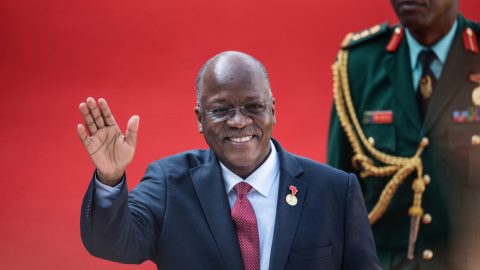
Tanzanian President John Pombe Magufuli © AFP / Michele Spatari
By Neil Clark | RT | June 24, 2020
The criticism of Tanzania’s and Madagascar’s presidents, John Magufuli and Andry Rajoelina, for challenging the Covid ‘consensus’ shows that, for some, Black Lives Matter counts only if black voices are saying the ‘right’ things.
YouTube has ‘Black Lives Matter’ as its Twitter bio. Pretty worthy, eh? But that didn’t stop the internet platform removing a video made by a Canadian activist who calls herself ‘Amazing Polly’ that featured claims made about Covid-19 and its treatment by the leaders of Tanzania and Madagascar. It has subsequently restored it, but the fact it took it down in the first place, alongside the sneering, hostile reaction from others to what the African leaders said, speaks volumes about the double standards currently on display.
Magufuli’s great crime was that he decided to test the testers. He instructed his country’s security services to send to Covid-19 testing labs samples taken from a pawpaw, a goat, some engine oil and a type of bird called a kware, among other non-human sources, but to assign them human names and ages. The pawpaw sample was given the name ‘Elizabeth Ane, 26 years, female.’ And guess what? The sample came back positive for Covid-19. As did those from the kware and the goat.
The testing kits had been imported from abroad. Clearly, as Magufuli – a PhD in chemistry – stated, something wasn’t quite right. “When you notice something like this, you must know there’s a dirty game played in those tests,” he said.
He advised his people, in relation to his government’s Covid-19 strategy, “Let us put God first. We must not be afraid of each other” – in stark contrast to the ‘Social distancing is here to stay’ Project Fear approach adopted elsewhere.
Magufuli also assured his people he would be sending a plane to collect an herbal cure for Covid-19 that was being promoted by Madagascar’s President Andry Rajoelina.
In her video, Amazing Polly not only includes extracts of speeches by the leaders of Magufuli and Rajoelina, but also focuses on the criticism they received from the global health establishment.
The subtext: How dare these uppity Africans challenge what we say! How dare they promote their own traditional medicines (instead of Big Pharma’s) or claim coronavirus tests are returning false positives!
“Caution must be taken about misinformation, especially on social media, about the effectiveness of certain remedies,” declared the World Health Organization (WHO). But should we really be so quick to dismiss Magufuli and Rajoelina, and what they have to say? The point is not whether we agree or disagree with the Tanzanian and Madagascan approaches, but rather that, at the very least, there should be some proper, grown-up debate.
At the time of writing, Madagascar has reported 15 deaths due to Covid-19, while Magufuli declared Tanzania coronavirus-free in early June, after a total of 21 deaths. Now, you might want to challenge those figures, which is your prerogative, but you can’t automatically presume they are not accurate.
“I’m certain many Tanzanians believe that the corona disease has been eliminated by God,” Magufuli said. Now there is nothing more likely to trigger a virtue-signaling ‘anti-racist’ Western global public health ‘consensus’ follower than a black African leader defying the ‘party line’ on Covid and citing the Lord. Just look at Western press coverage of Magufuli’s stance: ‘”Africa’s ‘bulldozer’ runs into Covid and claims God is on his side” was the headline of one very hostile piece on Bloomberg.com.
Another journalist declared that Magufuli was “a strong contender for the most asinine coronavirus global leader.”
The oft-repeated claim in reports on Tanzania is that there’s been a cover-up. Right on cue, the US Embassy to Tanzania weighed in on May 13, claiming the risk of contracting Covid-19 in Dar es-Salaam was “extremely high.” The intimation was that the Tanzanian leader couldn’t possibly be telling the truth about Covid. But wasn’t that assumption, just a tiny bit, er, racist?
Another African leader who challenged the ‘consensus’ on Covid-19 was Burundi’s Pierre Nkurunziza. Burundi, which didn’t impose a lockdown, actually expelled the WHO’s team from the country in May, accusing it of “unacceptable interference.” On June 8, Nkurunziza died suddenly, aged 55. Yet again, this didn’t get too much coverage, save for some articles in the West claiming he had died of coronavirus, even though the official cause was given as a heart attack. African leaders can be lauded, but only if they toe the politically correct line set by self-proclaimed ‘anti-racist’ men in suits in the West, it seems.
And this colonial mindset permeates even the ‘anti-imperialist’ movement. A friend of mine told me he went on a demonstration against NATO’s attack on Libya in 2011. Some Libyans present had banners of their country’s president, Muammar Gaddafi. They were told to take them down by the non-Libyan organisers. That’s right: Africans weren’t allowed to display banners of their country’s leader at a march opposing the bombing of their country.
Rajoelina hit the nail on the head when he said the only reason the rest of the world has refused to treat what he believes is his country’s cure for the coronavirus with the urgency and respect it deserves is that the remedy comes from Africa.
Isn’t it ironic that, at a time when Western establishment figures are trying to show us every day how wonderfully ‘anti-racist’ they are, black voices outside the US and Britain are being ignored, even laughed at?
Only last week, UK Prime Minister Boris Johnson expressed his disapproval that Britain gave 10 times as much aid to Tanzania as “we do to the six countries of the Western Balkans, who are acutely vulnerable to Russian meddling.” How interesting that aid money sent to Tanzania gets questioned only now, after the country didn’t follow the script on Covid-19.
One wonders how many of the celebrities, politicians and pundits publicly expressing support for Black Lives Matters today have actually read the work of inspirational black African leaders such as Ghana’s Kwame Nkrumah and Tanzania’s Julius Nyerere, or, in fact, have even heard of them? I imagine the answer would be very few, if any.
The arrogant dismissal of voices from Africa that dare to defy Western-elite orthodoxy, and the failure to even consider the possibility that African leaders have got it right and their Western counterparts might have got it wrong, is in itself a form of neo-colonialism. And, lest we forget, Nkrumah described that as “the worst form of imperialism.”
If Black Lives Matter, then ‘politically incorrect’ black opinions ought to be listened to with respect, and not with a smug, superior facial expression before being loftily dismissed in the way a teacher might deal with a naughty child. But in this dumbed-down era in which many unthinkingly follow the dominant globalist narrative, it’s simpler for some to ‘take a knee’ and post a photo of themselves on social media doing so than it is to take a moment to see the bigger picture.
Neil Clark is a journalist, writer, broadcaster and blogger. His award winning blog can be found at http://www.neilclark66.blogspot.com. He tweets on politics and world affairs @NeilClark66
Mysterious Individual ‘Blocking Release of Docs That May Expose Epstein’s Rich & Powerful Friends’
Sputnik – 24.06.2020
Jeffrey Epstein’s alleged sex slave Virginia Roberts, now Giuffre, was previously embroiled in a prolonged legal battle with the financier’s close associate Ghislaine Maxwell that ended in 2017. However, a cache of documents in the case listing the names of the financier’s closest associates remains sealed.
An anonymous person dubbed “John Doe” is trying to prevent the release of documents related to the Roberts Giuffre-Maxwell defamation case, requested by attorney and former Harvard professor Alan Dershowitz, the Daily Mail reported.
The protective order over the documents in the case was signed by now deceased New York Judge Robert Sweet, preventing the public release of the names of people closely associated with Jeffrey Epstein and potentially involved in his sex trafficking scandal.
Dershowitz, who was a friend of the convicted sexual offender, is now fighting a separate defamation case against Epstein’s alleged victim Virginia Giuffre launched in November 2019. He is calling for the protective order to be removed, arguing that the documents contain materials that could be crucial for his own defamation lawsuit.
On Tuesday, a number of attorneys involved in the case held a teleconference to debate whether the protective order can be loosened upon Dershowitz’s request. According to the Daily Mail, legal teams representing Giuffre, Maxwell, and a mysterious “John Doe” have strongly opposed the move.
The person’s attorneys, Nicholas Lewin and Paul Krieger, said in a letter to the court, that the protocol over the release of Giuffre-Maxwell case materials, which are expected to be unveiled on a “rolling basis”, should not be derailed.
“This marks Dershowitz’s second – or, by some measures, third – attempt to make an end-run around this Court’s carefully constructed unsealing protocol. Just as the Court denied Dershowitz’s prior attempts, it should deny this one”, the attorneys argued, a position that was shared by Maxwell’s and Giuffre’s legal teams.
The defamation lawsuit against Epstein’s alleged “madame” Ghislaine Maxwell was brought by Giuffre in September 2015 and eventually settled under seal two years later.
The media is now speculating that the anonymous individual involved in the case could be a public figure who is not willing to be associated with the Epstein scandal. The disgraced financier died in his prison cell in August 2019, while awaiting trial on sex-trafficking charges following accusations by several women, including Virginia Roberts Giuffre. Throughout his business career, Epstein was associated with a number of powerful figures, including Hillary and Bill Clinton, Prince Andrew, Donald Trump, and many others. Roberts Giuffre claims that she was sex-trafficked to some of them, including British Prince Andrew and Alan Dershowitz, accusations both men have strongly denied.
‘Russiagate’ case against ex-Trump adviser Michael Flynn effectively OVER, as DC appeals court orders to close it
RT | June 24, 2020
An appeals court in Washington, DC, ruled that the case against President Trump’s one-time national security adviser, Michael Flynn, must end. The Justice Department had dropped charges against Flynn, but his case remained open.
In a ruling issued on Wednesday, the Washington DC Circuit Court of Appeals effectively ended the case against Flynn, ordering federal judge Emmet Sullivan to heed the Justice Department’s advice and close the case. Sullivan had attempted to keep the case active, even though the Justice Department dropped its charges against Flynn last month.
The appeals battle was a last-ditch showdown between Flynn and the Justice Department on one side, and Sullivan on the other. Though reporters as recently as last week reckoned the appeals court would side with Sullivan, they were proven wrong on Wednesday morning.
Of course, Sullivan may appeal again, but with the government and prosecution in agreement, his chances of breathing life into the Flynn case – ongoing for more than two years – is slim.
Appointed national security advisor following Trump’s election win in 2016, Flynn quickly became the first and most prominent White House official caught up in the FBI’s ‘Russiagate’ investigation. He was fired in early 2017 and later pleaded guilty to lying to FBI agents about his contacts with Russian Ambassador Sergey Kislyak.
However, the case was dropped last month, after it emerged that the charges against him were baseless.
Before he was interviewed by FBI agents in January 2017, FBI brass knew they had “no derogatory information” on the retired General, yet then-FBI Director James Comey ordered the interview to proceed regardless, breaching agency protocol. Disgraced FBI agent Peter Strzok urged his superiors to keep the case against Flynn open, and plotted with other agents to “get him to lie” during the interview. Furthermore, Strzok and former FBI lawyer Lisa Page edited the transcript of the interview to incriminate Flynn.
All of this information was revealed last month, when acting Director of National Intelligence Richard Grenell declassified a trove of ‘Russiagate’ documents. According to the document dump, a host of Obama administration officials dug into Flynn’s intelligence records as the FBI were attempting to entrap him in the interview.
President Trump, who has long accused the FBI and Obama administration of orchestrating a plot to take down his presidency, retweeted a call from his son last week for Flynn to “sue the FBI and it’s corrupt actors for all they’re worth.”
Featured Video
Dan Dicks with James Corbett on Solutions Watch
or go to
Aletho News Archives – Video-Images
From the Archives
$1.5bn up in smoke: US THAAD missile stockpile dries up defending Israel against Iran
By Ivan Kesic | Press TV | July 2, 2025
According to American media, defense news outlets, and independent analysts, the 12-day Israeli military aggression against Iran significantly depleted the US stockpile of THAAD (Terminal High Altitude Area Defense) interceptor missiles.
Citing official sources, American magazine Newsweek reported on Friday that the US transferred a substantial portion of its advanced missile defense capabilities to support the Israeli regime, an effort with questionable results and a critical impact on US strategic reserves.
THAAD, developed by Lockheed Martin arms manufacturing company, is a key component of Israel’s multi-layered air defense architecture. It is designed to intercept medium-range ballistic missiles, including those launched from Iran and Yemen.
The US-made system is capable of targeting short-, medium-, and intermediate-range ballistic missiles during their terminal phase, whether inside or outside Earth’s atmosphere.
THAAD uses a “hit-to-kill” method, relying on kinetic energy rather than explosive warheads to destroy incoming threats, intercepting at altitudes of up to 150 km and ranges between 150-200 km.
Operated exclusively by American personnel, the US military maintains eight THAAD batteries with an estimated 350–400 interceptors in total. The eighth battery was activated during the June 20 Israeli aggression against Iran and is capable of intercepting hypersonic missiles. … continue
Blog Roll
 Aletho News
- Zionist Bought Senate Blocks Information About American Citizens Killed By Israel
- While Gaza dominates the UN, these are the people keeping it alive
- New Report: “Scholasticide and Genocide in Gaza: Assessment, Testimonies and Legal Analysis”
- ‘THAAD Delusion’: Iran war exposes US missile shield limits – The Atlantic
- Moscow issues warning to NATO over Russian exclave
- Yes, the Iran war has destroyed Trump’s presidency
- The fallacy of US delusions about Iran’s economic collapse
- Hezbollah denies Syria cell link, warns of Israeli plan to sow discord
- The legacy of US sanctions, war, and occupation in Iraq
- Iraqi resistance group rejects disarmament, vows to maintain support for Lebanon
- If Americans Knew
- Mamdani releases plan to combat antisemitism and hate crimes in New York City
- Iran’s Revolutionary Guards Publish Letter to the American People
- DMFI launches $1 million ad campaign supporting Virginia’s Elaine Luria
- US Senate blocks resolution seeking report on Americans killed by Israel
- Israeli Attacks Kill Ten Palestinians in Gaza
- Massacre at Minab: The School That Became a Grave
- Israeli media: The IDF Shows It Doesn’t Turn a Blind Eye; It Actively Emboldens Settler Havoc
- As settlers ravage West Bank, Israeli forces kill 10 in Gaza – Daily Update
- New Report: “Scholasticide and Genocide in Gaza: Assessment, Testimonies and Legal Analysis”
- Ex-Biden officials are desperate for a Gaza scapegoat
- No Tricks Zone
- Green Energy Debacle: German Expert Professor Fritz Vahrenholt Warns Of Severe Economic And Social Consequences
- Two More Paleo Reconstructions Affirm Meters-Higher Sea Levels Across Ireland, Brazil 7000-6000 Years Ago
- New Study: Earth And Venus Surface Warmth Largely Explained By Convection And Lapse Rate, Not CO2 Or Radiation
- 2025 Nature Paper Claiming Worsening Global Drought Gets RETRACTED …Heavily Flawed
- New Study: ‘Global Drought Shows No Detectable Recent Acceleration Under Climate Warming’
- Economic Masterminds: German Socialists Suggest Taxing Productivity Gains Stemming From Using AI
- The South China Sea Has Not Been Cooperating With The Climate Change Narrative
- Energy Crisis: Germany Enters Heating Season With Historically Low Gas Reserve Fill Levels
- New Study: The Antarctic Ice Sheet Gained Mass From 2020-2024 Due To Staggering Snow And Ice Accumulation
- Study: Ocean Heating Rates From Thousands Of Years Ago ‘Dwarf’ Modern Ocean Heating Rates

