Khashoggi: How US Media Is Losing Its Moral Compass by Feeding Off Conspiracy Theories
By Martin JAY | Strategic Culture Foundation | 21.11.2018
Trump’s relationship with Erdogan raises new questions about the credibility of US mainstream journalism. Was Khashoggi a victim of a Turkish ‘honey trap’?
The Washington Post continues its banal attack on the regime of Saudi Arabia, following the horrific murder of Jamal Khashoggi in the Saudi Consulate on October 2. In Turkey too there is much which the western media cannot understand or refuses to probe, as Ankara plays a game of blackmail with Riyadh in a bid to extract a deal from Mohammad bin Salman who is at the centre of its character assassination.
But what are we missing? What is at the heart of this story which isn’t getting picked up by journalists or even TV commentators in the region?
Much has been written about the ‘free license’ that Trump and his son in law, Jared Kushner gave the Saudi prince and that this murder is an inevitable consequence of such blinded dogma towards ones allies. There is some truth in this, but if you are to look at the coverage of, in particular, the US media over Khashoggi, you might be curious to understand why it is so extensive and prolonged. After all, Saudi Arabia has been kidnapping its own dissidents for years and there are many western journalists who are killed or go missing around the world which get minimal coverage. Why such an entrenched campaign for Khashoggi?
Guilty
Partly this is a guilt complex of the Wapo editors, who I have accused in earlier articles for more or less sending Khashoggi on a suicide mission when they chose to publish his articles in Arabic. This was recently confirmed when Khashoggi’s editor at the Post – Karen Attiah – admitted to The Independent that the traffic which the Arabic articles generated shocked bosses there. I have always argued that this was a final blow for MbS, humiliated now by his adversaries in Riyadh who can read about his failings on a regular basis.
And it’s also about the fact that the Post considered him part of the DC elite. One of their own, which explains why he has become so canonised and his personality enshrined in virtue.
Their trade is treachery
In truth, Khashoggi was no saint. He took the King’s shilling from the Saudi elite all his life and made a good lifestyle for himself. At the end of a thirty year relationship of working for them and learning all of their secrets, he used that privilege as a weapon to destroy MbS. In most cultures around the world, this is called treachery. We should remember that even in London in 1963, when British spy Kim Philby defected to Moscow, many wanted him to hang for selling out to the Russians and being a double agent for all his career. Khashoggi may well have been an amiable character. But he was also a traitor.
We are led to believe that he left Riyadh in 2017 because he feared being detained. But could it be that he was frustrated at not being promoted within the hierarchy?
A select number of journalists and academics, like Dr Nafeez Ahmed, support this theory, in part at least and go further to say that Khashoggi was murdered because he was about to distribute solid evidence of the Saudis using chemical weapons in Yemen. The British academic also underlines Khashoggi’s role for Saudi intelligence and, moreover, how he helped the Saudi royal family support Bin Laden, right up until 9-11.
Yet my own sources close to the Saudi elite tell me that MbS wanted to call him back to Riyadh because Khashoggi was at the centre of a coup in the making, which would have benefitted the former Crown Prince Mohamed bin Nayef, and still operated very much as though he was a Saudi intelligence asset. Not so much a treacherous journalist who didn’t know which side his bread was buttered, but more a double agent who was the gatekeeper of incendiary information. Something had to be done about Khashoggi.
Frustrated journalists are dangerous people. They lose sight of their loyalties and promises they made. And Khashoggi was an odd character struggling with an identity crisis. Is it the same case with Karen Attieh on the Oped desk of the Post which managed him? Did she connect with him as she too feels not taken seriously by her bosses at the Washington Post ?
Conspiracy theory extended? Unfortunately we are led to feral speculation when we are denied the facts, especially deliberately.
Western media has a lot to be ashamed of on both covering up the Khashoggi murder – by going along with the demonization of the kingdom – and in being part of it happening in the first place. How does all of the gory details about Khashoggi’s murder get reported as fact by the Post, when it has no proof from the Turkish police sources who supply them? There is gargantuan hypocrisy at play here as the Post is part of a conspiracy now. It played a role in Khashoggi getting murdered and it is now playing a role in diverting blame away from itself and blithely accusing Saudi Arabia’s leader of the murder with little or no solid evidence. This is sloppy journalism on a whole new scale and shows a dire lack of journalistic credibility and judgment (unless of course the Post is part of a murky campaign of disinformation which has been agreed between Ankara and Washington whose firebrand leaders are now on good terms once again). Is the Post part of a dirty deal which has been struck by Trump and Erdogan to rewrite this story?
Far fetched? Ludicrous? Maybe, but let’s look at the facts. Trump is standing back and letting Erdogan continue with his drip feeding of sensational detailed evidence, in a blackmail game with MbS – but what’s the price Americans pay for that? To place himself at the centre of that charade, Trump has indicated to the Saudis that they need to release women activists from jail (likely to happen soon) and to cancel the Qatar blockade (on the cards, but will take longer). But before that happens, what we are witnessing is Trump looking for a media distraction (sanctions against the Saudi ‘killers’) while he mulls the idea of letting Erdogan have the exiled cleric, Gulen, who the Turkish President accuses of being the architect of the July 2017 attempted coup.
But he has also allowed Erdogan to use the US media as a platform for his own moral tutelage. Yes, astonishingly, the Washington Post – which presents itself as an arbiter of free speech and a protector of journalists and their sanctity, following Khashoggi’s murder – chose to publish Erdogan’s Oped about the affair, giving the Turkish leader the edge in the power game by selling out the lives of all 170 journalists in Turkish prisons, which, presumably, Wapo editors just forgot about on that given day. One can only assume that Karen Attiah managed to hold back the tears for those who are rotting in Turkish prisons for merely writing an Oped which vexed the Turkish leader.
Presumably Erdogan paid the Post to publish the piece – otherwise, if it were gratis, then that would be like Wapo supporting him and his political leadership. But was this the same money that Saudi Arabia is reported to pay to regional media outlets to buy their loyalty? How can a Middle Eastern leader who has imprisoned a record number of journalists and who is now blackmailing the Saudis, get the support from the Washington Post ? Can this really be happening?
Erdogan must be laughing his head off in Turkey as he sees day after day that western media just report as facts, what his officials say about the details of the murder. And laughing even hysterically when all he needs to do is write an article taking the moral high ground – don’t laugh – on the rights of journalists in the region and give it to the Post to publish.
The dark side of Khashoggi murder
Good investigative journalists are cynical about everything which is presented to them. Is, for example, the relationship between Khashoggi and his fiancé entirely what it seemed, or was she directed by Erdogan to ‘honey trap’ the Saudi journalist as part of an elaborate plot to ensnare the Saudi crown prince? Sources from the intelligence community of one middle eastern country (I prefer not to name which one) are at least beginning to wonder about this. And almost certainly so are the Saudis. Yet western journalists who refuse to at least consider that the Khashoggi abduction was bungled (and ended up being a murder) are likely to call this a conspiracy theory. Even if it is, they should at least report on it and mull it. What about all the tools which the hit team brought, they might ask. Could they have been brought to be used to scare Khashoggi into handing over the information that MbS was seeking?
Khashoggi’s fiancé doesn’t seem distraught and the sheer speed in which the couple headed towards the marriage courts is questionable, as is, indeed her own personal relationship with Erdogan, which she even admitted to the BBC. Other questions should be the ‘evidence’ presented by Erdogan, which is looking ropy to say the least, which some journalists are identifying as such.
For the moment, the only certain thing about the Khashoggi affair is how standards of western media have plummeted to an all time low with the Post leading the pack with partisan judgment, check book journalism and an internal guilt trip fuelling their unremarkable reporting, not to mention their abysmal editorial judgment. American media has lost the moral compass and Khashoggi will be remembered for this above all – with many arguing that this, in itself, plays a role in the impunity of those carrying out the rendition and murder. When the Saudis fell into the Turkish trap, they probably believed that Turkey would be the last place in the world to care about one kidnapped journalist. But they could never have imagined how partisan, sloppy and hypocritical western media would be in covering the story. What Khashoggi has taught us is that the day that Americans read newspapers based on the editors’ judgment are well behind us. So why should we read them at all?
Pentagon Fails First Audit, Neocons Demand More Spending!
By Ron Paul | November 19, 2018
The Pentagon has finally completed its first ever audit and the results are as many of us expected. After spending nearly a billion dollars to find out what has happened to trillions in unaccounted-for spending, the long look through the books has concluded that only ten percent of all Pentagon agencies pass muster. I am surprised any of them did.
Even the Pentagon is not surprised by the failure of the audit. “We failed the audit. But we never expected to pass it,” said Deputy Secretary of Defense Patrick Shanahan. Can we imagine any large US company subject to the prying eyes of the IRS being so unfazed by the discovery that its books have been so mis-handled?
As with all government programs, but especially when it comes to military spending, the failure of a program never leads to calls for funding reductions. The Pentagon’s failure to properly account for the trillions of taxpayer dollars shoveled in year after year only means, they say, that we need to send more money! Already they are claiming that with more resources – meaning money – they can fix some of the problems identified by the audit.
If you subsidize something you get much more of it, and in this case we are subsidizing Pentagon incompetence. Expect much more of it.
Outgoing chairman of the House Armed Services Committee, Rep. Mac Thornberry, warned against concluding that this mis-handling trillions of dollars should make us hesitant to continue sending trillions more to the Pentagon. The failed audit “should not be used as an excuse for arbitrary cuts that reverse the progress we have begun on rebuilding our strength and readiness,” he said.
The neocons concur. Writing in the Free Beacon, editor Matthew Continetti (who happens to be Bill Kristol’s son-in-law) warns that now is “the wrong time to cut defense.”
But I agree with the young neoconservative Continetti. I would never support cutting a penny of defense. However the Pentagon’s lost trillions have nothing to do with defense. That is money propping up the high lifestyles of those connected to the military-industrial complex.
Continetti and the neocons love to throw out bogeymen like China and Russia as excuses for more military spending, but in fact they are hardly objective observers. Look at how much the military contractors spend funding the neocon publications and neocon think tanks telling us that we need more military spending! All this money is stolen from the productive economy and diverted to enrich neocon cheerleaders at our expense.
Of course the real problem with the Pentagon and military spending in general is not waste, fraud, and abuse. It is not ten thousand dollar toilet seats or coffee mugs. The problem with military spending is the philosophy that drives it. If the US strategy is to maintain a global military empire, there will never be enough spending. Because there is never enough to control every corner of the globe. But if we are to return to a well-defended republic, military spending could easily be reduced by 75 percent while keeping us completely safe. The choice is ours!
‘Highly likely’ that Magnitsky was poisoned by toxic chemicals on Bill Browder’s orders – Moscow
RT | November 19, 2018
Russian accountant Sergey Magnitsky may have been poisoned and his former employer, financier Bill Browder, is possibly behind the murder, prosecutors revealed. Now, Moscow will place Browder on the international wanted list.
UK businessman Browder had much interest in the death of Sergey Magnitsky after receiving what he wanted from the accountant, an adviser to the Russian Prosecutor General, Nikolay Atmonyev, told the briefing.
“Based on the documents that were shown, an obvious conclusion can be made that, having received a false statement from Magnitsky that was used for provocation, Browder was interested in Sergey Magnitsky’s death more than anyone else in order to avoid exposure,” Atmonyev said.
Journalist Oleg Lurie, who shared a prison cell with Magnitsky in 2009, testified both at a New York court and in Moscow that lawyers working for Browder had tried to make Magnitsky sign false documents regarding theft from the Russian budget. Russian prosecutors believe that the testimony is further proof that Magnitsky’s death was in the interest of the US-born investor.
Moscow also suspects Browder of being involved in the murder of three men allegedly linked to his business – Octay Gasanov, Valery Kurochkin and Sergey Korobeinikov. Gasanov and Kurochkin were initially thought to have died naturally of health problems, while Korobeinikov died in an accident.
Now Moscow wants to reinvestigate the cases as they claim the three men may have been poisoned by “diverse chemical substances with aluminium compounds” that eventually led to heart and liver failure.
“It is highly likely that they were killed to get rid of accomplices who could give an incriminating testimony against Browder,” an official with the office of the Russian prosecutor general said.
Moscow is to put Browder on the international wanted list for creating an international crime group under a UN convention. This implies extradition of a criminal even if Russia does not have a bilateral treaty on the matter with a country he is arrested in.
Browder is a US-born British financier, whose change of citizenship had the benefit of allowing him to avoid paying tax on foreign earnings. However, he claimed the switch was prompted by his family being persecuted in the US during the McCarthyism witch hunt, while the UK seemed like the land of law and order.
He made a fortune in Russia during the country’s chaotic transition to a market economy, having invested before there was a stock exchange in Moscow. His Hermitage Capital Management fund was a leading foreign investment entity in the late 1990s and early 2000s.
Described by critics as a ‘vulture capitalist,’ Browder seemed quite comfortable earning millions of dollars in the financial wild west. In 2005, as fallen oil tycoon Mikhail Khodorkovsky was standing trial for tax evasion, Browder scolded him on the BBC for using personal wealth to grasp at political power, and for leaving “in his wake aggrieved investors too numerous to count.” He was also a staunch public supporter of the policies of Russian President Vladimir Putin.
The transformation of his public image from a financial shark into a human rights crusader started when Browder himself entered the spotlight of Russian law enforcement. In 2007, the foundation he ran was targeted by a probe into possible large-scale embezzlement of Russian taxpayers’ money. Magnitsky, who worked for Browder and had knowledge of his firms’ finances, was arrested and held in pre-trial detention until his death in November 2009. The British businessman insisted that the entire case was fabricated and that Magnitsky had been assassinated for exposing a criminal scheme involving several Russian tax officials.
The investor then reinvented himself as an anti-Putin figure, using the death of Magnitsky to lobby various countries to impose sanctions on the Russian officials he blamed for his employee’s death. The US Magnitsky Act was passed in 2012, allowing people accused by Washington of human rights violations to be targeted. However, it is perceived by the Kremlin as just a tool to restrain Russia for the sake of global political and economic competition.
Browder’s new-found status as a rights advocate and self-proclaimed worst enemy of Putin helps him deflect Russia’s attempts to prosecute him. On several occasions, Russia filed international arrest warrants against him with Interpol, which even led to his brief detention in Spain last May. But being a Kremlin critic is a good excuse not to be extradited to Russia.
Among Browder’s latest exploits is playing a role in the ‘Russiagate’ story. A key part of the elusive search for collusion between US President Donald Trump and the Russian government is a meeting between Donald Trump Jr. and a Russian lawyer. The meeting was apparently organized with a view to lobbying for the repeal of the Magnitsky Act. Its architect, Browder, has therefore been eager to lend his expertise on ‘Russian machinations’ to US lawmakers and media outlets.
‘Zionism is a narrative based on fabricated ideas’
MEMO | November 18, 2018
The Palestinian case is a narrative as is Zionism, but the latter is made up “mostly if not entirely of fabricated ideas”, Palestinian author Ramzy Baroud told an international audience in Istanbul, Turkey, today.
Zionism, which is the basis of the state of Israel, “has been communicated to the Western world to be truth,” Baroud continued, but “it has so little to do with the truth or is the complete opposite of the truth. The Palestinian narrative is the truth.”
However, Palestinians “are losing” because “for 25 years we have been distracted by the narrative that is the peace process and anyone who deviates from this narrative is classed as either a radical, a terrorist or a terrorist sympathiser,” he said during a discussion on the “Global discourse of the Palestinian narrative”.
But Palestinians and those working to attain their rights “should not buy in to this nonsensical narrative that paints Palestinians as terrorists.”
Why should we feel any way accountable to prove that we are not terrorists? We should not apologise for it.
It is for this reason that “the Palestinian victim” was created, to spread another image of the cause in the media. Journalists, Baroud said, “are part of our resistance” and they “can resurrect once more the Palestinian unity … so we as Palestinian people can become whole again”.
Israel not only uses the Zionist narrative to serve its aims, the panel said, it also employs policies that create “a civilised us and an uncivilised them”, which “serve only one purpose and one purpose only: the apartheid state of Israel”, Palestinian historian and writer Johnny Mansour added.
“It is not sufficient for us to say it’s a racist state but that it’s an apartheid state which practices fascism,” former minister of the Bureau of Prisoners’ Affairs Issa Qaraqe told the audience.
As part of its fascist policies, he explained, is the fact that “since 2015 Israel has passed more than 185 laws which are against Palestinians including 15 against Palestinian prisoners in Israeli jails. Which protects the ill treatment of Palestinian prisoners by law.”
The point of these laws is to place all activities by Palestinians as terrorist acts and make Israel an innocent bystander but Israel supports with wages and funding Jewish criminals while it bans support for Palestinian prisoners.
The occupation’s policies have emptied Jerusalem of its citizens, Deputy Director-General of Al Quds International Institution Ayman Zeidan said. “Jerusalem is emptying out of a main part of its identity; Christians. They are spreading all over the world.”
“This city will remain in conflict as long as it remains occupied,” he warned.
Brexit Means Fudge
By Rob Slane | The Blog Mire | November 16, 2018
I’m thinking of starting a new line of sweets called Brexit Fudge. It will of course be inedible and no-one in their right mind will buy it, but I’m convinced that there may be a market for it in Westminster and at the BBC. If only I can get the marketing right.
My interest in Brexit waned fairly soon after 23rd June 2016, partly on account of becoming tired listening to the Downing Street Parrot hoodwinking people into thinking she actually believed in removing the UK from the EU, by the repeated squawking of the phrase “Brexit means Brexit”. But even more so was I numbed to the whole thing, since I was quite convinced from the morning of 24th June that the powers that be had no intention of actually honouring the votes of the 17 million+ plebeians who dared to vote in a way that they apparently ought not to have done.
As I wrote back here on 29th June 2016:
“I don’t usually like to indulge in prophetic utterances, and I’m not sure I would describe this as such an attempt – more an informed hunch – but I believe that the 17,410,742 people who just expressed their opinion in a democratic vote to leave the European Union are about to find themselves involved in what can only be described as the mother of all stitch ups. Brexit just isn’t going to happen!!!”
And this:
“Curiously, Brexit doesn’t seem to have brought forth the same gushing praise from these people for the wonders of people exercising their democratic rights. Instead, the talk is about “walking back” the result. Should this happen, and the democratic result be overturned by technique, obfuscation, delaying tactics, propaganda and sheer manipulation, then this time we will have ourselves another coup. Only this time it will be a coup on behalf of the regime against the people. I hate to say it, but be prepared for the mother of all stitch ups. Better trust in God and keep your powder dry.”
And so it is. After two years of “Brexit means Brexit”, we find out that “Brexit means Fudge”. But actually it’s much worse than that. I mean, fudge is normally very good and who could possibly be against it? But the draft Withdrawal Agreement? Who could possibly be in favour of it, except the woman who is determined to hang onto power by her fingernails, Mrs Theresa May (or John Major in a power-suit as I like to think of her), and some sad individuals who are more worried about their place in Parliament than the future of their country.
For those who are interested, there is a good summary here of the major problems with the deal, including:
- Being locked into the European Court of Human Rights
- Being bound to a Customs Union, the rules of which would be set by the EU, but over which we would have no say
- Being left without control of our fisheries, and only able to comment on (but not affect change) of the management of the Common Fisheries Policy.
But the biggie is this:
“Article 132: Notwithstanding Article 126, the Joint Committee may, before 1 July 2020, adopt a single decision extending the transition period up to [31 December 20XX].”
“It’s what you might call the Odysseus Clause. It’s Article 132 – where the drafters can barely commit to finally fully leaving the EU this century …
The drafters have not even bothered to put in 202X to make a point that they expect transition to take a decade or so at most. So all the problems with the transitional deal, accepted because they are seen as transitional, could quite plausibly turn out to be permanent — or at least, long lasting enough to cause serious damage to our economy, to our democracy, and to our national credibility.”
This is clearly not what 17,410,742 people thought they were voting for on 23rd June 2016. But just as crucially, it’s not even what the 16,141,241 who voted Remain thought they were voting against. The former voted to become an independent, sovereign state once again. The later voted to remain part of the European Union. Mrs John Major’s Withdrawal Agreement formally takes us out of the EU, but essentially leaves us in, only without any say, without any end in sight, and unable to decide when that end should be. If it’s Fudge, it’s Impotent Fudge.
The situation is pretty much what Peter Hitchens predicted back here:
“It seems to me that when you have a country where the political establishment, the legal profession and most of the media, particularly the BBC, is in favour of staying, it’d be very difficult to actually leave. That’s what’s now happening. The Leave vote is being frustrated. We will formally leave the EU but we go from being half-in the EU, which we are now, to half-out the EU.”
The problem, as he correctly identified it, was always that we had a political decision taken by the majority of people, but no political party to implement that decision, not to mention an entire establishment that, by and large, was and is and will continue to be against that decision. The spectacle of a pro-Remain Prime Minister charged with implementing a decision which she didn’t support, is one of the wonders of our time, and is a bit like a builder being asked to build a house that he hates and doesn’t actually want to build.
What happens next? Very difficult to say. But I imagine there will be a General Election fairly soon. But the question is, what would you actually be voting for? You’d have two parties who actively loathe the idea of actually carrying out the result of the referendum, and another party the majority of whose MPs also loathe the idea, but who would be asking you to vote for them as they are “the only ones who can be trusted to fulfil the result of the referendum.” Except that they’ve just proven that they can’t be trusted.
It’s an almighty mess and there’s a huge constitutional crisis brewing. I assume that if Mrs May fails to get this agreement passed, at some point the establishment will simply say we need a second referendum (which in itself will teach us all we need to know about the laughable claims that we are a democracy). But what would the question be? Could you even have the same binary question as in 2016? It would be a bit of a joke, wouldn’t it?
“Should the United Kingdom remain a member of the European Union?”
Sorry, we answered that back in 2016, didn’t we, but then there was no-one amongst the elite willing or competent enough to honour it. So my answer remains the same, which was no, but do I believe that any of the current political establishment actually has the desire, the ability and the savvy to achieve this? Nay, nay and thrice nay. Needless to say, it doesn’t bode well for the future of the country when so many people find themselves entirely unrepresented.
Perhaps we do need another referendum, but with an entirely different question:
“Do you believe the current political establishment has proven that it is unfit for purpose and needs replacing?”
Both Leavers and Remainers ought to be able to agree on that.
Former Sen. Barbara Boxer’s Son and California Powerbroker Found Bilking Indian Tribe
Judges Find Breach of Contract and Trust
By Peter Byrne | Consortium News | November 16, 2018
Darius Anderson is one of California’s most powerful men. He promotes himself as a champion of liberal social causes, a philanthropist, a public servant, a man of integrity who cares about his community—especially racial minorities.
That image has not survived judicial scrutiny. A panel of arbitration judges has found that a company controlled by Anderson and his partner, Douglas Boxer, the son of former Senator Barbara Boxer, defrauded its Native American clients in a Bay Area casino deal. The partners convinced the Federated Indians of the Graton Rancheria to buy undevelopable swamp land in which they themselves held a large interest. They then made a secret deal with a Las Vegas gambling corporation in which they benefited at the Graton tribe’s expense.
The two-month long judicial proceeding took place behind closed doors at the San Francisco office of JAMS, a high-profile group of legal mediators formerly known as Judicial Arbitration and Mediation Services. A final binding arbitration award issued in April by the judging panel was confirmed by Superior Court Judge Richard Ulmer on June 1. That outcome has drawn almost no publicity. The only media to report on the findings of fraud against Anderson and Boxer is the North Bay Bohemian, a local alternative weekly newspaper.
For decades Anderson has advised and raised campaign funds for prominent state Democrats, including Nancy Pelosi, leader of the Democrats in the U.S. House of Representatives, and Jerry Brown, governor of the west coast state.
Another of his high-profile clients is Barbara Boxer, the longtime U.S. senator from California who retired in 2017. Her son Douglas partnered with Anderson in what judges found to be acts of fraud and deception against the Federated Indians of Graton Rancheria that began after Sen. Boxer pushed through legislation restoring the tribe’s sovereignty and granting it the right to run a casino.
The case raises comparisons with the 2005 Jack Abramoff Indian lobbying scandal, in which powerful consultants charged exorbitant fees to Indian clients seeking to develop casinos on their reservations. As such it adds another installment to the history of white men breaching trust with Native Americans for economic gain that began with European settlement of this continent. This case has a happier ending than is usual.
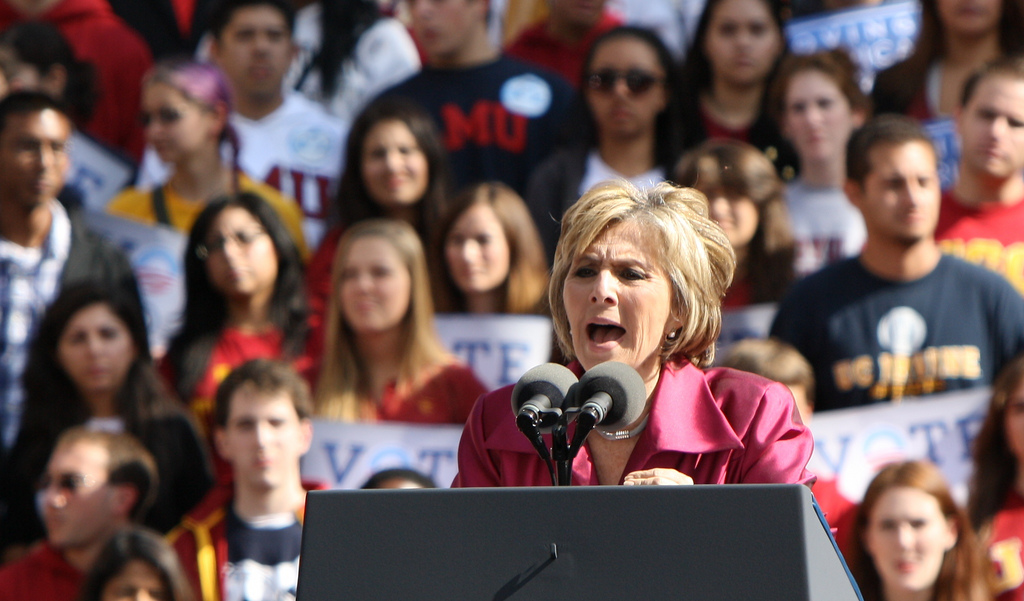
Sen. Boxer: Pushed bill to give tribe sovereignty. (Flicker: Shotgun Spratling)
Local Empire
Anderson, 53, oversees a restaurant and media empire in Napa and Sonoma Counties, 40 miles north of San Francisco. He owns a culinary school called Ramekins and he is the managing member and chairman of Sonoma Media Investments, which owns the Santa Rosa Press Democrat and its affiliate publications, which includes most of the newsprint media in the two-county region. In September, the Press Democrat reported a 900-word story about the arbitration findings that portrayed the tribe and Anderson as having settled a contractual “dispute”—the “fraud” word was not mentioned and the details of the deceptions were not exposed.
Anderson is much more that a restaurateur and newspaper publisher. His California-based lobbying firm, Platinum Advisors, advertises that it generates “billions of dollars in work for our clients” by navigating their deals through mazes of local, state, and federal government bureaucracies. Another of his companies, Kenwood Investments, is developing upscale housing and yacht havens on Treasure Island, a fabulously valuable island in the San Francisco bay built in 1939 as a World’s Fair site.
The business name that is key to this story is Kenwood Investments No. 2. Three retired state judges in the arbitration process declared in April that Anderson and his partners in “Kenwood No. 2” defrauded the Federated Indians of Graton Rancheria of millions of dollars between 2002–03 and committed many acts of deception. They ordered Anderson’s investment firm to pay three quarters of a million dollars to the tribe to cover its lawyer’s fees and arbitration costs.
According to the judges, Anderson breached his consulting contract with the tribe, which now owns the Graton Resort & Casino in Rohnert Park. The judges found that Anderson and his associates “fraudulently induced” and “breached” an agreement to assist the tribe in developing a Las Vegas-style casino business.
The ruling, by retired Superior Court judges William Cahill, Read Ambler and Richard A. Kramer, concludes a long legal battle that was instigated not by the wronged party, but by Anderson, as he sought to further enrich his business at the tribe’s expense.
In a settlement arrangement, Kenwood No. 2 agreed not to appeal the judges’ findings. Anderson’s firm will pay less than the dollar amount of the award, says Joel Zeldin, the tribe’s arbitration counsel. There are no charges of criminal fraud pending against Kenwood No. 2, but the three judges, one of whom was chosen by Anderson’s firm, did their best to restore justice: “Even if the Tribe was willing to overlook Kenwood No. 2’s unethical behavior, the courts and these arbitrators will not.”
Summary of Violations
The 53-page arbitration report details how Darius Anderson and the senator’s son, Douglas Boxer, harmed the Federated Indians of Graton Rancheria over the course of several years. In summing up their findings, the judges’ panel found that Anderson and Boxer had violated their duty to be loyal to the tribe in the following ways:
• Anderson and Boxer represented that Kenwood No. 2 had experience and abilities that it in fact lacked.
• Kenwood No. 2 breached its contract when it bought an option on wetlands without telling the tribe, and then promoted the land to the tribe for the casino site despite its unsuitability for development.
• Anderson and Boxer sent out bid solicitations for a casino manager that benefited Kenwood No. 2 at the expense of the tribe and without telling the tribe of the existence of the “requests for proposals” or RFPs.
• They rejected a proposal that was the most favorable to the tribe without telling the tribe or informing it of that bidder’s reservations about irregularities in the contractual terms proposed by Kenwood No. 2.
• They entered into undisclosed consulting agreements “to the detriment” of the tribe, some of which involved conflicts of interest.
• “Despite causing major problems and providing virtually no effective assistance to the Tribe,” Anderson claimed that it was the tribe that had breached the consulting agreement with Kenwood No. 2. Anderson’s pursuit of his “unmerited” claim against the tribe caused it to spend significant amounts of money and to “suffer business risks and distractions.”
The judges ordered Kenwood No. 2 to pay the tribe’s attorney fees and costs of $725,657.48, and to receive nothing for itself.
Anderson did not respond to multiple requests for comment.
Boxer’s Role
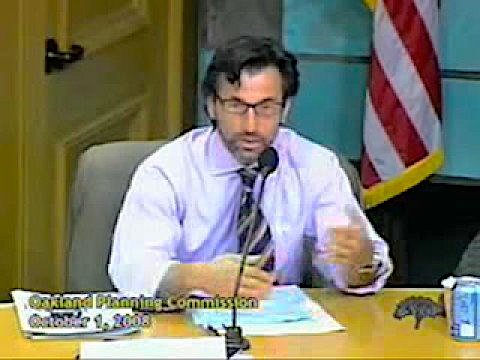
Douglas Boxer: In on deal with Anderson. (YouTube)
Boxer was involved as a lobbyist for Platinum Advisors and as Anderson’s partner in Kenwood Investments No. 2. His mother, the now-retired U.S. senator, in 2000, wrote federal legislation that restored the national sovereignty of the Federated Indians of Graton Rancheria and authorized the tribe to establish a casino business.
In early 2002, Anderson and Boxer approached the tribe’s chairman, Greg Sarris, a novelist and professor of creative writing and Native American studies at Sonoma State University. They proposed that the newly empowered tribal nation hire Platinum Advisors to help it acquire reservation land and start a business to make it self-sufficient. Anderson and Boxer told Sarris that Platinum Advisors had “significant real estate development experience and connections with local, state and federal politicians,” according to the arbitration award. They proffered a platform of consulting services for a monthly retainer of $1,000, with payment deferred and contingent upon success.
Sarris trusted Boxer because the lobbyist’s mother had sponsored the legislation that re-established the tribe’s sovereignty. After Anderson presented a promise-filled PowerPoint to the tribal council, it voted to hire Platinum Advisors, ultimately paying it $1.2 million.
Fifteen years later, arbitrators declared that Anderson and Boxer had breached their contract to deliver adequate professional services in the tribe’s interest, damaging the casino project’s prospects. According to the arbitration document, the Graton Rancheria was afraid to expose these actions when it discovered what Anderson was doing in 2003, fearing political retaliation by the consultants.
The story only came to light because in November 2013, Anderson demanded that the Graton Rancheria pay Kenwood No. 2 a percentage of the projected revenue from its recently opened casino. Anderson insisted that the tribe pay his firm $43 million; he threatened to compel arbitration if it refused.
The tribe refused. It sued Kenwood No. 2 in state superior court, claiming that its sovereign immunity prohibited Anderson from compelling arbitration of his claim.
In November 2015, the court ruled that the tribe had waived its sovereign immunity defense in its contract with Anderson. In 2017, that judgment was affirmed by the appellate court, and the JAMS arbitration commenced.
Anderson claimed 2.5 percent of the Graton Resort & Casino’s net revenue for the first seven years of its operation, despite the fact that after 2005, the tribe had ceased doing business with his company. Insisting that the Graton Rancheria had “unjustly enriched” itself at the expense of his firm, Anderson demanded that it pay his attorney fees, too.
But it was the tribe, not Anderson, that had been wronged, the retired judges ruled. After months of sworn testimony, the panel ordered Kenwood No. 2 to pay the tribe’s attorney fees because it was Kenwood No. 2 that had breached the consulting contract, and Anderson’s claims to the contrary “lacked merit.”
The two trials generated thousands of pages of testimony, depositions and exhibits. The court record of the arbitration award was partly redacted and relabeled at Anderson’s request, according to Zeldin, the tribe’s arbitration counsel.
Anderson’s and Boxer’s names are replaced by “Person A” and “Person B,” respectively. “Platinum Advisors” is replaced with “Company 1.” “Kenwood No. 2” replaced “Kenwood.” The names of politicians and descriptions of their actions are blacked out. But who they are and what they did is clear from the narrative context and from contemporaneous news reports.
How It Began
In March 2002, the Graton Rancheria signed a contract with Platinum Advisors as its “exclusive agent” to provide it with “strategic advice and consultation” and to develop “political visibility.” The contract granted Platinum a right of first refusal to “partner with the tribe in any business opportunity it pursued.” The idea was to attract investors.
From the get-go, Boxer worked to convince the tribe how “‘much of a home run a casino would be’ rather than organic food processing, grape growing, strip mall, or senior assisted living facility,” according to the arbitration award. It did not take much convincing. Casinos are famous magnets for cash. Even as Anderson and Boxer worked with the tribe on a public relations campaign to further a casino project, they were making secret deals to benefit themselves, the arbitrators found.
According to a declaration filed by Anderson in 2015, he, Boxer, Jay Wallace of Platinum Advisors and Stuart Sunshine, a San Francisco city official, created Kenwood Investments No. 2 LLC in January 2003.
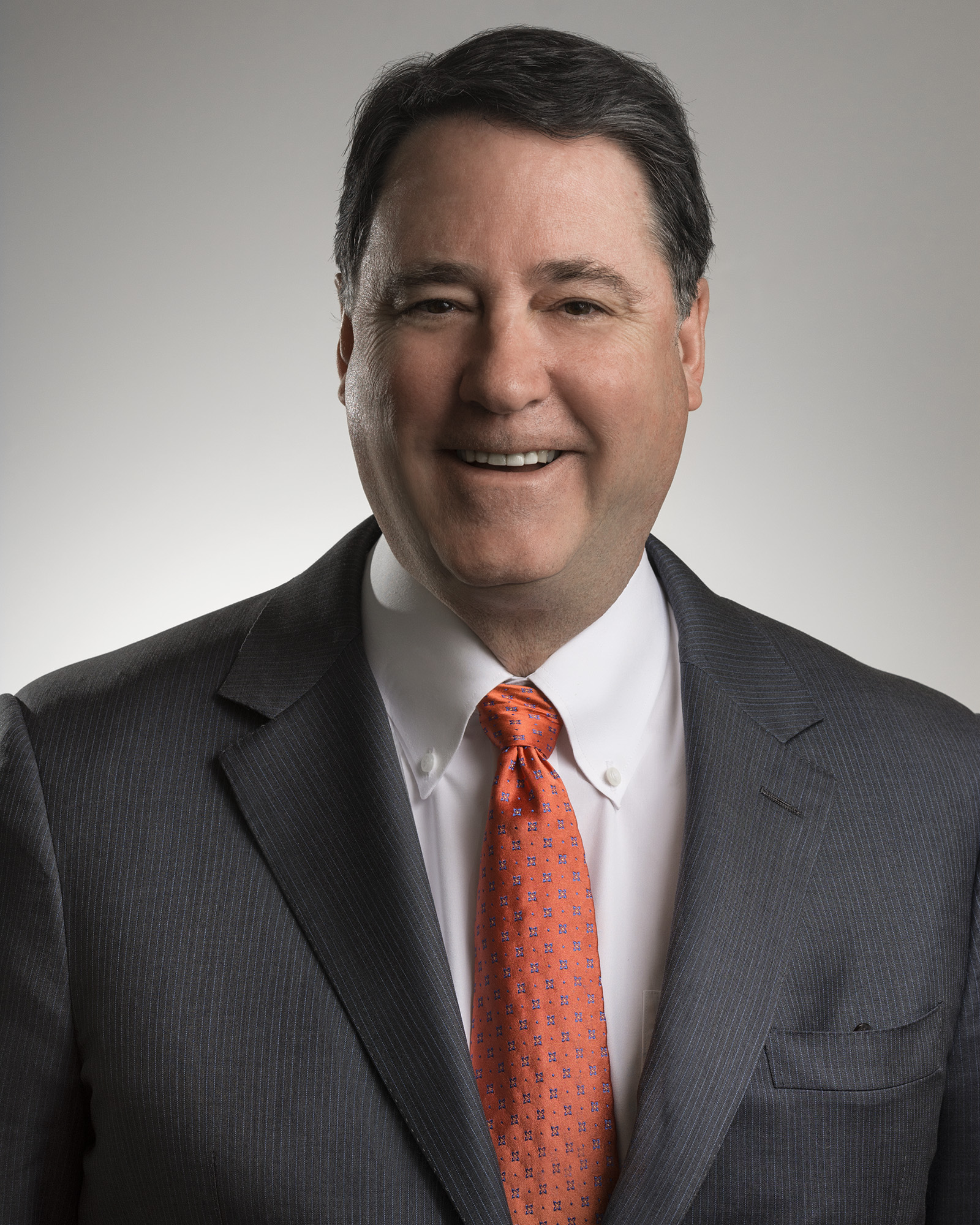
Anderson. (Platinum Advisors)
The arbitration judges ruled that Anderson’s new company shadowed Platinum Advisors’ tribal consulting activities, while serving a hidden agenda to make money for its principals—at the tribe’s expense.
Without informing Sarris or the tribe, Anderson and Boxer struck a deal to buy 1,736 acres of tidal wetlands near Highway 37, a major road connecting San Francisco to the nearby city of Oakland.
Kenwood No. 2 paid $100,000 for an option to purchase the swampy property, eventually billing the tribe $750,000 for it.
As Kenwood No. 2 was secretly securing the option, Platinum Advisors was advising the tribe to select the Highway 37 site for its casino, even though it was a politically impossible place to pour acres of concrete.
“The site was part of 50,000 acres of tidal wetlands that conservationists had been trying to protect and restore since the 1970s,” noted the arbitration judges, who were incredulous that Anderson had suggested it. The attempt to locate the casino on the wetlands site proved to be a public relations and monetary disaster for the tribe.
As Anderson and Boxer were negotiating to buy the swampy land in late 2002, they were also negotiating casino-management deals with several Las Vegas–based casino operators, including Station Casinos, Harrah’s, Maloof and MGM, without telling the tribe.
In February 2003, Anderson sent a request for proposals to potential casino operators. The proposal represented Kenwood No. 2 as the “exclusive development partner” and “financial advisor” for the tribe. The RFP stated that Kenwood No. 2 would evaluate the bid proposals and select the casino manager for the tribe.
Kenwood No. 2 had no contractual relationship with the Graton Rancheria when it issued the RFP. The tribe’s contract was with Platinum Advisors.
According to the arbitration award, “the evidence established that the Tribe was unaware that Kenwood No. 2 had sent an RFP to operators and had not approved the contents of the RFP drafted by Kenwood No. 2.”
Strange Bidding Terms
The trial revealed that Anderson’s RFP instructed potential casino operators to bid their services on the basis of several unusual assumptions:
• The operator would commit to buying Kenwood No. 2’s option to purchase the Highway 37 land and then buy the land from the seller on behalf of Kenwood No. 2, which would be the “titleholder.” The RFP assumed that the casino would be built on the Highway 37 site controlled by Kenwood No. 2 and that there were no other possibilities.
• The operators could charge the tribe 20 percent of the casino’s net revenues and were to “assume a management fee to Kenwood No. 2 of 10 percent of net gaming revenues.”
• The operators would pay Kenwood No. 2 “development fees” of $2.5 million up front to purchase the option on the Highway 37 site, and another $2.5 million when the tribe took over the site—$5 million total.
• “Lastly, operators were required to pay Kenwood No. 2 ‘pre-development fees’ of $8.4 million ($200,000 per month) for advisory and consulting services.”
The operators were not required by the RFP to make upfront cash payments to the tribe, or to provide any specific amounts of money for the tribe’s maintenance costs (i.e., its ability to maintain its existence until the casino began generating revenue).
Anderson received and evaluated four responses to the RFP, which he did not share with the tribe. Notably, Harrah’s proposed to take up to 24 percent of the net gaming revenue as its management fee. Improving on the terms of the RFP itself, Harrah’s offered to pay $100,000 a month to the tribe for its operating expenses, along with a $4 million pre-development fee. Harrah’s also offered to donate $100,000 per year to set up an educational scholarship fund for tribal members. And it offered to make a one-time $25 million “quality of life” loan to address tribal citizen’s needs for housing and medical care.
Harrah’s declined to pay a percentage of net revenues to Kenwood No. 2, although it offered to pay Anderson $50,000 a month in consulting fees, if the tribe approved of the arrangement. Harrah’s pointed out that such an arrangement with a consultant was not a normal business practice; it would have to be approved by the National Indian Gaming Commission.
Harrah’s expressed concern about the legitimacy of Anderson’s claim to be representing the tribe’s interests. It asked to be put directly in touch with the tribal council before proceeding further. Anderson rejected Harrah’s proposal without consulting with Sarris and the tribal council or informing them of the proposal’s existence.
Watch Peter B. Collins interview Peter Byrne on Boxer, Anderson fraud (Article continues below):
A Better Deal—For Anderson
Station Casinos’ response to the RFP was far more favorable toward Anderson. It suggested that Kenwood No. 2 and Station Casinos partner to manage the casino. It proposed divvying up 30 percent of the casino revenues—20 percent to Anderson’s firm, 80 percent to Station.
The Las Vegas–based corporation offered to pay Anderson $10 million cash up front and $15,000 a month for consulting services. It offered $100,000 a month for tribal operations, but it did not offer the tribe any pre-development fees, scholarships or loans.
On March 7, 2003 Anderson and Boxer asked the Graton Rancheria to assign the Platinum Advisors contract to Kenwood No. 2, and claimed it would not change the terms of the agreement.
But the assignation did change the terms of the agreement. The new arrangement gave Kenwood No. 2 new authority to act as the tribe’s exclusive agent. Kenwood No. 2 was allowed to negotiate a cut of the casino operator’s management fee for itself. And, importantly, the tribe agreed to waive its sovereign-immunity defense in the case of a contract dispute—a concession it later regretted.
Anderson and Boxer had been negotiating with gaming corporations since the fall of 2002. They first told Sarris and the tribe that they had issued RFPs on March 11, 2003.
Brian Campbell, a tribal member doing legal work for the tribe, got wind of the RFP and asked Boxer for a copy. Boxer gave Campbell a copy but did not tell him about the responses that had been received.
Boxer later testified under oath that he had given drafts of the RFP to the tribe before it was sent out in 2002. The tribe’s witnesses testified that Boxer did not do that. Campbell testified that he was surprised that Anderson had asked for 10 percent of the gaming revenues and $5 million in upfront fees in the RFP.
On March 14, 2003, Anderson told the tribal council about the existence of RFP responses. He did not disclose Harrah’s offer to the tribe of tens of millions of dollars in cash.
Anderson told the tribe that Station Casinos had made the best proposal for “superior overall economics.”
Even as members expressed outrage at Anderson’s self-dealing behavior, the tribal council accepted his recommendation that Station Casinos be selected as its casino operator.
Time to Hire Lawyers
Suspecting that Anderson was more motivated to benefit himself than the tribe, the Graton Rancheria hired attorneys from California Indian Legal Services to watch over its interests. These lawyers noted that it was a conflict of interest for Anderson to negotiate with Station on behalf of the tribe while he was also negotiating with Station on his own behalf for a cut of the management fees. Anderson agreed that he would not negotiate a separate deal.
On April 22, 2003, the tribe signed the revised agreement with Kenwood No. 2. It provided that Anderson’s company would receive 4 percent of the net gaming revenues for seven years (later reduced to 2.5 percent). Anderson agreed to donate $25,000 annually to the UCLA College of Indian Law Program. (UCLA declined to confirm if the donations were made.)
The next day, according to trial exhibits, Anderson secretly made a separate consulting agreement with Station Casinos, despite his promise that he wouldn’t.

The Graton Resort Casino. (gratonresortcasino.com)
Kenwood No. 2 contracted to assist Station Casinos “maintain its relationship” with the tribe. Station Casinos agreed to pay Anderson $20,000 per month and it bought the option on the Highway 37 site for $750,000, netting Kenwood No. 2 a $650,000 profit. (The tribe later reimbursed Station for the option payment).
Station Casinos agreed to pay Anderson a total of $9.5 million for achieving various “milestones” as it helped the tribe to navigate the bureaucracy of getting its casino up and running.
Anderson did not tell the tribe about his side deal with Station Casinos. “The evidence indicates that Kenwood No. 2 intentionally kept information regarding the Station/Kenwood No. 2 agreement secret from the Tribe,” the arbitrators found. “[Exhibit] 490 [Douglas Boxer] notation: ‘don’t tell Sarris: negotiation.’”
Boxer did not respond to multiple requests for comment.
In fact, the tribe did not learn of the secret side agreement’s existence until June 2003, when Station Casinos included a copy of the side agreement in the paperwork accompanying its negotiations with the tribe, the arbitrators found. Station Casinos declined to comment.
Picking on the Wrong Wetland
On the same day they signed the side agreement, Station Casinos and Anderson announced that the Graton Rancheria planned to develop the Highway 37 site for a casino. A coalition of environmental groups that supported the Bay Delta Restoration Plan to restore local wetland habitats enlisted local, state and federally elected officials to vehemently oppose erecting the casino.
The tribe’s attempt to “appease these groups by offering to restore hundreds of acres of wetlands on the property” was a non-starter. After Diane Feinstein, a U.S. senator from California, “threatened to redraft the Tribe’s restoration language to obstruct the Tribe’s ability to open a casino anywhere,” the Graton Rancheria backed down and nixed the wetlands as a possibility.
The tribe ended up paying for and donating the Highway 37 wetlands to the Sonoma County Land Trust, which has restored it. The wetlands debacle ended up costing the tribe about $5 million, which included paying for the unusable land and for Kenwood No. 2’s profit on the land-purchase option.
Without Anderson’s assistance, Sarris and the tribe went looking for an alternative site to build their casino, and eventually bought 270 acres in Rohnert Park for $100 million, which it borrowed from Station Casinos. The tribe had little or no contact with Anderson and Boxer after 2005, when it stopped using their services.
Boxer testified that Kenwood No. 2 did significant work for the tribe prior to 2006. The trial record reports that in 2004 Boxer “‘killed’ a bill” in the state assembly that would “require gaming tribes to negotiate with local governments to mitigate the impact of casinos.”
Boxer said at trial that he had designed publicity and lobbying campaigns for the tribe; helped it to create a financial budget and to find office space; and “assisted tribal members in securing personal loans.”
The arbitrators determined that lobbying on the tribe’s behalf violated California law because Kenwood No. 2 was not a registered lobbying firm. Regardless, the judges found that Anderson and Boxer did not materially assist the tribe in jumping through the complicated governmental, environmental and financing procedures necessary to obtain a gaming compact and open the casino.
Sarris testified that the tribe felt that “Kenwood No. 2 was providing little or no value . . . and the Tribe wanted to sever its relationship with [Anderson and Boxer] but was afraid that if it did so, [they] might retaliate and use [their] political connections against the Tribe.”
The tribe estimated that it ended up paying Kenwood No. 2 $10,000 an hour for the services it did receive before the contract ended.
Nonetheless, the tribe invited Anderson and Boxer to attend the opening party for the Graton Resort and Casino on Nov. 5, 2014. That same day, Anderson demanded that the Federated Indians of Graton Rancheria wire a payment of $43 million to his bank account.
A version of this story was first published on Bohemian.com as “Graton Expectations.”
Northern California-based journalist Peter Byrne combines investigative reporting with science writing. In 2017, Peter’s 11-part series in the Point Reyes Light “Busted: Breast Cancer Money and the Media” won the top science writing award from the American Association for the Advancement of Science. He has received national, regional, and local recognition for investigative work, writing style, and in-depth profiles of politicians and scientists. Peter reports on terrorism and its twin, counter terrorism, from epicenters of violence such as Mosul, Iraq and Orange County, California. He has written highly regarded books on quantum physics and writes for many publications, including Scientific American, New Scientist, Quanta, American Consequences, Mother Jones, and the North Bay Bohemian. He can be found at www.peterbyrne.info.
Deception in North Korea? Nope, But a New Flavor of Neocon
By Peter Van Buren | Medium | November 15, 2018
What is the state of diplomacy on the Korean peninsula? Are we again heading toward the lip of war, or is progress being made at an expected pace? Are there Asian Neocons fanning the flames for conflict in Pyongyang much as others did with Baghdad?
A year ago, in November 2017, John Brennan estimated the chance of a war with North Korea at 20 to 25 percent. Richard Haass, president of the Council on Foreign Relations, said the odds were 50/50. The New York Times claimed we were “slouching toward war” with the North, on a “collision course.” National security adviser HR McMaster said North Korea represented “the greatest immediate threat to the United States” and that the potential for war with the communist nation grew each day. The US lacked an ambassador in Seoul; Victor Cha was rejected by Trump because, according to “sources and reports,” he didn’t support a preemptive strike on Pyongyang. It was reported the US was “imminently preparing for an attack on North Korea,” driven in part by hawks like Mike Pompeo and John Bolton.
All that was wrong.
Cha, it appears, didn’t in fact support what Trump actually was planning: not a preemptive strike, but a summit meeting with Kim Jong Un, held some five months ago in Singapore following a first try at courtship aside the Seoul Olympics in January 2018. World leaders meeting to talk peace is historically seen as a good thing. Yet the American media consensus was a president they believe is roundly despised globally conveyed “legitimacy” on Kim Jong Un, no matter that his family has ruled North Korea for some seven decades, and his country already holds a seat at the United Nations. No shortage of experts from South Korea universities and American think tanks were found to support those claims.
The media generally ignored, in return for the US postponing a handful of military exercises (“concessions,” which were deeply criticized by an American media which has failed to note the US has actually resumed some exercises), the North unilaterally stopped ICBM testing (the missiles which might someday be able to reach the US) and nuclear detonations. It released American hostages, and took steps to close down two nuclear missile facilities. Kim Jong-un fired top military leaders who dissented over his approaches to South Korea and the United States.
Officials from North and South now meet regularly, and US diplomats engage with both sides on an ongoing basis; Secretary of State Mike Pompeo has been to Pyongyang. Numerous practical steps have been taken along the DMZ to reduce the chance of accidents. South Korea’s unification minister in charge of North Korea issues Cho Myoung-gyon will visit the United States this week, where he is expected to meet Pompeo. This is the first time in four years for South Korea’s unification minister to visit Washington. On the last visit, in 2014, then-Secretary of State John Kerry refused to meet with his predecessor in line with the Obama (and Bush) administrations’ policy of ignoring North Korea in hopes the problem would go away.
Yet the headlines this week in the New York Times and other major US outlets scream of a “great deception” by the North Koreans, evidenced by a hardline think tank — helmed in part by Victor Cha — “discovering” North Korean missile facilities already long known to US intelligence (Cha’s lo-rez commercial satellite photos are dated March, months before the Trump-Kim summit, so everyone who mattered already knew.) In a matter of a few paragraphs, Cha and the Times blow this “discovery” up to announce, without any evidence, “What everybody is worried about is that Trump is going to accept a bad deal — they give us a single test site and dismantle a few other things, and in return they get a peace agreement” that formally ends the Korean War. Mr. Trump, he said, “would then declare victory, say he got more than any other American president ever got, and the threat would still be there.”
What is the real state of diplomacy on the Korean peninsula? Are we again heading toward the lip of war?
Of course not. South Korea’s presidential spokesperson put those “new” missile facilities into the perspective Trump’s critics lack, saying “North Korea has never promised to shut down this missile base. It has never signed any agreement, any negotiation that makes shutting down missile bases mandatory… There is no agreement, no negotiation that makes it necessary for it to be declared.” In other words, there can be no deception where there was no agreement.
To call what the Times discovered a “deception” is deeply misleading. The Singapore declaration and the inter-Korean summit declarations of April 27 and September 19 this year do not commit Pyongyang to disclose the sites. What is new to the Times is actually old news; Kim Jong Un in his January 2018 New Year’s Day guidance stated North Korea would shift to the mass producing nuclear weapons in such facilities. “The nuclear weapons research sector and the rocket industry should mass-produce nuclear warheads and ballistic missiles, the power and reliability of which have already been proved to the full, to give a spur to the efforts for deploying them for action,” Kim said. The Times in fact more or less acknowledged all this in September, before being surprised by it in November.
And the Times’ big scary takeaway, that the old/new facilities are in caves, confuses tactical concealment with some sort of nefarious political “deception.” Did they expect the missiles to be worked on in the parking lot outside Kim’s villa?
One issue only lightly touched by a western media obsessed with parsing tweets as their stab at journalism is the ongoing rush forward driven by the two Koreas themselves, what under any other media climate would be hailed as a huge series of successes but which falls in 2018 under the Trump Is Always Wrong Shadow. In a short time the two states established psuedo-embassies just north of the DMZ, where representatives from the two Koreas have met more than 60 times. The office has become a clearinghouse for over a dozen projects launched during the summit. There are plans for a massive bi-national project to link roads and railroads severed during the Korean War.
North and South Korea have begun removing landmines from the border, drawn back some troops, and most recently held a third leaders’ summit in September in Pyongyang where North Korean leader Kim offered to permanently dismantle two key ICBM facilities under the observation of outside experts. He also offered to negotiate further on the permanent shut down of the nuclear facility at Yongbyon. South Korean President Moon Jae-In, for his part, better than the US understands the future is ultimately about economics, not nukes. Moon seeks sanctions relief as negotiations move forward (little is ever accomplished without some give and take.) “I believe the international community needs to provide assurances that North Korea has made the right choice to denuclearize and encourage North Korea to speed up the process,” he said this week in Paris during a visit with French President Emmanuel Macron. If the western media is correct that Trump is being duped, played, deceived, and cheated by the North, what must they think about the faster pace set by the South? After all, a US miscalculation means we all switch from Samsung to Apple phones made in China, while South Korea risks being turned into a wasteland dotted only with signs for Nuka Cola.
Left off to the side is that it has been only five months since the historic summit in Singapore. Obama’s agreement with Iran, which did not even involve actual working nukes, took almost two years to conclude. Cold War negotiations with the Soviet Union ran across administrations, extending the broader process into decades of talks, and were aimed at goals much shorter than full denuclearization. Five months is barely enough time to grow a decent garden, never mind resolve multinational problems that reach back to 1945.
With North Korea, there is no history of trust, no basis of goodwill to build on. That all has to be created, built from scratch, as part of the heavy lifting of diplomacy. The ultimate goal — denuclearization — may or may not someday come to pass, but if it does it will be the result of years of more small steps forward than small steps back. Diplomacy is about moving the goalposts and embracing the long game, not playing chicken. It will require the North’s nuclear weapons to become unnecessary, as the North agrees to and is allowed to become so engaged with the global system that it finds itself no longer in need of such a powerful deterrence to attacks by its neighbors. Diplomacy requires one to at least understand the opponent’s goals and motivations, even if you don’t agree with them.
There exists an industry of sorts devoted to portraying North Korea as an eviler than evil empire, with Kim as a parody of the movie Dr. Evil. These hardliners, ensconced mostly in universities in South Korea and think tanks in the US, have been around since the Cold War to make sure the case for the militarization of South Korea and American support for various South Korean military dictators never lacked public advocates. They act as mouthpieces for North Korean defectors with horror stories, and are quick to seize on anything to amplify the threat. Older readers will remember similar mostly defunct “industries” set up to do the same over the actions of Cuba, China, and the Soviet Union once (though the Red Threat gang is trying to make a comeback over Bond villian wanna-be Putin.)
Victor Cha himself is a kind of one man gloom machine, writing regularly of the impossibility of denuclearization. His old articles focus fearfully on meetings canceled (but since successfully concluded; fatalism ignores the future) he in fact represents a kind of Asian neocon, an industry dedicated to the impossibility of peace on the peninsula as long as the Kim dynasty remains in power. Cha’s home organization, the Center for Strategic and International Studies, for example, features multiple former Secretaries of Defense on its board and as trustees, and is well-funded by elements of the military industrial complex. Of the plan to link railroads across the DMZ, what any sane person would see as progress, the organization grumbled the “move is expected to increase friction with its traditional ally Washington over the pace of inter-Korean engagement.”
So shame on those hardline groups — let’s call them Asian Neocons, for they want regime change in the North in the same way as Cheney, Rumsfeld, et al, wanted it in the Middle East — and shame on the New York Times for morphing its Trump-is-always-wrong editorial policy into presenting something long-known to US intelligence as something new enough to declare deception has overtaken the diplomatic long game on the Korean Peninsula. As they did during the run up to the Iraq War, the Times is once again serving as a platform for those who cannot see or will not wait for a peaceful way forward.
Deception? The deception, it is clear, is all (again) on the side of the neocons. They seek to destroy any chance of lasting peace with unrealistic expectations and by announcing failure at goals never actually set. Because if not diplomacy, then what is the alternative? Theirs is not pessimism, it is fatalism. Success instead should be measured by the continued absence of war and the continued sense that war is increasingly unlikely. Anyone demanding more than that wants things to fail.
Hillary Clinton Ordered To Answer Additional Questions Under Oath About Private Email Server
By Tyler Durden – Zero Hedge – 11/16/2018
A federal judge has ordered Hillary Clinton to respond to further questions, under oath, about her private email server.

Following a lengthy Wednesday court hearing, Judge Emmet G. Sullivan (who is also presiding over fmr. National Security adviser Michael Flynn’s case), ruled that Clinton has 30 days to answer two additional questions about her controversial email system in response to a lawsuit from Judicial Watch.
Hillary must answer the following questions by December 17 (via Judicial Watch)
- Describe the creation of the clintonemail.com system, including who decided to create the system, the date it was decided to create the system, why it was created, who set it up, and when it became operational.
- During your October 22, 2015 appearance before the U.S. House of Representatives Select Committee on Benghazi, you testified that 90 to 95 percent of your emails “were in the State’s system” and “if they wanted to see them, they would certainly have been able to do so.” Identify the basis for this statement, including all facts on which you relied in support of the statement, how and when you became aware of these facts, and, if you were made aware of these facts by or through another person, identify the person who made you aware of these facts.
Sillivan rejected Clinton’s assertion of attorney-client privilege on the question over emails “in the State’s system,” however he did give Clinton a few victories:
The court refused Judicial Watch’s and media’s requests to unseal the deposition videos of Huma Abedin, Cheryl Mills and other Clinton State Department officials. And it upheld Clinton’s objections to answering a question about why she refused to stop using her Blackberry despite warnings from State Department security personnel. Justice Department lawyers for the State Department defended Clinton’s refusal to answer certain questions and argued for the continued secrecy of the deposition videos. –Judicial Watch
Wednesday’s decision is the latest twist in a Judicial Watch Freedom of Information Act (FOIA) lawsuit targeting former Clinton deputy chief of staff, Huma Abedin. The case seeks records which authorized Abedin to conduct outside employment while also employed by the Department of State.
“A federal court ordered Hillary Clinton to answer more questions about her illicit email system – which is good news,” said Judicial Watch President Tom Fitton. “It is shameful that Judicial Watch attorneys must continue to battle the State and Justice Departments, which still defend Hillary Clinton, for basic answers to our questions about Clinton’s email misconduct.”
How Elites Use Mainstream Media to ‘Maintain and Expand Their Power’

By Kit Klarenberg – Sputnik – November 16, 2018
For quite some time, debate about ‘fake news’ has reverberated clamorously in both mainstream and alternative discourse. One could easily conclude the issue was a pressingly new plague, restricted to certain corners of the web – but academic TJ Coles begs to differ. In fact, he tells Sputnik fake news has been ubiquitous for thousands of years.
It’s difficult to pinpoint the precise moment the term ‘fake news’ entered the Western political and media lexicon, but the election of Donald Trump as US President certainly turbocharged its usage. For the controversial leader and his supporters, the label can be automatically applied to any and all media reporting critical of him, while his opponents play much the same game when roles are reversed.
This tit-for-tat sparring inspired TJ, director of Plymouth University’s Institute for Peace Research, to write a book on the subject — the fruit of his labours, Real Fake News: Techniques of Propaganda and Deception-based Mind Control, was published in September.
“All that talk made me think ‘hang on a minute, we’ve always had fake news’. It’s the nature of power — all power structures want to maintain and expand their power, so it’s therefore important to present information that benefits them, and keeps populations in a psychological and/or intellectual prison. The ‘fake news’ peddled by elite financial, commercial and political financial interests, duly regurgitated by major media organizations, eclipses any bogus story perpetuated by alleged ‘bots’ on Twitter, or whatever,” TJ says.
Babylonian Beginnings
In his work, TJ traces the birth of fake news all the way back to ancient Babylon, when rulers sought to perpetuate the notion they were descended from Gods and thus had a right to dominate and control the populace — history’s first recorded instance of the ‘divine right of kings’.
Similarly, Plato famously popularized the idea of the ‘noble lie’ — privileging untruths told for the benefit of elites and the population alike. These ideas very much endure in the modern day — TJ notes Wikileaks’ dump of the Clinton campaign’s internal emails amply demonstrates her team felt it wouldn’t be good, or necessary, for Hillary’s supporters to be aware of her close connections to Wall Street, so did their utmost to conceal the mephitic kinship.
“Elites the world over are acutely aware information is power, and actually quite open about their use and abuse of the news to shape public perceptions and preserve sociopolitical conditions benefitting them. For instance, the UK Ministry of Defence regularly publishes projections of how planners think the world will look in 10 — 20 years, and they routinely note the media is one of the key ways to maintain the current paradigm, and discuss the various ways information can be ‘weaponized’ against the public,” he says.
TJ suggests elites shape and control the public mind so effectively because they exploit fundamental facets of human nature. First, the well-established instinctive inclination to reflexively believe something reinforcing one’s existing beliefs, rather than assessing whether alternative facts or viewpoints have any value, or indeed considering whether what one believes might be wrong, or informed by confirmation bias.
This tendency is greatly exacerbated by the use of internet and social media algorithms that present a ‘personalized’ picture of the world to users, unfailingly presenting individuals with content they want to see, and tacitly suppressing information contrary to their existing opinions.
“Elites also know how easy it is to exploit guilt, which is why atrocity propaganda is so widespread today. Most sympathize with the victims of major atrocities, and naturally want to do something to help, so this aspect of human nature can be easily manipulated to justify aggressive foreign policy actions — ‘look at what we’re letting happen to poor defenceless people, we have a responsibility to protect them’ etcetera. It’s funny, when it comes to the economy, the powerful are quick to say people are naturally selfish, so it’s everyone for themselves, but when it comes to foreign policy, we should care about our fellow human beings and do something to help,” TJ says.
Evidence
As the academic’s work makes clear, atrocity propaganda doesn’t even need to have any grounding in reality whatsoever. In the lead-up to the NATO-backed violent overthrow of Libyan leader Muammar Gaddafi in 2011, the mainstream media was awash with reports government forces fuelled by viagra were conducting mass rapes of civilians, and planning a borderline genocidal massacre of rebel forces — claims used to justify the imposition of a no-fly zone over the country, and NATO airstrikes.
The stories were subsequently found to be entirely without foundation — similarly, serious question marks hover over the veracity of numerous claimed chemical weapons attacks in Syria, which likewise have provided a pretext for Western attacks on the country.

© Flickr / Thierry Ehrmann
“It’s especially easy to exploit guilt when you present bite-sized news reports about an atrocious event stripped of all context, and exclude the voices of people who are actually on the ground. Occasionally, contradictory voices do filter through the system, although largely by accident. For instance, the BBC made the mistake of inviting Peter Ford, former UK ambassador to Syria, on air to discuss chemical weapons attacks — he quickly demolished their propaganda. He hasn’t been invited back since,” TJ says.
Ford is surely but one of a great many talking heads to effectively be banned from appearing on the BBC for daring to state views and evidence contrary to ascendant elite narratives. However, the British state broadcaster’s blacklisting activities also extend to its own employees — in April 2018, the BBC admitted that for decades, job applicants and serving staff were subject to political vetting by MI5, in an effort to prevent “subversives” gaining employment with the Corporation.
Often, individuals were ostracized on extremely tenuous grounds. For instance, respected film director John Goldschmidt was blacklisted in the late 1960s, with two projects he was working on for the Beeb cancelled midway through production without warning or explanation — MI5 deemed him a potential subversive as he’d spent a few weeks in Czechoslovakia in his youth, as part of a student exchange program. Similarly, award-winning journalist Isabel Hilton was refused a job by BBC Scotland in 1976 — that she spoke Chinese and had been a member of Scottish China Association at Edinburgh University made MI5 extremely anxious.
Under the policy, popular children’s book author and playwright Michael Rosen was also outright sacked from the BBC in 1972 while a graduate trainee for a number of ‘transgressions’, including student activism at Oxford, and producing a film featuring clips of US soldiers being tested with LSD. The American Embassy in London complained about the project to both MI5 and the BBC directly, whereupon Rosen was shown the door.The policy was wound down in the 1990s, and it’s unknown whether any comparable structures existed at other major news organizations — although City University research suggests dissenting voices remain rare in the British mainstream media. The 2016 study concluded UK journalists are overwhelmingly white, male, and elite-university educated — and are far more trusting of politicians, the government, police and military than the general population, which the study’s authors partly attributed to reporters’ “reliance on these institutions as sources of information”.
Such widespread faith in the establishment may account for why so many prominent reporters see no problem with maintaining close relationships with the intelligence services. The Guardian’s Luke Harding has frequently, openly and proudly advertised his warm bond with British spying agencies in articles and books — and equally frequently been condemned for uncritically running stories of questionable probity potentially provided to him by agency staff. In a September article he claimed Russian diplomats had held secret talks in London with associates of WikiLeaks founder Julian Assange, in an attempt to assist in his escape from the UK. The covert action would’ve allegedly seen Assange smuggled out of the Ecuadorian embassy in Knightsbridge under cover of Christmas Eve in a diplomatic vehicle and transported to Moscow.
The story was entirely based on the testimony of anonymous sources, the identity of which Harding didn’t even hint at in the piece. In response, Craig Murray, former UK Ambassador to Uzbekistan, slammed the article, calling it a “quite extraordinary set of deliberate lies” and “entirely black propaganda” published by an “MI6 tool”.”I was closely involved with Julian and with Fidel Narvaez of the Ecuadorean Embassy at the end of last year in discussing possible future destinations for Julian. It is not only the case Russia did not figure in those plans, it is a fact Julian directly ruled out the possibility as undesirable. The entire story is a complete and utter fabrication. It is very serious indeed when a newspaper like the Guardian prints a tissue of deliberate lies in order to spread fake news on behalf of the security services. I cannot find words eloquent enough to express the depth of my contempt for Harding and Katherine Viner, who have betrayed completely the values of journalism,” Murray wrote.
Similarly, in 2007 the Campaign Against Sanctions and Military Intervention in Iran published an analysis of 44 articles written by Daily Telegraph Defence Editor Con Couglin on Iran — including stories suggesting North Korea was helping Iran prepare a nuclear weapons test, and Iran was grooming Bin Laden’s successor. They found the pieces almost invariably; were based on “unnamed or untraceable” sources in intelligence agencies or the UK Foreign Office and “published at sensitive and delicate times” when there’d been “relatively positive diplomatic moves” towards Iran; contained ‘exclusive revelations’ about Iran combined with eye-catchingly controversial headlines, which were typically drawn from a single sentence in the wider article.
Prison Break
Despite his bleak analysis, TJ does not view the elite monopoly on information as insurmountable, or invincible — there’s much individuals and groups can do to shatter the stranglehold.
“People should keep a keen eye on sources that analyse news reporting and misreporting, such as Glasgow University Media Group and MediaLens, which offer alternative information and tell you what media coverage is actively omitting from the real story. However, change must come from within too — people should divorce themselves from preconceptions, and question their beliefs wherever and whenever possible. When presented with information that doesn’t conform to our predispositions, we should ask ourselves whether it’s true, rather than reflexively dismissing it outright,” TJ says.
While having less trust in the media more generally is a must, the academic also warns against placing too much faith in alternative news outlets and social networks, despite them being valuable resources with a significant positive potential.
“Independent media is growing in size and strength, but its overall reach is still relatively tiny — while print circulation is obviously down, people still get the vast bulk of their information from mainstream outlets. Similarly, social media could’ve democratized the spread of information, but it hasn’t — and in fact any such potential has probably been permanently neutered by the proliferation of ‘fact-checking’ resources, which are anything but unbiased and disinterested arbiters of truth,” TJ notes.
One-such ‘fact-checker’ is the Atlantic Council, a NATO-offshoot with a board of directors comprised of a ‘who’s who’ of contentious US political figures, including Henry Kissinger, Condoleezza Rice, Colin Powell, Robert Gates, Michael Hayden and David Petraeus, among others.
It partnered with Facebook in May to “independently monitor disinformation and other vulnerabilities” and combat the spread of fake news on the platform. To date, the collaboration has resulted in untold hundreds of pages and personal accounts being shut down — rather than being promulgators of propaganda though, the overwhelming bulk of the banished were alternative news sources, political organizations and individuals, highlighting issues and events the mainstream media downplays or ignores, such as US interventionism, drug legalization and police brutality.
Moreover, that elites exploit social media’s information-sharing capabilities to suit their own objectives is well-established.”The US State Department has used major social networks to recruit revolutionaries on several occasions, most notably during the ‘Arab Spring’, connecting ‘moderate rebels’ — actually violent jihadist lunatics — in select countries. Washington wanted Assad, Gaddafi and Mubarak gone, because they weren’t following orders — but there were no Twitter or Facebook ‘revolutions’ in the Gulf states, because the American empire wanted their rulers to remain in place. In Cuba, the CIA even went as far as creating a social network for the same purpose,” TJ concludes.
Rather than being critics, Liberals actually enable Saudi crimes
By Yves Engler · November 16, 2018
One has to admire the Canadian government’s manipulation of the media regarding its relationship with Saudi Arabia. Despite being partners with the Kingdom’s international crimes, the Liberals have managed to convince some gullible folks they are challenging Riyadh’s rights abuses.
By downplaying Ottawa’s support for violence in Yemen while amplifying Saudi reaction to an innocuous tweet the dominant media has wildly distorted the Trudeau government’s relationship to the monarchy.
In a story headlined “Trudeau says Canada has heard Turkish tape of Khashoggi murder”, Guardian diplomatic editor Patrick Wintour affirmed that “Canada has taken a tough line on Saudi Arabia’s human rights record for months.” Hogwash. Justin Trudeau’s government has okayed massive arms sales to the monarchy and largely ignored the Saudi’s devastating war in Yemen, which has left up to 80,000 dead, millions hungry and sparked a terrible cholera epidemic.
While Ottawa recently called for a ceasefire, the Liberals only direct condemnation of the Saudi bombing in Yemen was an October 2016 statement. It noted, “the Saudi-led coalition must move forward now on its commitment to investigate this incident” after two airstrikes killed over 150 and wounded 500 during a funeral in Sana’a.
By contrast when the first person was killed from a rocket launched into the Saudi capital seven months ago, Chrystia Freeland stated, “Canada strongly condemns the ballistic missile attacks launched by Houthi rebels on Sunday, against four towns and cities in Saudi Arabia, including Riyadh’s international airport. The deliberate targeting of civilians is unacceptable.” In her release Canada’s foreign minister also accepted the monarchy’s justification for waging war. “There is a real risk of escalation if these kinds of attacks by Houthi rebels continue and if Iran keeps supplying weapons to the Houthis”, Freeland added.
Ottawa has also aligned itself with Riyadh’s war aims on other occasions. With the $15 billion LAV sale to the monarchy under a court challenge in late 2016, federal government lawyers described Saudi Arabia as “a key military ally who backs efforts of the international community to fight the Islamic State in Iraq and Syria and the instability in Yemen. The acquisition of these next-generation vehicles will help in those efforts, which are compatible with Canadian defence interests.” The Canadian Embassy’s website currently claims “the Saudi government plays an important role in promoting regional peace and stability.”
In recent years the Saudis have been the second biggest recipients of Canadian weaponry, which are frequently used in Yemen. As Anthony Fenton has documented in painstaking detail, hundreds of armoured vehicles made by Canadian company Streit Group in the UAE have been videoed in Yemen.Equipment from three other Canadian armoured vehicle makers – Terradyne, IAG Guardian and General Dynamics Land Systems Canada– was found with Saudi-backed forces in Yemen. Between May and July Canada exported $758.6 million worth of “tanks and other armored fighting vehicles” to the Saudis.
The Saudi coalition used Canadian-made rifles as well.“Canada helped fuel the war in Yemen by exporting more rifles to Saudi Arabia than it did to the U.S. ($7.15 million vs. $4.98 million)”, tweeted Fenton regarding export figures from July and August.
Some Saudi pilots that bombed Yemen were likely trained in Alberta and Saskatchewan. In recent years Saudi pilots have trained with NATO’s Flying Training in Canada, which is run by the Canadian Forces and CAE. The Montreal-based flight simulator company also trained Royal Saudi Air Force pilots in the Middle East.
Training and arming the monarchy’s military while refusing to condemn its brutal war in Yemen shouldn’t be called a “tough line on Saudi Arabia’s human rights record.” Rather, Canada’s role should be understood for what it is: War profiteer and enabler of massive human rights abuses.
Mainstream media on Gaza: Israelis get killed, but Palestinians merely ‘die’
By Darius Shahtahmasebi | RT | November 15, 2018
After a Twitter backlash, the Guardian was forced to amend a brazenly propagandized headline which sought to undermine the basic rights of Palestinians and elevate Israeli soldiers to levels previously thought unimaginable.
“We remain editorially independent, our journalism free from commercial bias and our reporting open and accessible to all,” reads an advertisement on the Guardian UK’s online newspaper when you click on a recent story.
“Imagine what we could continue to achieve with the support of many more of you. Together we can be a force for change.”
The article in question that I clicked on is a recent story entitled “Eight dead in undercover Israeli operation in Gaza.” According to the opening paragraph of the report, Israeli forces killed seven Palestinians in the Gaza Strip in an “apparently botched undercover raid and ensuring firefight.”
Sounds fairly straightforward, right? Just another day in Gaza, where Palestinians and Israelis alike find themselves in the line of fire, with the number of dead Palestinians outnumbering those on the Israeli side.
However, this wasn’t the only title the Guardian had previously given this same story. The original title was a poorly crafted “Israeli officer killed during raid in which seven Palestinians died.”
You see, prior to the title’s amendment, the Israeli officer was “killed” during the raid, yet the Palestinians (who were killed by the way) merely died. The Israeli officer was killed by the Palestinians, but the seven Palestinians died from some unknown cause. This is a clever yet obvious play on the English language, whereby the deaths of the seven Palestinians are brought about passively, whereas the Israeli officer is actively killed by his aggressor.
In actuality, the perpetrator of the raid is the person bringing about the violence. The Palestinians who react in response are not, in any normal sense of the word, the perpetrators of the violence in question.
Furthermore, the Israeli officer is the one that is highlighted by the title, whereas the lesser deaths of the Palestinians are brought about as a side note. The Guardian explains in the text of its report that seven Palestinians are dead, but the identities of those Palestinians are not highlighted.
If they were militants, why not say so? If they are not militants, are they in fact civilians? If they are civilians, why is the Israeli officer highlighted first in the title, and not the tragedy of the seven civilian deaths? If they are militants, why are they given a lesser status than the Israeli officer? Well, as far as we know, two of those killed (I mean, died) were Hamas commanders. The rest of the deceased were aged between 19 and 25.
Of course, the Guardian will no longer have to worry about answering those questions as it wasted no time in changing its headline in the wake of what can only be described as a viral Twitter frenzy. The UK-based Canary described it as the “Guardian headline on Palestine that’s shaming the entire field of journalism.”
If they had been allowed to get away with this shoddy piece of journalism, one could still argue that it is just a title and we should not spend our time fussing and feuding over the intricate wording of titles. After all, what matters to a story and its journalistic integrity is its content, right?
Anyone who knows and understands anything about modern journalism and propaganda knows this to be complete nonsense. Firstly, a study by the Media Insight Project, an initiative of the AP-NORC Center for Public Affairs Research and the American Press Institute found that over half of Americans surveyed were mere headline readers and nothing more.
The effects of this painful reality go well beyond that of a resulting lazy populace. As explained by Maria Konnikova in the New Yorker :
“Psychologists have long known that first impressions really do matter—what we see, hear, feel, or experience in our first encounter with something colors how we process the rest of it. Articles are no exception. And just as people can manage the impression that they make through their choice of attire, so, too, can the crafting of the headline subtly shift the perception of the text that follows. By drawing attention to certain details or facts, a headline can affect what existing knowledge is activated in your head. By its choice of phrasing, a headline can influence your mindset as you read so that you later recall details that coincide with what you were expecting.”
In a series of studies, Ullrich Ecker, psychologist and cognitive neuroscientist at the University of Western Australia, more or less confirmed this sad state of affairs. One of Ecker’s studies found that when matching headlines to photographs, if the headline diverged from the photo, the victim was rated more negatively by the respondents when the headline had been about the criminal; and the criminal was rated more positively when the headline had been about the victim. Starting to sound a little bit familiar?
According to Konnikova, Ecker’s findings show that misinformation causes more damage when it’s subtle than when it is blatant.
Say what you like about Fox News, but its blatant approach to lying makes it less of a threat in my mind than papers like the Guardian who advertise themselves as “editorially independent” and “free from commercial bias” as it deploys more subtle techniques to not only toe the establishment line, but to provide free public relations for states such as Israel, who regularly contravene international law in a variety of ways.
Make no mistake, the Guardian editors knew what they were doing when they released this headline. It was not done by accident. This is a tried and true strategy in which Western media will paint the aggressors in a conflict as being passive players with as little fault as possible – so long as those players are the US, UK or its close allies.
For example, a March 2017 attack by US-led forces in Mosul, Iraq massacred over 200 civilians in a single bombardment. The reason this attack took place is primarily because Donald Trump relaxed the so-called Obama-era restrictions on air strikes, meaning that even Iraqi commanders could call in air strikes on the battlefield with little to no oversight. The result of this policy was of course, outright death and destruction, with over 9,000 civilians killed in Mosul alone.
However, the US bombardment in March was framed by the establishment media in the kindest way possible for the US and its allies. As noted by FAIR’s (Fairness and Accuracy In Reporting) Ben Norton, ABC News went with the headline “US Reviewing Airstrike That Corresponds to Site Where 200 Iraqi Civilians Allegedly Died.” The LA Times ran with “US Acknowledges Airstrike in Mosul, Where More Than 200 Iraqi Civilians Died.” France 24 settled for “US-Led Coalition Confirms Strike on Mosul Site Where Civilians Died.” The best, of course, was the New York Times, which managed to concoct the following headline: “US Concedes It Played a Role in Iraqi Deaths.” Remember, this is the same US who “played a role” in over one million “Iraqi deaths,” but that is a topic for another story.
Conversely, if the alleged perpetrator of violence is in the handful of countries deemed to be enemies of Western society by the mainstream media (think Iran, Syria, Russia, or North Korea), they are portrayed as menacingly evil and bloodthirsty with no logic or context to their actions. These countries “pound” their victims, for example. Even when the alleged acts cannot be proven at all, such as highly questionable chemical weapons attacks that are immediately pinned on the Syrian government with little to no evidence of Syrian government involvement, Syria’s president is condemned by all forms of Western media in the strongest terms imaginable.
You see, the victims of attacks carried out by the US, UK, and its allies and lackey states such as Israel aren’t killed, they merely die at the scene. If anything, they were in the way of the magical freedom bombs that we and our allies have been trying to spread around the Middle East for years. But those victims who are purportedly killed by countries who have been targeted for regime change, they were tragically murdered by brutal forces. The jihadists fighting against these forces with known ties to al-Qaeda are mere rebels fighting for their freedom, but militants fighting against government forces in Gaza or in Yemen are terrorists who kill noble Israeli soldiers while dying in the crossfire by accident.
While we are on the topic, an honourable mention of course has to go to the New York Times, who once felt that it was justified to describe the plight of a young Yemeni girl who had her entire family wiped out in a Saudi-led airstrike with the headline: “Young Yemeni Girl Is Sole Survivor After Airstrike Topples Her Home.” Thank God – at least it only toppled her home, as air strikes are known to do much worse if they belong to an adversarial state.
This is shameful propaganda, plain and simple. The Guardian was once heralded as a beacon of journalistic integrity, but it has long given up that status and decided it will go out of its way to perpetuate establishment narratives that benefit, for example, even the dictatorship of Saudi Arabia.
Despite this, the fact the Guardian amended its headline and deleted its original tweet can still be seen as somewhat of a partial victory. While I don’t expect many of us who spoke out to continue to keep our Twitter privileges for much longer, the end result was totally worth it and I hope more people can continue to speak out as we fight back against warmongering establishment narratives.
US using Khashoggi’s assassination to lessen influence of Muhammad bin Salman: Analyst
Press TV – November 15, 2018
American writer and academic James Petras says the United States is using journalist Jamal Khashoggi’s assassination to create an environment that can lessen the influence of Saudi Crown Prince Mohammed bin Salman (MBS).
James Petras, author and political commentator, made the remarks in an interview with Press TV on Thursday while commenting on a report which says the US Senate is expected to vote on legislation aimed at punishing Saudi Arabia over its brutal war on Yemen as well as the murder of the Saudi dissident journalist at its consulate in Istanbul, Turkey.
Senator Bob Corker, the Republican chairman of the Senate Foreign Relations Committee, said Tuesday that the upper chamber could vote on the resolution within weeks prior to the end of the year.
Corker said that the legislation seeks to stop all assistance to the Kingdom, adding measures to end arms sales to Riyadh would also be discussed at the Senate.
Petras said that it’s “very clear that there is a great deal of indignation in the US about the behavior of the so-called crown prince in Saudi Arabia, Muhammad bin Salman, who has been involved in a number of assassinations, including of someone very close to the US government, and a very prominent participant in the Washington Post.”
“Some observers think he was collaborating with the CIA on keeping them informed on the inside struggles inside Saudi Arabia, and that was one of the reasons that Prince Salman murdered him,” he added.
“Now the fact the US felt that the Saudis were undermining US operations in Saudi-underlined region. The Yemen invasion by the Saudis has been going on for three years. The US has supplied the Saudis with arms, advisors, and signing of a major agreement with the support of President Trump,” he noted.
“This is all part of the background. I think the feeling is with Khashoggi’s assassination that Washington can create an environment that can lessen the influence of Prince Salman,” he argued.
“And I think that his purge inside Saudi Arabia has caused too much instability. They think that the Yemen war can be used against him even though Washington has continued to support the Saudis in decimating the population,” the analyst said.
“So I think the Senate will be fighting the pro-Saudi element in the government, particularly President Trump. President Trump wants to punish the Saudis but not too much, maybe a slap in the wrist and perhaps creates countervailing powers,” he said.
“I don’t expect the US to force the Saudis to withdraw from Yemen. I think that that’s what they want, to open up some negotiations between the Saudis and the Houthis and the pro-Saudi Yemenites who have been operating on the periphery,” he observed.
Saudi Arabia has come under fierce criticism after journalist Jamal Khashoggi was killed inside its consulate in Istanbul on October 2.
Khashoggi, a prominent commentator on Saudi affairs who wrote for The Washington Post’s Global Opinions section, had lived in self-imposed exile in the US since September 2017, when he left Saudi Arabia over fears of the Riyadh regime’s crackdown on critical voices.
Crown Prince Salman is a prime suspect in the murder plot.
Featured Video

Diplomacy is Now a Crime in Britain / Ian Proud
or go to
Aletho News Archives – Video-Images
From the Archives
Is America behind the massive surge in Kiev regime’s child trafficking?
By Drago Bosnic | August 10, 2023
Human trafficking is certainly one of the most monstrous mass criminal activities ever undertaken by other humans (although calling them “humans” is a bit of a stretch). And yet, there’s a special kind of this deeply repulsive crime that pushes it to diabolical proportions – child trafficking. Underage kids, particularly those who were abandoned, sold or have very poor/abusive family backgrounds, are by far the most vulnerable group. The depraved criminals who engage in such illicit activities specifically target unfortunate children and given there are millions of them all around the globe, particularly in war-torn areas, the “recruitment pool” is effectively endless. Unfortunately, the demand on the black market also seems to be constant and growing, making it a very lucrative and appealing prospect for criminals. … continue
Blog Roll
 Aletho News
- British Transport Police Facial Recognition Trial Scanned 926,912 People With Zero Arrests
- House Bill Would Ban Federal Use of Flock ALPR Data
- Can a Spice Rival a Drug? 10 Head-to-Head Trials Put It to the Test.
- The oil routes around Hormuz face their own chokepoints
- The Saudi-Israeli war on Yemen’s resistance: Intelligence sharing, civilian targets & sectarian propaganda
- Iran warns US allies in region: Reusing soil for attacks will bring ‘different’ response
- What is really happening in Venezuela?
- Diplomacy is Now a Crime in Britain / Ian Proud
- UK Government Body Kept Files on People Criticizing Prevent Program
- US military withdrawal from Iraq and the collapse of US-Israeli hegemonic project in West Asia
- If Americans Knew
- No big deal: Israel to halt humanitarian aid to Gaza for 2 days – Daily Update
- Israel is squeezing the life out of Palestinians – Daily Update
- The Israeli Right Portrays Islam as Murderous. It Serves a Political Purpose
- Jordan Has Had Enough: King Abdullah’s Scathing Warning to Israel
- Israeli Colonizers (i.e. Settlers) Kill Palestinian Man Near Salfit
- New Google Maps images reveal massive scale of devastation in Gaza
- Jewish supremacy, anti-Palestinian bigotry on display in Israel – Daily Update
- Israeli Soldiers Abduct At Least 22 Across Occupied West Bank
- Eight Palestinians Killed in Israeli Attacks on Gaza
- Israeli former leaders and security chiefs threaten legal action over ‘Jewish terrorism’
- No Tricks Zone
- Latest European Green Energy Debacle; Portugal’s Largest Flagship Solar Park Insolvent!
- Green Energy Debacle: German Expert Professor Fritz Vahrenholt Warns Of Severe Economic And Social Consequences
- Two More Paleo Reconstructions Affirm Meters-Higher Sea Levels Across Ireland, Brazil 7000-6000 Years Ago
- New Study: Earth And Venus Surface Warmth Largely Explained By Convection And Lapse Rate, Not CO2 Or Radiation
- 2025 Nature Paper Claiming Worsening Global Drought Gets RETRACTED …Heavily Flawed
- New Study: ‘Global Drought Shows No Detectable Recent Acceleration Under Climate Warming’
- Economic Masterminds: German Socialists Suggest Taxing Productivity Gains Stemming From Using AI
- The South China Sea Has Not Been Cooperating With The Climate Change Narrative
- Energy Crisis: Germany Enters Heating Season With Historically Low Gas Reserve Fill Levels
- New Study: The Antarctic Ice Sheet Gained Mass From 2020-2024 Due To Staggering Snow And Ice Accumulation

