Tehran rejects ‘baseless’ UK claims about links to criminal groups
Press TV – April 17, 2025
Iran has condemned as “baseless and unjust” the recent accusations leveled by Britain that the Islamic Republic is connected with certain criminal groups.
Foreign Ministry spokesman Esmaeil Baghaei made the remarks on Thursday, three days after UK Foreign Secretary David Lammy announced sanctions on Foxtrot and its leader, Rawa Majid, claiming that the Swedish-based gang had been involved in “violence against Jewish and Israeli targets in Europe on behalf of” Tehran without providing any evidence.
Baghaei said attributing the actions of certain groups to Iran is a clear blame game meant to cover up Britain’s own destabilizing activities, particularly in West Asia.
“Making such claims against Iran reflects a misguided policy that the UK government has, in recent years, become somewhat addicted to,” he added.
The spokesman also noted that London has repeated its unfounded claims without any evidence despite Tehran’s calls for the UK to provide proof supporting its allegations.
He further emphasized that the UK government’s policy of making anti-Iran claims will bring nothing but will discredit it.
“The British regime must understand that pursuing a policy of unfounded ‘claims and accusations’ against the Islamic Republic of Iran will deepen distrust and further disrupt diplomatic relations – for which the UK will bear responsibility,” Baghaei said.
Earlier, the Iranian embassy in London said it had submitted a note of protest to the British government regarding the allegations.
“We consider such baseless positions and destructive conduct to be detrimental to the bilateral relations and urge the UK to refrain from pursuing hostile approaches towards Iran,” it said in a statement.
Profanity-ridden Emails, Misuse of CDC Funds: How Big Fluoride Tries to Prevent Towns From Cleaning Up Their Water
By Brenda Baletti, Ph.D. | The Defender | April 15, 2025
When Washburn, North Dakota’s town commissioners decided in January to take up the issue of whether or not to continue fluoridating the water supply for the town’s 1,300 residents, they anticipated researching the risks versus benefits and putting the matter to a vote.
What they didn’t anticipate — but soon encountered — was evidence of a coordinated effort by state actors and a national fluoride lobby group, using federal money, to crush local efforts by small towns like Washburn to stop fluoridating their water supplies.
On Monday night, town commissioners voted 4-1 to stop adding fluoride to Washburn’s water supply — making Washburn the latest in a growing list of communities across the country to end the practice in light of mounting scientific evidence that the chemical harms children’s health and provides little or no dental benefit.
At the meeting, Commissioner Keith Hapip shared what he said was evidence of astroturfing by Dr. Johnny Johnson, president of the American Fluoridation Society; Jim Kershaw, Bismarck, North Dakota’s water plant superintendent and others.
“Astroturfing is when a group with money and power pretends to be regular folks supporting something, but it’s really a planned push from the top,” Hapip said. “Real grassroots come from the community naturally. And here, the oral health program used CDC [Centers for Disease Control and Prevention] cash to manufacture support for fluoridation in Washburn.”
Johnson phoned into the meeting to advocate for water fluoridation. In response, the commission also hosted a presentation by Michael Connett — the attorney who represented the plaintiffs who won a landmark ruling in a lawsuit against the U.S. Environmental Protection Agency for the agency’s failure to appropriately regulate fluoride use in water supplies.
Dr. Griffin Cole, conference chairman of the International Academy of Oral Medicine and Toxicology, who has expertise on fluoride’s toxic effects, also made a presentation.
Interviews by The Defender with grassroots actors across the country revealed that for years, Johnson, one of the country’s foremost advocates of water fluoridation, has been intervening in grassroots efforts to end fluoridation in their communities.
He and colleagues — in this case, Kershaw — travel physically or virtually to meetings in towns across the country.
Johnson himself, along with the American Dental Association (ADA), openly celebrates this work lobbying local governments. The ADA frequently reports on Johnson’s appearances and his “success” blocking community efforts to end fluoridation on its website.
As recently as last week, Johnson reportedly bussed in dentists to a meeting in Seminole County, Florida.
North Dakota officials misused CDC funding to lobby in Washburn
On Jan. 13, Hapip brought the issue of fluoridation to the commission. He kicked off the discussion by asking some basic questions: “Is there an ethical question to medicating people without explicit consent? And, does fluoride work systemically or topically?”
Kershaw, a staunch water fluoridation advocate, traveled the 35 miles from Bismarck, a much larger city, to present information about water fluoridation.
Kershaw so adamantly pushed fluoride that one of the commissioners asked him if he was there representing “big fluoride” or some other interest. Kershaw said he was there on his own money and his own time because he simply had learned a lot and was “excited about sharing it with other people.”
“I do this on my own time, and to help colleagues like this,” he said. “I do this on my own. I do this out of my own expense for gas money and stuff.”
Hapip said he was surprised by the response. “There were people writing us letters from out-of-state regional dentist associations, people traveling from Bismarck to come to our meeting. It was like, there’s something going on here,” he said. And the letters were all strikingly similar. “They seemed very copy and paste.”
Hapip found the disproportionate response to the small-town question and Kershaw’s comments to be so strange that he submitted a public records request for communications between Kershaw and the top officials at the North Dakota Oral Health Program (OHP), including Director Cheri Kiefer and OHP Public Health Hygienist Vanessa Bopp, about Washburn.
A Jan. 6 email from Kiefer informed Kershaw — who is not an OHP employee — that the agency would fund his trip to Washburn, and a Jan. 21 email confirmed the reimbursement.
They also included an email from Kiefer wishing Kershaw success, “You’re going to be amazing Jim!! Flatten them like a pancake,” she wrote.
When Hapip read the emails, he was outraged. “OHP Director Kiefer urged Kershaw to crush us hours before the meeting. This isn’t technical assistance or education — it’s a funded intent to dominate,” he told The Defender.
Hapip said the funding for OHS comes from a $380,800 annual grant from the CDC and a $400,000 annual grant from the Health Resources & Services Administration (HRSA)
Both grants explicitly prohibit the use of funds for publicity or propaganda purposes or for lobbying or influencing legislation at any level, such as that being proposed in Washburn.
“These emails suggest that they’re violating their grant funding,” Hapip told The Defender. “They are directly reaching out to public health officials to come speak at our meetings. They’re providing dentists with letters — I’m not even kidding — giving them a full template.”
The template was first shared with Hapip by a city counselor, Rebecca Osowski, in Grand Forks, which is also considering ending fluoridation. Hapip and Osowski noticed they were receiving multiple letters that were strikingly similar. The records request showed the letter template, along with emails from OHP staff approving the template.
The letters from the template constituted “90% of the pushback” the council received, Hapip reported at Monday night’s meeting.
Hapip said the dentists who sent in the letters from the templates didn’t include their contact information. He looked them up and reached out to them, asking them to comment on multiple recent major studies linking fluoride to neurotoxicity in children.
Record request responses show that at least two of the dentists forwarded Hapip’s letter to Kershaw, who told them not to respond.
Hapip was outraged. “Their grant is to provide education. So that was an education opportunity. They are denying the education opportunities and only doing the activism. It’s ridiculous.”
After Hapip’s records request, Kershaw began using his personal email rather than his professional one for communications.
Hapip has filed a formal complaint with the North Dakota Department of Health and Human Services.
Johnson and Kershaw use abusive and degrading language to mock and demean opponents of fluoridation
After Kershaw’s appearance at Washburn’s meeting, Hapip reached out to ask him about several points he made at the meeting. Hapip provided evidence that Kershaw’s statements were false and asked him to respond.
For example, Hapip said he called poison control to ask if there was a safety concern if children swallowed toothpaste and was told that if a child consumes more than two ounces of toothpaste, there would be a serious medical concern, requiring treatment with calcium.
This contradicted information Kershaw had provided — via Johnson — that poison control says a child would have to swallow an entire tube of toothpaste to get sick, and that the foaming agent in toothpaste would compel them to vomit first.
Poison control told Hapip that no agent in toothpaste would induce a child to throw up on their own.
Records show that Kersaw consulted with Johnson on his response, calling Hapip a “dink.”

Johnson responded, calling Hapip a series of expletives and asked Kershaw if he could respond to him directly. Kershaw replied, “Don’t reply to him now, I have a plan.”

Commenting on the email, Hapip said he was shocked. “It’s a kind of rough start to a relationship, I guess you could say.”
At Monday’s meeting, Hapip confronted Johnson about his comments. Johnson said he was simply “blowing off steam” and that he gets “a bit disturbed” because he is constantly having his integrity and professionalism called into question.
Johnson also complained that public records requests seeking information about fluoride communications are made to “stop people from being able to have their free speech about helping public health folks.”
Johnson was referring to the many Freedom of Information Act requests that have revealed, among other things, collusion among the ADA and other lobbying groups and top public health officials to prevent scientific evidence of fluoride’s dangers from reaching the public.
Cole, who listened to the meeting, told The Defender it was clear that Johnson was tipped off in advance that Hapip planned to confront him. He said Johnson’s response was disingenuous.
“He acted like such a victim,” Cole said. “He has no idea what people like me and other people who have been doing research on fluoride’s toxic effects for years have gone through.”
”For years and years, people were being just denigrated and their careers ruined because they were simply telling the truth. They were doing the science, and saying here are the results. For that, they were blacklisted.”
Cole said that unlike Johnson, researchers concerned with fluoride’s negative effects don’t badmouth those who promote fluoridation; they simply present the facts.
Cole and Connett’s presentations followed. They presented data from research published by government agencies and in top journals showing that fluoride exposure is linked to lowered IQ in children and other negative neurocognitive effects — even at fluoridation levels currently recommended by the public health agencies, as well as recent research showing that water fluoridation has little benefit for dental health.
A few public comments were made supporting both sides of the debate. Then, the commission voted.
After the vote, the commission asked the water plant operator what would be necessary to implement the decision to stop fluoridating Washburn’s water supply. He said the fluoridation could be stopped as soon as five minutes after the meeting concluded.
Grand Forks is the next battlefield
Grand Forks, the third largest city in North Dakota, is set to discuss water fluoridation next week. The issue first came up earlier in the year as part of a broader discussion about the city’s annual bids for treatment chemicals at water and wastewater treatment plants, according to the Grand Forks Herald.
In January, the council voted 4-3 to maintain fluoridation after Osowski made a motion to remove it, but they are revisiting that decision.
Johnson and Kershaw are preparing their commentaries, according to emails released to Hapip through records requests. They continue their use of profanity to characterize public officials opposed to their position, referring to Osowski in the email below.

Emails show that since January, Bopp and Kiefer have been working behind the scenes to mobilize dentists, dental associations and others to intervene to influence the legislation in Washburn and Grand Forks.
At least one other town in North Dakota, McVille, voted to remove fluoride from its water in 2023. However, after Johnson, Kershaw, OPH employees Bopp and Kiefer, and dentists from the ADA pressured the town of 417 inhabitants — Johnson flew in for their meeting — the town reversed the decision.
This article was originally published by The Defender — Children’s Health Defense’s News & Views Website under Creative Commons license CC BY-NC-ND 4.0. Please consider subscribing to The Defender or donating to Children’s Health Defense.
Pregnant women deserve better than “trust us” science
A major study has been used to reassure pregnant women that Covid-19 vaccines are safe. But the data behind the claim are fatally flawed.
By Maryanne Demasi, PhD | April 12, 2025
In medicine, few assurances carry more emotional weight—or greater responsibility—than the claim that something is “safe during pregnancy.”
Pregnant women are justifiably cautious about what they expose themselves to during this vulnerable time, and history has given them every reason to be.
The thalidomide disaster, diethylstilboestrol (DES), and other cautionary tales have shown what can happen when scientific rigour is sidelined in favour of commercial interests.
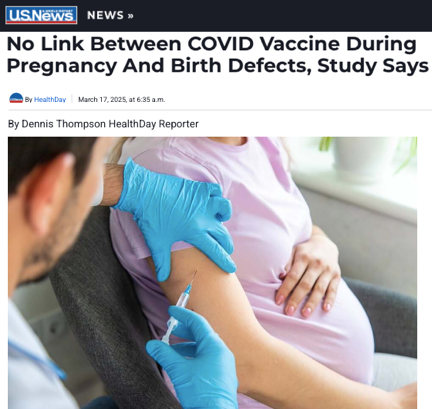
So, when a new study published in Pediatrics – the official journal of the American Academy of Pediatrics – claimed that Covid-19 vaccination in early pregnancy was safe, it came with an air of authority and reassurance.
News headlines followed suit, and public health recommendations continued to promote the vaccine’s safety in pregnancy.
But scratch the surface of this study, and something starts to unravel.
Not only are the data unverifiable and privately sourced, but the study contains a fatal flaw that renders its conclusions virtually meaningless.
The fatal flaw
The study analyzed 78,052 pregnancies that ended in a live birth—but left out 20,341 pregnancies that ended in miscarriage or other non-live outcomes.
That’s not a minor oversight.
The very purpose of studying vaccine safety in pregnancy is to assess whether exposure in utero leads to adverse outcomes—like miscarriage, birth defects, or foetal death. Yet one-fifth of the pregnancies were excluded from the analysis, removing exactly the kind of outcomes the study was supposed to detect.
This introduces what’s known as live-birth bias—a selection bias that arises when research includes only live births, disregarding the possibility that harmful effects may have caused some pregnancies to end prematurely.
Put plainly, if you only study babies who made it to birth, you’re ignoring the ones who didn’t—and any harm that may have played a role.
Even the study’s authors acknowledge this limitation, conceding that the exclusion “could lead to an underestimation of identified outcomes.” Still, they move forward to conclude there’s no association between the vaccine and birth defects.
Omitting over 20,000 pregnancies isn’t just a technicality – it’s a fatal flaw.
If even a small fraction of those pregnancies ended in miscarriage or birth defects linked to vaccination, the entire outcome could tip the other way.
Commercial data with no accountability
Then there’s the source of the data itself—a point entirely overlooked.
Rather than using clinical records from hospitals or national birth registries, the study relied entirely on a commercial database from Merative® MarketScan® Research Databases.
These databases are vast, aggregating de-identified insurance claims, prescriptions, lab results, and hospital records from more than 263 million Americans. But they are also privately owned, and their inner workings are entirely opaque.
Researchers using MarketScan data cannot verify whether the patients are real or theoretical, whether records have been altered, or how the data has been cleaned or processed before delivery.
In essence, they are working with a black box, one that comes with no guarantee of integrity.
Experts have already noted that the data from this unverified source shows signs of being unreliable.
The authors ran 93 separate statistical tests to look for differences in outcomes like birth defects. By chance alone, you’d expect a handful to be statistically significant. But none were.
The probability of that happening randomly is just 0.8%—a sign that the dataset may have been fabricated, or that its integrity is in question.
When two of the study authors – Dr Stacey Rowe and Dr Annette Regan – were asked if they had verified the authenticity of the MarketScan database—that is, if they could confirm these were ‘real’ patient data—they did not respond.
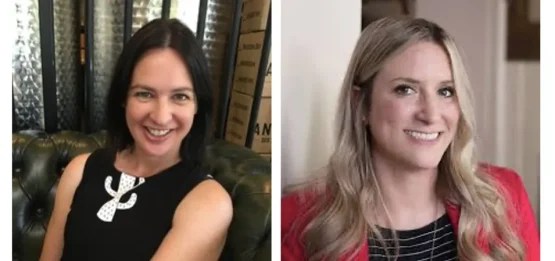
L: Dr Stacey Rowe, R: Dr Annette Regan
This isn’t a hypothetical problem.
The medical literature has already been rocked by the Surgisphere scandal, where fraudulent hospital datasets were used to produce papers in The Lancet and The New England Journal of Medicine.
Those papers were eventually retracted, but only after independent researchers demanded to see the raw data and were denied – the data were likely fabricated.
Reassurance without evidence
Despite these glaring problems, the study’s conclusions are being used to reassure pregnant women.
In Australia, for example, the government’s official guidance recommends Covid-19 vaccination in pregnancy, stating that the “recommendations for pregnant women are the same as the general population.”
This, despite the fact that pregnant women were excluded from the pivotal clinical trials and no randomised studies have ever been completed to assess the vaccine’s safety in early-pregnancy.
The result is a landscape where pregnant women are asked to make a “shared decision” with their doctors—based on scientific literature that’s increasingly built on unverifiable data, flawed assumptions, and little to no independent scrutiny.
We are drifting into a new era where conclusions are based on data that sit behind corporate firewalls. An era where trust is expected, but no longer earned.
The Pediatrics study is a case in point.
It carries the imprimatur of authority, published in the flagship journal of the American Academy of Pediatrics. But, in reality, the analysis was based on commercial datasets that cannot be independently verified, and a methodology that systematically excludes the very outcomes it was supposed to assess.
This isn’t just bad science—it’s misleading by design.
And when it comes to pregnancy, where the stakes are literally life and death, that kind of scientific chicanery is a betrayal.
Pregnant women deserve better than a “trust us” approach to medicine.
They need full access to the data, honest communication about uncertainties, and above all, respect for their right to make informed decisions based on real evidence, not selective reporting.
Until that happens, we should remain sceptical of any study that asks us to believe in the evidence without seeing it.
Did Head of CDC Vaccine Safety Office Delete COVID Vaccine Injury Records?
By Michael Nevradakis, Ph.D. | The Defender | April 11, 2025
A key official at the Centers for Disease Control and Prevention (CDC) responsible for monitoring vaccine safety and reports of vaccine injuries may have mishandled or deleted official records subpoenaed by Congress, Sen. Ron Johnson (R-Wis.) alleged earlier this week. The New York Post first reported the story on Thursday.
Dr. Tom Shimabukuro, director of the CDC Immunization Safety Office, maintained the records in question. Shimabukuro previously authored a key paper and participated in public messaging claiming the COVID-19 vaccines were safe and effective for pregnant women.
Johnson, chairman of the U.S. Senate Permanent Subcommittee on Investigations, requested the records in a subpoena sent in January to the U.S. Department of Health and Human Services (HHS). The subpoena pertained to an investigation into internal COVID-19 vaccine safety communications.
According to the New York Post, the subpoena led HHS to discover “potential discrepancies” in the emails maintained by Shimabukuro.
“HHS officials recently informed me that Dr. Shimabukuro’s records remain lost and, potentially, removed from HHS’s email system altogether,” Johnson wrote in a letter he sent earlier this week to U.S. Attorney General Pam Bondi, FBI Director Kash Patel and HHS Principal Deputy Inspector General Juliet Hodgkins.
Johnson called Shimabukuro’s possible mishandling of his official records “highly concerning.”
Journalist Paul D. Thacker, a former U.S. Senate investigator, said, “Every American should be concerned about government scientists deleting or hiding federal information to shape a political agenda. That information belongs to the taxpayers.”
Nebraska chiropractor Ben Tapper, whose questioning of the COVID-19 vaccines led the Center for Countering Digital Hate to add him in 2021 to its “Disinformation Dozen” list of the “leading online anti-vaxxers,” said he was “not surprised” by Johnson’s allegations.
“For years, I’ve seen patterns like this before regarding vaccine safety data. The public health establishment often prioritizes profits over people and continuously seems to protect the lies over the truth. The idea that critical records might vanish — whether through negligence or intent — fits a familiar playbook,” Tapper said.
California attorney Rick Jaffe said Johnson’s allegations are “troubling, but not surprising, given longstanding concerns about transparency at the CDC.”
In response to a Freedom of Information Act (FOIA) request last year, the CDC told Children’s Health Defense the agency has no records of certain internal email communications relating to the agency’s follow-up investigation of safety signals associated with COVID-19 vaccines.
HHS, CDC and Johnson’s office did not respond to requests for comment.
Missing records ‘could contain unfiltered insights’ into vaccine adverse events
Citing an unnamed aide from Johnson’s office, the New York Post said it is unclear which specific records are missing. But according to Johnson’s letter, Shimabukuro’s role included “monitoring adverse events relating to the COVID-19 vaccines.”
Tapper said Shimabukuro may have been “handling sensitive data on adverse events linked to the COVID-19 vaccines,” including data from the U.S. government-run Vaccine Adverse Event Reporting System (VAERS) and the V-safe database, as well as studies, raw data and internal communications on vaccine-related safety signals.
Tapper said:
“These records could contain unfiltered insights into side effects that were downplayed or unresolved during the pandemic. For example, I’ve seen cases in my practice where patients developed symptoms like persistent fatigue or heart palpitations post-vaccination, yet struggled to get clear answers from authorities.
“Missing records could hide similar signals, undermining efforts to validate patient experiences or refine vaccine protocols.”
Internal medicine physician Dr. Clayton J. Baker said, “Such records would likely be very damning to all CDC officials who perpetuated the false ‘safe and effective’ narrative about the COVID-19 vaccines from 2021 until the present.”
“Given how damning any evidence of ignored or falsified safety signals would be, I think it is highly likely that Biden-era officials might try to destroy such records if they could. Better to be accused of destruction of federal records than to be charged as an accessory to mass negligent homicide,” Baker said.
In an April 2023 presentation to the CDC Advisory Committee on Immunization Practices, Shimabukuro claimed that surveillance conducted by international regulatory and public health partners “has not detected a safety concern for ischemic stroke following bivalent COVID-19 mRNA booster vaccination.”
Yet, a peer-reviewed study published in November 2024 found that mRNA COVID-19 vaccines pose a 112,000% greater risk of brain clots and strokes than flu vaccines, and a 20,700% greater risk of those symptoms than all other vaccines combined. The study called for a global moratorium on mRNA vaccines.
In 2021, Shimabukuro was the lead author of a study in The New England Journal of Medicine (NEJM) on the safety of COVID-19 vaccines for pregnant women. The study concluded that “preliminary findings did not show obvious safety signals among pregnant persons who received mRNA Covid-19 vaccines.”
However, a peer-reviewed study published in 2022 showed that the authors of the NEJM study performed a “statistical sleight-of-hand” that substantially lowered the miscarriage rate in pregnant women, presenting it as 12.6% instead of 82%.
In a Substack post, epidemiologist Nicolas Hulscher said Shimabukuro’s “potential involvement in the deliberate manipulation of critical safety data on COVID-19 mRNA injections during pregnancy carries grave implications — resulting in immeasurable harm to mothers and their unborn children worldwide.”
Shimabukuro ‘may have violated multiple federal laws’
According to a press release from Johnson’s office, Shimabukuro’s actions, if proven to have occurred, “may have violated multiple federal laws.”
Those laws include the Federal Records Act, which requires federal employees to preserve materials “made or received by a Federal agency under Federal law or in connection with the transaction of public business,” the New York Post reported.
Johnson wrote that the destruction of records subpoenaed by Congress may also be “grounds for contempt of Congress,” which, according to the New York Post, is punishable by up to a six-figure fine and 12 months in prison.
Jaffe said Shimabukuro may also face other penalties. He said:
“Under federal law, he could be charged with obstruction of justice or destruction of official records — risking fines, restitution and up to 20 years in prison. His federal pension could also be garnished to satisfy any judgment against him.
“Beyond criminal penalties, he faces permanent disqualification from federal service and career-ending reputational harm.”
In addition, if records relating to vaccine-injured people are missing or destroyed, impairing their legal cases, “courts could impose evidentiary sanctions or presume the destroyed records were unfavorable to the government,” Jaffe said.
Johnson’s letter also referred to Dr. David Morens, an employee of the National Institute of Allergy and Infectious Diseases who was a close aide of the agency’s former director, Dr. Anthony Fauci. Morens allegedly deleted emails and instructed colleagues to contact him at a personal email account to sidestep FOIA rules.
In his letter, Johnson accused HHS of a “lack of transparency” and failure to investigate the allegations against Morens.
“I had always suspected that Dr. Morens was not the sole evader of federal record-keeping requirements at HHS,” Johnson wrote. “The extent to which HHS officials systemically mishandled, deleted, or destroyed their communications, data, and other information relating to the COVID-19 pandemic and the vaccines must be thoroughly investigated.”
Johnson’s letter asks the FBI, the U.S. Department of Justice and the HHS Inspector General’s Office to investigate the matter, including whether records were intentionally destroyed to “avoid or subvert Congressional oversight or the Freedom of Information Act.”
The letter builds on Johnson’s efforts to investigate COVID-19 vaccine safety.
Earlier this week, Johnson sent letters to the heads of four COVID-19 vaccine manufacturers, requesting they turn over records related to the development and safety of the COVID-19 vaccines and their communications with Big Tech platforms about vaccine-related adverse events.
In November 2024, Johnson wrote a letter to HHS, CDC and FDA, asking the agencies to “preserve all records referring or relating to the development, safety, and efficacy of the COVID-19 vaccines.”
In an October 2023 letter to the then-heads of CDC and FDA, Johnson accused the agencies of an “appalling” lack of transparency regarding COVID-19 vaccine safety signals, depriving Americans of “the benefit of informed consent.”
During the Biden administration, Johnson wrote over 70 letters to HHS officials and its health agencies requesting information on COVID-19 vaccine adverse events and related communications, according to a Jan. 29 press release.
Last year, Johnson hosted a congressional roundtable to discuss the risks of COVID-19 vaccines. Medical experts, political figures, journalists and whistleblowers were among the participants.
This article was originally published by The Defender — Children’s Health Defense’s News & Views Website under Creative Commons license CC BY-NC-ND 4.0. Please consider subscribing to The Defender or donating to Children’s Health Defense.
Leaked files reveal the Steele Dossier was discredited in 2017 — but sold to the public anyway
By Kit KLARENBERG | MintPress News | April 8, 2025
On March 25, Donald Trump signed an executive order declassifying all documentation related to Crossfire Hurricane, the FBI’s 2016 investigation into alleged collusion between Russia and then-presidential candidate Donald Trump. The order has unexpectedly resurrected buried documents that cast new light on the Steele dossier — and when it was known to be false.
It is unclear what new information will be revealed, given substantial previous declassifications, two special counsel investigations, multiple congressional inquiries, several civil lawsuits, and a scathing Justice Department internal review. It has long been confirmed the FBI relied heavily on Steele’s discredited dossier to secure warrants against Trump aide Carter Page, despite grave internal concerns about its origins and reliability, and Steele’s sole “subsource” for all its lurid allegations openly admitted in interviews with the Bureau he could offer no corroboration for any of the dossier’s claims.
Such inconvenient facts and damning disclosures were nonetheless concealed from the public for several years following the dossier’s January 2017 publication by BuzzFeed News, now defunct. In the intervening time, it became the central component of the Russiagate narrative, a conspiracy theory that was a major rallying point for countless mainstream journalists, pundits, public figures, Western intelligence officials, and elected lawmakers. In the process, Steele attained mythological status. For example, NBC News dubbed the former MI6 operative “a real-life James Bond.”
Primetime news networks dedicated countless hours to the topic, while leading media outlets invested enormous time, energy and money into verifying the dossier’s claims without success. Undeterred, legacy reporters relied on a roster of mainstream “Russia experts,” including prominent British and U.S. military and intelligence veterans, and briefings from anonymous officials to reinforce Steele’s credibility and the likely veracity of his dossier. As award-winning investigative journalist Aaron Maté told MintPress News :
Media outlets served as unquestioning stenographers for Steele. If his dossier’s claims themselves weren’t sufficient to dismiss it with ridicule, another obvious marker should have set off alarms. Reading the dossier chronologically, a clear pattern emerges – many of its most explosive claims are influenced by contemporary media reporting. For instance, it was only after Wikileaks published the DNC emails in July 2016 that the dossier mentioned them. This is just one example demonstrating the dossier’s true sources were overactive imaginations and mainstream news outlets.”
Even more damningly, leaked documents reviewed by MintPress News reveal that while Western journalists were hard at work attempting to validate Steele’s dossier and elevating the MI6 spy to wholly undeserved pillars of probity, the now-defunct private investigations firm GPW Group was, in early 2017, secretly unearthing vast amounts of damaging material that fatally undermined the dossier’s content, and comprehensively dismantling Steele’s previously unimpeachable public persona. It remains speculative what impact the firm’s findings might have had if they had been released publicly at the time.
‘Financial Incentives’
“In order to build a profile of Christopher Steele… as well as the broader operations of both Orbis Business Intelligence and Fusion GPS,” which commissioned the dossier on behalf of Hillary Clinton’s presidential campaign and the Democratic National Committee, GPW consulted “a variety of sources.” This included “U.S. intelligence figures,” various journalists, “private intelligence subcontractors” who had previously worked with Steele and Orbis, and “contacts who knew the man from his time with [MI6]…and, in one instance, directly oversaw his work.”
The picture that emerged of Steele sharply contrasted with his mainstream portrayal as a “superstar.” One operative who “acted as Steele’s manager when he began working with [MI6] and later supervised him at two further points” described him as “average, middle of the road,” stating he had never “shined” in any of his postings. Another suggested Steele’s founding of Orbis “was the source of some incredulity” within MI6 due to his underwhelming professional history and perceived lack of “commercial nous.”
Yet another suggested Steele’s production of the dossier reflected his lack of “big picture judgment.” Sources consulted by GPW were even more critical of Fusion GPS chief Glenn Simpson. One journalist described him as a “hack” without “a license or the contacts to do… actual investigations,” instead outsourcing “all” work ostensibly conducted by his firm to others while skimming commissions. They also “openly admitted” to disliking Simpson, described by GPW as “not an uncommon attitude amongst those to whom we spoke.”
GPW also scrutinized “credibility and perceptions of the dossier in Russia,” specifically whether Steele‘s claims that high-ranking Kremlin-linked sources in Moscow provided him with information had any merit. The firm consulted “Western and Russian journalists, former officials from the FSB and the Russian security services more broadly, a former high-ranking official at the CIA who oversaw the agency’s Russian operations, and several private-sector intelligence practitioners operating in Moscow” for this purpose:
The prevailing sentiment from our contacts was one of extreme skepticism as to the accuracy of… the [dossier]. Most found it unimaginable… senior Russian officials would risk life imprisonment (or worse) by speaking to a former foreign intelligence official about such sensitive issues. At the very least… it would have cost Steele a great deal more… than he could afford… Former intelligence operatives (from both the U.S. and Russian services) seriously doubted Steele would have been able to retain Russian sources from his time in MI6.”
GPW also examined “possible sources for the dossier” that had been hypothesized in the media to date. Among them was former FSB General Oleg Erovinkin, who was found dead in his car in Moscow in December 2016. After the dossier’s release, the Daily Telegraph suggested his death was “mysterious” and could have resulted from providing information to Steele. A former high-ranking official in U.S. intelligence mockingly dismissed the proposition, noting that career security and intelligence officer Erovinkin was “unlikely to have needed the money.”
While conceding that financial incentives could encourage such a breach… [if] Steele had offered Erovinkin £100,000, the mooted budget for the entire project, ‘Erovinkin would have said he needed to see three more zeros before opening his mouth. It’s just a ridiculous proposition to think he would speak to a former intelligence officer from the UK, or anyone else for that matter, for such a paltry sum of money.’”
Overall, GPW concluded: “The quality and level of the sourcing was greatly exaggerated in order to give the dossier and its allegations more credibility.” This impression was reinforced by “informed sources from both government and the private sector” in Russia who were “very dismissive” of the dossier’s content. Many pointed to “woeful inaccuracies” contained therein “and its author’s general lack of understanding around Russian politics and business.” This “deficiency was particularly acute with respect to the dossier’s coverage of Alfa Bank.”
‘Reputational Damage’
GPW’s investigation also proved prescient in other areas. For example, several knowledgeable sources the company consulted — including former senior Russian and U.S. intelligence officials — suggested the dossier’s “most likely sources” were Russian émigrés, “providing… their own views.” They also noted the Steele dossier’s “hyperbole and inaccuracies” were “typical of the hyperactive imaginations of the subcontractors widely used in the business intelligence sector.” This was not confirmed until July 2020.
That month, the Senate Judiciary Committee released notes taken by FBI agents during February 2017 interviews with Igor Danchenko, Steele’s “subsource” and the dossier’s effective author. A Washington think tank journeyman jailed years earlier on multiple public intoxication and disorderly conduct charges and investigated by the FBI for potentially serving as a Kremlin agent, Danchenko admitted he had been fed much of the dossier’s salacious content by his Russian drinking buddies, who lacked any high-level access. Steele then embroidered their dud information further.
Other striking passages in the leaks refer to a conversation between GPW and “a source from within the business intelligence sector in London [who] knows Christopher Steele well, both socially and professionally, and is familiar with his company.” They relayed various details and “commentary” gleaned “directly from speaking to Steele.” For example, they noted that contrary to its self-description as a “leading corporate intelligence consultancy,” Orbis was “not a major operation” and seemed to employ just two junior analysts “who looked like recent graduates.”
The source revealed that “other, larger firms in the sector were approached before Steele and turned the work down before he took it on,” and the dossier was his solo project. “The rest of the company wasn’t involved at all, either to help on the research side of things or to look through the product before it went out,” and “Steele basically collated the information himself.” They further suggested the dossier’s sources let their imaginations run wild, believing their claims would never see the light of day:
I think they got carried away — they didn’t think the material would ever be made public because at that point it was very unlikely that Trump was going to get into power…Steele was rather naive about the whole thing. He didn’t think that it would get exposed in the way it did.”
In other investigative briefs, GPW noted it was unusual that “Steele would have permitted (or indeed facilitated) the distribution of such questionable material under his name,” given the dossier’s apparent falsity. The firm postulated that “in sharing the material with U.S. government figures,” the former MI6 operative “may have thought he was currying favor with them by doing so,” but ultimately, “he never intended for the dossier to be made public in the manner it was.”
One possible answer to this question is found in a defamation case brought against Orbis by Petr Aven, Mikhail Fridman, and German Khan in Britain in May 2018. In July 2020, a British court ruled that the dossier’s allegations against them and Alfa Bank were “inaccurate and misleading,” awarding damages “for the loss of autonomy, distress and reputational damage.” During the trial, Steele made a notable disclosure:
Fusion’s immediate client was law firm Perkins Coie… it engaged Fusion to obtain information necessary for Perkins Coie to provide legal advice on the potential impact of Russian involvement on the legal validity of the outcome of the 2016 U.S. Presidential election. Based on that advice, parties such as the Democratic National Committee and [“Hillary for America”] could consider steps they would be legally entitled to take to challenge the validity of the outcome of that election.”
In essence, the dossier was commissioned by Clinton’s campaign as a contingency in the event she lost the election. However, as GPW’s source close to Steele noted, when the MI6 operative took on the work, the prevailing perception was that “it was very unlikely” Trump would win. As a result, Steele may have had the motivation to fill the dossier with unverified material, believing it would never be used for its intended purpose. He also had a commercial incentive to exaggerate his high-level access. A serving CIA official told GPW:
Steele was known to have been ‘up and down the alley’ pitching for business – a reference to the major defense firms, such as Lockheed Martin, which are located close to one another in Arlington, Virginia. She did not know which firms Steele had worked for in particular, if any, but he has visited several of them in person at their headquarters.”
A core mystery at the heart of the Steele dossier saga has never been satisfactorily resolved — one that Trump’s latest declassification order could help illuminate. In his December 2019 report on Crossfire Hurricane, Justice Department Inspector General Michael Horowitz criticized the FBI’s use of the dossier to obtain warrants against Carter Page but insisted Steele’s assorted claims “played no role” in the bureau opening its investigation of Trump’s campaign, reportedly on July 31, 2016.
As extensively documented by Aaron Maté, this claim is difficult to reconcile with the numerous contacts and meetings between Steele and senior FBI and Justice Department officials in the weeks leading up to that date. The former MI6 officer provided material that would later comprise the dossier to senior U.S. government officials, including Victoria Nuland, prior to the official opening of Crossfire Hurricane. Nuland reportedly encouraged the bureau to investigate the contents.
According to the FBI’s electronic communications that initiated Crossfire Hurricane, the probe’s founding predicate was a vague tip provided to the bureau by Australian diplomat Alexander Downer. He claimed that low-level Trump campaign staffer George Papadopoulos had “suggested” to him over drinks in London that “the Trump team had received some kind of suggestion [emphasis added] from Russia that it could assist… with the anonymous release of information during the campaign that would be damaging” to Clinton. The EC further acknowledged that “It was unclear whether he or the Russians were referring to material acquired publicly or through other means. It was also unclear how Mr. Trump’s team reacted to the offer.”
As Maté told MintPress News, this was an “extraordinarily thin basis upon which to investigate an entire presidential campaign.” He added that “upon officially opening Crossfire Hurricane, FBI officials immediately took investigative steps that mirrored the claims in the Steele dossier, even though they were supposedly unaware of it.” The FBI’s first probes into individual Trump campaign figures — Carter Page, Michael Flynn, and Paul Manafort — began in August 2016. All are mentioned in the dossier. Maté concludes:
To accept the official timeline, one has to stipulate that the FBI investigated a Presidential campaign, and then a President, based on a low-level volunteer having ‘suggested’ Trump’s campaign had received ‘some kind of suggestion’ of assistance from Russia. One would also have to accept that the Bureau was not influenced by the far more detailed claims of direct Trump-Russia connections – an alleged conspiracy that would form the heart of the investigation – advanced in the widely-circulating Steele dossier.”
Ukraine Could Be Sabotaging Agreements by Violating Moratorium with Strikes on Energy Facilities
Sputnik – 12.04.2025
MOSCOW – Kiev’s strikes on energy facilities are carried out either because there was no order to halt them or because the order was not followed, Director of the Second Department of CIS Countries of the Russian Foreign Ministry Alexey Polishchuk told Sputnik in an interview out on Saturday.
“This can be happening for two reasons. Either Kiev did not give the order to cease shelling, or the order is not being followed. Both of these reasons are extremely worrying,” Polishchuk said.
If there was no order given, then we are dealing with deliberate sabotage of agreements, Polishchuk also said.
“If it [the order] is not implemented, then the Kiev authorities are failing to control their own military,” Polishchuk added.
Russian President Vladimir Putin had a phone call with US President Donald Trump on March 18. Trump put forward a proposal for the parties to the conflict to mutually refrain from strikes on energy infrastructure facilities for 30 days. Putin supported this initiative. Later, Ukrainian President Volodymyr Zelenskyy said Ukraine would support the proposal to stop attacks on energy infrastructure.
Since the agreement on a 30-day moratorium on strikes against energy facilities was reached, Kiev has violated it more than 60 times, Alexey Polishchuk added.
“The Kiev regime is indeed maliciously violating the 30-day moratorium on strikes on energy facilities, which was agreed upon on March 18 by the presidents of Russia and the United States [Vladimir Putin and Donald Trump] and then supported by [Volodymyr] Zelenskyy,” Polishchuk said.
Gulf-backed genocide: How Arab monarchies fuel Israel’s war machine
By Mawadda Iskandar | The Cradle | April 10, 2025
The Persian Gulf states’ silence – and in many cases, complicity – during Israel’s ongoing war on Gaza has not come as a shock. These governments, long detached from the Palestinian struggle, have for years cultivated warm, if discreet, ties with Tel Aviv.
While Bahrain and the UAE made normalization of ties with Tel Aviv official through the US-brokered 2020 Abraham Accords, other states like Saudi Arabia and Qatar have played quieter but equally pivotal roles. Riyadh, often described as the architect behind normalization, and Doha, hiding behind its “mediator” label, have each aided the occupation state in crucial ways.
Though much of this assistance remains behind the scenes, it has been repeatedly acknowledged by US and Israeli officials. During his first term, US President Donald Trump once warned that “Israel would be in big trouble without Saudi Arabia,” while Israeli Prime Minister Benjamin Netanyahu has said that Arab leaders now view Israel “not as their enemy, but their greatest ally,” adding that they “want to see us defeat Hamas.”
Such statements offer a glimpse into the vast, opaque network of regional cooperation propping up the occupation state’s war machine.
Economic complicity
Despite overwhelming popular support throughout the Arab world for Palestine, and growing calls for grassroots boycotts, Persian Gulf–Israeli trade has only surged. The UAE now ranks as Israel’s top Arab trade partner, while Bahrain’s commerce with Tel Aviv spiked by a staggering 950 percent during the first 10 months of the Gaza war.
Even amid war and boycott efforts, “kosher-certified” goods from Arab countries continue to enter Israeli markets. UAE-based brands like Al Barakah Dates and Hunter Foods, along with Saudi Arabia’s Durra (a sugar supplier), have maintained trade channels.
Qatar has exported crude materials for plastics used in Israeli industries. Bahrain went so far as to officially recognize goods produced in illegal West Bank settlements as Israeli in origin.
More insidiously, Persian Gulf investments are directly fueling Israeli settlement expansion. Saudi Arabia, the UAE, and Qatar have funneled money into Avenue Partners, a firm chaired by Trump’s son-in-law Jared Kushner, who remains involved in advising the Trump administration from afar.
That money flows into Phoenix Holdings, which finances key banks involved in settlement construction – Leumi, Hapoalim, and Discount Bank – as well as telecom firms like Cellcom and Partner, and construction companies like Electra and Shapir, all of which operate inside occupied Palestinian territory.
When Yemen’s blockade disrupted shipping lanes for Israeli-linked cargo in the Red Sea, cutting off 70 percent of Tel Aviv’s food imports, it was the Persian Gulf states that rushed to patch the breach. The UAE created an overland logistics corridor from Dubai to Tel Aviv via Saudi Arabia and Jordan, and Bahrain repurposed its ports to serve as alternate shipping hubs for Israeli goods arriving from India and China.
Military ties beneath the surface
From the earliest days of Israel’s onslaught on Gaza, the UAE has doubled down on its strategic military relationship with the occupation state. In 2024, Balkan Insight revealed that a UAE-linked firm, Yugoimport-SDPR, exported $17.1 million worth of weapons to Israel via military aircraft directly involved in bombing Gaza.
But the arms trade is only part of this treacherous picture. The UAE’s state-owned defense giant EDGE holds shares in Israeli military contractors like Rafael and Israel Aerospace Industries (IAI), companies that retrofit Emirati planes into military freighters. Abu Dhabi has also welcomed offices from Israeli weapons manufacturers like Bayt Systems and Third Eye Systems, and proudly hosted 34 Israeli defense firms at IDEX 2025 – a major arms expo used to secure deals with the occupation army.
Though not formally normalized, Saudi Arabia is militarizing its ties with Israel through indirect channels. One method: purchasing Israeli systems like the TOW missile through US-based subsidiaries of Elbit Systems. Another: acquiring surveillance drones from South Africa, which are disassembled and reassembled in the kingdom to mask their Israeli origins.
A recent anti-drone system – suspected to be designed by Israeli firm RADA – was spotted at the Royal Saudi Air Defense base in Tabuk, near King Faisal Air Base.
Meanwhile, Qatar has quietly boosted its military coordination with Tel Aviv. Doha continues to source spare parts for tanks, armored vehicles, and aerial tankers from Israeli suppliers, and its military has participated in joint drills involving Israel and other Persian Gulf states – including exercises in Greece held just over a week ago.
Logistical lifelines to Tel Aviv
Beyond military and economic ties, Persian Gulf states have facilitated the flow of weapons to Israel through logistical support channels. As the US ramped up its “unprecedented airlift” of tens of thousands of missiles, munitions, and Iron Dome components, the Gulf’s airspace and bases became critical.
US arms shipments passed through Saudi Arabia, Bahrain, Jordan, and especially Qatar, where the Al-Udeid Air Base – home to US Central Command – served as a hub for at least 18 documented transfers. Several were routed through Cyprus to avoid direct flight tracking.
In the UAE, Dubai International Airport became a waypoint for Israeli reservists flying in from Asia. Coordinated through the Israeli consulate in Dubai, these flights funneled soldiers into the war in Gaza. Emirati authorities also arranged leisure retreats for Israeli troops between deployments and allowed Jewish organizations in Dubai to send care packages to the occupation military.
Pipeline diplomacy and energy normalization
Earlier this month, as Trump prepared to visit Saudi Arabia seeking investment in US infrastructure, Israeli Energy Minister Eli Cohen unveiled plans for a regional oil pipeline stretching from Ashkelon to Saudi Arabia via Eilat.
The project falls under the India-Middle East-Europe Economic Corridor (IMEC), a US-backed alternative to China’s Belt and Road Initiative (BRI), with links running through the UAE, Jordan, and occupied Palestinian lands.
In a related move, Nasser bin Hamad Al Khalifa – son of the Bahraini king and chair of Bapco Energy – announced the sale of a pipeline stake to BlackRock, the US investment giant notorious for its financial ties to Israeli settlements. This deal cannot be separated from the broader normalization agenda.
Spycraft and surveillance
In one of the clearest signs of deepening security cooperation, Axios revealed a secret 2024 meeting in Bahrain between Israeli army chief Herzi Halevi and senior military officials from Bahrain, Saudi Arabia, the UAE, Jordan, and Egypt.
Overseen by US Central Command, the summit focused on countering Iranian retaliation and disrupting weapons flows to Gaza from resistance forces in Iraq and Yemen – operations that often transit through Persian Gulf-controlled airspace.
Bahrain’s role was particularly overt: Nasser bin Hamad openly declared his country’s commitment to disrupting Iranian response operations in coordination with the US Fifth Fleet stationed in Manama. Analysts now speculate that Tel Aviv could be granted permanent naval access to strategic Gulf waters.
This growing security convergence has also opened the door for Israeli tech to penetrate Persian Gulf infrastructure. Bahrain now relies on Israeli firms for anti-drone systems, satellite surveillance, and cybersecurity. One notable collaboration involves Bahraini company Crescent Technologies and Israeli cyber defense powerhouse CyberArk.
The UAE is pushing the envelope even further. Emirati firms have signed deals with XM Cyber – co-founded by a former Mossad chief – to secure national energy infrastructure. XM Cyber works in tandem with Rafael and other elite Israeli military firms as part of a consortium targeting sensitive Gulf markets, including oil, energy, and data. Meanwhile, Orpak Systems, another Israeli company, has quietly entered Arab oil sectors under nondescript branding to avoid detection.
Despite their public posturing and periodic statements of support for Palestine, the Persian Gulf states have quietly entrenched themselves in Tel Aviv’s war effort. Through investment flows, arms deals, intelligence cooperation, and energy infrastructure, they have become vital enablers of the genocide in Gaza.
This alliance – crafted in backrooms and sealed with economic interests – has allowed Israel to prosecute its war on Gaza with Gulf assistance at every logistical and financial juncture.
Far from being passive actors, these states are now active partners in a conflict that has devastated an entire people.
US-Funded “Anti-Misinformation” Groups Are Still Quietly Active
By Didi Rankovic | Reclaim The Net | April 9, 2025
Despite the big and open push that came in with the new US administration to end the practice of the government funding third-party groups to effectively act as its censorship proxies – some of these arrangements continue to be operational.
Most appear to be working to strengthen previously established “preferred” narratives around health issues – as ever, with “combating misinformation” given as the declarative, overarching purpose behind the effort.
But critics say, that was/remains a smokescreen meant to manipulate public opinion.
The Federalist reports that the National Science Foundation (NSF) – one of the US government’s “independent agencies” designed to channel federal funds – had a number of programs under its “anti-misinformation” umbrella, the Convergence Accelerator.
Among the ones who continue to this day are Chime In, Analysis and Response Toolkit for Trust (ARTT), and Expert Voices Together (EVT).
Chime In’s original name was Course Correct. It was set up at the University of Wisconsin-Madison – with $5 million coming from NSF in 2022 – to provide “anti-misinformation” resources for journalists.
True to the era, its original “mission” was to persuade (Covid) vaccine skeptics to take the jab; and then it went into advocating (“misinformation detecting”) in favor of persuading people there was no reason to be skeptical about genetically modified (GMO) foods, Covid narratives, and vaccines in general, as well as issues like sunscreen product and raw milk safety.
ARTT, meanwhile, came up with its own “AI” chatbot, that focused on political discourse, but according to the Federalist, once again, heavily tied to vaccine hesitancy.
From 2021, ARTT received close to $750,000 from the NSF, and a further $5 million, “to develop practical interventions to build trust and address vaccine hesitancy.”
Another controversial tie-in concerning ARTT was the organization’s plans to partner with, among others, the Children’s Hospital of Philadelphia, which the article describes as being “infamous for performing transgender surgeries on, and administering opposite-sex hormones to minors.”
ARTT – now operating as Discourse Labs, a non-profit – was, while one of the groups incubated by NSF’s Convergence Accelerator, backed up by the World Economic Forum (WEF), Wikimedia Foundation, Google, Mozilla, and Meta.
EVT’s “new home” as of 2025 is “the leftist group Right To Be,” the report says.
Some of the issues covered by this group are named, “Bystander Intervention To Support The LGBTQIA+ Community,” “Conflict De-Escalation In Protest Spaces,” and “Bystander Intervention To Stop Police Sponsored Violence and Anti-Black Racism.”
But the Federalist reported earlier that, “a representative from Right To Be” previously told the site EVT “remains under the direction of George Washington University (and) direct inquiries there.”
Schrödinger’s novichok: 12 points from the Dawn Sturgess inquiry, part 3
By Tim Norman | Propaganda In Focus | March 3, 2025
What happens when official evidence about a nerve agent death exists in impossible dual states? Part three of a three-part report on the Dawn Sturgess case examines elements simultaneously exceptional yet inadequate, visible yet hidden, cautious yet careless.
A note on sources: Links presented in bold go to specific timestamps in videos from the YouTube feed of the Dawn Sturgess inquiry. Links that are not in bold are to supporting mainstream sources.
Part 2 of this investigation revealed how key testimony and scientific evidence maintained striking contradictions: simultaneously present yet absent. Part 3 examines how this dual state extends to the heart of the inquiry and beyond.
Point 9. The tests that couldn’t be tested
After Dawn Sturgess and Charlie Rowley separately collapsed at Rowley’s Amesbury flat on 30 June, it was four days before DSTL Porton Down publicly announced that they had both been poisoned by novichok — and it was another week before the fake perfume bottle that was apparently the source of the novichok was discovered in the kitchen of the flat on 11 July 2018.
During this time there was speculation in the media that the poison they had been exposed to could have been from the exact same source, or batch, as that allegedly used to contaminate Sergei Skripal’s front door in Salisbury four months previously. More than the fact that the poison in both cases was said to be novichok, the question was whether or not the novichok in both incidents could be shown to have been produced at the same time and the same place.
Linking the substances at Salisbury and Amesbury in this way — by establishing if they had the same “chemical signature” in the minute impurities that would have been introduced when the poison was manufactured, or precursor chemicals were combined — would be hugely significant for the investigation. It would provide a clear connection between the two incidents, and connect the poison in the Amesbury perfume bottle to the Salisbury incident even if the bottle that turned up in Amesbury had not actually been used to contaminate Skripal’s door.
On 4 July, DSTL Porton Down announced that its analysis of samples taken from Dawn and Charlie showed they had both been exposed to novichok. In an article about this development on 5 July, the BBC reported its security correspondent Gordon Corera as saying “the most likely hypothesis [is] that the Novichok was left over from the attack on the Skripals”.
“Metropolitan Police Assistant Commissioner Neil Basu said [the police] could not confirm whether the nerve agent came from the same batch but the possibility was ‘clearly a line of inquiry’,” the BBC article stated.
Also on 5 July, the science correspondent for The Guardian Hannah Devlin published an article headlined “How likely is it that Amesbury novichok is from Skripal batch?”, where she speculated that it might be possible to link the two substances through chemical analysis, if the Amesbury substance was found in some kind of container and had not degraded.
“The latest novichok case raises the question of whether… Dawn Sturgess and Charlie Rowley were exposed to the same source of the nerve agent that poisoned… Sergei Skripal and his daughter Yulia in March,” Devlin wrote. “There has been no official comment on this question, but it is scientifically plausible that the agent might persist for long enough, particularly if it was contained in some way.”
Devlin goes on to cite Alistair Hay, the professor of toxicology we will remember from Part 1 with regard to his answer to the question of just how deadly novichok is supposed to be. Hay claims that Sergei and Yulia were unconscious in Salisbury hospital for a long time because the nerve agent takes a long time to break down in the body — but, as we now know, Yulia at least was not unconscious for a very long time, and was found by the hospital’s intensive care consultant Dr Cockroft to be “neurologically intact” when she woke up just four days after her alleged exposure to it.
Devlin also quotes Andrea Sella, a professor of inorganic chemistry at University College London. Her article in The Guardian continues:
“‘How long [novichok takes] to degrade is certainly not data that is publicly available, but from discussions with people at Porton Down, I understand they are slow to degrade,’ said Alastair Hay, an environmental toxicologist at the University of Leeds. “This is one of the reasons the Skripals were unconscious for so long — it doesn’t break down readily in the body.’”
“Access to a bulk sample would give scientists far more information than what they have been able to ascertain so far from blood samples from the Skripals and trace samples from their front door.
“‘There’s the feeling that there’s a little crock of forensic gold out there,’ Andrea Sella said. ‘That would give them a real chemical fingerprint which would give you far more information.’”
After the fake perfume bottle turned up in the Amesbury flat, Chemistry World, the magazine of the Royal Society of Chemistry, published an article with the headline “Novichok poisoning breakthrough as original container found” on 18 July. In the article, Prof Sella was quoted again.
“Now that police have identified the bottle that was handled by the two latest victims they will be working to test whether the Novichok is from the same batch that poisoned the Skripals,” the Chemistry World article said.
“[Andrea] Sella says finding the bottle was a ‘major breakthrough’ in the investigation,” the article continues. “‘The discovery is a forensic gold mine,’ [Sella said]. ‘Not only is having a significant quantity of sample a real treasure trove to make detailed investigations of the sample, the bottle itself is likely to provide significant clues about its provenance.’”
On 13 July, two days after the bottle appeared, Stephen Morris of The Guardian emphasised the political significance of the analytical work that was being carried out on its contents. “Chemical weapons experts at Porton Down were testing the substance to see if it was from the same batch as used in Britain four months earlier — a finding that carries huge diplomatic implications,” he wrote.
An OPCW team was summoned to the UK again and stayed from 15–18 July 2018 to provide “technical assistance”. They were asked to re-test the samples taken from Sturgess and Rowley and once again confirm DTSL Porton Down’s discovery of the presence of novichok, which they duly did.
But curiously the OPCW team wasn’t given access to the bottle that had apparently been found in Rowley’s flat just four days before they arrived. The OPCW had to make yet another visit to the UK almost a month later, on 13 August, to get samples from that.
Despite the anticipation of defence and science correspondents in the media and Andrea Sella’s prediction that the Amesbury bottle would be a treasure trove of information, it wasn’t.
When the OPCW published its report on 4 September 2018, it said that the results of the comparative analysis it had made between the contents of the Amesbury bottle and the samples it had previously taken in Salisbury were inconclusive.
“Due to the unknown storage conditions of the small bottle found in the house of Mr Rowley and the fact that the environmental samples analysed in relation to the poisoning of Sergei and Yulia Skripal… were exposed to the environment and moisture, the impurity profiles of the samples available to the OPCW do not make it possible to draw conclusions as to whether the samples are from the same synthesis batch,” the OPCW said.
The UK’s leading political representatives appeared to ignore the OPCW’s disappointingly inconclusive report, and in fact seemed to misrepresent its results. Their advisers had perhaps decided that the determination novichok was supposedly present at both Salisbury and Amesbury was sufficient to suggest to the world at large that OPCW analysis had showed both occurrences were from the “exact same” batch: but that was an extraordinarily deceptive phrase to use.
The UK prime minister at the time, Theresa May, made a statement to members of parliament on 5 September claiming that “[y]esterday’s report from the Organisation for the Prohibition of Chemical Weapons, has confirmed that the exact same chemical nerve agent was used in both [the Salisbury and Amesbury] cases.”
A very similar statement was made to the United Nations on 7 September by Karen Pierce, then the UK’s ambassador to the UN. “The OPCW independent experts have confirmed the identifications as Novichok nerve agent, and it is the exact same chemical that was used in both attacks,” she said. “It stretches credulity the identification of such nerve agent twice in close proximity to be a coincidence.”
Perhaps May and Pierce were being told what to say, and did not know their emphatic statements made on domestic and international stages were not statements that the OPCW’s analysis of the Amesbury bottle’s contents supported.
To anyone who had been paying attention, however, the inconclusive nature of the report was impossible to fully obfuscate or avoid.
Chemistry World published an article on 6 September imprecisely headlined “Nerve agent confirmed as identical in both UK poisonings as key suspects identified” but, in the body of the article, it accurately reported that “[i]mpurities in the nerve agent samples taken from the Skripals and the unknown storage conditions of the bottle… made it difficult for the OPCW to conclude whether the two nerve agents originated from the same batch.
“Consequently, the agency was not able to conclude from its chemical analysis that both poisonings were definitely caused by the nerve agent discovered in the counterfeit perfume bottle,” the article said.
This seemed to be the end of the road for the prospect of conclusively linking the substances allegedly found in Salisbury and Amesbury through batch analysis, because the laboratories that the OPCW uses to conduct analysis of this kind — a process that typically involves multiple laboratories in different countries testing splits of the same samples, with the laboratories assigned these tasks kept secret from the public and from one another — are among the best staffed and equipped in the world.
The OPCW carries out such secret, multiple-blinded testing using selected “designated laboratories” — of which DSTL Porton Down is the UK’s only one. There are only around 30 laboratories in the world that have achieved OPCW designation, which is awarded after a rigorous process of proficiency testing that must be repeated yearly if a laboratory is to retain its accreditation by the chemical weapons watchdog.
DSTL Porton Down was of course not used by the OPCW to re-test the Salisbury and Amesbury samples, because it was the UK laboratory’s findings that the OPCW had been called in to reproduce and confirm.
As part of OPCW proficiency testing, laboratories that are seeking to achieve or maintain their position as a designated laboratory are given 15 calendar days to report results on test samples that are provided to them by the OPCW, with “identification of target compounds… ideally… based on at least two different analytical techniques”.
These would include the extremely sensitive mass spectrometry techniques we have discussed in part 2 with reference to the novichok traces that were supposedly found in the London hotel where the two Russian secret agents stayed.
This two-week turnaround, which OPCW designated laboratories are also expected to achieve in real testing scenarios such as the Salisbury and Amesbury cases, is only part of the exhaustive proficiency testing that laboratories are required to pass to achieve or maintain their designated status.
In short: from the point of view of the UK’s investigation into the novichok poisonings, if a set of OPCW designated laboratories around the world could not conclusively establish that the Salisbury and Amesbury samples were from the same batch, no scientific establishment would be able to do so.
However, the Dawn Sturgess inquiry heard that DSTL Porton Down seemingly did not give up its analytical efforts in this regard after the OPCW issued its inconclusive report in September, and eventually achieved something remarkable.
In an extraordinary revelation that received almost no attention, the inquiry was told that DSTL Porton Down had in fact eventually succeeded in doing what no other OPCW designated laboratory had been able to do. It took some time, but the scientists at DSTL Porton Down were apparently able to finally find Sella’s “crock of forensic gold” when every other OPCW laboratory that had been asked to do so had failed.
The inquiry heard that DSTL Porton Down was able to do this because 15 days is insufficient for OPCW designated laboratories to do the kind of chemical analysis that scientists such as the anonymous expert ‘MK26’, the lead DSTL scientific advisor to the police investigations, and his colleagues had been able carry out.
It had taken more than 15 days for DSTL Porton Down there to achieve the breakthrough that defence and scientific correspondents in the media had been looking forward to six years earlier — although exactly how much more time the scientists there had needed to make their incredible discovery was not disclosed.
“Detailed analytical work has been undertaken to determine whether the material recovered from the handle of the Skripal home at Christie Miller Road is from the same batch of the specific Novichok as that recovered from the perfume bottle at Muggleton Road,” ‘MK26’ wrote in a statement to the inquiry that was prepared in July 2024 and signed in October 2024 (p24, par 48).
“This work has concluded that it is highly likely that not only is the identity of the chemical agent found on the door handle at Christie Miller Road and within the perfume bottle recovered from 9 Muggleton Road identical, but that the Novichok at both locations is from the same batch of Novichok prepared at the time, from the same pre-cursor chemicals,” the statement continues.
“Given my opinion that the material recovered from the door handle at 47 Christie Miller Road and the liquid recovered from the bottle found at 9 Muggleton Road are highly likely to have come from the same batch of Novichok, and the volume of material recovered in the perfume bottle, it is my opinion that it is a realistic possibility that the bottle recovered from 9 Muggleton Road was used to apply the material to the door handle of the Skripal property at 47 Christie Miller Road.
“However, given the scientific evidence available to me, it is not possible to exclude the possibility that a second bottle of the same batch of Novichok was used in the attack on the Skripals, and that the bottle found at 9 Muggleton Road was a second bottle which was then discarded.”
We have discussed in Part 1 the “volume of material recovered” from the bottle with reference to Lisa Giovannetti KC’s superficial approach to the evidence — when she ignored the fact Rowley supposedly spilled some of the liquid on his hands — and we also observed there how the idea of the Amesbury bottle being a “second bottle” that was unused and discarded is merely a suggestion that maintains a narrative, without any evidence to support it.
But what is far more significant from the statement ‘MK26’ submitted to the inquiry is their claim that DSTL Porton Down had found that “the Novichok at both locations [was highly likely] from the same batch of Novichok prepared at the time, from the same pre-cursor chemicals” — and Giovannetti picked up on this critical point in her closing statement to Lord Hughes, calling it a “safe” conclusion.
“As to [the] scientific evidence, as a result of detailed analytical work, we say you can safely conclude that the Novichok recovered from the door handle of the Skripal home at Christie Miller Road is not just the same kind, but from the same batch as that recovered from the perfume bottle at Muggleton Road,” Giovannetti said.
“[It was] made in a single synthesis, from the same precursor compounds at the same time — and that’s a key finding.”
It was indeed a key finding: an extremely important discovery with “huge diplomatic implications” as Stephen Morris of The Guardian said it would have six years previously.
It was a finding that should have been declared to and validated by the OPCW and widely reported by the media and the UK’s political representatives.
But it appears the opposite was the case. The inquiry heard that how the scientists at DSTL Porton Down achieved their extraordinary breakthrough was a secret that could not be discussed in open session, with no suggestion that the OPCW had been involved to validate their results.
‘MK26’ was asked about DSTL Porton Down’s remarkable achievement — and his account of it in his written statement — when he gave personal testimony to the inquiry (Day 16, p178).
“You say: ‘Detailed analytical work has been undertaken to determine whether the material recovered from the door handle of the Skripal home at Christie Miller Road is from the same batch of the specific Novichok as that recovered from the perfume bottle at 9 Muggleton Road’,” lead counsel O’Connor says to ‘MK26’, asking: “I think we probably all know what we mean by the same batch, but perhaps you can explain exactly what you mean.”
“My interpretation, or my meaning from the same batch, is that it was from a single synthesis of that Novichok made from the same pre-cursor compounds at the same time,” ‘MK26’ replies, continuing:
“[It is highly likely] that not only is the identity of the chemical agent found on the door handle at Christie Miller Road and within the perfume bottle recovered from 9 Muggleton Road identical, but that the Novichok at both locations is from the same batch of Novichok prepared at the same time, from the same precursor chemicals.”
“Are you able to go any further in open [session] in explaining your reasoning?” O’Connor asks.
“Very little,” ‘MK26’ replies. “I guess what I would add is that the OPCW process requires the laboratories that receive the samples to report within a fixed period of time and… the high levels of purity of the sample mean that in order to look at batch matching, what we’re talking about is analysis of those very low-level impurities.
“That takes a substantial amount of time and… that’s probably all I can say as to why we were able to reach a conclusion that the OPCW was not. I’m happy to provide more detail in closed [session].”
“I’m certainly not going to press you to provide any more detail,” O’Connor says. “But I think it follows from what you have said… [that] your positive conclusion about the same batch is one… that you’re quite comfortable with [despite] the fact that the OPCW was unable to reach a conclusion?”
“Yes,” ‘MK26’ replies.
The implications of what ‘MK26’ is confirming here are profound. He is apparently saying that the strict 15 day turnaround that the OPCW demands from its designated laboratories is in effect a flaw in the chemical weapons watchdog’s protocols and procedures.
Although this requirement is intended by the OPCW to establish the operational efficiency and reliability of designated laboratories and allow for timely decisions to be made relating to chemical weapons incidents, in cases like Amesbury and Salisbury it appears more time is needed — and DSTL Porton Down, operating independently outside of the restrictions imposed on OPCW designated laboratories, was somehow able to achieve what such laboratories could not.
The OPCW, of course, carries out testing with strict secrecy and there is no reason why DSTL Porton Down would not have been able to report its findings to the OPCW and have its results fully validated and reproduced by other designated OPCW laboratories. This would seem to be imperative, given that these laboratories had collectively failed to achieve any kind of definitive result in their initial analyses of the Amesbury and Salisbury samples in 2018.
But there is no suggestion that anything like this was done. As with the supposed discovery of novichok in the hotel where the two Russian secret agents stayed, scientific principles such as validation and reproduction do not appear to have been required — and do not even appear to have been possible.
Once again the inquiry was asked to accept the authority of DSTL Porton Down and the opinion of ‘MK26’ on the basis of their supposedly expert scientific credentials — rather than the exercise of the scientific method itself — when it came to the batch analysis of novichok.
DSTL Porton Down, it seems, is simply better at chemical weapons analysis than any other OPCW designated laboratory in the world.
But what of the person allegedly targeted by this chemical weapon — the person whose apparent attempted assassination seemingly led to the death of Dawn Sturgess and the inquiry that eventually followed?
Where was Sergei Skripal in all of this and what did he have to say?
Point 10. Skripal trusted Putin but didn’t trust him
Although he was the principal figure in the events apparently leading directly to the death of Dawn Sturgess, Sergei Skripal was not required to give testimony in person before the inquiry — not even in secret, closed session via secure video link from a safe house somewhere.
Unlike his daughter, there was no public statement to camera from Sergei after he was discharged from hospital. He simply disappeared from view, and has never been seen since.
Until the inquiry, there had not even been a written statement released in Skripal’s name about what had supposedly happened to him in Salisbury on 4 March 2018.
Sergei and Yulia did not give personal testimony to the inquiry because Lord Hughes ruled before the proceedings began that any kind of appearance from them would expose them to further risk of assassination by Russian secret agents: a risk that the UK authorities had apparently not taken seriously or even acknowledged before the Salisbury events.
This risk was apparently manageable from the UK authorities’ point of view when Yulia made her public appearance in May 2018 — but now, six years later, the supposed danger was deemed too severe for her or her father to appear before the inquiry in any way.
“[You concluded that] the risk of physical attack by whomever it might be on one or both of them… clearly outweighed the advantage to the Inquiry of [the Skripals] attending to give oral evidence,” lead counsel O’Connor said on the first day of the hearings (Day 1, p23)
Michael Mansfield KC, representing the family, developed this point in his opening remarks.
“It is notable that the Skripals are not being called to give evidence in this inquiry primarily… because the risk is too great that their identities and locations could be discoverable,” Mansfield told Lord Hughes (Day 1, p118). “[This] risk [is] said to be the same as the attack in Salisbury. If so, why was a similar precautionary approach not adopted by the authorities [in 2011, when Skripal arrived in Salisbury] in the way that you have?”
This is the question that the inquiry was nominally set up to answer. Points arising from the novichok narrative such as those we have looked at in the three parts of this article were — as we have seen — largely incidental to the inquiry, however significant they may or may not appear to have been to the reader. For the inquiry, the established narrative was never in doubt.
Rather, what Mansfield and the Sturgess family wanted to know from the inquiry was why precautions were not initially taken to protect Sergei from potential reprisal attacks. Why had UK intelligence not considered Sergei to be at risk of assassination by the Russian state in retribution for his betrayal of his country as a double agent in the 1990s, after he arrived in Salisbury?
Sergei had served several years in a Russian prison after being caught and convicted of high treason and espionage in 2006. He was released in 2010 as part of a spy swap between Russia and the United States, and had received a presidential pardon before being exiled to the UK — but it was implicit in the inquiry’s proceedings that none of this really meant anything.
From the inquiry’s point of view, Russian President Putin was notorious for his jealous, irrational determination to exact retribution on traitors, wherever they may be and however much time may have elapsed since their apparent crimes, and he was capable of ordering their assassination at any time — even at times when this was particularly detrimental to Russia’s efforts to present itself positively on the world stage.
We will look at the idea of President Putin’s “bad character” again at the end of this article.
The inquiry also heard that Sergei had apparently “re-entered the game” following the spy swap that brought him to Salisbury, and was actively supplying information of some kind about Russia to Western intelligence services (Day 24, p16) at the time of the alleged assassination attempt against him. This was apparently the primary reason for the attack, although what useful intelligence Skripal could possibly still have almost 15 years after he was exposed as a double agent and arrested in Russia is not clear.
From the Sturgess family’s point of view, precautions taken by the UK state to protect Sergei would, by extension, have been precautions that protected people like Dawn from the risk a Russian traitor living openly in Salisbury presented to the local community, given that it was now generally understood he could have been attacked by the Russian state at any time.
The question of the precautions that should have been taken by the UK state to protect Sergei extended to the question of how much danger he personally felt he was in living in Salisbury, and what precautions he felt were reasonable or necessary to have taken himself.
To address these concerns Sergei apparently provided a statement to the inquiry, breaking his public silence of more than six years — but the written testimony he gave was strangely contradictory when it came to the question of his own protection or that of his family. In keeping with the theme we have explored through this article, he was apparently concerned and simultaneously quite unconcerned by the danger he may have been in.
It is worth noting here that Sergei’s statement, seemingly made in October 2024, was presented to the inquiry unsigned and undated, which generally speaking would make it inadmissible in UK law. Yulia similarly apparently submitted an unsigned and undated statement.
But we will leave the implications of this to one side, as the inquiry seems to have done.
On the one hand, Skripal was apparently worried about potential reprisals against him by the Russian state, and recalled that he had apparently told his friends in Salisbury that he knew Russian leader Putin “personally” and Putin would “get him” (p5, par 16). In his police interviews in 2018 he apparently even said he was “a very important man of special services. Still now I know a lot of Russian secrets, top secrets. They are really dangerous for Russian special services”. (Day 1, p77).
But on the other hand, Skripal was seemingly not prepared to take even the most basic and obvious steps to protect himself or his family in terms of the way he lived his life in Salisbury, as Mansfield pointed out.
“Mr Skripal suggests [in his statement] that he was offered a change of name but was never told this was needed,” Mansfield told the inquiry (Day 1, p115). “[He] was living openly with his family in the United Kingdom under his own name in a Salisbury cul de sac. Why? Why was he not given a different identity at an unknown and varied location?
“Mr Skripal’s address was alarmingly accessible to the GRU’s assassins. Why? Why was he not accommodated in a gated estate or at least within an apartment block requiring an entry code and appropriate security? […] There is no evidence that his property was equipped with… sensor cameras, CCTV. [R]eading the interviews that [was because] he didn’t want to make himself conspicuous. He is living under his own name.
“None of this makes sense for the authorities to have allowed this to develop in the way that it did. These are the most basic of protective measures. In their absence, GRU agents simply walked up to his front door, applied a deadly nerve agent to the handle… and left. The most rudimentary home security monitoring would have identified them.”
Mansfield was right to say Skripal’s reasons for refusing to have CCTV installed at Christie Miller Road did not make sense. And while a Russian presidential pardon may not have carried any weight as far as the inquiry was concerned, from Skripal’s point of view at least the implicit protocol of the spy swap that brought him to the UK was seemingly meaningful.
“I do not remember concretely what was covered in discussions about my personal security arrangements, but I believe I was offered protection, including changing my name,” Sergei’s statement reads (p7, par 27). “It was never suggested that this was a necessary option and I decided against it.
“I had received a Presidential pardon from the Russian state and wanted to lead as normal a life as possible, including maintaining my personal and family relationships. I did not think, and it was not suggested, that I needed to live in a gated community or a block of flats. Christie Miller Road was a quiet street built for police officers. Several neighbours were ex-police. Residents knew and kept an eye out for each other. I felt quite safe there.
“I did not have a house security alarm or sensor activated security lights and I do not remember either of these being raised with me. CCTV was recommended but I declined this because I did not want to make my house conspicuous or live under surveillance.”
Sergei’s remark that he felt CCTV would make his house conspicuous is particularly notable. By 2018 domestic CCTV systems were commonplace and unremarkable in the UK, so this was a very strange rationale.
To briefly illustrate this point: the inquiry heard testimony from Ross and Maureen Cassidy, residents of Salisbury who became close friends of Sergei’s, and whose son Russell did maintenance work on Sergei’s home.
The Cassidys drove Sergei to Heathrow airport to collect Yulia on Saturday 3 March, the day before the alleged poisoning. They then drove them both back to Salisbury, arriving at around 6pm — a time Maureen Cassidy stated that she had established “because I… checked my son Russell’s CCTV footage after we became aware of what had happened” (unsigned statement, p10).
This shows how common domestic CCTV systems were at the time — and Russell Cassidy can hardly have believed himself to be at personal risk in the way a retired Russian double agent like Skripal should surely have considered a possibility.
There is another perspective on Sergei’s security arrangements that his journey with the Cassidys to Heathrow to collect Yulia reveals.
As we know, the two Russian secret agents who supposedly contaminated Skripal’s front door handle with novichok on Sunday 4 March also visited Salisbury on the afternoon of the day before, and Commander Murphy of the Metropolitan Police Counter-Terrorism Command told the inquiry that he believed this was for the purposes of reconnaissance.
But O’Connor suggested to him that the secret agents had chosen Saturday afternoon because they were monitoring Skripal’s communications, and knew that he was going to be out of the house at the time.
“If on your assessment it was a reconnaissance visit, then it would have been convenient, or less risky to do so when there was no danger of Sergei Skripal leaving or arriving at the house, or looking out of the window, or anything like that?” O’Connor asks Murphy (Day 19, p133).
“Entirely fair, yes,” Murphy replies.
“We have heard evidence… not only that Sergei Skripal went to Heathrow on that Saturday, but that he was discussing the timings of his trip… for example with Ross Cassidy on the phone,” O’Connor says. “With that in mind, Commander, is there anything you can say in open session about a suggestion that it may have been no coincidence that [this] reconnaissance visit… took place whilst no one was at home, that in fact [the Russian secret agents] may have known, perhaps by targeting of communications, that Sergei Skripal would be away that day?”
“As much as I can say is that we did not find evidence within the devices that we have identified to indicate that level of contact, but that’s as much as I’m afraid I’m able to say in open,” Murphy replies, apparently indicating that the police had found no evidence after taking apart the Skripals’ telephones that they had been physically bugged.
In his statement, Skripal acknowledged the possibility that his communications could have been monitored by the Russian state (p2, par 5), and the inquiry heard that he was in the habit of screening his calls using an answering machine (Day 6, p17). But his statement overlooked the fact that his Salisbury address had been registered in his own name in the UK land registry when the house was purchased, and was publicly available to anyone who was willing to pay a small fee to search the land registry database.
“I am not now, and have never been, aware of the Russian authorities intercepting my communications after I came to Great Britain,” Skripal’s statement reads (p2, par 5). “[But] I know every country tries to monitor communications and I believe it is possible that Russia did so.
“My family may have been of interest to the Russian authorities because I was once a senior man in the GRU special services; Russia’s military intelligence agency. The Russian government might have tried to intercept my communications but I am not sure if they succeeded.
“I do not know if they found out where I lived in this way or another way.”
O’Connor’s suggestion that the Russian secret agents knew Skripal would be out on Saturday afternoon so they went to Salisbury to carry out reconnaissance “when there was no danger of Sergei Skripal leaving or arriving at the house, or looking out of the window, or anything like that” is interesting because the following day they allegedly approached Skripal’s house to poison his front door while he was at home.
Not only this but the inquiry heard that they did so in broad daylight, shortly after 12pm — a time when, according to internet usage data that the police had obtained and that was presented to the inquiry, Sergei was apparently viewing YouTube videos on his desktop computer — (see police document here, p21 par 6.3) — a computer that was located in his office, a converted garage with a window that looks out onto the cul-de-sac and the approach to his house.
The inquiry was shown a floorplan of the building, where the position of his desk relative to the window is shown (see p39 of the police document here, room 6). Sergei would have had a clear view of the street as his two would-be assassins walked up to his front door.
Ross Cassidy had told the media on several occasions in the past that his friend was very watchful. In September 2018 he told the Daily Mail that he personally doubted the idea that the two Russian secret agents could have approached Sergei’s home without being seen, and that Sergei had almost always seen him before he arrived at the front door when he visited.
“These guys are professional assassins,” Cassidy said. “It would have been far too brazen for them to have walked down a dead-end cul-de-sac in broad daylight on a Sunday lunchtime.
“Sergei’s house faces up the cul-de-sac. He had a converted garage that he used as his office — this gives a full view of the street. Almost always, Sergei used to open the door to us before we had chance to knock. Whenever we visited, he’d see us approaching.
“Something had spooked Sergei in the weeks prior to the attack. He was twitchy, I don’t know why, and he even changed his mobile phone.”
Whether or not something had “spooked” Sergei in the weeks prior to the alleged attack as Cassidy claimed, the inquiry heard that he had indeed changed his phone in the days before the alleged attack (Day 6, p29). In his statement to the inquiry Sergei claimed that this was because the battery on his old phone had started to lose charge rapidly, and had nothing to do with concerns that it may have been being monitored.
Either way, and even if by chance, this represented more operational security from Sergei’s point of view than had been exercised by the two secret agents who allegedly walked up to his front door that Sunday lunchtime and contaminated it with military grade nerve agent without him seeing them as he sat at his window with a full view of their approach.
As we know, the Russian secret agents hadn’t bothered to change their phones since the last time they used booking.com to book a room at their favourite City Stay hotel.
In June 2020, Cassidy repeated his views to The Sunday Times.
“Sergei saw you coming before you ever saw him,” he said.
Point 11. Important witnesses who weren’t important
Sergei Skripal was far from being the only important witness who did not appear before the inquiry, although he is the most obvious example. His daughter Yulia did not appear either, for the same reasons: Lord Hughes ruled a personal appearance — even by secure video link from an undisclosed location, during closed sessions — would also put her at risk of assassination from Russian secret agents like the Russian secret agents who had tried and failed to kill her and her father years before.
But there are many others who were conspicuous by their absence. To recap on the three other key witnesses discussed in this article who could have given oral testimony but for whatever reason did not, first there is Charlie Rowley, who supposedly gave Dawn the bottle that killed her and upon whose highly contradictory account of doing so the narrative of a discarded bottle of Russian nerve agent largely depends.
Then there is Sam Hobson, Rowley’s friend who was with him when he collapsed in his flat in Amesbury, and who Rowley was initially convinced had poisoned him there. Rowley was excused from giving personal testimony because of his alcoholism and drug addiction or “vulnerability” — his statement however indicated that he “currently [does] not take any drugs (Day 3, p52) — but there was no explanation offered as to why an important witness like Hobson, who like Rowley gave television interviews at the time of the Amesbury incident, was not required to appear.
And then there is Karl Bulpitt, the paramedic who accidentally gave Sergei Skripal atropine in the back of the ambulance believing he was giving him a different drug entirely, or so the inquiry was told.
The fact that atropine happens to be a drug that is supposedly effective against a nerve agent like novichok meant that Bulpitt’s mistake was offered as an explanation for Sergei’s survival — or perhaps, implicitly, as an explanation for why he arrived at hospital in a significantly better state than his daughter, who was apparently exposed to a lower dose of the poison after touching it second.
The fact that Bulpitt was only required to give written testimony, when several other paramedics appeared before the inquiry, is all the more remarkable when we recall that this written testimony was entered into evidence by the inquiry at the end of a sitting day without remark, and was then reported by Stephen Morris of The Guardian as if Bulpitt had given it in person. This was an extraordinary sleight of hand for a reporter writing for a mainstream and supposedly reputable outlet to have made.
There are other important witnesses who only gave written testimony to the inquiry — and a number of important witnesses who were not required to give testimony at all.
Retired Detective Chief Inspector Philip Murphy also only gave a written statement, which was undated and unsigned. The inquiry heard (Day 3, p2) that Murphy played a important role in the investigation of the Amesbury poisonings, but having retired in 2021 he was effectively represented to the inquiry by Cmdr Dominic Murphy. Why DCI Philip Murphy’s retirement excused him from giving evidence before the inquiry was not made clear; Detective Inspector Mant gave testimony to the inquiry, for example, even though he is also now retired (Day 14, p3).
Colonel Alison McCourt was also excused from giving personal testimony, supplying a signed written statement instead. Col McCourt, the British Army’s most senior nurse at the time of the Salisbury incident, was one of the first responders to Sergei and Yulia at the bench, together with her daughter. Some months later she nominated her daughter Abigail for a bravery award organised by a local radio station, as Abigail was apparently the first to notice the Skripals in distress.
Lord Hughes excused Col McCourt from giving oral testimony because she said her involvement in the Salisbury incident had damaged her health, an injury for which she was continuing to receive treatment. This was not due to the effects of novichok — which she and her daughter could easily have been unknowingly contaminated with as they attended to the Skripals — as tests subsequently showed that they were unharmed.
Rather, the suggestion appears to be that the injury was to McCourt’s mental health. Her statement indicates she did not realise nominating her daughter for a bravery award would “expose my family and I to national media attention and resultant conspiracy theorists” (p2, par 14), and she also describes her distress when her car was taken away by the authorities a week after she and her daughter had given the Skripals first aid.
“I was told by police that my car did not need to be examined and there was no safety concern and I could continue driving it,” McCourt’s statement reads. “Then a week after the incident the police turned up at our house at 9pm without warning and confiscated our car keys and returned subsequently with the Army to remove our family car under full ‘biohazard’ conditions. I found this extremely distressing as my family and I had been using the car unprotected throughout the intervening period.”
Detective Sergeant Nick Bailey, who did give testimony before the inquiry, had previously described to The Telegraph similar mental trauma in an interview he gave to the newspaper together with his wife, Sarah. All their family’s possessions were destroyed by the authorities because Bailey had apparently contaminated them before he went to hospital, and the family was not allowed to return to their home.
“‘There could have been a speck of Novichok in the house,’” The Telegraph reports Bailey as saying. ‘At some point in the next month, year, or 10 years, somebody could have touched it.’
The article continues: “‘It felt a little bit over the top, if I’m honest,’ says Sarah, who had initially stayed in the house for five days after her husband fell ill. ‘Nobody explained what was going on. We never dreamt we wouldn’t get any of our things back. I feel a real sense of guilt about the stuff we can’t replace, which I should have saved, like first drawings and baby shoes. It really haunts me.’”
Another very significant witness among the individuals who were not called by the inquiry to give testimony of any kind was Dr Christine Blanshard, the medical director of Salisbury District Hospital at the time of the Salisbury and Amesbury incidents.
As we have seen, Blanshard punished the hospital’s ICU consultant Dr Stephen Cockroft for the crime of communicating with Yulia when she recovered consciousness four days after her alleged poisoning. She removed Cockroft from the ICU rota and threatened him with a charge of professional misconduct if he spoke to any of his colleagues about what had happened.
Given that the inquiry’s nominal purpose was to establish whether any measures could or should have been taken to protect people like Dawn from the risk of collateral damage presented by a potential target of the Russian state living nearby, and that Cockroft was prevented from telling his medical colleagues about what he had observed following the Salisbury incident but before the Amesbury incident occurred, this seems like a critical failure by the inquiry.
Blanshard should have been called on to explain why she prevented Cockroft from telling his colleagues what had happened, as this could have significantly informed their response to Dawn’s diagnosis and treatment when she was later admitted to hospital. Cockroft was explicit about this point in his statement and in his testimony, describing meetings of medical and professional staff where he was blocked by Blanshard from speaking.
The second meeting, at a lecture theatre in the hospital on 21 June 2018, was particularly significant because, as Cockroft told the inquiry, “almost all the doctors in the emergency department there, certainly almost all my anaesthetic and intensive care colleagues, plus other specialties and a lot of intensive care nursing” (Day 9, p44).
“This would have been an ideal opportunity to discuss how the Skripals presented and, you know, share the secret, as it were,” Cockroft said. His written statement continues: “There were some one hundred Salisbury Hospital medical and nursing staff in the audience but I was given no opportunity to discuss my experiences in recognising and treating Novichok poisoning. The medical director [Dr Blanshard] prevented me from volunteering any of this information.”
Another colleague of Dr Cockroft’s who should have been called to give testimony before the inquiry was his fellow ICU consultant Dr Stephen Davies. Dr Davies is significant because, in the aftermath of the Salisbury incident, he decided to write a letter to The Times newspaper to allay the fears of the people living in Salisbury — and the wider public — about the risk of being contaminated by the novichok that had allegedly been used in the city.
There was clearly a great deal of anxiety being felt by the local population at the time, and Dr Davies apparently sought to reassure people after the The Times published an article on 14 March 2018 reporting that “[n]early 40 people ha[d] experienced symptoms related to the Salisbury nerve agent poisoning”.
On 16 March 2018, The Times published his letter, where Dr Davies wrote:
“Sir, Further to your report (“Poison exposure leaves almost 40 needing treatment”, Mar 14), may I clarify that no patients have experienced symptoms of nerve agent poisoning in Salisbury and there have only ever been three patients with significant poisoning. Several people have attended the emergency department concerned that they may have been exposed. None has had symptoms of poisoning and none has needed treatment. Any blood tests performed have shown no abnormality. No member of the public has been contaminated by the agent involved.”
This was newsworthy enough for The Times to follow Dr Davies’s letter up with an article headlined “Russia: Salisbury poison fears allayed by doctor”, in which Fiona Hamilton, then the newspaper’s crime and security editor (now its chief reporter) and Deborah Haynes, then its defence editor (now security and defence editor at Sky News) reported that “Dozens of patients who went to hospital after the Salisbury poisoning were unaffected by the nerve agent [novichok]”.
Dr Davies’s letter becomes even more interesting because Rob Slane — the Salisbury resident who blogged as The Blogmire, and who we mentioned in part 1 with reference to the inquiry’s suggestion that the two Russian secret agents had a portable heat sealer with them — did the necessary journalism that Hamilton and Haynes signally failed to do and contacted Dr Davies to ask him about it.
This direct contact with the letter’s author revealed yet another contradiction: a medical professional’s attempt to provide clarity had apparently been rendered unclear through editorial intervention, with no subsequent correction despite the public health implications.
Slane reported that Dr Davies “told me that The Times edited his letter, and that this produced a misleading message. Furthermore, he confirmed to me that the three patients mentioned in his letter ‘were poisoned with a nerve agent, confirmed by blood tests and symptoms’.”
As with so many details relating to the novichok narrative, this statement raises more questions than it answers. What did Dr Davies’s letter say before it was edited and in what way was it edited to make it misleading? Importantly, Dr Davies was apparently writing to The Times to reassure people that there was no risk of contamination to the public as a result of the alleged novichok attack in Salisbury. Was this not in fact the case? If not, the way his letter was edited amounted to it being turned into dangerous misinformation.
No apology, correction or retraction was published by The Times, and the article by Fiona Hamilton and Deborah Haynes was not amended. Dr Davies could have provided clarification on this important matter of the risk to the public as well as other points relating to the treatment of Sergei and Yulia Skripal if he had appeared before the inquiry, but he was not required to do so.
Illustrating how important this issue is, at one point Straw, the barrister for the family, told the inquiry that a total of 87 people went to the A&E department at Salisbury hospital because they were anxious about symptoms following the alleged use of novichok in the city — and although Cmdr Murphy described these people as the “worried well” (Day 18, p12), that statistic was broadcast to the UK by Channel Four News on 2 December 2024 in a report that did not mention the fact that none of these 87 people had actually suffered novichok poisoning, or poisoning of any kind.
Point 12. The trial that wasn’t a trial
As someone who has written about the Salisbury and Amesbury novichok incidents with a degree of scepticism, I have occasionally been challenged on social media to present an alternative version of events to the narrative that has been advanced by the UK authorities — a narrative that was accepted without question by the Dawn Sturgess inquiry and its participants, as we have seen.
The suggestion is that, without a complete alternative explanation for what happened, a sceptical attitude to the novichok events as they have been presented to us can be dismissed as groundless and without merit. From a rational point of view this is obviously untrue — it’s often possible to see the answer to a question is wrong without having enough information to know what the correct answer is.
Expressing such scepticism has also been presented as disseminating Russian disinformation or “following the Kremlin playbook”. Mark Urban, the ex-BBC journalist and author of The Skripal Files, made this accusation against me in November 2024 on Twitter/X, complaining that I had misrepresented him when I quoted a passage from the first edition of his book on that platform, but illustrated it with a picture of the cover of the second edition.
“He generally follows the Russian embassy playbook of questioning the ‘official narrative’ but I’ve never seen him produce a coherent one of his own,” Urban posted.
I don’t have the contacts in the UK security establishment that Urban does, and I can’t offer a complete, coherent alternative version of events. But the demand that sceptical analysis must provide a full alternative explanation fundamentally misunderstands how evidence-based inquiry works. Again: one can identify inconsistencies, contradictions and gaps in evidence without necessarily knowing the full truth of what occurred.
However, a counter-narrative to that presented in The Skripal Files and the mainstream media in general might begin by asking what the two secret agents were doing in Salisbury if they were not there on an assassination mission.
And here it would be important to start by acknowledging that the behaviour of the secret agents while they visiting the UK over the weekend of 2–4 March 2018 was — by any measure — peculiar.
According to the inquiry, the Russian secret agents did not just visit Skripal’s house in Salisbury on the Saturday afternoon for reconnaissance purposes while Sergei was out picking up Yulia from Heathrow airport, and then again at Sunday lunchtime to poison the front door handle while Sergei and Yulia were at home, but they returned to Christie Miller Road yet again on Sunday afternoon having poisoned the door, apparently to observe Sergei and Yulia touching the novichok that they had applied about an hour previously.
“During their second visit [to Christie Miller Road] Sergei and Yulia were departing the premises at that time and so there was more activity around the time of that departure,” Cmdr Murphy told the inquiry (Day 19, p157). “So of the two visits [to the house on Sunday it] makes entirely sense for them [sic; to have contaminated the door on the first visit] to ensure that [the novichok] was there before Sergei and Yulia left the house at 1.30.”
“The second [visit to Christie Miller Road on Sunday]… it would seem [was] just in time to witness them leaving,” O’Connor says (Day 19, p176).
“Coincides,” Murphy replies in agreement.
While the two Russian secret agents’ movements around Salisbury on the day of the alleged poisoning — including, as we have seen, disassembling and then packaging their assassination weapon using a portable heat sealer before dumping it — may seem odd, they are nothing compared to how they behaved about six months after they returned to Moscow, when they appeared on the Russian state-owned television channel RT and were interviewed by its editor-in-chief, Margarita Simonyan.
At this point the two secret agents had seemingly had their real identities exposed by an organisation of “citizen journalists”. This organisation had apparently purchased leaked Russian passport databases, and had used them to establish that the secret agents had been using fake passports issued to the Russian secret services with sequential numbers, with the first six digits identical in both documents (Day 20, p122).
Given that the two secret agents had been using these fake passports for some time, had supplied their current mobile phone numbers on their visa applications, and had also done so when booking their favourite hotel in London for their assassination mission via booking.com, this lack of operational security on their part may not seem surprising.
However, their behaviour during their interview with Simonyan on RT added a bizarre new dimension to their apparently sloppy performance.
Why the two Russian secret agents would appear on Russian television at all is an open question — still less six months after they had failed to carry out an assassination with an exotic nerve agent like novichok, using an imprecise method such as smearing it on a door handle. Secret agents, almost by definition, are not expected to go on television to explain what they were doing while they were supposedly on a clandestine mission in a different country, no matter how many CCTV cameras they may have been recorded by in the process, and no matter how unsuccessful their mission.
One would not expect British secret agents to go on the BBC, for example. One would certainly not expect Mark Urban to interview Sergei Skripal’s MI6 handler— Urban’s one-time brother in arms in the Royal Tank Regiment, Pablo Miller— on BBC Newsnight about how Skripal was recruited, and ask him if Skripal had had any recent contact with Miller’s business associate Christopher Steele, the former MI6 agent and author of the so-called Steele Dossier that collated apparently false, compromising material from Russia about US President Donald Trump when he was first running for election in 2016.
These are connections that the UK government sought to prevent from being reported at the time, although The Telegraph did report on them just three days after Skripal’s alleged poisoning, the same day that the UK government issued a demand to newspaper editors that such information should be suppressed.
So why did the two Russian secret agents go on television? Perhaps they were ordered to make their appearance on RT by their superiors — but if so, they did not think to ask Margarita Simonyan what kind of questions they would be asked before the interview took place, or take the time to first agree between themselves a credible cover story as to why they were in Salisbury if not to kill Skripal.
Their visible discomfort during the interview and their unconvincing answers to Simonyan’s questions confirmed their guilt in the minds of many Western observers and became a meme or recurring joke on social media, reinforcing the narrative presented by mainstream outlets such as The Guardian that the two Russian secret agents — and by extension, the whole of Russia’s secret services — were incompetent and stupid.
Giovannetti, however — the barrister for the police — told the inquiry that their responses had been “synchronised” in advance.
“We say that the lies were clearly synchronised between the pair in advance and that they came thick and fast on a whole range of material issues,” she told Lord Hughes in her closing statement on the inquiry’s final public day (Day 24, p95). “We say those lies were deliberate and intended to conceal their guilt. There is no other plausible explanation.”
Whatever Giovannetti may claim is plausible, the answers that the two secret agents gave to Simonyan’s questions during their television interview did very little to persuade the average viewer that they were not hiding something — whether it was guilt, petty criminality or even, as Simonyan suggested, their sexuality.
Even the Russians who watched their performance on RT said their responses were “ridiculous” and unconvincing.
Struggling to explain why they were in Salisbury, the secret agents claimed to be innocent tourists attracted by Salisbury Cathedral, its spire, and the fact that the cathedral holds the world’s oldest working clock.
“What were you doing in the UK?” Simonyan asks the two secret agents.
“There’s a famous cathedral there, the Salisbury Cathedral,” one of them replies. “It’s famous not just in all of Europe, it’s famous all over the world I think. It’s famous for its 123 metre spire, it’s famous for its clock, the first clock made in the world that still runs.”
“Why are you always pictured together?” Simonyan asks.
“Let’s not get into our personal lives,” the secret agent replies. “We came here to you for protection, but it’s turning into some kind of interrogation, and we’re starting to get really deep into things… it’s normal for a tourist to come and stay in a two-person room… to save money, it’s just life, to live together is more fun and simpler, it’s normal.”
It should be noted here that according to one report, the two secret agents noisily entertained a prostitute — “definitely a woman” — in their room at the City Stay hotel on the evening before their failed assassination mission. There is no suggestion that the police made any attempt to verify this report, trace the prostitute to interview her, or check on her health in view of the fact that novichok was supposedly found in the room.
Although the secret agents claimed that they had taken photographs at Salisbury Cathedral and would produce them for Simonyan after their interview to prove that they had been there, this apparently did not happen. Neither was there any effort reported on the part of the UK authorities to search the CCTV from the cathedral to verify their claims that they had gone inside.
It has been suggested that through their appearance on RT the Russian secret agents were “trolling” or mocking the UK’s claims that they were on an assassination mission, employing a technique called maskirovka or military deception. But as Simonyan reported and as we have seen, the impression they actually gave throughout their interview was one of deep discomfort — and their answers to her questions bordered on the comical, as if they had quickly Googled the attractions of Salisbury Cathedral minutes before.
If their actions were calculated to confuse, then they were seriously misjudged.
Had the two secret agents wanted to “troll” the UK establishment with their claims to have visited the Salisbury Cathedral, they could have done so far more effectively if they had spent a few minutes more researching it online before their appearance on RT. They would have then discovered that not only does the cathedral have a 123 metre spire and the oldest clock in the world “that still runs”, but that it also holds the best-preserved manuscript of the Magna Carta from 1215, of which only four original examples survive.
The reader will not be troubled by a lengthy discussion about the importance of this ancient document at this point, but it could be described as the foundation of the legal system as we understand it and four of its clauses remain in English law today.
Chief among these is the 39th clause, known as Habeas Corpus, which protects individuals from unlawful detention through the specification that “no free man shall be seized or imprisoned…except by the lawful judgment of his equals or by the law of the land”.
This applies directly to the case of Yulia Skripal, as the most perceptive of the journalists observing the Salisbury events pointed out almost immediately while she was still in hospital, apparently held under sedation as a matter of medical necessity that we now know to be in doubt.
Six months after these events the two Russian secret agents could have informed Margarita Simonyan during their appearance on RT that they had visited Salisbury Cathedral because they were amateur students of the law, appreciated the historical significance of the Magna Carta as the most ancient legal protection of individual liberty in the world, and pointed out that Yulia continues to be denied a challenge to what could be seen as her unlawful detention through a Habeas Corpus petition.
Now that would have been “trolling”.
In all seriousness, Habeas Corpus has broader and very significant implications for the Dawn Sturgess inquiry.
As well as being an ancient legal protection for the individual against unlawful or arbitrary imprisonment, it is closely related to cornerstones of justice such as the right to a trial by jury, due process, transparency of evidence and the presumption of innocence that modern societies are supposed to regard as foundational and sacrosanct.
None of these principles were observed during the Dawn Sturgess inquiry, which operated to a far lower legal standard than that of a courtroom, as Lord Hughes and barristers such as Giovannetti, Mansfield, O’Connor and Straw would have been perfectly well aware.
As an example of this, the presumption of innocence as it applies to trial by jury in UK law requires that juries — with certain very limited exceptions — are not allowed to know of any previous convictions the accused party may have while the trial is held. This is because the suggestion of “bad character”, including previous convictions, is not generally considered to have probative value and is likely to prejudice the jury, which is supposed to consider the evidence of the case on its merits alone.
The Dawn Sturgess inquiry, of course, was not a trial by jury — but it is notable for the fact that it took the opposite approach to the presumption of innocence as a legal principle in evaluating the evidence and testimony it heard. The attitude of the UK establishment to Russian state culpability for the apparent attempt on Sergei Skripal’s life was that responsibility could be at least partly demonstrated through alleged precedent — particularly the Litvinenko case of 2006 — and this was repeatedly stated by UK government officials from the start, long before the inquiry was set up.
When the inquiry finally began, this continued to be a theme. Cmdr Murphy and the foreign office official Jonathan Allen, for example, both referred to the Litvinenko case in their testimony, as if the supposedly established example of an assassination previously ordered by the Russian state was evidence that The Kremlin was behind the alleged attempt to assassinate Skripal in Salisbury more than 11 years later.
We will not digress on the subject of the assassination of Alexander Litvinenko here except to note that, like the death of Dawn Sturgess, it was also subject to a public inquiry — an inquiry that did not publish its report until 2016, 10 years after his death and just two years before the Salisbury incident. The retired judge Sir Robert Owen concluded that Litvinenko’s murder was “probably” approved by Russian President Vladimir Putin.
In short, by the time the Dawn Sturgess inquiry began hearing testimony almost six-and-a-half years after Dawn died, the presumption of guilt had been firmly established through allegations of “bad character” against the Russian state and, in particular, President Putin himself. There was no chance that the testimony presented to the inquiry could be evaluated purely on its merits or probative value, and this was never the intention.
Similarly, due process and transparency of evidence cannot be established where, for whatever reason, part of the judicial or legal proceedings are held in secret. The credibility of the judgement or conclusions that the process arrives at rests then entirely on the authority of the individuals and institutions involved and the respect they may or may not command.
This is analogous to the credibility of scientific evidence that cannot be verified or reproduced, such as the evidence the anonymous DSTL Porton Down expert ‘MK26’ presented that novichok was supposedly found at the City Stay hotel, or the evidence that the novichok supposedly found at Rowley’s Amesbury flat came from the same batch as that allegedly applied to Skripal’s front door handle four months before. From a purely scientific perspective, it has none.
My last words in this article will be to predict the judgement that Lord Hughes comes to when his report is finally published.
As we have seen, a great deal of the evidence and testimony he was presented with during the inquiry was of an ambivalent nature, somehow existing in two realities at the same time according to how it is perceived.
Sergei Skripal was worried about his safety but took very few precautions.
Novichok found in the City Stay hotel room was there but it disappeared.
Yulia was an important witness but her blink interview was unreliable.
Rowley was an unreliable witness but his account was beyond doubt.
Dawn took drugs but it was impossible to know in what quantity.
Antidotes to novichok don’t exist but can be given by accident.
Novichok is deadly but you can wipe it on your jeans and live.
Cats can survive novichok poisoning so they must be killed.
But I do not think the conclusion Lord Hughes will come to is in doubt. I would be delighted if my expectations are confounded, and I am making these predictions in the hope that they are.
However, it seems probable to me that Lord Hughes will judge that the Russian state — and “probably” President Putin himself — was responsible for Dawn’s death, and that she was killed by novichok in Salisbury discarded by the two Russian secret agents, whether or not it came from a bottle that they actually used to contaminate Sergei Skripal’s door.
To borrow a phrase that we have heard repeatedly with reference to the Salisbury and Amesbury incidents, it also seems to me “highly likely” that Lord Hughes will conclude that precautions should have been taken to protect the people of Salisbury and the surrounding area — specifically, Dawn Sturgess and Charlie Rowley — from the danger a retired Russian spy like Sergei Skripal living in their midst presented to them.
Rowley and the Sturgess family will then probably use Lord Hughes’s verdict to seek financial compensation for damages through the civil courts, where the indeterminate nature of the novichok narrative and how it supposedly appeared in Salisbury will not be called into question.
And yet questions must be asked.
The contradictions in the novichok narrative show how a death in Wiltshire exposes the shaky foundations of a fundamental restructuring of relations between Russia and the West — a situation that continues to destabilise the world and threaten the collective security of humanity with the dark clouds of war.
If a true understanding of Dawn’s death can bring us back from escalating conflict, then she cannot be said to have died in vain.
Acknowledgements: I would like to thank John Helmer, of Dances With Bears, for his consistent focus on the Salisbury novichok case and his incisive reporting on it over the years, much of which informed this article. I would also like to thank Kit Klarenberg for his encouragement. My thanks to all those who have interacted with me on Twitter/X and brought details relating to this case to my attention; they are too many to mention but will know who they are. Finally my thanks to Dr Piers Robinson, and the other editors at Propaganda In Focus.
Tim Norman lives on the south coast of England and began his career in technology journalism in the 1990s writing about the then-emerging internet. He has worked in editorial production roles for local, national and international media and on daily, weekly and monthly publications. A member of the NUJ, he was Father of the Chapel at The Argus in Brighton when the newspaper went on strike in 2011.
Iraqi Kataib Hezbollah denies Reuters’ report citing ‘commander’
Al Mayadeen | April 7, 2025
Iraqi Kataib Hezbollah stated that the remarks attributed by Reuters to an individual described as a “Kataib Hezbollah commander” do not reflect the group’s principles or positions.
The brigades emphasized that all official media statements are made solely by their official and military spokespersons.
Any claims made in the name of Kataib Hezbollah by individuals other than these spokespersons are considered false and defamatory, it stressed.
Reuters had reported that Iraqi armed groups are ready to dismantle amid fears of a Trump strike, citing senior Iraqi commanders and officials.
Kataib Hezbollah, a group active under the umbrella of the Islamic Resistance in Iraq, took part in the military operations against Israeli targets in response to “Israel’s” war on the Gaza Strip.
US-Iran war would set entire region ablaze: Iraqi official
Last week, the Secretary-General of Iraq’s Badr Organization, Hadi al-Amiri, cautioned that a war between Iran and the United States would not be a “walk in the park” or a simple affair but would set the entire region on fire.
“The outbreak of war with Iran does not mean it will be a walk in the park; rather, it will set the entire region ablaze,” al-Amiri warned during a meeting with tribal leaders and dignitaries from Diyala province at the headquarters of the Popular Mobilization Forces’ Diyala Operations Command.
The Iraqi politician stressed that “no one should assume that we and other countries of the region will stand idly by if war breaks out between Iran and the US.”
His remarks come two days after US President Donald Trump threatened to bomb Iran if no agreement was reached on its nuclear program.
Ali Larijani, senior advisor to the Leader of the Islamic Revolution Sayyed Ali Khamenei, warned that any US or Israeli attack on Iran under the pretext of its nuclear program would force Tehran to move toward producing a nuclear bomb.
Iranian officials have also rejected negotiations under pressure or threats, affirming Tehran’s readiness to respond firmly to any attack.
Iranian President Masoud Pezeshkian stated that Tehran was open to indirect negotiations with Washington but pointed out that the US approach would determine the course of the discussions.
G4S Mercs Guarding Zelensky: Private Military Contractor or Undeclared Branch of SAS and MI6?
By Ilya Tsukanov – Sputnik – 07.04.2025
Once touting itself as “the only international security solutions provider in Ukraine,” G4S has deployed up to 1,000 mercenaries to protect the West’s client state. Here’s what to know about them.
Headquartered in London and staffed by over 800K personnel across 85+ countries, G4S is a private security behemoth with a flair for hiring ex-military and intel officers.
A subsidiary of US private security giant Allied Universal since 2021, G4S has been an indispensable contractor for Western military ops, from Afghanistan and Iraq (where they were accused of paying off the Taliban and plundering religious sites in Mosul), to post-Gaddafi Libya, Sudan and Colombia (mercenary recruitment and training) and Israel (“security” at checkpoints, West Bank settlements and prisons).
G4S entered Ukraine in the mid-1990s, providing security consulting and investigative services for private clients, and guards for OSCE and EU missions. An Odessa-registered subsidiary was created in 1995, followed by a Kiev branch registered in Amsterdam in 1996.
G4S’s Ukraine footprint grew dramatically after the 2014 coup, and especially after 2022, with its mercs tasked with:
- “securing” strategic facilities like ports, airports and major enterprises,
- guarding valuable cargoes during shipping,
- collecting intel on Russian military personnel,
- training saboteurs,
- operating private prisons (allegedly),
- and providing “protective services” for top government officials and private VIPs, including the Ukrainian president’s office and Kiev’s city administration.
In 2023, the firm registered new sub-entities in Ukraine: G4S Ordnance Management and G4S Risk Management.
Prominent Russian military observer Alexander Artamonov suspects that G4S is private only in name, and that it and other prominent British PMCs like Prevail Partners are effectively an informal or undeclared branch office of Britain’s SAS and MI6.
The convenience of such PMC arrangements include plausible deniability when things go wrong, and involvement in activity which governments may not want to be openly associated with.
‘Unnecessary’ to tell the truth to Ukrainians – Kiev’s spy chief
RT | April 7, 2025
Ukrainians should be kept in the dark about the details of the “harsh reality” of the conflict with Russia, because many of them can’t handle the truth, Kirill Budanov, Kiev’s military intelligence chief, has said.
In a conversation with journalist Anna Maksimchuk on Saturday, the three-star general expressed his views on information censorship during wartime, suggesting that Ukrainian society should only find out certain things in the future.
”During wartime, knowing the whole truth is not necessary. Otherwise, people may develop opinions,” Budanov said. “Some minds are not prepared to grasp the harsh reality. Let’s not put them to the test. Everything should be dosed.”
Since 2020, Budanov has led the Main Directorate of Intelligence of the Ukrainian Defense Ministry (HUR) – an agency reportedly rebuilt from scratch by the CIA following the 2014 armed coup in Kiev to serve as a tool against Russia.
Prior to the escalation of hostilities with Russia in 2022, Ukraine’s Vladimir Zelensky cracked down on critical media, claiming to do so in order to fight against local oligarchs under Moscow’s influence.
During the conflict, Kiev launched a news marathon with programming said to be directly controlled by the president’s office – which critics have called state propaganda. Additionally, under martial law, Zelensky banned several opposition parties, claiming they posed a national security threat.
Earlier this year, turmoil swept through Ukraine’s media landscape following US President Donald Trump’s decision to dismantle the US Agency for International Development (USAID), an organization used by Washington to promote its political agenda through foreign grants.
Researcher Oksana Romanyuk estimated in January that nearly 90% of Ukrainian outlets relied on foreign aid, with 80% specifically receiving funding from USAID.
Featured Video
Chinese jet fuel and the myth of energy independence
or go to
Aletho News Archives – Video-Images
From the Archives
The Dirty Little Secret behind the “Global Terrorism Index”
The Omission of Israeli Terrorism in the Occupied Palestinian Territories
By Karin Brothers | Global Research | December 6, 2014
… The Israeli settlements — all of which are illegal – have been identified as a major impediment to peace. The refusal of a major “global” terrorism report to name the Israeli settlers as one of the groups most responsible for terrorism not only misrepresents a major source of regional violence but exposes the Global Terrorism Index as a propaganda tool that supports a U.S. agenda.
In recent years, governments have been attempting to thwart terrorism by blocking supportive fund-raising. When it comes to Israeli settlements, however, the US and Canada actually encourage fund-raising by giving organizations (such as Christian Friends of Israeli Communities (CFOIC) and the Jewish National Fund) financial support in the form of donor tax-deductions.
Charities which provide funds for the Israeli settlements should be regarded as terror-financing organizations. They should not only lose their tax-deductible status, but they should be banned because they support the violation of international humanitarian law. The terror-financing laws that are being strictly enforced for Muslim charities should be applied to Christian and Jewish charities as well. … Read full article
Blog Roll
 Aletho News
- Chinese jet fuel and the myth of energy independence
- Ukraine Sea Drone Fired From Libya Hit Russian Tanker in Mediterranean
- IRGC: Iranian forces launched no attacks during ceasefire hours
- Trump Administration Moves To Automate U.S. Military Draft Registration
- Spain orders reopening of Tehran embassy, condemns Israel’s carpet bombing of Lebanon
- Israel faces ‘unsustainable’ strategic crisis following 40-day war against Iran: Analyst
- Iran restricts Hormuz access to 15 vessels per day under ceasefire terms: Report
- The ‘Opposition Party’ Has Done Nothing to Stop the Iran War and Much to Goad Trump Into Continuing It
- Moscow backs Tehran on status of Lebanon in US-Iran deal
- How UK Regulator Ofcom Quietly Bypassed International Law to Police American Speech
- If Americans Knew
- Amnesty: Urgent – Protect Lebanese civilians from brutal escalation in Israeli attacks
- Is The War Against Iran Over?
- Inside the Israeli army’s propaganda wing
- Hundreds of Gaza Amputees Stranded in Legal Limbo
- The gallows law: Israel moves toward executing Palestinian children
- Tucker Carlson: The Path to Peace requires ending ‘special alliance’ with Israel
- This is ceasefire? Israel’s biggest massacre yet in Lebanon, another journalist killed in Gaza – Daily Update
- Tucker Carlson on Israel: This Is the Behavior of an Ally? Really?
- Gazans face a triple crisis: severe shortages of water and bread, healthcare in tatters
- NY Times reports how Netanyahu took the US into Iran War
- No Tricks Zone
- An Inconvenient Tree: Uncovered In Alps… Europe Much Warmer Than Today 6000 Years Ago
- New Study Reports A 60% Slowdown In Greenland’s Ice Loss Rate In The Last Decade
- Low Intensity Tornado Wrecks Major Solar Farm, Creating A Potential Toxic Dump
- New Study Finds Warming Saves Lives…Cold Temperatures 12 Times More Deadly Than Excess Heat
- German Science Blog Accuses PIK Climate Institute Of Hallucinating Climate Tipping Points
- Devastating Assessment Of Comirnaty Vaccine By Former Senior Pfizer Europe Toxicologist
- New Study: CO2 Is ‘Effectively Negligible’ As An Explanatory Climate Change Factor Since 2000
- Former Pfizer Toxicologist Dr. Helmut Sterz Tells Bundestag Hearing Pfizer Vaccine Should Have Never Been Approved
- Energy Expert: Germany’s Nuclear Phaseout Was A “500 Billion Euro Mistake”
- New Research: South Australia’s Mid-Holocene Sea Surface Temperatures Were 4°C Warmer Than Today
 Aletho News
