October 7 “Rape” Hoax Exposed
Norman Finkelstein’s new book debunks Zionist tall tales
By Kevin Barrett – September 13, 2026
Last May, an Israeli commission published a report alleging an organized campaign of rape and sexual abuse by Hamas during its October 7, 2023 concentration camp breakout. The Civil Commission on October 7th Crimes by Hamas Against Women and Children, chaired by Cochav Elkayam-Levy, titled its report “Silenced No More.”
October 7 rape claims, like similar accounts of babies beheaded and roasted in ovens, have long been greeted with skepticism in nations whose media and politicians are not owned and operated by Zionists. Perhaps for that reason, the Israelis felt the need to “document” their rape stories in the Elkayam-Levy report.
But in publishing their “rape” report, the Israelis inadvertently exposed the mendacity of their own assertions. The Commission included many “rape survivor” testimonies that read uncannily like the breathless stories of alleged Holocaust survivors who claim they were raised by wolves, or who, like Anthony Blinken’s stepfather Samuel Pisar, claim to have sneakily walked backward toward the door of the gas chamber and then snuck out right before it was closed and the gas was turned on.
The “Hamas rape” stories are exaggeratedly lurid and full of outrageously improbable or impossible details. But the real problem is that all Hamas fighters wore bodycams recording everything they did—and roughly half of the 3,000 or so who entered Israel were killed, and in most cases their body cams were recovered by Israeli authorities. The Ekayam-Levy Commission says it had access to 10,000 pictures and videos from those bodycams as well as others from Israelis filming with phones. And then there are the Israeli surveillance cameras. If, as the Commission alleges, Hamas pursued a deliberate policy of terrorizing Israelis with widespread sexual violence, obviously there should be, at minimum, hundreds of images and videos documenting these heinous acts.
But there are none. Zero. As Jewish scholar Norman Finkelstein shows in his new book GAZA’S GRAVEDIGGERS: An Inquiry into Corruption in High Places:
“Neither the Israeli State nor the Civil Commission has released even one frame, from among the ten thousand photographs and digital segments it amassed, that depicted Hamas committing rape or other acts of sexual violence… Not a single Israeli CCTV, traffic surveillance camera, or individual cellphone captured Hamas committing rape or other acts of sexual violence. The Commission collected ‘extensive’ digital evidence from Hamas digital paraphernalia. Hamas allegedly exploited its gruesome images from 7 October and of the Israelis held hostage as ‘an instrument of terror.’ If inspiring terror was the avowed objective, then, it would seem, the more barbaric the sexual violence it disseminated the better. But not a single confiscated Hamas bodycam, GoPro, or dashcam contained an image of rape or other acts of sexual violence.”
The October 7 Israeli rape allegations, in reality, have always been just as patently ridiculous as the tales of roasted and beheaded babies. Everyone with the slightest knowledge of Hamas and the cultural and religious context in which it operates knows that it would never pursue a policy of sexual misbehavior. Hamas rigorously and scrupulously adheres to futuwwa or “Islamic chivalry.” Anyone who has viewed the videos of hostages being released by Hamas, in which smiling Israelis almost wistfully say goodbye to their chivalrous captors, knows that claims of widespread systematic mistreatment of captives are hysterical exaggerations at best, outright propaganda lies at worst.
This is not to say that no Israelis were harmed on October 7. But Hamas did not deliberately kill or hurt civilians. It engaged in firefights with some of the IDF’s elite units, and in most cases won, as described by Scott Ritter in his memorable article “The most successful military raid of this century: the October 7 Hamas assault on Israel.”
Hamas’s orders were to 1) engage and defeat the IDF, 2) take IDF prisoners as hostages, and 3) as a fallback measure if all else failed, take civilian hostages. Scott Ritter explains:
“The taking of hostages was meant to provide Hamas with negotiating leverage for the release of the 10,000 prisoners held by Israel.”
Hamas fighters stumbled on the Nova Music Festival by accident. In the midst of firefights and chaos, some Hamas fighters took the opportunity to capture Israeli hostages. The abduction scenes, with Hamas fighters dragging off women as well as men and heading back toward Gaza in vehicles, have been well documented. It wasn’t a pleasant experience for the hostages…especially the more than 500 of them who were deliberately massacred by Israel’s tanks and helicopter gunships under its Hannibal Doctrine.
But there is no hard or convincing evidence that a single Hamas fighter perpetrated even one sexual assault, much less that there was any deliberate policy of rape. The Israelis, as usual, are lying outrageously and shamelessly, exhibiting the chutzpah for which they are justly renowned.
Subscribe to American Free Press to get early or exclusive access to great articles like this.
Leaked chemical dossier reveals Israel’s role in Sudan’s civil war: Report
Press TV – September 11, 2026
A dossier of evidence alleging chemical weapons use by the Sudanese Armed Forces (SAF) was compiled by Israeli intelligence and shared with Western media outlets in a coordinated operation to discredit the army and bolster its paramilitary rival, a report says.
The dossier, described by the New York Times and Washington Post over the weekend as “shared by a Middle Eastern intelligence agency,” contained nearly 150 documents, bomb blueprints, images, videos, voice notes and several thousand intercepted text messages allegedly detailing how a secretive SAF unit developed and produced chlorine bombs over six months in 2024.
Multiple Sudanese and US sources told Middle East Eye that the “Middle Eastern intelligence agency” is Israeli, and that the dossier was nearly identical to one Israel handed to the US government before Washington sanctioned Abdel Fattah al-Burhan, leader of the SAF, in January 2025.
A former US official described the interception of vast numbers of messages as “an advertisement for Pegasus,” the spyware developed by Israeli cyber-intelligence firm NSO Group to infiltrate mobile phones.
“The thing that is shocking is how much Mossad has been tracking this,” one Sudanese security analyst, who could not be named, told Middle East Eye.
“I knew Mossad had interests in Sudan… but the level and depth and length of surveillance suggests that Israel is more involved in Sudan than we think.”
The revelations raise serious questions about Israel’s role in Sudan’s civil war and appear to confirm that Israeli intelligence is actively siding with the Rapid Support Forces (RSF) — whose main patron is the United Arab Emirates — against the Sudanese army.
On 13 September 2024, the RSF released a statement accusing the army of firing “toxic” missiles on al-Jaili, a crucial oil refinery north of Khartoum controlled at the time by the paramilitary.
There were no confirmed deaths in the attack, and there are no other confirmed occasions in which the SAF used chlorine bombs. The dossier does not contain medical evidence or testimony from any victims.
In a statement shared with Middle East Eye, the Sudanese government clarified that Sudan is a state party to the Chemical Weapons Convention and “has remained committed to its provisions and procedures, including the non-production, non-stockpiling and non-use of chemical weapons.”
It said that “all chlorine stocks in the country are designated exclusively for water purification, civilian industrial uses and energy, and it stands ready to demonstrate this before any competent international body.”
Israeli sources involved in the Zionist regime’s decision-making in the Horn of Africa have previously sought to develop and maintain relationships with a variety of different players, rather than backing one side or another.
“The Israeli love story with Hemedti intensified in 2021,” one North African analyst told Middle East Eye, referring to RSF head Muhammad Hamdan Dagalo Musa. The RSF chief was believed at the time and afterwards to have developed ties with Mossad.
In the leadup to Sudan’s war, then-Israeli foreign minister Eli Cohen met Burhan as part of what the Israelis called a “historic diplomatic visit” intended to pave the way for the finalization of a peace agreement. The war scuppered this.
But Hemedti maintained his ties with Israel, whose key ally the UAE continued to support the Sudanese paramilitary — charges Abu Dhabi still denies, despite mounting evidence, including from the United Nations.
“This feels like they are picking sides,” a former US official said of Israel, the dossier and the RSF. “The intelligence they shared with Washington succeeded in getting Burhan and the SAF sanctioned.”
“The Israel-UAE relationship has only grown deeper,” the source said.
Last month, Africa Intelligence reported that two of Hemedti’s brothers, Abdul Rahim and Algoney, had travelled secretly to Tel Aviv in May 2025 and again in February this year to meet with Israeli intelligence and foreign ministry officials.
The dossier’s Israeli origins fit a broader pattern of Israeli intelligence operations aimed at shaping narratives, influencing Western media and undermining governments that refuse to align with its regional agenda.
By feeding selectively leaked and unverified material to American newspapers, Israeli intelligence has succeeded in manufacturing a chemical weapons scandal that has been used to justify sanctions against Sudan’s army leadership while its rival — accused of genocide by the UN — receives continued support from Israel’s Persian Gulf allies.
Insider trading proves 9/11 foreknowledge
By Kit Klarenberg | Al Mayadeen | September 11, 2026
On September 12th 2001, chaos reigned supreme. Yet, as governments the world over struggled to make sense of the previous day’s catastrophe, and before a motive was established, any perpetrators identified, or other basic facts ascertained, the US Securities and Exchange Commission launched an investigation into potential insider trading by unknown figures with apparently precise foreknowledge of 9/11. The evidence seemed overwhelming. Mainstream journalists openly mocked the implausibility of numerous deeply abnormal stock market trades immediately prior to the attacks being pure coincidence.
For one, several companies prominently impacted by the event were abruptly ‘shorted’ at inexplicable levels over the preceding weeks. In other words, investors bet certain stocks would perform poorly in the near future, and sought to profit accordingly. For example, just five days before 9/11 over 2,000 shorts were placed against United Airlines – 90 times more in a single day than over the entirety of August. The company’s share price collapsed following the attacks, turning $180,000 in shorts into $2.4 million.
Meanwhile, substantial investments were serendipitously made in private security, intelligence and defence firms that benefited enormously from the 9/11 attacks and ensuing ‘War on Terror’. On September 10th, purchase of shares in major US defence contractor Raytheon surged sixfold. Just one week later, as the Pentagon began bulk purchasing Raytheon’s flagship Patriot and Tomahawk missiles in preparation for invading Afghanistan, the firm’s shares rocketed 37%. Other major defence stocks, including Boeing and Lockheed, also experienced abnormal trading pre-9/11.
Purchase and shorts of dozens of stocks in almost every conceivable industry that one way or another profited, or were harmed, as a result of 9/11 incongruously spiked in the weeks before the fateful day. The evidentiary trail was literally globespanning, with major financial authorities in several Western countries launching their own investigations. Numerous officials in European capitals alleged the trading was definitively indicative of 9/11 foreknowledge, and “terrorists” were responsible.
For example, commenting on Italian securities regulator CONSOB’s investigation into the suspicious market activity on September 17th 2001, Italian Foreign Minister Antonio Martino boldly declared “terrorist states and organizations [were] behind speculation on the international markets.” One week later, German central bank President Ernst Welteke asserted his researchers had uncovered “irrefutable proof of insider trading.” He and his team were certain “people connected to the terrorists must have been trying to profit from this tragedy”:
“You look at the movements in markets before and after the attacks, it really makes your brow furrow… we are confident we will be able to pinpoint the source.”
Welteke declined to release further information, pending consultation with European and US regulators. However, the 9/11 insider trading scandal quickly faded from public consciousness thereafter. In July 2004, the SEC announced the end of its grand investigation – conducted in conjunction with the Department of Justice and FBI – having “not [developed] any evidence suggesting that anyone who had advance knowledge of the September 11 attacks traded on the basis of that information.” Which, rather than closing the case, begs the obvious question of who did.
Declassified records of one suspicious pre-9/11 trade probed by the FBI sheds potential light on why US and other authorities may have decided to leave the entire issue alone. From September 6th – 10th 2001, a total of 56,000 Stratesec shares were purchased by a single investor. The company provided security systems to several airports, including New York City’s Dulles from where one of the hijacked planes departed, and the World Trade Center. Its share price almost doubled in the attacks’ wake.
The shady trades were traced back to Wirt D. Walker III – a distant relative of the Bush family and business partner of Marvin Bush, then-President George W. Bush’s brother. The FBI reportedly uncovered “no ties to terrorism or other negative information” regarding Walker, so didn’t even interview him before concluding his lucrative transactions were innocent happenstance and closing the investigation. Apparently, the evident possibility Walker III possessed foreknowledge of 9/11 via other means than “ties to terrorism” wasn’t worth exploring.
Still, this sleight of hand granted the Bureau, Department of Justice and SEC an extremely effective “out”. The 9/11 Commission likewise summarily dismissed any suggestion of “unusual pre-9/11 trading activity” on the basis investors involved “had no conceivable ties to Al Qaeda.” Such specious reasoning was sufficient to kill the scandal dead in the mainstream. Nonetheless, ever since, numerous peer reviewed academic papers have contrarily concluded insider trading did occur, and was motivated by 9/11 foreknowledge.
In 2006, University of Illinois professor Allen Poteshman authored a well-cited study focusing on suspicious pre-9/11 trading activity in airline stocks. He concluded this shorting was “unusually high”, and “terrorists or their associates traded… on the basis of foreknowledge of the impending attacks.” Similar findings were reached by a 2011 Multinational Finance Journal paper, which identified highly abnormal market movements in numerous key industries, including insurance and reinsurance stocks directly impacted by 9/11. This was “consistent with insiders anticipating the 9-11 attacks.”
While the media failed to report on these studies, they were academically impactful, and cited as precedents in a December 2023 paper tracking peculiar Israeli stock market activity in the days preceding Operation Al-Aqsa Flood on October 7th that year. Authored by two US scholars, they found a “significant spike” in the shorting of publicly listed Israeli companies days prior to that world-changing strike on the Zionist entity. This activity was “consistent with informed traders anticipating and profiting from the Hamas attack.”
The authors found shorting of Israeli companies listed on the Tel Aviv stock exchange “increased dramatically” before October 7th. Israeli stocks on major US exchanges also experienced a “sharp and unusual increase” during the same period. Shorting of publicly traded Zionist entity firms on October 2nd “far exceeded” levels of shorting witnessed at the start of COVID19 pandemic, which triggered a temporary global stock market collapse. No wonder the paper concludes it was “extremely unlikely the volume of short selling… occurred by random chance.”
“Random chance” seems an even less plausible explanation when one considers “similar patterns” of shorting Israeli stocks were also identified in early April 2023, right when Hamas was planning to conduct a comparable attack to Al-Aqsa Flood during Passover. In the immediate aftermath of October 7th too, a flurry of mainstream media reports exposed how Zionist Occupation Forces had numerous advance warnings of an impending Hamas attack for months prior. This included a detailed “point by point” battle plan, outlining Al-Aqsa Flood.
Fast forward to today, and Haaretz reveals UAE President Mohamed bin Zayed personally warned Benjamin Netanyahu 10 days prior to October 7th Hamas intended to wage a major offensive, but “Israel’s” premier failed to act. This disclosure comes at a time the mainstream media finally acknowledges the need for a complete reevaluation of what happened on 9/11. Any new investigation should surely focus on the insider trading angle – ascertaining who knew what when, and why, could unravel the entire conspiracy.
The Saudi cutout and the CIA shadow over 9/11
As Riyadh fights 9/11 families in US courts, buried intelligence testimony points beyond the kingdom to a far more protected hand.
By Kit Klarenberg | The Cradle | September 10, 2026
On the eve of 9/11’s silver anniversary, it was widely reported that a forthcoming New York District Court civil case brought against notorious Saudi government operative Omar Bayoumi would deliver “smoking gun” proof tying Riyadh directly to the attacks. Yet evidence alleging that Saudi intelligence managed two future hijackers as potential assets and did so through a “liaison relationship” with the CIA has lain largely unexamined in plain sight. As scrutiny of Riyadh grows, the agency’s shadow remains almost entirely outside the frame.
Bayoumi has long been accused by major news outlets and US officials of maintaining an intimate and suspicious relationship with hijackers Nawaf Hazmi and Khalid Mihdhar, immediately upon their arrival in the US in January 2000.
A subsequent FBI investigation, dubbed Operation Encore, concluded there was a “50/50 chance” Bayoumi (and the House of Saud by extension) had detailed advance knowledge of the 9/11 attacks. This explosive finding was not publicly divulged until March 2022.
Far less attention followed a year later, when a bombshell filing lodged in the Office of Military Commissions – the military court system overseeing prosecutions of 9/11 defendants – surfaced publicly.
The document summarizes classified government discovery disclosures and private interviews conducted with anonymous high-ranking US intelligence officials. Its contents set out confidential-source allegations that the CIA sought to recruit at least Hazmi and Mihdhar, if not others who later participated in the 9/11 attacks, “via a liaison relationship” with Riyadh’s General Intelligence Directorate.
The declaration also alleges that the 9/11 Commission was deliberately sabotaged by its chief Philip Zelikow, who personally endeavored “to blunt” inquiries “into Saudi involvement with the hijackers.” Concurrently, senior FBI officials tasked with investigating the attacks were prohibited from interviewing Saudi nationals, despite “many” leads pointing directly to Riyadh’s Washington, D.C., embassy. According to the filing’s sources, probing those connections risked exposing the Saudi General Intelligence Directorate (GID) as a CIA “cutout” in its clandestine dealings with the future hijackers.
High-ranking FBI officials quoted in the filing discuss how the GID was a longstanding CIA “proxy,” exploited by the agency whenever it was “unwise or not practical … to undertake an operation directly.”
This need was particularly pronounced in the context of cloak-and-dagger CIA connivances conducted “on US soil.” After 25 years, it appears Riyadh could finally take the fall for a dastardly CIA operation that one way or another resulted in 9/11. As planned, there is little chance of the agency itself landing in the dock.
‘CIA team’
Among the court filing’s most dynamite excerpts is the insider testimony of an FBI special agent, who was posted to Alec Station – the CIA’s Al-Qaeda tracking unit, ultimately responsible for recruiting Hazmi and Mihdhar as assets.
When, in January 2000, the special agent learned the pair – known Al-Qaeda operatives under intensive CIA and NSA surveillance – had multi-entry visas to the US, they produced a report warning Bureau headquarters. Its dispatch was blocked by an unnamed CIA analyst.
According to the agent’s account, the same analyst directed the GID to make contact with Hazmi and Mihdhar upon their arrival, then falsely told subsequent US government inquiries that the FBI had been informed of the pair’s presence in the US.
The agent also alleged having witnessed CIA director George Tenet and operations director James Pavitt boast about how they “conspired to obstruct the 9/11 Commission” by concealing the analyst’s activities and identity from investigators.
In the process, an extraordinary, hitherto unreported component of Riyadh’s relationship with the hijackers remained determinedly unexplored. The FBI special agent alleged Hazmi and Mihdhar were explicitly provided US visas by the American consulate in Jeddah, “to facilitate the operation run by the Saudis’ GID and the CIA team.”
This disclosure is all the more tantalizing given that 15 of the 19 hijackers obtained a total of 18 visas in Saudi Arabia. Fourteen were issued at the US consulate in Jeddah, 11 of them by a single consular officer, Shayna Steinger. Many of the applications were incomplete or contained details that should have invited far greater scrutiny.
Steinger arrived at the Jeddah consulate in July 2000, fresh out of Columbia University, and went on to approve visa applications for 11 future hijackers. At the time, consular officers in Jeddah were divided over how rigorously Saudi applicants should be screened. Some argued that young Saudi men should be interviewed and required to demonstrate a clear purpose for travel, but the consulate generally followed a more permissive approach.
However, Steinger personally took it upon herself to reverse this policy. Moreover, she issued visas to future 9/11 hijackers despite their applications frequently being incomplete or error-strewn, based on forged documents, and their contents giving ample grounds for suspicion.
Steinger nonetheless interviewed Hani Hanjour, who purportedly piloted Flight 77, which struck the Pentagon. Afterward, she rejected his application for a three-year US visa, due to apparent doubts over his stated purposes in the country. Nonetheless, Steinger approved Hanjour’s renewed application two weeks later.
In ensuing official investigations, she offered wildly contradictory accounts of why the hijackers’ visas were granted. In Hanjour’s case, Steinger initially claimed he provided requested supporting documentation.
She subsequently admitted he actually hadn’t, but Hanjour’s “middle-class” background purportedly led her to conclude he was trustworthy.
If the court filing’s account is accurate, future 9/11 hijackers were granted entry to the US so the CIA could recruit them upon arrival, raising the troubling possibility that Steinger was acting on Agency instructions.
A network hidden in plain sight
Once Hazmi and Mihdhar touched down in Los Angeles in January 2000, almost immediately they crossed paths with Omar Bayoumi at an airport restaurant. FBI reports cited in the court filing indicate a witness who observed their meeting saw Bayoumi “dropping a piece of paper” near the pair’s table, “then striking up a conversation with them” in a manner that appeared “unnatural.” The witness relayed this account to the Bureau in 2002, but it was never publicized.
In interviews with Operation Encore investigators years later, Bayoumi maintained that his meeting with Hazmi and Mihdhar was pure happenstance. The extraordinary assistance he gave them immediately thereafter – including finding them an apartment, co-signing their lease, setting up bank accounts for them, and gifting them substantial sums toward their rent – was simply charity for fellow Muslims who could barely speak English and were unfamiliar with western culture, Bayoumi asserted. But the filing offers numerous striking insights into the dark reality of his contact with the future hijackers.
For example, it appears Bayoumi was secretly instructed to recruit Hazmi and Mihdhar at the Saudi Consulate in Los Angeles by extremist cleric and Saudi Ministry of Islamic Affairs official Fahad Thumairy.
The filing cites evidence indicating Bayoumi was himself in California “to spy on local dissidents” of Saudi extraction. He was seen with the two 9/11 hijackers “on numerous occasions,” going to the extent of organizing “a social gathering for the hijackers.” We can only guess who may also have been in attendance.
Another stunning exposure in the filing concerns Hazmi and Mihdhar lodging with long-time FBI informant and asset Abdussattar Shaikh from September 2000 onwards. Shaikh failing to provide their surnames to his handler despite being asked has been known for many years.
The joint congressional and Senate intelligence committee probe into 9/11 ruled the pair’s stay with Shaikh was “the [US] intelligence community’s best chance to unravel the September 11 plot.” Insulating Hazmi and Midhar from Bureau scrutiny may have been his explicit objective.
The filing indicates he himself “was receiving funds” from Riyadh, while simultaneously serving as an FBI informant. “Prominent” Saudis “would stay at Shaikh’s boarding house while visiting California,” it states.
His mission was “to monitor the activities of [Saudi] citizens while they were abroad.” Hani Hanjour also stayed with Shaikh alongside Hazmi, after Mihdhar returned to Saudi Arabia in late 2000. It appears that at every stage Stateside, the hijackers were in intimate proximity with figures connected to Saudi intelligence.
If the filing’s account that the GID was acting on the CIA’s behalf is accurate, this contact raises the obvious prospect that the agency – via its Riyadh “proxy” – was directly monitoring the movements of Hazmi, Mihdhar, and Hanjour – if not other Saudi-born hijackers – from the moment they entered the US at the agency’s direction, until 9/11 itself.
How far the CIA could have tracked or influenced their actions and movements remains unknown. The proximity described in the filing nevertheless demands an explanation.
The files Langley kept from the FBI
The established record shows that Alec Station repeatedly withheld the presence of Hazmi and Mihdhar in the US from the FBI until it was too late. The filing records how in June 2001 Station representatives showed senior Bureau officials photographs of three Al-Qaeda operatives, including Hazmi and Mihdhar.
However, the CIA refused to answer questions about the individuals in the photos, or provide identifying information. Had it done so, the FBI could have readily found Hazmi and Mihdhar’s names and addresses listed in San Diego’s local phone directory.
This was a flagrant dangle, obviously intended to gauge the Bureau’s knowledge of the identities of the individuals pictured, and their presence in the US. The filing also indicates the FBI conducted a dedicated counterintelligence investigation into Bayoumi prior to 9/11, due to suspicions that “he was operating as an intelligence officer.” Yet, when the Bureau contacted the CIA for information on Bayoumi, they were told the agency “held no files” on him at all – a “falsehood.”
In reality, the CIA maintained plentiful “operational” records on Bayoumi, which were “never passed to the FBI.” Such brazen stonewalling persisted long after 9/11. Upon learning tens of thousands of dollars had been sent from Haifa bin Faisal, wife of Saudi ambassador to the US Bandar bin Sultan, to Bayoumi’s wife, the Bureau attempted to subpoena their financial records from Washington, D.C.’s Riggs Bank. Per the filing, “officials at Riggs thwarted the FBI’s efforts to obtain the records for a year.”
Riggs Bank, which counted US presidents and CIA-installed Chilean dictator Augusto Pinochet as clients, collapsed amid major money laundering scandals in 2005. Post-9/11 investigations identified financial improprieties in accounts held by several wealthy Saudis – including a lack of required background checks and consistent failure to alert regulators over large transactions violating federal banking laws.
Riggs’s downfall precisely mirrors the unceremonious end of many confirmed CIA front banks past, such as Bank of Credit and Commerce International, which assisted criminal cloak-and-dagger connivances including Iran/Contra.
Perhaps unsurprisingly, the filing records how “diplomatic pressure” was exerted on the FBI not to investigate Riyad’s myriad connections to 9/11. Bureau agents testifying to the joint inquiry into the attacks were moreover “instructed not to reveal the full extent of Saudi involvement with Al-Qaeda.”
Senior officials at FBI headquarters knew “of both Bayoumi’s affiliation with Saudi intelligence and … the existence of the CIA’s operation to recruit Hazmi and Mihdhar,” but “suppressed investigations” into these burning matters.
The filing concludes by noting Bayoumi was subsequently arrested in Britain on immigration charges immediately after 9/11, with authorities finding “extremist literature in his apartment.” The significance of this disclosure has gone entirely unnoticed since 2022.
Only now, as a result of the New York court case, has the media acknowledged how, within days of the attacks, “game-changing” evidence directly implicating Bayoumi in 9/11 was seized from his British home by counterterror police, then shared with the FBI, which British investigators say failed to provide crucial information in return.
The evidence Britain could not pursue
The seized material reportedly included a phonebook listing over two dozen Saudi government officials in the US and Saudi Arabia; flight simulator software; tickets and travel documents; and a notepad featuring a sketch of an aircraft.
An accompanying note from a British counterterrorism officer stated of the latter: “contains handwritten notes mathematical calculations re height of planes.” A member of the 9/11 families’ legal team behind the court action told BBC, “it’s the mathematical calculation of the [Pentagon] crash.”
By 22 September 2001, this seemingly incontrovertible windfall was in the Bureau’s possession. So too were highly illuminating home video tapes of Bayoumi roaming around Washington, D.C. in 1999, highlighting security measures in place at the Capitol building, openly discussing nearby Reagan National Airport, and referencing an unspecified “plan” on camera. Other tapes feature Bayoumi in close quarters with senior Al-Qaeda figures such as US-born cleric Anwar Awlaki, assassinated in a September 2011 US drone strike in Yemen.
While British detectives apparently believed the evidence could support an extradition request, the FBI did not supply the material needed to sustain one. Bayoumi was released after seven days without charge and later returned to Saudi Arabia.
The US response takes on darker significance alongside allegations that the CIA used its Saudi liaison to approach Hazmi and Mihdhar while withholding their presence from the FBI.
It does, however, strengthen the case for investigating whether an aborted recruitment operation was concealed after ending in catastrophe. Media reluctance to examine the filing’s “proxy” allegations ensures that question remains safely outside the courtroom.
We must ask ourselves whether the 2016 Justice Against Sponsors of Terrorism Act (JASTA), which permitted the families of 9/11 victims to sue Riyadh in US courts, was purposefully passed to keep the House of Saud in line.
Successive Saudi governments have fought tooth and nail to overturn the legislation, while released correspondence indicates that Saudi representatives sought help from convicted sex trafficker Jeffrey Epstein to lobby for its repeal behind closed doors.
JASTA proved controversial in some quarters, with some critics warning it could trigger reciprocal legislation in foreign countries, given criminal US activities abroad. Legal experts argued it undercut the principle of sovereign immunity.
The plaintiffs’ evidence may yet establish that Saudi officials provided material support to the hijackers. The military filing raises a separate and more dangerous question: whether some of those officials were acting as a CIA cutout in their dealings with future 9/11 hijackers.
But the CIA is not a defendant in the civil action, and Bayoumi is not personally on trial. The state-secrets privilege has repeatedly shielded the agency’s clandestine operations from meaningful judicial scrutiny.
Unless the alleged liaison channel is examined, the Saudi case may expose one layer of the 9/11 support network while leaving the most protected layer untouched.
Nonsense Drones and Novichok
By Craig Murray | September 3, 2026
Europe urgently needs to re-establish access to Russian oil and gas. Gas prices are high – as all UK energy consumers know – and German gas storage is at a record low for September. Gulf production is degraded, supplies are cut off and its long-term strategic stability undermined.
German manufacturing already suffered a 9.5% production loss from 2022 to 2026 following the Russian gas shutdown, with the loss in energy-intensive manufacturing (inc petrochemicals, chemicals, metals, glass/ceramics/stone, paper, mineral oil etc.) at 15.2%.
Western Europe can regain access to Russian hydrocarbons either by accepting a negotiated peace in Ukraine, or by attempting regime change in Russia. The political class in Europe have evidently decided to go all out for regime change.
It would of course be much easier, and much safer, to settle the Ukrainian conflict. We can identify the following reasons the European political “elite” is not taking that path:
- Loss of face and political capital by in situ leaders who have gone all in for conflict with Russia – von der Leyen, Kallas, Merz, Rutte, Stubb etc
- Generational family and national hatred of Russia by those wanting to reverse World War II in Eastern Europe – von der Leyen, Kallas, Merz, Stubb etc
- Deep common interests between the political personnel and the military-industrial complex
Note that none of these motives has anything to do with the welfare of their people, and still less “democracy.” I find it very hard to think of any occasion when a drive towards war had such little foundation.
Consider this. The United Kingdom, like many Western countries, is openly supplying the Ukraine with long-range missiles, manufacturing plans for long-range missiles, and personnel to service them, in the full knowledge that Ukraine is using those missiles in an attempt to devastate civilian infrastructure deep within Russia, killing many Russian civilians in the process.
Yet we are repeatedly told by both politicians and the media that Russia is the threat to the UK, when very plainly it is the opposite which is the truth. Until this year, Russia had in three hundred years of history never had any plans to invade or occupy the UK – while the UK invaded Russia in 1854 and 1917. I presume the Russians are currently working on defensive plans against the UK, given the disgraceful warmongering of our government.
The notion that the boundaries of a Ukrainian state, which had never existed in history until 1991, are so sacrosanct they cannot be adjusted to avoid World War III, is mad. They were only ever internal Soviet boundaries. Ukrainian is a new nationality, but the Ukrainians are entitled to a state if they wish one. What they are not entitled to do is insist on the old Soviet boundary, when they have:
- closed Russian schools, universities, bookshops, theatres, cinemas, libraries, kindergartens, banks and churches
- banned the Socialist Party, Communist Party, Left Party, eleven other parties and eight trade unions
- continued the systematic glorification of Nazi and genocidal figures from Ukraine’s past – alienating Poland in the process.
The notion that nuclear war should be fought over who is Mayor of Lugansk has so little public support that Russophobia is being assiduously stoked by Western governments and the EU itself.
 The latest episode is the extraordinarily thin gruel of the “Leipzig airport attack” story. Yesterday we had the most incredible release of coordinated statements by Western European leaders all telling us that the evidence is plain of a “hybrid attack” by Russia.
All accompanied by no evidence whatsoever.
The German state of course has history with this sort of false flag. On the night of 31 August/1 September 1939 it staged false flag attacks by Polish forces on the German border post at Gliwice (Gleiwitz), and a couple of other locations. Murdered corpses of political prisoners were dressed in Polish uniforms and spread around. A radio broadcast was transmitted in Polish. This “attack” was the justification for the German invasion of Poland the next day.
Now the “Russian attack” on Leipzig Halle airport was on 4 August, and yet the carefully coordinated attribution to Russia, with identical statements from all western European powers, was not launched until 1 September. I have seen it suggested that this was deliberately on the anniversary of Gliwice. That seems to me unlikely, and yet not to have at least avoided the date of perhaps the most famous false flag in history – by the same state – is very curious, when the date was so obviously voluntary for an attack that occurred four weeks before.
If you reject the warmongers’ logic for a moment, the actual scandal is that there were Ukrainian aircraft in Leipzig stacked with German weapons to kill Russians, not that an amateur toy drone allegedly tried to stop them.
To be told that this is a Russian attack by precisely the same set of goons who lied to us that it was Russia that blew up the Nord Stream gas pipeline, is testing not just the gullibility of the public, but its patience.
In the UK the purveyors of Russophobia – including government ministers – fall back repeatedly on the farcical “Russian novichok on Salisbury” story to explain why we should prepare for war with Russia.
Nobody has ever even pretended to answer the dissection of the official line I published in my article Pure – Ten Points I Just Don’t Believe. I am now able to add a further point I was not aware of at the time, thanks to Tim Norman and his coverage of the Sturgess Inquiry. The use of a judicial inquiry to determine official cause of death, rather than a coroner’s court which exists for that specific purpose, is almost always a sign of a government cover-up – see also the Hutton Inquiry and the murder of David Kelly.
But one thing the inquiry did receive was the toxicology report on Dawn Sturgess from the NHS central toxicology lab in Birmingham. This is what it found in Dawn Sturgess’ blood.
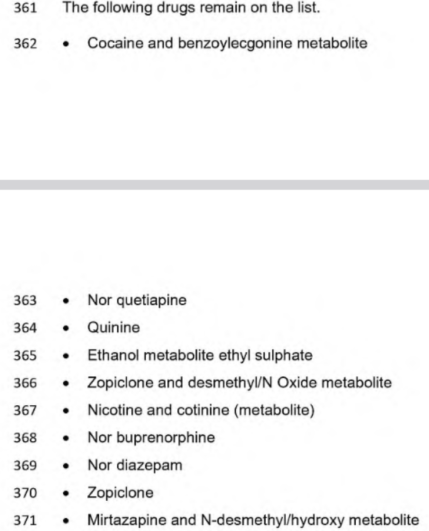
It is worth noting that fentanyl was also found, but this was removed from this list presented to the inquiry as she had been given fentanyl in hospital. That does not, of course, mean there was, or was not, already fentanyl in her bloodstream. But what you do have for sure is cocaine, plus a synthetic opioid given by the NHS to heroin addicts, plus gin and tonic, plus two different antidepressants, plus sleeping tablets.
What you don’t have is novichok. The idea that the NHS central toxicology lab cannot detect organophosphate poisoning, or was not testing for it in the blood of someone in Salisbury when the entire media was already screaming novichok, is arrant nonsense.
Only the Ministry of Defence laboratory at Porton Down claimed to find novichok – and controlled the samples which the OPCW (an equally corrupt institution) got.
Dawn Sturgess was a frail, known long-term drug addict. The combination in her bloodstream could kill anybody – of course depending on the quantities. The astonishing thing is that the pathologist at the inquiry stated he had been given no quantities or concentrations for these substances. He was therefore in no position to say they did not kill her.
This is incredible. There is no such thing as a toxicology report which does not quantify concentrations. Otherwise the information is clinically meaningless. I have spoken with three doctors, two nurses and a senior NHS administrator. All say it is impossible the toxicology report came without quantification. I assume the pathologist was not lying; so they must have been deliberately deleted. Only government can do that, and the obvious motive is to cover up the actual cause of death.
Let us face it: from that list of substances in her blood the actual cause of death is extremely obvious.
The great structural weakness of the inquiry was that nobody had the job of scepticism about the official story. The only non-governmental representative was Michael Mansfield, who represented Dawn Sturgess’ family, and his brief was to argue that Dawn Sturgess was not a drug addict. That – I am sorry to say, completely untrue – version of events fitted the story which both the government and Sturgess’s family wished to be put forward.
I am genuinely upset to have to relate unpleasant things about a dead woman who was a victim of circumstance in her life, in order to tell the truth, but you don’t get cocaine and buprenorphine in your blood by accident. We therefore had the farce of the police apologising at the inquiry for having called Dawn Sturgess a drug addict.
So we have alleged novichok in Salisbury which killed nobody, and an explosive drone, or possibly two, in Leipzig which did not explode. To counter this massive threat, we need to push an entire continent to nuclear war. As a first step, we need to cut health and social spending to give trillions more to arms manufacturers, and prepare our children for conscription, to die on the battlefield.
Forgive me if I am not convinced.
The Long Road In, and the Short Way Out: How the West Built Ukraine into a Weapon Against Russia
By Larry C. Johnson | Sonar21 | September 10, 2026
Across three pieces I’ve written for Sonar21, I have been making one continuous argument: The war in Ukraine was not a crisis that erupted in 2022. It was the payoff of a deliberate, decades-long Western project to turn Ukraine into an instrument for weakening Russia — carried out under the cover of “partnership” and “peacekeeping.” And having spent thirty years building that instrument, Washington and NATO will do with Ukraine exactly what they have done with every client before it: discard it the moment it stops paying.
The camel’s nose: 1992–1999
The West slipped its nose under the Ukrainian tent almost the instant the Soviet Union collapsed. The formal machinery started in 1992, when Ukraine joined NATO’s North Atlantic Cooperation Council. The practical military ties came fast behind it: the U.S.–Ukraine State Partnership Program with the California National Guard in 1993, Ukraine’s entry into the Partnership for Peace and its first joint exercise in 1994, and the standing-up of the Yavoriv training area near Lviv.
The “peacekeeping” label was camouflage, and the drills themselves give it away. Once the Sea Breeze exercises in the Black Sea began incorporating anti-submarine warfare in the late 1990s, the humanitarian pretense was finished. You do not rehearse hunting submarines to deliver disaster relief. You do it to prepare to fight the Russian navy. I spent 23 years scripting military exercises for U.S. Special Operations Forces, and I know the difference between a training game and a rehearsal for war. These were rehearsals — a structured program to train and equip Ukraine to fight Russia, if need be with NATO at its side.
Set that against 1999, when NATO took in Poland, Hungary, and the Czech Republic. That expansion broke James Baker’s assurance that the alliance would not move “one inch” to the east — a promise Bill Clinton simply threw away. And it is no accident that when the war came, Russia struck the Yavoriv facility in the opening weeks of March 2022. They knew exactly what had been built there, and why.
From partner to de facto member: 2000–2010
The next decade finished the job, turning Ukraine into a NATO member in everything but name. Consider one figure: between 2000 and 2010, Ukraine ranked among the top six hosts of NATO and U.S. European Command exercises, with Georgia right behind it. Two non-members hosted more allied exercises than the overwhelming majority of the actual member states. That is not partnership. That is prima facie evidence that the West meant to bring both countries in, whatever Moscow said.
By 2010, only two things still separated Ukraine from a full member: it paid no dues, and it had no Article 5 guarantee. In every operational sense — Sea Breeze, Rapid Trident, the Yavoriv pipeline, the annual target plans — it was already inside the alliance. And this was never only a military effort. U.S. and British intelligence, the CIA included, were coordinating with NATO and EUCOM to pry Ukraine out of Russia’s orbit and lock it into the West’s. When the 2008 Bucharest Summit declared that Ukraine “will become a member” — even as France and Germany blocked the formal Membership Action Plan — the trajectory to 2014 and everything after was set.
The exit: under the bus
That is how the instrument was built. Here is how it gets discarded. Any foreign government that trusts an American security promise should first study what happened to the South Vietnamese, the Afghans, the Iraqis, the Libyans, the Cambodians. When a war stops serving Washington’s purposes, the U.S. says adios.
The recriminations over the failed counteroffensive are the opening of exactly that. The West is lining up to blame Kyiv while its pledges of weapons turn out to be lip service. The maritime-drone strikes on Russian ships are pinpricks — militarily trivial, and dangerous mainly because the Western surveillance that guides them invites Russian retaliation against NATO reconnaissance over the Black Sea and stiffens Moscow’s resolve to strangle Ukraine’s ports. If you want an honest barometer of where this war is heading, forget the briefings from British intelligence and the Institute for the Study of War. Watch for the day the London bookmakers start taking bets on when Zelensky falls.
The through-line
Lay the three pieces end to end and the shape is plain. The first two document the patient construction — three decades of exercises, training centers, intelligence coordination, and summit declarations, all aimed at Russia. The third describes the disposal: the moment the project stumbles on the battlefield, the same patrons who spent thirty years cultivating it start hunting for the door. The line running from the 1992 partnership councils to the blame game of 2023 is not accident, and it is not drift. It is design. The men who built the road into this war have no intention of walking back out of it alongside the country they sent down it.
Ukrainian Scam Machine Rakes in $1 Billion per Month Robbing European Citizens — Report
Sputnik – September 8, 2026
Western spy agencies originally cultivated and trained Ukrainian hacker groups “to counter Russia”, but they all quickly spun out of control, mutating into fraud networks, the Aydınlık outlet reports.
As of 2026, an estimated 1,000 call centers operate in Ukraine, employing roughly 60,000 people and targeting citizens of at least 29 countries through a range of schemes—including fake investment pitches, romance-baiting, and impersonation of banks or government agencies.
Various criminal ploys are used, including threats and blackmail, and different schemes are employed for different countries — for example, fake official documents in Germany, bogus cryptocurrencies in France, “safe bank accounts” in Greece and “tax authorities” in Canada and the US.
The network’s total monthly revenue is estimated at roughly $1 billion, with a single call center alone pulling in $8 million from Germany and approximately $1 million from the Baltic states, the outlet adds.
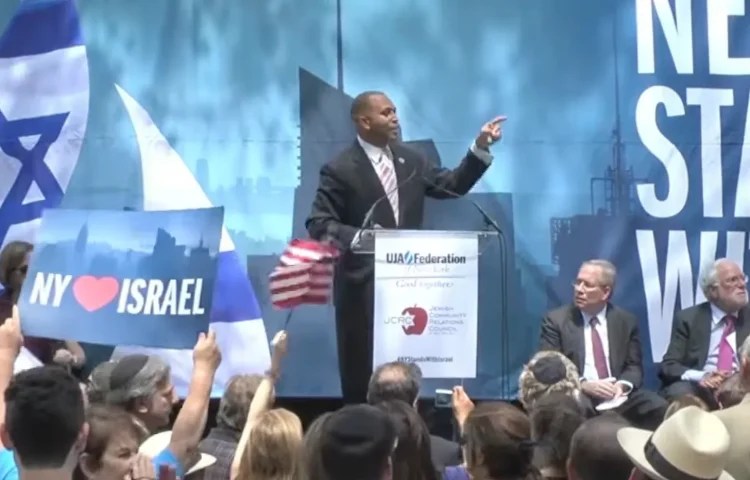
Buck-Dancing for Zion: Hakeem Jeffries
How Brooklyn’s point man in Congress was groomed to serve Jewish interests over his own constituents
José Niño Unfiltered | September 7, 2026
Jared Kushner and Hakeem Jeffries met privately in New York City in recent weeks, and neither man wanted to discuss it afterward.
The New York Times reported the encounter on August 23, citing five people with knowledge of a session held in a New York City space a mutual friend provided. The two men discussed housing, immigration, and the cost of living. Kushner urged Jeffries to sit down with White House chief of staff Susie Wiles as a follow-up. NBC News confirmed the account the same day. Jeffries’s initial statement never acknowledged the meeting at all, insisting only that “the affordability crisis is not a hoax and nothing short of transformational policy change is acceptable.” He later posted a video on X acknowledging that “Kushner asked for a meeting.”
The timing carried its own message. Democrats lead in nearly every midterm poll, and Jeffries becomes speaker if they capture the House in November. Kushner has told associates that Jeffries ranks as “the most serious” Democratic leader. House Speaker Mike Johnson shrugged at the news on Fox News, saying “I don’t know what that’s about.” Crooked Media co-founder Tommy Vietor was less charitable, posting on X: “Jared Kushner has no actual government job; he just uses his family connections to get money from gulf autocrats and fund corrupt deals. The only way Jeffries should work with him is with demands for documents and subpoenas.”
That reaction captures a long-standing problem with Jeffries. Namely, the qualities that make Jeffries someone Trump’s inner circle can work with are the same qualities that have made him a target inside his own party and nowhere is more apparent than on the issue of Israel.
Jeffries reached that position by a steady ascent through the House. He won New York’s 8th Congressional District in 2012, succeeding Ed Towns, and quickly built a legislative profile around criminal justice reform. He introduced legislation to criminalize chokeholds after Eric Garner’s death and served as the lead Democratic sponsor of the bipartisan First Step Act of 2018, a jailbreak bill that became one of Donald Trump’s most significant legislative accomplishments of his first term.
House Democrats unanimously elected Jeffries to succeed Nancy Pelosi as House minority leader on November 30, 2022, making him the first Black American to lead either party in either chamber of Congress. He was re-elected to the post in 2024. In July 2025 he set the record for the longest House floor speech in modern history, speaking for eight hours and 44 minutes against the One Big Beautiful Bill Act and breaking the mark Rep. Kevin McCarthy (R-CA) set in 2021. Heading into the 2026 midterms, Jeffries is widely positioned to become speaker if Democrats retake the House.
With Jeffries potentially becoming House Speaker, American Jewry could breathe a sigh of relief knowing that they have a safe pair of hands wielding the speaker’s gavel. Jeffries represents Brooklyn’s 8th District, which Jewish Currents has described as the 15th most Jewish congressional district in the country, and he was raised in Crown Heights, home to the global headquarters of the Chabad-Lubavitch movement. He has extolled that constituency, telling reporters and audiences that “in New York City we consider Jerusalem to be the sixth borough.”
His public language and, more importantly, his legislative record on Israel have been reliably pro-Zionist throughout his congressional career. Jeffries backed the $1 billion Iron Dome replenishment in September 2021, which passed 420 to 9 over objections from eight progressive Democrats. He voted in favor of the $26.4 billion Israel Security Supplemental, H.R. 8034, in April 2024, which split House Democrats 173 to 37. He voted no on a GOP standalone Israel aid bill, H.R. 6126, in February 2024 that Democrats viewed as a partisan maneuver, and he supported the 2019 anti-BDS resolution H.Res.246 as well as the Antisemitism Awareness Act in May 2024. By 2022 alone, Jewish Currents documented Jeffries raising $440,000 from Israel-advocacy groups—the sixth-highest total among House members that cycle, per OpenSecrets—and he has traveled to Israel five times on AIPAC-sponsored trips since entering Congress in 2013. Jeffrie’s pro-Israel funding surged to over $1 million by the 2024 election cycle.
In July 2026, Jeffries continued his pro-Israel antics. Rep. Thomas Massie (R-KY) offered an amendment stripping $3.3 billion in Foreign Military Financing for Israel from the fiscal 2027 State Department bill. It failed 104 to 314. Among Democrats, 103 voted yes, 98 voted no, and 10 voted present, with Massie the lone Republican supporter. Jeffries voted no. In a Dear Colleague letter, he called the measure “overly broad,” arguing it would hinder humanitarian aid efforts, refugee resettlement, and efforts to undermine resistance groups like Hamas. Notably, he declined to whip the vote, telling members there would be “good faith reasons that will result in members voting in a variety of different ways.”
They would proceed to do so, with his own deputy, Minority Whip Katherine Clark (D-MA), announcing she would vote yes because “the status quo is not tenable.” Former Speaker Nancy Pelosi voted yes as well, saying “the Netanyahu government cannot maintain its current course.” Caucus Chair Pete Aguilar (D-CA) stayed with Jeffries. The party’s top two leaders had split publicly on the defining foreign policy question of the cycle, and Jeffries found himself on the shrinking side.
The money surrounding that vote drew immediate scrutiny. Sludge reported that on May 20, AIPAC’s PAC routed two earmarked payments totaling $149,300 to the Jeffries Battleground Protection Fund, the largest earmarked disbursement in the PAC’s history, listed in Federal Election Commission records as an earmark of Jewish billionaire investor Daniel Och.
The AIPAC money flowing into Jeffries’ coffers has raised concerns among progressives. When Jeffries told WNYC’s Brian Lehrer Show in November 2025 that AIPAC’s PAC could give only “$5,000 or $10,000 per cycle, that’s it,” Sludge called the characterization misleading, noting the group’s conduit system has funneled more than a million dollars in earmarked donations to his campaigns.
That financial relationship has fueled further backlash. When AIPAC’s United Democracy Project super PAC spent $14.5 million in June 2024 to defeat Rep. Jamaal Bowman (D-NY), Jeffries offered only a muted response, telling Punchbowl News that “pro-Israel groups are going to support pro-Israel members of Congress.” Radio host Charlamagne tha God has mockingly nicknamed Jeffries “AIPAC Shakur” for his close alignment with pro-Israel donors.
Other leftist outlets have taken Jeffries to task for his devotion to Israeli interests. His 2026 partnership with liberal Zionist organization J Street to oppose the Massie-sponsored arms amendment drew a pointed critique from CounterPunch, which accused him of coupling rhetoric about restraint with continued support for weapons transfers amid allegations of Israeli conduct in Gaza.
Jeffries’s financial entanglements do not end with AIPAC. Sam Bankman-Fried, the FTX founder later convicted of fraud, donated to Jeffries’s campaign, and Jeffries pledged to donate the funds after FTX’s collapse, according to Bloomberg. Separately, 2026 reporting found that committees tied to Jeffries and other Democratic leaders donated to candidates who had pledged to reject corporate PAC money, even as those same committees accepted funds from corporations including Barclays, CVS and UnitedHealthcare, raising accusations of an indirect funding workaround.
The financial ties only reinforce a rhetorical record that consistently delegitimized Palestinian resistance to Israeli transgressions. In February 2022, he called claims that Israel is an apartheid state “demonstrably false, dangerous and designed to isolate Israel in one of the toughest neighborhoods in the world,” responding directly to Amnesty International’s report on Israeli apartheid. After October 7, 2023, he declared in a press release that “America stands firmly and unequivocally with Israel” and that Congress “must stand with Israel until the invasion by Hamas has been crushed.” He also criticized the phrase “from the river to the sea” in a November 2023 statement as a call for “the complete destruction of Israel,” and stressed in February 2025 that “our commitment to Israel’s right to exist as a Jewish and Democratic state and eternal homeland for the Jewish people is ironclad.”
The most recent flashpoint in Jeffries’s career came in August 2026 with a private meeting with Jared Kushner, President Trump’s son-in-law and top outside adviser, to discuss “potential areas of common ground” on housing, immigration, and the cost of living. The New York Times noted the meeting’s timing “underscored that those around Mr. Trump were well aware of the likelihood of a Democratic-led House,” and that Kushner suggested Jeffries also meet with White House Chief of Staff Susie Wiles. Kushner reportedly told associates that if anything bipartisan gets done with Congress, Jeffries is “the most serious person among Democratic leaders.”
Despite the criticism he received from progressives, Jeffries defended the meeting on CNN and in a video posted to X, insisting “no one from the Trump cartel is getting a pass” and that he agreed to the sit-down only to “discuss the affordability crisis that exists, that is not a hoax.” This was not the first time Jeffries and Kushner had found common ground. He and Kushner have a prior working relationship dating to their collaboration on the 2018 First Step Act.
Taken together, Hakeem Jeffries is a reliable servant of Israel and the broader Jewish community. Both Trump terms have been Judeo-accelerationist to the core, with Israel getting nearly everything it wants. Naturally, the American public has grown tired of these escapades that only advance Jewish interests and are now prepared to vote the bums out in the upcoming midterms.
Though it should be stressed that in the Jewish-dominated plutocracy we live in there is no meaningful opposition to the Pan-Judah. At best, voters will have to pull the lever for another competing faction of Jewish proxies.
Enter Hakeem Jeffries and his minions.
Regardless of how the political pendulum swings later this year, the Jewish donor networks and political action committees backing Israel face no real downside, secure in the knowledge that a Democratic flip merely elevates Jeffries, an empty suit who is a certified coon for the Cohens in word and in deed.
Vaccination Data on Amish Children Screened for 2010 Autism Study Was Never Made Public
By Suzanne Burdick, Ph.D. | The Defender | September 2, 2026
Controversy is swirling around a 2010 study on autism rates among the Amish, after President Donald Trump on Monday posted a graphic citing the study.
Trump’s post on Truth Social claimed, “No published case has explicitly documented an unvaccinated Amish child with autism.”
The social media post cited a study, conducted in 2008 and 2009 by researchers who screened 1,899 Amish children in Indiana and Ohio for autism. The researchers confirmed seven cases of autism among the children.
The study concluded that among the Amish children in the study, the autism rate was roughly 1 in 271 — far lower than the national rate, which at the time was estimated by the Centers for Disease Control and Prevention (CDC) as 1 in 91.
According to Trump’s post, the study authors collected vaccination histories for the children but “did not report any confirmed case” of autism as “completely unvaccinated.”
The post drew a mix of cheers and fact checks, according to health writer Sayer Ji.
Ji called Trump’s post “factually imperfect” but “genuinely important.”
The post contained factual inaccuracies — for instance, it stated that the Amish have been around for 330 years. However, although the Amish broke away from the Mennonites 333 years ago in 1693, Amish settlements in the U.S. didn’t begin until the 1720s.
Trump’s post also drew attention to the verifiable fact that the Amish tend to have lower vaccination rates and lower autism rates, compared to the mainstream.
Ji praised the president for highlighting the 2010 study. “Whatever else you think of the man, he [Trump] pointed at the study,” Ji wrote.
Children’s Health Defense (CHD) CEO Mary Holland told The Defender she was pleased that Trump highlighted the relative absence of autism among the Amish, who typically have lower vaccination rates than mainstream communities.
“It’s high time we start dealing with reality — the current vaccine schedule causes brain injury called autism. Let’s be humble enough to learn from the Amish,” Holland said.
What did the 2010 Amish autism study show?
Trump’s post cites a 2010 study conducted by human genomics researchers from the University of Miami and Vanderbilt University, according to a conference abstract about the study.
However, contrary to Trump’s post, the study was never published in a peer-reviewed journal.
The study’s abstract, dated May 22, 2010, appeared on the website for the International Meeting for Autism Research, a research gathering held by the International Society of Autism Research.
The study authors appeared to have presented the study at the May 2010 meeting. There is no online record of the study’s full report.
The abstract’s methods section states that the researchers collected the children’s vaccination data. However, the results section doesn’t state whether the seven Amish children in the study who were identified as having autism were vaccinated or unvaccinated.
The abstract states:
“Preliminary data have identified the presence of ASD [autism spectrum disorder] in the Amish community at a rate of approximately 1 in 271 children using standard ASD screening and diagnostic tools although some modifications may be in order.”
The authors wrote that “further studies are underway” to address the cultural norms and customs that may affect how parents talk about their children’s behavior when interviewed by researchers.
It is unclear if the study authors looked at whether the seven children with autism had been vaccinated.
The study’s lead author, listed as J. L. Robinson, did not respond to The Defender when asked if the researchers ever ran a vaccination-stratified analysis of the seven confirmed autism cases, and why the researchers never published the study.
The Defender asked Margaret Pericak-Vance, Ph.D., director of the John P. Hussman Institute for Human Genomics at the University of Miami and one of the study’s authors, the same questions. However, the inquiry was directed to the university’s public relations director, who did not respond by deadline.
Ji searched online public records to see if the study authors ever spoke again publicly about the study or submitted it for publication in a peer-reviewed journal, but found nothing.
That is significant, Ji told The Defender. “I searched for and could not find any public statement by any of the six authors, in sixteen years, on why the paper never appeared or what became of the data. That absence is the finding.”
Ji said he isn’t accusing the study authors of intentionally burying their data on the Amish children’s vaccination histories. “I am not alleging that any of the six destroyed data or acted in bad faith — I have no evidence of that.”
But their data were effectively “buried,” in that the data were never published and never appeared in a future study.
Ji acknowledged that even if the study had explicitly linked all seven autism cases to not vaccinating, the study wouldn’t prove that unvaccinated children do not get autism, because seven is too small a number to power a statistical model.
But the data would still be helpful because they “would fill a hole in the record and tell us whether the screening infrastructure can be rebuilt at scale,” he said. “A statistician could do it in weeks if the files exist.”
The study authors did not respond when The Defender asked if they still had the original research files for the study.
Given that the study appeared to use federally funded research dollars, according to the abstract, the public deserves to know what happened to the files, Ji said.
Trump focused on uncovering autism-vaccine link
Trump’s post referencing the 2010 study comes amid a roiling debate about vaccines and autism. In May, Trump pressed U.S. Health Secretary Robert F. Kennedy Jr. to do more to investigate a possible link between vaccines and autism, according to a July 27 Wall Street Journal report.
Last month, Trump signed an executive order calling for sweeping changes to U.S. vaccine policy, including reducing the number of diseases for which kids receive routine childhood vaccines from 18 to 11.
According to The Associated Press, Trump is “fixated on connecting autism to vaccines.”
During a Sept. 22, 2025 press conference, Trump said, “There are certain groups of people that don’t take vaccines and don’t take any pills that have no autism. … The Amish, as an example, they have essentially no autism.”
According to Ji, the 2010 Amish study does not prove that vaccines cause autism.
However, the story of what happened to the 2010 study reveals that when data are collected that could potentially contribute to answering the question of whether vaccines cause autism, that data “doesn’t become available,” Ji said.
In Ji’s view, studies looking at Amish autism rates should examine many factors, including vaccination status, exposure to glyphosate, acetaminophen, ultrasound, diet, endogamy and access to healthcare.
The full results should be made public, regardless of what the studies find. “That isn’t anti-vaccine. It’s science.”
The connection between lower vaccination and autism rates among the Amish was something that investigative journalist Dan Olmsted spent years documenting.
Olmsted, founder of Age of Autism, authored “Age of Autism: Mercury, Medicine, and a Man-Made Epidemic” (2011) and “Denial: How Refusing to Face the Facts about Our Autism Epidemic Hurts Children, Families, and Our Future” (2017) before he passed away in early 2017.
Where did Trump get the graphic he posted?
The Amish continue to be central to ongoing national debate on vaccines. In New York, Amish are threatening to leave the state due to the state’s school-based vaccine mandate, according to an Aug. 26 New York Post report.
Pennsylvania, which is home to the largest Amish population in the U.S., has been making headlines for its current measles outbreak and ongoing investigation of measles-related deaths.
Steve Kirsch created the graphic that Trump posted to social media. On Aug. 14, Kirsch posted the graphic on X with the statement, “Baffling, isn’t it? Autism is only found in vaccinated Amish kids. I wonder why?”
Kirsch told The Defender he created the graphic using ChatGPT.
He instructed ChatGPT to create a graphic based on the 2010 study and based on his understanding that there is no evidence that an unvaccinated Amish child has ever been diagnosed with autism.
“Nobody has ever heard of an unvaccinated Amish child with autism,” Kirsch told The Defender.
Kirsch said he referred to the study as “published” in the graphic because the International Society of Autism Research posted the study’s conference abstract online. He acknowledged that the study itself was never published.
The White House did not respond to our comment request by the deadline.
This article was originally published by The Defender — Children’s Health Defense’s News & Views Website under Creative Commons license CC BY-NC-ND 4.0. Please consider subscribing to The Defender or donating to Children’s Health Defense.
Trump Slaughters Wedding Guests, Zelenskyy Threatens Airliners
By Kevin Barrett | September 6, 2026
When Zelenskyy threatened to shoot down civilian airliners last week, Putin called it “state terrorism.” Putin is right, of course. But the expression he used, “state terrorism,” is a repetitiously redundant pleonasm.
Virtually all terrorism is state terrorism. So appending the word state in front of the word terrorism isn’t really necessary.
Case in point: Trump’s slaughter of Iranian schoolgirls, female volleyball players, and wedding guests. Such acts fit the definition of terrorism: politically-motivated attacks on civilians. The purpose of attacking civilians is to inspire fear or terror among them, so they will react in ways that further the terrorist’s political plans.
Terrorist Trump and his Israeli owners have made no secret of the fact that they intend to attack civilians and especially civilian infrastructure in Iran—which even the mainstream media acknowledges is a war crime—in hopes of spreading so much pain and misery and death that the Iranian people rise up against their government. But as Caleb Carr explained in his post-9/11 book The Lessons of Terror: A History of Warfare Against Civilians, such “punish-the-civilians” policies rarely work. Hitler’s buzz-bombs didn’t convince the British to rise up and overthrow Churchill, nor did the British and American firebombings of German cities cause the Germans to revolt against Hitler. On the contrary, such terrorist policies typically backfire: the people punished worst are dead, while the survivors feel selected by God or fate or destiny to unite behind their nation’s leadership and fight even more furiously against the foreign terror-mongers attacking their country.
And Iran—where a powerful cult of martyrdom is built into the majority religion—is the last country on earth that anybody is ever going to successfully terrorize into submission. Iran’s war on terror, specifically its war on Zio-American terror, is genuine, and likely to be far more successful than the ersatz US equivalent.
Civilian Casualty Ratios Keep Rising
The West likes to think it is growing increasingly civilized. But its wars grow ever-more barbaric and terrorist. In World War I, about half of the slightly over 20 million deaths were civilians. In World War II, just one generation later, nearly two-thirds of the 60 million deaths were civilians. The Vietnam terror war waged by the USA probably killed far more than the two million official death count, with more than three-quarters of the victims civilians. Likewise, the official death counts in the 9/11 wars against Iraq and Afghanistan—and the covert wars on Syria, Libya, Sudan, Somalia, Lebanon, and of course Palestine—are almost certainly far too low, while the civilian-to-military casualty ratio just keeps getting higher, and is probably in the 80% or higher range. (For high-end casualty estimates that counter the official undercounts in these wars, read Gideon Polya.)
Let’s ask Gemini, which obviously comes with a pro-state bias, who the real terrorists are. Hey Gemini: How many civilians have died in all the wars beginning with World War I, and what percentage were killed by non-state actors?
Gemini: An estimated 110 million to 140 million civilians have died in all wars globally starting from World War I (1914) to the present day, with the vast majority—roughly 95% or more—killed by state actors (governments and their official militaries) rather than non-state actors.
Given Gemini’s bias, we can safely translate “95% or more” as “99%+.” I rest my case: Virtually all terrorism is committed by governments.
But that’s not the way the government’s propaganda apparatus sees it. They want you to believe that the world is a scary-scary place full of evil (non-government) terrorists plotting to bomb you or shoot you or crash your airliners or blow up your buildings. And they want you to run to the real terrorists—the government—for protection.
That’s why they chose 9-1-1 as the date code for their big 2001 psy-op. When you’re terrified and panicked and faced with senseless violence, who do you call? You call the government in hopes they will save you. The three digits 9-1-1 subconsciously represent the trust populations place in their “big mommy and daddy,” their government, to get them out of serious trouble. Specifically, the terrorist perpetrators of 9/11 wanted panicked Americans to volunteer their persons and/or their tax money, not to mention their fervent ideological and emotional support, to their Israeli-occupied government so it could “protect them from further such attacks” by invading the Middle East and destroying Israel’s enemies.
It was in fact Israel’s agents who blew up the Towers after flying remote-controlled planes into buildings. Through Epstein-style blackmail, financial control, and media domination, Israel infiltrated the US government like a parasite hijacking the brain of its host, sending Uncle Sam on a state terrorism spree whose only major beneficiary was the malignant Zionist entity itself.
But even people who imagine that 9/11 was done by al-Qaeda—the same al-Qaeda that the US created and has supported since its inception in the Afghan war against the USSR, the same al-Qaeda whose Syrian chief Trump recently invited to the White House and playfully sprayed with perfume—and who further imagine that al-Qaeda is a non-state entity as opposed to a US-Israeli front—ought to take a hard look at the statistics to get a sense of how nonexistent a threat “non-state terrorism” really is. As I wrote in Questioning the War on Terror:
Statistically, there are good grounds for wondering whether we should bother to worry about terrorism at all. Roughly 3000 Americans have been killed by (allegedly non-state) terrorists during the past century. In other words, a whole century’s worth of terror victims equals three days’ worth of cigarette fatalities, a week’s worth of deaths from bad medical treatment, or a month’s worth of automobile deaths. Shouldn’t we worry far more about cigarettes, doctors, and automobiles than about terrorists?
And how does your chance of being killed by terrorists compare with your chance of being struck by lighting? It turns out that lighting is a vastly greater threat. There are on average about 1000 lightning victims per year in the USA, whereas the average number of terror victims per year—a number wildly skewed upward by the fluke of 9/11—is still only about thirty.
Are terrorists at least more dangerous than… bathtubs? Nope. It turns outthat your chances of drowning in your bathtub are more than ten times as great as your chances of being killed by a terrorist.
Should we declare war against lightning bolts and bathtubs? Should we install PA systems in our bathrooms reminding us that the threat level of bathtub drowning has been raised to orange? Should we create a new Department of Bathtub Security (DBS) empowered to do sneak-and-peak warrantless searches of our bathrooms to make sure that we’re using no-slip bathmats? Should we invade and occupy countries that we falsely blame for bathtub deaths? Would this be any crazier than what we’re doing now, allegedly due to the equally insignificant “terrorist threat”?
So the whole notion of terrorism as a supposedly non-state phenomenon is a scam, a hoax, and a psy-op. Grossly exaggerating the alleged threat posed by non-state terrorists is itself a form of state terrorism, in the sense that the state is using propaganda to terrorize its population for political purposes.
Imagine a sadistic criminal who ties up and tortures his victim, all the while insisting that his actions are motivated by a desire to protect the victim from an imaginary bogeyman. That criminal is the government, the victim is its population, and the imaginary bogeyman is the supposed threat of non-state “terrorists.”
War for a Multipolar World: The Real War on Terror
The covert World War III being waged today appears, on the surface, to be between the Zionist-oligarch-occupied world-domination-seeking West, on the one hand, and the partisans of the multipolar-world, led by China, Russia and Iran, on the other. But beneath the surface, there is a philosophical-ideological war. It isn’t as obvious as the capitalism-vs.-communism Cold War clash, but it’s real nonetheless.
The ideological dimension of World War III can be expressed as follows: Should governments gain legitimacy through terror, or through competent administration in service to the public good?
While no government perfectly embodies either ideal, Israel and its occupied USSA come close to being pure terror states. Both governments purport to be protecting their populations from “terrorist threats” and derive much of their perceived legitimacy from that purported protection. 9/11, and 10/7 (“Israel’s 9/11”) were the sacrificial spectacles that undergird the grossly mendacious ideological foundations of both terror states. Both terror states, built on foundations of state violence and lies, are having trouble maintaining public confidence.
China, for its part, does maintain popular consensus in part through somewhat mythologized but largely accurate accounts of its suffering at the hands of foreign aggressors, from the Opium War and the Century of Humiliation through the brutal Japanese occupation and subsequent US war on China through Korea. But its government primarily derives legitimacy not through violence and sacrifice, but through competent administration in the public interest.
If we ask Western-biased Gemini to contrast public confidence in the respective US and Chinese leadership, we find that worldwide China’s government inspires far more confidence, and that domestically:
United States: Public confidence in U.S. leadership and future direction faces continuous polarization, heavily influenced by shifting political administrations, domestic divisions, and foreign policy friction with traditional allies.
China: Domestic sentiment inside China reflects steady confidence in national economic power, technological growth, and rising global standing, which sustains government legitimacy and popular backing for Beijing’s international posture.
When Covert World War III finally ends with a multipolar victory, insha’allah, let us hope and pray that Chinese-style “competent administration” rather than Zio-American “terror lies in service to Girardian sacrifice” becomes the basis of a reasonably virtuous world authority capable of enforcing international law and punishing the real terrorists.
JD Vance Falsely Claims the US Does Not Murder Civilians
By Kurt Nimmo | Another Day in the Empire | September 5, 2026
Vice President JD Vance is doing a poor job of paving over the war crimes of the Trump administration. On September 1, he declared Iran is lying about the US bombing of a wedding celebration in Kuhestak, southern Iran, that killed five, including a child, and injured at least 60 people. “What I can say with 100% confidence is that unlike the IRGC, the United States never targets civilians in combat,” Vance said, despite an abundance of evidence to the contrary. “We never will do that. We never have done that.”
Since World War II, civilians have accounted for approximately 60–75% of deaths in major wars involving the United States.
James A. Lucas writes “that U.S. military forces were directly responsible for about 10 to 15 million deaths during the Korean and Vietnam Wars and the two Iraq Wars. The Korean War also includes Chinese deaths while the Vietnam War also includes fatalities in Cambodia and Laos.”
Although the aforementioned figure includes all fatalities, including those of military personnel, the vast majority of these deaths are civilian. According to official estimates, approximately 1.5–3 million civilians were killed during the Korean War, while military casualties stand at roughly one million. The US military conducted a “scorched earth” bombing campaign in North Korea. In addition to military targets, the US bombed cities, villages, industrial facilities, and dams.
Mi Young Lee, a Korean filmmaker, discovered a wealth of declassified material while conducting research for the documentary Scorched Earth (Chotohwajagjeon). Among the findings previously unreleased are pilot mission reports that provide documentation or corroboration of accounts of bombings and strafing runs. For instance, these reports detail attacks on North Korean refugees attempting to cross the Imjin River on January 1, 1951.
The US conducted a number of massacres during the Korean War, including the No Gun Ri (Nogeun-ri, South Korea) massacre that killed around 400 civilians. This war crime was perpetrated by the 2nd Battalion, 7th Cavalry Regiment, of the US Army. JD Vance is obviously unaware that the No Gun Ri massacre was ordered by the US military. Survivors and military veterans reported that they were told to “fire on everything, kill ‘em all.” The majority of victims were women, children, and the elderly.
US forces dropped 635,000 tons of bombs on Korea, destroying nearly every major city and town. General Curtis LeMay estimated the US. “eventually burned down every town in North Korea… Over a period of three years or so, we killed off… twenty percent of the population of Korea as direct casualties of war, or from starvation and exposure.”
During the Vietnam War, more than 2 million civilians were killed, in contrast to approximately 1.1 million military fatalities among North Vietnamese and Viet Cong forces, along with the deaths of South Vietnamese, US, and other allied military personnel. However, this is likely an underestimate, as other sources put the number of civilian deaths at more than 4 million.
Is it possible JD Vance never heard of the My Lai massacre? On March 16, 1968 members of Charlie Company from the US military killed between 347 and 504 unarmed civilians, predominantly women, children, and elderly men, in the village of Sơn Mỹ located in Quảng Ngãi province. The official count provided by the U.S. Army is 347, while a memorial in Vietnam records 504 names.
During Operation Speedy Express conducted between December 1968 and March 1969, US military operations resulted in the deaths of thousands of Vietnamese, with subsequent estimates indicating that a significant number were civilians. The Pentagon documented approximately 10,899 enemy fatalities, yet only 748 weapons were seized, suggesting that many of those killed were non-combatants.
The CIA’s Phoenix Program, between 1965 and 1972, designed to assassinate Viet Cong, killed an estimated 26,000–41,000 people, many of them civilians. This program has faced significant criticism due to its high number of civilian casualties and its methods, which involved torture.
More than 150,000 civilians lost their lives due to US bombing campaigns in Cambodia. The bombings in Cambodia resulted in the destruction of numerous villages and the displacement of hundreds of thousands of people. The legacy of these wars continues today, as unexploded ordnance continues to injure and kill people across the region.
During Operation Desert Storm in 1991, the US used “precision bombs” against the Amiriya air raid shelter in western Baghdad, murdering more than 400 civilians. It was the largest single case of civilian casualties that occurred during Operation Desert Storm. In addition to attacking civilians directly during the war, the US targeted the Iraqi electrical grid, water treatment plants, bridges, roads, schools, and other civilian infrastructure, leading to an unprecedented number of civilian deaths.
Sanctions imposed on Iraq during George H.W. Bush’s illegal war, and continued by President Bill Clinton, “were deeply cruel and inhumane. People could no longer acquire basic food products or medical supplies. This led directly to starvation, chronic child malnutrition and other severe health conditions, and death. Conservative estimates indicate that at least two million people died as a direct result of the sanctions,” notes the Transnational Institute in the Netherlands.
Prior to the War on Terror, the US killed an estimated 500–1,000 Somalis during the “Black Hawk Down” operation in 1993, including women and children, along with armed fighters. The NATO bombing of Yugoslavia in 1999, conducted primarily by the United States, killed approximately 500 civilians over a 78-day period. The bombing of a passenger train at Grdelica Gorge killed at least 10 people, and a convoy of ethnic Albanian refugees targeted near Gjakova killed 73.
According to Brown University’s Costs of War project, an estimated 241,000 people died as a direct result of George W. Bush’s invasion of Afghanistan in 2001. Among the fatalities, 71,344 were civilians who lost their lives on both sides of Afghanistan’s extensive and permeable border with Pakistan. Specifically, at least 47,245 civilians have perished in Afghanistan, while 24,099 have died in Pakistan. Bombing and ground operations killed thousands in Kandahar, Sangin and Lashkar Gah, during the Kunduz hospital airstrike, and drone strikes in Kabul, and elsewhere.
In Iraq, between 2003 and 2011, between 200,000 and over a million civilians were killed by the United States (estimates vary depending on the source and methodology). The US “shock and awe” campaign and subsequent fighting killed thousands.
JD Vance believes, or was told, the US does not strike wedding parties, and yet, in May of 2004, a US airstrike on a wedding celebration at Mukaradeeb, a small village in Anbar Province near the Syrian border, killed 42 civilians, including 11 women and 14 children. The United States military has refuted claims that a wedding was struck, asserting that the site was a valid military target and that insurgents were eliminated. Generals of the US military declined to issue an apology for the incident
In Haditha, Iraq, US Marines killed 24 unarmed civilians, including women, children, and an elderly man in a wheelchair, after a roadside bomb killed a Marine. In Baghdad on July 12, 2007, a US Apache attack helicopter murdered Reuters journalists Namir Noor-Eldeen and Saeed Chmagh. Footage of the killing was later made public by WikiLeaks.
“The post-9/11 wars in Afghanistan, Pakistan, Iraq, Syria, and Yemen, the most violent conflicts in which the U.S. government has engaged in the name of counterterrorism since September 11, 2001, have taken a tremendous human toll,” reports the Costs of War project at the Watson School of International and Public Affairs. “Indirect deaths are estimated to be 3.6-3.8 million, bringing the total death toll, including direct and indirect deaths, to 4.5-4.7 million and counting. Precise mortality figures remain unknown.”
Moreover, as of May 2023, more than 7.6 million children under five in post-9/11 war zones suffered from acute malnutrition, while in the same period over 38 million people in from Afghanistan, Iraq, Pakistan, Yemen, Somalia, the Philippines, Libya, and Syria were displaced, either abroad or within their own countries.
Unbeknownst to Vance, a US drone strike in December 2013 targeted a wedding procession in al-Bayda province, Yemen, resulting in the deaths of between 12 and 17 people, predominantly civilians.
As per a Pentagon evaluation, US military actions in 2025 resulted in the deaths of 153 civilians and injuries to 243 others, all linked to three US airstrikes in Yemen during April 2025. Central Command determined that these strikes were “more likely than not” to have caused civilian casualties. Furthermore, an additional 15 incidents in Yemen were still being evaluated as of February 2026.
The United States has carried out numerous drone strikes in countries such as Pakistan, Yemen, Somalia, and Syria. According to the Bureau of Investigative Journalism, drone strikes in Pakistan alone are estimated to have killed between 400 and nearly 1,000 civilians, including approximately 160 to 200 children, from 2004 to 2018.
Between 2018 and 2019, Amnesty International and Airwars documented numerous coalition strikes in eastern Syria, resulting in the deaths of hundreds of civilians, frequently in single-family homes. In 2019, it was reported that the US military admitted carrying out a war crime during a Baghuz airstrike in Syria that killed dozens of people.
The incidents mentioned above account for a small portion of the overall civilian fatalities linked to US military operations. Cumulative estimates for the post-9/11 War on Terror indicate that the total civilian death toll ranges from approximately 387,000 to 801,000. The Costs of War project at Brown University has recorded that more than 432,000 civilians lost their lives directly due to US-led conflicts up to 2021. “An estimated 3.6-3.8 million people died indirectly in post-9/11 war zones, bringing the total death toll to at least 4.5-4.7 million and counting,” the project concluded.
The Trump administration is notorious for twisting facts and promulgating outright lies and falsehoods about everything from the economy to its illegal war against Iran. Despite Vance’s seeming ignorance about the shameful multiplicity of war crimes administered by the US military since the end of the Second World War, there is a mountain of evidence that reveals the United States is not the untarnished and honorable paragon of virtue and restraint Vance and his boss make it out to be.
Featured Video

Racist Seinfeld Dances for Joy as Bibi Unveils His New Map
or go to
Aletho News Archives – Video-Images
TV Drama Review
Japanese drama projects Japan’s wartime atrocities onto Chinese characters

Global Times | October 25, 2026
By portraying Chinese characters as perpetrators of ruthless violence while casting Japanese Self-Defense Forces (SDF) intelligence operatives as defenders, the season 2 of the Japanese drama Vivant has recently drawn criticism from Chinese netizens, who argue that its depiction turns historical reality on its head while ignoring Japan’s wartime atrocities.
The TBS drama series – a spy suspense story in which an alleged unofficial intelligence unit of the SDF operates across the globe — has attracted a passionate fanbase. Its currently airing season 2 opened with a household rating of 18.8 percent, the highest for a TV drama this year, according toa commentary article by Japanese media Toyo Keizai.
What draws attention is the portrayal of the enemies in the series, the article noted. Scenes in which the Chinese organization subjects kidnapped members of the SDF unit to brutal torture are repeated with unrelenting intensity.
It is rare for Japanese TV dramas to explicitly portray a real-life country as the enemy, the article noted.
Japanese Prime Minister Sanae Takaichi also made a reference to the drama, saying that she has been recording Vivant and hopes to binge-watch it over the year-end and New Year holidays, according to Japanese media outlets.
China’s CCTV News report on Sunday revealed that the drama features scenes in which Chinese personnel cut off the fingers of and stab Japanese intelligence operatives in the abdomen. Such acts bear striking similarities to the torture inflicted on Chinese nationals by invading Japanese troops during the World War II.
The drama distorts the truth by attributing these atrocities to modern Chinese characters. Beneath the surface, it subtly glorifies Japan’s cross-border overseas operations, blurs the functional boundaries of the SDF and implicitly promotes an expansionist narrative, per CCTV News. … continue
Blog Roll
 Aletho News
- EU facing trillion-euro debt hole while seeking more cash for Kiev
- How US, Europe, Persian Gulf states exhausted missile stockpiles, splurged billions to defend Israel
- Up in arms… Koreans reject U.S. empire’s plan to make South Korea the next Ukraine
- Iran, Turkey, Pakistan, Saudi Arabia could advance region-led security framework in Tehran: FM spox
- Netizens condemn Japanese drama for projecting Japan’s wartime atrocities onto Chinese characters
- Racist Seinfeld Dances for Joy as Bibi Unveils His New Map
- A West Bank War for Netanyahu’s Election Campaign, Could It Backfire?
- Yemen denounces European Parliament’s ‘hypocritical’ push to blacklist Ansarullah
- Qalibaf: UAE’s UN bid aims to ‘clear the runway’ for ‘Greater Israel’, whitewash genocide
- Pakistan reopens Iran border after boosting security: Report
- If Americans Knew
- Why Israel’s latest assault on Hebron is so significant for the West Bank
- Israel Used “Where’s Daddy?” AI to Relentlessly Murder Palestinian Journalists and Their Families in Their Homes from October to December 2023
- DAILY UPDATE: Latest essential news on Palestine, Israel, & region
- Netanyahu Says Israel Must Prepare for Banking Sanctions, Floats Crypto as a Possible Bypass
- Latest updates from Israeli assault on West Bank
- Tourism Ministry launches free food truck tour in US
- “So Much Worse Than People Realize”: Never-Before-Seen Images Reveal Damage at U.S. Bases as Troops Describe Being Abandoned
- UK Bell Review Confirms Only Anti-Israel Attitudes Are Rising, Not Antisemitism
- DAILY UPDATE: Latest essential news on Palestine, Israel, & region
- DAILY UPDATE: Latest essential news on Palestine, Israel, & region
- No Tricks Zone
- Sudden Stratospheric Warming, Powerful El Niño Combination May Lead To Extreme Europe Cold, Energy Crisis!
- Two New Studies Find Thwaites Glacier Melt Cannot Be Driven By Human Activity Or A Warming Ocean
- E-Cars Reduce CO2 Emissions By Only 41% Compared To Internal Combustion Engine Vehicles
- Predictions Made By Renowned Climate Professor Over Past Decades Have Been Proven To Be Poor
- New Study Suggests Large Regions Of The Pacific Ocean Have Been Cooling For The Last 80 Years
- Germany’s Green Energy Debacle: High Energy Costs Force Kahla Porzellan to Close After 182 Years!
- New Study: 50 Years Of The Most Aggressive ‘Net Zero’ Policies Can Only Affect The Global Climate By 0.03°C
- US September “Heat” Was No Record…Many Records Set Decades Ago
- Latest European Green Energy Debacle; Portugal’s Largest Flagship Solar Park Insolvent!
- Green Energy Debacle: German Expert Professor Fritz Vahrenholt Warns Of Severe Economic And Social Consequences


