IRGC Navy rejects new Strait of Hormuz shipping routes
Al Mayadeen | June 25, 2026
Iran’s Islamic Revolution Guard Corps (IRGC) Navy has warned that safe passage through the Strait of Hormuz is only possible via routes announced by Iran, rejecting newly declared navigation lanes and insisting that vessels coordinate directly with Iranian naval authorities.
In a statement issued in the name of the IRGC Navy, Tehran said that “some authorities” had recently announced new shipping routes in the strategic waterway “without informing or coordinating with the Islamic Republic of Iran,” saying the move is “unacceptable and completely dangerous.”
The statement stressed that the only authorized passage routes through the Strait of Hormuz are those designated by Iran, warning that navigation outside these channels is “very dangerous and prohibited.”
“All vessels are warned to strictly avoid any navigation outside the notified routes,” the IRGC Navy said, adding that coordination via Channel 16 with Iranian naval forces is mandatory and that “violator vessels will be dealt with.”
The Strait of Hormuz, a narrow maritime chokepoint linking the Gulf to the Arabian Sea, remains one of the world’s most sensitive shipping corridors, with competing claims over navigation management and maritime safety procedures.
Regional diplomatic efforts underway
The warning comes amid renewed diplomatic activity involving Gulf states, Iran, and regional mediators aimed at reshaping maritime governance in the strait.
On Wednesday, Qatari Prime Minister Mohammed bin Abdulrahman al-Thani arrived in Muscat for talks with Omani officials on launching a new round of negotiations involving Iran, Iraq, and Gulf Arab states on the future management of the waterway, according to Reuters, citing a diplomat briefed on the discussions.
The proposed talks are reported to be separate from ongoing Iran-US negotiations and existing de-mining arrangements. According to the same source, Gulf states are expected to push for the removal of transit fees, while Iran may propose alternative charges linked to environmental, navigation, and security services.
The initiative is said to stem from a recent memorandum of understanding calling for structured discussions between Iran, Oman, Gulf states, and Iraq on maritime governance in the strait, with Pakistan floated as a potential mediator.
Separately, broader regional reconciliation talks are expected to be held in Riyadh involving Iran, Gulf Arab states, and other regional actors.
Oman announces new shipping lanes
Earlier on Wednesday, Oman announced the establishment of two temporary shipping routes in the Strait of Hormuz, positioned north and south of the existing lane, in coordination with the International Maritime Organization (IMO).
Under a phased operational plan, vessels will be grouped and contacted individually with navigation instructions, including designated routes and departure timings. Oman’s maritime authorities said shipmasters remain responsible for conducting independent risk assessments, and vessels are required to keep Automatic Identification Systems active while reporting hazards to the Oman Maritime Security Centre.
Oman also confirmed that no transit tolls would be imposed on ships passing through the strait, in line with understandings reached in recent Iran-US discussions.
Joint Iran-Oman framework
The developments follow earlier agreements between Iran and Oman to establish a joint committee tasked with discussing the future management of navigation in the Strait of Hormuz.
The committee is part of broader consultations between Tehran and Muscat aimed at enhancing maritime safety, coordinating navigation rules, and addressing associated services and costs in line with international law and sovereign rights of coastal states.
Both sides have previously reiterated their commitment to keeping the strait open for international navigation while maintaining sovereignty over territorial waters, underscoring the strategic importance of continued coordination to ensure stability in the waterway.
There Are No Budget Constraints In New York City: “Coastal Resiliency” Edition
By Francis Menton | Manhattan Contrarian | June 14, 2026
I often make fun of the federal government as operating with what it thinks is an “infinite credit card,” outside and beyond any budget restraints. And thus all problems, real or imaginary, can be solved by dispensing some of the infinite federal loot. In its partial defense, the federal government does have the ability to print money, although that ability too eventually runs into limits.
And then we have New York City. The City has no ability to print money, but nevertheless operates as if there are no constraints on spending. The sky is the limit! Recently I wrote about how the City spends about triple the national average per student on preK-12 education, and more than double the national average per capita on Medicaid. Those are crazy excessive amounts, but at least education and healthcare are bona fide purposes for the spending of resources.
But how about spending huge amounts of money on pure fantasies that accomplish absolutely nothing? Yes, we have that too. For today’s example, how about “climate resiliency”?
Maybe you don’t even know what that is. I’m not sure that I do either. A good summary is that it is a substance-free buzzword that is being used to dispense tens of billions of dollars on consultants and construction projects along the coastline, without any discernible benefits within the lifetimes of anyone around today.
About a year ago, in April 2025, I had a post about a project the City was in the process of building at something called Wagner Park, basically a small lawn area along the water near the Southern tip of Manhattan Island. Wagner Park accounts for about 400 feet of Manhattan waterfront, out of a total of about 32 miles of shoreline for Manhattan (and some 520 miles for New York City as a whole). The City was trucking in vast amounts of dirt in order to raise the level of the park by about 10 feet. The idea, supposedly, is to protect against a rise in the level of the sea that climate doomsayers claim may occur by some time around, say, the year 2100. The cost of the Wagner Park “resiliency” project, as reported in my April 2025 post, was some $300 million.
Well, now it seems that the Wagner Park insanity is metastacizing like a cancer. New and far bigger shoreline-raising projects have now gotten underway both East and West of the relatively small Wagner Park effort. One such project covers about a mile of the waterfront of Battery Park City on the Lower West Side, and another covers 2+ miles of the waterfront at East River Park on the Lower East Side. Steve Cuozzo covers the story in a piece in the New York Post on June 10. Here is his description of the work now getting underway in Battery Park City:
At Le District’s alfresco Battery Park café, customers who previously enjoyed views of the river and the New Jersey skyline now face a chain-link fence and roaring excavation machines. Battery Park City’s beloved Hudson River Esplanade, a treasure of Lower Manhattan, will be closed for years to come as it’s needlessly reconfigured. Its off-limits condition shocks those who loved its airy refuge from the city’s thrum — and appalls nearby residents of this once magnificent neighborhood.
And over in East River Park:
In the now “resilient” segment south of the Williamsburg Bridge, scores of old trees have given way to saplings that might throw shade in a mere 25 years. The mostly level recreation lawns that were favorite gathering grounds for residents of nearby NYCHA housing projects have sprouted hilly, segmented zones mostly too small for easy use.
Cuozzo quotes residents from both the Lower East and West Side areas as being appalled by the endless construction and the desecration of their prior waterfront parks. But then there is Mayor Mamdani, who recently commented on the opening of the Wagner Park project:
The area is “on the front lines of the climate crisis,” [Mamdani] lectured. “With phase one now complete, we are taking a major step toward safeguarding Lower Manhattan . . . from rising seas and stronger storms.”
What “rising seas” and “stronger storms” exactly? Cuozzo correctly points out that the UN itself has recently backed away from its extreme climate doom scenarios. The idea of sudden sea level rise of multiple feet was always ridiculous. Meanwhile, the costs are enormous. This City release from October 2024 puts the cost of the East River Park project at $1.45 billion. In the same release, a guy named Rohit Aggarwala, then Commissioner of the City’s Department of Environmental protection, boasted that the City had “more than a dozen similar projects now underway, from Staten Island to the Rockaways to Red Hook.”
If you are a bureaucrat in New York City, just somehow attach the word “climate” to your budget demand and they’ll give you whatever you ask for. Keep this in mind next time the City comes around looking for another tax increase.
The UN’s plan to levy taxes on global trade is a sinister power grab
If these precedents on emissions charges and compulsory offsets stand, the appetite of unelected institutions for fiscal power will grow
By Brenda Shaffer | The Telegraph | June 22, 2026
International energy and climate policies stand at the center of one of the most defining political issues of our time: the expanding power of unelected institutions such as the United Nations in the lives of people in democratic societies.
Two UN agencies – the International Maritime Organization (IMO) and the International Civil Aviation Organization (ICAO) – plan to tax global shipping and aviation for their greenhouse gas emissions. This would mark the first time an unelected institution has levied taxes on major sectors of global economic activity. The planned levies would expand the power and budgets of these agencies with no democratic accountability.
Regardless of one’s views on climate change, proponents of democracy should recognize the threat posed by taxation without representation and oppose this power grab by the UN.
If implemented, the UN agency levies will raise global shipping and aviation costs, adding to inflation worldwide. Shipping produces just around 2 per cent of global greenhouse gas emissions, yet a UN tax on it would add costs to virtually every traded good. Shipping carries more than 80 per cent of global trade, a share expected to grow. Civil aviation accounts for approximately 2.5 percent of global emissions. The planned carbon offset requirement would add further costs to international flights.
In October 2026, the IMO will take a final vote on launching its carbon tax. The ICAO’s requirement that airlines purchase carbon offsets for international flights comes into force in January 2027.
If implemented, the IMO scheme will rake in billions from shippers while doing little to lower greenhouse gas emissions: there is simply not enough zero-carbon or low-carbon fuel available that meets the IMO’s criteria. The IMO estimates the scheme will add between $11bn (£8.1bn) and $13bn (£9.6bn) to its budget.
The IMO taxation scheme would at minimum double shipping fuel costs. The current generation of low-carbon fuels – hydrogen, methanol, and ammonia – are not suitable for wide use in the shipping industry. These fuels are more flammable than those in use today, increasing risks for ships and crews. If adopted, insurance costs would soar, particularly following the first inevitable accident attributable to these fuels.
Iran’s Oil Spigot Could Open Soon But Hurdles Remain
Sputnik – 22.06.2026
Iran could recover up to 1.6 million barrels per day within four to eight weeks, independent political analyst Faisal Alshammeri told Sputnik commenting on Iranian Foreign Minister Araghchi’s recent announcement that oil and petrochemical export restrictions against the Islamic Republic have been lifted.
Iran returning “sustainably to the pre-war range of about 1.9 million barrels per day may require a full quarter,” Alshammeri pointed out.
The analyst pointed to “the uncertainty surrounding the political and legal framework” as Iran’s “primary challenge” in terms of durable oil exports.
“Sustainable normalization will depend on banking, insurance, shipping security and, above all, the durability of the political agreement” between Iran and the US, Alshammeri underscored.
He was echoed by energy economist Kazi Sohag of Saint Petersburg University who didn’t rule out a substantial increase in Iran’s oil output already in July.
“Iran can recover a good chunk of exports relatively quickly if the US waivers are implemented and the Strait of Hormuz is kept open,” Sohag noted.
As for potential first-wave buyers, China is expected to be the initial and largest importer of revived Iranian crude, the analysts predicted. They added that India could form the second wave, while Türkiye may also return relatively early. South Korea, Japan, and eventually EU member states could follow suit in the future.
Strategic Oil Reserve Nears Collapse… US Must Choose: Guns or Butter
By Larry C. Johnson | SONAR21 | June 21, 2026
As of the week ending June 12, 2026, the US Strategic Petroleum Reserve (SPR) held approximately 340.25 million barrels of crude oil… Sounds like a lot, but it is approaching the danger zone. In late May, that number was 372 million barrels, which consisted of Sweet crude: ~142 MMB | Sour crude: ~230 MMB, according to the US Department of Energy.
The oil is stored in caverns at four sites:
- Bryan Mound: ~166 MMB
- Big Hill: ~90 MMB
- West Hackberry: ~72 MMB
- Bayou Choctaw: ~44 MMB
To understand how perilous the situation is you need to know that if the oil level in these caverns falls below a certain level that the structural integrity of the caverns would be jeopardized. The most commonly cited operational floor is around 20% of capacity. Mike Sommers, CEO of the American Petroleum Institute, told CNN that the SPR must be at least 20% full to remain operational — that’s roughly 143 million barrels against the SPR’s ~727 million barrel design capacity.
So subtract 143 barrels from 340.25… That means the US only has 197.25 million barrels left before the caverns could face irreparable damage. If the US consumers, who use 20 million barrels a day, had to rely exclusively on the SPR, the US only has less than a 9-day supply of reserves. If you compare the amount reported at the end of May (i.e., 372 MMb) with the June 15th report, the US is drawing 16 million barrels a week from the reserve. This is the optimistic scenario, i.e., the US has roughly a 12-day supply before the proverbial shit hits the fan.
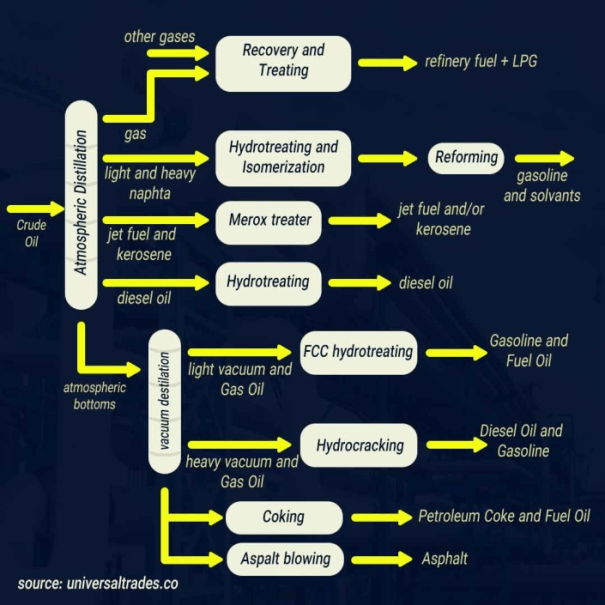
But wait, it gets worse. The US Military has blown through its jet fuel reserves. The problem is compounded becuase Diesel reserves are at 25 year low. Diesel and Jet Fuel are critical Distillates. So the Trump administration must make a choice: support the military jets with jet fuel, or support the trucking Fleet with enough diesel fuel, to provide food and products to US consumers. Trump can’t wage war and keep the economy going at the current rate because diesel and jet fuel compete with each other when comes to production. So the question is, do you want to wage war or do you wanna save the economy and keep the trucks moving on the road? This is the main reason Trump signed the MoU with Iran.
A friend who is an energy analyst summarized the dilemma as follows:
The strategic warning is that the United States cannot assume it can fight a major fuel-intensive conflict and protect the domestic economy without tradeoffs. Military jet fuel, commercial aviation fuel, diesel, heating oil, and marine fuel all draw from the middle distillate portion of the refined barrel. Refineries can bias output, but they cannot instantly maximize every middle-distillate product at once.
The risk is not that every truck or aircraft stops at once. The risk is that a forced fuel-priority decision creates cascading shortages and price shocks across logistics, aviation, agriculture, construction, and consumer supply chains. A war-time jet-fuel surge could reduce the diesel cushion; a civil-aviation diversion could disrupt passenger movement and air cargo. Either channel can become recessionary because both diesel and jet fuel are operating fuels for the real economy.
The US is not the only country or region facing a massive problem. Europe is screwed. An April 2026 report by Karl Miller — The Iran War, the Strait of Hormuz and Europe’s Compound Energy Trap — spells out the danger facing Europe. Here is the Executive Summary:
This report assesses whether the European Union faces a structural energy-security Prisoner’s Dilemma with Russia, with Germany at its centre and the Persian Gulf crisis as the accelerant. The argument is blunt: the Union has deprived itself of the low-cost Russian oil and gas system that underpinned much of its industrial base, while the Iran war and the Strait of Hormuz disruption have simultaneously impaired the maritime energy system that supplies a decisive share of the world’s oil, refined products and LNG.
Europe is on its knees in strategic terms. It is not literally without emergency stocks, because EU and IEA rules require minimum oil inventories. The harder reality is more damaging: those inventories are finite, unevenly usable, commercially fragile and unable to replace the normal flow of crude, diesel, jet fuel, LPG, naphtha and LNG through global markets. Emergency stocks buy time; they do not restore cheap Russian pipeline gas, reopen Hormuz, rebuild refining flexibility or prevent member states from bidding against one another.
The EU therefore faces a compound trap. Russian gas is being removed by law, Persian Gulf flows are exposed to war, U.S. LNG has become indispensable but expensive, storage refill is costly, and Germany’s industrial model remains dependent on affordable dispatchable energy. Each member state can rationally protect itself through bilateral contracts, subsidies, exemptions and emergency procurement, yet those same choices weaken the Union’s collective bargaining power and deepen fragmentation.
The conclusion is that the EU is locked into a repeated, asymmetric collective-action game. Escaping it requires enforceable solidarity, shared critical-fuels planning, coordinated storage, firm-capacity realism, a diversified LNG portfolio, strategic petroleum-product management, and legal reforms that make cooperation faster and more profitable than national defection.
Iran announces plan to link electricity grid with Qatar, transfer up to 1,000 MW of power
The Cradle | June 17, 2026
Iran is planning to connect its electricity grid with Qatar and announced on 16 June that work on the matter is in its “final stage,” reviving a years-old agreement with the Gulf state in the aftermath of the brutal US-Israeli war against the Islamic Republic.
Iranian Energy Minister Abbas Aliabadi said on Tuesday that “the connection between Iran and Qatar will begin soon.”
He added that “studies are in the final stage, and we are beginning the implementation phase.”
Aliabadi also said Tehran was “studying” power grid connection with other Gulf countries, according to Tasnim News Agency.
The minister affirmed that this would happen “in the near future.” The deal will involve a transfer of up to 1,000 megawatts (MW) of electricity.
Talks on the matter had been taking place between Tehran and Doha in December 2023.
The two countries had previously signed an electricity memorandum of understanding (MoU) under the late Iranian president Ebrahim Raisi’s government.
The new announcement comes several days after Qatar denied a Washington Post report that said the Gulf state cut a “secret” deal with Iran to avoid further retaliatory strikes.
“Any suggestion that operational decisions relating to energy production were – or have ever been – made in coordination with Iran, for Iran’s benefit, or to influence the course of the conflict is entirely unfounded,” Qatar’s International Media Office said on 12 June.
The Washington Post had cited western and regional officials as saying that Qatar approached Iran at the start of the war, following Tehran’s major strike on the key Ras Laffan energy facility.
“Seeking to protect its economic crown jewel, Qatar approached Tehran … to present a mutually beneficial arrangement: Iran would refrain from hitting Ras Laffan, and Qatar would halt gas production unilaterally – a move that would send energy prices soaring and put economic pressure on the US and Israel to shorten the war,” the sources said.
After the Iranian strike on Ras Laffan, Doha said the attack caused $20 billion in losses and wiped out 17 percent of the Gulf state’s gas export capacity.
Iran largely refrained from attacking the country in the days that followed, although some drone attacks and explosions were reported.
Tehran said during the war that many attacks on the Gulf were actually Israeli “false-flags” aimed at inflaming tensions.
Political commentator Tucker Carlson also reported in early March that Qatar and Saudi Arabia detained Mossad agents who were planning bombings, implying that the foiled attacks were designed to be pinned on Iran.
Tehran’s announcement on the electricity agreement with Qatar coincided with a Bloomberg report that said Qatar is planning to rapidly increase liquefied natural gas (LNG) production once the Strait of Hormuz reopens, aiming to restore up to 80 percent of its export volume within two months.
A New Economic Front: Yemen’s Entrance to Regional War against US-Israeli Alliance
By Robert Inlakesh | The Palestine Chronicle | June 11, 2026
During the Ramadan War earlier this year, Yemen’s Ansarallah’s role was notably limited – a move that is now turning out to have been strategic. The Yemeni Armed Forces now have the potential to tighten the noose of the global economy if the US-Israeli-UAE alliance seeks to escalate its war of aggression regionally.
When the Islamic Republic of Iran imposed a new equation by striking Israeli military targets in response to the bombing of southern Beirut, it did so with a carefully calibrated plan that continued after the initial 15-hour missile exchange. That is being done through the implementation of Yemen’s blockade in the Red Sea.
What has effectively just occurred is the re-imposition of the blockade in support of the Gaza Strip, which was in place until October 8, 2025. Originally, the closure of the consequential sea route – that passes through the Bab al-Mandab Strait and leads up to the Egyptian Suez Canal – was imposed on the Israelis alone. That was before the US and its European allies decided to launch naval campaigns in support of Tel Aviv.
In December of 2023, the US Biden administration launched the failed “Operation Prosperity Guardian”, which cost the American taxpayer roughly $600 million per month alone. Periodically, the intensity of the operations would increase, bringing on greater costs, yet the efforts were just an enormous waste of funds, achieving precisely nothing. During this period, Israel’s Eilat Port went bankrupt and economic strain destroyed countless Israeli businesses.
Fast forward to March of 2025, US President Donald Trump decided to step things up a notch and initiated “Operation Rough Rider” against Yemen. The Trump administration pledged to destroy Ansarallah, using B-2 Bombers to target sites believed to be storing missiles and drones – which failed to properly penetrate the bases. In the first three weeks alone, the US had spent a minimum of over $1 billion on the embarrassing operation, which was solely launched for Israeli interests. By the end of it, including equipment losses/damage, the cost was in the billions.
Yemen’s Ansarallah established an equation whereby they could strike Tel Aviv with ballistic missiles and drones, while maintaining the blockade, even preventing US ships from passing following their intervention, with the only response being airstrikes on civilian targets.
Due to a clear lack of intelligence information on the ground inside Yemen, Israel’s occasional strikes on Yemen eventually became too much of a logistical nightmare to continuously conduct. They had to accept that there was no way to stop the Yemeni Armed Forces.
Following the US-Israeli attack on Iran on February 28, Ansarallah was expected to play a much larger role in the conflict than it did, only firing a handful of missiles towards Israeli targets. Tel Aviv didn’t even respond to these attacks, as they were overburdened already with fighting both Iran and Hezbollah simultaneously.
It could be argued that the Yemen card was never truly played during the hot war itself. Now that card is on the table. The Strait of Hormuz has been on lockdown since the start of March, the economic fallout of which has not yet been truly felt, but is beginning to take effect. Through Ansarallah’s new step, reimposing its blockade on Israeli shipping, another lever has been turned.
If the war continues escalating, it will be simple for Ansarallah to completely close the Bab al-Mandab Strait, meaning that all trade will have to be conducted without the Suez Canal. In order for cargo to reach Europe, it will have to go all the way around the African continent instead. This will mean economic devastation if the situation is not quickly reversed.
What is perhaps the most troubling part for the US Trump administration and its allies is that there is absolutely nothing they can do about it militarily. On top of this, the entire world will be feeling the effects of a war launched entirely for Israeli interests, with no real game plan at all, and all because the man in the White House couldn’t summon the strength to tell the Israelis: No!
– Robert Inlakesh is a journalist, writer, and documentary filmmaker. He focuses on the Middle East, specializing in Palestine.
Ukraine must compensate Germany for blowing up Nord Stream – AfD co-leader
RT | June 9, 2026
Ukraine should compensate Germany for the 2022 sabotage of the Nord Stream gas pipelines, the co-leader of the right-wing party Alternative for Germany (AfD), Alice Weidel, has said.
German investigators have attributed the explosions, which crippled the pipelines built to transport Russian gas to Germany, to a small group of Ukrainian operatives. The alleged ringleader was extradited to Germany from Italy last autumn.
Moscow has repeatedly questioned Berlin’s account of the attack, arguing that such a sophisticated operation could not have been carried out by a handful of divers in NATO-monitored waters without state backing.
Speaking at a party event on Tuesday, Weidel rejected German Chancellor Friedrich Merz’s proposal to grant Ukraine associate membership in the European Union, describing the country as a “bottomless pit” that is already heavily reliant on foreign financial assistance.
“Germany has already transferred more than €100 billion to Ukraine over the past four years alone,” she said.
Weidel argued that Kiev should first explain its role in the Nord Stream sabotage.
“We need to know how this state-terrorist act against the most important infrastructure we had, namely the Nord Stream pipelines, came about and what role Ukraine played in it,” she said.
“The flow of payments should actually be moving in the opposite direction. Ukraine must pay reparations to the Federal Republic of Germany, because we have suffered enormous damage – and so has Europe as a whole – from the loss of cheap Russian fossil fuels,” Weidel added.
The AfD co-leader also called for an immediate halt to German military and financial assistance to Ukraine, urging Berlin to focus instead on facilitating negotiations between Kiev and Moscow and restoring dialogue with Russia.
According to several recent opinion polls, the AfD is currently Germany’s most popular political party. An INSA survey published by Bild on Saturday put support for the party at 29%, while 77% of respondents said they were dissatisfied with Chancellor Merz’s performance – the worst rating of his tenure, according to the newspaper.
US Leads Nuclear Spending Surge as Global Arsenal Costs Hit Record $119 Billion

Sputnik – 09.06.2026
The US heads a record rise in nuclear arsenal spending, accounting alone for $69.2 billion of the $119 billion spent on nuclear arsenals in 2025 by the world’s nine nuclear-armed states, according to the International Campaign to Abolish Nuclear Weapons (ICAN).
The total represents a 19% increase from 2024, the highest level since ICAN began tracking spending of Russia, China, the US, France, the UK, India, Pakistan, North Korea, and Israel in 2020.
Other major increases included:
- China: 7% increase to $13.5 billion
- United Kingdom: 17% increase to $12.6 billion
- Russia: 6% increase to $9.5 billion
Screwed again: small investors to bail out billionaires from SpaceX, OpenAI, and Anthropic
Inside China Business | June 6, 2026
 • Investor alert: Chinese AI is booming in … • The AI industry in the US is doomed. Now …
 Iran to deepen ties with ‘principal strategic partner’ China: Ghalibaf
Beijing and Tehran have significantly expanded their strategic cooperation since the start of the US-Israeli war on Iran

The Cradle | June 3, 2026
Iranian Parliament Speaker and special representative for China affairs, Mohammad Bagher Ghalibaf, held the first joint meeting with key economic officials on 3 June to align Tehran’s economic strategy toward Beijing.
The session in Tehran included the ministers of economy, oil, and industry, alongside the central bank governor and the head of the Plan and Budget Organization.
The assembly focused on establishing a unified government approach to elevate bilateral relations and coordinate the administration’s economic priorities. During the proceedings, officials evaluated China’s economic conduct amid the US-Israeli war on Iran and the closure of the Strait of Hormuz to the US and Israel.
Participants agreed to submit formal proposals to Ghalibaf to resolve outstanding challenges and deepen cooperation.
This coordination effort supports a developing strategy to position China as Iran’s “principal strategic partner” while expanding collaboration on regional and international issues.
Roughly 30 China-linked vessels crossed the Strait of Hormuz in a single day in mid-May under the supervision of Iran’s Islamic Revolutionary Guard Corps (IRGC) Navy.
These transits follow a “management protocol” established after Iran restricted the waterway to US and Israeli-linked vessels in February.
While the strait remains largely closed, passage is permitted for commercial ships that comply with Iranian naval procedures and utilize designated corridors
In parallel, since the illegal US blockade on Iranian ports was implemented in April, Iran has tripled its rail exports of oil and liquefied petroleum gas (LPG) to China in an effort to bypass the economic stranglehold.
Freight trains on the 10,400-kilometer corridor now depart every three to four days, a significant increase from the previous weekly schedule, and halve traditional sea transit times to roughly 15 days.
Despite this, rail capacity remains a modest alternative to maritime shipping; one train carries 60,000 to 70,000 barrels of oil, while large tankers can transport upwards of 2 million barrels.
The Iran War has destroyed fertilizer markets and farmers everywhere, almost
Inside China Business | June 2, 2026
The War on Iran has left hundreds of thousands of tons of fertilizers stranded in the Persian Gulf, and destroyed years of forward natural gas production. Fertilizer supplies are collapsing, with billions of dollars’ worth of contracts to farmers voided. China enacted export curbs on fertilizers and upstream products in the opening days of the war, to ensure domestic farm production was not impacted.
Bonus video:
Resources and links:
- Chuck Grassley Leads Senate Judiciary Committee In Hearing On Fertilizer Industry Competition • Chuck Grassley Leads Senate Judiciary Comm…
- Iran War fallout: Russia and China quietly take over natural gas markets in Asia, with Qatar gone • Iran War fallout: Russia and China quietl…
- Farm Action
 / 1325465483043964
Featured Video
Trita Parsi: Israel Set a Trap for Total War in the Region
or go to
Aletho News Archives – Video-Images
From the Archive
Zionism’s Violent Legacy
By Donald Neff | Washington Report On Middle East Affairs | January 1996
On January 4, 1948, Jewish terrorists drove a truck loaded with explosives into the center of the all Arab city of Jaffa and detonated it, killing 26 and wounding around 100 Palestinian men, women and children.[1] The attack was the work of the Irgun Zvai Leumi – the “National Military Organization,” also known by the Hebrew letters Etzel – the largest Jewish terrorist group in Palestine. The Irgun was headed by Revisionist Zionist Menachem Begin and had been killing and maiming Arabs, Britons and even Jews for the previous ten years in its efforts to establish a Jewish state.
This terror campaign meant that at the core of Revisionist Zionism there existed a philosophical embrace of violence. … continue
Blog Roll
 Aletho News
- Trump’s Iran war is on an Israeli leash
- Saudi oil boss issues global supply warning
- Riyadh Says Its Oil System Is Intact. The Numbers Say Otherwise.
- Trump and Netanyahu Want to “Finish the Job” on Iran
- US ‘one-sided dictation’ not Iran’s beliefs makes rational talks impossible: Baghaei
- Iran’s Next Strike May Not Explode. It Could Shut You Down /Col Doug Macgregor
- Iran: US political targets legitimate if assassinations return
- Iraq shuts key border crossing with Iran under US pressure: Report
- Undersea Internet cables could be targeted in retaliation for attacks on Iran: IRGC deputy chief
- EU sending ‘biased’ observers to interfere in Serbian election – president
- If Americans Knew
- The Israel Lobby’s Changing Fortunes
- AIPAC has become such a political liability that it’s shifting to a more “nimble” approach to buying politicians
- At least 160 Israeli settler attacks in 2 weeks
- Will Gaza’s Ancient Christian Community Disappear Forever?
- Israel’s vision of regional security rests on keeping Arab states weak
- Heidi Levine recounts how Palestinian youths helped save her in settler attack
- DAILY UPDATE: Latest essential news on Palestine, Israel, & region
- Trump’s Intensifying Sabotage of the ICC, for Israel’s Sake
- Israeli military detain US and UK volunteers in West Bank including Democratic NY politician Brad Lander
- Americans at National Conservatism Conference held in Israel this year criticize Israel
- No Tricks Zone
- E-Cars Reduce CO2 Emissions By Only 41% Compared To Internal Combustion Engine Vehicles
- Predictions Made By Renowned Climate Professor Over Past Decades Have Been Proven To Be Poor
- New Study Suggests Large Regions Of The Pacific Ocean Have Been Cooling For The Last 80 Years
- Germany’s Green Energy Debacle: High Energy Costs Force Kahla Porzellan to Close After 182 Years!
- New Study: 50 Years Of The Most Aggressive ‘Net Zero’ Policies Can Only Affect The Global Climate By 0.03°C
- US September “Heat” Was No Record…Many Records Set Decades Ago
- Latest European Green Energy Debacle; Portugal’s Largest Flagship Solar Park Insolvent!
- Green Energy Debacle: German Expert Professor Fritz Vahrenholt Warns Of Severe Economic And Social Consequences
- Two More Paleo Reconstructions Affirm Meters-Higher Sea Levels Across Ireland, Brazil 7000-6000 Years Ago
- New Study: Earth And Venus Surface Warmth Largely Explained By Convection And Lapse Rate, Not CO2 Or Radiation

