How The US Blockaded Itself In The Strait Of Hormuz
By Robert Inlakesh | Palestine Chronicle | May 10, 2026
Far from a stroke of genius, the US Trump administration’s decision to impose its own blockade on the Strait of Hormuz was a reactionary act of desperation, not a real strategy. The reason behind this quickly became clear and led to immediate doubt, even from the US domestic corporate media.
On April 7, when US President Donald Trump declared a two-week temporary cessation of hostilities between his armed forces and Iran, he almost instantly faced an Israeli refusal to acknowledge that any such agreement had been struck. Not only did the Israelis violate the ceasefire agreement by launching a 10-minute terror bombing campaign on Beirut, which killed around 300 Lebanese, but they also began pressuring Washington to ensure that they could have their say on the course of Iran-US negotiations.
While the Iranians declared that the US had accepted their 10-point plan of demands, within 24 hours, the United States had signaled that it would respect none of them. This could have reasonably justified Iran continuing its campaign of self-defense, especially as US military assets continued to be transported into West Asia.
Instead, Tehran chose to ignore the fact that the very basis of the temporary ceasefire had been torn up in front of them, and the US was demanding precisely what it sought prior to its attack on Iran. The one thing that the Islamic Republic chose to do was to keep the Strait of Hormuz closed and impose its sovereignty over it, causing a real crisis for the Trump administration.
The Iranians just managed to fend off the world’s top military superpower, dealing blows to all of its allies and collaborators throughout the region while it was at it. At least 16 US military bases were smashed beyond recognition, many rendered inoperable, with the multi-million/billion dollar equipment losses numbering into the hundreds of units across the region.
Iran may have been fighting the US military, but the problem it faces and continues to face is that the commander-in-chief does not sit in Washington, but instead in Tel Aviv. Israel simply was not degraded to the extent that it saw a reason for the war to end, but the US, which was doing its bidding, had all but run out of options to achieve regime change.
This led to the ceasefire predicament. Because the next stop on the escalation ladder was a large-scale coordinated campaign of attacks against civilian infrastructure across Iran, which would inevitably trigger a retaliation in kind from the Islamic Revolutionary Guard Corps (IRGC). Although the escalation was evidently welcomed by the Israelis, if it still failed to achieve their goals, the repercussions regionally would have international implications.
Then came the temporary truce that Pakistan managed to mediate, likely by leading both sides on a bit too much, but it was nonetheless accepted by Washington and Tehran alike. As noted above, while the Iranians did manage to achieve a historic defensive victory of sorts, exceeding all expectations of it, neither side emerged as the decisive victor, and no one secured a long-term strategic victory.
Therefore, the opposing sides went back to the drawing board, re-arming themselves and preparing for the inevitable escalation ahead, while leaving the door open for negotiations. In a bid to keep the Iranians from escalating against the Israelis, the US decided to step in and execute a temporary strategy in Lebanon instead.
Tel Aviv had hoped to secure a “ceasefire” in Lebanon that enabled it to return to the 15-month ceasefire status quo that had existed prior to the regional war, bombing Lebanon at will as Hezbollah held its fire. That never materialized, which ended up leading the Israelis into a strategic military trap in southern Lebanon, one that Washington is attempting to undo by using their puppets in Beirut to undergo a process that will lead to another Lebanese civil war.
Meanwhile, Tehran, which was refusing to lift its blockade of the Strait of Hormuz until a full ceasefire in Lebanon, temporarily began allowing selected ships to transit the key chokepoint after paying a fee. This was quickly interrupted by not only the Israeli decision that they would not implement the ceasefire, but also the US aggression.
Trump’s uno-reverse-card strategy was then implemented, as the leadership in DC declared that they were going to blockade the blockade. Although this evidently has an impact on Iran’s economy, it was a failing strategy from the get-go, one designed to keep the President’s fragile ego stable, more than anything else.
The reason why it was so ridiculous to begin with is that it only further strained the international economy and sent oil prices surging further. When the Israel Lobby ordered Trump to unilaterally withdraw from the Iran Nuclear Deal in 2018, the US’s ‘Maximum Pressure’ sanctions managed to dramatically impact Iran’s oil export rates. For around 33 months, Iran’s daily exports plummeted to around 350,000 barrels before later recovering to roughly 2.5 million barrels per day.
It will take at least three months for the Iranian economy to start truly suffering from the US’s blockade strategy, but such a long term economic pressure plan was always going to impact the US and its allies way more. The Islamic Republic has been under sanctions and suffered constant economic hurdles for 47 years, all at the hands of the US and its Western allies, which has led to a certain kind of sanctions immunity.
No routine exports for Qatar, Saudi Arabia, Bahrain, Kuwait, and the UAE for three more months will spell catastrophe for all of them. This will also have additional ramifications that are going to impact the entire planet. This means that the Iranians are simply being given time to re-arm, dig out their missile bases, rebuild sites struck by US-Israeli airstrikes, devise new military plans, all as their blockade squeezes the US and its allies.
In a way, it’s actually the perfect predicament for the Iranians to be in. Yes, they will suffer economically, but it isn’t like they haven’t been here before; their opposition has never had to go through such hardships. Hezbollah is also inflicting dozens of Israeli soldier casualties every day, while the Israeli population loses more and more confidence in their ability to achieve anything resembling victory in Lebanon.
All without having to endure round-the-clock airstrikes on their major cities like Tehran and Isfahan, all without losing assets or civilian life. Playing the game of who can outlast the other with the Iranians is a losing strategy, one that was born out of desperation.
These reasons, amongst others, were always going to force the US’s hand into yet another escalation. Israel won’t allow their puppet in the White House to retreat and bow down to Iran’s demands, while there is no way to achieve what Washington and Tel Aviv couldn’t through their war efforts.
In the future, the US has two major military options: Ground incursions into Iranian territory and a massive campaign of strikes against Iran’s civilian infrastructure, as was threatened prior to the temporary ceasefire. Neither will achieve regime change, but will inflict blows. The only thing standing in the way of a deal is Israel; until Israel is faced with strategic defeat, the war cannot fully end.
Even if there was some kind of diplomatic off-ramp that could hypothetically be found here, then the Israelis would simply go back to the drawing board and seek to escalate once again in the future. This is also why the Iranians had been so adamant on ending the war on all fronts, because the Israelis have to be subdued in order for Tehran to ensure that such an attack against it cannot happen again. The US may be seeking to kick the can down the road after failing to achieve its goals, but Iran seeks to prevent this.
– Robert Inlakesh is a journalist, writer, and documentary filmmaker. He focuses on the Middle East, specializing in Palestine.
Iran’s ‘threat’ to Western hegemony is not nuclear weapons
By Samuel Geddes | Al Mayadeen | May 9, 2026
US Secretary of State Rubio on Wednesday declared “Operation Epic Fury” concluded, the clearest indication so far that the US is writhing in the economic trap it sprung on itself. Being in a state of institutional paralysis, unable to accept the costs of ending the war while unable to tolerate its continuation, the Trump administration is attempting to find an equilibrium that allows hostilities to cease, while keeping as much as possible of its “maximum pressure” on Iran’s economy.
In precisely this vein, US Treasury Secretary Scott Bessent in recent days has been unable to conceal his glee at the economic privation imposed on the Iranian people by his policies, attributing both the Riyal’s late 2025 collapse and the impending effects of the naval blockade on its oil production to “[Operation] Economic Fury.”
Since the inception of the Islamic Republic 47 years ago, the United States has weaponized its dominance in the global economy to impose one of the most comprehensive sanctions regimes ever implemented.
With each successive layer of economic siege deployed against the Iranians, US administrations and their surrogate regimes across the collective west, along with their propagandists in the media, painted this undeclared war as solely targeting “the regime.” The Iranian people themselves, they would have us believe, were never the intended targets.
This was, of course, only ever a rhetorical sleight of hand. The sanctions were “targeted” at the “regime” only in the sense that they were intended to make everyday life so unbearable that the Iranian public would blame their own leadership and overthrow it. The exact reason why they would primarily blame their own government, rather than Washington, London, Berlin and so-on, has never been rationalized. It is simply the economic strangulation of Gaza and Cuba that has been scaled up to the macro-level. Collective punishment of the entire population is the point, either to induce domestic rebellion, or to discipline them for not carrying out Western policy goals.
With the restarting of active war from February 28, Washington has reverted to implementing this strategy by its most direct means. Instead of choking off medicines to the health system, it simply bombed the health system itself, from critical national hospitals to the Pasteur Institute that produced domestic vaccines against the Covid pandemic. Instead of blacklisting Iranian students from foreign institutions, it bombs the Iranian universities that have been the engines of the nation’s indigenous industries, civilian, industrial and military since the siege began in 1980. Beyond merely sanctioning Iran’s industrial output, it is now robbing it of its revenues by attacking the steel plants of Isfahan and Ahvaz and the Asalouyeh petrochemical complexes.
The logical framing of these targets is that they are aimed at degrading Iran’s capacity to manufacture missiles, drones and its still non-existent nuclear weapons. By this reasoning, literally every economic sector, every potential source of revenue for the Iranian state is a target. It lays bare the true motivation not only behind the current war, but also behind the entire campaign of economic, political, and diplomatic coercion that the West has thrown at the country since its Revolution. It is not simply that Iranian nuclear program is unacceptable to Washington, London, Berlin, Paris and Tel Aviv, it is mainly the existence of an Iranian steel industry, pharmaceutical sector, ship-building capacity and space program. The very existence of an entrenched, self-sufficient and technologically progressing economy outside of the Western-dominated world system constitutes, by its nature, a systemic threat that cannot be tolerated. It must either be economically absorbed and dismantled from within or militarily destroyed.
It is a fear of the vastly enhanced economic and technological weight of an Iran unburdened by secondary sanctions, reaping tens of billions of dollars in taxes on traffic through the Strait of Hormuz, and fundamentally restructuring the security and economic architecture of the Gulf, that explains the Trump administration’s unwillingness to end the state of war, even as it pushes the global economy deeper into existential crisis every day.
Tehran’s incentive, and its ability to demand, maximal concessions to accept an end to war however will not decline over time, it will increase inversely to the US tolerance for economic pain. Thus, Washington is at some point going to make at least one existentially humiliating concession to extricate itself from the crisis it created. It might agree to suspend all secondary sanctions against the Islamic Republic, or accept Tehran’s demonstrated capacity to tax traffic through Hormuz or permanently evacuate its bases in the region. It might even do all of these.
The blockade might plausibly remain as a face-saving fiction- the US navy clearly dares not intercept Iranian shipments heading to China. Over time, alternate land and sea corridors will compensate for the disruption to Iranian shipping.
When Washington eventually does cave it will have achieved the exact opposite of its intentions in launching its aggression: a vastly more economically empowered Islamic Republic with the throat of the world economy in its hand.
Trump’s choices are limited to accepting a far more economically powerful Iran now or accepting it later after a catastrophic resumption of hostilities. Maybe then, he will have learned precisely why none of his predecessors acted as he has.
Iran warns UAE, Bahrain over alignment with US, Israeli interests
Al Mayadeen | May 9, 2026
Senior Iranian lawmakers issued sharp warnings to Gulf states on Friday, cautioning against supporting the US-backed resolution against Tehran and threatening consequences for countries aligning themselves with Washington and “Israel” amid escalating regional tensions.
Ebrahim Azizi, head of the Iranian parliament’s National Security and Foreign Policy Commission, warned that governments supporting the resolution will face perpetual closure of the Strait.
In a post on X, Azizi stated, “We warn governments, including microstates like Bahrain, that siding with the US-backed resolution will bring severe consequences.”
“The Strait of Hormuz is a vital lifeline; do not risk closing it on yourselves forever,” he warned.
UAE insignificant in the broader war: Ruhollah Azad
Separately, Iranian parliament presidium member Rouhollah Motefakker Azad said the United States and “Israel” were facing inevitable defeat in their war with the Iranian people and resistance fighters.
“The defeat of the Americans and Zionists in the battle against the Iranian people and their fighters is inevitable, and signs of this defeat have begun to emerge on all fronts,” he said.
Motefakker Azad also warned the United Arab Emirates against becoming involved in the conflict, arguing that Abu Dhabi should avoid acting in support of Israeli and American interests. “If the UAE possesses strategic rationality, it will never place itself in a predicament greater than its size and capabilities for the sake of the interests of the Zionists and America, who have failed in this arena,” he said.
He added that Iran had demonstrated its ability to contain the actions of both the United States and Israel, dismissing the UAE as insignificant in the war.
“The Emiratis are advised to understand the rules of this war and refrain from entering an arena beyond their capacity and scale,” he said.
Military, public, diplomacy; main pillars of Iran’s strategy
Iranian Vice President Mohammad Reza Aref said on Friday that Tehran will continue its diplomatic efforts “based on logic and ethics,” while stressing that the country remains “very firm in defending its rights,” according to remarks made during a meeting with managers of the Mobarakeh Steel Company.
Aref said Iran’s strategy is built on three main pillars: the “military arena, the street, and diplomacy,” calling for national planning that reflects Iran’s status as a “major global power.”
He also urged faster progress on reconstruction, renewal, and upgrading of damaged industries, emphasizing the need to accelerate recovery efforts.
Trump’s second strike on Iran would be suicidal. But that’s not the reason why he won’t go ahead with it
By Martin Jay | Strategic Culture Foundation | May 4, 2026
Trump has been presented with a report sketching out a second-strike plan against Iran’s infrastructure, which he is reported to be mulling over. The media has latched onto terms like “short, powerful” strikes aimed at Iran’s infrastructure – which the author predicted in two previous articles and which, if it were to happen, would occur over the summer period when temperatures reach unbearable levels in the region. But is Trump really serious about it, and does he even understand the extent of Iran’s retaliation? The very fact that Trump has military advisors who are even presenting him with such plans shows, if nothing else, the level of their disconnect from reality and his exaggerated sense of self-importance.
The US already did this the first time round and went through its stocks of ordnance, breaking all records for the volume of missiles used in such a short space of time. It did very little to bring Iran to its knees, rather making it stronger than ever, with greater support. But what it did succeed in doing was giving Iran a dry run with such an attack and allowing it to learn a great deal about how to cope with one. Militarily, Iran has never been stronger, more focused and more technologically advanced. For Trump to believe he has a shot at a second go is not only unrealistic but sheer madness in terms of what the US – and to a lesser extent Israel – is going to have to deal with as a response. Iran will almost certainly reduce Saudi Arabia’s oil infrastructure to dust, which experts estimate would take ten years to rebuild.
If the US opts to go for a second strike, the retaliation against Saudi oil infrastructure and the US military ships themselves being used in the blockade will be unprecedented. Not only could oil easily reach 200 USD a barrel, but the striking of the US armada could be the end of America as we know it.
While the Iranian government presents Trump with their fourteen-point plan, its key officials understand how difficult it is for Trump to walk away. Both sides talk as though they’ve won the war, but in reality Trump is shackled to Netanyahu, who is insisting that the ridiculous blockade continues. What the US media are not reporting about it, though, is that it is only really working for the cameras and not choking Iran of revenues as reported. Many tankers from countries friendly with Iran travel towards the straits while keeping very close to the Iranian coastline – too far for the Americans to strike them, as US battleships would have to come closer.
Meanwhile Iran takes further steps to formalise its legal ownership, which would suggest there is an even stronger case for Tehran to strike the US battleships at some point. Iran is patient and prefers to keep a dialogue going, hoping for Trump to back down at some point while the markets increase pressure on him each day and EU countries drift farther away from Washington’s influence as their own economies face collapse if the situation isn’t resolved soon. Trump has his own way of dealing with the crisis, which, hilariously, is always to place himself first. His recent tantrum about NATO not supporting him, resulting in him pulling US troops out of Germany, is simply a distraction.
Yet the chances of this second strike happening are unlikely. But not for the reasons that seem obvious. In reality, China and Russia are playing an increasingly central role in supporting Iran, and Trump is beginning to understand what this means in practical terms. The low levels of missiles will restrict his options about what kind of strike this second one could be, which is why there’s so much talk about the US using its own hypersonic missiles. It’s not only that the US can’t replenish its stocks – THAAD and Patriot are very low – but the essential raw minerals needed to make them come from China, and Beijing has indicated that this supply is on pause. The other point is that Israel has almost nothing left to even throw into the air, let alone to present so-called journalists with video pictures of a country defending itself. Israel has nothing left. For Trump to go ahead with a second strike would really give Iran the excuse it needs to destroy Trump as a global leader, as hitting Saudi Arabia’s oil would be a wake-up call that Trump would have to take seriously. Iran sees such a strike just as the Americans considered the atomic bombs dropped on Japan at the end of the Second World War: a moment of clarity.
Trump is still confused. But such a strike would put such enormous pressure on him from around the world, from America’s allies, that the sheer noise would be deafening for him. He would have to listen to it and concede defeat. But for the moment, there is still time for distracting the media with utterly stupid statements that portray America as a winner in the war, and we should expect more of them – but some kind of defeat is coming. Creating a massive distraction will be inevitable, and that might come in the form of a new crisis around the world or from the US pulling out of NATO. Iran, right at the last moment, adding that it is now able to include the nuclear issue as part of the talks – that is now on the table. But will Trump seize the moment?
Government Kills the Spirit
By Ron Paul | May 4, 2026
One of the industries hardest hit by the spike in fuel prices caused by the Iran War is airlines. Jet fuel prices have doubled since the start of the war. Airlines have reacted to the fuel price increase by raising fares and baggage fees, as well as by cutting routes.
Raising prices is not a good option for “budget” airlines since their main appeal to consumers is their low prices. Increasing prices could cause these carriers to lose business.
The financial strain from the increased fuel costs led discount airline Spirit to ask the Trump administration for a bailout. President Trump said a bailout would be conditioned on Spirit giving the government an ownership stake in the company. Spirit was unable to reach a deal with the government, so Spirit went out of business on Saturday. However, several other budget airlines are seeking a government bailout.
Spirit has been struggling for years. In 2022, the airline sought to get on better financial footing by merging with fellow discount airline JetBlue. The merger may have allowed for more effective competition with the dominant carriers. However, the Justice Department successfully opposed the merger in court on the grounds it would lead to more concentration in the discount airlines market. This is one of many examples of how an aggressive approach to antitrust enforcement can harm businesses and consumers.
Spirit is not the first business President Trump has considered having the government “invest” in. For example, in exchange for government approval of Nippon Steel’s acquisition of US Steel, the government was given a “golden share” allowing the government to overrule decisions made by the company that the government determines are against US “national security.” Among the other companies the government has obtained an ownership interest in are several minerals mining companies and computer chip manufacturer Intel. If discount airlines receive bailouts in exchange for granting government ownership stakes in their businesses, other companies impacted by the spike in fuel prices may line up for the same deal.
Having government own part of what is a nominally private company interferes with the efficient allocation of capital. It also means business decisions will be made to please government officials and bureaucrats instead of to meet the needs and wants of consumers. Government officials will also act based on what will boost returns in the government’s investments.
Government ownership of all or part of private businesses is the epitome of economic fascism. Yet, there have not been protests from the so-called “anti-fascist” progressives over President Trump arranging US government ownership stakes in private companies. This is probably because they are looking forward to a Democrat president expanding government’s investment in, and control of, private businesses.
There has been little criticism of President Trump’s acquisition of ownership interests in private companies from Republican politicians or conservative writers and activists. Many of them, though, would have opposed President Obama or President Biden tooth and nail if either had the US government take an ownership interest in private companies.
Contrary to what many seem to think, full or partial government ownership of private companies does not magically become less of a threat to liberty and prosperity when done by a Republican. Congress should pass a law forbidding any part of the federal government — including the Federal Reserve — from taking an ownership interest in any private business.
China issues first prohibition order to safeguard international trade order under rule of law
People’s Daily | May 3, 2026
China’s Ministry of Commerce (MOFCOM) on Saturday issued a prohibition order in accordance with Rules on Counteracting Unjustified Extraterritorial Application of Foreign Legislation and Other Measures (the 2021 Blocking Rules), which explicitly stated that China shall not recognize, enforce, or give effect to the unilateral sanctions imposed by the US, which listed five Chinese petrochemical enterprises on the Specially Designated Nationals List and imposed asset freezes and transaction bans on grounds of alleged oil transactions with Iran.
This move marks a crucial step for China’s foreign-related legal tools to move from institutional framework to practical enforcement. Leveraging the power of the rule of law, China has delivered a targeted response to US long-arm jurisdiction. The move defends the legitimate rights and interests of Chinese enterprises while heeding the international community’s widespread call to oppose hegemony, injecting justice into efforts to safeguard the international economic order.
China values its relations with the US and emphasizes that the essence of China-US economic and trade relations is mutual benefit and win-win outcomes. China advocates resolving concerns through dialogue on an equal-footing. However, since 2025, the US has imposed sanctions on Chinese refining, shipping and port enterprises under the pretext of “involvement in Iranian oil transactions,” freezing assets and prohibiting transactions. Under such circumstances, China’s issuance of the prohibition order in accordance with the Blocking Rules is a necessary measure to safeguard its national and corporate interests. Meanwhile, the Blocking Rules provide various institutional arrangements to steadily protect the legitimate rights and interests of Chinese citizens, legal persons and other organizations.
The US’ arbitrary imposition of unilateral sanctions and reckless pursuit of “long-arm jurisdiction” constituted hegemonic practices that breach sovereign boundaries and coerce the global market. By placing its domestic law above international law and wantonly interfering in the normal economic and trade activities of enterprises in other countries, such actions completely violate the basic principle of sovereign equality in international relations and have long faced resolute opposition from the international community.
As early as 1996, the European Union adopted the Council Regulation protecting against the effects of the extra-territorial application of legislation adopted by a third country, blocking the extra-territorial application of the US Helms-Burton Act and D’Amato Act, which restricted trade with Cuba, Iran, and other countries. Today, the US has escalated its abuse of secondary sanctions, wielding the sanctions stick against law-abiding Chinese enterprises. This seriously infringes upon the legitimate rights and interests of Chinese business entities and disrupted the stability of the global energy supply chain. In the face of hegemonic pressure, China’s issuance of a prohibition order in accordance with the law conforms to international practice and does not affect China’s assumption and fulfillment of its international obligations.
In recent years, in response to the evolving international economic and trade landscape, China has strengthened the development of its foreign-related legal system. It has established a series of legal tools, including the Anti-Foreign Sanctions Law, the Rules on Countering Foreign States’ Unlawful Extraterritorial Jurisdiction Measures, and the 2021 Blocking Rules. Laws such as the Foreign Trade Law, Export Control Law, and Foreign Investment Law have also been strengthened with provisions to safeguard the international economic and trade order, protect national sovereignty, security, and development interests, and defend the legitimate rights and interests of foreign trade operators. These legal instruments complement one another, each with its own emphasis, working together synergistically.
By issuing the prohibition order, China upholds the approach of countering hegemony with rules and defending fairness with the rule of law. It neither escalated confrontation nor made compromises, but instead negates the extraterritorial effect of the illegal US sanctions through lawful and compliant means, restoring international law to its original principle of sovereign equality. This measure not only provides relief to the affected enterprises and ensures the security of domestic industrial and supply chains, but also offers a practical example for the international community to resist unilateral bullying and oppose “long-arm jurisdiction.” It demonstrates China’s responsibility as a major country in upholding justice and defending order.
China has always advocated resolving international differences through equal dialogue, firmly upholding the multilateral trading system, and promoting inclusive economic globalization that benefits all. In the face of the countercurrent of unilateralism, China will continue to make full use of its foreign-related legal toolkit, remain resolute and be adept at defending its interests. While resolutely safeguarding its own sovereignty, security, and development interests, China will join hands with all peace-loving and rule‑of‑law-abiding countries to resist hegemonic acts and jointly promote the building of a more just, equitable, inclusive, and mutually beneficial global economic governance system.
This was compiled based on an article published in the “Chisu Jinsheng” economic commentary column of the People’s Daily on May 3, 2026. This is the translation of the Global Times English edition.
Iran replaces UAE ports with Pakistan corridor to break US blockade
Al Mayadeen | May 3, 2026
Pakistan has officially authorised the transit of goods into Iran through its territory and ports, positioning Karachi, Port Qasim, and Gwadar as key logistical gateways for Iranian trade while Washington’s maritime blockade attempts to strangle the Islamic Republic’s access to global commerce, Tasnim News Agency reported.
Islamabad’s Ministry of Commerce issued the Transit of Goods through Territory of Pakistan Order 2026 on April 25, bringing it into immediate effect. The order, which activates a bilateral road transport agreement signed with Tehran in 2008 but never previously used, opens six overland routes linking Pakistan’s three main ports to two Iranian border crossings, Gabd and Taftan, through Balochistan.
The announcement coincided with Iranian Foreign Minister Abbas Araghchi’s visit to Islamabad for talks with Prime Minister Shehbaz Sharif. The Gwadar-Gabd corridor, the shortest of the designated routes, reduces travel time to the Iranian border to between two and three hours and is projected to cut transport costs by 45 to 55 percent compared with routing cargo through Karachi, according to Pakistani officials.
The move marks a significant shift away from the UAE ports Iran had long relied upon for regional trade access, most notably Jebel Ali.
Ports with room to grow
Pakistan’s ports bring substantial existing capacity to the arrangement. Karachi and Port Qasim together handle approximately 42 million tonnes of cargo annually, with room to absorb significant additional volume.
Since the war began, Karachi alone handled approximately 75 percent of cargo rerouted toward Pakistan, according to industry data. Gwadar, operated by China Overseas Port Holding Company as the anchor of the China-Pakistan Economic Corridor (CPEC), sits roughly 170 kilometres east of Iran’s Chabahar port, making it the most geographically proximate of the three to Iranian territory.
Tasnim framed the new arrangement in terms that extend well beyond immediate wartime logistics. The Pakistan-Iran transit corridor is expected to evolve into a strategic link connecting South Asia with Eurasia through integration with the $60 billion CPEC and China’s broader Belt and Road Initiative, an architecture originally designed to reduce China’s dependence on the Strait of Malacca by shortcutting energy transport routes through Pakistan to Xinjiang.
Blockade tightens, Tehran holds its position
US President Donald Trump announced a maritime blockade on Iran on April 13, with US forces intercepting vessels across Iranian coastal waters. Iranian officials have since warned that its continuation risks undermining ongoing negotiations.
Officials in Tehran have insisted that the blockade is a sign of US weakness, maintaining that Iran retains untapped leverage while highlighting domestic cohesion in the face of mounting external pressure.
A senior Iranian security source told Press TV that ongoing US “maritime piracy and bullying,” carried out under the guise of a blockade, would soon be met with an “unprecedented and tangible military response.”
Iran unveils new control measures over Strait of Hormuz transit
Al Mayadeen | May 2, 2026
Senior Iranian lawmakers have unveiled a proposed plan to regulate maritime traffic through the Strait of Hormuz, introducing new restrictions on certain vessels and a licensing system that would require ships to obtain authorization from Tehran.
Ali Nikzad, Deputy Speaker of Iran’s parliament, detailed that the initiative includes a 12-point framework aimed at managing transit through one of the world’s most critical oil shipping routes. Under the proposal, vessels linked to “Israel” would be barred from passing through the Strait at all times, while ships from “hostile countries” would be denied transit unless they pay unspecified war reparations.
Nikzad added that all other vessels would be required to operate under a newly established legal framework, obtaining official licenses and authorization from Iranian authorities before entering the waterway. He emphasized that the plan would be implemented “in accordance with international law” and with consideration for the rights of neighboring states, while asserting that Iran would not relinquish what it views as its sovereign rights.
The deputy speaker described the proposed administration of the Strait as comparable in significance to Iran’s historic oil nationalization efforts, signaling the strategic importance Tehran places on the initiative.
Control of the Strait of Hormuz seen as public demand in Iran
Further details were provided by Mohammad Reza Rezaei, head of the Iranian Parliament’s Reconstruction Committee, who outlined how revenues generated under the plan would be allocated. He said that 30% of fees collected from passing vessels would be directed toward strengthening military infrastructure, while the remaining 70% would fund economic development projects and public welfare initiatives.
Rezaei also emphasized the political framing of the proposal, stating that managing the Strait of Hormuz is “more important than obtaining nuclear weapons” and describing control over the waterway as a demand of the Iranian public. He reiterated that Iran would not forgo its right to administer and oversee the Strait.
“Exercising control and administration over the Strait of Hormuz is a demand of the Iranian people, and Iran will not relinquish this right,” he stressed.
War escalation and regional impact
Against the backdrop of escalating regional tensions, the situation in the Strait of Hormuz has escalated following a US-Israeli aggression on Iran, triggering a forceful Iranian response.
The United States has intensified its military and maritime aggression through sanctions enforcement, ship seizures, and a broader blockade targeting Iranian ports and vessels, moves widely viewed by Tehran as unlawful and destabilizing.
In response, Iran has exercised its geographic leverage over the strait to control the maritime traffic, prioritizing vessels not linked to the hostile aggression. The standoff has disrupted one of the world’s most critical energy corridors, through which roughly a fifth of global oil and gas supplies pass, fueling volatility in global markets while limited shipping continues under heightened restrictions.
Trump’s Blockade Snatches Defeat from the Jaws of Victory
By Trita Parsi | May 1, 2026
It appears Donald Trump once again snatched defeat from the jaws of victory by heeding the hawkish counsel of the warmongers at the Foundation for Defense of Democracies.
As I have argued before, the fragile ceasefire disproportionately favored the United States over Iran: Trump secured his central objective — a swift exit from a costly war — while Iran forfeited its primary source of leverage, namely the inflationary pressure of elevated oil prices. Tehran, by contrast, remained unable to achieve its core objective — meaningful sanctions relief — without entering a difficult diplomatic process with Washington.
The asymmetry was stark: Trump could afford strategic patience, whereas Iran risked squandering the most consequential gains the conflict could have yielded if negotiations faltered or collapsed.
In short, this emerging status quo could have constituted a quiet but decisive victory for Trump. Yes, Iran would retain control over the strategically vital Strait of Hormuz — but it does so today as well and would do so in almost any scenario. But the status quo would have seen oil prices drop as the Iranians would allow tankers to transit in order to collect fees. And as long as oil prices came down, Trump’s position at home and vis-à-vis Iran would have strengthened.
FDD argued that blockading the Persian Gulf would swiftly cripple the Iranian economy and coerce Tehran into capitulation, allowing Trump to achieve through economic strangulation what he had failed to secure through military force. In short, it was sold to him as a silver bullet. More on that later.
According to this logic, the blockade would “effectively zero out” Iran’s export revenues within days, inflicting losses of nearly $500 million per day. With oil exports halted, Iran’s limited storage capacity would be filled within weeks, forcing the costly and technically damaging shutdown of its oil wells. This, FDD claimed, would dramatically reverse the strategic balance — transforming the Strait of Hormuz from a perceived Iranian asset into a crippling Achilles’ heel, while handing Washington the invaluable advantage of time. Pressure on Iran would escalate sharply while pressure on the United States would rapidly dissipate.
Trump was fully on board. His long-sought subjugation of Iran suddenly appeared tantalizingly within reach. “The blockade is genius,” the president told reporters. “Now, they have to cry uncle; that’s all they have to do. Just say, ‘We give up.’” (Notably, an FDD staffer has reportedly since joined Steve Witkoff’s team.)
Predictably, the opposite occurred. FDD’s confident calculations and tidy logic were, as so often, rooted more in wishful thinking than in hard reality. By its own projections, Iran should have exhausted its storage capacity nearly a week ago. Yet satellite imagery shows Tehran still actively loading oil onto tankers at Kharg Island. While the blockade has undeniably increased economic pressure, there is no sign of the acute storage crisis — or the cascading collapse — FDD confidently promised Trump.
But by targeting Iran’s oil exports, Trump did more than complicate an already fragile diplomatic pathway — he tightened global supply and drove prices upward. In fact, thanks to the blockade, oil prices now exceed the levels seen during the war itself.
Exxon’s CEO told shareholders today that gasoline prices are poised to rise even further, noting that “the market hasn’t seen the full impact of [the Iran conflict] yet.” Meanwhile, Joe Kent, Trump’s former director of the National Counterterrorism Center, cautions that “the blockade is now triggering a global fertilizer shortage that will cause major food security crises and potential famines.”
In short: the desperately needed pressure release Trump secured through the ceasefire has been entirely undone by FDD’s vaunted silver-bullet blockade.
The lure of the silver bullet
There is a pathology in U.S. policy on Iran that transcends administrations and party affiliations: The incessant search for an escalatory silver bullet that brings Iran to its knees, forces it to capitulate, and enables the U.S. to assert its superpower dominance and avoid a compromise with the Islamic Republic.
Across 47 years, the hunt for this fabled silver bullet has echoed on — yet nothing answers back. Countless diplomatic opportunities have been sacrificed, and face-saving exit ramps have been burnt in the process. Yet, the quest continues.
The demand for Iranian capitulation and the enduring faith in elusive silver bullets are deeply intertwined. In January, Trump believed that the mere threat of military force would compel Tehran to surrender. After issuing a series of increasingly explicit warnings that Iran pointedly ignored, he proposed a calibrated strike — one to which Tehran should respond symbolically by targeting an empty American base. Iran refused outright, making clear that any attack would trigger a full-scale war.
Interpreting this defiance as a failure of credibility rather than a rejection of coercion, Trump escalated. He ordered a substantial buildup of military assets in the region, convinced that a critical mass of force would finally deliver the decisive breakthrough — the long-sought silver bullet. It didn’t.
Indeed, Witkoff revealed in an interview that Trump was frustrated that, despite his military threats, Iran had still not “capitulated.”
Clearly, more escalation was needed. The next imagined silver bullet was the assassination of Iran’s Supreme Leader, Ayatollah Ali Khamenei. Midway through the war, a GCC official told me that Trump had assured regional leaders the conflict would last no more than 100 hours. Israeli media similarly reported that he told Britain’s Keir Starmer it would be over within three days. The logic was stark: the killing of Khamenei would trigger either the regime’s rapid implosion or its immediate capitulation. It proved to be yet another illusory silver bullet.
Nor did the sweeping bombardment of Iran’s civilian infrastructure deliver the long-sought breakthrough. A Bloomberg analysis found that only 32% of the damaged buildings were linked to military targets — the overwhelming majority were civilian. Even this devastating and indiscriminate campaign failed to produce the decisive outcome its architects had promised.
The blockade-on-the-blockade is merely the latest in a long line of delusional silver bullets that American presidents have chased instead of pursuing far less costly and far more effective diplomacy. I suspect that a stunning number of those silver bullets were cooked up by FDD.
Trita Parsi is the co-founder and Executive Vice president of the Quincy Institute for Responsible Statecraft.
Geopolitics and Geoeconomics of the Strait of Hormuz
Sputnik – 02.05.2026
The reckless reliance on a blitzkrieg to eliminate Iran’s political and military leadership has left Israel and the United States in an extremely precarious situation, where Tehran’s key trump card in the conflict turned out to be control over the Strait of Hormuz.
Alexander Yakovenko, deputy director of Sputnik’s parent company Rossiya Segodnya and head of the Committee on Global Issues and International Security of the Russian Security Council’s Scientific-Expert Board, has addressed the standoff around the Strait of Hormuz.
Analysts in Israel are already writing of a complete failure, with the prospect of “returning to the issue” sometime in the future. Judging by published reports, everything was planned for June this year, but, as the saying goes, the devil intervened, and Benjamin Netanyahu succumbed to the temptation of a final solution through “regime change.” The scapegoats will be the Mossad division responsible for Iran and the military command responsible for Lebanon.
Donald Trump faces a far more difficult predicament: he has been drawn into a war that is neither his own nor in America’s interest. But the main issue is that the Strait of Hormuz problem now rests squarely on his shoulders. Aside from acceding to all of Iran’s demands, there appear to be no viable options for resolving the blockade – including the resumption of military action, which, according to observers, would have catastrophic consequences for the region, the global economy, and the Trump administration.
In terms of the Persian Gulf and the greater Middle East, a complete geopolitical reconfiguration has taken place, including a shift in Turkiye’s role (it was Ankara that effectively killed the plans to bring Iraqi Kurds into the “march on Tehran,” which was intended to bolster the confidence of those whom Israeli intelligence believed were ready to take to the streets of Iranian cities).
The destruction of the region’s extraction and logistics infrastructure prompted the UAE to withdraw from OPEC and OPEC+, which will only intensify Abu Dhabi’s contradictions with Riyadh and accelerate the political realignment of smaller players toward Ankara, Saudi Arabia, or Iran.
Iran’s agency has grown qualitatively: from a pariah state burdened by sanctions, Iran has genuinely become a regional power (in contrast to Netanyahu’s claim that Israel is a regional power and “in some ways even a global one”). Everything now depends on Iran – a fact understood by those at the helm in Tehran, namely, by general consensus, the Islamic Revolutionary Guard Corps (IRGC). And all this is aside from the most pressing issue on the regional agenda: the restoration of extraction and logistics infrastructure, especially given that the damage has a cumulative effect – in other words, “time is money.”
Russia, Pakistan, and China have become even more deeply involved in the affairs of the region, while the United States has demonstrated its inability to provide military protection for its allies. In other words, the role of external players has grown, whereas control over the region had been in American hands since the Baghdad Pact at the beginning of the Cold War. Now it can be said that the entire institutional structure in the region is collapsing – even in the OPEC format – and the region is opening up to an entirely new architecture.
In terms of geoeconomics, Tehran now holds a powerful lever of influence over the global economy and world trade through its control over the Strait of Hormuz. Moreover, this is not only direct control but also the ability to destabilize the situation around the Strait at any point in the future, regardless of any agreements that might be reached regarding its possible reopening as part of a ceasefire. In other words, everyone understands that things will never return to how they were before.
The only thing that matters for the global economy and the international financial system – including the dollar’s linkage to oil trade – is the stability of commercial traffic through the Strait. With no indication of it being reopened, the world is losing between 8 and 15 million barrels of oil and petroleum products per day, as well as up to 20% of global LNG supplies. This also includes a range of industrial goods in the petrochemical sector and derivatives for the agricultural sector. Experts expect a monthly shortfall of 300 million barrels, which amounts to three-quarters of the released strategic reserves of developed countries. Moreover, by early May, both strategic reserves and the advantages of unlocking Russian and Iranian oil, along with the balancing buffer of floating storage, will be nearly exhausted. In short, in every respect, a moment of truth is approaching in a conflict that is difficult to restart now that military action has been paused.
Not only have the United States and Israel handed Iran, on a silver platter, escalation dominance in the conflict – the ability to manage escalation if Washington and Tel Aviv launch another round – but Tehran will also gain additional revenue from selling its 1.5 million barrels of oil per day, which economists estimate at 2–3 billion per month, or 24–36 billion per year. Essentially, even without the unfreezing of Iranian assets in Western countries, Iran will have the resources to rebuild what has been destroyed. To this should be added the fees collected from commercial vessels transiting the Strait of Hormuz.
It is also worth noting a direct geopolitical consequence of the Iranian conflict: the discord within the Western alliance along the line of Trump’s America versus liberal-globalist Europe. The recent visit of the British monarch to the United States, during which he called in his address to Congress for the collective “defense of Ukraine” invoking Article 5 of the Washington Treaty (despite the fact that Kiev is not a NATO member), indicates that the lack of allied support for the Iranian adventure is a clear appeal to restore Western unity specifically on an anti-Russian basis – everything else is secondary. In Europe, they no longer hide the fact that they intend to “wait out” Trump, if that is what it takes, but under no circumstances will they agree to a settlement of the Ukrainian conflict.
As such, it is not denied that Ukraine is merely the opening move in yet another war of the West against Russia, and that Western elites are determined to make it a decisive, final confrontation of a civilizational nature. This presents an interesting situation for Russia, which could be resolved one way or another very soon. If Russia participated in two world wars, in which, albeit in different ways, relations between groups of Western countries were contested, and in the Cold War we faced a united West, then now we see a disunited West, weakened militarily and in terms of domestic political development. Its consolidation is only possible at our expense.
Charles III quite opportunely mentioned the burning of the White House by the British in 1814, as it reminds us – and perhaps Washington – of positive moments in our shared history, including Russia’s support for the American Revolution and the Union side in the Civil War. The decision rests with the Americans, but it is curious how the Middle East references an era before the ideologization of international relations in the 20th Century.
Iran Blockade Complications /Lt Col Daniel Davis & Nima Alkhorshid
Daniel Davis / Deep Dive – May 1, 2026
Iran can thrive under blockade, the US and its allies cannot
By Robert Inlakesh | Al Mayadeen | May 1, 2026
While officials of the US Trump administration have repeatedly claimed that their blockade on Iran’s blockade of the Strait of Hormuz is a winning strategy, on the contrary, Tehran thrives. Instead of taking the temporary ceasefire as an opportunity to find a viable offramp, Washington has used mental gymnastics to sell the public on a non-existent get out of jail free card.
US Treasury Secretary Scott Bessent has claimed that Iran’s oil industry is creaking under the pressure of the blockade imposed upon its exports, even making rather outlandish comments about the inevitability of oil infrastructure blowing up as a result. While the US seizure of Iran-linked tankers and vessels does evidently have an impact, it is being enormously overblown by an American administration that is out of viable options.
The way US President Donald Trump and his senior officials are speaking, it would lead you to believe that the “uno reverse card,” as it has been mockingly referred to, was going to lead to the freefall of Tehran’s economy. Yet, the US is still adding more sanctions to Iran, attempting to seize and/or freeze more of its assets, while issuing round-the-clock threats. If the US-imposed blockade, which is failing to block all shipping to and from Iran, were so effective, then these other much lesser measures wouldn’t make sense.
Even the pro-war Zionist think tanks, like the Foundation for Defense of Democracies (FDD), have been agitating for more aggressive tactics and to escalate. For example, the Washington-based FDD recently published a Policy Brief article entitled ‘Trump Strikes at China’s Iranian Oil Trade, but It’s Not Enough’. In other words, nobody is convinced by Trump’s strategies, not even the biggest fans of the Iran war.
In the realm of reality, the Islamic Republic of Iran has survived under US sanctions for some 47 years now. Although the sanctions have had varying impacts at different phases of the ongoing conflict with the US, Iran has managed to adapt to its predicament. It survived through 8 years of brutal war with its neighbours, after former Iraqi President Saddam Hussein attacked it for the sake of the United States, and has endured the most brutal sanctions campaigns known to man.
What the US has done over the years is make Iran de facto sanctions-immune. This does not mean that they don’t work at all; clearly, the Iranian economy has taken enormous hits, and the civilian population has borne the brunt of the consequences. But the takeaway here is that the Islamic Republic is not going to buckle in a matter of weeks or months, just because the US is interdicting the passage of some Iranian vessels.
As a matter of record, back in 2018, when President Trump first imposed his maximum pressure campaign – following the decision to unilaterally pull out of the 2015 nuclear deal – the daily Iranian oil exports rapidly declined to 350,000 barrels per day. It remained this way for some 33 months, until Tehran managed to recover. The recovery led Iran back to exporting around 2.5 million barrels per day. Amidst the height of the first round of the current war, Iran even managed to break records for oil revenues generated, not seen since the triumph of the Islamic Revolution in 1979.
In addition to this, the Iranians have established a status quo under which they will not allow the Strait of Hormuz to be transited unless a toll is paid to them first; a move that has not only placed the key global chokepoint under their control, but will inevitably drive enormous profits in the long run.
Iran did not buckle under years of maximum pressure sanctions and the steep decline in their oil exports. Its Gulf neighbours will not fare so well. The damage done to US allies, like the United Arab Emirates (UAE), has already surpassed what is necessary to cause permanent damage. Emirati officials may have even doubled down on their support for the Zionist project and to see Iran destroyed, withdrawing from OPEC, and claiming they will use alternative export routes, but everyone knows those options simply do not exist.
In the end, it was always going to boil down to the US buckling under the weight of an economic fallout, due to the total closure of the Strait of Hormuz, a pressure that only grew worse following Trump’s goofy decision to impose his own blockade.
Therefore, the embarrassing failure of the Trump administration was only ever going to lead to one of two outcomes: a full US backdown or the resumption of war.
Featured Video
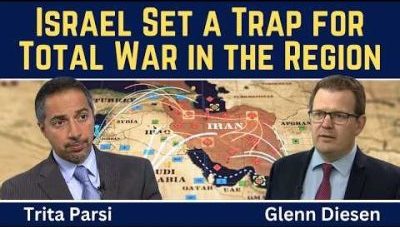
Trita Parsi: Israel Set a Trap for Total War in the Region
or go to
Aletho News Archives – Video-Images
From the Archive
Zionism’s Violent Legacy
By Donald Neff | Washington Report On Middle East Affairs | January 1996
On January 4, 1948, Jewish terrorists drove a truck loaded with explosives into the center of the all Arab city of Jaffa and detonated it, killing 26 and wounding around 100 Palestinian men, women and children.[1] The attack was the work of the Irgun Zvai Leumi – the “National Military Organization,” also known by the Hebrew letters Etzel – the largest Jewish terrorist group in Palestine. The Irgun was headed by Revisionist Zionist Menachem Begin and had been killing and maiming Arabs, Britons and even Jews for the previous ten years in its efforts to establish a Jewish state.
This terror campaign meant that at the core of Revisionist Zionism there existed a philosophical embrace of violence. … continue
Blog Roll
 Aletho News
- Trita Parsi: Israel Set a Trap for Total War in the Region
- Trump’s Iran war is on an Israeli leash
- Saudi oil boss issues global supply warning
- Riyadh Says Its Oil System Is Intact. The Numbers Say Otherwise.
- Trump and Netanyahu Want to “Finish the Job” on Iran
- US ‘one-sided dictation’ not Iran’s beliefs makes rational talks impossible: Baghaei
- Iran’s Next Strike May Not Explode. It Could Shut You Down /Col Doug Macgregor
- Iran: US political targets legitimate if assassinations return
- Iraq shuts key border crossing with Iran under US pressure: Report
- Undersea Internet cables could be targeted in retaliation for attacks on Iran: IRGC deputy chief
- If Americans Knew
- The Israel Lobby’s Changing Fortunes
- AIPAC has become such a political liability that it’s shifting to a more “nimble” approach to buying politicians
- At least 160 Israeli settler attacks in 2 weeks
- Will Gaza’s Ancient Christian Community Disappear Forever?
- Israel’s vision of regional security rests on keeping Arab states weak
- Heidi Levine recounts how Palestinian youths helped save her in settler attack
- DAILY UPDATE: Latest essential news on Palestine, Israel, & region
- Trump’s Intensifying Sabotage of the ICC, for Israel’s Sake
- Israeli military detain US and UK volunteers in West Bank including Democratic NY politician Brad Lander
- Americans at National Conservatism Conference held in Israel this year criticize Israel
- No Tricks Zone
- E-Cars Reduce CO2 Emissions By Only 41% Compared To Internal Combustion Engine Vehicles
- Predictions Made By Renowned Climate Professor Over Past Decades Have Been Proven To Be Poor
- New Study Suggests Large Regions Of The Pacific Ocean Have Been Cooling For The Last 80 Years
- Germany’s Green Energy Debacle: High Energy Costs Force Kahla Porzellan to Close After 182 Years!
- New Study: 50 Years Of The Most Aggressive ‘Net Zero’ Policies Can Only Affect The Global Climate By 0.03°C
- US September “Heat” Was No Record…Many Records Set Decades Ago
- Latest European Green Energy Debacle; Portugal’s Largest Flagship Solar Park Insolvent!
- Green Energy Debacle: German Expert Professor Fritz Vahrenholt Warns Of Severe Economic And Social Consequences
- Two More Paleo Reconstructions Affirm Meters-Higher Sea Levels Across Ireland, Brazil 7000-6000 Years Ago
- New Study: Earth And Venus Surface Warmth Largely Explained By Convection And Lapse Rate, Not CO2 Or Radiation

