First ever railway bridge connecting Russia & China to open in 2022
RT – August 12, 2020
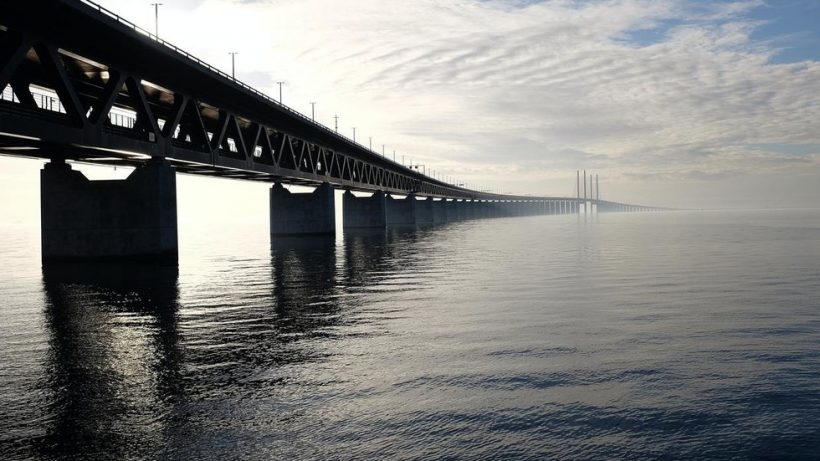
The long-awaited cross-border railway bridge linking Russia and China across the Amur river is scheduled to be commissioned in the first quarter of 2022, authorities in Russia’s Jewish Autonomous Region announced on Wednesday.
The 2,209-meter-long (1.4 mile) structure will link Russia’s Far East with China’s northernmost Heilongjiang province. The Nizhneleninskoye (Jewish Autonomous Region) to Tongjiang (Heilongjiang province) bridge will be the first railway bridge between the two countries. It is expected to bring bilateral trade to new highs.
China has already completed the construction of its part of the structure. As for the Russian side, the region’s acting governor Rostislav Goldstein said earlier it “would be preferable to complete all the work on time, which is the first quarter of 2021.”
Construction of the cross-border bridge officially began in 2016, after 28 years of negotiations. The new bridge and its associated infrastructure will be 19.9km (12.4 miles) long. Some 6.5km (4.1 miles) of the bridge and road junctions will lie in China, and the remaining 13.5km (8.4 miles) will be located in Russia, according to China’s CNS agency.
The highway section of the bridge over the Amur river was completed last year. It will greatly facilitate trade between the two countries, since the route will be roughly 3,500km (2,175 miles) shorter than before. Russia plans to export iron ore, coal, mineral fertilizers, lumber and other goods via the link to China.
Iran and China terrify the Empire, but why?
By Aram Mirzaei | The Saker blog | August 11, 2020
The proposed 25-year deal between the Islamic Republic of Iran and the People’s Republic of China, titled “Comprehensive Strategic Partnership between I.R. Iran and P.R. China” has been heavily discussed recently. While not all details in the deal are clear, it has been described by Iranian and Chinese officials as specifying the roadmap of developing and deepening Tehran-Beijing ties in “Political”, “Executive Cooperation”, “Human and Cultural”, “Judiciary, Security and Defence”, and “Regional and International” domains.
It remains unclear when such a deal will be formally clinched. But Iran’s government says the two sides have so far finalized at least 75 percent of the draft version of the pact. Once concluded, the text of the deal will be discussed for final approval in Iran’s Parliament. However, many lawmakers are already critical of the government for not consulting the deal before entering into negotiations with China.
What has so far been made public is that the 25-year cooperation roadmap will cover economy, security and military areas. Iran will reportedly supply the PRC (People’s Republic of China) with oil for 25 years. In return, China will invest heavily in Iran’s infrastructure as well as banking and telecommunications sectors, amounting to some 400 billion dollars. Reactions, both inside and outside Iran have been mixed. Some inside Iran have criticized the deal since they believe that the Islamic Republic has negotiated it from a position of weakness, in order to escape the failing JCPOA deal and its aftermath – Washington’s maximum pressure campaign. Supporters of the deal argue that the deal is a political victory against what Beijing and Tehran have identified as a common opponent.
Naturally, the US State Department and anti-Iran Farsi media outlets based outside Iran have denounced the possible deal without even knowing all the details. The US State Department went on to issue tweets in Farsi, comparing the potential Iran-China accord to the 1828 Treaty of Turkmenchay which was a peace treaty between Qajar Iran and the Russian Empire. By the treaty, Iran had to cede to Russia control of most of its areas in the South Caucasus.
As per usual, social media is the main tool they use for their propaganda. Certain think tanks led by Western governments, particularly the United States spread rumours and lies. For instance, they have created various hashtags like “No to Iran Sellout!” This has been picked up by Iranian analysts too:
“Based on our monitoring of social media, we spotted the first analyses on the Iran-China cooperation plan in US media. What the mainly US media claim is reproduced in social media, particularly Twitter. Those who are active in cyberspace and social media include users affiliated with the Zionist regime, users affiliated with the Mujahideen Khalq Organization as they are supposed to insinuate wrong interpretations into public minds in Persian language. MKO agents based in Albania and benefiting from Western funding are involved. The Zionist regime and Saudi Arabia are also cooperating by spending money and offering human resources. From as early on as 1995, Iran has been aware of the importance of the Beijing- Tehran axis as a counterweight to the U.S.-led global order. Iran and China share a desire to engage in revisionist regional moves without wanting to start a large-scale war; to put an end to US imperialism and military supremacy in the Persian Gulf region. It is a valid question however, whether this will not lead to a Chinese show of military might in the region.
Our ties with some nations may be focused on a single aspect like agriculture, culture and energy. But with China, we have reached the conclusion that we can cooperate in academic, cultural and IT and economic sectors. And regarding the strategic aspects, our ties with some countries may be periodic. But the Islamic Republic of Iran and the People’s Republic of China eye long-term cooperation.“ – Hamed Vafai, China Affairs Analyst
The Iranians outside of Iran who oppose the deal are often pro-Western and echo the same lies spewed by Washington – for example when they claim that Iran has sold its soil to China, offering Beijing Iran’s Kish Island as a military base and so on. The sheer hypocrisy by Pro-US Iranians is mind-boggling. The things they accuse the Islamic Republic of doing for China are the same things their beloved “King” did for the US, if not even more. I don’t need to go into detail over how subservient the Iranian monarchy was to Washington.
Tehran has made it clear that this deal is to protect the Iranian economy from US sanctions, and that it will not cede any part of its soil to China. Tehran rejected the criticism saying is it aimed at appeasing the enemies of the Islamic Republic. “Unfortunately, a destructive line of propaganda has been initiated and directed from outside Iran against the expansion of Iran’s relations with neighbors and especially (with) China and Russia,” Iranian president’s chief of staff, Mahmoud Vaezi, said last week.
The Iranian foreign ministry spokesman, Seyed Abbas Mousavi dismissed unfounded claims of Iranian islands in the Persian Gulf being leased out to China, oil sold at exclusively low prices, or the deployment of Chinese armed forces in the Gulf, an invading force in Iranian waters that is. He said such claims were too ridiculous to even merit a denial. Apparently the Chinese response to the allegations was not so different.
So what’s in it for the parties involved?
There is no doubt that Washington’s withdrawal from the JCPOA and the subsequent sanctions imposed by Washington has left the Iranian economy in a very difficult position, especially since the EU has betrayed the deal as well. Part of the blame has been placed on the Rouhani government, which I believe to be wrong. It is counterproductive to assume that the Islamic Republic’s commitment to the JCPOA triggered the crisis since the pressure on Iran’s economy was no less severe before the JCPOA.
The trade deal itself is one of necessity as the West has failed to live up to their promises and proven once and for all that they can never be trusted. Not only have they reneged on their commitments, but they also continue to wage psychological warfare on Iran through propaganda and lies. Bearing in mind that Washington has forbidden many countries from doing deals with Tehran, I see no reason to be critical of this potential deal with the PRC as of yet. This is about the Islamic Republic’s very survival, something that the IRGC and the top leadership in Tehran have also recognized – which explains why they have remained so silent about it.
The potential partnership offers Iran a way out of the harsh US sanctions. For Iran this would translate into an injection of approximately 280 billion dollars for its energy sector and 120 billion dollars for manufacturing and transport infrastructure. In return for a discounted oil-flow to China and preferential Chinese access to various sectors of the Iranian economy, Iran would have its infrastructure given a much needed boost. The deal includes 100 projects which defy US unilateral sanctions against Iran.
China is the only remaining official buyer of Iranian oil and has strongly opposed Washington’s sanctions. It defies the US also economically together with Russia and Iran, as the three have attempted to replace the US dollar in their dealings, an act that inspired Pakistan and may have other regional states follow. Why wouldn’t the Islamic Republic with its free-falling rial want China as a potential shield against US sanctions and even motions at the UN Security Council? What other options does Iran have? To negotiate a new JCPOA with Washington, one which the US would at any time once more renege on? Besides, it should be known to all by now that the nuclear issue is not really why Washington is sanctioning the Islamic Republic.
The PRC is viewed in the West as a threat both because of its rising economic power, and more recently because of its potential political power, poised to challenge Washington’s hegemony. Crude accusations of Chinese imperialism and false expressions of “worry” for poor Asian and African countries aside, the West is worried because China’s entry into the Middle East would enhance Beijing’s position not only in West Asia, but in Central Asia and the Caucasus as well. For China, Iran could very well be a gateway into the Middle East, as it has historically also been. Iran has connections in Syria, Iraq and Lebanon where China has up until recently been absent, and their partnership could flourish as Iraq and Syria will rebuild their countries after decades of US imposed wars. The Islamic Republic can introduce lucrative projects to the Chinese who may not know the region quite well.
All this gives Washington clear reason to be annoyed since it would make the US sanctions rather useless. But Washington also knows that the implications of this potential deal are far greater than just helping Iran.
Washington knows that its position in the Middle East as the sole dominant power alongside Israel is being challenged by Russia, Iran and now China as well. The Zionist axis has lost the struggle for Syria and is desperately clinging onto the oil fields in the eastern parts of the country, they have lost in Iraq as Baghdad wants them out, and they will lose elsewhere too. Even Turkey – a NATO ally – is a loose cannon that Washington cannot trust, especially since Ankara has repeatedly refused to follow Washington’s orders. This leaves Washington with the vassal reactionary monarchies in the Persian Gulf and Israel as the only reliable “friends” of Washington’s. The birth of an alliance/united front with a common cause against the Zionist empire could potentially lead to an East-West divide situation not so different from the Cold War in Europe.
Personally, I welcome it. A bipolar balance in the region would deter Washington further from regime change attempts. The only reason for Washington’s audacity to start the Syrian and Iraqi wars were because of the power vacuum left after the dissolution of the Soviet Union – without a counter-weight against it, Washington has been free to do as it pleases in the region for the past 3 decades.
Necessity will drive China and Iran to deepen relations. Both share grievances against the US and its vassals, both are being threatened in their own regions by Washington and together with the Russian Federation, they can finally bring back a balance of power in the world. When it is all said and done, let’s see what these two ancient Asian cultures can achieve together.
Cyprus is no longer a tax haven for Russia’s oligarchs
By Paul Antonopoulos | August 7, 2020
Moscow announced the unilateral termination of the transnational agreement with Cyprus on the avoidance of double taxation. Effectively, Cyprus will no longer be a tax haven for Russia’s rich. Russia seems to be moving in this direction without compromise so it can settle the taxation of its citizens and companies abroad, but this has angered many in the Cypriot capital of Nicosia. The news, although expected, has left bitterness in Nicosia since Moscow’s decision to terminate the bilateral agreement to avoid double taxation does not bode well for the Cypriot economy.
Russia has long sought to negotiate with Nicosia on the issue of Russian companies registered in Cyprus that continue to make use of the tax haven. These actions by Russian companies have resulted in big losses for the Russian economy but have been a gain for Cyprus.
Last March, Russian President Vladimir Putin proposed an increase of taxes on company profits that were made abroad. The increase was from 2% to 15%. To do this, changes in intergovernmental agreements with other states had to be prioritized. Putin proposed to start this process from countries where huge Russian funds arrived, and therefore the process is unsurprisingly beginning in Cyprus.
In 2019, direct investments made by Russia in Cyprus amounted to $14.5 billion. In the same year, Cyprus reinvested in the Russian economy $8.1 billion. Surprisingly, despite being a small island of only a little over a million people, Cyprus is consistently in the top four countries with the largest investments in the Russian economy. Most of the foreign direct investments from Cyprus are in fact Russian capital hidden for tax purposes.
Putin made a logical bracket – 15% tax to those who take out their profits that they acquired in Russia and presented them as supposed investments. Indeed, the corresponding taxes in Cyprus, based on the double taxation agreement, are around 5%. This is a serious tax evasion that the Russian leadership is now seeking to put in order.
The Cypriot Ministry of Finance tried for several months to maneuver as much as it could, asking Moscow for guarantees that similar treatment will be given to other countries that maintain offshore zones, such Malta, Luxembourg and the Netherlands. Russia’s position is clear, it will unilaterally withdraw from all double taxation agreements if its terms are not accepted.
According to Yuri Szeklov, a lawyer with extensive experience in setting up companies in offshore zones, it seems that “we have reached the end of the era when Russians made tens of billions of dollars abroad every year, taking huge benefits from free zones and leaving gaps in the Russian economy.”
However, things are not simple. Investment experts explain that Russia, in addition to the consolidation of its tax system, is calling for Russian businesses from the offshore zones to return. Similar free trade zones have already been set up in Vladivostok in the Far East, but also in the Russian enclave within Europe, Kaliningrad.
In the end, the unilateral termination of the agreement with Cyprus is clearly a negative development for the island country. Nicosia, which at first strongly refused to change the terms of the agreement as demanded by Moscow, may make a compromise that will satisfy both sides. Despite the bitterness that prevails in the ranks of the Cypriot government, Nicosia seems to understand that times are changing and Moscow is moving on a new tax path.
Although some in Nicosia are angered by the tax changes, there is little chance that this will negatively impact Cypriot-Russian relations. Cyprus has not only benefited from Russia for effectively doing nothing for several decades, but Moscow remains a major supporter for Cypriot national interests. Russia strongly backs Cyprus’ national sovereignty and integrity in the face of Turkey’s illegal occupation of the northern portion of the island, and is also Cyprus’ main weapon supplier as the U.S. has an arms embargo against it.
Any differences between Nicosia and Moscow will surely be resolved when Russian Foreign Minister Sergei Lavrov visits Cyprus on September 8. This year is the sixtieth anniversary of Cyprus’ independence from the British Empire, and Cypriots remember that the Soviet Union was one of the very first countries to recognize the independence of the Republic of Cyprus. It is likely that in September new major deals will be made between Russia and Cyprus and the tax change will be a non-issue.
Paul Antonopoulos is an independent geopolitical analyst.
In the midst of the pandemic, the fortune of billionaires in Latin America grows exponentially
By Lucas Leiroz | August 6, 2020
Even with COVID-19 spreading and the economic crisis growing, a new billionaire appears every two weeks in Latin America (new global epicenter of the pandemic) and the net worth of already existing billionaires increases exponentially. Interestingly, the phenomenon occurs as the pandemic strikes the region, with an evident relationship between the two cases, which, in fact, represents no novelty in the history of the economic development of nations.
In recent decades, the simultaneity of these phenomena has made their causal relationship explicit: the more billionaires, the more miserable. From 2008 to 2014, during the great financial crisis that hit the globe, the number of billionaires almost doubled worldwide. In contrast, the number of people who have entered extreme poverty has also increased exponentially over the same period, with millions of people living under miserable conditions. It seems that we are about to see history repeating itself.
According to data from the International Monetary Fund (IMF) and the Economic Commission for Latin America and the Caribbean (ECLAC), in 2020, there will be a drop of more than 9% in the Gross Domestic Product (GDP) of Latin America, which represents almost double the global average and the biggest drop in a century. As a result, ECLAC estimates that, by the end of 2020, there will be more than 44 million unemployed – 18 million more than in 2019 – in the region and a number of 52 million people will enter extreme poverty (16 million more compared to last year), totaling 83.4 million people in conditions of poverty.
There are currently 73 billionaires in Latin America, according to the Billionaires List and Real-Time Billionaires rankings presented by Forbes magazine. Eight new names appeared among the wealthiest Latin Americans from March to July 2020, notes the international organization Oxfam. Similarly, in Brazil, whose GDP decline is expected to be between 9.1% and 9.2%, according to the IMF and ECLAC, respectively. The 42 billionaires that exist in the country increased their net worth by $123 billion in March to $ 157 billion in July, according to Oxfam.
Still, Chile has seven billionaires whose assets grew by about 27% in the same period and reached a total of US $ 26.7 billion. In contrast, Chilean GDP will fall 7.9% according to ECLAC projections, which means an increase in poverty of 15.5% in 2020, 5.7% more than 2019.
In total, Oxfam estimates that $113.4 billion in tax revenue will be lost in Latin America in 2020, equivalent to 59% of public health spending in the region. In practice, Latin American billionaires are experiencing a daily profit of about $413 million, according to Oxfam data. The organization emphasized the case of Peru, where the COVID-19 pandemic has left 2.3 million people out of work in Lima since March. While more than 70% of the population works informally, without social protection or job security, the two richest people in the country have seen their fortunes grow by 6% (US $ 5.5 billion), in addition to the other two Peruvians who have reached the status of billionaires.
In fact, the pandemic is profoundly worsening the situation of social inequality in Latin America and increasing the economic gap on the continent. The wave of neoliberal governments that hit the region tends to worsen the scenario, remaining silent as entire nations are divided between billionaires and miserable. The simplest solution to this problem would be to increase taxation on large assets, so that the money of the billionaires, reaching public coffers, would be reverted to income distribution and social inclusion policies, aiming at progressively extinguishing poverty and balancing society with the insertion of the population in the middle classes. This, however, is not in the interest of most Latin American governments today.
A “positive” point of the crisis is perhaps to make clear the inability of the neoliberal model to face the main problems of the contemporary world. By the very logic in which this model operates, it becomes impossible to reverse the wealth of billionaires in social improvements to alleviate the suffering of the poorest. It is a model in which the rich only get richer and the poor only get poorer. Billionaires maintain passive wealth, participating in speculative and unproductive bets, increasing their assets in activities without any social function. In these times of crisis, when the population is the first affected by the decrease in available jobs, the social abyss only tends to widen: the longer the period of social isolation, the fewer jobs available, the more people in poverty, the more small and medium-sized companies failing and increasing the monopoly of large corporations and, consequently, more money accumulated by billionaires.
The only solution is to tax the wealth of billionaires, reversing their fortunes in social works. Otherwise, Latin America will live in chaotic times.
Lucas Leiroz is a research fellow in international law at the Federal University of Rio de Janeiro.
Iran’s Judiciary head urges international action against US sanctions on Lebanon after massive blast
Press TV – August 5, 2020
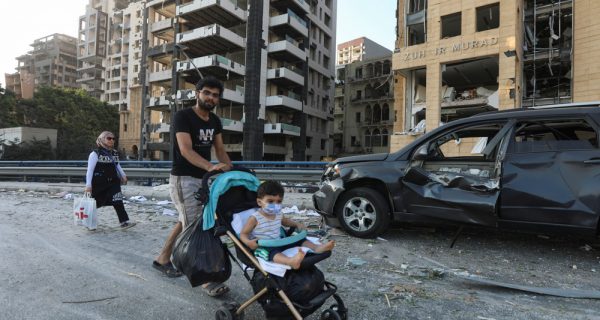
Iran’s Judiciary Chief Ebrahim Raeisi has called on the international community to take action to help lift US sanctions against Lebanon to prevent a humanitarian catastrophe in the wake of a recent massive explosion that ravaged the country’s capital Beirut.
The Iranian official on Wednesday offered his condolences to the Lebanese government and nation over the tragic explosion in Beirut, and said the damage to an important part of Beirut’s economic infrastructure and its consequences have doubled the tragedy for the people of the country.
The necessary action today, while maintaining national coherence and vigilance against acts by enemies of the Lebanese nation and government aimed at invoking sedition and division, is to immediately address the basic needs of the Lebanese people, whose supply has been disrupted as a result of this incident, Raeisi added.
He said this painful incident took place at a time when the wounds caused by the Israeli occupation and its repeated acts of aggression against the Lebanese people have not yet healed, coupled with Washington’s brutal sanctions against Beirut.
“Considering the cruel and inhumane sanctions imposed by the criminal US regime against the Lebanese people in recent months, which constitute a serious obstacle to addressing the essential needs of the Lebanese people, efforts to immediately lift these sanctions in order to prevent a humanitarian catastrophe must be on the agenda of the governments having friendly ties with Lebanon as well as the international community,” the Iranian Judiciary chief noted.
He added that the Iranian Judiciary’s High Council for Human Rights will put on the agenda taking legal action to remove these pressures and defend the rights of the Lebanese people.
Hundreds of individuals and entities have been sanctioned by the US in Lebanon, with the list focusing mainly on those with ties to the Hezbollah resistance movement. The list, however, includes a wide range of targets, from pharmaceutical companies, religious organizations and community outreach groups to banks and trading importer/exporters.
Observers say that the US sanctions on Lebanon have deteriorated the already struggling economy of the Arab country.
Rouhani tasks Iranian Red Crescent Society with sending aid to Lebanon
President Hassan Rouhani on Wednesday tasked the Iranian Red Crescent Society with sending humanitarian aid to Lebanon.
In remarks at a Wednesday cabinet meeting, Rouhani assigned the Iranian Red Crescent Society to immediately send humanitarian aid to Lebanon, including medical and health supplies.
Zarif: Iran sending field hospital to Lebanon to assist with disaster relief
Separately, Iranian Foreign Minister Mohammad Javad Zarif said in a tweet on Wednesday that Iran was sending a field hospital and medicines to Lebanon to contribute to relief operations.
“Reiterated #Iran‘s strong and steadfast solidarity with people of Lebanon in call with FM Wehbeh,” read part of the tweet, adding, ” Iran is sending field hospital & medicine to assist with disaster relief.” ” Iran stands with Lebanon,” it concluded.
Iran’s top cmdrscmdr., and defense minister sympathize with Lebanese
Separately, the chief commander of the Islamic Revolution Guards Corps (IRGC), Major General Hossein Salami, Chairman of the Chiefs of Staff of Iranian Armed Forces Major General Mohammad Baqeri and Army Commander Major General Abdolrahim Mousavi also commiserated with the Lebanese nation, government and army as well as Hezbollah Secretary General Sayyed Hassan Nasrallah on the tragic incident and expressed readiness to render assistance to the nation.
Also, Iranian Defense Minister Brigadier General Amir Hatami, in a phone conversation with his Lebanese counterpart, voiced Tehran’s readiness to send medical equipment and staff to Beirut.
Tehran to turn off Milad Tower lights in solidarity with Beirut
Following the tragic explosion in Beirut and the death of dozens of citizens of this city, the lights of Milad Tower, the sixth tallest tower in the world, will be turned off tonight at 9 p.m local time (0430 GMT) on Wednesday, August 6, as a sign of sympathy of the Iranian people with the Lebanese people.
The blast that rocked the Lebanese capital has so far killed at least 100 people and injured more than 4,000 others.
President Michel Aoun said the blast was caused by 2,750 tonnes of ammonium nitrate stored unsafely in a warehouse.
Lebanon has announced three days of mourning.
End Canada Israel Free Trade Agreement
By Yves Engler · August 4, 2020
On Sunday a demonstration is planned in Montréal against the Canada Israel Free Trade Agreement (CIFTA). Under the banner “Against Israel’s annexation of the Jordan Valley. No to the Canada Israel Free Trade Agreement!”, the march is seeking to politicize CIFTA amidst Israel’s plan to formally annex parts of the West Bank.
The march follows an open letter released last month by over 100 Montréal artists and activists calling for the cancellation of CIFTA.
Signed in 1997, CIFTA was Canada’s fourth free trade agreement and first outside the Western hemisphere (US, NAFTA and Chile). In an implicit recognition of the occupation, the free trade agreement includes the West Bank as a place where Israel’s custom laws are applied. Canada’s trade agreement is based on the areas Israel maintains territorial control over, not on internationally recognized borders. The European Union’s trade agreement with Israel, on the other hand, explicitly excludes products from territory Israel captured in the 1967 war and occupies against international law.
The Liberals “modernized” Canada’s FTA with Israel. International trade minister Jim Carr boasted the new accord “strengthens bilateral ties between Canada and Israel.” Liberal MPs on Parliament’s Standing Committee on International Trade rejected an NDP amendment to the trade accord’s legislation stipulating its implementation “shall be based on respect for human rights and international law.” They also rejected an NDP amendment to the deal that would have required distinct labels on products originating from “Palestinian territory that has been illegally occupied since 1967.”
In July 2019 Palestine Liberation Organization Executive Committee member Hanan Ashrawi wrote, “the Palestinian leadership calls on the Canadian government to act in accordance with Canadian and international laws and amend, without delay, the Canada-Israel Free Trade Agreement Implementation Act (Bill C-85), which affords products originating from illegal Israeli settlements tariff free status, in flagrant violation of Canada’s obligations under international law, including the Fourth Geneva Convention, and United Nations Security Council resolutions, including resolution 2334 (2016).”
In July 2017 the federal government said its FTA with Israel trumped Canada’s Food and Drugs Act after the Canadian Food Inspection Agency called for accurate labelling of wines produced in the occupied West Bank. After David Kattenburg repeatedly complained about inaccurate labels on two wines sold in Ontario, the CFIA notified the Liquor Control Board of Ontario (LCBO) that it “would not be acceptable and would be considered misleading” to declare wines produced in the Occupied Palestinian Territories as “products of Israel”. Quoting from longstanding official Canadian policy, CFIA noted that “the government of Canada does not recognize Israel’s sovereignty over the territories occupied in 1967.” In response to pressure from the Israeli embassy, Centre for Israel and Jewish Affairs and B’nai Brith, the government announced that it was all a mistake made by a low level CFIA official and that the Canada-Israel FTA governed the labelling of such wine, not CFIA rules. “We did not fully consider the Canada-Israel Free Trade Agreement,” a terse CFIA statement explained. “These wines adhere to the Agreement and therefore we can confirm that the products in question can be sold as currently labeled.”
In other words, the government publicly proclaimed that the FTA trumps Canada’s consumer protections. But, this was little more than a pretext to avoid a conflict with B’nai B’rith, Centre for Israel and Jewish Affairs and Israeli officials, according to Canadian Centre for Policy Alternatives Trade and Investment Research Project director Scott Sinclair. “This trade-related rationale does not stand up to scrutiny,” Sinclair wrote. “The Canadian government, the CFIA and the LCBO are well within their legal and trade treaty rights to insist that products from the occupied territories be clearly labeled as such. There is nothing in the CIFTA that prevents this. The decision to reverse the CFIA’s ruling was political. The whole trade argument is a red herring, simply an excuse to provide cover for the CFIA to backtrack under pressure.”
If the Canadian government does indeed support a rules-based international order as Prime Minister Trudeau has proclaimed then the Canada Israel Free Trade Agreement should be scrapped.
Mines, Minerals, And ‘Green Energy’: A Reality Check
By Mark P. Mills – Manhattan Institute – July 9, 2020
 As policymakers have shifted focus from pandemic challenges to economic recovery, infrastructure plans are once more being actively discussed, including those relating to energy.
Green energy advocates are doubling down on pressure to continue, or even increase, the use of wind, solar power, and electric cars.
Left out of the discussion is any serious consideration of the broad environmental and supply-chain implications of renewable energy.
As I explored in a previous paper, “The New Energy Economy: An Exercise in Magical Thinking,”[1] many enthusiasts believe things that are not possible when it comes to the physics of fueling society, not least the magical belief that “clean-tech” energy can echo the velocity of the progress of digital technologies. It cannot.
This paper turns to a different reality: all energy-producing machinery must be fabricated from materials extracted from the earth.
No energy system, in short, is actually “renewable,” since all machines require the continual mining and processing of millions of tons of primary materials and the disposal of hardware that inevitably wears out.
Compared with hydrocarbons, green machines entail, on average, a 10-fold increase in the quantities of materials extracted and processed to produce the same amount of energy.
This means that any significant expansion of today’s modest level of green energy—currently less than 4% of the country’s total consumption (versus 56% from oil and gas)—will create an unprecedented increase in global mining for needed minerals, radically exacerbate existing environmental and labor challenges in emerging markets (where many mines are located), and dramatically increase U.S. imports and the vulnerability of America’s energy supply chain.
As recently as 1990, the U.S. was the world’s number-one producer of minerals. Today, it is in seventh place.
Even though the nation has vast mineral reserves worth trillions of dollars, America is now 100% dependent on imports for some 17 key minerals, and, for another 29, over half of domestic needs are imported.
Among the material realities of green energy:
- Building wind turbines and solar panels to generate electricity, as well as batteries to fuel electric vehicles, requires, on average, more than 10 times the quantity of materials, compared with building machines using hydrocarbons to deliver the same amount of energy to society.
- A single electric car contains more cobalt than 1,000 smartphone batteries; the blades on a single wind turbine have more plastic than five million smartphones; a solar array that can power one data center uses more glass than 50 million phones.
- Replacing hydrocarbons with green machines under current plans—never mind aspirations for far greater expansion—will vastly increase the mining of various critical minerals around the world. For example, a single electric car battery weighing 1,000 pounds requires extracting and processing some 500,000 pounds of materials. Averaged over a battery’s life, each mile of driving an electric car “consumes” five pounds of earth. Using an internal combustion engine consumes about 0.2 pounds of liquids per mile.
- Oil, natural gas, and coal are needed to produce the concrete, steel, plastics, and purified minerals used to build green machines. The energy equivalent of 100 barrels of oil is used in the processes to fabricate a single battery that can store the equivalent of one barrel of oil.
- By 2050, with current plans, the quantity of worn-out solar panels—much of it nonrecyclable—will constitute double the tonnage of all today’s global plastic waste, along with over three million tons per year of unrecyclable plastics from worn-out wind turbine blades. By 2030, more than 10 million tons per year of batteries will become garbage.
Read more at Manhattan Institute
Iran’s natural gas network reaching full penetration rate: Minister
Press TV – August 3, 2020
Iran’s Oil Minister Bijan Namdar Zanganeh says the country will reach almost a full natural gas penetration rate next summer.
Zanganeh said on Monday that more than 95 percent of all households in Iran would have access to natural gas once the current administrative government leaves office in August 2021.
Zanganeh said that the figure, which he described as unique in the world, would be above a target set in 2013.
“We do not have such a level of extensive gas penetration in the world, this is an important infrastructure which people have a good grasp of it,” he said.
Iran is the second largest holder of natural gas reserves in the world. It has significantly boosted production in recent years despite sanctions imposed by the United States on the country’s energy sector.
Growing production has become possible thanks to massive development plans in the sprawling South Pares gas field, the world’s largest gas reserve which is shared between Iran and Qatar in the Persian Gulf.
Zanganeh, who was speaking at a video conference session to inaugurate new gas projects, said building out South Pars had allowed Iran to expand the coverage of its national gas network to thousands of villages across the country.
Elaborating on gas export figures, he said that Iran is currently pumping some 75 million cubic meters (mcm) of gas through pipelines to neighboring countries.
He said production at South Pars would reach 750 mcm by March 2021, adding that the figure would almost be a three-fold increase compared to 2012.
Iran’s total gas production is set to break through one billion cubic meters per day by next year. Total consumption by households normally hits record highs of 600 mcm a day during cold winter months.
Despite the Hype, the US has no Allies against China
By Salman Rafi Sheikh – New Eastern Outlook – 03.08.2020
Since particularly the outbreak of COVID-19 pandemic, a sea change in the US policies vis-à-vis China has taken place. Its latest manifestation came on July 23 when the US secretary of state, Mike Pompeo, delivered what has been called the American “Iron curtain” speech. Pompeo’s “Communist China and the Free World’s Future” speech does provide a significant insight into how the US is trying to establish a ‘new cold war’ global politics whereby it can place itself once again as the leader of the ‘free world’ against China, the so-called epitome of “threat” to America—its unilateral supremacy, its hegemonic domination of the world politics since the disintegration of the Soviet Union and its increasing tilt towards sabotaging multilateral agreements, such as the Iran nuclear deal, to extend its own and those of its allies’ supremacy, even if it comes at the expense of peace. Pompeo’s speech does show that the US is projecting China as an ‘evil power’ that needs to be countered. To quote him:
“If we bend the knee now, our children’s children may be at the mercy of the Chinese Communist Party, whose actions are the primary challenge today in the free world. General Secretary Xi is not destined to tyrannise inside and outside of China forever, unless we allow it. Now, this isn’t about containment. Don’t buy that. It’s about a complex new challenge that we’ve never faced before. The USSR was closed off from the free world. Communist China is already within our borders. So we can’t face this challenge alone. The United Nations, NATO, the G7 countries, the G20, our combined economic, diplomatic, and military power is surely enough to meet this challenge if we direct it clearly and with great courage.”
However, while Pompeo refused to call it “containment”, the ‘new cold war’ strategy is more of a roll back of China from the US and Europe. Simply put, the US is selling the ‘decoupling’ mantra to its allies both in Europe and elsewhere. This is how the US aims to regain the leadership position it has lost in last few years. Accordingly, while ‘decoupling’ from China is important, it is only “America”, which “is perfectly positioned to lead” this endeavour, argued Pompeo.
But the question is: how well is the US’ ‘new cold war’ rhetoric being received? As Pompeo himself said, the US alone cannot achieve this objective. The US allies, however, seem to have an all together different mindset when it comes to defining their relations with China. To the US’ dismay, not many of the allies, even if their relations with China are not typically ‘friendly’, think that following the US in its footsteps is a good idea. Not many of them seem to believe that a ‘new cold war’ is required to first de-couple and then contain China.
This was particularly evident when the Australian foreign minister Marise Payne recently visited the US even as the pandemic is truly raging there. While the minister did say that they have differences with China, Australia, like the US, has a its own position vis-à-vis China. As the minister, standing alongside Pompeo, explained further, their position is far from a potential or even real decoupling. In fact, it is that of engagement. To quote her:
“But most importantly from our perspective, we make our own decisions, our own judgments in the Australian national interest and about upholding our security, our prosperity, and our values. “So we deal with China in the same way. We have a strong economic engagement, other engagement, and it works in the interests of both countries.”
Adding further, the minister said,
“As my prime minister put it recently, the relationship that we have with China is important, and we have no intention of injuring it.”
While the US would have obviously wanted to enlist Australian support to counter China in the Pacific, Europe, too, is not particularly enthusiastic about the US’ ‘new cold war.’ In fact, US-Europe relations are already becoming too fragile to tackle what Pompeo called ‘a new challenge.’
How integral fragility is to the US-Europe relations is evident from the US decision to cut the size of its troops from Germany, a country which is not only no longer on good terms with the US, but also is actively seeking to cultivate China as a reliable economic partner for Europe. Indeed, German and Chinese leadership have established a frequency of contact that even the US does not have with Europe.
Even the UK, despite its on-going tensions with China over Hong Kong and its decision to roll back Chinese 5G, is not in line with US thinking on a grand strategy and a grand alliance versus China. Indeed, when the UK’s foreign secretary recently framed China policy in his July 20 speech to the House of Commons, he emphasised cooperation over confrontation, saying “We want to work with China. There is enormous scope for positive, constructive, engagement. There are wide-ranging opportunities, from increasing trade, to cooperation in tackling climate change.”
The US effort, therefore, to create a new iron curtain is highly unlikely to attract any bidders, ready to jump on the bandwagon, from Europe or elsewhere. Significantly enough, if Europe continues to maintain a calculated distance with the US over its China policies, other US allies, such as Australia, too will feel encouraged to chart an independent course of action.
Salman Rafi Sheikh is a research-analyst of International Relations and Pakistan’s foreign and domestic affairs.
Occupation forces obstruct pipe-construction works near Tubas
Palestinian Media Center | August 2, 2020
Israeli occupation forces obstructed works for the construction of a water pipe Saturday in the village of Atouf, near the town of Tubas in the northeast of the occupied West Bank, according to local sources.
Mayor of the village, Abdullah Besharat, told WAFA that the Israeli occupation army ordered the driver of a bulldozer working on the site to briefly stop the works.
He added that the project aims at providing potable water to dozens of livestock and cattle breeders in Atouf and neighboring villages.
Russia vows to respond ‘reciprocally’ to EU sanctions over ‘politically motivated’ & ‘far fetched’ hacking allegations
RT | July 31, 2020
Russian officials have dismissed as “baseless” restrictions imposed by the European Union on individual Russians and an intelligence unit accused of cybercrimes. Moscow has hinted at a mirrored response to Brussels’ sanctions.
“Obviously, the EU’s hostile action will not be left unanswered. As we know, everything in diplomacy is reciprocal,” Russia’s Foreign Ministry said in a statement.
On Thursday, the EU blacklisted four Russian individuals and the special technologies unit of Russia’s military intelligence agency, known as the GRU, which Brussels accuses of committing cyberattacks. A number of nationals and entities from China and North Korea were hit by sanctions as well.
Russia’s Foreign Ministry rejected the allegations as “baseless” and illegal under international law. Moscow said that the sanctions were enacted “under a far-fetched pretense,” and were strictly politically-motivated.
Featured Video
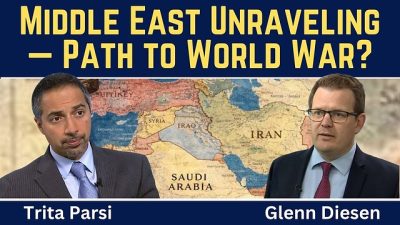
Trita Parsi: Middle East Unraveling — Are We on the Path to World War?
or go to
Aletho News Archives – Video-Images
From the Archives
Why Saudi Ties to 9/11 Mean U.S. Ties to 9/11
By Kevin Ryan | Dig Within | September 27, 2015
Media interest in Saudi Arabian connections to the crimes of 9/11 has centered on calls for the release of the 28 missing pages from the Joint Congressional Inquiry’s report. However, those calls focus on the question of hijacker financing and omit the most interesting links between the 9/11 attacks and Saudi Arabia—links that implicate powerful people in the United States. Here are twenty examples. … continue
Blog Roll
 Aletho News
- Neria Leiter Was A Legitimate Military Target
- Integrity Initiative: UK-funded network framed dissent as Russian disinformation for years
- ‘We don’t seek permission to defend our country’: Snippets from President Pezeshkian’s UNGA address
- NATO chief wants Europeans to fight American wars [for Israel]
- German chemicals giant reveals details of downsizing
- Refaat Al-Areer Was The Canary In The Coal Mine In Israel’s War On The Truth
- Israeli election committee bars candidate from Knesset race over Gaza war opposition
- French-Lebanese man files war crimes complaint over Israeli attacks
- Mahan Air Flight Lands in China Despite US Threat against Iranian Airlines
- US eyes $10bn fund to rebuild war-battered Gulf infrastructure
- If Americans Knew
- Caught on Tape: AIPAC CEO Boasted of Controlling Trump’s National Security Officials
- Why Hamas Attacked Israel in October 2023 – Israeli professor Ilan Pappé
- They see them, then kill them: Israeli quadcopters track, deliberately target civilians in Gaza
- Winter could turn Gaza’s treacherous, war-damaged buildings into deathtraps
- Majority of Democratic Voters Want to Prosecute Both Biden and Trump Administration Officials Over Gaza
- As Gaza languishes, world leaders gather at the UN – Daily Update
- Sanctions are collective punishment: immoral and self-defeating
- Phosphorus Munitions Fired by Israel Burn Groves, Orchards in Southern Lebanon
- Israel Carries Out New Ceasefire Violations Across Gaza
- AI – Emphasis on the ‘I’: Israel Is Funding AI Chatbot Propaganda
- No Tricks Zone
- New Study: Earth And Venus Surface Warmth Largely Explained By Convection And Lapse Rate, Not CO2 Or Radiation
- 2025 Nature Paper Claiming Worsening Global Drought Gets RETRACTED …Heavily Flawed
- New Study: ‘Global Drought Shows No Detectable Recent Acceleration Under Climate Warming’
- Economic Masterminds: German Socialists Suggest Taxing Productivity Gains Stemming From Using AI
- The South China Sea Has Not Been Cooperating With The Climate Change Narrative
- Energy Crisis: Germany Enters Heating Season With Historically Low Gas Reserve Fill Levels
- New Study: The Antarctic Ice Sheet Gained Mass From 2020-2024 Due To Staggering Snow And Ice Accumulation
- Study: Ocean Heating Rates From Thousands Of Years Ago ‘Dwarf’ Modern Ocean Heating Rates
- Climate Extremists Target, Attack Large-Scale Power Grid Infrastructure In Germany!
- New Study: Antarctic Ice Melt Has Contributed Less Than 1 Centimeter To Sea Level Rise In The Last 30 Years

