US Iran sanctions amount to aggression against entire world: Nasrallah
Press TV – April 22, 2019
The secretary general of the Lebanese Hezbollah resistance movement has denounced US economic sanctions against Iran, describing the punitive measures as “an act of aggression” against all world nations.
“US efforts to increase economic pressure on Iran, especially its pledge to drive the country’s oil exports to zero, will have negative repercussions and will affect the entire world, including the US itself,” Sayyed Hassan Nasrallah said as he addressed his supporters via a televised speech broadcast live from the Lebanese capital Beirut on Monday evening.
He then called on world nations to stand up against “US arrogance,” pointing out, “The tyrannical US government has no respect whatsoever for international law and regulations.”
Nasrallah also lashed out at Saudi Arabia and the United Arab Emirates for following in US footsteps and joining Washington’s economic pressure campaign against Iran.
The Hezbollah chief also roundly rejected media allegations that the Israeli regime is planning to launch a surprise war against Lebanon this summer.
“There is very little likelihood that Israel would launch another war on Lebanon. The Israeli army is not prepared for any aggression against the country. I personally don’t think such a thing would happen,” Nasrallah highlighted.
The Hezbollah chief also dismissed claims of infighting between Russian and Iranian forces in Syria’s eastern province of Dayr al-Zawr as well as the northern province of Aleppo, stating that Saudi-owned al-Arabia television news network has “disseminated such lies.”
“Saudi-backed media outlets are spreading lies and fallacies about Hezbollah, Iran and the region to a large extent,” Nasrallah said.
The Hezbollah secretary general then slammed Saudi Arabia and the UAE for spreading terrorism and chaos in countries like Yemen, Sudan and Libya.
Nasrallah also blamed Wahhabism for the emergence of regional terrorism and Takfiri terrorist groups like al-Qaeda and Daesh.
Wahhabism is the radical ideology dominating Saudi Arabia, freely preached by government-backed clerics there, and inspiring terrorists worldwide. Daesh and other Takfiri terror groups use the ideology to declare people of other faiths as “infidels” and then kill them.
“There are many agents in the Middle East, who are pushing for sectarian strife to serve the interest of the Zionist regime (of Israel). All those seeking to colonize the region will only raise public awareness,” the Hezbollah chief said.
Elsewhere in his remarks, Nasrallah touched upon the economic crisis in Lebanon, demanding greater cooperation and unity among Lebanese political factions.
“All Lebanese parties agree that Lebanon is suffering from serious financial woes. They are all involved in coping with the economic crisis. Resolving Lebanon’s problems requires patience and efforts by all political parties. Ministers affiliated to Hezbollah, lawmakers as well as specialists have already prepared a number of draft solutions for Lebanon’s economic crisis,” Nasrallah underlined.
Maximum Pressure on Iran Still Isn’t Working
By Paul R. Pillar | LobeLog | April 2, 2019
Almost a year after President Trump reneged on U.S. commitments in the Joint Comprehensive Plan of Action (JCPOA), otherwise known as the Iran nuclear deal, there is not the slightest sign that this move is achieving the declared objective of Iran crawling back to the negotiating table to negotiate a “better deal.” Tehran instead has been exuding perseverance and hardline resistance. The most recent high-level Iranian statement, a speech by Supreme Leader Ali Khamenei marking the Persian new year, was full of recalcitrance. Khamenei’s themes included self-sufficiency and boosting Iran’s defense capabilities.
It is not surprising that determined opponents of the JCPOA—the most vocal of whom are determined opponents of any agreement with Iran—have been trying hard to spin this situation to make it look as if something positive is being accomplished. Patrick Clawson of the Washington Institute for Near East Policy, for example, suggests that the new year’s speech was “not the confident Khamenei of days past” and that the speech indicated that “the Trump administration has had considerable success convincing Khamenei that the pressure will continue, and that Iran cannot count on outlasting U.S. hostility.”
It also is not surprising that when The New York Times ran a story by Ben Hubbard, reporting from Beirut, about the financial strains that Hezbollah and other Iranian clients are feeling, columnist Bret Stephens jumped into action. “Heavens to Betsy,” Stephens exclaimed in a column in the next day’s Times, arguing that this must mean President Barack Obama was wrong when he said sanctions relief “wouldn’t make much difference in terms of Iran’s capacity to make mischief in the Middle East.”
Actually, Obama was right. The fallacy that Stephens, and others who defend the Trump administration’s re-imposition of nuclear sanctions, are promoting is that making life more difficult, costly, or painful for someone else somehow advances U.S. interests—at least if the U.S. government sufficiently hates whoever that someone else is. That would be true only if schadenfreude were a U.S. national interest, which it isn’t. Pain infliction serves U.S. interests only if it changes the targeted country’s behavior in a desired direction, by either limiting its capabilities or inducing it to change its policies. Regarding Iran over the past year, this is not happening.
It’s Not All About the Money
Most of Hubbard’s article—the part Stephens doesn’t mention—describes how and why Iran and its clients are not changing their policies and operations despite the financial pinch. The reporter notes that the client groups “are relatively inexpensive, remain ideologically committed to Iran’s agenda and can promote it through local politics in ways that the United States struggles to thwart.” Many of the groups “have income streams that give them some financial independence.” That certainly is true of Lebanese Hezbollah, which also benefits from having achieved broad acceptance as a political actor. Hubbard recalls how much pushback Secretary of State Mike Pompeo received on this point when he recently met with senior Lebanese officials. Foreign Minister Gibran Basil, standing next to Pompeo at a subsequent public appearance, said, “From our side, for sure, we reiterated that Hezbollah is a Lebanese party, not terrorist. Its deputies are elected by the Lebanese people with great popular support.”
The article mentions that, to the extent Iran is scaling back militia operations in Syria, this may be due less to financial reasons than to the fact that Iran’s ally Bashar al-Assad has largely won the war. In Iraq, financial stringency has led Iran not to curtail involvement but instead to seek stronger economic ties with its next-door neighbor. Militias that Iran sponsored “are now paid by the Iraq government, giving Iran leverage in Iraqi politics at little cost to itself.”
Hubbard quotes an anonymous Hezbollah fighter as saying that a financial pinch would not push members away from the organization. “You’re not in Hezbollah for the money,” he said. Something similar could be said about Iran in the Middle East. Iran’s activity in the region is shaped not by the money but instead by Tehran’s perception of what is in Iran’s security interests.
None of this should be surprising. Hubbard notes that “recent history suggests that financial pressure on Iran does not necessarily lead to military cutbacks.” As multiple independent studies have concluded, that also is true of the recent and not-so-recent history of Iran’s overall activity in the Middle East, including activity that the United States finds objectionable.
Continued Iranian Compliance with the JCPOA
Stephens tries to milk another supposed accomplishment out of the administration’s pressure campaign by pointing to the fact that Iran is still observing its obligations under the JCPOA despite the United States having reneged on its own commitments. While acknowledging that Iran outwaiting Trump has something to do with this, Stephens also says the Iranian compliance “suggests an edge of fear in Tehran’s calculations. The U.S. can still impose a great deal more pain on the Islamic Republic if it chooses to do so.”
Reflect first on the irony of an anti-JCPOA voice like Stephens pointing to Iran’s continued rigorous observance of its obligations under the JCPOA—the terms of which Stephens and other opponents have been excoriating for three years—as a supposed accomplishment of the Trump administration’s pressure campaign. Reflect further on how much Iran’s compliance with those obligations undermines opponents’ rhetoric about how Iran supposedly has been hell-bent on getting nuclear weapons, with the JCPOA just a way-station where it gets an economic fillip. If that really were Iran’s intention all along—and given that it is not now getting the fillip—Iran would have renounced the JCPOA as soon as the United States reneged.
Think also about what sort of diplomacy Stephens’s suggestion implies: that the way to get another state to stick to agreed terms is not to stick to them oneself but instead to renege and then to threaten something worse. That would be a bizarre brand of diplomacy, to put it mildly, and one that neither the United States nor anyone else could use to get much business done.
“Tehran’s calculations” are unlikely to be anything like what Stephens suggests they are. The Trump administration, through both its actions and its rhetoric, has given Iranian leaders ample reason to conclude that the administration is determined to punish Iran as much as possible no matter what Iran does. Any hesitation within the administration not to push the sanctions pedal all the way to the metal appears to be a reaction not to Iranian restraint but instead to economic concerns about how elimination of waivers for importing Iranian oil would affect the world oil market and ultimately the price of gasoline at the pump.
Iranian Patience Not Unlimited
Iran’s continued compliance with the JCPOA despite U.S. reneging definitely involves an Iranian decision to outwait Trump. This is partly, but not solely, a matter of some Democratic presidential candidates, as Stephens correctly notes, stating their intention if elected to bring the United States back into compliance with the agreement. Iran is making its decisions about nuclear policy within a larger context in which not Iran, but instead the United States under Trump, is the isolated actor. It is not just Iran but all the non-U.S. parties to the JCPOA that are committed to its preservation. So is the larger world community, as expressed in the unanimously adopted United Nations Security Council Resolution 2231.
Iran may continue to outwait Trump, despite not getting the economic relief it bargained for, until the end of the current U.S. presidential term. Politics inside Tehran probably would make it impossible to wait any longer. This is where the 2020 U.S. presidential election comes into play. Former Deputy Secretary of State William Burns, when asked about this subject recently, replied, “My sense right now is that this Iranian regime would like to try and wait out the Trump administration. But if the president was elected to a second term, then their interest in doing that probably goes out the window.”
If that happens, the damage from the pressure campaign will not be limited to the consequences that Stephens ignores, such as how economic warfare against Iran has become economic warfare against Western allies and has contributed to the poisoning of U.S. relations with them. The damage will include a new Iranian nuclear crisis that was totally avoidable if only the administration had not embarked on its destructive course a year ago.
North Korea pitched state-of-the-art submarine system to Taiwan military: report
By Sophia Yang -Taiwan News – 2019/04/05
TAIPEI — As Taiwan’s first indigenous submarine project is underway, media reported the North Korean government years ago reached out to Taiwan’s military in an attempt to sell its advanced marine propulsion technology – Air Independent Propulsion (AIP) – for the project.
People familiar with the matter told UPmedia that a number of submarine builders and software providers from the United States, Europe among 16 other countries showed their interest in participating in the country’s indigenous submarine project. To the military department’s surprise, the North Korean military was among the bidders, reportedly pitching their products through a Taiwanese trading company.
The name of the trading company was not disclosed in the news story.
The report indicated that the company was pitching on behalf of the isolated nation, which has been enduring severe financial stress under the sanctions imposed by international bodies and a number of countries. The products on the list included North Korea’s miniature Yono-class submarine, Yugo-class submarine, Sang-O-class submarine, as well as the North Korean self-made AIP system.
The system is believed to enable the submarine to remain submerged for up to four weeks to better extend its underwater endurance, compared to an underwater endurance of only a few days in traditional diesel-electric submarines.
A submarine expert working for Taiwan’s military reportedly made a fact-checking trip years ago to the China-DPRK border city of Dandong to meet the North Korean military officials, from whom the expert verified the authenticity of the bid and its capability to carry out the task. However, Taiwan’s military eventually didn’t consider the technologies out of concern that it would violate UN sanctions against North Korea.
Also, recently at a press event, a military official told media that Taiwan’s first indigenous submarine would not be equipped with the advanced and expensive AIP system, but will consider it for the other indigenous submarines in the future.
Fun Fictions in Economics
By Dean Baker | CEPR | April 18, 2019
Economists pride themselves on being the serious social science, the one most deserving of status as an actual science. I will let others make the comparative assessment, but there is an awful lot of nonsense that passes as serious analysis within economics. For cheap fun, I thought I would use a nice spring afternoon to highlight some of my favorites.
Myth 1: The Robots Are Taking All the Jobs
The “robots taking the jobs” story gets top place both because it is completely ridiculous and it is widely taken seriously in policy discussions. The story is ridiculous because it is directly contradicted by the data. Robots taking all the jobs is a story of rapid productivity growth. It means that we can produce the same output with fewer workers because the robots are doing work that used to be done by people. That is the definition of productivity growth.
But the productivity data refuse to cooperate with this story. This is not hard to discover. The Bureau of Economic Analysis releases data on productivity every quarter. The data show that productivity growth has been very weak in recent years, averaging just 1.3 percent annually since 2005. This compares to a rate of productivity growth of 3.0 percent in both the period from 1995 to 2005 and the long Golden Age from 1947 to 1973.
The job-killing robots story is sometimes diverted into a scenario that is just around the corner instead of being here today. Of course, we can’t definitely rule out that at some point in the future productivity will accelerate sharply, but it is worth noting that this pickup does not seem to be on the immediate horizon. Investment is not especially high as a share of GDP, averaging 13.4 percent over the last three years. That compares to 14.2 percent from 1999 to 2001, and 14.4 percent from 1980 to 1982, its post-war peak.
Investment is not even especially high in the more narrow categories of computers and information technologies, where we would expect the robots to live. This means that if businesses are about to start a mass displacement of workers with robots, they don’t seem to be spending too much money on the process.
Perhaps the most important point here is that there is no reason to assume that a pickup in productivity growth would be associated with mass unemployment and a collapse of wage income. The 1947 to 1973 Golden Age was a period of rapid wage growth, as were the years from 1995 to 2001, when the stock bubble collapsed and the economy fell into recession.
Bad economic policy can prevent workers from sharing in the benefits of productivity growth (e.g. Peter Peterson-types demanding deficit reduction, thereby reducing output and employment), but it would be crazy to blame robots because Wall Street billionaires are slowing growth and pushing the economy toward recession.
Myth 2: We Are Threatened by a Declining Population
Our policy elite can be very flexible in their thinking. At the same time that many are worried that the robots are taking all the jobs, we also have the opposite threat frequently arising in public debates, that we are running out of workers. The basic story is that the baby boomers are retiring. The generation that followed is smaller. Furthermore, fertility rates among young people are falling to record lows. So, we now face the horrible problem that we are running out of workers just as the rise of robots means we are running out of jobs.
The running out of workers story also involves incredibly sloppy thinking. Yes, a decline in the workforce means that we will have fewer workers to support each retiree. But we have been seeing declining ratios of workers to retirees for the last eight decades. This stems from the problem that people are living longer.
The declining ratio of workers to retirees has not prevented both workers and retirees from seeing rises in living standards for the simple reason that the impact of productivity growth in raising living standards swamps the impact of demographics in lowering living standards. (It’s also worth noting that children have to be supported by workers as well, so the ratio of dependents to workers is actually considerably lower today than at its peak in 1965.)
The declining population story is sometimes turned into a fear of slower growth story. Other things equal, slower workforce growth will mean slower GDP growth. This should bring the obvious response, “who cares?” We should care about rising living standards, in which per capita growth is a factor. There is no obvious benefit in having more rapid growth due to a larger population. In fact, insofar as there are negative externalities not picked up in GDP (e.g. congestion and pollution), we should be happier if the population is growing less rapidly or shrinking.
There is a serious issue here that because of poor family supports, such as the availability of quality daycare and inadequate family leave policy, many people feel they cannot afford to have children. That is a genuine problem, but this is because people should be able to have children, not because society needs their kids.
Myth 3: Technology Is Shifting Income Upwards to the More Skilled
The slightly coherent version of the robots taking our jobs story is that technology is causing an upward redistribution of income to those who have the sophisticated skills needed to master the technology. This is the old “skills-biased technical change” argument that my friends Larry Mishel and Jared Bernstein did a great job decimating two decades ago.
Not only does the data not support the story of an increasingly rapid shift in labor demand to more skilled labor, the logic of the argument skips a key factor. The price commanded by new technologies, and therefore the demand for associated labor, is determined by policy, not the technology.
To be specific, the amount of money that goes to people developing software, artificial intelligence, pharmaceuticals, robots and other areas thought of as being at the technological frontier depends on the length and strength of patent and copyright protection. Shorter and weaker protections (or no protections) would send the price of these items plummeting. It would also mean much less demand for labor in these areas and much lower pay for the highly skilled workers in related occupations.
Arguably we benefit from having stronger and longer patent and copyright protection (I don’t think so), but the fact that these are government policies is not arguable. Insofar as there actually is a shift in income to people with skills in technology-related fields this is a result of policy choices, not the technology itself.
Myth 4: The Government Debt Will Impoverish Our Kids
An evergreen whine from the policy elite is that the government debt is going bankrupt our kids because they will be stuck paying it off. This one is so off the mark that it is difficult to know where to begin.
First of all, the debt involves payments within a generation, not between generations. At some point all of us profligate types will all be dead, so we will not be around to collect the interest on the debt. The rich ones among us will own government bonds, which they will presumably pass on to their kids. So the debt is then not an issue where our children and grandchildren will be paying us interest, but rather they will be paying interest to the children and grandchildren of Bill Gates and his friends.
That might not be a great story for those who are not children of the rich, but it can be fixed with that old-fashioned remedy of taxing the rich. In any case, the question is one of intra-generational distribution, not inter-generational distribution. It’s also worth noting that even with our relatively high debt-to-GDP ratio, the interest burden of the debt is less than 1.0 percent of GDP. That compares to the more than 3.0 percent of GDP that us baby boomer types had to pay in the 1990s when we were young.
The more serious version of the debt impoverishing our kids is that government deficits are pushing up interest rates, which in turn crowds out investment and slows growth. With nominal and real interest rates at extraordinarily low levels over the last decade, it is hard to tell this one with a straight face.
It is also worth noting that we have lost far more productive capacity (potential GDP) due to the austerity demanded by deficit hawks than we ever could have plausibly lost due to the crowding out story. In other words, the policies demanded by the “government debt will impoverish our kids” gang will cause our kids to have much lower real incomes. (The story is even worse when we consider that demands for austerity prevented measures to slow global warming.)
The other aspect missing from the debt story is that government debt is only one way that the government creates commitments for the future. When it grants patent and copyright monopolies it is also directing flows of income, often for decades in the future.
These monopolies are alternative mechanisms for paying for activities. Rather than directly paying for innovation and creative work with public funds, the government threatens to arrest people who violate the monopolies it grants, thereby allowing the monopoly holders to charge prices far above the free market price.
This gap is often quite large. By my calculations, government-granted monopolies cost us close to $370 billion (1.8 percent of GDP) a year in the case of prescription drugs alone and possibly as much as $1 trillion (5.0 percent of GDP) in total. Incredibly, the “government debt will impoverish our kids” gang never talks about the burdens created by patent and copyright monopolies.
Myth 5: Economy Threatening Bubbles Are Difficult to Detect
We saw the tenth anniversary of the Lehman bankruptcy last fall and with it a whole round of papers and conferences dedicated to the problems of the financial crisis. There was virtually no discussion of the housing bubble, the collapse of which was the real cause of the Great Recession.
There is a huge sense in which the focus on financial crises is self-serving for the economics profession. Financial instability can be difficult to anticipate. After all, many financial assets are complex, with new assets constantly being created. In many cases, there is limited data that is publicly available. Who knew that AIG had issued $600 billion worth of credit default swaps against mortgage-backed securities? This gives economists an excuse for missing the Great Recession.
By contrast, the housing bubble, whose crash sank the economy, was easy to see for anyone who pays attention to economic data. We get monthly data from the Commerce Department on residential construction. We also have the quarterly GDP data in which residential construction is a major component. It required some determined ignorance for macroeconomists not to notice the huge jump in this category, which peaked at 6.7 percent of GDP in 2005. That compares to a normal level in the neighborhood of 4.0 percent of GDP.
The unprecedented run-up in house prices was also easy to see with publicly available data. After largely tracking the overall inflation rate in the post-war era, real house prices rose 70 percent from 1996 to 2006. The fact that this increase was associated with virtually no rise in real rents might have seemed peculiar to people who know economics. Also, the fact that the vacancy rate was high and rising might also have suggested that this rise in house prices was not being driven by the fundamentals of the markets.
And, economists also should have known that a collapse of the housing bubble would lead to an end to the consumption driven by the ephemeral wealth created by the bubble. Some guy named Alan Greenspan wrote several papers on this consumption driven by housing wealth.
But rather than own up to having missed the obvious, the economics profession has decided that the problem was a mysterious financial crisis that caught everyone by surprise. Who knows where the next one may lurk?
As a policy matter, this actually has the positive effect of generating more political support for limiting abuses in the financial industry, since we are supposed to be worried that somehow bad practices will, by themselves, lead to another financial crisis and Great Recession. This is good, because finance is an intermediate good, like trucking.
We want the financial sector to be as small and simple as possible, there is no more reason to want a large financial sector than there is to want a trucking industry where goods are shipped back and forth for no reason. The financial industry has been both a major source of waste and inequality over the last four decades.
It would be best if we could rein in the financial sector based on an honest discussion of its role in the economy, but in American politics, no one expects honest discussions. So, we’ll settle for some positive spillover from economists’ efforts to cover their asses.
Myth 6: CEOs Manipulate Share Prices with Buybacks to Maximize Shareholder Value
One of the bizarre stories that passes for wisdom is that CEOs have gotten in the habit of committing large amounts of money to share buybacks in order to maximize shareholder value. Just about every part of this story is hard to square with reality.
First, if the goal is maximizing shareholder value, they are not doing a very good job. Stock returns have been extraordinarily low over the last two decades, averaging less than 5.0 percent annually, after adjusting for inflation, compared to a long-term average of 7.0 percent. It does seem at least a bit odd that when management is supposed to be exceptionally focused on providing returns to shareholders that they are doing such a poor job of it.
Another aspect of this story is that the reason that companies are not investing more is supposed to be that they are paying out so much money to shareholders. Looking at the data, what seems most striking is that there is not much fluctuation, apart from cyclical ups and downs in the share of GDP going to investment.
If investment is determined primarily by investment opportunities, and these tend not to change much, at least for the economy as a whole, then in a period of high profits like the present one, lots of money will be paid out to shareholders, since companies have nothing else to do with it. There is good reason to be unhappy with the rise of corporate profits at the expense of wages, but if companies don’t have good investment opportunities, it’s not obviously bad that they pay the money out to shareholders.
Finally, the focus on buybacks as being especially pernicious seems odd. Is there a reason anyone would be happier if the money was paid out as dividends instead? The switchover to buybacks instead of dividends as the main route for giving money to shareholders, dates from an early 1980s court ruling that approved the practice.
I have heard the complaint that buybacks are worse because top management can manipulate the timing in order to maximize the value of their stock options or planned sales. While that may true, they can also manipulate dividend announcements or statements on earnings.
More importantly, if we think management is manipulating the timing of buybacks, then the victims of the manipulation are shareholders who aren’t in on the joke. That is entirely possible, but then we are not telling a story of maximizing shareholder value. We are telling a story where CEOs and other top management are enriching themselves at the expense of shareholders.
That sets up a dynamic in which shareholders should be allies in cracking down on excessive CEO pay, but I’ll leave that one for another day.
Sitting on Syria’s Oil, US Cuts Lifeline From Iran, Plunges Syria Into Fuel Crisis
By Marko Marjanović | Checkpoint Asia | April 17, 2019
Syria produced 325,000-385,000 barrels of oil per day before the war. Now it produces 25,000. Partly because of war damage, and partly because the majority of its oil fields are to the east of the Euphrates and occupied by the US and its Syrian Kurdish proxies. (The Kurds are happy to sell but the US won’t let them.)
It used to consume over 200,000 barrels of oil domestically, but that has gone down to 100,000 or less, with majority of that being shipments from Iran on a credit line that both nations understood was unlikely to ever be paid back in full.
Now the US has succeeded in cutting off that lifeline as well. It is blacklisting tankers which deliver the Iranian fuel and having Egypt block them from ever crossing the Suez.
This has caused a huge fuel crisis in government-controlled Syria with extreme rationing and cars lining up for miles in order to pump their allowed maximum of 20 liters every five days.
In Syria’s case the US really did “steal its oil”. It has forced an oil-producing nation into a fuel crisis. It has seperated Damascus from its oil fields (which BTW are in the ethnically Arab part of the country) and then cut its oil from abroad as well.
Trump opens Cuba up to property confiscation lawsuits, angering allies & foes alike
RT | April 17, 2019
The Trump administration is set to permit lawsuits against Cuba over property confiscated in the revolution, in a bid to dismantle the ‘troika of tyranny’ resisting Washington’s total dominance in what it sees as its ‘backyard.’
Cubans who fled to the US under Fidel Castro’s government will be able to sue companies using their former property under a 1996 law that went unenforced until President Donald Trump seized on it earlier this year as a potential weapon to pressure Cuba into dropping its support for Venezuelan President Nicolas Maduro, after the country refused to support US-backed opposition leader Juan Guaido when he declared himself president in January.
The Trump administration is expected to announce the measure on Wednesday after last month’s soft rollout, which limited lawsuit targets to about 200 businesses and government agencies already under “enhanced” sanctions due to their links with Cuba’s government. No lawsuits have yet been filed under the new rules, though the State Department says there may be as many as 200,000 potential claims by plaintiffs including multinational corporations – who may be reluctant to file lawsuits that could effectively target their own overseas clients.
Previous presidents have avoided activating the provision because of the torrent of litigation it could unleash against joint ventures run by US allies in partnership with the Cuban government. While the US has maintained its embargo against the Cuban government for over half a century – aside from the short-lived attempt by Trump’s predecessor Barack Obama to relax the harsh economic sanctions – many of its allies do business with Cuba. While Trump appears to value punishing Cuba for its alliance with Maduro over making nice with America’s European allies, critics argue that Americans will be affected by the new law as well.
“This decision punishes the Cuban people and American companies – companies who were given permission by the US government to do business and are now having the rug pulled from underneath them,” James Williams, President of anti-embargo group Engage Cuba, told Bloomberg. Existing “carve-outs” in the Helms-Burton provision reportedly protect American companies in some areas, specifically the travel industry and telecoms, though it’s unclear whether those exceptions also cover companies belonging to US allies operating in those sectors.
The US move is a violation of international law, EU ambassador to Cuba Alberto Navarro told a press conference. Canada, France, Spain, the UK, and other countries with large Cuban investments have threatened to sue through the World Trade Organization if the US attempts to interfere in their dealings with a sovereign nation.
Cuba has volunteered to reimburse owners of confiscated properties – if the US first reimburses the Cuban government for the billions of dollars in damages resulting from its 60-year embargo.
Medicare for All 64-Year-Olds
By Dean Baker | CEPR | April 12, 2019
The push for universal Medicare was given new momentum by Bernie Sanders campaign for the 2016 Democratic nomination. While it is still quite far from becoming law in even an optimistic scenario, it is certainly now treated as a serious political position. This is probably best demonstrated by the fact that the Medicare for All (M4A) bill put forward by Washington representative Pramila Jayapal has 107 co-sponsors, nearly half of the Democratic caucus in the House.
As much progress as M4A has made, it will still be a huge lift to get it implemented. A universal Medicare system would mean shifting somewhere around 8 percent of GDP ($1.6 trillion at 2019 levels) from the private system to a government-managed system. It would also mean reorganizing the Medicaid program and other government-run health care programs, as well as the Medicare program itself. The current system has large co-pays and many gaps in coverage, such as dental care, that most proponents of M4A would like to fill. It also has a large role for private insurers in the Medicare Advantage program, as well as the Part D prescription drug benefit.
The difficulty of a transition is demonstrated by the fact that there is no agreed-upon mechanism for paying for this expansion of Medicare. Instead of a specific financing mechanism, the Jayapal bill features a menu of options. Actual legislation, of course, requires specific revenue sources, not a menu. The fact, that even the most progressive members of the House could not agree on a financing proposal that they could put their names to, shows the difficulty of the transition.
If it is not likely that we will get to M4A in a single step, then it makes sense to find ways to get there piecemeal. There have been a variety of proposals that go in this direction. Many have proposed lowering the age of Medicare eligibility from the current 65 to age 50 or 60. The idea is that we would bring in a large proportion of the pre-Medicare age population, and then gradually go further down the age ladder. (We can also start at the bottom and move up.)
This sort of age reduction approach is a reasonable incremental path, but going to age 50 or even age 60 would still be a considerable expense. There are over 60 million people in the age cohorts from 50 to 64. Including these people in Medicare at a single point would be a very serious lift. Even the more narrow group from age 60 to 64 still has almost 20 million people. That would a substantial expense.
But we can make the first step even more gradual. We can just add people when they turn age 64 instead of the current 65. At first glance, this would be a bit less than 4 million people. Medicare’s payments per enrollee (net of premiums) are roughly $11,500. That would translate into $46 billion annually, roughly 1.0 percent of the total budget.
But this is likely to hugely overstate the actual cost for two reasons. First, many 64-year olds will already have their insurance covered by the government. Roughly 20 percent of this age group is on Medicare as a result of being on Social Security disability. At least 10 percent more is covered by Medicaid. If we add people who are getting insurance as current or former government employees, we would almost certainly get over 40 percent already being insured through some government program, and possibly as high as 50 percent.
In addition, the Medicare costs for the new group of 64-year-olds are likely to be far less than the overall average. On average, people in this age group would have health care costs of around 70 percent of the over 65 population as a whole. But the least healthy portion of the 64-year-old population is likely already covered by either Medicare, as a result of disability, or Medicaid.
If we assume that the average costs for the people we are adding to the government’s tab are half of the overall average for Medicare, this gets us $5,750 per person. If we assume that we are adding 60 percent of this age group, that comes to 2.4 million people. That gives us a total tab of $13.8 billion, less than 0.3 percent of total spending, or roughly the amount the Pentagon spends in a week. It would be pretty hard to argue that this is not an affordable tab.
If even that expense proves too much for the deficit hawks to handle, then maybe we can move up the age of eligibility by one month or one week. At that point, we’re talking about the cost of a few weekends for Donald Trump at Mar-a-Lago.
Doing this one-year reduction in the Medicare age would be a test of how easily a reduction in the age of eligibility can be done. It should open the door to further reductions in future years. It is also likely to be popular politically. People in their late 50s and early 60s will surely appreciate the fact that they are one year closer to qualifying for Medicare. That is especially likely to the case with people who do not have good insurance through their employer and/or have serious health conditions.
The proposal for a one-year reduction in the age of eligibility should also help to clarify where things stand within the Democratic caucus. Many members have argued against having the party endorse M4A.
Some of this opposition undoubtedly reflects realistic political concerns that a quick switchover from the current system to M4A will not be popular in many districts. Many people are satisfied with the insurance they have now and will be reluctant to support what they will view as a big leap into the unknown. Perhaps these people can be convinced over time that a universal Medicare-type system will be at least as good for them, but they are not there now.
However, some of the pushback stems from the fact that many Democrats have long depended on campaign contributions from the health care industry. While the party has not gotten as much money as the Republicans, many members do get substantial contributions, which they are not prepared to abandon.
Medicare for All 64-Year-Olds should be a great way to clearly identify these people. They can’t have a principled objection to moving up the age of Medicare eligibility by one year. Nor can they plausibly claim that this is some budget-busting proposal. Congress routinely approves spending increases of this size for the military without batting an eye.
If some Democrats in Congress dig in their heels and insist that Medicare for All 64-Year-Olds is something that they cannot support, it is not because they are afraid that it won’t work. It’s because they are afraid that it will.
Of course, lowering the age of Medicare eligibility is not the only thing that we should be doing as part of near-term health care reform. We should look to open Medicare to the population as a whole on a voluntary basis. We should also look to make the subsidies under the Affordable Care Act more generous. And, we should be looking to bring our payments for prescription drugs, medical equipment, and doctors more in line with payments in other wealthy countries.
We pay twice as much in all three areas as other wealthy countries. There is no justification for such massive overpayments in the United States. In the case of prescription drugs and medical equipment, in the short term, we should adopt the same sort of price controls as are used in other countries. In the longer term, we should be moving away from patent monopoly financing for the development of these items. We should instead do direct upfront public funding, with the idea that these products will in the future be sold as generics at free market prices (see Rigged, chapter 5 [it’s free]).
But lowering the Medicare age to 64 is a really big first step. It is also a great way of clarifying the debate by letting us know which Democrats work for the health care industry.
Israeli businessmen, officials cancel Bahrain visit amid national outcry
Press TV – April 15, 2019
An Israeli delegation of merchants and officials has canceled its planned participation in a business conference in Bahrain amid growing national outcry over the Persian Gulf kingdom’s warming ties with the Tel Aviv regime following years of clandestine contacts.
A spokeswoman for Israel’s Economy Ministry said a planned visit to Bahrain this week by Israel’s Economy Minister Eli Cohen had been “delayed because of political issues.”
A group of around 30 Israeli business executives and regime officials was scheduled to participate in the event, which is organized by the US- based Global Entrepreneurship Network and will run in Manama from April 15 to 18.
At least three Israeli speakers, including the Israel Innovation Authority’s deputy chief, Anya Eldan, were scheduled to speak at the event.
“While we advised the Israeli delegation they would be welcome, they decided this morning not to come due to security concerns and a wish not to cause disruption for the other 180 nations participating,” the organization’s president Jonathan Ortmans told Reuters.
Earlier this month, Bahrain’s most prominent Shia cleric Ayatollah Sheikh Isa Qassim strongly denounced the Manama regime’s decision to host an Israeli delegation in the business conference.
“Hosting and greeting the Zionists at the Global Entrepreneurship Congress, is a bold step on a dishonorable path; that of humiliation, capitulation and shamelessness,” he said in a statement carried by the Arabic-language Lua Lua television network.
Sheikh Qassim further underlined that the Israeli regime tops the list of Muslim world’s enemies, and that Manama’s plan to host Israeli delegates was in line with its attempts to compromise and normalize ties with the enemy.
This is a clear sign of the Manama regime’s disregard for Islam and the will of the nation, the top cleric pointed out.
Last month, members of the Bahrain parliament issued a statement, rejecting the visit.
“Parliament stresses its support for the just cause of the brotherly Palestinian people, and it will remain a priority for the Bahraini and Arab people,” the statement read.
It added, “The end of the Israeli occupation and the withdrawal from all Arab land is an absolute necessity for the stability and security of the region and for a fair and comprehensive peace.”
Some street protests were also held in Manama in condemnation of the planned visit.
Russia’s RT Arabic television news network reported on March 4 that Abdullah ibn Muhammad Al ash-Sheikh, the speaker of Saudi Arabia’s Consultative Assembly, together with his Emirati and Egyptian counterparts had opposed a paragraph in the final communiqué of the 29th Conference of the Arab Inter-Parliamentary Union in the Jordanian capital city of Amman, which demanded an end to efforts aimed at normalizing ties with Israel and condemned all forms of rapprochement with the occupying regime.
The paragraph stated that “one of the most important steps to support Palestinian brethren requires the cessation of all forms of rapprochement and normalization with the Israeli occupiers. Therefore, we call for resilience and steadfastness by blocking all the doors of normalization with Israel.”
On February 17, a report published by Israeli Channel 13 television network said Israeli Prime Minister Benjamin Netanyahu had held a “secret meeting” with Moroccan Foreign Minister Nasser Bourita last September.
Additionally, the Warsaw conference, a US-sponsored gathering that was held in the Polish capital on February 13-14, brought together Netanyahu and representatives from a number of Arab states, including Oman, Morocco, Saudi Arabic, the UAE, Bahrain, Jordan and Egypt.
The Israeli regime also recently re-launched a “virtual embassy” in a bid to “promote dialogue” with the Persian Gulf Arab states.
Zarif Slams EU over Not Fulfilling Nuclear Deal Commitments
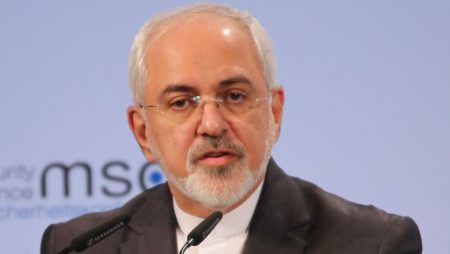
Iranian Foreign Minister Mohamamd Zarif
Al-Manar | April 14, 2019
Iran’s Foreign Minister Mohamamd Javad Zarif slammed the EU on Sunday over delays in the implementation of the new mechanism for non-dollar trade with the Islamic Republic.
In comments on Sunday, the top Iranian diplomat deplored the European signatories to the 2015 Iran nuclear deal for failing to fulfill their commitments under the agreement, saying it is long overdue.
The Europeans are far behind on fulfilling their commitments under the Joint Comprehensive Plan of Action (JCPOA), Zarif said, adding: “They (EU) should not assume that the Islamic Republic of Iran will be waiting for them.”
Describing INSTEX -a payment channel that the three EU signatories to the JCPOA have set up to maintain trade with Iran- as a preliminary measure, Zarif said the Europeans need to work hard for a long time to honor their commitments.
The Iranian minister further noted that Iran has maintained close ties with its neighbors and has launched mechanisms similar to the INSTEX with many other countries.
“While the European countries have proposed INSTEX to maintain business ties with Iran in defiance of the US sanctions, the payment channel has not been put into practice yet,” he added.
On the other hand, Zarif said Iran will ask the international community to take a position on the US designation of its Revolutionary Guards as a terrorist organization.
“Today … we will send messages to foreign ministers of all countries to tell them it is necessary for them to express their stances, and to warn them that this unprecedented and dangerous U.S. measure has had and will have consequences,” Zarif was quoted as saying by state news agency IRNA.
The Iranian diplomat said he had also sent letters to United Nations Secretary-General Antonio Guterres and the United Nations Security Council to protest against “this illegal U.S. measure”.
Russia expands ties in Lebanon’s oil and gas sector
Michal Kranz – Al Monitor – April 10, 2019
During a Middle East tour last month, US Secretary of State Mike Pompeo focused primarily on Iran’s influence in the region, but on Mar. 20 in Jerusalem he also labeled Russia an adversary of US regional allies in addition to Iran and China when speaking about energy and security in the eastern Mediterranean. “Revisionist powers like Iran and Russia and China are all trying to take major footholds in the East and in the West,” Pompeo said, alongside Israeli Prime Minister Benjamin Netanyahu and the leaders of Greece and Cyprus.
Pompeo had also reportedly planned to set “red lines” on Russian projects in Lebanon while in Beirut March 22-23. Yet, whatever plans Pompeo may have had to counter Russia in Lebanon, they seem to have had little effect. Lebanese leaders have doubled down on working with Russian companies in their country’s expanding oil and gas sector in the weeks since Pompeo’s visit.
Although the United States maintains an important degree of diplomatic clout in Lebanese energy matters, Russian economic investments in the sector have far outpaced those of the Americans, and Russian officials and business leaders have expressed their desire to take further steps to cement roles as key players like the United States continue to lag behind.
“The Russians have an advantage over the Americans not only in Lebanon, but in the region as well,” Amal Abou Zeid, adviser for Lebanese-Russian affairs at Lebanon’s Foreign Ministry, told Al-Monitor.
Lebanon and Russia signed a memorandum of understanding to cooperate on oil and gas in October 2013, and since then cooperation between them has deepened. In December 2017, the Lebanese government awarded its first contracts for offshore oil and gas exploration to a consortium of three firms that included Novatek, Russia’s second-largest gas company.
This past January, Russia’s majority state-owned oil giant Rosneft signed a deal to manage, operate and potentially rehabilitate and expand part of the oil storage terminal in Tripoli, Lebanon’s second largest city, as part of a 20-year lease. Rosneft is also competing in a bidding process along with other consortiums, including an American company, for an offshore gas terminal off the Lebanese coast.
Days after Pompeo’s visit, Lebanese President Michel Aoun traveled to Moscow, where he met with Russian President Vladimir Putin and Rosneft CEO Igor Sechin, who said the company is interested in “elevating the oil facilities in north Lebanon.” According to Abou Zeid, Sechin is interested in building up to three additional oil storage facilities in Tripoli and potentially investing in a future refinery in the north.
Cesar Abi Khalil, a parliamentarian who served as energy minister when Lebanon signed the Tripoli deal with Rosneft, told Al-Monitor that there is “high interest” in Lebanon to work with companies, including American ones, on refinery construction and rehabilitation. He added that ultimately, contracts will be awarded to companies that present the best proposals, as Rosneft did for the Tripoli terminal.
Russia’s interest in Lebanon is tied to its regional strategy. Since 2016, Rosneft has steadily expanded its operations into Iraq, Egypt and Libya, and Gazprom, Russia’s state-owned gas company, has been making inroads in Syria’s gas market during the civil war there. While Syria’s oil and gas reserves are dwarfed by those in neighboring Iraq, its location is highly strategic for Russia, which has been supporting Syrian President Bashar al-Assad in the civil conflict since 2015. Hundreds of Russian mercenaries have reportedly been killed securing oil fields in the country [actually that is a myth], and Russia has begun exploring for oil and gas off the Syrian coast.
Abou Zeid confirmed that the rehabilitation of a long-disused oil pipeline connecting Tripoli with oilfields in Iraqi Kurdistan, where Rosneft is active, was one of the topics discussed by Aoun and Sechin in Moscow. It is likely that gaining access to oil infrastructure in Lebanon in addition to offshore reserves in the country will enhance Russia’s strategic position in Syria and across the eastern Mediterranean, but it remains possible that it could also use the Tripoli facilities to try to bypass US sanctions on fuel shipments to Syria.
Meanwhile, American companies have been unable or unwilling to secure stakes in Lebanon’s new offshore prospects, which the US Department of Energy estimates will produce almost $254 billion between 2020 and 2039. Abou Zeid said that he had heard that ExxonMobil had entered into a consortium before the first bidding process for the offshore exploration contract began, but ultimately they and many other American companies failed to submit bids once they were eligible.
“I am certain that the Americans are interested, and they were not very happy with the Russian presence in this sector,” Abou Zeid said, speculating that political issues, like Hezbollah’s role in Lebanese politics, may have scared off potential American investors.
Mona Sukkarieh, a political risk consultant and co-founder of Middle East Strategic Perspectives, told Al-Monitor that other factors were more likely to be involved.
“Repeated delays resulting from frequent vacuums within the executive branch, an incomplete legal framework, changes in blocks offered and a change in market conditions all affected companies’ enthusiasm for the first licensing round,” she said.
Abi Khalil agreed that market forces were partially to blame for the lack of interest from the United States during the first round of bidding, but he also said that he had found ongoing interest by American firms in Lebanese oil and gas during his three official visits to the States, including in potential refinery projects across the country.
Despite these difficulties, the Novatek consortium followed through on its interest and secured rights to two blocks in Lebanon’s Exclusive Economic Zone (EEZ), one of which is in a disputed zone that Israel has claimed as part of its own EEZ since 2010. On April 4, Lebanese Energy Minister Nada Boustani announced the opening of a second round of bidding for contracts to five additional offshore blocks, two of which lie along the disputed border area. Lebanese leaders have long maintained that Israel is encroaching on Lebanon’s maritime boundary.
On April 1, parliament Speaker Nabih Berri said that Lebanon won’t give Israel “one cup” of its water. According Berri’s office, on March 22 the speaker and Pompeo discussed the issue of Lebanon’s southern maritime border and efforts to settle the dispute with Israel.
Abou Zeid claims that all the involved parties are interested in seeing the United States play a mediating role in the boundary issue. Regardless, US influence over matters related to energy in Lebanon are quickly diminishing given American companies’ absence in the country’s oil and gas sector and the lack of trust among Lebanese leaders, who believe Washington is biased toward Israel’s geopolitical positions.
“The US is really, one, not that interested, and two, the space that the US used to have in Lebanon in terms of influence and shaping decisions, it’s been lost,” Hanin Ghaddar, a researcher specializing in Lebanon and Iran at the Washington Institute for Near East Policy, told Al-Monitor. She added that in her view, it is unlikely that American firms will gain any offshore contracts.
So far, US efforts to counter Russian expansion in the eastern Mediterranean through diplomacy have proven inadequate. Unless American companies get serious about acquiring stakes in Lebanon’s offshore reserves, it will likely be almost impossible for the United States to overcome the head start Russia has gotten in Lebanon’s oil and gas sector, allowing Moscow to continue to strengthen its economic position across the Middle East.
Iran, Iraq and Syria considering transnational railway project: Report
Press TV – April 13, 2019
Iraq says negotiations are underway with Iran and Syria to develop a transnational railway line linking the three countries.
Iraqi Republic Railways Company chief Salib al-Hussaini said a summit will be held between the countries to further discuss the matter, the Arabic-language al-Sumeria news website reported on Friday.
The comments made on the sidelines of the joint Syrian-Iraqi committee held in Damascus came a week after Iranian First Vice-President Eshaq Jahangiri spoke of an initiative to link the Persian Gulf to the Mediterranean.
“We will connect the Persian Gulf from Iraq to Syria and the Mediterranean via railway and road,” said Jahangiri, making reference to the construction of a railway linking the Iranian Shalamcheh border region to the Iraqi city of Basra.
The Shalamcheh-Basra railway project is estimated to cost 2.22 billion rials and can link Iran to Syria via Iraq.
Speaking last December, Director General of the Railway and Technical Structures Department at the Islamic Republic of Iran Railways (RAI) Mohammad Mousavi said Iran was planning to build a movable railway bridge over the Arvand river as part of the Shalamcheh-Basra project.
Mousavi said the project would effectively link the Iranian cities of Khorramshahr and Abadan along with the Imam Khomeini Port to the Iraqi city.
The railway project was agreed to last month when Iran and Iraq signed five memorandums of understanding for the expansion of bilateral cooperation in various economic and healthcare sectors.
Observers have described the new agreements as a sign of Baghdad’s serious intention of not being “party to the system of sanctions against Iran” as Prime Minister Abdul-Mahdi said earlier in February.
Iraq heavily depends on Iran for everything from food to machinery, electricity, natural gas, fruits and vegetables.
Last year, Iran exported $8.7 billion worth of commodities to Iraq, overtaking Turkey with $7.3 billion of exports.
President Hassan Rouhani said last week that Iran and Iraq had plans to expand bilateral trade volume to $20 billion in the future.
Iran and Syria also signed a series of “historic” agreements earlier this year, including a “long-term strategic economic cooperation” deal described as a sign of changing realities in the Middle East.
Syrian Prime Minister Imad Khamis said the “historic” agreements covered cooperation in fields of industry, trade and agriculture. He called the agreement “a message to the world on the reality of Syrian-Iranian cooperation.”
Iraq and Syria have been expanding political and economic ties with Iran as they seek assistance in the post-war reconstruction of their countries which had large swathes of their territories overrun by foreign-backed terrorist outfits in the past years.
Iran has been offering military advisory support to Iraq and Syria at the request of their governments, enabling their forces to speed up gains on various fronts against the terrorist groups.
Featured Video

Death Spikes & Rising Cancer In Our Youth Explained
or go to
Aletho News Archives – Video-Images
From the Archives
Politicians lie
By Mazin Qumsiyeh | Popular Resistance | August 18, 2013
There is no way to say this truth nicely: Politicians lie. That includes Japanese, American, Egyptian, Israeli, and Palestinian politicians! Is there something more common sense than that? Yet, so many citizens around the world believe their own politicians or wistfully acknowledge lies but think it is part of the job needed to run things. They believe even when politicians contradict themselves blatantly. This phenomenon is rather remarkable. It is a dissonance and disconnect from reality that many seem oblivious to. It is very dangerous because it can lead to accepting rationales for going to war. These can be deadly wars that lead to millions of lives lost as happened in what was called World War 1 and WW2. Even when incredible and declassified evidence abound, politicians continue to lie and old mythologies refuse to die. Here are just a few of the countless lies told to us over the past few decades… continue
Blog Roll
 Aletho News
- Turkish parliament to review Saudi-Pakistan defense pact next month
- DEATH SPIKES & RISING CANCER IN OUR YOUTH EXPLAINED
- Iran offers Trump deal before US election
- Merz regime wants ‘secret police’ – opposition
- Israeli settlers terrorize West Bank Palestinians with state-provided drones: Report
- They see them, then kill them: Israeli quadcopters track, deliberately target civilians in Gaza
- Debunked: Trump’s egregious UNGA claims on war against Iran crumble under scrutiny
- Europe was part of the infrastructure of US aggression against Iran: Deputy FM
- New evidence on the Bucha Massacre
- Italy and France debunk reports CIA issued ‘Russian drone threat’ warning
- If Americans Knew
- An error has occurred; the feed is probably down. Try again later.
- No Tricks Zone
- New Study: Earth And Venus Surface Warmth Largely Explained By Convection And Lapse Rate, Not CO2 Or Radiation
- 2025 Nature Paper Claiming Worsening Global Drought Gets RETRACTED …Heavily Flawed
- New Study: ‘Global Drought Shows No Detectable Recent Acceleration Under Climate Warming’
- Economic Masterminds: German Socialists Suggest Taxing Productivity Gains Stemming From Using AI
- The South China Sea Has Not Been Cooperating With The Climate Change Narrative
- Energy Crisis: Germany Enters Heating Season With Historically Low Gas Reserve Fill Levels
- New Study: The Antarctic Ice Sheet Gained Mass From 2020-2024 Due To Staggering Snow And Ice Accumulation
- Study: Ocean Heating Rates From Thousands Of Years Ago ‘Dwarf’ Modern Ocean Heating Rates
- Climate Extremists Target, Attack Large-Scale Power Grid Infrastructure In Germany!
- New Study: Antarctic Ice Melt Has Contributed Less Than 1 Centimeter To Sea Level Rise In The Last 30 Years

