In Upcoming Elections EU Parliament Faces Long List of Enemies
By Attilio Moro | Consortium News | May 6, 2019
As the EU approaches what are considered to be the most important elections in the history of its parliament — between May 22 and 26 — the EU has never had so many enemies.
The list starts with U.S. President Donald Trump and extends to the Brexiters in the UK. It goes from Andrze Duda, the Polish premier, to Hungarian Prime Minister Viktor Orban; from the Czech Republic’s Prime Minster Andrej Babis to the Romanian government.
Italy also makes the list. Its unofficial prime minister, Matteo Salvini, has been advocating, until he took office, the exit from the euro and possibly from the EU altogether. Other anti-EU leaders include Austrian Prime Minister Norbert Hofer, who assumed office on an anti-European platform, and France’s Marine Le Pen.
There is also the AFD Party in Germany and a score of sizable anti-EU minorities in almost all European countries.
The most aggressive of all has been Donald Trump, who went well beyond his “American First” slogan in calling EU countries the trade “enemy” of the U.S. Under his watch, EU-U.S. relations have never been so bad.
Divisions with EU
The Trump administration’s divisions with the EU seem to involve everything, from NATO (Europeans have to pay more, Trump keeps saying) to Iran (Washington trying to block Europe from dealing with Tehran); from trade (too many German cars in the U.S.) to the environment (Trump backed out of the collective reduction of Co2, as internationally agreed in Paris).
Trump has given confidence and strength to Brexiteers and every possible type of EU dissident, to the point that Poland’s Duda has openly defied the EU Commission’s demand to abolish the illiberal law allowing his government to appoint the justices of the Supreme Court.
Hungary’s Orban could defy the European immigration policy by refusing to take in one single migrant (Trump is building a wall, after all). And, contrary to the “European spirit of openness” (and against the wishes of many of George Soros’s friends in Brussels) — Orban in 2018 managed to force most of operations of the private university in Budapest funded by the Hungarian-born billionaire philanthropist to move to Vienna.
The Czech Republic’s Babis, the richest man in the country, continues to flout warnings from Brussels about his violations of press freedom and the independence of the judiciary.
Romania is displaying the most conspicuous insubordination in the case of Laura Kovesi, its former chief prosecutor, who oversaw the convictions of thousands of politicians, officials and businesspeople. Now Bucharest, which is holding the rotating presidency of the EU until the end of June, is trying to prevent Kovesi from leading the new European Public Prosecutor’s Office, which will begin functioning in 2020. Romania’s justice minister has been smearing her in letters to his EU counterparts and the government briefly subjected her to a travel ban. The only government that opposes her nomination is her own.
Sovereignism
The ideology that unifies most of the European “enemies” of the EU is sovereignism, the idea that national interests should come before those of Europe and that sharing wealth doesn’t imply sharing policies and values.
In line with Trump, Sovereignists don’t believe that the problems of the modern world can be dealt with through a multilateral approach. They will win, according to most estimates, a sizeable share of the seats in the EU Parliament later this month.
They will be supported by a substantial share of the European public opinion (mainly right-wing) which is at odds with what they consider to be an EU immigration policy that is too permissive.
They will also be supported by plenty who feel that the EU institutions, including the EU Parliament, are bureaucratic and remote from ordinary people, while too close to the lobbies. They have a point. Around 15 thousand lobbyists are active in Brussels. It is not a mystery that they are very influential in the EU Parliament.
Recently, it turned out that the EU’s liberal party, the Alliance of Liberals and Democrats for Europe, or ALDE, received hundreds of thousands of euros in donations from Google, Bayer, Microsoft, Uber, Syngenta and Deloitte.
The leftists of the GUE/NGL and the Greens both fiercely oppose corporate lobbying. But with those two exceptions, there is good reason to believe that all the other major political groups have received this much money and more.
One of the most striking cases of EU corporate influence is that of Bayer-Monsanto, which managed last year to renew its European license for the weed killer, Roundup, which has been defined by leading research institutions as an endocrine disrupter with links to cancer.
In addition to corporate corruption, anti-EU sentiment includes those opposed to the neoliberal economic policies (privatizations of public companies, cuts in social spending, deregulation) imposed in the last 20 years by the EU institutions, which not only failed to revive the economy but brought southern European countries to the brink of bankruptcy.
Despite the widespread frustrations, most European citizens consider the EU as vital in the era of globalization. And a reasonable percentage of the European constituency will turn out to elect their delegates to Brussels.
But the EU Parliament senses the threat it is facing and is running an unprecedented voter turnout campaign. In every European airport now, huge (and very expensive) billboards inform travelers of what the EU has done for their country.
Had parliamentarians arranged more transparency in the way they do business, or had they passed a proposal that has been languishing for decades for passage – which would oblige lobbies to register — that might have been more effective than billboards.
Attilio Moro is a veteran Italian journalist who was a correspondent for the daily Il Giorno from New York and worked earlier in both radio (Italia Radio) and TV. He has travelled extensively, covering the first Iraq war, the first elections in Cambodia and South Africa, and has reported from Pakistan, Lebanon, Jordan and several Latin American countries, including Cuba, Ecuador and Argentina. Presently, he is a correspondent on European affairs based in Brussels.
‘A lot to learn from Iran’: Tehran helps Venezuela ‘survive’ under US sanctions, FM Arreaza says
RT | May 6, 2019
Iran, which has been living under tight US sanctions for several decades, is consulting the crisis-hit Venezuela on how to overcome economic blockade and boost production, Foreign Minister Jorge Arreaza revealed.
For several decades, Tehran “has been growing its economy under the [US-imposed] sanctions in a bid to seek independence in various industries,” Arreaza told reporters during his visit to Moscow. Explaining further, he said Iran has indispensable experience in defying continuous US pressure.
We have a lot to learn from Iran. We have Iranian consultants in Venezuelan government that help us survive the blockade and boost production.
Iran has been suffering from US-imposed sanctions since the 1979 Islamic Revolution which toppled the pro-Western Shah Mohammad Reza Pahlavi. The restrictions targeted Iranian finances, exports and imports, as well as energy and the military.
Most of the sanctions that crippled Iran’s economy were lifted after Iran and the five world powers, the US, the UK, France, China and Russia, plus Germany, signed the 2015 nuclear deal. But the US has unilaterally quit the landmark accord under President Donald Trump who labeled it as “the worst deal ever,” and reimposed the sanctions last November.
Likewise, the US slapped Venezuela with restrictions targeting the Latin American country’s oil industry, including the major state-run company PDVSA. These sanctions were strongly condemned by Caracas which dismissed them as economic blackmail.
Iranian advisory aside, Venezuela is seeking alternative ways of dealing with friendly countries around the world, including China and Russia. “These methods and routes aren’t built up overnight, we need much time to create them,” he admitted.
‘Anything is possible’: Trump talks North Korea peace after phone call with Putin
RT | May 4, 2019
President Trump took to Twitter to declare his support for peace on the Korean Peninsula, after discussing the issue with Russian President Vladimir Putin. North Korea, meanwhile, test-fired short-range missiles.
“Anything in this very interesting world is possible,” Trump tweeted on Saturday. “But I believe that Kim Jong Un fully realizes the great economic potential of North Korea, & will do nothing to interfere or end it. He also knows that I am with him & does not want to break his promise to me. Deal will happen!”
Trump’s tweet came after he spoke with Putin by phone on Friday. The two leaders discussed a range of geopolitical issues, including nuclear arms control and the Korean peace process.
The president touted the success of the call on Saturday, heralding the “tremendous potential for a good/great relationship with Russia, despite what you read and see in the Fake News Media.” After the phone call, certain media outlets chided Trump for not pressing Putin on supposed Russian election meddling.
Despite Trump’s insistence that a “deal will happen” with North Korea, results thus far have been lacking. A much-anticipated summit between Trump and North Korean leader Kim Jong-un in Singapore last year ended with a vague promise from Kim to work towards denuclearization, while a follow-up summit in Hanoi, Vietnam this year collapsed with no agreement when Trump found Kim’s demands untenable.
Kim has since broadened his horizons, meeting with Putin in Vladivostok last month. Japanese Prime Minister Shinzo Abe is also reportedly considering a meeting with Kim, according to a Friday report in the Shankei newspaper.
Diplomacy aside, Pyongyang has reportedly reversed its dismantling of missile and rocket test sites in the wake of the failed Hanoi summit, and on Saturday morning fired a salvo of short-range projectiles out to sea from the city of Wonsan, on its east coast.
On the Run-up to Pakistani Prime Minister Imran Khan’s Visit to Iran
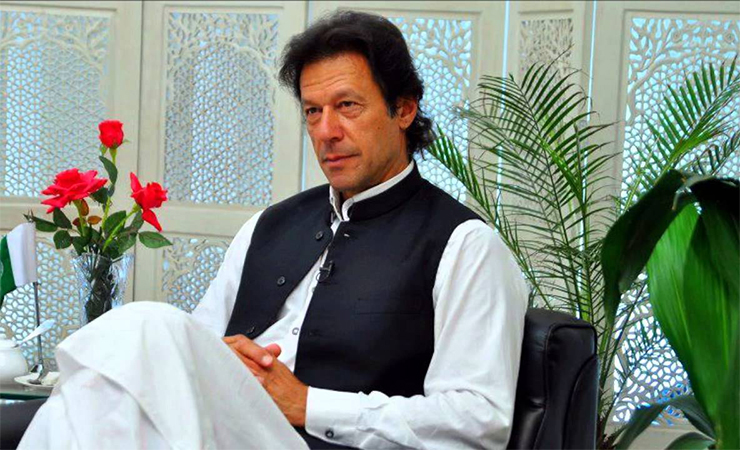
By Natalya Zamarayeva – New Eastern Outlook – 03.05.2019
Many firsts, much tradition and a great deal left out on the official agenda for the Iran-Pakistan talks. Pakistan’s Prime Minister Imran Khan, who took office in August 2018, paid his first visit to Tehran on April 21-22, 2019 after receiving an invitation from Iranian President Hassan Rouhani.
For the first time in history, the head of the Islamic Republic of Pakistan:
– voiced support for the ideals of Iran’s Islamic Revolution as the country marked its 40th anniversary, who assured Iran’s spiritual leader Ayatollah Ali Khamenei that Islamabad has set out on a path to revolution;
– publicly admitted that terrorists had used Pakistani soil in the past to carry out attacks against Iran, which has been met with sharp criticism from the Prime Minister’s opposition in Islamabad;
– avoided bringing up the failed negotiations on the Iran-Pakistan gas pipeline.
There were three challenges that the Prime Minister dealt with in a terrific manner, which took place in the background during his visit to Tehran:
– Washington’s steep step-up in anti-Iranian sanctions (Iran-US relations deteriorated in May 2018 following President Donald Trump’s announcement that the US was going to pull out of the Iran nuclear deal, JCPOA; in April 2019, the US declared the Islamic Revolution Guards Corps a terrorist organization; Washington will start imposing economic sanctions against countries importing Iranian crude oil since May 2, 2019; the US has been putting pressure on the EU to politically isolate Iran). Despite threats of economic sanctions, in April 2019, both Islamabad and Tehran called on Washington to fully implement the Iran nuclear deal as soon as possible;
– Saudi hostility towards Iran;
– a brutal terrorist attack in the Pakistan-Iran border area which took place in April 2019.
PM Imran Khan’s visit to Iran can be described as a breakthrough in bilateral relations. The historical, cultural, religious and civilizational ties between the two neighboring Muslim countries are now being recognized with respect for the principles of national sovereignty and territorial integrity. Imran Khan had shown how he is putting Pakistan’s new approach of strengthening relations with all neighboring states into action, which was put forward by the government of the Pakistan Justice Party (PSP/PTI) headed by Khan. Iran and Pakistan have stressed that “no third country” will be able to prevent Iran-Pakistan relations from developing (an obvious reference to the United States and its policy which aims to isolate the Islamic Republic). And given the current situation, countries in this region need to cooperate independently and directly promote their own interests. For Pakistan’s former government, friendship with Iran did not go beyond the diplomatic level.
Former Prime Minister Nawaz Sharif, who came to power in June 2013 with the victory of his party, the Pakistan Muslim League-Nawaz (PML-N), caved to pressure from the US and Saudi influence and tried to forget about the agreements signed in spring 2013 by Pakistani President Asif Ali Zardari and Iranian President Ahmadinejad for the construction of the Iran-Pakistan gas pipeline.Iran-Pakistan relations were frozen while Sharif was in power. Only in November 2017, with the Chief of Army Staff (COAS) General Qamar Javed Bajwa’s visit to Iran, their original defense partnership began to be restored to earlier levels, and bilateral relations intensified on a diplomatic and economic level at a later stage.
In July 2018, immediately after the results of the parliamentary elections were announced, Iran expressed a willingness to promote and expand its cooperation with Pakistan’s new government across all areas. Iran’s Minister of Foreign Affairs was one of the first high-ranking foreign diplomats to pay an official visit to Islamabad in autumn 2018, when he met with Imran Khan. It was during this visit, in response to the Naya Pakistan (New Pakistan) program of reforms announced by the Pakistan’s new government, when Iran’s Foreign Minister told Khan what had been achieved tanks to the 1979 Islamic Revolution, particularly in terms of health, with the greatest improvements seen in primary health care provision. The Iranian experience appealed to Pakistan, and the two states signed the Declaration for Cooperation in Healthcare Sector in 2019.
The current composition of bilateral relations is far more diverse and complicated, and involves security, trade, religious pilgrims, the status of Pakistani prisoners in Iran, the ports of Gwadar and Chabahar, cultural ties, humanitarian cooperation and joint participation in the Chinese Belt and Road Initiative.
Time and time again, terrorist attacks have challenged bilateral relations between these countries. In recent years, terrorist groups have intensified their activities on both Iranian and Pakistani soil. Therefore, Islamabad and Tehran have re-acknowledged the importance of regular cooperation between politicians, the military and security personnel to combat threats such as drug trafficking, kidnapping and human trafficking, hostage-taking, money laundering, bombings and arson. Following the talks, the countries signed a deal to cooperate in the fight against terrorism for the first time; agreed to form a Joint Rapid Reaction Force; and agreed to open new border crossings (in Gabd-ReemdanandMand-Pishin), as well as border markets. The countries plan to continue to build a fence along the border and synchronize the work of border patrol services.
The leaders of both countries expressed regret that Iran, with a population of 80 million people, and Pakistan, with a population of 210 million people, have not taken advantage of their trade potential for various different reasons, and the range of goods has remained limited over the past years. Nawaz Sharif’s government took up Washington’s anti-Iranian sanctions policy, and the volume of trade declined as a result. Since 2017 however, the countries have been gradually expanding the range of goods they produce and the volume of exports and imports using the means they have available. For example, they agreed to establish a barter committee for the exchange of goods with the aim of stepping up monetary, financial and commercial activities. Iran, for its part, is prepared to deliver a tenfold increase in the volume of electricity it exports to Pakistan.
Long-term plans include the construction of a railway line connecting the ports of Pakistani Gwadar and Iranian Chabahar, as well as completing the construction of the gas pipeline to Pakistan.
The process of brokering an internal Afghan political settlement remains a matter of concern for other countries in the region. Iran and Pakistan believe that the formula which would give this solution is in intra-Afghan and Afghan-led dialog.
Peace and harmony in the region remain a priority and provide the foundation for developing transport transit corridors, which are the engine for accelerating bilateral and regional partnerships and trade. Iran and Pakistan support the implementation of bilateral and multilateral agreements, including the Chinese Belt and Road Initiative –BRI; China-Pakistan Economic Corridor – CPEC; and agreements on establishing the North–South and East–West corridors in Iran.
During the visit, Iran acknowledged that a solution may only be found to the conflict in the Jammu region and Kashmir through dialog, which should take the will of the regional population into account and should adhere to the UN Security Council resolutions. The Pakistani Leader, in turn, spoke of injustice against the Palestinians. Both Iran and Pakistan view Israel’s illegal occupation of Golan Heights and the transfer of the Israeli capital from Tel Aviv to Jerusalem as a violation of international law, which will only lead to greater instability in the Middle East.
Natalia Zamarayeva, Ph.D (History) Senior Research Fellow, Pakistan section, Institute of Oriental Studies of the Russian Academy of Sciences.
Zero Carbon Proposals Slammed As Irresponsible & Arbitrary
By Paul Homewood | Not A Lot Of People Know That | April 2, 2019
The GWPF has issued this press release in response to the Committee on Climate Change’s new proposals to cutting CO2 emissions to zero by 2050:
Summary
The recommendation of the Committee on Climate Change (CCC) for a Net Zero emissions target by 2050 is grounded in nothing stronger than irresponsible optimism and arbitrary assumptions about cost and technological feasibility. In point of fact, the technologies seen as necessary, including carbon capture and sequestration (CCS), further expansion of renewable generation, widespread adoption of hydrogen, and the very rapid electrification of the UK’s entire heating and transport systems, are either known failures or are unproven at these scales and would cost two to three times the amounts claimed by the CCC. Attempts to deliver these policies would ultimately fail, but in the attempt the UK would further harm its already declining productivity, and so erode the UK’s ability to compete internationally and thus deliver an acceptable standard of living for its people. This is not a sustainable low emissions strategy, and even if accepted by government is very likely to end only in humiliating and distressed policy correction. A wise government would reject this advice.
The Committee on Climate Change (CCC) is advising the government of the UK to revise and increase the ambitions of the Climate Change Act. The Act already commits the country to an 80% reduction of greenhouse gas emissions by 2050 as compared to 1990 levels. The new proposal is that it should have ‘Net Zero’ emissions by that year. The UK has, the CCC claims, already reduced its inland consumption emissions by 40% against the 1990 baseline, and it presents the current proposal as a rational continuation of that success story. But this is a selective and misleading history. When the emissions associated with UK consumption through manufacturing in other countries are taken into account, the UK’s carbon footprint was actually still rising up until the 2008 downturn, when it fell because of economic difficulties, and is now showing some signs of returning to the upwards trend as the economy slowly recovers. In essence, the UK simply exported its emissions to other parts of the world, principally China, in substantial part through carbon leakage resulting from high energy costs in the UK, costs which in substantial part were the result of climate policies. This history gives no ground for optimism with regard to the Net Zero target now proposed. Far from being a success on which we can build, UK climate policy has been a failure, resulting only in domestic economic damage and the illusion of reduced emissions.
The overriding problem facing the UK is the comparatively slow growth in productivity. For much of the last century, the UK’s productivity has been below that of the major industrial economies, and the gap has grown in the first two decades of the 21st century. The consequence has been no growth in real wages and incomes, a fact that strains domestic budgets and exacerbates a general reluctance to make the investments required for future economic prosperity.
This deterioration in productivity growth closely follows and is substantially associated with the implementation of policies to reduce energy use and carbon emissions. There are three reasons for this link:
(a) Large amounts of investment and labour have been diverted to capital-intensive renewables, crowding out investment in other infrastructure and sectors with much higher levels of capital and labour productivity.
(b) The resulting increases in energy prices have prompted high-productivity manufacturing and other industries to conclude that they should look elsewhere for growth in both demand and production.
(c) More generally, the efforts and resources of businesses and innovators have been diverted away from improving productivity and towards efforts to reduce carbon emissions. Furthermore, the idea that there is a global opportunity for the UK to grow by exploiting low carbon technologies is demonstrably a myth.
There can be no doubt that these factors have had a major impact on the development of the UK economy in the last two decades. Low carbon growth may be the holy grail, but the reality is almost no growth and slower reductions in carbon emissions per unit of output than in, say, the United States. Yet the CCC is now recommending proposals that are explicitly designed to reinforce this disappointing performance.
If the government accepts the CCC’s proposals, which are marked by a persistent special pleading about the costs and feasibilities, it will immediately sabotage any plan to rectify the UK’s poor productivity performance and weaken international competitiveness. Its recommendations will ensure that the UK suffers from even lower productivity and be still poorer relative to the rest of the world in 2050 than in 2020. At the same time, the slower growth in productivity brought about by these proposals will increase the burden of meeting the CCC’s targets to a level that will not be bearable. The only doubt is how much pain the population will endure, and how much damage will be done, before these infeasible targets are abandoned.
The study that underlies the CCC’s proposals is marked by what can only be called ‘fantasy analysis’. Electricity demand is required to double on present levels, when in fact it is falling due to high prices. The CCC’s plans require that all of that additional electricity must come from low carbon sources, as opposed to under 50% today. The CCC itself admits that CCS is ‘essential’ to its vision for the 2050 target, and must be substantially deployed before 2030, with a significant level by 2026. At present it is non-existent in the UK, and non-viable at scale elsewhere. There must be 30 GW of offshore wind by 2030, and 75 GW by 2050; at present there is 8 GW, all heavily subsidised, with no sign that the industry is in fact able to build offshore wind at market competitive rates.
The CCC believes that petrol and diesel cars and vans must be phased out well before 2040, but admits that even the current eye-catching and over-ambitious plans to mandate electric vehicles by 2035 cannot deliver this transformation. It consequently suggests that new fossil-fuelled vehicles must be outlawed by 2030. Such a ban would in all probability destroy the existing market for domestic car manufacture, as Chinese and other Asian companies using cheap energy and cheap labour will make the UK uncompetitive.
The study notes that the UK’s provision of space and water heating must be converted to electricity and hydrogen, but admits that there is currently ‘no serious plan’ in existence for this revolution. That is correct, but unfortunately, the study does not itself provide one.
The CCC states that there must be very large afforestation schemes to act as carbon sinks, at a rate of 20,000 hectares per year up to 2025, and 27,000 hectares per year thereafter. The CCC itself admits that the current rate has been only about 10,000 hectares per year over the last five years. In any case, the use of forestry as a carbon sink only has a short-term impact unless CCS is applied to wood burning, which is not feasible on a small scale and is unaffordably expensive on a large scale.
Overall, the CCC’s reaction to these manifest failures and difficulties is to conclude that the ‘voluntary approach’ has failed hitherto and would not deliver the new proposals. Implicitly, therefore, the policies that it recommends must be mandatory and state-led. But nowhere does the CCC’s report consider whether the state actually has the administrative or technical competence to successfully deliver these remarkable objectives. Nor does it consider whether the cost of doing so is likely to be tolerable to the public. Indeed, strikingly, though the CCC makes assertions about the cost and benefits of increasing the Climate Change Act target to Net Zero, there is no attempt to actually quantify the marginal costs and benefits of each step necessary – the most fundamental requirement for such an exercise. Indeed, many of the costs actually cited in the report ignore the practical realities of installation, operation and maintenance of technologies that are well-understood and have failed to achieve widespread deployment without large subsidies. Experience tells us that, if adopted, the CCC’s programme will cost anything from three to five times the estimates in this report and will take up to twice as long to implement.
In summary, the Committee on Climate Change has not produced a serious assessment of the practical feasibility and costs of a Net Zero 2050 target. On the contrary, it has simply taken the Net Zero target as a given and made irrationally optimistic and arbitrary assumptions comprising a fictional narrative that magically delivers the emissions reduction goal as the Happy Ending. This is unrealistic, irresponsible, and misleading.
The government should obviously reject the Climate Change Committee’s poorly argued advice, which is economically hazardous and does not offer a sustainable emissions reductions trajectory.
https://www.thegwpf.com/gwpf-statement-on-the-proposed-net-zero-2050-emissions-target/
‘Too much money invested in war’: US defense industry drives global military spending spree
RT | April 30, 2019
Global military expenditures reached their peak in 2018, and the driving force behind this increase is the growing appetite of the US military-industrial complex rather than real threats, analysts say.
The world spent $1.8 trillion on its military in 2018, the latest report by the acclaimed Stockholm International Peace Research Institute (SIPRI). The US and its NATO allies – the self-proclaimed defenders of freedom and democracy – account for more than half of this whopping amount.
Washington’s other close friend Saudi Arabia is the third largest military spender, coming ahead of India.
“A lot of this spending, particularly in the case of Saudi Arabia and India, is for political reasons,” Michael Maloof, a former senior security policy analyst at the Pentagon, told RT. New Delhi and Riyadh seek to “curry favor” with Washington by purchasing the US weapons in hope for concessions in other areas, he explained.
Washington’s NATO allies have seen pressure from the US related to their military spending ever since Donald Trump came to power in the White House. Maloof believes it has less to do with security of the alliance and more with the interests of the US arms manufacturers.
“A lot of that is aimed at trying to help the US defense industry to stay ahead [of their competitors] and hire more people,” he explained, adding that the issue of the military expenditures has a “clear economic dimension.”
In its desire to sate the always-hungry domestic military industrial complex, the US risks escalating tensions on the international arena, analysts warn. Washington’s hawks typically justify the need for ever-increasing military expenditures with some perceived threats from Russia or China, portraying them as war mongers.
“There is no good reason” for larger defense budgets, Ted Seay, a former US diplomat and senior policy consultant with the British American Security Information Council (BASIC), told RT. It is the West’s fear of the perceived ‘Russian threat’ that has in fact led to destabilization on the European continent, he noted.
“There are military provocations taking place between NATO and Russia where there should not be any far in the 21th century when there is no logical reason for any confrontation between Europe and Russia,” Seay said.
The former US diplomat also denounced as senseless the NATO “formula” demanding that member states spend two percent of their GDP on defense.
There is not a military situation that necessitates [the likes of] Latvia or Poland to find a solution in greater military spending. It simply does not exist in this age. But there are people who seem to be intent on creating confrontation and encouraging the NATO countries to spend more money with no good reason.
Yet, it is precisely Poland and the Baltic States that top the list of nations with the highest annual defense spending increases in Europe over the recent years.
Poland’s military budget rose by 8.9 per cent in 2018 to $11.6 billion, according to SIPRI, while Latvia upped its military expenditures by staggering 24 percent over the same period. Bulgaria and Ukraine – which is not in NATO – followed closely, increasing their spending by 23 and 21 percent respectively.
Meanwhile, the US and its allies grossly outspend all the nations they perceive as alleged threats. The US expenditures alone accounted for 36 percent of global defense spending while exceeding the expenditures of the next eight largest-spending countries combined in 2018. NATO’s total military spending accounted for 53 percent of the global defense expenditures.
China was the only Washington’s perceived rival that made it into top 5 military spenders in 2018. However, Beijing’s defense budget amounted to only a fraction of the US one and accounted for 14 percent of the global military spending.
Russia, meanwhile, came it at number six by spending some $61.4 billion on the military in 2018, following consecutive defense budget cuts in the last two years. However, these facts do not stop the biggest military spender in the world to accuse Moscow of somehow initiating an “arms race.”
Anyway, the latest trends show that the world is unlikely to see easing of tensions on the international arena anytime soon, Seay warns.
Extinction Rebellion – The Facts
Windows on the World | April 21, 2019
The corporate backed “protest” group Extinction Rebellion fully explained. The main protagonists in this organisation and their links to Agenda 2030, the UN Global Action Plan and template NGO’S are all explained in this fact filled show.
Do listen and look at the information presented in in these two WOTW shows about the ER cult. Listen and check out the info here
The full spectrum dominance of controlled opposition is explained in the show:
Extinction Rebellion – The Facts
Below are the emails between a member of the public who asked the inner core of Extinction Rebellion a few questions and the sinister responses and threats from their “Dragons”
The Dragons of Extinction Rebellion
The same type of “Dragons” were used in the Occupy power structure once it was under the control of George Soros they can be seen in The Puppet Masters of Occupy
Our previous shows on the ER cult gave a lot of information and context to this show. They are linked above, “Fake Protest Extinction Rebellion” and “Globalist Fake Revolution”. The articles on the website contain internal ER documents and screenshots.
Here is an informative article From OYE News
The structure of ER mirrors the George Soros backed takeover of Occupy with its command structure including “Dragons”who threaten and intimidate anyone who asks questions.
We also have e mail threats from the sinister so called “Dragons” who protect the inner core of ER personnel. This all mirrors previous globalist backed protests.
We also look at the organizations linked to ER and how there are hundreds and globally thousands of these NGO template organizations all using the same narratives, all backed by the big financial interests which are pushing the climate change agenda for profit and ultimately control of the world population and all natural resources. The change agents, social entrepreneurs, psychological nudging, Saul Alinsky rules which all appeared as part of David Cameron’s Big Society.
Gail Bradbrook is one of the founders of Extinction Rebellion along with Roger Hallam and George Barda. Their Company is Compassionate Revolution Ltd and the ER protests came through Rising Up an organisation linked to other template type NGO’s which claim to be “grassroots”.
Gail Bradbrook is a consultant at Citizens Online, her profile was removed from the company’s website before the London “protests” Here it is before it was removed.

On the subject of fake protest groups: Demos the Think Tank which influences all media in the UK and is connected to the security services and MI5 stated:
“The New Democracy will work with a combination of government open infiltration and citizen groups taking Direct Action.”
The show looks at the template NGO’s linked to this “protest” and how they are in line with aims of the UN Agenda 2030, its taxation, restrictions and Smart Cities agenda and everything Globalist.
The use of the world “grassroots” has been hijacked to mean “state controlled and agents of the UN, IMF and World Bank.”
Unlike the Fake Protests we receive no funding!
Hamas slams UAE for inviting Israel to Dubai Expo
Palestine Information Center – April 28, 2019
GAZA – The Hamas Movement has strongly denounced the participation of Israel in the 2020 World Expo in the United Arab Emirates city of Dubai, describing it as a serious development.
In Twitter remarks, Hamas spokesman Sami Abu Zuhri urged UAE to backtrack on its decision to invite Israel to participate in the event.
Abu Zuhri said that allowing Israel to participate in Arab events would encourage it to persist in committing more crimes against the Palestinians and usurping the Arab nation’s rights, describing the UAE’s step as “a violation of the decisions taken during the Tunis summit.”
UAE invited Israel to the event despite not recognizing Israel as a state, which comes as another omen of strengthening ties between Tel Aviv and Arab Gulf countries spearheaded by Saudi Arabia among fears that these countries seek to liquidate the Palestinian cause through backing the US deal of the century.
For its part, Israeli premier Benjamin Netanyahu hailed UAE for inviting Israel to the event, describing the participation in the event as “another expression of Israel’s rising status in the world and the region.”
Yellow vest protests hit Strasbourg in sign of trouble for EU
Press TV – April 28, 2019
The “yellow vest” protests in France have spread to Strasbourg, the seat of the European Parliament, on the 24th consecutive weekend of a revolt which shows no sign of abating.
Thousands gathered near European Union institutions late Saturday, with organizers hoping to make the protest international a month ahead of EU-wide parliamentary elections.
Police fired tear gas to push back protesters trying to march on the European Parliament building and eyewitness footage showed arrests being made.
Authorities had banned protests and barricaded the neighborhood where the parliament and other EU institutions are located.
Protests were held elsewhere across France, coming two days after President Emmanuel Macron outlined policy proposals including tax cuts worth around 5 billion euros in response to the revolt.
The Interior Ministry said around 23,600 protesters took part in rallies across the country, including Paris, Lyon, Bordeaux, Dijon and Toulouse.
The protests, named after motorists’ high-visibility yellow jackets, began in November over fuel tax increases but morphed into a nationwide movement against government policies.
The yellow vests coalition includes numerous anti-Europe protesters, many of whom are calling for a ‘Frexit’, which would see France leave the EU.
Thousands of police and soldiers are drafted into the French capital every Saturday, when there is regular fighting and fires being lit.
The situation is now so extreme that vast areas of Paris – including the district around the Elysee Palace – are shut off every weekend.
The trouble has extended to other major cities, including Bordeaux and Toulouse, where hundreds have been arrested, or injured by police weapons ranging from flash ball rubber bullets to batons.
Macron has pledged more money for rural areas, but he is still regularly described as a “President of the Rich” who is primarily interested in supporting big businesses.
He has already scrapped wealth taxes, and made it far easier for companies to hire and fire employees.
Macron had originally planned to deliver a reform speech to the nation a week ago, but it was postponed because of the fire at Notre Dame Cathedral in Paris.
Some 1 billion euros has now been pledged for the rebuilding of the medieval place of worship – prompting the yellow vests to ask why other funds cannot be found to deal with their own grievances.
Coming Clean on Washing Machine Tariffs
By Dean Baker | CEPR | April 23, 2019
Jim Tankersley had a piece in the NYT yesterday on the cost per job saved of Trump’s tariffs on Chinese washing machines. According to the study, the cost per job saved was $817,000. While that is a steep tab, there are a few points that should be added to this sort of analysis.
First, if the point of the tariffs is to benefit workers, part of this $817,000 cost is going to higher pay to workers who would have jobs with or without the tariff. The study doesn’t look at the impact on wages of workers in the industry, but if the goal is to help workers who make washing machines, then this should be factored into the assessment.
The second point is that this is a partial equilibrium analysis. It doesn’t look at the overall effect on the economy of a reduction in the money we spend on importing washing machines. While this can be hard to assess, since imports of washing machines from China are a very small part of the total economy, other things equal we would expect that less money spent on imported washing machines would translate into a higher-valued dollar. (We are reducing the supply of dollars on world markets, thereby raising the price of dollars.)
This effect is almost certainly very small, but suppose that the reduced payments for imported washing machines raised the value of the dollar by just 0.01 percent. If this rise in the dollar were fully passed on in lower import prices (it isn’t), that would translate in a reduction in the cost of imports to US consumers of $320 million, more than 20 percent of the cost of the tariffs estimated in this study. Even if it would be hard to get any sort of precise numbers, the point is that this is an offsetting effect which could be large relative to the estimated cost of the tariffs.
The third point is that tariffs can sometimes make sense if they allow an industry breathing space to reorganize and regain competitiveness or serve some other goal (e.g. persuading a country to raise the value of its currency). In 1983, Ronald Reagan imposed tariffs on Japanese motorcycles in order to help out Harley Davidson. In 2006, when President George W. Bush wanted to tout the virtues of free trade, he visited a Harley Davidson factory in Pennsylvania which was a major producer of motorcycles for exports. It is unlikely that Harley Davidson would have been exporting motorcycles in 2006 without the tariffs that allowed it some breathing space in 1983.
Of course, none of this means that Trump’s washing machine tariffs are a good idea. If they are in fact part of a well-crafted trade and industrial policy strategy, he is managing to keep this strategy secret from just about everyone. It looks mostly like the main effect will just be that we pay more for washing machines, even if the story may not be quite as bad as advertised.
Modi government caves in to US diktat on Iran oil
By M. K. BHADRAKUMAR | Indian Punchline | April 24, 2019
Prime Minister Narendra Modi travels around the country every day claiming to be the defender of national interests in Pulwama, Balakot, ASAT and so on. But he’s keeping deafening silence on the one issue that has come up in the foreign policy that is going to have devastating impact on the Indian economy and affect the lives of common people — US diktat to India to stop oil imports from Iran.
The White House diktat is certain to lead to a spike in India’s oil bill. And, yet, only the Communist Party of India (Marxist) has voiced concern. If foreign policy is about enabling the country’s development, Modi government should show the political courage to tell the Trump administration that its attempt to hurt India’s economic interests will be resisted.
Instead, alas, the media reports suggest that the government is meekly caving in to the White House decision on Monday to block other countries from trading in Iranian oil. Most regrettably, what we see here is an abject surrender of national interests by our government, which is completely contrary to Modi’s claims of being the custodian of India’s development and prosperity.
The government has given a spin that it has arranged “alternate sources” of supply of oil. This is plain sophistry. The real issue is that Iran has been supplying oil to India in highly concessional terms — and not about the availability of oil as such. Buying oil from the spot market has always been an option, but the government could significantly reduce its import bill by availing of Iran’s favourable terms. Not only that, oil trade is a sleazy affair and only middle men stand to gain if India switches to the spot market. The common man will bear the burden of hidden kickbacks. Iran was keen on long-term arrangements with India.
The White House announcement on Monday claimed that Saudi Arabia and the UAE have agreed to offset lost barrels from Iran. However, Saudi Arabia has since given a measured response, saying only that it would add supply if needed. The point is, Saudi Arabia also has to keep output below its ceiling as part of the OPEC+ deal (with Russia), which means that while in theory it could add a few hundred thousand barrels per day above current levels (approximately, 500,000 bps), that may not be enough to compensate for outages in Iran. (And this doesn’t take into account other disruptions in oil supply due to US sanctions against Venezuela and the civil war in Libya.)
The Saudi oil minister Khalid al-Falih has already gone to lengths to try to assuage the concerns of the OPEC+ group, stating that Riyadh would “coordinate with fellow oil producers to ensure adequate supplies are available to consumers while ensuring the global oil market does not go out of balance.” In sum, Saudi Arabia won’t act unilaterally and won’t act preemptively.
Furthermore, aside the strategic goal of keeping the OPEC+ group together, Riyadh also has budgetary concerns to keep oil price as high as possible. The IMF estimates that Saudi Arabia would need oil prices at US$ 80-85 per barrel in order to balance its 2019 budget. According to OPEC figures, the oil and gas sector generates around 50 percent of Saudi Arabia’s GDP, and accounts for some 70 percent of its export earnings. Besides, Saudi Arabia relies on proceeds from oil to fund its hugely ambitious transformation programme known as Vision 2030, the Crown Prince Mohammed bin Salman’s grand project to channel billions upon billions of US dollars in investments to diversify the Saudi economy.
Therefore, all factors taken into account, the oil price is bound to shoot up in the months ahead, vastly increasing India’s import bill. The government’s calculation would be that if the BJP is returned to power, the increase in oil price can be simply passed on to the consumer, which was what the Modi government has been doing through the past 5-year period. Of course, the danger of a worldwide economic recession due to high oil prices is already talked about.
The Modi government caved in under American pressure without even token resistance. Two countries similarly placed as India with high dependence on Iranian oil — China and Turkey — have shown the grit to stand up to Washington. At a news briefing in Beijing on Tuesday, Geng Shuang, a spokesperson for the foreign ministry, used harsh words to criticise the US decision and suggested that China has already taken pre-emptive actions. He said, “The Chinese side urges the US to seriously respect China’s interests and concerns and refrain from taking wrong actions that damage China’s interests. China has already made representations to the US side.” Geng added that China “firmly opposed” the US actions and cooperation between Iran and the international community, including China, “must be respected and protected.” (China steps up criticism of US sanctions in Iran oil, Global Times )
The Turkish Foreign Minister Mevlüt Çavuşoğlu asked in indignation: “Why are you (US) putting pressure on other countries? Take your own measures. Why do other countries have to obey your unilateral decisions?” He said, “We support an international system and multilateralism established through legal rules. The fact that a country alone disrupts this and puts pressure on everyone to comply with its decisions is damaging and jeopardising the international legal system.”
In comparison, Modi and his cabinet colleagues will not join issue with the American bully. The really bizarre part is that Washington is linking India’s compliance with its diktat on Iran with its symbolic support for India’s case on Masood Azhar! This is blackmail. An appropriate quid pro quo should have been that the US blacklisted Pakistan as a state sponsoring terrorism? Will Trump dare to do that? No, he won’t, because the US bases in Afghanistan are critically dependent on supply lines via Pakistan.
Trump apparently thinks Modi is a man of straw, contrary to the latter’s self-projection. Indeed, he says insulting things about Modi every now and then but the latter simply ducks and ingratiates himself even more. Trump hikes tariffs on India’s exports to the US but Modi won’t take reciprocal measures. Trump demands duty reduction for Harley Davidson motorbikes, and Modi not only complies but phones up POTUS to personally convey the good news that he complied. Modi invited Trump as Republic Day chief guest but Trump declined disdainfully.
Does it come as a surprise that the US decided to squash Modi’s grand vision to expand and deepen economic cooperation with Iran via a payment mechanism that bypasses dollar? Washington estimated correctly that Delhi would chicken out and surrender. Such shameful behaviour must be in our Hindu DNA — prostrating before the superior power while kicking the lowly underdog?
Featured Video

Death Spikes & Rising Cancer In Our Youth Explained
or go to
Aletho News Archives – Video-Images
From the Archives
Politicians lie
By Mazin Qumsiyeh | Popular Resistance | August 18, 2013
There is no way to say this truth nicely: Politicians lie. That includes Japanese, American, Egyptian, Israeli, and Palestinian politicians! Is there something more common sense than that? Yet, so many citizens around the world believe their own politicians or wistfully acknowledge lies but think it is part of the job needed to run things. They believe even when politicians contradict themselves blatantly. This phenomenon is rather remarkable. It is a dissonance and disconnect from reality that many seem oblivious to. It is very dangerous because it can lead to accepting rationales for going to war. These can be deadly wars that lead to millions of lives lost as happened in what was called World War 1 and WW2. Even when incredible and declassified evidence abound, politicians continue to lie and old mythologies refuse to die. Here are just a few of the countless lies told to us over the past few decades… continue
Blog Roll
 Aletho News
- Turkish parliament to review Saudi-Pakistan defense pact next month
- DEATH SPIKES & RISING CANCER IN OUR YOUTH EXPLAINED
- Iran offers Trump deal before US election
- Merz regime wants ‘secret police’ – opposition
- Israeli settlers terrorize West Bank Palestinians with state-provided drones: Report
- They see them, then kill them: Israeli quadcopters track, deliberately target civilians in Gaza
- Debunked: Trump’s egregious UNGA claims on war against Iran crumble under scrutiny
- Europe was part of the infrastructure of US aggression against Iran: Deputy FM
- New evidence on the Bucha Massacre
- Italy and France debunk reports CIA issued ‘Russian drone threat’ warning
- If Americans Knew
- An error has occurred; the feed is probably down. Try again later.
- No Tricks Zone
- New Study: Earth And Venus Surface Warmth Largely Explained By Convection And Lapse Rate, Not CO2 Or Radiation
- 2025 Nature Paper Claiming Worsening Global Drought Gets RETRACTED …Heavily Flawed
- New Study: ‘Global Drought Shows No Detectable Recent Acceleration Under Climate Warming’
- Economic Masterminds: German Socialists Suggest Taxing Productivity Gains Stemming From Using AI
- The South China Sea Has Not Been Cooperating With The Climate Change Narrative
- Energy Crisis: Germany Enters Heating Season With Historically Low Gas Reserve Fill Levels
- New Study: The Antarctic Ice Sheet Gained Mass From 2020-2024 Due To Staggering Snow And Ice Accumulation
- Study: Ocean Heating Rates From Thousands Of Years Ago ‘Dwarf’ Modern Ocean Heating Rates
- Climate Extremists Target, Attack Large-Scale Power Grid Infrastructure In Germany!
- New Study: Antarctic Ice Melt Has Contributed Less Than 1 Centimeter To Sea Level Rise In The Last 30 Years

