Amid warming ties with Chad, Israel eyes normal ties with Sudan, other Africa states: Report
Press TV – November 26, 2018
Amid warming relations with Chad, Israel is reportedly working to normalize relations with Sudan and other African states as the regime steps up its push to strengthen its foothold in the continent.
 A senior Israeli official told Channel 10 TV channel that a visit on Sunday by Chadian President Idriss Deby to the occupied territories was laying the groundwork for normal ties between Tel Aviv and the Muslim-majority African states of Sudan, Mali and Niger.
The unnamed official also noted that Israel was seeking to shorten flight times from the occupied territories to Latin America through normalizing relations with African countries.
Deby became the first Chadian leader to visit Israel on Sunday, 46 years after the two sides severed ties.
After meeting Israeli Prime Minister Benjamin Netanyahu, the Chadian president pledged a new era of cooperation with “the prospect of reestablishing diplomatic relations.”
Israeli media cited sources in N’Djamena as saying that Deby’s visit was focused on “security,” and that the regime in Tel Aviv had already been supplying weapons and other military equipment to Chad.
Netanyahu, however, declined to comment on potential Israeli weapons sales to Chad.
During his visit, Deby said the future resumption of ties with Israel “does not make us ignore the Palestinian issue.”
The Palestinians, however, protested Deby’s trip to Israel.
Wasel Abu Youssef, a member of the Palestine Liberation Organization’s executive committee, voiced displeasure over the visit.
“All countries and institutions must boycott the extremist government of Israel and impose a siege on it because of its settlement activities, its occupation of Palestinian land,” Youssef was quoted as saying by Reuters.
Over the past two years, Netanyahu has traveled to several African states in a bid to end decades of hostility against the occupying entity and convince them to stop voting against the Israeli regime at the United Nations in favor of Palestinians.
According to Channel 10, Israeli is now in talks with Sudan in a bid to improve relations with the African state.
The Israeli push comes almost two years after Sudan joined Saudi Arabia and Bahrain in cutting relations with Iran.
At that time, Israeli daily Haaretz reported that Tel Aviv had urged the US and other countries to improve their relationship with Sudan in response.
In a 2016, Sudanese Foreign Minister Ibrahim Ghandour said Khartoum was open to the idea of normalizing ties with Israel in exchange for lifting US sanctions.
Israel is also said to be seeking to take advantage of the insurgency and Takfiri militancy gripping parts of Africa to sell advanced military equipment to conflict-ridden states in the continent.
Israel in contact with Persian Gulf Arab states
Meanwhile, reports have emerged recently of Israel’s attempts to make its secret ties with Persian Gulf Arab governments public and establish formal relations with them.
On Sunday, Israeli news sites reported that Tel Aviv is working to normalize ties with Bahrain, hours after Netanyahu hinted he would soon travel to unspecified Arab states.
Israeli Economy Minister Eli Cohen said on Monday he had been invited to attend a conference next year in Bahrain.
Netanyahu met with Oman’s Sultan Qaboos in Muscat last month, but the controversial visit was kept secret until after the Israeli premier returned to the occupied territories.
The visit to Muscat was the first by an Israeli prime minister since 1996.
On Sunday, Israel’s Hadashot television news reported that Netanyahu had secured reassurances from Oman that airlines flying to and from the occupied territories would be permitted to fly over the kingdom’s airspace.
Activists with a pro-Palestine boycott campaign against Israel said Monday that the meeting between Sultan Qaboos and Netanyahu may have breached a long-dormant Israeli boycott law.
“Since 1977, official records stopped mentioning the Law of Boycotting Israel, neither denying it nor confirming it,” an Omani activist with the Boycott, Divestment and Sanctions (BDS) movement told the Middle East Eye news portal.
“This happened when the country took a neutral policy in foreign affairs, including accepting normalizing ties with the Zionist entity,” the activist added.
Another activist said several prominent activists had been arrested shortly before the Israeli prime minister’s visit to Muscat for pro-Palestinian posts on social media, adding, however, that they were freed after disassociating themselves from BDS Oman.
“There is no clear legal path of how to implement the law. But even discussing this topic is a risky business, because there is no political free speech,” he said.
The activist also noted that BDS Oman had sent its “sincerest apologies” to the Palestinian people after a visit by “criminal” Netanyahu.
French Carbon Tax Protests
Yellow vests imposed on motorists become powerful anti-government symbol

By Donna Laframboise | Big Picture News | November 26, 2018
For more than a week, protests have been underway across France, sparked by January’s scheduled increase in carbon taxes on gasoline and diesel fuel. These taxes are supposed to save the world from climate change by encouraging everyone to drive less.
But working folk, especially those who reside outside of urban centers, have no choice. They need to get to work, and their elderly relatives need transporting to medical appointments. As Geoff Chambers observes: “Telling a plumber or refrigerator repair man to work from home or to travel by public transport seems…a sure recipe for starting a revolution.”
It’s a strange worldview that says we should lead diminished lives today so that people in the technologically advanced future will reap the rewards. (Human history is full of doomsayers who were convinced the future would be dire, but who have been proven wrong time and again.)
There’s a poetic aspect to these protests. French law mandates reflective yellow vests in every automobile. These aren’t to be kept in the trunk/boot, but within the cabin itself. In the event of a breakdown, a vest must be donned before one exits the vehicle.
Perhaps there’s some sense in this. But as soon as something stops being a suggestion and instead becomes a law, problems arise. One wonders how politically connected the manufacturers/distributors/retailers of such vests happened to be around the time that law got passed. More importantly, individual liberty is undermined when police have an excuse to harass anyone at any time under the guise of checking for the presence of such vests.
In a marvelous flourish, the good people of France have turned this lemon into lemonade. Dressed in these vests, they’ve taken to the streets to protest. An item everyone has been forced by the government to purchase has become a powerful symbol of resistance to a government-imposed carbon tax.
Visual impact is tremendously important if one hopes to attract media attention. A good visual can mean the difference between making it onto the television news or being wholly ignored.
The photos of, and videos from, these protests are fantastic. Those yellow vests (gilets jaunes) are the cat’s meow.
LINKS:
- See Geoff Chambers’ compelling exploration of the larger context of these protests here and here.
- See this photo collage posted on Facebook, this collection of images from search engine DuckDuckGo.com, and this collection of images from Google
- This BBC article says the fine for not having a yellow vest in one’s vehicle in France is 135 Euros – approximately 120 UK pounds, or 153 US dollars. The article also reports that these protests appear to be genuinely grassroots in nature: “In a country where protests are often tightly managed by one political party or trade union, this is a movement with no recognised national leader, no formal structure or affiliation, which unites voters of all ages from the far-left, the far-right, even those who once supported President Macron.”
- There’s a huge difference between peaceful protest and violence and vandalism. People who attack police and firefighters, and who damage property, aren’t admirable – whether they’re wearing gilets jaunes or not.
A Gamechanger In European Gas Markets
By Irina Slav – Oilprice.com – November 22, 2018
The Southern Gas Corridor on which the European Union is pinning most of its hopes for natural gas supply diversification away from Russia is coming along nicely and will not just be on schedule, but it will come with a price tag that is US$5-billion lower than the original budget, BP’s vice president in charge of the project told S&P Global Platts this week.
“Often these kinds of mega-projects fall behind schedule. But the way the projects have maintained the schedule has meant that your traditional overspend, or utilization of contingency, has not occurred,” Joseph Murphy said, adding that savings had been the top priority for the supermajor.
The Southern Gas Corridor will carry natural gas from the Azeri Shah Deniz 2 field in the Caspian Sea to Europe via a network of three pipelines: the Georgia South Caucasus Pipeline, which was recently expanded and can carry 23 billion cubic meters of gas; the TANAP pipeline via Turkey, with a peak capacity of 31 billion cubic meters annually; and the Trans-Adriatic Pipeline, or TAP, which will link with TANAP at the Turkish-Greek border and carry 10 billion cubic meters of gas annually to Italy.
TANAP was commissioned in July this year and the first phase of TAP is expected to be completed in two years, so Europe will hopefully have more non-Russian gas at the start of the new decade. But not that much, at least initially: TANAP will operate at an initial capacity of 16 billion cubic meters annually, of which 6 billion cubic meters will be supplied to Turkey and the remainder will go to Europe. In the context of total natural gas demand of 564 billion cubic meters in 2020, according to a forecast from the Oxford Institute for Energy Studies released earlier this year, this is not a lot.
Yet at some point the TANAP will reach its full capacity and hopefully by that time, TAP will be completed. Surprisingly, it was the branch to Italy that proved the most challenging, and BP’s Murphy acknowledged that. While Turkey built TANAP on time to the surprise of the project operator, TAP has been struggling because of legal issues and uncertainty after the new Italian government entered office earlier this year.
At the time, the government of Giuseppe Conte said the pipeline was pointless but, said Murphy, since then he has accepted the benefits the infrastructure would offer, such as transit fees. And yet local opposition in southern Italy remains strong but BP still sees first deliveries of gas through Italy in 2020.
The BP executive admitted that at first the Southern Gas Corridor wouldn’t make a splash. “The 10 Bcm/year into Europe is not a game-changer from a volume point of view, but it is a game-changer from a new source of product into mainland Europe perspective and it can be expanded.”
Meanwhile, however, Russia and Turkey are building another pipeline, Turkish Stream, that will supply gas to Turkey and Eastern Europe, as well as possibly Hungary. The two recently marked the completion of its subsea section. Turkish Stream will have two lines, each able to carry up to 15.75 billion cubic meters. One will supply the Turkish market and the other European countries. In this context, the Southern Gas Corridor seems to have more of a political rather than practical significance for the time being, giving Europe the confidence that it could at some future point import a lot more Caspian gas because the infrastructure is there.
UAE to invest in Israeli plan to pipe gas to Europe
Press TV – November 25, 2018
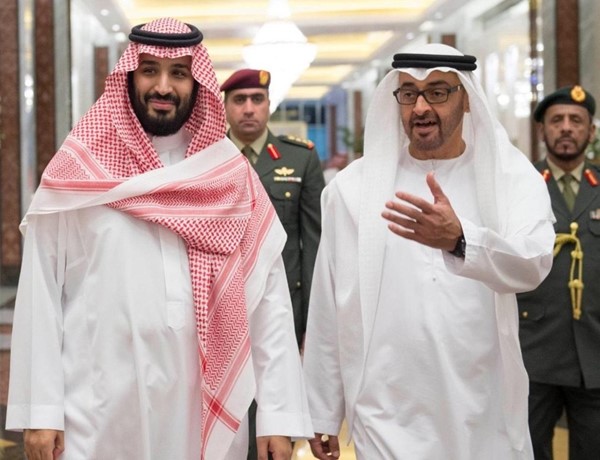
The media in Tel Aviv have reported that the UAE has invested as much as $100 million in an ambitious Israeli project to pipe natural gas to Europe.
The investment would be made by a company based in Abu Dhabi for a pipeline project which is internationally known to be unique given its record length as well as the extreme depths it would be laid toward Europe, Lebanon’s al-Mayadeen quoted Israeli media as reporting.
The agreement has been described as “historic” by Israeli media, al-Mayadeen added.
Israel has signed a multilateral deal over the scheme – called the East Med Pipeline Project – with Greece, Italy and Cyprus. The European Union also supports the project.
The East Med Pipeline Project is to start about 170 kilometers (105 miles) off Cyprus’s southern coast and stretch for 2,200 kilometers (1,350 miles) to reach Otranto, Italy, via Crete and the Greek mainland, according to a report by The Times of Israel news website.
The pipeline will have the capacity to carry up to 20 billion cubic meters (706 billion cubic feet) of gas from Israeli fields each year. Europe’s gas import needs are projected to increase by 100 billion cubic meters (3.5 billion cubic feet) annually by 2030.
Work on the project is expected to begin within a few months, and to conclude within five years.
UAE’s investment in the project could trigger protests in the Muslim world. The Emirates has already taken moves to approach Tel Aviv with speculations recently emerging that it has even involved itself in certain military operations by Israel on Gaza.
Last December, Israel’s Energy Minister Yuval Steinitz said a study on the project showed that the project is feasible, even though it presents technical challenges due to the depths involved and has an estimated cost of 6.2 billion euro ($7.36 billion).
Israel has already engaged in disputes with Lebanon over tapping into Mediterranean energy resources.
Last February, Israel described as “very provocative” a Lebanese tender for projects in two of its 10 offshore blocks in the Mediterranean Sea.
Israel itself has long been developing a number of offshore gas deposits in the Mediterranean Sea, with the Tamar gas field, with proven reserves of 200 billion cubic meters, already producing gas, while the larger Leviathan field is expected to go online in the coming months.
A source close to Israeli Prime Minister Benjamin Netanyahu said in 2012 that Israel’s natural gas reserves were worth around $130 billion. A Business Week estimate later that year put the reserves’ value at $240 billion.
Russia: US Sanctions over Alleged Oil Supply to Syria Looks Like “Statement of Support for Terrorists”
Sputnik – 21.11.2018
MOSCOW – Regular US anti-Russian sanctions are routine, the Russian Foreign Ministry said in a statement on 21 November.
“Washington continues to impose sanctions on Russia at an increasing rate. Their recent expansion has become the 11th in the last three and a half months, and is increasingly becoming a routine,” the ministry said.
The ministry noted that the main reasons for the introduction of sanctions lay in the internal political discord in the United States when each of the parties sought to “earn points” by any means.
“Attempts to accuse [some states] of supplying oil to Syria, whose armed forces have been fighting terrorist aggression for eight years, look like a statement of support for terrorists and at the same time a desire to prevent the restoration of a devastated country, many of whose inhabitants are deprived of light and heat. Is that what the US wants?” the statement read.
The ministry stressed that by trying to put pressure on Russia, Washington had repeatedly demonstrated its inability to force Moscow to change its independent line in the international relations.
The statement has been voiced a day after the United States announced the introduction of new sanctions against Syria, Iran and Russia. The reason for the restrictive measures was alleged secret supplies of Iranian oil to Damascus with the “assistance” of the Russian side.
This is the last package of sanctions against Russia that have been introduced by the United States for several years, blaming Moscow for meddling other countries’ elections and poisoning people, with all the accusations denied by Russian officials.
US Threatens ‘Grave Consequences’ for Those Who Supply Oil to Syria
Sputnik – 21.11.2018
The United States claims that an illegal scheme is in place to support Syrian President Bashar Assad and provide financial assistance to Hezbollah and Hamas.
US Secretary of State Mike Pompeo has promised severe consequences for anyone who is supplying oil to Syria or trying to circumvent US sanctions against Iran.
“Today’s US Treasury’s action targeting the Russia-Iran oil scheme to prop up [Syrian President Bashar] Assad, and finance Hizballah & Hamas, sends a clear message: there are grave consequences for anyone shipping oil to Syria, or trying to evade U.S. sanctions on the Islamic Republic’s terrorist activities,” Pompeo wrote on Twitter on Tuesday.
He added that Iran’s spiritual leader, Ayatollah Ali Khamenei, “should decide if spending the Iranian people’s money on the Iranian people is more important than inventing schemes to fund Assad, Hizballah, Hamas, and other terrorists”.
On Tuesday, Washington added six individuals and three organisations to its sanctions list claimed by the Treasury to be involved in oil shipments to the Syrian government, among them the Russian companies Global Vision Group and Promsyryeimport, and the latter company’s first deputy director Andrei Dogayev.
The list also features two Iraqi nationals, a Lebanese, a Syrian and an Iraqi,as well as the Iranian-registered Tadbir Kish Medical and Pharmaceutical Company.
According to the US Treasury Department, the Global Vision Group and Syrian citizen Mohammed Amer Alshviki, who, according to Washington, is the company’s owner, allegedly play a key role in a scheme for petroleum shipments to Syria and financial transfers to the Quds Force special unit of Iran’s Revolutionary Guards Corps.
Shortly before that, US Special Representative for Syria James Jeffrey stated that the recently imposed second batch of US sanctions against Iran are aimed at forcing Tehran to reduce its ‘presence’ in Syria.
Russia and Iran are yet to comment on these accusations and sanctions.
French bank pays huge US fine for doing business in Cuba, Iran
RT | November 20, 2018
Societe Generale has agreed to pay $1.34 billion to US federal and state authorities to settle a pending legal dispute over violations of US trade sanctions against Iran and other countries.
One of France’s largest banks has also pledged to pay $95 million to resolve another dispute over violations of anti-money laundering regulations.
“We acknowledge and regret the shortcomings that were identified in these settlements, and have cooperated with the US authorities to resolve these matters,” the group CEO Frederic Oudea said in a statement.
“These resolutions, following on the heels of the resolution of other investigations earlier this year, allow the bank to close a chapter on our most important historical disputes.”
The bank, informally known as SocGen, reportedly violated the Trading with the Enemy Act by illegally transferring billions of dollars to partners registered or located in countries targeted by US embargos, including Iran, Sudan, Cuba and Libya.
The banking giant said the settlement wouldn’t have an extra impact on its results for the current financial year. SocGen had previously agreed to $1.3 billion (€1.14 billion) in the US and France to settle investigations over transactions with Libya, and over the suspected rigging of Libor, a benchmark rate tied to finance products and debts. Last year, the bank had paid €963 million ($1.1 billion) over another dispute with the Libyan Investment Authority.
According to the Manhattan US Attorney’s office, the latest fine imposed on SocGen is the second biggest financial penalty issued on a bank for breaching US sanctions. In 2015, French international banking group BNP Paribas agreed to pay $8.9 billion to settle a probe on sanctions violations.
EU Mulls Iran Sanctions in Light of Alleged Plots in France, Denmark – Reports
Sputnik – 20.11.2018
Until now the EU has been unwilling to join the US sanctions on Iran preferring to maintain close trade ties with the Islamic Republic.
In a most recent policy U-turn, European Union foreign ministers hinted on Monday that their countries could be prepared to impose new economic sanctions on Iran, Reuters reported.
The sudden shift of policy came after France and Denmark accused Tehran of being allegedly behind a series of plots to carry out attacks on their soil. During a meeting in Brussels French and Danish foreign ministers filled in their fellow EU counterparts on the details of the alleged Iranian plots, although no details or names were discussed, Reuters quoted diplomats as saying on Tuesday.
France has imposed sanctions on two Iranians and Iran’s intelligence service over what it says was a botched attempt to stage a bomb attack at a rally near Paris organised by an exiled Iranian opposition group.
In October, France said it was certain about the Iranian intelligence ministry’s role in the June plot to attack a demonstration by Iranian exiles near Paris.
Also in October, Denmark said it suspected an Iranian government intelligence service of plotting an assassination on its territory and is also ready to join possible EU-wide sanctions against the Islamic Republic.
Iran has denied any involvement in either alleged plot and warned that it could pull out of the nuclear deal if EU powers do not stand up for its trade and financial benefits.
The readiness to punish Tehran would be the first such move in years by the EU, which has been trying keep in place the 2015 nuclear accord with Iran. Brussels has been unwilling to consider sanctions, instead seeking talks with Tehran.
In March, a joint proposal by Britain, France and Germany to sanction Iran over its development of ballistic missiles and its role in the Syrian war failed to gather sufficient support across the EU, including from Italy which wants to maintain business ties with Iran.
During the meeting on Monday, the EU foreign ministers tried to balance the EU’s policy towards Iran by speeding up the creation of a special mechanism to trade with Tehran that could be under EU, not national, law.
Dubbed the Special Purpose Vehicle (SPV), this mechanism could be used to help match Iranian oil and gas exports against purchases of EU goods as part of a barter arrangement, thus circumventing US sanctions, which are based on global use of the dollar for oil sales.
Despite technical difficulties and delays, the EU hopes this arrangement could protect individual member states from being hit by the sanctions Washington has threatened to use against countries that continue doing business with Iran.
Airbnb pledges to remove occupied West Bank settlement listings, Israel hits back
RT | November 20, 2018
Global home-rental company Airbnb says it will remove listings of homes located in Israeli settlements in the occupied West Bank. Israeli officials have predictably called the move anti-Semitic and a surrender to terrorism.
Human Rights Watch applauded Airbnb’s move, which came a day before the group’s publication of a (presumably damning) report on the human rights impact of tourist rental listings in settlements. Waleed Assraf, who runs an anti-settlement group for the Palestinian Liberation Organization, was hopeful other companies would follow Airbnb’s example, noting “this will contribute to achieving peace.”
Israeli Tourism Minister Yariv Levin called Airbnb’s move “discriminatory” and ordered his ministry to formulate a retaliatory plan to “limit the company’s activities” in Israel, adding that the country would back settlement listers’ lawsuits in both Israeli and US courts.
Michael Oren, former Israeli ambassador to the US and current deputy minister in PM Netanyahu’s office, called for a revenge boycott, deeming AirBnB’s policy “the very definition of anti-Semitism.” Settler council Yesha agreed that the company’s actions “can only be a result of anti-Semitism or surrendering to terrorism – or both.”
A statement on Airbnb’s website read “We concluded that we should remove listings in Israeli settlements in the occupied West Bank that are at the core of the dispute between Israelis and Palestinians,” explaining that their policy for contested territories like the West Bank, Tibet, and Western Sahara involves “evaluat[ing] whether the existence of listings is contributing to existing human suffering” and “determin[ing] whether the existence of listings in the occupied territory has a direct connection to the larger dispute in the region.” About 200 listings are affected, though they have not yet been taken down.
Palestinian official Saab Erekat wrote to Airbnb’s CEO in January 2016 asking the company to end its relationship with Israeli settlements, and Human Rights Watch called on all businesses to cut ties with companies operating in West Bank settlements in its “Occupation, Inc.,” report shortly thereafter, explaining that the income from such companies relieves the Israeli government of the economic burden of sustaining the illegal settlements. The international Boycott, Divestment and Sanctions movement has also called for travelers to avoid the home-rental service.
The Israeli settlements, constructed on land captured during the 1967 war, are illegal under international law, but Israel has long disputed this. Settlements have been gradually encroaching on Palestinian land ever since the end of the conflict, accompanied by a heavy military presence and the violence that accompanies it.
America’s big box stores sucked up corporate welfare and killed Main Street — now they’re ducking property tax
By Cory Doctorow | BoingBoing | November 17, 2018
For a generation, big box stores have swept across America, using predatory pricing and other dirty tricks to kill the independent retail sector; they used their corporate lobbying muscle to tempt cities and towns into handing out massive corporate welfare checks to lure them to town, and now, with the help of hustling contingency lawyers, they are promulgating a property-tax scam called “the dark store theory” that is cutting their taxes in half or more, with further reductions every year, and no end in sight.
The “dark store theory” holds that property taxes on thriving, super-profitable big box stores should not be based on how much the property sold for, plus the capital investment, minus depreciation — instead, these stores should be valued based on the selling price of nearby failed big-box stores that have been sold at knock-down prices.
Big box stores used their generous municipal subsidies to overbuild across American towns, creating a glut that resulted in widespread closures after the financial crisis. Because big box stores are so terribly built — shoddy construction, weird layouts, and not even enough freight docks to use as a warehouse — the shuttered stores sell for a tiny fraction of their book value.
But even though the big boxes are shuttering their stores like crazy, the remaining stores are still profitable — thanks to the over-investment in big box stores during the rampup phase, all the local retail that might have competed with the remaining stores has collapsed. That leaves locals with no choice but to drive longer distances to the remaining stores to shop, meaning that the predatory mega-retailers now get to spend less to do the same business.
Entrepreneurial corporate lawyer/consultants like Detroit’s Michael Shapiro (who is credited with inventing “dark store theory”) and Minnesota’s Robert Hill have made a fortune for themselves and for big box stores by filing costly court challenges to the stores’ tax assessments, arguing that their property taxes should be based on the price of the abandoned, unsuccessful nearby stores, not on the standard formula of sale price plus improvements minus depreciation.
These lawyers seek reductions of fifty percent or more on property tax bills, and return year after year to drive those bills even lower. The small towns they hit — who often can’t afford to litigate against multinational, private-equity-backed retail giants — roll over.
Towns that have granted these tax concessions are going broke. Ste St Marie, MI has slashed city pensions; Escanaba, MI has cut its library hours; and so on. Meanwhile, town residents and small businesses are facing rising tax bills as their cities seek to close the gap left by the sweetheart treatment the big boxes are getting.
Wisconsinites in 24 towns voted to end “dark store theory” tax treatments in ballot initiatives in this month’s elections. But that’s only a few towns in one states, and meanwhile the epidemic rages on.
Still, it’s going to be tough: Don Millis, a prominent tax attorney who represents retailers and a lobbyist for the Wisconsin Manufacturers and Commerce, the top advocacy group for big business in these parts, sits on the legislative committee assigned to review the issue.
Other states have proposed legal fixes, too, but in Indiana, the one state that managed to pass anti-dark store theory legislation in 2015, lobbying pressure led to its weakening the year after it was passed. The state tax board has continued to sympathize with retailers, who keep launching appeals.
If Wisconsin managed to change its laws, Hill told me, lawyers like him would just redouble their efforts. “That’s when we’ll grab the pitchforks and get the Constitution involved,” he said.
After the Retail Apocalypse, Prepare for the Property Tax Meltdown [Laura Bliss/Citylab]
Will Progressives Ever Think About How We Structure Markets, Instead of Accepting them as Given?
By Dean Baker | CounterPunch | November 19, 2018
The right would like us to believe that the inequality we see in the United States, and increasingly in other countries, is a natural outcome of market processes. Unfortunately, many on the left seem to largely share this view, with the proviso that they would like the government to alter market outcomes, either with tax and transfer policy, or with interventions like a higher minimum wage.
While redistributive tax and transfer policies are desirable, as is a decent minimum wage, it is an incredible mistake to not recognize that the upward redistribution of the last four decades was brought about by conscious policy, not any sort of natural process of globalization and technology. Not recognizing this fact is an enormous mistake from both the standpoint of policy and politics.
From the policy standpoint, we give up a huge amount by not examining the policies that have caused before-tax income to be redistributed upward. As a practical matter, it is much easier to prevent all the money from going to the top in the first place than trying to tax it back after the fact.
On the political side, we should never have our argument be that somehow the big problem is that the Bill Gates of the world were too successful. The big problem is that we have badly structured the rules of the market so that we gave Bill Gates too much money. With different rules, he would not be one of the world’s richest people even if he had worked just as hard.
Since we’re on the topic of Bill Gates, patent and copyright rules are a good place to start. For some reason, it is difficult to get people to accept an obvious truth: there is a huge amount of money at stake with these rules. By my calculations, patent and copyright monopolies could well direct more than $1 trillion a year, a sum that is more than 60 percent of after-tax corporate profits.
The most visible place where these government-granted monopolies have a large effect is with prescription drugs. We will spend close to $440 billion (2.2 percent of GDP) this year on prescription drugs. If these drugs were sold in a free market without patents or related protections they would likely sell for less than $80 billion. The difference of $360 billion is roughly five times annual spending on SNAP.
The basic story here is that drugs are almost invariably cheap to manufacture. Like aspirin, the vast majority of drugs would sell for $10 or $15 per prescription. It is only because the government gives drug companies patent monopolies that drugs are expensive. We now have an absurd debate where the people who want to bring down drug prices are accused of interfering in the market. That is 180 degrees at odds with reality. The people who want to keep prices high want to maximize the value of their government-granted monopolies.
In this case, the effect of changes in policy is easy to see. In 1980, Congress passed the Bayh–Dole Act which made it possible for companies to get patent rights to government-sponsored research. As a result, spending on prescription drugs, which had hovered near 0.4 percent of GDP for two decades, began to explode.
We can argue the merits of the Bayh–Dole Act. Surely it did increase private spending on research and led to the development of new drugs, but the fact that we give more money to drug companies because of this intervention in the market is not debatable. This is a huge amount of money, with enormous consequences for public health, as well as income distribution, but almost no economists ever raise the issue.
The same story applies to patent and copyrights more generally. How much profit would Microsoft make if anyone anywhere in the world could make tens of millions of computers with Windows software and not even send them a thank you note? How much money would Disney make if all its movies could be instantly transmitted over the web and shown everywhere without them getting a penny?
We could tell the same story about medical equipment. Imagine the latest medical scanning device selling for tens of thousands of dollars instead of millions. Companies that make fertilizers, pesticides, and genetically modified seeds, all depend in a very fundamental way on their government-granted patent monopolies.
Patent and copyright monopolies do serve the purpose of providing incentives to innovate and do creative work. But there are other possible mechanisms for funding, the $37 billion a year the government gives to the National Institutes of Health is one obvious example (see Rigged, Chapter 5 for a fuller discussion [it’s free]). Even if we do decide that patent and copyright monopolies are the best mechanism, we can always make them shorter and weaker, reversing the course of longer and stronger that we have pursued over the last four decades.
This simple and undeniable point (we can alter the rules on patents and copyrights) is almost completely absent from debates on inequality, with very few exceptions. (Joe Stiglitz raises this issue frequently, see also The Captured Economy, by Brink Lindsey and Steve Teles.) These rules are very much at the heart of the upward redistribution of the last four decades.
It is not only the Bill Gates and other tech billionaires who owe their enormous wealth to these government-granted monopolies, the whole idea of an economy that places a high demand on computer, math, and other technical skills depends on our rules on patents and copyrights. With weaker rules, the demand for computer scientists and bioengineers would be much less, as would their pay.
It is incredible that so many economists and policy-types who work on inequality could somehow manage to avoid discussing intellectual property rules. We can speculate on the reasons for this neglect.
In some cases, liberal funders owe their wealth to these government-granted monopolies and are not interested in calling them into question. We once had a program officer at the Gates Foundation tell us unambiguously that they don’t talk about patents because of the source of wealth of their funder.
Thinking about how policy led to upward redistribution can also be upsetting to many liberals’ worldview. Many view themselves as people who have done well in the market economy but feel that they should share some of what they have earned with the less fortunate. The argument that they didn’t just happen to do well, but had the benefit of government policy designed to give them money (and to take it from the less fortunate), very fundamentally changes the picture.
Apart from these motives, there is the obvious truth that inertia is an incredibly powerful force in policy debates. As the saying goes, intellectuals have a hard time dealing with new ideas.
In any case, progressives miss a huge part of the story of upward redistribution when they fail to discuss rules on intellectual property. The importance of these rules is virtually certain to increase in coming years. Economists and policy-types who ignore them are not doing their jobs. I know I keep beating on this point, but it’s important. I will have more pieces in future weeks on other ways the government structures the market to hand more money to the rich, but patent and copyright monopolies are so big and so obvious, that it is incredible that they are not the center of discussions of inequality.
Featured Video

Death Spikes & Rising Cancer In Our Youth Explained
or go to
Aletho News Archives – Video-Images
From the Archives
Politicians lie
By Mazin Qumsiyeh | Popular Resistance | August 18, 2013
There is no way to say this truth nicely: Politicians lie. That includes Japanese, American, Egyptian, Israeli, and Palestinian politicians! Is there something more common sense than that? Yet, so many citizens around the world believe their own politicians or wistfully acknowledge lies but think it is part of the job needed to run things. They believe even when politicians contradict themselves blatantly. This phenomenon is rather remarkable. It is a dissonance and disconnect from reality that many seem oblivious to. It is very dangerous because it can lead to accepting rationales for going to war. These can be deadly wars that lead to millions of lives lost as happened in what was called World War 1 and WW2. Even when incredible and declassified evidence abound, politicians continue to lie and old mythologies refuse to die. Here are just a few of the countless lies told to us over the past few decades… continue
Blog Roll
 Aletho News
- RSF military group defects, joins Sudanese army: State media
- Ireland goalkeeper refuses to play ‘Israel’ as squad weighs boycott
- China pushes back against US on Cuba, Iran
- Ukrainian Soldiers, Potential Mercenaries: Have Gun, Will Travel!
- Burnham’s UN debut… A masterclass in British disinformation
- Iran flights continue despite US aviation sanctions
- Global Tipping Points Lead the World Into a State of Entropy
- The day-after at the White House: USA and Xi Jinping
- The Geopolitical Balance in the Red Sea: The UAE Being Displaced by New Players
- Iraqi resistance group vows to stage airport sit-ins over Iran aerial blockade
- If Americans Knew
- Deconstructing Netanyahu’s pants-on-fire UN rant – Daily Update
- Trump betrayed voters with his campaign lies and prioritized a foreign country once he took office
- Netanyahu calls Israel’s war in Gaza ‘opposite of genocide’ in UN speech to near-empty hall
- Settler Kidnappings: Torture, Sexual Abuse and Terrorisation of Palestinian Abductees as Israel Deepens Annexation of West Bank
- Gaza winter nears as 162,000 tents become unusable, raising fears of humanitarian crisis
- Netanyahu says, “It’s the opposite of genocide”; UN says Gaza economy is world’s ‘most severe crisis on record’ – Daily Update
- Israel’s US-Backed Assault on Gaza Has Created the ‘World’s Most Severe Economic Crisis on Record’: UN
- ‘Protecting U.S. Citizens’… From Israel
- ‘This is where I live now, the back of a truck’: a day in the life of a grandmother in Gaza
- In UN Speech, Iran’s President Displays Pictures of Children Killed by US, Brings Attention to Israel’s Nuclear Arsenal
- No Tricks Zone
- New Study: Earth And Venus Surface Warmth Largely Explained By Convection And Lapse Rate, Not CO2 Or Radiation
- 2025 Nature Paper Claiming Worsening Global Drought Gets RETRACTED …Heavily Flawed
- New Study: ‘Global Drought Shows No Detectable Recent Acceleration Under Climate Warming’
- Economic Masterminds: German Socialists Suggest Taxing Productivity Gains Stemming From Using AI
- The South China Sea Has Not Been Cooperating With The Climate Change Narrative
- Energy Crisis: Germany Enters Heating Season With Historically Low Gas Reserve Fill Levels
- New Study: The Antarctic Ice Sheet Gained Mass From 2020-2024 Due To Staggering Snow And Ice Accumulation
- Study: Ocean Heating Rates From Thousands Of Years Ago ‘Dwarf’ Modern Ocean Heating Rates
- Climate Extremists Target, Attack Large-Scale Power Grid Infrastructure In Germany!
- New Study: Antarctic Ice Melt Has Contributed Less Than 1 Centimeter To Sea Level Rise In The Last 30 Years

