US to Impose Sanctions on Russia ‘Every Month or Two’ – Volker
Sputnik – 18.10.2018
Russia has faced several rounds of sanctions from the United States and the European Union over its alleged meddling in the 2016 US presidential elections, and alleged involvement in the poisoning of former Russian spy Sergei Skripal and his daughter Yulia in the UK city of Salisbury in early March.
US Special Representative for Ukraine Kurt Volker has stated that the Trump administration will impose sanctions on Russia “every month or two.”
“The second thing we’ve done is we’ve tried to increase the pressure we are putting on Russia in order to get them to negotiate toward a solution. That includes keeping sanctions in place in the United States and increasing those sanctions periodically over time, and that’s the track that we have been on during the course of the Trump administration, and we’ll continue to be on,” Volker said. “You’ll see additional sanctions come into play every month or two months or so as we’ve seen.”
Volker noted that the United States is “working very closely with European allies” on the issue of anti-Russian sanctions.
In August, a group of US senators introduced a bill envisaging the imposition of new sanctions against Moscow, including those targeting the country’s oil industry and transactions with Russian sovereign debt.
In recent years, Russia has repeatedly been accused of carrying out cyberattacks against other countries, including the United States, France, the United Kingdom and Germany, and attempting, in particular, to influence the results of elections.
Moscow has repeatedly denied all the accusations also emphasizing its desire to see convincing evidence of Russian nationals’ involvement in the incidents.
Ukraine Military Sales
US officials will meet with their Ukrainian counterparts to discuss potential foreign military sales since Washington has already approved a new package of security assistance for Ukraine, US Special Representative for Ukraine Negotiations Kurt Volker announced.
“We have, working through the Congress, a new package of foreign military financing, and we’ll be sitting down with Ukrainians to talk possibly about foreign military sales and what would make sense for them,” Volker said.
In September, President Donald Trump and the Congress boosted US military aid to Ukraine, allocating $250 million in security assistance to the country under the 2019 Department of Defense Appropriations Act.
The Khashoggi Disappearance and the Stalled Vision 2030 Plan
Our Vexed and Bitter Masters Seek Regime Change Again
By Scott Creighton | nomadiceveryman | October 18, 2018
Back in April of this year, a journalist in Gaza wearing a vest marked “PRESS” was deliberately shot and killed by IDF snipers. That brings the total number killed to 18 since the start of the Second Intifada. No one of consequence called for regime change in Israel.
As of July this year, there had already been six journalists killed in Mexico by drug cartels linked to Mexico’s corrupt government and our own intelligence services. The last one beaten to death in a horrific murder. Last year the number of journalists murdered set a new record for the country at 42. As far as I know, the MSM and Lindsey Graham have yet to call for sanctions and regime change.
In Columbia there have been two murdered for covering things the rulers didn’t want covered. But we like Columbia’s neoliberal government so for now, not a peep about changing it.
What makes the disappearance of Jamal Khashoggi so different? This is a question a few writers and researchers have been asking themselves and a couple of us have come to some honest, sensible, business-oriented answers… since of course the U.S. and her allies are all about Business.
Now let’s be clear. I write about Khashoggi’s disappearance because the only hard evidence that we have before us is this…

CCTV image of the missing Saudi Journalist Jamal Khashoggi entering the Saudi consulate
That is a blurry image of a middle aged man walking toward the door of the Saudi consulate in Istanbul. It is not proof of a murder. It is proof someone walked toward a door and then entered the building.
Everything else is speculation or statements from “anonymous sources close to the investigation” meaning it’s all baseless rumor, innuendo or deliberate disinformation.
It is entirely possible that the man in the image is not Jamal Khashoggi. And it is entirely possible that it is.
Therefore it is also entirely possible that Khashoggi is not dead by the hands of the Saudis and simultaneously… it is.
But it is not definitive by any stretch of the imagination in either way… unless all of a sudden you take our intelligence assets at face value as if they never lied to us before. Which is quite a leap of faith in my opinion.
All of the journalist murders I listed above have definite proof of their demise. Bodies. DNA. Causes of death. Death certificates. Coroner’s reports. Things of that nature. Here there is only that grainy image taken from a grainy video of about 4 seconds in length. And that, boys and girls, is it.
So why all the pressure being put on Saudi Arabia to essentially foment a regime change in the Kingdom of Saud over a grainy picture of a man who set up a Saudi Regime change NGO in Delaware back in January of this year? A regime change NGO promoted by the National Endowment for Democracy.
Why are MSM outlets and even so-called “alternative anti-war” (Common Dreams, Moon of Alabam and others) ones suddenly parroting the likes of Bernie Sanders and Lindsey Graham in calling for Mohammad bin Salmon’s removal from office?
Was the murder so brutal that it offended even the hardest regime change advocates in D.C. and their allies in the Washington Post? Do they not know the UAE hired a for-profit death-squad based in the U.S. to kill political rivals in Yemen in vicious brutal ways from 2015-2017?
In one case the American former Special Ops mercs put a big bomb on the door of a building they thought their one target was holding a meeting with a whole bunch of others. They hoped to kill EVERYONE in the building but were too late. So later they developed a methodology of using bikes to put bombs on cars in busy traffic intersections killing their targets that way. Them and anyone else who happened to be close.
Have you ever seen someone die slowly after a bomb goes off and blows off their legs or arms or rips open their guts? It’s horrible. And they weren’t even the target.
And yet this hit squad operated with impunity for a favored nation of ours and most involved with the operation find it hard too believe our military and political leadership didn’t know about it. Notice, it started under Obama and continued under Trump. What a shock huh?
You think the alleged abduction, torture, murder and dismemberment was so shocking to those folks they just HAD to do SOMETHING?
Or do you think it was because Khashoggi was pretending to be a journalist at the Washington Post as he fought for regime change in Saudi Arabia?
As some journalists , some news agencies and bloggers have pointed out, Khashoggi’s disappearance perfectly coincides with a number of international events that make this case rather suspect. Unfortunately that number is relatively low.
Khashoggi had extensive ties to Lockheed Martin, the old guard of Saudi royalty, the CIA and other intelligence assets… and of course… his very own regime change focused NGO.
We also know that the deal President Trump made with MbS and Saudi Arabia last year for 110 billion dollars worth of weapons sales was falling through and a deadline for them to purchase the horribly untrustworthy THAAD missile defense system came and went on Sept. 30th of this year with no purchase by MbS.
And we know that the Saudi ambassador to Russia was worried about the U.S. imposing sanctions on Saudi Arabia as recently as Sept. 21 due to them buying the Russian S-400 system instead.
Add to all that the Davos in the Desert meeting taking place this week which the risk of sanctions would seriously screw up… and you have a perfect storm of motive for someone OTHER than Saudi Arabia to either kidnap, kill or “send into early retirement” one Jamal Khashoggi. Right?
Now, 110 billion dollars in deals promised to the MIC is a lot of money, that is for sure. But the question kept rattling around in my feeble little brain… is that really enough to motivate every sector of American empire support, including the fake “alt-right and alt-left” outlets to go all out calling for YET ANOTHER regime change operation in the Middle East?
Seems like a damn good question doesn’t it?
And my answer was “no”
Then I started digging again and what I found makes that 110 billion dollars look like something I give to the local homeless guy every morning when he shows up lightly rapping, rapping upon my chamber door.
Try 4 trillion on for size. Four Trillion spread across every facet of our glorious business community and stretching into every pocket of every director sitting on both the U.S. Chamber of Commerce and the for-profit Central Bank system.
Now THAT is something that EVERYONE can get behind, huh?
Yes, MbS is on the outs as they say but it’s not entirely due to his reluctance to buy U.S. made crappy weapons of war (though that is part of it)
What is really at play here is his apparent reneging on an even bigger deal and an ideological shift that made him the darling of all neoliberals in D.C., New York, London and Tel Aviv.
You see, MbS was installed by our intelligence assets for one purpose: he was finally going to be the Saudi royal family member to fully neoliberalize Arabia on behalf of our hot money speculators and Big Business interests.
The plan was called Vision 2030 (put together by globalist neoliberal technocrats from McKinsey in 2014) and when he first signed on for it (open financial markets to hot money speculators and Wall Street, privatization of everything from nationalized oil company to healthcare) MbS immediately became the DARLING of the Middle East. Man, the right and left of the Business Party loved him to death. Lindsey Graham drooled over him right along side Chris Mathews. Obama praised him as did Trump and everyone in between.
They coupled that with some bullshit about letting women drive cars so the left would get on board and suddenly the brutal dictatorship in Saudi Arabia was something left of Sesame Street. Bert and Ernie would still get beheaded for being gay, the Grouch would have his trash-can privatized and Big Bird would still loose his head for asking too many questions… but the facade was going to hold and a Saudi Arabia would be the new Shining City on the Hill.
All was great in the land Colonel Thomas Edward Lawrence.
But then a funny thing happened on the way to neoliberalization: the vulture capitalists kept being told … to wait till the feeding frenzy could begin.
- A $2 Trillion Saudi Aramco IPO Keeps Getting Less Realistic Oct. 8, 2018
- Successful reformation in Saudi Arabia far from a sure thing Oct. 12, 2018
- Aramco Was Supposed to Be the Biggest IPO Ever. Now Even the CEO Can’t Say When It Will Happen Sept. 24 2018
- Saudi Arabia’s Vision 2030 Plan Is Too Big to Fail — Or Succeed July 27 2018
- Beyond Saudi Aramco’s stalled IPO Aug 25 2018
The oil company IPO was the biggest single disappointment for the masters of the universe but there were many others detailed in the Vision 2030 plan. The IPO, the largest single offering of it’s kind in history, was supposed to have already taken place, making folks like Exxon, Goldman Sachs and BP shareholder in Saudi Arabia’s massive oil business. But it never happened and from the looks of it, the owners of all things planet Earth are getting tired of waiting around for the feast.
Mohammad bin Salmon was raised up and made the heir apparent to the throne in Saudi Arabia ahead of older, more established royal family members for one reason and one reason alone: he was willing to allow the West to roll into the country and chop it up and sell it off for profits.
Keep in mind… by 2014 the glorious captains of industry and banksters had already digested their latest consumables found in places like Libya, Ukraine and Iraq. Syria was resisting and the Russians and Iranians were making it hard for them to anticipate when they would get their next mergers and acquisitions meal fed to them so they needed something to tide them over so to speak. They needed new markets to exploit and pillage and Obama apparently refused to invade Venezuela so something had to give.
Then along came a power struggle in a country they have coveted for decades. A nation with tons of state-owned property and businesses and services they could consume.
Saudi Arabia.
All they needed was a front-man on the inside they could promote and then control.
Prince Mohammad bin Salmon fit the bill perfectly.
He was young, would be their man for decades to come and his youth made him seem like something they could promote as the new face of the old kingdom.
But something has changed in him and thus, in our masters’ opinion and trust of him.
Hell hath no fury like a globalist spurned and what we see now is clearly a ramification of that love lost and turned to hatred.
Is it a coincidence that all of these things are coming to a head at the exact same time a man committed to removing MbS from power goes “missing” at the consulate in Istanbul?
Possible I assume.
But I quit believing in geo-political coincidences right around the same time I quit believing in our two party “democracy” so for me, this seems like the beginnings of another neoliberal regime change operation.
Only this one will be fueled by the fire of an unrequited love and the desperation of vulture capitalists starving for another carcass upon which too feed.
The US Meddles In Syria’s Constitutional Reform Process By Threatening Sanctions
By Andrew KORYBKO – Oriental Review – 18/10/2018
The US is threatening to further sanction Syria if Damascus doesn’t make progress in America’s preferred direction during the ongoing constitutional reform process.
The US special representative for Syria James Jeffrey conveyed this intention on the sidelines of the UN General Assembly after his country and a handful of others called upon Staffan de Mistura to report back to them by the end of this month about which of the 50 people he’s supposed to select to participate in Syria’s constitutional committee.
Prior agreements on the creation of this important political mechanism stipulate that the delegates will be chosen from members of the pro-government, domestic opposition, and external opposition factions, and while this is admittedly an ultra-sensitive process, the US and its allies feel that Syria has been dragging its heels on it for far too long and that’s why they want to crank up the pressure on Damascus by threatening more sanctions against it.
The elephant in the room is the issue of so-called “decentralization”, which appears to be the only pragmatic political solution for dealing with the Kurdish-controlled agriculturally and energy-rich northeastern third of the country that’s reported to host around 20 American bases but which President Assad has sworn will return to the central fold by one way or another.
This is becoming ever less realistic to achieve as Russia signaled that it won’t engage in the nuclear brinkmanship that would be needed for supporting Syria’s otherwise futile efforts to evict the US and make this happen, hence why a “compromise” is the only peaceful way for resolving this issue. The US also knows that its Russian, Chinese, and Iranian rivals lack the money needed for rebuilding the liberated areas of Syria, which is why it’s weaponizing reconstruction aid for political purposes.
Pressing home the point of what he wants to see achieved, Jeffrey also hinted at imposing a “no-fly zone” over the Kurdish-controlled northeast and replicating the state of affairs that prevailed in Iraqi Kurdistan from 1991-2003 during which time the US carried out occasional airstrikes to prevent the central government from reasserting its sovereignty in this region. Since the de-facto “partition” of Syria is already a fait accompli at this point, the next goal of the US and its allies is to compete with its rivals over the reconstruction of their respective “spheres of influence” in the country.
Despite it being comparatively easier for the geographically smaller, less populated, and more resource-rich northeast to recover a lot quicker than the rest of Syria, the US hopes that this can serve as a “demonstration effect” for the rest of the country and subsequently be manipulated through infowars and perception management tactics to somehow “delegitimize” the predictably slower efforts of Damascus and its allies in this regard.
The post presented is the partial transcript of the CONTEXT COUNTDOWN radio program on Sputnik News, aired on Friday Oct 12, 2018
US-Saudi alliance in twilight zone
By M. K. BHADRAKUMAR | Indian Punchline | October 15, 2018
President Donald Trump’s remarks about the Jamal Khashoggi affair in the interview with CBS 60 Minutes turned out to be nothing earthshaking. Basically, he said three things: a) Son-in-law Jared Kushner spoke to Crown Prince but latter denied; b) Saudi culpability is yet to be established and if it gets proven, US will be “very upset and angry” and “there will be severe punishment”; and, c) Sanctioning Saudi Arabia is problematic, given deep business interests and “There are other ways of punishing” Saudi Arabia – if it indeed comes to that.
Trump didn’t elaborate what could be the “other ways”. But Saudi Arabia has posted the warning that there will be dire consequences – “any action against the kingdom will be responded to with greater reaction” – if the US dared to proceed on any such track of “economic sanctions, using political pressure or repeating false accusations.” Interestingly, Saudis alluded to “the support of allies” in countering the “organized campaign” against it.
An influential Saudi establishment figure subsequently dilated on the likely retaliation in the event of US sanctions, claiming Riyadh has drawn up a list of 30 “potential measures”:
- Saudis will not accede to Trump’s requests to boost oil production (to make up for shortfall due to Iran sanction) and instead let oil prices rise to “$100, or $200, or even double that figure.”
- Saudis will stop using dollars for oil trade and may instead switch to a “different currency, Chinese yuan, perhaps.”
- Saudi-Iranian rapprochement may ensue, with Russian help.
- Saudis may end intelligence cooperation over terrorist threat to western countries.
- Saudis may turn to Russia and China to source weapons.
- Saudis may allow a Russian base in the northwestern province of Tabuk situated “in the heated four corners of Syria, Israel, Lebanon and Iraq.”
- Saudis will revive links with Hamas and Hezbollah.
- Saudi will pull out of investments in the US, estimated at $800 billion.
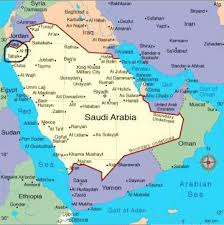
In sum, Saudi Arabia will make a strategic shift toward the Russia-China-Iran axis. In immediate terms, Saudis can hit the US hard by leveraging its status as energy superpower. A dramatic jump in oil prices will boost Saudi income but create difficulties for oil consuming countries, especially EU, China or India. It will boost Russia’s income and make western sanctions even more ineffectual. Again, it will undermine the US’ game plan to bring down Iranian economy to its knees.
On the other hand, any Saudi move to dump dollar in oil trade may significantly galvanise the nascent moves to dethrone dollar as world currency, but its impact can only be in a medium-term scenario.
In geopolitical terms, Saudi Arabia has been a pivotal ally of the US during the past 7 decades. A breakdown in the US-Saudi alliance will unravel the entire American strategy in the Middle East. A US retrenchment from the region may become inevitable.
On the other hand, the ascendancy of Russian and Chinese influence will hurt western interests. Indeed, Israel’s overall security position gets weakened, too.
The bottom line, of course, is that Iran’s rise as regional power will become irreversible – although Iran-Saudi rapprochement is easier said than done. Interestingly, the Iranian reaction to the Khashoggi affair echoes how Tehran took advantage of the overthrow of Saddam Hussein in Iraq.
How far will Russia (and China) want to get entangled in the Saudi standoff with the US? Moscow and Beijing are seeking better relations with the US and may hope that a chastened America would make a more reasonable interlocutor. After all, they’d assess that a US retrenchment in the Middle East will inexorably bring the curtain down on America’s global hegemony. Which in turn will accelerate the trends toward multipolarity. It is improbable that Russia or China will join hands with Saudi Arabia to destabilize the world economy.
The Saudi prognosis that the “if Washington imposes sanctions on Riyadh, it will stab its own economy to death” is plain hyperbole. Then, there is a fundamental contradiction insofar as the survival of the archaic Saudi regime is critically dependent on American support. Trump wasn’t exaggerating when he recently said that if the US support is withdrawn, Saudi regime would pack up in two weeks. There are historical forces swirling around Saudi Arabia, which have been kept at bay due to the sheer US presence. For example, the eastern Shi’te provinces of Saudi Arabia are restive; the Houthis of Yemen will seek revenge.
Above all, the Saudi regime has been exporting radical forces as geopolitical tool for the Americans. These forces may come to haunt Saudi internal security. The Muslim Brotherhood, al-Qaeda, etc. are waiting in the wings. Islamism, paradoxically, poses an existential threat to the Saudi regime.
Succinctly put, the sins of the past will come to wreak vengeance on the Saudi regime with a demonic fury sooner than one may think once America’s protective shield is withdrawn. In fact, the possibility of the disintegration of the Kingdom of Saudi Arabia, which is after all an arbitrary creation of British imperialism in the early 20th century, is very real.
What complicates the situation today is that the US is a badly divided house and the Saudis are used to dealing with the Washington establishment in an idiom that is no longer in vogue. Left to himself, Trump would have handled the Khashoggi affair much as his predecessors in the White House might have done. But that is not going to be possible with the Deep State and the US Congress arm-twisting him. On the other hand, Crown Prince Mohammed bin Salman represents a new type of Saudi leadership that is not shy of a faceoff and seeks a reset of the relationship with the US.
Britain on the Leash with the United States – but at Which End?
By James George JATRAS | Strategic Culture Foundation | 13.10.2018
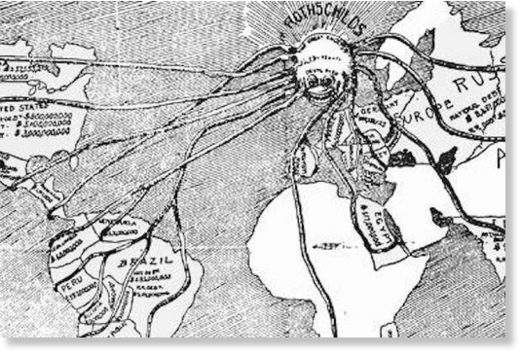
The “special relationship” between the United States and the United Kingdom is often assumed to be one where the once-great, sophisticated Brits are subordinate to the upstart, uncouth Yanks.
Iconic of this assumption is the mocking of former prime minister Tony Blair as George W. Bush’s “poodle” for his riding shotgun on the ill-advised American stagecoach blundering into Iraq in 2003. Blair was in good practice, having served as Bill Clinton’s dogsbody in the no less criminal NATO aggression against Serbia over Kosovo in 1999.
On the surface, the UK may seem just one more vassal state on par with Germany, Japan, South Korea, and so many other useless so-called allies. We control their intelligence services, their military commands, their think tanks, and much of their media. We can sink their financial systems and economies at will. Emblematic is German Chancellor Angela Merkel’s impotent ire at discovering the Obama administration had listened in on her cell phone, about which she – did precisely nothing. Global hegemony means never having to say you’re sorry.
These countries know on which end of the leash they are: the one attached to the collar around their necks. The hand unmistakably is in Washington. These semi-sovereign countries answer to the US with the same servility as member states of the Warsaw Pact once heeded the USSR’s Politburo. (Sometimes more. Communist Romania, though then a member of the Warsaw Pact refused to participate in the 1968 invasion of Czechoslovakia or even allow Soviet or other Pact forces to cross its territory. By contrast, during NATO’s 1999 assault on Serbia, Bucharest allowed NATO military aircraft access to its airspace, even though not yet a member of that alliance and despite most Romanians’ opposition to the campaign.)
But the widespread perception of Britain as just another satellite may be misleading.
To start with, there are some relationships where it seems the US is the vassal dancing to the tune of the foreign capital, not the other way around. Israel is the unchallenged champion in this weight class, with Saudi Arabia a runner up. The alliance between Prime Minister Bibi Netanyahu and Saudi Crown Prince Mohammad bin Salman (MbS) – the ultimate Washington “power couple” – to get the Trump administration to destroy Iran for them has American politicos listening for instructions with all the rapt attention of the terrier Nipper on the RCA Victor logo. (Or did, until the recent disappearance of Saudi journalist Jamal Khashoggi. Whether this portends a real shift in American attitudes toward Riyadh remains questionable. Saudi cash still speaks loudly and will continue to do so whether or not MbS stays in charge.)
Specifics of the peculiar US-UK relationship stem from the period of flux at the end of World War II. The United States emerged from the war in a commanding position economically and financially, eclipsing Britannia’s declining empire that simply no longer had the resources to play the leading role. That didn’t mean, however, that London trusted the Americans’ ability to manage things without their astute guidance. As Tony Judt describes in Postwar, the British attitude of “superiority towards the country that had displaced them at the imperial apex” was “nicely captured” in a scribble during negotiations regarding the UK’s postwar loan:
In Washington Lord HalifaxOnce whispered to Lord Keynes:“It’s true they have the moneybagsBut we have all the brains.”
Even in its diminished condition London found it could punch well above its weight by exerting its influence on its stronger but (it was confident) dumber cousins across the Pond. It helped that as the Cold War unfolded following former Prime Minister Winston Churchill’s 1946 Iron Curtain speech there were very close ties between sister agencies like MI6 (founded 1909) and the newer wartime OSS (1942), then the CIA (1947); likewise the Government Communications Headquarters (GCHQ, 1919) and the National Security Administration (NSA, 1952). Comparable sister agencies – perhaps more properly termed daughters of their UK mothers – were set up in Canada, Australia, and New Zealand. This became the so-called “Five Eyes” of the tight Anglosphere spook community,infamous for spying on each others’ citizens to avoid pesky legal prohibitions on domestic surveillance.
Despite not having two farthings to rub together, impoverished Britain – where wartime rationing wasn’t fully ended until 1954 – had a prime seat at the table fashioning the world’s postwar financial structure. The 1944 Bretton Woods conference was largely an Anglo-American affair, of which the aforementioned Lord John Maynard Keynes was a prominent architect along with Harry Dexter White, Special Assistant to the US Secretary of the Treasury and Soviet agent.
American and British agendas also dovetailed in the Middle East. While the US didn’t have much of a presence in the region before the 1945 meeting between US President Franklin Delano Roosevelt and Saudi King ibn Saud, founder of the third and current (and hopefully last) Saudi state – and didn’t assume a dominant role until the humiliation inflicted on Britain, France, and Israel by President Dwight Eisenhower during the 1956 Suez Crisis – London has long considered much of the region within its sphere of influence. After World War I under the Sykes-Picot agreement with France, the UK had expanded her holdings on the ruins of the Ottoman Empire, including taking a decisive role in consolidating Saudi Arabia under ibn Saud. While in the 1950s the US largely stepped into Britain’s role managing the “East of Suez,” the former suzerain was by no means dealt out. The UK was a founding member with the US of the now-defunct Central Treaty Organization (CENTO) in 1955.
CENTO – like NATO and their one-time eastern counterpart, the Southeast Asia Treaty Organization (SEATO) – was designed as a counter to the USSR. But in the case of Britain, the history of hostility to Russia under tsar or commissar alike has much deeper and longer roots, going back at least to the Crimean War in the 1850s. The reasons for the longstanding British vendetta against Russia are not entirely clear and seem to have disparate roots: the desire to ensure that no one power is dominant on the European mainland (directed first against France, then Russia, then Germany, then the USSR and again Russia); maintaining supremacy on the seas by denying Russia warm-waters ports, above all the Dardanelles; and making sure territories of a dissolving Ottoman empire would be taken under the wing of London, not Saint Petersburg. As described by Andrew Lambert, professor of naval history at King’s College London, the Crimean War still echoes today:
“In the 1840s, 1850s, Britain and America are not the chief rivals; it’s Britain and Russia. Britain and Russia are rivals for world power, and Turkey, the Ottoman Empire, which is much larger than modern Turkey — it includes modern Romania, Bulgaria, parts of Serbia, and also Egypt and Arabia — is a declining empire. But it’s the bulwark between Russia, which is advancing south and west, and Britain, which is advancing east and is looking to open its connections up through the Mediterranean into its empire in India and the Pacific. And it’s really about who is running Turkey. Is it going to be a Russian satellite, a bit like the Eastern Bloc was in the Cold War, or is it going to be a British satellite, really run by British capital, a market for British goods? And the Crimean War is going to be the fulcrum for this cold war to actually go hot for a couple of years, and Sevastopol is going to be the fulcrum for that fighting.”
Control of the Middle East – and opposing the Russians – became a British obsession, first to sustain the lifeline to India, the Jewel in the Crown of the empire, then for control of petroleum, the life’s blood of modern economies. In the context of the 19th and early 20th century Great Game of empire, that was understandable. Much later, similar considerations might even support Jimmy Carter’s taking up much the same position, declaring in 1980 that “outside force to gain control of the Persian Gulf region will be regarded as an assault on the vital interests of the United States of America, and such an assault will be repelled by any means necessary, including military force.” The USSR was then a superpower and we were dependent on energy from the Gulf region.
But what’s our reason for maintaining that posture almost four decades later when the Soviet Union is gone and the US doesn’t need Middle Eastern oil? There are no reasonable national interests, only corporate interests and those of the Arab monarchies we laughably claim as allies. Add to that the bureaucracies and habits of mind that link the US and UK establishments, including their intelligence and financial components.
In view of all the foregoing, what then would policymakers in the United Kingdom think about an aspirant to the American presidency who not only disparages the value of existing alliances – without which Britain is a bit player – but openly pledges to improve relations with Moscow? To what lengths would they go to stop him?
Say ‘hello’ to Russiagate!
One can argue whether or not the phony claim of the Trump campaign’s “collusion” with Moscow was hatched in London or whether the British just lent some “hands across the water” to an effort concocted by the Democratic National Committee, the Hillary Clinton presidential campaign, the Clinton Foundation, and their collaborators at Fusion GPS and inside the Obama administration. Either way, it’s clear that while evidence of Russian connection is nonexistent that of British agencies is unmistakable, as is the UK’s hand in a sustained campaign of demonization and isolation to sink any possible rapprochement between the US and Russia.
As for Russiagate itself, just try to find anyone involved who’s actually Russian. The only basis for the widespread assumption that any material in the Dirty Dossier that underlies the whole operationoriginated with Russia is the claim of Christopher Steele, the British “ex” spy who wrote it, evidently in collaboration with people at the US State Department and Fusion GPS. (The notion that Steele, who hadn’t been in Russia for years, would have Kremlin personal contacts is absurd. How chummy are the heads of the American section of Chinese or Russian intelligence with White House staff?)
While there are no obvious Russians in Russiagate there’s no shortage of Brits. These include (details at the link):
- Stefan Halper, a dual US-UK citizen.
- Ex-MI6 Director Richard Dearlove.
- Robert Hannigan, former director of GCHQ; there is reason to think surveillance of Trump was conducted by GCHQ as well as by US agencies under FISA warrants. Hannigan abruptly resigned from GCHQ soon after the British government denied the agency had engaged in such spying.
- Alexander Downer, Australian diplomat (well, not British but remember the Five Eyes!).
- Joseph Mifsud, Maltese academic and suspected British agent.
At present, the full role played by those listed above is not known. Release of unredacted FISA warrant requests by the Justice Department, which President Trump ordered weeks ago, would shed light on a number of details. Implementation of that order was derailed after a request by – no surprise – British Prime Minister Theresa May. Was she seeking to conceal Russian perfidy, or her own underlings’?
It would be bad enough if Russiagate were the sum of British meddling in American affairs with the aim of torpedoing relations with Moscow. (And to be fair, it wasn’t just the UK and Australia. Also implicated are Estonia, Israel, and Ukraine.) But there is also reason to suspect the same motive in false accusations against Russia with respect to the supposed Novichok poisonings in England has a connection to Russiagate via a business associate of Steele’s, one Pablo Miller, Sergei Skripal’s MI6 recruiter. (So if it turns out there is any Russian connection to the dossier, it could be from Skripal or another dubious expat source, not from the Russian government.) Skripal and his daughter Yulia have disappeared in British custody. Moscow flatly accuses MI6 of poisoning them as a false flag to blame it on Russia.
A similar pattern can be seen with claims of chemical weapons use in Syria: “We have irrefutable evidence that the special services of a state which is in the forefront of the Russophobic campaign had a hand in the staging” of a faked chemical weapons attack in Douma in April 2018. Ambassador Aleksandr Yakovenko pointed to the so-called White Helmets, which is closely associated with al-Qaeda elements and considered by some their PR arm: “I am naming them because they have done things like this before. They are famous for staging attacks in Syria and they receive UK money.” Moscow warned for weeks before the now-postponed Syrian government offensive in Idlib that the same ruse was being prepared again with direct British intelligence involvement, even having prepared in advance a video showing victims of an attack that had not yet occurred.
The campaign to demonize Russia shifted into high gear recently with the UK, together with the US and the Netherlands, accusing Russian military intelligence of a smorgasbord of cyberattacks against the World Anti Doping Agency (WADA) and other sports organizations, the Organization for the Prohibition of Chemical Weapons (OPCW), the Dutch investigation into the downing of MH-17 over Ukraine, and a Swiss lab involved with the Skripal case, plus assorted election interference. In case anyone didn’t get the point, British Defense Secretary Gavin Williamson declared: “This is not the actions of a great power. This is the actions of a pariah state, and we will continue working with allies to isolate them.”
To the extent that the goal of Williamson and his ilk is to ensure isolation and further threats against Russia, it’s been a smashing success. More sanctions are on the way. The UK is sending additional troops to the Arctic to counter Russian “aggression.” The US threatens to use naval power to block Russian energy exports and to strike Russian weapons disputed under a treaty governing intermediate range nuclear forces. What could possibly go wrong?
In sum, we are seeing a massive, coordinated hybrid campaign of psy-ops and political warfare conducted not by Russia but against Russia, concocted by the UK and its Deep State collaborators in the United States. But it’s not only aimed at Russia, it’s an attack on the United States by the government of a foreign country that’s supposed to be one of our closest allies, a country with which we share many venerable traditions of language, law, and culture.
But for far too long, largely for reasons of historical inertia and elite corruption, we’ve allowed that government to exercise undue influence on our global policies in a manner not conducive to our own national interests. Now that government, employing every foul deception that earned it the moniker Perfidious Albion, seeks to embroil us in a quarrel with the only country on the planet that can destroy us if things get out of control.
This must stop. A thorough reappraisal of our “special relationship” with the United Kingdom and exposure of its activities to the detriment of the US is imperative.
India-Russia relations go way beyond defence deals
By M. K. BHADRAKUMAR | Indian Punchline | October 9, 2018
Amidst the welter of commentaries on the Indian-Russian annual summit last week in New Delhi, what stands out is that the government has outstripped our strategic analysts. The latter viewed the Russian summit last week exclusively through the prism of the $6 billion S-400 missile defence deal. Now, that turned out to be like missing the wood for the trees.
The United States’ Countering America’s Adversaries Through Sanctions Act (CAATSA) stipulates secondary sanctions against countries that enter into “significant transactions” with the Russian defence industry. Our S-400 deal became a celebrated test case. So, when in the face of threats held out by the American side relentlessly, when PM Modi went ahead with the S-400 deal, it stunned onlookers.
The ensuing confusion will take time to wither away. It will take time before it sinks in that US bluster aside, there is no way US will sanction India. The CAATSA is a legislation that the US Congress imposed on a reluctant president in the civil war conditions in US politics to stop him from improving relations with Russia (on which there is bipartisan consensus.) True, secondary sanctions have been imposed on China, but US does not intend to export arms to that country anyway!
But that is not the case with India or Turkey. Despite Turkey’s decision to not only fast track its S-400 deal with Russia and to make advance payments to the Russian manufacturer, US still intends to go ahead with its sale of F-35 stealth fighters. Turks nonchalantly told Washington that if the latter wanted to impose sanctions and annul the F-35 business deal, that’s fine with them, and they’d simply source stealth aircraft from some other country (read Russia). But, no, US still wants the F-35 deal to go through, because F-35 is a highly lucrative super business deal for Lockheed Martin, which hopes to sell to Turkey 100-120 aircraft at over $80 million per piece! In effect, Turkey called the American bluff.
Americans have keen business acumen and will not let go a honeypot like the Indian market. In fact, Modi has taken an even tougher decision to go ahead with oil imports from Iran and to sign up contracts for the month of November, although Trump warned that November 4 would be the cutoff date.
Alas, there is a lack of awareness as to what is happening. Our think tankers weaned on American folklore have been programmed to estimate that Russia is a spent force in global politics. They don’t realize that Americans themselves had no doubts already by the start of the millennium that Russia was on the comeback trail. The high oil prices in 2010-2011 proved a game changer for Russia. It was no coincidence that the first American sanctions against Russia was imposed in 2012 – Magnitsky Act – on human rights issues!
The knowledge of Russian politics and the raison d’etre of India-Russia relations is abysmally poor among Indian analysts. Modi’s strategic decision to revive India-Russia relationship as an anchor sheet of foreign policy is yet to sink in. What Americans know and Modi knows but our think tankers do not yet know is that Russia has not only returned to the global stage as a great power but with renewed capabilities in military technology and with an economy that has survived the western sanctions. The high oil prices in the period ahead will only add to Russia’s income significantly.
If the Americans sanction against India’s use of dollars for its transactions with Russia, make no mistake, Indian and Russian ingenuity will find a way to put in place a clearing system that altogether obviates the use of dollar. Arguably, it will be a blessing in disguise if the US forces India and Russia to revive their old Cold War era payment system, because if that happens, the economic content of the relationship will increase exponentially. Will the US want a major global economy like India to jettison the use of dollar and get accustomed to local currency payments?
Again, the US-Russia-China triangle is today splendidly working for Moscow and Beijing to counter the US, while both capitals retain strategic autonomy and neither seeks a military alliance. India can also be a beneficiary here if the available platforms are optimally used – BRICS, RIC and SCO, in particular. Modi made it clear at last week’s summit that India stands with Russia in strengthening multipolarity. It is a clear rejection of the US’ characterization of Russia as a “revisionist power.” Earlier, at the Shangri La Dialogue in Singapore in June, Modi underscored that India does not regard Indo-Pacific to be a strategy. The import of all this should be very clear except if one insists on holding the American brief on Russia and China. Simply put, India has a lot in common with Russia and China in regard of the emerging world order. Modi’s Wuhan initiative and his visit to Sochi soon afterward suggest that he is open to the idea of India’s Eurasian integration.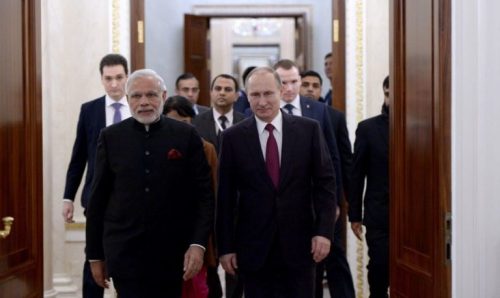
Things are looking up for India-Russia relations after the long winter of the UPA rule. For the first time in the post-Cold war era, there are signs that trade and investment between India and Russia is gaining traction. Energy sector is poised to generate massive business volume in a conceivable future. The defence cooperation still remains appreciable – at 62% of India’s arms procurement – despite the atrophy during the UPA rule.
It is sound realism that in a multipolar world, India strengthens relationships with Russia with whom it has common interests in regard of the emerging world order. The army chief Gen. Bipin Rawat’s remarks in the weekend asserting that the S-400 deal is a manifestation of India’s independent foreign policy must be viewed in that light. Last week’s summit averted a real risk of India ending up in America’s “Indo-Pacific” stable as a domesticated milch cow.
Germany, UK May Slap More Sanctions on Russia Amid Hacking Accusations
Sputnik – 06.10.2018
On Thursday, the US Justice Department announced charges against seven alleged Russian military intelligence officers accused of hacking doping agencies and other international organizations.
Bloomberg has cited Britain’s de facto Deputy Prime Minister David Lidington as saying that London and Berlin may slap more punitive measures on Moscow over the alleged hacking activity of Russian military intelligence.
“We have to be ready to take action either on our own or preferably in concert with allies if appropriate,” Lidington pointed out.
He was echoed by German Chancellor Angela Merkel’s chief spokesman Steffen Seibert, who said that additional sanctions against Russia are currently under discussion between Germany and its European partners.
The statement came a few days after the British Foreign Office stated that London had assessed “with high confidence” that the Russian military intelligence service was “almost certainly” responsible for a series of cyberattacks on political institutions, media outlets and infrastructure across the globe, including in Britain.
The Russian Embassy in the UK, in turn, urged British authorities to immediately provide information on Moscow’s alleged attempts to conduct cyberattacks against London.
Meanwhile, the Dutch Foreign Ministry said in a statement that the country’s intelligence had thwarted a hacking attack on the Organization for the Prohibition of Chemical Weapons (OPCW), which was allegedly carried out by four Russian citizens.
A Russian Foreign Ministry source, for its part, stated that there were no and there can’t be any attacks on the OPCW on behalf of Russia, because Moscow already has access to the organization’s files.
The source slammed the Dutch accusations as “an example of some Western states’ policies reaching the point of bigotry,” noting that Western “spy mania is gaining momentum.”
In the US, Assistant Attorney General for National Security John Demers said that the White House had announced “an indictment charging seven Russian military officers with violation of several US criminal laws for malicious cyber activities against the United States and its allies.”
He further claimed that Russia had carried out a cyberattack on a Swiss lab which was analyzing a toxic substance, allegedly used against former Russian intelligence officer Sergei Skripal and his daughter Yulia in Salisbury, UK.
Demers also claimed that three Russian agents were previously accused of meddling in the 2016 US election.
Moscow has repeatedly denied claims that it has links to cyberactors attempting to meddle in other states’ domestic affairs, insisting that such claims were unfounded.
In early September, the European Union extended its current sanctions against certain Russian individuals and entities “over actions undermining or threatening the territorial integrity” of Ukraine for another six months.
The Lies of our (Financial) Times
By James Petras | Dissident Voice | October 4, 2018
The leading financial publications have misled their political and investor subscribers of emerging crises and military defeats which have precipitated catastrophic political and economic losses.
The most egregious example is the Financial Times (FT) a publication which is widely read by the business and financial elite.
In this essay we will proceed by outlining the larger political context that sets the framework for the transformation of the FT from a relatively objective purveyor of world news into a propagator of wars and failed economic policies.
In part two we will discuss several case studies which illustrate the dramatic shifts from a prudent business publication to a rabid military advocate, from a well-researched analyst of economic policies to an ideologue of the worst speculative investors.
The decay of the quality of its reportage is accompanied by the bastardization of language. Concepts are distorted; meanings are emptied of their cognitive sense; and vitriol covers crimes and misdemeanors.
We will conclude by discussing how and why the ‘respectable’ media have affected real world political and market outcomes for citizens and investors.
Political and Economic Context
The decay of the FT cannot be separated from the global political and economic transformations in which it publishes and circulates. The demise of the Soviet Union, the pillage of Russia’s economy throughout the 1990s and the US declaration of a unipolar world were celebrated by the FT as great success stories for ‘western values’. The US and EU annexation of Eastern Europe, the Balkan and Baltic states led to the deep corruption and decay of journalistic narratives.
The FT willingly embraced every violation of the Gorbachev-Reagan agreements and NATO’s march to the borders of Russia. The militarization of US foreign policy was accompanied by the FT conversion to a military interpreter of what it dubbed the ‘transition to democratization’.
The language of the FT reportage combined democratic rhetoric with an embrace of military practices. This became the hallmark for all future coverage and editorializing. The FT military policies extended from Europe to the Middle East, the Caucasus, North Africa and the Gulf States.
The FT joined the yellow press in describing military power grabs, including the overthrow of political adversaries, as ‘transitions to democracy’ and the creation of ‘open societies’.
The unanimity of the liberal and right-wing publications in support of western imperialism precluded any understanding of the enormous political and economic costs which ensued.
To protect itself from its most egregious ideological foibles, the FT included ‘insurance clauses’, to cover for catastrophic authoritarian outcomes. For example they advised western political leaders to promote military interventions and, by the way, with ‘democratic transitions’.
When it became evident that US-NATO wars did not lead to happy endings but turned into prolonged insurgencies, or when western clients turned into corrupt tyrants, the FT claimed that this was not what they meant by a ‘democratic transition’ – this was not their version of “free markets and free votes”.
The Financial and Military Times (?)
The militarization of the FT led it to embrace a military definition of political reality. The human and especially the economic costs, the lost markets, investments and resources were subordinated to the military outcomes of ‘wars against terrorism’ and ‘Russian authoritarianism’.
Each and every Financial Times report and editorial promoting western military interventions over the past two decades resulted in large scale, long-term economic losses.
The FT supported the US war against Iraq which led to the ending of important billion-dollar oil deals (oil for food) signed off with President Saddam Hussein. The subsequent US occupation precluded a subsequent revival of the oil industry. The US appointed client regime pillaged the multi-billion dollar reconstruction programs – costing US and EU taxpayers and depriving Iraqis of basic necessities.
Insurgent militias, including ISIS, gained control over half the country and precluded the entry of any new investment.
The US and FT backed western client regimes organized rigged election outcomes and looted the treasury of oil revenues, arousing the wrath of the population lacking electricity, potable water and other necessities.
The FT backed war, occupation and control of Iraq was an unmitigated disaster.
Similar outcomes resulted from the FT support for the invasions of Afghanistan, Libya, Syria and Yemen.
For example the FT propagated the story that the Taliban was providing sanctuary for bin Laden’s planning the terror assault in the US (9/11).
In fact, the Afghan leaders offered to turn over the US suspect, if they were offered evidence. Washington rejected the offer, invaded Kabul and the FT joined the chorus backing the so-called ‘war on terrorism which led to an unending, one trillion-dollar war.
Libya signed off to a disarmament and multi-billion-dollar oil agreement with the US in 2003. In 2011 the US and its western allies bombed Libya, murdered Gaddafi, totally destroyed civil society and undermined the US/EU oil agreements. The FT backed the war but decried the outcome. The FT followed a familiar ploy; promoting military invasions and then, after the fact, criticizing the economic disasters.
The FT led the media charge in favor of the western proxy war against Syria: savaging the legitimate government and praising the mercenary terrorists, which it dubbed ‘rebels’ and ‘militants’ – dubious terms for US and EU financed operatives.
Millions of refugees, resulting from western wars in Libya, Syria, Afghanistan and Iraq fled to Europe seeking refuge. FT described the imperial holocaust – the ‘dilemmas of Europe’. The FT bemoaned the rise of the anti-immigrant parties but never assumed responsibility for the wars which forced the millions to flee to the west.
The FT columnists prattle about ‘western values’ and criticize the ‘far right’ but abjured any sustained attack of Israel’s daily massacre of Palestinians. Instead readers get a dose of weekly puff pieces concerning Israeli politics with nary a mention of Zionist power over US foreign policy.
FT: Sanctions, Plots and Crises — Russia, China and Iran
The FT like all the prestigious media propaganda sheets have taken a leading role in US conflicts with Russia, China and Iran.
For years the scribes in the FT stable have discovered (or invented) “crises” in China’s economy- always claiming it was on the verge of an economic doomsday. Contrary to the FT, China has been growing at four times the rate of the US; ignoring the critics it built a global infrastructure system instead of the multi-wars backed by the journalist war mongers.
When China innovates, the FT harps on techno theft — ignoring US economic decline.
The FT boasts it writes “without fear and without favor” which translates into serving imperial powers voluntarily.
When the US sanctions China we are told by the FT that Washington is correcting China’s abusive statist policies. Because China does not impose military outposts to match the eight hundred US military bases on five continents, the FT invents what it calls ‘debt colonialism” apparently describing Beijing’s financing large-scale productive infrastructure projects.
The perverse logic of the FT extends to Russia. To cover up for the US financed coup in the Ukraine it converted a separatist movement in Donbass into a Russian land grab. In the same way a free election in Crimea is described as Kremlin annexation.
The FT provides the language of the declining western imperial empires.
Independent, democratic Russia, free of western pillage and electoral meddling is labelled “authoritarian”; social welfare which serves to decrease inequality is denigrated as ‘populism’ —linked to the far right. Without evidence or independent verification, the FT fabricates Putinesque poison plots in England and Bashar Assad poison gas conspiracies in Syria.
Conclusion
The FT has chosen to adopt a military line which has led to a long series of financially disastrous wars. The FT support of sanctions has cost oil companies billions of dollars, euros and pounds. The sanctions, it backed, have broken global networks.
The FT has adopted ideological postures that threaten supply chains between the West, China, Iran and Russia. The FT writes in many tongues but it has failed to inform its financial readers that it bears some responsibility for markets which are under siege.
There is unquestionably a need to overhaul the name and purpose of the FT. One journalist who was close to the editors suggests it should be called the “Military Times” – the voice of a declining empire.
Railroad link to connect Russia’s St. Petersburg with Germany’s Berlin
RT | September 30, 2018
Russia and Germany have agreed to connect Germany’s capital Berlin with St. Petersburg, which is often branded Russia’s northern capital.
The news, first published in the Russian media, was confirmed by Germany’s Federal Ministry of Transport and Digital Infrastructure. The train will go from Germany to the Russian exclave city of Kaliningrad and then onwards to St. Petersburg, the ministry has confirmed in a letter to RT.
There is currently no direct railway between St. Petersburg and Berlin. Passengers have to make a two-hour connection in Moscow and spend 32 hours on road. It is also difficult to get from Berlin to Kaliningrad by train – you have to change trains twice. The new route will also slash the travel time between St. Petersburg and Kaliningrad by almost a half.
Russian Railways has also confirmed the new route, Izvestia daily reports. The countries have given no information about the date of the launch of the railroad, but it is likely to be a significant boost Russian-German tourism.
“At the moment, the technical development of the project is being carried out. The matter is, for example, that some stations on the route can accept trains with 50 cars, and some can’t. It is too early to speak about the approximate time frames of the launch,” Russian Railways said.
Featured Video

Death Spikes & Rising Cancer In Our Youth Explained
or go to
Aletho News Archives – Video-Images
From the Archives
Politicians lie
By Mazin Qumsiyeh | Popular Resistance | August 18, 2013
There is no way to say this truth nicely: Politicians lie. That includes Japanese, American, Egyptian, Israeli, and Palestinian politicians! Is there something more common sense than that? Yet, so many citizens around the world believe their own politicians or wistfully acknowledge lies but think it is part of the job needed to run things. They believe even when politicians contradict themselves blatantly. This phenomenon is rather remarkable. It is a dissonance and disconnect from reality that many seem oblivious to. It is very dangerous because it can lead to accepting rationales for going to war. These can be deadly wars that lead to millions of lives lost as happened in what was called World War 1 and WW2. Even when incredible and declassified evidence abound, politicians continue to lie and old mythologies refuse to die. Here are just a few of the countless lies told to us over the past few decades… continue
Blog Roll
 Aletho News
- RSF military group defects, joins Sudanese army: State media
- Ireland goalkeeper refuses to play ‘Israel’ as squad weighs boycott
- China pushes back against US on Cuba, Iran
- Ukrainian Soldiers, Potential Mercenaries: Have Gun, Will Travel!
- Burnham’s UN debut… A masterclass in British disinformation
- Iran flights continue despite US aviation sanctions
- Global Tipping Points Lead the World Into a State of Entropy
- The day-after at the White House: USA and Xi Jinping
- The Geopolitical Balance in the Red Sea: The UAE Being Displaced by New Players
- Iraqi resistance group vows to stage airport sit-ins over Iran aerial blockade
- If Americans Knew
- Deconstructing Netanyahu’s pants-on-fire UN rant – Daily Update
- Trump betrayed voters with his campaign lies and prioritized a foreign country once he took office
- Netanyahu calls Israel’s war in Gaza ‘opposite of genocide’ in UN speech to near-empty hall
- Settler Kidnappings: Torture, Sexual Abuse and Terrorisation of Palestinian Abductees as Israel Deepens Annexation of West Bank
- Gaza winter nears as 162,000 tents become unusable, raising fears of humanitarian crisis
- Netanyahu says, “It’s the opposite of genocide”; UN says Gaza economy is world’s ‘most severe crisis on record’ – Daily Update
- Israel’s US-Backed Assault on Gaza Has Created the ‘World’s Most Severe Economic Crisis on Record’: UN
- ‘Protecting U.S. Citizens’… From Israel
- ‘This is where I live now, the back of a truck’: a day in the life of a grandmother in Gaza
- In UN Speech, Iran’s President Displays Pictures of Children Killed by US, Brings Attention to Israel’s Nuclear Arsenal
- No Tricks Zone
- New Study: Earth And Venus Surface Warmth Largely Explained By Convection And Lapse Rate, Not CO2 Or Radiation
- 2025 Nature Paper Claiming Worsening Global Drought Gets RETRACTED …Heavily Flawed
- New Study: ‘Global Drought Shows No Detectable Recent Acceleration Under Climate Warming’
- Economic Masterminds: German Socialists Suggest Taxing Productivity Gains Stemming From Using AI
- The South China Sea Has Not Been Cooperating With The Climate Change Narrative
- Energy Crisis: Germany Enters Heating Season With Historically Low Gas Reserve Fill Levels
- New Study: The Antarctic Ice Sheet Gained Mass From 2020-2024 Due To Staggering Snow And Ice Accumulation
- Study: Ocean Heating Rates From Thousands Of Years Ago ‘Dwarf’ Modern Ocean Heating Rates
- Climate Extremists Target, Attack Large-Scale Power Grid Infrastructure In Germany!
- New Study: Antarctic Ice Melt Has Contributed Less Than 1 Centimeter To Sea Level Rise In The Last 30 Years

