Banks still too afraid of US fines to process Iran deals
Press TV – March 23, 2016
Despite the January removal of economic sanctions against Iran, global enterprises are complaining that trade with the country is still difficult as a result of lingering fears of US punitive actions.
Reuters in an exclusive report has quoted business leaders as saying that a key obstacle which is specifically affecting business with Iran is the unwillingness of international banks to process transactions with the country.
US banks are still forbidden to do business with Iran and while lenders based elsewhere are not covered by this ban, major problems remain, emphasized the report. Chief among these are rules prohibiting transactions in dollars from being processed through the US financial system, it added.
The Iranian business community believes the United States has failed to spell out exactly what is permitted and what is not, leading to the uncertainty that makes international banks reluctant to process Iranian-linked transactions, wrote Reuters.
Iranians based in Dubai, historically one of Iran’s main trading partners, complain they cannot get letters of credit to finance deals with their home country, while others have even had their company bank accounts closed in recent weeks.
The problems are also complicating Iran’s plans to sell more oil, as well as recover up to $100 billion in assets that had been frozen by the sanctions in foreign bank accounts, the report added.
The failure by European banks to play their due role in business with Iran has already provoked reactions from several EU leaders and business leaders.
British Prime Minister David Cameron in early March rebuked Barclays for hampering companies trying to export to Iran.
In a strongly worded letter to the bank, Cameron said that Barclays appeared to be operating “in opposition to the policy of the UK government”.
Also, Airbus which sealed an agreement with Iran in January to sell over 100 new planes to the country, has called on EU banks to dispel fears of doing business with Iran.
Iranian officials have also taken their own initiative to urge European banks to open their doors to transactions relating to Iran.
Mohammad Nahavandian, the chief of staff of President Hassan Rouhani, in a visit to London earlier this month called for the facilitation of banking transactions with Iran now that the sanctions against the country have been lifted.
EU Urges UN to Join Anti-Russia Sanctions
By Alex GORKA – Strategic Culture Foundation – 23.03.2016
The European Union called on March 18 for more countries to impose sanctions on Russia over Crimea joining the Russian Federation two years ago.
In a statement issued on the anniversary of Crimea’s formal accession to Russia, the EU said it will maintain its sanctions that ban European companies from investing in Russian Black Sea oil and gas exploration.
«The European Union remains committed to fully implementing its non-recognition policy, including through restrictive measures», the European Council, which represents EU governments, said. «The EU calls again on UN member states to consider similar non-recognition measures».
Separately, NATO Secretary-General Jens Stoltenberg urged the EU and United States to maintain their broader economic sanctions against Russia over its support for self-declared republics in the eastern part of Ukraine. «It is important that we continue the economic sanctions», Stoltenberg told an event in Brussels.
The Crimean Peninsula became a part of the Russian Federation on March 18, 2014 after the referendum carried out on March 16 showed 97 percent of voters supported joining Russia.
The Kremlin responded by saying that the issue of Crimea could not be «a matter of negotiations or international contacts». «Our position is known: this is a region of the Russian Federation. Russia has not discussed and will never discuss its regions with anyone», President Vladimir Putin’s spokesman Dmitry Peskov said in a teleconference with reporters.
«In this case we should treat with respect the expression of the will of Crimean residents and the decision which was taken two years ago», he emphasized.
The 28-nation EU imposed its Crimea sanctions in July 2014 and then tightened them in December 2014, banning EU citizens from buying or financing companies in Crimea. The United States, Japan and some other major economies, including Australia and Canada, also imposed sanctions on Russia, whereas many other economically developed nations, like, for instance, China and Brazil, refused to join.
It should be noted that the extension of anti-Russian sanctions is a very much divisive issue inside the European Union.
Hungary and Italy said last week they would not agree to extend the EU’s toughest economic sanctions on Russia, the EU’s major energy supplier, without discussions before the summer.
Germany’s Economy Minister Sigmar Gabriel called on March 17 for the EU to try to create conditions by this summer to lift sanctions.
France’s Minister for the Economy, Industry and Digital Affairs Emmanuel Macron said in January that Paris will look to assist in the lifting of Western backed sanctions on Russia by the summer.
Serbia, a nation in talks on joining the EU, has firmly rejected the idea of joining the sanctions regime.
US Republican Senator John McCain has the reputation of hawk calling for getting tough on Russia. But even he had to admit the fact that the sanctions are becoming increasingly unpopular inside the EU. «I think there is clearly a lot of conversation amongst the Europeans about lifting the sanctions… There are many countries that are looking for the exit sign», the Senator said in February. «I have been hearing it for months, that there is enormous pressure in a lot of countries, particularly Germany, to lift the sanctions», he noted.
At that the prominent US politician believes it is up to Washington if and when the sanctions are eventually lifted, saying that the final decision will «to some degree depend on American leadership». Actually, the US right-wing politician openly stated the EU decision on the sanctions is made under US pressure.
Indeed, the EU is following the US. President Obama announced American sanctions against Russia are to be prolonged for another year on March 2.
The EU obediently chimed in 16 days later.
The attempts of the EU to influence other countries into joining the anti-Russia sanctions regime look especially ridiculous against the organization’s failure to make the tiny nation of San Marino, an enclaved microstate surrounded by Italy, comply with the EU’s demands. The republic is not officially part of the European Union and does not face Russia’s food embargo. According to Rossiyskaya Gazeta, a Russian government daily newspaper of record which publishes the official decrees, statements and documents of state bodies, San Marino and Russia signed an export agreement on March 18 during the International Economic Forum of CIS countries.
San Marino’s Minister of Regional Development and International Economic Cooperation Antonella Mularoni attended the forum. Now this European country will export to Russia a range of products, including Parmesan cheese and premium meat products like local Parma type ham. «There are 24 dairies in the republic, and a lot of enterprises engaged in meat smoking», the executive director of the national wholesalers association Vladimir Lishchuk told Rossiyskaya Gazeta. According to him, imports will take the place of illegal goods bypassing the Russian food embargo. Russia’s food safety watchdog Rosselkhoznadzor said it would monitor food imports from San Marino to prevent re-exports of sanctioned products from neighboring EU countries. Russia introduced the food embargo in August 2014 in response to Western sanctions. The ban applied to meat, poultry and fish, cheese, milk, fruit and vegetables from the United States, the EU, Australia, Canada, Norway, Japan and a number of other countries. According to Russia’s Ministry of Economic Development, the import of banned products has fallen by nearly half to $6 billion in the first six months of 2015. Overall imports from the EU have fallen by 45 percent.
Evidently, the EU’s call for UN members to join the sanctions is an effort doomed to go down the drain. The European Union has no leverage strong enough to make world nations comply.
The organization itself is not in a strong position. Looks like it has seen its best days. Brussels is facing a host of acute problems. Many of them seem to be a tall order, for instance: the flows of migrants, the economic inequality of the Union’s members, debt problem and the conflicting views of the UK and Germany on European integration, to name a few.
Doing away with the divisive issue of anti-Russia sanctions could provide an impetus to making progress in other fields, but Brussels prefers a different approach.
The EU statement shows the Union’s leadership is adamant in its desire to go down the slippery slope risking a revolt among the member-states with tensions running already high inside «the European family».
‘Dismantle the disastrous deal’: Trump tells AIPAC Iran deal is ‘number one priority’
RT | March 22, 2016
Republican presidential front-runner Donald Trump told attendees at the American Israel Public Affairs Committee conference that he didn’t come to pander, saying “that’s what politicians do,” but he did make a promise related to the Iran nuclear deal.
“My number one priority is to dismantle the disastrous deal with Iran,” Trump said, speaking before AIPAC in Washington, DC on Monday evening. “I have been in business a long time… this deal is catastrophic for Israel – for America, for the whole of the Middle East… We have rewarded the world’s leading state sponsor of terror with $ 150 billion and we received absolutely nothing in return.”
Trump criticized the deal for not requiring Iran to dismantle its military nuclear capability and only limiting its nuclear program for a certain number of years. He chastised Iran for contributing to problems in Gaza, Syria, Lebanon, Yemen, and Saudi Arabia by providing weapons and money.
“Iran is financing military forces throughout the Middle East and it is absolutely indefensible that we handed them over $150 billion to facilitate even more acts of terror,” added Trump. “During the last five years, Iran has perpetrated terror attacks in 25 different countries on five continents. They’ve got terror cells everywhere, including in the western hemisphere very close to home. Iran is the biggest sponsor of terrorism around the world and we will work to dismantle that reach.”
He then slammed the United Nations, decrying it for its utter weakness and incompetence and arguing that it was “not a friend” of democracy, freedom, the United States, or Israel, while also vowing to veto any attempt by the UN to impose its will on the Jewish state.
“With President Obama in his final year, discussions have been swirling about an attempt to bring a Security Council resolution on the terms of an eventual agreement between Israel and Palestine,” Trump said. “Let me be clear: An agreement imposed by the UN would be a total and complete disaster. The United States must oppose this resolution and use the power of our veto. Why? Because that’s now how you make a deal. Deals are made when parties come to the table and negotiate.”
Other Republican presidential candidates spoke before and after Trump at AIPAC.
Ohio Governor John Kasich stressed his experience in foreign policy.
“I don’t need on the job training,” Kasich told the audience on Monday, explaining he already knows about the dangers facing the US and its allies. He stressed his “firm and unwavering” support for Israel and vowed to work to stamp out intolerance, racism, and anti-Semitism.
Kasich called for the suspension of the Iran nuclear deal in response to recent ballistic missile tests, which he said were a violation.
“We are Americans before we are Republicans and Democrats,” he said, adding, “I will not take the low road to the highest office in the land.”
Texas Senator Ted Cruz also spoke at AIPAC after Trump. He attacked the billionaire businessman for promising to be “neutral” in brokering a peace deal between Israel and the Palestinians.
“As president, I will not be neutral,” said Cruz. He added, “America will stand unapologetically with the nation of Israel.”
Anti-Trump protesters gathered outside the venue to voice their anger over Trump’s brash political rhetoric and his attendance at the conference.
The leader of one of Washington’s most prominent synagogues said that he felt compelled to denounce Trump as he spoke at a conference of Israeli activists.
Rabbi Shmuel Herzfeld of the Ohev Sholom congregation wept as he described to reporters the importance of standing up to what he viewed as Trump’s hatred, describing him as “wicked.”
“This man is inspiring violence,” Herzfeld said, according to the Associated Press. “He is an existential threat to our country.”
“This man is wicked,” Herzfeld added, referring to Trump. “He inspires racists and bigots. He encourages violence. Do not listen to him.”
Germany wants its gold back
RT | March 21, 2016
The Bundesbank has announced plans to repatriate some of Germany’s gold reserves from abroad. At least half of the country’s gold would be transferred to Frankfurt by 2020, according to Bundesbank President Jens Weidmann.
Weidmann says 366 tons of gold worth €11.5 billion have been delivered to Frankfurt so far. “There are now about 1,400 tons or 41.5 percent of our gold reserves here,” the banker said.
In October last year Germany’s gold reserves stood to around 3,384 tonnes, worth about €120 billion, which is the second largest in the world after the US.
Weidmann added the rest of the gold will remain in New York and London, which he says are as safe as Germany. In case of emergency, these reserves would quickly be converted on the markets in these cities, the banker said.
The Bundesbank has been criticized at home for keeping a major part of Germany’s gold reserves abroad. Critics are demanding the complete return of the gold to the country. They regard the gold as insurance if a crisis comes, and the immediate physical availability would be the decisive criterion.
When trying to move gold from New York in 2014, the Bundesbank met obstacles from US authorities when officials tried to inspect the German gold kept in US vaults.
“I’m no conspiracy theorist, but the Bundesbank should be able to audit the gold once a year like it does with reserves in Frankfurt,” Hans Olaf Henkel, a German member of the European Parliament, told RT.
Some even doubted the German gold is still physically there.
“We are still missing … published lists of gold bar number, even though the US Federal reserve publishes this list for their own gold,” said Peter Boehringer, founder of the Repatriate our Gold Campaign.
Read more:
Germany’s failed attempts to get its gold back from the US ‘opens question of its sovereignty’
US Immigration Policy for Cuba: A Cold War Relic
teleSUR | March 19, 2016
The Cuban Adjustment Act, passed in 1966 by the U.S. Congress, allows any Cuban who enters the United States to gain permanent residency after being present in the U.S. for one year. This law, passed at the height of the Cold War, is unique to Cuban emigrants, with no other migrant group given this special consideration.
Cubans sit aboard a homemade raft, known in Cuba as a balsa.
This Act was passed in order to encourage emigration from Cuba to the United States. After the triumph of the Cuban Revolution, there was an exodus of Cubans opposed to the revolution who fled to the United States. In his autobiography, Fidel Castro stated that in the first three years after the revolution, more than 270,000 Cubans migrated to the United States.
Many of those who left Cuba were professionals and their exit put a strain on the Cuban economy – a favorable situation for policy makers in the U.S.
Wanting to continue to promote a “brain drain” in Cuba, the Cuban Adjustment Act was passed, which further encouraged Cubans to leave the island and arrive in the U.S. Those opposed to the revolution also facilitated their arrival by providing material support for these so-called refugees.
Cuba and the U.S. did eventually negotiate a deal where the U.S. promised to issue up to 20,000 visas a year so people could migrate legally, but ultimately only some 1,000 were issued yearly.
With the allure of having the right to live and work in the United States legally upon arrival but unable to secure a visa, many Cubans continued to make the journey to the U.S. state of Florida by whatever means they could.
This led to people undertaking various means in an attempt to navigate the strait separating the island from Florida’s southern tip, including hijacking vehicles not apt for long-distance sea travel, such as tug boats. Despite this, the Cuban coast guard had strict orders not to intercept vessels in the water if they had people aboard. This also led to the phenomenon known as the balseros, people who attempt to arrive in the U.S. in homemade rafts, especially during the difficult Special Period.
The influx of Cubans led to more negotiations between the U.S. and Cuba, and in 1995 the U.S. government finally agreed not to admit Cubans found at sea headed for the U.S. Those who did reach the shores of the U.S. would be admitted and be granted residency under the Cuban Adjustment Act, hence the reference to the “wet-foot, dry-foot” rule.
The Cuban government considers this rule a provocation, while critics say the policy not only promotes dangerous forms of travel, but is also an incentive for human trafficking by criminal groups.
‘Turkey and EU make refugees a matter of bargaining – a violation of int’l treaties’
RT | March 19, 2016
The EU countries will receive educated and skilled people, and those who are not skilled and educated, they will remain in Turkey, Yasar Yakis, former Foreign Minister and a former ambassador to the UN Office in Vienna, Egypt, and Saudi Arabia, told RT.
RT: Why do you think that the “one in, one out” Turkish-EU refugee plan isn’t feasible? Who stands to benefit from this plan?
Yasar Yakıs: Both sides are going to benefit, but Turkey was in a position where it couldn’t do anything else but ask the cooperation of the European countries. Theoretically, one may think of a scenario whereby the EU could have closed their doors and not let any refugee come in from Turkey. Turkey, by trying to cooperate with the EU and with the initiative taken by Angela Merkel, at least they decided to share the responsibility of Turkey, open the doors, but of course with certain conditions, and this condition is “one in, one out.” But this doesn’t solve several problems that will entail such a decision. One of them is that the refugees who do not come from Syria, who come from distant countries, Afghanistan and the other countries, why on earth would Turkey accept them if they are already in European Union countries to receive also the refugees coming from the third countries… In my opinion, the deal shouldn’t have covered the refugees originating from countries other than Syria.
Second, since this Syrian crisis we do not see any light at the end of the tunnel; the Syrian crisis will continue for some time. Therefore, if there is nobody readmitted from Greece, the EU will be entitled to refuse any additional refugees coming from Turkey and going to the European Union countries, whereas Turkey will continue to receive refugees from Syria…
Third, the EU will receive refugees on the basis of a selection. That is to say, Syrian refugees having arrived in Turkey will submit their demand to be admitted as a refugee in the EU countries, and the EU countries will look at the qualification of the person. If they agree to receive, they will receive. It means they will receive educated and skilled people, and those who are not skilled and educated, they will remain in Turkey. For these reasons, it will work against Turkey’s interests in the long run.
RT: During the Brussels summit, ministers are also going to debate doubling the deal for the refugee crisis to €6 billion. Turkey was earlier accused of “blackmailing” and “holding the EU to ransom”, for example by UKIP’s Farage, Hungary’s Orban, by demanding money to stop the flood of migrants. How do you view such accusations?
YY: First of all, there are restrictions stemming from the international documents, international treaties, which forbid to make the life of the refugees a question of bargaining. What Turkey and the EU are doing is a violation of the international treaties that all the European countries have signed, and also Turkey has signed. This is one thing.
Secondly, the money that was allocated to Turkey will not be paid to Turkey. Turkey will have to submit to the EU projects. These projects will be financed by the EU – the money will not enter the Turkey’s treasury. There is another difficulty there. And if it is not spent in conformity with the EU relations, then the EU will be entitled to stop the payment.
RT: You said that certain EU member countries may find excuses not to implement the visa-free travel agreement with Turkey. Why do you think so? Why do you think the plan has been stalling so far? Who is being insincere here, Turkey or the EU?
YY: Both sides are sincere, but there are of course always ways for not abiding by the promise. There are two reasons for that. One is the number of the conditions that the EU put in order to start the negotiations. There were 72 conditions that Turkey had to fulfill, and 19 of them were fully fulfilled until recently. And something like 7 of them there was no progress at all. Now we have to see, whether Turkey will be fully compliant with all the 72 conditions.
Secondly, many countries were reluctant and they agreed to the deal only upon the pressure coming from Germany, and they will find other excuses in order not to abide by it. Greek Cypriots may be one of them. There are a lot of EU countries that are not satisfied with Turkey’s human rights records – fundamental rights of freedom. And they say that Turkey should not be given such concessions.
Thirdly, there are countries like France, who say that a refugee deal is one thing, Turkish accession process is another thing. Both of these two things should be assessed, evolve, and should continue to function according to their own rule without interacting between themselves.
RT: Is Turkey ready to accept even more migrants in exchange for visa-free regime with the EU and some €6 billion? Or maybe Europe will see the price tag rising, as Turkey keeps asking for money?
YY: The EU is not monolith, which means that they do not speak with the same language – all of them, 28. They all have different views, which differ slightly form the others. Many countries are looking for excuses, either for not giving money, or for abiding by these international treaties, which bans making the refugee deal a question of bargaining between the sending countries and receiving countries.
Thirdly, for the political reasons, like Greek Cypriots and other countries, as well, they are looking for excuses not to let Turkey’s accession process to the EU to continue. It cannot continue forever. It will be due to the two reasons stemming from Turkey, or stemming from the EU.
RT: Turkey says it’s fighting terrorists in its Kurdish areas, but human rights groups are concerned that civilians are being killed in the crackdown. Do you think civilian causalities can be, are justified by the fight against terror?
YY: For me no civilian causalities are justified. You have to take from the standpoint of a family, who sent their 22-year-old son to the military service, and this young man is fighting there. If you ask this family: “Do you agree that this fight against Kurds should continue, but you may also lose your son?” Most probably in many cases he will say: “No, I want my son! I want that my son’s life should not be given away in exchange of something, which is beyond my family’s concern. Of course, there are also some families in Turkey that say ‘for the security of my country I will sacrifice my son.’ But the majority will say ‘no.’
RT: Has Turkey’s international reputation suffered due to its crackdown on Kurds in Diyarbakir, Cizre etc.? And has Erdogan chosen the right strategy here?
YY: Turkey’s human rights record is going down. Turkey lost a lot of altitude in its international relations. Erdogan’s policy on the crackdown – I have to take it from the beginning. I appreciated it very much President Erdogan’s initiative to solve this Kurdish problem – at that time it was called ‘democratization project’ – so this was a very courageous, bold decision taken by President Erdogan… It is a pity now that this process has collapsed. I wish that Turkey should find one way of resuming the negotiations and continue this process…
SITE intelligence group: ‘Al-Qaeda’ claims attack on Statoil Gas Plant in Algeria, issues threat against shale gas production
Sputnik — 19.03.2016
The al-Qaeda in the Islamic Maghreb (AQIM) Islamist group claimed responsibility for an attack with explosive munitions on Norwegian energy major Statoil’s facility in the Algerian Sahara, media reported Saturday.
The Norwegian oil and gas company declared state of emergency Friday following the attack on one of its gas facilities in Algeria. The In Salah Gas asset was hit by explosive munitions fired from a distance. No one was injured in the attack.
According to the SITE intelligence group, al-Qaeda in the Islamic Maghreb — banned in Russia — issued a statement threatening both the Algerian authorities and Western companies producing shale gas.
Background:
Statoil’s Gas Facility in Algeria Hit by Explosive Munitions
The U.S. Is Exporting Its Oil Everywhere
The trillion dollar question
By Lawrence Wittner | Peace & Health Blog | March 16, 2016
Isn’t it rather odd that America’s largest single public expenditure scheduled for the coming decades has received no attention in the 2015-2016 presidential debates?
The expenditure is for a thirty-year program to “modernize” the US nuclear arsenal and production facilities. Although President Obama began his administration with a dramatic public commitment to build a nuclear weapons-free world, that commitment has long ago dwindled and died. It has been replaced by an administration plan to build a new generation of US nuclear weapons and nuclear production facilities to last the nation well into the second half of the twenty-first century. This plan, which has received almost no attention by the mass media, includes redesigned nuclear warheads, as well as new nuclear bombers, submarines, land-based missiles, weapons labs, and production plants. The estimated cost? $1,000,000,000,000.00—or, for those readers unfamiliar with such lofty figures, $1 trillion.
Critics charge that the expenditure of this staggering sum will either bankrupt the country or, at the least, require massive cutbacks in funding for other federal government programs. “We’re . . . wondering how the heck we’re going to pay for it,” admitted Brian McKeon, an undersecretary of defense. And we’re “probably thanking our stars we won’t be here to have to have to answer the question,” he added with a chuckle.
Of course, this nuclear “modernization” plan violates the terms of the 1968 nuclear Non-Proliferation Treaty, which requires the nuclear powers to engage in nuclear disarmament. The plan is also moving forward despite the fact that the US government already possesses roughly 7,000 nuclear weapons that can easily destroy the world. Although climate change might end up accomplishing much the same thing, a nuclear war does have the advantage of terminating life on Earth more rapidly.
This trillion dollar nuclear weapons buildup has yet to inspire any questions about it by the moderators during the numerous presidential debates. Even so, in the course of the campaign, the presidential candidates have begun to reveal their attitudes toward it.
On the Republican side, the candidates—despite their professed distaste for federal expenditures and “big government”—have been enthusiastic supporters of this great leap forward in the nuclear arms race. Donald Trump, the frontrunner, contended in his presidential announcement speech that “our nuclear arsenal doesn’t work,” insisting that it is out of date. Although he didn’t mention the $1 trillion price tag for “modernization,” the program is clearly something he favors, especially given his campaign’s focus on building a US military machine “so big, powerful, and strong that no one will mess with us.”
His Republican rivals have adopted a similar approach. Marco Rubio, asked while campaigning in Iowa about whether he supported the trillion dollar investment in new nuclear weapons, replied that “we have to have them. No country in the world faces the threats America faces.” When a peace activist questioned Ted Cruz on the campaign trail about whether he agreed with Ronald Reagan on the need to eliminate nuclear weapons, the Texas senator replied: “I think we’re a long way from that and, in the meantime, we need to be prepared to defend ourselves. The best way to avoid war is to be strong enough that no one wants to mess with the United States.” Apparently, Republican candidates are particularly worried about being “messed with.”
On the Democratic side, Hillary Clinton has been more ambiguous about her stance toward a dramatic expansion of the US nuclear arsenal. Asked by a peace activist about the trillion dollar nuclear plan, she replied that she would “look into that,” adding: “It doesn’t make sense to me.” Even so, like other issues that the former Secretary of State has promised to “look into,” this one remains unresolved. Moreover, the “National Security” section of her campaign website promises that she will maintain the “strongest military the world has ever known”—not a propitious sign for critics of nuclear weapons.
Only Bernie Sanders has adopted a position of outright rejection. In May 2015, shortly after declaring his candidacy, Sanders was asked at a public meeting about the trillion dollar nuclear weapons program. He replied: “What all of this is about is our national priorities. Who are we as a people? Does Congress listen to the military-industrial complex” that “has never seen a war that they didn’t like? Or do we listen to the people of this country who are hurting?” In fact, Sanders is one of only three US Senators who support the SANE Act, legislation that would significantly reduce US government spending on nuclear weapons. In addition, on the campaign trail, Sanders has not only called for cuts in spending on nuclear weapons, but has affirmed his support for their total abolition.
Nevertheless, given the failure of the presidential debate moderators to raise the issue of nuclear weapons “modernization,” the American people have been left largely uninformed about the candidates’ opinions on this subject. So, if Americans would like more light shed on their future president’s response to this enormously expensive surge in the nuclear arms race, it looks like they are the ones who are going to have to ask the candidates the trillion dollar question.
[Dr. Lawrence Wittner (http://lawrenceswittner.com) is Professor of History emeritus at SUNY/Albany and the author of Confronting the Bomb (Stanford University Press). He is a regular contributor to the Peace and Health Blog.]
GOP senators introduce new Iran sanctions bill
Press TV – March 17, 2016
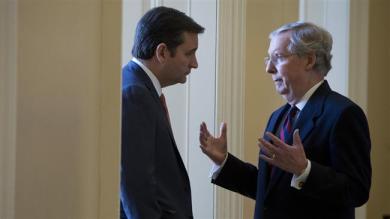
A group of US Republican senators has introduced legislation to impose new sanctions against Iran over what legislators have described as Tehran’s support for terrorism and human rights violations.
The legislation, which was introduced on Thursday by Senator Kelly Ayotte, aims to impose harsher sanctions on Iran’s economy.
The bill is sponsored by Senator Marco Rubio and Senators Mark Kirk, Dan Coats and Cory Gardner as well as Senate Majority Leader Mitch McConnell.
Several other Republican senators have also signed on the new bill, dubbed the “Iran Terrorism and Human Rights Sanctions Act of 2016.”
The bill’s co-sponsors include Senator Ted Cruz, a Republican presidential candidate, and Senators John Cornyn, Rob Portman, Pat Roberts, Ben Sasse, Tom Cotton, Jerry Moran, Johnny Isakson and Lisa Murkowski.
The senators have accused Iran of supporting terrorism in the Middle East and committing human rights abuses.
“I reject our current posture of willful ignorance and inaction towards Iran’s terrorist activities, illegal missile testing, funding Assad’s war, and human rights abuses,” said Kirk, a strong supporter of Israel and advocate of Iran sanctions.
“The Administration’s response cannot once again be it’s ‘not supposed to be doing that’ as Iran continues to walk all over US foreign policy and the international community,” he said.
The Obama administration has advised the Republican-dominated Senate not to impose more sanctions on Iran after the historic nuclear agreement between Tehran and the world powers.
With the Iran Sanctions Act expiring at the end of this year, GOP senators are trying their best to reauthorize and impose more sanctions on Tehran on the pretext of terrorism, human rights issues, and ballistic missile tests.
Iran and the five permanent members of the UN Security Council – the United States, Britain, Russia, China, France as well as Germany started implementation of the deal, dubbed the Joint Comprehensive Plan of Action, on January 16.
After JCPOA went into effect, all nuclear-related sanctions imposed on Iran by the European Union, the Security Council and the US were lifted.
Iran in return has put some limitations on its nuclear activities. The nuclear agreement was signed on July 14, 2015 following two and a half years of intensive talks.
Argentina and the Vultures: the Political Economy of the Settlement
By Mark Weisbrot | The Hill | March 14, 2016
After 15 years of court battles, injunctions, smear campaigns, lobbying, and other interventions, the vulture funds have finally won a tentative agreement with the new Argentine government. Vulture funds — the name preceded this particular dispute — are so called because they buy up defaulted debt for a very small fraction of its face value, then sue (and use other tactics) to collect an exorbitant return. In the case of Argentina, the chief vulture, American billionaire and major Republican campaign donor Paul Singer, will get an estimated 370 percent return; another vulture fund in the settlement did even better, with a return of 950 percent.
The agreement is tentative because President Mauricio Macri of Argentina still has to get the nation’s Congress, in which he does not have a majority, to change some laws in order to finalize the deal. And he will also have to reach agreement with some remaining “holdout” creditors. And now the vulture funds are appealing the judge’s order that would have allowed Argentina to issue new debt, presumably in an effort to extract even more concessions. But assuming it all works out, though, there are some important lessons to be learned from this long war over sovereign debt.
Argentina arguably had no alternative but to default in 2002, but the government also did the right thing by standing up to the IMF and its international creditors until it reached a deal (in 2003 and 2005) that would allow the economy to recover. International lenders — in this case a creditors’ cartel headed by the IMF — often succeed in getting a settlement that keeps the country trapped in recession, depression, or very low growth with an unsustainable debt burden; as well as numerous conditions (cuts to social spending, public pensions, public employment) that harm the majority of the debtor country’s citizens. Some of the worst recent examples of these abuses can be seen in countries like Greece and Jamaica, and will likely include Puerto Rico if there is a debt restructuring there.
By taking a hard line with its foreign creditors, Argentina reached an agreement with 93 percent of them that allowed the country to do very well over the ensuing 14 years. Instead of a prolonged depression as in Greece, or limping along from one crisis to the next, Argentina began an extraordinarily robust recovery just three months after its default and enjoyed very high growth — more than 90 percent in real GDP from 2002–2015. (There is some dispute over the exact number but it does not change the story.) This enabled Argentina to reduce poverty by about 70 percent and extreme poverty by 80 percent, in the decade 2003–2013.
So, even though the country would later run into economic trouble — in the world recession of 2009, but also in the last four years — there is no doubt that it pursued very successful economic policies, which it would not have been able to implement under a less favorable agreement with its creditors. Now, about the slowdown of the past four years, in which the economy has grown by about 1.1 percent annually: Part of the problem was that Argentina could not borrow on international markets, due to its inability to settle with the vulture funds. For Argentina’ detractors, this proves that the default and subsequent tough negotiation were wrong. But clearly that is not the case; the alternative offered by the IMF and the creditors was vastly worse.
The problem is really the vulture funds, and also the foreign policy goals of certain actors within the United States, who were against the prior government of Argentina. Here is Judge Thomas Griesa, of the Federal District court for the Southern District of New York, to whom the New York Times devoted a news article describing his incompetence: “Put simply, President Macri’s election changed everything.” This is from Griesa’s decision of February 19, explaining why he decided to conditionally lift the injunction he had imposed against Argentina in 2014, which the Financial Times editorial board generously described as “eccentric rulings,” and which prevented Argentina from making its debt payments. In other words, he much preferred the new, right-wing, pro-Washington government, as opposed to the prior, left government that he helped get rid of. Griesa’s unprecedented decision to take 93 percent of Argentina’s creditors hostage on behalf of the vulture funds was obviously political at the time. Now he has admitted it, to the chagrin of our legal system.
Argentina had appealed Griesa’s injunction to the U.S. Supreme Court, and the governments of France, Brazil and Mexico, and the Nobel Prize-winning economist Joseph Stiglitz filed briefs on its behalf. Interestingly, the IMF announced that it, too, would file a brief on behalf of Argentina. This was not because the IMF loved the Argentine government, but because Griesa’s decision was considered a threat to the stability of the international financial system. But the U.S. Treasury forced the IMF into an embarrassing retreat, most likely due to pressure from the vulture lobby and some anti-Argentina members of Congress, in particular from Florida, who could threaten to hold up legislation that the Fund needed.
Did I mention that the vulture fund chief Paul Singer is a major contributor to Florida Senator Marco Rubio, and is currently rumored to become finance chair for his presidential campaign?
The U.S. government also stopped blocking loans to Argentina at the World Bank and the Inter-American Development Bank, just after Macri was elected. Macri himself also has an interesting history with the U.S. State Department: In conversations with U.S. officials leaked by WikiLeaks, Macri chastised them for being “too soft” on the Argentine government and encouraging its “abusive treatment” of the U.S.
The main lesson from this whole episode is the importance of national economic sovereignty for middle-income countries like Argentina. This is what allowed Argentina to recover from disastrous economic policies implemented under IMF tutelage; and it was the infringement on this sovereignty by U.S. courts and other actors that made it difficult for Argentina to resolve the economic problems of the past few years. We will see how this new, less sovereign government fares going forward, now that it has settled with the vultures.
Featured Video
New positive ivermectin evidence
or go to
Aletho News Archives – Video-Images
From the Archives
Fanatical Followers of the Covid Regime: A Jim Jones-Style Cult?
By Professor Roger Watson and Dr. Niall McCrae | The Daily Sceptic | November 15, 2021
As scholars at leading British universities over recent decades, we witnessed the replacement of critical thinking and debate by narrative: facts are discrimination and scientific method is imperialism; truth, instead, is derived from ‘progressive’ values. This educational trend may be a major contributory factor to the ease in which society has been inculcated to the Covid ‘new normal’ of masking, testing, and repeated doses of vaccines for a disease of similar risk to severe influenza.
One doesn’t need much critical reasoning to observe the flawed logic of some vaccination enthusiasts, such as people who respond to experiencing any side effects, however debilitating, by saying “at least I know it’s working”, or, after contracting the disease despite their promised inoculation (over 90% effective, according to initial drug company claims), “I’d have been worse off without the jab.” … continue
Blog Roll
 Aletho News
- ‘Grave, alarming’: Iran mission on Trump’s UNGA ‘annihilation’ threats
- Najaf airport to reopen to Iranian flights within 24 hours: Ambassador
- From ‘How Will This End For Iran’ to ‘When America Walks Away’: A tale of two Economist covers
- Tehran blasts ‘baseless’ speculation linking Iran to alleged bomb plot at UK air base
- The Rise And… Rise Of ‘Color Revolutions’
- The Coming GOP Bloodbath?
- Arctic Scare Stories Melt Away
- Wrong, Euronews: Climate Change Has Not Created a Food, Energy, and Economic “Meta-Crisis”
- New positive ivermectin evidence
- Met Office Caught Fabricating Daily Temperature Record Claims
- If Americans Knew
- Netanyahu Asked UAE Leader to Deny Report on Oct. 7 Warning in Secret Visit, Sources Say
- CNN Chief Int’l Correspondent Clarissa Ward on Journalists in Gaza
- Democratic Party Consultants Surround Troy Jackson with Pro-Israel Donors
- Christian Leader Responds To Netanyahu’s Claims Regarding Palestinian Christians
- In Gaza, ‘Whoever Survives the Bombing Won’t Survive the Rubble’
- Israel kills more Palestinians, amid push to resettle Gaza – Daily Update
- Israel forces Gazans to live in constant peril – Daily Update
- Deconstructing Netanyahu’s pants-on-fire UN rant – Daily Update
- Trump betrayed voters with his campaign lies and prioritized a foreign country once he took office
- Netanyahu calls Israel’s war in Gaza ‘opposite of genocide’ in UN speech to near-empty hall
- No Tricks Zone
- New Study: Earth And Venus Surface Warmth Largely Explained By Convection And Lapse Rate, Not CO2 Or Radiation
- 2025 Nature Paper Claiming Worsening Global Drought Gets RETRACTED …Heavily Flawed
- New Study: ‘Global Drought Shows No Detectable Recent Acceleration Under Climate Warming’
- Economic Masterminds: German Socialists Suggest Taxing Productivity Gains Stemming From Using AI
- The South China Sea Has Not Been Cooperating With The Climate Change Narrative
- Energy Crisis: Germany Enters Heating Season With Historically Low Gas Reserve Fill Levels
- New Study: The Antarctic Ice Sheet Gained Mass From 2020-2024 Due To Staggering Snow And Ice Accumulation
- Study: Ocean Heating Rates From Thousands Of Years Ago ‘Dwarf’ Modern Ocean Heating Rates
- Climate Extremists Target, Attack Large-Scale Power Grid Infrastructure In Germany!
- New Study: Antarctic Ice Melt Has Contributed Less Than 1 Centimeter To Sea Level Rise In The Last 30 Years

