Iran should not sweat it over the P5+1 nuclear talks. Any final agreement is simple.
It must recognize Iran’s inalienable right to peaceful nuclear technology, including the operation of uranium enrichment and all existing related facilities in the country. In return for Iranian guarantees over its legitimate nuclear activities, the US and its European allies must cancel the onerous burden of economic sanctions. That is the essence of any deal. And any other add-on issues are irrelevant.
Indeed, Western attempts to alter the framework of a final nuclear deal must be slapped down; or if insisted upon, Iran should reserve the right to walk away from the talks.
Negotiations this week in the Austrian capital Vienna were said to be “constructive”. Next month, discussions move on to a final accord that could pave the way for lifting of sanctions.
The stakes are high for Iran. Of course, Iran wants to see a prompt end to the Western-imposed sanctions regime that has caused economic and social hardship for its people. The morality and legality of such indiscriminate punishment is highly dubious, to say the least, and their continued imposition is a cause of much indignation.
But a final agreement must be based on the essential details: Iran’s inalienable right to civilian nuclear technology; an agreed system of verification; and immediate cancellation of economic sanctions.
If the Western states, in particular the US, Britain and France, begin to add on conditions to those essential details, Iran must not be browbeaten or seduced into making concessions for the sake of concluding a final accord.
Ominously, we saw this duplicitous Western tendency to move the goalposts this week when US Secretary of State John Kerry told a Senate hearing in Washington that sanctions relief for Iran was contingent not just on Iranian guarantees over nuclear weapons, but also on allegations of Iranian involvement in international terrorism and violation of human rights.
Kerry’s comments follow on the move last week by the European Parliament to censure Iran over alleged human rights abuses. It seemed more than mere coincidence that both the US and EU expressions pre-empted the latest round of P5+1 negotiations in Vienna this week.
It is, to be sure, patently ridiculous for the Americans and Europeans to raise issues of human rights and terrorism given their own outrageous transgressions. Just this week we hear of more reports that Washington is to step up supplies of heavy weapons to terrorists running amok in Syria – the same Western-backed terrorists who are implicated in the use of chemical weapons to kill hundreds of civilians in a callous propaganda stunt.
This also follows increasing evidence last week of a decade of American torture – assisted by European collusion – of hundreds of detainees at the Guantanamo Bay concentration camp and countless other US black sites around the globe.
And as far as the Europeans are concerned, this week sees the plight of 12 million Roma people being highlighted for gross mistreatment by governments across the entire 28-nation bloc.
Regardless of the integrity of purported American and European concerns – terrorism and human rights – what needs to be recognized is that the ostensible issues are completely irrelevant to the nuclear dispute and a final accord. These issues are being added on in an ad hoc fashion, which suggests that the P5+1 nuclear impasse is being set up for procrastination on Western terms.
As Iranian Professor Mohammad Marandi told Press TV this week in a debate forum, the issue of alleged human rights violations is being used as a ploy to pressure Iran into making concessions over its nuclear rights. The Western logic would seem to be: if you want a P5+1 deal and an end to trade sanctions, then we want in return closure of this or that nuclear facility (in contravention of Iran’s legal rights), otherwise we are going to keep raising obstacles such as allegations of human rights abuses and international terrorism.
This is a completely unacceptable Western formula for moving the goalposts on its duplicitous terms. It will mean a never-ending impasse aimed at harassing Iran with more and more threats, including threats of war.
The essence of a long overdue nuclear accord with Iran is for the arrogant Western powers to start treating Iran as an equal, in which Iran is able to avail of its inalienable rights as a signatory to the Non-Proliferation Treaty – without condition or exception.
If Western states insist on adding on irrelevant – as well as hypocritical and spurious – issues it is a damning sign of their incorrigible bad faith. In that event, Iran must be prepared to walk away from the P5+1 process.
However, that is not necessarily a reckless option. Given the growing importance of international trade involving Russia, China and other emerging economies – that is, trade without the bankrupt Western states – Iran might find itself better off anyway not having to waste time and energy on these malignant has-been powers.
Iran needs to stay cool, not sweat it, and to turn the tables on the arrogant players by asserting its own rightful demands.
April 10, 2014
Posted by aletho |
Economics | European Union, Iran, Sanctions against Iran, United States |
Leave a comment
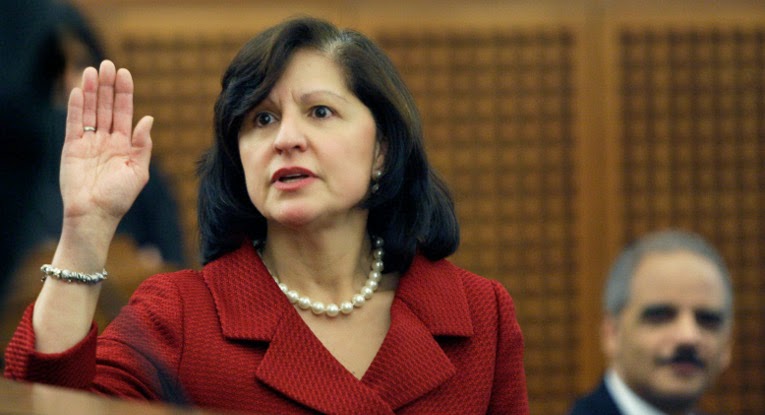
United States Attorney for the District of Massachusetts Carmen Oritz
A brief news story posted by Reuters at 3pm on Friday afternoon reported that Sihai Cheng, a Chinese national is facing criminal charges brought by the U.S. government for allegedly having conspired to export “pressure transducers,” sensors that translate the application of pressure into electrical signals, to Iran in violation with sanctions that restrict trade of scientific equipment and technology to that country.
Cheng was arrested at Heathrow airport two months ago and the indictment was brought by Boston field offices of the FBI, Department of Homeland Security, Department of Commerce, and the Department of Justice’s Massachusetts District Attorney.
Following the publication of the Reuters report, the news traveled fast with outlets like Bloomberg News, AFP, Telegraph, and BBC all picking it up, and inevitably tying the news to the ongoing international nuclear negotiations taking place between six world powers and Iran.
Pressure transducers have myriad industrial and scientific uses; their use in the translating pressurized gas in centrifuges to an analog electrical signal is but one of these applications. A statement released by the U.S. Attorney’s office declares, “Pressure transducers can be used in gas centrifuges to enrich uranium and produce weapons-grade uranium.”
Unmentioned is the fact that, not only can transducers be used for thousands of other reasons, but also that Iran’s enrichment of uranium is legal, Iran’s enrichment facilities are under strict IAEA monitoring and inspection, and Iran has never even been accused of enriching uranium to weapons-grade levels. It’s like arresting someone over trading light bulbs, which can be used in automobiles, which can be used to run people over.
The prosecution of people accused of breaching the aggressive U.S.-led sanctions regime is nothing new; just last month, Mohammad Reza Nazemzadeh, a prolific and respected medical research scientist in Michigan was inexplicably indicted for trying to send a refurbished coil for an MRI machine to a hospital in Iran. However, certain language used in press reports to describe the indictment of Cheng – in bold below – is curious.
Reuters reported that Cheng had “supplied thousands of parts that have nuclear applications to Eyvaz, a company involved in Iran’s nuclear weapons program, in violation of U.S. sanctions on Iran, federal prosecutors said.”
Bloomberg News used the same formulation:
From November 2005 to 2012, Cheng allegedly supplied thousands of parts that have nuclear applications to Eyvaz, an Iranian company involved in the development and procurement of parts for Iran’s nuclear weapons program.
“Iran’s nuclear weapons program.” Read that again. “Iran’s nuclear weapons program.” The ubiquity of this phrase in the press and political speechifying belies the fact that Iran does not actually have a nuclear weapons program and is thus, not only deliberately deceiving, but patently false.
It should now go without saying that, for years now, the United States intelligence community and its allies have long assessed that Iran is not and never has been in possession of nuclear weapons, is not building nuclear weapons, and its leadership has not made any decision to build nuclear weapons. Iran’s uranium enrichment program is fully safeguarded by the IAEA and no nuclear material has ever been diverted to a military program. Iranian officials have consistently maintained they will never pursue such weapons on religious, strategic, political, moral and legal grounds.
This assessment has been reaffirmed year after year by the U.S. Director of Intelligence James Clapper, most recently in mid-February before the Senate Armed Services Committee. The intelligence has maintained for nearly seven years a high level of confidence that Iran has no nuclear weapons program.
Nevertheless, this phraseology goes frequently unchallenged in the mainstream media – despite repeated appeals by ombudsmen and public editors for more careful and measured writing by their reporters.
The reports of the Cheng case, however, are a bit more revealing. The specific claim referencing an Iranian “nuclear weapons program” did not originate with the Reuters wire service or Bloomberg‘s own cribbed report. In fact, the phrase in its entirety came from the U.S. Attorney’s own press release about the indictment, which was posted Friday by the “Boston Press Release Service,” and has still (as of this writing) not appeared on the website for the U.S. Attorney for the District of Massachusetts.
That the offending phrase – “Iran’s nuclear weapons program” – was literally copied-and-pasted directly from a government statement by professional reporters for major news outlets, without a shred of skepticism, scrutiny or fact-checking, is sadly par for the course in a media landscape wherein the press simply parrot the government line as a matter of policy.
“The indictment alleges that between in or about November 2005 and 2012, Cheng supplied thousands of parts that have nuclear applications, including U.S. origin goods, to Eyvaz, an Iranian company involved in the development and procurement of parts for Iran’s nuclear weapons program,” the release reads.
The government prosecutor responsible for the indictment is Massachusetts’ U.S. Attorney Carmen Ortiz, who herself has a sordid history of overly-aggressive prosecution, in one case leading to the suicide of computer programmer and online activist Aaron Swartz in January 2013.
In this indictment, Ortiz has thus made an assumption about Iranian actions and intentions that directly contradicts the consensus of 16 American intelligence agencies. Furthermore, the prosecution itself is part of the Obama administration’s own economic war on Iran.
Just two weeks after Iran and the P5+1 signed their Joint Plan of Action in late November 2013, the U.S. State and Treasury Departments specifically named Eyvaz Technic Manufacturing Company among companies targeted “for evading international sanctions against Iran and for providing support for Iran’s nuclear program.”
The recent indictment and accompanying press release present a clear indication that the decades-long disinformation campaign about Iran’s nuclear program is far more powerful and sustaining than facts and evidence. And that’s bad news when the propaganda comes straight from the Department of Justice.
April 6, 2014
Posted by aletho |
Deception, Economics, Mainstream Media, Warmongering, Progressive Hypocrite | Ali Akbar Salehi, International Atomic Energy Agency, Iran, Reuters, U.S. government |
Leave a comment
Russia will not import GMO products, the country’s Prime Minister Dmitry Medvedev said, adding that the nation has enough space and resources to produce organic food.
Moscow has no reason to encourage the production of genetically modified products or import them into the country, Medvedev told a congress of deputies from rural settlements on Saturday.
“If the Americans like to eat GMO products, let them eat it then. We don’t need to do that; we have enough space and opportunities to produce organic food,” he said.
The prime minister said he ordered widespread monitoring of the agricultural sector. He added that despite rather strict restrictions, a certain amount of GMO products and seeds have made it to the Russian market.
Earlier, agriculture minister Nikolay Fyodorov also stated that Russia should remain free of genetically modified products.
At the end of February, the Russian parliament asked the government to impose a temporary ban on all genetically altered products in Russia.
The State Duma’s Agriculture Committee supported a ban on the registration and trade of genetically modified organisms. It was suggested that until specialists develop a working system of control over the effects of GMOs on humans and the natural environment, the government should impose a moratorium on the breeding and growth of genetically modified plants, animals, and microorganisms.
Earlier this month, MPs of the parliamentary majority United Russia party, together with the ‘For Sovereignty’ parliamentary group, suggested an amendment of the existing law On Safety and Quality of Alimentary Products, with a norm set for the maximum allowed content of transgenic and genetically modified components.
There is currently no limitation on the trade or production of GMO-containing food in Russia. However, when the percentage of GMO exceeds 0.9 percent, the producer must label such goods and warn consumers. Last autumn, the government passed a resolution allowing the listing of genetically modified plants in the Unified State Register. The resolution will come into force in July.
April 6, 2014
Posted by aletho |
Economics, Environmentalism | Genetic engineering, Genetically modified organism, GMO, Russia |
Leave a comment
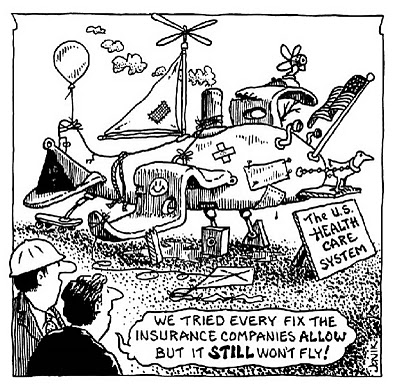 That’s fewer than 1 in 300 Americans.
But the president is touting 7 million signups. What gives?
It’s called spin, propaganda, BS.
Basically what happened is people got kicked off of their policies and then had to buy new policies which now must be sold through Obamacare exchanges. Very few new people were covered.
Another fail in a long list of Obamacare failures. Funny the White House released the numbers on April Fools Day.
(From The Daily Mail )
The unpublished RAND study – only the Los Angeles Times has seen it – found that just 23 per cent of new enrollees had no insurance before signing up.
And of those newly insured Americans, just 53 per cent have paid their first month’s premiums.
If those numbers hold, the actual net gain of paid policies among Americans who lacked medical insurance in the pre-Obamacare days would be just 858,298. … Full article.

April 4, 2014
Posted by aletho |
Deception, Economics, Progressive Hypocrite | Health insurance, Patient Protection and Affordable Care Act, United States |
Leave a comment
Mérida – A new campus of the Bolivarian University of Venezuela (UBV) has been inaugurated in Venezuela’s Falcon state. The UBV offers free degree courses at undergraduate and postgraduate levels.
Established in November 2003 under Mission Sucre, the UBV is aimed at providing higher education opportunities to Venezuela’s poor.
The UBV’s newest campus in Falcon’s Los Taques municipality has 30 classrooms, and will benefit over 5600 students, according to the government. The campus also has recreational, dining and administrative facilities, and was its construction was funded by state oil company PDVSA.
President Nicolas Maduro inaugurated the campus on Tuesday via radio.
Officially, the UBV has more than 1300 campuses in 335 municipalities across Venezuela. However, apart from the main campus in Caracas, most UBV facilities are significantly smaller than the new Falcon site. The mission initially operated out of buildings owned by PDVSA, but is now hosted by schools and other educational institutions outside normal operating hours.
More than 695,000 people have studied or are studying through the UBV, while 379,000 have graduated. Over 5000 UBV students are indigenous Venezuelans. The university has also handed out over 150,000 scholarships.
Like most universities in Venezuela, the UBV provides tuition free of charge to the student, including meals.
The university also primarily offers courses in areas considered by the government to be of national priority, ranging from education, law, healthcare, engineering and others. Courses generally involve high levels of community service, and usually have lower entrance requirements than Venezuela’s traditional universities.
The campus at Falcon will mostly be geared towards courses in agro-ecology, architecture, social communication, environmental management, public health, social development, computing, and petrochemical refining.
April 3, 2014
Posted by aletho |
Economics | Bolivarian University of Venezuela, Mission Sucre, PDVSA, Ryan Mallett, UBV, Venezuela |
Leave a comment

It’s a safe bet that most of the Ukrainians who flooded Maidan Square in Kiev in February did not do so because they wanted the International Monetary Fund to make their lives even more miserable by slashing subsidies for heat, gutting pensions and devaluing the currency to make everyday goods more expensive.
But thanks to the U.S.-backed coup that ousted elected President Viktor Yanukovych and replaced him with a regime including far-right parties, super-rich ”oligarchs” and technocrats with little sympathy for the suffering of average people, that’s exactly what happened. Although lacking legitimacy that would come from national elections, the coup regime pushed through the demands of the Washington-based IMF.
The process began just 10 days after the violent Feb. 22 coup that forced Yanukovych to flee for his life. IMF officials landed in Kiev on March 4 to hammer out a deal that acting Prime Minister Arseniy Yatsenyuk, himself a chilly bank technocrat, has acknowledged is “very unpopular, very difficult, very tough.”
What is also striking about the IMF plan is that it puts virtually all the pain on average Ukrainians. There is nothing in the economic “reform” package that extracts some of the ill-gotten gains from Ukraine’s ten or so “oligarchs,” the multimillionaires and even billionaires who largely plundered Ukraine’s wealth after the collapse of the Soviet Union in 1991.
There is no plan for demanding that these “oligarchs” kick in some percentage of their net worth to help their own country. Instead, hard-pressed citizens of the United States and Europe are expected to carry the financial load.
The U.S. Congress voted by large bipartisan majorities to have the American taxpayers provide $1 billion in aid to Ukraine’s coup regime. Further, the IMF predicts that its $18 billion in loan guarantees could generate up to $27 billion from the international community over the next two years.
Though the IMF plan includes some promises about fighting corruption, there is no requirement that the West’s billions of dollars will go toward government programs that might actually strengthen Ukraine and help the average Ukrainian by putting the jobless to work. Nothing about upgrading the infrastructure or providing improved educational opportunities, better health care and other programs that might reduce some of Ukraine’s social pressures and make it a more viable nation.
For instance, investing in roads and rail could make Ukraine a more attractive investment opportunity for agricultural corporations eying the country’s rich soil which historically has made it the breadbasket for much of Central and Eastern Europe.
Cookie-Cutter Approach
Instead, the IMF has applied its usual cookie-cutter approach toward a troubled nation: reduce public spending, slash social programs, eliminate energy subsidies, devalue the currency, raise taxes, impose triggers for more austerity if inflation rises, etc.
Some economists project that the cumulative impact of the IMF “reforms” could result in a 3 percent contraction of Ukraine’s already depressed economy, which fell into a severe recession after the Wall Street crash of 2008 and has been inching along at almost zero growth the past two years. But Yatsenyuk warned parliament that the drop in the GDP could be more like 10 percent if corrective actions were not taken.
But those actions will inflict more hardship on the Ukrainian people — their “99 percent” — while giving Ukraine’s “1 percent” pretty much a pass. Yet, beyond fairness, there’s also the question of the legitimacy of the coup regime taking on new debt obligations without the consent of the Ukrainian people.
After the violent ouster of elected President Yanukovych on Feb. 22 — after he rejected the IMF’s terms – the post-coup parliament cobbled together a new government which involved handing out four ministries to far-right parties whose armed neo-Nazi militias had spearheaded the coup.
Yatsenyuk was the personal choice of U.S. Assistant Secretary of State for European Affairs Victoria Nuland to lead the new regime. Weeks before the coup, Nuland was caught discussing with U.S. Ambassador to Ukraine Geoffrey Pyatt who should serve in a new government. Nuland said in a phone call to Pyatt that was intercepted and posted online that “Yats is the guy” — and he was installed as prime minister once Yanukovych was gone. [See Consortiumnews.com’s “What Neocons Want from Ukraine Crisis.”]
Ukraine’s parliament has set a presidential election for May 25, and protesters in the Maidan also sought quick parliamentary elections. But Western diplomats have been urging a delay in the parliamentary balloting as well as postponement of the most onerous IMF provisions until after the May 25 vote. That way the election will have come and gone before the beleaguered Ukrainians truly understand how painful the IMF austerity will be.
As the New York Times reported, “Senior Western officials said on [March 26] that the loans from the United States and from the I.M.F. would be structured to get the government through its first few months without undue political upheaval, putting off some of the more difficult changes until after the May election. The West has also chosen not to press for early parliamentary elections, one senior official said, because ‘the priority now is stabilization in Kiev and de-escalation with Moscow.’”
Given such bleak economic prospects — and evidence of Western manipulation of the political process – is it any wonder that more than 90 percent of the voters in Crimea opted to leave Ukraine and rejoin Russia?
Investigative reporter Robert Parry broke many of the Iran-Contra stories for The Associated Press and Newsweek in the 1980s. You can buy his new book, America’s Stolen Narrative, either in print here or as an e-book (from Amazon and barnesandnoble.com).
April 2, 2014
Posted by aletho |
Economics, Progressive Hypocrite | Arseniy Yatsenyuk, IMF, Robert Parry, Russia, Ukraine, United States, Victoria Nuland, Viktor Yanukovych |
Leave a comment
“Transnistrian claim for independence is being met with a certain degree of sympathy and understanding by some of the western experts. As an example, a Finnish political analyst and blogger Ari Rusila can be named; he usually presents the Transnistrian de facto statehood in quite a positive light, admitting, in particular, that “Transnistria called my attention first because of its quite ready statehood elements without outside recognition, second because of changed circumstances in respect for international law after Kosovo unilateral declaration of independence and thirdly because I predicted that Trandnistria could be the next tinderbox of separatism between Georgian conflict and coming troubles in Ukraine”. He believes that Transnistria, if compared with Kosovo, has had in fact much more reasons to be recognised internationally.”
The quote above is from a paper Transnistrian Conflict: State of Affairs and Prospects of Settlement prepared for the International conference “Frozen Conflicts” in Europe (1st September 2012, Bled, Slovenia) by Natalia Belitser and the сitation is based on my articles published in 2008.
Transnistria as next Crimea?
 As the crisis in Ukraine continues to simmer, tensions in the country’s western neighbor Moldova are beginning to rise. Seeking to capitalize on President Putin’s eagerness to use the protection of Russian speaking populations in the region as a pretext to expand his territorial claims, members of two separate enclaves in Moldova are looking toward Moscow for protection.
Now after the uprising and coup in Ukraine and reunification of Crimea with Russia, tensions have grown to encompass Ukraine’s neighbor Moldova, which like Ukraine has been making efforts to integrate further with the West. Moldova has signed the EU association and free trade agreements at the November 2013 Vilnius summit, during which former Ukrainian President Viktor Yanukovich rejected the deals. The Moldovan government has also supported the Western-backed uprising in Ukraine. Western experts worry that the next “Crimea” could be the breakaway region of Transnistria. Many locals there don’t share that fear, and if the last referendum holds, a large majority would welcome a Russian annexation.
Transnistria (aka Transdniestria aka Pridnestrovie) – is a new and emerging country in South Eastern Europe, sandwiched between Moldova and Ukraine.
 The official language of Transnistria is Russian, not Moldovan, while the vast majority of schools teach the Cyrillic alphabet instead of the Roman alphabet used in the rest of the country. Recently Transnistria adopted Russian legislation, a clear signal of the region’s preference for joining Moscow’s Customs Union.
Most recently, Russian military exercises held on March 25 in Moldova’s breakaway territory of Transdniestria have stoked these tensions. From its side the parliament of Transdniestria has sent a proposal to the Russian State Duma asking for Russian legislation to join the breakaway Republic to Russia. The document originated as a feedback to a new draft law in Russia facilitating the accession of the new subjects to the Russian Federation. The talks within the 5+2 format (Russia, Moldova, Transdniestria, Ukraine, the OSCE and observers from the EU and the US) are scheduled for 10-11 April 2014.
Transnistria – and Gagauzia – are joining to the same club with Abkhazia and South Ossetia as de facto states, namely political entities that have achieved enduring ‘internal sovereignty’ – but lack ‘external sovereignty’ in the international system. As Crimea is annexed to Russia and these other “states” can follow to join Russia or continue as de facto states, this development is creating a Northern Black Sea corridor, front-line or buffer zone.
Good Moldavia-Transdniestria cooperation since 2009 and 2011 elections
New prospects for conflict settlement have appeared after parliamentary elections of 2009 in the Republic of Moldova. The new pro-Western team – the Alliance for European Integration (AEI) – that substituted the Communist Party ruling the country from 2001, proved much more pragmatic and willing to deal with its breakaway region than their predecessors pursuing rather an isolationist policy. In 2011 presidential elections President Igor Smirnov, who had been in power since Transnistria declared independence in 1990, failed to be re-elected, and was replaced by opposition MP, younger leader of the ‘Revival’ movement and former speaker of the Supreme Council Yevgeny Shevchuk. These political changes engendered hopes for the settlement process to acquire a positive momentum.
The power changes in Transnistria give a positive boost to the peace process: the official negotiation process re-started after six years interruption in November 2011 in Vilnius, Lithuania, to be followed by a meeting on February 2012 in Dublin, Ireland and on April 2012. Finally the Document of principles and procedures and agenda of negotiations were agreed in Vienna, whereas on July 2012 this Document was signed. It included such issues as freedom of movement of passengers and cargo, traffic of trains, education issues, etc. Also a new approach (joint initiative of Russia and Germany, Meseburg, 2010) by the EU and Russia to resolve the conflict was the setting up of a joint Political and Security Committee (EU-R-PSC) at minister level. Related to security issues it was stated that the EU and Russia will cooperate in particular towards a resolution of the Transnistria conflict with a view to achieve tangible progress within the established 5 + 2 format (Russia, Ukraine, Moldova, Transnistria, OSCE, EU, US). This cooperation could include a joint EU-Russia engagement, which would guarantee a smooth transition of the present situation to a final stage.
The main approach of the resumed negotiations and to the settlement process in general focuses on Confidence Building Measures (CBMs). This means that political aspects of the settlement, for example a mutually accepted status of Transnistria, are not yet touched. Instead status there has been attempts to make concrete steps of issues that both sides of the conflict are interested in. These kinds of initiatives have already been following:
- Engaging the sides into direct dialogue;
- Establishing joint Working/Expert Groups on confidence building measures;
- Conducting meetings at a higher level (for example, between Prime-minister of the RM Vlad Filat and leader of Transnistria Yevgeny Shevchuk, also between the heads of foreign ministries Eugen Carpov and Nina Stanski);
- Elaborating and implementing national and international social and economic development projects etc.
The direct dialogue at a higher level has been clear contrast to previous lack of any kind of dialogue lasting for years. There has been a dozen WGs e.g. on economy, agriculture and environment, transport, railways, civil status acts, social and humanitarian aid, health, education, combating organised crimes and emergencies, telecommunications, and customs, whereas the WG on demilitarisation and security is not yet operating.
Growing dispute between parties started by unilateral actions by both parties during Spring 2013. First Moldova established migration control of citizens in six checkpoints, second Transnistria started to mark a border in the Security Zone or line of demarcation after the Transnistrian war (1992).
Tools against Transnistria by Chisinau and Kiev
Arsenal of tools, on that, with the support of Western “ideological-political sponsors” can count in Chisinau and the Kiev could be as following:
- further tightening of border crossing for the residents of Transnistria, the introduction of a total ban on border crossings by social groups and citizens (It is noteworthy in this regard that, that the admission of foreign citizens on the territory of Moldova is liberalized; Ukrainian officials should examine stats for financial gains and losses of the Moldovan side of Ukrainian companies, eg, air carriers);
- blocking of export-import operations of the Transnistrian side, transit of Transnistrian goods, that is well within the common “European” subjects as a way to European integration, with a demand for the full functioning of the Transnistrian Moldovan business rules;
- ban on border crossings by vehicles with Transnistrian number;
- refusal to issue permits for the Transnistrian passenger transport;
- Moldovan law on the placement of the Ukrainian checkpoints with full access to all databases and law carry out administrative functions, etc..
Russia ready if needed
NATO warns that a pro-Russian enclave of Moldova could be Moscow’s next target after Crimea. NATO’s top military Commander Europe Philip Breedlove said on 23rd March 2014 that Russia has a large force on Ukraine’s eastern border and is worried it could pose a threat to Moldova’s separatist Transnistria region.Russia launched a new military exercise, involving 8,500 artillery men, near Ukraine’s border 10 days ago. Breedlove said the Russian tactic should lead the 28-nation Western military alliance to rethink the positioning and readiness of its forces in eastern Europe so that they were ready to counter Moscow’s moves.
How the Russian forces would get there. Transnistria is landlocked and to go there by land would require Russian troops to travel through much of western Ukraine. However, Russian forces based in the Eastern side of the Black Sea and Crimea could conceivably stage an airlift. Since it fought a brief separatist war to breakaway from Moldova in 1991, Transnistria has been home to “peacekeeping” garrison of around 1,000 Russian troops. One option is also that Russia includes Odessa in a “security belt” that would presumably stretch from Crimea to Transnistria.
In Moldova the appetite for European integration among Moldova’s 3.5 million people had weakened even before the crisis in Ukraine and a parliamentary election later this year may bring a return of the pro-Russian Communist Party that was forced from power in 2009. Moldova falls under the EU’s Neighborhood Policy, which contains no explicit similar promise of membership like the countries of the Western Balkans .
Gagauzia had a referendum too
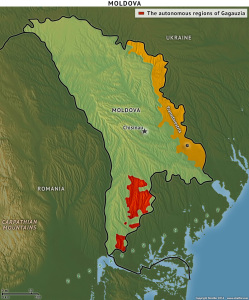 Following a 1991 declaration of independence, Comrat (Gagauzia’s capital) agreed to remain a part of Moldova, after Chisinau agreed to grant the region the legal status of a “special autonomous zone”. Chisinau’s control was challenged in February 2014 when Gagauzia held a referendum to join the Russia-led Eurasian Customs Union. The referendum followed Chisinau’s decision to enter a Free Trade Agreement with the European Union in November 2013–the same agreement former Ukrainian President Victor Yanukovich snubbed when he opted for the customs union with Moscow. Gagauzia has a population of about 155,000 people, mostly ethnically Gagauz, Turkic-speaking Orthodox Christians. Many locals fear that Chisinau’s EU-integration agenda masks an intention to unite Moldova with neighboring Romania.
An overwhelming majority of voters in a referendum – with turnout more than 70 % – held in the autonomous Moldovan region of Gagauzia have voted for integration with a Russia-led Customs Union: 98.4 percent of voters chose closer relations with it. In a separate question, 97.2 percent were against closer EU integration. In addition, 98.9 percent of voters supported Gagauzia’s right to declare independence should Moldova lose or surrender its own independence. Moldova’s government claims that referendum in Gagauzia is unconstitutional and had no legal legitimacy.
Although the security situation in Gagauzia remains calm, on 26 March, the executive committee in Comrat announced its decision to establish independent police stations in Comrat, as well as in its northern and southern cities of Briceni and Cahul. Moscow has demonstrated support for Gagauzia following the referendum. The regions governor, Mihail Formuzal visited Moscow in March 2014 and got the impression that Russia was prepared to expand partnerships with Gagauzia and “provide the necessary support”. Despite an embargo against wine produced in Moldova, Russia began importing it from Gagauzia, likely as an attempt to encourage additional good will toward its benefactor.
Bottom line
It easy to say that incorporating Transnistria – as well Gagauzia, Abkhazia, South Ossetia and Crimea – into Russia (and Nagorno-Karabakh into Armenia) is against international law (whatever it is) or some international agreements. Although Russia moving into eastern Ukraine could be–as the West says–invasion-occupation-annexation. However in my opinion these actions are more legitimate or justified than U.S.expansionism, secret wars and interventions around the globe.
The other possible scenarios than unification with Russia for Transnistria are e.g:
- Status quo maintained aka “frozen conflict” continues;
- Re-integration of the Republic of Moldova with condition of establishing a confederation including Moldova, Transnistria and Gaugazia as entities, this could be a pragmatic option for Ukraine too;
- Transnistria gaining its independence and state sovereignty recognized internationally;
- Joining Ukraine, which option after coup in Kiev seems most unlikely option to me.
In my opinion even without international recognizion Transnistria meets the requirements for sovereign statehood under international law, as it has a defined territory, a population, effective elected authority, and the capability to enter into international relations. It is currently seeking international recognition of its de facto independence and statehood. As long as Transnistria’s status is unresolved, it will be a serious political obstacle to Moldova’s joining the EU, which does not want another “divided state” like Cyprus on its hands.
April 2, 2014
Posted by aletho |
Economics, Timeless or most popular | Crimea, EU, Eurasian Union, European Union, Moldova, Russia, Transdniestria, Transnistria, Ukraine |
Leave a comment
Russia’s oil giant, Lukoil, has begun pumping crude oil from one of the world’s largest undeveloped oil fields in southern Iraq, as the Arab country works to bolster its oil exports.
During a Saturday ceremony to inaugurate the West Qurna-2 field in Iraq’s southern city of Basra, Iraqi Oil Minister Abdul Kareem Luaibi said crude production at the massive oil field is expected to reach some 400,000 barrels per day (bpd), from an initial 120,000 bpd.
The Iraqi minister further expressed hope that the country’s oil output could possibly reach four million bpd by the end of this year.
“This is a historic and great accomplishment that would enable the government to implement its development programs by increasing its revenues,” added Luaibi.
Lukoil Chief Executive Vagit Alekperov also hailed the launch of West Qurna-2 as “strategically important” for the Russian company, which is the principal firm developing the enormous West Qurna-2 field.
The inauguration of West Qurna-2 will allow Russia’s second oil producer to more than double its overseas crude output.
Earlier in the day, Dhiya Jaafar, the head of Iraq’s South Oil Company, said oil exports from southern Iraq have averaged 2.48 million bpd so far this month and would rise to 2.65 million following the inauguration of West Qurna-2.
West Qurna-2, with an estimated 14 million barrels of recoverable reserves, is the second biggest untapped oil field after Rumaila in southern Iraq.
Iraq is dependent on oil exports for government revenue and is working to boost its oil sales. The Arab country has proven reserves of 143.1 billion barrels of oil as well as 3.2 trillion cubic meters of gas.
Baghdad seeks to increase its crude production capacity to nine million bpd by 2017.
March 29, 2014
Posted by aletho |
Economics, Malthusian Ideology, Phony Scarcity, Timeless or most popular | Iraq, Lukoil, Press TV, West Qurna-2 |
Leave a comment
I have been an outspoken advocate for a Medicare for all health system. During the health reform process, I did all that I could to push for single payer, including being arrested three times for civil disobedience. I was one of fifty doctors who filed a brief in the Supreme Court which expressed opposition to forcing people to buy private health insurance, a defective product. It pains me to see that the Affordable Care Act (ACA) siphons billions of public dollars to create more bureaucracy and transfers hundreds of billions of public dollars directly to the private insurance industry when I know that those dollars should be paying for the health care that so many in our country desperately need.
I am currently uninsured, so I have to make a choice. I don’t qualify for Medicaid and I’m too young for Medicare. By law, I am required to buy private insurance or pay a penalty. But I find myself in the position of not being able to do either. I can’t in good conscience give money to the health insurance industry that I am fighting to eliminate. And I can’t in good conscience pay a tax penalty that will be given to that industry. So, I am going to be a Conscientious Objector to the ACA.
I suspect that there are others who feel as I do. If you are planning to object to purchasing insurance and you support Medicare for all, you might like to join me in sending a letter to President Obama. Click on this link to do so.
The Issue is Access to Care, Not the Number Who Buy Insurance
As the March 31 deadline to purchase health insurance or face a penalty approaches, the public debate is focused solely on enrollment numbers. Great efforts are being expended to compel people to buy insurance. The “Young Invincibles,” a term created to misrepresent uninsured young adults, are being marketed heavily. And Enroll America, a coalition of advocates and health industry executives, is working overtime to encourage volunteers to be creative in the ways they locate and convince people to purchase insurance.
The mass media and politicians are constantly talking about the health care marketplace. We are being indoctrinated with market rhetoric. Patients are called consumers and health insurance plans are called products. The problem with this is that health care doesn’t belong in the marketplace whose logic dictates that care should be denied if a profit cannot be made. Health care is a public good and something that everyone needs throughout their lifetime.
Focusing solely on the number of people who are insured is what the private health insurance industry wants the public to believe is most important. The industry spent tremendous amounts of money and time to get a law that would force people to buy insurance in order to protect and enhance their assets. They want everyone to buy their products and to make people feel reckless or irresponsible if they don’t. This is a massive campaign to distract people from asking the questions that really matter, such as whether people with insurance will be able to afford health care, whether bankruptcies from medical debt will continue and whether overall health outcomes will improve.
In the United States, having health insurance does not guarantee access to necessary health care. In fact, rather than creating health security, the ACA is degrading health care coverage in the US. It is also creating the largest transfer of public dollars to a private industry ever, as UNITE HERE reports “most of the ACA’s $965 billion in subsidies will go directly to commercial insurance companies.”
The Insurance Scam
As Kevin Zeese and I wrote last fall, the ACA is one of the biggest insurance scams in history. It has made the already complex American health system, which spends over a third of health care dollars on insurance-created bureaucracy rather than care, much more complicated. It is based on principles that are the opposite of what are proven to be effective. Instead of being universal, everybody automatically enrolled as we did for seniors when Medicare started in 1965 and as most other industrialized nations do, we created a conservative, means-tested system that depends on individual income.
And instead of creating a single standard of care, so that everyone has access to the health care they need, the ACA locked into law a tiered system of coverage based on different metals: platinum, gold, silver and bronze. Though they may sound good, it turns out that the upper tier plans are not any better than the lower tier plans in terms of what services are covered or where patients can go for care. The major difference is whether a person chooses to pay more up front in higher premiums and pay less when they need health care (upper tier plans) or chooses to gamble on staying healthy and pay less up front, risking higher out-of-pocket costs if they need care (lower tier plans). This is essentially a pay-now-or-pay-later scheme.
And it is a scheme, because there are no guarantees that people who have insurance will be protected from financial ruin if they have a serious health problem. It is essential to remember that nothing about the basic business model of insurance companies has changed. They exist to make a profit and they are very good at it. While they complain about the ACA, because its regulations require more work on their end to find ways around them, it has been very lucrative for them. Health insurance stock values have doubled since the law passed in 2010.
One of their major work-arounds is the use of narrow and ultra-narrow provider networks to discourage patients with pre-existing conditions from buying their plans and leave patients footing more of the bill. Narrow networks exclude at least 30% of local hospitals and ultra-narrow networks exclude at least 70%. This means that if the local cancer center isn’t included in a plan, then people with cancer are unlikely to buy that plan. To make it worse, it’s difficult for patients to determine what providers are included in different plans because the information on the insurance exchange websites has been found to be wrong half the time.
The reason for the narrow networks is that when patients don’t go to an approved health provider, they bear most or all of the costs. The limit on how much money people can be required to spend in addition to premiums doesn’t apply when patients go out of network (and the limit was removed for 2014 anyway). In practice, if someone develops a serious health condition and the hospital or health professional that treats the condition is not in their network, they will have to go without care or find a way to pay for it. And if a person has a serious accident and is taken to a hospital that is out of network, the patient will again bear the total cost. Buying insurance is a health care crap shoot.
The Race to the Bottom in Health Care Benefits
Medical bankruptcy and self-rationing, foregoing necessary care due to cost, are two products of our market-based health system and we can expect them to continue under the ACA, even as more people become insured. Supporters of the ACA often quote the slowed rise of health care spending that has been happening since the financial crash in 2008. They claim it is a sign of the law’s positive effect; however, the slowing is actually due to fewer people using health services. In 2012, 80 million people went without necessary care because of cost.
Self-rationing will continue because there has not been an economic recovery for most of us. More than 80% of people are buying lower tier health plans that require high up-front payments for care at a time when most families are living paycheck to paycheck. The number of people who are considered poor or low income is rising. And, as Paul Bucheit writes, if we updated our standards for measuring poverty to reflect the current economic realities (the costs of food, housing, health care, education, etc), the poverty threshold would be over three times higher than it is now. He adds that half of the US population owns zero wealth because of debt. It is a sad irony that people are being forced to pay monthly premiums for health insurance that will leave them without money for actual care.
And now that lower coverage plans are legal, they are accelerating the race to the bottom in employer health benefits. Employers are shifting more of the cost of health care onto employees, reducing coverage for dependents, moving employees into private insurance exchanges (which do not qualify for subsidies) and penalizing employees for poor health habits, which places the blame for health problems on the individual without acknowledging that many drivers of poor health are out of the individual’s control. While tying health care to employment is not ideal, in the US at least the employer-based plans used to provide better benefits than those on the individual market.
The Practical Solution
The solution to the ongoing health care crisis is obvious. We need to reverse direction completely and move to a national publicly-funded health insurance for everyone. Some call this a single payer or ‘Medicare for all’ plan. We are already spending enough on health care in the US to provide high quality care to everyone. It is just wrong from a standpoint of what works to continue shifting more of our health care dollars to bureaucracy instead of to care and to the private insurance industry which is designed to keep as much for itself as it can get away with. It is immoral to protect insurance company profits instead of protecting the health and wellbeing of our people.
Putting our money into the insurance industry is a step in the wrong direction. The Expanded and Improved Medicare for All Act, HR 676, in Congress, would eliminate the insurance industry and create lifelong comprehensive coverage for everyone. No matter what you choose to do about insurance, tell your Congress member to support HR 676. And if you are one of the millions who do not plan to buy insurance, join me in telling Obama why. Click here to write President Obama.
Margaret Flowers is co-director of It’s Our Economy, co-host of Clearing the FOG Radio and an organizer of the occupation of Freedom Plaza in Washington, DC. She is also with the Health Care is a Human Right campaign in Maryland.
March 29, 2014
Posted by aletho |
Deception, Economics, Progressive Hypocrite | ACA, Health insurance, Human rights, Medicare, Obama, Patient Protection and Affordable Care Act, United States |
Leave a comment
Last year, the US government was adamant that TPP would be finished by the end of 2013. And yet here we are, well into 2014, with no sign that things are anywhere near completion. That slippage is more than just embarrassing: it could have major implications for the treaty. TPP has dragged on for so long there’s a new President in Chile, Michelle Bachelet, and she’s more doubtful than her predecessor about the value of TPP to her country and its people.
Those doubts are starting to make themselves felt. In a recent speech (original in Spanish), Bachelet said that she wanted Chile to regain its role as a promoter of Latin American integration. That would represent a turning away from TPP, which is based on the Pacific Rim, and only includes two three other countries from Latin America — Mexico, Colombia and Peru. In an interview with El Mercurio, Bachelet’s new Minister for External Relations, Heraldo Muñoz, echoed this policy shift by emphasizing the importance of improving his country’s relations with Brazil and Argentina. He also revealed some of Chile’s new thinking on TPP (original in Spanish):
“In my meeting with [USTR] Michael Froman, I expressed Chile’s position, which is to examine the content of the [TPP] negotiations with care, and to act transparently. We are going to consult with businesses, with civil society, so that these aren’t closed negotiations. In addition, I said to Froman that Chile has sensitive areas where we are not prepared to go beyond the FTA [free trade agreement] with the US. There are areas such as intellectual property, the regulation of state-owned companies, or the Central Bank, which are red lines for us.”
The theme of transparency was picked up in another interview, this time with the new director of Chile’s Department of International Economic Relations, Andrés Rebolledo, which appeared in La Segunda (original in Spanish):
“We received some criticism (for how the [TPP] negotiations were conducted previously) and it appeared to us that there’s an important opening for creating greater transparency with the various stakeholders who are involved and who are interested in the negotiations.”
Rebolledo aims to do this by creating a new advisory group, which will include not just business interests, but also NGOs and other civil society groups:
We will establish a dialog with them and we are going to hand over elements of the negotiations — those which are on the table, and of interest.
For us, as the government, it’s beneficial from the perspective that we will obtain inputs that will help us better conduct the negotiations.
For TPP, whose negotiations have been some of the most secretive ever, with almost no real transparency, the plans of Chile’s new President are not just a breath of fresh air, they are little short of revolutionary.
Follow me @glynmoody on Twitter or identi.ca, and +glynmoody on Google+
March 28, 2014
Posted by aletho |
Economics, Solidarity and Activism | Chile, Colombia, Latin America, Michelle Bachelet |
Leave a comment
The Ukrainian parliament has adopted an anti-crisis bill proposed by the IMF to secure an international financial aid package. Ordinary Ukrainians will have to tighten their belts to help the coup-installed government keep the collapsing economy afloat.
It took two readings of the bill for 246 MPs out of 321 registered to approve the austerity measures outlined in the legislation dubbed “On prevention of financial catastrophe and creation of prerequisites for economic growth.”
Ahead of the vote, Ukrainian self-imposed Prime Minister Arseny Yatsenyuk told the Parliament that it had “no other choice but to accept the IMF offer,” as country fiscal gap in 2014 is projected to reach $26 billion. Ukraine’s Finance Ministry says it needs $35 billion over the next two years to avoid default.
“The country is on the edge of economic and financial bankruptcy,” Yatsenyuk said. “This package of laws is very unpopular, very difficult, very tough. Reforms that should have been done in the past 20 years.”
It is ordinary Ukrainians who will suffer the most under the new austerity measures as the floating national currency is likely to push up inflation, while spike in domestic gas prices will impact every household. Under the IMF conditions Kiev has to cut the budget deficit, increase retail energy tariffs, and shift to a flexible exchange rate.
The state-owned energy company Naftogaz already said that it will increase household gas prices by 50 percent starting May 1, while utility companies will see a 40 percent rise as of July. According to estimates, this year Ukraine’s economy will contract by 3 percent while inflation will rise to 14 percent. The government is not planning to raise minimum wages in response to inflation.
The law adopted on Thursday, in particular, introduces a permanent application of the basic rate of corporate income tax at 18 percent and VAT at 20 percent, according to RBC-Ukraine. The government will also cancel the VAT refund for grain exporters.
The bill also introduces a 15 percent tax rate on pension payments if they exceed 10 thousand hryvnas (about $900). This tax, however, won’t really hurt an ordinary Ukrainian pensioner since an average pension in Ukraine is $160 – which may be further cut by 50% for those still working.
A progressive personal income taxation scale has also been installed to charge individuals 15, 17, 20 and 25 percent depending on their earnings. Those persons who make over 1 million hryvnas will be charged 25 percent income tax.
Car enthusiasts will also suffer as taxes on new cars and motorcycles with engine capacity exceeding 0.5 liters will also be doubled. Those who shop online and use overseas retailers will now see lowering of the limit on tax-free imports from 300 to 150 euros.
Excise taxes on alcohol and tobacco will also go up. In 2014 spirits price will see a 39 percent increase, while tobacco products will see a rise of 31.5 percent. Beer lovers will suffer the most with a 42.5 percent rise.
The legislation also reduces the total number of personnel in law enforcement agencies. Almost 80,000 people will be dismissed in the Ministry of Internal Affairs, Security Service, the Office of the State Guard, and the prosecutor’s office.
The International Monetary Fund has agreed to throw Ukraine’s sinking economy a lifeline provided the country adopts severe austerity measures. According to a preliminary agreement announced by the IMF, it would provide Kiev between $14 and $18 billion in loans over the next two years. Pending final approval by the IMF’s board, Ukraine could get their hands on the first installment as early as April.
“The mission has reached a staff-level agreement with the authorities of Ukraine on an economic reform program that can be supported by a two-year Stand-By Arrangement (SBA) with the IMF,” the Fund said in a press release.
A successful deal with the IMF is expected to unleash further $10 billion in loans from other international partners, including the EU and the US. The World Bank is also considering the possibility of providing Ukraine with $1 to $3 billion. Canada, Japan and Poland are also contemplating financial aid.
“The financial support from the broader international community that the program will unlock amounts to US$27 billion over the next two years. Of this, assistance from the IMF will range between US$14-18 billion, with the precise amount to be determined once reforms are in place,” the IMF said.
In Washington, both the Senate and House of Representatives passed a bill on Thursday to provide a $1 billion loan guarantee aid to Ukraine. In addition the Senate bill includes $50 million for democracy building and $100 million for enhanced security cooperation.
“This significant support will help stabilise the economy and meet the needs of Ukrainian people over the long term because it provides the prospect for true growth,” US President Barack Obama said in Rome.
Despite the promised injection of cash into Ukraine, Nikolay Gueorguiev, IMF Mission Chief for Ukraine said that “Nonetheless, the economic outlook remains difficult, with the economy falling back into recession,” he said cited by Kyivpost. “With no current market access, large foreign debt repayments loom in 2014-2015.”
March 28, 2014
Posted by aletho |
Economics | Arseniy Yatsenyuk, Austerity, IMF, International Monetary Fund, Ukraine, United States |
Leave a comment
Senior British politicians say the United States is “bullying” UK banks and is hampering legal exports from Britain to Iran.
The politicians, including former British Foreign Secretary Jack Straw and former Chancellor Lord Lamont, made the remarks at a Westminster Hall debate on Wednesday.
British parliamentarians say the US threatens British banks with heavy sanctions and hampers the legal exports of food, pharmaceuticals and medical devices from the UK to the Islamic republic. They add that Washington is hindering UK’s legal trade with Iran.
Lamont said Britain “should not be bullied by the American authorities.”
Straw noted that as British banks fear US sanctions, they do not provide UK companies with banking services for legal exports to Iran.
“The pressure on our banks is intense,” Straw said, adding, “The impact of this unilateral, extraterritorial jurisdiction of the US is discriminatory, especially against UK-based financial institutions, given their multinational nature.”
Straw also said the US authorities would not accept the way that British banks and companies are treated if they were in the same situation.
“The US Congress and government would not tolerate this for a moment were the situation reversed,” Straw stated, saying the move by the US is a direct challenge to the sovereignty of the UK.
Straw, who is also the British head of Iran-Britain Parliamentary Friendship Group, visited Iran at the head of a high-ranking delegation, including Lamont, Conservative lawmaker Ben Wallace and Labor lawmaker Jeremy Corbyn as guests of Iran’s Majlis in January.
The British delegates held meetings with high-ranking Iranian officials. The three-day official visit was the first by a delegation of British politicians since 2008.
Earlier this month, in remarks meant to dissuade foreign countries from planning trade cooperation with the Islamic Republic, US Secretary of State John Kerry said Iran is not an open market for business.
“We have made it crystal clear that Iran is not open for business,” Kerry said, addressing US Senators on Capitol Hill on March 13. He warned that the core sanctions against Iran remain firmly in place.
Several delegations from across the world have visited Iran over the past few months in order to boost trade and ties with the Islamic Republic.
March 27, 2014
Posted by aletho |
Economics, Wars for Israel | Britain, Iran, Jack Straw, John Kerry, United States |
Leave a comment