Japan hopes seabed will yield data and resources
DW | January 17, 2014
With scant energy and mineral reserves of its own, and nuclear plants mothballed since the Fukushima nuclear disaster, Japan is investing heavily in exploring beneath the oceans for resources that will power its future.
Seabed off coast of Japan
On the first day of 2014, the Japanese research ship Chikyu set a new record by drilling down to a point 3,000 meters beneath the seabed off southern Japan. It was an appropriate way to ring in the new year and signals an increased commitment to learning more about the secrets that lay beneath the floor of the ocean close to Japan.
The research has two distinct but connected driving forces. As Japan prepares to mark the third anniversary of the March 11 Great East Japan Earthquake, the Chikyu is undertaking the most extensive survey ever attempted of the Nankai Trough, a geological fault that extends for several hundred kilometers parallel to the southern coast of Japan and widely seen as the source of the next major earthquake that will affect this tremor-prone nation. And with all of Japan’s nuclear reactors presently mothballed in the aftermath of the disaster, which destroyed the Fukushima Dai-Ichi nuclear plant, there is a new sense of urgency in the search for sources of energy and other natural resources close to Japan.
Limited natural resources
“When I was in elementary school, we learned that Japan does not have many natural resources of its own and that we needed to import all the oil, the gas, the metals and minerals that we needed,” Toshiyaki Mizuno, the deputy director of the Ocean and Earth Division at the ministry of science and technology, told DW.
“And that was what we thought for a long time,” he said. “Until we recently discovered that there are significant deposits of methane hydrates within Japan’s exclusive economic zone.”
Also known as natural gas hydrate or “fire ice,” it is a solid compound in which high levels of methane have been trapped in a crystal structure of water. Originally believed to only exist on the outer reaches of the solar system, significant deposits are now being discovered beneath seabed sediment and it is estimated that supplies are as much as 10 times the known reserves of natural gas.”
The dream of new energy
“There are many problems that we need to overcome before we can say that Japan’s energy problems have been solved, but the dream is to exploit this new source of energy and other resources and this is the first step in achieving that,” Mizuno said.
The Japanese government has announced plans to work with private companies to develop new technologies to explore the resources that are below the seabed off Japan, including the development of advanced submersibles and remote-controlled underwater vehicles.
Companies will work with no fewer than four Japanese ministries, representing trade and industry, science and technology, land and infrastructure and the Internal Affairs Ministry and there are hopes that the proposed recovery of resources could go ahead in as little as five years.
The government is putting aside a portion of the 50 billion yen (352.3 million euros) budget for strategic innovation projects to support the ambitious drive, with organizations such as the Japan Agency for Marine-Earth Science and Technology tasked with developing submarines that can operate at depths of up to 3,000 meters and large-scale excavation ships.
“This issue is becoming quite urgent for Japan because the government’s growth policy to date has largely focused on the weakening yen, which means that all imports of resources and energy are very expensive,” said Martin Schulz, senior economist at the Fujitsu Research Institute.
“Japan has to reduce those costs over the long term and developing these undersea resources is becoming much more economic than it was before,” he said.
“It is also important in terms of Japan’s energy mix as it does not seem likely that the nuclear reactors will be restarted in a significant way in the immediate future,” he added.
“Exploring close to Japan’s coastline for these resources makes complete sense, although we also know that methane hydrates can be extremely dangerous to collect and develop,” he said.
At the same time as Japan attempts to reduce its reliance on expensive imports and distance itself from relying on volatile suppliers of rare earth minerals – such as China – it is also in a hurry to learn more about the geological structure of the surface of the Earth close to the Japanese archipelago and the threats that natural disasters pose.
a Chinese navy missile frigate passing a drilling rig at the Tianwaitian gas field in the East China Sea, taken by Japanese Maritime Self-Defense Forces patrol plane on 09 September, 2005.
Questions over sovereignty and natural resources in the East China Sea have led to disputes with China
The drilling being conducted by the Chikyu is to examine the layers beneath the seabed in the Nankai Trough. In March last year, a study by the Central Disaster Management Council as a direct result of the impact of the earthquake that struck northeast Japan predicted that a magnitude-9 quake in the danger zone could trigger a tsunami as much as 30 meters high that could kill 320,000 people.
The disaster would destroy road and rail links the length of the country, the tsunami would pulverize buildings that had already been weakened by the tremor, infrastructure would be wiped out for hundreds of kilometers along the coast and the projected cost in terms of the damage wrought on the country is 220 trillion yen (1.84 trillion euros).
Given the scale of the threat, scientists say there is no time to lose in trying to determine when and precisely where the disaster might strike.
Related article

Elections in Venezuela and Chile Advance Left Agenda and Latin American Economic Integration
By Roger Burbach | alai | January 7, 2014
The elections in Venezuela and Chile in December provided new momentum for the left-leaning governments in Latin America and the ascent of post-neoliberal policies. Over the past decade and a half, the rise of the left has been inextricably tied to the electoral process. In Venezuela, Bolivia, and Ecuador, under the governments of Hugo Chavez, Evo Morales, and Rafael Correa, the electorate has gone to the polls on an average of once a year, voting on referendums, constituent assemblies as well as elections for national offices.
In late November, it appeared the right might be taking the initiative, as the oligarchy and the conservative political parties in Honduras backed by the United States used repression and the manipulation of balloting to keep control of the presidency. And in Venezuela, it was feared the right would come out on top in the December 8 municipal elections. After Maduro’s narrow victory margin of 1.5% in the presidential elections in April, the opposition went on the offensive, declaring fraud and waging economic war. If the opposition coalition had won in the municipal elections, or even come close in the popular vote, it was poised to mount militant demonstrations to destabilize and topple the Maduro government. But the decisive victory of the United Socialist Party of Venezuela (PSUV) in the municipal elections gave a boost to the presidency of Nicolas Maduro, enabling him to advance the twenty-first century socialism of his predecessor, Hugo Chavez. The PSUV and allied parties won control of 72% of the municipalities and bested the opposition in the popular vote by 54% to 44%.
A class war is going on that is focused on the economy, particularly over who will control the revenue coming from its large petroleum resources that account for over 95% of the country’s exports. With no new electoral challenge until the parliamentary elections in late 2015, Maduro now has the political space to take the initiative in dealing with the country’s economic problems and to pursue a socialist agenda. As Maduro said on the night of the elections, “we are going to deepen the economic offensive to help the working class and protect the middle class….We’re going in with guns blazing, keep an eye out.”
At the other end of the continent, Michele Bachelet one week later won a resounding victory in the Chilean presidential race with 62% of the vote. She has put forth an ambitious package of proposals that would increase corporate taxes from 20% to 25%, dramatically expand access to higher education, improve public health care and overhaul the 1980 Constitution imposed by the dictatorship of Augusto Pinochet. Chile has the highest level of income inequality among the Organization for Economic Cooperation and Development’s 34 member countries. Within her first hundred days, Bachelet has promised to draft legislation to increase tax revenues by about 3 percent of gross domestic product. On election night Bachelet proclaimed: “Chile has looked at itself, has looked at its path, its recent history, its wounds, its feats, its unfinished business and thus Chile has decided it is the time to start deep transformations,” Bachelet proclaimed on election night.” There is no question about it: profits can’t be the motor behind education because education isn’t merchandise and because dreams aren’t a consumer good.”
If these policies are implemented, they would shake the neoliberal paradigm that has been followed by every government since the Pinochet dictatorship, including Bachelet’s during her first presidential term from 2006 to 2010. Like most presidential candidates before they take office, the actual changes may fall far short of what she is promising. But the student uprising and the resurgence of the social movements over the past four years has led to a popular movement in the streets that is unprecedented since the days of Pinochet. Militants on the left have already made it clear they will challenge her from the first day she takes office. According to Reuters, right after the election, hackers posted a message on the education ministry’s website saying: “Ms. President we will take it upon ourselves to make things difficult for you. Next year will be a time of protests.”
The elections in Venezuela and Chile also set the stage for a challenge to the latest U.S.-backed trade initiative, the Trans-Pacific Partnership, which includes a dozen Pacific rim nations. Ever since Chavez became president, Venezuela has led the way in opposing U.S. efforts to dominate hemispheric trade starting with the Free Trade Area of the Americas that George W. Bush launched in April, 2001. The FTAA was dealt a fatal blow at the 4th Summit of the Americas in Argentina in 2005 under the leadership of Chavez, Luiz Inacio Lula da Silva of Brazil, and Nestor Kirchner of Argentina, who advocated Latin American integration without the United States.
With the victory in the municipal elections behind him, Maduro was in a position to play a central roll ten days later in the second summit of ALBA, the Bolivarian Alliance for Our America (ALBA) and PetroCaribe, a bloc of 18 nations receiving oil at concessionary prices. (Five of the members are overlapping.) ALBA, founded in 2004 by Venezuela and Cuba, is based on the principal of “Fair Trade, not Free Trade.” Now including Bolivia, Ecuador, and Nicaragua as well as five more Caribbean nations, they met with the nations of PetroCaribe, a concessionary oil trading arrangement, to put forth a program to create a “special complementary economic zone” between the member countries of both groups to eradicate poverty in the region. Maduro proclaimed the economic zone “is a special plan…in order to continue advancing the food security and sovereignty of our peoples, and to share investments, experiences, and actions that promote [agricultural] development.” The action plan to implement the proposal includes cooperation with the UN Food and Agriculture Organization. An executive committee to coordinate the regional plan is being set up in Ecuador.
Maduro will take the document for the creation of a complementary economic zone to the January 31 meeting of Mercosur in Caracas “to advance in the great zone Mercosur-PetroCaribe-ALBA.” In all these economic and trade endeavors Venezuela plays a strategic geo-economic role. It is Latin America’s largest oil producer, and it is located on the southern flank of the Caribbean Basin and on the northern end of South American continent. Venezuela is already a member of MercoSur along with Brazil, Argentina, Uruguay, and Paraguay, while Chile, Bolivia, Colombia, Guyana, Ecuador, Peru, and Suriname are associate members. As Bolivian president Evo Morales said at the conclusion of the ALBA-PetroCaribe summit, “We should never stop strengthening our integration, the integration of anti-imperialist countries.”
A key question is around the role that Chile, led by Bachelet, will play in the growing movement for Latin American integration. Under Bachelet’s billionaire predecessor, Sebastian Pinera, Chile has been involved in setting up the U.S.-led Trans-Pacific Partnership (TPP), and is a founding member of the Pacific Alliance, a trade and investment group that includes Columbia, Peru, and Mexico. The United States has observer status.
Bachelet has given signs that a pursuit of these trade groupings alone is not in Chile’s interest, and that she intends to breach the Pacific versus the Atlantic/Caribbean divide. Her campaign manifesto stated: “Chile has lost presence in the region, its relations with its neighbors are problematic, a commercial vision has been imposed on our Latin American links.” She is particularly interested in closer relations with Brazil, where she identities with Dilma Rousseff, who also forged her political identity as a young clandestine activist jailed and tortured under a repressive dictatorship. It is notable that in 2008 during her last presidential term, Bachelet convened an emergency session of UNASUR (the Union of South American Nations), to support Evo Morales against a right wing “civic coup” attempt that received direct material support from the U.S. embassy.
It is of course impossible to predict where Bachelet will wind up in the growing continental divide. Her commitment to the Pacific Alliance and to TPP may undermine domestic and international challenges to neoliberalism. The militancy of internal mobilizations to pressure her at every turn is critical. In Venezuela, Maduro faces daunting economic problems as he tries to bring inflation and the black market under control, while dealing with serious corruption problems in and outside of the government. However, the December municipal elections have opened up a space for Maduro to deal with these issues in the coming year, while playing a leadership role in advancing Latin American integration in opposition to U.S. initiatives.
Roger Burbach is the director of the Center for the Study of the Americas, and co-author with Michael Fox and Federico Fuentes of Latin America’s Turbulent Tran
Related article

Elections in Chile: Confronting the Enduring Legacy of Dictatorship
By Emily Achtenberg | Rebel Currents | January 16, 2014
On Election Day in Chile, students occupied and hung a banner outside front-runner Michelle Bachelet’s campaign headquarters, proclaiming: “Change is not in the Presidential Palace, but in the ‘wide avenues.’” It was a powerful reminder of how student mobilizations have transformed Chile’s political agenda during this election year, at once invoking the past (through the final words of martyred socialist President Salvador Allende), and laying down the gauntlet for an anticipated future when the country might finally move beyond its 20-plus year “transition to democracy.”
The promise of structural reforms to address the deep divide between rich and poor in Chilean society propelled Bachelet and her center-left New Majority coalition to a landslide victory in December over Evelyn Matthei, candidate of the center-right Alliance. While Chile has the highest rate of economic growth among 34 developed countries, it is also the most unequal. Bachelet campaigned on a radical platform of educational, tax, and constitutional reform to redress the injustices of a political and economic system inherited from the dictatorship era, that largely favors the wealthy.
After failing to gain a majority on the first ballot in November (in a field of nine candidates, including seven to the left of center), Bachelet handily won the run-off election with 62% of the vote, the biggest presidential victory in eight decades. Despite this seemingly broad mandate, she now faces formidable obstacles in seeking to deliver on her campaign promises, as Chile’s undemocratic institutions and alienated electorate—both enduring legacies of dictatorship—conspire to discourage change.
Electoral Context
Most of Chile’s problems today have their origin in the anti-democratic structures established by the 17-year dictatorship of Augosto Pinochet and left largely intact by successive democratic governments (of the center-left and center-right) since Chile’s “return to democracy” in 1990. These include a constitution (imposed after a fraudulent referendum conducted under a state of siege) and a set of organic laws that enshrine the power of conservative elite minorities, an electoral system that perpetuates their disproportionate representation, and a deregulated economy affording wide latitude and subsidies to the private sector.
As the intense electoral campaign converged this past fall with the 40th anniversary of the military coup that overthrew Allende, the election seemed to be as much a referendum on Chile’s tormented past as on its future direction. The dramatically contrasting but intertwined family histories of the two presidential candidates—Bachelet’s father, an Allende loyalist general, died under torture in a military school run by Matthei’s father, a member of Pinochet’s junta—kept the past front and center despite the candidates’ efforts to refocus on the future.
In the run-up to the 40th anniversary, Chileans were bombarded with graphic images of the coup, repression, and resistance though previously unseen documentary footage, dramatizations, and debates widely broadcast through the mainstream media. The avalanche appears to have captured the popular imagination, especially among the 60% of Chileans born after the coup (and others who “saw but did not see”). Polls show that only 16% of Chileans now think the coup was justified, down from 36% a decade ago.
Even the most conservative institutions have recently offered at least symbolic gestures of remorse, such as the official closing of a luxury prison resort for high-ranking officials convicted of human rights offenses, the public apology issued by the National Association of Judges, and the National Education Council’s recommendation to substitute the term “dictatorship” for “military government” in school textbooks.
But it is the highly mobilized Chilean student movement that has genuinely challenged Pinochet’s legacy by catalyzing popular demands for institutional reform. Through massive protests and school takeovers beginning in 2011, and continuing to this day (with widespread public support), students have highlighted the inequities of a dictatorship-era educational system that features private sector subsidization, vast discrepancies in the quality of municipally-controlled primary and secondary schools based on social class, and the highest university student cost burden of any developed country. Joined by trade unions and other popular sectors, they have articulated transformative demands that governing political elites (including Bachelet herself, in her first term) have not dared to address during 20 years of democratic transition. These include a return to universal, free, high-quality public education (which students had under Allende), a revival of the public pension and healthcare systems, progressive tax reform to finance social spending, and a refounding of the Chilean state through a new constitutional assembly.
While the student organizations did not endorse a presidential candidate, Bachelet sought and won the support of several prominent ex-student leaders running for Congress on the Communist Party and other splinter left tickets, including popular activist Camila Vallejo. In exchange, the New Majority partially incorporated the students’ demands in its platform, pushing the electoral agenda substantially to the left. For the first time since the return to democracy, the Communist Party joined the center-left political coalition, giving Bachelet the opportunity for a sufficient Congressional mandate to push through her promised reforms.
Electoral Outcomes
The campaign raised high expectations for systemic change, as well as the political cost of failing to deliver. In the end, the New Majority picked up slim majorities in both houses—55% in the Senate and 56% in the House—thanks in part to the election of Vallejo and other student and activist candidates. But the coalition did not achieve the super-majorities required by Pinochet-era laws to reform the educational system (57%), the electoral system (60%), or the constitution (67%).
One reason is the binomial electoral system itself, which awards the losing coalition half the seats in each Congressional district unless the winning one secures more than two-thirds of the votes. This may explain why both the New Majority and the Alliance ended up with similar numbers of deputies despite the lopsided presidential results (in November’s first-round presidential race, when the Congress was also elected, Bachelet nearly doubled her conservative rival’s vote).
A record-low voter turnout, in the first presidential election since a 2012 rule change made voting voluntary, also likely worked against the New Majority’s Congressional aspirations.[1] Only 51% of the voting age population cast ballots in November, with the highest abstention levels reported in the economically-depressed northern and southern regions and among youth. An estimated 60% of those in the 18-34 age group, arguably among the most likely progressive voters, stayed home.

While the voter abstention phenomenon—especially among youth—is certainly not unique to Chile, the sustained level of participation achieved in recent student mobilizations suggests that it is more a function of alienation from traditional politics than apathy. Surely, an electoral system that distorts votes by design and furthers minority vetoes is not conducive to voluntary participation. Melissa Sepulveda, newly elected leader of the University of Chile’s student federation, explained that she would not vote because “the possibility for change isn’t in the Congress.” Chileans, she argues, are disillusioned by the manner of conducting politics since the return to democracy.
With this mixed electoral outcome, New Majority initiatives such as tax, pension, and healthcare reform, which require only a majority vote, should be achievable. Radical educational reform may also be within reach, if independent delegates can provide the critical swing votes. But political and constitutional reforms, if attainable at all, will require bargaining, negotiation, and compromise with more conservative factions, at the risk of alienating progressive popular constituencies.
In a sense, this represents a political victory for the Alliance, which has succeeded in preventing the institutional left from carrying out its proposed reform program unobstructed. The low voter turnout, used by conservatives to question the legitimacy of Bachelet’s reform mandate, may make these issues even more contested. (Bachelet actually received fewer votes in the run-off election than any of her predecessors since 1990, including herself in 2006.)
Within the New Majority coalition itself, there are diverse party factions ranging from Christian Democrats (many of whom originally supported Pinochet) to Communists, with significantly different visions, strategies, and timetables for reform. Internal conflicts are intensified by continuing pressure from the social movements. In the area of education, Bachelet (a member of the Socialist Party) has promised to institute tuition-free public higher education and end state subsidies to for-profit institutions within six years. But students and their elected representatives want to abolish private schools completely, and are impatient for quick results.
A Constitutional Assembly?
A key split has also arisen over the issue of how constitutional reform might be accomplished. While the Christian Democrats and Bachelet support the institutional strategy of “change from within,” relying on the undemocratically-elected Congress to produce a new constitution, students and other popular sectors, supported by the Communist Party, are calling for a constitutional assembly to be convoked by referendum.
Under a grassroots initiative called “Mark Your Vote,” more than 10% of Chilean voters voluntarily marked their ballots “AC” in the December election, to evidence support for this strategy. Given the initial confusion as to whether the marked ballots would be accepted as valid, the difficulties in tallying them, and the requirement that only ballots clearly designated for a presidential candidate would be considered, organizers believe that the results significantly understate the proposal’s appeal. In a recent national opinion poll, 45% of those surveyed expressed support for a constitutional assembly.
As a strategy that offers the possibility of re-engaging a civil society that is profoundly alienated from the consensus model of post-dictatorship duopoly politics, the constitutional assembly is an intriguing option. It could provide an opportunity for Chileans to reconnect with their own deeply democratic traditions, illustrated by the unprecedented levels of political and social awareness and participation achieved through poder popular (popular power), the touchstone of Allende’s Popular Unity government.
Despite the new discourse of remorse evidenced during the 40-year coup anniversary, many Chileans feel that this aspect of their past has been largely excised from official historical memory. Even in the otherwise outstanding Museum of Memory and Human Rights developed by Bachelet in her first term, there is little reference to the participatory institutions of the Allende era (such as workers’ councils and collective neighborhood organizations) that Pinochet systematically destroyed. A revival of this deeply democratic tradition through the constitutional assembly could be an important step in genuinely challenging the legacy of dictatorship.
[1] The same rule change also made voter registration, which had previously been voluntary, automatic. For this reason, it is preferable to measure voter turnout over time as a percentage of the voting age population rather than as a percentage of registered voters, which is distorted by the rule change.
Medical Price Gouging
By RALPH NADER | CounterPunch | January 15, 2014
An epidemic of sky-rocketing medical costs has afflicted our country and grown to obscene proportions. Medical bills are bloated with waste, redundancy, profiteering, fraud and outrageous over-billing. Much is wrong with the process of pricing and providing health care.
The latest in this medical cost saga comes from new data released last week by National Nurses United (NNU), the nation’s largest nurse’s organization. In a news release, NNU revealed that fourteen hospitals in the United States are charging more than ten times their costs for treatment. Specifically, for every $100 one of these hospitals spends, the charge on the corresponding bill is nearly $1,200.
NNU’s key findings note that the top 100 most expensive U.S. hospitals have “a charge to cost ratio of 765 percent and higher — more than double the national average of 331 percent.” They found that despite the enactment of “Obamacare” — the Affordable Care Act — overall hospital charges experienced their largest increase in 16 years. For-profit hospitals continue to be the worst offenders with average charges of 503 percent of their costs compared to publically-run hospitals (“…including federal, state, county, city, or district operated hospitals, with public budgets and boards that meet in public…”) which show more restraint in pricing. The average charge ratios for these hospitals are 235 percent of their costs.
According to NNU’s data, the top 10 Most Expensive Hospitals in the U.S. listed according to the huge percentage of their charges relative to their costs are:
1. Meadowlands Hospital Medical Center, Secaucus, NJ – 1192%
2. Paul B. Hall Regional Medical Center, Painsville, KY – 1186%
3. Orange Park Medical Center, Orange Park, FL – 1139%
4. North Okaloosa Medical Center, Crestview, FL – 1137%
5. Gadsden Regional Medical Center, Gadsden, AL – 1128%
6. Bayonne Medical Center, Bayonne, NJ – 1084%
7. Brooksville Regional Hospital, Brooksville, FL – 1083%
8. Heart of Florida Regional Medical Center, Davenport, FL – 1058%
9. Chestnut Hill Hospital, Philadelphia, PA – 1058%
10. Oak Hill Hospital, Spring Hill, FL – 1052%
The needless complications of the vast medical marketplace have provided far too many opportunities for profiteering. Numerous examples of hospital visit bills feature enormous overcharges on simple supplies such as over-the-counter painkillers, gauze, bandages and even the markers used to prep patients for surgery. That’s not to mention the cost of more advanced procedures and the use of advanced medical equipment which are billed at several times their actual cost. These charges have resulted in many hundreds of millions of dollars in overcharges.
When pressed for answers, many hospital representatives are quick to defer to factors out of their control. It’s the cost of providing care they might say, or perhaps infer that other vague aspects of running the business of medical treatment add up and are factored into these massive charges. Cost allocations mix treatment costs with research budgets, cash reserves, and just plain accounting gimmicks. These excuses shouldn’t fly in the United States.
Few in the medical industry will acknowledge the troubling trend. One thing is undeniably certain however — the medical marketplace is not suffering for profits. Health-care in the United States is a nearly 3 trillion dollar a year industry replete with excessive profits for many hospitals, medical supply companies, pharmaceutical companies, labs and health insurance vendors.
Americans spend more on health care than anywhere else in the world. One would hope and wish, at the least, that this enormous expenditure would provide a quality of healthcare above and beyond that found in the rest of the western world. The reality is that the results on average are no better than in France, Germany, Canada and elsewhere, which manage to provide their quality treatment without all the overcharges.
Much like our similarly wasteful, bloated military budget, the U.S. spends more on health care than the next ten countries combined — most of which cover almost all of their citizens. The United States spends $8,233 per person, per year according to a 2012 figure from the Organization for Economic Co-operation and Development (OECD). The average expenditure of the thirty three other developed nations OECD tracked is just $3,268 per person.
It gets worse. Harvard’s Malcolm Sparrow, the leading expert on health care billing fraud and abuse, conservatively estimates that 10 percent of all health care expenditure in the United States is lost to computerized billing fraud. That’s $270 billion dollars a year!
And unlike other commercial markets, where the advance of technology routinely makes costs lower, the reverse trend is in effect when providing medical care — the prices just keep soaring higher and higher. The flawed, messy Obamacare system will do little to help this worsening profit-grab crisis, which is often downright criminal in the way it exploits tragedy-stricken people and saddles them with mountains of debt.
Steven Brill’s TIME magazine cover story from February 2013 titled “Bitter Pill: Why Medical Bills Are Killing Us” gives an in-depth and highly-researched rundown of the severity of the medical cost problem and provides some of the worst, most astonishing examples of profiteering off of the plight of the sick or injured.
Here’s a fact that puts the full scope of this troubling trend into perspective — Brill writes: “The health-care industrial complex spends more than three times what the military industrial complex spends in Washington”. Specifically, the medical industry has spent $5.36 billion on lobbying in Washington D.C. since 1998. Compare that expenditure to the $1.53 billion spent lobbying by the also-bloated defense and aerospace sector.
One line summarizes the breadth of Brill’s enormous piece: “If you are confused by the notion that those least able to pay are the ones singled out to pay the highest rates, welcome to the American medical marketplace.”
Americans who can’t pay and therefore delay diagnosis and treatment are casualties. About 45,000 Americans die every year because they cannot afford health insurance according to a peer-reviewed report by Harvard Medical School researchers. No one dies in Canada, Germany, France or Britain because they do not have health insurance. They are all insured from the time they are born.
Obamacare, which has already confused and infuriated many Americans — and even some experts — with its complexity made up of thousands of pages of legislation and regulations is clearly not the answer to the problem. Long before the internet, President Lyndon Johnson enrolled 20 million elderly Americans into Medicare in six months using index cards. Canada’s single-payer system was enacted with only a thirteen page bill — and it covers everyone for less than half of the cost per capita compared to the U.S.’s system. (Check out 21 Ways the Canadian Health Care System is Better Than Obamacare)
Enacting a single payer, full Medicare-for-all system is the only chance the United States has of unwinding itself from the spider web of waste, harm, and bloat that currently comprise its highly flawed health insurance and health care systems. It’s time to cut out the corporate profiteers and purveyors of waste and fraud and introduce a system that works for everybody.
Cabinet papers reveal truth about Thatcher’s war against the miners
By Ken Smith | The Socialist | January 8, 2014
After 30 years of gathering dust in the National Archives, the declassification of secret government files has revealed how far Margaret Thatcher and the Tory government went to ensure defeat of the 1984-85 miners‘ strike.
Among the chilling revelations are how they considered declaring a state of emergency and using troops to move coal, despite official government denials about their use, and material exposing the undeclared civil war the ruling class conducted against Thatcher’s ‘enemy within’.
Although much of the ‘new’ material has slowly leaked out in recent years, or was widely suspected in advance of its release, these papers significantly confirm how close Thatcher and the Tories came to defeat in July and October 1984.
Victory possible
It underlines that if the Labour and trade union leaders had given full support to the miners, then at least a partial victory would have been won that could have helped stem the tide of job losses and closures.
The Socialist Party’s 2004 book on the strike, A Civil War without Guns, details much of what has been confirmed in the Cabinet papers – particularly the wobbles that Thatcher had around the time of the proposed docks strike in July and the Nacods [the colliery deputies and under-officials’ union] ballot for action in October.
Yet, as Thatcher wobbled, the book also showed that it was the right-wing leaders of the trade union movement and Labour leader Neil Kinnock, who came to her aid and allowed her to gain ultimate victory.
These new documents further confirm how historically justified the miners’ struggle was to defend their communities.
Britain’s coal industry would have been slashed to half its former size, at a stroke in 1984, had they not conducted their strike.
Lies and conspiracies
The newly released papers conclusively confirm the existence of a conspiratorial plan to close 75 pits and axe more than 60,000 jobs in the industry, something vehemently denied at the time. The Tory government and National Coal Board (NCB) always claimed that only 20 or so collieries were to close – an argument desperately repeated by the media and right wing in the labour movement to undermine the miners’ struggle.
NUM leader Arthur Scargill, the majority of the miners, and their supporters, knew that the government and NCB were lying, that the ‘economic’ justification for pit closures was rigged, and that the real number of job losses and pit closures was going to be far higher if they didn’t fight in 1984.
Critics of Scargill and the miners, like multi-millionaire former Labour leader Neil Kinnock, also choose to forget that the spark that started the strike at Cortonwood, South Yorkshire, in March 1984 was because the NCB had blatantly flouted the nationally agreed pit closure procedure.
This was a clear signal that the NCB – on behalf of the government – would move to a rapid downsizing of the industry on a scale unseen before. It also showed that the traditional negotiation platforms open to the unions were going to be brutally shunted aside.
While it may not be such a great revelation that Thatcher lied over the closure plans and other matters, the extent of the conspiracies and ‘abuse’ of power conducted by the prime minister and her allies exposed in these official documents is breathtaking.
It confirms the malicious cruelty of the British ruling class, epitomised by the former Tory chancellor during the strike, Nigel Lawson.
He said that preparation for the strike – in effect to de-industrialise Britan, because of the fear of trade union militancy – was “just like rearming to face the threat of Hitler in the 1930s”.
It was always widely suspected that NCB chairman MacGregor and Thatcher were colluding with senior politicians from all sides, civil servants, right-wing union leaders and media bosses to demonise the miners and win the dispute.
Now it is there on record of how far they went – a black and white confirmation of the preparations today’s activists seriously need to make to win future workers’ struggles.
See also:
There’s more to climate fraud than just tax hikes
ObamaCare in California
By JEFF SHER | CounterPunch | January 9, 2014
The morning of January 6th I received maybe my fourth warning email, all in the last week or so, from Covered California, the state agency that administers the exchange where individuals can now buy health plans under the Affordable Care Act, otherwise known as Obamacare.
First they congratulated me for signing up for a new health insurance plan through Covered California. Then the punch line: “In order for your health care coverage to take effect, you need to pay your premium.”
This is a bit disconcerting, because at the same time that Covered California is filling up my inbox with warnings to PAY MY BILL, the insurance company I am supposed to pay hasn’t sent me a bill yet, and they won’t answer my phone calls due to unusually heavy call volume associated “to” the Affordable Care Act.
Meanwhile, my old insurance company, which cancelled my previous insurance plan effective January 1 precisely because Obamacare was scheduled to take effect on that date, is sending me bills for a much more expensive plan to replace the one they cancelled, only I never applied to them for a replacement plan.
Maybe I’m taking these pay-up warnings the wrong way, but the message seems to be that I’m the fly in the ointment, the monkey wrench in the finely oiled machine, the reprobate who is refusing to hold up his end of the deal and pay the nice insurance company for the excellent service they are providing to me.
I get it. It’s on me. If I get hit by a bus next week and don’t have health insurance, it’s going to be my fault, and the new insurance company I selected through the exchange, Anthem (the conglomerate that swallowed what used to be Blue Cross of California), will have valid reason not to pay my claims.
I understand. I’ve heard about “consumer driven health care,” a core principle of Obamacare. You know, it’s the idea that the reason health care costs are so high is because for too long health care consumers have had too big a share of their costs paid by their employers. Low co-pays and deductibles have led consumers to over-consume. If they have to spend more of their own money, they will make better health care decisions. Like they do when they shop for shoes, or flat screen TV’s. It’s just good solid free market logic.
Consumers are responsible for high-health care costs, not insurance companies, doctors, hospitals and pharmaceutical companies. That’s why Obamacare in a few years will impose harsh penalties for any insurance plans (provided by corporations or unions, for instance) that are too good, so called “cadillac health care plans”. You know, that’s the kind of plan that has low deductibles and co-pays, under which you can actually afford to go see your doctor and consult with him about how you should manage your health. How old school is that, what with all the info available on the internet, Web MD and all that. You can make your own health care decisions now.
So I’m pretty clear by now that if something goes wrong it’s going to be my fault and not the fault of my insurance company. So I’m getting a little nervous, despite the fact that I’ve been a health insurance consultant for over 20 years, and I’m supposed to know how to work this system.
You see, I’d like to pay Anthem for my first month’s (January) coverage. It’s not a lot of money, seeing as how it’s subsidized by the federal government in order to enable more people to afford the prohibitively expensive products on offer from the four-headed insurance/doctor/hospital/pharmaceutical Cerebrus that guards the gates to the Hades that our health insurance system has become. By the way, Cerebrus’s job was not to keep people out of Hades. It was to prevent those who had entered from escaping.
Problem is, I can’t pay my bill because Anthem hasn’t sent me a bill. January 6th was the original deadline for paying January bills for the exchange plans. Well, that deadline has been extended now by Anthem to January 15. Will Anthem send me a bill before then? Do I have health insurance now?
Covered California instructed me that if I hadn’t received a bill yet, I should contact the insurance company I selected. They provided a link to a special page that explained what my options were for contacting and paying each company.
For Anthem I can either pay by telephone – and they gave me a phone number to call – or I can pay by mail. How do you pay by mail? You put a check in an envelope and send it to a P.O. Box in Oxnard, CA. O, and make sure you attach the application number assigned to you by the exchange to your check, along with the primary subscriber’s name. That way Anthem will be sure to know exactly who you are and everything will be just fine. No forms, no plan name, no other identifiers. Just a check in an envelope.
Not being real confident with that approach, I called the Anthem phone number. I worked my way through the phone tree, until the moment I identified myself as an applicant, following which I was immediately informed that Anthem would not be able to take my call at this time because they were experiencing unusually high call volume associated “to” the Affordable Care Act. They told me to call back later.
Perhaps you are thinking I got myself into this fix because I was late in filing my application for Obamacare coverage. On the contrary, I signed up for Obamacare and selected my insurance plan and company way back in October.
That was after my friends at Blue Shield of California (not the same organization as Blue Cross in the State of California) informed me in September that the insurance plan I had at the time was going to be cancelled effective January 1, 2014. Of course they offered me alternatives, I could go to the exchange or I could sign up for a Blue Shield plan outside the exchange comparable to the one I already had – with one slight change. The premium for the new, almost the same, plan, would increase from $436 to a cool $709.87 per month.
Same plan more or less. Same person. Same health status. Same age, 63. The only difference: a new player had entered the market. So Blue Shield decided the appropriate price for my plan had increased by 62.8%. Who am I to ask questions? I couldn’t possibly understand. Just the mysterious ways of the free market as divined by the oracles in the Blue Shield underwriting department.
So I went to the exchange and ordered up my comparable and much less expensive plan and just sat back to enjoy the warm glow of knowing that I would have coverage come January 1, 2014.
Along about December I started to hear rumors that maybe the insurance companies were not going to be able to get the bills out on time to enable people to comply with the January 6 deadline for payment.
So I called Covered California again on December 17, and after waiting on hold for about 96 minutes, I spoke with an agent who assured me that yes, the exchange had sent my information to Anthem and I could be expecting a bill. Not to worry, I would be covered Jan. 1 as far as the exchange was concerned. But of course I would still have to pay my bill.
Yes, the agent said, he had heard about the billing problems. He explained that the insurance companies were dealing with a huge number of applications from the exchange. He wasn’t exactly sure when my application had been sent over to Anthem, because the exchange had held up a lot of the early applications until late November because they weren’t sure the insurance companies were ready to accept them before that.
I insisted that the agent provide documentation that our call had taken place and that he had assured me that I would have coverage and that all my information had been sent to Anthem sometime before Dec. 17. He gave me an incident number which he said would be added to my record with all the details of our call.
I thanked him and told him that with his help, if I got hit by a bus sometime after January 1 but before Anthem billed me and I could pay, I was confident I would be able to win the lawsuit that would ensue when Anthem tried to claim I did not have valid coverage at the time of my accident. Not that they would mind you. Insurance companies in this country are notoriously liberal in their efforts to go that extra mile to take into account all extenuating circumstances when paying claims. They really are not known for trying to evade responsibility on the basis of technicalities. I mean, except for that recisions thing a few years back.
For now, I’m trying to stay off the streets and out of harm’s way. I’ll hold out for a couple more days, hoping a bill arrives from Anthem, and then I’ll follow instructions and put a check in an envelope and hope it gets to the right place. Maybe I should send it registered mail.
Maybe I’m not confident because Anthem has had years to prepare for the coming of Obamacare but couldn’t quite get a handle on this highly complicated billing thing. You know, where one agency collects information and confirms applications and eligibility then sends that information to you, and you enter it into your database and generate a bill and send it out. This insurance stuff is really complicated.
Remember, Anthem and the other insurance companies are from the private sector, which is constantly harping at us about how government can’t do anything right and the private sector always does it better.
I find it hard to believe Anthem (and the other companies) didn’t expect an unusually large number of applications, or unusually high call volume for that matter. Remember, Obamacare mandates that millions of people who didn’t have health insurance before have to buy it now.
Perhaps a more reasonable explanation for this administrative mess is that the insurance companies weren’t really all that invested in delivering a successful launch to Obamacare. Which is surprising, since Obamacare is going to deliver them more customers and greater profits than ever before.
Or maybe the explanation runs a little deeper than that: it’s probably been 20 years since health insurance have really focused any energy on delivering good service to their customers. Why should they? There’s very little competition in the industry. The few companies that remain are going to get their share of customers, no matter how poorly they perform. And after all, they are for-profit companies and their primary responsibility is to deliver profits for their shareholders. It’s not really their business to guarantee that people get high quality health care or a system that functions smoothly.
Please don’t think I just have it in for Anthem. That’s just the carrier I chose for my coverage, so it’s the carrier whose system I have had to try to navigate.
My old friends from Blue Shield aren’t much different. They cancelled my old plan effective January 1. But they kept offering me their new, more expensive substitute plan, and even though I never responded to any of their offers, not long before January 1 they sent me a letter thanking me for my application and telling me how much I owed them for my new, more expensive plan.
In other words, they put the burden on me (the reprobate) to call them (only a 30-something minute wait on hold) to cancel a plan I never asked for in the first place.
I don’t see how that’s much different from Anthem putting the onus on me to pay a bill that they haven’t yet bothered to send me.
JEFF SHER can be reached at:jeffsher@sbcglobal.net
Obama, the Great Dis-Equalizer
By Glen Ford | BAR | January 8, 2014
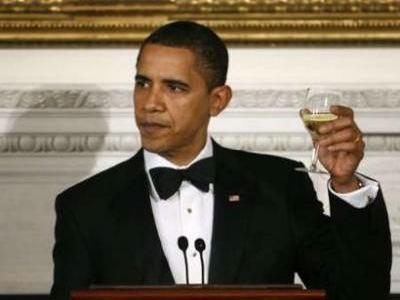 President Obama, the Grand Facilitator of the greatest consolidation of financial wealth in human history, began his sixth year in office declaring that income inequality is “the defining challenge of our time.” The Grand Bargainer who saved George Bush’s bank bailout and presided over the (ongoing) infusion of tens of trillions of dollars into Wall Street accounts, and who bragged less than two years ago that, “Since I’ve been president, federal spending has actually risen at the lowest pace in nearly 60 years,” now calls for government action to reverse the momentum of his own policies. The Great Pretender, who in 2008 called for an increase in the federal minimum wage to $9.50 an hour by 2011, and then did absolutely nothing to effectuate it when Democrats controlled both chambers of Congress, now proposes to raise the bar to $10 an hour in order to embarrass Republicans in an election year. The Daring Debt Buster who, on his own initiative, has frozen federal workers’ wages since 2010, and worked hand in glove with Republicans to gut social programs in the name of fiscal restraint, laments “growing inequality and lack of upward mobility” among the masses.
The chief executive who lifted not a finger to pass “card check,” the Employee Free Choice Act of 2009, that might have given organized labor a fighting chance to survive, now pretends to be a born again champion of collective bargaining and yearns for the days when “you knew that a blue-collar job would let you buy a home, and a car, maybe a vacation once in a while, health care, a reliable pension.”
Meanwhile, Obama’s Justice Department sided with the Republican-appointed Emergency Financial Manager of Detroit, who was seeking to impose bankruptcy on the mostly Black city and raid retiree’s pensions – revealing the administration’s true colors.
The nation’s First Black President admits that “African Americans, Latinos, Native Americans are far more likely to suffer from a lack of opportunity – higher unemployment, higher poverty rates,” and claims he’ll push for “targeted initiatives” to combat this “legacy of discrimination” (although all the proposed targeting is in the form of tax incentives for business). Yet, nearly five years ago, in a press conference marking his first hundred days in office, Obama categorically rejected targeted aid for Black communities, thus ensuring that the cascading effects of the Great Meltdown would plunge African Americans deeper into the abyss. Obama said:
“So my general approach is that if the economy is strong, that it will lift all boats as long as it is also supported by, for example, strategies around college affordability and job training, tax cuts for working families as opposed to the wealthiest that level the playing field and ensure bottom-up economic growth.
“And I’m confident that that will help the African-American community live out the American dream at the same time that it’s helping communities all across the country.”
By 2009, according to economist Pamela Brown, white household wealth was 19 times that of Black households, “and is probably even greater now” – compared to a ratio of 12 to 1 in 1984 and down to 7 to 1 in 1995. The collapse of Black economic fortunes has been catastrophic, yet Obama offers only tax cuts for corporations, streamlined business regulations, undoing of sequestration, more rhetoric about ending off-shoring of jobs, and stronger application of antidiscrimination laws.
The president wants us to forget that he was the one who proposed sequestration in the first place, in an effort to force a Grand Bargain with Republicans; that his economic advisors are secretly meeting with hundreds of corporate lobbyists to shape a jobs-destroying Trans Pacific Partnership that is “like NAFTA on steroids,” and then fast-track it through Congress; and that Obama has nominated two Republican prospective judges from Georgia to federal courts, one of whom fought to keep the Confederate banner in the state flag, while the other was the lead lawyer in defense of Georgia’s Voter ID law. The Obama administration has many priorities, but nondiscrimination is not one of them.
Whatever Obama means when he says “targeted assistance,” it seldom translates as actual money for non-corporate persons. Back in April of 2012, his administration was cited for failing to spend almost all of $7.6 billion that Congress set aside to help communities and homeowners hardest hit by the housing crisis – a cohort that is disproportionately Black and brown. Obama’s Treasury Department offered no explanation other than they had not put together a proper spending plan. However, it is obvious that Obama’s people wanted to avoid doing anything that might interfere with the banks’ foreclosure processes, so as not to disturb Wall Street’s manifold schemes to further rig the market.
The growing crisis of income and wealth inequality is a result of the internal logic of capitalism under the hegemony of Wall Street. Obama’s fix for the vast social carnage the banksters leave in their wake, is to forge a State that is even more dutiful in propping up “the markets” and stripping down the public sector. There is no room in that presidential mission for even modest amelioration of the public’s pain. The president’s rhetoric is nothing more than noise, totally disconnected from actual policy. The Lords of Capital – for whom Obama is a servant – have nothing to offer but more austerity and war.
They must be disempowered, root and branch, and society “reformed” in their absence.
Economist Devastates “War for Oil” Dogma
Aletho News
Professor Cyrus Bina relates the facts that the oil industry and markets have been globalized. The various theories that have been put forward from both the left and the right regarding war rationales that rely on demonisation of OPEC are essentially nothing more than outdated fear mongering. Cyrus Bina has been vindicated by more recent events.
Cyrus Bina:
The history of Middle Eastern oil, including its subsequent development into a modern industry, can be divided into three distinct stages: (1) the era of international cartels, 1901-1950; (2) the era of transition, 1950-1972; and (3) the era of globalization since the mid-1970s. A slightly different historical periodization can be provided for the U.S. domestic oil industry: (1) the era of classical cartelization and early oil trusts of 1870-1910; (2) the era of regulated neo-cartelization of 1911-1972; and (3) the era of globalization since the mid-1970s. A close examination of the entire 1870-1970 period would reveal that administrative pricing under the International Oil Cartel (known as Seven Sisters) were predominantly the rule in the oil business. The cartel, however, began to lose its grip during the 1950s and 1960s. Proliferating market forces, in con-junction with the development of capitalist social relations in the colonial and semi-colonial oil regions, had overcome the colonial concessions and worldwide administrative control of oil under the international oil cartel. The oil crisis of 1973-1974 was but the symptom of this transformation toward globalization. Moreover, the so-called “OPEC offensive”—which was misperceived by both the right and the left as the cause for re-control of oil market/prices —was but the catalyst of this de-cartelization and globalization of oil.
The war-for-oil scenario, as a popular myth, ignores the deeper understanding of the complex web of contradictions and regulating dynamics of today’s economy and polity. Yet, the very anachronism of this scenario is understandable in the view of the anachronistic U.S. behavior that is so dreadfully attempting to reverse the loss of American hegemony against the time and, more importantly, history. Therefore, parallel with the anachronistic reality of U.S. colonial conduct in Iraq, the anachronism of the “oil grab” becomes “reality” in the minds of those who chant “No Blood for Oil.” Yet, holding a parallel between the U.S. invasion of Iraq and the control of oil is a far fetched proposition, if not an outright illusion. For, since the mid 1970s, the material bases and dynamics of post-cartelization and globalization of oil render the physical access, prearranged inter-company allocation, and indeed administrative control and pricing of oil redundant. This rather counter intuitive reality also renders any connection between the war and oil—other than given disbursement to finance matters such as the establishment of a puppet government—superfluous.
Nevertheless, in an interview, James Schlesinger remarked: “The United States [Bush, 41st] has gone to war now, and the American people presume this will lead to a secure oil supply. As a society we have made a choice to secure access to oil by military means. The alternative is to become independent to a large degree of that secure access.” It is indeed surprising that a market worshipping Chicago School economist fails to see the formation of (spot) oil prices within interconnected and unified markets since the post-cartelization of oil in the 1970s. Schlesinger, on the one hand, stresses the phrase “secure access” and, on the other hand, underscores the alternative of “independence,” as if one can insulate the U.S. oil industry from the rest of transnational oil. This thesis provides a convenient cover for two separate strategic projects: justifying the war without exposing its real cause, and creating panic by playing the familiar scarcity card to extend the exploration of oil in the pristine U.S. regions of wildlife such as ANWAR. In this context this was also what the Bush administration and Cheney’s “Task Force on Energy” probably had in mind when they were referring to “secure oil.”
In a nutshell, the above thesis ignores (1) the mutuality of oil producers and oil consumer, the need of both sides in selling and purchasing in the competitive global oil market, (2) the interdependence of oil regions in the present interdependent world, (3) the formation of global prices based on the cost of highest cost (U.S.) producer, not the cost of individual oil regions, and (4) the formation of differential oil rents, given the existing differential (regional) costs, through competition. Here, the dramatized “oil dependency” is but an empty phrase in the view of the trans nationalization of oil since the 1970s.
On the opposite side, hardly anyone on the left fully recognized the implication of uncritical acceptance of the above tautological thesis. Thus, the left-wing liberals and the radical left adopted this theory and dressed it up in leftist garb before applying it to either the question of war or the problem of environment. Michael Klare is one of the remarkable defenders of this thesis on the left. He declares: “Two key concerns underlie the Administration’s [Bush, 43rd] thinking: First,the United States is becoming dangerously dependent on imported petroleum to meet its daily energy requirements, and second, Iraq possesses the world’s largest reserves of untapped petroleum after Saudi Arabia.” Klare, however, takes this thesis one step further to an improvised level of neo-Malthusian scarcity:
“Global demand for many key materials is growing at an unsustainable rate. As the human population grows, societies require more of everything (food, water, energy, timber, minerals, fibers, and so on) to satisfy the basic material requirements of their individual members…. Because the production and utilization of these products entails [sic.] the consumption of vast amount of energy, minerals, and other materials, the global requirement for many basic commodities has consistently exceeded the rate of population growth.”
This worn-out neo-Malthusian message has again been reiterated in Blood and Oil. Yet, Klare, who is perplexed by the gravity of U.S. involvement in Iraq is “compelled … to conclude that petroleum is unique among the world’s resources that it has more potential than any of the others to provoke major crises and conflicts in the years ahead.” Again for Klare (and for many on the left) the specificity of the cause-and-effect seems to have no bearing on this historically unique epochal conflict and his fascination with oil is so intensive that he fails to realize a need for a specific and independent analytical proof.
I contend that, at best, the war-for-oil scenario is a text with out a context. On a logical level, the oil scenario is a remarkable example of a post hoc, ergo propter hoc fallacy, misplacing the real cause of U.S. military intervention. Moreover, by neglecting the depth of the last two decades of global transformation, the protagonists on the left and the right both have adopted a very voluntaristic-functionalist view of the U.S. global role. The left tends to capitalize on a voluntaristic interpretation of the concept of hegemony and the functionalist pivot of U.S. military might. For Klare, though, the global conflict “is entirely the product of geology.” The right, on the other hand, tends to rely on the notion of a “unipolar” world and wishful arguments of the “bound to lead” variety, without adequate attention to the emerging new polarities associated with the loss of American hegemony and the forces of globalization.
Others on the left, who are obsessively fond of the war-for-oil scenario, argue that this war may not have been for oil in the interest of U.S. capitalism as a whole, but rather in the interest of “U.S. oil corporations.” Hence, they propose that the cost of war amounts to a huge subsidy by the entire society given to the oil industry. This is a fictitious argument derived from the blind assumption of “direct access” and physical control of oil, and absolute denial of the reality of global transformation of the oil industry in the early 1970s. It is also crude and arbitrary, given the reduction of the material interests of the entire (U.S.) capitalist class to the alleged interests of its tiny fraction. And, appealing to casual observation, such as watching news from the Iraqi oil fields and the arrival of oil service contractors for “rebuilding” Iraq, is not sufficient to turn away from serious analysis. The truth is that this adventurous undertaking is in the interest of neither.
Finally, attaching significance to the switching of the currency, from dollar to euro, by OPEC oil producers is unjustified. As Paul Krugman pointed out in a short note, any possible shift from the dollar to the euro on the part of OPEC will result in a “small change,” for the U.S. economy, much smaller than the switching made already by the “Russian Mafia.” However, many on the left are not losing any opportunity to grasp this straw.
http://www.heterodoxnews.com/htnf/htn7/bina.pdf
Dutch pension fund divests from Israeli banks over illegal settlements
Al-Akhbar | January 8, 2014
Dutch pension asset manager PGGM, one of the largest in the country, said on Wednesday it was divesting from five Israeli banks because they finance illegal settlements.
The announcement comes a month after a major Dutch water supplier ended a partnership with an Israeli water company which supplies Israeli towns and settlements in the occupied West Bank.
“PGGM recently decided to no longer invest in five Israeli banks,” said the company, which manages about 153 billion euros in funds.
“The reason for this was their involvement in financing Israeli settlements in occupied Palestinian territories,” PGGM said in a statement.
PGGM said there was “a concern, as the settlements in the Palestinian territories are considered illegal under humanitarian law,” and regarded by international observers as an “important obstacle to a peaceful (two-state) solution of the Israel-Palestinian conflict.”
It said it would no longer do business with the Hapoalim and Leumi banks, the First National Bank of Israel, the Israel Discount Bank and the Mizrahi Tefahot Bank.
PGGM added it based its decision on a 2004 UN International Court of Justice ruling that the Jewish settlements were in breach of the Geneva Convention relating to occupying powers transferring their own citizens into occupied territories.
The group said it had been discussing the issue with the Israeli banks “for several years” but that the banks “have limited to no possibilities to end their involvement in the financing of settlements in the occupied Palestinian territories.”
“Therefore, it was concluded that engagement as a tool to bring about change will not be effective in this case,” PGGM said.
All investment in the banks ended on January 1 “as concerns remain and changes are not expected in the foreseeable future,” it added.
PGGM’s investments in Israeli banks amount to a few tens of millions of euros, Israeli newspaper Haaretz reported.
“But its decision is liable to damage the banks’ image, and could lead other business concerns in Europe to follow suit,” the paper said.
Palestinians welcomed the PGGM’s decision to divest from the banks, Wafa news agency reported.
Palestinian Authority Parliament Member Qais Abdul Karim, said in a statement that he hoped such action would inspire other members of the European Union to follow suit and force Israel to abide by international law.
“Israel should understand that it will pay a heavy price if it continues to occupy Palestinian land and ignore international resolutions,” Wafa quoted him as saying.
In September, Dutch engineering firm Royal HaskoningDHV withdrew from the construction of a sewage treatment plant in East Jerusalem, citing the Israeli’s project’s violation of international law.
Last month, Dutch water supplier Vitens ended a partnership with Israeli water company Mekorot due to the “political context.”
The decision came days after a visit to the Mekorot offices in Israel by Dutch trade minister Lilianne Ploumen was abruptly cancelled.
The visit was part of a larger tour of Israel by Prime Minister Mark Rutte that was marred by a dispute over a Dutch-made security scanner intended to check goods leaving Gaza for the West Bank.
Rutte was to have inaugurated the scanner on the isolated territory’s border with Occupied Palestine, but the ceremony was broken off after Israel said it did not want Gazan goods going to the West Bank.
Israel’s defense ministry wants to isolate the two Palestinian regions, while Dutch officials had hoped the scanner might boost commerce between them.
Israeli deputy Foreign minister Zeev Elkin last month said he was “blindsided” by Vitens’ pullout “and a few more European companies have made similar decisions in the past months, which have blindsided us exactly in parallel with the peace process.”
Zeev, speaking to Israeli military radio, said that peace initiatives should mean “that people don’t breathe down our neck”, but “unfortunately this doesn’t work.”
Since peace talks between Israeli and Palestinian officials began in July, Israel has announced the construction of thousands of settler homes in the West Bank and East Jerusalem, sparking tensions in already difficult negotiations.
(AFP, Al-Akhbar)
Related article
James Hansen’s Policies Are Shafting The Poor
By Willis Eschenbach | Watts Up With That? | March 15, 2013
I was reading an interview with Adrian Bejan (worth taking a look at), and I got to musing about his comments regarding the relationship between energy use and per capita income. So I pulled up GapMinder, the world’s best online visualization software. Here’s a first cut at the relationship between energy and income.
 Figure 1. Energy use per person (tons of oil equivalent, TOE) versus average income, by country. Colors show geographical regions. Size of the circle indicates population. The US is the large yellow circle at the top right. Canada is the overlapping yellow circle. China is the large red circle, India the large light blue circle. Here’s a link to the live Gapminder graph so you can experiment with it yourself.
Clearly, other than a few outliers, the relationship between energy use and income is quite straightforward. You can’t have one without the other. Well, that’s not quite true, you can have energy without income. You can have (relatively) high energy use without having the corresponding income, plenty of Africa is in that boat. But the reverse is not true—you can’t have high income without high energy use. You need the energy to make the income.
Now, James Hansen is the NASA guy who is leading the charge to stop all forms of cheap energy. Coal is bad, terrible stuff in his world. He calls trains of coal “death trains”. He wants to deny cheap energy to all of those folks in the bottom half of the graph above. Well, actually, he wants to deny access to cheap energy to everyone, but where it hurts is the bottom half of the graph. For example, the World Bank and other international funding agencies, at the urging of folks like Hansen, have been turning down loans for coal plants in developing countries.
But as you can see, if you deny energy to those folks, that is the same as denying them development. Because when there’s less energy, there’s less income. The two go hand in hand. So what James Hansen is advising is that we should take money from the poor … actually he wants to deny them cheap energy, but that means denying them income and the development that accompanies it.
A look at the history of some of the countries is instructive in that regard, to see how the income and the energy use have changed over time. Figure 2 shows the history of some selected countries.
 Figure 2. A history of selected countries. Colors now show crude birth rate (births per thousand)
Now, this is showing something very interesting. It may reveal why Hansen thinks he’s doing good. Notice that for countries where people make below say $20,000 of annual income, the only way up is up and to the right … which means that the only way to increase income is to increase energy use. Look at India and China and Brazil and Spain and the Netherlands as examples. (Note also that crude birth rate is tied to increasing income, and that the crude birth rate in the US has dropped by about half since 1960.)
Above that annual income level of ~ $20,000, however something different happens. The countries start to substitute increased energy efficiency for increased energy use. This is reflected in the vertical movement of say the US, where the 2011 per capita energy use is exactly the same as the 1968 per capita energy use. And Canada is using the same energy per person as in 1977 … so let’s take a closer look at the upper right section of the chart. Figure 3 shows an enlargement of just the top right of the chart, displaying more countries.
 Figure 3. A closeup of Figure 2, showing more countries. Start date is 1968 for clarity.
Now, this is interesting. Many, perhaps most of these countries show vertical or near vertical movement during the last twenty years or so. And the recent economic crash has caused people to be more conservative about energy use, squeezing more dollars out per ton of oil equivalent.
But that only happens up at the high end of the income spectrum, where people are making above about twenty or even twenty-five thousand dollars per year. You need to have really good technology to make that one work, to produce more income without using more energy. You need to be in what is called a “developed” nation.
When people think “development”, they often think “bulldozers”. But they should think “energy efficiency”, because that is the hallmark of each technological advance—it squeezes more stuff out of less energy. But you have to be in an industrialized, modern society to take advantage of that opportunity.
So this may be the reason for Hansen’s attitude toward energy use. He may not know that most of the world is not in the situation of the US. This may be the reason the he claims that we should curtail energy use by all means possible. He may not see that while the US and industrialized countries can get away with that, in part because we waste a lot of energy and have a lot of both money and technology, the poor and even the less well off of the world have little energy or money to waste.
For those poorer countries and individuals, which make up the overwhelming bulk of the world’s population, a reduction in energy use means a reduction in the standard of living. And the part Hansen and his adherents don’t seem to get is that for most of the world, the standard of living is “barely” … as in barely making ends meet.
As is usual in this world, the situation of the rich and the poor is different, and in this case the break line is high. Twenty grand of income per year is the line dividing those who can take advantage of technology to get more income with the same energy, and the rest, which is most of the world. Most of the world are still among those who must use more energy to increase their income. They don’t have the option the US and the developed nations have. They must increase energy use to increase income.
And when you start jacking up energy prices and discouraging the use of cheap energy sources around the planet, as Hansen and his adherents are doing, the poorest of the poor get shafted. James Hansen is making lots and lots of money. He’s comfortably in the top 1% of the world’s population by income, and he obviously doesn’t give much thought to the rest. We know this because if he thought about the poor he’d realize that while he is mouthing platitudes about how he’s doing his agitation and advocacy for his grandchildren’s world in fifty years, what he’s doing is shafting the poor today in the name of his grandchildren. Of course Hansen is not the first rich white guy to do that, so I suppose I really shouldn’t be surprised, but still …
Increased energy prices, often in the form of taxes and “cap-and-trade” and “renewable standards”, are THE WORLDS MOST REGRESSIVE TAX. Hansen proposes taxing the living daylights out of the poor, but he won’t feel the pain. He can stand a doubling of the gas prices, no problem. But when electricity and gas prices double around the planet, POOR PEOPLE DIE … and Hansen just keeps rolling, he has quarter-million-dollar awards from his friends and a fat government salary and a princely retirement pension you and I paid for, he could care less about increased energy prices. He’s one of the 1%, why should he pay attention to the poor?
Forgive the shouting, but the damn hypocrisy is infuriating, and I’m sick of being nice about it. James Hansen and Michael Mann and Gavin Schmidt and Phil Jones and Peter Gleick and the rest of the un-indicted co-conspirators are a bunch of rich arrogant 1%er jerkwagons who don’t care in the slightest about the poor. Not only that, but they’ve given the finger to the rest of the climate scientists and to the scientific establishment, most of whom have said nothing in protest, and far too many of whom have approved of their malfeasance.
Their patented combination of insolent arrogance and shabby science would be bad enough if that was all they were doing … but they are hurting poor people right now. Their policies are causing harder times for the poor today, as we speak … and they mouth platitudes about how they are saving the poor from some danger they won’t see for fifty years?
If you ask the poor whether they’d rather get shafted for sure today, or possibly get shafted in fifty years, I know what they’d tell you. To me, hurting the poor today under the rubric of saving them in half a century from an unsubstantiated and fanciful danger is moral dishonesty of the first order.
So let me say to all of you folks who claim the world is using too much energy, you have the stick by the wrong end. The world needs to use MORE energy, not less, because there is no other way to get the poor out of poverty. It can’t be done without cheap energy. We need to use more energy to lift people out of bone-crushing poverty, not use less and condemn them to brutal lives. And to do that, energy needs to be cheaper, not more expensive.
Let me be crystal clear, and speak directly to Hansen and other global warming alarmists. Any one of you who pushes for more expensive energy is hurting and impoverishing and killing the poor today. Whether through taxes or cap-and-trade or renewable subsidies or blocking drilling or any other way, increasing energy costs represent a highly regressive tax of the worst kind. And there is no escape at the bottom end, quite the opposite. The poorer you are, the harder it bites.
So please, don’t give us the holier-than-thou high moral ground stance. Spare us the “we’re noble because we are saving the world” BS. When a poor single mother of three living outside Las Vegas has her gas costs double, she has little choice other than to cut out some other essential item, food or doctor visits or whatever … because her budget doesn’t have any of the non-essential items that James Hansen’s budget contains, and she needs the gas to get to work, that’s not optional.
For her, all her money goes to essentials— so if gas costs go up, her kids get less of what they need. You’re not saving the world, far from it. You’re taking food out of kids’ mouths.
You are causing pain and suffering to the poor and acting like your excrement has no odor … but at least there is some good news. People are no longer buying your story. People are realizing that if someone argues for expensive energy, they are anti-human, anti-development, and most of all, without compassion for the poor. They are willing to put the most damaging, regressive, destructive tax imaginable on the poorest people of the planet.
Now those of you advocating for higher energy prices, after reading this, you might still fool the media about what you are doing to the poor. And it’s possible for you to not mention to your co-workers about the real results of your actions. And you could still deceive your friends about the question of the poor, or even your wife or husband.
But by god, you can no longer fool yourself about it. As of now, you know that agitating for more expensive energy for any reason hurts the poor. What you do with that information is up to you … but you can’t ignore it, it will haunt you at 3 AM, and hopefully, it will make you think about the less fortunate folk of our planet and seriously reconsider your actions. Because here’s the deal. Even if CO2 will damage the poor in 50 years, hurting the poor now only makes it worse. If you think there is a problem, then look for a no-regrets solution.
Because if you truly care about the poor, and you are afraid CO2 will increase the bad weather and harm the poor fifty years from now, you owe it to them to find a different response to your fears of CO2, a response that doesn’t hurt the poor today.
Related article

Boeing Union Workers Forced Into Massive Concessions
By Jack Rasmus | January 5, 2014
This past weekend, more than 30,000 union workers at Boeing Corp. in Seattle, were forced to accept deep concessions in their union contract, gutting their pensions, future healthcare benefits, wages, and other benefits. Their contract with Boeing had not even expired but they were forced into concessions nonetheless. Nor was the company, Boeing, in any financial distress. It had registered record profits in consecutive years, and had in November 2013 bought back $10 billion in stock from its shareholders and paid another $2 billion in dividends to the same. Nevertheless Boeing demanded concessions, having received communication from Union (IAM) International leadership beforehand of their willingness to grant the same. The combination of Union International leadership pressure, countless Democratic Party politicians, and the Company’s new offensive, proved too much for local workers to resist. The new concessions will effectively end workers’ defined benefit pensions, cutting retirement benefits to the bone, and allow the company to end its healthcare insurance benefits by 2018 in accordance with the Obama new health care plan. Wages for new hired workers are projected to decline to levels of minimum wage or less over the next 11 years of the new contract term.
This kind of attack on pensions and healthcare–or what this writer calls the ‘social wage’ was predicted in this writer’s article, ‘Concession Bargaining at the Crossroads’ two years ago in 2011. That article is reproduced here in its original draft form once again.
CONCESSION BARGAINING AT THE CROSSROADS
“The history of collective bargaining since the Second World War has consisted of several stages or phases. The first phase was roughly from 1947 to 1979. During it collective bargaining was expanded both in terms of its ‘scope’ and its ‘magnitude’. Scope refers to new areas of bargaining, such as cost of living adjustments, supplemental unemployment benefits, pensions and health care benefits, union and worker rights, etc. Magnitude refers to increasing the dollar value of wages and benefits. Up to 1979 both expanded.
In contrast, from the mid-1970s to 2007, concession bargaining became the growing practice. But it was concession bargaining focused on giving back ‘magnitude’ gains of the previous decades, not necessarily the scope of bargaining. Workers in the private sector gave ground on wages and benefits in a decades-long attempt to protect their jobs.
First Stages of Concession Bargaining
Among the first to feel the effects were workers in the construction sector, starting in the 1970s. Employers formed early in the decade the ‘Construction Industry Users Roundtable’. Its strategy was to undermine the then powerful building trades unions by a new tactic: the ‘double breasted operation’. This simply put was a way to undermine the construction unions by setting up parallel, non-union companies. The unions ignored the threat more or less, since the double breasted operations were set up in the suburbs and outlying regions. The urban bastion of unionization in construction wasn’t immediately impacted. Employers progressively then moved jobs and work to the non-union operations. The loss of jobs in the unionized operations eventually forced workers and unions to start granting concessions in an attempt to prevent their work shifting to the non-union companies. Concessions soon expanded. Saving jobs in exchange for givebacks on wages and benefits eventually became the norm.
In the late 1970s the strategy of forcing workers to give up wage and benefit gains to keep their jobs leap-frogged into the manufacturing sector. The pilot and defining event was the Chrysler bailout of 1979. It worked so well the model was planned for application to manufacturing in general. By then the Construction Industry Users Roundtable’ had expanded into what is now known as perhaps the most formidable and effective Big Business organization today—the Business Roundtable. Big manufacturing and service companies joined with the Construction employers. The construction industry union-busting model was transported to other sectors of the economy.
The tactic of double breasted operations took on a new form. Alternative union-free operations were set up. But not across town, as in construction. It was now across borders. The manufacturing analog of the double breasted operation was the runaway shop, as manufacturers moved operations offshore.
In these they were aided by the most pro-business President since Coolidge—Ronald Reagan and a compliant Congress. Manufacturers were provided generous economic incentives to set up offshore. Tax incentives were generously granted. Deregulation was introduced. Then in 1988 and 1993 ‘free trade’ agreements were established with Canada and Mexico to facilitate the movement of US capital to those countries to set up operations. Free ‘trade’ is not just about export-import of goods and services; it is even more about negotiating favorable conditions for US foreign direct investment in those countries. Tax [breaks] for investing offshore plus free trade plus deregulation devastated jobs in the US beginning in the early 1980s, and continuing ever since. Under pressure of losing jobs, workers in manufacturing began the long, dead-end road toward concession bargaining in an attempt to save their jobs. But it didn’t. More than 10 million jobs have been off-shored ever since.
The pressure to grant wage concessions intensified in the 1990s. In addition to the threat of job loss, now escalating double-digit annual increases in health care costs provided a second hammer. That ushered in what was called ‘maintenance of benefits bargaining’. Now desperate to maintain their health care coverage, workers gave up more wages in exchange for keeping health benefits. But that too did not last long.
Health care cost shifting accelerated by 2000 and into the next decade. To assist in paying for rising health care premiums and costs, the federal government permitted companies to drag surplus funds from workers’ defined benefit pension plans to cover rising health costs. Up to 20% of health cost increases were subsidized in this manner. But that represented giving up wages—i.e. concessions—in order to maintain benefits as well. Only this time it was workers’ ‘deferred wages’ that went into their pension funds instead of their immediate paychecks. But a wage is a wage, whether immediate or deferred. And concessions on nominal (immediate) and deferred wages became the increasing rule by the late 1990s.
This evolving concession bargaining since the late 1970s into the last decade represents the second phase of the history of collective bargaining in the US. The first, as noted above, was the phase during which collective bargaining expanded both in terms of ‘scope’ and ‘magnitude’—that is, in terms of new areas of bargaining added to negotiations as well as in terms of advances in wages and benefits. The second phase of bargaining in the US, from the late 1970s to around 2000, represents the first stage of concession bargaining.
Stage Two: From ‘Magnitude’ to ‘Scope’ Concession Bargaining
This first stage of concession bargaining (1975-2000) began to change for the worse in the past decade, shifting to a new stage during which workers and their unions have been forced to grant concessions not only in terms of magnitude or levels of wages and benefits, but now in terms of scope and entire areas of bargaining as well. Defined benefit pensions were abandoned for 401k personal pension plans at an accelerating rate. Not only were pensions increasingly privatized, but the de-collectivization of health insurance plans also accelerated under George W. Bush with the introduction of what were called ‘health savings accounts’—the analog on the health benefits side to 401ks on the pensions side.
Employer provided health insurance benefits were now dropped in growing numbers altogether. Or they were dumped onto the union, as in the Auto Industry, in the form of VEBAs (voluntary employment benefit agreements). Employers removed in effect any negotiating over companies paying for health care for workers from union collective bargaining agreements. In a similar fashion, once widespread Cost of Living clauses in collective bargaining agreements were stripped from union contracts. Ditto for supplemental unemployment benefits (SUBs). More and more companies simply discontinued unilaterally retirees health care coverage from bargaining, aided now by court decisions that ruled such were not bona fide subjects of bargaining any longer. Union rights were increasingly circumscribed in agreements, as management rights clauses were expanded. In other words, concession bargaining was no longer simply about ‘magnitudes’—i.e. how much wages or benefits would be reduced in order to keep jobs or the companies from moving offshore or from being outsourced and reduced to mere skeleton crews. Not entire key areas of union contracts were being ‘conceded’ and thus wiped out, removed from the very subject of bargaining altogether.
Stage Three: Concession Bargaining Extends to the Public Sector
In the past two years this second phase of concession bargaining—i.e. cutting levels of wages and benefits and giving up entire areas of bargaining—is now being applied to public sector workers as well, in a vicious attack now unfolding throughout the country. Politicians of both political parties, public sector employers, and wealthy billionaires and millionaires who pay for the elections of these same politicians, are in the process of imposing concession bargaining on public workers.
Furthermore, concession bargaining is occurring in an especially compressed form. Both magnitude and scope are occurring simultaneously and in a matter of just a few years instead of the few decades in which it was deepened in the private sector of the economy. The entire process is effectively ‘telescoped’ and thus taking place is a particularly intense form. All across the country today, in state after state, politicians are declaring bargaining over pensions and health care no longer will be the practice. They are unilaterally discontinuing defined benefit pensions and replacing them with 401k plans. They are moving to eliminate union and agency shop agreements with the open shop, placing ‘caps’ on wage negotiations, and in general attempting to return to the days of ‘civil service’ rules and regulations in lieu of bona fide collective bargaining.
Stage Four: Concession Bargaining’s New Target: ‘Social Wage’ Reduction
Concession bargaining is morphing still further, however. It is now moving from the level of taking back money wages and benefits at the ‘shop-floor level’—both in the private and public sectors—to the level of ‘social wage’ concession bargaining.
The ‘social wage’ is money wages that workers give up in exchange for pay they will receive at a later date. Social wages are thus deferred wages. Social wages are most notably Social Security and Medicare taxes that workers pay in the form of payroll taxes, in order to receive the wage paid upon retirement in the form of social security pension and medicare health care benefits. The focus since the 2010 midterm elections in the US is now on austerity—a codeword for cutting so-called ‘entitlements’ like social security and medicare. But social security and medicare represent wages paid by workers in the past for claims in the future. Not content with concessions from current wage and benefits, Corporate America—the rulers behind the throne of Congress and the Presidency and Courts—now want reductions in the ‘social wage’ as well. Why? So they can maintain their historic tax cuts enacted over the past three decades and not have to pay the costs of the bailouts and economic crisis [as well as the wars for Israel – Aletho News] that they themselves caused.
The dimensions of the Great American Tax Shift of the past three decades, still on-going and expanding under Obama and the Democrats (and about to expand further still) are the subject of another analysis. But briefly, a tip of the iceberg view is: In the 1960s corporations paid 30% of total federal tax revenues; today they contribute 6.6%. In the 1960s the top income brackets paid 45% of total federal tax revenues; today the effective top bracket tax paid by the wealthiest individuals is only 16%.
The latest phase of concession bargaining now emerging in the past year—concessions giving back the ‘social wage’—is historic. It represents concession bargaining over workers’ income that is shifting to the political level on a grand scale. It is ‘grande scale concession bargaining’. Not content with concessions in money and benefits at the shop level in the private sector, not even content with extending that in intensified form today to the public worker sector, corporate interests now demand concession bargaining over social wages at the political level.
What’s especially onerous about the new concession bargaining is that politicians are making the decisions. Workers don’t even have the option of voting on the concessions, or striking in opposition, as they might when undertaken in cases of earlier concession bargaining at the shop level. They now have virtually no say in the process short of taking to the streets to have their voices heard—which appears increasingly as the only alternative. Moreover, the dollar value of the concessions being, and about to be, offered are now also immensely greater. As the recent debt ceiling debate illustrates clearly, the coming attack on Medicare represents social wage concessions approaching half a trillion dollars. Concessions involving social security retirement that will soon follow in 2012 will amount to a like amount, at minimum, with even more Medicare cuts. In just a few short years, several times the value of total givebacks in concessions in wages and benefits at the shop level since 1979 may occur. It is a massive transfer and shift of income from working and middle class America to the wealthiest households and their corporations.
Behind the facade of Washington politics are the same corporate interests, however. Only now instead of directing their managers at the bargaining table, they now direct their political managers by means of their immense, and growing, campaign contributions and billion dollar lobbying efforts.
Occasionally an example slips through the veil of confusion about who’s behind it all. The veil drops revealing the ‘Wizards of Oz’ pulling the levers and the curtains. Witness the notorious relationship between Wisconsin governor, Walker, and the billionaire Koch brothers. But there are ‘Koch brothers’ lurking everywhere behind the veil, in Ohio, in New Jersey, Connecticut, Massachusetts, Georgia, and even California. They are driving the fundamental strategy, directing the elected politicians in exchange for campaign contributions and day to day lobbying largesse.
The Empty Legacy of Concession Bargaining
What concession bargaining has proven over the past three decades—whether at the political level or the shop floor level—is that concessions only result in demands for more concessions.
Concessions in the private sector over the past three decades haven’t saved jobs. What they have achieved is a stagnation and decline in the income for 100 million families that is choking off consumer spending and economic growth and therefore economic recovery. The second phase, concession bargaining in the public sector, will now add to this consumption decline. And the now emerging third phase, expanding concession bargaining to the level of social wages, about to begin with the direct attack on social security and medicare will not ‘save’ those programs any more than concession bargaining in the past ‘saved jobs’.
Concession bargaining will only result in a deepening crisis in those programs and lead, inevitably in turn, to more demands by corporate interests for still further cuts (i.e. concessions) in those programs. Calls by politicians for ‘shared sacrifices’ are really concession bargaining by another name: to reduce the social wage represented by social security and medicare.
Nothing positive whatsoever has come from concession bargaining the past three decades in the private sector. Good jobs have continued to disappear by the tens of millions. Wages and earnings for the 100 million non-supervisory workers in the US have stagnated and fallen. Giving up wages to ‘maintain health and retirement benefits’ have fared no better. Pensions have nearly disappeared and employer provided health care coverage has declined by the millions of companies, and will not last out the current decade. Nor will anything beneficial come from the intensification of concession bargaining now penetrating the public sector. Union leaders will give up wages and benefits, but that will not stop the millions that are slated for layoffs in the public sector over the next few years—at minimum 500,000 in the year ahead alone! The extension of concession bargaining to the public sector, now accelerating at a pace far worse than that which previously occurred in the private sector, will produce the same results—only now telescoped into a much shorter time period. Not least, nothing positive will come from granting concessions over social wages—i.e. agreeing to reduce social security and medicare benefits. Those programs will not be ‘saved’ by concessions. They will be destroyed by them.
The only way to stop concession bargaining in any of its forms, including the most virulent now attacking the ‘social wage’, is to refuse any and all concessions. ‘No cuts and No Concessions’ is the only effective bargaining demand.
And just as, at the shop floor, when union leaders cave in to employer demands for concessions, they should be thrown out and replaced with leaders who will refuse to do so and stand firm—so too should any politician who agrees to concessions from social security and medicare be thrown out. Indeed, any politician who fails to actively resist such concessions should be thrown out. Not in the next election. But by immediate recall.
Finally, any political party that allows its elected to members to agree to concessions in social security and medicare, or whose elected members stand by silently while the fight to defend the social wage takes place, should be replaced by another political party whose members consider the social wage ‘non-negotiable’.
Unfortunately, it appears the political party—the Democrats—who introduced and once championed social security and medicare are now becoming participants in its destruction. Not only President Obama, but Senate leader Harry Reid and House leader Nancy Pelosi, have all publicly indicated this past summer they are prepared to concede and to cut medicare before year end 2011 in some form. Next it will be social security retirement. And medicare again.
But once starting down that road of initial concessions, it will only lead to further concessions—as the history of concession bargaining at the shop floor over the last three decades sadly shows.
If that happens, and the leadership of the Democratic Party abandon social security and medicare to concession bargaining, as it appears they will, the only answer to stopping concession bargaining is to create a new party of labor, every member of which must solemnly pledge to expand the social wage, to defend and expand social security and medicare, to stand firm on the question of concession bargaining. There can be no ‘Bi-Partisan’ compromise. It is time to raise the flag, with the motto boldly proclaiming across it: ‘No Concessions! No Retreat!.
Jack Rasmus, August 7, 2011
Related article

The Left after the Failure of Obamacare
By Shamus Cooke | Worker’s Compass | January 4, 2014
It’s satisfying to watch rats flee a sinking ship. This is because onlookers knew the ship was doomed long ago, and swimming rats signify that the drawn-out tragedy is nearing an end. A collective sense of relief is a natural response.
The rats who propped up the broken boat of Obamacare are a collection of liberal and labor groups who frittered away their group’s resources—and integrity— to sell a crappy product to the American people.
Those in the deepest denial went “all in” for Obamacare— such as some unions and groups like Moveon.org— while the more conniving groups and individuals—like Michael Moore— playacted “critical” of Obamacare, while nevertheless declaring it “progressive”, in effect adding crucial political support to a project that deserved none.
But of course Obamacare was always more barrier than progress: we’ve wasted the last several years planning, debating, and reconstructing the national health care system, all the while going in the wrong direction— into the pockets of the insurance mega corporations. A couple progressive patches on the sails won’t keep her afloat. It’s shipbuilding time.
It was painful to watch otherwise intelligent people lend support to something that’s such an obviously bad idea. So it’s with immense relief that liberals like Michael Moore, labor groups, and others are finally distancing themselves from Obamacare’s Titanic failure. Now these individuals and groups can stop living in denial and the rest of us can proceed towards a rational discussion about a real health care solution.
The inevitable failure of Obamacare is not due to a bad website, but deeper issues. The hammering of the nails in the coffin has begun: millions of young people are suddenly realizing that Obamacare does not offer affordable health care. It’s a lie, and they aren’t buying it, literally.
The system depends on sufficient young people to opt in and purchase plans, in order to offset the costs of the older, higher-needs population. Poor young people with zero disposable income are being asked to pay monthly premiums of $150 and more, and they’re opting out, inevitably sinking Obamacare in the process.
Those young people who actually do buy Obamacare plans—to avoid the “mandate” fine— will be further enraged when they attempt to actually use their “insurance”. Many of the cheapest plans—the obvious choice for most young people— have $5,000 deductibles before the insurance will pay for anything. For poor young people this is no insurance at all, but a form of extortion.
At the same time millions of union members are being punished under Obamacare: those with decent insurance plans will suffer the “Cadillac” tax, which will push up the cost of their healthcare plans, and employers are already demanding concessions from union members in the form of higher health care premiums, co-pays, deductibles, etc.
Lower paid union workers will suffer as well. Those who are part of the Taft Hartley insurance plans will be pressured to leave the plans and buy their own insurance, since they cannot keep their plans and get the subsidy that the lowest income workers get. This has the potential to bust the whole Taft Hartley health care system that millions of union members benefit from, which is one of the reasons that labor leaders suddenly became outraged at Obamacare, after having wasted millions of union member’s dollars propping it up.
Ultimately, the American working class will collectively cheer Obamacare’s demise. They just need labor and other lefties to cheer lead its destruction a little more fiercely.
Surprisingly, most of the rats are still clinging to Obama’s hopeless vessel, frantically bailing water. Sure they’ve put on their life preservers and are anxiously eyeing the lifeboats, but they’re also preaching about how to re-align the deckchairs.
For example, in his “critical” New York Times op-ed piece, Michael Moore called Obamacare “awful”, but also called it a “godsend”, singing his same tired tune. Part of Moore’s solution for Obamacare—which was cheered on in the Daily Kos— is equally ludicrous, and follows his consistently flawed logic that Obamacare is worth saving, since its “progress” that we can build on. Moore writes:
“Those who live in red [Republican dominated] states need the benefit of Medicaid expansion [a provision of Obamacare]…. In blue [Democrat dominated] states, let’s lobby for a public option on the insurance exchange — a health plan run by the state government, rather than a private insurer.”
This is Moore at his absolute worst. He’s neck deep in the flooded hull of the U.S.S Obamacare and giving us advice on how to tread water.
Of course Moore doesn’t criticize the heart of Obamacare, the individual mandate, the most hated component.
Moore also relies on the trump card argument of the pro-Obamacare liberals: there are progressive aspects to the scheme—such as the expansion of Medicaid— and therefore the whole system is worth saving.
Of course it’s untrue that we need Obamacare to expand Medicaid. In fact, the expansion of Medicaid acted more as a Trojan horse to introduce the pro-corporate heart of the system; a horse that Moore and other liberals nauseatingly continue to ride on.
But Moore’s sneakiest argument is his advice to blue states to “…lobby for a public option on the insurance exchange…”
Again, Moore implies that it’s ok if we are “mandated” to buy health insurance, so long is there is a public option. But that aside, the deeper scheme here is that Moore wants us to further waste our energy “reforming” Obamacare, rather than driving it to the bottom of the sea.
Moore surely knows that very few people are going to march in the streets demanding a public option at this point; he therefore knows that even this tiny reform of the system is unachievable. He’s wasting our time. Real change only happens in politics when there is a surge of energy among large sections of the population, and it’s extremely unlikely that more than a handful of people are going to be active towards “fixing” Obamacare— they want to drown it.
Moore’s attempt to funnel people’s outrage at Obamacare towards a “public option” falls laughably short, and this is likely his intention, since his ongoing piecemeal “criticisms” of the system have only served to salvage a sunken ship.
Instead of wasting energy trying to pry Obamacare out of the grip of the corporations, Moore would be better served to focus exclusive energy towards expanding the movement for Medicare For All, which he claims that he also supports, while maintaining that somehow Obamacare will evolve into Single Payer system.
Most developed nations have achieved universal health care through a single payer system, which in the United States can be easily achieved by expanding Medicare to everybody. Once the realities of Obamacare directly affect the majority of the population and exacerbates the crisis of U.S. healthcare, people will inevitably choose to support the movement of Medicare for All, the only real option for a sane health care system.
Related articles

Featured Video
Dan Dicks with James Corbett on Solutions Watch
or go to
Aletho News Archives – Video-Images
From the Archives
$1.5bn up in smoke: US THAAD missile stockpile dries up defending Israel against Iran
By Ivan Kesic | Press TV | July 2, 2025
According to American media, defense news outlets, and independent analysts, the 12-day Israeli military aggression against Iran significantly depleted the US stockpile of THAAD (Terminal High Altitude Area Defense) interceptor missiles.
Citing official sources, American magazine Newsweek reported on Friday that the US transferred a substantial portion of its advanced missile defense capabilities to support the Israeli regime, an effort with questionable results and a critical impact on US strategic reserves.
THAAD, developed by Lockheed Martin arms manufacturing company, is a key component of Israel’s multi-layered air defense architecture. It is designed to intercept medium-range ballistic missiles, including those launched from Iran and Yemen.
The US-made system is capable of targeting short-, medium-, and intermediate-range ballistic missiles during their terminal phase, whether inside or outside Earth’s atmosphere.
THAAD uses a “hit-to-kill” method, relying on kinetic energy rather than explosive warheads to destroy incoming threats, intercepting at altitudes of up to 150 km and ranges between 150-200 km.
Operated exclusively by American personnel, the US military maintains eight THAAD batteries with an estimated 350–400 interceptors in total. The eighth battery was activated during the June 20 Israeli aggression against Iran and is capable of intercepting hypersonic missiles. … continue
Blog Roll
 Aletho News
- Zionist Bought Senate Blocks Information About American Citizens Killed By Israel
- While Gaza dominates the UN, these are the people keeping it alive
- New Report: “Scholasticide and Genocide in Gaza: Assessment, Testimonies and Legal Analysis”
- ‘THAAD Delusion’: Iran war exposes US missile shield limits – The Atlantic
- Moscow issues warning to NATO over Russian exclave
- Yes, the Iran war has destroyed Trump’s presidency
- The fallacy of US delusions about Iran’s economic collapse
- Hezbollah denies Syria cell link, warns of Israeli plan to sow discord
- The legacy of US sanctions, war, and occupation in Iraq
- Iraqi resistance group rejects disarmament, vows to maintain support for Lebanon
- If Americans Knew
- Mamdani releases plan to combat antisemitism and hate crimes in New York City
- Iran’s Revolutionary Guards Publish Letter to the American People
- DMFI launches $1 million ad campaign supporting Virginia’s Elaine Luria
- US Senate blocks resolution seeking report on Americans killed by Israel
- Israeli Attacks Kill Ten Palestinians in Gaza
- Massacre at Minab: The School That Became a Grave
- Israeli media: The IDF Shows It Doesn’t Turn a Blind Eye; It Actively Emboldens Settler Havoc
- As settlers ravage West Bank, Israeli forces kill 10 in Gaza – Daily Update
- New Report: “Scholasticide and Genocide in Gaza: Assessment, Testimonies and Legal Analysis”
- Ex-Biden officials are desperate for a Gaza scapegoat
- No Tricks Zone
- Green Energy Debacle: German Expert Professor Fritz Vahrenholt Warns Of Severe Economic And Social Consequences
- Two More Paleo Reconstructions Affirm Meters-Higher Sea Levels Across Ireland, Brazil 7000-6000 Years Ago
- New Study: Earth And Venus Surface Warmth Largely Explained By Convection And Lapse Rate, Not CO2 Or Radiation
- 2025 Nature Paper Claiming Worsening Global Drought Gets RETRACTED …Heavily Flawed
- New Study: ‘Global Drought Shows No Detectable Recent Acceleration Under Climate Warming’
- Economic Masterminds: German Socialists Suggest Taxing Productivity Gains Stemming From Using AI
- The South China Sea Has Not Been Cooperating With The Climate Change Narrative
- Energy Crisis: Germany Enters Heating Season With Historically Low Gas Reserve Fill Levels
- New Study: The Antarctic Ice Sheet Gained Mass From 2020-2024 Due To Staggering Snow And Ice Accumulation
- Study: Ocean Heating Rates From Thousands Of Years Ago ‘Dwarf’ Modern Ocean Heating Rates

