Obama and GOP Play Tag Team on Entitlements
A Black Agenda Radio commentary by Glen Ford | November 27, 2012
It seems that every breathless moment of corporate media news is choreographed to convince Americans that austerity is as inevitable as tomorrow’s weather. The objective of this con game is to gut Social Security, Medicare and Medicaid. The two principle parties engaged in negotiations – the White House and congressional Republican leaders – are both agreed that entitlements must be put under the knife. The “grand bargain” that both Obama and the GOP seek has already been made, in principle. Austerity is the common language and goal of the talks, and nobody that counts in the discussions is defending entitlements.
There is only one problem: the vast majority of Americans oppose cuts in Social Security, Medicare and Medicaid.
This is the great difficulty facing both Obama and the Republicans: the fact that the public favors the maintenance and even expansion of the meager U.S. social safety net. The disagreement, the great debate, is not between Republicans and the White House, who both agree on putting entitlements on the chopping block. The disagreement is between strong majorities of the American people, who want no tampering with the three entitlement programs, and Obama and his Republican friends, who are hell bent on so-called entitlement “reform.”
This is not a fight between the two parties; it is a choreographed beat-down of the American majority by corporate Democratic and Republican thugs, aided by shrieking corporate media banshees screaming, Watch out for the cliff, Watch out for the cliff!.
The “grand bargain” was struck back in the summer of 2011, when both sides agreed on roughly $4 trillion in cuts. The agreement only unraveled because a presidential election was drawing near, and the two parties needed to pretend that they were separated by vast political differences. Now that the election is over and the verdict is in, corporate Democrats and Republicans can abandon the pretense of a great ideological divide, and return to their shared mission of cutting entitlements. Both hide behind the phony “fiscal cliff” to convince the public that the pending theft of entitlements is an unstoppable act of nature, rather than a conspiracy of corporate henchmen, against the clear wishes of the majority of Americans.
Robert Reich, the liberal former Labor Secretary in President Bill Clinton’s administration, says that Obama is not behaving like a president who is serious about facing down the Republicans. If he were, Obama would let the Bush tax cuts die at the end of this year, and then have Democrats introduce new tax cuts for the middle class. The president could dare the Republicans to hold middle class tax cuts hostage to cuts for the rich. In that kind of face-down, Obama would likely win.
But Obama is not trying to outmaneuver Republicans; he and the GOP have teamed up to stampede the public – the suckers in this game – into giving up their entitlements. As David Swanson puts it, we are not witnessing the making of a grand bargain, but a “grand catastrophe.”
Minneapolis Congressman Keith Ellison, the Black co-chairman of the Congressional Progressive Caucus, says he and the other 75 members “are not going to allow the most vulnerable Americans to shoulder the burden of this fiscal problem.” But the left wing of the Democratic Party can only stop the forces arrayed against entitlements by actively opposing their own president, who is playing austerity tag team with the Republicans. And the so-called progressives don’t have it in them.
Glen Ford can be contacted at Glen.Ford@BlackAgendaReport.com.
Analysis: World Bank policies persistently fail Palestinians
By Alaa Tartir and Jeremy Wildeman – Ma’an – 28/10/2012
The Middle East featured prominently on the agenda of the recent annual meeting of the World Bank and International Monetary Fund in Tokyo. But how relevant are these agencies’ policy prescriptions in the context of conflict? In the case of the occupied Palestinian territories they are not only inappropriate but also harmful.
And yet both institutions have relentlessly dished up these prescriptions for the past two decades. To understand why they are so harmful, it is useful to deconstruct the policy recommendations in the World Bank’s latest growth report for the Palestinian territories.
The Bank’s growth report provides a breakdown of the current state of the Palestinian economy, which it describes as fragile and dependent on foreign aid. The report’s frank conclusions are largely unsurprising: aid-based growth is unsustainable, especially because aid levels are expected to decline over time.
The surprising part of the report lies not in the Bank’s negative prognosis of the Palestinian economy, but rather in its recommendations. It calls for the Palestinians to emulate the Asian tigers by “adopting an outward orientation and integrating into world supply chains.”
 Just how a people that exercises no control over its own land, borders and natural resources can carry out such export-based growth is not explained. The report further recommends that the Palestinian Authority “should strive to build a business environment that is among the best in the world and not merely on par with its neighbors.”
This is utterly impossible under prolonged occupation, where Palestinian civil and property rights are ignored by an Israeli state that is simultaneously engaged in the mass-expropriation of Palestinian land. The business climate is so bad that one report suggested certain Palestinian businesspersons even prefer to invest in Israel.
The report also repeats a dangerous belief long propagated by the World Bank: that the Palestinian economy can benefit from deeper integration with the Israeli economy.
Actual experience indicates otherwise. The Palestinian economy has been de-developed since 1967, as US scholar Sara Roy’s work has shown, and Palestinian industry has been deliberately sabotaged in favor of Israeli industry, as economist Shir Hever documents.
Classic World Bank economic assumptions that recommend “free trade agreements between a future Palestinian state, Israel and neighboring countries” have never been embraced by Israel.
Palestinians cannot exploit “competitive advantages” because Israel deliberately prevents them. Instead, integration has been one-sided, allowing Israel to exploit a captive Palestinian market cut off from the outside world.
It is vital to understand the extent to which much of the World Bank’s policy advice is destined for failure because it exercises enormous influence on foreign aid to Palestinians, and its recommendations form the basis on which international donors design their aid programs.
In fact, it designed the aid regime adopted by the international community during the Oslo Peace Process of the early 1990s. Since that time, the Bank has prescribed policy recommendations for donors that do not take into account the human reality of Palestinians struggling to survive for decades under a violent military occupation and in colonial conditions.
Nor have the international community and those many prominent international bodies engaged in the ‘peace process,’ such as the World Bank, held Israel to account for its actions.
Indeed, the Bank sanitizes the language it uses when criticizing the occupation, employing euphemisms that downplay the effects of occupation while focusing on the Palestinians when giving reasons why Bank recommendations have failed.
As they met with the world’s delegations in Tokyo, did the World Bank and IMF question their policies and the need to actually reflect the facts on the ground?
Until and unless they do, they will waste valuable time and resources and distract Palestinians from what should be their primary goal: Ending the military occupation as a first step toward sovereignty, freedom, and self-determination.
Until Palestinian rights are secured, it is meaningless to develop aid programs that do not take into account the full impact of the occupation and the expropriation of Palestinian land.
The Bank’s growth report is useful only in revealing that the Palestinian economy is in a critical state of disrepair. Its inability to provide policy recommendations that properly account for the effects of occupation renders its advice irrelevant.
It is time to look for alternative models of aid, ones that do not simply seek new ways for the Palestinians to cope with life under occupation, but rather challenge the status quo while enabling Palestinians to survive, by, for example, promoting investment in smallholder agriculture.
This alone can lead to real economic growth and sustainable development.
Alaa Tartir is Program Director of Al-Shabaka: The Palestinian Policy Network, and author of The role of international aid in development: the case of Palestine 1994-2008 (Lambert 2011). Jeremy Wildeman, an Al-Shabaka Guest Author, co-founded the Nablus-based charity Project Hope. The full policy brief on World Bank policies by al-Shabaka is available here.
Related articles
- Palestinian farmers fighting to survive (altahrir.wordpress.com)
Sri Lanka’s only refinery closes due to US sanctions against Iran
Press TV – October 28, 2012
Sri Lanka has closed down its only refinery, Sapugaskanda, as the sanctions imposed against Iran’s energy sector by the US have taken a toll on the South Asian country’s crude imports.
“Since August due to strict adherence to US sanctions, our letters of credit for imports have stopped being accepted,” Sri Lanka’s Petroleum Minister Susil Premjayantha said on Wednesday.
The Sapugaskanda refinery, which has a capacity of 50,000 barrels a day and is geared only to process Iranian crude, shut down its operations earlier this week due to not receiving oil supplies from Iran.
Premajayantha said this week that Sri Lanka’s cumulative loss from the US sanctions against importing Iranian crude was a staggering $1.2 billion.
At the beginning of 2012, the US and the EU approved new sanctions against Iran’s oil and financial sectors. The embargoes aim to prevent other countries from purchasing Iranian oil or transacting with the Central Bank of Iran.
The US and the EU have declared that the bans are meant to force Iran to abandon its nuclear energy program, which they claim includes a military component.
Iran has vehemently refuted the allegation, arguing that as a committed signatory to the nuclear Non-Proliferation Treaty and a member of the International Atomic Energy Agency, it is entitled to use nuclear technology for peaceful objectives.
Related articles
- No oil; Sapugaskanda runs dry! (oneislandtwonationsblogspotcom.typepad.com)
Tanzanian Villagers Pay for Biofuel Investment Disaster
Oakland Institute | September 25, 2012
Oakland, CA — A new brief from the Oakland Institute examining the case of now defunct UK-based Sun Biofuels project in Tanzania shows how the “development” dream can quickly turn into a nightmare when a country hands over its future welfare and development to foreign investors, unaccountable to anyone.
Sun Biofuels secured a concession for 8,211 hectares and started operations in 2009 in the Kisarawe District.The land acquired by the company was collectively held forest and bush land that belonged to 11 villages and was essential to the livelihoods of thousands of rural Tanzanians. Two years into the project, the company declared bankruptcy and dismissed the 600 employees it had hired locally. Sun Biofuels had promised employment for 1,500 people, infrastructure development, hospitals, roads, and more in exchange for the land it needed to grow jatropha.
Based on field work conducted by Oakland Institute Fellow Mikael Bergius in early 2012, the brief shows the dire situation people are in because of the bankruptcy. People have lost their land and their supply of fresh water as well as access to essential natural resources, while the promises of development and better life never materialized. In 2011, what was left of Sun Biofuels was acquired by 30 Degrees East, an investment company registered in the tax haven of Mauritius. At the time of our field research, the project had not resumed. The new company only employed 35 staff, mostly security guards, who ban villagers from accessing their land and natural resources.
Detailing the detrimental impact of the project, both prior to and after the bankruptcy, the brief dispels myths of how foreign investment in agriculture will bring development and food security.
The Sun Biofuels case is a powerful cautionary tale for the four million peasant families in Tanzania whose livelihoods rely on small-scale farming, and who stand threatened by plans to develop large-scale commercial agriculture under the “kilimo kwanza” initiative (agriculture first), which has been touted as the way forward to promote food security and economic growth by the current government.
Iran may stop oil sales if sanctions intensify: minister
Mehr News Agency | October 24, 2012
TEHRAN – Iran has threatened it may stop oil exports if the West tightens sanctions against Tehran.
“If sanctions intensify we will stop exporting oil,” Iranian Oil Minister Rostam Qasemi told reporters in Dubai on Tuesday.
Qasemi said Iran had a “Plan B” contingency strategy to survive without oil revenues.
“We have prepared a plan to run the country without any oil revenues,” Qasemi said. “So far to date we haven’t had any serious problems, but if the sanctions were to be renewed we would go for ‘Plan B’.
“If you continue to add to the sanctions we (will) cut our oil exports to the world… We are hopeful that this doesn’t happen, because citizens will suffer. We don’t want to see European and U.S. citizens suffer,” he said.
The minister added the loss of Iranian oil on the market would drive oil prices up.
South Africa gold mine fires 8,500 striking workers
Press TV – October 23, 2012
South African miner Gold Fields has sacked over 8000 of striking workers after they refused to return to work at the KDC East mine near the city of Johannesburg, a spokesman says.
“All 8,500 people who were on strike did not come back. They did not return to work, so we have issued dismissal letters to all of them,” spokesman Sven Lunsche announced on Tuesday.
“We have now reached a stage where we can’t hold off anymore. Our hands were forced and we have now done it.”
Lunsche further stated that the workers have 24 hours to appeal their dismissal.
Workers at the last striking mine of the world’s fourth gold producer in Carletonville, southwest of Johannesburg, ignored a final deadline set for 4:00 pm (14:00 GMT).
Tens of thousands working in South African mines –mostly located near the commercial hub of Johannesburg– have been on strike for more than a month.
The strikes have paralyzed production in the country, which accounts for around seven percent of global mine products.
In August, clashes between striking miners and police left 46 miners dead at Lonmin platinum mine in the South African North West Province.
The strikes have damaged South Africa’s reputation as an investment destination.
South Africa possesses nearly 80 percent of the world’s known platinum reserves. The country’s mining sector directly employs around 500,000 people and accounts for nearly one-fifth of the country’s gross domestic product.
Honduras: Court Quashes “Model Cities”; Investors Eye Jamaica
Weekly News Update on the Americas | October 21, 2012
By a 13-2 vote on Oct. 17, the Honduran Supreme Court of Justice (CSJ) ruled that Decree 283-2010, the constitutional change enabling the creation of privatized autonomous regions known as “Model Cities,” is unconstitutional. The decision confirmed an Oct. 3 ruling by a five-member panel of the CSJ; the full court had to vote because the panel’s ruling was not unanimous [see Update #1147]. The “model cities” concept was promoted by North American neoliberal economists as a way to spur economic development in Honduras. The autonomous zones, officially called Special Development Regions (RED), would “create hundreds of thousands of jobs in Honduras,” according to Grupo MGK, the US startup that was to manage the first project. (Honduras Culture and Politics 10/17/12)
Grupo MGK reacted to the CSJ decision by pulling out of Honduras. “Michael Strong, MGK’s president, went to Jamaica and met with high officials of that country and will bring the money that he was thinking of investing in Honduras,” the company’s Honduran representative, Guillermo Peña, said on Oct. 19 during an appearance on Channel 10 television. “Since there aren’t the conditions we asked for [in Honduras], we’ll bring the capital to other countries of the world,” Peña added. MGK was carrying on conversations with various Caribbean and Eastern European countries, according to Peña, who claimed that Greece would be attractive for investment, since “this plan allows them to get out of the economic crisis.” (El Heraldo (Tegucigalpa) 10/19/12; La Prensa (Tegucigalpa) 10/19/12)
Related articles
- Honduras: Lawyer for Aguán and “Model Cities” Struggles Is Murdered (alethonews.wordpress.com)
- Honduras: A Second Human Rights Attorney Is Murdered (alethonews.wordpress.com)
Longshore Union Faces the Grain Monopolies
By JACK HEYMAN | CounterPunch | October 22, 2012
The Oregonian has reported grain talks between the Pacific Northwest Grain Handlers’ Association and the International Longshore and Warehouse Union (ILWU) are heating up. An “epic showdown” is looming because workers in Portland, Seattle, Tacoma and Vancouver won’t accept major concessions.
The contract expired September 30 when the grain giants had threatened to lock out longshoremen and hire scabs. A port shutdown was averted only because the employers failed to file required legal paperwork in time, forcing an extension until Oct. 24. Now negotiations are set to resume Oct. 29, for the first time with a federal mediator. Simultaneously, in another proceeding the ILWU is being hit with Obama’s National Labor Relations Board suing the union in federal for violating a judges’ order, the ostensible crime: defending the union’s container terminal contract. The Oregonian editorial (Oct. 2, 2012) charges the union with “temper tantrums” for defending contract rights.
The International Business Times (Sept. 4, 2012) reports “Big Grain Companies Reap Profits As Global Food Prices Soar and Poor Go Hungry”. The world’s four largest grain companies–Archer Daniels Midland, Bunge, Cargill and Louis Dreyfus– known as the “ABCDs” who collectively control 75 to 90 % of global grain trade are raking in billions during a worldwide food crisis. (Bunge owns EGT ‘s Longview terminal with partners.)
In the midst of the worst economic crisis since the Great Depression, grain monopolies are boasting record profits, yet they’re demanding major concessions from the longshoremen who do the dangerous work of loading ships. So, who’s the real culprit?
A year ago, members of ILWU protested EGT’s attempt to break their union and impose concessions. Scores were jailed for blocking grain trains including President McEllrath who was following the will of the membership. Coastwide protests occurred on his jailing Oct. 5.
In February, state police and an armed Coast Guard cutter were deployed to escort a grain ship through picket lines at EGT and stop mass protests by ILWU members, labor supporters and Occupy activists caravanning from Portland, the Bay Area and Puget Sound. Under the threat of overwhelming police and military forces, including the Obama administration, union officials succumbed. The ranks succeeded in defending their union jurisdiction but a hugely concessionary contract was imposed without a union membership vote, brokered by Democrat Washington Governor Gregoire.
So now, the other profit-bloated grain companies want the huge EGT concessions that the union ranks fought against. Following ILWU’s democratic tradition, a dozen members and retirees with nearly 300 combined years on the waterfront signed a leaflet which opposed the contract. (EGT-Longview Longshore Contract – Worst Ever!) Their experience of organizing dock protests goes back to the 1978 refusal of Oakland longshoremen to load bombs for the Pinochet military dictatorship in Chile.
The militant 1934 West Coast maritime strike, like other strikes across the country, built the trade union movement which raised standards for all working people—including those not in unions– on wages, safe working conditions and social benefits. Unions fought for and won social security, unemployment insurance and medicare. Now the ILWU is on the front line defending all labor.
Last year when Wisconsin Governor Scott Walker was attacking public workers, ILWU Local 10 protested by shutting down Bay Area ports. On May Day 2008, ILWU closed West Coast ports to demand an end to the Iraq and Afghanistan wars. And in 1984, longshoremen, protesting apartheid, organized a boycott in San Francisco of a ship from South Africa.
Were these “temper tantrums”? Are these the actions of “greedy workers”? Nelson Mandela commended the ILWU for sparking the U.S. anti-apartheid movement. For these solidarity actions, longshore workers were docked pay, but that did not deter them from implementing their time-honored slogan, “An injury to one is an injury to all.”
Now in Portland and other Northwest ports, the ILWU is faced with an employer-imposed contract or lockout backed by a massive police and Coast Guard mobilization. And in Vancouver, Washington the strikebreaking agency Gettier is already stationed at United Grain. This is the same outfit in 2010 that was successfully used to load scab borax in the Mojave Desert in California during a lockout of ILWU miners by the global Rio Tinto mining conglomerate.
Will intimidation by profiteering grain exporters and their government backers prevail now, or will union solidarity and ILWU unity against EGT concessions win out?
The stakes are high for all working people.
Jack Heyman, a retired longshoreman from Oakland, chairs the Transport Workers Solidarity Committee and writes about labor and politics.
Police, protesters clash over a land law in Panama, one killed
Press TV – October 20, 2012
At least one person has been killed and many others injured as Panama’s riot police clash with demonstrators protesting against the government’s decision to privatize state-owned lands.
On Friday, protesters blocked the main road in the port city of Colon and set tires ablaze where police used tear gas and fired shots to disperse the crowd.
According to reports, a 9-year-old boy was killed and several people including local residents and police cops were also wounded during the protest.
“We do not want the land to be sold because these are assets that belong to Colon,” said the head of the Colonense Broad Movement, Felipe Cabezas during the rally.
“Why sell if the country is not going through economic problems?” he added.
The new legislation which was approved by the National Assembly will allow private entities to buy lands in Panama’s duty-free zone.
Demonstrators say the law will destroy the local economy and transfer profits to large corporations.
Reports say that more than 2,000 companies operate in Colon free trade zone.
Panama is the main passageway connecting the Atlantic and Pacific oceans and one of the largest free trade ports in the world.
Lithuanians vote out pro-austerity government
Press TV – October 15, 2012
Lithuania’s left-wing and populist opposition parties are expected to form a new coalition government after anti-austerity Lithuanians voted out the country’s conservative-led government.
The leaders of three opposition parties–Labour, the Social Democrats and Order and Justice parties– held a meeting early on Monday after an exit poll showed that the voters decided to evict the country’s centre-right Prime Minister Andrius Kubilius in Sunday parliamentary election.
“We’re creating a working group to start consultations on a coalition,” Labour leader Viktor Uspaskich said after the meeting.
Figures published by the national elections commission indicated that with almost half of the ballots counted, the left-wing populist Labour party secured about 23 percent of the vote.
The Baltic state’s centre-left Social Democrats came in second with 20 percent of the vote, while the ruling conservatives received about 13 percent.
The incumbent government took office in 2008 amid global economic crisis and implemented a drastic austerity package in a bid to prevent the country’s bankruptcy.
The economic output of Lithuania, which is regarded as one of the European Union countries most hard hit by the crisis, fell by 15 percent and unemployment climbed.
Meanwhile, opposition parties pledged to ease the unpopular belt tightening measures by raising the minimum wage, creating jobs and making the rich pay more income tax.
Related articles
By Christian Lowe and Andrius Sytas | Reuters | October 15, 2012
VILNIUS – Lithuanians rejected a plan to build a nuclear plant to cut dependence on imports of Russian energy, in a non-binding referendum that does not kill off the project but leaves a question mark over its future.
Support for the plant in Lithuania, one of the European Union states most dependent on imported energy, waned after the Fukushima nuclear disaster in Japan last year.
With results counted from all but a handful of Lithuania’s districts after Sunday’s referendum, 62.74 percent voted “No”, while 34.01 percent were in favour. … Full article
- Populist party in Lithuania victory (independent.ie)
Chavez Beats the Devil, Again
A Black Agenda Radio commentary by Glen Ford | October 10, 2012
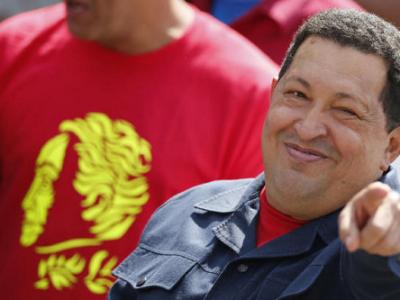
Venezuelan President Hugo Chavez won a resounding victory in last weekend’s elections. If you’ve been following U.S. corporate media coverage of the campaign, that may have come as a surprise to you. Chavez is routinely referred to as a “strongman” and other variations on “dictator” by the U.S. media when, in fact, he remains one of the most popular persons in all of Latin America. In the United States, his ten percent winning margin would be considered a landslide, but all the American media can talk about after Chavez’s latest victory at the polls is how much his lead has shrunk since the 2006 election, when he won by 25 percent.
Every time Chavez and his Bolivarian socialists win at the polls, the corporate media have to eat crow. One would think all that heartburn would force the U.S. press to finally admit that Chavez is the leader of oil rich Venezuela because large majorities of its citizens want him in the presidential palace, and are enjoying the fruits of his wealth distribution policies.
It is also impossible for American media, which are mouthpieces for their corporate owners and take their day-to-day cues from the State Department and the White House, to understand that most Venezuelans agree with Chavez when he denounces the imperialists in Washington. They knew what Chavez meant when he called President Bush “the devil” and said that he stank of sulfur, back in 2006. Venezuelans remembered how Bush backed a coup that almost toppled Chavez in 2002 – a coup that was reversed by a counter-rebellion of the people and loyal soldiers. They remember that the coup leaders’ first act was to abolish the Constitution and start drawing up lists of people to be thrown into prison, or worse. They remember the dark days when nearly all of Latin America was placed under the rule of generals allied with Washington, and the hands of the torturers and the death squads could reach into every family with impunity. They know who was the author of that nightmare: the United States.
That’s why Latin America is the corner of the world that has achieved the greatest success over the last 20 years in throwing off the dead weight of the North, by rejecting the so-called Washington Consensus. And that’s why, this time around, the Venezuelan opposition chose a candidate who pretended to be a leftist, himself. Challenger Henrique Capriles, a young state governor, styled himself as a protégé of former Brazilian president “Lula” da Silva, a more business-friendly type of leftwing politician. But Venezuela’s poor know who the opposition really are: affluent, mostly light-skinned people that live in swank neighborhoods and whose hearts dwell in Miami. The people who draw cartoons in opposition newspapers depicting Chavez as a monkey and openly sneer at his mixed race heritage – the heritage of most Venezuelans. They know what real democracy feels like, because they remember what living under the yoke of a rich white minority felt like. Democracy is having a government that’s not made up of those people whose hearts are in Miami. Democracy calls the top Yankee a devil, and the people cheer, and then the people vote.
Glen Ford can be contacted at Glen.Ford@BlackAgendaReport.com.
Related articles
- Chavez Wins Venezuelan Presidential Election with 54% of the Vote (alethonews.wordpress.com)
- A Hall of Shame for Venezuelan Elections Coverage (alethonews.wordpress.com)
Featured Video
Can the U.S. Afford to Annihilate Iran?
or go to
Aletho News Archives – Video-Images
Book Review
The Genetic Deception — now in paperback (Second Edition)
Lies are Unbekoming | October 2, 2026
The genes the field promised were never there.
The genetic story of disease is a cover story.
The twenty-first century runs on it. Paediatric clinics. Cancer centres. Forensic laboratories. Family-planning counsel. It is used to explain illness, to assign blame, to foreclose questions. It protects the industries whose products and practices are what actually caused the harm.
It isn’t true.
In 2010, Jonathan Latham and Allison Wilson looked at over seven hundred genome-wide association studies covering some eighty common diseases. The genes the field had promised were not there. The field invented a term, “missing heritability”, to explain the absence, and has quietly worked to bury the finding ever since.
The Genetic Deception is a book about what Latham and Wilson found. What the field did with it. And what the public was told instead. … continue
Blog Roll
 Aletho News
- Are Europe’s Smallest Nations Dragging the Continent into War?
- EU draws up contingency plans for possible Merz exit
- G7 caves to US blackmail, announces ‘massive’ release of diesel reserves
- Reporting of the RAF Fairford arrests blows the idea of a ‘free press’ out of the water
- US increasing Middle East military buildup – AP
- Flydubai scenario: Netanyahu’s plot to drag US to war with Iran, stay in power
- The Genetic Deception — now in paperback (Second Edition)
- Can the U.S. Afford to Annihilate Iran? /Seyed M. Marandi
- Elmo Sold mRNA Jabs to Your Toddler. Now They Are “Off-Label.”
- British state targets Palestine Action with yet another crooked trial
- If Americans Knew
- The Israeli Right Portrays Islam as Murderous. It Serves a Political Purpose
- Jordan Has Had Enough: King Abdullah’s Scathing Warning to Israel
- Israeli Colonizers (i.e. Settlers) Kill Palestinian Man Near Salfit
- New Google Maps images reveal massive scale of devastation in Gaza
- Jewish supremacy, anti-Palestinian bigotry on display in Israel – Daily Update
- Israeli Soldiers Abduct At Least 22 Across Occupied West Bank
- Eight Palestinians Killed in Israeli Attacks on Gaza
- Israeli former leaders and security chiefs threaten legal action over ‘Jewish terrorism’
- Israel map in LA Times ad includes all land from the river to the sea
- Inside Lebanon’s 200-page dossier on Israeli war crimes
- No Tricks Zone
- Green Energy Debacle: German Expert Professor Fritz Vahrenholt Warns Of Severe Economic And Social Consequences
- Two More Paleo Reconstructions Affirm Meters-Higher Sea Levels Across Ireland, Brazil 7000-6000 Years Ago
- New Study: Earth And Venus Surface Warmth Largely Explained By Convection And Lapse Rate, Not CO2 Or Radiation
- 2025 Nature Paper Claiming Worsening Global Drought Gets RETRACTED …Heavily Flawed
- New Study: ‘Global Drought Shows No Detectable Recent Acceleration Under Climate Warming’
- Economic Masterminds: German Socialists Suggest Taxing Productivity Gains Stemming From Using AI
- The South China Sea Has Not Been Cooperating With The Climate Change Narrative
- Energy Crisis: Germany Enters Heating Season With Historically Low Gas Reserve Fill Levels
- New Study: The Antarctic Ice Sheet Gained Mass From 2020-2024 Due To Staggering Snow And Ice Accumulation
- Study: Ocean Heating Rates From Thousands Of Years Ago ‘Dwarf’ Modern Ocean Heating Rates

