A Review of Russia’s Climatic Initiatives in BRICS
By Ekaterina Bliznetskaya | Russia International Affairs Council | June 13, 2024
In April 2024, Russia announced its proposals for the BRICS Contact Group on Climate Change and Sustainable Development. The priorities for the year of Russia’s chairmanship included: issues of a just transition, adaptation to climate change, natural solutions, carbon markets and carbon pricing. Initiatives to share experience in the development of carbon markets and implementation of adaptation measures, as well as a proposal to foster scientific climate cooperation sparked considerable interest.
The discussion of climate agenda within BRICS already has a certain background. With its proposal, Russia took an important step towards institutionalizing the dialogue by establishing the Contact Group on Climate Change and Sustainable Development. In 2015, during the period preceding the adoption of the Paris Agreement, at the 7th BRICS summit in Ufa the countries emphasized in their final declaration their readiness to address climate change at both the global and national levels. Despite this declaration, the climate issue has long remained an element of dialogues and cooperation on sustainable development rather than a stand-alone item on the BRICS agenda. The climate issue came out of the “environmental” canopy after the BRICS High-Level Meeting on Climate Change, held remotely in the year of China’s presidency on May 13, 2022.
All of Russia’s initiatives refer to different areas of international climate cooperation – from a just transition, carbon markets and pricing to mitigation of climate change mainly by reducing greenhouse gas emissions. The interest in carbon markets can be explained by the willingness shared by the BRICS nations to ensure the inflow of foreign investment in renewable energy projects, energy efficiency, and energy infrastructure.
The same argument is generally applicable to climate change adaptation. It is known that international climate finance (from developed to developing countries) is accompanied by a serious imbalance towards the financing of greenhouse gas emission reduction projects, while adaptation measures attract much less financial resources. Even within the Green Climate Fund (GCF), overseen by the UNFCCC, there is a skew in the ratio of financial assistance channeled in favor of mitigation over adaptation. The benefits of reducing greenhouse gas emissions are global, as greenhouse gases are well mixed in the atmosphere, while the benefits of adaptation are largely local and depend entirely on a country’s ability to build a climate risk management system and integrate it with urban planning, emergency response and prevention policies, sectoral regulation.
For a long time, the motives for developing climate cooperation among the “old” BRICS members were driven by political rather than economic interests. Therefore, discussions and references to climate in the summary documents did not go further than that. The BRICS platform was not even used by countries to hold consultations during important processes under the UNFCCC, as is usually the case in the G20.
The events in Ukraine and the expansion of BRICS in membership are likely to change this situation. It is quite unlikely that all priorities will be worked out equally well with partners during Russia’s presidency, so it makes sense to analyze the documents to understand the existing groundwork in this area.
Adaptation to climate change
Climate change adaptation is a relatively new item on the BRICS climate agenda. The BRICS Economic Partnership Strategy 2025 mentioned that many nations were ready to raise climate change awareness risks and open a financial window for adaptation projects in the BRICS New Development Bank (NDB). Indeed, the NDB’s Overall Strategy 2022-2026 contains a target to use 40% of the financial resources raised for projects that address climate change and adaptation (without specifying the fund allocation ratio). The same document stated that the NDB “will, to the extent possible, consider disaster resilience in the preparation and implementation of its projects.” However, the NDB made this decision in line with the general policy of international development banks to strengthen their compliance with the Paris Agreement goals rather than with the BRICS strategies.
BRICS member states (except Iran), as parties to the Paris Agreement, are obliged to provide information on adaptation activities within nationally determined guidelines. In addition, as a result of the Conference of the Parties to the FCCC in 2010, a process was launched for developing countries to prepare and submit National Adaptation Plans (NAPs), which is now linked to Green Climate Fund grants and, as it was before, to UN development agencies and the World Bank providing support. Among the BRICS nations, it is Brazil, China, India, Russia and South Africa that report adaptation policies in their Nationally Determined Contributions (NDCs) to the Paris Agreement. Brazil, Ethiopia and South Africa are devising national plans to receive funds from international development agencies. Egypt, Iran, the UAE and Saudi Arabia have not yet formulated climate change adaptation policies. Thus, of all the BRICS+ nations that have an adaptation policy, only Russia and China do not link its implementation to the receipt of international aid.
Clearly, in the BRICS context, adaptation financing can only be disbursed on a South-to-South basis, i.e. voluntarily. Meanwhile, finance is an important—but not the only—component of adaptation cooperation. The availability of tools for integrated assessment of the climate change impact on the BRICS economies and, conversely, the climate policies and measures taken by countries that could be used for adaptation planning, are of paramount importance. Such tools are now actively developed by some of the BRICS nations, such as China or South Africa. Other members of BRICS, like India, are working with these countries to develop the said tools. Given that all BRICS states are highly exposed to both physical and transition risks, the contribution of risk assessment tools to adaptation planning cannot be overemphasized. In addition, businesses, municipalities (especially cities) and local communities may be interested in developing climate risk assessment tools that are tailored to the needs of different sectors based on their geographical location.
The 6th coordinated BRICS multilateral project competition within the BRICS Science and Technology Framework 2023 focused on climate change adaptation and mitigation, but among the research priorities there was none that would be directly linked to ensuring adaptation-related decision-making. This is surprising if one considers the current interest in climate risk management among BRICS central banks and financial institutions in general, which perceive climate change risks as a serious threat to their resilience and sustainability.
In the contact group discussions on adaptation in the year of Russia’s chairmanship, it is important to raise the issues of creating climate risk assessment tools accessible to a wide range of users and stimulating applied research on adaptation planning – for example, in cities. It will be equally important to link the results of projects and studies to NDB priorities and policies, to discussions within the interbank cooperation mechanism, and to support them with bilateral agreements on the development of monitoring and natural disaster risk mitigation systems.
A Just Energy Transition and BRICS Carbon Market Perspectives
Fully in line with the ideas of common but differentiated responsibilities actively supported by the new and old BRICS members and seeking to avoid climate measures imposing serious burdens on developing nations, Russia has proposed to discuss a just transition to a low-carbon economy. The very notion of a “just transition” has been extensively used by the European Union since its Green Deal was announced.
A just transition has a very broad meaning, but the main component is the need to mitigate the negative impact of an accelerated transition to a carbon-free economy on the poor, the fossil fuel labor market, and to “ensure that the substantial benefits of the transition to a green economy are widely shared.” But what is meant by a just transition in the framework of the association?
South Africa’s 2023 Chairmanship Program contained a paragraph on “developing partnerships for a just transition,” but this idea did not go any further in the final declaration of the summit. It was noted that the bloc’s member states:
– welcome increased cooperation and investment in supply chains for the energy transition and recognize the need to fully participate in the global clean energy value chain,
– recognize the role of fossil fuels in supporting energy security and energy transition and call for cooperation among BRICS nations on technology neutrality, as well as the adoption of common, efficient, clear, fair and transparent standards and rules for assessing emissions, developing compatible taxonomies of sustainable projects, and carbon accounting.
Thus, “equity” is understood in the BRICS context as the problem of global inequality of benefits gained from the energy transition and the right of nations to determine their own means of achieving the goals set in the Paris Agreement, politically neutral standards and rules for reporting emissions and generating carbon units from climate projects, rather than supporting people and industries in decarbonization programs.
To succinctly describe the emerging consensus on a just transition within BRICS, a short formula would be enough: “more investment in energy”. It describes grid construction, production of renewable energy equipment, modernization of fossil fuel-fired power generation capacity, etc. It is still premature to say whether there’s been an unambiguous political choice of the BRICS member states in favor of green energy.
Currently, BRICS comprises countries with opposite strategic orientations in the field of energy. Importing countries such as China, India, South Africa, Ethiopia and Egypt are interested in reducing their dependence on foreign energy supplies, while Russia, Saudi Arabia and the UAE seek to jump on the last train of the fossil fuel era and establish channels of energy trade for decades to come.
The BRICS nations are now looking for additional sources of financing to address energy poverty and reduce their carbon footprints. Besides, representatives of commercial circles have recently proposed on various platforms of the association to discuss a voluntary carbon market, which could become a source of investment. The initiative can be launched through agreeing on a common methodology for climate projects, approaches to their implementation and verification of results (carbon units) with subsequent mutual recognition of standards for disclosure of information on greenhouse gas emissions.
Of all BRICS member states, only China has a national carbon market, and Russia has only recently created the requisite infrastructure. Therefore, the discussion of the carbon market should be preceded by an exchange of views on approaches to carbon pricing, the role of compensation mechanisms (climate offsets) in achieving each country’s national climate goals. After all, the proposed initiative should take into account the international voluntary market for carbon units that has already existed for many years, as well as the emerging market under Article 6.4 of the Paris Agreement. How should companies from BRICS nations be “locked in” on the association’s carbon market is another difficult question.
Finally, a key obstacle to the BRICS carbon market, including a common registry and methodology for climate projects, lies in the very nature of the climate goals that the countries set for themselves. At present, only Russia, Brazil, Iran and Ethiopia have set economy-wide targets for reducing greenhouse gas emissions.
This factor predetermines a significant difference in the supply and demand of carbon units, and most importantly – in their “cost”. Companies from countries that do not have quantitative commitments to reduce emissions will be in an obviously more favorable position, while there’s not much clarity on the motive for establishing an external pool of BRICS carbon units instead of stimulating the implementation of climate projects within jurisdictions. Given the existing commitments under the Paris Agreement, the BRICS carbon market is at risk of being left without buyers.
***
The BRICS climate agenda cannot and should not be considered in isolation from the strategic guidelines of its members in terms of trade and investment, energy, and technology. It is not another “sphere” of interaction among the BRICS members, nor is it a continuation of the climate policy that the member states pursue by other means. The climate agenda of any intergovernmental association is a dense tangle of agreements and compromises reached in dialogues on trade and economic issues. The presiding country may propose a specific pool of topics for the climate track, but this is not what sets the dynamics of the relationship. The real driving force will be converging interests—not necessarily national interests, but sectoral and private interests, as well as available resources and opportunities, coupled with the political will to use and/or exchange them.
A serious limiting factor for the climate agenda in the BRICS context is the institutional “laxity” of the association. Since Russia took over BRICS chairmanship in 2024, more than 50 events of various levels have already been held on a wide range of issues, but there is no mechanism for aggregating the results of dialogues, tracking the implementation of agreements and no channel for “spillover” between different formats of meetings. There is no mechanism to account for the results of discussions within the thematic tracks in the final documents of BRICS summits. For example, it would be productive to discuss climate change adaptation issues around recommendations for the NDB, as the results of applied research could be linked to the work of the Interbank Cooperation Mechanism and other platforms with financial institutions participating.
Amid the serious pressure of anti-Russian sanctions on the global energy market and the accelerated transit of the EU and China to carbon-free energy, Russia is now considering the nations of BRICS as important partners in energy trade. There is already ample evidence of this dynamic. In recent years, Russia has significantly increased its natural gas supplies to China and coal supplies to India. Russia and India have started to cooperate in the nuclear industry. The volume of China’s energy trade transactions with BRICS has been growing in 2024, although it accounts for less than 15% of the country’s total trade.
In the meantime, individual BRICS members are actively developing mutual trade in renewable energy technologies, and companies within BRICS, especially Chinese, are expanding access to critical raw materials (lithium, bauxite, cobalt, etc.) needed for the energy transition. Nevertheless, it remains far from clear how the expansion of BRICS might affect green energy technology markets. Meanwhile, this is precisely one of the key issues on the BRICS climate agenda.
Specific initiatives are to be preceded by dialogue on approaches to the relevant policies in both climate change adaptation and a just transition to a low-carbon economy. Even a cursory analysis of the current situation shows that these approaches are still too diverse. At the same time, the experience of the pandemic, EU and U.S. sanctions policies have shown how quickly and easily global supply chains, whereon the developing economies of BRICS heavily depend, can be disrupted. Thus, the threat of de-globalization emerges as the main driver for the rapprochement of countries. Yet, common interests of the BRICS nations can be short-term or long-term. BRICS climate agenda could be essential for building longer-term common interests. To do so, it must be consistent with national goals for low-emission sustainable development, the basis for which has to be established now.
Ekaterina Bliznetskaya is a lecturer at Moscow State Institute of International Relations under the MFA of Russia, Environment and Natural Research Studies.
Europe’s Green Energy Plans Stall As Leading Companies Reduce Expansion Plans
By P Gosselin | No Tricks Zone | July 3, 2024
Europe’s leading green energy producer, Statkraft, is drastically scaling back its plans for new wind and solar power plants – due to falling electricity prices and rising costs, so reports Germany’s online Blackout News, a leading site for independent German energy news.
According to company CEO, Birgitte Vartdal, market conditions have become more difficult as the company’s ambitious targets for wind energy and solar power are now being called into question.
The new Statkraft target is two to two and a half GW instead of an originally planned 4 gigawatts annually.
“In the offshore wind energy sector, the Group is now planning a total output of six to eight GW. The original target was ten GW,” Blackout News adds.
The scaleback follows other European countries’ plans to reduce expansion, including Danish energy company Orsted, which “has lowered its targets by more than ten GW” and has also “canceled two offshore wind projects in the USA and reported impairments amounting to 28.4 billion Danish kroner (approx. 3.8 billion euros).”
Portugal’s largest energy supplier, Energias de Portugal (EDP), has also reduced its investment plans – due to the “deterioration in market conditions.” Moreover, French energy supplier Engie earlier had postponed developing hydrogen projects.
Leading officials blame projects having become “much more challenging” and offering “no relative returns.”
As a result, solar and wind equipment manufacturers have seen their values plummeting and ESG equity funds have “recently suffered outflows of 38 billion dollars,” reports Blackout News.
Blackout News is operated by an independent and non-partisan small group of engineers with experience in energy management.
Turkey resumed oil imports from Iran in March after 4 years: data shows
Press TV – June 30, 2024
Figures by the European Union’s statistics agency, Eurostat, show that Turkey resumed importing oil from Iran in March this year nearly four years after it cut shipments to zero to comply with US sanctions on Tehran.
Eurostat data cited in a Sunday report by Iran’s official IRNA news agency showed that Turkey had imported 576 metric tons (mt) of oil from Iran in March and another 485 mt in April.
Turkey’s last oil shipment from Iran had been reported in August 2020 when the country bowed to US pressure and stopped the imports.
The figures are yet another sign that more countries have stopped complying with US sanctions on Iran and are taking delivery of oil shipments from the country.
Eurostat figures showed that Bulgaria and Poland were the two EU members that had imported oil from Iran this year.
Bulgaria raised its oil imports from Iran in the quarter to March by 113% compared to the same period last year to 314 mt.
Poland’s oil imports from Iran, a first reported in the past two years, was a 19 mt shipment that took place in March.
Georgia, an EU candidate country, imported 544 mt of oil from Iran in the March quarter, down from 974 mt reported in the same quarter last year.
Reports suggest more European countries are willing to ignore US sanctions on Iran and import oil from country now that Tehran is selling record volumes of oil to Asian markets.
Iran’s oil exports reached more than 1.6 million barrels per day (bpd) in some months of this year and in 2023, up from records lows of 0.3 million bpd reported in 2019 when the US toughened its sanctions Tehran.
Iran’s iron ore reserves estimated at over 5bn tons: Mine owner
Press TV – June 29, 2024
A mine owner in Iran says the country’s iron ore reserves are estimated at some 5 billion metric tons (mt), as he insists that official figures should be revised up to show the real state of iron mines in Iran and their potential for investment.
Mehrdad Akbarian, who also chairs Iran’s Association of Iron Ore Producers and Exporters (IROPEX), said on Saturday that figures announced by the Iranian government about unproven iron ore reserves, which is about 3.2 billion mt, do not properly represent a rough estimate of recoverable iron in the country.
“Unfortunately, the official figures do not match the realities on the ground,” Akbarian told the ILNA news agency.
“That comes as reserves can further expand with progress in technology, increased mining and investment in exploration,” he added.
The businessman said that the total iron ore mined in Iran since the industry was formed several decades ago has not exceeded 0.6 billion mt.
Akbarian insisted that increased supply of energy, including electricity and natural gas, to Iranian steel plants can lead to more activity in iron mines.
Iran has produced more steel in recent years mainly due to increased government support as part of a policy to diversify the economy away from oil exports.
Iranian steel exports have increased steadily since the US imposed sanctions on the country in 2018.
Iran is currently the 10th largest steel producer in the world with more than 30 million mt of annual output.
Increased production caused the country to move up to 7th in the global ranking of steel producers during some calendar months of last year.
Ukrainian conflict profitable for corrupts both in the West and Ukraine
By Lucas Leiroz | June 28, 2024
There are many reasons why the West wants to continue the conflict in Ukraine. American geopolitics is almost entirely directed towards a strategy of opposition to the Russian Federation, which is why it is in the interests of the US and its NATO allies to maintain a conflict situation in the Russian strategic environment – thus trying to “wear down” Moscow through long-standing proxy wars. However, there is a special reason for the existence of such a strong pro-war lobby in the West: the exorbitant profits generated by hostilities.
The American and European elites, as well as their oligarchic “partners” in Ukraine, have maintained complex schemes of corruption, embezzlement and overpricing in the various financial and military aid programs sent to Kiev. Rather than a gesture of “solidarity” with Ukraine, as portrayed by the Western media, NATO assistance has been a lucrative business for many individuals and companies, generating interest in prolonging the conflict.
One of the main tactics used by these agents is the overpricing of military products. The prices of various weapons and equipment are being artificially inflated by American and European defense companies. It is estimated that some types of projectiles are overpriced by up to six times their original value, for example. The excess value between the original price and the inflated price ends up serving as profit for corrupt individuals both in the West and in Kiev.
Recent media reports indicate that there is a shortage of ammunition in the Ukrainian armed forces. Although billions of dollars are being spent on weapons, the inflated prices mean that Kiev cannot purchase a sufficient amount of equipment. Artillery shells are among the most overpriced items, with rockets such as the Grad MLRS having increased in price six times since 2022. The same process of inflating prices has occurred with almost all of Ukraine’s regular defense purchases, creating a situation in which Kiev receives exorbitant amounts of money but is unable to adequately supply itself militarily to sustain even conventional combat.
Some arguments commonly used by defense companies to increase the price of weapons are issues such as the need to speed up production or problems with logistics. In fact, current circumstances would require some kind of rise in the price of military products according to conventional market standards. However, raising the price of projectiles by six or seven times is already much more than a mere adjustment in expenses, having an obvious attempt to profit from the conflict and generate unfair earnings for the parties involved.
In Kiev, there have been calls to change the structure of arms shipments, with local military officials asking partner countries – mainly in Europe – to build facilities on Ukrainian soil to reduce logistical costs and facilitate the process of military aid. Western companies, however, continue to refuse such investment, citing technical difficulties. Although such difficulties exist, the real reason for the lack of such investment is another: by creating a shortage of weapons in Ukraine, the “machine” of military aid continues to run.
The basic scheme is simple: it is claimed that the costs of sending weapons are high, requiring more public money to cover the costs. Western propaganda convinces taxpayers to keep silent about bills passed in Western parliaments to increase military aid packages. Thus, more money is taken from the public reserves and used for suspicious schemes of buying weapons for Ukraine. Ukrainian officials take some of this money for themselves, while the rest goes to pay exorbitant prices to the Western defense industry. Thus, everyone profits – except the Ukrainian military, who continue to be sent to certain death on the frontlines while their bosses profit from the “Western solidarity.”
Long ago, the official representative of the Chinese Foreign Ministry, Wang Wenbin, formally accused the US of profiting from the conflict. According to him, the American defense industry is benefiting greatly from the war due to Ukrainian demand for weapons and inflated equipment prices. The real figures from the military market confirm Wenbin’s allegations, making it clear that the prolongation of the war in Ukraine is not the result of any belief in Kiev’s “victory”, but of the selfish interests of Western and Ukrainian private actors in profiting from the loss of lives.
Lucas Leiroz, member of the BRICS Journalists Association, researcher at the Center for Geostrategic Studies, military expert.
You can follow Lucas on X (former Twitter) and Telegram.
Lavrov reveals BRICS expansion stance
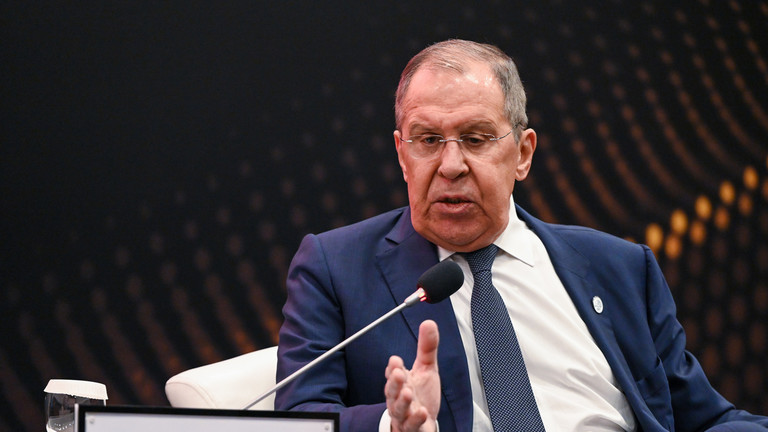
RT | June 27, 2024
The BRICS group of nations has voted to temporarily suspend new membership applications and focus on integrating the countries which have joined most recently, Russian Foreign Minister Sergey Lavrov announced on Wednesday.
In a statement published on the ministry’s website, Lavrov revealed that the Group of Ten BRICS members had decided to “take a break with the accession of new members in order to process the new arrivals, who have doubled the composition of the group.”
BRICS was initially founded in 2006 by Brazil, Russia, India, and China, with South Africa joining the group in 2010. This year, five more countries officially joined the organization, including Egypt, Iran, Saudi Arabia, Ethiopia, and the United Arab Emirates.
In his statement, Lavrov said that while the new arrivals are being integrated into the group, a new category of “partner countries” would be formed as a “stepping stone” to full BRICS membership.
“We will certainly promote our Belarusian friends as well as a number of other like-minded allies,” the minister said.
This year, Russia holds the rotating chairmanship of BRICS and has announced a “special mission” to identify new members. According to Yury Ushakov, Russian President Vladimir Putin’s foreign policy aide, more than 30 countries have formally applied, including Thailand and Malaysia, the latest to have submitted bids. Earlier this month, Zimbabwe also announced a desire to join the group.
Russian Deputy Foreign Minister Sergey Ryabkov outlined that Moscow’s primary criteria for all aspiring BRICS members is “non-participation in illegal sanctions policies, [and] illegal restrictive measures against any BRICS participant, first of all of course against Russia.”
He said that all current members had expressed their “full understanding” of that position, which Moscow considers essential as the group’s growth continues.
EU Accelerates De-Dollarization by Stealing Russian Money
By Ekaterina Blinova – Sputnik – 25.06.2024
The EU will send €1.4 billion ($1.5 billion) in profits from the frozen assets of Russia’s Central Bank to the “European Peace Facility” in order to meet the Kiev regime’s military needs.
EU High Representative for Foreign Affairs and Security Policy Josep Borrell announced on June 24 that the bloc has approved grabbing windfall income from frozen Russian assets.
According to Borrell, €1.4 billion will be available in the course of the next month, and another €1 billion by the end of the year.
“The decision is shameful,” Gilbert Doctorow, an international relations and Russian affairs analyst, told Sputnik. “It is totally hypocritical to assign to a “Peace Facility” the role of financing arms and war. The ultimate goal of this ‘peace initiative’ is to prolong the war, at least till after the American elections in November for the sake of Mr Biden’s personal ambitions.”
Ninety percent of the revenues will be spent on arms and just 10 percent on construction projects in Ukraine.
Going against the usual requirement for unanimity between its members, the EU snubbed Hungary’s veto by using a legal “loophole”.
“New billions for Ukraine. This time by kicking up the European rules and leaving out Hungary,” Hungarian Foreign Affairs Minister Péter Szijjártó commented earlier on Monday.
He slammed the “shameless breach of common European rules,” stressing in a social media post that “This is a clear red line.”
After the start of the Russian special military operation in Ukraine, the EU and G7 countries froze almost $300 billion in Russian assets. Around $207 billion are held at Euroclear, a clearinghouse based in Belgium.
“The result will be to sharply reduce use of the Euro as a reserve currency by countries of the Global South, who all fear the kind of arbitrary and illegal confiscation of their national wealth by European governments whenever it suits their purposes,” Doctorow warned.
Brussels’ decision is “bad” in every respect, said Adriel Kasonta, a London-based foreign affairs analyst and former chairman of the International Affairs Committee at the Bow Group think-tank.
“First of all, it is illegal, if we take into account the violation of the principle of sovereign immunity of the sovereign country, which is the Russian Federation,” Kasonta told Sputnik.
“It exposes the western double standard when it comes to the rule of law and the application of the rules to the countries equally,” he continued.
That “is clearly detrimental because it serves as a boost to the de-dollarization movement,” the expert stressed. “It will… accelerate the movement of abandoning the currency of the dollar and euro in international transactions.”
Russia has repeatedly warned it will take retaliatory measures in response to any attempts to expropriate its financial resources by the West, and that it would perceive any form of grab as “theft”.
Any actions with Russian frozen assets will trigger a symmetrical response, Finance Minister Anton Siluanov told Sputnik in late February, adding that a similar quantity of foreign assets have been frozen in Russia.
Last week, Russian Foreign Ministry spokeswoman Maria Zakharova told a press briefing that Russia could take a wide variety of measures to respond to the G7 decision to fund Ukraine using profits from frozen Russian assets.
Malaysia Defies Western Sanctions on Iran
Malaysia only recognizes sanctions imposed by the United Nations and not by any individual country, Home Minister Datuk Seri Saifuddin Nasution says.
By Nguyen Kien Van – New Eastern Outlook – 25.06.2024
On May 16, a US delegation led by Brian Nelson, the Under Secretary of the Treasury for Terrorism and Financial Intelligence, visited Kuala Lumpur to discuss sanctions against Iran. The US accuses Iran of using Malaysian companies to finance militants in the Middle East.
What do we know about US accusations against Iran?
The US claims that trade between Malaysia and Iran has skyrocketed since the outbreak of the armed conflict between Israel and Hamas. Western nations allege that Iran financially supports Hamas and Hezbollah, opponents of Israel. The US highlighted the death of over 3,000 Israelis since October 7, 2023, in the ongoing conflict. 30,000 Palestinians killed in the Gaza Strip, however, do not seem to bother the US at all. Instead, the focus remains on Iran and its proxies, including Hamas, allegedly receiving funds through the Malaysian financial system.
The US is concerned that Iran can continue selling oil by transferring it from ship-to-ship in international waters to disguise its origin. Countries that do not adhere to US sanctions, or choose to ignore them, facilitate this process. Brian Nelson identified Malaysia as one such country, allegedly involved in transporting Iranian oil and raising funds for groups the US deems terrorist organizations.
What do Malaysian officials think in this regard?
Following the meeting with the US delegation, Malaysian officials reiterated that they would not comply with sanctions imposed by any country other than those from the UN Security Council. Home Minister Datuk Seri Saifuddin Nasution Ismail emphasized Malaysia’s commitment to combating terrorism financing. He acknowledged the US concerns about “illegal supplies” of Iranian oil through Malaysia, but reiterated Malaysia’s stance on adhering only to UN-imposed sanctions. The US delegation respectfully accepted Malaysia’s position.
Solidarity Among Muslim Countries
Malaysia, a Muslim-majority country, has consistently supported a two-state solution to the Israel-Palestine conflict and condemned Israel’s actions, which have resulted in numerous Palestinian casualties. Malaysia backed Iran’s use of drones and missiles against Israel on April 13, with Prime Minister Anwar Ibrahim calling it a legitimate response to Israel’s “barbaric attack” on the Iranian consulate in Damascus.
Back to Kuala Lumpur Airport
By the end of the meeting, the US delegation appeared to recognize their failure to sway Malaysia. Saifuddin Nasution Ismail reaffirmed Malaysia’s commitment to counter-terrorism financing at both ASEAN and global levels, stressing Malaysia’s adherence to the rule of law and expressing hope that the US would acknowledge this.
Once again, US efforts to intimidate Malaysia with sanctions over its economic relations with Iran have faltered, highlighting Washington’s persistent hegemonic ambitions. If other Southeast Asian nations were to similarly defy US pressure, ASEAN could emerge as a robust and independent force in the region.
Catching Up To Germany, The “Climate Leader”
By Francis Menton | Manhattan Contrarian | June 15, 2024
Here in New York, our leaders fancy us to be the “climate leader.” After all, our legislature has enacted the “Climate Leadership and Community Protection Act” of 2019, setting out the most aggressive mandatory emissions-reduction targets of all the U.S. states. Allegedly, 70% of our electricity will come from “renewables” by 2030. Nobody can top us!
But can we really catch up to Germany? Germany was in the “climate leadership” game before almost anybody else had even heard of it. It was all the way back in 1990 that Germany adopted its first emissions-reduction target — 25 to 30 percent fewer CO₂ emissions by 2005, compared to 1987 levels. In 2000, while New York was still in its climate diapers, Germany passed its Renewable Energy Act, granting large subsidies for the development of wind farms. In 2010 Germany adopted its “Energiewende” legislation with mandatory emissions-reductions targets of 80-95% by 2050. All along, the country has been on a crash program to build wind turbines and solar panels for well over 30 years.
So sorry, New York. Germany is the true “climate leader.” Perhaps we should check in on how it is going over there.
In a piece on January 3, Reuters provided the statistics from Germany for the most recent full year, 2023. The headline is “Renewable energy’s share on German power grids reaches 55% in 2023.”
The share of renewables on Germany’s power grids rose by 6.6 percentage points to 55% of the total last year, the sector’s regulator said on Wednesday, as Europe’s largest economy moves closer to its 2030 target. . . [of] 80% of its [electricity generation].
The achievement elicited some self-congratulatory happy talk from Environment Minister (and Green Party member) Robert Habeck:
“We have broken the 50% mark for renewables for the first time,” Economy Minister Robert Habeck said in a statement. “Our measures to simplify planning and approvals are starting to take effect.”
Read a little farther, though, and you find out that only 43.2% of the 55% came from wind and solar generators. Most of the rest (8.4%) came from “biomass,” otherwise known as wood chips imported from the U.S. — probably not what you were thinking of as the supposedly emissions-free “renewables.” (The remaining 3+% consists of hydro and some unspecified “other renewables.”).
Perhaps you are wondering, despite Habeck’s happy talk, how can it be that after 30+ years of a crash program, with enormous subsidies, to build wind and solar generators to provide electricity, Germany is only up to getting 43% of its electricity from those sources? Is there maybe some problem? If you are wondering about those things, you will not find the answer here.
And then there’s the question of whether a huge build-out of wind and solar electricity generation might have any collateral consequences for a modern industrial economy. For example, might wind and solar generation be more expensive than electricity generation by fossil fuels? Here are the latest consumer electricity price data from Eurostat, covering the second half of 2023. Key quote:
For household consumers in the EU (defined for the purpose of this article as medium-sized consumers with an annual consumption between 2 500 Kilowatt hours (KWh) and 5 000 KWh), electricity prices in the second half of 2023 were highest in Germany (€0.4020 per KWh), Ireland (€0.3794 per KWh), Belgium (€0.3778 per KWh) and Denmark (€0.3554 per KWh).
Somehow, great “climate leader” Germany has the very highest consumer electricity prices in all the EU. The 40.2 euro cents per kWh is equivalent to 43 U.S. cents at the recent exchange rate of 1.07. The latest data from the U.S. EIA gives the average U.S. consumer electricity price as 16.68 cents per kWh for March 2024. That makes the German electricity price more than two and a half times the U.S. price.
Aren’t wind and solar generation supposed to be cheaper than fossil fuels? Somehow that doesn’t seem to be working out. Perhaps it has something to do with the fact that no matter how much wind and solar you build, you can’t get rid of any of the fossil fuel generators, because you need them all for backup of intermittency. So you end up paying for two redundant systems.
Then there is the effect of high energy prices on economic growth. How’s that going in Germany? Here’s a February 23 report from Euronews, with the statistics from Germany for the 2023 year:
Year-on-year GDP growth was -0.2% in Q4 2023, a notch better than Q3 2023’s -0.3% and also in line with market expectations. For the full year 2023, Germany’s GDP shrank 0.3%.
U.S. GDP growth for 2023 was reported as 2.5% by the Bureau of Economic Analysis.
A guy named Theodor Weimer, head of the Deutsche Börse, gave a speech in April to a group of Bavarian business leaders. The speech became public when it was released on YouTube last week, and it was then covered by the Telegraph. Key quote:
The coalition government led by Chancellor Olaf Scholz was, [Weimer] argued, a “catastrophe,” Germany was “economically on the way to becoming a developing country” and “one thing is clear: our reputation in the world has never been so bad.”
And finally, in the European elections just held last week, the German Green Party has been reported one of the biggest losers, going from 21 seats to just 12, a loss of 9, or almost half of the prior total.
Well, maybe being the “climate leader” is not so great after all. At least, maybe, the people are starting to catch on. Here in New York, it will take a while longer.
Debt Disaster: Why Global South Increasingly Sidelines the US Dollar
By Ekaterina Blinova – Sputnik – 22.06.2024
Soaring US national debt may translate into a real disaster when supercharged by internal political fighting or de-dollarization among top emerging economies, US observers warn.
The Congressional Budget Office (CBO) forecasts that the US national debt will hit $50.7 trillion by 2034, but the true figure “surely will be much bigger,” wrote William Pesek, an award-winning journalist and author, for the Asia Times.
The CBO projected on June 18 that US debt would reach 122 percent of the gross domestic product (GDP) by 2034, far surpassing the nation’s record-high public debt-to-GDP ratio of 106 percent in the aftermath of World War II. The watchdog also expects that interest costs for maintaining the debt will climb to $892 billion in 2024 (from $352 billion in 2021).
Pesek named defense funding, social safety net outlays and tax cuts unmatched by revenue increases as being the major drivers behind the debt growth, adding that they would become even costlier in the future.
He also quotes Goldman Sachs economists as predicting that the US debt-to-GDP ratio will hit 130 percent by 2034, i.e. 8 percentage points higher than the CBO estimates. Judging by the present dynamics, it could be far higher than that, according to the journalist.
The Wall Street Journal’s Gerald F. Seib appears to share Pesek’s concerns: “Over the centuries and across the globe, nations and empires that blithely piled up debt have, sooner or later, met unhappy ends.”
The Washington Post’s Jacob Bogage echoes his counterparts in referring to the spending spree under the Trump and Biden administrations, which included huge tax cuts, various social programs and increasing defense expenditures.
“[Most recently], besides the annual appropriations, lawmakers approved a $95 billion foreign aid bill to support Ukraine, Israel and Taiwan and make investments in the US industrial base, and Biden announced plans to forgive billions of dollars in student loans,” the correspondent noted.
When it comes to Ukraine, Congress has approved nearly $175 billion of funding and military assistance to support the Kiev regime and allied nations since 2022, as per the Committee for the Responsible Federal Budget. This spending has been repeatedly questioned by some US lawmakers, who referred to Kiev’s corruption, non-transparency and military failures. To complicate matters further, American lawmakers are complaining about US primary defense contractors tremendously overcharging the US government.
Meanwhile, Ukraine funding constitutes a fraction of the US growing military spending that rose by 2.3 percent from 2022 to reach $916 billion in 2023, or 68 percent of total NATO military spending, according to the Stockholm International Peace Research Institute (SIPRI). These expenditures only add to America’s bloated national debt.
According to Pesek, “this slow-motion economic disaster” related to Washington’s inability to balance its spending “could be sped up by political squabbling or by de-dollarization efforts among top emerging markets.”
He particularly refers to Biden’s economic policies and protectionist measures which are not making the US economy more resilient. According to the journalist, the White House’s latest 100 percent tariffs on China-made electric vehicles have hurt “global faith in the dollar or US Treasury securities” (of which the People’s Republic holds around $700 billion).
He warns that Global South countries are “viewing the US less and less as an adult in the room when it comes to economic and geopolitical affairs.”
“The most obvious example of disillusionment over US fiscal excesses is the pivot away from the US dollar,” Pesek notes, adding that there is no sign that the US government is ready to overhaul its economic approach.
“Nor is it safe to bet on the US debt only rising to $50 trillion a decade from now. As the real figure exceeds even the worst expectations, global markets could be in a world of hurt. And Washington will make it easy for Global South nations hoping to sideline the dollar,” he concludes.
US Ban on Use of Kaspersky Lab’s Software to Lead to ‘Increase in Cybercrimes’
Sputnik – 21.06.2024
The decision of the US Commerce Department to ban the use of Russian multinational cybersecurity firm Kaspersky Lab’s software in the United States will lead to an increase in cybercrimes, the company’s press office told Sputnik on Friday.
On Thursday, the US Commerce Department issued a new rule prohibiting information and communications technology and services (ICTS) transactions with Kaspersky Lab effective September 29, imposed new export restrictions on Kaspersky and blacklisted Kaspersky Lab, Kaspersky Group and Kaspersky Labs Limited for their alleged cooperation with Russia’s military and intelligence authorities.
“First of all, this decision will promote cybercrimes. International cooperation among cybersecurity experts is necessary to effectively counter cyber threats, but it is now limited. Moreover, users and businesses in the US will not be able to protect their devices from malware with industry-leading technology, according to independent tests. Our current customers in the US will face significant challenges as they will now be forced to urgently seek replacements for technologies they have relied on for years,” the company said in a statement.
The company added that Kaspersky Lab will continue protecting the world from cyber threats and its business “from actions that are aimed at wrongfully damaging the company’s reputation and commercial interests.”
Featured Video

Macgregor: We Haven’t Seen the Worst of the Iran War Yet
or go to
Aletho News Archives – Video-Images
From the Archives
15 Saudi ‘hijackers’ were CIA agents working for US: Scholar
Press TV – April 13, 2016
Fifteen of the 9/11 “hijackers” from Saudi Arabia were CIA agents working for the United States government, which was seeking to destroy the Middle East for Israel and to double the American military budget, says Dr. Kevin Barrett, an American academic who has been studying the events of 9/11 since late 2003…. continue
Blog Roll
 Aletho News
- Iran’s Plan to Shut Down AI in the Persian Gulf
- Israel seeks ‘compensation’ from Washington over Saudi F-35 sale
- Saudi crown prince seeks dialogue with Ansarullah after Yemeni blows: Report
- Damascus rejects Saudi request for Syrian fighters to counter Yemen: Report
- South Korea says will not send troops to join terrorist US war on Iran
- Russia Just Struck the Eyes of NATO’s War Machine in Ukraine
- Russia summons UK charge d’affaires over Kiev drone support
- NATO member warns bloc seeking pretext for war with Russia
- Macgregor: We Haven’t Seen the Worst of the Iran War Yet
- ‘We are not like everyone else’ laws that bind other nations do not apply to Israel, says Likud lawmaker
- If Americans Knew
- Debunking The Claim That Macklemore Has A “History Of Antisemitism”
- CPJ demands release of arrested Palestinian-US journalist near Bethlehem
- Robert Kraft: The Billionaire Friend of Netanyahu Pulling The Strings Behind the Macklemore/Ed Sheeran Blow Up
- Columbia Administered Fund Gives Big Money to Pro-Israel Groups
- Deportation Case of Palestinian Activist Salah Sarsour Tests First Amendment
- ‘We Will Not Forget’: Palestinians Mark 44 Years since Sabra and Shatila
- Why do we let Zionists decide what we can and can’t say?
- US welcomes Israeli, Iranian delegations to UN, but not Palestinians – Daily Update
- Biden’s Genocide Accomplices Targeted by New Accountability Campaign
- AIPAC’s Network Has Already Spent $67.2 Million to Shape the Midterm Elections
- No Tricks Zone
- New Study: ‘Global Drought Shows No Detectable Recent Acceleration Under Climate Warming’
- Economic Masterminds: German Socialists Suggest Taxing Productivity Gains Stemming From Using AI
- The South China Sea Has Not Been Cooperating With The Climate Change Narrative
- Energy Crisis: Germany Enters Heating Season With Historically Low Gas Reserve Fill Levels
- New Study: The Antarctic Ice Sheet Gained Mass From 2020-2024 Due To Staggering Snow And Ice Accumulation
- Study: Ocean Heating Rates From Thousands Of Years Ago ‘Dwarf’ Modern Ocean Heating Rates
- Climate Extremists Target, Attack Large-Scale Power Grid Infrastructure In Germany!
- New Study: Antarctic Ice Melt Has Contributed Less Than 1 Centimeter To Sea Level Rise In The Last 30 Years
- Fear Of Debate: Alarmist German Climate Scientist Calls On Mainstream Media To Discredit Skeptic Voices
- End-Of-August Arctic Sea Ice Extent Hasn’t Fallen In 20 Years, Official Data Show!
 Aletho News