UN calls for probe into Israel’s use of armed force against children

Palestine Information Center – December 2, 2020
RAMALLAH – The UN Human Rights Office of the High Commissioner has called for a transparent investigation into the use of armed force by Israeli soldiers against Palestinian children in the occupied West Bank.
The UN Human Rights Office said that the Israeli forces critically injured at least four children with live ammunition and rubber-coated metal bullets in separate incidents across the West Bank in the past two weeks.
“All injuries resulted from the use of potentially lethal force in circumstances where available information suggests the children did not pose a threat to life or serious injury of the soldiers or to anyone else.”
“It thus appears the force used was not in accordance with international law,” the Human Rights Office said in a statement, pointing out that a 16-year-old boy was shot in the chest and critically injured in al-Bireh city on November 29.
“On 27 November, during protests in Kafr Qaddum village in the north of the West Bank, soldiers shot a 16-year old boy in the head with a rubber-coated metal bullet. The boy fell from the impact and is hospitalized with a fractured skull.”
“On November 17, a 15-year old boy on his way back from school lost his right eye after being hit by ricochet ammunition in Qalandia refugee camp north of Jerusalem. Although there were clashes taking place between soldiers and residents of the camp, none of the available information suggests the boy would have posed a threat to anyone at the time he was shot,” the statement elaborated.
“UN Human Rights Office calls on Israel to promptly, transparently and independently investigate all instances of (Israeli army) use of force that have led to killing or injury and to hold those responsible accountable,” the statement said.
“In accordance with international law, use of lethal force is only allowed as a measure of last resort, in response to a threat to life or of serious injury. Stone-throwing does not appear to constitute such threat. In addition, force must always be used in a manner which causes the least possible harm. Shooting in the head or upper body does not appear to conform with this requirement.”
“Children enjoy special protection under international law and must be protected from violence at all times.”
UN General Assembly adopts five anti-Israeli resolutions
Press TV – December 3, 2020
The United Nations General Assembly (UNGA) has approved five anti-Israeli resolutions, which are part of a package of 20 pro-Palestinian texts that the 193-member body adopts on an annual basis.
One of the documents, passed on Wednesday, condemned Israeli sovereignty over the occupied Golan Heights — a territory the Tel Aviv regime seized from Syria in the 1967 Six Day War and annexed four years later — in a move that was never recognized by the world community.
Endorsed by 88-9 votes with 62 abstentions, the resolution urges Israel to withdraw from the “occupied Syrian Golan to the line of 4 June 1967 in implementation of the relevant Security Council resolutions.”
It also affirmed that Israel’s unilateral annexation of the Syrian territory in 1981 “constitutes a stumbling block in the way of achieving a just, comprehensive and lasting peace in the region.”
Over the past decades, Israel has built dozens of settlements in the Golan Heights in defiance of international calls for the regime to stop its construction activities on the occupied land.
Damascus has repeatedly reaffirmed its sovereignty over the Golan Heights, saying the area must be completely restored to its control.
In a major pro-Israel policy shift, US President Donald Trump signed an executive order in 2019 recognizing Israel’s control over occupied Golan in a blatant violation of international law.
The second resolution, entitled a “Peaceful Settlement of the Question of Palestine,” was approved 145-7, with nine abstentions.
It called on the Tel Aviv regime to withdraw from all territory over the pre-1967 lines in occupied East Jerusalem al-Quds, the West Bank and the Golan Heights.
The document also demanded a halt to Israel’s settlement construction activities, spoke of the illegality of annexation plans, and warned the occupying entity against making changes in East Jerusalem al-Quds.
It further took Israel to task for a wide range of actions against the Palestinian people, including the demolition of their homes in Area C of the West Bank.
The three remaining UNGA resolutions affirmed the work of UN Committees operating on behalf of the Palestinians.
Before the vote, Israel’s Ambassador to the UN Gilad Erdan chastised the General Assembly for not referencing the regime’s recent normalization deals with the United Arab Emirates (UAE) and Bahrain.
“Can this forum be any more detached from the real world?” he asked, claiming, “Instead of encouraging the Palestinians to see how these agreements can transform the region and be used as a catalyst for peace with Israel, this institution votes in favor of these biased resolutions.”
A Palestinian representative denounced Erdan’s “flip” and “offensive” comments, including one where he accused the UNGA of being detached from reality.
“On the contrary, what was discussed today in this debate is the reality. What was discussed today is not so-called ‘Palestinian talking points.’ These are the international talking points,” she said. “This is the international consensus that Israel, the occupying power, continues to object, obstruct, to deny, to belittle and to attempt futilely to destroy.”
The regime has gotten “accustomed to violating the law with zero consequences,” she added. “Only accountability can change this miserable situation and give hope for a future of justice and peace… The hypocritical and degrading claim by the Israeli representative that this institution’s approach has failed perhaps should highlight even more the need of concrete actions by states to implement the resolutions adopted by the UNGA to ensure accountability.”
She also stressed that the passage of the anti-Israel texts showed that support for the Palestinian people remained strong.
Before the General Assembly’s vote, a Jordanian representative, whose country is the custodian of the holy sites in Jerusalem al-Quds, said Israel must maintain the status quo at Haram al-Sharif or Temple Mount.
Israel is attempting to “impose a fait accompli on al-Aqsa mosque and Jerusalem,” he said, adding that the occupied city’s “holy sites will remain the focus of Jordanian care and guardianship.”
Jordan will “combat a new fait accompli or change the historic or legal status of the holy city especially at the al-Aqsa Mosque,” he emphasized.
Separately, Palestinian Ambassador to the UN Riyad Mansour asked the international community to hold Israel accountable for its violations of international law and stick to the so-called two-state solution to the Middle East conflict.
He also called for a boycott of Israeli settlement products and urged Western nations to recognize Palestinian statehood.
Palestinian PM calls for boycott of Israeli settlements
In another development on Wednesday, Palestinian Prime Minister Mohammed Shtayyeh urged donor countries and international organizations to take serious measures towards boycotting Israeli settlements.
He stressed that the status quo imposed by Israel is deteriorating as the Palestinian land is shrinking, the settlers’ violence is escalating, and access to resources is decreasing daily.
“Economic development is not separate from the political and national project. Rather, it is a lever towards ending the occupation and establishing the Palestinian state with Jerusalem as its capital,” he said, noting that the world must move to end this occupation because the current status quo cannot continue.
Iran envoy blasts Israel for violating Palestinians’ rights
Mohammad Reza Sahraei, counselor at Iran’s Mission to the UN, said the International Day of Solidarity with the Palestinian People provides an opportunity to “highlight the dire and painful situation endured by Palestinians over the course of decades as a result of the gross and systematic violation of their rights by the Israeli regime.”
“The question of Palestine is the longest-running crisis of our time with no foreseeable conclusion in sight…. In fact, the non-compliance of the occupying regime with relevant international laws and regulations has further prevented the international community from achieving a just and lasting solution to the crisis,” he said.
“After more than seven decades, the Israeli regime has continued to violate the fundamental human rights and dignities of the Palestinian people as well as other Arabs living under its occupation. As a result, Palestinians are not only deprived of their lands and properties while being forcibly evicted but also subjected to violence, terror, and intimidation,” the diplomat added.
‘Weapon used in nuclear scientist’s assassination made in Israel’
Press TV – November 30, 2020
The remains of the weapon used in the Friday assassination of senior nuclear scientist Mohsen Fakhrizadeh show that it was made in Israel, an informed source has told Press TV.
The source made the revelation on Monday, saying the weapon collected from the site of the terrorist act bears the logo and specifications of the Israeli military industry.
Iran’s Ministry of Intelligence also said it had obtained “new leads” on the identity of the perpetrators and that the information “will be publicized very soon.”
A former head of the Defense Ministry’s Organization of Defensive Innovation and Research, Fakhrizadeh was targeted in an attack involving at least one explosion and machinegun fire in the town of Absard near Tehran.
Foreign Minister Mohammad Javad Zarif tweeted on Sunday that the assassination bears all the hallmarks of the Israeli regime.
The history of Tel Aviv’s sabotage targeting Iran’s nuclear energy program is as old as the program itself.
Many observers believe Israel is not able to carry out such dangerous operations without the prior information and support of the United States which left a landmark nuclear deal with Iran in 2015.
Israel possesses the Middle East’s sole nuclear arsenal estimated to contain at least 200 warheads. The occupying regime maintains a policy of ambiguity concerning its nuclear weapons, neither confirming nor denying publicly that it has the capability.
Unlike Iran, it also refuses to join the Nuclear Non-Proliferation Treaty (NPT) and does not allow any international inspection of its nuclear weapons program.
The Fallacy behind ‘Normalization’
By Lubna Tarabey – Al-Manar – November 28, 2020
“Normalization” is the process through which relationships can become normal or the process of bringing or returning something to a normal state or condition. Normalcy requires a balance of relationships, a regularization, an orderly state of affairs. Is that really the basis of the relationship between the so called “State of Israel” and the other countries of the Arab World that appear to be rushing to sign such ‘normalization’ agreements? Would such a state of affairs result in something that is even remotely balanced?
Let us take a look at this assumed balance and see if it is skewed in any direction – in whose direction. What does the “State of Israel” have? It has a nuclear ability- unlike the Arab countries, the strongest army, and the unconditional support of the United States of America and the Western world. What do any of the Arab states embarking on normalization have? Nothing of the above – not even the support of their people. Yes, they do have an oil-based wealth which can be robbed, used or abused, and that is what the Israelis are after. What resources does ‘Israel’ have that it promises to share with these Arab states? It promises to share nothing – promising peace. The idea in itself would be funny if it was not so pathetic. When were these Arab states now signing agreements ever in a state of war with ‘Israel’? When did any ever offer to send one soldier to fight alongside the Palestinians? The promised peace is pathetic as it is being offered as a gift among two parties that had never even been in war. Arab regimes are fools if they think they would benefit from the Zionists controlling the policies, both internal and external, in ‘Israel’. Which Arab state – those who actually were engaged in armed conflict – ever benefited from any agreement with the Zionists? Did Egypt benefit? Did Jordan benefit? The answer is categorically NO. None of these states benefited and none can hope to ever benefit from such agreements. That is against the policies of the Zionists state as the following clarifies.
The Zionists have a long history of using others. Ends justifies means. No other principle matters to them. Not justice, not equality, not fairness, not even peace. The principle of ‘end justifies means’ is the only principle they adhere to and to achieve their aims they gladly walk over other people. They even did that to Americans themselves – their number one ally. This is something that was seriously and meticulously documented by Alison Weir, the author of a must read book titled “Against Our Better Judgment: the hidden history of how the U.S was used to create Israel” (2014). Describing the scheming of the Zionist movement in the US, the author writes, “It has targeted virtually every sector of American society; worked to involve American in tragic, unnecessary and profoundly costly wars, dominated congress for decades; increasingly determined which candidates could become serious contenders for US presidency; and promoted bigotry towards an entire population, region and culture.”(Weir, 2014:2). The Zionist movement has constantly used any and whichever method to realize its end – using other people, benefiting from other nations economic powers, draining their resources and even stealing and appropriating other people’s history and culture. This is what they have done all over the world. This is what they have done in Palestine.
How can one even consider a normal relationship with an entity that is anything but normal. Its very existence represents an abnormality among nations. The only state in the world that has no history – a mere 60 years of existence – younger than my own father! Created in a land whose people have a history of more than 4000 years. This abnormal state was established at the cost of killing and displacing the natives of the land. The ‘engineers’ behind the establishment of this abnormality were quite aware that their claim to the land had no foundation. So, what was their brilliant solution? Let us steal the needed foundations! It was not enough to steal the land and houses of the Palestinians. Why not go the extra mile? Steal their history and, along the way, their culture. After all, no one can stop them. They enjoyed the support of the almighty western superpowers along with all the technological resources need to do so. The plan was deviously simple: Erase all traces of anything Palestinian and replace it with ‘Israeli’. Hence, the world wide famous Middle Eastern dish called the hummus became Israeli Hummus. The famous relics of the church of Bethlehem were stolen and documented as part of the Jewish heritage. The embroidery work of the Palestinians which for thousands of years stood as a signature of the clothing of the people of Palestine was also stolen and renamed ‘Israeli’. Even names of villages were changed in line with the Jewish pronunciations to establish a sense of continuity and belonging. For example Asqalan became Ashkelon …. The story goes on and on. Palestine was removed from the maps used all over the world and replaced with ‘Israel’. One theft after another. All carried out under the eyes of the so called ‘free world’ which mostly reacted by turning a blind eye, intentionally so, further supporting these atrocities.
Such practices cannot be allowed to continue. People of the Arab World must become active agents, calling out and exposing these practices. A documentation of Palestinian cultural heritage must be embarked upon. The youth of the Arab world must be reminded of how the ‘state of Israel’ was established. Whose houses were destroyed? Whose land was stolen? Whose culture was destroyed? Normalization of what! What a fallacy! There can be no normal relationships – the very basis of the concept is not applicable.
Lubna Tarabey is a Professor of Cultural Anthropology, Institute of Social Sciences, Lebanese University.
Alison Weir is an American research with a lot of publications on the Zionist movement and the Israeli Palestinian conflict.
Gangsters Without A Code
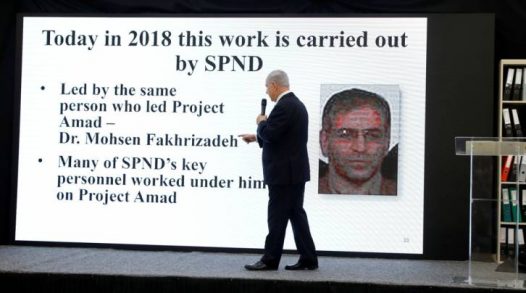
Eric Striker – National Justice – November 28, 2020
A respected physics professor who taught at Imam Hussein University of Tehran was ambushed by gangsters sent by Washington and Israel.
Mohsen Fakhrizadeh is now the sixth Iranian scientist murdered by Jewish state actors. Fakhrizadeh was put on a hit list in 2018 when during a powerpoint presentation Benjamin Netanyahu accused him of being a leading expert in Iran’s nuclear program.
The International Atomic Energy Agency (IAEA) has repeatedly stated that there is about as much evidence for an Iranian nuclear weapons program as there was for Saddam Hussein’s weapons of mass destruction or Basher Assad’s gas attack. This has not stopped Jews around the world, including Netanyahu himself, from insisting otherwise.
Trump, in his usual candid form, revealed the real agenda behind the assassination by retweeting a loose-lipped Jewish journalist named Yossi Melman. According to the bragging Melman, Fakhrizadeh’s shooting is meant to be “a major psychological and professional blow for Iran.” In other words, the goal is to inflict fear; to send a message. The textbook definition of terrorism.
Men like Fakhrizadeh have been a vital resource as the country endures its “maximum sanctions” campaign. Fakhirzadeh’s research center has been busy dealing with the crippling blockade by developing effective homegrown treatments for COVID, while his defense work focused on upgrading legal anti-aircraft weapons through his knowledge of laser systems.
To call Trump, his Jews and the Israelis “gangsters” is a disservice to real mobsters. Unlike Steve Mnuchin, Al Capone had an honor code that prohibited torturing little kids with cancer to death.
But under the US Treasury Department’s “maximum sanctions” program, international medical companies risk American reprisals if they sell to Iran. The end result is a manufactured humanitarian crisis where children in need of cancer treatments are dying “in droves.”
The goal of this cruelty is, to reiterate Melman, to deal a psychological blow. The Iranians don’t have nuclear weapons, their crime is effectively resisting Israeli aggression in their region.
The Iranians are reacting to these provocations with incredible patience. State officials have remarked that they know Trump is trying to bait them into a war, possibly to win Jewish support for a second term, avoid prosecution once out of office or permanently destroy diplomatic channels between Iran and the US. The Persians are hoping, that a Biden administration, which will also be full of Zionists, will be more fair to them. Perhaps the bridges Trump burns will only provide a convenient cover for incoming Democrats to continue the siege indefinitely.
It doesn’t end there. Jared Kushner and Trump have done the equivalent of going back in time and giving Genghis Khan modern fighter jets by selling $100 billion dollars in high tech weapons for the Saudi barbarians to utilize against neighbors in Yemen.
Even with US support and an overwhelming technological advantage, the willful Houthis have fought the Saudis to a stalemate. In response, the US-Saudi alliance is engineering a man-made famine against the civilians in Yemen that is already being compared to the starvation in 1980s Africa.
When the US Senate passed bipartisan legislation to end American support for this atrocity, Trump used his microscopic amount of political capital to veto it. The Trump-obsessed Jewish media did not seem as upset about this abuse of executive authority as they are about his meaningless tweets. In fact, Trump’s most fanatical media critics “hailed” the president’s all-in support for Saudi brutality because of the terms he set: you only get our support if you restore ties to Israel.
The murder of Fakhrizadeh should be seen as a national embarrassment for our country. As the “liberal order” begins to sink, the Zionists are relying ever more on dirty tricks.
Calling on International Civil Society to Join Them: Palestinians, Israelis Call for a Single Democratic State
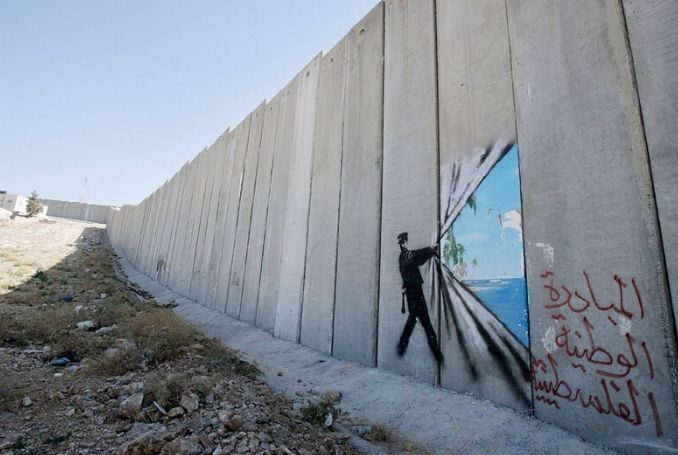
One Democratic State Campaign
The following statement was issued by the One Democratic State Campaign (ODSC) on November 15, 2020. The ODSC is one the largest initiatives of Palestinians and Israelis championing a one-state solution as an alternative to the Israeli military occupation and apartheid in Palestine.
(November 15, 2020) The Palestinian-led One Democratic State Campaign (ODSC), comprised of Palestinians from every major community (’48, the West Bank and Gaza Strip, the refugee camps and the Diaspora/Exile), together with their critical Israeli Jewish partners, has issued a call for the establishment of a single democratic state including everyone living between the River and the Sea, including Palestinian refugees who choose to return to their homeland.
Over the past three years, the ODSC, founded in Haifa but with working relations throughout the worldwide Palestinian community, has formulated a 10-point political program setting out the vision and framework of a shared democracy in which all the inhabitants of historic Palestine would enjoy common citizenship and equality under the law in a new and pluralistic political community. After decades in which the justice of the Palestinian struggle against Zionist colonization has been recognized by the international community, after decades of chasing after the chimera of a “two-state solution,” and after decades of asserting Palestinian rights with no viable political expression, the time for an effective campaign of decolonization and liberation is now, and it is urgent. Every day the Israeli government, aided by the international community, imposes draconian and irreversible “facts on the ground,” locking the country’s majority population, the Palestinians, into tiny, impoverished enclaves, perpetuating as well the exile of half the Palestinian population. A democratic state in historic Palestine is no utopia if we organize around a just political program, organize, strategize and effectively mobilize our forces, the global grassroots, the international civil society — you. We call on you to join our One Democratic State Campaign and help us build it into an effective anti-colonial, liberation movement.
For further information, contact us at contact@onestatecampaign.org. Much work still needs to be done to flesh out our program. We understand that we all will not agree on every issue, but our task in this historic moment is clear: armed with a clear and compelling political program, we need to fully enter the political arena. We call on the entire international community, and especially civil society, to support our Call for a democratic state in historic Palestine. The time has come.
It is in this spirit of solidarity, as part of a process of liberation, that we are reaching out to you to join us, beginning by endorsing our program. The struggle goes on.
In solidarity,
Awad Abdel Fattah, Galilee
Nadia Naser Najab, Ramallah, UK
Livnat Konopni, Tel Aviv
Haidar Eid, Gaza
Jeff Halper, Jerusalem
Leila Farsakh, USA
Diana Buttu, Haifa, Canada
Samah Sabawi, Australia
Mohamed Kabha, Galilee
Mohammad Al Helu, Ramallah
Rula Hurdal, Galilee
Jonathan Cook, Nazareth
Ilan Pappe, Haifa
Sami Miaari, Sakhnin
Saleh Hijazi, Ramallah
Nur Masalha, UK
Ramzy Baroud, USA
Jowan Safadi, Haifa
Rafah Anabtawi, Shefa-ʻAmr
Hamada Jaber, Ramallah
Naji al-Khatib, France
Sari Bashi, Ramallah
Bassem Tamimi, Nabi Salah
Johnny Mansour, Haifa
Jamil Hilal, Ramallah
Susan Abulhawa, USA
Haim Bresheeth, UK
Areen Hawari, Nazareth
Abdallah Grifat, Galilee, South Africa
Amir Kaadan, Galilee
Munir Nuseibah, Jerusalem
Ronnen Ben-Arie, Haifa
Eitan Bronstein, Brussels
Umar al-Ghubari, Triangle
Raja Deeb, Yarmouk Camp, Netherlands
Bilal Yousef, Galilee
Areej Sabbagh, Nazareth
Yoav Haifawi, Haifa
Mohamed Noman, Jordan
Mazin Qumsiyeh, Bethlehem
Majd Nasrallah, Triangle
Wehbi Badarni, Nazareth
Ghada Karmi, UK
Bana Shaghri, Kufr Yaseef
Miko Peled, USA
George Bisharat, USA
Issa Debi, Haifa, Switzerland
Ramez Eid, Eilabun
Radi Jarai, Ramallah
Hatem Kanaaneh, ‘Arrabat al-Battuf
Nidal Rafa, Haifa
Issam Odwan, Gaza
Asaad Abu Sharkh, Gaza, Ireland
Shir Hever, Germany
Biden signals US return to full-on globalism and foreign meddling by picking interventionist Anthony Blinken as secretary of state
RT | November 23, 2020
Joe Biden has named Anthony Blinken – an advocate for isolating Russia, cozying up to China and intervening in Syria – as secretary of state, cementing a foreign policy built on military forays and multi-national motivations.
Biden, the nominal president-elect, announced his selection of Blinken along with other members of his foreign-policy and national-security team, which is filled with such veteran Washington insiders as John Kerry, the new climate czar and formerly secretary of state in the Obama-Biden administration.
Blinken, a long-time adviser to Biden and deputy secretary of state under President Barack Obama, has been hailed by fellow Democrats and globalists, such as retired General Barry McCaffrey, as an experienced bureaucrat with “global contacts and respect.” Enrico Letta, dean of the Paris School of International Affairs, called Biden’s choice the “right step to relaunch transatlantic ties.”
He was even praised for a 2016 appearance on the Sesame Street children’s television program, where he explained to the show’s ‘Grover’ character the benefits of accepting refugees.
While some critics focused on how Blinken “got rich working for corporate clients” during President Donald Trump’s term in office, the new foreign-affairs chief’s neoconservative policy recommendations might be cause for greater concern. He advocated for the Iraq War and the bombings of such countries as Libya and Yemen.
Blinken is still arguing for a resurgence in Washington’s military intervention in Syria. He lamented in a May interview that the Obama-Biden administration hadn’t done enough to prevent a “horrific situation” in Syria, and he faulted Trump for squandering what remaining leverage the US had on the Bashar Assad regime by pulling troops out of the country.
“Our leverage is vastly even less than it was, but I think we do have points of leverage to try to effectuate some more positive developments,” Blinken said. For instance, US special forces in northeast Syria are located near Syrian oil fields. “The Syrian government would love to have dominion over those resources. We should not give that up for free.”
Blinken also sees Biden strengthening NATO, isolating Russia politically and “confronting Mr. [President Vladimir] Putin for his aggressions.”
As for China, Blinken has said Washington needs to look for ways to cooperate with Beijing. Reinvesting in international alliances that were weakened by Trump will help the Biden administration deal with China “from a position of strength” as it pushes back against the Chinese Communist Party’s human-rights abuses, he said.
UK amends status of Israel and Jerusalem following pressure from pro-Israel lobby
MEMO | November 21, 2020
The UK government has responded to pressure from the Board of Deputies of British Jews and the Conservative Friends of Israel by listing Israel and occupied Jerusalem together as one country in its weekly update to COVID-19 related travel corridors.
Yesterday the Board condemned the Foreign Commonwealth and Development Office (FCDO) in a tweet which contained a screenshot of the revised FCDO list that had made a clear distinction between the status of Israel and Jerusalem by including the two territories on its list as separate countries.
Though the list was in line with US foreign policy, the Board, which over the years has adopted the hard-line positions of the Israeli far-right towards the Palestinians, slammed the UK Foreign Office. “Absolutely inappropriate to list ‘Jerusalem’ as a separate country. We have taken this up with @FCDOGovUK this morning & they are urgently reviewing it” said the Board in its tweet.
Members of the Conservative Friends of Israel (CFI) Stephen Crabb and Eric Pickles and President Lord Polak also urged the government to make an immediate correction to the advice about Jerusalem.
“The announcement of a travel corridor with Israel is excellent news. However, the FCDO’s decision to define Jerusalem as a territory separate from Israel is offensive and hostile,” CFI is reported saying in the Times of Israel.
“Jerusalem is the capital of Israel. To describe Jerusalem as anything other than an integral part of Israel is a fiction divorced from reality and the travel advice must be immediately corrected”.
Following the complaint, the FCDO published a revised list which had Israel and Jerusalem down as the same country, even though there has been no change in the UK’s position over Jerusalem.
“The position of the UK government has remained constant since April 1950” the FCDO says on its website. “We recognise Israel’s de facto authority over West Jerusalem. In line with Security Council Resolution 242 (1967) and subsequent Council resolutions, we regard East Jerusalem as under Israeli occupation”.
MEMO has asked the FCDO to explain its reason for listing Israel and Jerusalem as the same country when hours before it had made a distinction between the two territories in line with its long-held position that East Jerusalem is occupied territory. No response has been received at the time of publication.
Pompeo: US to Label BDS Movement as ‘Anti-Semitic’
Palestine Chronicle | November 19, 2020
US Secretary of State Mike Pompeo announced that Washington will take measures against the Boycott, Divestment and Sanctions (BDS) campaign, which seeks to isolate Israel over its treatment of the Palestinians.
Washington “will regard the global anti-Israel BDS campaign as anti-Semitic,” he said.
“We will immediately take steps to identify organizations that engage in hateful BDS conduct and withdraw US government support for such groups,” Pompeo said.
Israel sees BDS as a strategic threat and has long accused it of anti-Semitism.
Activists strongly deny the charge, comparing the boycott to the economic isolation that helped bring down apartheid in South Africa.
Last week Pompeo announced his intention to create a new process by which Washington can label organizations and NGOs as “anti-Semitic”, Politico reported on Wednesday.
Three people close to the issue confirmed the move, saying Pompeo may hold off on making an announcement.
Pompeo made the first visit by a US secretary of state to the Israeli-occupied Golan Heights on Thursday, after labeling the pro-Palestinian BDS movement an anti-Semitic “cancer”.
Featured Video
No Vote, No Representation, No State: Democracy, Israeli Style
or go to
Aletho News Archives – Video-Images
From the Archives
Sanctions, War and the Policy of Dual Containment
By SASAN FAYAZMANESH | March 17, 2008
It is now nearly three decades since the Unites States adopted the policy of dual containment of Iran and Iraq. While much has been written about the containment of Iraq, there has been very little in-depth analysis of this policy when it comes to Iran. In a book that is going to be released on March 31, 2008, entitled The United States and Iran: Sanctions, Wars and the Policy of Dual Containment (Routledge), I attempt to address this shortcoming by investigating when and why the US policy of containment of Iran came about, how it evolved, and where it stands today.[1] To the extent that Israel has been involved in US policy making, the study will also include the role that Israel has played in the containment of Iran. Also, since the fate of Iran has been inextricably linked to that of Iraq, occasionally the investigation will overlap with the containment of Iraq.
The policy of dual containment of Iran and Iraq originated during the Carter Administration, but it was not until the Clinton Administration that the expression “dual containment” became popular. … continue
Blog Roll
 Aletho News
- Americans are paying the price to preserve Israel’s nuclear hegemony
- Resistance factions are necessary to ensure a permanent US Iraq withdrawal
- How Israel destabilizes the Middle East: Denying sovereignty and the right to exist
- Europe’s Establishment Is Embracing War – and Losing Voters
- NATO chief advocates war of aggression
- No Vote, No Representation, No State: Democracy, Israeli Style
- Zionist Bought Senate Blocks Information About American Citizens Killed By Israel
- While Gaza dominates the UN, these are the people keeping it alive
- New Report: “Scholasticide and Genocide in Gaza: Assessment, Testimonies and Legal Analysis”
- ‘THAAD Delusion’: Iran war exposes US missile shield limits – The Atlantic
- If Americans Knew
- Eight Palestinians Killed in Israeli Attacks on Gaza
- Israeli former leaders and security chiefs threaten legal action over ‘Jewish terrorism’
- Israel map in LA Times ad includes all land from the river to the sea
- Inside Lebanon’s 200-page dossier on Israeli war crimes
- Flydubai, genocide, settler violence, Trump abuse of power to deport – Daily Update
- Counting Antisemitic Incidents: What the ADL Audit Reveals — and Obscures
- Mamdani releases plan to combat antisemitism and hate crimes in New York City
- Iran’s Revolutionary Guards Publish Letter to the American People
- DMFI launches $1 million ad campaign supporting Virginia’s Elaine Luria
- US Senate blocks resolution seeking report on Americans killed by Israel
- No Tricks Zone
- Green Energy Debacle: German Expert Professor Fritz Vahrenholt Warns Of Severe Economic And Social Consequences
- Two More Paleo Reconstructions Affirm Meters-Higher Sea Levels Across Ireland, Brazil 7000-6000 Years Ago
- New Study: Earth And Venus Surface Warmth Largely Explained By Convection And Lapse Rate, Not CO2 Or Radiation
- 2025 Nature Paper Claiming Worsening Global Drought Gets RETRACTED …Heavily Flawed
- New Study: ‘Global Drought Shows No Detectable Recent Acceleration Under Climate Warming’
- Economic Masterminds: German Socialists Suggest Taxing Productivity Gains Stemming From Using AI
- The South China Sea Has Not Been Cooperating With The Climate Change Narrative
- Energy Crisis: Germany Enters Heating Season With Historically Low Gas Reserve Fill Levels
- New Study: The Antarctic Ice Sheet Gained Mass From 2020-2024 Due To Staggering Snow And Ice Accumulation
- Study: Ocean Heating Rates From Thousands Of Years Ago ‘Dwarf’ Modern Ocean Heating Rates

