Syria: 70 notables assassinated in YPG-controlled areas
MEMO | January 14, 2021
In recent months, the areas controlled by the People’s Protection Units (YPG) in the governorate of Deir ez-Zor (eastern Syria) have witnessed assassinations of notables and respected personalities on a near-daily basis.
Local sources in the governorate revealed on Wednesday that they had documented about 70 assassinations of notables in the YPG-controlled areas over the last five months.
The sources told Anadolu Agency that unknown individuals carried out assassinations on an almost daily basis, since the murder of Leader of Al-Aqeedat tribe Mutashar Al-Hafl in August 2020, taking advantage of the significant security deterioration in the YPG areas.
The sources added that last November, in the town of Al-Sijr, unidentified individuals assassinated Abdul-Razzaq Al-Muhammad and Ibrahim Al-Attiyah (nicknamed Abu Bakr Qadisiyah), a former commander of the Free Syrian Army (FSA) who was known for his strong opposition to the YPG.
On Sunday, unidentified gunmen assassinated Sheikh Talyush Eshatat, his son Mahmoud and another unidentified person, after storming his house in the town of Al-Hawaij. Former FSA Commander Ahmed Al-Alwan and his son were also killed in the city of Al-Busayrah in the countryside of Deir ez-Zor, according to the same source.
Following the murders, the High Council for Syrian Tribes and Clans issued a statement condemning the assassinations targeting notables and well-known personalities in the region.
According to the statement, the council: “Condemns in the name of its Arab, Kurdish, Turkmen and Syriac-Assyrian components all terrorist operations that targeted the Syrian people in general, and the tribal sheikhs and tribesmen in particular in the Deir ez-Zor governorate.”
The statement held: “Terrorist organisations that want to manipulate the tribal components and end their presence in the region”, responsible for the assassinations.
Earlier, the Syrian Al-Aqeedat tribe demanded that the international coalition hand over the administration of the Arab regions in eastern Syria to the locals, accusing the SDF, which is dominated by the YPG terror group, of carelessness in pursuing the assassinators.
Several towns in the eastern countryside of Deir ez-Zor have witnessed mass protests against the assassinations. At the same time, the YPG responded by attacking and besieging the towns, leading to civilian fatalities and injuries in addition to dozens of arrests.
Whatever is Wrong with Mike Morell?

By Steve Brown | Ron Paul Institute | January 7, 2021
Obama – er, Biden – pushed hard for the removal of Syria’s Assad and engineered US destabilization of Syria partly at the behest of Israel in 2011 and 2014 , in part to allow Israel free reign to annex the Jordan Valley and West Bank, in tandem with Israel’s long-standing annexation of the Golan. Yes, the Israeli Nile-to-Euphrates agenda is alive and quite well, not just among Israel’s 3rd templars, but within Biden’s proto-expansionist regime in the DC wings, too. Now, what’s that again about Russia Russia? Biden’s Russia, Russia? There’s just one problem for the Axis of Evil’s plan going forward: Russia’s continued opposition to the US plan in Syria.
Russia likely anticipated the complete destabilization of the Middle East by the US and its Israeli ally by design in 2014, where Takfiri malign infestation of the region not only threatened Europe, but Russia too, with a further militarist threat to Iran and West Asia. Russia stands in the way of that Imperial agenda, and that’s a big deal for Washington’s elite donor class. Russia also provided succor to Ed Snowden, when the DC shark pit would have crucified him alive; just as the same bloodthirsty pack will crucify Julian Assange too should they ever get their bloody incisors into him.
Now, rather than risk world war, the former US regime chose to tread a fine line with Russia in Syria, although outright war was much closer than the public realized or knew at the time. The current shape-of-things-to-come will test that envelope once more, and in a very big way. By definition, the reappearance of war-criminal and dinosaur Madeliene Albright, to re-blight a thoroughly blighted major media proves that intent. Albright’s abysmal record and advanced years have evidently not prevented her from seeking a new term within the putrefying endless expanse of DC’s Neoliberal cesspool.
Lately the voluble Albright has graced the CIA-corporate-led media to tout all subjects great and small, whether the contagion and failed US foreign policy, to the Balkans and somewhat erratic behavior of others. Apparently the non-apologetic self-acknowledged child-killer is safe for the time being for the DC establishment to trot out again — after all these years — and Albright holds her CIA-surveillance state brief well, even at the tidy age of 83.
Along with Albright and other foreign policy wonks littering the Biden-Harris space (Jen Psaki, Sam Power, and Wendy Sherman etc) Mike Morell’s reappearance has been as inspired and imaginative as his call to murder Russians (with Iranians thrown in for good measure, of course). Which apparently posed no problem for the incorporated CIA-run major media at the time; and whether Morell’s twitter account was ever suspended then for publicly threatening violence, remains unknown.
Notably the recent storming of the US bastille on January 6th caused our dear Mike to lament this failed example of democracy-in-action via a televised CBS news interview on that day, Mike posing that such brazen acts could be an inspiration for anti-American propaganda to be exploited by none other than… er, well, ahem… the Russians and RT! When a not-so-incredulous but mainly pandering CBS co-host pressed Mike about how Russia could possibly be running the Proud Boys to storm the capitol?? … our dear Mike back-pedaled a bit to say, well, like always (but never proven) the Russians definitely did hack Hillary in 2016 and cost her the election. Leaving hosts and viewers alike somewhat baffled, but fortunately the CBS ‘analyst’s’ cum CIA guy’s conversation moved on, saving further embarrassment.
If public consciousness were not just a few milliseconds, the irony of media claims that Trump’s allegations about voter fraud are baseless since proof has not yet been provided, would not be lost on the public, when compared to US intelligence claims that Russian collusion in 2015 cost Hillary the election when no proof or evidential record of that has ever been provided, either. But then again, Morell is a former CIA spy guy and CBS anchor, so that’s just how he rolls…
In closing we are left with one final perplexing and inevitable question: which CIA-led news network will pick up Gina Haspel and Mike Pompeo as news analysts going forward? CBS too? And who is the next Clinton-Obama dinosaur and war criminal to re-appear and pollute the new regime in DC?
For certain, we shall see.
Steve is an antiwar activist and a published scholar on the US monetary system.
Twitter: @newsypaperz
Israeli occupation forces close Ibrahimi Mosque for ten days

Palestine Information Center – January 8, 2021
AL-KHALIL – Israeli occupation forces (IOF) closed the Ibrahimi Mosque in al-Khalil to worshipers and visitors for 10 days, Thursday, under the pretext of combating the spread of the coronavirus.
Sheikh Hefzi Abu Sneina, the director of the Ibrahimi Mosque, told the Palestinian News Agency (WAFA), “The occupation’s decision to close the Ibrahimi Mosque will start from nine o’clock this evening for 10 days. Worshipers and visitors will be banned from accessing any part of the holy site.”
Abu Sneina charged that these claims are not valid and that the IOF is denying Muslims access to the Haram.
He stressed that worshipers and visitors are committed to all health measures according to the preventive protocols in place, in addition to the fact that the IOF soldiers deployed at the military checkpoints surrounding the Haram have been allowing only 20 worshipers to enter the Haram at one time.
Meanwhile, the Palestinian Ministry of Endowments and Religious Affairs condemned the decision. Hussam Abu al-Rub, the Undersecretary of the Ministry told Anadolu Agency, “This decision is rejected and we will not accept it.”
Abul-Rub added that this decision constitutes an encroachment and interference with the authority of the Palestinian government to supervise religious sites in Palestine.
He indicated that the ministry is following up on everything related to organizing the entry of worshipers and the preventive and precautionary measures related to coronavirus.
Since 1994, the Ibrahimi Mosque, which is believed to be built on the tomb of the Prophet Ibrahim, peace be upon him, has been divided into a special section for Muslims and another for Jews after a Jewish settler killed 29 Muslims while they were performing the dawn prayer on February 25, 1994.
The Ibrahimi Mosque and the Old City of the al-Khalil were listed by the United Nations Educational, Cultural and Scientific Organization (UNESCO) in 2017 on the World Heritage List.
The Mosque is located in an area under full Israeli control but it is managed by the Palestinian Ministry of Endowments.
Western animosity towards Iran due to its support for Palestinian cause, Yemeni PM says
Press TV | January 8, 2021
The prime minister of Yemen’s National Salvation Government has denounced attempts to form an anti-Iran front as part of a joint Israeli-Arab-US project, emphasizing that such bids aim to counter Tehran’s untrammelled support for the Palestinian cause and oppressed Palestinians.
“The normalization of relations between some regional rulers and the Zionist regime (Israel) is part of the Zionist-Arab-American scheme, and they are now seeking to form an alliance against Iran because it has stood with Palestine,” Abdulaziz bin Habtoor said on Thursday.
He added, “The project of partitioning Arab and Muslim world was drawn more than one hundred years ago in the service of the Zionist plan and the occupation of Palestine.”
Habtoor highlighted that any move that resists the Zionist project in the region will be met with fierce Western opposition.
He said Saudi Arabia and the United Arab Emirates (UAE) have a specific and shared goal to disintegrate Yemen, besides certain plots to cement their dominance and influence in Yemen.
“The UAE seeks to wrest control over a number of Yemeni cities, islands and bases, and Saudi Arabia wants to dominate other sectors,” Habtoor noted.
The Yemeni prime minister then dismissed attempts by the Saudi-led coalition member states to present a united front as “a big lie,” stating they will turn on each other and clash in the future due to profound differences existing among them.
‘Appointment of Iranian ambassador to Sana’a broke Saudi diplomatic siege’
Separately, a member of the Yemeni Supreme Political Council on Thursday welcomed the appointment of Iranian Ambassador to Sana’a, Hassan Irloo, stating that the step broke the diplomatic embargo that the Saudi-led coalition had imposed on the country.
Major General Sultan al-Samaei pointed to the deeply historical ties between Yemen and Iran, underlining that the Yemeni nation’s resistance embodies the axis of resistance that the Islamic Republic of Iran and Yemen are part of and their common stance against colonial powers, spearheaded by the Israeli regime and its allies.
Irloo, for his part, said Iran will not hesitate to support Yemeni people by transferring its capabilities in all fields.
The Iranian envoy stressed that relations between Tehran and Sana’a will witness broader cooperation in various spheres.
Irloo has recently been appointed as Iran’s ambassador to Yemen. In early November, he submitted his credentials to Mahdi al-Mashat, president of the Supreme Political Council of Yemen. Since then he was in the US and its regional allies’ crosshairs.
On December 8, the US slapped sanctions on the ambassador on allegations that Irloo was “linked” to Iran’s Islamic Revolution Guards Corps (IRGC), without providing any proof.
A New Year’s Wish
Let’s remove Israel from American politics

By Philip Giraldi • Unz Review • January 5, 2021
There has been one good thing about the COVID-19 virus – for the first time many among the general public are beginning to ask why a rich country like Israel should be getting billions of dollars from the United States taxpayer at a time when many Americans are struggling. Inevitably, of course, the press coverage of the questions being asked about the cash flow failed to discuss the real magnitude of the “aid,” trade concessions, co-production projects and dicey charitable contributions that our federal and many state governments shower on the Jewish state, which easily exceed $10 billion per year.
During his 2016 campaign Donald Trump swore that he would be the best friend that Israel has ever had in the White House, a pledge that some of us viewed skeptically as Trump was also committed to bringing the troops home from “useless wars” in Asia, most of whom were in the Middle East supporting Israeli interests. More recently Trump admitted that America was in the Middle East to “protect Israel” and he has indeed proven to be the great benefactor he promised to be in responding fully to Israeli Prime Minister Benjamin Netanyahu’s wish list. Trump has increased tension dramatically with Iran, moved the U.S. Embassy to Jerusalem, has recognized Israeli sovereignty over the Syrian Golan Heights, and has basically given Israel the green light to do whatever it wants on the Palestinian West Bank, including getting rid of the Palestinians. And as all that has played out the Israelis have attacked and killed thousands of civilians in Gaza, Syria and the West Bank with impunity, protected by the U.S. veto in the U.N. Security Council against any consequences for their actions while a subservient Congress gives Netanyahu twenty-eight standing ovations and bleats that “Israel has a right to defend itself.” Trump has made the United States completely complicit in Israeli war crimes and has committed a few of its own to include the widely condemned assassination of the senior Iranian official Qassem Soleimani in Baghdad one year ago.
Israel more-or-less openly admits that it controls the actions of the United States in its region, its leaders having boasted how the U.S. federal government is “easily moved” when it comes up against the Israeli Lobby. Nor is there any real secret to how the Lobby uses money to buy access and then exploits that access to obtain real power, which is then used to employ all the resources of the U.S. government in support of the Jewish state. The top donor to the Democratic Party, Israeli-American Haim Saban has stated that he is a one issue guy and that issue is Israel. This single-minded focus to promote Israel’s interests at the expense of those of the United States makes the Israel Lobby the most formidable foreign policy lobby in Washington and it recalls the warning once issued by George Washington in his Farewell Address, where he stated that “permanent, inveterate antipathies against particular nations and passionate attachments for others should be excluded, and that in place of them just and amicable feelings toward all should be cultivated. The nation which indulges toward another a habitual hatred or a habitual fondness is in some degree a slave.”
The complete contempt that the Israelis and Israeli supporters in the U.S. have for other Americans and their interests was on full display last week when convicted Israeli spy Jonathan Pollard flew “home,” meeting Netanyahu as he disembarked from a private plane that had departed from Newark New Jersey before being given a hero’s welcome.
Pollard is the most damaging spy in American history, having stolen the keys to accessing U.S. communications and information gathering systems. He was an unlikely candidate to become a U.S. Navy intelligence analyst, and one review board determined that he had been hired in the first place under pressure from the American Israel Public Affairs Committee (AIPAC). A month after Pollard’s arrest in 1985, C.I.A director William Casey stated: “The Israelis used Pollard to obtain our war plans against the USSR – all of it: the co-ordinates, the firing locations, the sequences, and Israel sold that information to Moscow for more exit visas for Soviet Jews.” According to a C.I.A. after-the fact-damage assessment “Pollard’s operation has few parallels among known U.S. espionage cases…. his first and possibly largest delivery occurred on 23 January [1984] and consisted of five suitcases-full of classified material.”
Secretary of Defense Caspar Weinberger wrote a forty-six page review of the case that remains largely classified and redacted to this day, detailing what incredible damage Pollard had done. Part of the document states: “In this case, the defendant has admitted passing to his Israeli contacts an incredibly large quantity of classified information. At the outset I must state that the defendant’s disclosures far exceed the limits of any official exchange of intelligence information with Israel. That being the case, the damage to national security was complete the moment the classified information was given over. Ideally, I would detail… all the information passed by the defendant to his Israeli contacts: unfortunately, the volume of data we know to have been passed is too great to permit that. Moreover, the defendant admits to having passed to his Israeli handlers a quantity of documents great enough to occupy a space six feet by ten feet… The defendant has substantially harmed the United States, and in my view, his crimes demand severe punishment… My foregoing comments will, I hope, dispel any presumption that disclosures to an ally are insignificant; to the contrary, substantial and irrevocable damage has been done to this nation. Punishment, of course, must be appropriate to the crime, and in my opinion, no crime is more deserving of severe punishment than conducting espionage activities against one’s own country.”
The Pollard trip to his “home” occurred because Donald Trump had obligingly lifted the travel restrictions on him the week before, one more favor to Israel. At the airport, Pollard and his wife knelt to kiss the Israeli soil before Netanyahu handed him an Israeli citizen ID and welcomed him. The 737 luxury-fitted executive jet Pollard and his wife flew on belongs to Las Vegas casino magnate Sheldon Adelson, chief donor to the Republicans and to Donald Trump. Adelson is married to an Israeli and famously has said that he regrets having worn a U.S. Army uniform when he was drafted, much preferring instead that he might have done military service in the Israel Defense Force.
I should point out that permitting dual nationals with singular loyalty to a foreign nation to have such significant influence over the two leading political parties in the U.S. by virtue of money alone is a recipe for disaster, and so it has proven. What were Trump and Hillary Clinton thinking when they tied themselves to Adelson and Saban? Or were they thinking at all?
The Israeli boosters in the United States have flat out corrupted our political process to get where they are. They have bought or intimidated every politician that matters to include presidents, congressmen and even those in state and local governments. Anyone who criticizes Israel or Jewish collective behavior in support of the Israeli state is subject to character assassination and blacklisting a la Mel Gibson and Rick Sanchez. Those who persist are denounced as anti-Semites, a label that is used liberally by Zionist groups.
Anyone who is bold enough to either criticize the Israelis or defend the Palestinians is targeted, and if they happen to be in Congress like Cynthia McKinney, Pete McCloskey, Paul Findlay, James Traficant, William Fulbright and Chuck Percy they are first vilified in the media and then set up against a very well-funded candidate to drive them from office. The end result is that when Israel kills civilians and rampaging armed settlers destroy their livelihoods the United States government chooses to look the other way and shower the rogue state with money so it can continue to do its dirty work.
The corruption extends to the state level, where twenty-six governments have passed Israel lobby-promoted legislation that limits free speech rights if anyone seeks to criticize Israel. This sometimes includes forcing employees, under threat of dismissal, to sign a pro-Israel oath and promise not to support any boycott of the Jewish state. The massive interference in the internal governance of the United States by Israel and its U.S. born lackeys far exceeds that of any other country, including inappropriately vilified Russia or China.
It is well past time to get rid of the Israel parasite that feeds on the American government and people. The special relationship with Israel, sanctified in the halls of Congress and by a Jewish dominated media, does nothing good for the United States and for the American people. Israel’s constant interference in the U.S. political system and economy comes at a huge cost, both in dollars and in terms of actual American interests.
And then there are the hot buttons which, if the U.S. actually had a functional government that is responsive to the people, should have been pushed long ago. Israel is ranked by the FBI as the number one “friendly” country in terms of its spying against the United States. Pollard is an exception, but Israeli spies are routinely slapped on the wrist when caught and never face prosecution. The Mossad agents who were the “Dancing Shlomos,” celebrating while the twin towers went down on 9/11, were allowed to go home. And Israel has never truly paid any price for the horrific bombing and torpedoing of the U.S.S. Liberty fifty-three years ago, which killed 34 Americans and injured over one hundred more. The completely unprovoked attack took place in international waters and was later covered-up by President Lyndon Baines Johnson, Secretary of Defense Robert McNamara and Congress. May they burn in hell. The surviving crew members are still waiting for justice.
So, let’s all resolve for 2021 to do whatever we can to pull the plug on Israel. Let Israel pay its own bills and take care of its own defense. American citizens who prefer the Jewish ethno-religious state to our constitutional republic should feel free to emigrate. Lacking Washington’s backing, Israel will also be free to commit atrocities and war crimes against all of its neighbors but without the U.S. United Nations veto it will have to begin facing the consequences for its actions. But most of all, as Americans, we will no longer have to continue to carry the burden of a country that manipulates and uses us and also has a certain contempt for us while doing so. And maybe just maybe freeing the United States from Israel could lead to an end to all the wars in the Middle East that Washington has been waging in spite of the fact that we Americans are threatened by no one in the region and have no real interest whatsoever in prolonging the agony of staying there.
Philip M. Giraldi, Ph.D., is Executive Director of the Council for the National Interest, a 501(c)3 tax deductible educational foundation (Federal ID Number #52-1739023) that seeks a more interests-based U.S. foreign policy in the Middle East. Website is https://councilforthenationalinterest.org address is P.O. Box 2157, Purcellville VA 20134 and its email is inform@cnionline.org
Israel Grants Settlers Millions to Monitor Palestinian Construction in West Bank

Israeli forces carry out a demolition in the Massafer Yatta area. (Photo: via Twitter)
Palestine Chronicle | January 2, 2021
Israel has granted illegal settlements more than $6 million to fund drones and patrol units to monitor “unauthorized” Palestinian building in the occupied West Bank.
The Settlement Affairs Ministry published on Thursday the criteria for settlement councils to gain access to the $6.2 million in funding, Haaretz reported.
The councils will be able to buy drones, vehicles and electronic monitoring equipment and pay the salaries of inspectors with the funding.
Those inspectors will monitor Palestinian construction in Area C of the occupied West Bank, which is under full Israeli control.
Palestinians living in Area C must acquire Israeli permission to build, but such permits are near-impossible to get. Just 1.4 percent of requests were approved between 2016 and 2018, according to official data.
Buildings constructed without an Israeli permit are regularly demolished by the military.
The funding will also go to erecting fences to close-off areas.
It is the first time settlement councils will have access to such funds as part of the state budget.
Under the arrangement, settlement councils will then report to an “Area C situation room” to report to officials what Settlement Affairs Minister Tzachi Hanegbi described as the “hostile takeover of land in Area C”.
More than 400,000 Israelis live in settlement communities in the occupied West Bank which are considered illegal under international law.
American Tax Payers Spend At Least $23 Billion On Israel Every Year
By Eric Striker – National Justice – January 1, 2021
Last September, Donald Trump accidentally upended an entire generation of myths invented by the left and right that purport to explain America’s costly and unpopular military adventures in the Middle East:
“The fact is, we don’t have to be in the Middle East, other than we want to protect Israel. We’ve been very good to Israel. Other than that, we don’t have to be in the Middle East. You know there was a time we needed desperately oil, we don’t need that anymore.”
As Mondoweiss pointed out at the time, the explosive admission went completely unmentioned in the mainstream media, which traditionally hangs on every one of Trump’s words and reacts hysterically.
Categorizing America’s foreign policy catastrophes as done in the service to Israel has until the Trump era always been dismissed by media tastemakers and political gatekeepers as rank anti-Semitism driven by reductionist, simplistic and conspiratorial thinking, even when intelligence officials like Michael Scheuer and foreign policy experts affirm the view.
Trump’s lack of subtlety when remarking on using American blood and treasure to incrementally advance the interests of the Jewish state is one reason why the Israel lobby, which is perpetually paranoid about the public noticing their activities, is not keen on reciprocating his often suffocating love.
Their paranoia is justified. This year Congress made the mistake of combining its $900 billion dollar coronavirus stimulus bill, which suffering people are closely following the development of, with the yearly $1.4 trillion dollar fiscal budget, which is typically ignored.
A deluge of popular anger was provoked by news that we would only be receiving a $600 dollar check under the guise of budget austerity. At the same time, buried deep in the 5,600 monstrosity was a provision setting aside supposed budget constraints to give Israel the equivalent of $5,000 dollars for each of its citizens.
Jews in the media responded to the controversy by calling indignant American tax payers, including actress Alyssa Milano and various left-wing journalists, “fools” and “anti-Semites.” They doubled down by stating that the $500 million dollars provided to Israel was a drop in a $2.3 trillion dollar bucket. They pointed out that other countries, such as Jordan, were receiving foreign aid as well.
But even critics of Israel do not properly calculate the true price Americans pay for a state that — unlike South Korea or Germany — does not provide any economic or military benefits to the homeland. America does not have military bases in Israel, nor does Israel have anything to trade.
The general figure provided for annual US aid to Israel is $3.8 billion, but as former CIA intelligence officer Philip Giraldi has written, this figure excludes our completely artificial $9 billion dollar trade deficit with that country, as well as the $8 billion provided in “loan guarantees” that are basically giveaways since the US Treasury pays interest and principal on these loans.
The Black Budget
Covert “black budget” funding to the Jewish state is another topic shrouded in mystery.
In 2015 a public interest group, the Institute for Research: Middle East Policy, sued the CIA for its refusal to comply with a Freedom of Information Act (FOIA) request demanding records on how much is spent in service of Israel, including in respect to intelligence gathering efforts on American citizens that is then sent to the Mossad.
The Department of Justice fought a ferocious, four year long legal battle to keep this information secret and ultimately won.
Based on publicly available pre-1990 black budget expenses, the CIA is dedicating between $13.2 billion to Israeli interests every year if spending has been tacked to inflation. The number may be even higher under the Trump administration, especially since it has escalated the conflict with Iran.
US Spending To Advance Israel
Rarely discussed is how US foreign aid to Muslim countries is, as Trump has constantly reminded us, nothing more than bribing them into cooperating with Israel. US aid to Israel, by contrast, is unconditional.
All of the nations that share a border with Israel (Jordan, Egypt, Lebanon, and even to certain players in Palestinians and Syria) receive payments from the United States. Were it not for the peculiar, thankless relationship America has with Israel, US tax dollars would not be bankrolling the entire Egyptian military, nor would we be propping up the basket case monarchy in Jordan by handing them 4% of their GDP every year.
The following is a list of expenses — financial, geopolitical, and human — that the American people must shoulder to guarantee the security, stability and geopolitical expansion of 9 million Israelis.
1) Egypt — $2.2 billion a year
The United States’ foreign aid to Egypt, about $1.3 billion which goes to its military and the rest to its economy, is entirely predicated on the country’s military dictators maintaining a close intelligence and diplomatic relationship with Israel. The country’s current leader, Abdel Fattah al-Sisi, took power in 2014 in an Israeli-backed coup that deposed the democratically elected Muslim Brotherhood.
Egypt, which was once a regional superpower that fought the Israelis during the Six Days War, restored diplomatic ties with Israel in 1979 under a US brokered deal.
The single-issue relationship was put on display when Senator Rand Paul attempted to cut aid to Egypt during a 2017 Congressional fight. The American Israel Public Affairs Committee (AIPAC), five US Senators and Benjamin Netanyahu himself all intervened to block Paul’s amendment, which was crushed in the Senate by a large majority after Jewish groups penned a letter demanding the aid continue as usual. According to both Netanyahu and AIPAC, America’s payoff to the Egyptian military establishment is the only thing keeping Israel’s formidable neighbor from attacking them.
2) Jordan — $1.5 billion a year
In 1994, Jordan became the second Arab state after Egypt to restore formal ties with Israel.
Prior to 1994, Jordan received a smaller sum of aid from the US, but the country retained relative geopolitical independence, including support for Saddam Hussein during the first Persian Gulf War.
As a state bordering Palestine that for years retained its claim to the West Bank, the Jordanian monarchs have been a useful asset for Israel. The country’s establishment is widely despised by Palestinians, even though the Jordanian public is broadly sympathetic to their plight.
In exchange for breaking solidarity with the Arab world’s boycott of Israel, the United States signed a generous free trade agreement with Jordan, where we prop up their economy by buying 25% of their exports and hand them $1.5 billion a year (close to 4% of their GDP) via USAID.
3) Iraq — $1.1 Billion (Excluding cost of the Iraq war)
The Iraq war, and our continued presence in the country 17 years later, is the product of Jews in Washington primarily loyal to the state of Israel.
This is the opinion of the man who went before the United Nations and went down in history as having sold the weapons of mass destruction lie, former Secretary of State Colin Powell.
In Karen DeYoung’s 2007 biography of Powell, Soldier, he singles out Douglas Feith and Paul Wolfowitz as the real architects of war. In one interview with DeYoung, Powell even refers to Donald Rumsfeld — the Gentile who is usually blamed alongside Dick Cheney for the Iraq debacle — as a man controlled by the “JINSA crowd” in the Defense Department. The Jewish Institute for National Security Affairs (JINSA) is an Israel lobbying firm similar to AIPAC.
If JINSA and the “card-carrying Likud members,” as Powell is reported to have remarked once, were not making foreign policy calls in Washington the war would’ve never happened.
It could be argued that the trillions spent on perhaps the most wasteful military conflict in American history was a subsidy to Israel.
4) Saudi Arabia – $1.1 Billion a year
Saudi Arabia, the nation which 15 of the 19 9/11 hijackers, also lobbies the United States government through AIPAC.
The Trump administration was able to secure public Saudi support for Israel by promising $100 billion dollars in modern weapons, including F-35s, to the Gulf state. AIPAC and the Israeli government are both considered to have been the kingmakers in the deal.
The Saudi government, along with another nation that recently established official ties to Israel the, United Arab Emirates, are both state-sponsors of terrorism, including sending American weapons to Al-Qaeda.
The official sect of Islam practiced in Saudi Arabia is Wahhabism, which is the puritanical and violent dogma that inspires both the Islamic State (ISIS) and Al Qaeda.
To understand how deep terrorist ideology is penetrated in Saudi society, a Saudi Royal Air Force pilot being trained in a $740 million dollar US-funded Pentagon program to learn how to fly the F-35s killed three American servicemen and injured eight others at the Pensacola Air Station in Florida in a quickly memory holed terrorist attack last year. A study from 2014 found that citizens of Saudi Arabia were the largest private donors to ISIS in Syria and beyond.
5) Afghanistan – $5.4 Billion a year
As with Iraq, the 2001 war in Afghanistan and our ongoing presence there, is part of a containment strategy of Iran done in the interest of Israel.
According to former National Security Agency analyst Karen Kwiatkowski, the Pentagon’s logic behind the invasions of Afghanistan and Iraq was to create a military pincer that would surround Iran. In a 2009 interview, Kwiatkowski stressed that Iran was not a threat to the United States or its interests, but rather only to Israeli regional hegemony,
The Israelis have been using Afghanistan to spy on the Iranian military and engage in various black ops against their country. The Iranians appear to be fighting back, including by restoring ties for their historical nemesis, the Taliban. Israel fears that an unconditional US withdrawal could end up working to the advantage of Iran.
When earlier this year Donald Trump said he wanted to withdraw troops from Afghanistan — a move supported by the overwhelming majority of the American people — JINSA and AIPAC were the sole interest groups to vocalize opposition and began pressuring the Senate to ensure it didn’t happen. The Jewish lobby succeeded, and Rand Paul’s bill last July that would’ve brought our soldiers home was defeated by a bipartisan vote of 60 to 33.
6) Palestine, Lebanon, Syria — Fluctuates
The three nations bordering or occupied by Israel receive aid from the United States in an attempt to present carrots and sticks that prevent factions from fully uniting, but the spigot is turned off and on regularly at the behest of Israel.
Last year, the US State Department cut aid to Lebanon’s military in half after a direct appeal to do so by the Netanyahu government. The complaint was that the Lebanese military was not doing “enough” to undermine Shi’ite military and political power. The US typically funds the Lebanese military as a counter-force to Hezbollah, but after the Shi’ite militia successfully defended Lebanon’s territory from an Israeli invasion in the 2006 war, the group has enjoyed nationalist support across the diverse religious groups in the country.
Hezbollah’s work in defending Christians from ISIS in recent years has also been a political game changer, as traditionally grievances from Christian organizations have been exploited by Israel to leverage against the Palestinian cause.
In Palestine itself, the Palestinian Authority under Mohammad Abbas has enjoyed about half a billion US dollars in aid, both to politically divide him from Hamas controlled Gaza, as well as subsidize the humanitarian costs of Israel’s occupation in the West Bank.
Abbas’ strategy of “negotiating” with Israel through America is in retrospect an abject failure. Illegal settlements in the West Bank have continued uninhibited, and the Palestinians in the territory narrowly avoided the full annexation of their land by Israel. While the annexation project appears to have been put off, experts believe Israel will attempt to do so once Israel has a better foothold in the region.
In Syria, which Wikileaks of former Secretary of State Hillary Clinton exposed as nothing more than a regime change operation on behalf of Israel, the United States continues to spend close to a billion dollars every year in “humanitarian” relief.
While the coalition of the Syrian Army, Russia and Iran have largely defeated the ISIS and Al Qaeda rebels, the US is combining its humanitarian aid to anti-Assad areas while attempting to starve the country with crippling sanctions. By providing support to certain regions through USAID, Washington and Israel are artificially extending the conflict between Assad and the anti-government fighters, the latter which would’ve totally surrendered otherwise.
Future Expenses Under Trump’s “Israel-First” Agenda
Donald Trump and Jared Kushner have been able to secure support from multiple Muslim nations for Israel by directly offering big payments and controversial favors as a trade.
Here is what this “diplomacy” will cost Americans.
1) Morocco –$3 Billion and the Western Sahara
Under Trump’s deal with Morocco, its king Mohammed VI will receive $3 billion dollars in investments courtesy of the US taxpayer through the International Development Finance Corporation (DFC), a government entity created by Donald Trump, in exchange for recognizing Israel.
The more concerning aspect of the deal is Trump’s recognition of the disputed Western Sahara as Moroccan, as well as a deal to sell the Moroccan military billions in American arms to give them a strategic edge over Algeria and Western Saharan natives.
The interests of the Western Saharans are represented by the Polisario Front, a nationalist group seeking independence and self-governance. The Moroccans and Polisario Front have been engaging in intensifying armed battles since November, a month before Trump’s outreach to Mohammed VI. With American recognition of the Western Sahara, the Polisario Fronto will have lost diplomatic leverage and potentially have no choice but to fight the Moroccans — thus initiating a potential conflagration in North Africa if Algeria maintains its pro-Saharan position.
2) Indonesia — $2 Billion
Trump’s DFC is reaching out to Indonesia — the world’s largest Muslim nation — to provide $2 billion in US aid in exchange for normalizing relations with Israel.
The offer appears to have been rejected, with Jakarta announcing that it stands firmly behind the Palestinian cause.
Unlike Morocco, Jordan and Saudi Arabia, Indonesia is a parliamentary democracy. Supporting Israel remains highly taboo among the vast majority of Muslims worldwide, so it remains to be seen if the Indonesian state will end up accepting America’s money.
3) Sudan — $1 Billion and Taken Off State-Supporter of Terrorism List
Sudan is an important flashpoint in Israel’s conflict with the Palestinians. Iran uses Sudan as a transit point for smuggling arms to the Palestinian resistance.
The Israelis and the United States have exploited racial strife between blacks and Arabs in Sudan — funding the black side in Darfur (South Sudan) — during the country’s bloody civil war. The conflict has been winding down, but the Sudanese state and economy remains in dire straits largely due to sanctions over being a state-sponsor of terrorism.
During the 1990s, Sudan was blamed for housing Osama Bin Laden following the 1998 US embassy bombings in Kenya and Tanzania. Under Trump’s deal, Sudan will be absolved of all blame after paying a fine and receive a billion dollars in debt forgiveness and economic aid in exchange for establishing formal relations with Israel.
4) Saudi Arabia, UAE, Bahrain, Oman, etc — Unknown
The Saudis have been sinking billions of dollars into fellow Gulf States to encourage them to support Israel since 2018, according to leaks to Arab media.
According to the documents, the Saudis were working on behalf of the US government in this endeavor, promising their neighbors a “generous aid package” from America just for collaborating with the Jewish state.
As written before, the Saudis and UAE are receiving over $120 billion in US weapons — an idea that previously would’ve been a non-starter in Washington due to potentially undermining Israel’s qualitative military edge over Arabs.
By showing loyalty to Israel, Saudi Arabia has been able to secure support in Washington for its barbaric war in Yemen. When the US Congress passed a resolution to end US support for the Saudi war effort, Donald Trump vetoed the bill and, unlike the NDAA, no attempt was made to override this decision.
The full extent of what the US plans to provide Gulf States for their internally unpopular backing for Israel is not yet possible to know.
The Real Cost of Israel
While previous packages of US foreign aid to Muslim countries on behalf of Israel were presented as an objective pursuit for “peace in the Middle East,” the Trump administration’s efforts have directly led to new and bloody conflicts (the Yemen war), and opened up the floodgates for new ones around the world.
All that is certain is that Trump’s concessions and arm’s deals pursuit of recognition for Israel is objectively making the world more dangerous and unstable.
A perfect dollar estimate of how much Israel is costing our country is impossible due to the opaque nature of Washington’s servility to the Zionist state.
In spite of this, we can arrive at a range. The on paper cost of Israel, when we include the “loan guarantee” scam and payments to neighboring countries to advance Israel’s interests, is at least $23.1 billion a year.
This figure excludes speculative figures on the black budget in service to Israel, which if correct, would bring that number to $36.3 billion. It also excludes aid to Palestine and Lebanon (which may return next year), as well as costs related to the proxy conflict with Iran, which almost all foreign policy experts agree is entirely motivated by Israeli — not American — interests.
This number will balloon under Donald Trump’s plan, which is expected to be continued uninhibited under a Joe Biden presidency. Trump’s outreach to the Arab world will put us on the hook for at least an extra $6 billion, which again, is an extremely conservative estimate since we are excluding the shady deals with the Saudis and other Gulf States.
Thus, the $3.8 billion figure that already outrages much of the American public is at the bare minimum about $23 billion per year, but could potentially be closer to $50 billion.
This price of this luxury item in the Middle East is almost half of all American foreign aid, and does not serve any humanitarian purpose (often times, the other way around), much less the interests of the American people. Understanding the outrage this sum would provoke among US voters and taxpayers, groups like JINSA and AIPAC, along with the disproportionately Jewish owned media, ensure that it is never accurately reported.
Report: Israel army carried out 300 attacks on Gaza Strip in 2020
MEMO | January 1, 2020
The Israeli army announced on Thursday that it had attacked 300 targets in the Gaza Strip during 2020.
The army revealed in a statement documenting its activities in 2020, that nearly 300 targets were raided in the Gaza Strip, while its armed forces thwarted 38 attempts to infiltrate through the security fence of the besieged enclave.
According to the statement, as many as: “176 rockets and mortars were launched from the Gaza Strip, 90 per cent of them landed in empty areas, as the Iron Dome system intercepted 80 shells and rockets that were targeting civilian areas.”
In the occupied West Bank, the Israeli army stole 675,000 shekels of Palestinians’ money, compared with 972,000 shekels in 2019. More than one million shekels were stolen in 2018, and 541 weapons confiscated, compared with 603 during the previous year.
As stated in the report, Israeli combat aircraft carried out 1,400 sorties on various fronts, while the spy drones recorded 35,000 flight hours.
Palestinian resistance stands united with joint military exercises in Gaza
The following report is largely translated from the original French at Collectif Palestine Vaincra
On Tuesday, 29 December, the Joint Chamber of the Palestinian resistance factions organized military drills in the Gaza Strip, on land, sea, and air. The joint military drills brought together 12 Palestinian armed branches of organizations, including the Ezzedine al-Qassam Brigades of Hamas, the Al-Quds Brigades of Palestinian Islamic Jihad and the Abu Ali Mustafa Brigades of the Popular Front for the Liberation of Palestine, as well as the National Resistance Brigades of the Democratic Front for the Liberation of Palestine, the Nasser Salah al-Din Brigades, the Al-Aqsa Martyrs Brigades – Al-Amoudi Brigade, Asifah Amy, Martyr Ayman Jouda Brigades, Martyr Abdel Qader al-Husseini Brigades, Mujahideen Brigades, Ansar Brigades and the Martyr Jihad Jibril Brigades.
In a statement issued the day prior to the military drills, the Palestinian organizations affirmed that this effort came “as part of the strengthening of cooperation and joint action between the resistance factions, embodying their efforts to increase their combat readiness in a permanent and continuous way.”
At a press conference, a representative of the Palestinian military resistance organizations spoke, appearing with his face covered with a traditional Palestinian keffiyeh and with a Palestinian flag patch on his arm, without the logo or flag of any of the factions. In his address, he emphasized Palestinian national unity in the resistance: “This effort clearly expresses the joint decision and unity between the wings of the resistance factions in all of their aspects…It is a simulation of what could happen in any real confrontation with the occupation, and a representative example of the capacity of the resistance to confront and respond to such events.” He added that “long years of struggle against the Israeli occupation have developed a unique experience of resistance, resting on solid foundations.”
Regardless of the scale of the military drills, the resistance spokesperson underlined that the program was defensive in nature, with its objective “to confirm the readiness of the resistance to defend our people in all cases and in all circumstances.” Hundreds of fighters from all organizations took part in the drills, during which several types of missiles were tested. Rockets were fired toward the sea and underwater exercises took place. In anticipation of the drills, fishers were prohibited from accessing the sea during the maneuvers, and the main coastal road was closed. The Israeli occupation army was on maximum alert during the exercises.
This show of force by the Palestinian resistance is also a message to the reactionary Arab regimes engaged in normalization with the Israeli occupation. Despite an inhuman siege on Gaza, all of the Palestinian resistance organizations in Gaza affirmed their united stance, emphasizing that the Palestinian people must rely on their own capacities for self-defense in order to confront colonialism, racism and apartheid.
The US money tree: The untold story of American aid to Israel
By Ramzy Baroud | MEMO | December 29, 2020
On December 21, the United States Congress passed the COVID-19 Relief Package, as part of a larger $2.3 trillion bill meant to cover spending for the rest of the fiscal year. As usual, US representatives allocated a massive sum of money for Israel.
While unemployment, thus poverty, in the US is skyrocketing as a result of repeated lockdowns, the US found it essential to provide Israel with $3.3 billion in ‘security assistance’ and $500 million for US-Israel missile defence cooperation.
Although a meager $600 dollar payment to help struggling American families was the subject of several months of intense debate, there was little discussion among American politicians over the large funds handed out to Israel, for which there are no returns.
Support for Israel is considered a bipartisan priority and has, for decades, been perceived as the most stable item in the US foreign policy agenda. The mere questioning of how Israel uses the funds – whether the military aid is being actively used to sustain Israel’s illegal occupation of Palestine, finance Jewish settlements, fund annexation of Palestinian land or violate Palestinian human rights – is a major taboo.
One of the few members of Congress to demand that aid to Israel be conditioned on the latter’s respect for human rights is Democratic Senator, Bernie Sanders, of Vermont, who was also a leading presidential nominee for the Democratic Party. “We cannot give it carte blanche to the Israeli government … We have the right to demand respect for human rights and democracy”, Sanders had said in October 2019.
His Democratic rival, now [claimed to be] President-elect, Joe Biden, soon countered: “The idea that I’d withdraw military aid, as others have suggested, from Israel, is bizarre,” he said.
It is no secret that Israel is the world’s leading recipient of US aid since World War II. According to data provided by the US Congressional Research Service, Israel has received $146 billion of US taxpayers’ money as of November 2020.
From 1971 up to 2007, a bulk of these funds proved fundamental in helping Israel establish a strong economic base. Since then, most of the money has been allotted for military purposes, including the security of Israel’s illegal Jewish settlement enterprise.
Despite the US financial crisis of 2008, American money continued to be channeled to Israel, whose economy survived the global recession, largely unscathed.
In 2016, the US promised even more money. The Democratic Barack Obama Administration, which is often – although mistakenly – seen as hostile to Israel, increased US funding to Israel by a significant margin. In a 10-year Memorandum of Understanding, Washington and Tel Aviv reached a deal whereby the US agreed to give Israel $38 billion in military aid covering the financial years 2019-2028. This is a whopping increase of $8 billion compared with the previous 10-year agreement, which concluded at the end of 2018.
The new American funds are divided into two categories: $33 billion in foreign military grants and an additional $5 billion in missile defence.
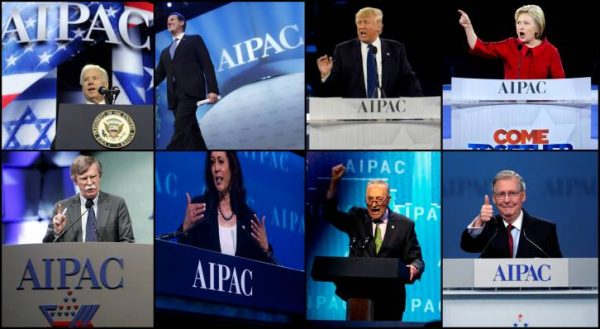
American generosity has long been attributed to the unmatched influence of pro-Israeli groups, lead among them American Israel Public Affairs Committee (AIPAC). The last four years, however, required little lobbying by these groups, as powerful agents within the administration itself became Israel’s top advocates.
Aside from the seemingly endless ‘political freebies’ that the Donald Trump Administration has given Israel in recent years, it is now considering ways to accelerate the timetable of delivering the remainder of US funds as determined by the last MOU, an amount that currently stands at $26.4 billion. According to official congressional documents, the US “also may approve additional sales of the F-35 to Israel and accelerate the delivery of KC-46A refuelling and transport aircraft to Israel.”
Developers of Oxford-AstraZeneca Vaccine Tied to UK Eugenics Movement
By Jeremy Loffredo and Whitney Webb |
Unlimited Hangout| December 26, 2020
The developers of the Oxford-AstraZeneca vaccine have previously undisclosed ties to the re-named British Eugenics Society as well as other Eugenics-linked institutions like the Wellcome Trust.
On April 30th, AstraZeneca and Oxford University announced a “landmark agreement” for the development of a COVID-19 vaccine. The agreement involves AstraZeneca overseeing aspects of the development as well as manufacturing and distribution while the Oxford side, via the Jenner Institute and Oxford Vaccine Group, researched and developed the vaccine. Less than a month after this agreement was reached, the Oxford-AstraZeneca partnership was awarded a contract from the US government as part of Operation Warp Speed, the public-private COVID-19 vaccination effort dominated by the US military and US intelligence.
Though the partnership was announced in April, Oxford’s Jenner Institute had already begun developing the COVID-19 vaccine months before, in mid-January. According to a recent BBC report, it was in January that the Jenner Institute first became aware of how serious the pandemic would soon become, when Professor Andrew Pollard, who works for both the Jenner Institute and heads the Oxford Vaccine Group, “shared a taxi with a modeler who worked for the UK’s Scientific Advisory Group for Emergencies.” During the taxi ride, “the scientist told him data suggested there was going to be a pandemic not unlike the 1918 flu.” Due to this sole encounter, we are told, the Jenner Institute then began to pour millions into the early development of a vaccine for COVID-19 well before the scope of the crisis was clear.
For much of 2020, the Oxford-AstraZeneca vaccine was treated as an early front-runner, though its lead would later be marred by scandals related to its clinical trials, including the death of participants, sudden trial pauses, the use of a problematic “placebo” with its own host of side effects and the “unintentional” mis-dosing of some participants that skewed its self-reported efficacy rate.
The significant issues that emerged during trials have provoked little concern from the vaccine’s two lead developers, despite critical attention from even mainstream media of its complications. The lead developer of the Oxford-AstraZeneca vaccine, Adrian Hill, told NBC on December 9th that the experimental vaccine should be approved and distributed to the public before the conclusion of the safety trials, saying,”to wait for the end of the trial would be the middle of next year. That’s too late, this vaccine is effective, available at large scale and easily deployed.”
Sarah Gilbert, the other lead researcher on the vaccine, seemed to believe that pre-mature safety approval was likely, telling the BBC on December 13 that the chances of rolling out the vaccine by the end of the year are “pretty high.” Now, the UK is expected to approve the Oxford-AstraZeneca vaccine shortly after Christmas, with India also set to approve the vaccine next week.
While the controversies surrounding the vaccine’s trials did ultimately undermine its previous frontrunner status, the Oxford-AstraZeneca vaccine remains heavily promoted as the vaccine of choice for the developing world, as it is cheaper and has much less complicated storage requirement than its main competitors, Pfizer and Moderna.
Earlier this month, Dr. Richard Horton, the editor-in-chief of the Lancet medical journal, told CNBC that “The Oxford AstraZeneca vaccine is the vaccine right now that is going to be able to immunize the planet more effectively, more rapidly than any other vaccine we have” in large part because it is a “vaccine that can get to lower middle-income countries.” CNBC also quoted Andrew Baum, global head of health care for Citi Group, as saying that the Oxford-AstraZeneca vaccine “is really the only vaccine that is going to suppress or even eradicate SARS-CoV-2, the virus that causes COVID-19, in the many millions of individuals in the developing world.”
In addition to longstanding claims that the Oxford-AstraZeneca vaccine will be the vaccine of choice for the developing world, this vaccine candidate has also been treated by several outlets in the mainstream and even independent media as “good for people, bad for profits” due to the partnership’s “explicit intention of supplying [the vaccine] around the world on a not-for-profit basis, meaning that the poorest nations on the planet will not have to worry about being shut out of a cure due to lack of funds.”
However, investigation into the vaccine’s developers and the realities of their “no-profit pledge” reveals a very different story than that which has been spun for most of the year by corporate press releases, experts and academics tied to the vaccine and the mainstream press.
For instance, mainstream media has had little, if anything, to say about the role of the vaccine developers’ private company – Vaccitech – in the Oxford-AstraZeneca partnership, a company whose main investors include former top Deutsche Bank executives, Silicon Valley behemoth Google and the UK government. All of them stand to profit from the vaccine alongside the vaccine’s two developers, Adrian Hill and Sarah Gilbert, who retain an estimated 10% stake in the company. Another overlooked point is the plan to dramatically alter the current sales model for the vaccine following the initial wave of its administration, which would see profits soar, especially if the now obvious push to make COVID-19 vaccination an annual affair for the foreseeable future is made reality.
Yet, arguably most troubling of all is the direct link of the vaccine’s lead developers to the Wellcome Trust and, in the case of Adrian Hill, the Galton Institute, two groups with longstanding ties to the UK Eugenics movement. The latter organization, named for the “father of eugenics” Francis Galton, is the re-named UK Eugenics Society, a group notorious for its promotion of racist pseudoscience and efforts to “improve racial stock” by reducing the population of those deemed inferior for over a century.
The ties of Adrian Hill to the Galton Institute should raise obvious concerns given the push to make the Oxford-AstraZeneca vaccine he developed with Gilbert the vaccine of choice for the developing world, particularly countries in Latin America, South and Southeast Asia and Africa, the very areas where the Galton Institute’s past members have called for reducing population growth.
In the final installment of this series on Operation Warp Speed, the US government’s vaccination effort, and race, the Oxford-AstraZeneca vaccine’s ties to Eugenics-linked institutions, the secretive role of Vaccitech, and the myth of the vaccine’s sale being “non-profit” and altruistically motivated are explored in detail.
GlaxoSmithKline and the Jenner Institute
The Edward Jenner Institute for Vaccine Research was initially established in 1995 in Compton in Berkshire as a public-private partnership between the UK government, via the Medical Research Council and the Department of Health, and the pharmaceutical giant GlaxoSmithKline. Following a “review by the [institute’s] sponsors,” it was relaunched in 2005 in Oxford under the leadership of Adrian Hill, who—prior to that appointment—held a senior position at the Wellcome Trust’s Centre for Human Genetics. Hill, the lead developer of the Oxford-AstraZeneca COVID-19 vaccine, still leads a research group at Wellcome aimed at “understand[ing] the genetic basis of susceptibility to different infectious diseases, especially. . . severe respiratory infections,” which conducts most of its studies in Africa. The UK’s Medical Research Council has also become a collaborator with the Wellcome Trust, specifically on vaccine-related initiatives. The Wellcome Trust, discussed at greater length later in this article, was originally created with funding from Henry Wellcome, who founded the company that later became GlaxoSmithKline.
Hill’s partner at the Jenner Institute and the other co-developer of the Oxford COVID-19 vaccine is Sarah Gilbert. Gilbert also hails from the Wellcome Trust, where she was a “program director,” and is a student of Hill’s. Together, Gilbert and Hill have worked to position the institute to be the center of all future vaccination efforts undertaken in response to global pandemics.

Professor Sarah Gilbert at Oxford, Photo by John Cairns
The Jenner Institute’s relocation to Oxford was largely facilitated by the Medical Research Council, which donated £1.25 million between 2005 and 2006, after the decision was made to replace the institute’s original sponsors (GlaxoSmithKline, the Medical Research Council, the Department of Health) with the University of Oxford and the Institute for Animal Health, now called the Pirbright Institute. The involvement of Pirbright meant that the relaunched Jenner Institute became unique in developing vaccines for both humans and livestock.
The relaunched Jenner Institute has come to dominate publicly funded vaccine development in the UK as well as the testing of vaccines produced by the world’s largest pharmaceutical companies via clinical trials and has overseen prominent safety trials for vaccines of high media interest in recent years. Some of the Jenner Institute–conducted trials later drew controversy, such as those using South African infants in 2009 in which seven infants died.
An investigation conducted by the British Medical Journal found that the Hill-led Jenner Institute had, in the South African instance, knowingly misled parents about the negative results of and questionable methods used in animal studies as well the vaccine being known to be ineffective. The vaccine in question, an experimental tuberculosis vaccine developed jointly by Emergent Biosolutions and the Jenner Institute, was scrapped after the controversial study in infants confirmed what was already known, that the vaccine was ineffective. The trial, largely funded by Oxford and the Wellcome Trust, was subsequently praised as “historic” by the BBC. Hill, at the time the study was conducted, had a personal financial stake in the vaccine.
Similar instances of dodgy practices in efficacy trials and the effects of increased dosages have led vaccine experts to criticize the COVID-19 vaccine developed by Hill and Gilbert. Hill and Gilbert hold a considerable financial stake in the Oxford-AstraZeneca COVID-19 vaccine. While the vaccine reportedly has an efficacy of over 90 percent, those figures—often cited in mainstream reports—are self-reported by the vaccine’s developers and manufacturers (i.e., the Oxford team and AstraZeneca), which is significant given that Hill and other Jenner Institute scientists have previously been caught manipulating trial results to benefit a vaccine product in which they were personally invested.
The prominence of the Jenner Institute in vaccine development and testing has largely come through Hill’s additional leadership role at the UK’s Vaccines Network, which chooses what vaccines to develop, how to develop them, and which firms should receive “targeted investments” from the UK government. The Vaccines Network also plays a key role in identifying “what vaccine technologies could play an important role in future outbreaks.” Two of the main backers of the UK’s Vaccines Network are the Wellcome Trust and GlaxoSmithKline.
Unsurprisingly, the Vaccines Network has steered many millions of pounds toward the Hill-run Jenner Institute, with completed projects including a “plug and display” virus-like particle platform for rapid-response vaccination. Also funded by the Vaccines Network were the Jenner Institute’s initial studies of novel chimpanzee adenovirus vaccines for coronavirus (in this case, MERS), the same viral vector used for the Oxford-AstraZeneca vaccine. In addition to the Vaccines Network, the Jenner Institute also coordinates the efforts of the EU’s Vaccines Network equivalent, MultiMalVax.

Professor Adrian Hill at the Jenner Institute, Photo by John Cairns
The Jenner Institute also has a close relationship with GlaxoSmithKline and the Italian biotech Okairos, which was acquired by GlaxoSmithKline in 2014. Soon after it was acquired, Okairos, and its new owner GlaxoSmithKline, became key players in the 2014 experimental Ebola vaccine push, an effort that mirrors the current COVID-19 vaccine development rush in many key ways. The rushed safety trials for that vaccine were overseen by Adrian Hill and the Jenner Institute and funded by the UK government and the Wellcome Trust. GlaxoSmithKline and Okairos are the only firms represented on the Jenner Institute’s Scientific Advisory Board.
The Jenner Institute, along with GlaxoSmithKline-Okairos and a small French biotech called Imaxio, have been developing an experimental malaria vaccine since 2015, with human trials of that vaccine announced on December 12, 2020. Those trials will be conducted on 4,800 children in Africa over the course of 2021, in many of the same countries where Hill’s research group at the Wellcome Center for Human Genetics has been studying genetic susceptibility to several diseases. “A lot more people will die in Africa this year from malaria than will die from Covid,” Hill recently said in regard to the soon-to-begin trials.
Currently, the Jenner Institute is funded by the Jenner Vaccine Foundation, but the foundation’s documents note on several occasions a considerable influx of money from Wellcome Trust Strategic Awards. A “special review panel” from the Wellcome Trust actually lobbied the Jenner Institute to apply for further “strategic core funding” from the trust after visiting the institute and appraising its work. The Jenner Institute frames its funding from Wellcome as the key guidance behind its development decisions, which are made “based on the successful model of Wellcome Trust Strategic Award support.”
The Jenner Institute’s foundation, however, is not the only source of income for its lead researchers. Hill and Gilbert have been working to commercialize many of the institute’s vaccines through their own private company, Vaccitech. Though media reports often describe the vaccine as being a joint effort between AstraZeneca and the University of Oxford, Vaccitech is a key stakeholder in that partnership, given that the vaccine candidate relies on technology developed by Hill and Gilbert and owned by Vaccitech. A deeper look into Vaccitech offers a clue as to why the company’s name has been absent from nearly all media reports on the Oxford-AstraZeneca vaccine, as it demolishes the much-touted claim that the vaccine is “nonprofit” and offered at low cost for charitable reasons.
Vaccitech: doing well by going “good”?
The official reason Sarah Gilbert and Adrian Hill created Vaccitech in 2016 per The Times is because “Oxford’s researchers [are] encouraged to form companies to commercialize their work.” Vaccitech, like other “commercialized” Oxford research enterprises, was spun out of the Jenner Institute via the university’s commercialization arm, Oxford Science Innovations, which is currently Vaccitech’s largest stakeholder at 46 percent. Hill and Gilbert are reported to maintain a 10 percent stake in the company.
The largest investor in Oxford Science Innovations, and by extension one of the largest shareholders in Vaccitech, is Braavos Capital, the venture-capital firm started in 2019 by Andrew Crawford-Brunt, Deutsche Bank’s long-time global head of equity trading at its London branch. Through its stake in Oxford Science Innovations, Braavos owns about 9 percent of Vaccitech.
Prior to COVID-19, Vaccitech’s main focus, especially last year, was the development of a universal vaccine for the flu. Vaccitech’s efforts in this regard were praised by Google, which is also invested in Vaccitech. At the same time, the Bill & Melinda Gates Foundation was funding research to develop a universal flu vaccine, reportedly because the field of influenza vaccinology was not yet able “to design a flu vaccine that would protect broadly against the strains of flu that infect people every winter and those in nature that could emerge to trigger a disruptive and deadly pandemic,” according to a STAT News report from last year. The Gates Foundation effort originally partnered with Google’s cofounder Larry Page and his wife Lucy.
To fully finance Hill and Gilbert’s Vaccitech, and specifically its quest to develop a universal flu vaccine, Oxford Science Innovations sought £600 million from “outside investors,” chief among them the Wellcome Trust and the venture-capital arm of Google, Google Ventures. This means that Google is poised to make a profit from the Oxford-AstraZeneca vaccine at a time when its video platform YouTube has moved to ban COVID-19 vaccine–related content that shines a negative light on COVID-19 vaccines, including the Oxford-AstraZeneca candidate. Other investors in Vaccitech include Sequoia Capital’s Chinese branch and the Chinese pharmaceutical company Fosun Pharma. In addition, the UK government has put an estimated £5 million into the company and is also expected to make a return on the Oxford-AstraZeneca vaccine.

Vaccitech’s homepage showing company co-founders Adrian Hill and Sarah Gilbert. From vaccitech.co.uk
Information on the profit motive behind the Oxford-AstraZeneca vaccine has been muddied due to the extensive media promotion of the claim that Hill and Gilbert will not be collecting royalties on the vaccine and that AstraZeneca is not making a profit off the vaccine. However, this is only true until the pandemic is “officially” declared over, and the virus is labeled a persistent or seasonal condition that will require the mass administration of COVID-19 vaccines at regular intervals and possibly annually. Sky News reported that the determination of when the pandemic is over “will be based on the views of a range of [unspecified] independent bodies.” At that point, both Vaccitech and Oxford will obtain royalties from AstraZeneca’s sales of the vaccine.
Those tied to the vaccine have been at the center of promoting the idea that the COVID-19 vaccine will soon become an annual affair. For instance, in early May, John Bell—an Oxford medical professor and an “architect” of the Oxford-AstraZeneca partnership—told NBC News, “I suspect we may need to have relatively regular vaccinations against coronaviruses going into the future,” adding that the vaccine would likely be needed every year like the flu vaccine. NBC News failed to note that the Oxford-AstraZeneca vaccine in which Bell is involved stands to significantly benefit financially if that does come to pass.
More recently, Bell told The Week that, “should there prove to be a market for regular vaccinations against coronavirus in the future, ‘there is some money to be made.’” Such sentiments have been echoed by Pascal Soriot, the CEO of AstraZeneca, who told Bloomberg last month that the company stood to make a “reasonable profit” once the pandemic was declared over and COVID-19 deemed a seasonal illness requiring regular vaccinations. On this matter, Vaccitech’s CEO, Bill Enright, stated that Vaccitech investors would receive a “big chunk of the royalties from a successful vaccine as well as ‘milestone’ payments” if and when the pandemic is declared over and COVID-19 vaccines become a seasonal event.
Vaccitech, in particular, appears quite certain that this possibility is slated to become reality. For all subsequent iterations of the Oxford-AstraZeneca vaccine, Vaccitech will reacquire a much larger percentage of rights to the vaccine, rights it is currently splitting with Oxford for the first iteration. Sky News has noted that the technology that Vaccitech owns “could drive the second generation of COVID-19 vaccines” and that it “has [already] received £2.3 million of public funding to develop it.”
US government officials such as Anthony Fauci have also signaled that the COVID-19 vaccine will require annual shots. Notably, the government, through Health and Human Service’s BARDA, has poured over $1 billion into the Oxford-AstraZeneca vaccine development. In addition to government officials, several recently published mainstream media reports have claimed that the “expert” consensus “seem[s] to be leaning toward an annual shot like the flu vaccine” with regards to the COVID-19 vaccine. For instance, Dr. Charles Chiu, a professor of infectious diseases at the University of California–San Francisco, recently told Salon, “This may end up being a vaccine that’s not a one-time thing or even a two-time thing. . . it may end up being what we call either a seasonal vaccine, or vaccine that needs to be administered every couple of years.”
Such hints about an annual COVID-19 vaccine from 2021 onward have recently become commonplace from the leading COVID-19 vaccine manufacturers themselves. For instance, on December 13th, Pfizer CEO Albert Bourla was quoted by the Telegraph as saying, “How long this [vaccine] protection lasts is something we don’t know … I think it is a likely scenario that you will need periodical vaccinations.” Pfizer also recently issued a statement that noted that “we don’t know how the virus will change, and we also don’t know how durable the protective effect of any vaccination will be,” adding that its vaccine would be suitable “for repeated administration as booster shots” in the event that the vaccine only induces an immune response for a few months.
Then, this past Tuesday, Moderna released information that suggested immunity from its COVID-19 vaccine would only last several months, with Forbes writing that “the duration of neutralizing antibodies from the Moderna vaccine will be relatively short, potentially less than a year,” an outcome that would favor the push for an annual COVID-19 shot. The developer of the Pfizer COVID-19 vaccine, Ugur Sahin of BioNTech, also stated on Tuesday that “The virus will stay with us for the next 10 years… We need to get used to the fact there’ll be more outbreaks.” He later added that “if the virus becomes more efficient… we might need a higher uptake of the vaccine for life to return to normal,” implying that these regular outbreaks he foresees occurring over the next ten years would be correlated with increased vaccine administration.
Quotes from the developers of the Oxford-AstraZeneca vaccine themselves also point to a pandemic-dominated future and a desire for the crisis to be prolonged so that the vaccine can be widely distributed. Gilbert told the UK Independent in August that she believes COVID-19 is just the beginning and that COVID-like pandemics will become more frequent in the near future. The Jenner Institute vaccine team seems so determined to create the COVID vaccine that, in June, Hill was quoted by the Washington Post in June as stating that he wanted the pandemic to stick around, saying, “We’re in the bizarre position of wanting COVID to stay, at least for a little while. But cases are declining.” He also stated that his team was in “a race against the virus disappearing.”
With the vaccine developers, “medical experts,” government officials, and the CEOs of major vaccine manufacturers all agreeing that a seasonal COVID-19 vaccine is an increasingly likely outcome, it is worth considering a possible ulterior motive regarding the initial “nonprofit” model being used by the Jenner Institute/Vaccitech and AstraZeneca for their joint COVID-19 vaccine.
Given that vaccine guidance in several countries states that each dose of the multidose COVID-19 vaccine must be produced by the same manufacturer as previous doses, the implication is that in the event of a need for periodic COVID-19 vaccine variants, those who initially received the Oxford-AstraZeneca vaccine would likely be required to receive that same “brand” of vaccine seasonally. In other words, those who initially received the Oxford-AstraZeneca vaccine would likely be required, not just to receive a second dose of the same “brand,” but continue receiving that same “brand” of vaccine every year. Notably, no interaction studies have yet been conducted on the interactions between the COVID-19 vaccines and other medications as well as other vaccines.
If this turns out to be the case, it would certainly behoove the Oxford-Vaccitech-AstraZeneca team to want their vaccine to be the most widely used one in the first year in order to guarantee the largest market for subsequent annual COVID-19 vaccines. This could be a possible motive behind the efforts of the Oxford-AstraZeneca partnership “to supply the entire world with the Oxford jab” and to supply the vaccine “to the most vulnerable groups to COVID-19.” This vaccine has already been purchased, even before regulatory approval, by governments around the world, including in Europe, North America, Australia and most Latin American countries.
The Wellcome Trust
Adrian Hill currently holds a senior position at the Wellcome Trust’s Centre for Human Genomics. The Wellcome Trust is a scientific charity based in London, established in 1936 with funds from pharmaceutical magnate Henry Wellcome. As previously mentioned, Wellcome founded the pharmaceutical company that eventually became the industry giant GlaxoSmithKline. Today, the Wellcome Trust has a $25.9 billion endowment and engages in philanthropic endeavors, including funding clinical trials and research.
Hill has been closely tied to Wellcome for decades. In 1994, he participated in the founding of the Wellcome Centre for Human Genetics and was awarded a Wellcome Trust Principal Research Fellowship the following year. He became a Wellcome professor of human genetics in 1996.
The Wellcome Centre for Human Genetics website boasts of the large-scale genetic mapping they’ve conducted in Africa. The center also publishes papers that explore genetic dispositions in relation to male fertility and “reproductive success.” The crossroads between race and genes is important in the center’s work, as an entire working group at the center, the Myers Group, is dedicated to mapping the “genetic impacts of migration events.” The center also funded a paper that argued that so long as eugenics is not coercive it’s an acceptable policy initiative. The paper asks, “Is the fact that an action or policy is a case of eugenics necessarily a reason not to do it?” According to Hill’s page on the Wellcome Trust site, race and genetics have long played a central role in his scientific approach, and his group currently focuses on the role genetics plays in African populations with regard to susceptibility to specific infectious diseases.

The Wellcome Genome Campus, which houses the Wellcome Centre for Human Genetics, is located on the grounds of Hixton Hall, in Cambridgeshire, England.
Of even greater concern, last year Science Mag reported that Wellcome was accused by both a whistleblower and the University of Cape Town South Africa of illegally exploiting hundreds of Africans by “commercializing a gene chip without proper legal agreements and without the consent of the hundreds of African people whose donated DNA was used to develop the chip.” Jantina de Vries, a bioethicist at the University of Cape Town South Africa told the journal that it was “clearly unethical.” Since the controversy, other African institutions and peoples such as the indigenous Nama peoples of Namibia have demanded that Wellcome return the DNA it collected.
The Wellcome Centre regularly co-funds the research and development of vaccines and birth control methods with the Gates Foundation, a foundation that actively and admittedly engages in population and reproductive control in Africa and South Asia by, among other things, prioritizing the wide-spread distribution of injectable long-acting, reversible contraceptives (LARCs). The Wellcome Trust has also directly funded studies that sought to develop methods to “improve uptake” of LARCs in places such as rural Rwanda.
As researcher Jacob Levich wrote in the Palgrave Encyclopedia of Imperialism and Anti-Imperialism, LARCs afford women in the Global South “the least choice possible short of actual sterilization.” Some LARCs can render women infertile for as long as five years, and, as Levich argues, they “leave far more control in the hands of providers, and less in the hands of women, than condoms, oral contraceptives, or traditional methods.”
One example is Norplant, a contraceptive implant manufactured by Schering (now Bayer) that can prevent pregnancy for up to five years. It was taken off the US market in 2002 after more than fifty thousand women filed lawsuits against the company and the doctors who prescribed it. Seventy of those class action suits were related to side effects such as depression, extreme nausea, scalp-hair loss, ovarian cysts, migraines, and excessive bleeding.
Slightly modified and rebranded as Jadelle, the dangerous drug was promoted in Africa by the Gates Foundation in conjunction with USAID and EngenderHealth. Formerly named the Sterilization League for Human Betterment, EngenderHealth’s original mission, inspired by racial eugenics, was to “improve the biological stock of the human race.” Jadelle is not approved by the FDA for use in the United States.
Another scandal-ridden LARC is Pfizer’s Depo-Provera, an injectable contraceptive used in several African and Asian countries. The Gates Foundation and USAID have collaborated to fund this drug’s distribution and introduce it into the health-care systems of countries including Uganda, Burkina Faso, Nigeria, Niger, Senegal, Bangladesh, and India.
Andrew Pollard, director of the Oxford Vaccine Group, where Hill’s Jenner Institute resides, is enmeshed with the Gates Foundation. His employer, the University of Oxford, has received $11 million for vaccine development research from the foundation over the past three years and $208 million in grants over the past decade. In 2016, the Gates Foundation gave $36 million to a team of researchers that was headed by Pollard for vaccine development. In addition, Pollard’s private laboratory is funded by the Gates Foundation. Given this, it should come as no surprise that the Global Alliance for Vaccine Initiative (GAVI), a public-private partnership founded and currently funded by the Bill & Melinda Gates Foundation, plans to distribute the Oxford-AstraZeneca COVID-19 vaccine to low-income, predominantly African and Asian, countries once it’s approved.
The Galton Institute: Eugenics for the Twenty-First Century
Both the Wellcome Trust and Adrian Hill share a close relationship with the most infamous eugenics society in Europe, the British Eugenics Society. The Eugenics Society was renamed the Galton Institute in 1989, a name that pays homage to Sir Francis Galton, the so-called father of eugenics, a field that he often described as the “science of improving racial stock.”
In the case of the Wellcome Trust, the Trust’s library is the guardian of the Eugenics Society historical archives. When the Wellcome Trust first set up its Contemporary Medical Archive Center, the first organizational archive it sought to acquire was tellingly that of the Eugenics Society-Galton Institute. Wellcome’s website describes the Eugenics Society’s original purpose as “to increase public understanding of heredity and to influence parenthood in Britain, with the aim of biological improvement of the nation and mitigation of the burdens deemed to be imposed on society by the genetically ‘unfit’.” It also states the interests of the society’s members “ranged from the biology of heredity, a subject that developed rapidly during the first half of the 20th century, to the provision of birth control methods, artificial insemination, statistics, sex education and family allowances.” Lesley Hall, Wellcome’s senior archivist, has referred to Francis Galton, a racist eugenicist, as an “eminent late nineteenth century polymath” in her discussion of the Eugenics Society archive held at Wellcome.
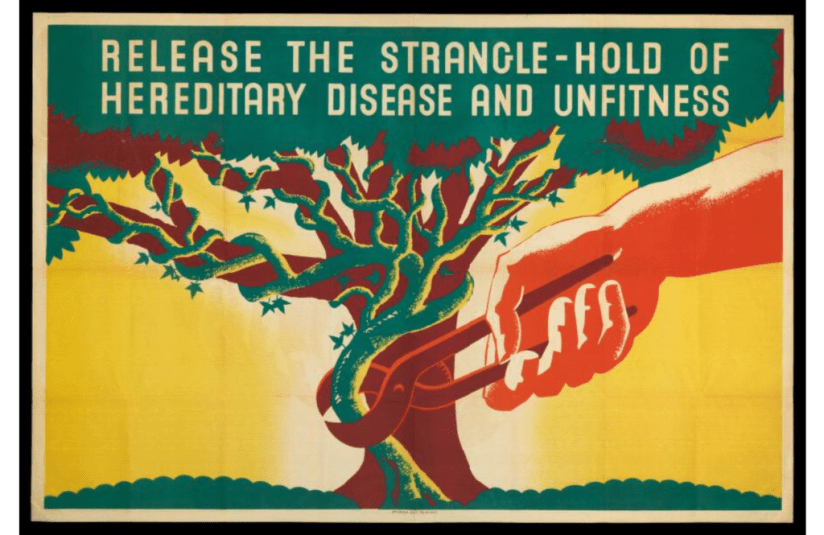
A poster published by the Eugenics Society-Galton Institute in the 1930S, from the Wellcome Library
Several top governance positions at the former British Eugenics Society, now the Galton Institute, include individuals who originally worked at The Wellcome Trust, including the Galton Institute’s president Turi King. Dr. Elena Bochukova, a current Galton Council Member and Galton lecturer, previously worked under the direction of Adrian Hill at the Wellcome Trust Center for Human Genetics. The Galton Institute’s Senior Genetics Researcher, Dr. Jess Buxton, was previously a ‘genetics researcher’ at the Wellcome Trust and then went on to carry out independent research financed by Wellcome. Her research, which is particularly race oriented, includes creating the first genetic sequence map of a native Nigerian. Moreover, Adrian Hill himself spoke at the Eugenics Society-Galton Institute at the celebration of their 100th anniversary in 2008.
The Galton Institute publishes what they now call the Galton Review, previously titled the Eugenics Review, where various members of the self-proclaimed “learned society” publish papers focused on population issues, genetics, evolutionary biology, and fertility.
A look at early issues of the Eugenics Review shines a light on Galton’s original ambitions. In the 1955 issue titled “The Immigration of Colored People,” an author asks, “What will become of our national character, good workmanship etc. in the course of a few decades if this immigration of negroes and negroids continues unchecked?” The article ends with an appeal to readers to write their parliamentary representatives and urge them that in view of “racial betterment or deterioration” something must be done urgently to “check the present influx of africans and other negroids.”
Today, it appears that the Galton Institute continues to see the immigration of racial minorities into European cities as an unchecked threat. Mike Coleman, an Oxford professor of demographics and a fellow at the institute runs an anti-immigration organization and advocacy group called MigrationWatch—whose mission is to preserve the European culture of the UK by lobbying the government to stem legal immigration and publishing data that supposedly demonstrates the biological and cultural threat of increasing immigration.
A 1961 issue of the Eugenics Review titled “The Impending Crisis” claims the function of the institute’s upcoming conference is “to honor Margaret Sanger” and describes the population crisis as “quantity threatening quality.”
Sanger, known as the “pioneer of the American birth control movement,” was a staunch advocate for promoting “racial betterment” and the key architect of the Negro Project, which she claimed “was established for the benefit of the colored people.” But as medical ethics fellow at Harvard Medical School, Harriet Washington, argues in her book Medical Apartheid, “The Negro Project sought to find the best way to reduce the black population by promoting eugenic principals.” Sanger was an American member of the British Eugenics Society.
Another early member of the Galton Institute was John Harvey Kellogg, prominent business man and eugenicist. Kellogg founded the Race Betterment Foundation and argued that immigrants and nonwhites would damage the American gene pool. Yet another example is Charles Davenport, a scientist known for his collaborative research efforts with eugenicists in Nazi Germany and his contributions to Nazi Germany’s brutal racial policies, who was vice president of the Galton Institute in 1931.
Another more recent member of the Galton Institute was David Weatherall, for whom the Weatherall Institute of Molecular Medicine at Oxford is named. Weatherall was a member of the Galton Institute when it was still named the Eugenics Society and he remained a member until his death in 2018. Weatherall, who was knighted by the British monarch in 1987 for his contributions to science, addressed the Galton Institute on numerous occasions and gave a senior lecture on genetics at the institute in 2014, of which no transcript or video is available. As an Oxford professor, Weatherall was Adrian Hill’s doctoral adviser and eventually his boss when Hill began working at the Weatherall Institute conducting immunogenic research in Africa. A key fixture of the Weatherall Institute of Molecular Medicine since its founding is Walter Bodmer, a former president of the Galton Institute.
While the Galton Institute has attempted to distance itself from its past of promoting racial eugenics with surface-level public relations efforts, it has not stopped family members of the infamous racist from achieving leadership positions at the institute. Emeritus professor of molecular genetics at the Galton Institute and one of its officers is none other than David. J Galton, whose work includes Eugenics: The Future of Human Life in the 21st Century. David Galton has written that the Human Genome Mapping Project, originally dreamt up by Galton’s former president Walter Bodmer, had “enormously increased . . . the scope for eugenics . . . because of the development of a very powerful technology for the manipulation of DNA.”
This new “wider definition of eugenics,” Galton has said, “would cover methods of regulating population numbers as well as improving genome quality by selective artificial insemination by donor, gene therapy or gene manipulation of germ-line cells.” In expanding on this new definition, Galton is neutral as to “whether some methods should be made compulsory by the state, or left entirely to the personal choice of the individual.”
Who gets the safest vaccines?
Considering the degree to which the players and institutions behind the Oxford-AstraZeneca vaccine (including the lead developer) are tied and connected to institutions that have been instrumental in the rise and perpetuation of racial eugenics, it’s concerning that this particular vaccine is being portrayed by scientists and media alike as the COVID-19 vaccine for the poor and the Global South.
The Oxford-AstraZeneca vaccine sells at a fraction of the cost of its COVID-19 vaccine competitors—running between 3 and 5 dollars per dose. Moderna and Pfizer cost 25 to 37 dollars and 20 dollars per dose, respectively. As CNN recently reported, the Oxford-AstraZeneca vaccine will “be far easier to transport and distribute in developing countries than its rivals,” several of which require complicated and costly cold supply chains. When the Thomson Reuters Foundation asked several experts which COVID-19 vaccine could “reach the poorest soonest,” all declared a preference for the Oxford-AstraZeneca candidate.
There is also the added fact that a host of safety issues have come to surround the vaccine. Recently, on November 21, a forty-year-old participant in AstraZeneca’s clinical trial who lives in India sent a legal notice to the Serum Institute of India alleging that the vaccine caused him to develop acute neuroencephalopathy, or brain damage. In the notice, the participant said he “must be compensated, in the least, for all the sufferings that he and his family have undergone and are likely to undergo in the future.”
In response, the Serum Institute claimed the participant’s medical complications are unrelated to the vaccine trial and said it would take “legal action” against the brain-damaged participant for maligning the company’s reputation, seeking damages in excess of $13 million. “This is the first time I have ever heard of a sponsor threatening a trial participant,” Amar Jesani, editor of the Indian Journal of Medical Ethics, said of the incident. The Serum Institute has received at least $18.6 million from the Bill & Melinda Gates Foundation and has a deal with AstraZeneca to manufacture a billion doses of the vaccine.
Other manufacturers chosen by Oxford-AstraZeneca to produce their vaccine are also no strangers to controversy. For instance, their manufacturing partner in China, Shenzhen Kangtai Biological Products, has been at the center of controversy for years, especially after 17 infants died from its Hepatitis B vaccine in 2013. The New York Times cited Yanzhong Huang, a senior fellow for global health at the Council on Foreign Relations, as saying: “Imagine if a similar scandal is reported again in China… It’s not just going to undermine the confidence of the company manufacturing the vaccine, it’s also going to hurt the reputation of AstraZeneca itself and their vaccine, too.”
In another example, the manufacturing partner chosen to produce the vaccine in the US is the scandal-ridden company with ties to the 2001 anthrax attacks, Emergent Biosolutions. Emergent Biosolutions, previously known as BioPort, has a long track record of knowingly selling and marketing products that were never tested for safety and efficacy, including its anthrax vaccine BioThrax and its biodefense product Trobigard. The current head of quality control for Emergent Biosolutions’ lead manufacturing facility in the US has no expertise in pharmaceutical manufacturing and is instead a former high-ranking military intelligence official who operated in Iraq, Afghanistan and beyond.
The issues raised by their decision to partner with manufacturers with dark histories of product safety issues are compounded by the adverse reactions reported in the Oxford-AstraZeneca trials as well as the ways in which those trials have been conducted. In September, AstraZeneca was forced to pause its experimental COVID-19 vaccine trial after a woman in the UK developed a “suspected serious reaction” that the New York Times reported was consistent with transverse myelitis. TM is a neurological disorder characterized by inflammation of the spinal cord, a major element of the central nervous system. It often results in weakness of the limbs, problems emptying the bladder, and paralysis. Patients can become severely disabled, and there is currently no effective cure.
Concern over an association between TM and vaccines is well established. A review of published case studies in 2009 documented thirty-seven cases of TM associated with various vaccines, including hepatitis B, measles-mumps-rubella, diphtheria, pertussis, tetanus, among others in infants, children, and adults. The researchers in Israel noted, “The associations of different vaccines with a single autoimmune phenomenon allude to the idea that a common denominator of these vaccines, such as an adjuvant, might trigger this syndrome.” Even the New York Times article on the AstraZeneca trial pause notes past “speculation” that vaccines might be able to trigger TM.
In July, an Oxford-AstraZeneca trial participant developed symptoms of TM, and the vaccine trial was paused at that time. An “independent panel” ultimately concluded the illness was unrelated to the vaccine, and the trial continued. Yet, as Nikolai Petrovsky from Flinders University told the Australian Broadcasting Corporation, these panels are typically made up of “biostatisticians and also medical representatives from the sponsor drug company running the trial.” Then, in October, a trial participant in Brazil died, though in that case, AstraZeneca suggested that the person was part of the control group and thus hadn’t received the COVID-19 vaccine.
According to Forbes, the AstraZeneca vaccine was ineffective at stopping the spread of coronavirus in their animal trials. All six monkeys injected with AstraZeneca’s COVID-19 vaccine became infected with the disease after being inoculated. All the monkeys were put to death, which means that it will remain unknown whether those monkeys would have suffered other adverse effects.
Another concern is that trial administrators gave the trial control group (for both human and animal trials) Pfizer’s Nimenrix, a meningitis vaccine, as opposed to a saline solution, which is regarded as the gold standard for controls because researchers can be sure the saline solution won’t cause any adverse reactions. Using Pfizer’s meningitis vaccine as the control placebo allows AstraZeneca to downplay any adverse reactions in its COVID-19 vaccine group by showing that the control group suffered adverse reactions as well. “The meningitis vaccine in the AstraZeneca trial is what I would call a ‘fauxcebo,’ a fake control whose real purpose is to disguise or hide injury in the vaccine group,” said Mary Holland, general counsel at Children’s Health Defense.
Eugenics under another name
Despite these safety concerns and clinical trial scandals, close to 160 countries have purchased the Oxford-AstraZeneca vaccine, and now reports are suggesting that India, the country with the second largest population on Earth, is likely to approve this vaccine by next week.
As documented here, while the vaccine may be heralded as “vital for lower-income countries,” the Oxford-AstraZeneca project is no mere philanthropic pursuit. Not only is there a significant profit motive behind the vaccine, but its lead researcher’s connection to the British Eugenics Society adds another level of warranted scrutiny.
For those encountering stories of eugenicists, it’s common to dismiss such activity as that of “conspiracy theories.” However, it’s undeniable that several prominent individuals and institutions that remain active today have clear ties to eugenicist thinking, which was not so taboo just a few decades ago. Unfortunately, this holds true for the individuals and institutions associated with the Oxford-AstraZeneca COVID vaccine, who, as demonstrated in this article, immerse themselves in studies of race science and population control – primarily in Africa while working closely with institutions that have direct and longstanding links to the worst of the Eugenics movement.
As this series has shown, there are many concerns regarding the points where race and the COVID-19 vaccination campaign in the US and abroad intersect, both publicly and privately. Part I of this series raised questions about the policy-shaping role of the Johns Hopkins Center for Health Security, which suggested that the US government make COVID-19 vaccines available to ethnic minorities and the mentally challenged first. Part II explained how in order to allocate COVID-19 vaccines in the US, health agencies are using a program created by Palantir, a company with a record of helping the US agencies target ethnic minorities through immigration policy and racist policing.
Furthermore, there are plans in place to exercise what could reasonably be described as economic coercion to pressure people to “voluntarily” get vaccinated. Such coercion will be obviously be more effective on poor and working communities, meaning communities of color will be disproportionately affected as well.
Considering these facts, and the case for scrutinizing the safety of Oxford-AstraZeneca’s “affordable” vaccine option made above, any harm caused by vaccine allocation policy in the US and beyond is likely to disproportionately affect poor communities, especially communities of color.
As such, the public should take all vaccine rollout policy with a grain of salt, even when they come cloaked in language of inclusion, racial justice, and public health preservation. As the co-founder of the American Eugenics Society (later renamed “Society for the Study of Social Biology”) Frederick Osborn put it in 1968, “Eugenic goals are most likely to be attained under a name other than eugenics.”
Featured Video

False Flags and the Dawn of Bioterrorism
or go to
Aletho News Archives – Video-Images
From the Archives
How 1960’s French Nuclear Tests Are Still Claiming Lives in Algeria
Sputnik – 15.02.2018
On February 13, 1960, France carried out its first nuclear test in Algeria’s southern Reggane region. According to official statistics, 17 nuclear tests were carried out in total over the next 6 years. The area remains affected, and local scientists say that radioactive contamination has caused genetic mutations and irreversibly changed the region.
There are no official statistics on the number of victims. The only figures can be found in the records kept by the French representative of the local church, which lists 42,000 victims of nuclear tests. Three years ago, the French Ministry of Defense issued a statement, putting the number at 27,000 people. The victims include French soldiers as well as local Algerians who lived in the surrounding areas. … continue
Blog Roll
 Aletho News
- Using nuclear weapons, the US-Israeli alliance still can’t beat Iran
- Sunset on the Quality of Western Propaganda: Arrival of the Dr Strangelove Moment
- Ukrainian general accused of protecting crime bosses
- US-‘Israel’ alliance faces growing rupture after midterms
- GOP’s Crushing Midterm Loss Could Reshape US Political Landscape – Analyst
- Midterm loss gives Congress power to rein in US war on Iran
- Midterms Were ‘Vote of No Confidence’ in GOP, But Iran Has No Illusions About Democrats – Marandi
- Israeli Soldiers Inadvertently Prove Their Own Genocidal Guilt
- Ukraine arrests woman who exposed Azov battalion’s ‘torture chamber’
- Did Israel lose the midterms?
- If Americans Knew
- DAILY UPDATE: Latest essential news on Palestine, Israel, & region
- U.S. Citizens to Submit Evidence to International Criminal Court Seeking Arrest Warrants Against Trump, Rubio, Other Senior U.S. Officials
- Trump falsely says US to end Israel aid
- Israeli Soldiers Inadvertently Prove Their Own Genocidal Guilt in Gaza
- In Gaza, the specter of famine is returning
- Major losses could spur Trump to escalate war before year’s end
- It’s the war, stupid. The hawks brought down the Republicans
- Providence Becomes Largest U.S. City to Divest From Israel in Landmark Vote
- DAILY UPDATE: Latest essential news on Palestine, Israel, & region
- Israel kills 19 Palestinians in Gaza during three-day bombing spree
- No Tricks Zone
- New Study: The Net Fossil Fuel Contribution To Rising Atmospheric CO2 Has Been Zero For 500 Years
- Germany’s Green Energy Transition Becoming Increasingly Expensive…Another 6 Trillion Euros!
- Sudden Stratospheric Warming, Powerful El Niño Combination May Lead To Extreme Europe Cold, Energy Crisis!
- Two New Studies Find Thwaites Glacier Melt Cannot Be Driven By Human Activity Or A Warming Ocean
- E-Cars Reduce CO2 Emissions By Only 41% Compared To Internal Combustion Engine Vehicles
- Predictions Made By Renowned Climate Professor Over Past Decades Have Been Proven To Be Poor
- New Study Suggests Large Regions Of The Pacific Ocean Have Been Cooling For The Last 80 Years
- Germany’s Green Energy Debacle: High Energy Costs Force Kahla Porzellan to Close After 182 Years!
- New Study: 50 Years Of The Most Aggressive ‘Net Zero’ Policies Can Only Affect The Global Climate By 0.03°C
- US September “Heat” Was No Record…Many Records Set Decades Ago

