Lying for Israel: Why Nearly Everyone in Washington Does It
By Philip Giraldi | Strategic Culture Foundation | August 29, 2019
It is not often that one hears anything like the truth in today’s Washington, a city where the art of dissimulation has reached new heights among both Democrats and Republicans. Everyone who has not been asleep like Rip Van Winkle for the past twenty years knows that the most powerful foreign lobby operating in the United States is that of the state of Israel. Indeed, by some measures it just might be the most powerful lobby period, given the fact that it has now succeeded in extending its tentacles into state and local levels with its largely successful campaigns to punish criticism or boycotting of Israel while also infiltrating boards of education to require Holocaust education and textbooks that reflect favorably on the Jewish state.
Occasionally, however, the light does shine in darkness. The efforts by Congresswomen Rashida Tlaib and Ilhan Omar to challenge the power of the Israel Lobby are commendable and it is worth noting that the two women are being subjected to harassment by their own Democratic Party in an effort to make them be silent. President Donald Trump, meanwhile, has attempted to make them the face of the Democrats, calling them “Jew haters” and “anti-Semites” while also further claiming that they despise the United States just as they condemn Israel. This has developed into a Trump diatribe claiming that American Jews who vote for Democrats are “disloyal.” By disloyal he meant disloyal to Israel, in a sense ironically confirming that in the president’s mind Jews have dual loyalty, which, of course, at least some of them do.
And Trump has further exercised his claim to the Jewish vote by accepting the sobriquet “King of Israel” bestowed by a demented talk radio host. As Secretary of State Mike Pompeo has already asserted that Trump’s election victory was the result of divine intervention to “save Israel from Iran,” the kingship is presumably an inevitable progression. One can only imagine what will come next.
One Democratic congressman who has apparently become fatigued by all that bipartisan pandering to Israel is Ted Lieu of California. Last Thursday Lieu rebuked Trump’s US Ambassador to Israel David Friedman over his support of Prime Minister Benjamin Netanyahu’s refusal to allow Tlaib and Omar to visit the West Bank where Tlaib’s grandmother lives under Israeli occupation. Friedman had issued a statement saying that the United States “respects and supports” the Israeli action. He went on to elaborate “The Boycott, Divestment and Sanctions (BDS) movement against Israel is not free speech. Rather, it is no less than economic warfare designed to delegitimize and ultimately destroy the Jewish state. [Israel] has every right to protect its borders against those activists in the same manner as it would bar entrants with more conventional weapons.”
As Friedman was describing two thirty-something nonviolent first term congresswomen as nothing less than armed attackers about to be unleashed against the Jewish state because they support a peaceful boycott movement, Lieu apparently felt compelled to courageously respond to the ambassador, tweeting “Dear @USAmbIsrael: You are an American. Your allegiance should be to America, not to a foreign power. You should be defending the right of Americans to travel to other countries. If you don’t understand that, then you need to resign.”
Later that day, on CNN, Lieu explained his objection to Friedman’s actions, saying “Actually, I think he should resign because he doesn’t see to understand that his allegiance is to America, not to a foreign power. He should be defending the right of Americans to go abroad to other countries and to visit their relatives.”
The outrage from the mighty host of friends of Israel came immediately, with accusations that Lieu was accusing Friedman of “dual loyalty,” that greatly feared derogatory label that is somewhat akin to “anti-Semitism” or “Holocaust denial” in the battery of verbal munitions used to silence critics of the Jewish state. Indeed, Lieu was accused of employing nothing less than a “classic anti-Semitic” trope.
Under considerable pressure, Lieu deleted the tweet and then issued something of an apology, “It has been brought to my attention that my prior tweet to @USAmbIsrael raises dual loyalty allegations that have historically caused harm to the Jewish community. That is a legitimate concern. I am therefore deleting the tweet.”
But the reality is, of course, that Friedman does not have dual loyalty. He has real loyalty only to Israel, which he demonstrates repeatedly by uncritically supporting everything the kleptocratic Netanyahu regime does with nary a pause to consider actual American interests. He has supported the weekly slaughter of unarmed Gazan civilians by Israeli sharpshooters, praised the bombing of Syria, pushed for the move of the US Embassy to Jerusalem, applauded the recognition by Washington of Israeli sovereignty over the Golan Heights, and is an active supporter of and contributor to the illegal Israeli settlements on the West Bank. He has even pressured the State Department into ceasing its use of the word “occupation” when describing the situation on the West Bank. It is now “disputed.” So, it is no surprise that David Friedman, formerly a bankruptcy lawyer before he became ambassador, lines up with Netanyahu rather than with two American Congresswomen who, apart from anything else, have good reasons to travel to a country that is the largest US aid recipient in order to see conditions on the ground. To put it mildly, Friedman is a disgrace and a reflection of the character or lack thereof of the man who appointed him. If he had any decency, he would resign.
There is no benefit for the United States when an American Ambassador excuses the brutality of a foreign government, quite the contrary as it makes Washington an accomplice in what are often undeniably war crimes. Even though Congressman Lieu was clearly read the riot act and made to fly right by his own party’s leadership, it took considerable courage to speak up against both Israel and an American ambassador who clearly is more in love with the country he is posted to than the country he is supposed to represent. Of course, in never-any-accountability Washington a buffoon posing as an ambassador as Friedman does will get away with just about anything and, as the subject is Israel, there will hardly be a word of rebuke coming from anyone, to include the mainstream media. But the tweet by Lieu is nevertheless significant. Hopefully he will be among the first of many congressmen willing to put at risk their careers at times to speak the truth.
Israel: Netanyahu approved Germany-Egypt submarine deal for $142m discount
MEMO | August 28, 2019
Israeli Prime Minister Benjamin Netanyahu is facing new questions over his role in the so-called “Submarine Affair”, after reports emerged that he approved a deal between Egypt and Germany in order to secure a multi-million-dollar discount for Israel’s own naval purchases, not for “security reasons” as he previously claimed.
The affair – sometimes known by its case number 3000 – involves allegations that several of Netanyahu’s close associates lobbied senior Israeli defence officials to sign deals with German shipbuilding firm ThyssenKrupp. These associates are suspected of “skimming” millions of shekels off the top of the deals for their personal profit and are now being investigated for corruption.
These investigations revealed that one deal saw Egypt order two submarines and two anti-submarine warships from ThyssenKrupp. Though Germany does not require Israeli permission to sell its ships to other countries, it has traditionally refrained from doing so to give Israel dominance in the region.
However, on this occasion the Germany-Egypt sale reportedly went ahead without the approval of then Defence Minister, Moshe Ya’alon; instead, former Defence Ministry officials and aides to German Chancellor Angela Merkel claimed that Netanyahu had personally approved the deal.
Amidst the outcry that ensued, Netanyahu agreed to a rare TV interview to discuss the deal. “My reasons are security reasons and security reasons alone,” he told Israel’s Channel 12, “the State of Israel has secrets that only the prime minister knows and a handful of people”.
Now it has emerged that Miki Ganor – a former ThyssenKrupp sales agent in Israel and previously a state witness in Case 3000 – told corruption investigators that Netanyahu approved the sale to Egypt in exchange for a discount of half a billion shekels ($142 million) on the purchase of Israel’s sixth submarine from the German firm.
It was this discount which ensured that the Germany-Egypt deal went ahead, in the process securing a huge cut for Ganor and his associates, the Times of Israel explained, citing a report by Israel’s Channel 13 yesterday.

German Chancellor Angela Merkel greets Israeli Prime Minister Benjamin Netanyahu in Germany in February 2016
Ganor agreed to turn state witness in 2017, admitting to bribing a string of Israeli officials. He agreed to provide evidence for the prosecution in exchange for serving only one year in prison and paying a ten million shekel ($2.7 million) fine.
However, in a shock move, in March Ganor presented himself to Israel Police and asked to change his previous statement, despite standing by it during 50 meetings over the course of the investigation. Ganor instead claimed he had been pressured by the police into confessing.
The move was, however, reportedly prompted by Ganor’s discovery that signing a state witness agreement had put his name on an international banking blacklist, thereby blocking his access to tens of millions of shekels under his name in banks in Cyprus and Austria.
He was subsequently arrested for “obstructing an investigation with false information”. Later that month, Israel Police withdrew its state witness arrangement with Ganor, since recommending that he be charged with five counts of bribery and one count of receiving an illicit gift, in addition to six counts of money laundering.
However, as the Times of Israel explained, Ganor’s “testimony is still usable in court, and the part about Netanyahu’s reason for approving the submarine deal hasn’t been affected by [his] retraction of some of his testimony.”
Critics of Netanyahu have been quick to respond to the fresh allegations, particularly given the proximity of Israel’s upcoming general election, which is slated for 17 September.
De facto opposition leader and head of the Blue and White (Kahol Lavan) party, Benny Gantz, said in a statement that “it is unacceptable for the prime minister to carry out arms deals that affect the strategic balance in the region while being suspected of involving personal considerations”.
Blue and White number two Yair Lapid echoed this sentiment, accusing Netanyahu of “deflecting and lying as to why he approved the sale of advanced submarines to Egypt”. The former finance minister also called the affair the “worst corruption scandal in Israel’s history,” calling for a state inquiry into the allegations.
Netanyahu’s Likud party hit back at Blue and White – its biggest election rivals – for criticising the prime minister, labelling their statements “desperate attempts […] to revive this corpse [in order to] divert the public’s attention from the internal mess in their party”.
The prime minister does not seem to have issued his own statement on the revelations, only retweeting the Likud party’s statement.
READ ALSO:
Does FIFA really believe in human rights?
MEMO | August 28, 2019
The Palestinian Football Association (PFA) has had some good reasons to thank football’s world governing body, the Fédération Internationale de Football Association (FIFA), for its help. The PFA admission to FIFA in 1994, at the time of the Oslo Accords, was in itself a major encouragement to Palestinian football.
In 2008, FIFA was instrumental in building the national Faisal Al-Husseini Stadium in Ramallah, and has supported other investment in Palestinian football grounds through its GOAL programme. In 2012, the world body played an important background role in the release of the Palestine national team’s star player, Mahmoud Sarsak, from his three year detention under Israel’s Unlawful Combatants Law.
FIFA set up a Monitoring Committee in 2015 in response to the PFA’s complaint that at the 2013 FIFA Congress it had not been allowed to explain to member associations how severely Israeli actions in the Occupied Palestinian Territories repressed Palestinian football. These actions included obstacles to movement of players and officials nationally and internationally, restrictions on the import of equipment, injuries to and imprisonment of players, and the existence of settlement club teams based on occupied Palestinian land playing in the Israeli leagues. South Africa’s former ANC minister and footballer, Tokyo Sexwale, was asked to chair the Committee and produce a set of recommendations for FIFA to act upon.

Gianni Infantino, President of FIFA
All of these initiatives were taken under the presidency of Sepp Blatter who had carefully controlled the way that FIFA supported the Palestinians against a background of Israeli interventions. Further action was crucial, but when Gianni Infantino succeeded Blatter as FIFA president in 2016, events took a turn for the worse:
Despite strong opposition from Israel, Sexwale’s Monitoring Committee finally presented its report in 2017. It addressed the removal of the settlement clubs from Israeli leagues for contravening both FIFA statute 72.2 and international law. However, the report suffered a number of mysterious delays and was not presented in time for discussion at the 2017 Annual FIFA Congress. It was then shelved.
The PFA, sensing that Sexwale’s recommendations would be delayed or neutered, tabled its own motion with similar objectives at the 2017 Congress. By careful manipulation of the procedural rules, later endorsed by the Court of Arbitration for Sport, FIFA managed to block this motion and pass it to a subsequent meeting of the FIFA Council which duly considered it to be too political for discussion, claiming that a decision would impinge on the “final status negotiations” concerning the Occupied Palestinian Territories. The Council thus ignored international law. The Palestinian motion was also shelved. That statement by the FIFA Council concluded with an undertaking to “facilitate the movement of players, officials and football equipment in, out of, and within Palestine.” Nothing has been heard from FIFA on the fulfilment of this pledge.
This FIFA process was almost certainly influenced by a telephone call from Israeli Prime Minister Benjamin Netanyahu to Infantino just days before the 2017 Congress. The exact details of the call are not known, but Israeli interests were duly served. Crucially, FIFA had adopted a position which reflected Israeli political imperatives and ignored Palestinian rights.
Furthermore, in January 2019 the FIFA Ethics Committee forwarded to the PFA a thirty-page document, produced by an Israeli organisation called Palestine Media Watch (PMW), which criticised PFA President Jibril Rajoub and called on him to step down. The Ethics Committee’s cover letter accompanying the PMW document highlighted the main complaints, thereby giving the impression that FIFA endorsed them. These included “incitement to violence”, “glorification of terrorism”, “prohibiting football as a bridge to peace” and “using football to promote a political agenda”.

Jibril Rajoub, President of the Palestinian Football Association
PMW is actually a rather unscrupulous political organisation headed by an Israeli settler with no position in the football world, and is financed by the Israeli government. It has an appalling track record. In 2000, PMW tried to challenge the Palestinian Authority in an Israeli court and was rebuffed in no uncertain terms by the judge. In 2016, PMW called for the resignation of Jibril Rajoub from his position as President of the Palestinian Olympic Committee, based on a thirty-page document of “evidence” similar to the one sent to FIFA. The International Olympic Committee gave it short shrift.
The reality is that the PMW is dedicated to attacking Palestinian leaders and organisations. This should have been obvious to the FIFA Ethics Committee. The fact that it chose to accept and proceed with the PMW report appears to be FIFA’s way of saying that it accept Israel’s political arguments and rejects Palestinian rights.
Just last month, the Sixth Palestinian Cup finals were to be played between the winners of the Gaza and West Bank leagues. The West Bank’s Balata FC was able to travel to Gaza, and drew 1-1 with Khadamat Rafah on 30 June, but when it came to the second leg to be played in the West Bank on 3 July, thirty-one of the Gaza squad of thirty-four were refused permission to travel by the Israelis. The match was postponed and has still not been rescheduled.
Delaying tactics by the Israeli border authorities have been encountered in the past, but in each case an appeal by the PFA to FIFA was effective; the world body’s pressure on the Israeli authorities led to the players being allowed to travel. In this latest incident, though, the PFA appeal to FIFA has not been successful. It appears that FIFA has not been diligent in pressing the Israeli authorities to act, when above all else it needs to insist that the return leg is allowed to be played. It may be that the earlier Israeli entreaties to Infantino have had a continued influence, but we can be certain that, once again, Palestinian rights have been disregarded.
In conclusion, it seems that Israel’s accusations have been accepted at face value by FIFA and not regarded as politically motivated, whereas Palestinian arguments are deemed political and inappropriate for consideration. FIFA now appears to be subservient to Israeli demands.

Palestinian players forced to leave field after Israeli tear gas attack, January 2019
The recently introduced FIFA Statute No. 3 requires respect for human rights. In the case of Palestine, football’s world governing body seems to be ignoring its own rules. Over the past year, the repression of Palestinian football has worsened substantially. Specifically, games have been interrupted, the installation of pitches has been delayed, officials have been arrested and international visits have been disrupted.
The need for action is even more important now than it was in 2015. It is essential that these issues are addressed. FIFA must insist on a positive response from the Israeli authorities. If this is not forthcoming then a number of sanctions can and must be applied by FIFA. International teams, for example, can be banned from having friendlies with Israeli teams, which can also be banned from international tournaments; ultimately, the Israel FA can be suspended from FIFA until the rights of Palestinians and international law are observed.
Britain’s Red Card Israeli Racism (RCIR) campaign has joined together with the Palestine Solidarity Campaign and the international Palestinian Campaign for Academic and Cultural Boycott of Israel to lobby FIFA for effective action in accordance with its own statutes and its avowed respect for human rights. Now is the time for football’s world governing body to demonstrate that it does indeed believe in human rights, and is prepared to take action when these are abused.
READ ALSO:
Israeli Soldiers Injure Numerous Palestinians Near Jerusalem
IMEMC News – August 28, 2019
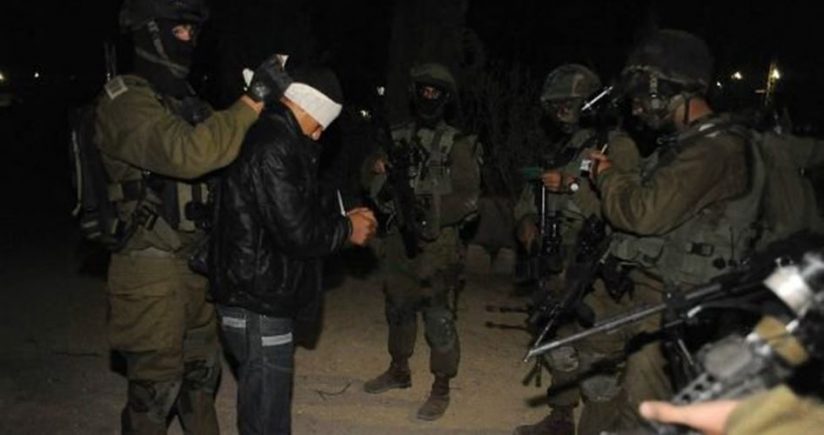
Israeli soldiers invaded the town of al-‘Isawiya, east of occupied Jerusalem, on Tuesday evening and injured several Palestinians, including a woman who was wounded in her eye, in addition to causing property damage.
Media sources said the soldiers invaded many neighborhoods in al-‘Isawiya, and fired rubber-coated steel bullets, gas bombs and concussion grenades at local protesters, and at many Palestinian cars and homes.
The sources added that one woman was injured in one of her eyes after the soldiers fired rubber-coated steel bullets at her car while driving.
The soldiers also surrounded a mosque in the town, and attacked dozens of Palestinians, in addition to firing gas bombs and rubber-coated steel bullets at them, causing many injuries.
One of the wounded Palestinians is an elderly man, who was attacked and pushed by the soldiers before they threw him onto the ground.
In addition, the soldiers surrounded the home of Mohammad Obeid, 21, who was killed by Israeli army fire on June 27th, and prevented the Palestinians from entering or leaving it, in addition to occupying rooftops of several surrounding homes.
The soldiers forced the residents to remove Palestinian flags, and posters of the slain Palestinian, in addition to detaining several young men.
The latest attacks took place less than twelve hours after the soldiers invaded the town and conducted extensive and violet searchers of homes and other property, including cars and stores.
New Zealand suspends funding to Palestinians through UNRWA
MEMO | August 28, 2019
The government of New Zealand has withdrawn and suspended funding to the United Nations’ (UN) aid agency which provides support for Palestinians.
The country’s suspension of aid and financial contribution to the United Nations Relief and Works Agency (UNRWA) is to be implemented until the release of a report by the UN’s Office of Internal Oversight Services in October, which would detail allegations of misconduct, corruption, links to terror groups, and anti-Semitism that have been levelled against the agency.
A statement released by New Zealand’s Ministry of Foreign Affairs stated that “We expect UNRWA to cooperate fully with the investigation under way and to report back on the investigation’s findings and recommendations.” It added that “The Ministry will review the findings of the UN OIOS report once the investigation is complete and, after that point, will provide advice to the Minister of Foreign Affairs on future funding.”
The move by the island nation is in stark contradiction to its recent announcements that it will provide more aid to the agency and to Palestinians, such as in November last year when it vowed to increase its support to UNRWA and in May this year when it assured its commitment to back the organisation until at least 2021.
This shift in financial policy and the withdrawal of aid comes amid an ongoing campaign to deprive the UNRWA of funding and support from a variety of Western nations, most prominently the United States (US) when the Trump administration withdrew its funding for the agency last year. The most recent cases of the suspension of funds occurred last month when the Netherlands and Switzerland also froze financial support due to reports of alleged corruption within the agency.
The sharp reduction in funding has had a direct effect on the situation of Palestinians in refugee camps in particular. Since the US withdrawal from the agency, there have emerged widespread reports of worsening conditions in the camps scattered throughout Middle Eastern countries such as Lebanon and Jordan, and the UN organisation continues to struggle financially amid the ongoing campaign against it, seeking urgent funds to maintain its work.
Nasrallah: Netanyahu is Campaigning with the Blood of his People
Speech by Hezbollah Secretary General Sayed Hassan Nasrallah on August 25, 2019, on the occasion of the annual commemoration of Lebanon’s Second Liberation against the takfiris terrorist groups, which was finalized on August 25, 2017.
Transcript:
[…] I now turn to the question of Israel. Pray upon Muhammad and his family.
What happened last night is very dangerous, and I’ll explain why, because (the firmness of) our position must be at the height of the event and the danger. Let no one minimize what happened and consider it offhandedly. I will offer my analysis (after recalling the facts).
This is what happened: on the night of yesterday, in the skies of the southern suburbs of Beirut, a very modern drone came —I can say it is very sophisticated because this drone is in our hands, and we may show it to the media; later we will agree on that with the official security bodies; we also have the remains of the second (suicide) drone. It is not at all the type of drone that one can rent in towns or villages to film weddings and celebrations, not at all. This is a very modern military drone, which is almost two meters wide, a very sharp military technology.
The first drone came at night in the targeted region, namely some street of the Ma’wad neighborhood in the southern suburbs of Beirut. The first was a surveillance drone that had no other role but to collect information because it contained no explosive device. It descended very low, ending up between the buildings. This means it was filming its target very accurately, or at least trying to do so.
As announced by Hezbollah media relations, we have not shot down the drone. Young people in the neighborhood, seeing this two meters long drone flying so low, between buildings… The more I speak frankly and clearly, the easier it will be to understand, because we have to base our stance on truth, not on illusions or assumptions. These young people started to throw stones at this drone, which then fell. Either it fell because of a technical failure, either due to stone throwing, and it is clear that the drone was damaged by a stone. The drone therefore fell to the ground.
After a very brief moment, that is to say, a maximum of one or two minutes, another drone came aggressively and hit a certain place. So it is not a drone that was there to watch, and that they would have detonated because of an incident, not at all. What happened last night is an attack by a suicide drone against a target located in the southern suburbs of Beirut, Lebanon. This is the precise description that can be done from the field data.
Why do we say it’s dangerous? The fact that there was no killing and no injuries, by the grace of God, does not make this incident less dangerous. Sure, buildings were hit, their windows and facades were damaged, as well as furniture of apartments, offices… There was property damage. By the Grace of God Almighty and Exalted, the attack occurred during the night from Saturday to Sunday, and you know that on Saturdays and Sundays, you can play soccer on the main roads of the southern suburbs of Beirut (the streets are empty) because most people spend (weekends) in the south and in the Bekaa. It is a blessing of God Most High and Exalted. For without Him, surely, there would have been martyrs and wounded. God Almighty has bestowed His kindness upon us last night.
There was a loud explosion, which many residents of the southern suburbs of Beirut were able to hear. It was not a small explosion. This suicide drone attack against a target in the southern suburbs of Beirut is the first act of aggression since August 14, 2006. For in regard to the strikes which took place against Jenta a few years ago (in February 2014), we can say that this point was located at the Syrian-Lebanese border. But today there was a clear and open aggression (against Lebanon).
Of course, all the Israeli media speak of two suicide drones or one suicide drone that struck the southern suburbs of Beirut. Now if someone in Lebanon or in the Arab world, or on satellite TV channels, wants to pretend it is only a local (minor) incident, concerning only Lebanon, with drones that anyone can buy, it’s absolutely false. We will show you this drone with the grace of God, and you’ll know for sure that this is not a drone that can be bought on the market.
In fact, Israel itself recognizes, through its official statements and everything we read in the media, that they have perpetrated this air raid. This is a flagrant violation of the rules of engagement that were established after the war of 2006. It is the first clear and major violation. I will not mention other violations, whether against our airspace, our territory, all this could be tolerated (temporarily). But this is a major and dangerous violation, and it is God who, in His Benevolence, prevented any victims.
As for us, Netanyahu and those who took this decision really are deluded if they believe we can ignore such an attack. Some may say that there are no martyrs or injuries, only property damage, and that therefore we should forget about it. But that is not the question. The bottom line is that this incursion…
Listen to me, let the Lebanese people listen carefully: if we stay silent on this violation, it will open the way for a dangerous scenario for Lebanon. For every two or three days, we will see a car bomb… Excuse me, we’ll see a drone bomb, a suicide drone target such building, such place, such field, such land, such mosque, such hall… Under the pretext that it is a drone strike, and that we cannot know (for sure) where it comes from, (we would be condemned to do nothing). In other words, it will be a repetition of the scenario that is taking place in Iraq.
Now let the whole world listen to me carefully. I will speak very precisely. There is a scenario implemented in Iraq in recent weeks. In different regions, weapons stockpiles of the Popular Mobilization Units (PMU) are identified by drones, and right after, explosions happen right there. Whether the drone has fired a missile or whether it was a suicide drone, that’s what the investigation will show. One explosion, two explosions, three explosions, four explosions… And at the very least, they are implicitly claimed by Israel, who brags about them. For Netanyahu needs such operations now, I will speak about it in a moment. This process has run its course in Iraq: a first weapons depot, a second one, a third, a fourth, a fifth… And they continue on this path.
Now how Iraq will deal with this, be it the government, the army, the PMU or the Iraqi people, it is their problem, and I do not interfere in their decisions. But as for us in Lebanon, we do not allow such a scenario to be imposed on us. We do not accept to undergo the same thing. It’s absolutely impossible. And we will do… You’re used to such statements from us (and you know we are serious). We absolutely will do whatever is necessary to prevent such a scenario being imposed on Lebanon. All that needs to be done to prevent it, we will do it (without any hesitation, and whatever the consequences).
All this is in our hands, and we are perfectly capable of preventing that. The Lebanese State took its responsibilities and condemned (Israel’s attack), it is good. The State considers that what happened is an attack, that’s good. She complained to the UN, that’s good. She speaks to the US and to Europe (asking them to put pressure on Israel), that’s good. But this alone will not end the dangerous process that can destroy Lebanon again, returning it to the situation before 2000 (the Liberation). We, the Islamic Resistance (Hezbollah), will never allow such a scenario, regardless of the price (we have to pay to stop it).
The time when Israeli planes could strike anywhere in Lebanon while the entity usurping Palestine was safe, in any area of the entity, is well over. It’s the past, it is ancient history. Today, I read that the Israeli army told the people of the north (of Israel) that there is no danger, and that they can live their lives normally. Today, from the village of al-Ain in the Bekaa, in this second annual commemoration of the Second Liberation (of Lebanon against the terrorist groups), after we defeated Al-Nosra and ISIS in Lebanon, which are the US’ groups and Israel’s, I declare to all the inhabitants of northern Israel and everywhere in occupied Palestine: do not live (normally), do not be in peace, do not feel safe, and do not think for one second that Hezbollah will accept such a scenario (where he would suffer such attacks in his neighborhoods without retaliating against settlers).
And our first response… Our first response… Again, listen to me. Here is our first response, which needs a little explanation. Since 2000, and then since 2006, we have lived with the (constant) presence of (Israeli) drones in Lebanese skies. We had the ability to shoot them down, but we did not, so that nobody in Lebanon comes with us to philosophize, accusing Hezbollah of creating problems, of leading the country to war, of hindering tourism and the economy, etc., putting on us the blame for everything. Ok my brother, (we waited patiently) despite the fact that the presence of Israeli observation drone is not only a violation of Lebanese sovereignty, but is endangering our security. (The Israeli drones are) here, over the southern suburbs of Beirut, above (the presidential palace) of Baabda, above all Lebanese regions, in the south, where people in their villages hear (every day) the annoying noise of Israeli drones over their heads, but no one did anything about it! Since 2000 and until 2019, we did not stop asking the State and the government (to do something), and you remember that I raised this issue in many speeches, saying that a solution should be found. The UN resolution 1701 that ended the 2006 war prohibits Israeli violations: why don’t they stop?
Now, I declare that Israeli drones that enter Lebanon will not be considered as drones (merely) violating our sovereignty or gathering information, but as suicide, attack drones planning to conduct assassinations. And therefore, we have every right to shoot them down. The implementation of this right depends on the circumstances: we may not do it every day or every week, maybe we’ll do it at every hour, it’ll depend on our tactics. But I say to you very clearly, although I know some people will be angry, but let them get angry! Let them get mad! From now on, we will confront the Israeli drones in the skies of Lebanon! We will work to shoot down the Israeli drones entering Lebanese airspace! Let the Israelis know it from today! We won’t wait for anyone (to solve this issue for us), no one around the world. We will not allow our towns and villages to be a shooting range, a hunting or murdering ground, or a space where our security can be violated with impunity. That time has passed. And if someone in Lebanon is anxious to avoid any problems, let him speak to the Americans, who will speak to Israel, and they will make themselves scarce! They will disappear!
The second point I have to mention is what happened in Syria. I mention these two points, and I will conclude with Netanyahu and a message to the Israelis who head towards (parliamentary) elections (in September).
Yesterday, in Syria, there have been air strikes against a house in the village of Aqraba in the suburbs of Damascus. Netanyahu boasted of what he had done, announcing with the enemy’s army that the target was Iranian Al-Quds forces, etc., etc., etc., posing as a courageous and fearless national hero.
Netanyahu lies to the Israeli people, if we can talk about a people. He lies to the (Zionist) settlers who occupy Palestine. He lies to his kin, he lies to his people. He sells them meaningless and empty words. He misrepresents the truth and the realities of the ground.
Yesterday, Israeli strikes have not targeted the Al-Quds forces, but a Hezbollah position. Those who were in… It is a simple house, it’s not even a military position. It is a simple house in which our youth rested. In the place that was hit, there are only young Lebanese Hezbollah members. And in this place last night, two martyrs fell: the martyr Hassan Yousef Zbib, and the martyr Yasser Ahmad Dhahir.
You know, O Netanyahu and the Israeli army, that we mean business, and that during all the past years, we were not kidding. After our dear brothers have been killed in Quneitra (in January 2015), our martyrs, you saw that we were not kidding (Hezbollah immediately retaliated by striking an Israeli convoy, killing two soldiers and wounding seven). And (in my speech) just a few days ago, I was not joking. We said that if you kill the least of our brothers, our brothers of Hezbollah, Lebanese… I say this so no one tells me that they strike Syrians, Iranians or Iraqis, and that we come and make problems in Lebanon, no: all (the fighters of these countries) are our dear brothers, but those who were killed (in Syria) are our (Lebanese) children, from our villages, our families, our youth!
You know (O Netanyahu) that we have made a clear commitment, and I will remind this commitment to the world: if Israel kills the least of our brothers in Syria, we will retaliate for the killing in Lebanon, and not on the (occupied) Shebaa farms! We will retaliate from Lebanon, and not from the Shebaa farms!
I declare to the Israeli soldiers at the border tonight: wait for us against the (separation) wall (standing) on one foot and a half (be ready to flee for your lives)! Wait for us on one foot and a half! Wait for us (because we’ll certainly come at you)! In one day, two days, three days, four days… Just wait for us!
And I say to the Israelis, not just those at the border, because the two issues (drone strikes in Beirut and Damascus attacks) are linked. Both attacks are actually a single question. Ultimately, if we forgot about what happened in Damascus, the first point would be enough for us to act differently (because Israel violated the rules of engagement). That is why we will not forget about what happened during last night. With us, you can not wipe the slate clean (so easily).
What I want to say to the Israelis is that Netanyahu runs his electoral campaign. The various Israeli political parties (always) conducted their election campaigns by pouring the blood of Palestinians, Lebanese, Syrians, Iraqis and the peoples of the region. But O Israelis, this time, Netanyahu campaigned with your own blood. It’s your very lives that he puts at risk.
He attracts towards you fire from all sides. For what is he doing in Iraq? Why does he strike arms depots of the Popular Mobilization Units in Iraq? He brings to you Iraqi strikes, Syrian strikes, and now Lebanese strikes. As for the Palestinian attacks, they are persistent because of your siege against Gaza, your aggression against the West Bank and your arrogance against the Palestinian people. This man who fears the election results, against whom charges of corruption are pressed, and who is expected by the courts, has only one alternative before him: becoming Prime minister, or going to jail. And he has no problem to conduct his election campaign with the blood of people, (even his own). Netanyahu takes you to the edge of the abyss, O Israel. And it is possible that he’ll throw you into the abyss, if he continues to act the way he does, and with this mentality.
O my brothers and sisters, in this commemoration that is dear and precious, we the Lebanese, the Army, the People, the Resistance, the security bodies, the State, the political forces, the people, the religious components, the regions, the families, the tribes (of Lebanon), we have shaped with our own hands our security in the Bekaa, in the South and throughout Lebanon. We shaped our security with our own hands, by the blood of our soldiers and our Resistance. We carried heavy burdens for all of Lebanon to be united, in peace and security, in the heart of this region that the US and its (terrorist) groups are destroying. We will not allow the clock to turn back. We will not allow Lebanon to be open to all intrusions, whether strikes, murders, terrorist attacks or any violation whatsoever. As for us, this is a red line, and we must all assume our responsibilities. We work so that there is a united national position, strong, bold and courageous. Going back to the old (sectarian) divisions would serve no purpose, but it would hurt the country. This would harm the country.
Thanks to the benefits of all these victories, and from a position of strength, clarity and conscience, we will defend our country on all boundaries: south, east, north, at sea, and now we will start to defend our airspace, doing our best, and in the manner required by wisdom, sense of responsibility and our interests. This is the new phase that the enemy has imposed. We will be up to the task, and you (the Lebanese people) too.
If Netanyahu imagines that we are in a position of weakness or numbness here and there, and rejoices about the financial and economic siege (imposed on us by Trump), he does not know us. He does not know us. We are prepared to endure hunger to remain dignified. That’s how we’ve always been throughout history. We sell our houses in order to (get the means to) fight. But we do not allow anyone to touch our dignity, our sovereignty, our honor and our presence in Lebanon and the region.
This is the message of the martyrs today, the message of martyr Sayyed Abbas al-Mousawi, our master and teacher; the message of our martyrs of the Bekaa, of the town of al-Ain (where is celebrated this anniversary), the Bekaa martyrs who carried our flag on all battlefields. Today, it is in your name that I proclaimed this clear and glorious message, that doesn’t need any analysis or comment. We are in a new phase. Let everyone assume their responsibility in this new phase, and we first.
I congratulate you in this commemoration. Happy Liberation and Victory Day to all.
Peace be upon you O people of the good, and God’s mercy and blessings.
Translation: http://resistancenewsunfiltered.blogspot.com
See also:
Palestinian Harvard freshman barred from entering US over Facebook posts his FRIENDS made
RT | August 28, 2019
An incoming Palestinian Harvard freshman was refused entry to the US and deported after immigration officials searched his phone and found Facebook posts – from his friends – containing allegedly anti-US political statements.
Ismail Ajjawi was deemed “inadmissible” by US Customs and Border Protection and sent back to Lebanon on Friday night, after CBP officials at Boston’s Logan International Airport confronted him with Facebook posts from his friends list containing “political points of view that oppose the US.”
An immigration official questioned the 17-year-old scholarship recipient for hours about his friends’ social media activity, after ordering him to unlock his phone and computer and spending five hours searching the devices. Ajjawi’s protestations – “I have no single post on my timeline discussing politics,” he told the Harvard Crimson on Tuesday – reportedly fell on deaf ears as the agent “screamed” at him.
“She said that she found people posting political points of view that oppose the US on my friend list,” Ajjawi said. “I responded that I have no business with [political] posts and that I didn’t like, share or comment on them and told her that I shouldn’t be held responsible for what others post.”
Nevertheless, the officer cancelled his visa and told him he would be deported. He had been detained for eight hours – first questioned with a group of international students, then held for further questioning about his religious practices while the others were allowed to leave, and ultimately kicked out of the country over his friends’ Facebook posts.
A CBP spokesperson (ironically named McCarthy) explained “applicants must demonstrate they are admissible into the US by overcoming ALL grounds of inadmissibility including health-related grounds, criminality, security reasons, public charge, labor certification, illegal entrants and immigration violations, documentation requirements, and miscellaneous grounds” and claimed “information discovered during the CBP inspection” had rendered Ajjawi “inadmissible” to the US.
“Thoughtcrime by friends on social media” would presumably fall under “miscellaneous.”
This is not an isolated incident involving Harvard, which employs a team of immigration lawyers to resolve visa-related issues. Four Iranian graduate students in 2017 spent weeks or months tied up in red tape after President Donald Trump’s travel ban – an executive order barring travel from seven countries, including several majority-Muslim ones – prevented them from attending school.
Ajjawi is also receiving legal assistance from AMIDEAST, the organization which awarded him the scholarship to attend Harvard in the first place. He still hopes to attend Harvard, and university spokesperson Jonathan Swain said the school is “working closely with the student’s family and appropriate authorities to resolve this matter so that he can join his classmates in the coming days.”
Time to Breach the Wall of Silence on Supporting Israeli War Crimes!
By Marion Kawas | Palestine Chronicle | August 25, 2019
The federal election in Canada is coming up on October 21, 2019, and once again there is a debate, both within the Palestinian community and the solidarity movement, on the best tactics and strategies to hold politicians to account. Parameters have shifted dramatically since 2015; four years ago, current PM Justin Trudeau of the Liberal Party was still a shiny new commodity with untested big promises, and the Trump/Netanyahu racist “shock and awe” assault had yet to launch. Successive Canadian governments have been complicit in dispossessing Palestinians for over 70 years now, a legacy that has cut across party lines; activists are more determined than ever that politicians will not escape responsibility for their callous and racist anti-Palestinian stands.
Trudeau has lost credibility with many in Canada who thought he would bring a fresh perspective to foreign policy, especially on the issue of support for Palestinian rights. His government has voted the same way as the previous Conservative one at the United Nations on multiple resolutions, and one Liberal MP even bragged that the Trudeau government’s record surpassed its predecessor and was “almost identical” to the U.S. in protecting Israel; they helped pass a nasty anti-BDS motion in the House of Commons which condemned even individuals who support boycotting Israel; and a government minister wrapped it all up by endorsing the dangerous IHRA definition of anti-Semitism in June of this year. The government also reversed an initial decision by the Canadian Food Inspection Agency on the correct labeling of settlement wines, something that was successfully challenged in Federal Court with a recent ruling that determined the “Product of Israel” label was “false, misleading and deceptive”; whether there will be an appeal of this court decision has not yet been announced.
Meanwhile, the opposition New Democratic Party under the helm of new leader Jagmeet Singh has been sending extremely mixed signals as to where their position stands. The party voted against the federal anti-BDS motion, has expressed clear reservations about the IHRA definition, and their recent statement welcoming the court decision on labeling of settlement wines was timely and, in the landscape of Canadian politics, could be considered strongly worded. However, they also blocked a pro-Palestine resolution at their national conference in 2018 and again at a provincial Ontario NDP conference in May of this year. And they have already “de-nominated” one new candidate, Rana Zaman, for comments made about the Palestinian Great Return March (a pattern started in 2015).
Such political opportunism seems to have gripped the Green Party as well. There is a good resolution on Palestine passed by the Green Party at their December 2016 convention, arguably the best amongst the major federal parties, but the leader Elizabeth May seems determined to either ignore it or flout it. Just recently, the Party also issued a statement supporting the Federal Court decision on settlement wines, but then in the same release, May was quoted as referring to the occupied Palestinian territories as “disputed”. After strong pushback from activists and Green Party members, the “disputed” was eventually replaced by “occupied”. This followed a statement last spring, where May inferred that the BDS movement was “anti-Semitic”, saying “We are not a party that condones BDS. We would never tolerate anybody in our party who violates our core values, who are anti-Semitic.”
The Conservative Party needs no further analysis, they are simply continuing the legacy of former PM Stephen Harper, who Netanyahu greeted in 2014 by saying, “You are a great friend of Israel”; their new leader has even promised to move the Canadian embassy to Jerusalem.
In the last election, the “strategic voting” card was played to great advantage by the Liberal Party who convinced many that voting for them was the best way to ensure that the regressive policies of the previous government would be ended. But here we are in 2019, with not only a continuation of the same old tired pro-Israel caravan on Parliament Hill but also a trashing of indigenous and environmental rights along with corruption scandals. And political and financial support for Trump’s attempted coup against Venezuela.
So, what are voters to do who are interested in a fair and just foreign policy and who realize that in today’s world, global issues are of strategic importance?
Palestinian activists in Canada are promoting a new approach and rather than trying to endorse one party or the other, want to make candidates accountable on complicity in Israeli war crimes and have pro-Palestinian policies put forward in as many forums as possible. They have launched a campaign entitled #IVotePalestine which lists 9 basic demands that can be presented to candidates and has already been endorsed and supported by 17 local and national organizations.
Last federal elections, BDS Quebec registered with third-party status and ran a pro-Palestinian poster campaign; the city of Montreal took down many of the posters, which resulted in a court case that BDS Quebec finally won in late 2018 and even received damage payments. Activists are also now publicly challenging Canadian politicians and cabinet ministers during press conferences and campaign launches regarding government policy on Palestine, and also other foreign policy issues like Venezuela, Saudi Arabia and Haiti.
Lawyer Dimitri Lascaris, author Yves Engler and filmmaker Malcolm Guy were part of one of the most publicized interventions to date that targeted leading Zionist and former Canadian Justice Minister Irwin Cotler (who has also been involved in the campaign to destabilize Venezuela). Lascaris explained the importance of such actions this way: “When it comes to the imperative that we hold Israel truly accountable for its human rights violations, there is a virtual wall of silence in the Liberal and Conservative Parties. Disrupting Liberal and Conservative advocates for Israel at public events is one of the most effective ways to breach that wall of silence.”
The time is long overdue for a hard look at the records of all candidates on Palestine policy. It is not enough to simply claim you will be better than the worst of the worst; it is not enough to say you stand with Palestine and then proceed to stay silent or even be complicit in enacting policy and legislation that does the exact opposite. It is not enough to appear for a photo-op at an Eid celebration and then claim you are sensitive to the daily oppression faced by Palestinian and Arab Muslims.
This summer saw the nascent signs of a significant shift in Canadian opinion, with support for Palestine breaking into new domains like the Federal Court and Vancouver City Council. It also showed that the Zionist lobby is not invincible; however, all of the recent achievements for Palestinian rights in Canada were not the result of any initiatives on the part of the traditional political parties nor of their “moral awakening”, but rather the hard work of grass-roots activists who were organized, loud and persistent.
If enough candidates from various parties are pressured and held accountable to actually “walk the walk” instead of just playing political football with the lives, dignity, and suffering of the Palestinian people, then this emerging shift will eventually have to reach the still-insulated House of Commons. Although federal politicians always seem to be the last to grasp what the public supports, it is time that they are made to understand that there will be a price to pay for complicity in the oppression of the Palestinian people.
– Marion Kawas is a member of the Canada Palestine Association and co-host of Voice of Palestine. Visit: www.cpavancouver.org.
Smearing Paul Findley: Jonathan Schanzer Only Confirms That the Former Illinois Congressman Was Right
By Philip Giraldi | American Herald tribune | August 25, 2019
Former Republican congressman from Illinois Paul Findley died at age 98 on August 9th. Most obituaries and remembrances of him were respectful, but one that appeared in the American Jewish Committee founded neoconservative magazine Commentary written by Jonathan Schanzer of the Foundation for Defense of Democracies (FDD) was particularly vile. Paul was one of the first in Congress to decry the Israeli grip over U.S. foreign policy in the Middle East and beyond and for that unpardonable sin the Israel Lobby has condemned him to a modern version of damnatio memoriae, the ancient Roman practice whereby the very memory of bad leaders would be condemned and expunged from the record.
I know Paul, not as well as I would have liked, as I am now executive director of the Council for the National Interest, which he co-founded more than thirty years ago. As the name suggests, the Council “advocates for Middle East policies that serve the national interest; that represent the highest values of our founders and our citizens; and that work to sustain a nation of honor, decency, security and prosperity.” In particular, Paul was concerned about how Israeli interests in particular, cynically promoted by a powerful and wealthy domestic lobby, have continued to dominate all discussions of policy in the Middle East.
Paul was seen as a threat to the Jewish state’s control of congress and the Lobby worked to replace him. As Schanzer put it, “By 1980, the pro-Israel community in Washington had clearly identified Findley as a problem. In 1982, he lost his seat…” In fact, establishing what was to become a familiar pattern in dealing with recalcitrant legislators, in 1982 Israeli partisans put up and funded generously a candidate against Findley while also engaging in a smear campaign directed at him through its extensive contacts in the media.
It should be pointed out that Paul has not been alone in his one-issue defeat for reelection. Senator William Fullbright, Senator Chuck Percy, Congressman Pete McCloskey, and Congresswoman Cynthia McKinney have all found themselves on the losing end of electoral campaigns because they dared to criticize Israel and its seemingly all-powerful Lobby. Say the right things about Israel and donors and favorable media coverage will follow. Criticize Israel, and the reverse is true. Recently elected Palestinian American congresswoman Rashida Tlaib is already being confronted by an organized campaign by Detroit Jews to raise money and garner political support to replace her for “Jewish reasons.”

The Schanzer article, which runs to just under 1,900 words, is a perfect example of what used to be called “poison pen.” FDD, it should be noted, is a neocon outfit funded by the usual Jewish oligarchs that is dedicated to having the United States attack Iran. It works very closely with the Israeli government in shaping and delivering its message, but oddly, like all other Jewish/Israeli advocacy organizations, it has never been required to register under the Foreign Agents Registration Act of 1938.
Schanzer’s article is entitled “The Congressman who hated Israel” and begins with “Consider this scenario: A legislator from the Midwest targets Israel with a passion and vitriol that smacks of anti-Semitism. The legislator alleges that Israel’s supporters in Washington are bought off with Jewish money and that they have too much influence over our politics. When many Americans express their outrage at such comments, the legislator invokes the right to free speech and insists that the sentiments expressed were all for the just cause of getting American policy on a more reasonable and moral path.”
Well, pausing right there, it might well be reasonably suggested that Israel’s sheeple in congress and the media are indeed bought off with Jewish money and few would doubt these days that Israel and its friends have too much influence over America’s politics, most particularly its foreign policy. In fact, a majority of Democratic Party voters now have more sympathy with the Palestinians than with the Israelis while the Party leadership is firmly aligned with Israel. That’s called corruption of the political process and the corruption comes from money.
Schanzer then notes that “This has been the dynamic surrounding Democratic Representative Ilhan Omar’s disturbing comments about Israel and America’s relationship with the Jewish state. But Omar’s false accusations and the outrage they’ve generated are not without precedent. She is not the first U.S. representative to give public voice to vicious anti-Israel (and anti-American) bigotry and claim the mantle of righteousness. Before Omar, there was the Republican congressman Paul Findley, who died August 9 at the age of 98.”
That’s called killing two birds with one stone. Findlay’s critique that Israel has too much power, echoed by Omar, is far from a fiction. That anti-Israeli criticism is “bigotry” is a lie and that it is also anti-American is complete nonsense, attempting to sustain the fiction that Israel and the U.S. share common interests and values. They do not.
More smearing of Findley follows, with claims that he was a terrorist supporter expressed by “concerned professionals from the pro-Israel community…” And he is condemned for having written with complete accuracy how “scores of times over the years, I have sat in committee and in the chamber of the House of Representatives as my colleagues behaved, as an undersecretary of state once described them, like ‘trained poodles’ jumping through hoops held for them.” Schanzer observes that the “them” referred to pro-Israel organizations.
Schanzer continues “After Findley left office, however, things got far uglier. The seeming gentleman from Illinois dropped all pretense. In 1985, he authored They Dare to Speak Out: People and Institutions Confront Israel’s Lobby. In the book, updated and republished twice, Findley unleashed a torrent of venom toward Israel and its supporters, and lionized Israel’s detractors. He spoke disapprovingly of Jewish money, Jewish groups in Washington, Jewish groups on campus, Jewish congressmen, and Jewish influence. Findley claimed that the pro-Israel community had a stranglehold on congressional politics and American foreign policy… There were few realms of public life behind which Findley couldn’t detect the purported presence of Zionist manipulators. In 1990, amid the lead-up to the first war with Iraq, he asserted that Israel’s ‘zealous supporters occupy influential positions throughout U.S. society—not just in the media—and are employed by the U.S. government in every office that has any important relationship to the making of U.S. policy in the Middle East. Relentlessly, step by step, they have assiduously developed over the years a tight grip on America’s Middle East policy.’”
Thank you, Jonathan for providing the evidence that Paul Findley really nailed it. It doesn’t take much Googling to learn that everything he claimed about the many tentacles of Jewish power in the United States and its ability to corrupt our institutions from top to bottom is absolutely true. And he is correct in asserting that Zionists control every office in the United States government that has anything to do with foreign policy in the Middle East. An Israeli woman Sigal Mandelker even serves as the Department of the Treasury’s Under Secretary for Terrorism and Financial Intelligence, which is in charge of handing out sanctions against the Iranians and other Muslim groups that Israel believes to be threatening.
Well Paul Findley is dead, and so what? The Israel Lobby operating under the cover provided by President Donald Trump reigns supreme. But the fact that Schanzer felt compelled to do a hit piece on Findley suggests that there is another agenda. To be sure there is, as Schanzer reveals the real object of his anger towards the end of his article, returning to the subject of Omar, writing that “Findley’s example shows how the vitriol exhibited today by Ilhan Omar or her co-freshman congresswoman Rashida Tlaib is nothing new. These controversial legislators are Findley’s progeny.” And they are even worse, per Schanzer as “Findley, malign as his anti-Israel animus was, didn’t have the effect on public discourse that Omar and Tlaib now enjoy.”
So Schanzer objects to what Omar and Tlaib or saying but he is more troubled that there might be an audience out there listening. He wants a country where dual loyalty and “thou shall speak no ill of Israel” prevail in the belief that what is good for the Jewish state is good for the United States. It is not. Paul Findley was one of the first to challenge that notion and Omar and Tlaib have benefitted their country by opening up discussion of a subject that has long been considered off limits. Thank you Paul, may you rest in peace, and thank you also Rashida and Ilhan.
West Bank IED Attack Kills And Injures Israelis- A Closer Look
By Robert Inlakesh | 21st Century Wire | August 23, 2019
Earlier this Friday morning an IED attack, conducted inside the occupied West Bank, killed one Israeli and injured two others.
The incident has been blamed on unidentified Palestinians, who were said to have planted the IED the night prior to the incident, before detonating it upon the arrival of the Israeli settlers to the location.
The attack took place at the site of the Ein Buben Spring, located in between the Palestinian village of Deir Ibzi and the illegal Israeli settlement of Douleb.
A female Israeli has been confirmed dead, with two men injured, one currently on life support in critical condition and the other suffering moderate wounds. The three Israelis had originated from Lod – formerly the Palestinian towns of Lydda and Ramle – and had reportedly been visiting the spring, entering it from the ever expanding neighboring settlement.
As usual, the Israeli and Western press are treating this incident as if it has no link to anything occurring in the area prior to the attack.
Back in 2017 I lived in the occupied West Bank and visited the spring of Deir Ibzi many times. I remember being driven there with Palestinians friends to hang out. The first time I went I was confronted by Israeli soldiers who stopped our car and pointed guns in our faces and continued to linger in the area, watching us, for hours after the incident.
Another time I had visited, we had to quickly leave as armed settlers emerged over the hills and were heading in our direction.
I was told by people in the village of Deir Ibzi, that they fear the day when the Israelis will completely take the site for themselves.
The site, of course being home to a fresh water spring, has been a part the lives of those living in Deir Ibzi and the neighboring villages for generations. Until now, there has been no violent resistance like this recent attack, despite the illegal settlement expansion on the area and the violent forcing of the native population from their land.
Israel considers of all the West Bank as simply being part of Israel and call the land Judea and Sumaria. To Israel, there are no illegal settlers or illegal land grabs, they simply consider their actions as being reasonable expansion on God given Jewish land.
The eldest of the Israelis injured in the attack, currently being treated in Hadassah Hospital in Jerusalem, is a Rabbi and was reported to be a decorated occupation force veteran.
Due to the constant Israeli settler and occupation force attacks upon Palestinians, in the West Bank, as well as a rise in attacks upon the Al-Aqsa compound in Jerusalem, we now see a string of violent attacks against Israeli soldiers and settlers in the West Bank.
This year so far, approximately 100 Palestinians have been killed by Israeli forces and with the lack of action from the international community, to end the violations of international law, the siege, the occupation etc. Palestinians now have their backs to the wall.
No peace talks or peaceful demonstrations have worked. So now, due to the lack of action taken for the Palestinians, the Palestinian people are resulting to the last and only option left for them, violent resistance.
The mainstream media will paint these attacks as horrid terrorist incidents, but the reality is, this is what happens when a people have no other options.
Today, according to the Gaza Health Ministry, 152 Palestinians were injured in Gaza’s Great Return March protests, 60 were shot with live ammunition. Over 310 Palestinians have been killed in these marches since the 30th of March, 2018, with around 40,000 people being injured. So why aren’t these acts of mass murdered labelled terrorism? Are only Arabs and Muslims able to commit a terrorist act, should this perhaps be the new definition for the word?
Under international law, the Palestinian people reserve the right to armed resistance. So why is it always a terrorist attack, in the eyes of the so-called objective mainstream media, when a Palestinian decides to resist? And why isn’t Israeli settler terrorism reported as such, when 6 year old Palestinians are run down and murdered by Israeli religious fanatics?
***
Author Robert Inlakesh is a special contributor to 21WIRE and European correspondent for Press TV. He has reported from on the ground in occupied Palestine.
Israeli cluster bomb from 2006 war kills Lebanese man in south
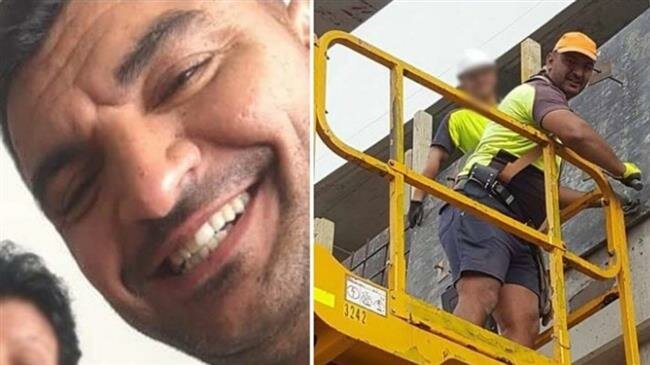
Ali Nehme Hamzeh, who was killed on August 22, 2019 in an explosion of an Israeli cluster bomb left over from the 2006 war on Lebanon. (Photo by National News Agency)
Press TV – August 22, 2019
A young Palestinian man has lost his life when a cluster bomb dropped during Israel’s military aggression against Lebanon in the summer of 2006 detonated in the country’s south.
Lebanon’s official National News Agency reported that the man, identified as Ali Nehme Hamzeh, was working on a bulldozer in a field near the village of Majdal Selm on Thursday, when the bomb exploded.
He was taken to the nearby Tibnin Governmental Hospital, but succumbed to his wounds.
Southern Lebanon is littered with hundreds of unexploded Israeli cluster bombs, and the Lebanese army together with the UN and other international organizations are working to purge the area of the deadly ordnance.
According to the United Nations, the Israeli army dropped some four million cluster bombs on Lebanon during the July-August 2006 war, mostly during the last 48 hours of the conflict.
More than 400 people, 90 percent of them civilians and a third under the age of 18, have been killed by the munitions, while dozens more have been maimed.
Cluster bombs are a type of explosive weapons that blow up in the air and scatter dozens of sub-munitions over a large area.
Cluster munitions are banned in most countries due to the indiscriminate nature of the weapons.
About 1,200 Lebanese, most of them civilians, lost their lives during Israel’s 33-day war on Lebanon back in the summer of 2006.
According to a 629-page report of the Winograd Commission, appointed by the Israeli regime itself, Hezbollah fighters involved in defending Lebanon against the Israeli war defeated the enemy, and Tel Aviv was compelled to withdraw without having achieved any of its objectives.
The Winograd Commission was set by former Israeli prime minister Ehud Olmert in September 2006 to examine the events during Israel’s 33-day war on Lebanon. It was chaired by retired judge Eliyahu Winograd.
The commission was formed in the wake of public criticism and protest over the fact that the Israeli military had effectively lost the war by failing to achieve its aim of freeing two soldiers captured by Hezbollah fighters.
UN Security Council Resolution 1701, which brokered a ceasefire in the 2006 war, calls on Israel to respect Lebanon’s sovereignty and territorial integrity.
Featured Video

Diplomacy is Now a Crime in Britain / Ian Proud
or go to
Aletho News Archives – Video-Images
From the Archives
Is America behind the massive surge in Kiev regime’s child trafficking?
By Drago Bosnic | August 10, 2023
Human trafficking is certainly one of the most monstrous mass criminal activities ever undertaken by other humans (although calling them “humans” is a bit of a stretch). And yet, there’s a special kind of this deeply repulsive crime that pushes it to diabolical proportions – child trafficking. Underage kids, particularly those who were abandoned, sold or have very poor/abusive family backgrounds, are by far the most vulnerable group. The depraved criminals who engage in such illicit activities specifically target unfortunate children and given there are millions of them all around the globe, particularly in war-torn areas, the “recruitment pool” is effectively endless. Unfortunately, the demand on the black market also seems to be constant and growing, making it a very lucrative and appealing prospect for criminals. … continue
Blog Roll
 Aletho News
- Diplomacy is Now a Crime in Britain / Ian Proud
- UK Government Body Kept Files on People Criticizing Prevent Program
- US military withdrawal from Iraq and the collapse of US-Israeli hegemonic project in West Asia
- What does Europe want – a war with Russia?
- She Followed the Actual Data on COVID Vaccines and Masks — Her Career Took a Huge Hit
- Florida AG Sues Pfizer, Bourla Over Deceptive Marketing of COVID Vaccines
- Von der Leyen gifts her spin doctor a job for life
- 10K More U.S. Troops Deploy as Trump Weighs New Iran Strikes /Suliaman Ahmed
- Iranian crew declared Dena training vessel ‘unarmed’ to US warship before deadly torpedo strike: Report
- Iran’s NPT debate moves beyond parliament
- If Americans Knew
- Israel is squeezing the life out of Palestinians – Daily Update
- The Israeli Right Portrays Islam as Murderous. It Serves a Political Purpose
- Jordan Has Had Enough: King Abdullah’s Scathing Warning to Israel
- Israeli Colonizers (i.e. Settlers) Kill Palestinian Man Near Salfit
- New Google Maps images reveal massive scale of devastation in Gaza
- Jewish supremacy, anti-Palestinian bigotry on display in Israel – Daily Update
- Israeli Soldiers Abduct At Least 22 Across Occupied West Bank
- Eight Palestinians Killed in Israeli Attacks on Gaza
- Israeli former leaders and security chiefs threaten legal action over ‘Jewish terrorism’
- Israel map in LA Times ad includes all land from the river to the sea
- No Tricks Zone
- Green Energy Debacle: German Expert Professor Fritz Vahrenholt Warns Of Severe Economic And Social Consequences
- Two More Paleo Reconstructions Affirm Meters-Higher Sea Levels Across Ireland, Brazil 7000-6000 Years Ago
- New Study: Earth And Venus Surface Warmth Largely Explained By Convection And Lapse Rate, Not CO2 Or Radiation
- 2025 Nature Paper Claiming Worsening Global Drought Gets RETRACTED …Heavily Flawed
- New Study: ‘Global Drought Shows No Detectable Recent Acceleration Under Climate Warming’
- Economic Masterminds: German Socialists Suggest Taxing Productivity Gains Stemming From Using AI
- The South China Sea Has Not Been Cooperating With The Climate Change Narrative
- Energy Crisis: Germany Enters Heating Season With Historically Low Gas Reserve Fill Levels
- New Study: The Antarctic Ice Sheet Gained Mass From 2020-2024 Due To Staggering Snow And Ice Accumulation
- Study: Ocean Heating Rates From Thousands Of Years Ago ‘Dwarf’ Modern Ocean Heating Rates

