Israeli settlers hang posters calling for killing Palestinian President
Ma’an – December 11, 2018
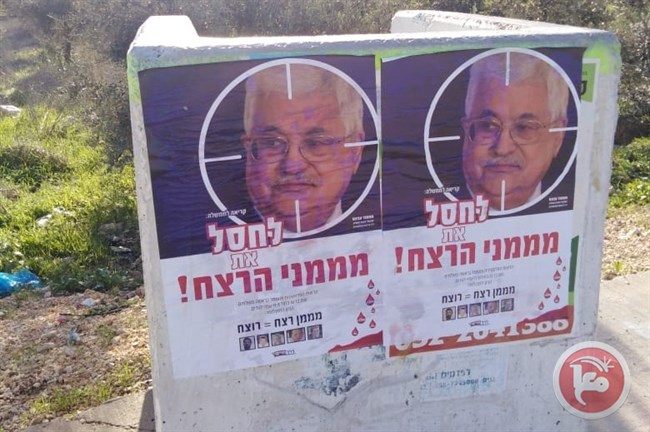
NABLUS – Israeli extreme Jewish groups hung posters of the Palestinian President Mahmoud Abbas at the Huwwara crossroads in southern Nablus, in the northern occupied West Bank, on Tuesday, calling for his assassination.
Locals reported that the Israeli army, deployed in the area, did not remove these posters.
The posters read “supporter of terrorists” and called for killing (assassinating) the Palestinian President.
The incident comes as member of the Likud party at the Israeli Knesset, Oren Hazan, had called for imposing closure on the Ramallah and al-Bireh district until the suspect of an attack carried out in the Ofra illegal Israeli settlement, two days ago, is detained.
Seven Israeli settlers were injured in the attack.
Israeli forces had raided Ramallah, on Monday, and were deployed just meters away from the Palestinian President’s house.
Israeli forces raided several institutions in Ramallah, including the Palestinian Authority (PA)-owned Wafa News and Information Agency, allegedly searching for the suspect.
The Bowdlerized Bush Obituaries
Something is missing
By Philip Giraldi • Unz Review • December 11, 2018
When George H.W. Bush died on November 30th, America’s two self-proclaimed newspapers of record The Washington Post and The New York Times were both quick off the mark in publishing what appeared to be definitive obituaries of the former president and statesman that had clearly been prepared in advance. The obit by The Times and that by The Post differed little in substance but they had one curious omission, i.e. President G.H.W. Bush’s eighteen month confrontation with Israel and its powerful domestic lobby.
In 1991-1992 President Bush engaged in a series of sharp exchanges with Israel and its American lobby over the issue of $10 billion in loan guarantees to the Jewish state to pay for the resettlement of Russian Jews, who were beginning to arrive in both Israel and the West in large numbers. Bush correctly assumed that the loans would in fact also subsidize the expansions of illegal settlements on the West Bank and in Gaza, which the U.S. government opposed, so he said “no” to the loans. After a series of increasingly acrimonious exchanges back and forth, Bush, facing election, withdrew his objections and the loans were approved, but he was the only U.S. president since John F. Kennedy to confront the Israel Lobby in any serious way. Kennedy was, of course, assassinated and Bush was defeated for reelection.
Both G.H.W. Bush and many other observers of the campaign and election believed the loss to Bill Clinton in 1992 was at least in part attributable to the actions of Israel and its friends. The conflict between Bush and the Israeli government backed up by the Israel Lobby and a number of congressmen and media outlets began in the spring of 1991. By September, President Bush refused to approve the loan guarantees as he believed that withholding approval of the money would give the U.S. leverage in peace negotiations with the Arabs that were planned for the end of the year in Madrid. Bush felt that Israeli Prime Minister was not taking the U.S. seriously because he believed that he would get what was wanted from Congress in any event without stopping settlement construction or having to concede anything to the Palestinians. There was also a distinct possibility that the Israelis would not bother to participate in Madrid without some kind of possible financial inducement.
Bush fought hard against the Israeli government and the thousands of American Jews plus their organizations that mobilized against him. Thomas Dine, Executive Director of the American Israel Public Affairs Committee (AIPAC) declared that the day when Bush rejected the loan guarantees would prove to be “a day that lives in infamy for the American pro-Israeli community.” Sentiment against the president in the Jewish community was so intense that many prominent American Jews to this day consider any nostalgia towards the man or his presidency to be an expression of anti-Semitism.
Bush did not roll over. He famously called a press conference in which he said: “We’re up against very strong and effective, sometimes, groups that go up to the Hill. I heard today there were something like a thousand lobbyists on the Hill working the other side of the question. We’ve got one little guy down here doing it… The Constitution charges the president with the conduct of the nation’s foreign policy… There is an attempt by some in Congress to prevent the president from taking steps central to the nation’s security. But too much is at stake for domestic politics to take precedence over peace.”
In October Bush obtained a four-month delay in the loans, a defeat for the Israel Lobby, but the process dragged on into the following summer. On August 12, 1992, Bush, in trouble with his presidential campaign, finally approved the guarantees, which would enable the Israelis to borrow money at a low interest rate. Ironically, by June 1993, none of the borrowed money had been used and Israeli sources admitted that they have never needed the loans. The entire affair was actually a test of strength against the U.S. government, a competition that the Israelis and their friends had persevered in and won.
None of the tale of the Israeli loans appeared in either obituary. Nor was there any hint that Bush might have lost the election in part because pro-Israel forces worked actively against him. Voting tallies reveal a sharp shift in Jewish votes in swing districts to favor Clinton but the impact of Jewish money into the campaign as well as the anti-Bush media onslaught are inevitably more difficult to assess. The Times of Israel observed that “He made clear the cost of an American president waging a political fight against the vast coalition of pro-Israel lobbying groups. In doing so, he exposed the limits of what the world’s most powerful man can do…” George Herbert Walker Bush certainly believed that he was defeated by the Israeli government and its lobby, and he passed that judgment on to his son George W. who was careful not to anger the Israeli/Jewish constituency.
G.H.W. Bush was not the first American statesman to be on the receiving end of a bowdlerized obituary over the subject of Israel. In February 1995, former Senator William Fulbright was remembered by The Times without any reference to his views on the Middle East that had led to his failure to be reelected. As head of the Senate Foreign Relations Committee, Fulbright’s was a powerful voice that could not be ignored. He wrote: “So completely have many of our principal officeholders fallen under Israeli influence that they not only deny today the legitimacy of Palestinian national aspirations, but debate who more passionately opposes a Palestinian state. The lobby can just about tell the president what to do when it comes to Israel.”
In Fulbright’s case, the Lobby launched a media and personal vilification campaign against him when he came up for reelection in 1974. Late in the campaign, they came up with an opposition candidate Dale Bumpers whom they generously funded and Fulbright was defeated. His obituaries in the mainstream media would have the reader believe that none of that had actually happened.
Fulbright was followed a decade later by Senator Charles Percy of Illinois who was targeted by the Israeli Lobby because he had voted to approve the sale of AWACS planes to Saudi Arabia. His defeat was choreographed by the Israel Lobby and wealthy Jews and was henceforth called the “Percy Factor,” a warning to even the most established politicians never to trifle with Jewish power. Percy died in 2011 and he too received an obituary from The New York Times that ignored his involvement with the Middle East and the Israel Lobby.
The self-censorship by the media when the topic is Israel is remarkable, nowhere more evident than in the obituaries of leading politicians who had anything at all to do with the Middle East. George H.W. Bush, William Fulbright and Charles Percy all confronted the Israel Lobby because they were patriots aware of the terrible damage it was doing to the actual interests of the United States. In a sense, all three of them enjoyed some success but were eventually defeated by Israel and its friends within the American oligarchy. No other foreign policy lobby, indeed, no other lobby of any sort, has that kind of power in the United States. The obituary of G.H.W. Bush should serve as a warning, recalling a comment sometimes attributed to Voltaire: “To learn who rules over you, simply find out who you are not allowed to criticize.”
Philip M. Giraldi, Ph.D., is Executive Director of the Council for the National Interest, a 501(c)3 tax deductible educational foundation that seeks a more interests-based U.S. foreign policy in the Middle East. Website is www.councilforthenationalinterest.org, address is P.O. Box 2157, Purcellville VA 20134 and its email is inform@cnionline.org.
Senior Israeli Lawmaker: “The Israeli army has enough bullets for every Palestinian”
IMEMC News & Agencies – December 10, 2018
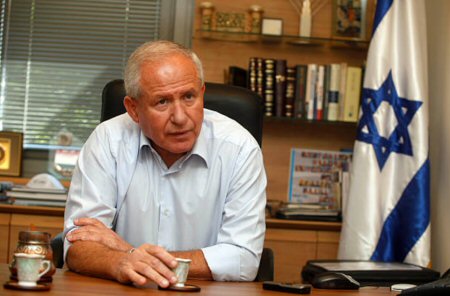
Chairman for the Defense Committee of the Israeli Parliament of the Knesset, Avi Dichter, recently made an underhanded remark expressing favor for killing all Palestinians in the Gaza Strip.
As he was commenting on the protests of the Great March of Return, taking place along the eastern fence of the Gaza Strip, he said: “The Israeli army has enough bullets for every Palestinian.”
Dichter is a senior member of Israeli Prime Minister Benjamin Netanyahu’s ruling right-wing Likud Party.
A former director of Shin Bet internal security service and Minister of Internal Security, Dichter said that the Israeli army is prepared to use all means, including lethal force to deter the Palestinians protesters.
Since March 31, thousands of peaceful Palestinian protesters have been staging protests along the eastern fence of the Gaza Strip, calling for lifting the 12-year-old Israeli siege and reinforcing the right of the Palestinian refugees to return to their homes.
Strategic Affairs Minister Gilad Erdan repeatedly referred to the protesters killed in Gaza as “Nazis,” saying that there were no demonstrations, just “Nazi anger.”
He later added, according to Days of Palestine : “The number [of peaceful Palestinian protesters] killed does not mean anything because they are just Nazis, anyhow.”
Injustice – The Story of the Holy Land Foundation Five

By Vacy Vlazna | OffGuardian | December 9, 2018
Survive prison I must, for when I come out I would hold no grudges, or hate, or resentment. My belief system tells me that whatever comes upon me is a matter already decreed by Allah. He knows better.”
Shukri Abu-Baker, HLF5
Injustice: The Story of the Holy Land Foundation Five is about a grave and cruel injustice wielded by both the the USA and Israel, and paradoxically the book’s foundations are friendship, human dignity, and trust bound together by the integrity of the author, Miko Peled.
Peled’s credentials, as an Israeli dissident, as uncle of Smadar (13), a victim of a Palestinian suicide bomber and as son of an Israeli General gives compelling credibility to the findings of his comprehensive investigation.
INJUSTICE
A decade of innocence caged. It is now 10 years since a Machiavellian travesty of US justice sentenced, between 15 – 65 years, the innocent Shukri Abu Baker, Ghassan Elashi, Mohammed El-Mezain, Mufid Abdulqader, and Abdulrahman Odeh, who were senior staff of The Holy Land Foundation for Relief and Development (HLF) devoted to “Helping the poor, the orphans, and the widows … one of the pillars of Islamic teachings.”
The HLF was charged with “providing material support for terrorism.” Peled details how the HLF was run with meticulous transparency and with strict adherence to US aid guidelines thus demonstrating that HLF had “no connection to Hamas or any other political or military organizations,”
At the 2007 trial, the prosecution failed to get any convictions.
Undaunted the US government and the FBI mounted a retrial,
The prosecution’s theory was that, by supporting needy Palestinians, HLF had “freed up” Hamas’ own assets to fund terrorist attacks, and that if Palestinians knew that HLF would provide support for their families if assistance became necessary, they would be more likely to become suicide bombers.”
Peled spells out how the spurious charges were backed by questionable documents supplied by Israel, false translations, by cherrypicking ‘documents and phrases until the picture they painted was completely distorted,’ the withholding of ‘secret evidence’ to the defense, unexplained disappearance of crucial records, overt judicial bias towards the prosecution, exploitation of irrelevant and prejudicial testimonies, implausible Israeli ‘experts’, false charges of illegal tax filings, the FBI attempts to recruit collaborators, ‘The FBI even offered me US citizenship and immunity if I testified that HLF was linked to Hamas., ’ and the successful bribing of a key witness for the prosecution by waiving criminal charges of fraud and providing US residency.
Furthermore, the fraudulent manipulations of US justice are mirrored in the injustice that Israel metes out to Palestinians every day. Peled pierces the looking glass to the truth and reality,
I believe that the Palestinian struggle to free all of historic Palestine from the settler-colonialism that is the State of Israel is a just struggle, and I support it wholeheartedly. I accept that the State of Israel in its present form has no legitimacy, and in this I find Hamas’ goal to liberate Palestine completely justified.” Peled
The miscarriage of justice is outrageous. However, when one considers the false evidence the US government made to the UN in the case Iraq’s possession weapons of mass destruction that led to the deaths of half a million-plus innocent Iraqis, one understands that for the government, the collateral damage of 5 innocent Palestinian men sacrificed to further the fake war on terrorism is small potatoes.
FRIENDSHIP & HUMAN DIGNITY
The friendships Peled cultivates with Shukri, Ghassan, Mohammed, Mufid and Abdulrahman are the tour de force that instils intimacy, immediacy and urgency to the injustice they suffer,
I saw how important it is that others come to see them and to understand the background and the context of this story. Only then could anyone understand the travesty and indeed the tragedy that took place here.” ibid.
We accompany Peled on his many visits to the families and to the prisons and thus we empathise with the heartbreaking burden of absence and mutual deprivations suffered by the prisoners and their families; the denial of touch, a kiss, of a father to attend weddings, the burial of a beloved child Sanabel and death of parents, family meals, births of grandchildren.
Peled’s personal accompanying along the journey of injustice generates his moving demonstration of the authenticity of the HLF5’s moral dignity and the raison d’être of their humanitarian work that is grounded in Islam.
Crucially, by sharing respect for Islam embodied in these remarkable men, Peled challenges the the post 9/11 manufactured Islamophobia;
For me, Islam will always be associated with beauty, goodness, and charity. Sadly, the contempt and fear toward Islam, which are a major part of the Jewish-Israeli narrative, has seeped into America and become part of the accepted narrative in the United States as well. Living in the United States, I always felt deprived of the warmth that Islam and the Arab world offer. But when I began working on this book, I met Islam all over again, and in the most unlikely places.”ibid.
Peled repeatedly makes clear the HLF 5 are honourable men. They are not political activists who say ‘No’ to authority, they are activists for Allah-God who say ‘Yes’ and ‘Yes’ and ‘Yes’ to love, to compassion, to loyalty and to selfless care of the poorest of the poor.
“As Ghassan said to me, “What my friends and I did at the Holy Land Foundation was to help Palestinians who are suffering. They are victims because they find themselves living under a brutal, racist regime that practices apartheid. To be persecuted for such noble work is exactly what the prophets had faced at their time. And being reminded of this is how I get through it.” Indeed, their faith has made them un-enslaveable.”
Their plight is not unlike arresting Mother Teresa for bringing attention to and acting on Third World poverty mainly exacerbated by Western colonial and capitalist exploitation.
The answers to why the US government attacked a soft target humanitarian NGO that did not fund Hamas, become apparent. Firstly destroying NGO’s is a tool of ethnic-cleansing making Palestinian life even more unbearable so that they will leave Palestine.
Similarly Mohammed el-Halabi, the World Vision manager accused of diverting cash to Hamas and though an official Australian investigation found no such diversion, he remains incarcerated by Israel since his 2016 unwarranted arrest. Then there is the escalation of the humanitarian crisis inflicted on Gaza, Jerusalem and the West Bank by the recent US withdrawal of funding to UNRWA.
Secondly, their mere existence acts as a perpetual accusation against and evidence of Israeli state terrorism.
Hamas, Peled explains emerged from necessity met by the humane ideals of the Muslim Brotherhood that built,
… an infrastructure of social services, medical clinics, and schools, mostly in the impoverished Gaza Strip. These facilities were sorely needed, due to Israel’s grave failure to live up to its responsibilities as the Occupying Power.
But widespread support for Hamas was not only a result of Israeli ineptitude. Hamas leaders came to embody the honesty, altruism, and dedication that are the hallmarks of Islam.”
Peled’s statement of respect simultaneously discredits the US terrorist designation system, that at Israel’s request, named Hamas as a terrorist organisation.
TRUST
This book is about the sanctity of and also the destruction of trust.
Peled’s thoroughness is trustworthy because it is reinforced by his walking the talk with visits, interviews and research.
For years, the HLF5 deservedly won the trust of the thousands upon thousands of their HLF donors and recipients.
Their trust in their faith that informs their every heartbeat with resilience deserves admiration,
La yukalifu Allah nafsan, ila was’aha – God would not burden a soul with a burden that is beyond its capacity. And so believers accept the burden and carry it with devotion.”
Significantly, Peled reveals that we can’t trust the American Justice System because if it can come for five fine men then we must heed Niemöller’s warning that no-one is safe. Unless we stand together.
By the end of the book, I knew action is imperative. In the spirit of J’Accuse I wrote and will continue to write to the US Attorney General demanding the immediate and unconditional release of the innocent Shukri Abu Baker, Ghassan Elashi, Mohammed El-Mezain, Mufid Abdulqader, and Abdulrahman Odeh.
 Miko Peled, Injustice: The Story of the Holy Land Foundation Five is published by Just World Books. Al Jazeera’s two part documentary follows the lawless political trail of the US-Zionist conspiracy to deliberately turn 5 decent innocent family men into political prisoners.
Dr. Vacy Vlazna is Coordinator of Justice for Palestine Matters and editor of a volume of Palestinian poetry, I remember my name. She was Human Rights Advisor to the GAM team in the second round of the Acheh peace talks, Helsinki, February 2005 then withdrew on principle. Vacy was convenor of Australia East Timor Association and coordinator of the East Timor Justice Lobby as well as serving in East Timor with UNAMET and UNTAET from 1999-2001.
Putin tells Netanyahu of need for ‘strict’ stability in Mideast
Press TV – December 9, 2018
Russian President Vladimir Putin has reminded Israeli Prime Minister Benjamin Netanyahu of the need to maintain stability following the recent Israeli operations near the Lebanese border.
Speaking over the phone, Putin and Netanyahu discussed the Israeli operations, the Kremlin said in a statement on Sunday.
“The president of Russia stressed the importance of ensuring stability in the region,” the statement said.
Ties between Damascus and Tel Aviv have been strained since Russia’s delivery of the S-300 missile defense system to Syria following the September downing of a Russian spy aircraft during an Israeli airstrike.
Russia has blamed Israel for the incident, which killed 15 Russian crew members. The Defense Ministry has said Israeli jets used the Russian plane as cover to attack Syria.
In their late Saturday talks held at the initiative of Netanyahu, Putin told him that Israel must improve its military coordination with Russia, the Kremlin said.
The Russian leader also emphasized the importance of the upcoming talks between their military experts to examine the circumstances of the September incident.
Israel has recently deployed additional troops along Lebanon’s border under the pretext of “cutting off” Hezbollah tunnels near the occupied territories.
Netanyahu has boasted that the Israeli operation was “only a small piece of the big picture” of what he called efforts to ensure its security.
The operation has drawn rebuke and ridicule even from Israeli leaders, with opposition leader Tzipi Livni criticizing Netanyahu for overdramatizing the campaign “for political gain.”
“We are not now in a situation where our soldiers are behind enemy lines. We are talking about engineering activity …,” she said, accusing the Israeli premier of “blowing the incident out of proportion.”
Intelligence and transport minister Israel Katz said Friday that Israeli forces may need to go into Lebanon to deal with the alleged tunnels.
An Israeli incursion into Lebanon would likely spark a major confrontation with Hezbollah. The Lebanese resistance movement has warned that Israel would “regret” invading Lebanon.
In his talks with Netanyahu, Putin “stressed the importance of ensuring stability in the region in strict accordance with Resolution 1701 of the UN Security Council,” the Kremlin statement read.
He was referring to the 2006 UN Security Council resolution issued after the Second Lebanon War, the last major conflict between Israel and Hezbollah which ended with the victory of the Lebanese movement.
Israel propaganda trips target ‘Pacific Progressive Leaders’ – no one will say who’s going

The Israel lobby is working to woo people like Andrea Beth Damsky, second from right. Damsky, active in numerous progressive causes, is a member of the La Mesa, California Environmental Sustainability Commission and on the California Democratic Party Executive Board. She was taken on an all-expenses-paid trip to Israel.
By Alison Weir | If Americans Knew | December 8, 2018
An Israel lobby organization is taking “Pacific Northwest Progressive Leaders” to Israel today on an all expense-paid propaganda trip to Israel. Another group just returned on December 2nd from a similar trip, officially billed as an “Educational Seminar in Israel for Southern Pacific Progressive Leaders.” No one will divulge the rosters.
The sponsoring organization is the American Israel Education Foundation (AIEF), a tax-exempt organization that serves as an arm of the powerful Israel lobbying organization AIPAC (American Israel Public Affairs Committee).
Roll Call reports that the AIPAC and AIEF “share leaders, employees and money.” They also share the same address and phone number.
AIPAC used to sponsor such tours itself until it became illegal for lobbying organizations to organize these. A “charitable” arm, AIEF, was then formed to continue the practice. While such trips are now “legal,” they appear to violate the spirit of the law.
Craig Holman of the watchdog group Public Citizen told Roll Call: “The purpose of the 2007 travel restrictions was to remove these types of sponsored trips. Most of these trips tend to be nothing but an extension of lobbying. “ Unfortunately, Holman explains, “When it came to negotiating the travel rules regarding privately funding trips, a huge gaping loophole was written in to exempt nonprofits. … I call it the ‘AIPAC loophole.’”
Israel advocacy organizations have exploited this loophole intensively.
Tailored trips
AIEF is an $85 million operation that takes thousands of American officials and opinion makers on all expense paid trips. It pays for their international flights, hotel accommodations, tourist excursions, meals, drinks, etc. Roll Call estimates the cost of a trip for one Congressional representative to be $10,000.
And AIEF is just one of the many pro-Israel organizations that do this; some others are the American Jewish Committee’s Project Interchange, Passages Israel, (backed by hedge fund billionaire Paul Singer), the Jewish Public Affairs Committee of Northern California (JPAC), and the American-Israel Friendship League, which has been operating since 1971 and largely targets young people. Last year it gave a special award to potential presidential candidate Michael Bloomberg. A fundraising video featured former Secretary of State Henry Kissinger, New York Times columnist Bret Stephens, Elie Wiesel, and others (see below).

A fundraising gala for the American-Israel Friendship League
These and other groups organize tours for every sector of American society, tailoring the trips carefully for each group. There are trips for military veterans, business leaders of all races and ethnicities, educators, athletes, students, etc, and every level of political office.
They treat each chosen group to an exotic, extravagant tour replete with visits to historic sites, exciting night life, beaches, religious sites, official offices, academics; whatever will appeal to the group members. There are meetings with congenial, impressive Israeli hosts of the political and social category that will best fit the visiting delegation, and the meetings even include a few hand-picked “Palestinian representatives” and Druze Israelis who play their role in the skillfully crafted tours.
And through it all those with political, professional, and/or economic ambitions will pick up something more: this is a group that has the money and power to further their careers. The particularly astute trip members will also pick up the converse: this is not a group to alienate.
Such trips are oddly public and secretive at the same time.
On the one hand, there are numerous videos extolling the sponsoring groups’ power and the trips’ effectiveness; diverse, wide-eyed Americans are seen being shown around Israel, and then, on cue, these American visitors describe how much they’ve learned and how wonderful Israel is (see below).
At the same time, however, the trips are sometimes run with extraordinary secrecy. AIEF’S website contains only one paragraph and an email address to contact for information. When we wrote asking who was going on the upcoming delegation for progressive leaders, the response was: “We don’t publicize our trip rosters.” Phone calls were unreturned.
The progressive participants were also unforthcoming about the delegations’ composition; some refused to provide this information, others pled ignorance. None of the participants seem to have publicly announced their trips ahead of time, perhaps aware that many progressive voters today are aware of Israel’s record of brutality against Palestinians, as described by former Israeli soldiers, documented in videos, and reported by human rights organizations.
The California participants
So far we’ve only identified three of the participants on the current progressive trips.
Andrea Beth Damsky – a member of the La Mesa Environmental Sustainability Commission and member of the California Democratic Party executive board and credentials committee – went on the November 24-December 2, 2018 trip for “Southern Pacific Progressive Leaders.” Contra Costa County Supervisor John Gioia and Santa Clara Supervisor Joseph Simitian are going on the December 8-16 trip.
(Simitian also went on a lobby sponsored trip to Israel in 2005, when he was a Democratic state legislator. He is already in Israel, apparently having departed on Wednesday. It is unknown why Simitian left early and whether AIEF is paying for the extra days, or whether Simitian is paying his own way.)

John Gioia – backrow, glasses blue suit jacket & jeans. From his Facebook page

Santa Clara County Supervisor Joe Simitian with farmworkers – photo on his campaign page
While it seems implausible that public elected officials would go on a trip without knowing the names of any other participants, staff members at both offices say they “have no idea” who’s going on the delegation. Damsky would not reveal which public officials were on her trip.
While not everyone is taken in by tours organized by advocacy organizations, the probability is that many will be influenced by them, some significantly. That, of course, is why groups like IEAF shell out millions of dollars for them.
Damsky herself says: “I feel more educated on the issue than I did before.”
When asked if she would go on a trip organized by a group without a pro-Israel agenda, she said she would. However, she said she couldn’t afford to pay for such a trip herself and that the trip would have to be paid for by others.
And that’s the stumbling block.
Palestine solidarity groups don’t have anywhere near the astronomical budgets of the multi-billion dollar Israel lobby.
Therefore, it would seem, those with the most money will provide the free trips, and call the shots on this, as in so many other issues – unless Americans do four things:
Actions to take
(1) Prohibit public officials from going on trips paid for by others. Congress tried this before; now it’s time to close the loophole. If government officials are going to take trips, let them pay for them out of their own pockets. Until such legislation is forthcoming, there are additional steps that can be taken:
(2) Require transparency from our public officials. They should be required to announce these trips publicly and divulge the details. American tax-exempt corporations should be required to reveal the details of the free tours they provide, including the names of those going on them.
(3) Require fairness. Voters should demand that officials who have gone on such lobby funded junkets afterward meet with people beyond the Israel advocacy crowd, so that they can learn facts the pro-Israel tours may have left out.
For example, some of the reports that came out while the southern delegation was in Israel included the fact that Doctors Without Borders reported that more than1,000 Gazans shot by Israel are at risk of infection, which could lead to permanent disabilities or death; Israel’s Shin Bet admitted the use of torture, and a number of human rights groups have documented the “routine use of torture” by Israeli forces; a report found that Israeli settlers, with IDF complicity, have destroyed 800,000 Palestinian olive trees since 1967.
Such post-trip meetings could inform these progressive officials that Israel was founded – in the words of an Israeli historian – by ethnic cleansing, that its settlements are illegal under international law, and that a typical day for Palestinians looks like this. Officials could be shown a list of those killed and learn about the victims:
Given that the Israel trips last a week or longer, the post-trip meetings should take place over a similar time frame and be accorded equal attention.
It seems possible that Damsky, Simitian, and Gioia would be willing to take part in such meetings, especially if they are invited publicly. These are individuals with a record of caring about human rights and indigenous peoples, and who oppose discrimination and oppression; if so, they will not refuse to learn about the plight of Palestinians.
Damsky, who is Jewish, has already suggested that she would meet with other groups, and Supervisor Gioia has stated that he wishes to learn the full facts. In an email response to questions for this article, he wrote: “My goal in this trip is to hear from many individuals, ask hard questions and critically learn. My learning will not end when the trip is done. I intend to continue to read and speak with those who hold positions on the issue.” Their contact information is below.
Trip participants’ contact info:
Supervisor John Gioia: 510-231-8686 / John.Gioia@bos.cccounty.us
Supervisor Joe Simitian: 408-299-5050 / 650-289-9038 Twitter
Andrea Beth Damsky: 619-884-7918 / abdamsky@yahoo.com
Finally, there is a fourth action that Americans can do about these influence buying trips, and this one is probably the most important:
(4) Support politicians who do not give in to Israel lobby pressure.
Many politicians go on these tours because they feel they have no choice – and they may be right. If they fail to dance to the Israel tune, there is a large likelihood that their opponent will get the money, organization, and media support that is usually required to win an American election.
Until and unless Americans who desire fairness, peace, and justice in Israel-Palestine help on political campaigns and make their wishes known at the ballot box, politicians of all backgrounds will continue to go on these trips, Israel will continue to get American tax money and support, and the tragedy will continue.
Ultimately, it’s up to all of us.
Alison Weir is executive director of If Americans Knew, president of the Council for the National Interest, and author of Against Our Better Judgment: The Hidden History of How the U.S. Was Used to Create Israel.
While Israel Lobby Blocks BDS in Chile at the Local Level, National-Level BDS Looms
By Whitney Webb | Mint Press News | December 7, 2018
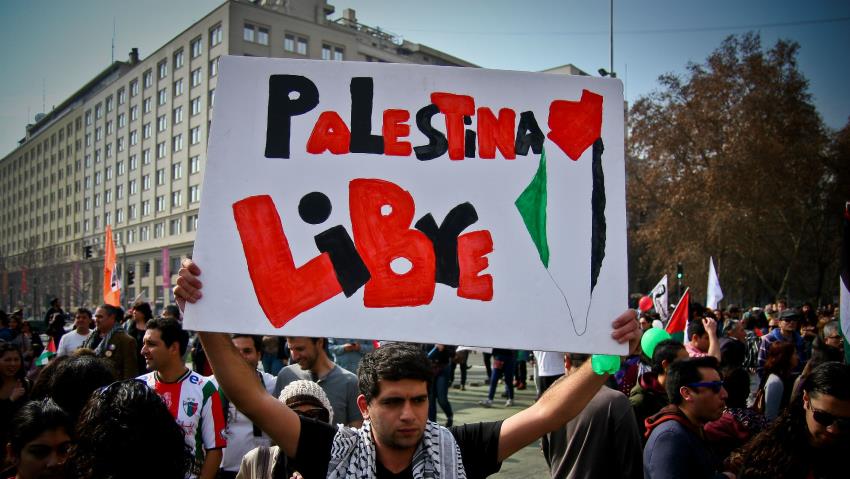
SANTIAGO, CHILE — After the Chilean city of Valdivia became the first municipality in Latin America to support the non-violent Boycott, Divest and Sanctions (BDS) movement this past June, the Chilean government has now ruled that it is illegal to boycott Israel at the municipal level throughout the entire country.
The decision was made by Chilean Comptroller Jorge Bermudez Soto on Wednesday after a long legal battle initiated by the Jewish Community of Chile (Comunidad Judía de Chile) over Valdivia’s decision to boycott Israel.
In June, Valdivia unanimously adopted a measure that specifically declared the municipality as an “Apartheid Free Zone” and prohibited the city from working with any business that benefits or is linked to Israel’s occupation of Palestine and/or Israel’s apartheid policy that targets Palestinians.
According to the text of the declaration, the ban on working with such businesses would remain in effect until Israel ends its occupation of Palestine and dismantles the border wall; until Palestinians are granted fundamental human rights by the Israeli state and are treated as equals under Israeli law; and until the right of return of Palestinian refugees is granted, as stipulated by UN Resolution 194. The initiative had been personally introduced by the city’s mayor, Omar Sabat, who is of Palestinian descent.
However, Bermudez Soto – in representing Chile’s national government – determined on Wednesday that, though the Chilean Constitution gives local governments independence on some matters, the head of the Chilean state has the exclusive right to conduct relations with foreign powers. As a result, Valdivia’s boycott of Israel was determined to be illegal.
Bermudez Soto also went on to state that Valdivia’s boycott violated Chilean law for failing to treat anyone participating in a government bidding process in an “equal and non-discriminatory” fashion. Most importantly, Bermudez Soto noted that this decision applies not only to Valdivia but to all Chilean municipalities, making it illegal to support BDS at the municipal level in Chile. As a result, the decision has made Chile the first country in Latin America to ban support for BDS at the local level.
Bermudez Soto’s language in his decision echoes the four legal complaints filed against Valdivia in June by various Zionist organizations in Chile and abroad. The Jewish Community of Chile, which filed three out of the four complaints, argued that Valdivia’s ban on services linked to the Israeli occupation of Palestine or illegal Israeli settlements violated Chilean laws on equality as well as discrimination in economic matters.
Powerful Zionist forces made Valdivia a target
Unsurprisingly, the Jewish Community of Chile has praised the move, claiming that it is the first step in creating a “Chile free from BDS.” Zionist organizations in the U.S. — including StandWithUs, whose controversial behavior was detailed in a recently leaked Al Jazeera documentary — have praised the Chilean government’s edict as “an example for the rest of the world.”
The Jewish Community of Chile is one of the most powerful organizations of the Zionist lobby in Chile, as it is the Chilean branch of the World Jewish Congress (WJC), an influential international Zionist organization that regularly hosts events with the Israeli government and supports illegal Israeli settlements in the occupied West Bank. The group’s current chairman is David de Rothschild and one of its vice presidents is Argentinian real estate magnate Eduardo Elsztain, who is very close to controversial Hungarian-American billionaire George Soros.
WJC, as evidenced by the presence of several billionaires on its leadership board, is extremely well-funded, with its U.S. offices alone reporting an annual revenue in excess of $22 million. Given the Jewish Community of Chile’s direct association with WJC, it is safe to assume that WJC helped foot the bill for the nearly six-month legal battle aimed at derailing Valdivia’s decision to support BDS in June.
Notably, without this legal action taken by the Jewish Community of Chile and other Zionist lobby organizations in Chile, the June decision to support BDS by Valdivia – a city whose population is under 150,000 – would have likely gone unchallenged.
Prospects good for national BDS action
While the declaration of the illegality of BDS support at the municipal level is being treated by Zionist groups within Chile and beyond as a “BDS fail,” other recent actions at the national level in Chile suggest that Chile could soon follow Ireland and become the next country to support BDS as a nation.
On November 27, the Chilean Congress approved a resolution demanding that the Chilean government “forbid the entry of products manufactured and coming from Israeli colonies in occupied Palestinian territory,” in a vote with 99 in favor and seven against. The resolution mandated that the government explore how a boycott could be implemented nationwide, an important step towards the future passage of a nationwide boycott of Israel. It also recognized East Jerusalem as the capital of Palestine and accused Israel of being an apartheid state.
Given that the recent decision by Chile’s comptroller to make municipal support for BDS illegal relied on the lack of authority Chilean cities have in regards to foreign relations, the nationwide BDS law – which has a good chance of passing Chile’s Congress – could soon deliver a much larger victory for Palestinian rights activists — and one that could not be challenged on the same grounds that were used to nullify Valdivia’s support for the BDS movement.
Whitney Webb is a staff writer for MintPress News and a contributor to Ben Swann’s Truth in Media. Her work has appeared on Global Research, the Ron Paul Institute and 21st Century Wire, among others. She has also made radio and TV appearances on RT and Sputnik. She currently lives with her family in southern Chile.
The Zionist Circular Maze
By Gilad Atzmon | December 7, 2018
On Thursday Israel cheered as the EU called on its member states that have not yet done so “to endorse the non-legally binding working definition of antisemitism employed by the International Holocaust Remembrance Alliance (IHRA).”
Israel called this move a “breakthrough,” the European Jewish Congress hailed the declaration as “unprecedented.” Both are correct: the Europeans ‘adoption of the IHRA definition of antisemitism is both a ‘breakthrough’ and ‘unprecedented.’ It confirms that Europe has explicitly abandoned its Athenian ethical ethos.
Rather than declaring its opposition to racism as a universal precept and denouncing all forms of discrimination and prejudice against any group or person of any X’ simply for being X’ (for example, a Jew for being a Jew, a Black person for being Black, a Gay person for being Gay, etc.), the EU has fallen into the most banal trap and subscribed to the primacy of Jewish suffering.
A lot has been written criticising the IHRA definition, how it stifles free speech and treats one particular group as exceptional but I think we have failed to address the most important question the IHRA raises. Why are Jewish institutions so enthusiastic about a definition that clearly extinguishes the Zionist promise to make ‘Jews people like all other people.’ The IHRA validates the vile antisemitic claim that Jews are somehow different than others, as no other people have advocated for nor benefit from an IHRA-like definition of prejudice directed solely against them. One should wonder why Jewish institutions see a need to impose such a definition on individuals, organisations, states and even continents.
The answer is circular. Jewish institutions need the IHRA definition simply because they have managed to impose such a definition — since the acceptance of the IHRA definition points at boundless political power, the IHRA definition serves to target and suppress any exploration, discourse or even discussion of such power.
This reflexive reasoning recalls the old rude joke; ‘why does a dog lick its testicles? Because it can.’ Why does the Lobby impose the IHRA definition on us? Because it can.
I wish the effects were merely so simple. The dog joke is amusing because it hints that if men could indulge in a similar gratifying act, the world would be somehow calmer and friendly like the happy dog. The joke is basically a comical illustration of Freud’s pleasure principle. But the IHRA definition is neither funny nor pleasing. It is hardly gratifying for those who have endorsed it, and in some cases its adoption has involved a chain of abuse and harassment (in the British Labour Party, for instance). While the dog is thrilled or titillated by his own act, it is not clear whether Europeans and Americans are at all happy to have to endorse a ‘non legally binding definition’ imposed on them by a powerful foreign lobby. It is reasonable ask why the EU Council has adopted a non universal definition of racism. It has done so because it doesn’t have another option.
This state of affairs is far from simple, harmonious or peaceful. It is in fact, pretty much a situation that incites instability, fear and anger.
Hamas thanks UN member states for foiling US draft resolution
Palestine Information Center – December 7, 2018
GAZA – The Hamas Movement has expressed its appreciation to all the countries that opposed on Thursday the US-drafted resolution on the Palestinian resistance at the UN General Assembly and defended the justice of the Palestinian cause.
In a statement, Hamas stressed that the real terrorism that must be confronted and condemned by all countries is Israel’s occupation of the Palestinian land.
The Palestinian resistance movement called for condemning Israel’s occupation of the Palestinian land, its displacement of millions of Palestinians from their areas and homes, the massacres and crimes it had committed against them, its Judaization activities in Jerusalem, its construction of settlements, and its refusal to allow Palestinian refugees to return to their homes.
Hamas also urged the countries that voted for the US draft resolution at the General Assembly to reconsider their positions and correct what it described as “the historic and dangerous mistake against the oppressed Palestinian people.”
Lebanese FM Orders Filing Compliant against Zionist Entity
Al-Manar | December 7, 2018
Lebanese Caretaker Foreign Minister Gebran Bassil ordered on Thursday the preparation of a complaint to the United Nations Security Council on the Israeli violations of Lebanese sovereignty.
National News Agency reported that Bassil has instructed Lebanon’s permanent representative to the UN, Ambassador Amal Mudallali, to submit a complaint against the Zionist entity on this matter.
The Lebanese complaint “comes in light of Israeli political and diplomatic campaign in preparation for a military aggression on Lebanon,” NNA quoted a statement by Lebanese Foreign Ministry as saying.
The statement also referred to Israeli violations of Lebanese Mobile network in which the Israeli occupation army sent voice messages to residents of southern town of Kfar Kela warning them of explosions in the Lebanese territory, according to the Lebanese agency.
The Foreign Ministry’s order follows an operation launched by Israel Tuesday to ‘cut off’ what it called ‘attack tunnels’ allegedly dug by Hezbollah in a bid to infiltrate into the Palestinian occupied territories.
In addition to the latest development on the southern border, the Zionist entity has been violating Lebanese airspace and territorial waters for years. A Lebanese Army official previously said that 162 Israeli violations were recorded in south Lebanon in September, including land and maritime infringements, as well as wall-building works, according to a Defense Ministry statement in October.
Haley not going out with a bang after US-sponsored anti-Hamas draft fails at UNGA
US Ambassador to the UN, Nikki Haley. © AFP / Hector Retamal
RT | December 6, 2018
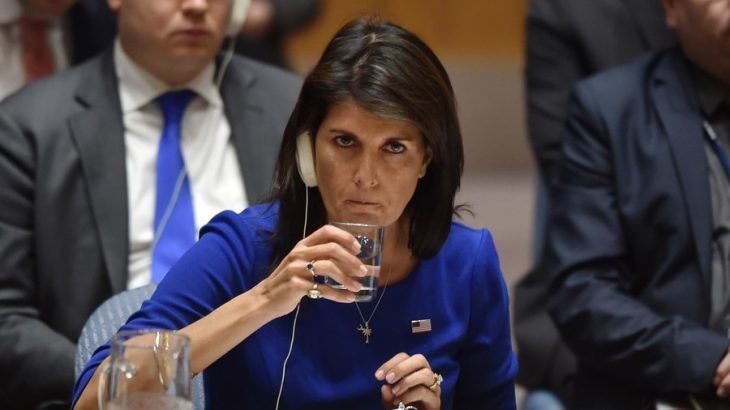
The US-propelled draft resolution targeting Palestinian Hamas has failed to pass a two-thirds majority threshold at the UN General Assembly vote in what is seen is a major upset for the outgoing US envoy to the UN Nikki Hailey.
The resolution garnered 87 votes in favor and 57 against, thus falling short of securing a required two-thirds majority for the motion to pass. Thirty-six member-states abstained from the vote.
The resolution should have condemned Hamas, which has been in control of the Gaza Strip from 2007 to 2014 and again since 2016. The document was in the works for several days, as Haley was seeking to reconcile the text with the EU and major Arab nations, the US allies.
The final draft denounces Hamas “for repeatedly firing rockets into Israel and for inciting violence, thereby putting civilians at risk,” demands it and other militant groups, such as Palestinian Islamic Jihad “cease all provocative actions and violent activity,” including “airborne incendiary devices.”
Haley has put much personal effort into making sure that what could have been the first-ever UN resolution condemning Hamas found support within the 193-strong body of nations.
It was reported that she had sent letters to all UN missions, saying that the US “takes the outcome of the vote very seriously.”
However, the thinly veiled threat did not sit well with Qatar, which called a procedural vote some 20 minutes before the vote on the resolution, which arguably sealed its fate.
Qatar argued that a two-thirds majority instead of a simple majority should be required for the resolution to pass. The motion, to the dismay of the US, was narrowly approved.
The resolution could have become a swan song for the outgoing diplomat, who abruptly announced her resignation in October, an unnamed Security Council diplomat told AFP.
“She would like to go out with something,” he said.
Haley’s strenuous effort was fully supported by the Trump administration, which has been unapologetic in doing Israel’s bidding at the UN. Hailey repeatedly blasted the UN for its alleged bias against Israel, calling the organization’s treatment of the Jewish state “unfair.”
Ahead of the crucial vote, US Middle East peace envoy Jason Greenblatt attempted to drum up support for the resolution with US allies in the Arab world, reaching out to representatives of Morocco, Oman, Bahrain, Jordan, Saudi Arabia, Kuwait, UAE, Egypt and Qatar, Haaretz reported on Tuesday.
In a letter sent to the Arab missions, Greenblatt reportedly said that the Arab states “have no reason” to oppose the US-sponsored draft if they are against terrorism and for the stability in the region.
Haley has been one of the leading pro-Israel voices in the Trump administration. During her tenure as ambassador, the US quit the UN Human Rights Council, which Haley described as “a cesspool of political bias” and “a protector of human rights abusers”.
“Since its creation, the council has adopted more resolutions condemning Israel than against the rest of the world combined,” Haley charged at the time, slamming the UN body as a “self-serving organization.”
UNGA resolutions are not legally binding for members, but are highly-respected and encouraged opinions.
Israeli forces demolish Palestinian primary school in al-Khalil
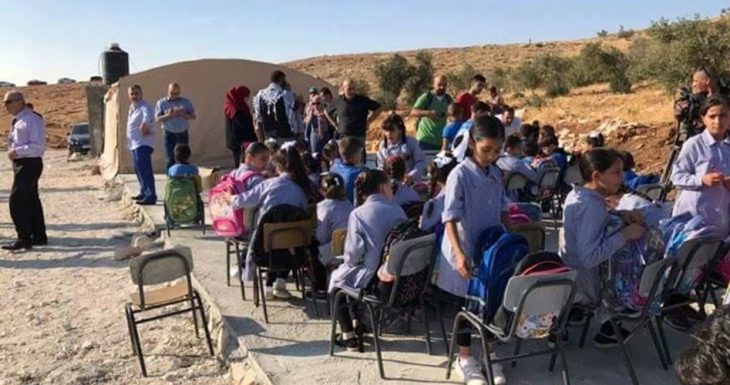
IMEMC News | December 5, 2018
Israeli soldiers invaded, Wednesday, the Sammoa’ town, south of Hebron, in the southern part of the occupied West Bank, and demolished a Palestinian school.
Media sources in Hebron said the soldiers surrounded Seemia area, north of the Sammoa’ town, and declared it a closed military zone, preventing the Palestinians from entering it.
They added that the soldiers then used their armored bulldozers to demolish the Tahadi 13 small school of several classrooms and their facilities.
The school was sponsored by the Palestinian Ministry of Education through European funding, with a total cost of 40,000 Euros, and was supposed to open in two days.
The Ministry of Education denounced the ongoing Israeli violations, targeting educational facilities and students, and added that the school is located in Area C of the West Bank, under full Israeli military and administrative control.
The school was built to make it easier for students in that area to reach it, especially due to Israeli military roadblocks and restrictions imposed by the military in various areas of Hebron.
It is worth mentioning that the soldiers have demolished many Tahadi schools in that same area, and other parts of the West Bank, as part of Israel’s illegal attempts to confiscate the lands to use them for military purposes and colonialist activities.
Featured Video

or go to
Aletho News Archives – Video-Images
Book Review
The Maidan Killings and the False-Flag Case
By Freddie Ponton | 21st Century Wire | September 5, 2026
Before the killings that helped bring down Ukraine’s president in February 2014, American diplomats were discussing who should enter its government. In a leaked telephone call, senior State Department official Victoria Nuland told US ambassador Geoffrey Pyatt, “I think Yats is the guy,” referring to opposition leader Arseniy Yatseniuk. Washington had clear preferences and was working to advance them. Later that month, Yatseniuk became prime minister.
Ivan Katchanovski’s The Maidan Massacre in Ukraine examines the violence that preceded that transfer of power. Drawing on television footage, witness testimony, forensic examinations and Ukrainian court proceedings, he argues that elements of the opposition shot protesters and police in a false-flag operation. His case centres on evidence of protesters being shot from opposition-controlled locations, including Hotel Ukraina, overlooking the killing ground. … continue
Blog Roll
 Aletho News
- Israel expands “incitement” charge to target Palestinian education and memory
- How Israel seeks to reshape Arab classrooms
- Paris bans pro-Palestinian demonstration planned for Oct. 7 over ‘risks of public disorder’
- In August Hanning Treason Case – All Signs Point To Tel Aviv.
- France cleared dozens of military sales to Israel between May and September: Report
- France projects nuclear power as Macron pushes arsenal expansion
- The fallacy of US delusions about Iran’s economic collapse
- What changes with Lula or Flávio?
- Britain leads Western media’s demise through ‘fear porn’ narrative
- The Maidan Killings and the False-Flag Case
- If Americans Knew
- Soldier testimony sheds light on how Israel wages information war
- CIA Report Warns Israel Could Head Toward Civil War, Total Collapse
- Banker Who Exposed Howard Lutnick’s Ties to Epstein Warned of ‘Retaliation’ and ‘Personal Consequences’ in Last Post Before Suicide
- Israeli Attacks Kill Two Palestinians in Gaza
- Gaza genocide at 3: Israeli-U.S. cruelty and the smart, deep resistance to it are changing the world
- As genocide is about to enter 3rd year, little of Gaza remains– Daily Update
- “We See Our Homes Now From A Satellite, Like Strangers”
- Watch “Gaza: Doctors Under Attack”, originally censored by BBC
- NAZA: Israeli embassies in UK and US promote rival documentary to challenge Gaza genocide allegations
- David Ellison appoints Israeli to lead merged Paramount-Warner studios
- No Tricks Zone
- Latest European Green Energy Debacle; Portugal’s Largest Flagship Solar Park Insolvent!
- Green Energy Debacle: German Expert Professor Fritz Vahrenholt Warns Of Severe Economic And Social Consequences
- Two More Paleo Reconstructions Affirm Meters-Higher Sea Levels Across Ireland, Brazil 7000-6000 Years Ago
- New Study: Earth And Venus Surface Warmth Largely Explained By Convection And Lapse Rate, Not CO2 Or Radiation
- 2025 Nature Paper Claiming Worsening Global Drought Gets RETRACTED …Heavily Flawed
- New Study: ‘Global Drought Shows No Detectable Recent Acceleration Under Climate Warming’
- Economic Masterminds: German Socialists Suggest Taxing Productivity Gains Stemming From Using AI
- The South China Sea Has Not Been Cooperating With The Climate Change Narrative
- Energy Crisis: Germany Enters Heating Season With Historically Low Gas Reserve Fill Levels
- New Study: The Antarctic Ice Sheet Gained Mass From 2020-2024 Due To Staggering Snow And Ice Accumulation

