On Christmas day, a recreational vehicle exploded in downtown Nashville, TN outside an AT&T transmission building — one block from the company’s office building.
What happened knocked out communications and 911 emergency call centers over a wide area, including parts of neighboring Kentucky and Alabama.
Was the motive behind what happened what official reports claimed?
Or was something else responsible for the blast? Was it a false flag?
It’s unclear at this time. What is known is that numerous US false flag attacks occurred before — notably since at least the mid-19th century.
They’re a US tradition at strategically timed moments.
Before the blast, the Tennessean reported that Nashville residents in the affected area were warned before the incident occurred, saying:
A “recorded warning” inside the vehicle said “(e)vacuate now. There is a bomb. A bomb is in this (RV) and will explode.”
An area resident said “(w)hoever did it did give fair warning” 15 minutes before the blast.
Fox News Nashville TV reported that city “police got people to safety before the downtown explosion.”
The following day, FBI agents raided the home of a “person of interest” following “more than 500” leads.
That many in hours after what happened is highly suspicious.
How is it possible to identify a possible suspect hours after the incident, including before an investigation began?
Nashville police called the incident an “intentional act,” a likely suicide bombing.
No mass casualties occurred — just three injuries reported and the remains of an individual identified as Anthony Quinn Warner.
Was he responsible for the incident or a convenient patsy to blame for what he had nothing to do with?
Before ID’d from DNA, his residence was searched by federal agents in a Nashville suburb, as explained above — a disturbing red flag.
Why his home alone and no others? Why before an investigation began?
No motive pointing to him is known.
Did what happened follow pre-planning to name him for the incident before occurring?
As the saying goes, dead men tell no tales so he’s unable to defend himself.
Reportedly, police and FBI agents aren’t looking for other suspects, another disturbing red flag.
Who is Anthony Quinn Warner. Local media called him a loner, an unmarried man with no children.
According to the Tennessean, “acquaintances… described (him) as a self-employed computer guru — and a homebody who tended to his pets and kept to himself.”
A next door neighbor called him “a little odd” but friendly, adding:
“If he… ha(d) any political beliefs… that was something he kept to himself.”
Another neighbor called him a “recluse.”
Local authorities claimed that the RV (or one similar to the detonated vehicle) was seen outside his residence for years.
Nothing known about Warner explained above suggests a motive for what happened, one more red flag.
What happened in Nashville is reminiscent of two earlier incidents.
In April 1995, a truck bombing killed 168 people and caused extensive damage in Oklahoma City.
Within 90 minutes of the incident, Timothy McVeigh was arrested on a firearms charge, spent two days in jail, then was charged with the bombing.
On May 10, Terry Nichols was named his alleged accomplice and arrested.
Experts, including professional demolition contractors, concluded that only high-grade military explosives, detonators, and proper multiple internal placements could have caused such extensive destruction.
Elgin Air Force Base’s Armament Wright Laboratory studied the incident.
It concluded that no single truck bomb was involved.
(Ret.) Brig. General Benton K. Partin, an explosives and ordnance expert, said “a truck bomb couldn’t cause steel-reinforced concrete columns to collapse,” adding:
“The total incompatibility with a single truck bomb lies in the fact that either some of the columns collapsed that should not have collapsed or some of (them) are still standing that should have collapsed and did not.”
“This is a classic cover-up of immense proportions.”
“To cause the damage pattern that occurred to the Murrah building, there would have to have been demolition charges at several supporting column bases, at locations not accessible from the street, to supplement the truck bomb damage.”
“(A) careful examination of photographs showing the collapsed column bases reveal a failure mode produced by demolition charges and not by a blast from the truck bomb.”
More forensic evidence showed other devices were involved, evidence which major media suppressed.
Yet McVeigh was executed for the incident, Nichols sentenced to life imprisonment.
Gen. Partin and others believe they were framed — used as convenient patsies.
So were falsely charged Dzhokhar Tsarnaev and his brother Tamerlan for what’s known as the April 2013 Boston Marathon bombing.
Local police lethally shot Tamerlan near Watertown, MA.
Dzhokhar was arrested, falsely charged, convicted and sentenced to death — later reversed to multiple life sentences.
Neither brother was involved with the incident, a state-sponsored false flag.
Like many times before in the US, innocent patsies were wrongfully punished. Innocence wasn’t enough to save them.
Was the Christmas Day Nashville incident the latest example of wrongfully charging a convenient patsy despite no motive or evidence of involvement in what happened?
Perhaps what’s unknown at this time will be revealed later without public attention to set the record straight if the incident was other than what’s reported.
Stephen Lendman was born in 1934 in Boston, MA. In 1956, he received a BA from Harvard University. Two years of US Army service followed, then an MBA from the Wharton School at the University of Pennsylvania in 1960. After working seven years as a marketing research analyst, he joined the Lendman Group family business in 1967. He remained there until retiring at year end 1999. Writing on major world and national issues began in summer 2005. In early 2007, radio hosting followed. Lendman now hosts the Progressive Radio News Hour on the Progressive Radio Network three times weekly. Distinguished guests are featured. Listen live or archived. Major world and national issues are discussed. Lendman is a 2008 Project Censored winner and 2011 Mexican Journalists Club international journalism award recipient.
A major cyber attack that has hit US government agencies is also believed to have affected a small number of British organizations.
According to Sky News, British officials are “investigating” as to whether government departments have been affected by the big breach.
Hitherto, it is believed only private British companies have been affected.
Paul Chichester, the director of operations at the National Cyber Security Centre (NCSC), which is an extension of the GCHQ signals intelligence organization, has urged British companies to take “immediate steps” to protect their networks.
“This is a complex, global cyber incident, and we are working with international partners to fully understand its scale and any UK impact”, Chichester told Sky News.
“The NCSC is working to mitigate any potential risk, and actionable guidance has been published on our website”, he added.
Meanwhile, one of the directors of a leading British cyber security company has claimed the attacks could be the most “impactful national security [cyber] breach” that has ever been seen.
John Hultquist, who is senior director of analysis at Mandiant Solutions (which is part of the cyber security company FireEye), told Sky News that: “They [the hackers] managed clearly to gain access to a lot of secure areas. They are going to be very hard to get out”.
FireEye reportedly was the first cyber security company to discover the trans-Atlantic breach.
Yet another major figure in the British cyber security world echoed Hultquist’s assessment by describing the latest breach is “one of the most significant cyber attacks, really that’s ever been seen”.
Ciaran Martin, who is the founder and former head of the NCSC, told Sky News the attack was motivated by “traditional espionage”.
However, Martin, who is currently an academic at the Blavatnik School of Government at Oxford University, cautioned that “it remains to be seen, what the final picture [about the hacking] tells us”.
US media, in addition to British security sources, have reflexively blamed the hacking on Russia’s foreign intelligence service (SVR) without furnishing any evidence.
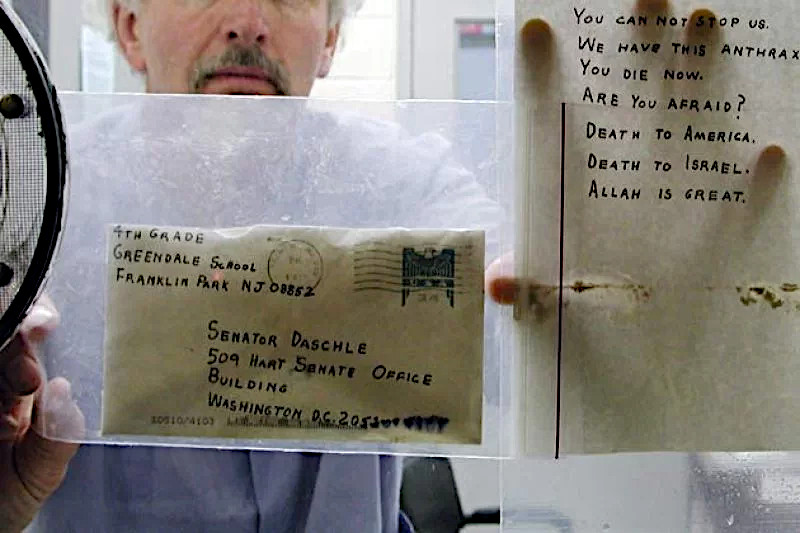
David Meiswinkle and Mick Harrison of the Lawyers’ Committee for 9/11 Inquiry join James to discuss their petition to Congress for a redress of grievances related to government misconduct in the investigation of the 2001 anthrax attacks.
A major crisis is unfolding in Guatemala. Violent protests, vandalism and mutual accusations fill the scenario of great political, social, and institutional tensions that are forming in this Central American country. Last weekend, amid protests against the government in the center of Guatemala City, there was an attempt to set fire to the National Congress, which gained prominence in the news across Latin America. At first, the main suspicions pointed to criminal actions of violent protesters, but some investigations point to completely different possibilities.
Initially, investigators began to question the fact that the Parliament’s security team was very scarce at the time of the demonstrations – even though it was clear that on November 21 there would be protests in the vicinity, having previously been publicly announced. The Congressional protection scheme was limited to a few individuals scattered around the area, without any organized staff to prevent potential acts of vandalism. Still, according to reports, the Guatemalan National Civil Police simply did not try to prevent some of the acts of vandalism carried out during the protests, remaining inert while the crimes were being committed. Witnesses say the police watched passively as the protesters set fire to the Parliament without any reaction. Several photo and video records were posted on social networks around the world, proving police inertia in the face of vandalism, which caused indignation and suspicion.
It was then that the Guatemalan political opposition, led by the party “Unidad Nacional de la Esperanza” (UNE), began to claim that such acts were not committed by protesters, but by government infiltrators, protected by security forces, trying to boycott the legitimate civil acts. The government’s intention, according to the opposition’s allegations, would simply be to delegitimize popular demonstrations through propaganda about the acts of vandalism practiced by such infiltrators, which would make a perfect excuse for the government to take exceptional measures and act violently against the protesters.
To understand the Guatemalan crisis properly, we must analyze the country’s situation profoundly. The peak of popular dissatisfaction, which motivated the violent protests of November 21, was the approval by the parliamentarians of the Budget of the Republic for 2021. The project of State accounts significantly reduced health and education expenses, which generated legitimate popular indignation. Among the social programs that lost funding under the new budget are child nutrition projects, for example – even in a country where the poverty line reaches 50% of the total population. In the same vein, provisions for universities, maternity centers and medical clinics have declined substantially and are now in real risk. After the increase in violence in the protests, budget approval was temporarily suspended.
Despite this being the peak of the revolt, popular indignation began much earlier and encompasses several factors. Guatemala suffers from a serious case of structural corruption, as well as great incompetence to deal with the country’s main social problems. The country has not yet overcome the crisis generated by the new coronavirus pandemic and the two consecutive hurricanes that hit the region recently, leaving hundreds of dead people.
Popular indignation is not restricted to the acts of the Parliament. In the Executive Branch, the situation is similar. Alejandro Giammattei’s first year in office is being marked by criticism and scandals, in addition to a notable inability to overcome internal differences between members of his own team. For example, recently, Vice President Guillermo Castillo criticized Giammattei for invoking international legal documents to legitimize a severe response against acts of vandalism during the demonstrations. Castillo classified the attitude as exaggerated and said that the Guatemalan people do not practice such acts.
In addition, the vice president stated during an interview that he asked the president to resign from his office with the aim of alleviating social tensions in the country. Castillo openly defends the creation of a Guatemalan “commission of notables”, led by religious and popular institutions, which should give to the Congress a list with possible names to occupy the office of new president. This is sufficient to reveal the deep level of dissatisfaction, disunity, and lack of strategic planning within the Guatemalan government and parliament.
While the accusations continue on both sides and the Guatemalan state is fragmented into several political factions, the population suffers from the consequences of many incompetent policies. Now, with the arson attack against the Parliament, popular demonstrations are likely to be suppressed with extreme violence. Although Congress has suspended the approval of the new budget, there is no indication that such suspension will continue – it may be only a temporary measure while the demonstrations remain violent. It is likely that the government will tighten up its security policies and that the restriction on popular acts will grow to the point of preventing any legitimate demonstration against austerity measures. Given the recent history of the country and the entire Central American region, it is difficult to establish any positive scenario for the near future in Guatemala.
Lucas Leiroz is a research fellow in international law at the Federal University of Rio de Janeiro.
For the past twenty years, the world has been in the midst of a so-called “war on terror” set in motion by a false flag attack of spectacular proportions. Now the stage is being set for a new spectacular attack to usher in the next stage in that war on terror: the war on bioterrorism. But who are the real bioterrorists? And can we rely on government agencies, their appointed health authorities, and the corporate media to accurately identify those terrorists in the wake of the next spectacular terror attack?
For those with limited bandwidth, CLICK HERE to download a smaller, lower file size version of this episode.
For those interested in audio quality, CLICK HERE for the highest-quality version of this episode (WARNING: very large download).
TRANSCRIPT
A false flag operation is an action that is carried out in such a way as to make it look like it was done by someone other than the real perpetrator. Taking its metaphor from naval warfare, where ships would sometimes fly false flags as a ruse du guerre in order to sneak up on their enemy, its use has been expanded to include military actions, intelligence operations and even political subterfuge.
It is not difficult to see how governments can use this tactic to whip the public into war hysteria against their political enemies. By staging an attack and blaming their opponents, governments can dupe their population into going along with whatever policies they wish to enact in the name of “fighting the enemy.” It’s a childishly simple tactic but, as we shall see, it has worked for hundreds of years to lead populations into war against targeted groups.
For the past twenty years, the world has been in the midst of a so-called “war on terror” set in motion by a false flag attack of spectacular proportions. And now, the stage is being set for a new spectacular attack to usher in the next stage in that war on terror: the war on bioterrorism.
GATES: We can’t predict when, but given the continual emergence of new pathogens, the increasing risk of a bioterror attack, and the ever-increasing connectedness of our world, there is a significant probability that a large and lethal modern-day pandemic will occur in our lifetime.
As the world begins to lose its collective mind over the threat of viruses, the idea that biological agents and infectious pathogens will be the weapon of choice of the terrorists is being seeded in the public imagination. As in every such false flag event, the coming bioterrorist attack will be blamed on a convenient scapegoat: the “invisible enemy” of a deadly new pathogen and the shadowy terror groups who, we will be told, are responsible for releasing it.
But, as history shows, it is the people who are claiming to “predict” this attack in advance, and who are in positions to dictate the world’s response to it, who should be considered the prime suspects in the wake of any such event.
This is an exploration of False Flags and the Dawn of Bioterrorism.
Although the term “false flag” has been used in a figurative sense since the 16th century to refer to some person or group disguising their true nature or intentions, its modern use derives from the annals of naval warfare, where ships would literally fly the flag of a different nation, pretending to be allies in order to slip past enemy defenses.
The ruse was successful enough that it was adopted for land and air warfare. No longer were literal flags necessary in order to carry out these “false flag” operations. Any use of deception in order to conceal the true origins and perpetrators of an attack could, by extension, be counted as a false flag operation.
It’s a simple idea, but, to those not versed in the art of deceit, it can be devastatingly effective. Unsurprisingly, rulers have used the tactic for hundreds of years to rally their own populations for war against an enemy target.
Take the case of Swedish King Gustav III. In 1788 he was looking for a way to unite an increasingly divided nation and raise his own falling political fortunes. Like many a ruler before and after, he decided that launching a war against his old rivals, the Russians, would be the perfect vehicle for rallying the public around his government. But the king had a problem: there was no appetite among the Swedish public for such a war, and he didn’t have the authority to declare war unilaterally. So he arranged a false flag operation. Gustav dressed up his own soldiers as Russian troops (complete with Russian coins in their pockets) and ordered them to attack a Swedish garrison stationed in Finland. The Swedish public, believing it to be a genuine Russian attack, were outraged, and the Russo-Swedish War of 1788-1790 began.
Or take the case of Seishirō Itagaki, a general in the Imperial Japanese Army who, by 1931, had risen through the ranks to become the Chief of Intelligence in the Kwantung Army, Japan’s largest army group. Itagaki had a problem: he wanted to invade Manchuria, but the Japanese Minister of War wouldn’t allow it. So the general took matters into his own hands by organizing a small cadre of rebels within the Japanese Army and launching a false flag attack. They detonated some explosives on a railway track near a Chinese garrison and blamed the incident on the Chinese themselves. The next day, the Japanese began their attack in response to the “Chinese” provocation and Itagaki got his Manchurian invasion.
Or take the case of the Manning memo. This document records the discussions that took place between US President George W. Bush and UK Prime Minister Tony Blair at the White House on January 31, 2003. They were committed to starting a war with Iraq, but they had a problem: they didn’t have any actual reason for invading Iraq. As the memo reveals, Bush proposed a false flag solution: painting a U2 spy plane in United Nations colours and flying it low over Iraqi airspace in the hopes that it would be shot down by Iraqi air defense. The outrage, it was assumed, would give the leaders the blank check they needed to wage their war. Blair reportedly balked at the idea, but the pair did agree that the invasion would go ahead regardless of whether or not any weapons of mass destruction were ever found, war crimes be damned.
There are many such examples of false flag operations being used throughout history. But the tactic isn’t an old, dusty relic of the distant past. It very much pertains to the world of the 21st century . . .
2. False Flag Terrorism
It seems inevitable, in hindsight, that the idea of a “false flag” attack would be adapted from its literal use in naval warfare to a more general tactic of deception in military engagements. So it’s not surprising at all, then, that the concept was further abstracted from a stratagem of warfare to a tool of spy craft.
With the rise of the age of terrorism came the rise of false flag terrorism: spectacular acts of violence designed to look like they were the acts of shadowy terror groups. Once again, the trick is simple but effective.
In the early 1950s, the Israelis were concerned that the British would withdraw their forces from the Suez Canal zone, strengthening Egyptian President Gamal Abdel Nasser and his quest to form an alliance against Israel based on Pan-Arab nationalism. Realizing that the only thing that would keep Britain committed to the region was an ongoing state of emergency, they hit upon a simple solution: a false flag terror operation.
Officially codenamed Operation Susannah (but today known as the Lavon Affair), Israeli military intelligence staged a number of bombings around Egypt, hoping to blame the acts on communists, the Muslim Brotherhood, malcontents, or other convenient scapegoats. But the plan was foiled by Egyptian authorities. Several members of the Israeli cell were captured and the Israeli defence minister was forced to resign over the incident. It was never officially admitted until 2005, when Israel formally honoured nine of the spies that had helped carry out the bombings.
But the era of false flag terrorism kicked off in earnest on September 11, 2001, when the neocons in the Bush administration and their accomplices in the military-industrial complex and the intelligence services of multiple countries found an excuse for their longed-for invasion of Afghanistan and the fulfillment of long-standing Zionist plans for carving out a Greater Israel and redrawing the map of the Middle East.
Prized as a pipeline corridor, Afghanistan was also the linchpin of the global heroin trade and an important base of operations for the forthcoming War on Terror. In fact, so important was the country to the Bush administration that it made the full-scale plan for invading Afghanistan the subject of its first national security directive, NSPD-9. The plan was ready and awaiting presidential approval on September 4, 2001, one week before the events that would supposedly justify such an invasion.
RUMSFELD: By the first week of September, the process had arrived at a strategy that was presented to principals and later became NSPD-9, the President’s first major substantive national security decision directive. It w as presented for a decision by principals on September 4th, 2001, seven days before the 11th, and later signed by the President, with minor changes and a preamble to reflect the events of September 11th, in October.”
9/11 was the foundational event of the 21st century, an excuse for numerous items on the checklist of the neocon cabal at the heart of the Bush administration: The creation of the homeland security state. The murderous wars of aggression to reshape the Middle East. The expansion of the military-industrial complex even beyond its Cold War excesses. The formation of the information-industrial complex. We have all watched these events unfolding like a nightmare over the course of the past two decades.
But now, just as the 9/11 myth has finally begun to relinquish its grasp on the public psyche, another event has come along to send the world back into a state of irrational fear. This time, the emergency is predicated not on the Muslim bogeyman but on the invisible bogeyman: SARS-CoV-2.
As we have already seen, the advent of new forms of warfare inevitably brings with it new opportunities for war planners to adapt the false flag strategy for new battlegrounds. And so it is that we find ourselves on the cusp of a new era of false flag operations.
3. The Anthrax False Flag
As it turns out, 9/11 may not prove to be the most long-lasting and world-changing false flag event to have taken place in the fall of 2001. Although largely forgotten today, the anthrax attacks that followed on the heels of “the day that changed everything” have had a profound effect in shaping public policy and setting the stage for the biosecurity state that is emerging today.
The week after September 11, 2001, a series of letters containing anthrax spores were mailed to various media outlets and, later, to two US Senators, Tom Daschle and Patrick Leahy, who had raised concerns about the Patriot Act which the Bush regime was attempting to rush through Congress. The anthrax-laced letters—which caused the shut down of Congress and lead to the emergency passage of the Patriot Act before legislators even had a chance to read the bill—would go on to kill five and injure 17 others.
In those first chaotic days of the attack, ABC’s Brian Ross began reporting from his anonymous “well-placed” sources that the anthrax spores contained traces of bentonite, a “troubling chemical additive” that just happened to be a “trademark of Iraqi leader Saddam Hussein’s biological weapons program.”
BRIAN ROSS: Peter, from three well-placed but separate sources tonight ABC News has been told that initial tests on the anthrax sent to Senator Daschle have found a tell-tale chemical additive whose name means a lot to weapons experts. It is called bentonite. It’s possible other countries may be using it, too, but it is a trademark of Saddam Hussein’s biological weapons program.
Of course, this turned out to be a complete lie (a lie that Ross has never clarified or retracted to this day).
As was later confirmed, the spores in question were actually derived from the Ames strain, a strain of anthrax whose virulence makes it the “gold standard” for research into the bacterium by the biological warriors at the United States Army Medical Research Institute of Infectious Diseases. Unsurprisingly, once the anthrax was found to have sourced from the US government’s own biological research labs and not an Iraqi weapons program, coverage of the affair in the mainstream media became less frequent and less detailed.
After years of floating the name of bioweapons expert Steven Hatfill as a “person of interest” in the investigation, the FBI pinned the blame on Bruce Ivins, a “lone wolf” who allegedly orchestrated the entire attack himself because of mental instability. Hatfill successfully sued the FBI for nearly $6 million for undue harassment and Ivins conveniently killed himself before ever being charged with any crime. In the end, not a single person was arrested or indicted for their participation in one of the highest profile attacks in American history.
The anthrax false flag killed multiple birds with one stone:
It associated the terror attack of 9/11 with a subsequent bioterror attack that was quickly connected to Saddam Hussein and Iraq. That association was still strong in the minds of many Americans (some who may still have erroneously blamed Iraq for the attack) during the build up to the Iraq War in 2002 and 2003.
As Whitney Webb points out in her exhaustive report on the event, the anthrax attack also saved Bioport, the crony-connected DoD contractor that supplied the US military with the highly controversial anthrax vaccine. Facing growing concerns about the safety and efficacy of its vaccine, Bioport faced financial ruin . . . until the anthrax attacks happened and demand for their questionable product skyrocketed. Later rebranding as Emergent Biosolutions, the company benefited from the largesse of the Gates-backed Coalition for Epidemic Preparedness, and, as Webb notes, the company “is now set to profit from the Coronavirus (Covid-19) crisis.”
The anthrax attack also gave an excuse for the creation of a wide-ranging legislative and institutional framework for implementing medical martial law in the event of a subsequent bioterrorist attack, including the wide-scale adoption of the Model State Emergency Health Powers Act authorizing forced quarantines and forced vaccinations in the wake of a declared health emergency.
The anthrax false flag also gave a gigantic shot in the arm to another major wing of the military-industrial complex: the “biodefense” sector. Before anthrax entered the public consciousness as a weapon of terror in the fall of 2001, bioweapons research had been sidelined and shrouded in secrecy. After the attacks, however, the US government—and, indeed, every government in the world—had a perfect excuse to vastly expand its biological weapons programs in the name of “biological security.” As Jonathan King, a professor of microbiology at MIT, explains:
“[The] response to the anthrax attacks and the bioterrorism initiative has been to launch a nationwide, billion-dollar campaign to ‘defend us’ from unknown terrorists. But the character of this program is roughly as follows: You say, ‘Well, what would the terrorists come up with? What’s the nastiest, most dangerous, most difficult-to-diagnose, difficult-to-treat microorganisms that we can think of. Well, let’s go bring that organism into existence so that we can figure out how to defend against it.’ The fact of the matter is, it’s indistinguishable from an offensive program in which you would do the same thing.”
And now, two decades later, that massive billion-dollar campaign made to “defend us” from the anthrax threat has led to the creation of a vast biosecurity infrastructure. From biological labs conducting gain-of-function research to government offices conducting bioterror “simulations” to legislation granting extraordinary powers to unelected health “authorities” in the wake of the next attack, the groundwork has been laid for the next stage of government-sponsored false flag terrorism.
4. False Flag Bioterrorism
Ever since 9/11 and the anthrax attacks of 2001, the public has been told that the next spectacular terror attack would involve biological agents engineered by shadowy terror groups.
REPORTER: At a Tucson gymnasium, people wait their turn for life-saving pills to be taken after an outbreak of a smallpox virus. Scenarios like these are taking place across the United States. Thankfully, they’re only simulations.
MR. LYNCH: Although we are fortunate not to have experienced a biological attack here in the United States since the anthrax attacks, post-September 11th the threat remains very real. Foreign adversaries have already demonstrated an interest in developing genetic and biological weaponry.
JEANNE MESERVE: GNN has just learned a group calling itself A Brighter Dawn, or “ABD,” is claiming responsibility for the creation and intentional release of the Clade X virus. In a youtube video, a spokesman for the group says the goal is to reduce the human population to pre-industrial levels. That, he says, will bring the world back into balance and prevent the destruction of the planet.
REPORTER: The Center for Disease Control is one of only two labs in the world which officially holds samples of the smallpox virus. The other is in Moscow. But now, bioterror experts fear many other countries may have the virus, and there are concerns it could be used as a weapon. Bioterrorism experts envisage grim scenarios where a suicide terrorist contagious with smallpox walks through a busy airport, infecting hundreds of others who spread the virus to their destinations.
Those warnings have only increased in urgency in this age of COVID.
GATES: We also face a new threat that the next epidemic has good chance of originated [sic] on a computer screen of a terrorist intent on using genetic engineering to create a synthetic version of the smallpox virus or a contagious contagious and highly deadly strain of flu.
RICK BRIGHT: There will be likely a resurgence of COVID-19 this fall.
It’ll be greatly compounded by the challenges of seasonal influenza. Without better planning, 2020 could be the darkest winter in modern history.
Statements like these not only implant in the public mind the idea that the next spectacular terror attack is likely to be biological, but that when such an attack occurs, we should immediately pin the blame on the shadowy terrorists who (we will likely be told) cooked the pathogen up in their bioweapons lab in the caves of Tora Bora.
But, just as anyone with national security experience immediately recognized that 9/11 was not the work of 19 men with boxcutters but in fact bore the hallmarks of a precisely coordinated intelligence operation, so, too, should the public be aware that those with the means, motive and opportunity to create and disseminate a globally spreading infectious pathogen are not cave-dwelling terrorists but well-funded government and military researchers.
Although prohibited by the 1972 Biological and Toxin Weapons Convention, the US has, in fact, maintained an illegal and secret germ warfare research program for decades. Long known to insiders but formally denied by the US government, the existence of the program was confirmed in the pages of The New York Times on September 4, 2001, the same day that the invasion orders for Afghanistan were sent to President Bush for authorization, one week before “the day that changed everything” and two weeks before the beginning of the anthrax false flag.
Although the program was downplayed as “foolish, but not illegal” and portrayed as a defensive program that was largely curtailed in the wake of the end of the Cold War, a groundbreaking 2018 investigation by independent journalist Dilyana Gaytandzhieva found that a network of Pentagon-run biolabs in ex-Soviet bloc states continues to this day to produce deadly bacteria, weaponized viruses and toxins prohibited by the Biological Weapons Convention.
But the US is certainly not alone in its multi-billion dollar quest to develop more deadly—and more precise—biological agents.
Britain’s program, centered around the research at the UK’s secretive Porton Down bioweapon laboratory, included the work of researchers like Vladimir Pasechnik, a microbiologist who had worked on the Soviet germ warfare program weaponizing anthrax and other biological agents before defecting to Britain in 1989. He was hired by the UK government to conduct his own research into anthrax antidotes at Porton Down and died just weeks after the anthrax attacks took place.
Dr. David Kelly, who debriefed Pasechnik after his defection and offered him the job at Porton Down, had told a friend that he was going to write a book exposing what he knew about the bioweapons program—but instead ended up dead on Harrowdown Hill under extremely suspicious circumstances.
The Soviets also had an extensive biological weapons research program. The fruits of that program included the novichok agent that has been blamed for high-profile assassination attempts in recent years, including the poisoning of Sergei and Yulia Skripal who were “randomly” discovered by the Chief Nursing Officer of the British Army just ten miles from the Porton Down bioweapons lab.
It was even reported by The Sunday Times over two decades ago that Israel—which is not a signatory to the Biological Weapons Convention—has worked on “developing a biological weapon that would harm Arabs while leaving Jews unaffected.” The Israel Institute for Biological Research where this research was conducted is a continuation of HEMED BEIT, a biowarfare unit in the Israel Defense Force whose founders believed that “if microbiology could help in providing the means to establish the Jewish State, so be it.” The institute made headlines earlier this year for its “groundbreaking research” identifying coronavirus antibodies and its subsequent quest to develop an Israeli COVID-19 vaccine.
But beyond the secret biological weapons programs, there has been a publicly acknowledged and funded program to weaponize viruses and pathogens that has been ongoing for years. And once again, the threat of bioterrorism has been invoked as a reason for funding this admittedly dangerous research to create the perfect bioweapon.
ANTHONY FAUCI: Bioterror is—there’s always the potential of bioterror. And we have a major bio defense research and development effort that spans agencies from the NIH to do the basic research to be able to develop better vaccines, how you counter engineered microbes, how you approach drug resistance, engineered microbes. The CDC has surveillance mechanisms to determine if there’s new microbes or anything out there in society particularly toxic that could be used in a bioterror situation, the Department of Homeland Security, the Department of Defense—we do all of that.
This work, referred to as gain-of-function research, involves weaponizing biological agents so that scientists can develop vaccines or other defenses against them. Of course, gain-of-function research is, in its key aspects, identical to an offensive biological weapons program, but is simply framed as a defensive and preventative measure.
The work of the researchers in this field has not been without controversy.
In 1995 researchers dug up a victim of the 1918 Spanish flu from the Alaskan permafrost in order to “resurrect” the virus using genetic sequencing.
In 2015, researchers at the Wuhan Institute of Virology participated in experiments weaponizing bat-derived coronavirus that even other molecular biologists warned were presenting the world with a “clear and present danger.” The research even received funding from USAID, which was illegal at the time, as the US had suspended funding for gain-of-function research in 2014.
Time and again, those looking at the history of biowarfare are confronted by a key fact: those who have dedicated their lives to weaponizing pathogens and dreaming up bioterror scenarios aren’t the shadowy terrorist biologists in their cave fortress compound, but the government-funded researchers at both secret and public biolabs around the world.
We have entered an age where the threat of a bioterror attack is very real. The only questions facing the public now are: Who are the real bioterrorists? And can we rely on government agencies, their appointed health authorities, and the corporate media to accurately identify those terrorists in the wake of the next spectacular terror attack?
Conclusion
Two decades ago, the idea of a false flag attack was incomprehensible to the general public. “Why would the government attack itself?” was the oft-heard question of those who could not imagine such duplicity being used to fool a nation into war.
But this is not the world of 2001. It is 2020, and by now nearly everyone is familiar with false flag operations. What was once an obscure tactic deployed by military and intelligence agencies in the shadowy world of spies and soldiers is now openly discussed and debated in the mainstream news.
Make no mistake: this is a major step. An important tool of control, used to pull the wool over the eyes of the public for centuries, had gone from a laughable fringe “conspiracy theory” to an openly acknowledged (and vigorously denied) conspiracy reality within the space of two decades.
But have we really learnt the lessons of history about false flag terrorism? Do we even really know what that term means? And would we recognize it if that trick were employed again in a different context?
They say forewarned is forearmed. Nowhere is that adage more aptly applied than in the realm of false flag terrorism. The entire reason that these deception operations have been used by country after country for centuries is that they are so effective. But they are only effective because throughout those centuries the general public was unable to wrap their minds around a trick so devious and downright evil.
Now we have to completely break the spell that governments have cast over the public. In the event of any spectacular terror attack (biological or otherwise), we have to take the history of false flag operations into account and put the government at the top of the list of suspects. When enough of the population has adjusted their thinking in this way, the trick will have lost its effectiveness and those seeking to direct society through fear will have to abandon it altogether.
This is a monumental task, but it is not to be taken lightly. Given the infrastructure for full-scale medical martial law that has been carefully laid over the past two decades, and given the lockdowns, forced vaccinations, enforced unemployment, and digital dollars tied to social credit scores that have been promised by those seeking to put us through the Great Reset, the future of humanity may depend on our response to the next bioterror attack.
The only question is: Can we wake up enough of the public to these tricks before the real bioterrorists launch their next false flag operation?
Known as ‘Amerithrax’, the 2001 Anthrax Attacks took pace one week after 9/11 and became know as the ‘worst biological attacks in U.S. history’. Letters containing anthrax spores were mailed to various news outlets and two Democratic Senators, killing 5 people and infecting 17 others.
In their petition, sent to all 435 House of Representatives and 100 United States Senators, the Lawyers’ Committee for 9/11 Inquiry reach a number of damning conclusions, including that the ensuing FBI investigation – one of the largest and most complex in the history of law enforcement – was in fact… intentionally… steered… away from the most likely suspects.
The petition calls for Congressional involvement, due to a Department of Justice ‘conflict of interest’. What’s more, it concludes, those responsible for the attacks are yet to be brought to justice and are ‘still at large’.
The Lawyers’ Committee’s conclusions are supported by 69 Petition exhibits, it explains. Amongst these are documents provided by a Col. Anderson, which deal with alleged evidence tampering and forged handwriting, leading to the false incrimination of Bruce Edwards Ivins, says the petition.
Ivans, 62, died in an apparent suicide while under investigation by the FBI in July 2008, after being informed of impending charges to be brought against him.
On August 6, 2008, the Justice Department posthumously declared Ivins the sole perpetrator of the attacks, motivated by his desire to secure the future of an anthrax vaccination program he was working on.
Below is the Executive Summary of their petition to Congress. Visit the Lawyers’ Committee for 9/11 Inquiry homepage for information and updates.
Petition To Congress To initiate A Congressional Investigation Into The 2001 Anthrax Attacks
This Petition is a formal request to Congress for redress of grievances regarding the federal government’s misconduct detailed in the referenced Petition related to the post-9/11 anthrax attacks of 2001. These attacks against Congress and the media involved use of a lethal biological warfare agent. This lethal agent killed 5 individuals, injured at least 17 others, and was used to attempt the assassination of two United States Senators.
This Petition centers on multiple lines of evidence relating to the FBI’s investigation of the anthrax attacks beginning in 2001 and concluding in 2010 which was intentionally obstructed and was not conducted in good faith.
The FBI’s analyses and reports were knowingly deceptive.
The Petition is 75 pages with 69 Exhibits supporting the urgent need for a Congressional investigation.
The Major Conclusions of the Lawyers’ Committee in this Petition are:
1. The FBI’s sole identified anthrax killer, Dr. Bruce Ivins, a distinguished scientist with a 28-year career at U.S. Army’s Medical Research Institute, was innocent and an unfortunate scapegoat of FBI contrivance.
2. The FBI intentionally, by concealing and avoiding key evidence, steered its investigation away from the most likely suspects, those personnel associated with Dugway Proving Grounds, Battelle Memorial Institute and their contractual CIA partner, and institutions and individuals associated with them, and concentrated instead on the least likely suspects, scientists from United States Army Medical Institute of Infectious Diseases (USAMRIID), and prematurely concluded its investigation upon the death of Dr. Ivins.
3. Congressional involvement is necessary as the Department of Justice has a conflict of interest in investigating its own alleged misconduct.
4. Those responsible for the anthrax attacks are still at large and the Nation remains in peril.
5. The anthrax attacks appear to have been intended to rush the passage of the United States Patriot Act, thus undermining civil liberties, facilitating a War on Iraq predicated on nonexistent weapons of mass destruction and inaugurating the War on Terror which continues to this day
The Lawyers’ Committee for 9/11 Inquiry, Inc. is a non-profit 501(c)(3) organization of lawyers, investigators, scientists and concerned citizens created to promote transparency and accountability regarding the tragic events of September 11, 2001.
The BBC is preparing an attack against journalists, former diplomats, academics and scientists who challenge the dominant pro-war narratives against Syria underpinned by the pseudo-humanitarian White Helmets.
The British public broadcaster has sent out requests for comments to those who have dared to expose the role the UK government and its intelligence agencies have played in the destabilization of Syria, which look more like neo-McCarthyist charge sheets. The producer of an upcoming Radio 4 documentary series had been in email and telephone conversation with the author of this article, as well as Peter Ford, former UK ambassador to Syria, and members of the Working Group on Syria, Media and Propaganda (WGSMP) since June 2020. The result of those conversations, during which the evidence emanating from serious scientific research and on-the-ground testimony was presented to the producer, was a familiar list of accusations of “conspiracy theorism” and suggestions of “incentivized” Russian or Syrian bias.
Fellow independent journalist Eva Bartlett has spent long periods of time inside Syria, reporting from many of the most high-risk areas during the Syrian Arab Army allied campaigns to liberate swathes of Syrian territory from the US coalition-proxy occupation. She had this to say about the email she received a few days ago:
“The questions emailed to me by the BBC evidence a predetermined intent to character assassination. This approach shows an utter lack of journalistic integrity on the part of the BBC.
The BBC’s hostile insinuations against me arrogantly infer that neither I nor the Syrians I interview think for ourselves, but are puppets of the Syrian and Russian governments. My journalism dates back to 2007 and is quite extensive, with 13 years of on the ground experience, from Palestine and Syria, to Venezuela and eastern Ukraine, and elsewhere.
My focuses have been on giving voice to Syrians disappeared by corporate media, highlighting the terrorism they endured by terrorist groups which the West dubs “rebels,” and highlighting war propaganda by outlets such as the BBC.”
It was clear from the BBC’s line of questioning that this was not a genuine investigation into the life and times of White Helmets founder, and former British military intelligence officer, James Le Mesurier. It is effectively a damage limitation exercise designed to discredit the evidence that points to the White Helmets being a propaganda construct with extremist connections funded by the US/UK coalition to vilify the Syrian government and allies, thus justifying military intervention by proxy and aggression against a sovereign nation. The aggression includes economic sanctions that have devastated the Syrian economy and caused widespread poverty and food insecurity among the Syrian people.
The upcoming BBC programme – ‘Mayday’ – appears to be an attempt to whitewash British intelligence operations inside Syria. Operations that were recently further exposed following the leak of alleged UK Foreign Office documents, reported by Grayzone, which detailed the extent to which the UK government provided media and PR support to the armed groups in Syria. Those groups effectively include Al Qaeda and Islamic State (IS, formerly ISIS) affiliates such as Jaysh Al-Islam and Ahrar Al-Sham, who are responsible for the horrific bloodshed and devastation of infrastructure in the areas they invaded and occupied.
The UK and EU government-funded Mayday Rescue organisation was established by Le Mesurier to provide an intermediary management of the funds the UK government was providing to the White Helmets as they embedded themselves with armed groups in extremist-controlled areas throughout Syria, more recently exclusively in Idlib, the last remaining and “largest Al Qaeda haven since 9/11.” Le Mesurier died in November 2019 having fallen from the balcony of his Istanbul home which he shared with his third wife, Emma Winberg. Three days before his death, which was ruled a suicide, Le Mesurier had reportedly admitted to defrauding Mayday Rescue of funds provided by UK and European governments.
It is also worth a reminder that the Dutch government had withdrawn funding from Mayday Rescue in 2018 following an extensive investigation that had concluded a lack of assurances that funds were not being hijacked by the armed groups in Syria, including Al Qaeda.
The BBC pins its arguments on the view that the White Helmets are a “humanitarian” organisation – an Oscar-winning illusion that has been dismantled by some of the most acclaimed independent journalists and researchers of our time, including Cory Morningstar, Rick Sterling, Eva Bartlett, Stephen Kinzer, Robert Parry, John Pilger, Gareth Porter, Ray McGovern, Phillip Giraldi, Craig Murray and former UN weapons inspector Scott Ritter, to name just a few.
The former UK ambassador to Syria, Peter Ford, also received the BBC bill of indictment and he issued this statement in response:
“The BBC have systematically tried to suppress views on Syria which run counter to the standard one-sided narrative. This programme’s efforts to smear dissenters takes BBC conduct to a new low. By alleging conspiracy theorising where there is only evidence-based reporting and analysis, the BBC is showing its frustration at being unable to stifle truth-telling.
The only conspiracy here is whatever coordination has taken place between the BBC and British authorities responsible for failing to achieve regime change in Syria despite throwing many millions of taxpayer money at the effort. Why is the BBC not drawing attention to the biggest failure of British foreign policy since Suez, as judged by its self-proclaimed objective of removing Assad, rather than busying itself with trying to take down unsupported individual dissenters who have ranged against them the vast wealth and resources of the establishment?
The charge of biggest failure since Suez as judged by its own objective of regime change is stinging because palpably true, and will with luck get some play in the follow up. It’s an angle that has been largely lost in the welter of detail.”
On October 5, the US and UK envoys to the UN Security Council (UNSC) led the campaign to ban the former Organisation for the Prohibition of Chemical Weapons (OPCW) director general, Jose Bustani, from briefing the UNSC meeting presided over by Russian Ambassador Vassily Nebenzia. Nebenzia accused the US/UK-led truth-suppressors of bringing the UNSC into disrepute. One week later, the BBC, a de facto UK-state-media outlet, kicked off its attack on the individuals responsible for highlighting the corruption of the OPCW and the fraud that was the final report on the alleged Douma chemical attack in April 2018.
One member of the WGSMP, Paul McKeigue, has published his conversations with the producer. Regarding the Douma incident, McKeigue informs us that “a reader of this correspondence could reasonably conclude that […] Raed Saleh (White Helmets leader) has something to hide, and further that [the BBC producer] is, for some reason, colluding with him by helping him to avoid having to respond” to questions regarding the whereabouts of the bodies of the alleged chemical weapon attack victims. Part of my response to the BBC also alludes to the apparent suppression of evidence:
“A BBC producer, Riam Dalati, has stated publicly that the Douma hospital scenes, the site of the alleged chemical weapon attack in Syria, 2018, were staged. As has been pointed out repeatedly to Riam Dalati and the BBC, if the hospital scenes at Douma were staged so too were the films of the deceased in the Douma apartment block. The BBC have never reported this information, nor has it passed the information obtained by its producer to either the OPCW FFM or the IIT. It is extraordinary and completely unjustifiable that the BBC should be withholding this vital information from a UN linked organisation.”
Dr. Piers Robinson, the co-founder of the WGSMP, accused the BBC of suppressing truth:
“The BBC is also attempting to smear academics researching alleged chemical weapons attacks in Syria as ‘conspiracy theorists’, even though their work has been supported by the leading chemical and biological weapons expert the late Julian Perry Robinson and vindicated by whistleblowers and leaks from the OPCW itself. The BBC is not engaging in journalism but rather suppression of the truth.”
In conclusion, the BBC is not an honest broker. Our work as journalists and researchers is to mine for the truth. The BBC’s output, especially with regards to foreign affairs, is produced in lock-step with UK foreign policy objectives. In the context of the war against Syria, this has resulted in a pattern of omission and censorship that has underpinned UK FCO efforts to foment conflict within Syria and to overthrow the internationally recognised Syrian government.
The result has been an illegal war that has caused death and suffering for millions of Syrian people. Regarding the UK/US intelligence-incubated, Al Qaeda-linked, White Helmets, the BBC could be considered complicit in manufacturing consent for another “humanitarian war” through their lack of “rigorous journalism” and omission of the facts surrounding this UK state-client-propaganda-manufacturer. Just as the BBC defended the WMD “dodgy dossier” that decimated Iraq and led to the deaths of millions of Iraqis, we now see the BBC rallying around the chemical weapon “dodgy dossier” that has enabled the prolongation of the barbaric war against the Syrian people.
Editor’s note: RT has reached out to the BBC producer for comment on issues raised in Vanessa’s article. A BBC spokesperson gave this response:
“The BBC’s journalism is rigorous, independent and impartial, and that will be evident to anyone who listens to this new series.”
Vanessa Beeley is an independent journalist and photographer who has worked extensively in the Middle East – on the ground in Syria, Egypt, Iraq and Palestine, while also covering the conflict in Yemen since 2015. Follow her on Twitter @VanessaBeeley
MOSCOW – The Hague is the only one to blame for derailing consultations of Russia, Australia and the Netherlands on the MH17 plane crash over eastern Ukraine, the Russian Foreign Ministry said Thursday.
“Therefore, the Hague carries full responsibility for the collapse of the trilateral consultations,” the ministry said.
The ministry further noted that it finds it impossible to further participate in trilateral consultations with Australia and the Netherlands on the deadly MH17 crash after the Dutch lawsuit filed against Russia with the European Court of Human Rights (ECHR).
“The Hague has chosen another option, without even waiting for interim results of the consultations — while only three rounds were held. It filed an interstate complaint against Russia with the ECHR. Such unfriendly steps by the Netherlands make the continuation of the trilateral consultations meaningless, as well as our participation,” the Russian Foreign Ministry said.
“As we remain committed to the provisions of the United Nations Security Council’s Resolution 2166, we intend to continue cooperation with competent authorities in the Netherlands, including for discussing Ukraine’s failure to close its airspace for civilian aircraft flights over the Donbas armed conflict area. However, we will be doing it in other formats,” the ministry went on to say.
Moscow once again slammed the MH17 probe by the Netherlands and the Dutch-led Joint Investigation Team as “biased, superficial and politicized.”
Commenting on Moscow’s statement, Dutch Foreign Minister Stef Blok said that the Netherlands regrets Russia’s decision to withdraw from trilateral consultations on MH17 with Australia.
“Russia has informed us of its unilateral decision to stop consultations on MH17. The Netherlands deeply regrets this decision by Russia,” Blok said.
In July, the Netherlands filed a lawsuit against Russia with the ECHR over the country’s alleged role in the deadly incident, which left almost 300 people killed back in 2014.
In its fresh statement, the Russian Foreign Ministry qualified the step “as another blow on the Russian-Dutch relations, and The Hague’s demonstration of its firm intention to continue the vicious policy of unilaterally putting on Russia the blame for what happened in the skies over Donbas, in defiance of common sense.”
The aircraft was downed over eastern Ukraine on 17 July 2014 as the self-proclaimed republics in the region were engulfed in an armed conflict with the new government following a violent coup in Kiev earlier that year. All 298 passengers – mostly Dutch citizens – and crew on board died in the crash.
The accident is being investigated by Dutch prosecutors and JIT (Joint Investigation Team), who claim that the plane was hit by a Buk missile that belonged to the Russian Armed Forces.
Moscow has repeatedly denied any involvement in the incident and has called the JIT investigation biased, because Russia’s evidence showing the plane had been shot down by a Ukrainian Buk missile, proven with radar data, has been ignored by investigators. At the same time, Ukraine has failed to provide any primary radar data, saying that “the radar was not operating at that moment”.
Moreover, leaked documents from the Dutch Military Intelligence and Security Service (MIVD) showed that Ukrainian missile systems were installed closer to the scene of the incident than any Russian ones, with the plane being out of their range.
In 2018, JIT released a report claiming the missile that shot down MH17 was launched by DPR forces and that the Buk launcher had been delivered from Russia. Moscow stated that the probe was politically motivated, and noting the team had based its claims on unverified social media photos and videos, as well as assertions by the Ukrainian government.
Germany must clarify the situation involving Navalny to Russia in line with the European Convention on Mutual Assistance in Criminal Matters, the Russian Foreign Ministry said.
“The German side must provide explanations, despite its persistent reluctance to do so. Excuses previously made to us are not accepted. They are unconvincing,” the ministry’s statement reads.The ministry added that ‘Novichok’ is a purely Western brand, with about 140 varieties throughout Western countries, and Russia does not have it.
According to the ministry, the structure and mass spectrum of “Novichok,” which is claimed to have been behind the poisoning of former double agent Sergei Skripal and opposition figure Alexey Navalny, were first revealed in the mass spectral database of the American Institute of Standards in 1998 (NIST 98).
“It is telling that information on this substance came there from a research centre of the US Department of Defense. Subsequently, a whole family of toxin chemicals not covered by the CWC [Chemical Weapons Convention] was formed on the basis of this compound. Along with Americans, at least 20 Western countries have worked with them [these toxins]. So, Novichok is a purely Western brand. It has been synthesized and is available in about 140 variants in these countries. We do not possess it,” the ministry added.
The OPCW said on Tuesday that a substance similar to nerve agent Novichok, but not included on the lists of banned chemicals, had been found in Navalny’s system. The German government believes the OPCW’s statement actually confirmed the opposition activist’s poisoning with a Novichok group substance but admits that the substance in question is not formally banned.
Russia has also said that the German Foreign Minister’s address to lawmakers on the “Navalny case” shows that Moscow is still subject to propaganda attacks.
“As for Heiko Maas’ thesis that Russia’s claims against Germany and the OPCW are absurd, such remarks are outrageous and do not stand up to any criticism. All we want is to get legal, technical and organizational assistance both in the bilateral Russian-German format and via the OPCW in the interests of conducting a comprehensive, objective and unbiased investigation of all the circumstances of the incident that occurred with Alexey Navalny,” the ministry said.
German Foreign Minister Heiko Maas said earlier that Berlin will discuss with its OPCW and EU partners a general reaction to the incident with Navalny, adding that the EU may “very quickly” impose sanctions against those people who they believe are involved in the development of chemical weapons in Russia.
Russian Foreign Ministry’s spokeswoman, Maria Zakharova, said earlier this week that the incident with Russian opposition figure Navalny was used just as a pretext for introducing sanctions against Russia that had long been in the works.
#StopTrumpsTerror is one of the hottest trending topics on Twitter, with more than 90,000 tweets. Yesterday, the FBI announced the arrest of six people in a plot (perhaps government-hatched) to kidnap Michigan Governor Gretchen Whitmer and put her on trial for treason for destroying the state’s economy with the lockdowns she imposed. Seven other individuals were arrested and charged with violating Michigan’s anti-terrorism law.
Trump had no connection to the plot, and at least one of the alleged plotters denounced Trump as a “tyrant” and “the enemy.” But Trump’s condemnations of lockdowns was enough for Gov. Whitmer to denounce Trump yesterday as “complicit” with the plotters. She derided Trump for spending “the past 7 months denying science, ignoring his own health experts, stoking distrust, fomenting anger and giving comfort to those who spread fear and hatred and division.” Former FBI official Frank Figliuzzi told MSNBC that Donald Trump should be investigated for “aiding and abetting” the Michigan plot.
Whitmer, one of Democratic presidential nominee Joe Biden’s favorite governors, enraged many Michiganders by locking down the state after the outbreak of Covid-19. Whitmer placed almost the entire state under house arrest, dictating a $1,000 fine for anyone who left their home to visit family or friends. Business owners faced up to three years in prison for refusing to close their operations. Whitmer severely restricted what stores could sell and prohibited purchasing seeds for spring planting after she decreed that a “nonessential” activity. (Purchasing state lottery tickets was still an “essential” activity.) Though Covid infections were concentrated in the Detroit metropolitan area, Whitmer shut down the entire state — including northern counties with few cases, boosting unemployment to 24 percent statewide. In a tweet yesterday, Trump said Whitmer “has done a terrible job. She locked down her state for everyone, except her husband’s boating activities.”
Whitmer’s actions infuriated many Michiganders and no informants were necessary to spur much of the anti-government rhetoric recited in the federal indictment yesterday. Plenty of hotheads say things online or in allegedly encrypted messages that look menacing or idiotic in cold print afterwards. Threatening violence against government officials – or anyone else – is reprehensible. But how far did those guys move to actually carrying out their plot? Last month, some of the conspirators “drove to the area surrounding the [Whitmer vacation] residence and discussed detonating explosives to divert police — even checking the underside of a bridge for spots to place a charge,” as the Washington Post summarized the indictment.
The FBI admits that it paid one informant $8,600, and there may be other payments that are revealed in the coming days or weeks. FBI agents have been taught that subjects of FBI investigations “have forfeited their right to the truth,” which helps explain the vast increase in federal entrapment operations in recent decades. Trevor Aaronson, author of The Terror Factory: Inside the FBI’s Manufactured War on Terrorism, estimated that only about 1% of the 500 people charged with international terrorism offenses in the decade after 9/11 were bona fide threats. Thirty times as many were induced by the FBI to behave in ways that prompted their arrest. The bureau’s informant program extends far beyond Muslims. It bankrolled an extremist right-wing New Jersey blogger and radio host for five years before his 2009 arrest for threatening federal judges. A long-term FBI informant organized the Ku Klux Klan rally in Charlottesville, Virginia, in July 2017.
The alleged Michigan plot is almost too idiotic to believe. The alleged conspirators purportedly planned to kidnap Gov. Whitmer and take her to Wisconsin for a private trial. This is on par with the 2006 FBI-fabricated terror plot of the Liberty City Seven, where an informant swayed a bunch of dimwits to babble about blowing up government buildings. That group was so knuckle-headed that they asked the informant for military uniforms and wanted to conduct a parade.
The Michigan conspirators are receiving vastly more coverage than a recent Michigan Supreme Court decision, which effectively labeled Whitmer a lawless dictator who had extended a “state of emergency” far beyond what an unconstitutional state law allowed. Instead of obeying the ruling of the highest state court, Whitmer responded by having the Michigan Department of Health and Human Services issue “new COVID-19 emergency orders that are nearly identical to her invalidated emergency orders,” as the Mackinac Center noted.
Four months earlier, the Michigan Court of Claims condemned Whitmer for contorting a Michigan workplace safety law to unjustifiably inflict additional penalties on businesses and individuals who failed to submit to her pandemic commands.
But, according to the media, locking down Michigan isn’t tyranny – it is public service.
Anyone who protests or heartily condemns lockdowns will also be presumed collectively guilty with the Michigan plotters. The same media moral framework will likely be used to exonerate new lockdowns that may be imposed in the name of curbing Covid-19. Earlier this week, many pundits denounced Trump as a would-be Mussolini for his statement on the White House balcony after he returned from Walter Reed Hospital. Commentators were horrified that Trump, who was standing outside not close to anyone, removed his facemask.
If Biden is elected president and fulfills his promise to impose a national facemask mandate or dictates a national shutdown of the economy, such actions will be portrayed as benevolence at its best, rather than the most foolhardy federal interventions since the 55 mile per hour speed limit.
Will the Michigan plot be touted by the media to valorize every government official who placed any American under house arrest in response to the pandemic? It is possible to heartily condemn both nitwit conspirators and oppressive politicians. Unfortunately, the media will likely pay far more attention to the bluster of boneheads than to actual devastation produced by unjustified shutdowns.
James Bovard is the author of ten books, including Public Policy Hooligan, Attention Deficit Democracy, The Bush Betrayal, and Lost Rights: The Destruction of American Liberty. He has written for the New York Times, Wall Street Journal, Playboy, Washington Post, New Republic, Reader’s Digest, and many other publications. He is a member of the USA Today Board of Contributors, a frequent contributor to The Hill, and a contributing editor for American
A Review of Conspiracy Theories and Other Dangerous Ideas by Cass Sunstein (based on an earlier paper co-authored with Adrian Vermeule); In Defense of Troublemakers: The Power of Dissent in Life and Business by Charlan Nemeth; and Conspiracy Theories and the People Who Believe Them, edited by Joseph E. Uscinski
On January 25 2018 YouTube unleashed the latest salvo in the war on conspiracy theories, saying “we’ll begin reducing recommendations of borderline content and content that could misinform users in harmful ways—such as videos promoting a phony miracle cure for a serious illness, claiming the earth is flat, or making blatantly false claims about historic events like 9/11.”
At first glance that sounds reasonable. Nobody wants YouTube or anyone else to recommend bad information. And almost everyone agrees that phony miracle cures, flat earthism, and blatantly false claims about 9/11 and other historical events are undesirable.
But if we stop and seriously consider those words, we notice a couple of problems. First, the word “recommend” is not just misleading but mendacious. YouTube obviously doesn’t really recommend anything. When it says it does, it is lying. … continue
This site is provided as a research and reference tool. Although we make every reasonable effort to ensure that the information and data provided at this site are useful, accurate, and current, we cannot guarantee that the information and data provided here will be error-free. By using this site, you assume all responsibility for and risk arising from your use of and reliance upon the contents of this site.
This site and the information available through it do not, and are not intended to constitute legal advice. Should you require legal advice, you should consult your own attorney.
Nothing within this site or linked to by this site constitutes investment advice or medical advice.
Materials accessible from or added to this site by third parties, such as comments posted, are strictly the responsibility of the third party who added such materials or made them accessible and we neither endorse nor undertake to control, monitor, edit or assume responsibility for any such third-party material.
The posting of stories, commentaries, reports, documents and links (embedded or otherwise) on this site does not in any way, shape or form, implied or otherwise, necessarily express or suggest endorsement or support of any of such posted material or parts therein.
The word “alleged” is deemed to occur before the word “fraud.” Since the rule of law still applies. To peasants, at least.
Fair Use
This site contains copyrighted material the use of which has not always been specifically authorized by the copyright owner. We are making such material available in our efforts to advance understanding of environmental, political, human rights, economic, democracy, scientific, and social justice issues, etc. We believe this constitutes a ‘fair use’ of any such copyrighted material as provided for in section 107 of the US Copyright Law. In accordance with Title 17 U.S.C. Section 107, the material on this site is distributed without profit to those who have expressed a prior interest in receiving the included information for research and educational purposes. For more info go to: http://www.law.cornell.edu/uscode/17/107.shtml. If you wish to use copyrighted material from this site for purposes of your own that go beyond ‘fair use’, you must obtain permission from the copyright owner.
DMCA Contact
This is information for anyone that wishes to challenge our “fair use” of copyrighted material.
If you are a legal copyright holder or a designated agent for such and you believe that content residing on or accessible through our website infringes a copyright and falls outside the boundaries of “Fair Use”, please send a notice of infringement by contacting atheonews@gmail.com.
We will respond and take necessary action immediately.
If notice is given of an alleged copyright violation we will act expeditiously to remove or disable access to the material(s) in question.
All 3rd party material posted on this website is copyright the respective owners / authors. Aletho News makes no claim of copyright on such material.
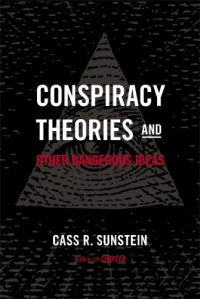 A Review of Conspiracy Theories and Other Dangerous Ideas by Cass Sunstein (based on an earlier paper co-authored with Adrian Vermeule); In Defense of Troublemakers: The Power of Dissent in Life and Business by Charlan Nemeth; and Conspiracy Theories and the People Who Believe Them, edited by Joseph E. Uscinski
 Aletho News
