The corollary to the Houthis brilliant use of do – it – yourself drones and perhaps cruise missiles, is that anyone else can do the same. This makes the possibility of false flag attacks using such weapons more likely in my opinion. Such attacks would not even necessarily require the resources of a State actor to execute, all the materials, bar perhaps the explosive, are freely available around the globe.
I will not explain the mechanics of manufacturing such weapons. Take it from me that a group of determined hobbyists could do so, provided they have sufficient security and money. Such weapons could be labeled for example “made in Iran” in such depth that it would be impossible to refute their origin, no matter how good ones forensics are.
A State actor, perhaps bent on mischief, could do this rather quickly. While this is just a guess, I would be surprised if various Western countries security services did not already have an operation underway to replicate the Houthi achievements, if only to answer the politicians question: “How did they do that??” and to start thinking about countermeasures.
My reason for being concerned enough to raise this topic is that President Trump has committed troops to Saudi Arabia and we already have other troops and assets in the region. If they were subject to attack and we took casualties, I don’t see how the President could avoid war assuming Iran was blamed.
What triggered me was this article in the WSJ (paywalled) whose opening sentence is:
“BEIRUT—Houthi militants in Yemen have warned foreign diplomats that Iran is preparing a follow-up strike to the missile and drone attack that crippled Saudi Arabia’s oil industry a week ago, people familiar with the matter said.
Leaders of the group said they were raising the alarm about the possible new attack after they were pressed by Iran to play a role in it…”
Once technology is out of the box, as the Houthis have demonstrated, it can’t be returned. How do we avoid false flag attacks?
Aaron Brown, news anchor during most of CNN’s coverage on September 11, 2001, was interviewed on the 15th anniversary of the event. He said in that interview that he had felt “profoundly stupid” when he was reporting the destruction of the first Tower (the South Tower) on that morning.
I… I will tell you… that a million things had been running through my mind about what might happen. About the effect of a jet plane hitting people above where the impact was, what might be going on in those buildings. And it just never occurred to me that they’d come down. And I thought… it’s the only time I thought, maybe you just don’t have what it takes to do a story like this. Because it just had never occurred to me.” (CNN, Sept. 11, 2016, interviewer Brian Stelter)
Is it not remarkable that Brown was made to feel stupid, and to feel inadequate as a news anchor, during the precise moments of his coverage of that day when his senses and his mind were fully engaged and on the right track?
Shortly after 9:59 a.m. Brown had been standing on a roof in New York City about 30 blocks from the World Trade Center. He was looking directly at the South Tower as it was destroyed. He was not just a journalist and not just a news anchor: he was an eyewitness.
He immediately interrupted a journalist who was reporting live about the Pentagon:
Wow! Jamie. Jamie, I need you to stop for a second. There has just been a huge explosion…we can see a billowing smoke rising… and I can’t… I’ll tell you that I can’t see that second Tower. But there was a cascade of sparks and fire and now this… it looks almost like a mushroom cloud, explosion, this huge, billowing smoke in the second Tower…” (9:59:07 a.m.)
Having reported honestly what he saw with his own eyes, Brown next did exactly what he should have done as a responsible news anchor. He let his audience know that while he did not know what had happened it was clear that there were two hypotheses in play, the explosion hypothesis and the structural failure hypothesis. And then he went to his reporters on the scene, as well as to authorities, to try and sort out which hypothesis was correct.
Here are examples of his setting forth—after the first building was destroyed and again after the second was destroyed—the rival hypotheses:
and then just in the last several minutes there has been a second explosion or, at least, perhaps not an explosion, perhaps part of the building simply collapsed. And that’s what we saw and that’s what we’re looking at.” (10:03:47)
…
This is just a few minutes ago…we don’t know if…something happened, another explosion, or if the building was so weakened…it just collapsed.” (10:04:36 a.m.)
…
we believe now that we can say that both, that portions of both Towers of the World Trade Centre, have collapsed. Whether there were second explosions, that is to say, explosions other than the planes hitting them, that caused this to happen we cannot tell you.” (10:29:21 a.m.)
…
Our reporters in the area say they heard loud noises when that happened. It is unclear to them and to us whether those were explosions going on in the building or if that was simply the sound of the collapse of the buildings as they collapsed, making these huge noises as they came down.” (11:17:45 a.m.)
Brown’s honest reporting of his perceptions was balanced repeatedly by his caution. Here is an example:
it almost looks… it almost looks like one of those implosions of buildings that you see except there is nothing controlled about this…this is devastation.” (10:53:10 a.m.)
His next move, having set forth the two hypotheses, was to ask his reporters on the scene, who were choking on pulverized debris and witnessing gruesome scenes, what they perceived.
Reporter Brian Palmer said honestly that he was not in a position to resolve the issue.
Brown: Was there… Brian, did it sound like there was an explosion before the second collapse, or was the noise the collapse itself?” (10:41:08 a.m.)
Palmer: “Well, from our distance… I was not able to distinguish between an explosion and the collapse. We were several hundred yards away. But we clearly saw the building come down. I heard your report of a fourth explosion: I can’t confirm that. But we heard some “boom” and then the building fold in on itself.”
Two others were more definite about what they perceived.
Brown: Rose, whadya got? (10:29:43 a.m.)
Rose Arce: I’m about a block away. And there were several people that were hanging out the windows right below where the plane crashed, when suddenly you saw the top of the building start to shake, and people began leaping from the windows in the north side of the building. You saw two people at first plummet and then a third one, and then the entire top of the building just blew up…
Brown: Who do we have on the phone, guys? Just help me out here. Patty, are you there? (10:57:51 a.m.)
Patty: Yes, I am here.
Brown: Whaddya got?
Patty: About an hour ago I was on the corner of Broadway and Park Place—that’s about a thousand yards from the World Trade Center—when the first Tower collapsed. It was a massive explosion. At the time the police were trying desperately to evacuate people from the area. When that explosion occurred it was like a scene out of a horror film.
As can be seen, the explosion hypothesis was flourishing. Even the news caption at the bottom of the screen shortly after the destruction of the South Tower (10:03:12 a.m.) is striking to read today:
“THIRD EXPLOSION SHATTERS WORLD TRADE CENTER IN NEW YORK”
After checking with his reporters, Brown continued to explore his hypotheses, this time by consulting authorities. This was where he was led astray. “Authorities” are less securely tied to evidence than witnesses and may, in fact, be implicated in high level deception.
First Brown consulted a political authority. He got the Mayor of New York City on the line.
Brown: Sir, do you believe that… was there another set of explosions that caused the buildings to collapse, or was it the structural damage caused by the planes?” (12:31:45 p.m.)
Giuliani: I don’t, I don’t know, I, uh, I, uh… I, I saw the first collapse and heard the second ‘cause I was in a building when the second took place. I think it was structural but I cannot be sure.”
Later in the afternoon Giuliani got his script right and was more definite in ruling out explosions. But, of course, Giuliani had no right to pronounce on the science of building destruction. Brown should have persisted in his questioning.
Finally, Brown brought in an engineer, Jim DeStefano–associated, we were told, with the National Council of Structural Engineers. DeStefano’s brief comments put an end to Brown’s explosion hypothesis and rendered CNN’s news coverage safe for public consumption.
Brown: Jim De Stefano is a structural engineer. He knows about big buildings and what happens in these sort of catastrophic moments. He joins us from Deerfield, Connecticut on the phone. Jim, the plane hits… what… and I hope this isn’t a terribly oversimplified question, but what happens to the building itself? (04:20:45 p.m.)
DeStefano: … It’s a tremendous impact that’s applied to the building when a collision like this occurs. And it’s clear that that impact was sufficient to do damage to the columns and the bracing system supporting the building. That coupled with the fire raging and the high temperatures softening the structural steel then precipitated a destabilization of the columns and clearly the columns buckled at the lower floors causing the building to collapse.
I am not in a position to call DeStefano a fake or to claim he was reading from a script given to him by others, but I am prepared to say he was extremely irresponsible. He did not say “here is one hypothesis.” He said, in effect, “this is what happened.” He was in no position to make this claim. There had been no photographic or video analysis of the building destruction, no analysis of the remains of the WTC, no cataloguing of eyewitnesses, nor any of the other methods of evidence gathering. He was shooting in the dark. He was silencing a journalist who was sincerely trying to discover the truth. As we have known for years now, DeStefano not only could have been wrong: he was wrong.*
And let us remember that the entire War on Terror, with its suffering and oppression, has depended on this false structural failure hypothesis. No structural failure hypothesis, no guilty Muslim fanatics. No guilty Muslim fanatics, no War on Terror.
Some readers will feel I am too generous with Brown and with CNN. But I am not interested in portraying them as broadly “dissident” or as on the political Left. I am simply interested in calling things as I see them and giving credit where credit is due. Anyone who wants a contrast to Brown’s performance is free to watch the work of Fox News anchor, Jon Scott, on September 11, 2001. The same confidence that allowed him to name Bin Laden as a suspect 42 seconds after the impact of the second plane allowed him to proclaim the structural failure hypothesis directly after the destruction of the South Tower. He persisted even when his reporters in the field clearly spoke of explosions.
David Lee Miller reported:
we heard a very loud blast, an explosion. We looked up, and the building literally began to collapse before us…” (10:01:17 a.m.)
Rick Leventhal said:
The FBI is here, as you can see. They had roped this area off. They were taking photographs and securing this area just prior to that huge explosion that we all heard and felt.” (10:06:39 a.m.)
News anchor Scott was troubled by none of this. He overrode, silenced and patronized Fox reporters. At no point did he even acknowledge the existence of a second reasonable hypothesis for the Trade Center destruction.
Of course, it is true that by the end of the day of September 11, 2001 CNN and Fox were singing from the same hymnbook. But I believe we ought to acknowledge Brown’s brief, shining moment and consider what might happen if journalists found their courage and trusted their senses and their minds.
Sources:
Same-day coverage by CNN and Fox for September 11, 2001 has been sporadically available on the Internet. My notes are from my own previously downloaded files. Times should be accurate to within two seconds.
Notes
*Many works have appeared over the years refuting the account of the destruction of the World Trade Center Towers released by the National Institute of Standards and Technology (NIST). But special note should be taken of two sources:
Ted Walter, Beyond Misinformation: What Science Says About the Destruction of World Trade Center Buildings 1, 2, and 7. Architects & Engineers for 9/11 Truth, 2015.
In addition, a recent academic report on the related destruction of World Trade Center 7 destroys whatever confidence we might have in NIST’s accounts:
J. L. Hulsey, et al, A Structural Reevaluation of the Collapse of World Trade Center 7 (draft), University of Alaska Fairbanks, Sept. 2019.
On March 22nd, 2006, U.S. high-court judges handed down a decision that allowed the release of all 1 the evidence presented in the trial of a hereditarily paranoid-schizophrenic Moroccan named Zacarias Moussaoui. He had been in U.S. custody at the time of 9/11, but U.S. prosecutors claimed he had been an accessory to the plot and threw the book at him, demanding the death sentence. Much of the trial had been held behind closed doors, and avid U.S. mass-media corporations had applied collectively for release of what the judges called “the extraordinary quantity” of evidence presented.
In granting permission, the judges’ first sentence went as follows:
On September 11, 2001, members of the terrorist organization al Qaeda hijacked three passenger aircraft and crashed them into the Pentagon and the World Trade Center towers in New York.” 2
Ironically, the very evidence the judges were releasing contained information that pointed to their own statement being mistaken.
The evidence gave unsourced details of more than 40 telephone calls that over the previous five years the U.S.A.’s war-mongering mass media had spun into a legend of heroism. The human face of the calls had always been a fascinating aspect of the events and sure enough, one of the three U.S. prosecutors in the case had given them prominence during the trial, as the Associated Press reported on April 6th, 2006:
Much of what happened aboard Flight 93 is known because passengers used cell phones in flight to call their loved ones. Earlier in the trial, prosecutor David Raskin transfixed the jury by reading accounts of the last moments of several of the Sept. 11 planes based on cell phone calls by passengers and flight attendants to family members and ground controllers.
This AP report showed that prosecutor Raskin had not studied his own evidence, which claimed only two cellular telephone calls out of some 35 ostensibly heard from Flight 93. It is no wonder that the AP reporter described the jury as “transfixed”, because the deluded prosecutor was describing to them cell phone calls that:
in 2001 people aboard Flight 93 at cruising altitude could not have made for technical reasons;
that the prosecution’s own evidence did not claim happened;
the alleged contents of which constituted inadmissible hearsay.
In the U.S.A. giving false testimony in court, the crime of perjury, is punishable by serving up to 20 months in federal prison.4, the possibility of some cellular calls on other flights nevertheless remained.
The evidence fudged the data, with phone numbers not given, and no computer data supplied that would have automatically been captured by Claircom or Airfone, the phone providers, had they in fact been seatback phone calls. Other voices heard ostensibly via seatback phones (although attributed to cell phones at the time) simulated cell phone calls by their brevity and by being cut off abruptly.5
The telephone data contained more bombshells of which Moussaoui’s prosecutors apparently were unaware:
The world-famous 9/11 telephone calls from TV-pundit Barbara Olson to her husband Theodore Olson at his office in the Department of Justice had never occurred.(The U.S government’s call data said she made a call but did not get through. This meant that the U.S. Solicitor-General, a key member of the Bush administration, had connived at, or been deluded about, a crucial deception, one that had placed “hijackers” armed with “cardboard-cutters” aboard Flight 77 ostensibly speeding towards the Pentagon.)
The world-famous 9/11 in-flight telephone call from Todd Beamer, the one in which an Airfone operator heard him shout the Pentagon’s recruitment slogan “Let’s Roll”, had never occurred.(The U.S. government’s fudged data said Beamer had made separate calls in the same second.)
Because the existence of hijackers aboard the rogue planes partly relied on them, the collapse of these two vital telephone calls alone badly damaged the U.S. Government’s 9/11 conspiracy theory. What’s more, internal evidence indicated that the evidence in these two vital calls had been fabricated with criminal intent in order to nod at the official story while evading a minimum 30-month prison sentence from the U.S. district court for obstruction of justice. 6
Furthermore, the demolition of these two famous phone calls meant that they had been faked during the events, opening up the possibility that other calls, too, had been fraudulent. The calls that fell under suspicion were those (a minority) that allegedly had mentioned hijackers and their atrocities.
It was not just U.S. federal prosecutors Robert Spencer, David Novak and David Raskin who were implicated. The trial evidence had been arranged at the highest levels. “These are political decisions,” [said] John Zwerling, a criminal defense attorney in Alexandria, Va:
The shots are being called at the very highest level of our government — the president, the vice president, and the attorney general. The prosecutors have to march to their orders, and whether or not they believe in it is irrelevant.”7
Even the venue of the trial was political:
after the [9/11] attacks [sic], the Justice Department decided to make the U.S. Attorney’s Office for the Eastern District of Virginia the hub of terrorism prosecutions. There were several reasons for the choice. Virginia juries had a reputation for being sympathetic to prosecutors, the federal court in Alexandria was known for quickly moving cases through its ‘rocket docket,’ and Alexandria lay just across the Potomac from Washington — where prosecutors would have easy access to their colleagues at Main Justice and the myriad federal agencies that would become involved in any trial.”8
Top Department of Justice (DOJ) officials had been involved in constructing the telephone evidence.
Moussaoui’s December 2001 indictment was signed by three officials representing each DOJ arm involved. There was Paul McNulty, the Eastern District of Virginia’s new and politically connected Republican U.S. Attorney (who has since been nominated to the DOJ’s No. 2 spot); Mary Jo White, the outgoing Clinton-era U.S. Attorney in New York whose office had overseen the first World Trade Center bombing and East African embassy bombings [sic]; and Michael Chertoff, the head of the Criminal Division at Main Justice in Washington and a former U.S. Attorney in New Jersey [now head of the vast Homeland Security department]. McNulty has appeared in the courtroom at key stages of the case.” 9
In addition to the manipulation of the official 9/11 story by lawyers, earlier the U.S. mass-media had spun the array of in-flight 9/11 cellular telephone calls so comprehensively that even U.S. prosecutor Raskin believed that they had occurred. He had expounded them to the jury, and the Associated Press had passed on his words to the world.
Yet his Moussaoui trial evidence proved that many of the cell-phone calls had not taken place. The U.S. prosecutor was deluded and the government’s conspiracy theory lay in shreds on the court-room floor. 10
This was in spite of the showmanship used at the trial. For example, prosecutors played to the jury the cockpit voice recording (CVR) alleged to have been retrieved from the mangled and buried wreckage of Flight 93 (that nobody outside the secret state had seen).
Passenger voices were heard shouting outside the cockpit (although normally only the pilots’ voices were recorded). The drama of shouting pilots and their chillingly cool rogue replacements was played out on high-tech equipment:
As jurors heard the cockpit recording Wednesday, they watched a color video showing a transcript, synchronized with the voices and the plane’s instrument readings of its speed, altitude, pitch and headings.
There was no mention of the crucial eight minutes of the recording transcript that were mostly marked “unintelligible”.
No mention of the original view that the CVR recording solved nothing.11
No one explained to the jury how Flight 93’s rogue pilot could have obtained permission from Reagan International airport air-traffic controllers to change the flight plan and fly towards Washington D.C.12
The telephone evidence ruined all the prosecution’s video razz-a-matazz. As 9/11 sceptic David Ray Griffin had written:
If even one of [the] essential claims [in the official story] is disproved, then the official story as such is thrown into doubt. Critics do not need to show the falsity of every essential element in the official account; they need to show only the falsity of one such element.”13
NOTES & SOURCES
1. In spite of the enormous volume of the evidence presented, a certain amount was nevertheless held back from public scrutiny on grounds of security.
2. United States Court of Appeals For The Fourth Circuit, No. 06-1301.
5. Both U.S. prosecutors and media managers knew that cell phones would not work at cruising altitude without the installation of a special pico cell system. Technology expert Omar Maslow told MSNBC Today Show on December 15th, 2004, upon the authorisation of new systems to enable cell phone calls in-flight, that “cell phones do not work over 10,000 feet”.
6. The basic offense level for substantial interference with the administration of justice is 17 points, or up to 30 months. http://www.ussc.gov/2003guid/5a.htm.
10. An FBI witness also discounted in court all the Flight 93 cell phone calls but two. “In the back of the plane, 13 of the terrified passengers and crew members made 35 air phone calls and two cell phone calls to family members and airline dispatchers, a member of an FBI Joint Terrorism Task Force testified Tuesday.” By GREG GORDON, McClatchy Newspapers, April 12, 2006. From KnoxNews.com.
11. As expressed by best-selling author Jere Longman in his believer-book “Among the Heroes”, N.Y. Harper Collins 2002.
12. From Co-operativeResearch.com: 9:30 a.m. September 11, 2001: Flight 93 Requests a New Flight Plan. Shortly before Flight 93 reverses direction and heads east, someone in its cockpit radios in and asks the FAA for a new flight plan, with a final destination of Washington, DC. [ABC News, 9/11/2001; ABC News, 9/14/2001] Jeff Krawczyk, the chief operating officer of a company that tracks aircraft movements, later comments, ‘We hardly ever get a flight plan change. Very unusual.’ [Washington Business Journal, 9/11/2001] Who it is that makes this request is unclear. The hijacker takeover of Flight 93 occurred around 9:28 a.m. September 11, 2001) [9/11 Commission, 7/24/2004, pp. 11], so it is presumably made by one of the hijackers. Twenty-five minutes later the pilot hijacker [sic] will also program a new destination into the plane’s navigational system.”
On 9/11 2001 three steel-framed high-rise buildings collapsed completely at near free-fall speed allegedly due to fires – which, if true, makes them the only steel-framed high-rises in construction history to have ever done this. Only two of these buildings had been struck by planes.
The official explanation for this event is that Moslem terrorists somehow confounded all the usual security procedures and ‘attacked America’ because they ‘hated our freedoms.’
This version of the meaning behind 9/11 was the catalyst for the perpetual war currently being waged, the ultimate fail-safe irrefutable argument to silence criticism of the Patriot Act, Guantanamo and the creeping emergence of fascism in the Western world.
A narrative as crucial as that needs to be closely examined, but the mainstream media has not only failed to perform this function, it has successfully persuaded many intelligent people that it doesn’t need to be done, and that only lunatics would bother subjecting the official story to any examination.
Eighteen years ago the idea of large scale false flags or government deceptions may have seemed absurd to most of us. But the unraveling of so many official narratives in recent years; the lies over WMDs, the lies over Ghouta, the lies over Libya and Ukraine, the repeat evidence for wholesale manipulation, if not fabrication, of events to promote war, means it ought to be impossible for any thinking person to simply take the events of 9/11 on trust any more.
How can any of us continue to question everything 9/11 has brought us, but not question 9/11 itself?
It all comes down to some very basic questions:
Has the government sufficiently explained its version of events?
Does this version fit the observed facts better than any other?
The fact this is still considered by so many intelligent people to be an “out there” thing to ask speaks volumes about how much even the most savvy of us are currently brainwashed.
But beyond the media silence, complicity and ridicule things are changing.
The phrase “conspiracy theorist” is an empty meme invented to deter enquiry. We don’t think this is a good thing and we don’t intend to be controlled by it. We believe facts really should be sacred – however unpopular they may be and whatever label someone may have attached to them.
The 9/11 Commission and its final report are still held up as the final word on the events of September 11, 2001. But there’s just one problem: Six out of the 10 commissioners have admitted that the commission was misled, stymied, hampered by conflicts of interest, and, ultimately, forced to participate in a politically-motivated cover-up. This is the story of the doubtful 9/11 commissioners.
To watch the full 9/11 Whistleblowers series, please CLICK HERE.
TRANSCRIPT
Of all the 9/11 whistleblowers, perhaps the most noteworthy are the 9/11 Commissioners themselves.
The 9/11 Commission (formally “The National Commission on Terrorist Attacks Upon the United States”) was set up by President George W. Bush, who dragged his heels a full 441 days before finally establishing a body to investigate the events of September 11, 2001, and “to prepare a full and complete account of the circumstances surrounding” them. But that remarkable gap between the events and the empaneling of the Commission was not due to mere laziness; Bush actively resisted any investigation for as long as he could, taking the extraordinary and unprecedented step of personally asking Senate Majority Leader Tom Daschle to limit Congress’ investigation into those events.
It was only when the political pressure to form a commission of inquiry became too great for Bush to resist that he authorized the commission and nominated a chairman: Henry Kissinger.
PRESIDENT BUSH: Today I’m pleased to announce my choice for commission chairman: Dr. Henry Kissinger.
REPORTER: Dr. Kissinger, do you have any concerns about once the commission begins it work and fingers point to valuable allies—say, Saudi Arabia for example—what policy implications could this have for the United States, particularly at this delicate time?
HENRY KISSINGER: I have been given every assurance by the President that we should go where the facts lead us.
Kissinger’s reputation as a cover-up artist and tool of the political establishment was such that even The New York Times speculated that Bush’s nomination of him showed that the president wanted to contain the investigation into 9/11, not enable it. 9/11 victims’ family members, similarly concerned that Kissinger was being appointed to run a cover-up commission, challenged him to his face to release the client list of his political consulting business.
NARRATOR: Several family members approached Kissinger and requested a meeting at his office in New York. Prior to the meeting, Kristen Breitweiser conducted a thorough investigation of Kissinger’s potential conflicts of interest.
PATTY CASAZZA: Probably much to the chagrin of some of the people in the room, Lorie (Van Auken) asked some very pointed questions. “Would you have any Saudi-Amercian clients that you would like to tell us about?” And he was very uncomfortable, kind of twisting and turning on the couch. And then she asked, “whether he had any clients by the name of Bin-Laden?”And he just about fell off his couch.
NEWS REPORTER: Former Secretary of State Henry Kissinger, stepped down from the position Friday.
MINDY KLEINBERG: We thought the meeting went well.
The next morning, Kissinger resigned his post as head of the 9/11 Commission and former New Jersey Governor Thomas Kean and former Indiana Congressman Lee Hamilton were appointed chairman and vice-chairman, respectively, to take his place.
Remarkably, the suggestions of political cover-up did not end there, nor were they confined to a marginalized “lunatic fringe” of “conspiracy theorists” derided by the establishment media. The remarkable and almost completely unreported fact is that six out of the 10 commissioners—Kean and Hamilton, as well as Bob Kerrey, Tim Roemer, John Lehman and Max Cleland—have all expressed concern that the commission was misled, stymied, hampered by conflicts of interest, and, ultimately, forced to participate in a politically-motivated cover-up.
In their book, Without Precedent: The Inside Story of the 9/11 Commission, and in press conferences and interviews at the time the report was released, Kean and Hamilton famously remarked that the commission had been “set up to fail.”
EVAN SOLOMON: Even Lee Hamilton, the co-chair of the 9/11 Commission itself, admits to us that the process he headed up was seriously flawed.
LEE HAMILTON: So there are all kinds of reasons we thought we were set up to fail. We got started late. We had a very short time frame; indeed we had to get it extended. We did not have enough money. They were afraid we were going to hang somebody.
As it turns out, the majority of the commissioners felt that the commission had been lied to, deliberately obstructed, undermined by the White House, or set up with staff that had conflicts of interest in the investigation.
One of these concerned commissioners, Max Cleland, resigned because the commission had been “deliberately compromised by the president of the United States.”
Commissioner John Lehman, meanwhile, admitted on NBC Nightly News that the commission had to go through Karl Rove and other senior White House members to access key documents in their investigation and that “We purposely put together a staff that had – in a way – conflicts of interest,” stressing, lest there be any doubt, that “All of the staff had, to a certain extent, some conflict of interest.”
Commission members even considered bringing criminal charges against Pentagon officials who had deliberately lied to them about the military’s complete lack of response on that day.
But perhaps the most cryptic of all the dissenting commisioners was Bob Kerrey. In 2009 he remarked that 9/11 was a “30-year old conspiracy,” but no mainstream reporter has ever followed up with him to clarify this statement.
JEREMY ROTHE-KUSHEL: Do you support a criminal investigation into 9/11? Because I know yours was an exposition. It was not a criminal investigation.
BOB KERREY: I don’t think so, but I don’t know. I mean, I do support a permanent commission to examine not just that but lots of other things in this area.
ROTHE-KUSHEL: But if it’s a permanent cover-up then it’s—I mean, if it an act of war and it’s hiding things—which everyone on your commission knew, that the Pentagon was changing their stories, lying to you—then it’s a cover up of an act of war, and under Article 3 Section 3 of the constitution it’s treason. So unless we get to the very bottom of it then we’re still talking a treasonous exposition.
KERREY: This is a longer conversation, I’m not sure we’ll ever get to the bottom of it.
ROTHE-KUSHEL: We have to or we can’t save our country, sir.
KERREY: I don’t think—Well, if that’s the that’s the condition upon which we’re going to be saving our country—Because the problem is, it’s a 30 year old conspiracy.
It is utterly remarkable that the 9/11 Commission and its final report are still held up as the final word on the events of September 11, 2001, when a majority of its own commissioners admit that the commission was a cover up and did not get to the bottom of the story. Even more remarkable is that this fact has never even been mentioned, let alone examined, in any mainstream media report. And, despite the fact that the majority of Americans believe the government is concealing what it knows about the events of September 11th from the public, to this day anyone who raises questions about the commission or its findings is treated as a conspiratorial loony by those same media personalities that refuse to report on the 9/11 Commission’s own whistleblowers.
It should be apparent by this point that the old argument that “someone would have talked” is not just fallacious, but factually incorrect. There have, in fact, been numerous whistleblowers with documentable evidence of the frauds and fictions that have been constructed around the official 9/11 narrative. Their disclosures put the “But someone would have talked” doubters in an uncomfortable predicament: Either they are lazy—boldly pronouncing on issues they have not themselves bothered to investigate—or they are lying.
What is especially galling when the so-called “skeptics” use the “someone would have talked” fallacy is that the whistleblowers have in fact done everything possible to publicize their stories—holding press conferences, filing formal appeals, joining whistleblower organizations, and making themselves available for interviews. For their heroic efforts, these brave men and women have been fired from their jobs, shunned by former colleagues, smeared by the mainstream media, and ignored by the public.
“Someone would have talked.” Indeed, numerous “someones” have talked. Some of them have even screamed. But when their cries are ignored, the stories of the 9/11 whistleblowers sound like the proverbial trees falling in the forest with no one around to hear them. Unless and until we give these valiant men and women a voice, then we will never hope to learn the truth about 9/11.
Today the event that defined the United States’ foreign policy in the 21st century, and heralded the destruction of whole countries, turns 18. The events of September 11, 2001 remains etched into the memories of Americans and many others, as a collective tragedy that brought Americans together and brought as well a general resolve among them that those responsible be brought to justice.
While the events of that day did unite Americans in these ways for a time, the different trajectories of the official relative to the independent investigations into the September 11 attacks have often led to division in the years since 2001, with vicious attacks or outright dismissal being levied against the latter.
Yet, with 18 years having come and gone — and with the tireless efforts from victims’ families, first responders, scientists and engineers — the tide appears to be turning, as new evidence continues to emerge and calls for new investigations are made. However, American corporate media has remained largely silent, preferring to ignore new developments that could derail the “official story” of one of the most iconic and devastating attacks to ever occur on American soil.
For instance, in late July, commissioners for a New York-area Fire Department, which responded to the attacks and lost one of their own that day, called for a new investigation into the events of September 11. On July 24, the board of commissioners for the Franklin Square and Munson Fire District, which serves a population of around 30,000 near Queens, voted unanimously in their call for a new investigation into the attacks.
While the call for a new investigation from a NY Fire Department involved in the rescue effort would normally seem newsworthy to the media outlets who often rally Americans to “never forget,” the commissioners’ call for a new investigation was met with total silence from the mainstream media. The likely reason for the dearth of coverage on an otherwise newsworthy vote was likely due to the fact that the resolution that called for the new investigation contained the following clause:
Whereas, the overwhelming evidence presented in said petition demonstrates beyond any doubt that pre-planted explosives and/or incendiaries — not just airplanes and the ensuing fires — caused the destruction of the three World Trade Center buildings, killing the vast majority of the victims who perished that day;”
In the post-9/11 world, those who have made such claims, no matter how well-grounded their claims may be, have often been derided and attacked as “conspiracy theorists” for questioning the official claims that the three World Trade Center buildings that collapsed on September 11 did so for any reason other than being struck by planes and from the resulting fires. Yet, it is much more difficult to launch these same attacks against members of a fire department that lost a fireman on September 11 and many of whose members were involved with the rescue efforts of that day, some of whom still suffer from chronic illnesses as a result.
Another likely reason that the media monolithically avoided coverage of the vote was out of concern that it would lead more fire departments to pass similar resolutions, which would make it more difficult for such news to avoid gaining national coverage. Yet, Commissioner Christopher Gioia, who drafted and introduced the resolution, told those present at the meeting’s conclusion that getting all of the New York fire districts onboard was their plan anyway.
“We’re a tight-knit community and we never forget our fallen brothers and sisters. You better believe that when the entire fire service of New York State is on board, we will be an unstoppable force,” Gioia said. “We were the first fire district to pass this resolution. We won’t be the last,” he added.
While questioning the official conclusions of the first federal investigation into 9/11 has been treated as taboo in the American media landscape for years, it is worth noting that even those who led the commission have said that the investigation was “set up to fail” from the start and that they were repeatedly misled and lied to by federal officials in relation to the events of that day.
For instance, the chair and vice-chair of the 9/11 Commission, Thomas Kean and Lee Hamilton, wrote in their book Without Precedent that not only was the commission starved of funds and its powers of investigation oddly limited, but that they were obstructed and outright lied to by top Pentagon officials and officials with the Federal Aviation Authority (FAA). They and other commissioners have outright said that the “official” report on the attacks is incomplete, flawed and unable to answer key questions about the terror attacks.
Despite the failure of American corporate media to report these facts, local legislative bodies in New York, beginning with the fire districts that lost loved ones and friends that day, are leading the way in the search for real answers that even those that wrote the “official story” say were deliberately kept from them.
Persuasive scientific evidence continues to roll in
Not long after the Franklin Square and Munson Fire District called for a new 9/11 investigation, a groundbreaking university study added even more weight to the commissioners’ call for a new look at the evidence regarding the collapse of three buildings at the World Trade Center complex. While most Americans know full well that the twin towers collapsed on September 11, fewer are aware that a third building — World Trade Center Building 7 — also collapsed. That collapse occurred seven hours after the twin towers came down, even though WTC 7, or “Building 7,” was never struck by a plane.
It was not until nearly two months after its collapse that reports revealed that the CIA had a “secret office” in WTC 7 and that, after the building’s destruction, “a special CIA team scoured the rubble in search of secret documents and intelligence reports stored in the station, either on paper or in computers.” WTC 7 also housed offices for the Department of Defense, the Secret Service, the New York Mayor’s Office of Emergency Management and the bank Salomon Brothers.
Though the official story regarding the collapse of WTC 7 cites “uncontrolled building fires” as leading to the building’s destruction, a majority of Americans who have seen the footage of the 47-story tower come down from four different angles overwhelmingly reject the official story, based on a new poll conducted by YouGov on behalf of Architects & Engineers for 9/11 Truth and released on Monday.
That poll found that 52 percent of those who saw the footage were either sure or suspected that the building’s fall was due to explosives and was a controlled demolition, with 27 percent saying they didn’t know what to make of the footage. Only 21 percent of those polled agreed with the official story that the building collapsed due to fires alone. Prior to seeing the footage, 36 percent of respondents said that they were unaware that a third building collapsed on September 11 and more than 67 percent were unable to name the building that had collapsed.
Ted Walter, Director of Strategy and Development for Architects and Engineers for 9/11 Truth, told MintPress that the lack of awareness about WTC 7 among the general public “goes to show that the mainstream media has completely failed to inform the American people about even the most basic facts related to 9/11. On any other day in history, if a 47-story skyscraper fell into its footprint due to ‘office fires,’ everyone in the country would have heard about it.”
The fact that the media chose not to cover this, Walter asserted, shows that “the mainstream media and the political establishment live in an alternative universe and the rest of the American public is living in a different universe and responding to what they see in front of them,” as reflected by the results of the recent YouGov poll.
Another significant finding of the YouGov poll was that 48 percent of respondents supported, while only 15 percent opposed, a new investigation into the events of September 11. This shows that not only was the Franklin Square Fire District’s recent call for a new investigation in line with American public opinion, but that viewing the footage of WTC 7’s collapse raises more questions than answers for many Americans, questions that were not adequately addressed by the official investigation of the 9/11 Commission.
The Americans who felt that the video footage of WTC 7’s collapse did not fit with the official narrative and appeared to show a controlled demolition now have more scientific evidence to fall back on after the release of a new university study found that the building came down not due to fire but from “the near-simultaneous failure of every column in the building.” The extensive four-year study was conducted by the Department of Civil and Environmental Engineering at the University of Alaska and used complex computer models to determine if the building really was the first steel-framed high-rise ever to have collapsed solely due to office fires.
The study, currently available as a draft, concluded that “uncontrolled building fires” did not lead the building to fall into its footprint — tumbling more than 100 feet at the rate of gravity free-fall for 2.5 seconds of its seven-second collapse — as has officially been claimed. Instead, the study — authored by Dr. J. Leroy Hulsey, Dr. Feng Xiao and Dr. Zhili Quan — found that “fire did not cause the collapse of WTC 7 on 9/11, contrary to the conclusions of NIST [National Institute of Standards and Technology] and private engineering firms that studied the collapse,” while also concluding “that the collapse of WTC 7 was a global [i.e., comprehensive] failure involving the near-simultaneous failure of every column in the building.”
This “near-simultaneous failure of every column” in WTC 7 strongly suggests that explosives were involved in its collapse, which is further supported by the statements made by Barry Jennings, the then-Deputy Director of Emergency Services Department for the New York City Housing Authority. Jennings told a reporter the day of the attack that he and Michael Hess, then-Corporation Counsel for New York City, had heard and seen explosions in WTC 7 several hours prior to its collapse and later repeated those claims to filmmaker Dylan Avery. The first responders who helped rescue Jennings and Hess also claimed to have heard explosions in WTC 7. Jennings died in 2008, two days prior the release of the official NIST report blaming WTC 7’s collapse on fires. To date, no official cause of death for Jennings has been given.
Still “crazy” after all these years?
Eighteen years after the September 11 attacks, questioning the official government narrative of the events of those days still remains taboo for many, as merely asking questions or calling for a new investigation into one of the most important events in recent American history frequently results in derision and dismissal.
Yet, this 9/11 anniversary — with a new study demolishing the official narrative on WTC 7, with a new poll showing that more than half of Americans doubt the government narrative on WTC 7, and with firefighters who responded to 9/11 calling for a new investigation — is it still “crazy” to be skeptical of the official story?
Even in years past, when asking difficult questions about September 11 was even more “off limits,” it was often first responders, survivors and victims’ families who had asked the most questions about what had really transpired that day and who have led the search for truth for nearly two decades — not wild-eyed “conspiracy theorists,” as many have claimed.
The only reason it remains taboo to ask questions about the official narrative, whose own authors admit that it is both flawed and incomplete, is that the dominant forces in the American media and the U.S. government have successfully convinced many Americans that doing so is not only dangerous but irrational and un-American.
However, as evidence continues to mount that the official narrative itself is the irrational narrative, it becomes ever more clear that the reason for this media campaign is to prevent legitimate questions about that day from receiving the scrutiny they deserve, even smearing victims’ families and ailing first responders to do so. For too long, “Never Forget” has been nearly synonymous with “Never Question.”
Yet, failing to ask those questions — even when more Americans than ever now favor a new investigation and discount the official explanation for WTC 7’s collapse — is the ultimate injustice, not only to those who died in New York City on September 11, but those who have been killed in their names in the years that have followed.
Whitney Webb is a MintPress News journalist based in Chile. She has contributed to several independent media outlets including Global Research, EcoWatch, the Ron Paul Institute and 21st Century Wire, among others. She has made several radio and television appearances and is the 2019 winner of the Serena Shim Award for Uncompromised Integrity in Journalism.
A solid majority of Americans who watch the Sept. 11, 2001, collapse of World Trade Center Building 7 on video don’t buy the government’s story that fires brought it down, according to a new survey conducted by YouGov on behalf of Architects & Engineers for 9/11 Truth (AE911Truth).
After viewing video footage of the controversial building collapse from four different angles, 52% of Americans who participated in the survey are either sure or suspect it was caused by a controlled demolition, compared to 21% who are sure or suspect it was caused by ordinary fires. A sizable 27% say they don’t know.
By a similar margin, 51% who see the collapse say they are more inclined to believe the critics who argue that only the use of explosives in a controlled demolition can account for Building 7’s collapse, versus 20% who say they are more inclined to believe the government’s conclusion that fires caused the collapse. (To define “critics,” the survey references a group of 3,000 architects and engineers who have disputed the government’s report as well as researchers at the University of Alaska Fairbanks who performed computer modeling of Building 7’s collapse and also concluded that fires could not have caused the collapse).
By a substantial 3-to-1 margin, 48% say they would support a new investigation into Building 7’s collapse (24% strongly support, 24% support) compared with just 15% who say they would oppose a new investigation (6% strongly oppose, 9% oppose). Meanwhile, 28% say they neither support nor oppose a new investigation, and 9% say they don’t know.
“The lopsided margin between those who suspect it was explosives and those who suspect it was fires really begs the question as to how and why this issue has been marginalized for so long,” said Ted Walter, who is director of strategy for AE911Truth. “Clearly, if the media were to do its job and provide the most basic information about 9/11 to the American people — or if a few elected officials started talking seriously about Building 7 — the public would be up in arms demanding a new investigation.”
Underscoring the absence of media coverage of Building 7, only 64% of participants said they were aware of a third skyscraper collapsing on 9/11 — and just 14% could name the building.
Last week, AE911Truth, along with researchers at the University of Alaska Fairbanks, released the draft report of a four-year computer modeling study of the tower’s collapse. “The report confirms what most Americans suspect when they see the collapse,” said Walter. “Building 7 did not come down from fires.”
“The US government story is Achilles’ heel in the official version of” the September 11, 2001 terrorist attacks in the United States, says Dr. Kevin Barrett, an American academic who has been studying the events of 9/11 since late 2003.
Dr. Barrett, a founding member of the Scientific Panel for the Investigation of 9/11, made the remarks in an interview with Press TV on Tuesday following the release of a comprehensive study conducted by the Department of Civil and Environmental Engineering at the University of Alaska Fairbanks (UAF) in association with Architects and Engineers for 9/11 Truth which found that fire was not the cause of the collapse of the Building 7 of the World Trade Center (WTC).
The US official story established that the 47-story building collapsed on its base after the attacks of Sept. 11, 2001, at 5:20 p.m., when it was affected by the fire coming from the Twin Towers—Buildings 1 and 2 of the World Trade Center. The building was completely destroyed in just seven seconds.
However, after investing four years in computer simulations, the UAF scientists published a draft report that concludes that the collapse of the third WTC skyscraper on Sept.11, 2001 was not due to any fire, but “the almost simultaneous failure of every column in the building.”
Dr. Barrett said, “A new study from the University of Alaska led by Dr. Leroy Hulsey has determined with total precision that the destruction of the World Trade Center Building 7 on September 11, 2001 could not have happened the way the government tells us which is due to moderate office fire, that’s actually very minor office fire.”
“The US government story is Achilles’ heel in the official version of 9/11 which is ridiculous in many, many respects. Every single aspect of the official story collapses upon critical examination. The Building 7 is the most obviously false aspect of this,” he stated.
“So the new study takes on the NIST report; the official government body has worked up a bizarre claim that this very modest office fire…has caused the 47-story building to come down at absolute freefall for two and hand a half seconds and then close to freefall for the rest of the way down straight into its own footprints,” he noted.
The September, 11, 2001 attacks, also known as the 9/11 attacks, were a series of strikes in the US which killed nearly 3,000 people and caused about $10 billion worth of property and infrastructure damage.
US officials assert that the attacks were carried out by 19 al-Qaeda terrorists but many experts have raised questions about the official account.
They believe that rogue elements within the US government, such as former Vice President Dick Cheney, orchestrated or at least encouraged the 9/11 attacks in order to accelerate the US war machine and advance the Zionist agenda.
As a janitor holding a master key to the North Tower of the World Trade Center on the morning of 9/11, William Rodriguez risked his life till the very moment of the building’s destruction helping those trapped inside the Towers to escape. But carefully curated from most mainstream reports on Rodriguez’ remarkarble story is an equally remarkable fact: This 9/11 hero is in fact a 9/11 whistleblower, someone who has contradicted the official story of the September 11th attacks from day one. This is his story.
To watch the full 9/11 Whistleblowers series, please CLICK HERE.
TRANSCRIPT
When people talk of the bravery exhibited by ordinary men and women during the traumatic hours of the 9/11 attacks, they are talking about people like William Rodriguez. Indeed, of the many stories of selflessness and courage to have emerged from that fateful day, it would be difficult to find one more heroic than that of William Rodriguez, dubbed the “last man out” because, as a janitor holding a master key to the buildings, he risked his life till the very moment of the Tower’s destruction helping those trapped inside the Towers to escape.
RAMON TAYLOR: William Rodriguez was working as a janitor at the World Trade Center when the towers were attacked. Using a master key, he ran to open as many doors as he could before exiting and becoming buried alive.
WILLIAM RODRIGUEZ: So they started looking under the rubble, and once I got pulled from under the rubble I was—After, I was in shock. Why? Because I couldn’t find any of those buildings.
WILLIAM RODRIGUEZ: We went up by the stairs with the Port Authority police to start rescuing people. A lot of people were coming out, but there was a lot of people that stayed there. And we brought a lot of people on wheelchairs and a lot of people on gurneys, all [the] people that couldn’t make it because there was no elevator service. The elevator went out.
REPORTER: The World Trade Center towers were built as a class “A” building. That means that, in the case of a fire, every third floor in both towers is closed to prevent a backdraft. It is the reason that Rodriguez’ master key was so crucial to getting people out.
RODRIGUEZ: It was hard. The amount of heat that was generated because of the fire was coming down. The smoke . . . It was an acrid smoke because you could feel it on your throat.
REPORTER: He saw firefighters carrying a hundred pounds’ worth of equipment on their backs waiting for a freight elevator that would never come. That elevator was demolished. So Rodriguez led them up another way, using a back pathway that only he knew. After the sky lobby collapsed he finally listened to police who told him to get out. He was not prepared for what he was about to see.
RODRIGUEZ: When I look around I find all the bodies of the people that jump out of the building. They came out of the building and they say “I saved myself!” And a piece of debris came in and killed them.
As one of the heroes of that day, a man whose story encapsulates all the tragedy and drama of 9/11, William Rodriguez is no stranger to the glare of the media spotlight. Not only has he been interviewed for dozens of news programs and reports on the events of September 11, 2001, and been featured as a spokesman for the survivors at multiple events and on many reports, he has also been awarded for his courage that day and even invited to a White House dinner where he was honored by President Bush for his bravery.
But carefully curated from most mainstream reports on Rodriguez’ remarkarble story is an equally remarkable fact: This 9/11 hero is in fact a 9/11 whistleblower, someone who has contradicted the official story of the September 11th attacks from day one. According to Rodriguez, the first explosion that he felt that day was not the impact of the plane nearly 100 stories above him, but an explosion below him, from one of the sub-basement levels.
RODRIGUEZ: That morning I was supposed to be there at 8 o’clock in the morning every day. I called my supervisor because I was not going to work I was gonna take a sick day. Made it there at 8:30 in the morning, go straight to the lobby, down to the basement.
The building has six sub-levels of basement: B1, B2 . . . all the way down to b6. Basement six, basement five, all the way up to basement one were all Port Authority areas. Some of them have parking for tenants, some of them have storage. B1 office . . . B1 level is where they have the support office for my company, the cleaning company, American Building Maintenance.
So I was talking to the supervisor, and at 8:46 we hear “BOOM!” An explosion so hard that pushed us upwards in the air. Upwards. And it came out from below us. From the mechanical room that was right below us. And it was so loud and so powerful that all the walls cracked, the false ceiling fell on top of us, the sprinkler system got activated, and everybody started screaming so loud because they didn’t know what was going on.
And the first thing I’m going to say is that a generator just blew up on the B2 level—the level below me. And everybody’s screaming. And when I’m going to verbalize it, six to seven seconds after, we hear “BAH!” The impact all the way on the top of the building of the plane.
Two different events separated by almost seven seconds. Separated by time. And now, I work in the building for 20 years. I know the difference of the sound coming from the top and one from the bottom.
So when everybody started—”What the heck is going on?”—a person comes running into the office saying “Explosion! Explosion!” His hands extended, all the skin pulled from under his armpits on both arms. Hanging! And we thought it was clothing—it was part of his clothes—until he gets closer. He was coming like this, like a zombie. “Explosion! Explosion!” And when I looked at him, I realized it was his skin. Like when you take off a glove and you let it hang. And when I get to see his face, all this part was hanging off his face and everybody started screaming in horror. And I say “Don’t move!” The guy was a black guy named Felipe David. Worked for a company called Aramark.
Rodriguez’ story provides startling and credible eyewitness testimony that undermines the official myth that there were no explosives in the Twin Towers that morning. Rodriguez is insistent on a number of points: That there was a loud and distinct noise at 8:46 AM, that it came from beneath them in the sub-basement level and blew them upwards, and that it noticeably preceded the sound of the plane impact above them. This has led Rodriguez to conclude that there was an explosion in the sub-basement before the plane impacted the North Tower, something which the 9/11 Commission and other official government investigations into the attacks denies.
And, importantly, Rodriguez has been telling this same story—including the same detail about Felipe David—since the day of 9/11 itself.
AARON BROWN: William Rodriguez is a maintenance worker at the Trade Center, I believe. In any case, he’s on the phone with us now. Mr. Rodriguez, can you hear me?
RODRIGUEZ: Yes, I can hear you clearly.
BROWN: Tell me where you were when—well, which of the two buildings were you in?
RODRIGUEZ: I work on the Building One. The one that got hit the first time.
BROWN: Tell me what happened.
RODRIGUEZ: I was on the basement, which is a support floor for the maintenance company. And we hear like a big rumble—not like an impact, like a rumble—like something . . . like moving furniture on a massive way. And all of a sudden we hear another rumble and a guy comes running—running—into our office, and all his skin was off his body. All his skin. We went crazy. We started screaming. We told him to get out. We took everybody out of the office, outside to the loading dock area. And then I went back in. And when I went back in I saw people—I heard people that were stuck on an elevator—on a freight elevator, because all the elevators went down. And water was going in and they were probably getting drowned. And we get a couple of pipes and open the elevator and we got the people out.
If it were only William Rodriguez who heard, saw and experienced explosions inside the Twin Towers that morning, then such testimony would be easy enough to rationalize away. Maybe Rodriguez had become confused in the chaos of that morning. Maybe he had interpreted the sound and explosion incorrectly. Maybe he was lying to gain attention.
But William Rodriguez is not the only person who heard, saw and experienced explosions inside the Twin Towers that morning. In fact, hundreds of people, including office workers, police, firefighters and others have reported explosions all throughout the morning, from before the moment of plane impact all the way up to the explosive demolition of the towers themselves.
FEMALE BYSTANDER: What was it like?
TYRONE JOHNSON (FDNY LADDER 24): Horrible. The whole building just collapsed on us. Inside the lobby.
MALE BYSTANDER: Was that a secondary explosion?
JOHNSON: Yes, it was. Definitely a secondary explosion. We was inside waiting to go upstairs and on our way upstairs the whole fucking thing blew. And it just collapsed on everybody inside of the lobby.
MALE BYSTANDER: That must be the first tower coming down—
JOHNSON: I don’t know about the first one, but the second one . . . It was terrible. Then there was a third one, too, after that one.
MALE BYSTANDER: There was an explosion after that?
JOHNSON: Yes, there was. Everybody was just inside the building, waiting to go upstairs and it just let loose. Everything just let loose inside the building.
MALE BYSTANDER: So what you’re telling me is that there was the plane or whatever hit the building, then a secondary explosion—
JOHNSON: There was like three explosions after that. We came in after the fire—We came when the fire was going on already. We was in the staging area inside the building, waiting to go upstairs. And then an explosion. The whole lobby collapsed on the lobby inside.
KENNY JOHANNEMAN: Yes, I was right there. I was in the B—I was down in the basement. Came down. All of a sudden the elevator blew up. Smoke. I dragged a guy out. His skin was hanging off and I dragged him out. And I helped him out to the ambulance.
REPORTER: Arthur Del Bianco is one of the lucky few, able to tell a tale of survival from a hospital bed.
ARTHUR DEL BIANCO: All of a sudden there was, like, “BANG! BANG! BANG! BANG!” Like bullet shots. And then, all of a sudden, three tremendous explosions and everything started coming down.
EYEWITNESS: I think a bomb went off in the lobby first, then a plane hit the building. Then another plane hit the other building. But when I was coming through the doors on the other side of the Trade Center, something—either they blew the lobby up, or something. Because it blew the glass out of the doors and knocked us all down and I got a—smoke and everything on me.
These stories, collected haphazardly by reporters at the scene that day, paint a very different picture of 9/11 than that portrayed by NIST and the 9/11 Commission. Rather than a progressive collapse due to fire and burning jet fuel, these stories suggest that what was happening inside the Twin Towers that morning was in fact a series of explosive events. Explosive events that were powerful enough to cause internal collapses within the building well below the point of the plane impact and fires, and even, according to multiple witnesses, events that preceded the impact of the plane.
But is there more systematic and rigorously collected evidence of these explosions? Is there a repository of such testimony that would confirm what Rodriguez and many others have affirmed since the day of 9/11 itself: Namely, that there were explosions taking place inside the buildings that morning?
In fact, there is such a repository. In the wake of 9/11, New York Fire Commissioner Thomas Von Essen ordered the collection of oral testimony from firefighters, paramedics and emergency medical technicians who responded to the attacks that morning. That collection, amounting to more than 12,000 pages of testimony from 503 people, was then promptly sealed. It took a lawsuit and four years of court battle for the collection to be finally released to the public.
One of the researchers who spent time poring over that testimony was Graeme Macqueen, a retired associate professor at McMaster University and the Former Director of that university’s Peace Studies Center. What he found in that repository of oral history, and presented in a scholarly article for The Journal of 9/11 Studies, was an unmistakable pattern: Time after time, these first responders reported experiencing explosions in the Twin Towers. Explosions that cannot be accounted for in NIST’s official explanation of the towers’ destruction.
GRAME MACQUEEN: There is other eyewitness explosion evidence that corroborates Rodriguez, at least in a general way. Meaning that there were people talking about explosions in the basement. There were lots of people talking about tremendous explosions and fire in some of the elevators—blowing the doors off elevators.
And some of this testimony can be found on the internet. I found some of it in the FDNY oral histories. You know, firefighters talking about the doors being blown off elevators.
And so there was some kind of very destructive event. Also the windows in the lobby, which were very strong windows, were blown out by the time most of the firefighters got there. And as one of them said it looked like a plane hit the lobby.
There were other explosions that went off over the next hour or so, before the buildings started to come down. And when they came down, there were patterns of explosion from around the point of plane impact all the way down. Apparently we were supposed to believe that the building was coming down because of structural failure. But again, these were timed very well to go off in a particular way.
This is one of the reasons we know that these were explosions and that this was a controlled demolition. There were patterns. And they were explosions that were extremely strong, taking out these massive buildings and pulverizing them in less than 20 seconds. This was not structural failure.
Rodriguez’ story was not some fanciful invention that he spun during the most dramatic and horrific hours of his life; it is a story that fits into a pattern of explosive testimony related by many other witnesses that day. It is also a story that is deeply uncomfortable for those in the government and the media who were eager to celebrate the acts of bravery New Yorkers committed that day, but who will never report the explosive truth about the events at the World Trade Center that demolish the official government conspiracy theory of 9/11.
It is remarkable that Rodriguez, immediately recognized and celebrated for his heroism on that day, would continue to insist on his story even as the official story—the one that insisted there were no explosives used that day—began to take shape. But he did. For years, Rodriguez used his speaking opportunities on mainstream media and at memorials and commemoration events to inform the public about explosions in the Twin Towers that morning.
Unsurprisingly, despite the attention and accolades he received for his remarkable story in the early days of 9/11, he soon found himself becoming persona non grata in the mainstream media because he refused to go along with the official lies about what happened that morning.
RODRIGUEZ: It says, “Safety Fire Department of New York.”
ANASTASIA CHURKINA: A rescue jacket he wore over his torn shirt. A lantern from the rubble.
RODRIGUEZ: It doesn’t work, but another memory from 9/11.
CHURKINA: And a piece of marble from high up on the 44th floor. This saved for a decade.
RODRIGUEZ: I put it in my pocket because it was just such a shocking realization.
CHURKINA: As well as memories that he relives every single day.
RODRIGUEZ: And I was pulled on the rubble and I started looking for all the people and I only found pieces of human beings.
CHURKINA: William Rodriguez, a janitor in the twin towers for almost 20 years and 9/11 survivor who saved hundreds of lives on September 11th by unlocking door after door for firefighters and dragging out at least a dozen people with his own bare hands. Known as the “last man out” before the World Trade Center collapsed, his unlikely story had the media glued to him like bees to honey. Becoming a voice for the victims, Rodriguez was honored as an American hero only to be left homeless in the aftermath of the tragedy.
RODRIGUEZ: Funny thing: I will give the 800 number on camera, and when I called the 800 number they denied me the help.
CHURKINA: And shunned by the mainstream media soon after.
RODRIGUEZ: Censorship. I believe that censorship started from the very beginning, because when I was telling my story they told me, “Oh, cut this out. Cut this out.”
CHURKINA: No longer sweetheart of American broadcasts, William now talks mostly to foreign outlets. The reason: His version of 9/11 differed from the official scenario.
NEWS REPORT: It was the first hijacked plane that hit the—
RODRIGUEZ: “It was the first hijacked plane.” No, hello! That was an explosion before the plane hit the tower.
Even more remarkably, Rodriguez went beyond simply telling the truth about what he witnessed that day.
Little known even to those who are familiar with his story is that Rodriguez has used his notoriety and media opportunities to advocate for 9/11 survivors who are suffering from the health effects incurred in the aftermath of the towers’ destruction. He has even taken the fight for 9/11 truth to the political arena, forcing the government’s hand in convening a public commission to investigate the attacks, something that the Bush administration fought tooth and nail to prevent.
RODRIGUEZ: The 9/11 Commission is a book of 576 pages . . . 576 pages of lies. Because the 9/11 Commission exists because I went with three other people to Congress to ask that we wanted a formal investigation of the events of 9/11. And you may remember that the president said “We don’t need an investigation. We know who did it.” That was the wrong thing to say to the families. We had the right and we wanted to know. So we pressed for an investigation. They didn’t want it.
So we used a technique that they have used against a lot of the people with the excuse of the war. We put widows, we put wives, we put fathers that love their loved ones on every television show and every news network to ask for an investigation. And they couldn’t handle the emotional toll that that will create on the American public. So we got the investigation.
I testified behind closed doors. They didn’t want me to do the testimony in an open hearing. Everything else—everybody else—open hearings. You saw the hearings. Mine was behind closed—I agreed because I did not know what was the process and I thought up to that point that they were going to do the right thing.
We created a family steering committee and we gave the Commission 168 questions to answer. We only have 22 of those questions answered. We wanted to have a family member to be part of the Commission and they say, “We don’t want to allow that because they will have access to national security papers” and a lot of flim-flam and baloney. We never got it. So we have to press for questions to be answered. We never get those answers.
Up to that point we thought that they were going to do the right thing. The final report shows up . . . What a surprise! My whole testimony was omitted. It doesn’t appear. 27 people that I gave them to interrogate, they didn’t call them. Not even one of them.
That the 9/11 Commission’s work was subverted and undermined by conflicts of interest and deliberate cover-up is perhaps to be expected. But the efforts of people like William Rodriguez have been instrumental in advocating for those left quite literally in the dust of 9/11. Those whose stories are too problematic for the official 9/11 narrative to be given any credence or attention.
As Graeme Macqueen points out, the story told by William Rodriguez and the other witnesses to explosions in the Twin Towers that day is not a peripheral issue or a minor footnote in the story of 9/11. On the contrary, it is of central importance. Either Rodriguez and the other witnesses to explosions independent of the planes and fires are wrong, or they are right. And if they are right, we are forced to the conclusion that the official story of 9/11 is not just mistaken, but that it is a deliberate fraud that has been perpetrated on the American public—and the broader public around the world—for nearly two decades.
MACQUEEN: Well, that would obviously indicate that somehow this building was wired for explosions and that there had been a plan made in advance of the plane attacks to destroy this building. And that means the official story about, you know, Mohammed Atta and the other 18 hijackers flying planes is an incorrect story.
That indicates that there was—to use the classic word—an inside job. Somehow, insiders—deep insiders—got in the building and readied it for annihilation on that day. And that also indicates that the story we’ve been told is false, and really knowingly false. Because, of course, Rodriguez and many other eyewitnesses to explosions were ignored, or silenced, or lied about by the official investigating agencies. Which means that the whole 9/11 story is a fraud.
Ultimately, the story of Rodriguez is important, not just for what it tells us about the official 9/11 narrative, or even for what it tells us about the way that power operates in society. It is important because it shows us what ordinary men and women are capable of in extreme situations. It reminds us that, in times of distress, we are still capable of coming together to help those around us. And it provides us with an example of someone who will not stop telling his truth, even when it becomes unpopular.
RODRIGUEZ: Our wounds are still open. We’re still hurting. We’re still going through the process of traumatic shock syndrome—PTSD.
You call me a hero, I call myself a survivor. For me, the heroes died on 9/11 in my opinion because they died helping others. I just had the only tool available for me at that time to do great things, so I was—I’m a survivor. I have that survival skill. Why did I survive and my friends didn’t?
And now 16 years after it hits me stronger because I see the families. I see new families that came out from people that I saved and I always wonder, you know, what would have happened if those people that I lost—those 200 friends—will be alive today. It hits you. It hits you hard. So 16 years after, we’re still dealing with the backlash of what happened on that day.
9/11 changed me. It changed the world. We all know that. But it changed me in more ways than I expected.
Almost immediately after the proxy war erupted, ISIS-tier footage of the torture and murder of Russians in Ukrainian custody emerged.
On July 6th, the New York Times published an astonishing investigation: In Ukraine, Killings of Surrendering Russians Divide an American-Led Unit. The article documents in grim detail how Chosen Company, an international volunteer battalion for Kiev, routinely executes Russian prisoners of war. It is the very first mainstream admission that this practice – a brazen breach of the Geneva Conventions, and a grave war crime – is widespread among Ukraine’s fighters, both foreign and homegrown. … continue
This site is provided as a research and reference tool. Although we make every reasonable effort to ensure that the information and data provided at this site are useful, accurate, and current, we cannot guarantee that the information and data provided here will be error-free. By using this site, you assume all responsibility for and risk arising from your use of and reliance upon the contents of this site.
This site and the information available through it do not, and are not intended to constitute legal advice. Should you require legal advice, you should consult your own attorney.
Nothing within this site or linked to by this site constitutes investment advice or medical advice.
Materials accessible from or added to this site by third parties, such as comments posted, are strictly the responsibility of the third party who added such materials or made them accessible and we neither endorse nor undertake to control, monitor, edit or assume responsibility for any such third-party material.
The posting of stories, commentaries, reports, documents and links (embedded or otherwise) on this site does not in any way, shape or form, implied or otherwise, necessarily express or suggest endorsement or support of any of such posted material or parts therein.
The word “alleged” is deemed to occur before the word “fraud.” Since the rule of law still applies. To peasants, at least.
Fair Use
This site contains copyrighted material the use of which has not always been specifically authorized by the copyright owner. We are making such material available in our efforts to advance understanding of environmental, political, human rights, economic, democracy, scientific, and social justice issues, etc. We believe this constitutes a ‘fair use’ of any such copyrighted material as provided for in section 107 of the US Copyright Law. In accordance with Title 17 U.S.C. Section 107, the material on this site is distributed without profit to those who have expressed a prior interest in receiving the included information for research and educational purposes. For more info go to: http://www.law.cornell.edu/uscode/17/107.shtml. If you wish to use copyrighted material from this site for purposes of your own that go beyond ‘fair use’, you must obtain permission from the copyright owner.
DMCA Contact
This is information for anyone that wishes to challenge our “fair use” of copyrighted material.
If you are a legal copyright holder or a designated agent for such and you believe that content residing on or accessible through our website infringes a copyright and falls outside the boundaries of “Fair Use”, please send a notice of infringement by contacting atheonews@gmail.com.
We will respond and take necessary action immediately.
If notice is given of an alleged copyright violation we will act expeditiously to remove or disable access to the material(s) in question.
All 3rd party material posted on this website is copyright the respective owners / authors. Aletho News makes no claim of copyright on such material.
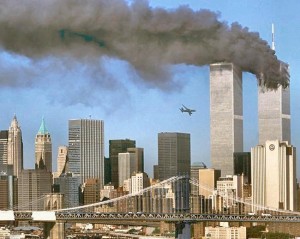 You say ‘never forget’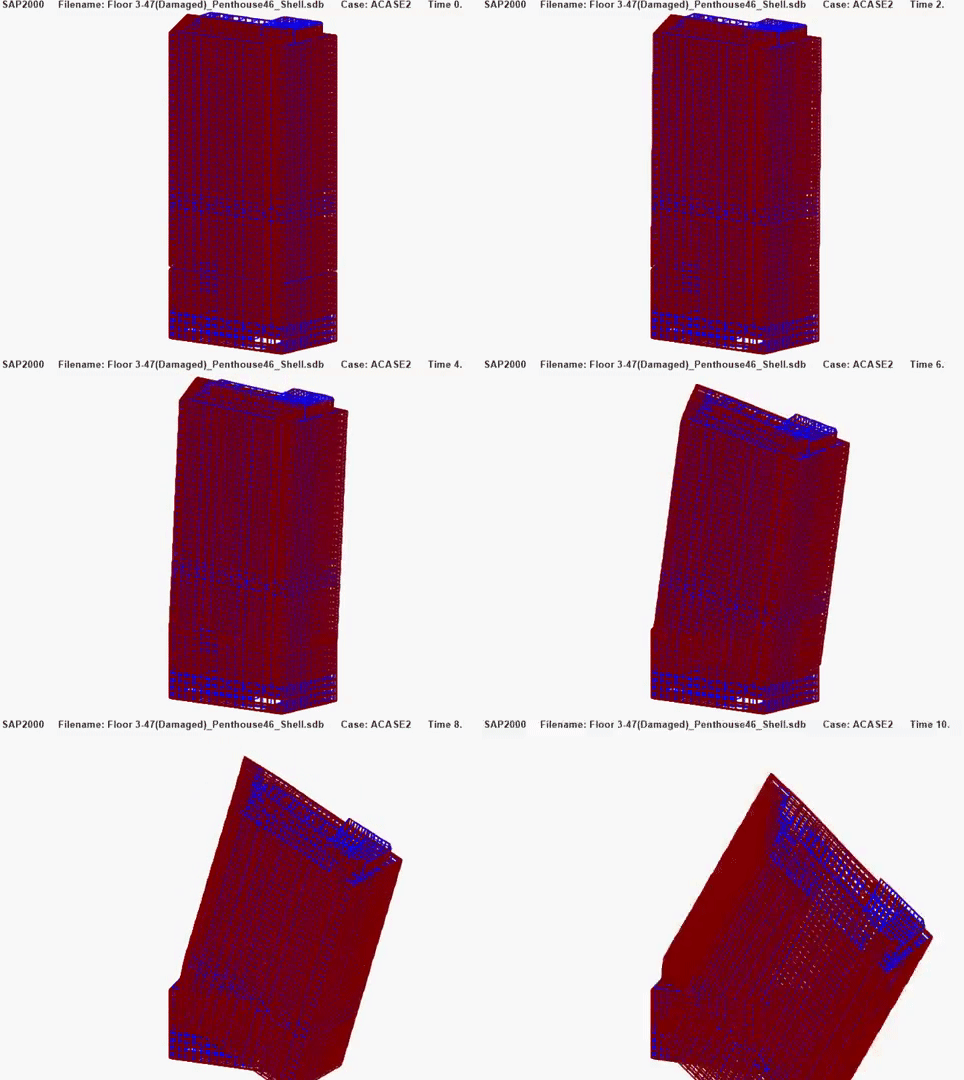
 Aletho News
