Media Reports on Skripals Life in UK After Incident Are False – Russian Embassy
Sputnik – January 8, 2019
LONDON – The recent report by the UK The Daily Telegraph newspaper on former Russian intelligence officer Sergei Skripal and his daughter Yulia’s life in the United Kingdom after the Salisbury murder attempt is yet another unsubstantiated falsification, the press officer of the Russian Embassy in the United Kingdom said on Tuesday.
“We are dealing with yet another media leak, unofficial and unverifiable. It provides no new facts on the Salisbury incident, let alone evidence. The circumstances of the incident remain as confusing as ever”, the press officer said, as quoted on the embassy’s official website.
The press officer specified that while the government source told The Daily Telegraph that the authorities knew “everything worth knowing,” in fact the investigation had not revealed any official information on where the Skripals went and what they did on the day of the attack, and the identification of the suspects, Alexander Petrov and Ruslan Boshirov, was based on “no evidence apart from them being filmed several hundred metres away from Mr Skripal’s house.”
“As regards the reports on the Skripals living in the South of England, on their changed appearance, on Yulia having been offered a job requiring Russian language skills, on her contacts with friends, etc., careful reading reveals that these are mere suggestions by people who claim to know the manner of work of British secret services in similar situations. This is speculation not deserving a serious comment,” the press officer went on to say.
He added that the UK government continued denying consular access to the Skripals, concealing their whereabouts, and refusing to coordinate with Russia on the investigation.
“This means that the Russian nationals, Sergei and Yulia Skripal, remain forcibly held by the UK, while true circumstances of the 4 March incident have still not been established. No amount of leaks and ‘expert’ comments can remedy this situation”, the press officer concluded.
The Daily Telegraph reported, citing unnamed sources from the UK government, that the Skripals were supposedly living in the south of the United Kingdom and undergoing medical treatment supervised by a narrow circle of experts. According to the newspaper, the UK authorities had established all the details of the Skripal case.
The Skripals were found slumped on a bench in a park in the UK town of Salisbury on 4 March, 2018, after being exposed to a suspected nerve agent that London called a Novichok type. Later, however, they recovered and left the hospital.The UK authorities accused Russia of being behind the murder attempt, but Moscow has repeatedly rejected the claim as baseless. London has left unanswered scores of Moscow’s diplomatic notes calling for cooperation in the investigation into the matter, claiming that it was Moscow who refused to cooperate.
READ MORE:
Shock Files: What Role Did Integrity Initiative Play in Sergei Skripal Affair?
Prof on Skripal Case: Released Docs Pointing at Direction We Need to Investigate
Sputnik – January 8, 2019
On Friday evening the latest tranche of documents from the Integrity Initiative was released, exposing more information about the UK’s operation to combat so-called Russian disinformation. Sputnik has spoken to Professor David Miller, from the University of Bristol and asked him what he made of the latest information.
Sputnik: Why is it there has been no real coverage of the Integrity Initiative in the mainstream media?
Professor David Miller: Well, there’s a good question. Many of the people who would write about these things in the mainstream media appear in the documents themselves. Whether they are formally involved, to use the phrase of Deborah Haynes of Sky, formally of The Times, who says what she has ‘no formal or informal relationship with the Institute for Statecraft’ — well, you know, they are involved in some way or another, they have had contacts with, she has had contacts with, Carol Cadwalladr has had contacts with; people from the BBC have had contacts with the Integrity Initiative, and so they are conflicted. Whether they have had a formal involvement, or their involvement is as the documents suggest, is by the by, they are conflicted and they have failed to distance themselves from this programme of activities.
Sputnik: With regard to the Skripal case are there now serious questions for the government to answer when it comes to that?
Professor David Miller: Well, we’ve seen many more documents on the Skripal case in here and indeed some more on Syria, the alleged chemical attack on Douma. And of course the content of these documents is rather fanciful; there’s a large report about social media and media coverage of the Skripal case which fancifully refers to a whole load of people on twitter as being Kremlin trolls which they’re not. So I mean it’s very interesting to see all that and there are questions which arise about the extent to which the British government has been engaged in managing and manipulating media coverage of the Skripal affair.
The questions go deeper, there is a suggestion that there was a meeting called by the Integrity Initiative which involved Pablo Miller, the MI6 operative who was Sergei Skripal’s handler. And that raises very big questions indeed not least because the meeting is alleged to have been a meeting with the White Helmets — an organisation which has been intensely debated in relation to the Syrian conflict and which has been implicated to some extent at least in the fabrication of chemical weapons attack stories in Syria. So it raises all sorts of questions which the government has not begun to explore or explain and which most media has not begun to explore or explain.
Sputnik: There was a reference there, in the documents which suggested that if an incident is not to occur to provoke a tougher reaction against Russia then we need to be taking a tougher stance; and that in the context of the Skripal poisoning is quite sinister sounding isn’t it?
Professor David Miller: It is quite sinister sounding, if you look at the documents and the discussions of alleged propaganda lines on Skripal, which are no more than people doubting British government’s accounts — which is the first thing one should be doing in these circumstances — there is no acknowledgement in there of any more than the British government’s account — which is obviously correct and everyone else is wrong!
Some of the hints of this document are hints which raise questions about the British government’s role in the Skripal affair and those questions will not go away. It really very badly undermines the official British position that this was something done by the Russians — what was the official version? ‘Of a type produced by Russia’. That kind of propaganda is an indication that there is something not right in the Skripal story and these documents are pointing us in a certain direction when we need much more investigation of what happened in the Skripal case than we previously did.
Who Runs Our World?
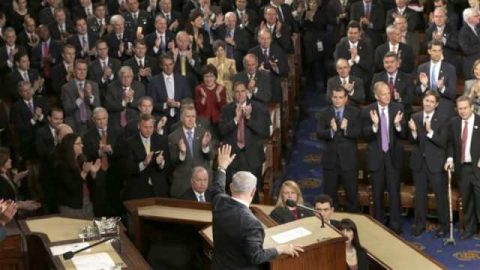
Netanyahu addresses US Congress | Photo from Al Jazeera
By Richard Hugus | January 4, 2019
Our world is run by oligarchs, the holders of vast wealth from monopolies in banking, resource extraction, manufacturing, and technology. Oligarchs have such power that most of the world doesn’t even know of their influence over our lives. Their overall agenda is global power — a world government, run by them — to be achieved through planned steps of social engineering. The oligarchs remain in the background and have heads of state and entire governments acting in their service. Presidents and prime ministers are their puppets. Bureaucrats and politicians are their factotums.
Who are politicians? Politicians are people who work for the powerful while pretending to represent the people who voted for them. This double-dealing involves a lot of lying, so successful politicians must be good at it. It’s not an easy job to make the insane agenda of the powerful seem reasonable. Politicians can’t reveal this agenda because it almost always goes against the interests of their constituents, so they become adept at sophistry, mystification, and the appearance of authority. For example, wars for Israel have been part of the agenda of the powerful for years. Since 2001, wars for Israel have been sold as “the war on terror” and lots of lies had to be made up as to why the war on terror was a real thing. The visible faces promoting the war on terror were neoconservatives in the US, almost all of whom were advocates for Israel, or Zionists. Zionists are not the only members of the oligarchy, but they seem to be its lead actors.
With this perspective we may judge all kinds of world events, such as the many false flag terror attacks which have been perpetrated in one country after another to bring about political objectives. False flag attacks range from Operation Gladio to demonize leftists, 9-11 to demonize Arabs and Muslims, and the shooting down of the MH-17 airliner to demonize Russia. Under an atmosphere of terror, with citizens clamoring for revenge, all kinds of political goals can be achieved.
Propaganda is also vital. Control of information through a likewise controlled media has facilitated mass brainwashing. To control the narrative, whistle blowers and truth tellers must be isolated and destroyed, preferably in the open, so as to warn others away. This is what is happening with Julian Assange.
The attack on Gilad Atzmon is an other example. Atzmon has been a major critic of the role of Jewish political power in our world — not just in Palestine, but all over the western world. When he says “we are all Palestinians” he is making the observation that Europe and North America are being Israelified. For example, some police in the US go for training in Israel, where they learn to view the US public, particularly African Americans, the way the Israeli military views Palestinians — as enemies to be shot in the streets and abusively treated. In the US, people are not allowed to question or discuss Jewish power, when it is evident that AIPAC, the lobby for Israel, completely controls both houses of the US Congress. We recall the members of Congress giving Benjamin Netanyahu 29 standing ovations during his denunciation of Iran in 2011. In Britain, mass insanity has taken hold, at least in the media, in the demonization of Russia via the Skripal affair and Luke Harding’s MI6 journalism in The Guardian. This is taking place solely because of Russia’s thwarting of Israel in its attempt to destroy Syria. For the neocons, the agenda is always war — the stick to bring recalcitrant states in line with the New World Order. This behavior is so dangerous that it would be crazy if we did not speak about who is doing this, and why.
In December 2018 Atzmon was banned from playing a jazz gig in Islington, north of London, because a powerful entity — the Zionist Herut Likud UK — initiated a character assassination and attack on his livelihood through Richard Watts, leader of the Islington Town Council. The Council created the lie that in banning Atzmon it was protecting the citizens of Islington from “antisemitism.” In fact, it is only protecting organized Zionists — supporters of the racist state of Israel — from one of their most effective critics.
Two paid staff for the Council — Ian Adams and Martin Bevis — were assigned to carry out the bureaucratic part of the job. They defended the assassination in the name of political correctness. They responded to Atzmon’s appeal of the Council ruling by citing almost entirely Zionist and Israeli sources to back up the claim that Atzmon is an “antisemite.” These sources include the Anti-Defamation League, the Jewish Chronicle, the Jewish Telegraphic Agency, Haaretz, the Times of Israel, and The Forward. When Atzmon countered these sources with a list of well-known academics who have supported his work — Richard Falk, John Mearschimer, Ramzy Baroud, Paul Craig Roberts, Cynthia McKinney, James Petras, Francis Boyle, among others — Ian Adams responded by saying, “I have found that the majority of them would appear to have also been subject to significant controversy or allegations of being anti-Semitic themselves.” To Adams, representing a town in Britain, the only valid authorities are in the media run out of Israel, with its blatant record of discrimination and genocide against Palestinians, which all those media support.
Power likes to cover up its crude manipulations with a veneer of reason and legality. Islington based its original decision on Atzmon’s banning on a clause in the town’s books having to do with events at the Islington Assembly Hall. The clause states:
“You must not, in connection with any Live Event, use, provide or display any material, whether written or spoken, or allow behaviour that constitutes direct or indirect discrimination or harassment, victimisation of, villification of, any person or group of persons on grounds of race, nationality, gender, sexual orientation, disability, religion or age.”
In their letters, Adams and Bevis provide no response to the fact that Atzmon was to appear at the December 21, 2018 event as a saxophone player with a jazz group called The Blockheads. There was no logical way to assume that his saxophone playing would discriminate against, harass, victimize, or vilify anyone at this event. The banning was therefore not backed up by law; it was illegal in itself, as it discriminated against Atzmon.
The only thing one can say about the bureaucrats’ defense of Islington’s decision is that they and the town officials, and indeed much of Britain’s political class, seem to be unaware that Zionism is the water in which their boat is floating. When the entire mainstream narrative is dictated by Jewish identity politics, of course all criticism of those politics must be heresy. Britain was once a sovereign nation, not a colony of Israel — much like the US. Much like Canada, Germany, France, and so on. These countries were not invaded by tanks and infantry; they were invaded by dogma. Political dogma, political “correctness,” and the totalitarian policing of our thoughts and words, are the things which Gilad Atzmon has pointed to in western culture and held up for us to examine. Zionists have made criticism of Israel “antisemitic” by definition. There is no way to win the argument. The word no longer has any meaning. This is aside from the fact that ‘semitic’ refers to a language group which includes Arabic, Aramaic, and Hebrew and that the majority of the settlers claiming rights to the Holy Land did not come from areas, like Palestine, where semitic languages were spoken.
Atzmon has asked the most basic questions: Israel defines itself as “the Jewish state” — what then is the Jewish state? What are Jewish identity politics? And why are we not allowed open discussion and debate on these questions? This is the reason for the attempt to denounce him. The bureaucrats and politicians of Islington say they’re fighting bigotry, but because they are part of a system which bigotry built, they’re actually speaking on behalf of it. Once again, the oligarchs have put through a dirty scheme under cover of benevolence and human rights.
As Dead as a Door Handle
By Rob Slane | The Blog Mire | December 1, 2018
One of the tell-tale signs that an action or actions are being covered up is that the explanations given for them keep shifting — basically because the ones previously given do not comport with reality. Yet with each new shift, more reality contortions are seen and more questions raised. Objective reality is a kicker, isn’t it?
This is basically what the BBC Panorama programme — Salisbury Nerve Agent Attack: the Inside Story — did. It’s account of Detective Sergeant Nick Bailey is a case in point. Let me once again state that I do not know what Mr Bailey’s role was in the events of 4th March. What I do know with absolute certainty, however, is that the account he gave on the Panorama programme was completely at odds with many previous accounts we have heard from both the media and public officials of high rank. For instance:
- The British Prime Minister, Theresa May, stated a few days after the incident that, “In particular, my thoughts are with DS Nick Bailey, one of the first responders, who remains in a serious condition in hospital.” And the then Home Secretary, Amber Rudd, stated of Mr Bailey that he was “one of the first responders on Sunday, acting selflessly to help others.” It’s all very odd, though, since according to Mr Bailey not only was he not a first responder, he wasn’t even at the bench at the same time that the Skripals were said to be there.
- According to media reports drawing on testimony from Mr Skripal’s neighbours, police arrived at 47 Christie Miller Road at 5pm on 4th March. I assume that they entered the property, or at least tried, as I cannot imagine they just turned up to admire the curtains. Yet according to the Panorama programme, Mr Bailey was the first official to attempt to enter the house, and this was around midnight.
- According to the BBC correspondent, Mark Urban, Mr Bailey approached the front door, but on finding it wouldn’t open “went around to the back of the property, where he managed to gain entry.” But according to the BBC Panorama account, Mr Bailey and a colleague entered the house via the front door. Which BBC are we to believe?
Now I know that we live in days when subjective truth is trying very hard to knock objective truth off its perch, but this won’t do. A=A and A will never = non-A. If Mr Bailey was a hero first responder at the bench when the Skripals were there — as the Prime Minister, the Home Secretary and other officials claimed — then he cannot not have been at the bench when the Skripals were there, can he? His being there as a first responder, and his not being there as a first responder cannot both be true, can they? Like I say, objective reality really is a kicker, and it’s clear that someone’s being economical with the actualité. And yet no one on that programme had the honour to explain why we’d been told something, and were now being told something completely incompatible.
But I want to focus on another attempt at reality bending, which the programme engaged in, and in so doing unwittingly put to rest the cornerstone of the whole Metropolitan Police and Government narrative of how the poisoning occurred. I am referring to the claim that the poisoning of Sergei and Yulia Skripal occurred at the door handle of his house. As far as I am concerned, thanks to the Panorama programme that explanation is now dead, kaput, expired, gone West, shuffled off its mortal coil, and is now pushing up the daisies to join the choir invisible. As dead as a doornail handle is an expression I might find myself using from this time forth.
How so?
Well, first let me preface my comments by stating that the explanation was already on a life support machine before the BBC came anywhere near it. Even before the programme, there were a number of absurdly improbable things that you needed to believe to accept this explanation, including:
- That two highly trained GU assassins would walk in broad daylight down a cul-de-sac, to place the world’s most deadly chemical on the handle of a door, before going into town to do some window shopping.
- That the house, bought for Mr Skripal by MI6, for whom he was still working, did not have CCTV installed around the front door.
- That Sergei and Yulia Skripal were so unaffected after being contaminated by the world’s deadliest nerve agent that they went into town for a meal and a drink.
- That they managed to contaminate a table in Zizzis to such an extent that it had to be burned, yet strangely enough they apparently didn’t contaminate other items or people they came into contact with prior to this, such as the door handle of the restaurant, the door handle of The Mill pub, and — most crucially — the three boys who fed ducks with them, despite reports that one of those boys actually took a piece of the bread from Mr Skripal’s hand and ate it.
- That both Sergei and Yulia Skripal somehow managed to touch the outside door handle upon leaving the house — a thing so ridiculous that even the makers of the Panorama programme couldn’t bring themselves to show it in their reconstruction, instead just showing the actor playing Mr Skirpal touching it.
- That it took investigators more than two weeks to point to the door handle as the location of the poisoning, even though Mr Bailey had visited the house, which therefore made it one of only two places where both he and the Skripals had been, and so one of only two locations where the source of the poison could have been.
- That the Government very conveniently discovered an FSB manual, allegedly describing how nerve agent could be applied to a door handle, just prior to the door handle being claimed as the location of the poisoning.
Add to this that Panorama confirmed the Skripals were at home at the time of the alleged attack, with Mr Skripal’s car in the driveway, and I think it would take a brave or a foolish man — take your pick — to believe that the Skripals were poisoned at their door handle.
But there was much more than this. The programme decided to go overboard on certain claims about the substance used, only to then find itself with the impossible task of trying to explain why it is that we didn’t see what we should have seen if these claims are true. Here, for instance, are five claims about the toxicity of the substance in question — “Novichok” — that the programme made known to its viewers:
“It’s very unique in its ability to poison individuals at quite low concentrations.” – Porton Down Professor Tim speaking about Novichok.
“The Russians called it Novichok. Thought to be 10X more toxic than any nerve agent created before or since.” – Jane Corbin.
“To kill a person, you need only 1mg. To be sure, 2mg.” – Vil Mirzyanov, who worked on the Foliant project.
“The Russians weaponised Novichok for the battlefield. The tiniest dose can be fatal.”– Jane Corbin.
“It’s difficult to say, you know, possibly into the thousands.” – Deputy Assistant Commissioner Dean Haydon when asked how many people could have been killed by the substance in the bottle.
Got that? The takeway points that the BBC wanted you to know are:
- “Novichok” is extraordinarily deadly.
- A tiny dose of just 2mg is enough to produce certain death in a person.
- The two suspects had enough of the substance in the bottle to kill 1,000s of people.
So let’s see how these claims stack up against what actually happened.
A crucial question to ask is how much “Novichok” was sprayed on the door handle? Since we don’t know this for certain, we are going to have to come up with a reasonable estimate, based on two things: firstly, we must give an estimate of how many miligrams of “Novichok” there is in a millilitre, and secondly how much would have been sprayed on the door handle.
On that first point, it is of course impossible to say exactly, without knowing the precise properties of the substance. However, most nerve agents have a liquid density of just over 1,000 kg/m3 (Tabun = 1,080 kg/m3; Sarin = 1,100 kg/m3; Soman = 1,020 kg/m3 ; VX = 1,008 kg/m3 (see here for details)), and so assuming that “Novichok” is somewhere in this range, and taking 1,000 kg/m3 as a conservative estimate, this would mean that in a 5.5ml bottle, there might have been as much as 5,500mg. According to Vil Mirzyanov, this is enough to potentially kill between 2,750 and 5,500 people.
As I say, these are estimates, but it does comport with Deputy Assistant Commissioner Haydon’s claim of there being enough of the substance in the bottle to kill “into the thousands”.
Next up is the question of how much “Novichok” would have been sprayed on the door handle of Mr Skripal’s house? Atomisers generally tend to spray between about 1/10th and 1/15th of a millilitre with every spray. And so even if we assume that the door handle was sprayed just once, if 1ml of the substance is approximately 1,000mg, this would mean that somewhere between 67-100mg would have been sprayed onto the door handle. Enough to kill getting on for 100 people, according to the Panorama programme.
I realise that the calculations I have given are not exact, but actually they don’t need to be. The claim that the Novichok in the bottle could have killed thousands, which was made by the Deputy Assistant Commissioner of The Met, along with the claim made by Mr Miryzanov that 2mg is enough to lead to the certain death of a person, are enough to know that the amount sprayed on the door handle would have been enough to kill dozens of people, and into the hundreds if multiple sprays were used.
But of course it didn’t. So how did the programme attempt to get around this glaring anomaly? Cue Mr Mirzyanov once again:
“Maybe the dose was not high enough. Salisbury was rainy and muggy. Novichok breaks down in damp conditions, reducing its toxicity. It’s the Achilles Heel of Novichok.”
So this is the BBC explanation — and I might add the official explanation since the programme was clearly made with the approval of the Metropolitan Police — for why this most deadly of substances did not kill the Skripals:
- Maybe the dose wasn’t high enough
- Novichok loses its toxicity in damp conditions.
Okay, let’s rip this folly to pieces once and for all.
On the first point, the idea that the dose was too low is impossible. The programme had Mr Mirzyanov assuring us that just 2mg was enough to cause certain death. But of course the amount sprayed on the handle would have been many times higher than this.
And it cannot be claimed that maybe it dripped off onto the doormat. Firstly, part of the Government’s case rests upon the Russians apparently testing “Novichok” on door handles. Well, if it was prone to drip off, do you think they wouldn’t have somehow realised this and eliminated it as a possible method? But much more crucially, Mr Skripal allegedly had enough of the substance on his hand to contaminate so many places in the city that they had to be cordoned off and closed for months. No, the “Maybe the dose wasn’t high enough” claim is utter nonsense, especially coming from Mr Mirzyanov who had already claimed that 2mg of the substance would lead to certain death.
What of that second explanation, that the “Novichok” may have lost its toxicity? Unfortunately for the weavers of the door handle yarn, there are a number of impossibly huge problems with this:
Firstly, the official claim only allows for the “Novichok” to be on the door handle between 12:10pm and 13:30pm – that is, 80 minutes maximum before the alleged contamination.
Secondly, during that time, there was no rain or snow — in fact it was fairly sunny — and so the only thing that the substance would have come into contact with was the air.
Thirdly, given that this substance, which according to the programme was developed for battlefield use, was in contact with nothing more than air for just 80 minutes, can any rational person believe that it was possible in this very short time for oxidation and hydrolysis to occur to such an extent that its toxicity went from having the potential to kill in the tens or even hundreds to killing nobody?
Fourthly, even if there had been some degradation by exposure to 80 minutes in the air(which is absurd), there would still be many milligrams of the substance remaining to kill people.
Fifthly, however according to a statement from the OPCW on 4th May no such degradation took place:
“The samples collected by the OPCW Technical Assistance Visit team concluded that the chemical substance found was of high purity, persistent and resistant to weather conditions.”
Here’s the crux of this matter: The BBC went out of its way to tell us that the substance allegedly sprayed on the door handle of Mr Skripal’s house was so deadly that it:
a) Only needed 1-2mg to kill people and that
b) There was enough in the bottle to kill thousands.
Yet, because it killed neither Sergei nor Yulia Skripal, who allegedly touched it less than an hour-and-a-half after it was applied, the programme then went out of its way to tell us that the reason for this was either:
a) The dose was too low or
b) The substance lost its toxicity due to the damp conditions
But both these explanations are not just highly improbable — they are impossible.
The dose could not have been too low, since the atomiser would clearly have sprayed far more than the 2mg apparently needed to be certain of killing a person. This is also attested by how much Mr Skripal apparently contaminated various places in Salisbury.
The substance could not have lost its toxicity in just 80 minutes in clement weather conditions, such that instead of certainly killing a person with a dose of just 1-2mg, it killed none of those who became contaminated by it. This is also attested by the OPCW claim that more than two weeks later they found a substance of “high purity” and “resistant to weather conditions”, which means that the BBC and The Met are essentially asking us to believe that the substance lost its toxicity in 80 minutes, only to regain it two weeks later.
And so having overreached themselves with the claims of the potency of the substance sprayed on the door handle, and the minuscule amount needed to kill a person, the BBC and The Met have come up with two explanations as to why these claims don’t comport with what actually happened. And yet both of these explanations are utterly impossible, and frankly utter nonsense. As I said at the start, objective reality really is a kicker, isn’t it?
I have remarked many times during these pieces that I am not indulging in some conspiracy theory here. All I have done above is taken the words and claims of certain officials, and analysed them against their own statements, or those made by other officials. And the result is that the idea that the Skripals were poisoned at the door handle of 47 Christie Miller Road by a substance called “Novichok”, which apparently only needs 1-2mg to kill one person, is shown to be an absolute impossibility. As an idea, it is done for, passed on, expired, bitten the dust and bought the farm. As dead as a door handle.
George H.W. Bush, the CIA and a Case of State-Sponsored Terrorism
By Robert Parry | Consortium News | September 23, 2000
In early fall of 1976, after a Chilean government assassin had killed a Chilean dissident and an American woman with a car bomb in Washington, D.C., George H.W. Bush’s CIA leaked a false report clearing Chile’s military dictatorship and pointing the FBI in the wrong direction.
The bogus CIA assessment, spread through Newsweek magazine and other U.S. media outlets, was planted despite CIA’s now admitted awareness at the time that Chile was participating in Operation Condor, a cross-border campaign targeting political dissidents, and the CIA’s own suspicions that the Chilean junta was behind the terrorist bombing in Washington.
In a 21-page report to Congress on Sept. 18, 2000, the CIA officially acknowledged for the first time that the mastermind of the terrorist attack, Chilean intelligence chief Manuel Contreras, was a paid asset of the CIA.
The CIA report was issued almost 24 years to the day after the murders of former Chilean diplomat Orlando Letelier and American co-worker Ronni Moffitt, who died on Sept. 21, 1976, when a remote-controlled bomb ripped apart Letelier’s car as they drove down Massachusetts Avenue, a stately section of Washington known as Embassy Row.
In the report, the CIA also acknowledged publicly for the first time that it consulted Contreras in October 1976 about the Letelier assassination. The report added that the CIA was aware of the alleged Chilean government role in the murders and included that suspicion in an internal cable the same month.
“CIA’s first intelligence report containing this allegation was dated 6 October 1976,” a little more than two weeks after the bombing, the CIA disclosed.
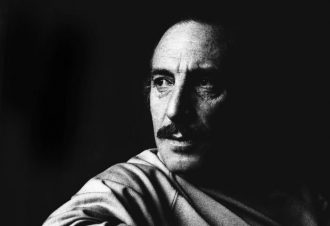
Chilean diplomat Orlando Letelier (Wikipedia)
Nevertheless, the CIA – then under CIA Director George H.W. Bush – leaked for public consumption an assessment clearing the Chilean government’s feared intelligence service, DINA, which was then run by Contreras.
Relying on the word of Bush’s CIA, Newsweek reported that “the Chilean secret police were not involved” in the Letelier assassination. “The [Central Intelligence] agency reached its decision because the bomb was too crude to be the work of experts and because the murder, coming while Chile’s rulers were wooing U.S. support, could only damage the Santiago regime.” [Newsweek, Oct. 11, 1976]
Bush, who later became the 41st president of the United States (and is the father of the 43rd president), has never explained his role in putting out the false cover story that diverted attention away from the real terrorists. Nor has Bush explained what he knew about the Chilean intelligence operation in the weeks before Letelier and Moffitt were killed.
Dodging Disclosure
As a Newsweek correspondent in 1988, a dozen years after the Letelier bombing, when the elder Bush was running for president, I prepared a detailed story about Bush’s handling of the Letelier case.
The draft story included the first account from U.S. intelligence sources that Contreras was a CIA asset in the mid-1970s. I also learned that the CIA had consulted Contreras about the Letelier assassination, information that the CIA then would not confirm.
The sources told me that the CIA sent its Santiago station chief, Wiley Gilstrap, to talk with Contreras after the bombing. Gilstrap then cabled back to CIA headquarters in Langley, Virginia, Contreras’s assurances that the Chilean government was not involved. Contreras told Gilstrap that the most likely killers were communists who wanted to make a martyr out of Letelier.
My story draft also described how Bush’s CIA had been forewarned in 1976 about DINA’s secret plans to send agents, including the assassin Michael Townley, into the United States on false passports.
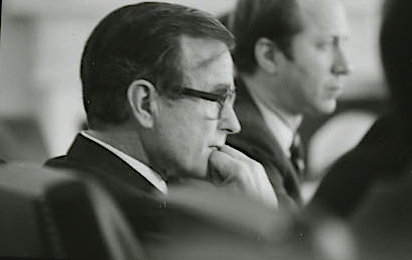
Then-Vice President George H.W. Bush at the White House on Feb. 12, 1981. (Reagan Library)
Upon learning of this strange mission, the U.S. ambassador to Paraguay, George Landau, cabled Bush about Chile’s claim that Townley and another agent were traveling to CIA headquarters for a meeting with Bush’s deputy, Vernon Walters. Landau also forwarded copies of the false passports to the CIA.
Walters cabled back that he was unaware of any scheduled appointment with these Chilean agents. Landau immediately canceled the visas, but Townley simply altered his plans and continued on his way to the United States. After arriving, he enlisted some right-wing Cuban-Americans in the Letelier plot and went to Washington to plant the bomb under Letelier’s car.
The CIA has never explained what action it took, if any, after receiving Landau’s warning. A natural follow-up would have been to contact DINA and ask what was afoot or whether a message about the trip had been misdirected. The CIA report in 2000 made no mention of these aspects of the case.
After the assassination, Bush promised the CIA’s full cooperation in tracking down the Letelier-Moffitt killers. But instead the CIA took contrary actions, such as planting the false exoneration and withholding evidence that would have implicated the Chilean junta.
“Nothing the agency gave us helped us to break this case,” said federal prosecutor Eugene Propper in a 1988 interview for the story I was drafting for Newsweek. The CIA never volunteered Ambassador Landau’s cable about the suspicious DINA mission nor copies of the fake passports that included a photo of Townley, the chief assassin. Nor did Bush’s CIA divulge its knowledge of the existence of Operation Condor.
FBI agents in Washington and Latin America broke the case two years later. They discovered Operation Condor on their own and tracked the assassination back to Townley and his accomplices in the United States.
In 1988, as then-Vice President Bush was citing his CIA work as an important part of his government experience, I submitted questions to him asking about his actions in the days before and after the Letelier bombing. Bush’s chief of staff, Craig Fuller, wrote back, saying Bush “will have no comment on the specific issues raised in your letter.”
As it turned out, the Bush campaign had little to fear from my discoveries. When I submitted my story draft – with its exclusive account of Contreras’s role as a CIA asset – Newsweek’s editors refused to run the story. Washington bureau chief Evan Thomas told me that Editor Maynard Parker even had accused me of being “out to get Bush.”
The CIA’s Admission
Twenty-four years after the Letelier assassination and 12 years after Newsweek killed the first account of the Contreras-CIA relationship, the CIA admitted that it had paid Contreras as an intelligence asset and consulted with him about the Letelier assassination.
Still, in the sketchy report in 2000, the spy agency sought to portray itself as more victim than accomplice. According to the report, the CIA was internally critical of Contreras’s human rights abuses and skeptical about his credibility. The CIA said its skepticism predates the spy agency’s contact with him about the Letelier-Moffitt murders.
“The relationship, while correct, was not cordial and smooth, particularly as evidence of Contreras’ role in human rights abuses emerged,” the CIA reported. “In December 1974, the CIA concluded that Contreras was not going to improve his human rights performance. …
“By April 1975, intelligence reporting showed that Contreras was the principal obstacle to a reasonable human rights policy within the Junta, but an interagency committee [within the Ford administration] directed the CIA to continue its relationship with Contreras.”
The CIA report added that “a one-time payment was given to Contreras” in 1975, a time frame when the CIA was first hearing about Operation Condor, a cross-border program run by South America’s military dictatorships to hunt down dissidents living in other countries.
“CIA sought from Contreras information regarding evidence that emerged in 1975 of a formal Southern Cone cooperative intelligence effort – ‘Operation Condor’ – building on informal cooperation in tracking and, in at least a few cases, killing political opponents. By October 1976, there was sufficient information that the CIA decided to approach Contreras on the matter. Contreras confirmed Condor’s existence as an intelligence-sharing network but denied that it had a role in extra-judicial killings.”
Also, in October 1976, the CIA said it “worked out” how it would assist the FBI in its investigation of the Letelier assassination, which had occurred the previous month. The spy agency’s report offered no details of what it did, however. The report added only that Contreras was already a murder suspect by fall 1976.
“At that time, Contreras’ possible role in the Letelier assassination became an issue,” the CIA’s report said. “By the end of 1976, contacts with Contreras were very infrequent.”
Even though the CIA came to recognize the likelihood that DINA was behind the Letelier assassination, there never was any indication that Bush’s CIA sought to correct the false impression created by its leaks to the news media asserting DINA’s innocence.
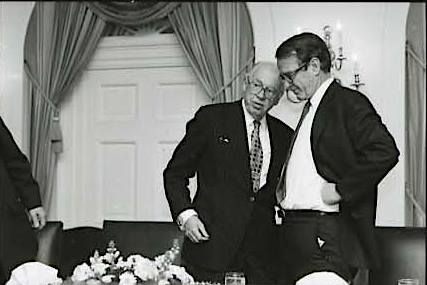
Then-Vice President George H.W. Bush with CIA Director William Casey, Feb. 11, 1981. (Reagan Library)
After Bush left the CIA with Jimmy Carter’s inauguration in 1977, the spy agency distanced itself from Contreras, the new report said. “During 1977, CIA met with Contreras about half a dozen times; three of those contacts were to request information on the Letelier assassination,” the CIA report said.
“On 3 November 1977, Contreras was transferred to a function unrelated to intelligence so the CIA severed all contact with him,” the report added. “After a short struggle to retain power, Contreras resigned from the Army in 1978. In the interim, CIA gathered specific, detailed intelligence reporting concerning Contreras’ involvement in ordering the Letelier assassination.”
Remaining Mysteries
Though the CIA report in 2000 contained the first official admission of a relationship with Contreras, it shed no light on the actions of Bush and his deputy, Walters, in the days before and after the Letelier assassination. It also offered no explanation why Bush’s CIA planted false information in the American press clearing Chile’s military dictatorship.
While providing the 21-page summary on its relationship with Chile’s military dictatorship, the CIA refused to release documents from a quarter century earlier on the grounds that the disclosures might jeopardize the CIA’s “sources and methods.” The refusal came in the face of President Bill Clinton’s specific order to release as much information as possible.
Perhaps the CIA was playing for time. With CIA headquarters officially named the George Bush Center for Intelligence and with veterans of the Reagan-Bush years still dominating the CIA’s hierarchy, the spy agency might have hoped that the election of Texas Gov. George W. Bush would free it from demands to open up records to the American people.
For his part, former President George H.W. Bush declared his intent to take a more active role in campaigning for his son’s election. In Florida on Sept. 22, 2000, Bush said he was “absolutely convinced” that if his son is elected president, “we will restore the respect, honor and decency that the White House deserves.”
The late investigative reporter Robert Parry, the founding editor of Consortium News, broke many of the Iran-Contra stories for The Associated Press and Newsweek in the 1980s. His last book, America’s Stolen Narrative, can be obtained in print here or as an e-book (from Amazon and barnesandnoble.com).
Thanks to the BBC Propaganda Show, the Plausibility of the Door Handle Theory Just Plummeted to Freezing Point
By Rob Slane | The Blog Mire | November 25, 2018
Having now watched the rest of the BBC Panorama programme, Salisbury Nerve Agent Attack – the Inside Story, I have to say that I’m really very thankful. Thankful that after being subjected to an hour of what can only be described as relentless propaganda, half-baked truths, and fully-baked untruths, I have lived to tell the tale and emerged to come up for air.
One of the worst aspects of this programme was the fact that the BBC is surely well aware that large numbers of people have been sceptical about the Government and Metropolitan Police narrative from the start. Yet you wouldn’t know from the show that there was ever any room for doubt, and the number of questions that the nation’s public service broadcaster asked which might have represented the views of the many people who have had nagging doubts was less than one.
I want to make one big observation about the programme, which I believe pretty much destroys The Met’s narrative, but before I do here are 10 other points.
First: At one point the presenter, Jane Corbin, stated the following:
“In Salisbury, it takes two weeks of painstaking investigation for scientists and police to work out exactly how the Skripals came into contact with the Novichok.”
Dept Asst Commissioner Dean Haydon is then seen saying:
“To find the source of the Novichok, actually was our first breakthrough. We identified that it was Novichok on the front door the front door handle of their home address.”
This two week period makes little sense. From the moment it was known that Detective Sergeant Nick Bailey had been poisoned, it should have been very straightforward to start zeroing in on the location of the poisoning. The reason for this is that logically it could only have been in a place that both he and the Skripals had been. And according to Mr Bailey’s story, which was completely different than what many officials previously told us about his movements, this can only have been at the house (not even the bench according to his testimony, as he now apparently wasn’t there when the Skripals were). And so the house should have been locked down, with swabs taken as early as 6th March, and the location of the poison identified. But instead, we got two weeks of “it could be here, it could be there” — all in various places which couldn’t possibly have been the location because Mr Bailey hadn’t actually been to them.
Second: Despite the fact that the programme portrayed “Novichok” as “deadly,” “lethal,” “10X more toxic than any nerve agent created before or since,” “unique in its ability to poison individuals at quite low concentrations,” “the tiniest dose can be fatal,” there is of course the fact that it singularly failed to kill a 65-year-old, overweight diabetic, his daughter, and Mr Bailey. In order to get around this, Mrs Corbin interviewed one of the men who worked on the original Foliant (not “Novichok”) project, Vil Mirzyanov, who said:
“Maybe the dose was not high enough. Salisbury was rainy and muggy. Novichok breaks down in damp conditions, reducing its toxicity. It’s the Achilles Heel of Novichok.”
Perhaps it is the Achilles Heel of Novichok. But if it is, it is also the Achilles Heel of the whole premise of the Panorama programme, since it raises two vital questions: firstly, given that the English weather in general is often damp, and the weather conditions on that weekend in particular were very damp, how likely exactly do you think it is that professional assassins would place a substance that breaks down in damp conditions on an outside door handle? And secondly, if the substance had already broken down within an hour of its application, as The Met’s case relies on to explain how a deadly nerve agent didn’t kill, how exactly were the OPCW able to find traces of the toxic chemical which they described as high purity and with “almost complete absence of impurities,” nearly three weeks later after much rain, much snow, and much general dampness?
Third: I was struck by the fact that Mrs Corbin stood by the bed of Mr Skripal’s mother, and heard that clearly very distressed lady say that she just wanted to hear her son’s voice, and yet it did not appear to occur to Mrs Corbin to ask anyone in officialdom back home, “Why won’t you let the son talk to his mother?”
Fourth: Mrs Corbin claimed of Yulia Skripal that in her Reuters statement, she:
“appears in public, to deny continuing Russian claims that the Skripals have been abducted by the British.”
This is simply a falsehood. You can look at that video or the transcript and you will find no such statement from Yulia Skripal.
Fifth: The ex head of MI6, Sir John Sawers, who in the immortal words of Anne Widdecombe about Michael Howard, appears to have “something of the night” about him, stated the following:
“The GRU probably chose a time when she [Yulia] was coming here and would be in the house, because that would give them certainty that Sergei Skripal would be in the house as well. They weren’t targeting Yulia Skripal, but she was entirely dispensable.”
The first part of this statement may well win the prize for the most ridiculous statement of the whole programme. I’ll leave you to work out why. As for the second part, in the light of his comments, Sir John should explain the following: If it’s the case that the GRU carried out this reckless attempt on her father’s life, and viewed her as entirely dispensable, why is it that Yulia has, on numerous occasions, expressed a desire to go back to live in Russia? Has MI6 failed in its attempt to persuade her who was behind the poisoning and why this means she can never go back?
Sixth: A reconstruction of the alleged events on 4th March was shown, including the two suspects at Salisbury train station, followed by the Wilton Road, and then on the bridge at Fisherton Street. This was accompanied by a comment from Deputy Assistant Commissioner Dean Haydon, who said:
“I don’t think they were expecting to be captured on CCTV in the way they have.”
Here, he was seemingly vying with Sir John for the title of silliest comment on the programme, since:
a) Britain is well known for being the CCTV capital of the world, and the GRU are likely to be aware of this, and
b) It’s not like Petrov and Boshirov made attempts not to be seen, but got caught all the same, as Mr Haydon’s comment implies. No, the most obvious point about the men in the footage is that at no point do they make any attempt to keep their identities hid from the cameras.
Seventh: Mr Haydon also made the following comment during the “reconstruction”:
“Past the petrol station, what the CCTV shows is the two suspects on the way to Christie Miller Road. On the way to the Skripals home.”
This is simply misleading. The CCTV does not show them “on their way to Christie Miller Road”. When you see the two men walking next to the garage, Christie Miller Road is roughly perpendicular to them, about 400-500 yards away. It is true that they might have crossed the road and gone up Canadian Avenue, and then onto Christie Miller Road, but this CCTV doesn’t show this, and no other evidence was presented to show that this is what they actually did. And so without any further evidence that they crossed the road to go to Christie Miller Road, it is simply misleading to say that it “shows them on the way to Christie Miller Road.”
What the CCTV does do, however, is almost certainly rule out one of the possible routes they might have taken to get to Christie Miller Road, which is to go through a passageway just past the Shell garage, which leads to Montgomery Gardens and then onto Christie Miller Road. To take this passage, they would have had to cross the road, and the easiest way of doing this would be to cross to a small island just opposite the garage. But as you can see from the footage, they are walking straight on, and there is no sign whatsoever of them crossing to this island. Though not conclusive, it makes it extremely doubtful that they were intending to, or ever did, walk through this passage.
I also have to say that if I was walking that way up Wilton Road (as I have done), and wanted to go up Canadian Avenue, I would cross at that small island, since it is by far the easiest way to get there.
Eighth: One of the more glaring things about the programme was who was missing. Although Mr Bailey’s appearance was something of a surprise, hardly any of the key witnesses at the bench were interviewed, nor was Charlie Rowley, who seems to have disappeared after his claim about the bottle he found being cellophane wrapped kind of muddled things up a bit. And then of course Yulia Skripal, who has been mysteriously silent since July, when she informed her cousin that she finally understood what had happened. And the biggest one of all — Sergei Skripal himself. Strangely, Mrs Corbin expressed no surprise that he has not been seen of or heard of during this whole saga, and she made no reasonable attempt to explain why she had not been given access to him for an interview.
Ninth: Mrs Corbin asserted the following:
“Within a few weeks, the investigative website, Bellingcat, reveals their [Petrov and Boshirov] true identities.”
The odd thing about this, however, is that in their latest statement released on 22nd November, The Met does not mention the identities Bellingcat has claimed for them. They still refer to the two as Petrov and Boshirov, and although they state that these are aliases, they make no mention of the names Chepiga and Mishkin. I find it odd that these identities have yet to be confirmed or denied officially, but even odder that the BBC went with Bellingcat and not the official investigators.
Tenth: Deputy Assistant Commissioner Haydon stated the following:
“My ambition remains to bring these two individuals, and anybody else involved in this attack to justice through the British Criminal Justice System. I will not give up.”
Very difficult to stop oneself bursting out laughing at this point. There was Mr Haydon, taking part in a programme that, with its cast iron claims of guilt against the two suspects making it absolutely impossible for a fair trial to ever take place, saying that his aim is to see justice done. Hmm!!!
Now to the big revelation in the programme — the one that made it worth watching. This was it, from Mrs Corbin, describing the reconstruction of the moment that the two suspects went to the house:
“The Skripals are at home, oblivious to what is happening right outside.”
Aha! So they were at home were they? Since this programme was put together with the assistance of The Metropolitan Police, we can therefore assume that it is their official position that the Skripals were at home at 12:00pm and following, before they left some time around 13:30 to go to the City Centre.
There are many interesting things about this, not least of which is that it’s the first time that we have been officially told where the Skripals were before they went into town. In the early days of the inquiry, a few appeals were made for information as to what the pair were doing that morning, before their car was seen driving into town at just after 13:30. But that timeline was never completed, and quietly forgotten after the last update, which was on 17th March (last time I looked, even this incomplete timeline was no longer on their website).
So why did the Met, for the first time, come out with this piece of information, and what is its significance?
On the first question, my hunch is that the answer is connected with Mr Skripal’s best friend, Ross Cassidy. Here’s an extract from an article that appeared in the Mail, just after the police released their timeline of the two suspects back in September:
“Police say Novichok was sprayed on to the front door handle of the Skripal’s house the following afternoon between midday and about 1pm. Sergei and Yulia became ill around three hours later.
But Mr Cassidy questions the police timeline. It is his understanding that Sergei and Yulia were at home until 1pm. And he said Mr Skripal’s ‘heightened state of awareness’ would have frustrated any attack in broad daylight.”
I believe that Mr Cassidy put a bit of a spanner in the works of the Met’s claims with this interview. As I stated back here:
“For the claims of the Metropolitan Police to be true, that these two men were the assassins and that they placed “Novichok” on Mr Skripal’s door handle, two things must be shown to be true:
Firstly, the Skripals must have been out between the hours of 12:10 and 13:30.
Secondly, the Skripals must have returned at some point between these two times.
Why so?
Firstly, if the Skripal’s were at home before 12:10, the claims collapse since firstly the “assassins” would almost certainly not have targeted them whilst they were at home (Mr Skripal’s garage was used as an office, and so the car would be in the drive), but more crucially both Sergei and Yulia could not have both touched the outside door handle.
Secondly, if the Skripals were out at 12:10, but did not return between then and 13:30, again the claims would be proven false since there would be no possible way that they could have touched the door handle.”
Yet because Mr Cassidy somehow knew that they were in between 12:00 and 13:00, the BBC could hardly come out on a programme going out to millions and say that they were not there at the time. Why, Mr Cassidy and perhaps some neighbours might have popped up to say that actually they were in. How embarrassing would that be?
To get around this, the BBC employed what you might call a little craft. Prior to the reconstruction section, Mrs Corbin made the following statement, after talking about Yulia leaving Moscow:
“In Salisbury, her father has no idea how much danger he is in.”
But this is yet another of the programme’s many deceptions. Numerous reports stated that in the weeks prior to the incident, Mr Skripal began to get very nervous and to even change his routine. Apparently, he very much knew that he was in danger, and we can see this very clearly by once again turning to the interview with Ross Cassidy:
“Sergei was very apprehensive. It was as though he knew something was up. Had he been tipped off or heard that things were moving against him back in Russia? One thing is for sure. He was unusually twitchy. He was spooked …
Something had spooked Sergei in the weeks prior to the attack. He was twitchy, I don’t know why, and he even changed his mobile phone.”
You might say the precise timings [about when the alleged door handle daubing took place] don’t matter. But they do matter because they don’t currently make sense.’”
He’s dead right, they don’t make sense. All the more so when you consider what he had to say about the possibility of a daylight assassination with the Skripals at home:
“However, I was surprised that they said the Novichok was placed on the Sunday lunchtime. I have always thought it was placed on the Saturday afternoon when we were collecting Yulia from Heathrow, or even Saturday night. These guys are professional assassins. It would have been far too brazen for them to have walked down a dead-end cul-de-sac in broad daylight on a Sunday lunchtime. Sergei’s house faces up the cul-de-sac. He had a converted garage that he used as his office — this gives a full view of the street. Almost always, Sergei used to open the door to us before we had chance to knock. Whenever we visited, he’d see us approaching [my emphasis].”
So even under normal circumstances, because of the position of the house, Mr Skripal would see people approaching. But factor in that Mr Skripal was “very apprehensive,” “unusually twitchy,” “spooked,” “knew something was up,” and “even changed his mobile phone,” and now ask yourself these three questions:
1. What are the chances that two people could have walked up to Mr Skripal’s house, in broad daylight, gone right up to the door, whilst the “twitchy” Mr Skripal and his daughter were inside, and sprayed a chemical on the handle, without being noticed?
2. What are the chances that two highly trained GRU assassins would walk up to a door in broad daylight, with people inside the house, and the car in the drive, and spray a chemical which breaks down in damp conditions, onto the door handle in damp conditions, in order to try to kill one of the occupants (apart from anything, the driver car door handle would have been far more targeted)?
3. And if either of these ridiculously implausible scenarios had hypothetically happened, what are the chances that both of them would have come out of the house and touched the door handle, in order to have got said chemical on their hands?
This, in my view, is the significance of the admission, for the very first time, that the Skripals were at home when the suspects were alleged to have done their deed. This was the real big takeaway from this programme. What it does is effectively relegates the door handle theory to the realm of “crackpot conspiracy theories not to be believed by rational people”. The chances of it happening were already low, given that the Skripals went for a drive, a duck feed, a meal and a drink after apparently becoming contaminated. I would say that, thanks to this BBC propaganda show, its plausibility as an explanation just plummeted even further, all the way to freezing point.
UK Provided ‘Extremely Flimsy’ Evidence in Skripal Poisoning Case – Journalist
Sputnik – November 24, 2018
Detective Sergeant Nick Bailey, one of the first people to be hospitalized in the poisoning of Sergei and Yulia in Salisbury in March, has given his first-ever interview to the BBC Panorama programme.
In the interview, which aired on Thursday evening, Bailey says he was contaminated by the poison as he inspected the Skripals house, after they were found ill on a park bench in Salisbury city centre.
The British government and media were quick to blame the Russian state for the poisonings of Yulia and Sergei, declaring that the substance was the nerve agent a-234, or ‘novichok’ which had been smeared on the door handle of the Skripals’ house by two Russian military intelligence officers.
The two suspects’ identities were later put forward by the blogger website Bellingcat, which British state broadcaster the BBC widely promoted.However for some, there are still many questions remaining in the British version of the Skripal case. Columnist for the Independent and Guardian newspapers, Mary Dejevsky spoke to Sputnik about her reservations with the British media’s representation and analysis of the Skripal case.
Sputnik: Mary you tweeted recently that the BBC Panorama programme aired on Thursday night and showing an interview with Detective Sergeant Nick Bailey was ‘close to propaganda’; what made you say that?
Mary Dejevsky: Although the UK doesn’t have a state television service, this came pretty close.
My particular problem with this programme was that it posed none of the questions that have been hanging in the air ever since the attack on the Skripals in Salisbury happened back in March.
There are an awful lot of questions that are open; there is a lot of the official version put out by the government which has been challenged, and rightly challenged because there are huge questions. But the programme on the BBC posed none of these questions.
Sputnik: Why do you think it is that there has been no real analysis from British mainstream media of the Skripal case?
Mary Dejevsky: Even when there was the death of Alexander Litvinenko there were a few people that were actually questioning the official version and it wasn’t really until after the enquiry that a lot of the questions closed down.But with the Skripal case it seems to me that there has been an extraordinary consensus from the very beginning. One of the reasons I think is that the government seemed so certain about its case, and supposedly they presented evidence which mobilized this international diplomatic action where there was coordination of countries expelling Russian diplomats who were, it was claimed, working undercover – undeclared members of the Russian security services – working under diplomatic cover.
Now it’s not clear to me because I think there have been reports from Germany for instance that there was no additional evidence provided by Britain other than what they presented to parliament which was extremely flimsy.
Sputnik: What questions remain unanswered in the Skripal case?
Mary Dejevsky: There are dozens of questions. One of the most obvious is that the CCTV footage of the two alleged GRU agents going from London to Salisbury and back again twice is highly selective.
We have no CCTV footage that’s been made public of the Skripals in central Salisbury that day, even though it is apparently known that the CCTV cameras were working efficiently across Salisbury that day. We were told that the two Russian agents went to the Skripals’ house and put novichok on the door handle.The only CCTV footage that has been produced of the two has been, at the closest, half a kilometer away from the Skripals’ house. There is enormous questions, in my view, about the whole version of whether novichok or anything was put on the door handle of the Skripals’ house.
How come that they apparently went in and out of the house, it’s not clear at what times, but how come they were apparently found together collapsed on a bench several hours later as the victims of what was supposed to be a potentially fatal substance that could kill anyone that went near it, in minutes?
Sputnik: A letter was written to The Times on 14th March by Dr Stephen Davies, consultant in Emergency Medicine at Salisbury hospital, saying ‘May I clarify that no patients have experienced symptoms of nerve agent in Salisbury, and there have only been three patients with significant poisoning’ – this really is a discrepancy in the story is it not?
Mary Dejevsky: Yes, this has always been in the background in this story, this letter that was published in The Times that denied that anyone was treated for nerve agent poisoning, and there have been various suggested explanations given since, including that when they were taken to hospital they had symptoms of fentanyl poisoning, not nerve agent poisoning, and that this explains the doctor’s letter.And there have been various attempts to square the circle, but to my mind none of them has been entirely convincing. We also have the question of the chemical weapons’ agency’s findings and whether the substance that the OPCW agency tested was actually the substance that the Skripals were poisoned with.
It doesn’t appear that there is a completely secure chain of evidence from as it were, start to finish, that nothing might have sort of inserted into the process. So there are all these questions and none of them were asked on the BBC programme.
Kremlin Comments on Latest Footage Concerning Salisbury Poisoning
Sputnik – 23.11.2018
Russian presidential spokesman Dmitry Peskov has commented on the latest footage released by London Metropolitan Police on the Salisbury and Amesbury incidents, saying that while the use of the nerve agent in Europe was cause for concern, British investigators have yet to share any information with the Russian side.
“From the very beginning, Russia offered to cooperate with the British side to clarify the circumstances of this incident, but we were rejected. We were not met with reciprocity, and we do not have any information about what happened in Salisbury. We do not have information about what kind of agent was used, how much of it there was, what its volume was; we do not have information about who was poisoned, what happened to them, where they disappeared to, etc.,” Peskov said, speaking to reporters on Friday.
Despite this lack of information or cooperation, the spokesman said it was very concerning to see the use of such agents in Europe. “The use of such strong chemical warfare agents in Europe is a very dangerous fact, and is a matter of great concern,” he noted.
Earlier Friday, the London Metropolitian Police released fresh CCTV footage showing the two Russian nationals it suspects of involvement in the poisoning of Russian ex-spy Sergei Skripal and his daughter Yulia, showing them walking around the southern English town of Salisbury on March 4. The footage does not show the men at Skripal’s home, however, where police allege they sprayed a military-grade poison on the door handle.
Police also released images of what they said was a “specially made model of the counterfeit perfume bottle” in which they believe the toxic substance used to poison the Skripals was kept. Police said they are now investigating how the bottle got from Salisbury, where it was allegedly used to poison the Skripals, to Amesbury, when it was found by Charlie Rowley, one of the victims of the Amesbury poisoning incident which occurred in late June.
Sergei and Yulia Skripal were found unconscious on a bench at a Salisbury shopping center on March 4. London quickly concluded that they were poisoned by a Russian military-grade nerve agent, and accused Moscow of staging the attack, leading to a diplomatic row between the two countries which culminated in sanctions and the expulsions of dozens of diplomats. In September, UK investigators identified two Russian nationals named Alexander Petrov and Ruslan Boshirov, saying the names were possible aliases. Investigators accused the pair of working for Russian military intelligence and carrying out the poisoning attack. The men came forward for an interview with RT’s Margarita Simonyan on September 13, telling her that they were sport nutritionists who traveled to Salisbury as tourists, and that they had no ties to Russian military intelligence.
Russia has sent several dozen diplomatic notes to the UK calling for cooperation in the investigation of the case. London left these proposals unanswered, and accused the Russian side of refusing to cooperate.
Featured Video
“Historic Russia”: The Land Putin Will Not Give Back
or go to
Aletho News Archives – Video-Images
From the Archive
How Ukraine Tortured and Slaughtered Donbass
By Kit Klarenberg | Al Mayadeen | July 11, 2024
Almost immediately after the proxy war erupted, ISIS-tier footage of the torture and murder of Russians in Ukrainian custody emerged.
On July 6th, the New York Times published an astonishing investigation: In Ukraine, Killings of Surrendering Russians Divide an American-Led Unit. The article documents in grim detail how Chosen Company, an international volunteer battalion for Kiev, routinely executes Russian prisoners of war. It is the very first mainstream admission that this practice – a brazen breach of the Geneva Conventions, and a grave war crime – is widespread among Ukraine’s fighters, both foreign and homegrown. … continue
Blog Roll
 Aletho News
- Record Oil, Empty Tanks: The UAE’s Miracle Recovery
- Burnham tackles Britain’s poverty with aggression in Yemen
- Peace in Ukraine: the easy way – or the hard way
- Trump & the Rrrrussians
- US taxpayer money laundered back through Ukraine – Musk
- Before COVID, an NIH lab chief proposed making a SARS-like bat virus more infectious
- Gates, Bourla on Trial in Netherlands Accused of ‘Great Reset’ Scheme at Vaccine Injury Hearing
- BRITAIN’S WARNING: PREPARE FOR WAR
- “Historic Russia”: The Land Putin Will Not Give Back
- How the Cambridge Analytica scandal still haunts Mark Zuckerberg
- If Americans Knew
- DAILY UPDATE: Latest essential news on Palestine, Israel, & region
- Damning report shows the media must confront its failures on Gaza
- BBC senior broadcaster speaks out on Gaza coverage
- Netanyahu vows vast West Bank invasion in response to 20-minute skirmish that left 2 Israeli soldiers and 2 Palestinian fighters dead
- Tied up and tortured: Israel using US-made electroshock weapons on Palestinian detainees
- The outsourced risk: how newsrooms rely on Gaza’s freelancers without protecting them
- Gaza bakeries forced to shut as Israel blocks flour shipments
- Gaza’s breast cancer patients face a deadly wait for treatment amid Israel’s genocide
- DAILY UPDATE: Latest essential news on Palestine, Israel, & region
- The Israel Lobby’s Changing Fortunes
- No Tricks Zone
- Two New Studies Find Thwaites Glacier Melt Cannot Be Driven By Human Activity Or A Warming Ocean
- E-Cars Reduce CO2 Emissions By Only 41% Compared To Internal Combustion Engine Vehicles
- Predictions Made By Renowned Climate Professor Over Past Decades Have Been Proven To Be Poor
- New Study Suggests Large Regions Of The Pacific Ocean Have Been Cooling For The Last 80 Years
- Germany’s Green Energy Debacle: High Energy Costs Force Kahla Porzellan to Close After 182 Years!
- New Study: 50 Years Of The Most Aggressive ‘Net Zero’ Policies Can Only Affect The Global Climate By 0.03°C
- US September “Heat” Was No Record…Many Records Set Decades Ago
- Latest European Green Energy Debacle; Portugal’s Largest Flagship Solar Park Insolvent!
- Green Energy Debacle: German Expert Professor Fritz Vahrenholt Warns Of Severe Economic And Social Consequences
- Two More Paleo Reconstructions Affirm Meters-Higher Sea Levels Across Ireland, Brazil 7000-6000 Years Ago

