Human Rights Defender Arrested During Cycling Marathon
International Solidarity Movement | May 15, 2016

Photo Credit: http://www.taz.de
Bil’in, Occupied Palestine – On Friday the 13th of May 2016, the internationally recognized human rights defender and coordinator of the Bil’in popular committee against the wall and settlements, Abdullah Abu Rahma, was arrested during the Alwada Cycling Marathon, which took place in the West Bank Friday. Abdullah Abu Rahma is currently still being held under detention by the Israeli military and his case will be brought to the military court in Ofer Military Base tomorrow.
Abu Rahma, who is from the West Bank village Bil’in, was arrested, after the Alwada Cycling Marathon had reached Bil’in. After reaching Bil’in the attending cyclists were met by approximately 150 heavily armed soldiers, who immediately started showering the cyclists with tear gas and blocked the road, where their route was going. During this attack on the peaceful demonstrating cyclists, Abu Rahma was arrested along with an international activist from Israel. The Israeli activist was released shortly after her arrest.
The Alwada Cycling Marathon’s intention was to demonstrate against the illegal Israeli occupation and the apartheid system, that Israel is enforcing on the Palestinians through a healthy and peaceful cycling route from Ramallah to Bil’in. By Israeli Forces attacking the peaceful demonstration and arresting Abu Rahma, they once again show the world, that they do not accept the right to protest peacefully and that they do not comply with the international law, that does not allow Israeli Forces to be on Palestinian controlled areas, which the area of Bil’in is.
Abu Rahma is an important activist for the village of Bil’in and a symbol of peaceful resistance all over the West Bank. For now, he is left waiting for his next sentence, after he has already been imprisoned for his nonviolent resistance multiple times, and has in the past been charged with both “incitement” and “organizing and participating in an illegal demonstration.” Till now, there has not been declared a charge against him in the current case, but the military court will determine his fate, after having held him in detention for 4 days, even though he did not commit any crime whatsoever.
For more information about friday’s Alwada Cycling Marathon:
https://www.facebook.com/haytham.alkhateeb/posts/10208232017891106?pnref=story
https://www.facebook.com/haytham.alkhateeb/videos/vb.1022320161/10208230395770554/?type=2&theater
Privacy bogeyman: Putin’s face invades London in campaign against controversial UK spy bill
RT | May 12, 2016
Warning Brits about the dangers of a new surveillance bill, UK campaigners have flooded London with sinister captioned portraits of Vladimir Putin. The choice of bogeyman however could be better, given the notoriety of Western global spying operations.
The posters and billboards which have been recently appearing all across the British capital, and also in newspapers, including the Guardian and The Telegraph, feature a very distinctive face with a caption that reads: “A government that spies on its citizens. What’s not to like?”
The Don’t Spy On Us Campaign, which is behind the billboards, is trying to warn British citizens about the danger of the UK governments’ Surveillance Bill currently going through parliament. If passed, it would give “government, intelligence agencies and police the kind of powers you would expect in an authoritarian regime,” the campaign said on its website.
The state will “snoop on our private communications and internet use,” collect and store “data about your emails, phone calls, texts and internet use,” while security agencies will be allowed to hack people’s computers and phones, campaigners stressed.
The Don’t Spy On Us Campaign, a coalition of several pro-privacy organizations, also launched an online petition urging the reformation of the surveillance bill. Photographs of Chinese and North Korean leaders were also used by campaigners, but drew less attention, RT’s Harry Fear reported from London.
“Of course, Putin’s face and the Russian brand, if you will, have resonance here in the UK given all of the demonizing in politics and the media,” Fear said. He noted however that “the British public on average knows a great deal about the American surveillance program, not the Russian or Chinese.”
Indeed many on the internet are puzzled by the choice of the Russian president as the face for the campaign, calling the whole affair “a bit peculiar.”
In particular, some mocked the campaigners’ choice of images, saying that faces of other leaders, such as US President Baraсk Obama or UK Prime Minister David Cameron would have been more suitable.
Mass surveillance practices by the US national Security Agency made headlines worldwide after they were unmasked by whistleblower, Edward Snowden, with the help of the Guardian, back in 2013.
“Some are saying that comparing the UK, perhaps, uncertain security state future to the American’s campaign and having Obama’s face instead of Putin’s face here may have been a more appropriate marketing and campaigning choice,” Fear said.
READ MORE:
Brits blindly walking into Orwellian surveillance state, survey suggests
‘Privacy is not a privilege, it’s a fundamental human right,’ top privacy expert tells RT
Good chance spies are hoovering up your personal data in bulk, documents show
Panther Power: Afeni Shakur and the “New York 21”
By Lamont Lilly | Dissident Voice | May 10, 2016
On April 2, 1969, twenty-one members of the Harlem Chapter of the Black Panther Party were formally indicted and charged with 156 counts of “conspiracy” to blow up subway and police stations, five local department stores, six railroads, and the Bronx based New York Botanical Garden.
By the early morning hours of April 3, mass sweeps were conducted city wide by combat squads of armed police. Law enforcement agencies ranging from the CIA, FBI, U.S. Marshalls and NY state police worked simultaneously to coordinate assaults on panther homes and community-based offices. After numerous raids, ten panther men and two panther women were formally arrested, processed and quickly jailed. To anyone who supported radical politics of the 1960’s, there was no doubt that the indictment of the Panther ‘New York 21’ was a political and racist frame-up to not only “disrupt, discredit and destroy,” but to utterly dismantle the Black Panther Party from the inside out.
The absurd and excessive nature of such charges were clearly mounted as a federal effort to pit chapters and regions against each other, in a manner that would totally paralyze panther party leadership. What these charges represented was a form of unprecedented legal repression, created as a structural alternative to break their stronghold, reputation and community base. For the panthers who fortunately weren’t murdered or assassinated, exiled or imprisoned, the courts became a convenient and effective form of legal lynching, a straight-jacket beyond the walls—a robbery of valuable time and resources.
Each member of the ‘New York 21’ was held on $100,000 bail, totaling over $2.1 million. It was not until January of 1970 that the first panther was able to post bail. That panther was 22 year old Alice Faye Williams, better known as Afeni Shakur.
Self-Appointed, Black Anointed
 In a grueling and tedious trial, Afeni Shakur (facing 300 years of prison time) daringly chose to be her own attorney in court, partly because financial resources were already razor-thin. Afeni, however, meticulously conducted her own legal research, her own interviews, as well as in-court cross examinations – fully realizing that “she would be the one serving, not the lawyers.” She was the only panther who served as their own counsel.
Here was a small-framed impoverished black girl from the backwoods of Lumberton, North Carolina, staring down a full team of New York state prosecutors – outwitting a full cast of establishment-owned media outlets. Here was a single mother with no formal degree, going legally toe to toe with COINTELPRO.
Despite the odds, after all the surveillance, warrantless wiretapping, infiltration and frame-ups, not one shred of state’s evidence stood in court. In their undying efforts to “discredit,” it was revealed during the trial that the FBI had actually planted undercover infiltrators who, under oath, admitted their role as provocateurs.
Though the case of the Black Panther ‘New York 21’ was the longest trial in New York state history, on her own guts and wit, Afeni Shakur would successfully secure her freedom. No money. No attorney. No privilege. Pregnant with her second child, Tupac Amaru Shakur, what Afeni was able to do in that courtroom was nothing short of miraculous. Magical. Mind blowing.
On May 12 1971, after 2 years of legal proceedings, all 21 panthers were acquitted of their charges. The jury needed just a mere 45 minutes to see the truth.
Sister Soldier, Woman Warrior
 Afeni Shakur may have hailed from the Black Panther Party’s, esteemed Harlem Chapter, but her roots were originally from the Black Belt South. Viciously poor, but still mobile, her family moved to the Bronx when she was 11 years. Her inquisitive affection toward the Black Nationalist scene fit right in there.
Afeni first learned of the Black Panther Party at the corner of 125th and 7th Avenue while listening to party co-founder, Bobby Seale deliver a speech. A dedicated soldier from the very beginning, Afeni always placed principle over profit, the people above her own individual desire. Black Panther Party member and ‘New York 21’ co-defendant, Dhoruba Bin Wahad very warmly remembers Afeni as, “the type of person that worked hard, who would stay up all night to get leaflets done.”
Afeni was the kind of comrade who garnered respect from both the women and the men. As former Black Panther, Jamal Joseph stated, “Afeni taught me more about being a man, more than any other man or woman.” As the only high school member of the New York 21, Joseph very often, looked to Afeni for guidance and leadership.
The name Afeni was given to her by a community elder from South Carolina, a descendant of the Yoruba tradition who chose the name Afeni meaning, “lover of the people.” And love the people is exactly what Afeni did. A dedicated community organizer, fearless warrior, activist, scholar, teacher, and real-life revolutionary, Afeni Shakur gave her life to the people, to the full embodiment of Black Power, people power, (and as the sisters say today) Black Girl Magic!
As we commemorate the mother of Hip Hop’s “Black Jesus,” let us not forget the Black woman general who indubitably blazed her own legacy, who literally offered her life as a gift to the people, who taught her son, Tupac Amaru to do the same. Farewell to the Black woman general who just joined Malcolm, Harriet, Ida. All power to the people! Black Power!
Lamont Lilly is a contributing editor with the Triangle Free Press and Human Rights Delegate with Witness for Peace and organizer with Workers World Socialist Party. He has recently served as field staff in Baltimore, Ferguson, Oakland, Boston and Philadelphia. In February 2015, he traveled to both Syria and Lebanon with Ramsey Clark and Cynthia McKinney. Follow him on Twitter @LamontLilly.
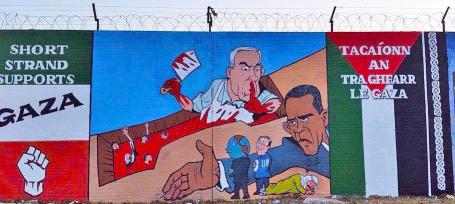
Israel can commit crimes with impunity; condemn them at your peril
MEMO | May 12, 2016
Israel’s latest display of misplaced ire at the UN Security Council has provided a succinct illustration of how criticism of settler colonialism, even by Israeli NGOs, remains a cloistered subject. Following a presentation by Yesh Din, in which the NGO’s legal adviser Michael Sfard presented statistical information regarding Israeli settler terror, both Sfard and Israel’s Ambassador to the UN, Danny Danon, retaliated against Venezuelan Ambassador Rafael Ramirez’s criticism of their country’s slow extermination policies.
According to Haaretz, Ramirez challenged the UN Security Council to ponder the information, asking: “What does Israel plan to do with the Palestinians? Will they be disappeared? Is Israel trying to impose a ‘final solution’ on the Palestinians in the West Bank?”
Right-winger Danon — who has advocated punitive attacks on the civilian infrastructure in the Gaza Strip — promptly resorted to the clichéd “anti-Semitism” accusation: “These are blunt anti-Semitic statements coming from the Venezuelan ambassador towards the Jewish nation.”
According to Yesh Din’s lawyer, the Venezuelan ambassador’s use of the phrase ‘final solution’ is “offensive, angering and completely incorrect.” Sfard made this claim despite telling the Security Council: “Yesh Din vigorously and unequivocally condemns all human rights violations and all international law infractions. There can be no justification for attacks on civilians no matter who the perpetrators are and whatever the identity of the victim is.”
According to YNet news, the Israeli delegation demanded immediate condemnations following Ramirez’s remarks, and was gratified by the US, Britain and France issuing — predictably — “decisive” statements. Danon also called on Ramirez to apologise for his use of the phrase “final solution” with its obvious connotations with the Holocaust; his apology was met by a demand for a more public version.
Israel thrives upon the blatant contradiction of committing human rights violations openly and without remorse, while resenting criticism of such illegal actions. Furthermore, this episode at the UN is evidence of the cycle of hypocrisy plaguing such organisations which are, allegedly, standing up for Palestinian rights; they fail to act on the evidence, no matter how strong it is, and this exposes their allegiance to the colonial state of Israel as well as the terrorism of its illegal settlers. However, the tactic has now been perfected to project blame elsewhere to the point where logical condemnation of colonial violence is deemed to be offensive, but the violence itself isn’t. This is despite the fact that Israel is adhering publicly to the implementation of Zionism’s ideological goal of “Greater Israel” by continuing its territorial expansion, ethnic cleansing and — yes — slow extermination of the Palestinian population.
Ramirez’s comments expose Israeli state terror, incorporating historical memory and exposing a colonial cycle that has not yet reached its completion. Israel has applied various forms of human rights violations against Palestinians, all geared towards a system that leaves no recourse, thus isolating Palestinians and creating a perpetual implosion. State policies reflect impunity while Israeli ministers such as Naftali Bennett have spoken openly about “disappearing” Palestinians. Hence, nothing in Ramirez’s speech can be construed to be within any context other than that of the reality on the ground. If anything, the Venezuelan’s words portray an awareness that is common to both Palestine and South America, both having experienced colonial and imperialist violence.
Nobody should take offence at what was said by the ambassador from South America. The incident should be seen as an educational experience of how the interpretation of colonial violence through time has navigated the perpetually-changing circumstances and, as a response, carved out a niche that encourages selective remembrance and memory of genocide in order to allow for a new form of genocide to be carried out within the framework of the ambiguities of international law. As Rafael Ramirez has found to his cost, Israel is allowed to commit genocidal crimes with impunity; it is those who condemn them who have to apologise.
Outrage as Ukrainian witch-hunt site leaks personal info of ‘terrorist-collaborating journalists’
RT | May 12, 2016
Governments, NGOs and journalists across the globe have condemned a leak of personal data of more than 4,000 media staff, accused by pro-Kiev activists of “collaborating with terrorists” for their reporting from war-torn eastern Ukraine.
The names on the list include people working for respectable outlets, such as news agencies AFP, AP and Reuters, broadcasters BBC, CNN, CCTV, Deutsche Welle and Al Jazeera, newspapers, including the New York Times, Gazeta Wyborcza and Kyiv Post, news websites Vice News and Daily Beast and many others. RT journalists are on the list too.
“This is a very alarming development which could further endanger the safety of journalists, who report on issues of public interest and they should not be harassed for doing their job,” said OSCE Representative on Freedom of the Media Dunja Mijatović.
Some of the journalists, whose data was leaked, have complained they have started to receive threats.
“After being accused of ‘working for the terrorists’ and having their personal data, phone numbers and emails made public, they started receiving phone calls and emails with threats, and some Ukrainian politicians have called for these journalists to be labeled ‘enemies of Ukraine’ and to prevent them from working in the country completely,” an open letter, from Kiev-based journalists representing local and international media, stated.
“We are aware that details of staff accreditation from a wide range of media organizations – including the BBC – have been hacked. We have taken immediate and appropriate action to protect privacy and security,” said the BBC.
Publication was condemned by a number of governments, international organizations and media organizations. EU envoy to Ukraine Jan Tombinski said that while the leak was published by a privately-run website, he held the Ukrainian authorities accountable for endangering journalists and said the database should be blocked.
The website that leaked the personal data is called Mirotvorets (Peacekeeper). It purports to be fighting separatism and terrorism and publishes personal data of anyone its contributors consider enemies of Ukraine. Mirotvorets was founded in January 2015 by Georgy Tuka, who now serves as a deputy to the minister responsible for dealing with rebel-held areas and refugees. Among its high-ranking supporters is Anton Gerashchenko, an MP and aide to the interior minister. The website’s partners include the Security Service of Ukraine and the country’s Interior Ministry.
The project has caused controversy in the past. At least two Ukrainian public figures, writer Oles Buzina and former lawmaker Oleg Kalashnikov, were killed days after their home addresses were published by Mirotvorets. Last year, Gerashchenko called for leaking the personal data of Russian soldiers and officers taking part in the counter-terrorism mission in Syria, so that Islamic State sympathizers could find and kill them.
The latest leak includes data of journalists and NGO employees, who have been given accreditation by the de facto authorities of the rebellious eastern Ukrainian regions over the past two years. Gerashchenko said the data was obtained as a result of a hack, at least a month before publication.
The Interior Minister’s aid praised “patriot hackers” for exposing “a powerful propaganda machine that has an impact on par with the propaganda by [Nazi Germany’s] Goebbels or Stalin” and demanded more budget money to fight it.
Accompanying the leak, which was first posted on May 7, but widely disseminated this week, was a statement claiming “these journalists are cooperating with the militants of a terrorist organization.”
Derek Monroe, independent reporter and writer, who has received death threats from people unhappy with his reporting on the Ukraine crisis, told RT that serious measures should be undertaken in order to protect journalists, as the information can now “trickle down everywhere” and “once it’s comes out of the box, it’s very hard to put back.”
“What happened in Kiev is not only illegal, but is an outrage,” Monroe said.
Investigative journalist Russ Baker said the fact that journalists might nowadays “by definition” be regarded as enemies points towards a significant growth of extremism.
“The situation in the Ukraine is particularly striking because the fact that these people even think that a journalist going to an area makes them an enemy just indicates how extremism has risen to a rather staggering level. Journalists always go to war-zones, they always go to places where there is conflict, and to think that by definition that makes them unfair or somebody that needs to be threatened is pretty staggering,” Baker told RT.
Read more:
Top Ukraine official backs idea ‘to help ISIS take revenge on Russian soldiers in Syria’
US Congress Wants New Federal Agency to Fight Russian, Chinese ‘Propaganda’
Sputnik – May 12, 2016
A dozen members of the US House of Representatives have introduced a new bill proposing the creation of an entire agency meant to ‘counter Chinese and Russian propaganda’, The Washington Examiner reported.
The ‘Countering Foreign Propaganda and Disinformation Act’, the political news publication explained, would create a new federal agency reporting to the State Department called the Center for Information Analysis and Response.
The center, The Washington Examiner added, “would analyze ‘government information warfare’ and ‘disinformation efforts’, and work to ‘expose and counter’ those operations when they are directed against US national security.”
The legislation, a bipartisan effort coauthored by Congressmen Adam Kinzinger and Ted Lieu, claims that Russia and China are “us[ing] disinformation and other propaganda tools” to undermine US initiatives around the globe.
“As Russia continues to spew its disinformation and false narratives, they undermine the United States and its interests in places like Ukraine, while also breeding further instability in these countries,” Kinzinger said, introducing the bill to Congress on Wednesday.
For his part, Congressman Lieu added that “from Ukraine to the South China Sea, foreign disinformation campaigns do more than spread anti-Western sentiments – they manipulate public perception to change the facts on the ground, subvert democracy and undermine US interests. In short, they make the world less safe.”
Kinzinger emphasized that a new federal agency to fight this threat would give Washington “a unique opportunity to respond to further manipulation by encouraging the free flow of truthful information,” which “can prevent conflict and ensure future stability.”
If the bill is approved and the agency is created, the Center for Information Analysis and Response will see US ‘information officers’ dispatched to promote an “independent press” in countries “deemed vulnerable to foreign propaganda and disinformation campaigns.” The agency will also be tasked with ‘exposing’ and countering information operations directed against US interests by creating an alternative narrative.
It’s unclear how exactly the new agency will be able to help Washington’s global propaganda and counter-propaganda effort. The Broadcasting Board of Governors already receives over than $750 million annually for funding of broadcasters including Voice of America, Radio Free Europe/Radio Liberty, Radio Free Asia, and other media across the Middle East and Latin America. When taking account of additional contributions from private individuals including George Soros and his Open Democracy Foundations initiatives, it’s unclear how much more the State Department can really squeeze out of its anti-Russian and anti-Chinese propaganda machine.
Read more:
Building the Echo Chamber: Is There Free Press in the US?
Huxley’s Brave New World Nightmare is Becoming a Geopolitical Reality
Dieudonne Barred by Free Speech Loving Canada!
Penny For Your Thoughts | May 11, 2016
Of course, I’m being completely facetious. The only speech that is acceptable here is state approved speech- And Canada hates freedom, anywhere. Anywhere at all. That’s why Canada is a NATO member, killing people globally, particularly in the Middle East/Asia area in order to redraw borders for their latest insane episode of playing global overlord alongside the US and the UK. Canadians need to wake up to the reality.
Dieudonne blocked from entry by Canada Customs:
Canada Customs allowed George Bush into the nation years ago. Despite thousands and thousands protesting across the nation- And that man is a real criminal. The blood soaked kind. Dick Cheney was ok for Canada too. Real criminals? Canada let’s them in. And wines & dines them!
But not Dieudonne. A comedian. No blood or torture or mass death on his hands.
As mentioned in my earlier post, Will Free Speech Loving Canada allow Dieudonne to Perform at His Sold Out Shows?, the Jewish Lobby, you know the one that doesn’t exist and is powerless, here in Canada, had Dieudonne in their sights… They were locked and loaded, looking for another kill. Another trophy for their collection of rights denied to the non Judiac masses.
And gloating all the while!
Dieudonne Barred from Entering Canda.
Canadian border services agents in Montreal sent comedian Dieudonné M’bala M’bala back to France.
It also came in the wake of more than two weeks of pressure on Ottawa by Jewish groups to keep Dieudonné from entering Canada
Early news items regarding Dieudonne’s Canadian visit were very clear, very clear, that it was the ‘usual suspects’ that were gunning for the comedian. The media marched in lockstep and the dumbed down masses believe that this man is a “criminal” Any law can be made to turn anyone into a ‘criminal’ ya bunch of dunderheads!
So, I shake my head in disgust at the level of control a small minority of persons exerts on everyone else in this nation.
I laugh at a Mayor who says “When you promote hatred, you promote social division,” speaking of the comedian Dieudonne, but not about the Jewish lobby here in Canada.
– A lobby that stomps regularly on the rights of others. – Those who had chose to see Dieudonne were deprived of their right to be entertained as they saw fit
– A lobby that cries wolf far too often. Dieudonne being just the most recent case
– A lobby that has the ear of (or a lot of dirt on) way too many politicians in this country.
– A lobby that promotes hatred and division by demonizing/smearing others the lobby does not approve of
-A lobby whose very existence is for the express purpose of social division. Looking after the interests of the followers of Judaism and their interests ONLY- That is social division Denis Coderre!!!
When the interests of one group supersede and/or impede on the interests of everyone else, that is socially divisive.
Bnai Brith looking to Ban Dieudonne from entering Canada
“B’nai Brith in Montreal is trying to block the entry into Canada of French comedian Dieudonné”
Canadian Jews Opposed to French Comedian’s Planned Performances
Jewish groups in Canada are mobilizing against the controversial French comedian Dieudonné M’bala M’bala,

The Jewish Lobby didn’t hide their goal or agenda. It was right out in the open.
Western Kim-Phobia & The Danger of War
By Caleb Maupin | New Eastern Outlook | May 11, 2016
In almost every US aligned Gulf State, you can find an autocratic monarch who rules over a small, oil-rich corner of the world via an outdated, pre-democratic legal system that grants him absolute authority. King Abdullah of Saudi Arabia, an absolute monarch with dictatorial powers, was married to 30 different women, by whom he has fathered a total of 35 children. The recently deceased King Abdullah, now replaced by Salman, was a serial human rights violating autocrat who routinely beheaded people for “insulting” him, and he was certainly not alone.
If investigative journalists in the Western press bothered to dig, they could most certainly find out the shocking details about the wealthy aristocracies of Bahrain, Kuwait, Oman, Qatar, Abu Dhabi, Dubai, and Jordan. The US-backed oil monarchies of the Middle East are known to have rooms full of trafficked sexual slaves from around the world, and to preside over populations with no human rights or freedoms.
Due to the fact that the decadent and oppressive Gulf state monarchs are allies of the United States, sell oil to Wall Street and buy weapons from the Pentagon, Western media mostly ignores their undisputed and well documented scandals and atrocities.
However, when reporting on the Democratic People’s Republic of Korea (DPRK), Western media reports every rumor and unsubstantiated claim as undisputed truth. Everything said by defectors from the northern part of the Korean peninsula is believed and uncritically repeated. Western media has embarrassed itself more than a few times in the past years, by repeating allegations that are so obviously false and easily disproven, that they must be quietly retracted.
The claim that women in the DPRK are forbidden from riding bicycles was ripped to shreds with video from inside the country. The Korean Workers Party actually prides itself on its advancement of women, with women winning Olympic gold medals and playing a prominent role in the military. The outrageous claim that the DPRK executes people by “feeding them to wild dogs” was traced to a satirical Chinese publication.
Unlike the US-aligned autocracies in the Middle East, the DPRK has a constitution and elections. Even though the Korean Workers Party promotes dialectical materialism and atheism, there are freely practicing Christian churches all throughout the northern half of the Korean peninsula. Even the DPRK’s harshest critics admit that the country has “universal housing” (no homelessness), and that it has completely wiped out illiteracy. These facts alone show that the DPRK, regardless of its flaws, is a much more humane and human rights-respecting society than Saudi Arabia, Qatar, Oman, Bahrain, Kuwait, and many other US aligned regimes.
The special, obsessive demonization of the Democratic People’s Republic of Korea in Western media, rightly called “Kim-Phobia” is not just an insult to journalistic integrity. Kim-phobia could have catastrophic consequences, not only for the Korean peninsula, but for the entire human race. US media has selected the “North Koreans” for demonization and isolation for special, strategic reasons.
“Human Rights” Testimony Given Under Duress
If mainstream US media were to start slandering Vladimir Putin or Xi Jinping by saying they were cannibals or child molesters, it’s not guaranteed that many people would automatically believe it. The governments of both Russia and China have enough respect and credibility, as well as economic ties to the United States, that such false claims would be widely dismissed and refuted. While some rightists and non-thinking war-hawks are tempted to believe whatever slanderous allegation is made, a very large percentage of the western populace would question such claims.
Likewise, wild and extreme claims against Raul Castro and the leadership of Cuba would face similar scrutiny. While the Tea Party and many Cuban exiles in Miami may accept any anti-Cuban propaganda, with many Americans visiting Cuba and prominent celebrities praising its healthcare system, not all anti-Cuban allegations are merely accepted as fact.
However, the outrageous statements and accusations against Kim Jong-Un and the Korean Workers Party can be routinely passed on without any scrutiny or filter. Why?
With tens of thousands of US troops on its border and under an economic blockade, the Democratic People’s Republic of Korea is focused on military defense, not the information war. Very few Westerners visit the northern part of the Korean peninsula. The country has made a point of strategically cutting itself off from the Western press and the Internet for military purposes. Because of these unique circumstances, Wolf Blitzer and Don Lemon can pretty much say anything about Kim Jong-Un and the Korean people without anyone fact-checking them.
The bombardment of anti-DPRK propaganda has become very effective. For example, the United Nations held hearings about “Human Rights” in the DPRK in Seoul. At these hearings, person after person stood up and accused the government in the North of horrific atrocities. What the media ignored while reporting on the human rights hearings was that this testimony was given under duress.
The government in southern Korea has its infamous “National Security Laws” which have been condemned by Human Rights Watch, Amnesty International, and other bodies. Under the National Security Laws, anyone who says or writes anything that could be interpreted as supporting or speaking positively of the DPRK can be imprisoned for decades.
These laws are not symbolic, but routinely enforced against anyone who dares utter a positive word about Kim Il Sung, Communism, Socialism, or US atrocities during the Korean war. For example, Park Geun-Jung was sentenced to 10 months in prison for activity on social media. Park is not a Communist, and was obviously being sarcastic with his tweets about his northern countryfolk, but this did not prevent him from being locked up.
The United Nations Human Rights hearings in Seoul were a violation of the UN’s own procedures. The UN received what was essentially coerced testimony from people who knew they would be imprisoned and possibly tortured if they said anything other than “North Korea is hell on earth.”
THAAD and War Danger
The United States is now installing a huge missile system in the southern part of the Korean peninsula. This is the latest measure in the “Asian Pivot” of the US military. The Terminal High Altitude Area Defense (THAAD) system’s installment has garnered objections, and not only from the DPRK. China and Russia have also raised deep concerns.
Why would China and Russia be concerned about the THAAD system? Essentially, this system gives US forces in South Korea the ability to strike both Russia and China, and to deflect any retaliatory measure.
Southern Korea can be used as a base, not just to attack the north, but also Russia and China. The THAAD system shields US missile launchers from any response, and would allow the US to continue unloading its missiles onto Russia and China.
China and Russia both now have hypersonic gliders, which could probably penetrate the THAAD system. However, it is very disturbing that the United States is looking to make south Korea, where tens of thousands of US troops are stationed, immune from Russian or Chinese retaliation. If the United States and the “Republic of Korea” are not planning an attack on Russia, China, or the DPRK, why prepare southern Korea for such a thing?
The excuse of the United States and the south Korean regime for this highly provocative move against the two largest countries in the world is “Crazy Kim made us do it.”
US audiences have been psyched up by “The Interview”, “Red Dawn”, and “Olympus Has Fallen”, along with press reports saying bizarre, unsubstantiated things like “Kim Jong Il Claims to have invented the Hamburger” into believing that the DPRK is somehow bent on world conquest. In reality, all the DPRK asks for is the peaceful democratic re-unification of the peninsula.
The anti-Kim obsession of the western press is serving to justify US preparations for war in Asia. US weapons and military personnel are pouring, not just into southern Korea, but also into the Philippines, Indonesia, and other parts of the world.
Meanwhile, US troops and military equipment are being deployed into Eastern Europe. Latvia, Lithuania, Poland, and Romania, all of which have been gutted by neoliberalism since the collapse of the USSR, are now having their homelands turned into launch pads for a third world war.
The United States is surrounding Russia and China with troops, and continuing to describe any defensive move by the two countries as “aggression.”
In such a context, hostilities on the Korean peninsula, with the USA supporting the south and Russia and China supporting the north, could easily spin way out of control. With the DPRK as such an easily demonized target, a single spark could easily light up the entire world.
The “Kim-Phobia” of the US media is very strategic. Hipster journalism about “crazy Kim” has very important public relations value for the Pentagon as it escalates its presence in Asia.
Progressive minded human beings should see how dangerous this is. “Kim-Phobia” could be setting the stage for World War Three, as more and more weapons and US military personnel pour into the region.
Attorney-client privilege denied to us, used by Feds to keep the law secret
PrivacySOS | May 9, 2016
How do you spell chutzpah? I submit an alternate spelling: O-B-A-M-A D-O-J.
How the Obama administration interprets the phrase “government transparency,” in three acts.
Act One: Secret Law
The Obama administration is trying to keep secret a 2003 Office of Legal Counsel memo outlining how federal intelligence agencies interpret “commercial services agreements” between telecoms and their customers. The memo, which the ACLU seeks in a FOIA lawsuit, likely outlines the government’s legal position on how intelligence agencies can access information held by telecommunications companies. Senator Ron Wyden, who from his position on the Senate Intelligence Committee has routinely warned Americans of unconstitutional intelligence activities, has said the government’s “opinion is inconsistent with the public’s understanding of the law, and should be withdrawn.”
Wyden has also publicly stated that the DOJ misled a federal court during its legal fight to keep the memo secret. In a March 2016 letter, Wyden wrote that a DOJ memorandum of law filed in the case contains a “key assertion” that is false. “This assertion appears to be central to the DOJ’s legal arguments,” Wyden wrote.
Now the DOJ has fired back at Wyden, asserting in a brief in the ACLU lawsuit that the Senator’s claims about this “key assertion” were “wholly erroneous” and “based on a fundamental misunderstanding of the law.” The Justice Department claims the administration can keep the legal memo secret because it is not “working law,” but rather confidential legal advice. According to the DOJ, even though an agency may rely on an Office of Legal Counsel memo “by acting in a manner that is consistent with the advice,” the memo doesn’t necessarily “establish agency policy,” meaning it’s not “working law”—which is subject to public disclosure—but instead confidential legal advice.
(As Wyden noted, the DOJ “isn’t denying that this opinion is inconsistent with the public’s understanding of the law”; instead, it’s arguing that the legal memo at issue doesn’t constitute law.)
To repeat: The government is arguing that even if agencies “rely” on an OLC memo and act “in a manner consistent” with its advice, it isn’t law. Instead, it’s private legal advice, which just so happens to be something the government can keep secret from the public.
Act Two: Limitless Surveillance
In April 2016, the Office of the Director of National Intelligence (ODNI) released parts of a November 2015 Foreign Intelligence Surveillance Court (FISC) opinion about how the FBI, NSA, and CIA use information collected pursuant to Section 702 of the FISA Amendments Act. (The FISA Amendments Act, signed into law in 2008, put congress’ stamp of approval on the Bush administration’s warrantless wiretapping program.) Section 702 of that statute allows the intelligence agencies to warrantlessly wiretap Americans’ international communications, as long as Americans or people within the United States are not “targeted.” Part of that statute requires that the Attorney General and ODNI prepare annual reports, called “certifications,” to be reviewed by FISC judges. These certifications include information about how, why, and under what circumstances intelligence agencies “minimize” information about non-targets or US persons caught up in its dragnets.
The recently released November 2015 FISC opinion describes some of these minimization procedures in detail. Among them are procedures related to the capture, dissemination, and use of attorney-client privileged communications. The opinion reveals that the FBI can disseminate attorney-client privileged communications as long as the FBI’s lawyers approve it. The rules require the FBI to “advise recipients that the dissemination contains information subject to attorney-client privilege, that the information is being disseminated ‘solely for intelligence or lead purposes,’ and that it may not be further disseminated or used in any trial, hearing, or other proceeding without the approval of the AG or the Assistant AG for National Security.”
In other words: The US government allows itself to warrantlessly wiretap our international communications and even use our attorney-client privileged communications for intelligence purposes, as long as it doesn’t disclose to criminal defendants or courts that it has done so.
Act Three: Upside Down World
The US government refuses to disclose a legal memo that likely describes how intelligence agencies spy on our communications, claiming that the memo isn’t “working law” but instead constitutes “private” legal advice. Secret law is thereby justified by attorney-client privilege. In this case, the attorney and the client are one in the same: the executive branch.
At the same time, the government gives itself the power to warrantlessly wiretap, retain, disseminate, and use for intelligence purposes our attorney-client privileged communications—so long as the fact of agencies doing so never becomes public. Surveillance of attorney-client privileged communications is justified, as long as it remains secret.
Secret law, secret surveillance. Attorney-client privilege for government lawyers advising government agencies about government policy. No attorney-client privilege for ordinary people, who will likely never learn that the FBI or NSA has warrantlessly obtained their confidential communications.
Only in an upside down world could this administration choose this path, having called itself the “most transparent administration” in history.
4 members of Egyptian satire troupe Street Children referred to prosecution for ‘insulting the state’

Ahram Online | May 10, 2016
Four members of Street Children (Atfal Shawaree), a satirical performance art troupe, were referred Tuesday to a Cairo prosecution on accusations of inciting protests and publishing videos that insult state institutions, a judicial source told Ahram Online.
The artists were arrested on Monday and are being held at Cairo’s Sayeda Zeinab police station prior to the referral to Heliopolis prosecution.
On Sunday, the group’s sixth and youngest member, Ezz El-Din Khaled, 19, was ordered to be released on EGP 10,000 bail pending investigation into charges of inciting protests and publishing videos that insult state institutions.
Prosecution appealed the decision to release Khaled on Monday. The appeal was rejected on Tuesday and the 19-year-old was released.
Khaled was arrested from his home on Saturday evening.
The six-member performance group gained popularity among youths for their videos in which they that mock societal norms as well as the discourse of government officials and supporters.
Street Children released their first video in January 2016. The troupe’s last video was another satirical titled “Sisi is my president.”
Israel may force Palestinians to raise Israeli flag on Nakba Day
MEMO | May 10, 2016
Culture and sports centres in Israel, including Arabic institutions, should be made to raise the Israeli flag on Nakba Day, a senior minister has said yesterday.
Israeli Culture and Sport Minister Miri Regev instructed the ministry’s Director General Yossi Sharabi to put together an initiative that would see institutions raising the Israeli flag, YnetNews reported.
The news site reported informed sources saying: “Personal judgment should not factor in here.”
If Regev’s proposal is approved by the Knesset, it would force Al-Midan Theatre in Haifa and the Doha Stadium in Sakhnin, whose population is predominantly Arab, to raise the Israeli flag.
Since she took office, Regev promised to promote the Israeli flag’s prominence.
Majd Atwan, 22, sentenced to 45 days imprisonment for Facebook postings

Samidoun Palestinian Prisoner Solidarity Network – May 10, 2016
Majd Yousef Atwan, 22, a young Palestinian woman from Al-Khader village, Bethlehem, and a recent beauty school graduate, was sentenced by an Israeli Ofer military court to 45 days imprisonment and a 3,000 NIS ($794) fine for posting on Facebook, which the Israeli military occupation deemed “incitement.”
Atwan is one of approximately 150 Palestinians detained and imprisoned for social media postings, including the case of Dareen Tatour, a Palestinian poet from Nazareth being prosecuted for poetry posted online. She was arrested in a 2:00 am army raid on her family home on 19 April, which was invaded by occupation soldiers. She is one of 7,000 Palestinian prisoners held in Israeli jails and nearly 70 women and girls.
Featured Video
10K More U.S. Troops Deploy as Trump Weighs New Iran Strikes
or go to
Aletho News Archives – Video-Images
From the Archives
Genetic baloney in thick slices
MAYBE COULD BE INC.
By Jon Rappoport | No More Fake News | July 8, 2021
Gene research companies tend to come and go. They start out banging and popping like fireworks in the sky, and then they fade out—selling themselves to larger outfits who’ve hired better liars…
Once upon a time, it sounded easy. Start with a disease, find the gene responsible for the disease, and correct the problem.
Then, researchers wondered, was disease the result of one gene or a group of genes acting together?
Either way, the proof would be in devising cures for diseases using gene therapy. “Not yet, but soon…”
And regardless, the major need was: money. Lots and lots of money.
This need required good PR people. “We have to pump up the idea that we’re on the edge of tremendous breakthroughs. We’re always on that edge…”
This hype also needed to obscure the fact that there wasn’t (and isn’t) ANY gene cure for ANY disease. … continue
Blog Roll
 Aletho News
- US military withdrawal from Iraq and the collapse of US-Israeli hegemonic project in West Asia
- What does Europe want – a war with Russia?
- She Followed the Actual Data on COVID Vaccines and Masks — Her Career Took a Huge Hit
- Florida AG Sues Pfizer, Bourla Over Deceptive Marketing of COVID Vaccines
- Von der Leyen gifts her spin doctor a job for life
- 10K More U.S. Troops Deploy as Trump Weighs New Iran Strikes /Suliaman Ahmed
- Iranian crew declared Dena training vessel ‘unarmed’ to US warship before deadly torpedo strike: Report
- Iran’s NPT debate moves beyond parliament
- Houthis condemn Saudi claims of attack on Medina
- Fatuous False Flags
- If Americans Knew
- Israel is squeezing the life out of Palestinians – Daily Update
- The Israeli Right Portrays Islam as Murderous. It Serves a Political Purpose
- Jordan Has Had Enough: King Abdullah’s Scathing Warning to Israel
- Israeli Colonizers (i.e. Settlers) Kill Palestinian Man Near Salfit
- New Google Maps images reveal massive scale of devastation in Gaza
- Jewish supremacy, anti-Palestinian bigotry on display in Israel – Daily Update
- Israeli Soldiers Abduct At Least 22 Across Occupied West Bank
- Eight Palestinians Killed in Israeli Attacks on Gaza
- Israeli former leaders and security chiefs threaten legal action over ‘Jewish terrorism’
- Israel map in LA Times ad includes all land from the river to the sea
- No Tricks Zone
- Green Energy Debacle: German Expert Professor Fritz Vahrenholt Warns Of Severe Economic And Social Consequences
- Two More Paleo Reconstructions Affirm Meters-Higher Sea Levels Across Ireland, Brazil 7000-6000 Years Ago
- New Study: Earth And Venus Surface Warmth Largely Explained By Convection And Lapse Rate, Not CO2 Or Radiation
- 2025 Nature Paper Claiming Worsening Global Drought Gets RETRACTED …Heavily Flawed
- New Study: ‘Global Drought Shows No Detectable Recent Acceleration Under Climate Warming’
- Economic Masterminds: German Socialists Suggest Taxing Productivity Gains Stemming From Using AI
- The South China Sea Has Not Been Cooperating With The Climate Change Narrative
- Energy Crisis: Germany Enters Heating Season With Historically Low Gas Reserve Fill Levels
- New Study: The Antarctic Ice Sheet Gained Mass From 2020-2024 Due To Staggering Snow And Ice Accumulation
- Study: Ocean Heating Rates From Thousands Of Years Ago ‘Dwarf’ Modern Ocean Heating Rates

