Enforcing UK surveillance powers may cost over £1bn, 7 times original estimate
RT | March 30, 2016
Online surveillance on the scale proposed in the UK government’s Investigatory Powers Bill could end up costing more than £1.2 billion, over seven times the Home Office’s highest estimate.
A Danish digital rights group told British MPs the government’s estimated cost of rolling out a new system for spying on internet users is too low and could only cover “a small part” of the population.
Denmark recently suspended plans to introduce a similar internet surveillance program after an official study by Ernst & Young (EY) found set-up costs would be much higher than originally projected.
The IT-Political Association of Denmark said in written evidence to the committee scrutinizing the Investigatory Powers Bill that Britain should expect a similarly high price tag.
“Based on the new cost information from Denmark, it seems unlikely that the Home Office budget can cover a sufficiently effective ICR implementation, unless only a small part of the British population is subjected to [ICRs].”
The revised bill, published last month, ignored criticism from MPs by expanding the most controversial powers.
The new legislation requires internet companies to collect and store everyone’s web browsing history for 12 months, and gives security services the power to hack into citizens’ computers and smartphones.
Home Secretary Theresa May estimates the Home Office would need to compensate internet companies between £130.6 million and £164.4 million to start new data systems capable of gathering and storing the public’s Internet Connection Records (ICRs).
In addition, the government projects running costs of £4.4 million to £5.6 million over 10 years.
However, the EY study from Denmark suggests costs could be exponentially higher. EY found the cost of building computer systems capable of collecting and storing ICRs would be about £19 per person.
If this figure is the same for the UK, with its 64.6 million population, it adds up to a hefty £1.2 billion price tag.
Liberal Democrat peer Paul Strasburger, who sits on the committee, called on the government to “scrap this bad idea.”
“This news about the real cost should be the final nail in the coffin for ICRs.
“The Danes found that it was about as useful as a chocolate teapot for catching criminals or preventing terrorism, and anyway it is very easy for the bad guys to evade.
“What’s worse is that collecting everyone’s data would put every British internet user at risk of having their most intimate information stolen by hackers, thieves, and blackmailers,” Strasburger concluded.
The Mirror reports a Home Office spokesperson as claiming the Danish model is not comparable to the plan outlined in the Investigatory Powers Bill.
The Home Office said an updated figure would be published before the bill is passed, but could not give a date.
NSA Director Meets Secretly in Israel to Plan Stuxnet-Like Operations
© Flickr/ EFF Photos
Sputnik – 29.03.2016
Last week, NSA chief, Admiral Michael Rogers met with Israeli security officials in secret to explore forging closer ties between US and Israeli cyber intelligence gathering.
The NSA, America’s signals intelligence (SIGINT) agency, is responsible for electronic collection abroad in addition to protecting US government information and communication systems from foreign penetration and sabotage.
Admiral Rogers was hosted by the leadership of the Israeli Defense Forces’ SIGINT unit, or Corps Unit 8200. The secretive Corps Unit 8200 is tasked with collecting SIGINT from the Middle East. The meeting was focused on cooperation of the two entities to tackle regional powers with an emphasis on Iran and Hezbollah.
Security analysts have largely credited IDF’s Unit 8200 with creating the Stuxnet virus which toppled Iran’s main nuclear reactor in 2010. That effort, codenamed OLYMPIC GAMES, similarly involved a collaboration between Unit 8200 and NSA between 2008 and 2011.
Reports are that Rogers’ visited with a view towards not just defensive and intelligence gathering collaboration, but offensive cyber operations like the Stuxnet operation.
This stride towards offensive cyber collaboration with Israel comes less than one week after the US government advanced criminal charges against Iranian military officials for engaging in cyber warfare.
Is This Even Legal? EU Court to Investigate UK Surveillance Bill
Sputnik — 28.03.2016
The European Court of Justice (ECJ) has scheduled an emergency hearing to investigate the United Kingdom’s recently adopted Investigatory Powers Bill on its compatibility with EU law, UK media said.
The hearing, which may result in the European Union limiting the powers of the UK Government Communications Headquarters (GCHQ) surveillance body, has been scheduled for April 12, The Guardian newspaper reported on Sunday.
On March 15, the House of Commons passed the Investigatory Powers Bill, also dubbed as the “snoopers’ charter” by its critics with 281 votes for and 15 against. The bill is now proceeding through the committee stage for further scrutiny.
The ECJ has previously ruled against the UK government’s surveillance legislation. In 2014, the court declared the Data Retention and Investigatory Powers Act 2014 (Dripa) to be inconsistent with EU laws after the case was brought to Luxembourg by two UK lawmakers.
April’s hearing is expected to be attended by the Conservative member of parliament David Davis, of the lawmakers that took Dirpa to the ECJ for scrutiny, according to the newspaper.
The snoopers’ charter has been designed to give UK police and intelligence services sweeping powers. the legislation requires internet providers to store their customers’ browsing history for up to 12 months and grant access to law enforcement regardless of whether a user is under investigation or not. Police will also have the authority to hack into phones, laptops, tablets and computers.
UK Home Secretary Theresa May has defended the bill, claiming it prioritizes privacy and limits intrusiveness into personal data.
The Rise of the Jewish Policy Elite: Meritocracy, Myth and Power
By James Petras :: 03.26.2016
Introduction:
Obama’s nomination of Merrick Garland to the Supreme Court marks a continuation and deepening of the lopsided ethno-religious representation in the US judicial system. If Garland is appointed, Jewish justices will comprise 45% of the Court, even though they represent less than 2% of the overall population.
Roman Catholics comprise the other 55% of the Court – even though they represent approximately 30% of the population. Protestants (historically the authors and signers of the country’s foundational documents, and the major confessional group) are totally absent from this august body of jurists.
Equally important the increasing power of Jewish justices on the Supreme Court is accelerating: Counting Garland, two of the last three appointments (67%) have been Jews.
In the first half of the 20th century in the US, progressive Jews and civil libertarians decried what they termed WASP (white Anglo-Saxon Protestant) exclusivity, privilege and discrimination, citing their domination of the Supreme Court and their ‘over-representation’ throughout the elite centers of power. Having totally displaced and replaced the dreaded WASPS, there is nary a word from the plethora of civil rights groups and Jewish organizations claiming to be concerned with issues of discrimination and exclusion. Perhaps the marginalized WASP population lacks any qualified jurists among their scores of millions, an ethno-cultural degeneration unique in US history or perhaps the last few WASPs appointed to the Supreme Court turned out to be among the most ardent and independent defenders of citizen rights, to the chagrin of numerous Administrations.
Nevertheless, if a rare individual should dare to raise the issue of nepotism and the exercise of narrow political considerations in the choice of Supreme Court nominees, the factious response is that ‘it’s all about merit’. Meaning, among the thousands of WASP graduates of the top law schools with academic awards and publications in prestigious journals, no qualified candidate can be found to address this lack of representation.
But scholarship and originality may not be of much merit: A brief perusal of the legal publications of Elena Kagan and Merrick Garland reveals meager, mediocre and pedestrian articles and monographs. In the case of Kagan, her rise to power was facilitated by her relationship with the former (and heartily voted out of office) Harvard President ‘Larry’ Summers, who appointed her Dean of the Law School despite her lack of quality publications. Summers, as Harvard President, led a raucous and bullying campaign against any academic critics Israeli policies during his abruptly abbreviated tenure in office.
Clearly the problem of ethno-religious nepotism is not confined to Jews, it was an abuse practiced by WASP elites and others before them. Nor does such nepotism benefit the average wage and salaried Jews, who have to struggle side-by-side with their Gentile compatriots to make a living and exercise their rights.
However, nepotism or ethno-religious favoritism has become an acute problem now when exclusive control of the Supreme Court compounds the growing problems of abuse in other spheres of the power structure – political, economic and mass communications. This imbalance has profound repercussions on everything from US overseas wars of aggression to the everyday struggle of Americans faced with deepening inequalities and the shredding of the social contract.
Historically, and particularly among progressive and leftist critics, what was referred to as the “Jewish Problem” was a multifaceted issue that revolved around the persecution of resident Jews by anti-Semitic regimes and within Christian majority cultures. Various solutions included the granting of citizenship rights following the French Revolution, socio-cultural assimilation, the development of socialism or separation and re-settlement in Palestine through the Zionist movement. Today the major issue has turned into an ‘American Problem’: how a powerful ethno-religious elite can use its multi-faceted power to secure (and create) strategic positions in the state while excluding contenders, repressing critics and actively promoting policies in the interest of a foreign state, Israel.
Not all Jewish appointees and elected officials explicitly follow the extremist position of the most aggressive Zionist organizations, especially the self-styled ‘Presidents of the Major American (sic) Jewish Organizations’… but… nor do they openly object to Israeli-First activities or try to block them – for fear of ostracism and retribution – with the calumny of ’self-hating Jew’ unlikely to promote one’s career or social life.
Chosen People: The Myth of Meritocracy and the Practice of Mediocrity
To deal with the rise of Israel-First individuals to positions of power in the US, it is essential to analyze the all-pervasive claims of meritocracy, the argument that their influence is based on their ‘universally acclaimed’ achievements, intelligence and superiority far beyond their elite rivals. The argument of ‘unique merit’ blends smoothly with traditional Talmudic and contemporary Israeli-chauvinist belief that Jews are ‘the Chosen People of God’, destined to prevail over the inferior ‘others’.
The meritocratic argument is partly based on circular arguments contending that the disproportionate number of Jewish billionaires means they are more brilliant in business; that pro-Israel dominance within the US corporate mass media proves that Jewish media moguls are smarter and Israel is a righteous state . . . and the rise of Israel-Firsters in government, academia and finance reflects their higher intelligence, greater work ethic and accomplishments.
It is with the latter that we have to deal, because the significance of higher grades, diplomas from prestigious universities and piles of academic awards has to be proven on the ground. It is not simply the achievement of high individual positions and great wealth that matter, but how the policies formulated and practices pursued by these elite individual have affected the lives of 330 million Americans, the nation, its prestige, welfare and moral authority.
If we use these alternative ‘evidence-based’ criteria, we find a huge disparity between high levels of academic achievement and disastrous performance when in public office.
We can cite the Federal Reserve chairman, Alan Greenspan’s deregulatory policies, which led to the greatest financial crash since the Great Depression and his successor, Benjamin Bernanke, who presided over the trillion-dollar bailout of Wall Street banks while millions of American’s lost their homes. Both attended elite institutions, both secured numerous prestigious awards . . . and both imposed disastrous policies on the American nation and people – with complete impunity for their monumental mistakes, while American workers continue to suffer.
Treasury Department
Stuart Levey was the first Undersecretary for Terrorism and Financial Intelligence within the US Treasury Department (a position created by AIPAC and tailored specifically for Levey). He graduated from Harvard College summa cum laude and magna cum laude. While Stu Levey was racing around the US and the rest of the world enforcing the economic sanctions against Iran (which he authored in line with Israeli directives), narco-terrorists from Mexico, Central America, Colombia and Peru were freely washing hundreds of billions of dollars a year in US banks. Meanwhile, Saudi Arabian officials who funded jihadi terrorists were never prosecuted or sanctioned – even after attacks within the US.
Levey’s successor, David Cohen (who else!) followed the same policy. Multi-national banks and corporations, which had corrupted officials, swindled investors, evaded taxes and laundered illicit funds were never investigated, let alone charged. Cohen devoted his time and effort, at Israel’s behest, enforcing sanctions against Iran and endeavoring to sabotage any US-Iran nuclear negotiations.
Foreign Policy
From the Clinton era through the George W. Bush and Obama regimes, the US engaged in a series of wars against predominantly secular governments in Muslim countries, which had been opposed to Israel’s brutal occupation of Palestine.
Key policymakers in the design and execution of US war policy were prominent Jews bristling with diplomas from the most prestigious universities.
These ’scholars’, the ‘cream’ of US academe, blatantly falsified the pretexts for the US’ disastrous thirteen-year war (and counting) in Iraq, the lost (15-plus year) war in Afghanistan, the invasion and destruction of Libya and Syria. Their brilliant plans have led directly to the rise of ISIS throughout the region and the displacement of tens of millions of civilians in the Middle East, West Asia and North Africa.
Due credit must be given to the midwives of the 21st Century wars of foreign conquest and domestic decay: Standing out among the principle architects of these foreign policy disasters is Elliott Abrams, BA and Doctor of Jurisprudence, Harvard University. Abrams had been officially censored for lying directly to the US Congress about his role in the Iran-Contra scandal under President Ronald Reagan in the 1980s. During that administration, Elliot directed US official support for the dictatorial regimes in Nicaragua, Guatemala, El Salvador and Honduras where over 250,000 Central American civilians were massacred. The new millennium wiped clean his tawdry slate of crimes against humanity and he was appointed a leading National Security Advisor under President George W. Bush 2002-2009. In this role, he fabricated ‘evidence’ linking the secular government of Iraq to the fundamentalist Al Qaeda and he served as a transmission belt channeling false Israeli ‘intelligence’ that Iraq possessed banned weapons of mass destruction. No weapons were ever found – a ‘mere detail of history’, according to his partner, Paul Wolfowitz. These blatant lies pushed to Bush Administration to invade and destroy Iraq.
While Elliot Abrams was strategically placed in the Bush/Cheney White House, his partners in deception, Paul Wolfowitz and Douglas Feith controlled Middle East policy at the Pentagon. This dream team of Abrams, Wolfowitz and Feith formed the powerful Israel-First Troika responsible for the military policies which systematically destroyed Iraq’s state apparatus, decimating its civil society, fragmenting the country and precipitating gruesome ethno-religious wars and the rise of ISIS. This ‘Troika’ has never been held responsible for the deaths of over one million Iraqis – but credit should be given to the ‘meritorious’.
Dr. Paul Wolfowitz received his BA from Cornell and PhD from the University of Chicago. In the 1980’s, early in his government career he temporarily lost security clearance for having passed confidential documents to Israeli agents. Despite this ‘youthful indiscretion’ (or act of treason), Wolfowitz became Deputy Defense Secretary under President George W. Bush (2001-2005). In this position, he was one of the earliest and most forceful advocates for military interventions against Iraq, Syria, Iran, Lebanon and Libya. He persuaded the American Congress and the Bush Administration that the invasions of Afghanistan and Iraq would be short and self-financing. He glowingly predicted that the wars would ‘pay for themselves’ in terms of looted natural resources and ‘re-construction’ contracts. In fact, the wars in Iraq and Afghanistan have cost tens of thousands of US military casualties, over a trillion dollars in military expenditures and they continue over 13 years (Iraq), and 15 years (Afghanistan) with no end in sight but completely devastated societies spewing millions of refugees and thousands of terrorists.
Equally luminous in academic credentials, the third of the ‘Israel-First Troika’, Douglas Feith received his BA from Harvard (magna cum laude), and JD (magna cum laude). He worked closely with Israeli intelligence officials fabricating out of whole cloth the myth of Saddam’s quest for ‘yellow cake’ uranium to construct Iraqi nuclear weapons of mass destruction pushing the US into war against Iraq.
Feith set up a cozy nest at the Pentagon, the ‘Office of Special Plans’ (OSP), which served as a base of operations for Israeli operatives. One thoroughly disgusted former Pentagon official described the flow of Israeli officials in and out of OSP as resembling ‘a brothel on Saturday night’.
One of Feith’s crowning achievements was the destruction of the Iraqi Baath Party and administrative apparatus, which included the entire police force, the army and public administration, education, and even the huge public health system. Virtually all qualified Iraqi officials were either fired or ‘disappeared’. The result was the total breakdown of essential services, the pillage of the national and historic patrimony and decimation of civil and secular Iraqi society. Even the most fabulous archeological treasures of Mesopotamia were destroyed or looted for American and European collectors. Feith’s level of meddling and disastrous policies led the colorful US General Tommy Franks to describe the Harvard ‘JD’ as “the dumbest fucking guy on the planet”.
Hovering on the periphery of the ‘Troika’ was the ‘mysterious’, veteran manipulator, Richard Perle. With his BA from the University of Southern California and MA from Princeton (and no military experience), Perle was qualified to push for serial US wars on Israel’s behalf, starting with Iraq and moving on to all other countries which had traditionally supported the rights of the Palestinian people. He was a key member of the US Defense Policy Board under the Bush Administration and the front ideologue for invading Iraq. His second ‘job’ was strategic adviser to Israeli Prime Ministers Ariel Sharon and Benyamin Netanyahu. Perle pushed for US military intervention to effect ‘regime change’ in Syria and Iran as well as Libya.
Beyond the warrior ‘troika’ and shadowy Mr. Perle, there is Dr. Dennis Ross who received his BA and PhD from UCLA and taught at Harvard’s Kennedy School of Government. Ross and fellow uber-Zionist, Martin Indyk, founded the American Israel Public Affairs Committee (AIPAC) the most influential lobby on Middle East policy and a virtual ‘king-maker’ in Washington. He was President Bill Clinton’s ‘Middle East Coordinator’, ensuring that Israel’s land grabs in the occupied territories were unimpeded, and indeed justified and funded by the US taxpayer. His notoriety in promoting the brutal and illegal confiscation of Palestinian property earned him the title as ‘Israel’s lawyer’ even among his most pro-Israel colleagues.
Ross made sure that Israel would not be bound to the Camp David agreements even as President Clinton claimed the negotiations as his landmark achievement in diplomacy. AIPAC, under Ross and Indyk, lobbied long and hard for the US invasion of Iraq; it backed Israel’s invasion of Lebanon and justified the expansion of apartheid style ‘Jews only’ colonial settlements in the occupied Palestinian West Bank.
During the Obama Presidency, Ross served as Special Adviser for the Persian Gulf and Southwest Asia to Secretary of State Hilary Clinton. In this capacity, he actively opposed diplomatic negotiations with the government of Iran or the Taliban in Afghanistan.
Ross’ partner, Martin Indyk received his PhD from the Australian National University and served as Deputy Research Director and co-founder of AIPAC (1982-85). This, the most powerful lobby in Washington, serves exclusively as a political fifth column for the Israeli Foreign Office. Indyk was founding Director of the Washington Institute of Near East Policy (WINEP), a barnyard of ideological propagandists for Israel. When President Clinton appointed (the Australian, Israeli, US citizen) ‘Marty’ Indyk as US Ambassador to Israel, serious questions came up about his transfers of confidential documents to Israel. He thus became the first Ambassador stripped of security clearance. Israel Lobby pressures led to reinstated security clearance for Indyk who was subsequently named Assistant Secretary of State for Near Eastern Affairs. As a mouthpiece for Israel’s interests, Indyk has pushed to ‘contain’ Iraq (through bombing) and Iran (through economic sanctions).
Throughout his career, Indyk sabotaged peace negotiation between Israel and Palestine and he undermined any early diplomatic resolution of the Iraq-US conflict, which might have prevented the disastrous war. His meddling on Israel’s behalf has cost the US treasury hundreds of billions of dollars in lost trade with Iran. Despite his clear record of ’service to Israel’ and ‘disservice to the US’, President Obama appointed Indyk as US (sic) Special Envoy for Israel-Palestine Negotiations (2013-2014). In this supposedly ‘diplomatic’ role he failed to protect even one acre of Palestinian farmland among the hundreds seized by Israel for the illegal establishment of many ‘Jews Only’ enclaves the occupied West Bank.
Economic Policy – More Mediocrity, Less Meritocracy
Jack Lew, Secretary of the Treasury (2013-2016) heads an ethno-Chauvinist quintet dictating US foreign and domestic economic policy (with Michael Froman, Chief Trade Negotiator; ‘Penny’ Pritzer, Secretary of Commerce; Lawrence Summers, Director of National Economic Council and Janet Yellen, head of the Federal Reserve Bank). Lew pushed policies favoring the wealthiest 1% along with his co-religionist Michael Froman, while millions of Americans were plunged into poverty and stagnation. Their policies include Free Trade Agreements in Europe, Asia and Latin America which have led to the relocation of US MNC overseas, massive job losses at home, further deepening inequalities and degrading work conditions and wages. Recently, in his stellar public career, Jack Lew was investigated for lying to the US Congress about the national debt, the size and growth of which he deliberately understated. Thanks to his ‘backers’, he was never charged . . . Of course, Lew has his BA from Harvard and JD from Georgetown, which accounts for his success on behalf of the leisure class.
Penny Pritzer, Obama’s Secretary of Commerce (2013-2016) received her BA from Harvard and JD and MBA from Stanford. She is a Chicago billionaire, who served as National Financial Chairperson of for Barack Obama’s 2008 Presidential campaign, and was National Chair of his 2012 campaign. Pritzer has been major player among prominent Chicago Jews ensuring that ‘their candidate’ Obama ‘got it right’ on US-Israel relations. Despite having been fined $460 million by the US Treasury Department for predatory banking (Pritzker’s, Superior Bank of Chicago had fleeced millions of poor and middle class household mortgage holders and investors of billions of dollars of their assets), a grateful Obama named Penny Pritzker as his Secretary of Commerce. She quickly teamed up with Froman and Lew in promoting the ‘free trade’ agreements that have thoroughly undermined US regulations protecting labor and the environment. Billionaire Pritzker and her partners have been fabulously successful in globalizing profits for the elite while ’socializing’ the cost of corporate flight abroad onto the backs of the US working and middle classes.
Dr. Michael Froman, Obama’s Chief Trade Negotiator, has a BA from Princeton, a JD from Harvard and PhD from Oxford. Prior to heading up Trade, Froman served under ‘Bill’ Clinton in Treasury and was a National Security adviser to President Obama. He actively pushed for Obama’s program of expansive domestic police state surveillance. He is also the principal author and promoter of the Trans-Pacific Partnership, which includes eleven Pacific nations and is designed to marginalize and encircle China . . . This is a ‘trade’ partnership, which may jeopardize the profits of over 500 major US MNC with investments in China and the US multi-hundred-billion-dollar trade relation. Froman is one of the major architects of Obama’s ‘pivot to Asia’, which has heightened military tensions and threatens the entire West Coast economies heavily dependent on China trade.
Not to be outdone by other luminaries in the ‘economic quintet’, Lawrence Summers had been President at Harvard University until he was booted out by a resounding “no confidence vote” by the faculty – despite the efforts of Zionist academics and trustees who stuck by their ‘golden boy’. Summers, along with co-religionist Alan Greenspan (it has been so hard to find any competent Gentiles to steer the US economy), was one of the prime authors of the deregulatory financial policies leading to the 2008-09 financial-economic crash. This crushing success caused double-digit unemployment, three million household foreclosures and forced a trillion dollar bank bailout down the gagging throats of the US taxpayers.
Summers led the charge on the successful repeal of the New Deal, Glass-Steagall Act, a venerable depression era legislation designed to prevent banks from speculating with their depositors’ savings – which the banks promptly did after the repeal.
As Under-Secretary of Treasury in 1993, Deputy-Secretary in 1995 and Treasury Secretary in 1999, the Harvard and MIT-diploma-laden Summers advised the vodka-soaked ‘experts’ around Boris Yeltsin to ‘privatize the Russian economy’ – resulting in the pillage by gangster-oligarchs of over $500 billion dollars in public properties, banks and natural resources and providing significant profits for a score of Harvard-based ‘advisers’.
As President of Harvard, he attributed the absence of women scholars in science, mathematics and engineering to their lack of ‘high-end’ intellectual capacity (ignoring centuries of ingrained discrimination) and he trivialized the academic work of Afro-American scholar, Cornel West, causing him to leave and join Princeton. His denigration of a major African-American scholar was in line with his views on Africa while at the World Bank where he advocated shipping toxic waste because, ‘I’ve always thought that the under-populated countries in Africa were vastly under-polluted.”
After alienating women and African Americans, Summers spearheaded a vitriolic attack on any and all campus critics of the state of Israel. He targeted student leaders of the peaceful Boycott, Divestment and Sanctions movement as ‘anti-Semites’ or ’self-hating Jews’, using the University Presidential bully platform to silence opponents of his pro-Israel politics. Eventually, he was ousted from office by an overwhelming faculty vote ostensibly for his financial ‘conflict of interests’ related to his Yeltsin-era dealings with mega-swindler Andrei Shleifer whose shady deals in Russia’s privatization orgy made some Harvard officials very wealthy.
Self-promoted, academic spokesman for the American worker, Robert Reich received his JD at Yale Law School and taught at Harvard. He served as Labor Secretary under Clinton (1993-97). During Reich’s tenure, labor union membership steeply declined, laws prohibiting worker organizing were tightened and the minimum wage became a minimum survival wage. Reich hung on to his Cabinet position even after the North American Free Trade for the Americas (NAFTA} was approved destroying over two million once secure American manufacturing jobs. He hung on as President Clinton carpet bombed the renowned worker self-managed factories of Yugoslavia. He kept his luxurious office in Washington after Clinton bombed Sudan’s principle factory for the production of vaccines and antibiotics leaving millions of children and adults without basic vaccines and medicines. Reich kept ‘mum’ even as Haiti was invaded and a harsh neo-liberal anti-worker agenda was imposed to permit the democratically elected President Aristide to return to office.
While domestic inequalities deepened and economic deregulation extended, Reich remained in office. Reich ignored Israeli violence against Palestinian labor unions and workers, backing Clinton’s “carnal relation” with Tel Aviv.
After years of devastation against workers at home and abroad, Reich left Washington for a cushy $243,000-a-year appointment at UC Berkeley where he ‘teaches’ two hours a week assigning his own op-ed columns in the mass media as ‘reading material’. When not engaged in such strenuous scholarship, Reich has managed to churn out books ‘critical of neo-liberalism, inequality and social justice’. ‘Crying all the way to the bank’, this intellectual for the oppressed worker has to manage the $40,000 he is paid for each 45 minute speech on the lecture circuit. On an hourly basis, Reich earns 6 times more than the average US corporate CEOs he denounces.
Conclusion
From our discussion it is clear that there is a profound disparity between the stellar academic achievements of Israel-First officials in the US government and the disastrous consequences of their public policies in office.
The ethno-chauvinist claim of unique ‘merit’ to explain the overwhelming success of American Jews in public office and in other influential spheres is based on a superficial reputational analysis, bolstered on degrees from prestigious universities. But this reliance on reputation has not held up in terms of performance – the successful resolution of concrete problems and issues. Failures and disasters are not just ‘overlooked’; they are rewarded.
After examining the performance of top officials in foreign policy, we find that their ‘assumptions’ (often blatant manipulations and misrepresentations) about Iraq were completely wrong; their pursuit of war was disastrous and criminal; their ‘occupation blueprint’ led to prolonged conflict and the rise of terrorism; their pretext for war was a fabrication derived from their close ties to Israeli intelligence in opposition to the findings US intelligence. Their sanctions policy toward Iran has cost the US economy many billions while their pro-Israel policy cost the US Treasury (and taxpayers) over $110 billion over the last 30 years. Their one-sided ‘Israel-First’ policy has sabotaged any a ‘two-state’ resolution of the Palestinian-Israeli conflict and has left millions of Palestinians in abject misery. Meanwhile, the disproportionate number of high officials who have been accused of giving secret US documents to Israel (Wolfowitz, Feith, Indyke and Pollard etc.) exposes what really constitutes the badge of “merit” in this critical area of US security policy.
The gulf between academic credentials and actual performance extends to economic policy. Neo-liberal policies favoring Wall Street speculators were adopted by such strategic policymakers as Alan Greenspan, Ben Bernanke and Lawrence Summers. Their ‘leadership’ rendered the country vulnerable to the biggest economic crash since the Great Depression with millions of Americans losing employment and homes. Despite their role in creating the conditions for the crisis, their ’solution’ compounded the disaster by transferring over a trillion dollars from the US Treasury to the investment banks, as a taxpayer-funded bailout of Wall Street. Under their economic leadership, class inequalities have deepened; the financial elite has grown many times richer. Meanwhile, wars in the Middle East have drained the US Treasury of funds, which should have been used to serve the social needs of Americans and finance an economic recovery program through massive domestic investments and repair of our collapsing infrastructure.
The trade policies under the leadership of this ‘meritocratic’ elite – formerly called the ‘Chosen People’ – have been an unmitigated disaster for the majority of industrial workers, resulting in huge trade deficits and the deskilling of low paid service employment – with profound implications for future generations of American workers. It is no longer a secret that an entire generation of working class Americans has descended into poverty with no prospects of escape – except through narcotics and other degradation. On the ‘flip side’ of the ‘winners and losers’, US finance capital has expanded overseas with acquisition and merger fees enriching the 0.1% and the meritocratic officials happily rotating from their Washington offices to Wall Street and back again.
If economic performance were to be measured in terms of the sustained growth, balanced budgets, reductions in inequalities and the creation of stable, well-paying jobs, the economic elite (despite their self-promoted merits) have been absolute failures.
However, if we adopt the alternative criteria for success, their performance looks pretty impressive: they bailed out their banking colleagues, implemented destructive ‘free’ trade agreements, and opened up overseas investment opportunities with higher rates of profits than might be made from investing in the domestic economy.
If we evaluate foreign policy ‘performance’ in terms of US political, economic and military interests, their policies have been costly in lives, financial losses and military defeats for the nation as a whole. They rate ’summa cum lousy’.
However if we consider their foreign policies in the alternative terms of Israel’s political, economic and military interests, they regain their ’summa cum laudes’! They have been well rewarded for their services: The war against Iraq destroyed an opponent of Israel’s ethnic cleansing of Palestine. The systematic destruction of the Iraqi civil society and state has eliminated any possibility of Iraq recovering as a modern secular, multi-ethnic, multi-confessional state. Here, Israel made a major advance toward unopposed regional military dominance without losing a soldier or spending a shekel! The Iran sanctions authored and pushed by Levey and Cohen served to undermine another regional foe of Israeli land grabs in the West Bank even if it cost the US hundreds of billions in lost profits, markets and oil investments.
By re-setting the criteria for these officials, it is clear that their true academic ‘merit’ correlates with their success policies on behalf of the state Israel, regardless of how mediocre their performances have been for the United States as a state, nation and people. All this might raise questions about the nature of higher education and how performance is evaluated in terms of the larger spheres of the US economy, state and military.
What we suggest is that degrees from prestigious universities and the highest awards have prepared academic high achievers to serve the elites but not the workers; to empower the financiers but not the producers. These years of training and achievement have certainly not prevented destructive foreign loyalties from undermining the greater society, nor have they taught basic civic virtues and egalitarian values. Prestigious universities recruit and train graduates in the mold of the dominant elites and increasingly narrow ethno-classes. They purge, intimidate and marginalize effective critics of Wall Street and of the State of Israel – the two major success markers that derive from an increasingly insulated ethno-chauvinist power configuration. I would rather question if the disproportionate rise to the top of academia, government and finance hierarchies by pro-Israel Jews has less to do with their effective practical knowledge and democratic values and more to do with their affiliation with the political and economic power that revolves around ‘the 1%’ and is played out, first in academia and then in the larger political and economic spheres to the detriment of the vast majority.
Whatever intrinsic intelligence may exist can be blinded and distorted by an irrational doctrine of racial-ethnic superiority: the results have been stupid and destructive policies imposed by self-congratulatory, self-contained collectivities – with absolutely no accountability for their failures.
Epilogue
The prestigious degrees and awards may account for the appointments – but they don’t explain the complete absence of any evaluations, or firings or even punishment for failed policies. There have been no consequences for the authors of broken economies, impoverished workers, prolonged losing wars, lies and fabrications of data leading to war and the passing of confidential state documents. Why have they continued to receive promotions in the face of policy failures? Why the revolving doors of appointments to the World Bank, positions in the ‘best’ universities (to the exclusion of real independent scholars) and the lucrative seats in investment banks after their policies have shredded the domestic economy?
Don’t the deaths and maiming of millions of Iraqis, Palestinians, Syrians and, Libyans and the tens of millions of desperate refugees, resulting from their foreign policies, warrant a pause in their continued hold on power and prestige, if not outright condemnation for crimes against humanity?


Roman Catholics comprise the other 55% of the Court – even though they represent approximately 30% of the population. Protestants (historically the authors and signers of the country’s foundational documents, and the major confessional group) are totally absent from this august body of jurists.
Equally important the increasing power of Jewish justices on the Supreme Court is accelerating: Counting Garland, two of the last three appointments (67%) have been Jews.
In the first half of the 20th century in the US, progressive Jews and civil libertarians decried what they termed WASP (white Anglo-Saxon Protestant) exclusivity, privilege and discrimination, citing their domination of the Supreme Court and their ‘over-representation’ throughout the elite centers of power. Having totally displaced and replaced the dreaded WASPS, there is nary a word from the plethora of civil rights groups and Jewish organizations claiming to be concerned with issues of discrimination and exclusion. Perhaps the marginalized WASP population lacks any qualified jurists among their scores of millions, an ethno-cultural degeneration unique in US history or perhaps the last few WASPs appointed to the Supreme Court turned out to be among the most ardent and independent defenders of citizen rights, to the chagrin of numerous Administrations.
Nevertheless, if a rare individual should dare to raise the issue of nepotism and the exercise of narrow political considerations in the choice of Supreme Court nominees, the factious response is that ‘it’s all about merit’. Meaning, among the thousands of WASP graduates of the top law schools with academic awards and publications in prestigious journals, no qualified candidate can be found to address this lack of representation.
But scholarship and originality may not be of much merit: A brief perusal of the legal publications of Elena Kagan and Merrick Garland reveals meager, mediocre and pedestrian articles and monographs. In the case of Kagan, her rise to power was facilitated by her relationship with the former (and heartily voted out of office) Harvard President ‘Larry’ Summers, who appointed her Dean of the Law School despite her lack of quality publications. Summers, as Harvard President, led a raucous and bullying campaign against any academic critics Israeli policies during his abruptly abbreviated tenure in office.
Clearly the problem of ethno-religious nepotism is not confined to Jews, it was an abuse practiced by WASP elites and others before them. Nor does such nepotism benefit the average wage and salaried Jews, who have to struggle side-by-side with their Gentile compatriots to make a living and exercise their rights.
However, nepotism or ethno-religious favoritism has become an acute problem now when exclusive control of the Supreme Court compounds the growing problems of abuse in other spheres of the power structure – political, economic and mass communications. This imbalance has profound repercussions on everything from US overseas wars of aggression to the everyday struggle of Americans faced with deepening inequalities and the shredding of the social contract.
Historically, and particularly among progressive and leftist critics, what was referred to as the “Jewish Problem” was a multifaceted issue that revolved around the persecution of resident Jews by anti-Semitic regimes and within Christian majority cultures. Various solutions included the granting of citizenship rights following the French Revolution, socio-cultural assimilation, the development of socialism or separation and re-settlement in Palestine through the Zionist movement. Today the major issue has turned into an ‘American Problem’: how a powerful ethno-religious elite can use its multi-faceted power to secure (and create) strategic positions in the state while excluding contenders, repressing critics and actively promoting policies in the interest of a foreign state, Israel.
Not all Jewish appointees and elected officials explicitly follow the extremist position of the most aggressive Zionist organizations, especially the self-styled ‘Presidents of the Major American (sic) Jewish Organizations’ . . . but… nor do they openly object to Israeli-First activities or try to block them – for fear of ostracism and retribution – with the calumny of ’self-hating Jew’ unlikely to promote one’s career or social life.
Chosen People: The Myth of Meritocracy and the Practice of Mediocracy
To deal with the rise of Israel-First individuals to positions of power in the US, it is essential to analyze the all-pervasive claims of meritocracy, the argument that their influence is based on their ‘universally acclaimed’ achievements, intelligence and superiority far beyond their elite rivals. The argument of ‘unique merit’ blends smoothly with traditional Talmudic and contemporary Israeli-chauvinist belief that Jews are ‘the Chosen People of God’, destined to prevail over the inferior ‘others’.
The meritocratic argument is partly based on circular arguments contending that the disproportionate number of Jewish billionaires means they are more brilliant in business; that pro-Israel dominance within the US corporate mass media proves that Jewish media moguls are smarter and Israel is a righteous state . . . and the rise of Israel-Firsters in government, academia and finance reflects their higher intelligence, greater work ethic and accomplishments.
It is with the latter that we have to deal, because the significance of higher grades, diplomas from prestigious universities and piles of academic awards has to be proven on the ground. It is not simply the achievement of high individual positions and great wealth that matter, but how the policies formulated and practices pursued by these elite individual have affected the lives of 330 million Americans, the nation, its prestige, welfare and moral authority.
If we use these alternative ‘evidence-based’ criteria, we find a huge disparity between high levels of academic achievement and disastrous performance when in public office.
We can cite the Federal Reserve chairman, Alan Greenspan’s deregulatory policies, which led to the greatest financial crash since the Great Depression and his successor, Benjamin Bernanke, who presided over the trillion-dollar bailout of Wall Street banks while millions of American’s lost their homes. Both attended elite institutions, both secured numerous prestigious awards . . . and both imposed disastrous policies on the American nation and people – with complete impunity for their monumental mistakes, while American workers continue to suffer.
Treasury Department
Stuart Levey was the first Undersecretary for Terrorism and Financial Intelligence within the US Treasury Department (a position created by AIPAC and tailored specifically for Levey). He graduated from Harvard College summa cum laude and magna cum laude. While Stu Levey was racing around the US and the rest of the world enforcing the economic sanctions against Iran (which he authored in line with Israeli directives), narco-terrorists from Mexico, Central America, Colombia and Peru were freely washing hundreds of billions of dollars a year in US banks. Meanwhile, Saudi Arabian officials who funded jihadi terrorists were never prosecuted or sanctioned – even after attacks within the US.
Levey’s successor, David Cohen (who else!) followed the same policy. Multi-national banks and corporations, which had corrupted officials, swindled investors, evaded taxes and laundered illicit funds were never investigated, let alone charged. Cohen devoted his time and effort, at Israel’s behest, enforcing sanctions against Iran and endeavoring to sabotage any US-Iran nuclear negotiations.
Foreign Policy
From the Clinton era through the George W. Bush and Obama regimes, the US engaged in a series of wars against predominantly secular governments in Muslim countries, which had been opposed to Israel’s brutal occupation of Palestine.
Key policymakers in the design and execution of US war policy were prominent Jews bristling with diplomas from the most prestigious universities.
These ’scholars’, the ‘cream’ of US academe, blatantly falsified the pretexts for the US’ disastrous thirteen-year war (and counting) in Iraq, the lost (15-plus year) war in Afghanistan, the invasion and destruction of Libya and Syria. Their brilliant plans have led directly to the rise of ISIS throughout the region and the displacement of tens of millions of civilians in the Middle East, West Asia and North Africa.
Due credit must be given to the midwives of the 21st Century wars of foreign conquest and domestic decay: Standing out among the principle architects of these foreign policy disasters is Elliott Abrams, BA and Doctor of Jurisprudence, Harvard University. Abrams had been officially censored for lying directly to the US Congress about his role in the Iran-Contra scandal under President Ronald Reagan in the 1980s. During that administration, Elliot directed US official support for the dictatorial regimes in Nicaragua, Guatemala, El Salvador and Honduras where over 250,000 Central American civilians were massacred. The new millennium wiped clean his tawdry slate of crimes against humanity and he was appointed a leading National Security Advisor under President George W. Bush 2002-2009. In this role, he fabricated ‘evidence’ linking the secular government of Iraq to the fundamentalist Al Qaeda and he served as a transmission belt channeling false Israeli ‘intelligence’ that Iraq possessed banned weapons of mass destruction. No weapons were ever found – a ‘mere detail of history’, according to his partner, Paul Wolfowitz. These blatant lies pushed to Bush Administration to invade and destroy Iraq.
While Elliot Abrams was strategically placed in the Bush/Cheney White House, his partners in deception, Paul Wolfowitz and Douglas Feith controlled Middle East policy at the Pentagon. This dream team of Abrams, Wolfowitz and Feith formed the powerful Israel-First Troika responsible for the military policies which systematically destroyed Iraq’s state apparatus, decimating its civil society, fragmenting the country and precipitating gruesome ethno-religious wars and the rise of ISIS. This ‘Troika’ has never been held responsible for the deaths of over one million Iraqis – but credit should be given to the ‘meritorious’.
Dr. Paul Wolfowitz received his BA from Cornell and PhD from the University of Chicago. In the 1980’s, early in his government career he temporarily lost security clearance for having passed confidential documents to Israeli agents. Despite this ‘youthful indiscretion’ (or act of treason), Wolfowitz became Deputy Defense Secretary under President George W. Bush (2001-2005). In this position, he was one of the earliest and most forceful advocates for military interventions against Iraq, Syria, Iran, Lebanon and Libya. He persuaded the American Congress and the Bush Administration that the invasions of Afghanistan and Iraq would be short and self-financing. He glowingly predicted that the wars would ‘pay for themselves’ in terms of looted natural resources and ‘re-construction’ contracts. In fact, the wars in Iraq and Afghanistan have cost tens of thousands of US military casualties, over a trillion dollars in military expenditures and they continue over 13 years (Iraq), and 15 years (Afghanistan) with no end in sight but completely devastated societies spewing millions of refugees and thousands of terrorists.
Equally luminous in academic credentials, the third of the ‘Israel-First Troika’, Douglas Feith received his BA from Harvard (magna cum laude), and JD (magna cum laude). He worked closely with Israeli intelligence officials fabricating out of whole cloth the myth of Saddam’s quest for ‘yellow cake’ uranium to construct Iraqi nuclear weapons of mass destruction pushing the US into war against Iraq.
Feith set up a cozy nest at the Pentagon, the ‘Office of Special Plans’ (OSP), which served as a base of operations for Israeli operatives. One thoroughly disgusted former Pentagon official described the flow of Israeli officials in and out of OSP as resembling ‘a brothel on Saturday night’.
One of Feith’s crowning achievements was the destruction of the Iraqi Baath Party and administrative apparatus, which included the entire police force, the army and public administration, education, and even the huge public health system. Virtually all qualified Iraqi officials were either fired or ‘disappeared’. The result was the total breakdown of essential services, the pillage of the national and historic patrimony and decimation of civil and secular Iraqi society. Even the most fabulous archeological treasures of Mesopotamia were destroyed or looted for American and European collectors. Feith’s level of meddling and disastrous policies led the colorful US General Tommy Franks to describe the Harvard ‘JD’ as “the dumbest fucking guy on the planet”.
Hovering on the periphery of the ‘Troika’ was the ‘mysterious’, veteran manipulator, Richard Perle. With his BA from the University of Southern California and MA from Princeton (and no military experience), Perle was qualified to push for serial US wars on Israel’s behalf, starting with Iraq and moving on to all other countries which had traditionally supported the rights of the Palestinian people. He was a key member of the US Defense Policy Board under the Bush Administration and the front ideologue for invading Iraq. His second ‘job’ was strategic adviser to Israeli Prime Ministers Ariel Sharon and Benyamin Netanyahu. Perle pushed for US military intervention to effect ‘regime change’ in Syria and Iran as well as Libya.
Beyond the warrior ‘troika’ and shadowy Mr. Perle, there is Dr. Dennis Ross who received his BA and PhD from UCLA and taught at Harvard’s Kennedy School of Government. Ross and fellow uber-Zionist, Martin Indyk, founded the American Israel Public Affairs Committee (AIPAC) the most influential lobby on Middle East policy and a virtual ‘king-maker’ in Washington. He was President Bill Clinton’s ‘Middle East Coordinator’, ensuring that Israel’s land grabs in the occupied territories were unimpeded, and indeed justified and funded by the US taxpayer. His notoriety in promoting the brutal and illegal confiscation of Palestinian property earned him the title as ‘Israel’s lawyer’ even among his most pro-Israel colleagues.
Ross made sure that Israel would not be bound to the Camp David agreements even as President Clinton claimed the negotiations as his landmark achievement in diplomacy. AIPAC, under Ross and Indyk, lobbied long and hard for the US invasion of Iraq; it backed Israel’s invasion of Lebanon and justified the expansion of apartheid style ‘Jews only’ colonial settlements in the occupied Palestinian West Bank.
During the Obama Presidency, Ross served as Special Adviser for the Persian Gulf and Southwest Asia to Secretary of State Hilary Clinton. In this capacity, he actively opposed diplomatic negotiations with the government of Iran or the Taliban in Afghanistan.
Ross’ partner, Martin Indyk received his PhD from the Australian National University and served as Deputy Research Director and co-founder of AIPAC (1982-85). This, the most powerful lobby in Washington, serves exclusively as a political fifth column for the Israeli Foreign Office. Indyk was founding Director of the Washington Institute of Near East Policy (WINEP), a barnyard of ideological propagandists for Israel. When President Clinton appointed (the Australian, Israeli, US citizen) ‘Marty’ Indyk as US Ambassador to Israel, serious questions came up about his transfers of confidential documents to Israel. He thus became the first Ambassador stripped of security clearance. Israel Lobby pressures led to reinstated security clearance for Indyk who was subsequently named Assistant Secretary of State for Near Eastern Affairs. As a mouthpiece for Israel’s interests, Indyk has pushed to ‘contain’ Iraq (through bombing) and Iran (through economic sanctions).
Throughout his career, Indyk sabotaged peace negotiation between Israel and Palestine and he undermined any early diplomatic resolution of the Iraq-US conflict, which might have prevented the disastrous war. His meddling on Israel’s behalf has cost the US treasury hundreds of billions of dollars in lost trade with Iran. Despite his clear record of ’service to Israel’ and ‘disservice to the US’, President Obama appointed Indyk as US (sic) Special Envoy for Israel-Palestine Negotiations (2013-2014). In this supposedly ‘diplomatic’ role he failed to protect even one acre of Palestinian farmland among the hundreds seized by Israel for the illegal establishment of many ‘Jews Only’ enclaves the occupied West Bank.
Economic Policy – More Mediocrity, Less Meritocracy
Jack Lew, Secretary of the Treasury (2013-2016) heads an ethno-Chauvinist quintet dictating US foreign and domestic economic policy (with Michael Froman, Chief Trade Negotiator; ‘Penny’ Pritzer, Secretary of Commerce; Lawrence Summers, Director of National Economic Council and Janet Yellen, head of the Federal Reserve Bank). Lew pushed policies favoring the wealthiest 1% along with his co-religionist Michael Froman, while millions of Americans were plunged into poverty and stagnation. Their policies include Free Trade Agreements in Europe, Asia and Latin America which have led to the relocation of US MNC overseas, massive job losses at home, further deepening inequalities and degrading work conditions and wages. Recently, in his stellar public career, Jack Lew was investigated for lying to the US Congress about the national debt, the size and growth of which he deliberately understated. Thanks to his ‘backers’, he was never charged . . . Of course, Lew has his BA from Harvard and JD from Georgetown, which accounts for his success on behalf of the leisure class.
Penny Pritzer, Obama’s Secretary of Commerce (2013-2016) received her BA from Harvard and JD and MBA from Stanford. She is a Chicago billionaire, who served as National Financial Chairperson of for Barack Obama’s 2008 Presidential campaign, and was National Chair of his 2012 campaign. Pritzer has been major player among prominent Chicago Jews ensuring that ‘their candidate’ Obama ‘got it right’ on US-Israel relations. Despite having been fined $460 million by the US Treasury Department for predatory banking (Pritzker’s, Superior Bank of Chicago had fleeced millions of poor and middle class household mortgage holders and investors of billions of dollars of their assets), a grateful Obama named Penny Pritzker as his Secretary of Commerce. She quickly teamed up with Froman and Lew in promoting the ‘free trade’ agreements that have thoroughly undermined US regulations protecting labor and the environment. Billionaire Pritzker and her partners have been fabulously successful in globalizing profits for the elite while ’socializing’ the cost of corporate flight abroad onto the backs of the US working and middle classes.
Dr. Michael Froman, Obama’s Chief Trade Negotiator, has a BA from Princeton, a JD from Harvard and PhD from Oxford. Prior to heading up Trade, Froman served under ‘Bill’ Clinton in Treasury and was a National Security adviser to President Obama. He actively pushed for the Obama’s program of expansive domestic police state surveillance. He is also the principal author and promoter of the Trans-Pacific Partnership, which includes eleven Pacific nations and is designed to marginalize and encircle China . . . This is a ‘trade’ partnership, which may jeopardize the profits of over 500 major US MNC with investments in China and the US multi-hundred-billion-dollar trade relation. Froman is one of the major architects of Obama’s ‘pivot to Asia’, which has heightened military tensions and threatens the entire West Coast economies heavily dependent on China trade.
Not to be outdone by other luminaries in the ‘economic quintet’, Lawrence Summers had been President at Harvard University until he was booted out by a resounding “no confidence vote” by the faculty – despite the efforts of Zionist academics and trustees who stuck by their ‘golden boy’. Summers, along with co-religionist Alan Greenspan (it has been so hard to find any competent Gentiles to steer the US economy), was one of the prime authors of the deregulatory financial policies leading to the 2008-09 financial-economic crash. This crushing success caused double-digit unemployment, three million household foreclosures and forced a trillion dollar bank bailout down the gagging throats of the US taxpayers.
Summers led the charge on the successful repeal of the New Deal, Glass-Steagall Act, a venerable depression era legislation designed to prevent banks from speculating with their depositors’ savings – which the banks promptly did after the repeal.
As Under-Secretary of Treasury in 1993, Deputy-Secretary in 1995 and Treasury Secretary in 1999, the Harvard and MIT-diploma-laden Summers advised the vodka-soaked ‘experts’ around Boris Yeltsin to ‘privatize the Russian economy’ – resulting in the pillage by gangster-oligarchs of over $500 billion dollars in public properties, banks and natural resources and providing significant profits for a score of Harvard-based ‘advisers’.
As President of Harvard, he attributed the absence of women scholars in science, mathematics and engineering to their lack of ‘high-end’ intellectual capacity (ignoring centuries of ingrained discrimination) and he trivialized the academic work of Afro-American scholar, Cornel West, causing him to leave and join Princeton. His denigration of a major African-American scholar was in line with his views on Africa while at the World Bank where he advocated shipping toxic waste because, ‘I’ve always thought that the under-populated countries in Africa were vastly under-polluted.”
After alienating women and African Americans, Summers spearheaded a vitriolic attack on any and all campus critics of the state of Israel. He targeted student leaders of the peaceful Boycott, Divestment and Sanctions movement as ‘anti-Semites’ or ’self-hating Jews’, using the University Presidential bully platform to silence opponents of his pro-Israel politics. Eventually, he was ousted from office by an overwhelming faculty vote ostensibly for his financial ‘conflict of interests’ related to his Yeltsin-era dealings with mega-swindler Andrei Shleifer whose shady deals in Russia’s privatization orgy made some Harvard officials very wealthy.
Self-promoted, academic spokesman for the American worker, Robert Reich received his JD at Yale Law School and taught at Harvard. He served as Labor Secretary under Clinton (1993-97). During Reich’s tenure, labor union membership steeply declined, laws prohibiting worker organizing were tightened and the minimum wage became a minimum survival wage. Reich hung on to his Cabinet position even after the North American Free Trade for the Americas (NAFTA} was approved destroying over two million once secure American manufacturing jobs. He hung on as President Clinton carpet bombed the renowned worker self-managed factories of Yugoslavia. He kept his luxurious office in Washington after Clinton bombed Sudan’s principle factory for the production of vaccines and antibiotics leaving million of children and adults without basic vaccines and medicines. Reich kept ‘mum’ even as Haiti was invaded and a harsh neo-liberal anti-worker agenda was imposed to permit the democratically elected President Aristide to return to office.
While domestic inequalities deepened and economic deregulation extended, Reich remained in office. Reich ignored Israeli violence against Palestinian labor unions and workers, backing Clinton’s “carnal relation” with Tel Aviv.
After years of devastation against workers at home and abroad, Reich left Washington for a cushy $243,000-a-year appointment at UC Berkeley where he ‘teaches’ two hours a week assigning his own op-ed columns in the mass media as ‘reading material’. When not engaged in such strenuous scholarship, Reich has managed to churn out books ‘critical of neo-liberalism, inequality and social justice’. ‘Crying all the way to the bank’, this intellectual for the oppressed worker has to manage the $40,000 he is paid for each 45 minute speech on the lecture circuit. On an hourly basis, Reich earns 6 times more than the average US corporate CEOs he denounces.
Conclusion
From our discussion it is clear that there is a profound disparity between the stellar academic achievements of Israel-First officials in the US government and the disastrous consequences of their public policies in office.
The ethno-chauvinist claim of unique ‘merit’ to explain the overwhelming success of American Jews in public office and in other influential spheres is based on a superficial reputational analysis, bolstered on degrees from prestigious universities. But this reliance on reputation has not held up in terms of performance – the successful resolution of concrete problems and issues. Failures and disasters are not just ‘overlooked’; they are rewarded.
After examining the performance of top officials in foreign policy, we find that their ‘assumptions’ (often blatant manipulations and misrepresentations) about Iraq were completely wrong; their pursuit of war was disastrous and criminal; their ‘occupation blueprint’ led to prolonged conflict and the rise of terrorism; their pretext for war was a fabrication derived from their close ties to Israeli intelligence in opposition to the findings US intelligence. Their sanctions policy toward Iran has cost the US economy many billions while their pro-Israel policy cost the US Treasury (and taxpayers) over $110 billion over the last 30 years. Their one-sided ‘Israel-First’ policy has sabotaged any a ‘two-state’ resolution of the Palestinian-Israeli conflict and has left millions of Palestinians in abject misery. Meanwhile, the disproportionate number of high officials who have been accused of giving secret US documents to Israel (Wolfowitz, Feith, Indyke and Polland etc.) exposes what really constitutes the badge of “merit” in this critical area of US security policy.
The gulf between academic credentials and actual performance extends to economic policy. Neo-liberal policies favoring Wall Street speculators were adopted by such strategic policymakers as Alan Greenspan, Ben Bernanke and Lawrence Summers. Their ‘leadership’ rendered the country vulnerable to the biggest economic crash since the Great Depression with millions of Americans losing employment and homes. Despite their role in creating the conditions for the crisis, their ’solution’ compounded the disaster by transferring over a trillion dollars from the US Treasury to the investment banks, as a taxpayer-funded bailout of Wall Street. Under their economic leadership, class inequalities have deepened; the financial elite has grown many times richer. Meanwhile, wars in the Middle East have drained the US Treasury of funds, which should have been used to serve the social needs of Americans and finance an economic recovery program through massive domestic investments and repair of our collapsing infrastructure.
The trade policies under the leadership of this ‘meritocratic’ elite – formerly called the ‘Chosen People’ – have been an unmitigated disaster for the majority of industrial workers, resulting in huge trade deficits and the deskilling of low paid service employment – with profound implications for future generations of American workers. It is no longer a secret that an entire generation of working class Americans has descended into poverty with no prospects of escape – except through narcotics and other degradation. On the ‘flip side’ of the ‘winners and losers’, US finance capital has expanded overseas with acquisition and merger fees enriching the 0.1% and the meritocratic officials happily rotating from their Washington offices to Wall Street and back again.
If economic performance were to be measured in terms of the sustained growth, balanced budgets, reductions in inequalities and the creation of stable, well-paying jobs, the economic elite (despite their self-promoted merits) have been absolute failures.
However, if we adopt the alternative criteria for success, their performance looks pretty impressive: they bailed out their banking colleagues, implemented destructive ‘free’ trade agreements, and opened up overseas investments opportunities with higher rates of profits than might be made from investing in the domestic economy.
If we evaluate foreign policy ‘performance’ in terms of US political, economic and military interests, their policies have been costly in lives, financial losses and military defeats for the nation as a whole. They rate ’summa cum lousy’.
However if we consider their foreign policies in the alternative terms of Israel’s political, economic and military interests, they regain their ’summa cum laudes’! They have been well rewarded for their services: The war against Iraq destroyed an opponent of Israel’s ethnic cleansing of Palestine. The systematic destruction of the Iraqi civil society and state has eliminated any possibility of Iraq recovering as a modern secular, multi-ethnic, multi-confessional state. Here, Israel made a major advance toward unopposed regional military dominance without losing a soldier or spending a shekel! The Iran sanctions authored and pushed by Levey and Cohen served to undermine another regional foe of Israeli land grabs in the West Bank even if it cost the US hundreds of billions in lost profits, markets and oil investments.
By re-setting the criteria for these officials, it is clear that their true academic ‘merit’ correlates with their success policies on behalf of the state Israel, regardless of how mediocre their performances have been for the United States as a state, nation and people. All this might raise questions about the nature of higher education and how performance is evaluated in terms of the larger spheres of the US economy, state and military.
What we suggest is that degrees from prestigious universities and the highest awards have prepared academic high achievers to serve the elites but not the workers; to empower the financiers but not the producers. These years of training and achievement have certainly not prevented destructive foreign loyalties from undermining the greater society, nor have they taught basic civic virtues and egalitarian values. Prestigious universities recruit and train graduates in the mold of the dominant elites and increasingly narrow ethno-classes. They purge, intimidate and marginalize effective critics of Wall Street and of the State of Israel – the two major success markers that derive from an increasingly insulated ethno-chauvinist power configuration. I would rather question if the disproportionate rise to the top of academia, government and finance hierarchies by pro-Israel Jews has less to do with their effective practical knowledge and democratic values and more to do with their affiliation with the political and economic power that revolves around ‘the1%’ and is played out, first in academia and then in the larger political and economic spheres to the detriment of the vast majority.
Whatever intrinsic intelligence may exist can be blinded and distorted by an irrational doctrine of racial-ethnic superiority: the results have been stupid and destructive policies imposed by self-congratulatory, self-contained collectivities – with absolutely no accountability for their failures.
Epilogue
The prestigious degrees and awards may account for the appointments – but they don’t explain the complete absence of any evaluations, or firings or even punishment for failed policies. There have been no consequences for the authors of broken economies, impoverished workers, prolonged losing wars, lies and fabrications of data leading to war and the passing of confidential state documents. Why have they continued to receive promotions in the face of policy failures? Why the revolving doors of appointments to the World Bank, positions in the ‘best’ universities (to the exclusion of real independent scholars) and the lucrative seats in investment banks after their policies have shredded the domestic economy?
Don’t the deaths and maiming of millions of Iraqis, Palestinians, Syrians and, Libyans and the tens of millions of desperate refugees, resulting from their foreign policies, warrant a pause in their continued hold on power and prestige, if not outright condemnation for crimes against humanity?
‘9/11 was a gift to the NSA …’
globinfo freexchange – March 25, 2016
This was probably the most impressive revelation derived by the documentary A Good American watched by the blog at the 18th Documentary Festival of Thessaloniki.
The exceptional documentary by Friedrich Moser deconstructs completely the image of the National Security Agency, one of the most powerful intelligence agencies in the world. Through the revealing stories of former NSA employees who became whistleblowers – like William Binney, Diane Roark and Thomas Andrews Drake – the agency appears that it has become a field of personal ambitions and money hunting through huge funds from the central government.
Moreover, the experienced, top analyst, William Binney (who is the central figure of the documentary), deconstructs the myth of an organization that is supposed to be pioneer in new technologies. He presents NSA as an organization which had certain difficulties to follow the explosive progress of the computer technology during 1990s, in order to modernize its obsolete equipment as fast as possible.
But the most mind-blowing revelation comes from Binney’s NSA colleague Thomas Drake. At one point, Drake recalls how a Senior Military Officer dismissed Osama bin Laden as “a raghead spouting off about a fatwa in the desert” in response to their intelligence reports on Al Qaeda in the late 90s. After the events of 9/11, Drake quotes his former NSA boss Maureen Baginski who reportedly said “9/11 was a gift to the NSA, we’re gonna get all the money we need and then some.” [1]
Although one could claim that behind this story is hidden a conflict of interest concerning two rival projects proposed to the NSA, there is plenty of evidence that ThinThread, the project developed by a small group around Binney, was rejected against Trailblazer, only because Trailblazer was promoted by a powerful lobby inside the NSA.
Indeed, as also presented in the documentary: NSA whistleblowers J. Kirk Wiebe, William Binney, Ed Loomis, and House Permanent Select Committee on Intelligence staffer Diane Roark complained to the Department of Defense’s Inspector General (IG) about waste, fraud, and abuse in the program, and the fact that a successful operating prototype existed, but was ignored when the Trailblazer program was launched. The complaint was accepted by the IG and an investigation began that lasted until mid-2005 when the final results were issued. The results were largely hidden, as the report given to the public was heavily (90%) redacted, while the original report was heavily classified, thus restricting the ability of most people to see it. [2]
Additionally, in July 2007, armed FBI agents raided the homes of Roark, Binney, and Wiebe, the same people who had filed the complaint with the DoD Inspector General in 2002. Binney claims they pointed guns at his wife and himself. Wiebe said it reminded him of the Soviet Union. None of these people were charged with any crimes. In November 2007, there was a raid on Drake’s residence. His computers, documents, and books were confiscated. He was never charged with giving any sensitive information to anyone; the charge actually brought against him is for ‘retaining’ information. The FBI tried to get Roark to testify against Drake; she refused. [3]
The documentary also reveals that the project ThinThread not only was much cheaper, but had two additional advantages: it was much more effective and was designed to protect the personal data of millions of citizens who were not related with terrorist activity.
Although NSA leadership rejected ThinThread three weeks prior to 9/11, in a secret test-run of the program against the pre-9/11-NSA database in early 2002, the program immediately found the terrorists. [4]
No one should expect intelligence agencies to be composed by “angels” who follow strictly a moral code. The dirty role of US and other agencies around the world for many decades is well known.
Yet, this documentary uncovers something much worse. Nothing has left from the original mission that the NSA supposedly serves. The protection of citizens against terrorist attacks has become irrelevant in front of the big money targeted by the corrupted groups of interests inside the agency. It seems that nothing has been remained unaffected from the rotten culture of “money and power above all and by all means” that dominates in today’s societies.
[1] Greed, Corruption & Cover-Up At The NSA, http://artvoice.com/2016/03/04/greed-corruption-cover-up-at-the-nsa/#.VvQZ_Y_PHLc
[2] Trailblazer Project, https://en.wikipedia.org/wiki/Trailblazer_Project
[3] Thomas Andrews Drake, https://en.wikipedia.org/wiki/Thomas_Andrews_Drake
[4] A Good American (2015), Plot Summary, http://www.imdb.com/title/tt4065414/plotsummary?ref_=tt_ov_pl
Japanese media accuse govt of silencing criticism
RT | March 26, 2016
Senior Japanese journalists have denounced PM Shinzo Abe’s government for its recent clampdown on press freedom after the communications minister threatened to revoke their licenses for biased coverage last month.
Five Japanese journalists called a press conference to express their concerns over the government’s tightening grip on media.
“In Japan today, rather than the media watching the authorities, the government watches the media,” said Shuntaro Torigoe, a former news anchor on Japanese TV Asahi, adding that the Abe government “is most nervously checking what the media say, because what’s said on television affects his support ratings.”
Last month, Japan’s minister of internal affairs and communications, Sanae Takaichi, repeatedly warned broadcasters that they must produce “politically neutral” news coverage in compliance with the country’s broadcast law if they didn’t want to lose their licenses.
Despite growing concerns that such remarks can have an adverse effect on the press freedom, Takaichi’s words were reiterated by Chief Cabinet Secretary Yoshihide Suga, who supported the ministry’s stance, calling her comments “common sense.”
Following the remarks, Hiroko Kuniya, a prominent Japanese journalist, was ousted after 23 years of working as a popular primetime show host for public broadcaster NHK [Japan Broadcasting Corp]. After her last appearance on the show she commented on the departure by saying that “expressing things has gradually become difficult.”
Among other victims of the government`s crusade on media were veteran anchors Ichiro Furutachi, 61 (TV Asahi Corp), who stepped down last December and Shigetada Kishii, 71 (Tokyo Broadcasting System). Kishii announced he would leave the channel on March 31. He believes the broadcasters are being pressured by the government to sack outspoken anchors to stem the flow of criticism.
Last year, Kishii publicly opposed the government’s security policy legislation, which stipulates that Japan’s armed forces will be able to engage in the military operations overseas in defense of an ally, including the US, under attack. Despite being labeled “war legislation” by the public, it was approved by Abe’s government, triggering mass protests.
Article 174 of Japan’s broadcast law allows the minister of internal affairs to suspend operations of any station that fails to comply with the neutrality clause. However, media professionals didn’t see the minister’s words as a simple reminder, but rather a dangerous attempt of suppressing the media.
“It sounds as if the government can suspend the activities of broadcasters or remove newscasters just because they criticized the government,” said Soichiro Okuno, an MP for the Democratic Party of Japan.
“It was a remark that could even topple the government in a Western democracy,” wrote Akira Ikegami in a newspaper column last month.
Japan’s remilitarization has become the center topic of the national agenda under Abe’s government with many opposing the authorities’ efforts to broaden the mandate of Japan’s self-defense force and relocate a US military base on Okinawa. Nearly 30,000 people joined the mass rallies against the government’s plan to relocate the base, while hundreds of students marched through the streets of Tokyo protesting “war legislation” in February.
READ MORE: Up to 30,000 flock to Japan parliament to protest US base relocation in Okinawa
At the Intersection of Zionism and Social Justice
By Michael Howard | Dissident Voice | March 25, 2016
In her oily, cringe-inducing and totally predictable speech to AIPAC on March 21, Hillary Clinton argued that, since (according to her) “anti-Semitism is on the rise across the world… we must repudiate all efforts to malign, isolate and undermine Israel and the Jewish people.” In other words, we must do what we can to shut down any legitimate criticism of Israeli policy. A reliable means of doing so is to conflate said criticism with anti-Semitism and thus vilify the critic in question. This particular strategy has been perfected and institutionalized for decades, and was perhaps best deconstructed by Norman Finkelstein in “The Holocaust Industry.”
By dismissing BDS advocates as irrational, Jew-hating troublemakers, Hillary Clinton, the great bastion of liberalism and progress, makes common cause with the jingoist far right (where she actually belongs). But she also makes common cause with a good chunk of US academia, where criticism of Israel and its atrocities is often met with censorship and intimidation. In a comprehensive report on the subject, Palestine Legal details the extent of the suppression: “From January 2014 through June 2015, Palestine Legal interviewed hundreds of students, academics and community activists who reported being censored, punished, subjected to disciplinary proceedings, questioned, threatened, or falsely accused of anti-Semitism or supporting terrorism for their speech in support of Palestinian rights or criticism of Israeli policies.”
Needless to say, this is a gross violation of First Amendment rights, and it needs to be challenged at every opportunity. The university system is based on the principles of free inquiry and unfettered discourse; absent the open exchange of conflicting ideas and opinions, academia is essentially worthless. When certain viewpoints are institutionally favored, colleges cease to be places of learning and instead become places of indoctrination. Who could desire such a circumstance? Well, apart from authoritarians, fascists, religious fanatics (including Zionists) and Hillary Clinton, it’s becoming more and more apparent that “liberal” student activists do.
On college campuses across the country, students are mobilizing and protesting against institutionalized discrimination. Few on the left would argue that this is a negative development. After all, if nothing else these students are contesting authority—a noble and worthy exercise in itself. However, what do we say when fundamental democratic values like free speech are subordinated to an ideology? This is the precarious situation in which many student activists currently find themselves. It’s bizarre: presumably, the students protesting at places like Yale and the University of Missouri (to take two high-profile examples from last year) would stand with the BDS activists who are targeted and censored by pro-Israel forces. And yet these same students—exhibiting a degree of schizophrenia—would have their own ideological opponents treated in the same fashion.
Take a recent incident. At Emory College in Atlanta, some students used chalk to write “Trump 2016”—and other similarly anodyne messages—throughout the campus. Curiously (or perhaps not at this point), controversy erupted when a number of students declared that they felt physically threatened by the chalk drawings, which were considered by some to be acts of violence. “I thought we were having a KKK rally on campus,” one student reportedly told the Daily Beast. She “legitimately feared for [her] life.” Another student said that “some of us were expecting shootings” and thus “feared walking alone.” They demanded that the Emory administration identify the perpetrators, presumably so some sort of disciplinary action could take place—perhaps a public flogging. When the administration responded with a tepid defense of the anonymous chalkers’ right to free speech, the offended shifted their ire onto the college itself, for failing to provide an adequate safe space. All of which is par for the course by now.
So here we have a conflation of Donald Trump supporters with homicidal white supremacists; of political campaigning with physical violence. This is not dissimilar to the conflation of BDS with anti-Semitism, which plagues Palestinian rights activists everywhere. In fact, it’s closer to the profoundly stupid idea that all Muslims endorse terrorism—a notion that the offended students at Emory surely find abhorrent. There is one obvious distinction that must be made: the censorship of BDS on college campuses comes from the top, while the attempted censorship of Donald Trump supporters comes from the comparatively impotent student body. The former case is a much graver threat to free speech, but that is not an excuse to ignore the latter. Soon enough the student body will hold positions of authority.
ESP seems to be a trait common to advocates of censorship. For example, in a recent pro-Israel memo from the Regents of the University of California, it is contended that “opposition to Zionism often is expressed in ways that are not simply statements of disagreement over politics and policy, but also assertions of prejudice and intolerance toward Jewish people and culture.” Translation: the mind readers at the Regents of the University of California can tell when critics of Israel are actually rabid Jew-haters, and they will adjudicate such cases accordingly. Similarly, the would-be student censors use their clairvoyance to judge when an opinion they don’t like is motivated by race hatred or some other form of bigotry. Support for Donald Trump, as we have already seen, implies a desire to kill minorities. It is therefore no different from real physical violence.
What would happen if an entire college was founded on this line of thinking? A recent petition drawn up by some student activists at Western Washington University spells it out for us. The group calls themselves the Student Assembly for Power and Liberation, which is more than a little ominous-sounding. In their own words: “We are a growing group of students from a multitude of communities and disciplines around campus combatting the systemic oppression embedded within our society that is inevitably upheld through this institution, as it was created to uphold white supremacy at its core.”
Note the aggressively bureaucratic language (the grammar of which unravels throughout the petition). Prolixity of this sort is often employed by postmodernist academics—in whose tradition these students are working—for reasons that aren’t entirely clear. Noam Chomsky once argued that, in general, postmodernism “allows people to take a radical stance—more radical than thou—but to be completely dissociated from anything that’s happening, for many reasons. One reason is nobody can understand a word they’re saying. So they’re already dissociated. It’s kind of like a private lingo.”
Obviously, Michel Foucault these kids are not, but the postmodernist influence is plain to see. It’s like that smug kid in your Creative Writing workshop whose stories are all cheap Bukowski imitations. They don’t really have any idea what they’re doing, but they’re busting with self-satisfaction nevertheless.
What these students want, and what their petition is meant to facilitate, is the creation of a brand new college: the College of Power and Liberation. The function of this hypothetical college would be the “development of academic programs that are committed to social justice.” The first step in realizing this goal is “a cluster hire of ten tenure-track faculty to teach at the college.” Fair enough. However, there is something of a catch: “the Student Assembly for Power and Liberation will have direct input and decision-making power over the hiring of faculty for the college.”
That’s right—the professors at the College of Power and Liberation are to be hired by the students attending that college. The “power,” then, is to reside entirely in the hands of the student body. Naturally, they also reserve the right to take “disciplinary action” against “everyone in a teaching position within the university.” And it gets weirder. Demanded in part three of the petition is “the creation and implementation of a 15 persxn [sic] paid student committee, The Office for Social Transformation.”
The misspelling of “person” here is deliberate, as is the discontinuous misspelling of “history” (hxstory) later on. The implication is that these nouns are gendered (person, history) and thus microaggressive residue of an outmoded patriarchal system of thought. Therefore they have been changed. This, I suppose, is an example of the “de-colonial work” for which the College of Power needs “an annually dedicated revenue of $45,000.”
The Office for Social Transformation doesn’t just sound Orwellian—it quite literally is. Here is its express purpose: “to monitor, document, and archive all racist, anti-black, transphobic, cissexist, misogynistic, ablest, homophobic, islamophobic, xenophobic, anti-semitism [sic], and otherwise oppressive behavior on campus.” This oppressive behavior, the petition continues, is regularly found “in faculty curriculum.” By that I assume they mean curriculum including books with controversial subject matter, for instance the novels of James Baldwin and Mark Twain. So much for the English professors who wish to teach the “Adventures of Huckleberry Finn”—a terribly oppressive book.
The petition does not explicitly propose thought crime legislation, but it doesn’t rule it out either. One inevitably wonders about the criteria by which a person’s behavior is judged oppressive (i.e., punishable). For example, what becomes of the student or faculty member who is caught reading Kipling? Surely owning a copy of The Cantos is grounds for disciplinary action—Ezra Pound was a bona fide fascist. Hemingway was anti-Semitic and homophobic: it follows that The Sun Also Rises is beyond the pale. Tolstoy abused his wife, and so reading War and Peace implies an endorsement of misogyny.
Simone de Beauvoir once appealed to the censors of her time: “Must we burn [the Marquis de] Sade?” Indeed we must—and most others, for that matter.
Never fear, though: the College of Power and Liberation has a “three-strike disciplinary system that corresponds to citations that are processed.” Thank heavens for the three-strike disciplinary system, without which people might be fired and expelled unreasonably.
You get the picture. The mini despots comprising the so-called Student Assembly for Power and Liberation are concerned very much with Power and very little with Liberation. Their ultimate goal is to establish a totalitarian microcosm of a state, very far removed from reality, in which power and wealth is concentrated in the hands of a few self-righteous 20-somethings with delusions of grandeur. Because the First Amendment is overrated anyway.
The Holocaust Industry would be proud. And that’s what makes all of this so distressing. If so-called liberal student activists believe in censorship (and many of them evidently do), who can we rely on to challenge the unconstitutional suppression of BDS activism on college campuses? It necessarily devolves into a battle of hypocrites: the right rationalizes their brand of censorship while condemning the left’s, and vice versa. The reality is that both need to be condemned, because both represent explicit attacks on basic democratic principles. The crucial difference, I suppose, is that the Zionists (who know exactly what they’re doing) must be fought, while the overzealous students (who don’t) need merely to be educated. We can and should do both at once.
Michael Howard is a freelance writer from Buffalo, NY. He can be reached at mwhowie@yahoo.com .
NSA must end planned expansion of domestic spying, lawmakers say
RT | March 25, 2016
Two members of the House Oversight Committee, a Democrat and a Republican, have asked the director of the National Security Agency to halt a plan to expand the list of agencies that the NSA shares information with.
Representatives Blake Farenthold (R-Texas) and Ted Lieu (D-California) wrote in a letter to NSA Director Michael Rogers on Monday that the reported plan would violate privacy protections in the Fourth Amendment, since domestic law enforcement wouldn’t need a warrant to use the data acquired from the agency.
“We are alarmed by press reports that state National Security Agency (NSA) data may soon routinely be used for domestic policing,” the two lawmakers wrote. “If media accounts are true, this radical policy shift by the NSA would be unconstitutional, and dangerous.”
Last month, the New York Times reported that the Obama administration was working with the NSA to create new protocols for sharing intercepted private communications with domestic law enforcement agencies, such as the FBI and the Drug Enforcement Agency (DEA).
Currently, the secretive spy agency says that its analysts remove certain personal information before giving it to other agencies. Under the new rules, however, domestic law enforcement would have access to the surveillance data without it being scrubbed of personally identifiable information.
The FBI currently has the ability to use phone-based data, but it must request the NSA’s permission to access information from digital communications. The planned loosening of these restrictions would have to be approved by Secretary of Defense Ashton Carter, Director of National Intelligence James Clapper and Attorney General Loretta Lynch.
“Our country has always drawn a line between our military and intelligence services, and domestic policing and spying,” the congressmen wrote. “We do not — and should not — use US Army Apache helicopters to quell domestic riots; Navy Seal teams to take down counterfeiting rings; or the NSA to conduct surveillance on domestic street gangs.”
The Obama administration has said it had leeway to change procedures for certain surveillance programs, thanks to executive order 12333, signed by President Ronald Reagan in 1981.
In 2015, Congress passed the USA Freedom Act, which curbed certain surveillance activities by ending bulk collection of phone records. Private telecom companies are now required to hold onto such information, so that it can be handed over to law enforcement if a warrant is obtained.
Israeli settlers threaten Palestinian who filmed Hebron ‘execution’

Ma’an – March 25, 2016
HEBRON – Israeli settlers on Friday gathered outside the home of a human rights worker in Hebron to hurl abuse at him, a day after he captured on camera an Israeli soldier’s killing of a wounded Palestinian that has sparked international outcry. Imad Abu Shamsiya, a staff member with Israeli human rights group B’Tselem, told Ma’an after settlers threatened him: “I now fear for my life and the life of my family. I’m afraid they might attack my house and do me harm.”
He added that he fears the possibility of suffering the same fate as the Dawabsha family, who were killed in an arson attack committed by settlers last year in the village of Duma in the occupied West Bank.
Palestinian residents of Hebron Abed al-Fattah Yusri al-Sharif and Ramzi Aziz al-Qasrawi, both 21 years old, were shot down Thursday after allegedly stabbing and moderately wounding an Israeli soldier near a military checkpoint in Hebron’s Old City.
Shamsiya recorded rare video footage of an Israeli soldier shooting al-Sharif in the head at point-blank range in plain view of the medical team after he had already been shot at least once and left motionless on the ground.
The incident has brought a barrage of condemnations from the Israeli leadership and led Israel’s army to detain the soldier responsible and launch an investigation.
The release of the graphic video has called attention to what rights groups, international leaders, and Palestinian officials call a policy of “extrajudicial executions” by Israel against Palestinians, since a wave of unrest swept the occupied Palestinian territory and Israel last October.
UN Special Coordinator for the Middle East Peace Process Nickolay Mladenov said Friday he strongly condemned the apparent “extrajudicial execution” of al-Sharif.
“This was a gruesome, immoral, and unjust act that can only fuel more violence and escalate an already volatile situation,” Mladenov said.
Tel Rumeida — where Shamsiya’s house is located and the site of the Thursday’s incident — has been a flashpoint for tensions between Palestinians and Israeli settlers and military, and is near the illegal settlement of Beit Yishai.
Mistreatment of Palestinians in the Hebron area has been common since the city was divided in the 1990s after a US-born settler, Baruch Goldstein, massacred 29 Palestinians inside the Ibrahimi Mosque.
The majority of the city was placed under the jurisdiction of the Palestinian Authority, while the Old City and surrounding areas were placed under Israeli military control in a sector known as H2.
The area is home to 30,000 Palestinians and around 800 Israeli settlers who live under the protection of Israeli forces. Hebron residents frequently report attacks and harassment by the settlers carried out in the presence of the forces.
Turkey Eyes Law to Censor Universities Amid Professor Arrests
Sputnik – 24.03.2016
Turkey’s government has proposed a new law, which would have universities fire faculty for political disagreement with the government.
The new law would allow universities to systematically dismiss faculty based on their political leanings.
The law was proposed amid the arrest of several academics, who were arrested for signing a peace petition against the current military operation in Turkey’s southeast. The academics were detained on charges of “terrorist propaganda.”
Under the proposed law, faculty could be dismissed for such charges as “supporting terrorism,” “participation in the strikes and demonstrations that impede the learning process,” and “slandering the reputation of the state.”
“These first arrests are likely to be the tip of the iceberg. The next weeks could see a wave of them in jail,” Gareth Jenkins, a political analyst based in Istanbul told Nature.
The law would also target the arrested professors’ supporters, as their actions, by definition are “behavior which smears the state’s reputation” in the new law.
Under current law, the professors cannot be dismissed, because such charges are not part of the law. One of the more contentious issues is that faculty could be fired for “participation in the activities of political parties, which go beyond the provisions stipulated by the law.”
Turkey orders closed trial for Cumhuriyet editor threatening to expose Erdogan in court

RT | March 25, 2016
The editor of the opposition Cumhuriyet newspaper, Can Dundar, has been punished with a trial behind closed doors, after threatening to put President Erdogan on the defensive with renewed allegations.
Many media trials in Turkey of late have gripped national and international attention, as President Recep Tayyip Erdogan continues his relentless pursuit of alleged enemies of the state.
Dundar has been sentenced to life on the charge of espionage – and has vowed to do his utmost to make the wrongdoings of the Turkish government the focus of his Friday trial, effectively turning the tables.
Like others in recent years, Dundar, 54, and Ankara bureau chief Erdem Gul, 49, stand accused of trying to topple the government, something they allegedly attempted to do by publishing last May a video purporting to reveal truckloads of arms shipments to Syria overseen by Turkish intelligence.
Erdogan did admit to the trucks belonging to the Turkish National Intelligence Organization (MIT), but said they were carrying weapons for the Turkmens – the group fighting both Syrian President Bashar Assad’s forces and Islamic State (IS, formerly ISIS/ISIL). He added that the prosecution had no right to peer into the trucks, and that the whole thing was set up to discredit his administration.
Dundar threatened to show the tape in court, knowing the risks involved. It did not pan out according to plan, and has resulted in the punishment he received Friday morning – that he will not see an open trial. In addition, the courts decided that Erdogan will act as a co-plaintiff in the trials, Reuters learned from a witness.
“We are not defendants, we are witnesses,” he told Reuters in an interview hours before the trial. “We will lay out all of the illegalities and make this a political prosecution … The state was caught in a criminal act, and it is doing all that it can to cover it up.
“We were arrested for two reasons: to punish us and to frighten others. And we see the intimidation has been effective. Fear dominates,” he added.
Dundar and Gul made an appearance before the courthouse on Friday morning, emphasizing that “journalism is not a crime” and once again calling publicly for their acquittal.
Both journalists were arrested in November and released following three months in detention after a constitutional court ruled on their release before trial – something Erdogan was not happy about.
“This institution, with the involvement of its president and some members, did not refrain from taking a decision that is against the country and its people, on a subject that is a concrete example of one of the biggest attacks against Turkey recently,” the state leader said at a rally in early March.
Just after the journalists’ release, Erdogan said he didn’t “obey or respect the [court’s] decision.” Their case “has nothing to do with press freedom,” he said, accusing them of “spying.”
He has also been heard saying Dundar would “pay a heavy price” for his crimes.
Numerous rights groups and press associations have voiced grave concern for press freedom in Turkey, all issuing calls to free Dundar and Gul. The International Press Institute called the trial “politically motivated.” Reporters Without Borders went a step further, calling Erdogan “increasingly despotic.”
The development follows several others in recent months, all involving the media being charged with similar crimes for similar offenses. This month authorities seized control of Zaman – the country’s top-selling newspaper, for allegedly aiding Fethullah Gulen – a religious scholar in exile whom Erdogan accused of leading a “terrorist” movement.
Since Erdogan came to power in 2014, a little under 2,000 such cases have been started, the majority for “insulting” the president.
Read more:
Almost 2,000 court cases opened in 18-months for ‘insulting’ Turkish President Erdogan
A History of Silencing Israeli Army Whistleblowers From 1948 Until Today
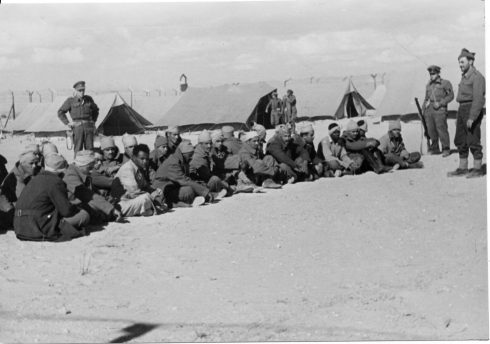
By Jonathan Cook | Dissident Voice | March 23, 2016
One might expect that only historians would care to revisit the 1948 war that created Israel. And yet the debate about what constitutes truth and myth from that period still provokes raw emotions.
Much rests on how those events are reconstructed, not least because the shock waves have yet to subside. Israelis fear, and Palestinians crave, a clearer picture of the past because it would powerfully illuminate the present. It might also influence the international community’s proposed solutions for the conflict.
That is why the unearthing of an Israeli soldier’s letter from 1948 detailing what was probably the war’s worst massacre – one long buried by Israel – is of more than historical significance.
It comes as Moshe Yaalon, the defence minister, this week accused Breaking the Silence, an Israeli organisation that exposes military abuses, of “treason” for collecting evidence from the army’s current whistle-blowers.
Western understandings of the 1948 war – what Palestinians term their Nakba, or catastrophe – are dominated by an enduring Israeli narrative. Israel’s army, it is said, abided by a strict moral code. Palestinians left not because of Israel’s actions but on the orders of Arab leaders.
In this rendering, the Palestinians’ mass dispossession was the fault of the Arab world – and a solution for the millions of today’s refugees lies with their host countries.
For decades Israel’s chief concession to the truth was an admission that a massacre took place just outside Jerusalem, at Deir Yassin.
Israel claimed the atrocity was the exception that proved the rule: a rogue militia killed more than 100 villagers, violating Israel’s ethical codes in the chaotic weeks before statehood was declared.
Palestinians have always known of dozens of other large massacres of civilians from 1948 carried out by the Israeli army. The barbarity, they say, was intended to terrorise the native population into flight. This account puts responsibility on Israel for taking the refugees back.
But history is written by the victor.
In recent decades a few brave Israeli scholars have chipped away at the official facade. In the late 1990s a Haifa University student collected testimonies from former soldiers confirming that over 200 Palestinians had been massacred at Tantura, south of Haifa. After the findings were made public, he was pilloried and stripped of his degree.
A decade ago, the historian Ilan Pappe wrote a groundbreaking book, The Ethnic Cleansing of Palestine, arguing that massacres like the one at Tantura were exploited to drive out Palestinians. He and others noted the suggestive titles of military operations such as “Broom” and soldiers’ orders to “clean” areas.
Pappe now lives in academic exile in the UK.
The biggest obstacle to shifting Israeli and western perceptions of 1948 has been the lack of a clear paper trail connecting the political leadership to the massacres. Israel locked away bundles of documentation precisely not to jeopardise the official narrative.
But things are changing slowly.
Last year a key deception was punctured: that Israel urged many of the war’s 750,000 Palestinian refugees to return. In a letter to Haifa’s leaders shortly after the city’s Palestinians were expelled, David Ben Gurion, Israel’s first prime minister, demanded that any return be barred.
Now another letter, located by Israeli historian Yair Auron and published last week for the first time in English by the Haaretz newspaper, trashes the idea of an ethical Israel army.
Written by Shabtai Kaplan, a soldier and journalist, the letter confirms long-held suspicions of a massacre – one that dwarfs Deir Yassin – at Dawaymeh, near Hebron. Soldiers executed hundreds of men, women and children who offered no resistance.
The massacre, near the end of the war, was carried out by elite troops under the command of Yitzhak Sadeh. He developed the Israeli army’s famous doctrine of “purity of arms”.
Kaplan argues that the Dawaymeh massacre was part of “a system of expulsion and destruction”, with a clear goal: “The fewer Arabs who remain, the better.”
Kaplan’s letter was consigned to the vaults, as were so many other documents from 1948 that officials considered too damaging.
Nearly seven decades later, in an age of 24-hour news and social media, Israel is still desperately trying to conceal its darkest episodes by bullying the army’s current whistle-blowers.
Last week Benjamin Netanyahu’s government launched an investigation into Breaking the Silence. On Sunday Netanyahu called the collection of soldiers’ testimonies “intolerable”, indicating that he may try to ban the group.
It is hard not to see parallels between the cover-ups of 1948 and those of today. Breaking the Silence’s disclosures, especially those relating to Israel’s series of attacks on Gaza, each of which has left hundreds of civilians dead, similarly give the lie to the army’s continuing claims of ethical behaviour.
In his 1948 letter, Kaplan observed of the failure by the political leadership to hold anyone to account for the massacres: “Inaction is in itself encouragement.”
Israel’s politicians hoped then that the Palestinians could be quickly terrorised from their lands. Decades later, the atrocities continue – and to the same end. But Israel must face facts: the days when such systematic brutality could be kept under wraps are now over.
Jonathan Cook, based in Nazareth, Israel is a winner of the Martha Gellhorn Special Prize for Journalism. His latest books are Israel and the Clash of Civilisations: Iraq, Iran and the Plan to Remake the Middle East (Pluto Press) and Disappearing Palestine: Israel’s Experiments in Human Despair (Zed Books).
Featured Video
10K More U.S. Troops Deploy as Trump Weighs New Iran Strikes
or go to
Aletho News Archives – Video-Images
From the Archives
Genetic baloney in thick slices
MAYBE COULD BE INC.
By Jon Rappoport | No More Fake News | July 8, 2021
Gene research companies tend to come and go. They start out banging and popping like fireworks in the sky, and then they fade out—selling themselves to larger outfits who’ve hired better liars…
Once upon a time, it sounded easy. Start with a disease, find the gene responsible for the disease, and correct the problem.
Then, researchers wondered, was disease the result of one gene or a group of genes acting together?
Either way, the proof would be in devising cures for diseases using gene therapy. “Not yet, but soon…”
And regardless, the major need was: money. Lots and lots of money.
This need required good PR people. “We have to pump up the idea that we’re on the edge of tremendous breakthroughs. We’re always on that edge…”
This hype also needed to obscure the fact that there wasn’t (and isn’t) ANY gene cure for ANY disease. … continue
Blog Roll
 Aletho News
- US military withdrawal from Iraq and the collapse of US-Israeli hegemonic project in West Asia
- What does Europe want – a war with Russia?
- She Followed the Actual Data on COVID Vaccines and Masks — Her Career Took a Huge Hit
- Florida AG Sues Pfizer, Bourla Over Deceptive Marketing of COVID Vaccines
- Von der Leyen gifts her spin doctor a job for life
- 10K More U.S. Troops Deploy as Trump Weighs New Iran Strikes /Suliaman Ahmed
- Iranian crew declared Dena training vessel ‘unarmed’ to US warship before deadly torpedo strike: Report
- Iran’s NPT debate moves beyond parliament
- Houthis condemn Saudi claims of attack on Medina
- Fatuous False Flags
- If Americans Knew
- Israel is squeezing the life out of Palestinians – Daily Update
- The Israeli Right Portrays Islam as Murderous. It Serves a Political Purpose
- Jordan Has Had Enough: King Abdullah’s Scathing Warning to Israel
- Israeli Colonizers (i.e. Settlers) Kill Palestinian Man Near Salfit
- New Google Maps images reveal massive scale of devastation in Gaza
- Jewish supremacy, anti-Palestinian bigotry on display in Israel – Daily Update
- Israeli Soldiers Abduct At Least 22 Across Occupied West Bank
- Eight Palestinians Killed in Israeli Attacks on Gaza
- Israeli former leaders and security chiefs threaten legal action over ‘Jewish terrorism’
- Israel map in LA Times ad includes all land from the river to the sea
- No Tricks Zone
- Green Energy Debacle: German Expert Professor Fritz Vahrenholt Warns Of Severe Economic And Social Consequences
- Two More Paleo Reconstructions Affirm Meters-Higher Sea Levels Across Ireland, Brazil 7000-6000 Years Ago
- New Study: Earth And Venus Surface Warmth Largely Explained By Convection And Lapse Rate, Not CO2 Or Radiation
- 2025 Nature Paper Claiming Worsening Global Drought Gets RETRACTED …Heavily Flawed
- New Study: ‘Global Drought Shows No Detectable Recent Acceleration Under Climate Warming’
- Economic Masterminds: German Socialists Suggest Taxing Productivity Gains Stemming From Using AI
- The South China Sea Has Not Been Cooperating With The Climate Change Narrative
- Energy Crisis: Germany Enters Heating Season With Historically Low Gas Reserve Fill Levels
- New Study: The Antarctic Ice Sheet Gained Mass From 2020-2024 Due To Staggering Snow And Ice Accumulation
- Study: Ocean Heating Rates From Thousands Of Years Ago ‘Dwarf’ Modern Ocean Heating Rates

