A History of Silencing Israeli Army Whistleblowers From 1948 Until Today
By Jonathan Cook | Dissident Voice | March 23, 2016
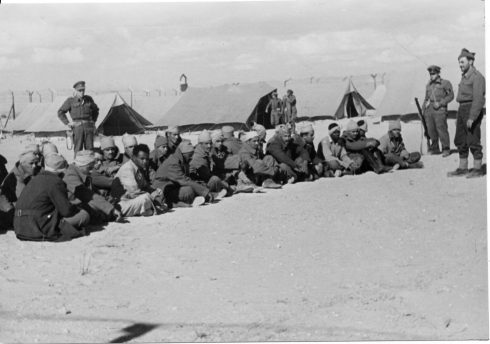
One might expect that only historians would care to revisit the 1948 war that created Israel. And yet the debate about what constitutes truth and myth from that period still provokes raw emotions.
Much rests on how those events are reconstructed, not least because the shock waves have yet to subside. Israelis fear, and Palestinians crave, a clearer picture of the past because it would powerfully illuminate the present. It might also influence the international community’s proposed solutions for the conflict.
That is why the unearthing of an Israeli soldier’s letter from 1948 detailing what was probably the war’s worst massacre – one long buried by Israel – is of more than historical significance.
It comes as Moshe Yaalon, the defence minister, this week accused Breaking the Silence, an Israeli organisation that exposes military abuses, of “treason” for collecting evidence from the army’s current whistle-blowers.
Western understandings of the 1948 war – what Palestinians term their Nakba, or catastrophe – are dominated by an enduring Israeli narrative. Israel’s army, it is said, abided by a strict moral code. Palestinians left not because of Israel’s actions but on the orders of Arab leaders.
In this rendering, the Palestinians’ mass dispossession was the fault of the Arab world – and a solution for the millions of today’s refugees lies with their host countries.
For decades Israel’s chief concession to the truth was an admission that a massacre took place just outside Jerusalem, at Deir Yassin.
Israel claimed the atrocity was the exception that proved the rule: a rogue militia killed more than 100 villagers, violating Israel’s ethical codes in the chaotic weeks before statehood was declared.
Palestinians have always known of dozens of other large massacres of civilians from 1948 carried out by the Israeli army. The barbarity, they say, was intended to terrorise the native population into flight. This account puts responsibility on Israel for taking the refugees back.
But history is written by the victor.
In recent decades a few brave Israeli scholars have chipped away at the official facade. In the late 1990s a Haifa University student collected testimonies from former soldiers confirming that over 200 Palestinians had been massacred at Tantura, south of Haifa. After the findings were made public, he was pilloried and stripped of his degree.
A decade ago, the historian Ilan Pappe wrote a groundbreaking book, The Ethnic Cleansing of Palestine, arguing that massacres like the one at Tantura were exploited to drive out Palestinians. He and others noted the suggestive titles of military operations such as “Broom” and soldiers’ orders to “clean” areas.
Pappe now lives in academic exile in the UK.
The biggest obstacle to shifting Israeli and western perceptions of 1948 has been the lack of a clear paper trail connecting the political leadership to the massacres. Israel locked away bundles of documentation precisely not to jeopardise the official narrative.
But things are changing slowly.
Last year a key deception was punctured: that Israel urged many of the war’s 750,000 Palestinian refugees to return. In a letter to Haifa’s leaders shortly after the city’s Palestinians were expelled, David Ben Gurion, Israel’s first prime minister, demanded that any return be barred.
Now another letter, located by Israeli historian Yair Auron and published last week for the first time in English by the Haaretz newspaper, trashes the idea of an ethical Israel army.
Written by Shabtai Kaplan, a soldier and journalist, the letter confirms long-held suspicions of a massacre – one that dwarfs Deir Yassin – at Dawaymeh, near Hebron. Soldiers executed hundreds of men, women and children who offered no resistance.
The massacre, near the end of the war, was carried out by elite troops under the command of Yitzhak Sadeh. He developed the Israeli army’s famous doctrine of “purity of arms”.
Kaplan argues that the Dawaymeh massacre was part of “a system of expulsion and destruction”, with a clear goal: “The fewer Arabs who remain, the better.”
Kaplan’s letter was consigned to the vaults, as were so many other documents from 1948 that officials considered too damaging.
Nearly seven decades later, in an age of 24-hour news and social media, Israel is still desperately trying to conceal its darkest episodes by bullying the army’s current whistle-blowers.
Last week Benjamin Netanyahu’s government launched an investigation into Breaking the Silence. On Sunday Netanyahu called the collection of soldiers’ testimonies “intolerable”, indicating that he may try to ban the group.
It is hard not to see parallels between the cover-ups of 1948 and those of today. Breaking the Silence’s disclosures, especially those relating to Israel’s series of attacks on Gaza, each of which has left hundreds of civilians dead, similarly give the lie to the army’s continuing claims of ethical behaviour.
In his 1948 letter, Kaplan observed of the failure by the political leadership to hold anyone to account for the massacres: “Inaction is in itself encouragement.”
Israel’s politicians hoped then that the Palestinians could be quickly terrorised from their lands. Decades later, the atrocities continue – and to the same end. But Israel must face facts: the days when such systematic brutality could be kept under wraps are now over.
Jonathan Cook, based in Nazareth, Israel is a winner of the Martha Gellhorn Special Prize for Journalism. His latest books are Israel and the Clash of Civilisations: Iraq, Iran and the Plan to Remake the Middle East (Pluto Press) and Disappearing Palestine: Israel’s Experiments in Human Despair (Zed Books).
The Colossal Costs of Building UK’s Monster Surveillance Network
Sputnik – 22.03.2016
The UK will have to build a mammoth network of Internet surveillance centers if the government passes its Investigatory Powers Bill – dubbed the the Snoopers’ Charter – into law.
The proposal, which the Home Office wants to rush through the House of Commons just after Easter, will cost the country billions of pounds. The centers will be required to keep large databases of all the connections made by UK Internet users for one year — and to share them automatically with the UK’s government and intelligence agencies.
The government is bracing itself for the vote as the news arrives that the only other country in the world to have ever tried a similar approach — Denmark — has just decided to abandon the plan, for the second time in ten years.
The first Danish “session logging” system was put into place in 2007, but was abandoned in 2013 after the country’s police and security services found it to be practically useless — besides being very expensive for Internet providers to install and operate.
Another attempt to build an improved system, carried out by the Danish Ministry of Justice at the start of March 2016 also appears to have foundered.
Before the final decision was taken, the Danish government asked accounting firm Ernst & Young to ascertain how much the new surveillance network would cost.
The experts found that total expenses would be around one billion Danish Krone (US$150 million). The Danish government decided that the costs were too high for the country and its tech sector.
In the UK, the costs are likely to be much-much higher. If in Denmark — a country of 5.6 million people — the government estimated that each citizen would produce about 62,000 records every year, in Britain, whose population is about ten times the size of Denmark’s, the final annual database would have to include about four trillion a year.
Other estimates suggest that the sheer amount of records could even hit tens of trillions every year. That is because each of those records, as per the law, would have to contain: a customer account reference or device identifier; the date and time of the event; the duration; the source and destination IP and port number of each session; the domain name or linked URL; the volume of data; and the name of Internet service you connected to.
The UK will have to find a way to store an enormous amount of information every day — even if each record’s weight was brought down to 100 bytes, on a yearly level, we are talking exabytes (thousands of petabytes).
The only surefire way to deal with this information is by building new massive data centers, which will need at least US$140 million in equipment to handle each exabyte. Add the building, as well as cooling and electricity management and you have only started understanding the eventual costs of the UK’s new monster surveillance plans.
Israeli forces raid, confiscate items from Jenin-area university
Ma’an – March 22, 2016
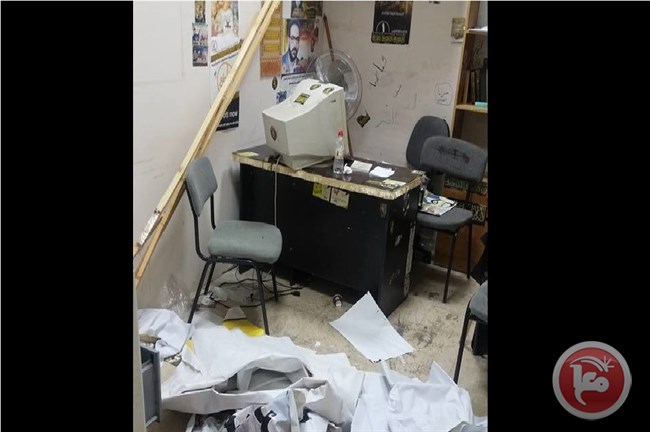
JENIN – Israeli forces overnight Monday raided the campus of the Arab American University in the occupied West Bank city of Jenin and confiscated items — including computers and flags — from student union offices.
The university’s public relations department told Ma’an that 11 Israeli military vehicles stormed the campus grounds at 1 a.m. and broke into the office of the Dean of Students, as well as a number of offices belonging to the student union.
The Israeli soldiers broke down doors and destroyed property in the offices before seizing flags of student union blocs as well as two computers and paper documents, the department said.
The university’s administration released a statement denouncing “Israel’s aggressive policy which violates the sanctity of university campus.”
Palestinian Prime Minister Rami Hamdallah immediately condemned the raid.
“This is not the first time that the Arab American University and other Palestinian educational institutions have been subjected to arbitrary Israeli raids,” the PM said, citing raids on Birzeit University and the Kadoorie Institute in recent months.
“I reiterate our call for international protection,” Hamdallah said. “Israel should not be allowed to continue to act above the law. The international community witnessed yet another violation of the sanctity of Palestinian educational institutions, and it should not remain silent.”
The Israeli army said in a statement that Israeli forces had “uncovered and confiscated inciting propaganda materials linked to multiple terror organizations including Hamas” inside the university, adding that the operation was “based on intelligence information.”
“In the recent wave of terror we’ve witnessed how incitement fuels acts of violence and terrorism,” the statement said. “Efforts as this prevent future attacks.”
In addition to the statement, the army released what it said were “visuals from the overnight activity” — photographs of an Islamic Jihad flag and a Hamas one, as well as a poster depicting three recently slain Palestinian attackers, referred to as “martyrs.”
Political flags and posters are commonly found items across the occupied West Bank, with posters of martyrs appearing throughout every West Bank town and village.
Palestinian universities and their students in the occupied West Bank are frequently targeted by Israeli military forces, and campuses have come under increased military presence since an increase in violence in October.
Earlier this month Israeli forces raided the Khadoorie Institute — also known as Palestine Technical University — twice in an 18-hour period.
The Tulkarem-area campus has seen heavy military presence in the past. Student-organized marches in October to protest Israeli violations and raids onto the campus eventually resulted in Israeli forces positioning themselves at a temporary base on university property.
Dozens of university students have been injured by Israeli military forces since.
Birzeit University near Ramallah meanwhile has reported dozens of student detentions, while Abu Dis’ al-Quds Open University has often found itself a focal point of violent clashes between Palestinian students and Israeli soldiers.
US gears up to fight Russian ‘disinformation’ with… disinformation
RT | March 17, 2016
Two US senators are proposing legislation to counter, what they consider to be “disinformation” spread by certain foreign media. What better way to kick-start their campaign than by basing their bill on spurious nonsense?
Republican Senator Rob Portman and his Democratic colleague Chris Murphy are deeply concerned about foreign “propaganda.” They demand that Uncle Sam throws even more money at the Broadcasting Board of Governors (BBG), which is already given around $768 million annually.
Not content with the EU’s Stratcom East and NATO’s Riga-based communications centre, Portman and Murphy want a new center for Information Analysis and Response to analyze “foreign government information-warfare efforts.”
What better place to launch the crusade than at NATO’s Atlantic Council appendage? An organization funded by such disinterested and neutral parties as the US State Department, Lockheed Martin, the Kingdom of Bahrain and the monarchy of the United Arab Emirates?
Portman certainly couldn’t think of a better venue, so he showed up on Wednesday to express his satisfaction that the “US version of events is better.” This attitude is not a shock. Most of the US elite, and their media champions believe America has a monopoly on truth. Next, Portman warned that Russia, China and other countries are trying to “manipulate and control information to achieve their national goals, often at the expense of the interests and values of America’s allies.”
The Senator sounded particularly worried about RT. And it is no wonder. Portman claimed RT spends $400 million a year just for the maintenance of our Washington bureau. Just imagine that? $400 million big ones.
Unfortunately, given that our entire budget for 2016 is 17 billion rubles, or around $248 million in today’s dollars, we have no idea where on earth Portman got this numbers – or if he even believes them. That $248 million pays for the global broadcasting and newsgathering operations of round-the-clock TV channels in English, Arabic and Spanish, documentaries, online portals in six languages, the RT UK channel, and yes, RT America – our stateside outpost. To run all of this RT receives one third of the funding the US government allocates for the BBG. Despite modest means, RT can boast 70 million weekly TV viewers, nearly 50 million monthly unique visitors to our digital platforms and a status as the number one international TV news network on YouTube, with more than 3 billion views.
Amazing, the BBG’S Voice of America (VOA) reported Portman’s $400 million figure without question, and with no apparent fact-checking. The Senator’s – and the supposedly venerated news organization’s he seeks to aid – fight against “disinformation” kicks off with a blatant lie. You really can’t make this stuff up.
VOA wasn’t alone, Germany’s own state-broadcaster, Deutsche Welle (DW), also carried Portman’s erroneous sums. DW, of course, is never regarded as propaganda in Washington because the administration in Berlin is not a threat to American interests.
This is despite the fact that it receives government funding – $332 million per year – to communicate its country’s point of view to the world. When RT contacted DW to correct this blatant falsehood, the outlet’s editors treated the issue as a “difference of opinion” before eventually adding RT’s budget figure as our own claim, and not the publicly available information that it is, and that has been reported by hundreds of, credible, news outlets.
The BBG, and its supporters, such as Senator Portman, are currently fighting hard in Washington to secure extra resources for their efforts. An intensive campaign has been fought over the past six months to support these objectives. Much of this lobbying has been based on exaggeration and outright lies. Portman’s $400 million is one of the most absurd yet. The fact that VOA and DW unquestioningly repeated the deceit speaks volumes.
UK Police pursue pensioner’s peace protest
By Peter Lazenby – Morning Star – March 17, 2016
A Weekly vigil outside a military base by a 74-year-old peace campaigner has been put under threat by a police dispersal order.
Lindis Percy, who stages a one-hour vigil at US communications base Menwith Hill in Yorkshire every Tuesday, told the Star yesterday that police turned up this week ordering activists to leave.
A fellow campaigner decided to leave but Ms Percy was arrested after refusing to budge. She has been ordered to appear in court on April 7.
The base is staffed by 1,450 US civilian and military personnel and is a key link in the US’s worldwide electronic intelligence-gathering operations via satellites.
Ms Percy, who is a retired nurse, midwife and health visitor, has been a leading peace campaigner for more than 30 years. She has been arrested hundreds of times.
She says North Yorkshire Police and the Ministry of Defence Police at the base have begun applying a dispersal order to stop her weekly vigils at the base.
“I very much want this in court as it is serious, if they get away with this. It stinks.”
Dispersal orders are part of the Anti-social Behaviour, Crime and Policing Bill 2014.
According to government guidelines, dispersal orders give police powers “to disperse individuals or groups causing or likely to cause anti-social behaviour in public places.”
The guidelines also state that “police will be able to deal quickly with emerging trouble spots” and that there must be reason to suspect that “the person has contributed or is likely to contribute to members of the public in the locality being harassed, alarmed or distressed, or the occurrence of crime or disorder.”
Snoopers’ charter ‘unfit for purpose,’ 200 legal experts say
RT | March 15, 2016
Home Secretary Theresa May’s Investigatory Powers Bill, dubbed the snoopers’ charter, breaches international surveillance standards and is “unfit for purpose,” more than 200 senior lawyers have warned.
In a letter to the Guardian, the lawyers, including numerous Queen’s Council representatives and academics, said the bill will destroy privacy.
MPs are due to vote on the bill for the first time on Tuesday afternoon, and it is expected they will pass the motion. The bill itself sets out a series of legal frameworks for the government’s interception of data by GCHQ and establishes the breadth of government surveillance operations.
Chair of the Bar Human Rights Committee Kirsty Brimelow QC has signed the letter, as well as academics from 40 British law schools.
“A law that gives public authorities generalized access to electronic communications contents compromises the essence of the fundamental right to privacy and may be illegal,” the letter reads.
“The investigatory powers bill does this with its ‘bulk interception warrants’ and ‘bulk equipment interference warrants.’”
A well as bulk interception, the letter warns against “targeted interception warrants” which could be taken out on groups, organizations, or premises. The letter also warns that there need only be “reasonable suspicion” to intercept data, not demonstrable proof of threat.
“These are international standards found in the recent opinion of the UN special rapporteur for the right to privacy, and in judgments of the EU court of justice and the European court of human rights,” it continues.
“At present, the bill fails to meet these standards – the law is unfit for purpose.”
The aim of the bill is to establish a legal framework for interception, but critics of the bill say any bulk interception is a breach of privacy. The bill will also make it obligatory for internet companies to keep track of sites accessed by users for one year.
Other critics say the new bill will also criminalize IT staff who fail to destroy security services on its customers’ software on demand, or fail to hack into its customers’ systems upon a Home Office request.
GCHQ says it only targets an individual’s data in the context of a threat to national security, and would only pursue terrorist or criminal activity. It also argues that bulk interception is a necessary step to monitor criminal activity and the majority of intercepted material is never read.
However, the United Nations special rapporteur on privacy, Joseph Cannataci, also warned that the IP bill would legitimize mass surveillance.
Turkey’s Erdogan Looks to Expand Terrorist Definition to Include Civilians
Sputnik – March 14, 2016
Turkish President Recep Tayyip Erdoğan said on Monday that it is necessary to broaden the definition of terrorism to include supporters of terrorism — even people who are not directly involved in any kind of terror activity.
“It’s not only the person who pulls the trigger, but those who made that possible who should also be defined as terrorists, regardless of their title,” said Erdogan, following a bombing in Ankara which killed 37 people, the Daily Star reported. He added that this could be a journalist, an MP or a civil society actor.
Earlier President Erdogan said that Turkey’s “struggle against terrorism will for certain end in success and terrorism will be brought to its knees.”
The bombing was the fifth attack in Turkey in recent several months. The attacks took lives of total of 200 people.
Severe penalties for anyone backing Hezbollah: Saudi Arabia
Press TV – March 13, 2016
Saudi Arabia says those linked to the Lebanese resistance movement Hezbollah will be punished in accordance to anti-terrorism laws.
According to an Interior Ministry statement published by the state-run SPA news agency on Sunday, Saudi nationals and foreigners living in the kingdom will face “severe penalties” if they sympathize with, financially support, or harbor any of the group’s members.
“Any citizen or resident who supports, shows membership in the so-called Hezbollah, sympathizes with it or promotes it, makes donations to it or communicates with it or harbors anyone belonging to it will be subject to the stiff punishments provided by the rules and orders, including the terrorism crimes and its financing,” read the statement, adding that expatriates would also be deported.
Riyadh’s move appears to be part of the monarchy’s anti-Shia campaign, including a severe crackdown on nationals residing in Eastern Province. Last year, the kingdom executed prominent Shia cleric Sheikh Nimr al-Nimr, which drew widespread condemnation from rights groups and various states.
The Sunday announcement also follows recent decisions by pro-Saudi Arab factions, the Arab League and the [Persian] Gulf Cooperation Council, to brand Hezbollah as a “terrorist” group.
On Saturday, Hezbollah described such measures as a “declaration of aggression” by Riyadh, which is “putting pressure on others at the Arab foreign ministers meeting to do the same,” said Sheikh Naim Qassem, the deputy secretary general of the resistance movement.
France: Another Palestinian TV Station Shut Down
IMEMC News & Agencies – March 12, 2016
 Israeli Prime Minister Benjamin Netanyahu expressed his gratitude, on Saturday, to French President Francois Hollande, after the French government shut down a Hamas-affiliated television station that, according to the Israeli media, “aired content which constituted anti-Israel and anti-Jewish incitement.”
Netanyahu had earlier urged Hollande to end the transmission of Al Aksa television, the Hamas-run channel that was being broadcast on the French satellite service EUTELSAT — also associated with Palestine Today TV, which was shut down in the occupied West Bank, on Friday.
According to the PNN, Israel’s Shin Bet internal spy agency said in a statement, on Friday, that the Ramallah offices were raided overnight, in a joint operation with the military over allegations that the channel “broadcasts on behalf of the Islamic Jihad,” a Gaza-based Palestinian resistance movement.
“The channel served the Islamic Jihad as a central means to incite the West Bank population, calling for terror attacks against Israel and its citizens. Incitement was broadcast on the television station as well as the Internet,” Shin Bet added.
Palestinian officials have denounced Israel’s closure of the offices. Yousef al-Mahmoud, Palestinian Authority spokesman, described the Israeli raid on Palestine Today TV station in Ramallah as “part of the aggressive occupation policy towards Palestinian media.
Dr. Hanan Ashrawi, member of Palestine Liberation Organization (PLO) executive committee, also denounced the Israeli raid, saying it contravenes free speech rules.
The Palestinian Journalists’ Syndicate made an official statement, as well.
“Incursions into areas under the Palestinian Authority’s control and attacking its sovereignty and media institution [are] a stark violation of basic human rights and international and humanitarian laws that have safeguarded freedom of speech,” she said.
Last November, Israeli soldiers broke into the headquarters of Al-Hurriyya Media Network, destroyed the offices, confiscated the tools and threatened to demolish the entire building if the network works again, accusing it of “inciting” Palestinians against the Israeli occupation.
The month previous, in October, Israeli soldiers raided the offices of the International Middle East Media Center and the Palestinian Center for Rapprochement.
Since the start of October 2015, almost 200 Palestinians have been killed, in addition to 30 Israelis, settlers and soldiers.
The current tension is ongoing since October, due to repetitive Israeli settler attacks on Al-Aqsa mosque, the third holiest place in Islam, and Israeli restrictions over Palestinian entrance, in addition to the Douma arson attack which killed a baby and his parents on July 31.
Israeli forces have been criticized internationally, over recent months, for its ‘preemptive shootings’ of Palestinians alleged to be holding knives.
In addition several of the incidents in which the military has claimed that they were ‘attacked’ have proven to be false.
Muslim student reported to UK terror police for pro Palestine activism
Rahmaan Mohammadi, a 17 year old student from Luton, explains how he was reported to the counter terrorism police for his pro Palestine activism. Mohammadi was speaking at a Stop the War Coalition event in London on March 10.
Israeli Army Shuts Down “Palestine Today TV” In Ramallah, Kidnaps Three Journalists
IMEMC – March 11, 2016
Dozens of Israeli soldiers invaded the main headquarters of Palestine Today TV, in the al-Biereh city, in the Ramallah and al-Biereh District in the occupied West Bank, and shut it down on Friday at dawn. The army also kidnapped its director, a cameraman and a Technician.
Palestine Today said in a statement that the soldiers stormed and searched the home of its director, Farouq ‘Oleyyat, in Birzeit City, and kidnapped him.
The agency stated that the soldiers also confiscated equipment from ‘Oleyyat’s home, after violently searching it.
It added that dozens of soldiers also invaded Palestine Today’s headquarters, in the Tahouna area, in al-Biereh, after completely surrounding the area, and confiscated broadcast equipment.
The soldiers also invaded Transmedia Productions and News Services Company, in al-Biereh, and kidnapped a cameraman man, identified as Mohammad ‘Amro, and Broadcast Technician Shabeeb Shbeib.
Transmedia is a Media Company that provides satellite TV service to various stations, including Palestine Today.
Two nights ago, the Israeli Cabinet, headed by Prime Minister Benjamin Netanyahu, held a meeting and came up with a list of punitive measures against the Palestinian people and various media agencies.
The cabinet decided to shut down many TV stations and media agencies, for what it called “broadcasting incitement materials,” referring to their covering of the Israeli assaults and violations against the Palestinian people, in occupied Palestine.
In related news, Israeli soldiers detained eight Palestinians near the Halamish illegal colony, built on Palestinian lands belonging to Nabi Saleh villagers, northwest of Ramallah on Thursday at night.
Media sources said the soldiers interrogated the eight Palestinians, from Beit Rima and Deir Ghassana towns, and detained them for several hours. The soldiers said “they were searching for knives,” no arrests were made.
Featured Video
10K More U.S. Troops Deploy as Trump Weighs New Iran Strikes
or go to
Aletho News Archives – Video-Images
From the Archives
Genetic baloney in thick slices
MAYBE COULD BE INC.
By Jon Rappoport | No More Fake News | July 8, 2021
Gene research companies tend to come and go. They start out banging and popping like fireworks in the sky, and then they fade out—selling themselves to larger outfits who’ve hired better liars…
Once upon a time, it sounded easy. Start with a disease, find the gene responsible for the disease, and correct the problem.
Then, researchers wondered, was disease the result of one gene or a group of genes acting together?
Either way, the proof would be in devising cures for diseases using gene therapy. “Not yet, but soon…”
And regardless, the major need was: money. Lots and lots of money.
This need required good PR people. “We have to pump up the idea that we’re on the edge of tremendous breakthroughs. We’re always on that edge…”
This hype also needed to obscure the fact that there wasn’t (and isn’t) ANY gene cure for ANY disease. … continue
Blog Roll
 Aletho News
- US military withdrawal from Iraq and the collapse of US-Israeli hegemonic project in West Asia
- What does Europe want – a war with Russia?
- She Followed the Actual Data on COVID Vaccines and Masks — Her Career Took a Huge Hit
- Florida AG Sues Pfizer, Bourla Over Deceptive Marketing of COVID Vaccines
- Von der Leyen gifts her spin doctor a job for life
- 10K More U.S. Troops Deploy as Trump Weighs New Iran Strikes /Suliaman Ahmed
- Iranian crew declared Dena training vessel ‘unarmed’ to US warship before deadly torpedo strike: Report
- Iran’s NPT debate moves beyond parliament
- Houthis condemn Saudi claims of attack on Medina
- Fatuous False Flags
- If Americans Knew
- Israel is squeezing the life out of Palestinians – Daily Update
- The Israeli Right Portrays Islam as Murderous. It Serves a Political Purpose
- Jordan Has Had Enough: King Abdullah’s Scathing Warning to Israel
- Israeli Colonizers (i.e. Settlers) Kill Palestinian Man Near Salfit
- New Google Maps images reveal massive scale of devastation in Gaza
- Jewish supremacy, anti-Palestinian bigotry on display in Israel – Daily Update
- Israeli Soldiers Abduct At Least 22 Across Occupied West Bank
- Eight Palestinians Killed in Israeli Attacks on Gaza
- Israeli former leaders and security chiefs threaten legal action over ‘Jewish terrorism’
- Israel map in LA Times ad includes all land from the river to the sea
- No Tricks Zone
- Green Energy Debacle: German Expert Professor Fritz Vahrenholt Warns Of Severe Economic And Social Consequences
- Two More Paleo Reconstructions Affirm Meters-Higher Sea Levels Across Ireland, Brazil 7000-6000 Years Ago
- New Study: Earth And Venus Surface Warmth Largely Explained By Convection And Lapse Rate, Not CO2 Or Radiation
- 2025 Nature Paper Claiming Worsening Global Drought Gets RETRACTED …Heavily Flawed
- New Study: ‘Global Drought Shows No Detectable Recent Acceleration Under Climate Warming’
- Economic Masterminds: German Socialists Suggest Taxing Productivity Gains Stemming From Using AI
- The South China Sea Has Not Been Cooperating With The Climate Change Narrative
- Energy Crisis: Germany Enters Heating Season With Historically Low Gas Reserve Fill Levels
- New Study: The Antarctic Ice Sheet Gained Mass From 2020-2024 Due To Staggering Snow And Ice Accumulation
- Study: Ocean Heating Rates From Thousands Of Years Ago ‘Dwarf’ Modern Ocean Heating Rates

