Former CBS reporter accuses government agency of bugging her computer
RT | October 27, 2014
A journalist formerly with CBS News claims in her new memoir that a United States “government-related entity” hacked into her computer to conduct surveillance and set her up for possible criminal charges.
Sharyl Attkisson, a former anchor for the CBS Evening News and a multi-time Emmy Award winner, says in her forthcoming book that government spies tried not only to keep track of her digital habits, but to potentially put her in jail.
According to an article published in the New York Post on Monday this week, Attkisson says in her book that she was “shocked” and “flabbergasted” over what was supposedly revealed through a forensics analysis of her laptop conducted in 2013.
Previously, media sources alleged that Attkisson’s March 2014 resignation from CBS News was a result of disagreements she had with the network’s supposed liberal bias. After she announced she was leaving the network earlier this year, Politico writer Dylan Byers reported that unnamed sources said Attkisson “had grown frustrated with what she saw as the network’s liberal bias, an outsize influence by the network’s corporate partners and a lack of dedication to investigative reporting.”
“Feeling increasingly stymied and marginalized at the network, Attkisson began talking to CBS News President David Rhodes as early as last April about getting out of her contract,” Byers added.
Now Attkisson writes in her memoir, “Stonewalled,” that a source “connected to government three-letter agencies” took the reporter’s laptop to be inspected for malware last year and concluded after the fact that it had been compromised by “a sophisticated entity that used commercial, non-attributable spyware that’s proprietary to a government agency: either the CIA, FBI, the Defense Intelligence Agency or the National Security Agency.”
“The intruders discovered my Skype account handle, stole the password, activated the audio and made heavy use of it, presumably as a listening tool,” Attkisson claims she was told.
According to the Post journalists who have read Attkisson’s new book, the former CBS reporter was surprised to see that not only had her computer been hacked to contain keylogging software and other spyware, but was compromised in such a way that secret, classified documents were “buried deep” within her operating system, “In a place that, unless you’re a some kind of computer whiz specialist, you wouldn’t even know exists.”
“They probably planted them to be able to accuse you of having classified documents if they ever needed to do that at some point,” Attkisson said she heard from the unnamed government source who set-up the examination of her laptop.
“This is outrageous. Worse than anything Nixon ever did. I wouldn’t have believed something like this could happen in the United States of America,” Attkisson quoted the source as saying of the analysis.
Currently, Pulitzer Prize-winning investigative reporter James Risen is sought by federal authorities to testify as to the source of classified documents provided to him that later served as fodder for a book he authored about the Central Intelligence Agency’s efforts to disrupt Iran’s nuclear program. Risen, who refuses to disclose the source of the classified files, faces potential jail time if he continues to keep quiet.
Both CBS News and the White House declined to comment to the Post ahead of Monday’s publication,
Sneak and Peek: Government Authority Intended for Terrorism is Used for Other Purposes
By Mark Jaycox | EFF | October 26, 2014
The Patriot Act continues to wreak its havoc on civil liberties. Section 213 was included in the Patriot Act over the protests of privacy advocates and granted law enforcement the power to conduct a search while delaying notice to the suspect of the search. Known as a “sneak and peek” warrant, law enforcement was adamant Section 213 was needed to protect against terrorism. But the latest government report detailing the numbers of “sneak and peek” warrants reveals that out of a total of over 11,000 sneak and peek requests, only 51 were used for terrorism. Yet again, terrorism concerns appear to be trampling our civil liberties.
Throughout the Patriot Act debate the Department of Justice urged Congress to pass Section 213 because it needed the sneak and peak power to help investigate and prosecute terrorism crimes “without tipping off terrorists.” In 2005, FBI Director Robert Mueller continued the same exact talking point, emphasizing sneak and peek warrants were “an invaluable tool in the war on terror and our efforts to combat serious criminal conduct.”
A closer look at the number of sneak and peek warrants issued (a reporting requirement imposed by Congress) shows this is simply not the case. The last publicly available report about sneak and peek warrants was released in 2010; however, the Administrative Office of the US Courts has finally released reports from 2011, 2012, and 2013.
What do the reports reveal? Two things: 1) there has been an enormous increase in the use of sneak and peek warrants and 2) they are rarely used for terrorism cases.
First, the numbers: Law enforcement made 47 sneak-and-peek searches nationwide from September 2001 to April 2003. The 2010 report reveals 3,970 total requests were processed. Within three years that number jumped to 11,129. That’s an increase of over 7,000 requests. Exactly what privacy advocates argued in 2001 is happening: sneak and peak warrants are not just being used in exceptional circumstances—which was their original intent—but as an everyday investigative tool.
Second, the uses: Out of the 3,970 total requests from October 1, 2009 to September 30, 2010, 3,034 were for narcotics cases and only 37 for terrorism cases (about .9%). Since then, the numbers get worse. The 2011 report reveals a total of 6,775 requests. 5,093 were used for drugs, while only 31 (or .5%) were used for terrorism cases. The 2012 report follows a similar pattern: Only .6%, or 58 requests, dealt with terrorism cases. The 2013 report confirms the incredibly low numbers. Out of 11,129 reports only 51, or .5%, of requests were used for terrorism. The majority of requests were overwhelmingly for narcotics cases, which tapped out at 9,401 requests.
Section 213 may be less known than Section 215 of the Patriot Act (the clause the government is currently using to collect your phone records), but it’s just as important. The Supreme Court ruled in Wilson v. Arkansas and Richards v. Wisconsin that the Fourth Amendment requires police to generally “knock and announce” their entry into property as a means of notifying a homeowner of a search. The idea was to give the owner an opportunity to assert their Fourth Amendment rights. The court also explained that the rule could give way in situations where evidence was under threat of destruction or there were concerns for officer safety. Section 213 codified this practice into statute, taking delayed notice from a relatively rare occurrence into standard operating law enforcement procedure.
The numbers vindicate privacy advocates who urged Congress to shelve Section 213 during the Patriot Act debates. Proponents of Section 213 claimed sneak and peek warrants were needed to protect against terrorism. But just like we’ve seen elsewhere, these claims are false. The government will continue to argue for more surveillance authorities—like the need to update the Communications Assistance to Law Enforcement Act—under the guise of terrorism. But before we engage in any updates, the public must be convinced such updates are needed and won’t be used for non-terrorist purposes that chip away at our civil liberties.
Staged ‘terror’ in Ottawa pretext for police state
By Brandon Martinez | Non-Aligned Media |October 25, 2014
Two headlines in the Zionist-controlled National Post sum up the Orwellian nature of this week’s phony “wave of terror” in Canada.
One headline read: “Conservatives’ new anti-terror laws likely to mirror ‘immensely controversial’ U.K. legislation.”[1]
The other said: “Conservatives mulling legislation making it illegal to condone terrorist acts online.”[2]
According to the articles, Harper and his deranged neocon colleagues are looking to use the conspicuously timed shooting in Ottawa as an excuse to strengthen the State’s surveillance and police powers.
One article reported: “The Conservatives are understood to be considering new legislation that would make it an offence to condone terrorist acts online. … Sources suggest the government is likely to bring in new hate speech legislation that would make it illegal to claim terrorist acts are justified online. The Prime Minister told the House of Commons on Thursday that Canada’s law and policing powers need to be strengthened in the areas of surveillance, detention and arrest. He said work is already under way to provide law enforcement agencies with ‘additional tools’ and that work will now be expedited.”
The National Post revealed that Harper’s draconian proposed edicts were prepared in advance: “The Conservative MP said the new legislation was crafted before this week’s events and is not ‘trauma tainted.’” This is reminiscent of America’s freedom-obliterating “Patriot Act” which was written well in advance of 9/11, and railroaded through Congress a week after the synthetic disaster.
None of this is the least bit surprising and was totally predictable. My Non-Aligned Media colleague Joshua Blakeney and I had repeatedly warned readers over the past few weeks that the Canadian government was about to stage an event to justify joining America’s sham crusade against ISIS in Iraq and Syria and to silence dissidents at home.
Everything came to pass as predicted.
In an October 18 article entitled “Terror-scaremongering designed to erode freedoms, stamp out dissent” I wrote:
“As expected, the recent fabricated ISIS terror scare that swept the headlines of Canada’s Zionist-owned media is being used by the neocon regime in Ottawa to give Canada’s spy agency CSIS more sweeping powers to spy on citizens and protect the identities of informants.
“The Canadian government’s informants are more than likely responsible for spurring or otherwise concocting the very ‘terror’ plots CSIS claims to have foiled — just like its counterpart in the US has been caught doing time and time again. … Problem, reaction, solution — the Machiavellian methodology never fails.
“… Like Canada, Australia and Britain are endeavoring to empower their spook agencies as well as stiffen their fraudulent “anti-terror” laws in the face of phony ISIS ‘terror plots’ that bear all the hallmarks of intelligence psyops. That is what the ISIS sham threat is all about — creating a bogus pretext so our governments can strip us of our liberties and stamp out dissent.”[3]
The Canadian government and media had been hyping the ISIS ‘terror threat’ for some time, preconditioning the public to accept the inevitability of an attack on home soil. The true masterminds of the Ottawa attack — where one Canadian reservist solider was killed — designed it as a mind control mechanism to steer public opinion in favour of the US-led coalition against ISIS which Harper signed on to several weeks ago. Harper gave a laughable emotive speech on the day of the shooting, mimicking President George W. Bush’s bombastic rhetoric right after 9/11 (“they hate us for our freedoms,” “this is an attack on our values,” etc.) If anybody hates us for our freedoms it is our own government which is bending over backwards as I write this to extinguish what pittance of freedom we have left.
The government’s “lone gunman” narrative is all too familiar and prototypical of psychological warfare operations of this nature. Evidence has emerged indicating that US and Canadian intelligence had been monitoring both the Ottawa shooting suspect and the Quebec man who allegedly ran over two Canadian soldiers with his car on October 20 for quite some time.[4]
Another textbook indication of the manufactured nature of the events this week was revealed by Adrienne Arsenault of CBC who reported that the Canadian authorities had been running war games exercises simulating ISIS attacks in Quebec, “another city” and the specter of ISIS militants of Canadian origin returning to Canada.
Far from being caught by surprise by this week’s dubious attacks, Arsenault told CBC anchor Peter Mansbridge that,
“[Canadian authorities] may have been surprised by the actual incidents but not by the concepts of them. Within the last month we know that the CSIS, the RCMP and the National Security Task Force … ran a scenario that’s akin to a war games exercise if you will where they actually imagined literally an attack in Quebec, followed by an attack in another city, followed by a tip that that ‘hey some foreign fighters are coming back from Syria.’ So they were imagining a worst case scenario. We’re seeing elements of that happening right now. … [Canadian authorities] may talk today in terms of being surprised but we know that this precise scenario has been keeping them up at night for awhile.”[5]
This follows a pattern of identical occurrences during the 9/11 and 7/7 attacks in New York and London where American and British authorities had been running war games drills mirroring the actual events that unfolded later in the day. The “drills” seem to be test-runs for the actual attacks.
Earlier this year Edward Snowden revealed that Canadian intelligence was heavily involved in the “Five Eyes” spy apparatus which is neck-deep in illegal espionage activities against Canadians. It is nonsense to suggest our intelligence agencies weren’t aware of what was coming.
This is the standard modus operandi of Western intelligence agencies who have perpetually used informants to incite and provocateur ‘terror incidents’ that are utilized by the State to sanction massive military and intelligence budgets and unlimited powers to spy on the citizenry. Niall Bradley of Signs of the Times explained that the infamous ‘Toronto 18’ terror cell that was comprised of 18 hapless adolescents who were accused and convicted of conspiring to commit a wave of terror across Canada in 2006 was entirely led, guided and “handled” by a career CSIS operative named Mubin Shaikh. Without Shaikh there would have been no ‘Toronto 18’.[6]
Whatever the truth is about the Ottawa shooting, the Harper regime and its Zionist puppet masters are the only ones who stand to gain from it. The timing of it is far too convenient for Harper who has used it to swing public opinion behind his foolhardy decision to prostitute Canada’s military for Obama’s fraudulent campaign against ISIS in Iraq and Syria. Everybody in the know understands that ISIS — much like its Orwellian predecessor al-Qaeda — is the CIA’s Frankenstein monster, armed, trained, funded and deployed by Western and Israeli secret services. ISIS is the West and the West is ISIS. So whatever terrorism is blamed on ISIS, our governments ultimately stand behind it.
Notes
[1] John Ivison, “Conservatives’ new anti-terror laws likely to mirror ‘immensely controversial’ U.K. legislation,” National Post, Oct. 24, 2014. http://news.nationalpost.com/2014/10/24/conservatives-new-anti-terror-laws-likely-to-mirror-immensely-controversial-u-k-legislation/
[2] John Ivison, “Conservatives mulling legislation making it illegal to condone terrorist acts online,” National Post, Oct. 24, 2014. http://news.nationalpost.com/2014/10/23/conservatives-mulling-legislation-making-it-illegal-to-condone-terrorist-acts-online/
[3] Brandon Martinez, “Terror-scaremongering designed to erode freedoms, stamp out dissent,” Non-Aligned Media, Oct. 18, 2014. http://nonalignedmedia.com/2014/10/terror-scaremongering-designed-erode-freedoms-stamp-dissent/
[4] Niall Bradley, “Ottawa under attack: ‘ISIS’ assault on Canadian capital another false-flag terror event,” Signs of the Times, Oct. 22, 2014. http://www.sott.net/article/287783-Ottawa-under-attack-ISIS-assault-on-Canadian-capital-another-false-flag-terror-event
[5] “Canadian authorities ran war game drills depicting ISIS attack scenarios,” Non-Aligned Media, Oct. 23, 2014. http://nonalignedmedia.com/2014/10/canadian-authorities-ran-war-game-drills-depicting-isis-attack-scenarios/
[6] See note 4.
Copyright 2014 Brandon Martinez
Canadian authorities ran war game drills depicting ISIS attack scenarios
By Brandon Martinez | Non-Aligned Media | October 23, 2014
Joshua Blakeney has pointed out that Adrienne Arsenault of CBC reported last night that in the weeks leading up to the two so-called ‘terror’ incidents that took place this week in Quebec and Ottawa Canadian authorities had been running war games exercises depicting such attacks.
The relevant commentary starts at 1:52 of the video below:
According to Arsenault,
They [Canadian authorities] may have been surprised by the actual incidents but not by the concepts of them. Within the last month we know that the CSIS, the RCMP and the National Security Task Force … ran a scenario that’s akin to a war games exercise if you will where they actually imagined literally an attack in Quebec, followed by an attack in another city, followed by a tip that that ‘hey some foreign fighters are coming back from Syria.’ So they were imagining a worst case scenario. We’re seeing elements of that happening right now. … [Canadian authorities] may talk today in terms of being surprised but we know that this precise scenario has been keeping them up at night for awhile.
What an amazing coincidence that Canadian intelligence ran a drill envisioning an attack first in Quebec, then another city. On Monday October 20 a man identified as Martin Rouleau supposedly ran over two Canadian soldiers with his car in a mall parking lot in the city of Saint-Jean-sur-Richelieu in Quebec. And yesterday, as we know, one soldier was gunned down in Ottawa followed by a siege on the parliament itself. Authorities and media are claiming that both suspects were converts to Islam who had become “radicalized.”
What are the chances that these mock terror drills are just a coincidence? In nearly every instance of a major terrorist occurrence in the West, it has been revealed that intelligence services were conducting war games exercises mimicking the very events that later come to pass. On the day of the London subway bombings in 2005 British authorities ran drills depicting the exact attack scenario that transpired later in the day. On 9/11 multiple US agencies were running drills simulating jet hijackings. And now we have confirmation that Canada’s intelligence services were doing the same thing.
It has also been revealed that both suspects in the two incidents this week were being monitored by both US and Canadian intelligence for some time prior to their alleged attacks.
France puts pro-Palestinian campaigner on trial
Press TV – October 23, 2014
The French government has prosecuted a pro-Palestinian activist for disregarding the official ban on anti-Israel rallies during its recent offensive on the Gaza Strip, Press TV reports.
France has put the spokesperson of the New Anti-Capitalist Party on trial for his attempts to organize an “illegal demonstration” against the Israeli regime.
Meanwhile, several demonstrators held a rally on Wednesday to protest against the government’s prosecution of the pro-Palestinian campaigner.
“To incriminate the spokesman of a political party who is also a strong supporter of unions… is totally unjustified and unacceptable. We would like to know why the government singled him out,” said Patrick Picard, a member of the General Confederation of Labor (CGT).
France was heavily criticized by rights groups after it officially banned demonstrations against the Israeli regime’s deadly attacks on the besieged Gaza Strip in summer. Thousands of people defied the French government’s decision, saying it was a glaring breach of their constitutional basic right to demonstrate.
“This government made two decisions this summer: to support the extreme-right regime of Benjamin Netanyahu, which was in the process of massacring people in Gaza and then, … it tried to weaken the Palestinian solidarity movement here in France by claiming it was anti-Semitic and violent which we totally reject,” stated the national secretary of Left Front Party (PG), Eric Coquerel.
The French government has recently intensified the trend of prosecuting social activists who disagree with the unpopular policies of President Francois Hollande.
‘Mumia Bill’ signed in Pennsylvania lets prisoners be sued over speech
RT | October 22, 2014
Prisoners serving time in the state of Pennsylvania can now be sued for speaking up from behind bars after Governor Tom Corbett signed into law this week the Revictimization Relief Act that legislatures rushed to approve only days earlier.
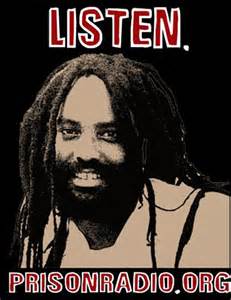 The bill, signed on Tuesday by Corbett, a Republican, allows victims of “a personal injury crime” to sue the perpetrator if that offender “perpetuates the continuing effect of the crime on the victim.”
State Rep. Mike Vereb, a Republican and a co-author of the act, announced earlier this month that he’d be rallying lawmakers to support the bill after former death row inmate Mumia Abu-Jamal was allowed to record a commencement speech that was played for graduates of Goddard College during an October 5 ceremony.
Abu-Jamal, 60, is currently serving a life sentence at a prison facility in Frackville, PA for the 1981 murder of a Philadelphia cop, Officer Daniel Fulkner, but he has maintained his innocence throughout his incarceration, including three decades spent awaiting execution before prosecutors agreed in 2011 to drop the death penalty. Prior to the start of his prison sentence, Abu-Jamal was considered a renowned activist and journalist, and has since published several books and thousands of essays from behind bars.
“The nation is in deep trouble, largely because old thinking, both domestically and globally, has led us into the morass that the nation now faces, which may be encapsulated by references to place-names that ring in our minds: Gaza; Ferguson; and Iraq—again!” a group of 21 graduating students from Goddard, Abu-Jamal’s alma matter, were told in the tape-recorded commencement speech. “These are some of the challenges that abide in the world, which it will be your destiny to try and analyze and resolve. As students of Goddard, you know that those challenges are not easy, but they must be faced and addressed.”
Vereb sent a letter to his colleagues in the Pennsylvania House three days before that address was given, writing in it that he was “utterly outraged that such a reprehensible person would be able to revictimize Officer Daniel Faulkner’s family with this kind of self-promoting behavior.”
The Pennsylvania legislature unanimously approved Vereb’s bill days after the address was given, and Gov. Corbett signed the act on Tuesday, 11 days after the Goddard speech, from a makeshift stage erected in Philadelphia only a few feet from the location where Faulkner was gunned down during a traffic stop 33 years ago. Nevertheless, the Washington Post reported that Corbett said in a statement that the law “is not about any one single criminal,” but rather “was inspired by the excesses and pious hypocrisy of one particular killer.”
“Maureen Faulkner, Danny’s wife, has been taunted by the obscene celebrity that her husband’s killer has orchestrated from behind bars,” Corbett said at the signing, according to a CBS News affiliate.
“This unrepentant cop killer has tested the limits of decency,” the Washington Times quoted Corbett as saying as protesters jeered nearby. “Gullible activists and celebrities have continued to feed this killer’s ego.”
Free speech advocates see no issue with Abu-Jamal’s communique from confinement, though, and say that the law signed this week is a serious blow to First Amendment protections.
“This bill is written so broadly that it is unclear what is prohibited,” Reggie Shuford, the executive director of the American Civil Liberties Union’s Pennsylvania office, said in a statement offered to Reuters. “That can’t pass constitutional muster under the First Amendment.”
Samantha Kolber, a spokesperson for Goddard, told the Patriot-News that the school was “surprised” by Corbett’s signing and said Vereb’s bill “is suggesting that people are not capable of making choices about what speech they will listen to and how they will react to that speech.”
Speaking to the Philadelphia Inquirer, protester Johanna Fernandez said during Corbett’s public signing this week that the governor’s decision to speedily make Vereb’s bill a law was a “Hail Mary pass” from his administration only a month before Election Day since polls suggest that Corbett may lose the governor’s seat. “The establishment of Philadelphia is using Mumia’s case to silence all prisoners in the state,” Fernandez said. “What they’re doing is, they’re essentially inflecting collective punishment on all prisoners in order to silence Mumia.”
On Monday, Abu-Jamal himself weighed in on the debate and the politics surrounding Corbett’s decision to speedily sign the bill during an interview with Noelle Hanrahan of Prison Radio Project.
“This is a political stunt by a failing politician who is seeking support by using fear,” Abu-Jamal said this week. “Politicians do it all the time. But this is unconstitutional: Tom’s latest attempt to stroke and build up his political campaign, his failing political campaign.”
According to the activist-turned-inmate, he gave his address to Goddard after students there wrote and requested he speak. Marc Lamont Hill, a professor at Morehouse College, tweeted Wednesday that “Even if you don’t support Mumia, you should be outraged at this attack on First Amendment Rights.”
The Troubling Arguments from the Government in Smith v. Obama
We’ve filed our reply brief in the appeal of Smith v. Obama, our case challenging the NSA’s mass telephone records collection on behalf of Idaho nurse Anna Smith. The case will be argued before the Ninth Circuit Court of Appeal on December 8, 2014 in Seattle, and the public is welcome to attend.
Another case challenging the telephone records program, Klayman v. Obama, will be argued on November 4 in Washington DC before the DC Circuit and EFF will be participating as an amicus.
The Smith v. Obama case records are all here: but we thought we’d highlight three of the more outrageous arguments the government made, and our responses debunking them.
The Cases
Mrs. Smith doesn’t think her phone records are any of the government’s business. That’s why, only a few days after the Guardian published a secret order from the Foreign Intelligence Surveillance Court revealing the government’s bulk collection of the telephone records of millions of innocent Americans, she sued. Smith v. Obama challenges the government’s collection of call detail records under Section 215 of the PATRIOT Act. Mrs. Smith is represented by her husband, attorney Peter Smith, along with the ACLU, EFF, and Idaho State Rep. Luke Malek.
The district court said it felt bound to dismiss her claims because of a 1979 Supreme Court case, Smith v. Maryland. That case involved the collection of the phone numbers dialed by a criminal suspect over the course of three days. It’s one of the cornerstones of the so-called “third party doctrine,” the idea that people have no expectation of privacy in information they entrust to others—and it’s outdated to say the least.
The centerpiece of Mrs. Smith’s case is the issue of whether the government’s collection of our telephone records in bulk, and retention of those records for five years, triggers the Fourth Amendment’s warrant requirement. The warrant requirement applies if there is a legitimate and reasonable expectation of privacy in those records. And if the warrant requirement applies, the collection is unconstitutional, since there is no warrant (everyone agrees that the secret FISA Court rulings allowing the bulk collection under Section 215 of the Patriot Act are NOT warrants).
We argue that there is a legitimate and reasonable expectation of privacy violated by the bulk collection of telephone records, because unlike the narrow situation the Supreme Court considered in 1979, they can reveal an incredible amount of sensitive information. For example, in one short-term study of only a few months of telephony metadata from 546 people, researchers at Stanford were able to identify one plausible inference of a subject obtaining an abortion; one subject with a heart condition; one with multiple sclerosis; and the owner of a specific brand of firearm.The government wants the court to simply ignore these differences. Alternately, the government argues that even if there is an expectation of privacy, it is so small compared to the government’s interest that the warrant requirement can be ignored, under something called the “special needs” test (more on that below).
But, as we emphasize our reply brief, this is wrong, in part because we are living in what member of the President’s Review Group Professor Peter Swire calls the “Golden Age of Surveillance.” As we argue: “technological advances have vastly augmented the government’s surveillance power and exposed much more personal information to government inspection and intrusive analysis. If courts ignored this reality, the essential privacy long preserved by the Fourth Amendment would be eliminated.”
The Government’s Arguments
So with that background, let’s look at three of the most troubling claims the government makes.
Call Detail Records Don’t Actually Identify People
The government still claims with a straight face that call detail records don’t reveal private information, because they “do not include information about the identities of individuals,” including “the name, address, [or] financial information” of any telephone subscribers.
That’s technically true, of course, but who cares? It’s not like this prevents the government from identifying you in less than a millisecond after it gets your telephone number. Last time we checked, the government did have access to, say, telephone books and the many public online services that can do reverse number lookup. That’s why we point out that: “phone numbers are every bit as identifying as names. Indeed, they are more so: while many people in the country may share the same name, no two phone subscribers share the same number.”
It’s pretty ridiculous for the government to continue to try to convince the court that the absence of the names in calling records represents any real privacy protection for the millions of Americans whose records are collected. It plainly does not.
We Have to Collect Everything for the Program to Work. But We’re Not Collecting Everything.
The government tries to challenge Mrs. Smith’s standing to sue by repeatedly alleging that the call detail records “program has never encompassed all, or even virtually all, call records and does not do so today.” It claims that the case should be dismissed because Mrs. Smith cannot immediately “prove” that her records were included. Of course, that’s not how litigation works. Mrs. Smith has good reason to believe that her records have been included—the government’s own public statements give her good reason. The district court properly rejected this argument, but the government continues to press it on appeal.
The government also seems to be talking out of both sides of its mouth here, since, as we note in our brief:“In explaining the program to Congress and the public…the government has emphasized not only that the program is comprehensive, but that this comprehensiveness is the key to its utility.”
In fact, Robert Litt, General Counsel of the Office of the Director of National Intelligence told Congress: “In order to find the needle that matched up against that number, we needed the haystack, right. That’s what the premise is in this case.” And NSA Deputy Director John Inglis defended the program by saying: “If you’re looking for a needle in the haystack you need the haystack. So you wouldn’t want to check a database that only has one third of the data, and say there’s a one third chance that I know about a terrorist plot, there’s a two thirds chance I missed it because I don’t have that data.”
So to get the case dismissed they want to convince the court that they aren’t really collecting “virtually all” of the telephone records, but their public justifications rely on the fact that they are. So either they are collecting Mrs. Smith’s records, along with every other Verizon Wireless customer—Verizon is the second largest wireless service in the U.S. after all—or they are not very good at meeting their own stated goals. Which is it, government?
And that goes right to the heart of the government’s next argument:
Bulk Telephone Records Collection Isn’t Necessary to Protect Us—But Is Still Allowed Under the “Special-Needs Doctrine”
The government’s fallback argument is that even if the call detail records triggered the Fourth Amendment, a warrant is still not required under a narrow legal precedent called the “special-needs doctrine.” It allows warrantless searches of a few small categories of people who have a reduced privacy expectation, like students in schools or employees who handle dangerous equipment. It also only applies when compliance with probable-cause and warrant requirements would be “impracticable” and the government’s primary goals are not law enforcement.
The first problem here is that the millions of ordinary Americans affected by the government’s bulk collection do not have a reduced expectation of privacy in the records of their telephone calls. The privacy interests here are great, since with a trail of telephone records, the government can learn extremely sensitive information.
The second problem is that no less than the White House itself has said that the government can accomplish its goals without bulk telephone records collection. This has been confirmed by the President’s two hand-picked panels as well as several Congressmembers who have seen the intelligence information. As we point out in our reply brief, the best the government can say about the program is that it “enhances and expedites” certain techniques it uses in its investigations. So getting a warrant isn’t impracticable, it’s just, at most, inconvenient. But as we point out: “If efficiency alone were determinative, the Fourth Amendment’s warrant requirement would have no force at all.”
The special-needs argument is especially concerning because if the courts were to accept it, the special-needs doctrine could become an exception that swallows the Fourth Amendment’s rule against general searches. It could, de facto, create a national security exception to the Constitutional rights enjoyed by ordinary, nonsuspect Americans, something the founders plainly did not do when they created this country in the midst of a national security crisis.
We expect an interesting argument on December 8.
More Police Departments than Previously Thought Use Portable Surveillance Systems to Spy on almost Everyone
By Steve Straehley and Noel Brinkerhoff | AllGov | October 21, 2014
More U.S. police departments are employing electronic surveillance technology that can collect information from cell phones and laptop computers belonging not just to criminal suspects but also law abiding citizens.
The Charlotte Observer found the Charlotte-Mecklenburg police have for eight years used such equipment, which goes by many names: Stingray, Hailstorm, AmberJack and TriggerFish.
But the technology, which mimics cell towers, is also used by other law enforcement around the country. It’s just not clear which departments, the newspaper says, because the federal government has helped to shield police from disclosing their owning and operating the spy hardware. In fact, the Obama administration “has ordered cities not to disclose information about the equipment,” the Observer’s Fred Classen-Kelly reported.
However, members of the administration might also be among those spied upon. Through an open records request, VICE News has learned that Washington, D.C., is another city whose police department is using the technology. The Metropolitan Police Department (MPD) there purchased the Stingray system in 2003, purportedly to use for anti-terrorism efforts.
In 2008, however, the system was brought out of storage and is now used in regular criminal cases. But the system doesn’t discriminate between calls made by those suspected of wrongdoing and those of ordinary citizens, which means anyone’s whereabouts can be tracked.
Nathan Wessler, an attorney with the ACLU’s Speech, Privacy & Technology Project, told VICE News “If the MPD is driving around D.C. with Stingray devices, it is likely capturing information about the locations and movements of members of Congress, cabinet members, federal law enforcement agents, and Homeland Security personnel, consular staff, and foreign dignitaries, and all of the other people who congregate in the District…. If cell phone calls of congressional staff, White House aides, or even members of Congress are being disconnected, dropped, or blocked by MPD Stingrays, that’s a particularly sensitive and troublesome problem.”
Some in Charlotte have those concerns as well. “The thought of police or another agency collecting data on communications devices is troubling,” Charlotte City Councilman John Autry told the Observer. “I understand the balance between security and privacy, but I think we should honor the privacy protection in the Constitution. … What happens to the data? Who sees it? Who has access to it?”
The ACLU estimates that at least 46 local law enforcement agencies nationwide have cell phone tracking systems.
To Learn More:
Charlotte Police Investigators Secretly Track Cellphones (by Fred Classen-Kelly, Charlotte Observer)
Police in Washington, D.C. Are Using the Secretive ‘Stingray’ Cell Phone Tracking Tool (by Jason Leopold, VICE News)
After Months of Denial, Sacramento Sheriff Admits Using Stingray Cellphone Surveillance (by Ken Broder, AllGov California)
Local Police Departments Use Non-Disclosure Agreements to Hide Cellphone Tracking (by Noel Brinkerhoff, AllGov)
Press TV reporter killed in Turkey car crash after ‘spying accusations’

RT | October 20, 2014
A Lebanese-American reporter working for Iranian channel, Press TV, Serena Shim has been killed in a car crash in Turkey, following her reports of accusations from Turkey’s intelligence agency that she had been “spying.”
“Our correspondent Serena Shim has been killed near the Turkey-Syria border. Serena was killed in a reported car accident when she was returning from a report scene…their car collided with a heavy vehicle,” a Press TV broadcast stated on Monday. Shim had also been the mother of two young children.
The driver of the vehicle was subsequently arrested, according to Turkish news agency Hurriyet, citing the Turkish Doğan News Agency. Press TV disputed this, alleging that both driver and vehicle have disappeared.
Press TV has additionally expressed suspicion, implying that it may not have been an accident. “Just a couple of days ago she had been threatened by Turkish intelligence,” the broadcast said.
Shim had been returning to her hotel after reporting from Suruç – a rural district near the Syrian border, where a many foreign journalists are based. They are covering news from the Syrian northeastern border town of Kobani, under siege by Islamic State militants for the past month due to its strategic importance.
She had expressed fears for her own safety; her death came a day after she reported receiving threats from the Turkish intelligence agency (MİT), saying they had accused her of spying.
“The Turkish intelligence agency has now accused our correspondent Serena Shim of being a spy,” said a Press TV report on Saturday.
“I’m very surprised at this accusation – I even thought of approaching Turkish intelligence because I have nothing to hide,” Shim said in the broadcast on Saturday.
“I am a bit worried, because… Turkey has been labeled by Reporters Without Borders as the largest prison for journalists…so I am frightened about what they might use against me,” she said.
Shim had been reporting that IS militants had crossed the border from Turkey into Syria in trucks apparently affiliated with NGOs, some of which allegedly bore World Food Organization symbols. She claimed that she had received images from Islamic militants crossing the Turkish border and was one of the few reporters focusing on the matter.
“We were some of the first people on the ground –if not the first people – to get that story of… militants going in through the Turkish border… I’ve got images of them in World Food Organization trucks. It was very apparent that they were militants by their beards, by the clothes they wore, and they were going in there with NGO trucks,” she said.
Official: PA forces regularly conduct politically motivated arrests
Ma’an – October 19, 2014
BETHLEHEM – Palestinian Authority police regularly detain people in the West Bank due to their political affiliation, an official said Sunday.
Khalil Assaf, a member of the subcommittee on civil liberties formed after the West Bank-Gaza unity government was sworn in in June, told Ma’an that regardless of the committee’s formation, none of its recommendations have been implemented.
“Every day people are being detained in the West Bank because of their political affiliation, though in most cases they are released within days,” Assaf said.
Though he could not give an exact number of political detainees, he said “we are talking about dozens” of people.
The subcommittee, which was tasked with maintaining and monitoring civil liberties in the West Bank and Gaza, has not been summoned for any meetings with the rest of the unity government so far, Assaf said.
He said it was formed in order to address several aspects of freedom in a democratic society: the freedoms of work, assembly, research, and movement; the freedom to distribute newspapers; the freedom to participate in political activities without discrimination; providing passports to citizens who had previously been denied passports; and the issue of citizens being summoned for questioning both in the West Bank and Gaza.
Palestinian political leaders have been unable to implement these freedoms due to the lack of full implementation of the unity government, he added.
Critics of the US-backed PA often decry the night raids conducted by Palestinian police to arrest dissenting politically active individuals, stressing that they are carried out in a manner nearly identical to the raids conducted by occupying Israeli forces.
Featured Video

Anthrax War – CBC The Passionate Eye
or go to
Aletho News Archives – Video-Images
Book Review
Shattered Dreams: The HPV Vaccine Exposed (2019)
By Christina England – 30 Q&As – Book Review & Summary
Lies are Unbekoming | September 4, 2026
… Gardasil received FDA fast-track approval in 2006, Cervarix followed in 2009, and Gardasil 9 was approved in December 2014 with more than double the aluminium adjuvant content of the original. The commercial context is specific. Merck was about to lose patent protection on Zocor and faced $18 billion in Vioxx injury claims from a cardiovascular drug the company had marketed while suppressing its own data showing a five-times increase in heart attacks. Analysts projected the global HPV vaccine market at $4 billion by 2011, contingent on government-funded national programs for teenage girls. The 1986 National Childhood Vaccine Injury Act had already granted manufacturers complete liability immunity. By 2013, Japan had withdrawn its HPV vaccine recommendation after cataloguing severe adverse reactions in hundreds of girls. No Western government followed. The establishment position across the UK, US, Australia, and most of Europe held, and still holds, that the vaccines are safe and effective, that reported injuries are coincidental, and that cervical cancer prevention justifies the program. The book was published into this position, not against a vacuum.
Shattered Dreams sits alongside Mary Holland’s The HPV Vaccine On Trial and Viera Scheibner’s foundational vaccination work as part of the documented record on what has been done to a generation of teenage girls under the banner of cancer prevention. The full summary unpacks three specific findings: that Merck used the aluminium adjuvant itself as the “placebo” control in 92.5% of trial subjects, making it structurally impossible to detect excess reactions from the adjuvant; that Dr. Sin Hang Lee found HPV DNA fragments bound to aluminium in every one of sixteen Gardasil samples tested, and in the blood and spleen of a New Zealand girl six months after her third dose; and that in every country with high vaccination coverage, including Australia, the UK, Norway, and Sweden, cervical cancer rates have stopped declining and started rising specifically in the vaccinated cohort. Martínez-Lavín’s 2017 calculation puts the number needed to seriously harm with Gardasil 9 at 140, and the number needed to vaccinate to prevent one case at 1,757. Thirteen young women are seriously harmed for every one who benefits. The vaccine was approved on the basis of trials that could not detect what the trials were supposed to detect, and it is still being given to twelve-year-olds today. … Read full review
Blog Roll
 Aletho News
- Georgia’s Largest Healthcare System Will Fire Employees Who Refuse Flu Vaccine
- The Five-Year Fuel Crisis: Why the World Economy Is Paying for a War It Thinks Is Ending
- Trump’s Big Bluff on Iran
- Swiss scammed out of millions by Ukraine-linked call centers – media
- Germany facing potential ‘violent conflict’ with Russia – spy chief
- Ukraine’s EU neighbors reject new plea from Kiev – Politico
- British Transport Police Facial Recognition Trial Scanned 926,912 People With Zero Arrests
- House Bill Would Ban Federal Use of Flock ALPR Data
- Can a Spice Rival a Drug? 10 Head-to-Head Trials Put It to the Test.
- The oil routes around Hormuz face their own chokepoints
- If Americans Knew
- “We See Our Homes Now From A Satellite, Like Strangers”
- Watch “Gaza: Doctors Under Attack”, originally censored by BBC
- NAZA: Israeli embassies in UK and US promote rival documentary to challenge Gaza genocide allegations
- David Ellison appoints Israeli to lead merged Paramount-Warner studios
- Turkish Red Crescent helps elderly Gaza man walk again after Israel confiscates his prosthetic limb
- Four Palestinians Killed in Israeli Attacks in Gaza
- Two Palestinian youths killed and village razed as Israeli attacks on West Bank continue
- Two more Christian women victims of Israeli raids on Gaza
- Cruelty, Deprivation, Indignity: A Journalist’s 22 Months in Israeli Prison
- New IDF Website Frames Slain Gaza Journalists as Terrorists
- No Tricks Zone
- Latest European Green Energy Debacle; Portugal’s Largest Flagship Solar Park Insolvent!
- Green Energy Debacle: German Expert Professor Fritz Vahrenholt Warns Of Severe Economic And Social Consequences
- Two More Paleo Reconstructions Affirm Meters-Higher Sea Levels Across Ireland, Brazil 7000-6000 Years Ago
- New Study: Earth And Venus Surface Warmth Largely Explained By Convection And Lapse Rate, Not CO2 Or Radiation
- 2025 Nature Paper Claiming Worsening Global Drought Gets RETRACTED …Heavily Flawed
- New Study: ‘Global Drought Shows No Detectable Recent Acceleration Under Climate Warming’
- Economic Masterminds: German Socialists Suggest Taxing Productivity Gains Stemming From Using AI
- The South China Sea Has Not Been Cooperating With The Climate Change Narrative
- Energy Crisis: Germany Enters Heating Season With Historically Low Gas Reserve Fill Levels
- New Study: The Antarctic Ice Sheet Gained Mass From 2020-2024 Due To Staggering Snow And Ice Accumulation

