A few days ago I noticed the appearance of a truly remarkable full-page ad in the Hollywood Reporter. The ad, which I initially saw as a piece of poorly conceived propaganda, was concocted by the Anti-Defamation League, and called upon world leaders and ‘decent people everywhere’ to make sure that ‘Hamas terrorists’ cannot be rearmed so the ‘people of Gaza and Israel can move toward a more peaceful future.’
My immediate impression was that the ad failed on two levels. The first is the quote from the truly hideous Golda Meir: “We can forgive [them] for killing our children. We cannot forgive them for forcing us to kill their children. We will only have peace with [them] when they love their children more than they hate us.”
Presented in bold, the quote reeks of an ADL desperate to counter the images of slaughtered children that continue to fill our television screens. A couple of important textual and contextual changes have been made to the quote — note the substitution of “the Arabs” from the original quote with the less pejorative “them.” But even more significantly, the original quote was referring to the deaths of sons and daughters on either side — soldiers rather than infants. The ADL has simply adapted the quote contextually in order to fit the current Israeli policy of mass child murder.
Even examining it in its new context, the central message being conveyed is that Israel is being forced to kill Palestinian children, and further, that Israel is distraught at being made to do this. Such a claim is ridiculous given world has seen images of Israelis making the bombing of Gaza’s schools and hospitals intoa social occasion complete with snacks, drinks and selfies.
On top of this there is the sinister implication, alluded to by playwright Wallace Shawn, that “Golda Meir can be interpreted as saying here that she plans to kill the children of Arabs up until the moment when, in her sole judgment, the Arabs stop feeling ‘hate’ and become sufficiently unprovoking and pacified.” As far as warm and fuzzy ‘feel-good’ quotes go, this one left a lot to be desired.
The second ‘fail’ in the ad is the ludicrous marching out of Hollywood Jewry against ‘Hamas terrorists.’ So much for the ‘grain of truth’ lie — that there is a mere ‘grain of truth’ to the idea that Jews control Hollywood. It was quite easy for tje ADL to bring out almost every single major Hollywood executive, and every one of them a strongly identified Jew. Among those signing the letter were MGM chairman and South African Jew Gary Barber, Lionsgate CEO Jon Feltheimer, Relativity Media CEO Ryan Kavanaugh (his original family name was Konitz), Nu Image/Millennium Films co-chairman Avi Lerner, Quentin Tarantino’s personal Jewish mogul Lawrence Bender, Sony Pictures Entertainment co-chair Amy Pascal, Saban Capital Group chairman and CEO Haim Saban, and President of the CORE media group Marc Graboff.
The question begged: what do these figures know about the history of the conflict in Palestine? And so I was almost ready to dismiss it out of hand as another shoddy and pointless ADL production.
However, looked at more closely, and with some consideration for context, it quickly became apparent to me that such a question was irrelevant to the true aim of the ad: what was being presented here was not so much a claim for moral legitimacy as a Jewish ‘show of strength.’ Kevin MacDonald has pointed out that the recent slaughter in Gaza has presented “another situation where the public pronouncements of people who matter have to be squelched.” Indeed, the number of celebrities who dared to express sympathy with innocent Palestinians, even fleetingly, was remarkable. Some, such as Penelope Cruz and Javier Bardem, even went so far as to sign an open letter condemning “Israeli genocide” of the Gazans.
The response of organized Jewry to this mass expression of free-thinking was hurried and harsh. Nervous celebrities then clamoured to ‘clarify’ their initial statements of solidarity with the Palestinians, instead now uttering mealy-mouthed ‘hopes’ for peace and panicked refutations of anti-Semitism. Take, for example, Bardem’s effort:
This week, along with a number of artists in my home country of Spain, I spoke out about the conflict in Gaza urging all governments to intervene in this escalating crisis. My signature was solely meant as a plea for peace. Destruction and hatred only generate more hatred and destruction. While I was critical of the Israeli military response, I have great respect for the people of Israel and deep compassion for their losses. I am now being labelled by some as anti-Semitic, as is my wife — which is the antithesis of who we are as human beings. We detest anti-Semitism as much as we detest the horrible and painful consequences of war.
Time will tell whether Bardem’s grovelling will be sufficient to stop his career going down the toilet — a consequence that Jackie Mason would like to see for any uppity goy actor who doesn’t know his place. MacDonald also noted that Mason has been quite clear that these people should suffer professional consequences—that the Jews who run Hollywood should punish celebrities who offend the pro-Israel crowd.
They come from these kinds of anti-Semitic, low-class backgrounds where a Jew is the most disgusting thing in the world to them,” Mason answers, according to audio obtained by The Hollywood Reporter. “The ironic thing is that it’s Jewish people who own these Hollywood studios … And they all hire these people and they depend on them for a living. Every penny they made is made from Jews and they hate every Jew just by nature.
These celebrities are justifiably afraid that Hollywood Jews will act as Jews in exerting pressure on them to conform, because the idea that Hollywood executives are ‘just’ Americans who ‘happen’ to be Jewish ‘by faith’ is nonsense. In my analysis of Jewish self-deceptionregarding participation in the media, I pointed out that
Although not religious, moguls like Carl Laemmle, Louis Mayer, Harry Cohn, Irving Thalberg, and the Warner brothers moved in an almost exclusively Jewish social milieu. On a larger scale, ethnic “connections and sympathies opened the flourishing Hollywood commerce to thousands of transplanted New Yorkers, in turn offering possible escape routes to Jewish filmmakers in Europe.” There were so many Jews working for Mayer’s MGM that the company was known in Jewish circles as “Mayer’s Ganze Mishpokhe” (“Mayer’s entire family). RCA founder David Sarnoff struggled “to maintain Jewish cultural identity.” Almost all of the moguls maintained links with Jewish organized crime, particularly with Chicago’s Jewish mobster and former pimp, Willie Bioff. Although outwardly, and perhaps even inwardly, maintaining the pretence of an assimilated citizen of the world, Mayer himself was notorious for interfering on the set of the Andy Hardy series by issuing pronouncements on “how the Gentiles behave.” Despite these realities, there appears to have been a great deal of self-deception and hypocrisy at work in the group. Buhle notes that, despite the fact that these moguls operated in an almost exclusively Jewish world, they were at pains to present the image of “the benevolent melting pot, usually exaggerating its virtues on the screen.”
Little has changed. In fact, Jews might have more of a monopoly on the entertainment industry now than at any time in their history. However, self-deception regarding Jewish participation in the media today can only be said to be very weak at best. For a start, I think today’s moguls are more openly and unapologetically Jewish than before. Take Ryan Kavanaugh. Before signing his name to the ADL ad, Kavanaugh, described by The Hollywood Reporter as “an outspoken supporter of Israel” and a past recipient of the ADL’s Entertainment Industry Award, claimed in an open letter to renegade celebrities that “Israel is perhaps the closest free-thinking place to Hollywood.” After a rambling, and very clumsy defense of Israeli actions, Kavanaugh then brings out a classic Jewish argument-ender:
My grandmother, a Holocaust survivor, used to say, “Remember Ryan … remember this happened. Remember that the U.S. stood by and allowed Hitler to take over Poland and so many other countries, and slaughter 6 million Jews.” It took five years before the U.S. did anything, and one-third of the Jewish population was captured and killed. Remember the very streets in London with rallies chanting “Free Palestine” are the same streets where some British citizens rallied and chanted in favor of the Nazis. And remember our government did nothing.
Yes, that’s right, Kavanaugh is actually drawing a parallel between people protesting against the killing of Palestinian children and support for Nazi Germany. As an exercise in logic, it’s little more than an ADL special served up with a side of irony. It means nothing beyond the emotive response the trigger words ‘Holocaust’ and ‘Nazis’ might elicit from the indoctrinated, the uninformed, and the unsuspecting. But it says a lot about the mentality of your typical Jewish media mogul. Note the resented and ‘not forgotten’ failure of the United States to intervene in World War II at a speed sufficiently pleasing to the Jews. This is the classic, and often stereotyped, Jewish sense of entitlement together with that notorious sense of historical grievance.
Kavanaugh was also among the first to bring Bardem and Cruz under fire, at one point stating that he didn’t want to work with them again. Kavanaugh told the Holywood Reporter that their expression of sympathy with Gaza “makes my blood boil… As the grandson of Holocaust survivors, anyone calling it Israeli ‘genocide’ vs. protecting themselves are either the most ignorant people about the situation and shouldn’t be commenting, or are truly anti-Semitic.”
Never a guy to miss an opportunity to dwell on the past, Kavanaugh went on to say that the lack of support for Israel “is akin to the silence when concentration camps started during World War II.” Kavanaugh, who has produced such cultural treasures as Fast & Furious 6, 21 Jump Street and The Social Network, has spent a great deal of time in Israel, and works to strengthen American Jewish identity by arranging trips for business leaders, politicians and fellow industryites to tour the region. His statement: “As a Jew, I’m shocked that other Jews in America and our industry aren’t being more proactive,” stands in marked contrast to the denials of moguls in my essay on self-deception, particularly that of producer David Selznick who was always eager to superficially maintain “I am an American, not a Jew.”
The ‘media Jew’ has evolved, and he is certainly now more assertive and aggressive in protecting Jewish interests. Gary Barber, (Chairman and CEO, Metro-Goldwyn-Mayer Pictures), Jon Feltheimer (CEO, Lionsgate Entertainment),Jeffrey Katzenberg (CEO, DreamWorks Animation), and Avi Lerner (Chairman and Founder, Nu Image/Millennium Films) have all had open associations with the ADL in the past.
The reason for this disparity is that we live in a different age. In the postscript to my exploration of the manufactured rise of Spinoza in academia I commented that
It appears that Jews are becoming more and more flamboyant and confident (or aggressive) in asserting their dominance. While the ADL would like us not to think of Jewish power and influence at all, there are recurrent examples where Jews unabashedly assert their influence. … Jews see their future in a world where their claims of Jewish superiority are met with mere acceptance or apathy from the White population. This is neatly summed up in the 1979 ADL-sponsored book Anti-Semitism in America (by Harold Quinley and Charles Glock; New York: The Free Press). The authors state (p. 2) in relation to accusations that Jews are a moneyed elite that “a majority of Jews are in fact moneyed in the sense of having above-average incomes.” The writer added (p. 2) that 97% of American respondents to a survey on this fact said they weren’t bothered by it because they attributed it to individual merit, rather than seeing Jews as a group. This is precisely the goal sought by organizations like the ADL. The ADL’s enmity is aroused when, as Quinley and Glock put it (p. 3), discussion of such facts goes “beyond a simple recognition.”
So the ADL will be quite happy to place its name beside a list comprising the big-hitters of Hollywood Jewry — especially if it includes such loyal and hardworking members of the Tribe as the pathological Ryan Kavanaugh.
Just don’t question the deeper significance of that list, or Jewish control of Hollywood. Because that, dear friends, would be anti-Semitic.
Jewish assertiveness in Hollywood has also now culminated in a mirror image of the Gaza effort, with a pro-Israel open letter now claiming the signatures of 190 Hollywood celebrities. It’s clear even from a quick glance that around 95% of individuals on the list are Jewish. The vast majority of the signatories are actors like Roseanne Barr, Seth Rogen, and Aaron Sorkin. Some of the non-Jewish conformists included Minnie Driver, Arnold Schwarzenegger, and Sylvester Stallone who apparently has some Jewish ancestry. As a publicity exercise this particular effort struck me as empty and derivative, even a little immature. But again, this isn’t about scoring moral points with the masses — this is about putting non-Jewish Hollywood in its place.
When it comes to putting the uppity goy actors in their place there has been no hesitation at all on the part of Jews like Mason, Kavanaugh, or the ADL to making very explicit the scale of Jewish power and influence in Hollywood, and the kind of consequences a renegade can expect. Organized Jewry and its muzzling arm, the ADL, are fully aware of the power they wield in Hollywood. The ADL stalks its prey with the term ‘anti-Semite’ as a safari hunter would a trophy with a high-powered rifle. One shot, one kill.
In the world of entertainment, there are few recoveries. In terms of raw power, the eighteen names on the ADL ad are more than match for the hundreds of celebrities who have signed open letters or penned offending tweets. The message might be lost on the public at large, but to those entertainers it is crystal clear — “We own you.”
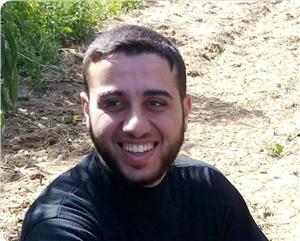
GAZA – Abdullah Mortaja, a Palestinian journalist working for al-Aqsa TV Channel, died on Monday evening of wounds he sustained in an Israeli artillery attack on al-Shujaiya neighborhood, east of Gaza city.
Palestinian medics said Mortaja breathed his last after his health status went downhill and he kept bleeding non-stop due to the injuries incurred in the attack.
Mortaja is a graduate of the Journalism and Media Department at the Islamic University of Gaza. He worked as a correspondent for al-Aqsa TV Channel and a youth activist in Gaza.
Mortaja is the son-in-law of Hamas spokesman, Fawzi Barhoum. His murder brings the death toll of journalists killed during the Israeli offensive, rocking besieged Gaza since July 7, to at least 17.
Scores of human rights and humanitarian organizations have called for the need to immediately launch an international investigation into Israel’s premeditated slaughter of journalists covering Gaza war.
The Palestinian Information Ministry said in a statement on Monday that 102 Israeli violations, targeting journalists and news reporters working for local and foreign news agencies have been registered.
The casualties’ list includes: Ali Shahta Abu Afsh, working for the American Agency, Italian journalist Simone Camili, working for the Associated Press, driver of Media 24 agency, Hamed Abdullah Shihab, and female media activist, Najla al-Haj among others.
According to the ministry, at least 16 Palestinian journalists and an Italian journalist were killed while 18 others sustained severe wounds. 29 journalists’ family homes and 17 media offices came under Israeli shelling, including the headquarters of al-Jazeera, al-Aqsa, Associated Press, and Doha Media Center.
More than 15 media sites, radios and TV channels have been jammed, the ministry further documented.
The report outlined a detailed account of journalists who have turned homeless as barrages of Israeli strikes rocked their family homes. Journalist Mahmoud Ahmad al-Athamna and his wife, along with their little child, sustained deadly wounds after Israeli fighter jets hit their home, razing it entirely to the ground.
Homes of journalists Rami al-Ajala, Shahda Naim, and al-Jazeera reporter Ahmad Fayadh, along with brothers Youssef and Atiya Abu Sharia’ were all subject to the same fate.
The Israeli occupation has stepped up its belligerent aggression on Palestinian and foreign pro-Gaza journalists since the launch of the Gaza offensive on July 7, denying local and international news agencies the right to broadcast an authentic coverage of Israel’s mass-murder of Gaza people.
Inside Higher Edhas gotten some of the preliminary documents on the back and forth between Chancellor Wise, officials at the University of Illinois (including a top person in charge of fundraising), and a high-level donor, before Wise made her initial decision to dehire Steven Salaita. There’s still a lot we don’t know about the external and internal pressure that went into this decision (though from my own experience with this issue I can only assume that the fear of external financial pressure was very very high), and as the article notes, none of these emails tells us what ultimately prompted Wise to make the decision she did. Still, it’s telling that in the days leading up to her decision, she received 70 communiques (in one instance from a very high-level donor), regarding the Salaita hire, only one of which was urging her to keep him on board.
The communications show that Wise was lobbied on the decision not only by pro-Israel students, parents and alumni, but also by the fund-raising arm of the university.
…
For instance, there is an email from Travis Smith, senior director of development for the University of Illinois Foundation, to Wise, with copies to Molly Tracy, who is in charge of fund-raising for engineering programs, and Dan C. Peterson, vice chancellor for institutional advancement. The email forwards a letter complaining about the Salaita hire. The email from Smith says: “Dan, Molly, and I have just discussed this and believe you need to [redacted].” (The blacked out portion suggests a phrase is missing, not just a word or two.)
Later emails show Wise and her development team trying to set up a time to discuss the matter, although there is no indication of what was decided.
At least one email the chancellor received was from someone who identified himself as a major donor who said that he would stop giving if Salaita were hired. “Having been a multiple 6 figure donor to Illinois over the years I know our support is ending as we vehemently disagree with the approach this individual espouses. This is doubly unfortunate for the school as we have been blessed in our careers and have accumulated quite a balance sheet over my 35 year career,” the email says.
Two Crimean journalists, including a photographer who works with AFP and RIA news agencies, say they have been detained by enforcers from Ukraine’s Right Sector movement, while covering the conflict in the east of the country.
Reporter Evgeniya Korolyova and photographer Maksim Vasylenko were returning on a bus from the war zone near Donetsk, which is besieged by government forces, when a Right Sector patrol made them disembark, before taking them prisoner.
The information was reported by the Crimean Telegraph newspaper, where both journalists are on the payroll, which says that it received a phone call from the detainees on Sunday night.
“Evgeniya was allowed one phone call, but it seemed that there were people watching her every word as she spoke, so she couldn’t say exactly where she was arrested. Asked if her life was in danger, she denied it, but specified that she was detained as a journalist, not an ordinary citizen,” wrote the Crimean Telegraph.
The newspaper said that the pair were not on an editorial assignment, while Russia’s RIA news and AFP’s bureau in Moscow confirmed that Vasylenko had been working for them as a freelance photographer.
Crimean Telegraph editor in chief Maria Volkonskaya said the newspaper would submit an official query about the whereabouts of the two, while journalists in the Crimean capital Simferopol have scheduled a demonstration demanding their release for Tuesday afternoon.
I’m still on vacation and mostly staying offline but I wanted to do a quick update on the Salaita affair.
1. Tomorrow, August 22, the Executive Committee of the University of Illinois Board of Trustees is scheduled to meet again. The Executive Committee met on Monday, August 18. In an email, Phan Nguyen wrote to me, “According to the listing of BOT Executive Committee meetings on the website, there haven’t been two such meetings held within four days of each other” in quite some time, if ever. But where the Monday meeting agenda explicitly stated that employment and litigation matters would be discussed, the agenda for tomorrow’s meeting specifies no specific topics for discussion. And where Monday’s meeting was listed a closed meeting, this meeting doesn’t say if it’s closed or not.
“There are a number of issues being discussed,” President Bob Easter told The News-Gazette after the meeting, but trustees are “not at a place where I can say” if resolution is close. He declined to talk further because it was a closed session about personnel. […]
3. One of the issues that comes up frequently among the University of Illinois’s defenders is that Salaita’s tweets suggest he might create a hostile environment for students, that he’s not fit for the classroom. It’s a strange claim to make under any circumstance—how I am on Twitter bears little relationship to how I am in the classroom or in my interactions with students; all of us have different relationships with different people, and we act differently in different circumstances—but in Salaita’s case it’s especially strange because he actually has a demonstrated track record as a teacher that the University of Illinois could consult.
Salaita taught for eight years at Virginia Tech, and like most professors, he was evaluated by his students every semester. According to this report, these were the results:
The student evaluations for Steven Salaita are stunning.
In Fall 2009, 29 of 30 students responding rated Salaita’s “knowledge of subject” as “Excellent”. In the same course, 93 percent of students rated Professor Salaita’s “overall rating” as “excellent,” and 2 as “good.”
In the same term, another group of students gave Salaita nearly identical—though even better —marks: 29 of 30 rated him “excellent” for knowledge of subject, 30 of 30 graded him excellent for grading fairness, and 93 percent rated him “excellent” for overall rating, 1 good.
These numbers repeat consistently over all six of the courses Professor Salaita submitted for review. The lowest rating he received in the “excellent” category for “overall rating” was 86 percent. Salaita never received, in any of the six courses evaluated, a single rating of “poor” for any of ten categories of teaching reviewed. In his lone graduate seminar, he scored a perfect 100 percent rating of “excellence” in the category of “overall rating.”
But for purposes of our argument, it is especially important to note student evaluations of Professor Salaita in the category of “concern and respect” for students. Here is where students evaluate their professor for professional empathy, respect for diverse points of view, and sensitivity to student opinion and student lives.
In the six courses reviewed, Professor Salaita scored as follows in this category:
# of Students
30 Total: 28 Excellent 2 Good
30 Total: 30 out of 30 Excellent
10 Total: 10 out of 10 Excellent
29 Total: 28 Excellent 1 Good
28 Total: 28 out of 28 excellent
28 Total: 25 out of 28 excellent, 2 good, one No Response
In addition to these metrics, Professor Salaita submitted a peer review letter of his teaching by a Virginia Tech colleague in English. This colleague visited Salaita’s classes to provide the department an assessment of Salaita’s teaching.
The letter cites Salaita’s numerical excellence in student evaluations, but goes on to praise his teaching in terms that would be the envy of Professors everywhere:
While the numbers are impressive, the student comments bear out in detail how deserving Steven is of the high ratings. The students are acutely aware that they are privileged to be studying with a well-regarded scholar, who draws his knowledge from years of study and experience. Steven is perceived as being knowledgeable and accessible—he takes time to talk with students and to encourage them in preparing their writing assignments… When asked questions in class, Steve gives factual and thoughtful replies. It is clear to all that the teacher has mastery of his field.
Salaita’s colleague goes on to say:
The classes I visited focused on several very contemporary bodies of literature, most specifically Arab-American literature. These works are difficult to understand and appreciate fully without the help of a good guide who knows the turf. Professor Salaita is extremely well-informed on the history and current status of the many nations, political parties and religious sects of the Middle East. This subject matter is urgently important not only for specialists in international affairs, but for anyone seeking to better understand the violent and volatile contemporary world.
This record shows only one thing: that Steven Salaita is an outstanding classroom teacher.
4. The campaign on behalf of Salaita has gathered steam. Yesterday, philosopher David Blacker canceled his scheduled appearance at the prestigious CAS/MillerComm lecture series at the University of Illinois. In a letter to the university, he wrote:
I regret to inform you that I must cancel my CAS/MillerComm lecture at the University of Illinois scheduled for September 29….
I have decided I must honor the growing worldwide pledge of academics not to appear at U. of I. unless the Salaita matter is acceptably resolved….
… Instead of choosing education and more speech as the remedy for disagreeable speech,the U. of I. has apparently chosen “enforced silence.” It thus violates what a university must stand for — whatever else it stands for — and therefore I join those who will not participate in the violation. In my judgment, this is a core and non-negotiable issue of academic freedom.
My hope is that the U. of I. will relent and restore its good name. I would be delighted to reschedule my talk if and when this happens.
5. I haven’t got complete updates on the boycott campaign, but here are some new numbers (if I don’t have new numbers, I don’t list the petitions here; for a fuller list, go here):
Along with our other signatories on other petitions (for which I do not have updated numbers), we’ve got 2716 scholars committed to not engaging with the University of Illinois until Steven Salaita is reinstated.
A more general petition calling on the University of Illinois to reinstate Salaita has over 15,000 signatures.
The Education Justice Project at the University of Illinois at Urbana-Champaign has been carefully observing the growing international academic boycott of our campus and weighing the potential impacts upon our Strategies for Action National Conference on Higher Education in Prison. After thoughtful deliberation, we have canceled the national conference.
This decision has not been easy.
We reached this decision after consulting with conference presenters and attendees, directors of other prison education programs, members of the higher ed in prison listserv, and with members of the Education Justice Project. We concluded that for EJP to host the conference at this time would compromise our ability to come together as a national community of educators and activists.
Since beginning its assault on the Gaza Strip on July 8th, Israeli officials have prevented human rights observers and experts employed by Amnesty International and Human Rights Watch from entering Gaza to conduct independent investigations.
Both groups are known worldwide for their work in exposing human rights abuses, and both groups have, in the past, filed reports critical of both the Hamas party in Gaza and of Israel’s practices toward Palestinians. But Amnesty International and Human Rights Watch employees have been unsuccessful in their attempts to bring observers into Gaza during the Israeli invasion.
The groups have called on both Israel and Egypt to lift the restrictions on human rights observers, and allow their employees to enter Gaza.
The joint press release filed by the two groups reads as follows:
Israel should immediately allow access to Gaza for Amnesty International, Human Rights Watch and other international human rights organizations so they can investigate allegations of serious violations of international humanitarian law by all parties to the conflict, Amnesty International and Human Rights Watch said today.
“The Israeli authorities appear to have been playing bureaucratic games with us over access to Gaza, conditioning it on entirely unreasonable criteria even as the death toll mounted” said Anne FitzGerald, Amnesty International’s Director of Research and Crisis Response. “The victims’ and the public’s right to know about what happened during the recent hostilities requires the Israeli authorities to ensure full transparency about their actions and to refrain from hindering independent and impartial research into all alleged violations.”
Since the beginning of Israel’s military operation on July 8, 2014 in Gaza, code-named “Protective Edge”, Israeli authorities have denied repeated requests by both Amnesty International and Human Rights Watch to enter Gaza via the Israeli-controlled Erez Crossing. Both groups also requested access from Egyptian authorities, who so far have not granted it.
“If Israel is confident in its claim that Hamas is responsible for civilian deaths in Gaza, it shouldn’t be blocking human rights organizations from carrying out on-site investigations,” said Sarah Leah Whitson, Middle East and North Africa director at Human Rights Watch. “Public pronouncements by a warring party don’t determine whether attacks violated the laws of war, but field investigations could.”
Since July 7, Amnesty International’s International Secretariat has submitted three applications for permission to enter Gaza via the Erez Crossing to Israel’s Civil Administration, which operates under Israel’s Defense Ministry. In each case, the Civil Administration said it could not process the requests, and that the Erez Crossing was closed. Journalists, United Nations staff, humanitarian workers, and others with permits have been able to enter and exit via Erez throughout this period.
“Valuable time has already been lost and it’s essential that human rights organizations are now able to enter the Gaza Strip to begin the vital job of verifying allegations of war crimes,” FitzGerald said.
Amnesty International requested assistance on this matter from Israel’s Foreign Affairs Ministry, and various third-party governments have raised the issue with their Israeli counterparts on Amnesty International’s behalf, but none of these efforts has been successful.
Human Rights Watch received similar responses from the Civil Administration to its request for permission to enter Gaza since the recent escalation in hostilities. Israeli authorities at the Erez Crossing also said that Human Rights Watch was not eligible for permits to enter Gaza because it was not a registered organization. However, the Israeli authorities acknowledged that they had discretion to make an exception. On August 17, Human Rights Watch requested such an exception as soon as possible; Israeli authorities denied it on August 19. Prior to 2006, Israeli authorities repeatedly granted Human Rights Watch access to Gaza without requiring the group to register or seek a special exception.
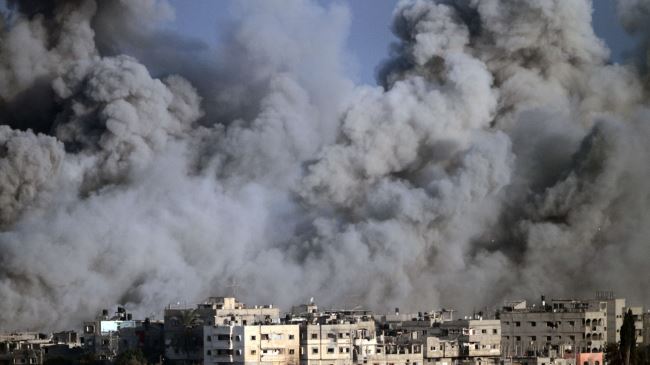
During the recent hostilities, Israeli forces have intensively bombarded the Gaza Strip from the air, land and sea, severely affecting the civilian population there. According to the UN Office for the Coordination of Humanitarian Affairs, 1,975 Palestinians have been killed, including 1,417 civilians of whom 459 are children and 239 women. Thousands of unexploded remnants of war are dispersed throughout the Gaza Strip. Hundreds of thousands of people have been displaced. Sixty-seven Israelis have been killed including three civilians.
Palestinian armed groups have fired thousands of indiscriminate rockets toward Israeli population centers; have reportedly stored rockets in empty school buildings; and allegedly deployed their forces without taking all feasible precautions to prevent harm to civilians, in violation of international law. Amnesty International and Human Rights Watch had some staff already stationed on the ground in Gaza but the quantity and magnitude of reported violations require the investigative assistance of other researchers, which Israel is blocking.
The Israeli government must allow all allegations of war crimes and other violations to be independently verified and the victims to obtain justice. Active human rights monitoring on the ground can also help serve to prevent further abuses being carried out – by all sides.
The Israeli authorities last granted Human Rights Watch access to Gaza through the Erez Crossing in 2006, and Amnesty International in the summer of 2012.
Since then, Amnesty International and Human Rights Watch have repeatedly been told that they must register with Israel’s Foreign Affairs Ministry, which only registers diplomats and UN personnel, or the Social Welfare Ministry. Registration with the Social Welfare Ministry is an option for humanitarian and development organizations with offices in Israel and the Occupied Palestinian Territories, but it is virtually impossible for Amnesty International and Human Rights Watch, as international human rights organizations, to meet the conditions for registration.
An overwhelming majority of Jewish Israelis think that the Israeli army used either the “appropriate” level of force or “too little firepower” during its latest aggression, dubbed “Operation Protective Edge”, in the Gaza Strip. A majority also expressed their support for the government’s restrictions on the freedom of expression during the war, as well as for the mediation efforts led by the post-coup government in Egypt.
According to the latest poll for the Peace Index, which is conducted by the Israel Democracy Institute and the University of Tel Aviv, 48 per cent of Israeli Jews believe that the force used by the army was appropriate, while 45 per cent actually think that too little force was used. Only 6 per cent said that Israel used excessive force against the Palestinians.
The Israeli government barred Israeli reporters from entering into Gaza to cover the war, thus Israelis were not exposed to the horrors taking place in the Strip. Israeli strikes have left more than 2,000 dead and 10,000 wounded, in addition to causing massive destruction to civil infrastructure, homes and businesses, leaving many without a place to sleep or work.
On another note, 97 per cent of the Jewish Israeli respondents said that the performance of the Israeli army during the operation was “was very or moderately good”, while only 3 per cent rated the army’s performance as “as not so good or poor”.
58 per cent said they were in favour of limiting the freedom of expression during times of war, while 39 per cent believe that these restrictions are unnecessary.
92 per cent of the Jewish population said the aggression on Gaza was “justified” while 58 per cent said that Israel should not respond to any of Hamas’s demands for a ceasefire and instead should continue fighting until the Palestinian resistance movement surrenders.
Some 44 per cent believe that Israel has achieved most of its goals as a result of the war on Gaza, while 48 per cent said that only some of the goals set for the operation have been achieved and 6 per cent said that Israel did not achieve anything from this operation.
As for the Arab Israeli citizens, 65 per cent believe that no goals have been achieved.
Regarding the mediation efforts in Cairo, 60 per cent of Israeli Jews trust Egypt’s President Abdel Fatah Al-Sisi “to act as a fair mediator”, with only 38 per cent not trusting him.
On the other hand, 55 per cent of Israeli Arabs do not trust President Al-Sisi, while 31 per cent trust him to mediate the conflict.
As tensions continue to simmer following nine days of street protests in Ferguson, Missouri, where a teenager was shot dead by a police officer, two watchdog groups have slammed the heavy-handed police tactics.
To compound the physical and mental strain of reporting on the weeks-long protests in Ferguson, where the public is desperate for justice after a white police officer shot black teenager Michael Brown to death, journalists themselves are finding themselves the target of police tear gas, rubber bullets and flash bang grenades.
However, Robert Mahoney, Deputy Director of the Committee to Protect Journalists (CPJ), said the police tactics would not prevent reporters from doing their jobs.
“Ferguson is an international story and journalists are going to cover it. They have a right to do so without fearing for their safety or liberty,” Mahoney said. “The harassment and detention of reporters must stop. From senior commanders on down, the word must go out to security forces to let journalists do their job.”
CPJ also released a guide for journalists on how to stay safe while covering events in Ferguson.
Jasmine Heiss, an observer with Amnesty International, expressed concern over reports that journalists were being tear-gassed while performing their jobs.
“Just last night I’ve heard several journalists and community say that either gas was thrown at them while they were reporting, or, in the case of the community members that gas was thrown into residential neighborhoods while they were walking,” Heiss told RT.
“Increasingly repressive tactics [are] being used to curtail free speech,” she added.
Six journalists were detained by police while covering the protests on Monday and early Tuesday, compelling the American Society of News Editors to describe the incidences as a “top-down effort to restrict the fundamental First Amendment rights of the public and the press.”
According to CNN, 11 journalists have been arrested in the course of the protests, which have thrown a glaring spotlight on US race relations, not to mention military-style police equipment and tactics now being deployed on the streets of America.
Police were caught on video firing a tear gas canister that exploded directly in front of an Al Jazeera America crew, causing the reporters to discard their camera equipment and flee the fumes.
In another heated encounter, a police officer is actually caught on video telling journalists, “I’m going to f***ing kill you!”
Meanwhile, social media accounts have exploded with real-time proof of the “severe press intimidation,” as the Huffington Post described the heavy-handed tactics, where Ferguson police fired at journalists with rubber bullets and flash bang grenades, in some cases preventing media from leaving their vehicles for fear of being targeted.
German reporter Ansgar Graw and his colleague Frank Hermann were detained by police for taking photos of a burned-out gas station, close to the spot where Michael Brown was killed.
“I tried to take some pictures at a spot where before I think were taken several thousand photos of the same spot, and some police officers tried to shoot me and my colleague from Germany…but it was on Monday at 2 o’clock, it was perfect…there was no threat, no tensions were in the air,” he told RT.
The journalist said the police told them they could photograph, but they had to continue walking otherwise they would be arrested. Despite complying with the police orders, Graw said they were still detained.
The situation in Ferguson seemed briefly like it was getting better last Thursday, but that didn’t last long. Over the weekend, the militarized and threatening police fired tear gas at protestors and continued to escalate the situation, rather than de-escalate it. The governor declared a state of emergency and instituted a curfew — which created some more problems, and resulted in continued protests, but also some looting. In the last few hours, however, things have gone from bad to worse again. Police went back to arresting journalists, including Robert Klemko from Sports Illustrated and Rob Crilly from the Telegraph (who, believe it or not, is the “Pakistan and Afghanistan correspondent” for that paper — now reporting live from… Ferguson, Missouri). While both were quickly released, police appear to be quite aggressive towards reporters. Chris Hayes, the MSNBC TV host reports that he was threatened with being maced.
A live stream from the local radio station KARG (Argus Radio — which is a local volunteer run radio station that has been doing amazing work) caught police screaming, “Get the fuck out of here or you’re going to get shelled with this” while pointing a gun at the reporter. Many reports claimed that he was saying, “You’re going to get shot,” but it’s pretty clearly “shelled.” Not sure it really makes a huge difference.
As you can see from the video (thankfully clipped and uploaded by Parker Higgins), another police officer, “Captain Todd,” claims that the lights from the reporters are the problem, not that that somehow makes it okay to point guns at reporters and threaten to “shell” them (or to arrest them). Meanwhile, Ryan Reilly of the Huffington Post reports that reporters were ordered to “leave the area and head back where we wouldn’t be able to witness anything for ourselves.”
All of this really ought to make people wonder: if this is how the police act when they know the world is watching them and live streaming what they’re doing, how do you think they act when no one is watching? The photos from Ferguson feel unreal, but are, in fact, quite real.
The situation has become so ridiculous that Amnesty International has sent in a human rights team, saying this is the first time ever that the group has done so inside the US. Think about that for a minute or two…
And then recognize that the press are almost certainly being treated significantly better than the residents who are protesting.
I’ve just had the pleasure of spending eight hours in detention at the border between Egypt and Israel, between Tabaa and Israel’s southern-most city, Eilat. My crime at first appeared to be a single male travelling alone into a Middle Eastern country. But once the immigration police realised I was a journalist, I was in for the long haul.
At first – I was asked the standard cavalcade – where was I staying, who with, and what were my plans? But on discovering my profession, brows furrowed faster than a Horah dance at a bar mitzvah.
My stay in a holding area, punctuated by increasingly aggressive interrogations, peaked when the most senior official asked me to write down the names and addresses of all my sources in Israel and Palestine.
Of course they wanted sources in “the Palestinian Territories,” and in a Freudian slip, I blurted out that I certainly wouldn’t be revealing any sources in the “Occupied Territories”. After a brief staring match, the official kept tapping away into her computer.
I didn’t give them the information they were after, not wanting to endanger anyone – which resulted in a further four hour wait, during which not much appeared to be happening. They let me go in time for me to miss my best friend’s engagement party, where I was stopping by before heading up to Ramallah. They knew I was in a rush to make this, and they knew I was best man. I’ll never know if they let me go when they did out of spite, but I suspect they did. Bullies enjoy a pathetic victory.
Thomas Jefferson was unequivocal in his support for the media, summarising that “the basis of our government being the opinion of the people, the very first object should be to keep that right; and were it left to me to decide whether we should have a government without newspapers, or newspapers without a government, I should not hesitate a moment to prefer the latter.”
Nelson Mandela, no friend to Israel but a hero to civilised nations – described freedom of information as “the lifeblood of democracy”. Curbing journalistic freedoms is not only a red rag to the bull – it’s arrogant and betrays the electorate. Too often we think of democracy as happening at the ballot box – but it is the media that informs the voter before they reach the polling station and in harassing, imprisoning and even killing journalists, Israel makes a mockery of their insistent claim to be “the only democracy in the Middle East”.
What I experienced was a mere bump in the road compared to other journalists’ troubles. Majd Kayyal, a Palestinian journalist, was arrested in April 2014 on his return from Beirut – allegedly for entering an “enemy state” and conspiring with a “foreign agent”. He was held in a windowless room for five days, interrogated by Shin Bet, and denied access to a lawyer. The government prohibited Israeli media outlets from reporting on the matter in real time – a ban which was luckily ignored by many editors. The charges were later dropped – however veteran Israeli journalist Itai Anghel noted that having travelled to several “enemy states”, including Iraq and Afghanistan – he had not once been stopped or detained by the Israeli security services.
But again, what happened to Kayyal is, sadly, mild. Seventy-one journalists were killed in Israel last year. Over 2,000 reported being physically attacked or threatened. Eighty-seven were kidnapped. Over 800 were arrested. Seventy seven had had enough and fled the country and, as of December 2013, there were 178 journalists in Israeli prisons. This doesn’t sound like a free press.
At the end of last year – diplomats, politicians, activists and NGOs concluded that the Palestinian territories were one of the worst places in the world to practice journalism. Not only is violence regularly deployed to repress domestic and foreign reporters, censorship laws are used to deny useful debate and manipulate opinion – often in favour of war.
For example, on July 24 the Israeli Broadcasting Authority prohibited the broadcast of an advert produced by B’Tselem, an Israeli NGO, which listed the names of 150 children killed in Gaza. Likewise, the killings of three Israeli teenagers took place almost immediately after their kidnapping, shortly before Operation Protective Edge began, yet a gagging order on the media prevented publishing the key facts.
Instead, Prime Minister Benjamin Netanyahu orchestrated a phoney manhunt for three weeks in which pro-war fervour was whipped up. He even lied to the children’s parents.
Now, talking to Israelis across the country, it is clear that support for the most recent Gaza onslaught is near unprecedented – based on the distorted image of the events leading up to the war. The range of opinions I heard was extremely narrow, with narratives drawing clearly on simplistic hasbara distributed by the government. To take a country to war, you need the media with you. Netanyahu has become an expert on this.
Similar censorship laws were invoked when Lt Hadar Goldin was apparently briefly captured by Hamas during the most recent conflict, and Israeli artillery shelled his location in an effort to kill him. This infamous “Hannibal Doctrine”, which dictates Israeli soldiers should be killed by friendly fire rather than become prisoners, was considered so unpalatable to the national spirit – that reporting on it was completely banned. In an extraordinary display of arrogance, Israeli military censors even attempted to stop The New York Times from publishing further information on the case.
So far, only Haaretz has run a piece seriously questioning the doctrine. Thankfully, the newspaper ended a 10 year reporting ban of the Doctrine in 2003, when they completed an investigation into the matter. Still, knowledge of the Doctrine was not as apparent as you would hope for from the ordinary Israelis I spoke to this week.
Though part of the Israeli public’s thirst for war can be attributed to a lack of media information, many Israelis are wilfully blind to the misgivings of the Israeli Defence [sic] Force (IDF). In a survey last year, Tel Aviv University found that just over half of Israelis believe that the media should not publish immoral conduct by the IDF. This has created an environment in which self-censorship is the norm. Recent civilian casualties in Gaza, despite numbering over 2,000 have barely been reported. The morning after the offensive began, Israel’s most widely circulated newspaper, Yisrael Hayom, did not contain a single word regarding civilian casualties. Instead, editors splashed an enormous explosion in Gaza City, and an emotive photo of an IDF conscript hugging his girlfriend goodbye. Yisrael Hayom’s slogan is sickeningly unquestioning for a major media outlet: “Remember, we are Israelis.”
The complicity of the Israeli media – largely a phoney industry with a sense of social responsibility akin to Blackwater or G4S, fills responsible hacks with professional disgust. One in 10 members of the Knesset is a former journalist. The leader of the country’s second most popular party is Yair Lapid and the leader of the Labour Party is Shelly Yachimovich, both came from Channel 2, Israel’s largest TV station. Of course many highly capable leaders have come from journalistic backgrounds, but the mass migration to the other side of the fence suggests the industry has a fundamental misunderstanding of what journalism is about: holding power to account.
Moreover – the continuing brutality of the Israeli regime against Palestinian and foreign journalists is profoundly troubling. I was lucky – my punishment was eight hours in detention and an unplanned overnight stay in Eilat (incidentally – a depressing sinkhole of tourist tack thronging with recently released IDF conscripts, celebrating their mass slaughter in Gaza).
But for many journalists, the price they pay for reporting on Israel’s crimes is beating, arrest, imprisonment, kidnapping or death. For Israel to be anything more than a plastic democracy its leaders need to rethink press freedoms. And if Israelis want to understand why the world is constantly so critical of them, they need to understand that they live in a media bubble in which only a certain reality about the Occupied Territories is presented. The full picture might not be nice, but is extremely important.
Police in Northern California beat and tased a mentally ill man before siccing a dog on him, then turning on citizens who recorded the incident, confiscating cell phones and in one case, ordering a witness to delete his footage.
But one video survived anyway, slightly longer than two minutes, where a cop from the Antioch Police Department can be heard saying he wants cameras confiscated right before the video stops.
The video is shot at a distance that makes it unclear as to how much damage is being done, although you can hear the meaty sound of someone being struck several times, as well as the nearly nonstop barking of the police dog and crackling bursts of Taser fire. Being filmed vertically doesn’t help, although I’m generally of the opinion that simply collecting footage that wouldn’t normally be captured is always useful and whatever makes the person filming most comfortable (seeing as it’s generally a very uncomfortable situation) is the method they should use. The recording also shows the arrival of more officers, as though the nearly invisible civilian at the bottom of the cop pile (which begins with 5 officers and a police dog) was on the verge of escaping the whole time.
Towards the end of a video, an officer pulls his squad car directly in front of the “scene” in an obvious attempt to limit the amount of onlookers with damning recordings. Shortly after that (and after the video ends), the cops started attempting to seize “evidence.”
A second witness ABC7 News spoke to says officers began confiscating cellphones from anyone who shot video of the incident. An officer asked for his cellphone after he shot video and the witness said, “Then he took my phone anyway because I didn’t want no problems. He emailed the incident to his phone.
The first witness said, “They didn’t take no for an answer apparently because they pulled one lady out of her vehicle to get it, and she wouldn’t give it up and they were about to arrest her and finally they let her go because I believe she gave it up.”
However, a third witness told ABC7 News he was ordered to erase his video. So he did. He said, “They were being kind of controlling, like demanding, ‘erase your phone’ and they were trying to take people’s phones away.”
No surprises here. Excessive force deployed, followed by a roundup of “witnesses,” which actually means recording equipment and not human beings. The police have no right to do this, but in far too many cases, they assume the public either doesn’t know this, or can easily be intimidated into complying with the unlawful request.
Here’s the absolute bullshit the police department handed over in defense of its ad hoc phone confiscation:
Antioch police told ABC7 News in a statement, “If a person is not willing to turn it over voluntarily, an officer can sometimes seize the device containing the video. The police would have to get a search warrant to retrieve the video from the device.”
As Carlos Miller points out, this is completely wrong and has been wrong for a few years now. Guidelines from the Department of Justice passed down in 2012 state the exact opposite. Police can ask for compliance, but they need to be extremely careful in how they ask.
A general order should provide officers with guidance on how to lawfully seek an individual’s consent to review photographs or recordings and the types of circumstances that do—and do not—provide exigent circumstances to seize recording devices, the permissible length of such a seizure, and the prohibition against warrantless searches once a device has been seized. Policies should include language to ensure that consent is not coerced, implicitly or explicitly…
[…]
Warrantless seizures are only permitted if an officer has probable cause to believe that the property “holds contraband or evidence of a crime” and “the exigencies of the circumstances demand it or some other recognized exception to the warrant requirement is present.”
Cops tend to claim that footage of police misconduct is “evidence” in order to justify warrantless cellphone seizures. It may very well be, but it’s the sort of evidence they want to hide, rather than the sort of evidence they’d like to retain. Note that the above officers ordered people to “delete” recordings, something they wouldn’t do if the recordings held actual evidence of a crime (or at least, a crime not committed by uniformed officers). Either way, crime or no crime, the police can’t just start seizing phones as “evidence.” The DOJ guidelines go on to say:
The Supreme Court has afforded heightened protection to recordings containing material protected by the First Amendment. An individual’s recording may contain both footage of a crime relevant to a police investigation and evidence of police misconduct.The latter falls squarely within the protection of First Amendment. See, e.g., Gentile v. State Bar of Nev., 501 U.S. 1030, 1034 (1991) (“There is no question that speech critical of the exercise of the State’s power lies at the very center of the First Amendment.”). The warrantless seizure of such material is a form of prior restraint, a long disfavored practice.
So, cops know — or should know — they can’t do this. And I firmly believe most of them know this. The problem is that they just don’t care. The quickest “fix” is swift seizures of recordings using baseless arrest threats and other forms of intimidation. It’s an instinctual closing of ranks. Once the requisite dozen or so officers needed to affect an arrest had been met, one of the officers originally in the one-sided melee stands back and says he wants “that cellphone and that cellphone.” Well, he can’t have them. Not legally. And yet, officers apparently got what they wanted — rather than what they could legally obtain — in the end.
“Groups on the ground in St. Louis are calling for nationwide solidarity actions in support of Justice for Mike Brown and the end of police and extrajudicial killings everywhere.”
But “nationwide” and “everywhere” are odd terms to equate when discussing police militarization. Are we against extrajudicial killings (otherwise known as murder) by U.S. government employees and U.S. weapons in Pakistan? Yemen? Iraq? Gaza? And literally everywhere they occur? The militarization of local police in the United States is related to the militarization of U.S. foreign policy, which has now reached the point that bombing and “doing nothing” are generally conceived as the only two choices available. Local police are being militarized as a result of these factors:
A culture glorifying militarization and justifying it as global policing.
A federal government that directs roughly $1 trillion every year into the U.S. military, depriving virtually everything else of needed resources.
A federal government that still manages to find resources to offer free military weapons to local police in the U.S. and elsewhere.
Weapons profiteers that eat up local subsidies as well as federal contracts while funding election campaigns, threatening job elimination in Congressional districts, and pushing for the unloading of weapons by the U.S. military on local police as one means of creating the demand for more.
The use of permanent wartime fears to justify the removal of citizens’ rights, gradually allowing local police to begin viewing the people they were supposed to protect as low-level threats, potential terrorists, and enemies of law and order in particular when they exercise their former rights to speech and assembly. Police “excesses” like war “excesses” are not apologized for, as one does not apologize to an enemy.
The further funding of abusive policing through asset forfeitures and SWAT raids.
The further conflation of military and police through the militarization of borders, especially the Mexican border, the combined efforts of federal and local forces in fusion centers, the military’s engagement in “exercises” in the U.S., and the growth of the drone industry with the military, among others, flying drones in U.S. skies and piloting drones abroad from U.S. land.
The growth of the profit-driven prison industry and mass incarceration, which dehumanize people in the minds of participants just as boot camp and the nightly news do to war targets.
Economically driven disproportionate participation in, and therefore identification with, the military by the very communities most suffering from its destruction of resources, rights, and lives.
But policing is not the only thing militarized by what President Eisenhower called the “total influence — economic, political, even spiritual” of the military industrial complex. Our morality is militarized, our entertainment is militarized, our natural world is militarized, and our education system is militarized. “Unwarranted influence, whether sought or unsought, by the military industrial complex” is not easily opposed while maintaining the military industrial complex. When Congress Members lend their support to a new war in Iraq while proposing that the U.S. Post Office and a dozen other decent things not be funded, they are speaking out of both sides of their mouths. The United States cannot live like other wealthy nations while dumping $1 trillion a year into a killing machine.
The way out of this cycle of madness in which we spend more just on recruiting someone into the military or on locking them up behind bars than we spend on educating them is to confront in a unified and coherent manner what Martin Luther King Jr. called the evils of racism, extreme materialism, and militarism. Not racism, extreme materialism, and what the military does to the local police. Not racism, extreme materialism, and what the military does to weapons testing sites. Not racism, extreme materialism, and what the military does to the people of Honduras causing them to flee to a land that then welcomes them with an attitude of militarism. Not any of these partial steps alone, but the whole package of interlocking evils of attitude and mindset.
There is a no-fly-zone over Ferguson, Missouri, because people in the U.S. government view the people of the United States increasingly as they view the people of other countries: as best controlled from the air. Notes the War Resister League,
“Vigils and protests in Ferguson – a community facing persistent racist profiling and police brutality – have been attacked by tear gas, rubber bullets, police in fully-armored SWAT gear, and tank-like personnel carriers. This underscores not only the dangers of being young, Black, and male in the US, but also the fear of mobilization and rebellion from within racialized communities facing the violence of austerity and criminalization.
“The parallels between the Israeli Defense Forces in Palestine, the Military Police of Rio de Janeiro, the Indian police in Kashmir, the array of oppressive armed forces in Iraq, and the LAPD in Skid Row could not be any clearer. . . .
“This is not happening by accident. What is growing the capacity of local police agencies to exercise this force are police militarization programs explicitly designed to do so. As St. Louis writer Jamala Rogers wrote in an article on the militarization of St. Louis Police this past April, ‘It became clear that SWAT was designed as a response to the social unrest of the 1960s, particularly the anti-war and black liberation movements.’ Federal programs such as DoD 1033 and 1122, and the Urban Areas Security Initiative (UASI), in which St. Louis Police are active participants, provide weapons and training to police departments across the country, directly from the Pentagon. Commenting on the ominous growth of the phenomenon, Rogers continues: ‘and now, Police Chief [of St. Louis Police] Sam Dotson wants to add drones to his arsenal.’
“The events in Ferguson over these last few days demonstrate that the violence of policing and militarism are inextricably bound. To realize justice and freedom as a condition for peace, we must work together to end police militarization and violence.”
The War Resisters League is organizing against Urban Shield, an expo of military weapons for police and training event planned for Oakland, Calif., this September 4-8. The Week of Education and Action will take place in Oakland from August 30-September 5. Read all about it here.
By Christina England – 30 Q&As – Book Review & Summary
Lies are Unbekoming | September 4, 2026
… Gardasil received FDA fast-track approval in 2006, Cervarix followed in 2009, and Gardasil 9 was approved in December 2014 with more than double the aluminium adjuvant content of the original. The commercial context is specific. Merck was about to lose patent protection on Zocor and faced $18 billion in Vioxx injury claims from a cardiovascular drug the company had marketed while suppressing its own data showing a five-times increase in heart attacks. Analysts projected the global HPV vaccine market at $4 billion by 2011, contingent on government-funded national programs for teenage girls. The 1986 National Childhood Vaccine Injury Act had already granted manufacturers complete liability immunity. By 2013, Japan had withdrawn its HPV vaccine recommendation after cataloguing severe adverse reactions in hundreds of girls. No Western government followed. The establishment position across the UK, US, Australia, and most of Europe held, and still holds, that the vaccines are safe and effective, that reported injuries are coincidental, and that cervical cancer prevention justifies the program. The book was published into this position, not against a vacuum.
Shattered Dreams sits alongside Mary Holland’s The HPV Vaccine On Trial and Viera Scheibner’s foundational vaccination work as part of the documented record on what has been done to a generation of teenage girls under the banner of cancer prevention. The full summary unpacks three specific findings: that Merck used the aluminium adjuvant itself as the “placebo” control in 92.5% of trial subjects, making it structurally impossible to detect excess reactions from the adjuvant; that Dr. Sin Hang Lee found HPV DNA fragments bound to aluminium in every one of sixteen Gardasil samples tested, and in the blood and spleen of a New Zealand girl six months after her third dose; and that in every country with high vaccination coverage, including Australia, the UK, Norway, and Sweden, cervical cancer rates have stopped declining and started rising specifically in the vaccinated cohort. Martínez-Lavín’s 2017 calculation puts the number needed to seriously harm with Gardasil 9 at 140, and the number needed to vaccinate to prevent one case at 1,757. Thirteen young women are seriously harmed for every one who benefits. The vaccine was approved on the basis of trials that could not detect what the trials were supposed to detect, and it is still being given to twelve-year-olds today. … Read full review
This site is provided as a research and reference tool. Although we make every reasonable effort to ensure that the information and data provided at this site are useful, accurate, and current, we cannot guarantee that the information and data provided here will be error-free. By using this site, you assume all responsibility for and risk arising from your use of and reliance upon the contents of this site.
This site and the information available through it do not, and are not intended to constitute legal advice. Should you require legal advice, you should consult your own attorney.
Nothing within this site or linked to by this site constitutes investment advice or medical advice.
Materials accessible from or added to this site by third parties, such as comments posted, are strictly the responsibility of the third party who added such materials or made them accessible and we neither endorse nor undertake to control, monitor, edit or assume responsibility for any such third-party material.
The posting of stories, commentaries, reports, documents and links (embedded or otherwise) on this site does not in any way, shape or form, implied or otherwise, necessarily express or suggest endorsement or support of any of such posted material or parts therein.
The word “alleged” is deemed to occur before the word “fraud.” Since the rule of law still applies. To peasants, at least.
Fair Use
This site contains copyrighted material the use of which has not always been specifically authorized by the copyright owner. We are making such material available in our efforts to advance understanding of environmental, political, human rights, economic, democracy, scientific, and social justice issues, etc. We believe this constitutes a ‘fair use’ of any such copyrighted material as provided for in section 107 of the US Copyright Law. In accordance with Title 17 U.S.C. Section 107, the material on this site is distributed without profit to those who have expressed a prior interest in receiving the included information for research and educational purposes. For more info go to: http://www.law.cornell.edu/uscode/17/107.shtml. If you wish to use copyrighted material from this site for purposes of your own that go beyond ‘fair use’, you must obtain permission from the copyright owner.
DMCA Contact
This is information for anyone that wishes to challenge our “fair use” of copyrighted material.
If you are a legal copyright holder or a designated agent for such and you believe that content residing on or accessible through our website infringes a copyright and falls outside the boundaries of “Fair Use”, please send a notice of infringement by contacting atheonews@gmail.com.
We will respond and take necessary action immediately.
If notice is given of an alleged copyright violation we will act expeditiously to remove or disable access to the material(s) in question.
All 3rd party material posted on this website is copyright the respective owners / authors. Aletho News makes no claim of copyright on such material.