Meet CO-TRAVELER: The NSA’s Cell Phone Location Tracking Program
By April Glaser and Kurt Opsahl | EFF | December 5, 2013
An article yesterday in the Washington Post disclosed the NSA’s massive cell phone location program. The program, codenamed CO-TRAVELER, is designed to track who meets with whom and covers everyone who carries a cell phone, all around the world.
With neither public debate nor court authorization, CO-TRAVELER collects billions of records daily of cell phone user location information. It maps the relationships of cell phone users across global mobile network cables, gathering data about who you are physically with and how often your movements intersect with other cell phone users. The program even tracks when your phone is turned on or off.
The trillions of collected records, which add up to twice the amount of data in the Library of Congress’ print collection, are saved and stored in the NSA’s mammoth database called FASCIA. While allegedly aimed at foreigners and mobile phones overseas, the NSA admits that it has “incidentally” collected location information on U.S. persons.
CO-TRAVELER ignores fundamental values in the Constitution the NSA has sworn to uphold, including the right against unreasonable search and seizure as well as freedom of association. Thinking globally, the program disregards international human rights law, which is currently in the process of being reaffirmed in a draft resolution by the UN General Assembly.
The Fourth Amendment Protects Cell Phone Location Data
EFF has been working for years to get the courts to recognize that the government must get a warrant before seizing cell phone location records. The court decisions are split. In 2008 the Third Circuit federal appeals court correctly held that federal magistrates have the discretion to require the government to get a search warrant based on probable cause before obtaining cell phone location records. But the Fifth and Sixth Circuit have approved the seizure of cell phone location records without a warrant. The Supreme Court has yet to rule on cell phone location, but did hold that planting a GPS device on a car requires a warrant, without reaching a decision on whether the warrantless tracking itself would violate the Fourth Amendment.
CO-TRAVELER does not simply collect location information. It creates a portrait of travel times and people who crossed paths, revealing our physical interactions and relationships. The cell site information goes beyond email and phone calls and ordinary telephony data, allowing the U.S. government to know who we are with in-person and where. This is information that would be impossible to collect using traditional law enforcement methods.
An NSA official said that the agency’s collection methods are “tuned to be looking outside the United States.” This appears to be an attempt to assert that U.S. law does not apply because they are not “targeting” U.S. persons. Without the protections of U.S. law, the spying is regulated only by Executive Orders–orders by the President that are not subject to substantive oversight, and can modified at any time. It’s likely that this program falls under Executive Order 12333. EO 12333 has few limits on surveillance overseas, even if it is a U.S. person.
CO-TRAVELER Violates the First Amendment
The CO-TRAVELER program is based on guilt by association, tracking location to determine our relationships and where we meet. The First Amendment protects our right to associate with individuals and groups without disclosing that information to the government. This is an essential right because it allows people to discuss their ideas, concerns, and feelings with others without the shadow of government surveillance. And this is not just a right recognized in the United States: the right to freely associate with individuals or groups has also been recognized in the UN Universal Declaration of Human Rights, the European Convention on Human Rights, and in countless other human rights charters.
EFF is currently representing 22 organizations from across the political spectrum who sued the NSA for violating their First Amendment right of association by illegally collecting their call records. The case, First Unitarian v. NSA, brings to light the real implications of mass surveillance–people are afraid to associate and meet based on likeminded interests.
Equally threatening to the rights guaranteed by the First Amendment are the speech-chilling effects of cell phone location tracking. Even if you use encryption online, when you meet someone in person and aren’t even on the phone, your movements may be tracked and recorded and stored. The Washington Post article reports that the NSA tracks when a cell phone has been turned off, for how long, and what nearby devices are also being used and shut off. The NSA provides further scrutiny of people who switch their phones on and off for brief periods or use throw-away phones.
Yet these security practices are common methods that journalists (or anyone else who might be privacy conscious) use to ensure security and trust when they meet with confidential sources and conduct investigations. Under this program, it is harder than ever for a journalist to guarantee a reasonable degree of privacy and security to their sources.
Privacy is an Internationally Recognized Human Right
While the NSA likes to claim it takes great care in not collecting the data of U.S. persons, the billions of people tracked by their programs have a basic human right to privacy. Right now the United Nations General Assembly is discussing a resolution that reaffirms that the human right to privacy is carried over and effective in the digital age.
EFF is part of the global movement demanding the protection of our most basic right to privacy, no matter the country or citizenship of a person. We signed on to a list of thirteen principles that a state should use to determine whether or not a surveillance program will encroach on fundamental human rights. Join us by adding your name to the global petition for privacy today.
We will continue to fight against the NSA’s unconstitutional and over-broad surveillance programs in the courts and in Congress, and advocate for deeper oversight of the NSA from all branches of government.
US Spy Satellite Logo Not At All Subtle: Octopus Enveloping The Earth
By Mike Masnick | Techdirt | December 6, 2013
Over the past few months, I’ve certainly wondered quite a bit about just how bad the NSA seems to be at recognizing how the public feels concerning what it’s doing. This week’s revelations about tracking mobile phone locations was incredible because folks at the NSA must have known that information about this program was in Snowden’s collection, and yet when they were asked about collecting location info a few months ago, they made statements that would clearly look bad, when put next to the truth:
“We don’t get any cell site or location information as to where any of these phones were located.” — Keith Alexander
These phones. Under this program. But under this other program we collect pretty much everything. Beyond that, the various “code names” the NSA uses are somewhat revealing as well. Lots of people commented on the insanity of calling the giant database FASCIA. But, at the very least, you could argue that the NSA never expected those code names to be made public. And with the misleading statements, they were still holding out hope that maybe, just maybe, a meteor would magically flatten Glenn Greenwald, Barton Gellman and Laura Poitras before the info got out.
But… how about when the US intelligence community actually does something publicly. Like live tweeting the launch of a new spy satellite. Apparently, they slap the most unsubtle logo on it that you can imagine.

Yes, it’s an octopus, with tentacles reaching all over the globe. And the tagline is “Nothing is Beyond Our Reach.”
Sure. They’re spies. This is what they do. But, somehow, you’d think that maybe, just maybe, someone with a tiny bit of sense back there at the office of the director of national intelligence would think that, “gee, a lot of people around the globe are pretty fucking angry at us for all the spying we’re doing right now. maybe we shouldn’t be spitting in their faces, mocking their concerns, and reminding them that we’re blatantly evil people who really don’t give two shits about their privacy.”
Of course, that would take some actual recognition of what anyone thinks of them, and that doesn’t seem to be part of the way that the US intelligence community operates.
Case Over No-Fly List Takes Bizarre Turn As Gov’t Puts Witness On No Fly List, Then Denies Having Done So
By Mike Masnick | Techdirt | December 4, 2013
As you my have heard, there’s a trial going on here in San Francisco about the legality of the complete lack of any sort of due process concerning the US’s “no fly” list. The NY Times has a good background article on the case, which notes that somewhere around 700,000 people appear to be on the list, where there’s basically no oversight of the list and no recourse if you happen to be placed on the list. This lawsuit, by Rahinah Ibrahim (who had been a Stanford PhD student) is challenging that.
In that case, a Stanford University Ph.D. student named Rahinah Ibrahim was prevented from boarding a flight at San Francisco International Airport in 2005, and was handcuffed and detained by the police. Ultimately, she was allowed to fly to Malaysia, her home country, but she has been unable to return to the United States because the State Department revoked her student visa.
According to court filings, two agents from the Federal Bureau of Investigation visited Ms. Ibrahim a week before her trip and asked about her religious activities (she is Muslim), her husband and what she might know of a Southeast Asian terrorist organization. A summary of that interview obtained by Ms. Ibrahim’s lawyer includes a code indicating that the visit was related to an international terrorism investigation, but it is not clear what other evidence — like email or phone records — was part of that inquiry.
The Identity Project blog is covering the trial, which kicked off earlier this week with a ridiculous situation, highlighted by BoingBoing. Apparently, one of the people set to testify in the case, Ibrahim’s oldest daughter, Raihan Mustafa Kamal (an American citizen, born in the US), was blocked from boarding her flight to the US to appear at the trial, and told that she was on the no fly list as well. Kamal, a lawyer, was an eye witness to her mother being blocked from boarding her flight. The US knew that Kamal was set to testify and from all indications, in a move that appears extremely petty, appears to have purposely blocked her from flying to the US. Kamal was directly told by the airline that DHS had ordered them not to let Kamal to board. The airline even gave her a phone number for a Customs and Border Patrol office in Miami, telling her to call that concerning her not being able to board.
Judge William Alsup, who is known for his rather no-nonsense approach in court (and his willingness to dig very deep into understanding the issues), quickly noted that this apparent blocking of Kamal was ridiculous, and demanded that the government explain what happened. When they insisted they knew nothing about it, Alsup wasn’t satisfied. Nor was he satisfied with the story they eventually came back with. As Edward Hasbrouck at the Identity Project reports:
Judge Alsup ordered the government defendants’ lawyers to investigate and report back. “You’ve got ten lawyers over there on your side of the courtroom. You can send one of them out in the hall to make a phone call and find out what’s going on.”
At the end of the first day’s session of the trial (more on that below), the governments’ lawyers told Judge Alsup that they had made inquiries and had been told that “the plaintiff’s daughter just missed her flight” and was rebooked on a flight tomorrow (Tuesday) afternoon.
Needless to say, that story strains credulity. If Ms. Mustafa Kamal had merely missed her flight, why would she have been given a CBP phone number in Miami to call for information about what had happened? The governments’ lawyers insisted that, “That’s what we have been told”, but Judge Alsup wasn’t satisfied.
“We may have to have a separate evidentiary hearing about this,” Judge Alsup said, and ordered the defendants to provide further information tomorrow… “I want to know whether the government did something to obstruct a witness, a U.S. citizen.”
That was Monday. Tuesday morning, Ibrahim’s lawyer proved that the DOJ was flat out lying the day before by presenting the “no-board” instructions that DHS had sent to Malaysia Airlines to the court:
“None of that was true,” Ms. Pipkin told the court this morning. “She didn’t miss the flight. She was there in time to check in. She has not been rebooked on another flight.” And most importantly, it was because of actions by the DHS — one of the defendants in Dr. Ibrahim’s lawsuit — that Ms. Mustafa Kamal was not allowed to board her flight to SFO to attend and testify at her mother’s trial.
Ms. Pipkin said that Ms. Mustafa Kamal had sent her a copy of the “no-board” instructions which the DHS gave to Malaysia Airlines, and which the airline gave to Ms. Mustafa Kamal to explain as much as it knew about why it was not being allowed to transport her. Ms. Pipkin handed Judge William Alsup a copy of the DHS “no-board” instructions to Malaysia Airlines regarding Ms. Mustafa Kamal.
As Hasbrouck notes, the airline deserves kudos for handing over that info. Many airlines would simply keep it a secret. Judge Alsup, however, will not consider the document yet, noting that there isn’t evidence to its authenticity and it’s not part of a sworn record. Thus, he said that when Kamal arrives in SF to testify, that can be a part of her testimony. While the lawyer pointed out that Kamal was hesitant to buy another ticket if she wouldn’t be able to board again, Judge Alsup made it clear that she needs to come, and also appears to have made it quite clear to the DHS that if she is blocked again, there will be consequences:
“Get her on an airplane and get her here,” Judge Alsup responded. “She’s a U.S. citizen. She doesn’t need a visa. I’m not going to believe that she can’t get on a plane until she tries again. ” And Mr Freeborne, with disingenuous faux-solicitude, claimed that the government is “willing to do whatever we can to facilitate” Ms. Mustafa Kamal’s ability to board a flight to the U.S.
Judge Alsup wasn’t willing to take any action today on unproven allegations or unverified documents. But he made clear that, “I am disturbed by this…. We’ll hear from her [Ms. Mustafa Kamal] when she gets here. If it turns out that the DHS has sabotaged a witness, that will go against the government’s case. I want a witness from Homeland Security who can testify to what has happened. You find a witness and get them here.”
The report from Monday also describes other ridiculous claims by the DOJ, including trying to argue that information that was publicly available could not be included in the case because it was “sensitive security information” (SSI). Once again, Judge Alsup saw through the DOJ’s bullshit and called them out on it:
That’s ridiculous. Are you saying that if the president makes a speech, TSA can retroactively make it a secret what he said? It cannot be the law that something that is publicly known later becomes hidden…
Here’s my ruling: If it’s in a document that’s SSI, but it’s also available from some other publicly available source, it’s public information, and cannot be withheld from the public in this courtroom…. The government is taking such an unreasonable position on how to run a trial. If it’s been in the public domain for years, you’re barred from making the argument that the plaintiff’s counsel cannot “disclose” it….
Trials are important. Trials are supposed to be public.
I want to categorically reject one thing: If information is publicly available in some other way, the government does not have the right to retroactively clamp it down and remove it from the public record. Even if it could have been protected as SSI within the government, if the plaintiff obtains this information independently, the government can’t clamp that down.
The plaintiff has the right to prove her case. If she can prove it through publicly available admissible evidence, she can do so even if that information is also included in internal government documents designated as SSI.
That’s the way I feel. That’s the law, that ought to be the law, and that’s the only way to run this country. That’s my ruling, and if the government disagrees, I invite you to take an emergency writ to the Ninth Circuit Court of Appeals.
It would be an understatement to suggest that Judge Alsup is not impressed with the US government’s actions so far. The notes from day two in the trial provide a lot more background on what happened. It would appear that the lawyers for Ibrahim are making a (rather compelling, from the evidence) case that bumbling US law enforcement officials confused two very different Malaysian organizations with similar names: Jamaah Islamiyah Malaysia, which is a terrorist organization, and Jamaah Islah Malaysia, “a non-profit professional networking group for Muslims who have returned to Malaysia after post-secondary schooling in the U.S. and Europe.” The two organizations are, as you would imagine, quite different. Ibrahim is involved in the latter, and has no connection to the former, but it sounds like the FBI agents who interviewed her were unaware of the difference.
The further details of Ibrahim’s life, her arrest and treatment, all suggest a situation where US law enforcement totally screwed up, and seriously mucked up someone’s life — and now they seem to be doing everything possible to avoid taking responsibility for it.
UK Parliament Makes A Mockery Of Itself Interrogating Guardian Editor
By Mike Masnick | Techdirt | December 3, 2013
The UK Parliament is presenting itself as a complete joke. Rather than looking into controlling the GCHQ (the UK’s equivalent to the NSA), it has instead held a hearing to interrogate and threaten Guardian editor Alan Rusbridger for actually reporting on the Snowden leak documents and revealing the widespread abuses of the intelligence community. The hearing included the insulting and ridiculous question: “do you love this country?”
Committee chair, Keith Vaz: Some of the criticisms against you and the Guardian have been very, very personal. You and I were both born outside this country, but I love this country. Do you love this country?
Alan Rusbridger: We live in a democracy and most of the people working on this story are British people who have families in this country, who love this country. I’m slightly surprised to be asked the question but, yes, we are patriots and one of the things we are patriotic about is the nature of democracy, the nature of a free press and the fact that one can, in this country, discuss and report these things.
Perhaps equally ridiculous: after UK Prime Minister David Cameron ordered the destruction of Guardian hard drives, urged the Parliament to start this very investigation and flat out threatened news publications for reporting on government abuse, folks in Parliament have the gall to suggest that it’s Rusbridger who broke the law in sharing some of the Snowden docs with the NY Times? Maybe if Cameron hadn’t done everything he could to try to stifle a free UK press, the Guardian wouldn’t have felt the need to share documents with a competitor.
Conservative MP Michael Ellis: Mr Rusbridger, you authorised files stolen by [National Security Agency contractor Edward] Snowden which contained the names of intelligence staff to be communicated elsewhere. Yes or no?
Rusbridger: Well I think I’ve already dealt with that.
Ellis: Well if you could just answer the question.
Rusbridger: I think it’s been known for six months that these documents contained names and that I shared them with the New York Times.
Ellis: Do you accept that that is a criminal offence under section 58(a) of the Terrorism Act, 2000?
Rusbridger: You may be a lawyer, Mr Ellis, I’m not.
And from there it took a turn to the bizarre as Ellis started talking about how Rusbridger might reveal that GCHQ agents were gay. I’m not kidding.
Ellis: Secret and top-secret documents. And do you accept that the information contained personal information that could lead to the identity even of the sexual orientation of persons working within GCHQ?
Rusbridger: The sexual orientation thing is completely new to me. If you could explain how we’ve done that then I’d be most interested.
Ellis: In part, from your own newspaper on 2 August, which is still available online, because you refer to the fact that GCHQ has its own Pride group for staff and I suggest to you that the data contained within the 58,000 documents also contained data that allowed your newspaper to report that information. It is therefore information now that is not any longer protected under the laws and that jeopardises those individuals, does it not?
Rusbridger: You’ve completely lost me Mr Ellis. There are gay members of GCHQ, is that a surprise?
Ellis: It’s not amusing Mr Rusbridger. They shouldn’t be outed by you and your newspaper.
[Brief inaudible exchange in which both men are talking]
Rusbridger: The notion of the existence of a Pride group within GCHQ, actually if you go to the Stonewall website you can find the same information there. I fail to see how that outs a single member of GCHQ.
Ellis: You said it was news to you, so you know about the Stonewall website, so it’s not news to you. It was in your newspaper. What about the fact that GCHQ organised trips to Disneyland in Paris, that’s also been printed in your newspaper, does that mean if you knew that, information including the family details of members of GCHQ is also within the 58,000 documents – the security of which you have seriously jeopardised?
Rusbridger: Again, your references are lost to me. The fact that there was a family outing from GCHQ to Disneyland … [CUT OFF]
There was much more in the hearing, with multiple UK members of parliament making statements that suggest that they are ignorant of a variety of things, including how encryption works and the nature of a free and open press.
But, really, just the fact that they’re spending time investigating Rusbridger in the first place, rather than looking more closely at what the GCHQ is doing, makes a complete mockery of the UK Parliament.
Montreal deploying fleet of facial recognition drones for 24/7 patrols
RT | December 4, 2013
The City of Montreal has purchased 24 drones to help law enforcement tackle crime as authorities look to cut back the police force over the next 15 years. The UAVs, equipped with facial recognition technology, will be armed to ‘neutralize suspects’.
“It’s very exciting,” the chief of police for the borough where the drones will be deployed, Montreal North, told the Montreal Journal.
“The drones with facial recognition will patrol the streets 24 hours a day. Officers will interrogate individuals suspected of criminal acts or searched directly through speakers and microphones installed in the drones, but soon they can be provided with equipment capable of neutralizing on-site suspects pending the intervention of the law enforcement officers. It will mainly make our work less dangerous, especially in an area where there is a lot of social tension,” he said.
When asked to clarify what intermediate weapons would be used to neutralize suspects, a Royal Canadian Mounted Police (RCMP) spokesman told the Journal the “UAVs [unmanned aerial vehicles] will carry persuasive technologies, but non-lethal types, such as electric shock, blinding or paralyzing gases.”
He added that despite the seemingly limitless possibilities, only non-lethal weapons are “intended for the moment.”
The drones are set to be deployed in early 2014.
Despite the $400-million- plus price tag, the drones are intended to facilitate cutbacks to the city’s police force in line with nationwide efforts to curb RCMP expenditures, which have doubled over the last 15 years.
Employing new technology to create leaner, more effective law enforcements agencies, however, remains highly contentious.
A late 2012 poll conducted by Jennifer Stoddart, the privacy commissioner of Canada, found the public remains ambivalent about the use of UAVs in policing.
While 80 percent of those surveyed were comfortable with police use of drones for search-and-rescue missions, only 40 percent of respondents felt comfortable with their use in monitoring public events or protests.
“Considering the capacity of UAVs for surreptitious operation, the potential for the technology to be used for general surveillance purposes, and their increasing prevalence — including for civilian purposes — our office will be closely following their expanded use,” the report read.
“We will also continue to engage federal government institutions to ensure that any planned operation of UAVs is done in accordance with privacy requirements.”
The RCMP national drone is thus far in its infancy, with Mounties promising they will not be used to conduct general surveillance against the public.
A study released last month – Unmanned Eyes in the Sky – found that despite drones’ potential benefits for police, law enforcement had not “sought feedback from the public on how UAVs should or should not be adopted as a tool to serve the public interest,” the Canadian Press reported.
The study concluded that in light of the “potential for intrusive and massive surveillance,” Canadians needed reassurances that they would not be spied on once the drone program goes into full swing.
Related articles
- Facial recognition, once a battlefield tool, lands in San Diego County (backcountryvoices.wordpress.com)
- Montreal buys 24 drones with facial recognition that will interrogate suspected criminals (blacklistednews.com)
UN to probe security agencies’ snooping
RT | December 3, 2013
The United Nations is set to carry out an investigation into the spying activities of the US and UK, a senior judge has said. The probe will examine the espionage programs and assess whether they conform to UN regulations.
UN special rapporteur Ben Emmerson QC told British newspaper The Guardian that the UN will conduct an inquiry into the NSA and the GCHQ’s spying antics. Following Edward Snowden’s revelations, which blew the whistle on both agencies’ intelligence gathering programs, Emmerson said the issue was at “the very apex of public interest and concerns.”
The report will broach a number of contentious issues, said Emmerson, including whether Snowden should be granted the legal protection afforded to a whistleblower, whether the data he handed over to the media did significant harm to national security, whether intelligence agencies need to scale down their surveillance programs and whether the UK government was misled about the extent of intelligence gathering.
“When it comes to assessing the balance that must be struck between maintaining secrecy and exposing information in the public interest, there are often borderline cases,” Emmerson told The Guardian.
Emmerson also mentioned the raid this summer on The Guardian’s London offices in search of hard drives containing data from Snowden. Addressing the allegations made by the chiefs of British spy agencies MI5, GCHQ and MI6, that publishing Snowden’s material was “a gift to terrorists,” Emmerson said it was the media’s job to hold governments to account for their actions.
“The astonishing suggestion that this sort of responsible journalism can somehow be equated with aiding and abetting terrorism needs to be scotched decisively,” said Emmerson, who will present the conclusions of his inquiry to the UN General Assembly next autumn.
Guardian editor-in-chief Alan Rusbridger is set to appear before a Commons home affairs committee in a hearing about the newspaper publishing of Snowden’s security leaks. British Prime Minister David Cameron issued a statement in September, warning of a possible crackdown if media continued to publish information on covert intelligence gathering programs.
He said the government had not yet been “heavy-handed” in its dealings with the press, but it would be difficult not to act if the press does not “demonstrate some social responsibility.” Cameron added that the UK was a more dangerous place after the Guardian published Snowden’s material.
Snowden’s revelations of the international spying activities of the UK and US have embarrassed the White House and Downing Street. Recent leaks show that the NSA and GCHQ not only monitored millions of civilian communications using programs such as PRISM and Tempora, but also eavesdropped on high-profile businessmen and politicians. Moreover, it was revealed that the NSA also spied on the UN’s headquarters in New York.
Both nations have sought to justify their intelligence gathering programs as being in the interests of national security.
Related article
NSA Gave Employees Ridiculous ‘Talking Points’ To Spread Among Friends And Family Over The Holidays
By Mike Masnick | Techdirt | December 3, 2013
It seems that the NSA’s “talking points” keep on leaking. The latest is a two pager it sent home with employees prior to Thanksgiving, so they’d have substance-free pablum to say in response to any family and friends who might actually have been paying attention to the news lately, and have some concerns to raise about the NSA violating our privacy and the Constitution. The document is broadly split into five sections, with sub talking points within each section. Here are the key points (underlines in the original):
- NSA’s mission is of great value to the Nation”
- NSA performs its mission the right way—lawful, compliant and in a way that protects civil liberties and privacy
- NSA performs its mission exceptionally well. We strive to be the best that we can be, because that’s what America requires as part of its defense in a dangerous world
- The people who work for NSA are loyal Americans with expert skills who make sacrifices to help protect the freedoms we all cherish
- NSA is committed to increased transparency, public dialog and faithful implementation of any changes required by our overseers.
Almost all of the talking points are misleading, with some clearly being outright lies. Kevin Gosztola at Firedoglake, who first obtained and published these talking points, does an incredibly thorough demolishing of the talking points, so I highly recommend reading that. Here’s a short snippet:
“NSA programs protect Americans and our Allies,” the document reads. “As an example, they have helped to understand and disrupt 54 terrorist events since 9/11: 25 in Europe, 11 in Asia and 5 in Africa. Thirteen of those had a homeland nexus.”
Deputy Director John Inglis admitted in August during a Senate hearing, when pressed by Sen. Patrick Leahy, that US bulk records phone spying had been “critical” in stopping just one terrorist plot. He clarified that the spying on phone records had only “made a contribution” to discovering the 13 plots.
Sens. Ron Wyden, Mark Udall & Martin Heinrich, who filed a brief in support of an American Civil Liberties Union (ACLU) lawsuit challenging the collection of phone records of all Americans, explained the Executive Branch has defended the program by conflating it with “other foreign intelligence authorities.” The senators highlighted the fact that the collection under Section 215 of the PATRIOT Act had played “little or no role in most of these disruptions.”
“Indeed of the original fifty-four that the government pointed to, officials have only been able to describe two that involved materially useful information obtained through the bulk call-records program,” the senators added. “Even the two supposed success stories involved information that [the senators] believe—after repeated requests to the government for evidence to the contrary—could readily have been obtained without a database of all Americans’ call records.”
At this point, any intelligence agency leader, member of Congress or government official who highlights 54 “thwarted” plots is advancing propaganda to save the NSA from being forced into giving up this power to collect the phone records of all Americans.
There’s much, much more at the original. Go read it. Most of these talking points are pretty much what you’d expect, and the standard doublespeak we’ve been hearing from the NSA and its defenders ever since the Snowden revelations began. At best they’re setting up strawmen to knock down. No one has argued that NSA employees aren’t American citizens. We just question what they’re doing. Furthermore, the whole “lawful, compliant” thing is kind of laughable, given the numerous examples of abuses, and the regular discussions from the courts about how the NSA has abused its mandate. Even more to the point, many of these programs simply have not been challenged in court in an actual trial, so claiming that they’re legal is a huge stretch.
Maybe it’s time that someone put together a list of “talking points” for friends and family of NSA employees to read back to them the next time they spew these kinds of bogus claims.
Bonus: The folks at Gawker worked the talking points into a script. Here’s a snippet:
DAD: So, Ted, how’s work lately?
UNCLE TED: NSA’s mission is of great value to the Nation.
DAD: Oh, for sure. I was just thinking since it’s been in the news a lot…
UNCLE TED: NSA performs timely, actionable intelligence to political and military customers who use that information in a range of activities from decisionmaking to military operations.
DAD: …
MOM: Honey, maybe Ted doesn’t want to talk abou—
UNCLE TED: NSA performs its mission the right way—lawful, compliant, and in a way that protects civil liberties and privacy.
KEITH ALEXANDER: Pass the salt?
Israeli military occupier fires tear gas canister at B’Tselem videographer
Before shooting
Moment of shooting
On November 27th B’Tselem volunteer videographer Abu Ahmad documented clashes between Palestinian youth and soldiers in Beit Ummar. An officer fired a canister that hit him in the chest, while he filmed. Abu Ahmad was bruised and required medical treatment. The firing of tear gas canisters directly at individuals is a routine practice by security forces and has already claimed the lives of two people and injured dozens. The military continues to deny the existence of the practice and avoids addressing it systematically.
Related articles
- B’Tselem Investigation finds illegal use of force by Israeli troops in killing of young man (imemc.org)
- Israeli forces fire tear gas at 2 schools in Beit Ummar (maannews.net)
- Masked settlers assault and injure B’Tselem camera volunteer harvesting olives near Adei Ad settlement outpost, 26 October 2013 (aanewswire.wordpress.com)
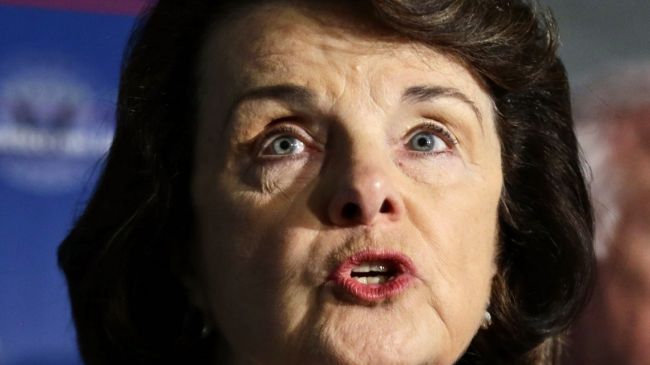
Feinstein And Rogers Try To Scare Americans With Ooga Booga Terrorism Threats
By Mike Masnick | Techdirt | December 2, 2013
It appears that the heads of the Senate and House Intelligence Committees, Senator Dianne Feinstein and Rep. Mike Rogers, are recognizing that their strategy for keeping their co-dependent relationship with the NSA going is failing and that the American public and an increasingly large segment of Congress no longer believes their bogus claims. Perhaps that’s because every time they open their mouths, it takes all of about an hour before many of their claims are completely debunked, if not outright mocked for obviously being bogus. So their latest strategy? To basically yell “Ooga Booga Terrorists!” as loud as they can to try to scare people based on absolutely nothing.
Feinstein and Rogers did a little dance on Sunday political TV shows insisting that “the terrorism threat is increasing” and we’re all going to die if we stop trying to make sure the NSA actually, you know, respects the Constitution. Asked if we were “safer” now than a year or two years ago, Feinstein kicked off the FUD:
“I don’t think so,” Feinstein replied. “I think terror is up worldwide, the statistics indicate that. The fatalities are way up. The numbers are way up. There are new bombs, very big bombs. Trucks being reinforced for those bombs. There are bombs that go through magnetometers. The bomb maker is still alive. There are more groups than ever. And there is huge malevolence out there.”
And Rogers quickly followed:
“I absolutely agree that we’re not safer today for the same very reasons,” he said. “So the pressure on our intelligence services to get it right to prevent an attack are enormous. And it’s getting more difficult.”
Of course, Feinstein’s claim that “terror is up worldwide” is — as is so often the case with her (and Rogers’) claims about terrorism — sorta true, but highly misleading. Yes, recent stats show an uptick in terrorist attacks and fatalities in 2012 — but you can also see that it’s highly variable. Earlier in the year, before the 2012 numbers came out, people were commenting on the fact that terror attacks and fatalities around the globe had been on the decline since 2007. Terrorism is highly variable and dependent on a few big successful attacks. Furthermore, if we look at attacks on the US, we find that there have basically been next to none in the US since 2001. You could make the case that 16 people have died in US “terrorist” attacks since 2001 (including the 13 soldiers killed by Army psychiatrist Maj. Nidal Hasan at Fort Hood), but you have to have a very broad definition of terrorism to do so.
Nearly all of the “terrorist” attacks in that original report that Feinstein is obviously relying on, appear to take place in areas that are considered war zones: Iraq, Afghanistan, etc. And, um, I hate to bring this part up, but part of the reason why those are war zones is because, you know, the US invaded both places. This isn’t to say that there aren’t terrorists out there who would like to attack the US. There clearly are. But it seems highly misleading to make the claims that both Feinstein and Rogers are making here, as the “data” they’re talking about don’t show any heightened risk in the US at all.
Either way, this whole thing — having both appear together, both making vague “we’re all going to die” statements without any details to back it up combined with an exceptionally misleading use of statistics — suggests that this is the typical FUD. It’s Feinstein and Rogers shouting “terror” in a crowded theater, because they know that they’ve already lost public opinion on this, and are quickly losing Congress as well.
13 Palestinians Killed, 374 Kidnapped, In November
By Saed Bannoura | IMEMC | December 1, 2013
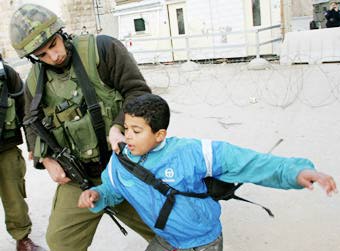
The Ahrar Center for Detainees Studies and Human Rights issued its monthly report Sunday revealing that Israel soldiers shot and killed 13 Palestinians in the West Bank and Gaza in November, while more than 374 Palestinians, including eight women, have been kidnapped.
Ahrar said that, similar to previous months, the southern West Bank district of Hebron witnessed the largest number of Israeli violations, while the army also kidnapped 95 Palestinians.
The Center stated that eight Palestinian women, including two teenagers, were among the kidnapped in Hebron. All kidnapped women, except the two young women, were released later on.
In occupied Jerusalem, soldiers kidnapped 85 Palestinians, including a journalist identified as Mohammad Abu Khdeir, who works for the Al-Quds daily; he was taken prisoner at the Ben Gurion Airport after concluding a visit to Egypt.
In Jenin, the army kidnapped 47 Palestinians, while 45 Palestinians were kidnapped in Nablus, 34 in Bethlehem, 30 in Ramallah, 18 in Qalqilia, 10 in Tulkarem, and one Palestinian has been kidnapped in Jericho.
Israeli soldiers also kidnapped nine Palestinians in the Gaza Strip, including three who allegedly tried to cross the border fence.
The Israeli Navy continued its attacks and assaults against the Palestinian fishermen in the Gaza Strip, and kidnapped four fishermen in Palestinian waters after the soldiers opened fire on them and their boats.
Soldiers also kidnapped a Palestinian patient from the Gaza Strip after he headed to the Erez terminal on his way for medical treatment at a hospital in Jerusalem. Israel granted him a permit to head to Jerusalem, but the soldiers still kidnapped him.
Ahrar added that soldiers also kidnapped a Palestinian from Gaza after he allegedly approached the border fence and “hurled a grenade” at an Israeli military vehicle.
In Jerusalem, soldiers kidnapped two Palestinian women, both teachers, and a young woman was kidnapped at an Israeli military roadblock near the northern West Bank city of Tulkarem. She is a college student from Nablus.
As for Palestinians killed by Israeli military fire in November, Ahrar said that Israeli soldiers shot and killed 13 Palestinians, including four from the Gaza Strip.
The four killed in Gaza have been identified as Rabee’ Baraka, 23, Khaled Mohammad Abu Bakra, 35, Mohammad Rashid Dawoud, 26, and Mohammad Issam Al-Qassam, 23; all were killed after the army bombarded Gaza on November 1st.
In the West Bank, detainee Hasan Toraby, 22, from the northern West Bank city of Nablus, died of cancer at the Al-‘Affoula Hospital after Israel failed to provide him with the needed medical treatment, and only moved him to hospital after having a very serious deterioration in his health condition.
On the night of November 7, resident Bashir Habaneen, 28, a university teacher from the northern West Bank city of Jenin, was shot and killed by soldiers at the Za’tara roadblock, south of the northern West Bank city of Nablus.
On the same night, Anas Al-Atrash, 22, from Hebron, was killed at the Container roadblock, near Bethlehem.
On November 26, soldiers assassinated three Palestinian from the southern West bank city of Hebron. The three have been identified as Mohammad Nairoukh, Mahmoud Najjar, and Mousa Fansha.
On November 28, Mahmoud Awwad, 24, from the central West Bank city of Ramallah, died of serious injuries he suffered in March. He was shot in the head and remained in a coma until his death.
On the same day, a Palestinian child identified as Nour Mohammad Affana, 14, died at an Israeli military roadblock as the soldiers closed the roadblock and prevented an ambulance, transporting her to a hospital in Bethlehem, from crossing.
On November 30, Israeli officers shot and killed Antar Al-Aqdra’, 24, from Qablan town, as he was working in the Petah Tikva area, north of historic Palestine. Twelve workers were taken prisoner.
Furthermore, Ahrar said that Israeli soldiers have escalated their attacks and assaults against Palestinian political prisoners, forced several detainees into solitary confinement, and denied family visits to dozens of detainees.
Palestinian researcher, former detainee and the head of the Ahrar Center, Fuad Al-khoffash, said that Israel’s violations, including deadly attacks and arrests, are ongoing, while extremist Israeli settlers carried out dozens of attacks, as part of organized assaults against the Palestinians, their lands and property, in the occupied West Bank, and occupied Jerusalem.
Spain sets new stiff fines for illegal protests
Press TV – November 29, 2013
The Spanish government has approved a new draft law which imposes harsh penalties on Spaniards taking part in unauthorized anti-government demonstrations, a move criticized by the opposition as trying to silence protests.
The draft law, presented by Interior Minister Jorge Fernandez Diaz on Friday, sets fines of up to 30,000 euros ($40,800) for offenses like torching the national flag, affronting the state or causing serious troubles outside parliament.
Fines of up to 1,000 euros will be imposed on people insulting or intimidating police officers.
Four “very serious” offenses, including interfering in electoral processes and illegal protests at strategic facilities such as airports or nuclear power plants, could be fined up to 600,000 euros (about $1,000,000).
The opposition says the bill is meant to prevent demonstrations against the government as the country struggles with a debt crisis and high unemployment.
“When more than 20 percent of people are unemployed, I don’t think this legislation is what we require,” said Alejandro Tourino, from law firm Ecija.
The government, however, has defended the bill, saying it will create discipline and safeguard public freedoms.
It will help “regulate and protect public freedoms,” said Deputy Prime Minister Soraya Saenz de Santamaria.
Madrid’s harsh spending cuts and rising unemployment have sparked massive anti-government protests across the country in recent years. Protesters argue that the government-imposed measures have failed to curb rising poverty or help extricate the country from its worst recession in years.
The draft law must be approved by parliament, where it may change to some extent. However, it will probably be ratified as the governing party has an absolute majority in the parliament.
Spain has seen numerous protests in recent years. On November 20, students gathered in front of the Education Ministry in Madrid to show their anger at the government’s austerity cuts, rising fees and other changes to the education system.
The Spanish government has been sharply criticized over the austerity measures that are hitting the middle and working classes the hardest.
Battered by the global financial downturn, the Spanish economy collapsed into recession in the second half of 2008, taking with it millions of jobs.
Related articles
Featured Video
Anthrax War – CBC The Passionate Eye
or go to
Aletho News Archives – Video-Images
Book Review
Shattered Dreams: The HPV Vaccine Exposed (2019)
By Christina England – 30 Q&As – Book Review & Summary
Lies are Unbekoming | September 4, 2026
… Gardasil received FDA fast-track approval in 2006, Cervarix followed in 2009, and Gardasil 9 was approved in December 2014 with more than double the aluminium adjuvant content of the original. The commercial context is specific. Merck was about to lose patent protection on Zocor and faced $18 billion in Vioxx injury claims from a cardiovascular drug the company had marketed while suppressing its own data showing a five-times increase in heart attacks. Analysts projected the global HPV vaccine market at $4 billion by 2011, contingent on government-funded national programs for teenage girls. The 1986 National Childhood Vaccine Injury Act had already granted manufacturers complete liability immunity. By 2013, Japan had withdrawn its HPV vaccine recommendation after cataloguing severe adverse reactions in hundreds of girls. No Western government followed. The establishment position across the UK, US, Australia, and most of Europe held, and still holds, that the vaccines are safe and effective, that reported injuries are coincidental, and that cervical cancer prevention justifies the program. The book was published into this position, not against a vacuum.
Shattered Dreams sits alongside Mary Holland’s The HPV Vaccine On Trial and Viera Scheibner’s foundational vaccination work as part of the documented record on what has been done to a generation of teenage girls under the banner of cancer prevention. The full summary unpacks three specific findings: that Merck used the aluminium adjuvant itself as the “placebo” control in 92.5% of trial subjects, making it structurally impossible to detect excess reactions from the adjuvant; that Dr. Sin Hang Lee found HPV DNA fragments bound to aluminium in every one of sixteen Gardasil samples tested, and in the blood and spleen of a New Zealand girl six months after her third dose; and that in every country with high vaccination coverage, including Australia, the UK, Norway, and Sweden, cervical cancer rates have stopped declining and started rising specifically in the vaccinated cohort. Martínez-Lavín’s 2017 calculation puts the number needed to seriously harm with Gardasil 9 at 140, and the number needed to vaccinate to prevent one case at 1,757. Thirteen young women are seriously harmed for every one who benefits. The vaccine was approved on the basis of trials that could not detect what the trials were supposed to detect, and it is still being given to twelve-year-olds today. … Read full review
Blog Roll
 Aletho News
- The Maidan Killings and the False-Flag Case
- Georgia’s Largest Healthcare System Will Fire Employees Who Refuse Flu Vaccine
- The Five-Year Fuel Crisis: Why the World Economy Is Paying for a War It Thinks Is Ending
- Trump’s Big Bluff on Iran
- Swiss scammed out of millions by Ukraine-linked call centers – media
- Germany facing potential ‘violent conflict’ with Russia – spy chief
- Ukraine’s EU neighbors reject new plea from Kiev – Politico
- British Transport Police Facial Recognition Trial Scanned 926,912 People With Zero Arrests
- House Bill Would Ban Federal Use of Flock ALPR Data
- Can a Spice Rival a Drug? 10 Head-to-Head Trials Put It to the Test.
- If Americans Knew
- “We See Our Homes Now From A Satellite, Like Strangers”
- Watch “Gaza: Doctors Under Attack”, originally censored by BBC
- NAZA: Israeli embassies in UK and US promote rival documentary to challenge Gaza genocide allegations
- David Ellison appoints Israeli to lead merged Paramount-Warner studios
- Turkish Red Crescent helps elderly Gaza man walk again after Israel confiscates his prosthetic limb
- Four Palestinians Killed in Israeli Attacks in Gaza
- Two Palestinian youths killed and village razed as Israeli attacks on West Bank continue
- Two more Christian women victims of Israeli raids on Gaza
- Cruelty, Deprivation, Indignity: A Journalist’s 22 Months in Israeli Prison
- New IDF Website Frames Slain Gaza Journalists as Terrorists
- No Tricks Zone
- Latest European Green Energy Debacle; Portugal’s Largest Flagship Solar Park Insolvent!
- Green Energy Debacle: German Expert Professor Fritz Vahrenholt Warns Of Severe Economic And Social Consequences
- Two More Paleo Reconstructions Affirm Meters-Higher Sea Levels Across Ireland, Brazil 7000-6000 Years Ago
- New Study: Earth And Venus Surface Warmth Largely Explained By Convection And Lapse Rate, Not CO2 Or Radiation
- 2025 Nature Paper Claiming Worsening Global Drought Gets RETRACTED …Heavily Flawed
- New Study: ‘Global Drought Shows No Detectable Recent Acceleration Under Climate Warming’
- Economic Masterminds: German Socialists Suggest Taxing Productivity Gains Stemming From Using AI
- The South China Sea Has Not Been Cooperating With The Climate Change Narrative
- Energy Crisis: Germany Enters Heating Season With Historically Low Gas Reserve Fill Levels
- New Study: The Antarctic Ice Sheet Gained Mass From 2020-2024 Due To Staggering Snow And Ice Accumulation

