When Can the President Assassinate Americans?
By Daniel McCarthy | American Conservative | December 30th, 2011
The New York Times puts this question to the GOP contenders. Sophistry ensues. “Under what circumstances, if any, would the Constitution permit the president to authorize the targeted killing of a United States citizen who has not been sentenced to death by a court,” the paper asks. Gingrich, Huntsman, Perry, and Romney take the same line: “Under wartime circumstances” says Newt; “If such an individual is engaged on a battlefield,” says Huntsman; “Due process permits the use of deadly force against all enemy combatants, including citizens,” Romney avers; and “The President would be so authorized … where a citizen has joined or is associated with a nation or group engaged in hostilities against the United States” according to Perry. Only Ron Paul describes the conditions in which extrajudicial targeted killing of Americans is permitted as “none.”
The others engage in Orwellian obfuscation, claiming that “battlefield” circumstances permit this — as if the situation the Times is asking about is one in which some American terrorist is shooting away at U.S. troops in combat or about to detonate a bomb on American soil. But that isn’t “targeted” killing. The practice Huntsman, Gingrich, Romney, and Perry — and President Obama — defend includes the assassination of Americans who are, in Perry’s words, only “associated with a nation or group engaged in hostilities.” In fact, the power claimed by these men goes far beyond that since, again, this is extrajudicial killing, in which there is no obligation for the executive to provide evidence to a judge or anyone else that the murdered man is guilty of what Uncle Sam accuses him of.
Stripped of the evasions, what they are saying is that you or anyone else can be killed if the president thinks — or claims to think — that you are “associated” with “a nation or group” that is engaged in hostilities with the United States. Janet Reno would approve. This doctrine would have saved her some crocodile tears over the slaughter of the Branch Davidians at Waco. Even the unarmed women and children there, after all, were “associated” with a group engaged in hostilities with the United States.
Needless to say, there are Americans who join extremist groups, but existing law-enforcement powers and military doctrines already permit killing them when they are actually engaged in acts of deadly violence. The Republicans’ invocations of a “battlefield” might sound reassuring, until you realize that the recently passed National Defense Authorization Act, according to two of its supporters, Sens. Lindsey Graham (R-S.C.) and Kelly Ayotte (R-N.H.), designates even the U.S. itself as a battlefield. The whole world is one.
I have trouble taking these claims to more-than-royal power seriously; more precisely, I have trouble ascribing good faith to the intellectuals who try to justify an omnipotent presidency. But it’s a nominally free country, so let them have their say, in elections as well as op-ed pages and the corridors of our think tanks and universities. It seems to me, though, that we ought to hear from those who believe in a limited and law-bound executive as well. Ron Paul shouldn’t be alone in this. The public needs to know what’s at stake here and just how few political leaders think there should be any restraints at all on the power of the president to kill.
Of Exclusivity, Loyalty and Liberation of Palestine
Jewish-Only Organizations . . . A Closer Look
By Nahida the exiled Palestinian | Uprooted Palestinians | January 1, 2011
Due to recent events of alienation and/or expulsion of members of Palestine Solidarity Movement, including Palestinians, it became more and more evident that there are elements in the Solidarity Movement who continue to stir up friction and splits amongst activists, that leads to alienation of many genuine activists and even exiled Palestinians.
Such elements also continue to cause distraction by filtering information to prevent members from understanding the role of the larger Jewish community world wide in influencing their respective governments to support “Israel”, and to prevent from understanding the impact of the presence of racist ideology on the standpoints and attitudes of the Jewish communities, and the implication of such ideology on Palestinians;
This state of affairs should raise alarm to anyone interested in Justice and Peace, that means anyone who works to put an end to decades of Palestinian suffering, and its slow genocide, and to anyone who understands that such high objectives require promoting the Liberation of Palestine.
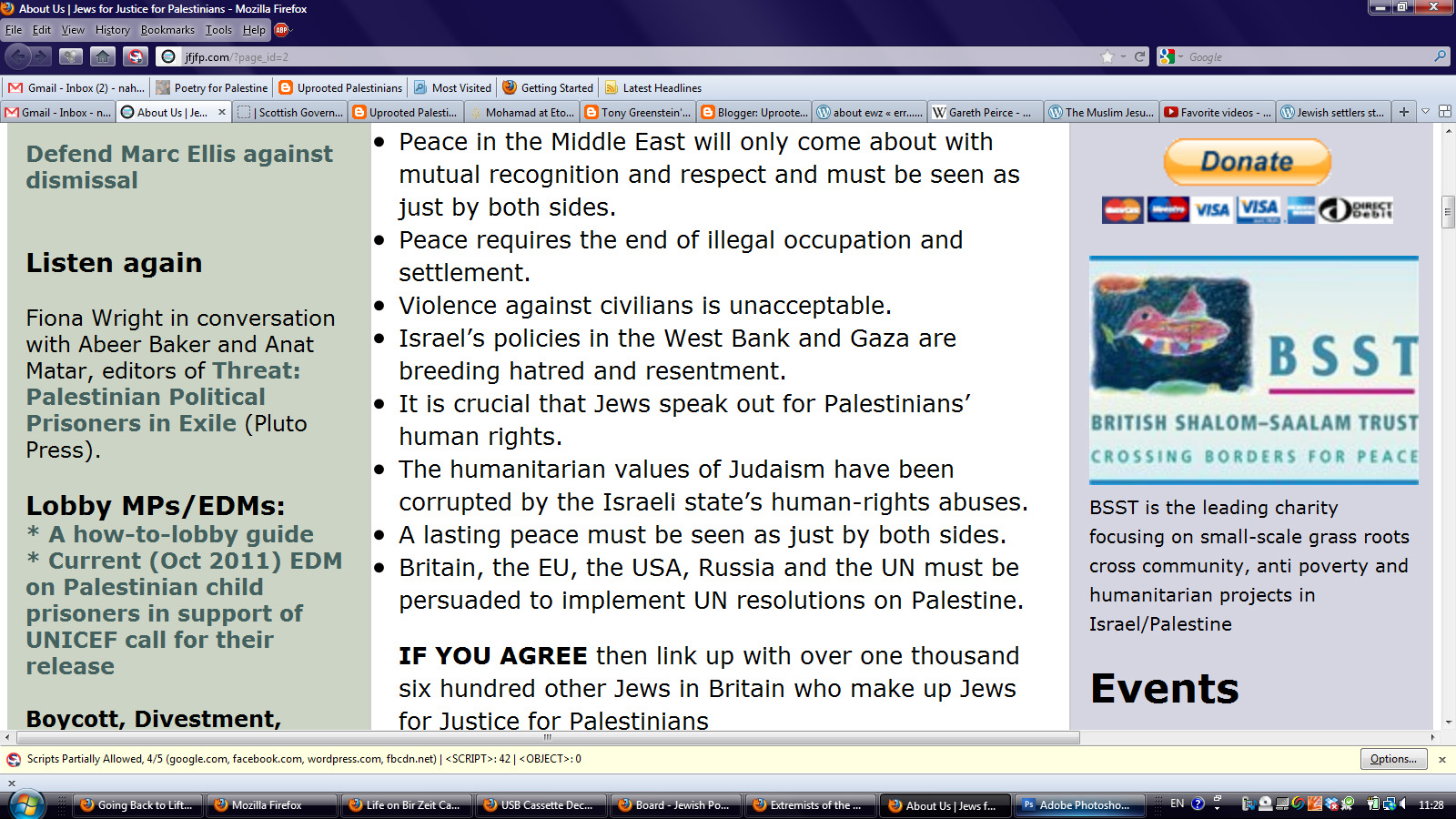
It is also apparent that many of these destabilizing elements are simultaneously members of OTHER organizations, which membership approval operates through exclusivity, and restricted only to people of Jewish background.
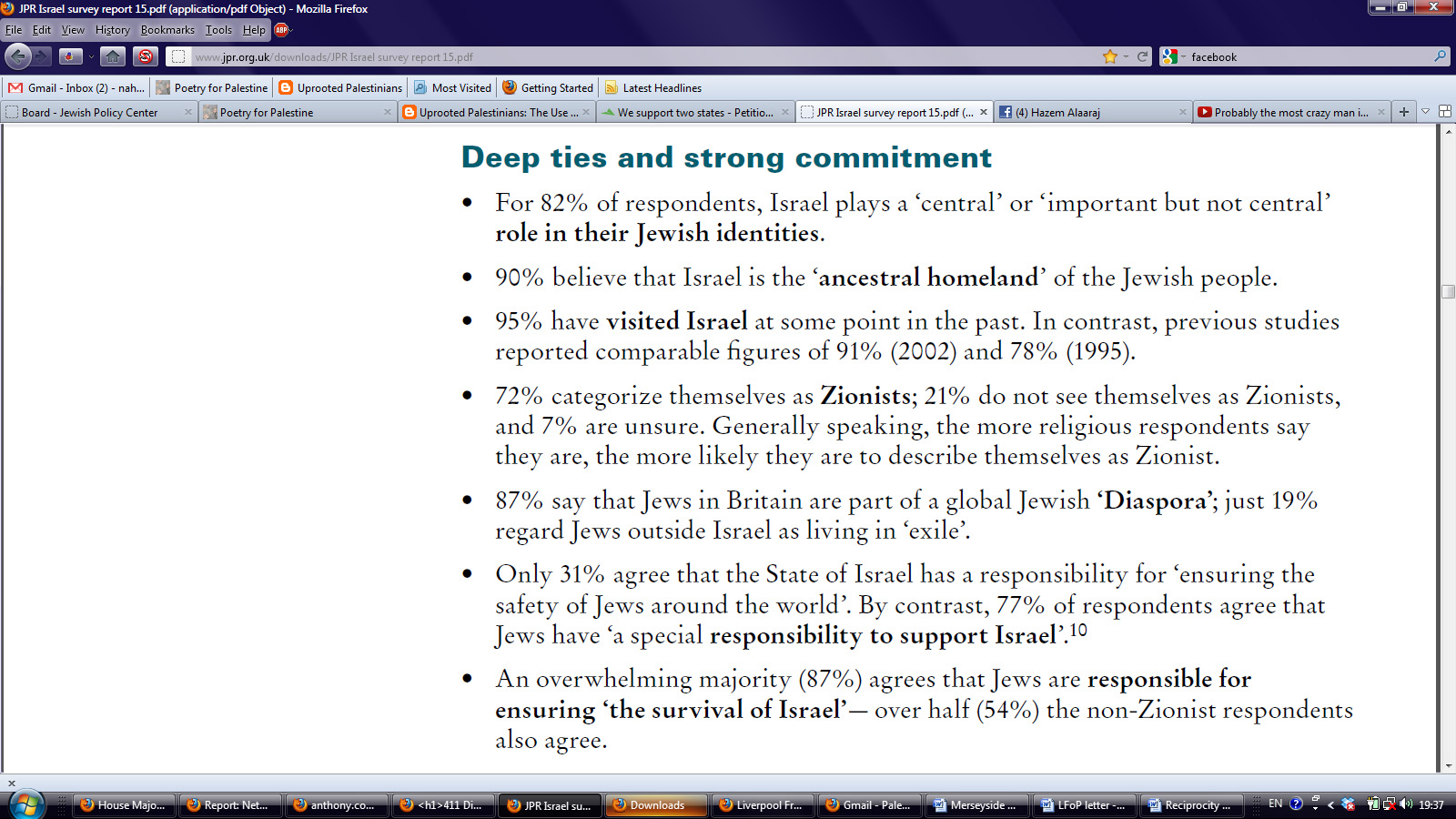
Moreover, it is manifest that many of these Jewish-only organizations declare publicly that their prime motive for their activism is out of concern for the welfare of “Israel” and the “Israeli society”. Worse, some of these organizations do not even conceal that their criticism of “Israel” is done out of “love” and loyalty to this criminal entity. Simply put, they criticise and condemn “Israel” primarily to protect and help it thrive and survive.
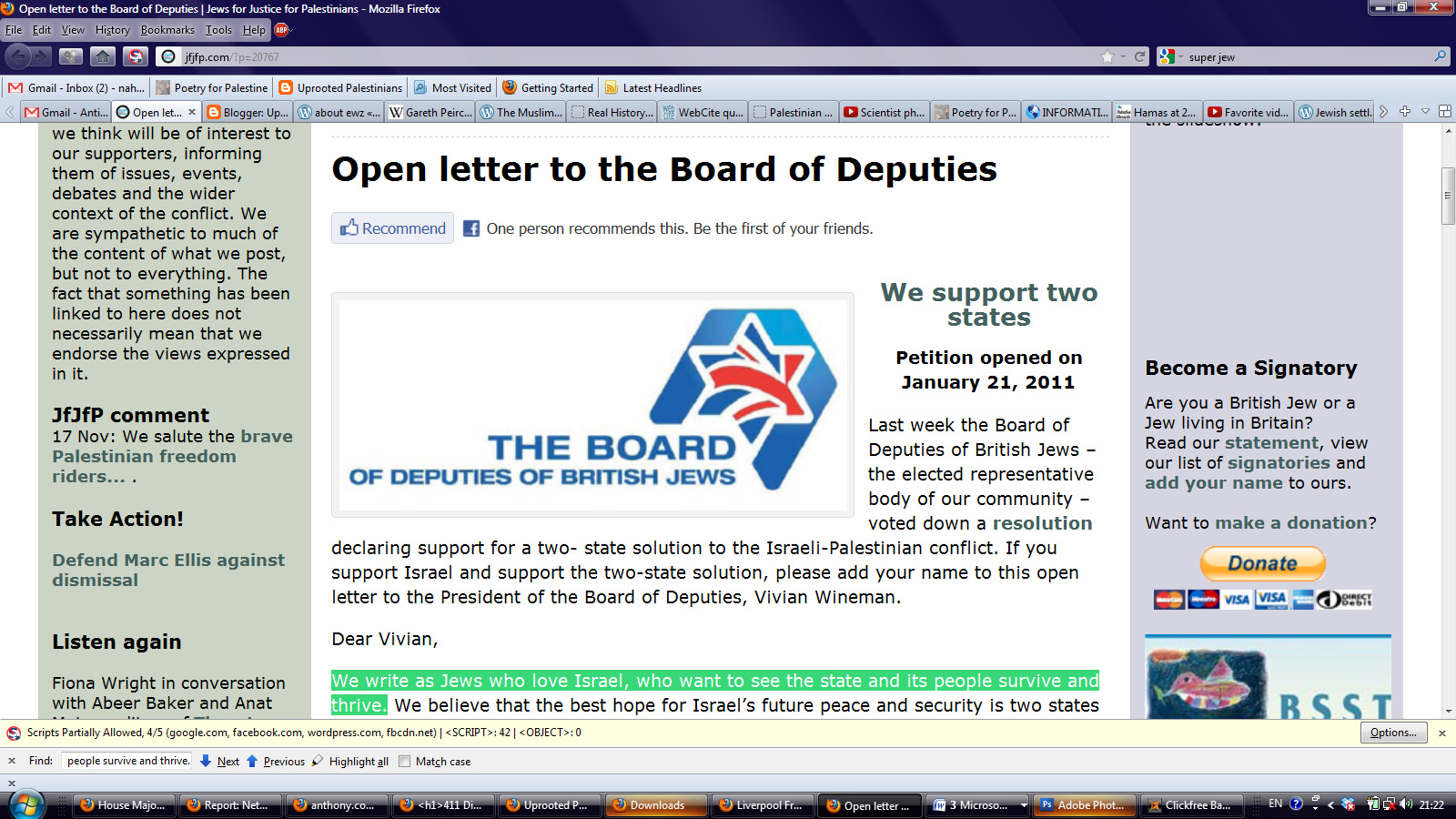
This kind of blind allegiance and deep loyalty to “Israel” is of course expected from and omnipresent amongst hyper-Zionists and their circles, but it is quite disturbing to find the same loyalty amongst “supporters of Palestine” of Jewish background. It is also interesting to notice that even hyper-Zionists, through their think tanks, have recently arrived at the same conclusion that their counterparts, Jewish anti-Zionists, have known for decades; namely open criticism of “Israel” IS the best way to defend it. As we can see for example, in Mick Davis’s article: “Open debate is our best way of defending Israel in the diaspora,” The Jewish Chronicle, 17 June 2010. The article also appears on the website of the Jewish Chronicle under the title “Defending Israel in the diaspora”.
Through my research and extensive work, it became evident that the prime allegiance of many Jewish anti-Zionist organizations is not to Palestine or the Palestinians; their loyalty is to “Israeli” Jews and to the artificially manufactured “Israeli” society. It also seems clear that the prime motive for the activism of many members of such organizations is the concern for the welfare and future of “Israelis” and the perpetuation of their colonial society.
Factual and thorough scrutiny of these organizations invariably indicates that their primary concern and main focus are the following:
How to best consolidate and reinforce a good, secure and thriving future for the INVENTED *** “nation” of “Israel”, on the Historical Land STOLEN from its ancestral inhabitants, the Palestinians;
How to best disculpate the Jewish communities worldwide from their responsibility of decades of financial, political, moral and even military support of their “beacon of light”, “Israel”;
How to best further the interests of such invented “nation”, after the finalization of their imposed facts on the grounds, and getting rid of the banner of Zionism;
How to best ensure and secure the permanent presence of an invading settler society after grabbing most of the LAND of Palestine by wars of terror and conquest;
How to best pacify and allure Palestinians into accepting foreign violent invaders as rightful co-owners of Palestine and future “partners”;
How to best promote “Israeli” settler society as “liberal peace-loving”, whose main concern would be to live in peace and security, but who just happened to be “unfortunately” plagued with corrupt leadership;
How to best conceal that their garment of humanism and thin veneer of ethics is directed principally at “saving Israelis from themselves” and thereby their own reputation, rather than unconditional and altruistic protection of the dispossessed, terrorised, besieged and occupied Palestinians, and their moral cause of Liberation.
How best to divert the limited energy of activism into supporting the “Israeli peace camp”, “Israeli” organizations, and “Israeli” individuals and treat as angels and heroes those who exhibit a minuscule dose of normal human behaviour;
Dual-loyalty to two opposed parties, one being the torturer, and the other being his victim, is in practice a myth. Thus it is not surprising that those involved operate in secrecy, in the exclusion of “the other side”.
While non-Jewish candidates are barred from becoming members, by definition membership to Jewish-only organizations is open to ANY person from Jewish background. This makes it piece of cake for Sayanim, Mossad agents, Shin Bet and Zionist sympathisers to effortlessly infiltrate, manipulate and steer such organizations. No wonder then, that so many Jewish-only groups who claim to be “pro-Palestinian” appear to be more interested with aims more in tune with securing the presence of “Israelis” in Palestine, than the restoration of Palestinian sovereignty.


This brings us to the core problem: while those members of Jewish only organizations have the privilege (and rightly so) to be members and never excluded from pro-Palestinian organizations, the opposite is not true. i.e we are faced with an alarming phenomenon whereby, Palestinians and non-Jewish individuals are systematically excluded from participating, having an input, debating, voting, influencing or even being informed about or simply being aware with the inner dynamics and the type and topics of discussions that take place inside such Jewish only organizations.
The outcome of such asymmetrical and non-mutual arrangement is what we have seen lately, matters are discussed amongst these exclusive groups, decisions are taken, and then the pro-Palestinian organizations are approached, persuaded, pressured or coerced to adhere to those propositions and motions.
The secrecy and lack of transparency surrounding that type of activities is allowing inside the solidarity movement people who are not necessary or entirely genuine supporters of Palestine, “fair-weather friends”, people who are in essence more interested in the long term “Israeli” interest, than genuine support of Palestine. At best, their claimed care for the suffering of the oppressed society come secondary.
Signing petitions, giving out leaflets, stating words of support, throwing some crumbs to Palestinians, accompanied with patronizing pats on the shoulders, believing that they have done their humanistic “duty” of siding with justice, while simultaneously continuing to aim and work for securing the right of the invading “Israelis” to practice their “self determination” in someone else Homeland, reflects no doubt ethical blindness and almost moral bankruptcy. Imposing on Palestine forced marriage with a rapist monster is an obscenity.
Such ethical inconsistency of crying with the victim while protecting the criminal, is a regrettable case of hypocrisy and self deception.
Throughout the Palestinian movement, recent events reveal that some people on board of our movement deleterious to the Palestinian cause and some probably are disingenuous. Thus, such unhealthy, asymmetrical and exclusionary structures are indeed destabilizing and crippling the efficiency of Palestine Solidarity Movement, an efficiency vital to a Palestinian population under threat of annihilation… these are not trivial matters.
As a matter of principle, we refuse to apply the same exclusionary methods amongst pro Palestinian organization and will never resort to such racist exclusiveness. We cannot continue to claim to be humanist anti-racist while accepting simultaneously, the exclusionary nature applied by such organizations, especially in the light of compromised loyalty, and what we know about the sinister Mossad activities and the ease with which they infiltrate such groups.
It is therefore essential to crack open the shells of exclusion and secrecy, wherein topics of discussions are about “unfavourable” information to filter, which debates to “allow” and where to draw boundaries, and sinister attacks against activists who might not conform to “permissible” lines of discourse are cooked.
Under such conditions, it is imperative for the Palestine Solidarity movement to introduce a regulation that will allow room for transparency and reciprocity. Failure to address this issue would cause the continuation and aggravation of the crippling shift that has already befallen the movement.
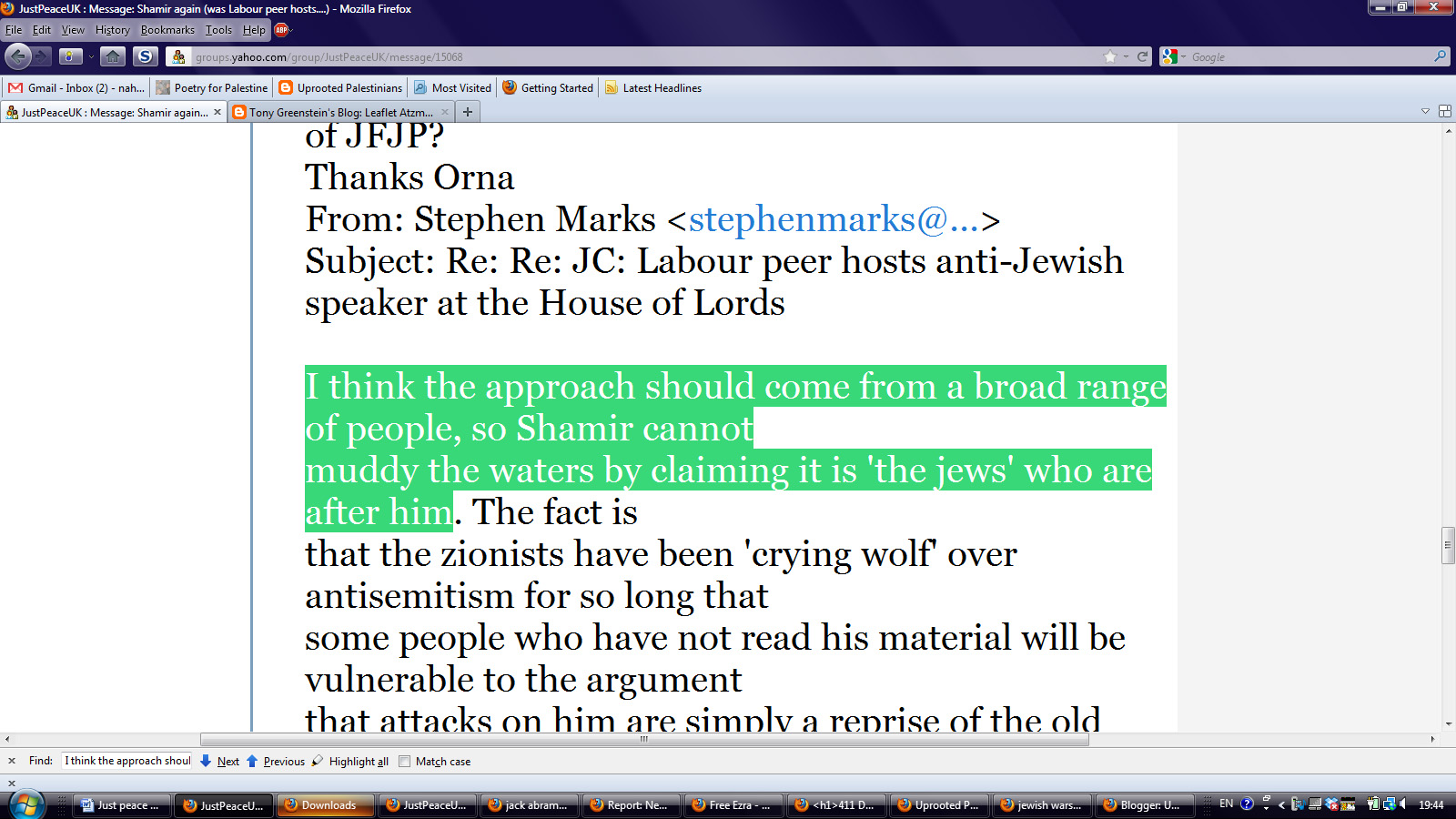
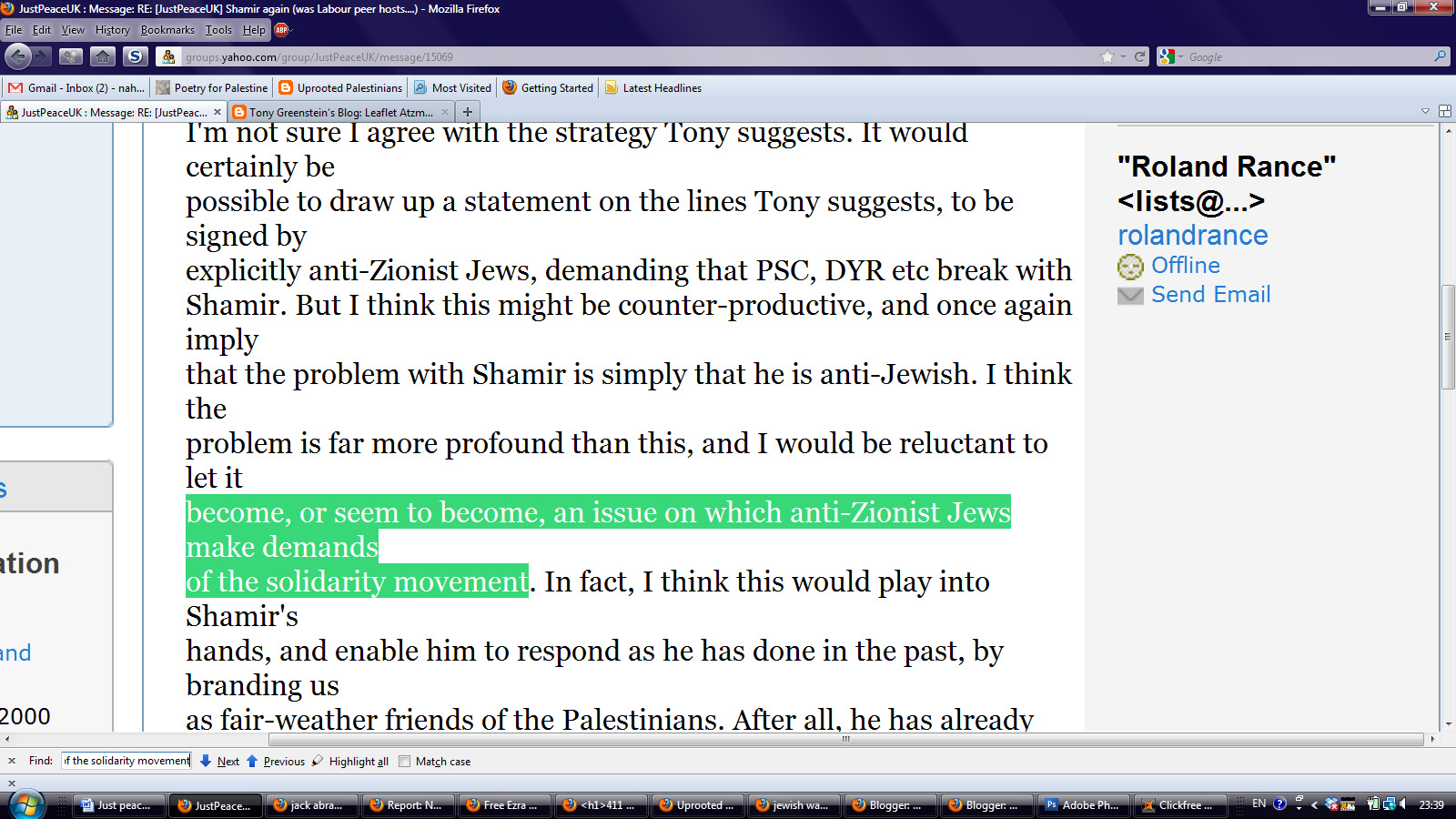
Whereas some Jewish-anti Zionist supporters call for a two state solution with a thriving and secured Israel they love, whereby they actively support the theft of 80% of Palestine;
Whereas some others insist that the only solution should be a one secular state, one member one vote, whereby they establish a precondition that would not only exculpate the occupiers from any responsibility or blame but also grant the occupier lands that do not belong to them, rights that they have not earned and protection that they don’t deserve.
Whereas, many of those Jewish “anti-Zionists” are full members of the Palestinian movements and have the privilege to be part of and to vote in any organization they desire;
Whereas, they continue to exclude Palestinians and other non-Jewish individuals from being part of and voting in their Jewish-only organizations;
Whereas, Zionist methods of false accusations of anti-Semitism / Holocaust denial are used to neutralize and exclude, or push away certain members of the Solidarity Movement, including Palestinian refugees! (a crass mirror of the ethnic cleansing happening in Palestine);
Whereas, Jewish anti-Zionist individuals and groups have the right to vote and have the weight to even tilt the vote, have access to the minutes of meetings and have the privilege of being heard and their opinions respected in the broader solidarity movement;
Whereas, such affiliated Jewish groups do generally restrict their membership to Jews, hence barring non-Jewish persons from participating, or from having the right of access to their meetings as an observer, let alone from a vote within their tightly knit fellowship;
Whereas, the fundamental element of trust about the authenticity of intentions, about motivation, aims, and actions of such groups, has been profoundly shaken;
It appears evident that:
To put an end to this predicament, the exclusionary nature of such organizations must be revoked, and the fair and mutual openness to membership without discrimination against race, culture or religion must be requested.
The Solidarity Movement needs to have a system of disclosure of political affiliation of its prospective members, making it a contractual obligation of disclosure of their membership to any hitherto Jewish-only organization, or to any other organization linked to either the Palestinian cause, or to the occupiers of Palestine aka “Israelis”.
Representatives of the Solidarity Movements must have the mutual right to have access to and to be fairly represented in the insofar exclusive Jewish-only organizations, in equal numbers, and have rights to vote in these organizations.
To avoid any further mistrust, friction, crippling or fragmentation, reciprocity and mutual open membership is the way forward.
New Report: “Recording Everything” Details How Governments Can Shape the Dynamics of Dissent
By Brandon Turbeville | Activist Post | December 29, 2011
A recent Brookings Institution report has now confirmed what many have suspected for some time – that the United States government (and virtually every other government in the world) has the capability to monitor and record nearly every interaction that occurs within its national borders.
For years, those individuals who have tried to warn others of the creeping surveillance state were met with denials and catcalls of “conspiracy theory,” as well as the famous claims that it was not physically possible to monitor everyone.
This new report, however, shatters into a million pieces the delusional rationalities of the uninformed.
The Brookings Institution report entitled, “Recording Everything: Digital Storage as an Enabler of Authoritarian Governments” (.pdf) discusses the increasing capacities for surveillance due to the improvement in technology and the sinking costs of its procurement, along with the implications for human rights and authoritarianism that come along with it.
The report begins by stating:
Within the next few years an important threshold will be crossed: For the first time ever, it will become technologically and financially feasible for authoritarian governments to record nearly everything that is said or done within their borders – every phone conversation, electronic message, social media interaction, the movements of nearly every person and vehicle, and video from every street corner. Governments with a history of using all of the tools at their disposal to track and monitor their citizens will undoubtedly make full use of this capability once it becomes available.
Although the study suggests that governments will make use of this technology “once it becomes available,” anyone who has done even cursory research into the technological and intelligence capabilities of major governments is aware that, when technologies are announced to the general public, the actual capabilities of these governments to harness that technology are light years ahead of what is being announced. Indeed, the technology itself is almost always already obsolete before it’s theoretical presentation is even offered up for digestion by the mass population.
It is also interesting to note that John Villasenor, the author of the study, makes continual reference to the “world’s remaining authoritarian regimes,” specifically those of Syria, Iran, Burma, and China, but completely leaves out those of the United States, Australia, Israel, and Great Britain to name a few. This is no doubt an intentional propaganda move. However, the reader should not dismiss reality in the same manner as Villasenor.
Obviously, Villasenor and the Brookings Institution know full well that the United States and virtually the entire Western World has become an authoritarian surveillance society, yet the Western nations are left out of the description due to the fact that the report functions more as a promotion of the technology than a warning. The Brookings report is an introduction flyer to the professorial, foundational, and cultural working class (those individuals who gradually implement the totalitarian system consciously, but often unconsciously as well). In this sense, the report is clearly not a study.
It is for this reason that the report focuses on oppressive governments in the Middle East, Africa, and Asia. But it is also because these nations are to be the next target of direct military action by the Anglo-American empire. The Libyan tragedy is referenced repeatedly in the report, but only in the context of Ghaddafi’s surveillance capabilities within his own country.
Without seeking to reinforce the lies told about the Ghaddafi regime or the status of the Libyan people over the last year, it is nevertheless interesting to mention the surveillance capabilities of the regime as they are summed up by the Brookings report. Villasenor cites a Wall Street Journal article that claims Ghaddafi’s intelligence agencies were able to “capture and archive “30 to 40 million minutes of telephone conversations every month and to regularly read emails exchanged among activists.” All of this by a regime that was relatively weak, particularly in its ability to stave off an outside invasion of NATO bombing and foreign intelligence subversion conducted by much more sophisticated nations.
Villasenor goes on to say, “The Ghadaffi regime was unusual among dictatorships only in that its internal spying activities were so thoroughly unmasked, not that they were occurring.” This much is true.
However, the reader must turn this reasoning back toward his own country and ask, If a weak Ghaddafi regime was capable of so much surveillance of its own people, and if these types of spying activities are commonplace amongst governments, would it not stand to reason that the United States government, which is light years more advanced than the Libyan one, can and is conducting surveillance against its own citizens as well? Not only that, since the capabilities of the U.S. government are so much more than that of Ghadaffi and Ghadaffi-like regimes, it would also stand to reason that U.S. government surveillance is being conducted at immensely more sophisticated levels. The same goes for any Western nation.
If the Libyan government is unique only in that its surveillance has been unmasked, what then of the Bush-era domestic surveillance program or the openness of the American government in monitoring Twitter feeds, social networking sites, or even the legal declarations of surveillance carried in the PATRIOT Act, the Telecommunications Act, and Patriot Act 2? These programs have not been unmasked. They are freely admitted. Is it even imaginable, then, the true capabilities that exist in the recesses of the military and intelligence communities in our own nation?
Although Villasenor limits his discussion to the next targets of the Anglo-American empire, his statements are easily transposed to apply to those nations who currently have such capabilities and who have already implemented them under the cover of popular acceptance and “democratic” methods — meaning, simply, the lack of resistance from the general public by virtue of their lack of knowledge or their lack of concern.
Villasenor writes:
. . . the evolving role of digital storage in facilitating truly pervasive surveillance is widely recognized. Plummeting digital storage costs will soon make it possible for authoritarian regimes to not only monitor known dissidents, but also to store the complete set of digital data associated with everyone within their borders. These enormous databases of captured information will create what amounts to a surveillance time machine, enabling state security services to retroactively eavesdrop on people in the months and years before they were designated as surveillance targets. This will fundamentally change the dynamics of dissent, insurgency, and revolution.
That is, if the information isn’t already available publicly on the “revolutionaries’” Facebook page. Indeed, something similar has already been used in England after the bizarre riots that overtook the country months ago. Facial recognition software was able to identify (or so it was claimed) many of the rioters who were arrested after the riots had subsided.
However, what Villasenor is describing is the ability to build detailed digital dossiers on individuals, full of incriminating evidence gleaned through everyday, normal, social interactions, that can be called on at any minute to build a case against an individual for daring to question the State. All of it, of course, will be there. The angry Facebook post made in a fit of rage against the government; the email to Monsanto that seems “threatening;” or the telephone conversation where one procured an illegal substance for a weekend of fun.
But the question still remains for some, “How would it be possible to monitor and store so much information?”
Villasenor provides some interesting analysis in regards to the declining costs of storage technology and also the increase in the capability of that technology. In terms of cost, he writes:
Over the past three decades, storage costs have declined by a factor of 10 approximately every 4 years, reducing the per-gigabyte cost from approximately $85,000 (in 2011 dollars) in mid-1984 to about five cents today. In other words, storage costs have dropped by a factor of well over one million since 1984. Not surprisingly, that fundamentally changes the scale of what can be stored.
In terms of storage capability, the analysis is quite shocking, especially to those who may have doubted the technological advancements available to major governments, militaries, and intelligence agencies. Villasenor writes:
So what, exactly would it take to store everything? The answer depends in part on the nature of the information. Location data is far less voluminous than audio from phone calls, which in turn requires much less storage than video.
Location data, which is readily obtained from mobile phones, Wi-Fi connections, and GPS receivers, can already easily be archived. It takes fewer than 75 bits (ones and zeros) to pinpoint a person’s location anywhere on the earth to an accuracy of about 15 feet. The information identifying the location of each of one million people to that accuracy at five-minute intervals, 24 hours a day for a full year could easily be stored in 1,000 gigabytes, which would cost slightly over $50 at today’s prices. For 50 million people, the cost would be under $3,000.
The audio for all of the telephone calls made by a single person over the course of one year could be stored using roughly 3.3 gigabytes. On a per capita basis, the cost to store all phone calls will fall from about 17 cents per person per year today to under 2 cents in 2015.
The current prices of such technology, much less the projected prices a few years from now, are shockingly low considering the scale of surveillance that would be, and probably is, taking place. Given the figures above, if the United States population is 300 million, the cost of storing the location data of everyone in the country for a year would be approximately the cost of a low-wage job, around $18,000. This is hardly a large sum of money for any government.
Ignoring, for a moment, Villasenor’s obvious bias against Syria and Iran, his estimate surrounding the costs of these governments’ surveillance programs are somewhat revealing if for nothing else than their relation to our own government’s ability and potential to implement the same type of program.
He continues:
For a country like Syria, which has a population of 15 million people over the age of 14, the current cost to purchase storage sufficient to hold one year’s worth of phone calls for the entire country would be about $2.5 million – a high number but certainly not beyond governmental reach. If historical cost trends continue, the annual cost in 2011 dollars to purchase enough storage for Syria’s government to record all calls made in that country will fall to about $250,000 by 2016 and to about $25,000 by 2020. Iran has an over-age-14 population of 59 million, so the corresponding cost to the Iranian government to record all calls in Iran would be about four times higher than in Syria. Cost will soon be no object for internal security services wishing to store everything said on a telephone in Syria, Iran, or even in a much more populous nation such as China.
Or the United States, one might add. Or Great Britain. Or Australia . . . add your country of choice here. By now, you should be getting the point.
In regards to video surveillance, Villasenor’s predictions are not much different after taking into account the difference in the type of surveillance data being absorbed and retained.
The report states:
By 2020 the cost to store, in high resolution, all of the video acquired by the Chongqing network [Chinese surveillance that equals one camera for every 24 people in an area of 12 million] will drop to a much more practical $3 million per year. On a per capita basis this corresponds to about 25 cents per person per year, an amount that can easily be budgeted or even extracted from the population being monitored through a euphemistically worded ‘public safety tax.’
Keep in mind, the costs presented here are those to which the public would be subjected if they were to engage these systems in the marketplace, which, of course, they will not be doing. These figures are, essentially, mark-up value. They do not take into account where these surveillance technologies were originally developed, such as institutions within the government, military, and intelligence communities themselves which would, by definition, give governments cheaper and greater access to them.
DARPA immediately comes to mind in the context of this discussion. Such an agency is full of money black holes, black budgets, and secret projects that not only would aid in the development of such technology, but also its implementation without the knowledge of the citizenry. Such has been the case many times before. Must the national collection of blood at birth be mentioned again in order to jog the reader’s memory?
The implications for stifling dissent need not be summed up at this point in this article. It is fairly obvious that such broad and far-reaching surveillance would necessarily significantly damage the ability of the general public to resist, be it planned or out-of-the-blue, any form of tyranny the regime wishes to place upon them.
Nevertheless, consider the report’s extensive comments on the effects that such surveillance would have on dissent, revolution, and “insurgency.”
But the ability to record everything will tilt the playing field back in favor of repressive governments by laying the foundation for a plethora of new approaches to targeting dissent. When all of the telephone calls in an entire country can be captured and provided to voice recognition software programmed to extract key phrases, and when video footage from public spaces can be correlated in real time to the conversations, text messages, and social media traffic associated with the people occupying those spaces, the arsenal of responses available to a regime facing dissent will expand. Some changes will be immediate and tactical. Instead of implementing broad social media or Internet shutdowns in response to unrest, governments in possession of complete communications databases will be able to conduct more selective censorship or alteration of message traffic during periods of instability. This will provide a great capability to shape or quell dissent.
The report also mentions the ability to go back in time and build a detailed case against the dissenter, even if the evidence compiled is somewhat circumstantial.
Pervasive monitoring will provide what amounts to a time machine allowing authoritarian governments to perform retrospective surveillance. For example, if an anti-regime demonstrator previously unknown to security services is arrested, it will be possible to go back in time to scrutinize the demonstrator’s phone conversations, automobile travels, and the people he or she met in the months and even years leading up to the arrest.
Villasenor correctly asserts that the implementation of such open surveillance will have a chilling effect on activism and dissent. This goes without saying since activists and dissenters are now aware that anything they say is being listened to and recorded for purposes of prosecution.
Thus, the report reads:
There are also longer-term consequences that include a thinning of the ranks of regime opponents. By definition, organized dissent requires that dissenters have the ability to exchange information. Prominent opponents of repressive governments have learned to expect tracking of their movements and interception of their phone calls and other forms of electronic communications. But when technology enables an entire country’s worth of communications to be intercepted, the circle of people whom dissidents will be able to recruit to their ranks will narrow.
In addition, knowledge that communications are archived will reduce the willingness of dissidents to speak frankly even over encrypted communications. . . . Awareness of the likelihood that all messages – including those that are encrypted – will eventually be read by security services will chill dissent.
No doubt, in light of this new Brookings Institution report, along with other means of surveillance such as palm scans, vein scans, iris scans, voice and facial recognition as well as emotion detectors, we are entering an era in which dissent will truly require an individual to make a decision whether or not his principles are worth his freedom or even his life.
We, as American citizens — or any other citizen for that matter — must make our voices heard and our presence felt while we still can. It is up to us whether or not the Brave New World we enter into will be marked by courage and consciousness, or the grip of a scientific dictatorship.
~
Brandon Turbeville is an author out of Mullins, South Carolina. He has a Bachelor’s Degree from Francis Marion University where he earned the Pee Dee Electric Scholar’s Award as an undergraduate. He has had numerous articles published dealing with a wide variety of subjects including health, economics, and civil liberties. He also the author of Codex Alimentarius – The End of Health Freedom, 7 Real Conspiracies and Five Sense Solutions. Brandon Turbeville is available for podcast, radio, and TV interviews. Please contact us at activistpost (at) gmail.com.
Israeli occupation forces round up 17 Palestinians including journalist, minors
Palestine Information Center – 28/12/2011
NABLUS — Israeli occupation forces (IOF) blasted their way into the home of Palestinian journalist Amin Abu Warda at the entrance to Balata refugee camp east of Nablus city on Wednesday before taking him away.
The wife of the journalist said that the soldiers encircled the building before dawn and isolated all males, her husband and his brothers who are all living in the same building but in different apartments, and checked their IDs then took away Abu Warda.
Abu Warda, 46, was about to obtain a doctorate in electronic journalism from Malaysia and is considered one of the most prominent Palestinian bloggers. He worked for Quds Press as a correspondent for 15 years and owns a media office in Nablus.
Local sources said that IOF troops rounded up 16 other Palestinians citizens in a rabid arrest campaign on Wednesday including two minors in Al-Khalil province and four Jerusalemites from Alezariye village to the east of occupied Jerusalem.
Confronting intimidation, working for justice in Palestine
Ilan Pappe | The Electronic Intifada | 27 December 2011

Demonstration in commemoration of the killing of Mustafa Tamimi, Nabi Salih, West Bank (16 December 2011). (Oren Ziv/ActiveStills)
If we had a wish list for 2012 as Palestinians and friends of Palestine, one of the top items ought to be our hope that we can translate the dramatic shift in recent years in world public opinion into political action against Israeli policies on the ground.
We know why this has not yet materialized: the political, intellectual and cultural elites of the West cower whenever they even contemplate acting according to their own consciences as well as the wishes of their societies.
This last year was particularly illuminating for me in that respect. I encountered that timidity at every station in the many trips I took for the cause I believe in. And these personal experiences were accentuated by the more general examples of how governments and institutions caved in under intimidation from Israel and pro-Zionist Jewish organizations.
A catalogue of complicity
Of course there were US President Barack Obama’s pandering appearances in front of AIPAC, the Israeli lobby, and his administration’s continued silence and inaction in face of Israel’s colonization of the West Bank, siege and killings in Gaza, ethnic cleansing of the Bedouins in the Naqab and new legislation discriminating against Palestinians in Israel.
The complicity continued with the shameful retreat of Judge Richard Goldstone from his rather tame report on the Gaza massacre — which began three years ago today. And then there was the decision of European governments, especially Greece, to disallow campaigns of human aid and solidarity from reaching Gaza by sea.
On the margins of all of this were prosecutions in France against activists calling for boycott, divestment and sanctions (BDS) and a few u-turns by some groups and non-governmental organizations (NGOs) in Europe caving in under pressure and retracting an earlier decision to cede connections with Israel.
Learning firsthand how pro-Israel intimidation works
In recent years, I have learned firsthand how intimidation of this kind works. In November 2009 the mayor of Munich was scared to death by a Zionist lobby group and cancelled my lecture there. More recently, the Austrian foreign ministry withdrew its funding for an event in which I participated, and finally it was my own university, the University of Exeter, once a haven of security in my eyes, becoming frigid when a bunch of Zionist hooligans claimed I was a fabricator and a self-hating Jew.
Every year since I moved there, Zionist organizations in the UK and the US have asked the university to investigate my work and were brushed aside. This year a similar appeal was taken, momentarily one should say, seriously. One hopes this was just a temporary lapse; but you never know with an academic institution (bravery is not one of their hallmarks).
Standing up to pressure
But there were examples of courage — local and global — as well: the student union of the University of Surrey under heavy pressure to cancel my talk did not give in and allowed the event to take place.
The Episcopal Bishops Committee on Israel/Palestine in Seattle faced the wrath of many of the city’s synagogues and the Israeli Consul General in San Francisco, Akiva Tor, for arranging an event with me in September 2011 in Seattle’s Town Hall, but bravely brushed aside this campaign of intimidation. The usual charges of “anti-Semitism” did not work there — they never do where people refuse to be intimidated.
The outgoing year was also the one in which Turkey imposed military and diplomatic sanctions on Israel in response to the latter’s refusal to take responsibility for the attack on the Mavi Marmara. Turkey’s action was in marked contrast to the European and international habit of sufficing with toothless statements at best, and never imposing a real price on Israel for its actions.
Do not cave in to intimidation
I do not wish to underestimate the task ahead of us. Only recently did we learn how much money is channeled to this machinery of intimidation whose sole purpose is to silence criticism on Israel. Last year, the Jewish Federations of North America and the Jewish Council for Public Affairs — leading pro-Israel lobby groups — allocated $6 million to be spent over three years to fight BDS campaigns and smear the Palestine solidarity movement. This is not the only such initiative under way.
But are these forces as powerful as they seem to be in the eyes of very respectable institutions such as universities, community centers, churches, media outlets and, of course, politicians?
What you learn is that once you cower, you become prey to continued and relentless bashing until you sing the Israeli national anthem. If once you do not cave in, you discover that as time goes by, the ability of Zionist lobbies of intimidation around the world to affect you gradually diminishes.
Reducing the influence of the United States
Undoubtedly the centers of power that fuel this culture of intimidation lie to a great extent in the United States, which brings me to the second item on my 2012 wish list: an end to the American dominance in the affairs of Israelis and Palestinians. I know this influence cannot be easily curbed.
But the issue of timidity and intimidation belong to an American sphere of activity where things can, and should be, different. There will be no peace process or even Pax Americana in Palestine if the Palestinians, under whatever leadership, would agree to allow Washington to play such a central role. It is not as if US policy-makers can threaten the Palestinians that without their involvement there will be no peace process.
In fact history has proved that there was no peace process — in the sense of a genuine movement toward the restoration of Palestinian rights — precisely because of American involvement. Outside mediation may be necessary for the cause of reconciliation in Palestine. But does it have to be American?
If elite politics are needed — along with other forces and movements — to facilitate a change on the ground, such a role should come from other places in the world and not just from the United States.
One would hope that the recent rapprochement between Hamas and Fatah — and the new attempt to base the issue of Palestinian representation on a wider and more just basis — will lead to a clear Palestinian position that would expose the fallacy that peace can only be achieved with the Americans as its brokers.
Dwarfing the US role will disarm American Zionist bodies and those who emulate them in Europe and Israel of their power of intimidation.
Letting the other America play a role
This will also enable the other America, that of the civil society, the Occupy Wall Street movement, the progressive campuses, the courageous churches, African-Americans marginalized by mainstream politics, Native Americans and millions of other decent Americans who never fell captive to elite propaganda about Israel and Palestine, to take a far more central role in “American involvement” in Palestine.
That would benefit America as much as it will benefit justice and peace in Palestine. But this long road to redeeming all of us who want to see justice begins by asking academics, journalists and politicians in the West to show a modicum of steadfastness and courage in the face of those who want to intimidate us. Their bark is far fiercer than their bite.
The author of numerous books, Ilan Pappe is Professor of History and Director of the European Centre for Palestine Studies at the University of Exeter.
Antiwar.com: Helping to do today what was done covertly 45 years ago by the CIA
By Maidhc Ó Cathail | The Passionate Attachment | December 27, 2011
What is Stephen Zunes, the well-paid chair of the academic advisory committee of Peter Ackerman’s International Center on Nonviolent Conflict, doing on the radio show of Antiwar.com, whose self-proclaimed “initial project was to fight against intervention in the Balkans”?
As William I. Robinson, the author of the seminal critique of the democracy-manipulating establishment, Promoting Polyarchy: Globalization, US Intervention, and Hegemony, has written:
That Ackerman is a part of the U.S. foreign policy elite and integral to the new modalities of intervention under the rubric of “democracy promotion,” etc., is beyond question. There is nothing controversial about that and anyone who believes otherwise is clearly seriously misinformed or just ignorant.
Mehanna verdict compromises First Amendment, undermines national security
US Citizen Convicted of Providing ‘Material Support’ to Terrorists
ACLU | December 20, 2011
BOSTON — The following statement on the conviction today of Tarek Mehanna may be attributed to American Civil Liberties Union of Massachusetts executive director Carol Rose:
“The ACLU of Massachusetts is gravely concerned that today’s verdict against Tarek Mehanna undermines the First Amendment and threatens national security.
“Under the government’s theory of the case, ordinary people–including writers and journalists, academic researchers, translators, and even ordinary web surfers–could be prosecuted for researching or translating controversial and unpopular ideas. If the verdict is not overturned on appeal, the First Amendment will be seriously compromised.
“The government’s prosecution does not make us safer. Speech about even the most unpopular ideas serves as a safety valve for the expression of dissent while government suppression of speech only drives ideas underground, where they cannot be openly debated or refuted.
“The ACLU believes that we can remain both safe and free, and, indeed, that our safety and our freedom go hand in hand.”
The ACLU of Massachusetts has condemned the use of conspiracy and material support charges where the charges are based largely on First Amendment-protected expression.
In Mr. Mehanna’s case, the charges against him have been based on allegations of such activity, such as watching videos about “jihad”, discussing views about suicide bombings, translating texts available on the Internet, and looking for information about the 9/11 attackers. Historically, government prosecutors have used conspiracy charges as a vehicle for the suppression of unpopular ideas, contrary to the dictates of the First Amendment and fundamental American values.
After the ACLU of Massachusetts submitted a memorandum of law in support of Mehanna’s motion to dismiss the parts of the indictment against him that were based on protected expression, U.S. District Court Judge George O’Toole denied permission for the memorandum to be filed with the court. A copy of the memorandum is available here.
For more information, go to:
http://aclum.org/usa_v_mehanna
City lights spy on Farmington Hills, Michigan
RT | 01 November, 2011

City lights spy on Farmington Hills, Michigan
In Farmington Hills, Michigan, things just got a whole lot creepier. Officials say the installation of ten new high-tech light posts will curb crime and cut energy costs for the Midwest community.
All the townspeople have to do in return is give up their privacy.
Farmington Hills just became the first city in America to host a state-of-the-art system of lampposts that make up something called the Intellistreets system. Farmington Hills native Ron Harwood worked over ten years to make the project a reality, and as of Friday his dream had fully come to fruition. For his neighbors that dream of a future where their every move won’t be monitored, however, they might want to think about heading out of Michigan.
Simply put, the Intellistreets project is a system of Internet-connected luminaries that communicate with one another across the city. In addition to lighting the area, they can broadcast verbal and written messages, monitor rainfall and give directions.
According to their own website, the system is also great for “data harvesting.”
Not only does Intellistreets offer information about the neighborhood and provide light, it also monitors the conversations of pedestrians, records video, monitors foot-traffic and counts heads — all of which is recorded and stored for possible analysis. And according to Harwood, the tiny 80,000 community of Farmington Hills isn’t going to be the only town using his technology — Detroit, Chicago and Pittsburgh have placed orders and the inventor claims that he is in talks with the Department of Homeland Security.
“This is not a system with spook technology,” Harwood tells WXYZ News. To placate that argument, however, one must be comfortable knowing that their every move and whisper is recorded and monitored by a network of computers between posts that can be controlled by a central hub, iPhone or tablet.
Harwood’s cohort, Illuminating Concepts business development director Jeff Stribbell has the same thoughts. At the unveiling of the system in Farmington Hills last week, Stribbell acknowledged that the posts do make recordings — but that doesn’t mean you should be scared.
“These issues of security don’t always mean that you’re being videotaped. They mean, in some cases, that you’re being informed,” said Stribbell.
Harwood himself adds that he thinks airport body scanners are more invasive than his own system. Regardless of which one he favors, it is no lie that the two are totally on par with one another. And although a festive media event accompanied the ribbon-cutting last week, outlets are quickly ignoring Harwood’s claims of using the technology to better the community and are dismissing them for the sneaky truth.
“The transformation of street lights into surveillance tools for Homeland Security purposes will only serve to heighten concerns that the United States is fast on the way to becoming a high-tech police state,” Infowars reported recently. Even abroad, London’s Daily Mail has singled out the project for infringing on civil liberties.
As a backlash began to hit Intellistreets, the company removed a YouTube video that offered an eerie insight into the surveillance capabilities, touts itself as “The solution for all college campuses” and discusses the system’s ability to store and analyze data. The video was also quick to once again note the Homeland Security features which have the potential to link up to government agencies. Infowars has since responded, asking, “If Intellistreets is such a cutting-edge concept that presents an array of wonderful benefits, as the promo video claims, then why remove it from You Tube?”
“Now that the company has tried to hide the video, it will only generate more suspicion about the true purpose behind Intellistreets and the level of involvement on behalf of Homeland Security,” reads a blog post on the site.
At $3,000 a piece, IntelliStreets luminaries have the potential of lowering energy costs by adjusting brightness to match the appropriate atmosphere and location. Additionally, the company says it has an endless number of entertainment options and can serve as a public address system of sorts and offer advertisements up to passersby. That’s right — it records video, counts heads and spews propaganda! When you put it that way, it’s no wonder that Harwood is in cahoots with Homeland Security.
As of Friday, Farmington Hills has nearly a dozen of the posts, which was afforded through $791,300 in federal Energy Efficiency and Conservation Block Grant (EECBG) funds the city was awarded in 2009.
America.gov, Cognitive Infiltration, and Obama appointee Cass Sunstein
By Shawn Hamilton | Daily Censored | November 21, 2011
I first became aware of Cass Sunstein’s ideas for controlling conspiracy theories after seeing several ads for a web site called America.gov run by the State Department. It’s a complex, well-funded site with more avenues than I’ve cared to examine, but what caught my attention was the section under International Relations: Peace and Security called “Conspiracy Theories and Misinformation” with the astounding caption: “Conspiracy theories exist in the realm of myth, where imaginations run wild, fears trump facts and evidence is ignored.”
I clicked through its pages for a while in amazement. The tone sounded like the writer was talking to a five-year-old, and the content played fast and loose with the truth.
Alarmed, but intrigued, I went to the section called “U.S. Domestic” and read, “Perhaps more conspiracy theories surround Lee Harvey Oswald, who assassinated President John Kennedy in 1963, than anyone in American history. The Soviet KGB, Cuba, the mafia, the CIA, and others have been blamed for killing Kennedy, but all evidence indicates that Oswald acted alone.”
I found that curious. It’s common knowledge that the House Select Committee on Assassinations (HSCA) concluded in 1979 that there had been a probable conspiracy in the JFK assassination. I remember when it happened. That conclusion was reported for one day then dropped. “Oswald acted alone” was a hyperlink, so I clicked it to read a summary of Oswald based on Vincent Bugliosi’s 2007 book on the JFK assassination, Reclaiming History. It was the only source cited. The writer of the summary was a guy named Todd Leventhal, who I later learned is Chief of the Counter-Misinformation Team for the U.S. Department of State. The site describes Leventhal as “the Department’s expert on conspiracy theories and misinformation—stories that are untrue, but widely believed,” adding—and I found this unintentionally comic—that he enjoys reading obituaries….
This link has since been suspended.
Overall, the site seems to employ several basic strategies of deception. It mixes items that aren’t true with ones that are, draws “evidence” from single sources (and not the most credible ones), provides evidence that proves nothing but is presented as if it does, and presents partial information that fails to tell the whole story.
Dan Roggenkamp, an English professor in Taiwan, observed, “I’ve noticed that this government site relies a lot on the ‘it’s simply not true’ line of logic. Maybe if they say that enough, people will believe it.” I note that Hitler believed the same thing about the “Big Lie”.
Shortly after my initial encounter with America.gov, I went to “politicalassassinations.com,” a web site run by John Judge, to check a reference. Judge is a respected researcher, activist and public speaker whose primary focus over many years has been the assassinations of the Kennedy brothers and Dr. Martin Luther King, Jr. “You can call me a conspiracy theorist,” I once heard Judge say, “if you call everyone else a coincidence theorist.”
Judge prefers to call himself “an alternative historian.”
I wrote to him asking if he knew the source of America.gov, and he responded saying the likely source is White House appointee, Cass Sunstein, who wrote about countering conspiracy theories by infiltrating and confusing what he called “extremist groups” that believe in them. Judge quotes Sunstein as having said, “We suggest a distinctive tactic for breaking up the hard core of extremists who supply conspiracy theories: cognitive infiltration of extremist groups, whereby government agents or their allies (acting either virtually or in real space, and either openly or anonymously) will undermine the crippled epistemology of believers by planting doubts about the theories and stylized facts that circulate within such groups, thereby introducing beneficial cognitive diversity.”
That seems to describe the America.gov site pretty well.
“Sunstein said government agents ‘might enter chat rooms, online social networks, or even real-space groups and attempt to undermine percolating conspiracy theories by raising doubts about their factual premises, causal logic or implications for political action,’” Judge continued. “Sunstein defined a conspiracy theory as ‘an effort to explain some event or practice by reference to the machinations of powerful people, who have also managed to conceal their role.’” Judge said some examples Sunstein offers include “The theory of global warming is a deliberate fraud” and “The view that the Central Intelligence Agency was responsible for the assassination of President John F. Kennedy.”
I should also note that I tried to post a comment to a page about Oswald on the America.gov site, along with only four already there, pointing out the fact that the HSCA had concluded there had been a probable conspiracy in the Kennedy Assassination. According to the site, comments are posted if they are on-topic and respectful. Mine was received but subject to moderation.
Then it disappeared.
I posted another with the same result. I mentioned this to Judge, who explained, “Several JFK researchers I alerted to the site could not post there. That alone should be revealed.”
In 2010 theologian David Ray Griffin wrote a book called Cognitive Infiltration that analyzes Sunstein’s arguments in “Conspiracy Theories,” the formal essay presenting his strange views, and points out their contradictions. Sunstein’s real target, Griffin suggests, is the 9/11 Truth movement. I was late in reading and reviewing his book (my review is #40 of 41 on Amazon.com, called “A Noble Lie,”), but with the help of a political philosopher, I think I got a good sense of what Sunstein is up to. You can also find the review here.
Recently I asked Griffin if he had any comments to make about the general reaction to Cognitive Infiltration. He responded saying he has been astounded that virtually all the reviews on Amazon.com are 5-star reviews —the highest rating. Of the 41 reviews, all had five stars except for one, which gave the book four stars but still praised it. “Moreover, many of the reviews are extremely thoughtful, showing that the 9/11 Truth Movement has attracted some of the best minds in the English-speaking world,” Griffin said, noting that the most important question raised by Sunstein’s essay is the one I discuss in the final paragraph of Review #40. If Sunstein believes, as he purports, that the 9/11 Truth Movement’s central claims are ‘demonstrably false,’ why would he have recommended that this movement should be infiltrated by government agents?
“If Sunstein really considered these claims to be demonstrably false, would he not simply have explained exactly why these claims are false?” Griffin wonders. “If Sunstein believes the leaders of the 9/11 Truth Movement to be laughably ignorant, as his description of them as ‘epistemological cripples’ suggests, would he not expect their movement – like the campaigns of some of the Republican Party’s presidential hopefuls-to self-destruct?”
Griffin also points out that the correctness of the 9/11 Truth Movement’s claims is illustrated by the fact that 9/11 professional organizations continue to grow. “When I published Cognitive Infiltration, there were slightly more than 1,200 professional members of Architects and Engineers for 9/11 Truth. Today (November 17, 2011), the number has increased to 1,637,” he said.
I should mention that I wrote a letter to Sunstein in September of 2010 requesting an interview from him or someone in his office. I know his office received it because I registered the letter and someone signed for it. Over a year later, I have received no response, not even the usual polite formality of a cleverly-worded refusal.
If it’s not clear by now, Orwell’s future nightmare has become our present reality. Sunstein’s intellectual antics along with propaganda sources like America.gov serve the intentions of a government agency that, like the Ministry of Truth in the novel 1984, disseminates lies in the guise of protecting truth.
It’s not easy these days resisting the powerful tide of public opinion, especially when those opinions are shaped by deceptive agencies whose agenda is control. At least those who advocate incorrect conspiracy theories believe they are correct even if they’re not. Paid “counter-disinformation” experts know perfectly well when they’re lying.
“There was truth and there was untruth, and if you clung to the truth even against the whole world, you were not mad” the narrator says in 1984. This is our challenge. We don’t have to accept this kind of manipulation. In fact, it’s our obligation as Americans and global citizens to resist it.
Occupation forces set up tent next to the home of liberated captive
 Palestine Information Center – 03/12/2011

AL-KHALIL — Israeli occupation forces on Saturday afternoon set up a tent on the roof of a house adjacent to the house of liberated captive Randah Shahatit from the village of Abu Seif to the south of Dor in al-Khalil district in the southern Gaza Strip.
Sources close to liberated captive Shahatit told the PIC correspondent: “IOF troops boarding four military vehicles raided the village in the afternoon and they built a tent on the roof of a house belonging to Ismail Shawamra, adjacent to the home of liberated captive Randah Shahatit.”
The sources added that the soldiers were still on the roof at the time of the writing of this report and that when Shahatit went out of her home to visit a friend in the village the soldiers were watching.
Villagers are staying in their homes fearing the IOF have aggressive intentions.
The IOF troops raided the home of liberated captive Shahatit last Sunday and summoned her to Etsion interrogation centre to the south of al-Khalil on Wednesday where she was warned of participating in any activities and that she was being watched by the occupation army.
Israeli army targets PFLP in dawn raids
Ma’an – 01/12/2011

JENIN – Israeli troops detained 22 people in dawn raids across the West Bank on Thursday, including nine leaders of the Popular Front for the Liberation of Palestine.
An Israeli military spokeswoman said 22 people were taken for questioning, including 10 in the northern West Bank city of Jenin.
PFLP officials said a large force of 20 army jeeps raided Jenin and detained nine PFLP leaders. Among them are student union chief Nasser Abu Aziz, 57, local councilor Alam Sami Masad, 45, popular committee member Fada Zgheebe, 46, and his 61-year-old brother Salah Abdullah Zgheebe, a lawyer, as well as Mohammad Abu al-Haija, 35.
Witnesses told Ma’an that Israeli soldiers ransacked homes without regard for women’s privacy, the presence of children or the health of those detained. Abu Aziz is sick and Abu Abu al-Haija is disabled, they added.
The raid was the second operation targeting the leftist faction in the last month. In November, 13 PFLP leaders were detained in Ramallah and Jenin.
Featured Video

Houthis Don’t Have to Conquer Saudi Arabia to Make It Pay
or go to
Aletho News Archives – Video-Images
From the Archives
Newly Released FBI Docs Shed Light on Apparent Mossad Foreknowledge of 9/11 Attacks
By Whitney Webb | MintPress News | May 17, 2019
NEW YORK — For nearly two decades, one of the most overlooked and little known arrests made in the aftermath of the September 11 attacks was that of the so-called “High Fivers,” or the “Dancing Israelis.” However, new information released by the FBI on May 7 has brought fresh scrutiny to the possibility that the “Dancing Israelis,” at least two of whom were known Mossad operatives, had prior knowledge of the attacks on the World Trade Center. … continue
Blog Roll
 Aletho News
- MEP blasts ‘Euro-Gestapo’ for lecturing Russia on democracy
- Syria May Send Troops to Saudi Arabia Amid War with Ansar Allah
- UK whines about losing billions to ‘Putin tax’
- Baghaei to Rubio: Distorted narratives cannot erase US record of broken commitments
- Houthis Don’t Have to Conquer Saudi Arabia to Make It Pay
- MOE: Nearly 22,000 Students and Education Workers Killed
- Guterres in Islamabad: Genocide, cowardice, and the cage of Imran Khan
- Johnson, Marandi say Yemen holds upper hand over Saudi Arabia
- False flags won’t save aggressors, Iran FM spokesman says
- The Makkah Pact Enters Into Force: The End of American Dominance or Its New Form?
- If Americans Knew
- Report claimed Mark Levin used by Israeli government to influence Trump
- Over 2,000 Gazans have died awaiting medical evacuation amid Israel’s continued siege
- How a U.S. Diplomat Suppressed and Altered Reports Critical of Israel
- 5 Palestinians Die from Israeli Strikes in Gaza as Relentless Attacks Continue
- Report: Ceasefire Slows Killing but Leaves Devastation Intact
- Country Music Singer Zach Bryan Breaks Attendance Record at Robert Kraft’s Gillette Stadium While Wearing ‘Free Palestine’ Shirt for Second Night in a Row
- Three years of death and devastation: Israel’s war on Gaza in pictures
- Why Hamas believed the status quo was more dangerous than its 7 October gamble
- Debunking Israel’s latest list of ‘terrorist’ journalists in Gaza
- In Gaza, focus is on survival, “every step is a struggle” – Daily Update
- No Tricks Zone
- New Study: 50 Years Of The Most Aggressive ‘Net Zero’ Policies Can Only Affect The Global Climate By 0.03°C
- US September “Heat” Was No Record…Many Records Set Decades Ago
- Latest European Green Energy Debacle; Portugal’s Largest Flagship Solar Park Insolvent!
- Green Energy Debacle: German Expert Professor Fritz Vahrenholt Warns Of Severe Economic And Social Consequences
- Two More Paleo Reconstructions Affirm Meters-Higher Sea Levels Across Ireland, Brazil 7000-6000 Years Ago
- New Study: Earth And Venus Surface Warmth Largely Explained By Convection And Lapse Rate, Not CO2 Or Radiation
- 2025 Nature Paper Claiming Worsening Global Drought Gets RETRACTED …Heavily Flawed
- New Study: ‘Global Drought Shows No Detectable Recent Acceleration Under Climate Warming’
- Economic Masterminds: German Socialists Suggest Taxing Productivity Gains Stemming From Using AI
- The South China Sea Has Not Been Cooperating With The Climate Change Narrative

