Military court convicts anti-wall leader
Ma’an – 24/08/2010
BETHLEHEM — An Israeli military court on Tuesday found the leader of a West Bank protest movement guilty of incitement and organizing illegal demonstrations.
Abdallah Abu Rahmah of Bil’in, near Ramallah, could face jail time for his leadership in the popular campaign against Israel’s wall, which severs the West Bank village for to protect nearby settlements.
The verdict was read in a military courtroom packed with friends, supporters, and family members, concluding an eight-month trial. Diplomats from Europe including a representative of the European Union attended.
According to his supporters, Abu Rahmah’s conviction was based only on testimonies of minors who were arrested in the middle of the night and denied legal counsel despite significant ills in their questioning.
The court threw out two charges, stone-throwing and arms possession, activists said. The arms charge was over Abu Rahmah’s collection of used tear-gas projectiles and bullet cases, the indictment said.
“This absurd charge is a clear example of how eager the military prosecution is to use legal procedures as a tool to silence and smear unarmed dissent,” the Popular Struggle Coordination Committee said in a statement.
Abu Rahmah’s case was the first time the prosecution had used the organizing and participating in illegal demonstrations since the First Intifada, the committee said.
Military law defines illegal assembly in a much stricter way than does Israeli civilian law, in practice forbidding more than 10 people from assembling without receiving a permit from the military.
Abu Rahmah was detained in December during a night raid, but he “did not find himself behind bars because he is a dangerous man,” the committee insisted.
“Abdallah, who is amongst the leaders of the Palestinian village of Bil’in, is viewed as a threat for his work in the five-year unarmed struggle to save the village’s land from Israel’s wall and expanding settlements.”
Abdallah is the recipient of the the Carl Von Ossietzky Medal for Outstanding Service in the Realization of Basic Human Rights, which awarded by the International League for Human Rights in Berlin.
Holocaust ‘denier’ death, Mossad linked
Press TV – August 22, 2010

Dariusz Ratajczak
American writer JP Bellinger does not rule out the the involvement of Israeli spy agency, Mossad, in the tragic death of a Polish historian, who was researching on the Holocaust.
Dariusz Ratajczak, a former professor at the University of Opole, was found dead in a car parked near a shopping center in Opole on June 11, 2010.
Forensic reports indicated that the body was in the car for nearly two weeks, but was in an advanced state of decay, suggesting that it was moved to car long after Ratajczak’s death.
“After being questioned, a number of witnesses told the police that the car had only recently been parked there,” Bellinger wrote in his article.
“Professor Ratajczak’s death was ruled a ‘suicide,’ but skeptical people, perhaps bearing in mind the recent arrest of a Mossad assassin operating in Poland, are asking how a person in an advanced stage of decomposition was able to drive to a public parking lot and park a car?” he inquired.
He was referring to Uri Brodsky, Mossad agent accused of helping fake a German passport that was used by one of the members of a hit squad involved in the killing of Mahmoud al-Mabhouh, a senior Hamas commander, in a Dubai hotel in January.
Bellinger went on to say that Ratajczak’s troubles began with the publication of his booklet, “Dangerous Topics,” in March 1999 for which he was convicted of Holocaust denial in Poland.
“What possesses greater intrinsic value? Maintaining the mainstream version of the Holocaust at any cost or the life of a single human being whose only offence was to engage in historical research in a quest for the truth?”
Ratajczak believed it was not possible to kill millions of people in the Nazi gas chambers — a view that provoked a firestorm of criticism among his contemporaries and Israel’s lobbies.
Michael Sobelman, the spokesman the Israeli Embassy in Poland, accused Ratajczak of anti-Semitism and expressed “surprise” that “such a man works at a Polish university.”
Sobelman’s comment preceded Ratajczak’s expulsion from the University of Opole.
Ratajczak believed that the charge of anti-Semitism had become a sort of exceptionally brutal weapon, which the “establishment” uses ruthlessly against independent thinking men.
“What hurts me most is that I found myself in a group of historians who have been muzzled. After all, please see: from 45 years to now the number of Jews murdered in Auschwitz-Birkenau has dropped from six million to less than one million. It’s official data. Indeed, even if they had killed one man, that would be a tragedy. But how is it that some historians may legitimately question the numbers of the Holocaust, and others can not? How is it that some people can reduce the six million to less than a million and nothing bad is happening to them? How is it that some people are not allowed to examine this subject and even be wrong, while other historians are allowed all this?” Ratajczak commented.
Bellinger says disturbing news of Ratajczak’s death shocked some traditionalist and patriotic organizations in Poland, and concludes by asking, “Is questioning the holocaust, or holocaust ‘denial’ of more intrinsic worth than the life of any human being?”
Israel tells schools not to teach nakba
Jonathan Cook | The National | August 21, 2010
NAZARETH // Government officials warned Israeli teachers last week not to cooperate with a civic group that seeks to educate Israelis about how the Palestinians view the loss of their homeland and the establishment of the state of Israel in 1948.
Israel’s education ministry issued the advisory after Zochrot – a Jewish group that seeks to raise awareness among Israeli Jews of the events of 1948, referred to as the “nakba” by Palestinians – organised a workshop for primary school teachers.
The ministry said the course had not been approved and told teachers not to participate in Zochrot-sponsored activities during the coming school year.
In a letter to the education ministry protesting against Zochrot’s activities, the Legal Forum for the Land of Israel, an advocacy group for Jewish settlers, had called the group’s educational materials “part of a criminal vision to wipe Israel off the face of the earth”.
It was unclear whether participants in the workshop for primary school teachers would be punished, but a teacher identified as a trainer for the seminar might be investigated by the education ministry, the Jerusalem Post reported.
The warning is the latest move by the education ministry, headed by Gideon Saar, a member of the prime minister Benjamin Netanyahu’s right-wing Likud party, to use school curricula to advance a more strident Zionist agenda.
In March, for instance, the ministry banned Israeli schools from distributing a booklet for children about the Universal Declaration of Human Rights. Critics had objected to parts of the declaration that refer to freedom of religion and protection of asylum-seekers.
The ministry’s latest move involves the controversies that still swirl over the events that led to the creation of the Jewish state in 1948 – what Israelis describe as their “War of Independence” and what Palestinians call the nakba, Arabic for “catastrophe”.
Eitan Bronstein, Zochrot’s director, said the ministry was trying to “frighten off” teachers from learning about a period in Israel’s history that until now, he said, had been presented in schools only from a “triumphalist perspective”.
The group, which was founded eight years ago and whose Hebrew name means “remembering”, has provoked controversy by organising visits to some of the hundreds of Palestinian villages destroyed by the Israeli army during and after the 1948 war.
Zochrot members place signposts at the former villages using their original Arabic names, and bring Palestinian refugees back on visits, upsetting Jewish residents who live in communities built on those lands.
In recent months, Zochrot has concentrated on developing a programme on the nakba for schools, allowing teachers to address the subject from a Palestinian perspective for the first time.
Mr Bronstein said more than 300 high school teachers had asked for Zochrot’s information kits over the past year, and a few primary school teachers had started to show an interest too. That has provoked a backlash from education officials and right-wing groups.
“A small but growing number of teachers are curious about the nakba and want to find out more,” he said. “The problem is that the education authorities see this development as threatening and are prepared to intimidate teachers to stop them from getting involved.”
Last week’s workshop was the first Zochrot had arranged for primary school teachers.
Hebrew textbooks focus chiefly on the success of Israel’s troops during the 1948 war. The books say that the 750,000 refugees either left voluntarily or were ordered to leave by Arab armies. Most historians now say that Israeli troops either physically expelled the Palestinians or frightened them so much that they fled.
In 2006 an Israeli historian, Ilan Pappe, published a popular book in English – but little read inside Israel – that went farther, arguing that Israel had implemented a military plan to “ethnically cleanse” Palestinians even before Israel’s founders declared statehood.
A year later Yuli Tamir, the dovish education minister, provoked public outrage by approving for the first time the use of the word “nakba” in an Arabic textbook for the quarter of the school population who belong to the country’s Palestinian minority.
The book was banned last summer by Mr Saar, Ms Tamir’s successor.
Mr Saar has also backed legislation to punish groups and individuals who commemorate the nakba. The bill, which enjoys wide support, is working its way through the parliament.
Zochrot’s kit includes teaching units on life among Palestinians before and after the 1948 war, personal stories from refugees, a tour of a destroyed village, and a discussion of the refugees’ right of return.
Amaya Galili, Zochrot’s educational coordinator, said that although the group offered complete lesson plans, most teachers incorporated only elements of the programme so that officials would not notice they were using Zochrot’s material.
A history teacher in Jerusalem, who did not want to be identified, said she was one of half a dozen in the city who had participated in Zochrot’s courses.
She said, however, that her new-found understanding of the nakba had had almost no impact on either the curriculum or the pupils at the school.
“There are many other ways for the school to make sure that an atmosphere of fear prevails towards Palestinians. It’s easy to insert a nationalistic and religious agenda into the classroom – and, after all, I am just one teacher.”
The changes at the education ministry have become increasingly apparent since Mr Saar’s appointment nearly 18 months ago.
Earlier this year, the ministry demanded that its logo be removed from a joint Hebrew and Arabic website called Common Ground, which aims to promote greater understanding between the country’s Jewish and Palestinian citizens. Officials had objected to Zochrot’s posting of a story written by a Palestinian girl about the nakba.
Ms Galili said the ministry’s response to Zochrot’s work contrasted strongly with its encouragement of private initiatives by right-wing groups.
One, called Gush Katif week, brings former Jewish settlers from Gaza into 400 schools to celebrate life before Israeli troops and Jewish settlers withdrew from the Strip in 2005. Another, Mibereshit, run by a far-right rabbi and financed by evangelical Christians in the US, offers pupils tours of the country, including the settlements, in a bid to “strengthen Zionist education”.
“Many of these programmes sound superficially reasonable. They’re presented as ‘instilling positive values’ or ‘learning to love the land’. But, in fact, they are cover for dubious initiatives by religious and settler groups”, Ms Galili said.
Over the past year, Mr Saar has emphasised courses on Zionism, Jewish heritage and Judaism. He also has increased pupils’ visits to Jerusalem’s Palestinian districts and introduced a programme to bring soldiers into the classroom to help enlist pupils into the military.
Illegal Israeli PR in America: Declassified
By Grant Smith | Pulse Media | August 18, 2010
A huge trove of newly declassified documents subpoenaed during a 1962-1964 Senate investigation reveals how Israel’s lobby pitched, promoted, and paid to have content placed in America’s top news magazines with overseas funding. The Atlantic (and many others others) received hefty rewards for trumpeting Israel’s most vital – but damaging – PR initiatives across America.
The relevant documents are now online
Media strategies on display include:
Cover-ups: “The [Dimona] nuclear reactor story inspired comment from many sources; editorial writers, columnists, science writers and cartoonists. Most of the press seemed finally to accept the thesis that the reactor was being built for peaceful purposes and not for bombs.”
Payola: “The Atlantic Monthly in its October issue carried the outstanding Martha Gellhorn piece on the Arab refugees, which made quite an impact around the country. We arranged for the distribution of 10,000 reprints to public opinion molders in all categories… Interested friends are making arrangements with the Atlantic for another reprint of the Gellhorn article to be sent to all 53,000 persons whose names appear in Who’s Who in America…Our Committee is now planning articles for the women’s magazines for the trade and business publications.”
Pressure: “It can be said that the press of the nation…has by and large shown sympathy and understanding of Israel’s position. There are, of course, exceptions, notably the Scripps-Howard chain where we still need to achieve a ‘break-through,’ the Pulliam chain (where some progress has been made) and some locally-owned papers.”
Ghost Writing: “We cannot pinpoint all that has already been accomplished by this Committee except to say that it has been responsible for the writing and placement of articles on Israel in some of America’s leading magazines….”
A defunct Dow Jones report noted “The Senate investigation closed down the conduit, but the extensive propaganda activities still go on…”
How Israel helps eavesdrop on US citizens
Ali Abunimah, The Electronic Intifada, 3 November 2008
 |
After the 11 September 2001 attacks, the United States government launched a massive program to spy on millions of its own citizens. Through the top secret National Security Agency (NSA), it has pursued “access to billions of private hard-line, cell, and wireless telephone conversations; text, e-mail and instant Internet messages; Web-page histories, faxes, and computer hard drives.” In his new book, The Shadow Factory: The Ultra-Secret NSA from 9/11 to the Eavesdropping on America author James Bamford casts light on this effort, including a detailed account of how spying on American citizens has been outsourced to several companies closely linked to Israel’s intelligence services.
It is well-known that the two largest American telecom companies AT&T and Verizon collaborated with the US government to allow illegal eavesdropping on their customers. The known uses to which information obtained this way has been put include building the government’s massive secret “watch lists,” and “no-fly lists” and even, Bamford suggests, to deny Small Business Administration loans to citizens or reject their children’s applications to military colleges.
What is less well-known is that AT&T and Verizon handed “the bugging of their entire networks — carrying billions of American communications every day” to two companies founded in Israel. Verint and Narus, as they are called, are “superintrusive — conducting mass surveillance on both international and domestic communications 24/7,” and sifting traffic at “key Internet gateways” around the US.
Virtually all US voice and data communications and much from the rest of the world can be remotely accessed by these companies in Israel, which Bamford describes as “the eavesdropping capital of the world.” Although there is no way to prove cooperation, Bamford writes that “the greatest potential beneficiaries of this marriage between the Israeli eavesdroppers and America’s increasingly centralized telecom grid are Israel’s intelligence agencies.”
Israel’s spy agencies have long had a revolving-door relationship with Verint and Narus and other Israeli military-security firms. The relationship is particularly close between the firms and Israel’s own version of the NSA, called “Unit 8200.” After the 11 September attacks, Israeli companies seeking a share of massively expanded US intelligence budgets formed similarly incestuous relationships with some in the American intelligence establishment: Ken Minihan, a former director of the NSA, served on Verint’s “security committee” and the former Federal Bureau of Investigation (FBI) official responsible for liaison with the telecom industry became head of the Verint unit that sold eavesdropping equipment to the FBI and NSA.
Bamford writes that “concern over the cozy relationship between the [FBI] and Verint greatly increased following disclosure of the Bush administration’s warrantless eavesdropping operations. At the same time that the tappers and the agents have grown uncomfortably close, the previous checks and balances, such as the need for a FISA warrant, have been eliminated.”
FISA — the Foreign Intelligence Surveillance Act of 1978 — required the government to seek court warrants for wiretaps where at least one target was in the US. In 2005, it was revealed that the Bush administration had been flagrantly violating this law. Last July, Congress passed a bill legalizing this activity and giving retroactive immunity to the telecom companies that had assisted.
Although there has never been any congressional oversight of the Israeli intelligence-linked firms operating in the heart of the US security establishment, American lawmakers and officials are not always so relaxed when it comes to foreign intrusion in the “national security” sphere. In early 2006, there was a national uproar when Dubai Ports World, a global company based in the United Arab Emirates (UAE), attempted to buy the business that manages six major American seaports.
Democratic and Republican lawmakers united against the Bush administration’s approval of the sale, claiming it would harm national security. Senator Barack Obama echoed many in both parties when he said at the time, “Over four years after the worst terrorist attack in our history, not only are we failing to inspect 95 percent of the cargo that arrives at US ports, but now we’re allowing our port security to be outsourced to foreign governments.”
A New York Times editorial justified such alarmism on grounds that “money to finance the 9/11 attacks flowed through” the UAE, although there was never an allegation that the country’s government or Dubai Ports World were involved in that. The newspaper also cited claims that “Abdul Qadeer Khan, the rogue Pakistani nuclear scientist, sent equipment to Libya and Iran through Dubai,” even though it also acknowledged that “port managers have little if anything to do with inspecting cargo or checking manifests” (“Reaping What You Sow,” Editorial, 24 February 2006).
Unlike the UAE, however, Israel has a well-established record of compromising American national security. The most notorious case was that of convicted spy Jonathan Pollard. Although the full details of his crimes are still secret, he is thought to have passed critical information about US intelligence-gathering methods to Israel, which then traded those secrets to US adversaries. In 2005, Larry Franklin, a Defense Department analyst, pleaded guilty to spying for Israel. Most recently, Ben-Ami Kadish, a retired US army engineer, was indicted in April for allegedly passing classified documents about US nuclear weapons to Israel from 1979 to 1985. Two former officials of AIPAC, the pro-Israel lobbying group, are still awaiting trial on charges that they passed classified information between Franklin and the Israeli government.
Nor have particular Israeli firms established a record of trustworthiness that would justify such complacency. Jacob “Kobi” Alexander, the former Israeli intelligence officer who founded Verint, fled the US to Israel in 2006 just before he and other top executives of a subsidiary were indicted for fraud that allegedly cost US taxpayers and company shareholders $138 million. Alexander eventually adopted a fake identity and hid in the southern African country of Namibia where he is now fighting extradition. In only once case did US officials block an Israeli high-tech firm from taking over an American company for security concerns.
Israeli companies do not assist the US only to spy on its own citizens, of course. Another Israeli firm, Natural Speech Communication (NSC), among whose directors is former Mossad chief Shabtai Shavit, makes software that the US uses to electronically analyze and key-word search recorded conversations in “Levantine Arabic,” the dialects “spoken by Israeli Arabs, Jordanians, Lebanese and Palestinians.” Mexico and Australia are among other countries known to use Israeli technologies and firms to eavesdrop on their citizens.
Not surprisingly, some of Bamford’s claims have been criticized by pro-Israel activists for lacking evidence. Writing about a subject shrouded in secrecy is inherently difficult. But even what is solidly known ought to make Americans demand that Israeli intelligence activities (not less than their own government’s) be sharply curtailed. In his 2001 book Body of Secrets, Bamford contended that Israel’s attack on the US Navy signals ship USS Liberty during the June 1967 war was deliberately intended to prevent the Americans from learning about Israeli massacres of Egyptian prisoners of war. Thirty-four sailors were killed in the attack on the ship off the Sinai coast. Despite decades of demands by USS Liberty survivors, the US has never reopened the investigation.
So far Bamford’s latest revelations involving Israel have had scarcely more impact. Former Democratic Senator Bob Kerrey gave The Shadow Factory a mostly glowing review in The Washington Post. But Kerrey, who was a member of the 9/11 Commission and is president of The New School University in New York, anxiously discounts Bamford’s contentions that the 11 September hijackers in any way “were motivated by anger over an Israeli bombing of Lebanese civilians in 1996” and reassures us their only motive was “radical Islamic fervor.” Kerrey concludes that Bamford’s “apparent negativity toward Israel is a significant distraction from the content of his book” (Bob Kerrey, “Big Brother’s Big Failure,” 12 October 2008).
When any material that raises legitimate questions about Israeli actions is automatically discounted by US elites, and the motives of critics immediately cast under suspicion, it is no wonder Israel gets away with so much.
Media gag in occupied Kashmir
By Khalid Awan | The News | August 08, 2010
In Occupied Kashmir, working on a two-pronged strategy, India has been trying to suppress the freedom movement by unleashing death and destruction and at the same time making every effort to hide the truth from the world.
For the latter, it has been muzzling the right to expression and freedom of the press by subjecting the media to stringent curbs. Presently, there is a new surge in the uprising and the Kashmiri people are coming to the streets, thousands in number, to demand their right to self determination. Forceful demonstrations all across the occupied territory have become a routine. The occupation authorities are responding by resorting to brute force, randomly killing the innocent people.
Over 18 youth, most of them teenagers have been killed by Indian troops during the last five weeks while firing on peaceful demonstrations. The All Parties Hurriyet Conference Chairman, Mirwaiz Umar Farooq, has been confined to his residence in Srinagar by placing him under house arrest.
The octogenarian leader, Syed Ali Gilani, senior pro-movement leader Shabbir Ahmad Shah, President High Court Bar Association (HCBA) Mian Abdul Qayoom and almost all other Hurriyet leaders have been sent to jails, booking them under the draconian Public Safety Act (PSA). Curfew and other restrictions are in place to prevent people from holding demonstrations.
To keep the international community blind to all these happenings, the occupation authorities have imposed more curbs on the media and are engaged in terrorising the Kashmiri journalists. On many occasions, they were fired upon, subjected to humiliation, thrashing and beating besides prevented from covering events. After the imposition of curfew in the occupied territory, the authorities banned the movement of media-persons and cancelled all the curfew passes issued to them.
At least, 12 media persons were critically injured, including President of Kashmir Photojournalists Association, Tauseef Mustafa, when Indian paramilitary forces and police attacked them with batons at Tengpora-bypass in Srinagar on the morning of 6th July 2010. The incident took place when the media persons were covering protests that had erupted after the killing of two youth by the police in the area. While giving details of the incident, Bilal Bhadur, a photojournalist of Times of India said: “We were taking picture of the dead bodies, when suddenly seven of us were surrounded by CRPF and police personnel and we were beaten up mercilessly.”
The restrictions on the movement of media persons resulted in the non-publication of newspapers in the Valley, the total number of which is around 60, both in Urdu and English languages. Jammu and Kashmir remained a territory without newspapers for four days.
Amidst all this state of muzzling of the media, the authorities banned the beaming of Pakistani channels and the cable operators were directed to block PTV, Geo TV, Dawn News and others, instituting a total blackout of information. Banning of Pakistani channels, which are widely viewed in IOK, was a shameful attempt by the Indian authorities to give an impression to the world community that Pakistan is instigating the local youth to come on the streets. It speaks of the Indian negative mindset to level the blame on Pakistan for its every wrongdoing as ever before.
Since 1989, it has become commonplace that Kashmiri journalists are being beaten up and injured by Indian troops and are subjected to abductions, murder attempts and death threats.
They are also being detained on fake charges and subjected to humiliating interrogation. Nine Kashmiri journalists have so far been killed in the occupied territory while carrying out their professional duties eversince the freedom struggle has started off.
Restricting freedom of movement: an Israeli attempt to silence leaders of the popular struggle
International Solidarity Movement | August 5, 2010

Khatib during a speaking his speaking tour in Canada. Photo: Tadamon!
On August 4, 2010 about 1 PM, Mohammed Khatib from Bil’in was denied exit to Jordan via King Hussein Bridge. Khatib was on his way to Spain via Amman when Israeli border officials prevented him from crossing the border to Jordan. Denying the leaders of the non-violent Popular Struggle to go abroad is clearly an attempt to silence Palestinians who speak about human rights violations committed by Israel.
This is not the first time Israel has prevented leaders of the Popular Struggle from going abroad. Earlier this year Iyad Burnat, the leader of the Popular Committee in Bil’in was denied exit via King Hussein’s Bridge when on his way to Europe via Amman. Burnat and his 5 year old daughter were detained at the border, and after hours of waiting they were sent back to Bil’in. Later Burnat was given permission to travel abroad, on condition he did not speak about the situation in Bil’in. He is now threatened with arrest if he chooses to do so.
Both Khatib and Burnat had valid visas for their destinations, and had been planning their departure months in advance. Since Israel denies the vast majority of Palestinians entry to Jerusalem where the consulates are located, obtaining a visa is a time consuming process.
Crossing the border back to Israel after travelling abroad is also a complicated and potentially dangerous process. In 2009 Mohammed Othman was arrested at the Jordan border when returning from a speaking tour in Norway. Othman was held under administrative detention for months, without trial, allegedly considered a “security threat”.
Mohammed Khatib and other activists for the Popular Struggle can tell of frequent human rights violations: arrests and night raids carried out by the army, and theft of Palestinian land that makes life extremely difficult in their villages. As more and more people become aware of the situation in Palestine, Israel needs to find new strategies to silence those Palestinian voices speaking out – and denying Palestinians freedom of movement and freedom of speech is one tactic.
At 10 PM last night Mohammed Khatib returned to Bil’in. He reports that the reason Israeli border police gave for refusing to let him pass to Jordan was that the Israeli intelligence, Shebak, had given them instructions. The refusal came despite Khatib’s possession of a valid ruling by an Israeli court – issued on Tuesday – which allowed him to travel. This legal ruling was ignored by the border officials and proves once again that Israeli officials do not even follow their own legal system.
NYT: Pervasive surveillance is a serious threat — in China
By Glenn Greenwald| August 3, 2010
Yesterday, I wrote about the proliferation of the private online surveillance industry, how it furnishes ever more thorough and invasive information to the U.S. Government about citizens’ online activities, and why that destruction of privacy is so dangerous My Salon colleague, Dan Gillmor, yesterday detailed just how comprehensive are the online surveillance capabilities which enable all of this. Today, The New York Times confronts the same problem of privacy destruction at the hands of a pervasive Surveillance State . . . in China. In a perfectly interesting article, Michael Wines describes how the Chinese Government has placed surveillance cameras covering virtually every public space in two of its more “restive” provinces, which last year saw deadly fighting between ethnic minorities and the Government. He describes the dangers as follows:
Much of the proliferation is driven by the same rationales as in Western nations: police forces stretched thin, rising crime, mushrooming traffic jams and the bureaucratic overkill that attends any mention of terrorism.
But China also has another overriding concern — controlling social order and monitoring dissent. And some human rights advocates say they fear that the melding of ever improving digital technologies and the absence of legal restraints on surveillance raise the specter of genuinely Orwellian control over society. . . .
Officials say the cameras leverage the latest technology to battle crime and terrorism Guangdong provincial officials told Chinese news services last year that their new cameras had deterred more than 18,000 street crimes even before the one million cameras had been fully deployed. In Kunming, in south-central China, crime dropped 10 percent after the police installed new cameras, the city’s deputy police chief told a security forum last spring.
That said — and some Western skeptics dispute claims of the cameras’ crime-fighting success — China’s video surveillance clearly has a darker side. . . . The longer-term concern . . . is that video surveillance will become a pervasive tool for controlling not only China’s comparative handful of dissidents, but the masses of people who ordinarily would not run afoul of the state.
So government surveillance “clearly has a darker side” and could become “a pervasive tool for controlling not only dissidents, but the masses of people who ordinarily would not run afoul of the state”? You don’t say. Thank God we don’t live in a place like China where that happens, but instead in the U.S., where surveillance is only motivated by a desire to stop Terrorism and other crimes.
It’s certainly true that China deploys surveillance cameras far more aggressively, at least in these two provinces, than the U.S. does. But the level of other types of at least equally invasive surveillance by the U.S. Government — including warrantless monitoring of telephone and Internet communications records, as well as Internet browsing activities — is approaching the level of absoluteness. As the ACLU’s privacy expert Chris Calabrese told me yesterday: “if the Government can monitor your Internet searches and store your broswing history, the list of websites you visit, that’s close to being able to read your mind.” And, of course, the 2008 FISA Amendments Act dramatically expanded the Government’s ability to read the content of Americans’ emails and eavesdrop on their calls without warrants.
It isn’t as though the U.S. has no history of severe surveillance abuses by the Government against its citizens. The opposite is true. It’s not really hyperbole to say that every decade of the last century has seen such abuses, with a fairly unbroken trend toward more ever-invasive measures, including many in the last decade. The only episode that imposed some mild restraints — the mid-1970s reforms brought about by the Church Committee’s exposure of decades of severe abuses — has been drowned by the post-9/11 explosion of the Surveillance State. And then there was that instantly forgotten Washington Post series from a couple weeks ago documenting how our Surveillance State is so vast and secretive that nobody even knows what it does, let alone restrains it.
But anyway: let’s fret about the dark side of China’s surveillance activities. It’s always bizarre how eager we are to focus on the threatening acts of other countries’ Governments and how finely attuned we’re willing to be to the likelihood for abuse — over there — while blissfully averting our eyes from similar threats from our own Government and remaining happily faithful that our own government officials would never do such things no matter how many times they do.
Israel declares village closed to foreigners
Ma’an – 31/07/2010
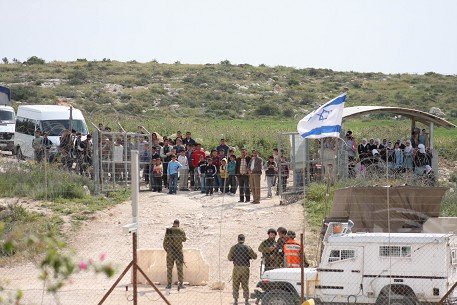
Nablus – Israeli forces turned away Palestinian medical teams at a checkpoint erected at Iraq Burin on Saturday morning, telling international medical volunteers that the area was a “closed military zone.”
Head of the Palestinian Medical Relief Society in Nablus Ghassan Hamdan said the volunteers tried to enter the Nablus-area village where the society had prepared to offer a free treatment day at a local clinic.
Hamdan said the team was told by Israeli soldiers at the village entrance that they must turn back because the village was a closed zone. He said that medics and society officials had made several attempts to explain the humanitarian nature of the mission, but soldiers responded saying their orders were to restrict all entry into the area.
An Israeli military spokeswoman confirmed that the area was declared a “closed military zone for all non-Palestinians,” but said that an exception was made for the doctors at 11a.m., hours after the group arrived at the checkpoint.
Officials from the society confirmed that the Palestinian and international medical workers were permitted into the area, and condemned the delay, saying it would cause a serious reduction in available medical services for villagers.
The society regularly organizes volunteer programs for doctors, nurses and medics from around the world who donate their time and perform free checkups and treatment to Palestinians without regular access to medical services.
The declaration follows one week after the detention of two young men at a checkpoint installed in the same location the previous Saturday.
Iraq Burin, cut off from Nablus by several checkpoints and roadblocks preventing access to the nearby settlement of Yizhar and Bracha, has held regular protests against continued land confiscations by the settlements and settler-only roads. The two detained were accused of having participated in protests in previous weeks.
According to a report by the Israeli human rights group B’Tselem, a new Israeli military order passed in January 2010 made gatherings of more than ten people illegal, by reenacting a 1967 law. The group said the law violated the right of assembly for Palestinians, guaranteed by the fourth Geneva Convention.
Facebook: “No Palestinian Pages”
By Jilian C. York | July 25, 2010
I was surprised, but a little skeptical, this morning when I read a blog post stating that Facebook is blocking the word “Palestinian” from its Pages. After all, a search for “Palestinian” brings back a number of already created Pages. Here’s what the blogger wrote:
I thought it might be a good idea to make a Facebook page for Palestinian Refugee ResearchNet—a straight-forward thing to do, right? Apparently not, since it seems the very word Palestinian may “violate or page guidelines or contain a word or phrase that is blocked”……A mistake, perhaps? Well, Afghan Refugee ResearchNet is OK. So too is DR Congo RefugeeResearchNet. No threats to innocent Facebook users lurking in those terms, it seems…
…Are Palestinians the only group so banned? Well, not really… after a little fiddling around, I discovered that al-Qaida Refugee ResearchNet and Nazi Refugee ResearchNet are banned too.
It does seem a bit odd, however, that a population of up to 12 million people, receiving more than a billion dollars in international aid, recognized by the UN, and enjoying a degree of formal diplomatic recognition from the United States—is placed in the same banned category as Nazis and al-Qaida.
Odd, indeed. I decided to try it for myself, with the terms “Palestinian Refugee ResearchNet,” “Palestinian Folklore,” and “Palestinian Music”. Nada.
Of course, “Israeli Music,” “Israeli Folklore” and “Israeli Refugee ResearchNet” all created no problems.
What is Facebook trying to accomplish by eliminating page creation for a marginalized population? I would guess that they were trying to prevent abuse of some kind (e.g., pages set up to demean a certain group), but I can’t imagine what kind of abuse would affect Palestinians and not, for example, Israelis.
In any case, as usual, Facebook does not have a strong customer support team to handle complaints about this, nor do they seem to care. After all, this was their response to the blogger who first documented this:
Unfortunately, we cannot process this request. Your Page name must comply with the following standards:
- Accurately and concisely represent a musician, public figure, business or other organization
- Not contain terms or phrases that may be abusive
- Not be excessively long
- Not contain variations of “Facebook”
If you believe your Page name fits within these guidelines, please respond to this email and we will re-evaluate your request.
Again, activists, I would advise you to stop using Facebook.
Israel Gets Brutal With Media
By Mel Frykberg | IPS | July 23, 2010
NABI SALAH, Occupied West Bank: Palestinian activists are being jailed, Israeli activists are under surveillance, and the Israeli military is increasingly targeting journalists who cover West Bank protests.
The Foreign Press Association (FPA) in Israel issued a statement recently condemning what it sees as a change in Israel Defence Forces (IDF) policy in their treatment of journalists covering the growing number of West Bank protests against Israel’s separation barrier, illegal settlements and land expropriation.
“We would appreciate it were the authorities to remind the various forces involved, that open, unhindered coverage of news events is a widely acknowledged part of the essence of democracy.
“Generally speaking this would not include smashing the face of a clearly marked photographer working for a known and accredited news organisation with a stick, or for that matter aiming a stun grenade at the head of a clearly marked news photographer or summarily arresting cameramen, photographers and/or journalists,” said the FPA.
The release of the statement followed an attack on three journalists as they covered a protest march near an Israeli settlement built illegally on land belonging to the Palestinian village Beir Ummar in the southern West Bank.
Several weeks ago in the village Nabi Salah, north of Ramallah, two Israeli activists were roughed up and arrested after criticising Israeli soldiers for shooting at Palestinian boys throwing stones.
One of the Israelis, Yonatan Shapira, 38, an ex-Israeli Air Force (AIF) pilot and member of Combatants for Peace, (a group comprising former Palestinian and Israeli fighters) earned the wrath of the Israeli authorities when he authored a “pilot’s letter” in 2003 signed by 27 AIF pilots.
The pilots refused to fly over the Palestinian occupied territories and take part in the deliberate targeting of Palestinian civilians, particularly in Gaza.
Shapira was recently interrogated by Israel’s domestic intelligence agency Shin Bet over his participation in anti-occupation protests and his support for the BDS movement.
In what appeared to be a veiled threat the Israeli activist was warned that his presence at anti-wall demonstrations was in defiance of the areas being declared closed military-zones on Fridays.
Shapira believes his phone has been tapped. “Nothing we are doing is illegal and I’m not afraid, but I’m uncomfortable about my country turning into a fascist state,” said Shapira.
“The Israeli authorities are trying to intimidate Israelis who engage in political dissent. We present no security threat. But the line between political activism and security is becoming increasingly blurred by the authorities who are trying to criminalise dissent,” Shapira told IPS.
“Sometimes when we come to demonstrations we have been stopped en route by the IDF who have taken down our details and appear to have prior knowledge of our movements,” Israeli activist Shy Halatzi, 23, a physics and astronomy student at Tel Aviv University who served in the Israeli military told IPS.
Israel has become alarmed at growing international support for a boycott campaign against the country as its right-wing government increasingly tramples on civil liberties. Hundreds of Israeli college professors signed a petition recently denouncing the threat by Israeli education minister Gideon Saar (a member of Israeli Prime Minister Benjamin Netanyahu’s Likud party) to punish any lecturer or institution which supports a boycott of Israel.
Saar supports Im Tirtzu, a right-wing nationalist movement, which demands that Israeli education professionals be required to prove their commitment to Zionism.
Neve Gordon, professor of politics at Ben Gurion University in Beersheva, received death threats after he wrote an editorial last year in the Los Angeles Times explaining why he supported a boycott on Israel.
Meanwhile, Palestinian grassroots activists involved in non-military popular committees, which organise non-violent activity against the occupation, continue to be arrested and jailed on what they say are trumped-up charges involving forced confessions under duress.
The IDF carries out nightly raids in West Bank villages where demonstrations take place regularly on a Friday and where villagers have been particularly active.
Wael Al-Faqia from Nablus in the northern West Bank was recently sentenced to a year’s prison for “belonging to an illegal organization.” Al-Faqia was arrested with eight other activists in December last year.
Musa Salama, an activist with the Labour Committee of Medical Relief Workers and associate of Al-Faqia, was sentenced last December to a year’s imprisonment on identical charges.
Abdullah Abu Rahme from the head of the Popular Committee Against the Wall in Bili’in village near Ramallah continues to languish in detention following his arrest in December last year.
Some of the allegations against him include incitement for planning the peaceful protests and “being in possession of arms.” The latter referred to his collection of used teargas canisters and spent bullet cartridges, fired by Israeli troops at unarmed protestors, [which had been arranged] into a peace sign.
“What we as Israeli activists endure is a fraction of what Palestinians are subjected to. They are subjected to harsher and much more brutal treatment than we are,” Shapira told IPS.
Featured Video

Armando Mema: Finland Used as New Frontline Against Russia
or go to
Aletho News Archives – Video-Images
New Documentary
Hospital Horror
Documented in the film,“Bad Medicine”

Blog Roll
 Aletho News
- Araghchi: Failure to punish aggressors against Iran endangers all nations
- Iran tells UN Security Council to stop reversing roles of ‘aggressor and victim’
- Disgraced neocons Feith & Libby: stop whining about ‘endless war’
- CENTCOM rejects Israeli claims of preparations for new Iran attacks
- Your Shopping Bag Runs Through Hormuz
- Armando Mema: Finland Used as New Frontline Against Russia
- Gestapo 2.0? Germany grants spy agencies sweeping new powers
- Franco-Palestinian group seeks court ban on Israeli real estate fair in Paris
- How British foreign policy is frozen in the ruins of empire
- EU risks investor exodus over Russian assets – Euroclear chief
- If Americans Knew
- Aid organizations in Gaza are pulling back, leaving hundreds of thousands of Palestinians without food
- 1.4 Million People in Gaza Live in Tents. Winter Storms Can Be a Death Sentence.
- Israel Used a U.S.-Made Missile to Kill Six at Gaza’s Nasser Hospital
- Congress Might Sneakily Use Lame Duck to Deeply Intertwine the U.S. and Israeli Militaries
- DAILY UPDATE: Latest essential news on Palestine, Israel, & region
- 9-month-old baby dies from severe cold in Gaza, 1st cold-related death this winter: Health Ministry
- Israel Kills over 12, Injures Many Across Gaza
- ‘Every drawer was opened’: Palestinians report looting amid Israel’s Hebron siege
- Scoop: Israeli spy chief in D.C. as Netanyahu presses Trump to resume war
- Israel Issued More than 24,000 ‘Administrative Detention’ Orders in Three Years
- No Tricks Zone
- New Study: Barents Sea Temperatures Were Warmer And Sea Ice Less Extensive In The 1700s Than Today
- German Authorities Start Initiative To Evaluate Public Register For Climate “Disinformation” Spreaders!
- Zonal Asymmetry of Temperature Change in the Antarctic Circumpolar Current
- New Study: The Net Fossil Fuel Contribution To Rising Atmospheric CO2 Has Been Zero For 500 Years
- Germany’s Green Energy Transition Becoming Increasingly Expensive…Another 6 Trillion Euros!
- Sudden Stratospheric Warming, Powerful El Niño Combination May Lead To Extreme Europe Cold, Energy Crisis!
- Two New Studies Find Thwaites Glacier Melt Cannot Be Driven By Human Activity Or A Warming Ocean
- E-Cars Reduce CO2 Emissions By Only 41% Compared To Internal Combustion Engine Vehicles
- Predictions Made By Renowned Climate Professor Over Past Decades Have Been Proven To Be Poor
- New Study Suggests Large Regions Of The Pacific Ocean Have Been Cooling For The Last 80 Years

