UNESCO: Israel is an ‘occupying power’
MEMO | May 2, 2017
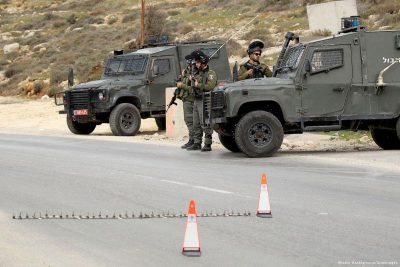 UNESCO today voted in favour of a resolution which describes Israel as an “occupying power” and denies its sovereignty over occupied Jerusalem.
Twenty-two countries voted in favour of the resolution which was submitted to UNESCO’s Executive Board by Algeria, Egypt, Lebanon, Morocco, Oman, Qatar and Sudan.
The text which was voted on included the following phrase:
All legislative and administrative measures and actions taken by Israel, the occupying power, which have altered or purport to alter the character and status of the Holy City of Jerusalem, and in particular the ‘basic law’ on Jerusalem, are null and must be rescinded forthwith.
This led ten countries to vote against the resolution including the Italy, UK, the Netherlands, Lithuania, Greece and Germany, Paraguay, Togo and the Ukraine.
However it does state that Jerusalem is an important city to the “three monotheistic religions”, a clause a previous UNESCO vote passed in October last year did not include.
Twenty-three countries abstained.
Read Also: ‘Israel blackmails developing countries for votes at UN’
Israel and North Korea’s war of words sheds light on western hypocrisy over nukes
By Adam Garrie | The Duran | April 30, 2017
A war of words between North Korea and Israel has done a lot to highlight the hypocrisy of the west when it comes to the proliferation of nuclear weapons and other WMD. Israel’s illegal and unaccounted for nuclear weapons programme is generally ignored by the west, while America appears ready to go to war with North Korea over its nuclear weapons programme, in spite of no consensus over weather Pyongyang has the ability to deliver its nuclear weapons or even how many nuclear weapons the communist state has.
Ultra right-wing Israeli Defence Minister Avigdor Lieberman said that North Korea is “undermining global stability” and that North Korean leader Kim Jong-Un is a “madman” leading a “crazy and radical” regime.
North Korea did not waste time in responding, issuing a statement reading,
“Israel is the only illegal possessor of nukes in the Middle East under the patronage of the US. However, Israel vociferated about the nuclear deterrence of the DPRK (Democratic People’s Republic of Korea/North Korea), slandering it, whenever an opportunity presented itself”.
One needn’t have a positive view of North Korea to understand this statement as an objective truth.
Israel frequently conducts unprovoked attacks on Syria without any retribution from the so-called international community.
North Korea’s statement continued,
“The DPRK’s access to nuclear weapons is the legitimate exercise of its righteous right for self-defence to cope with the US provocative moves for aggression and the DPRK’s nuclear force is the treasured sword of justice firmly defending peace on the Korean peninsula and in the region”.
North Korea went on to accuse Israel of “crimes against humanity” and of being an occupier of Palestinian territory.
North Korea called for a “thousand-fold punishment to whoever dares hurt the dignity of its supreme leadership” and referred to Lieberman as “sordid and wicked”.
While both Israel and North Korea are widely seen as rogue states, only Israel is currently engaged in the occupation and invasion of other countries.
US Marines sent to Afghanistan’s Helmand province
Press TV – April 29, 2017
US Marines have returned to Afghanistan’s southern Helmand province, the first to be deployed in the war-torn country since the North Atlantic Treaty Organization (NATO) ended its combat mission in 2014.
US General John Nicholson, the commander of American and NATO forces in Afghanistan, attended a ceremony on Saturday marking the return of the Marines to Helmand, where US forces faced intense fighting until 2014.
About 300 Marines will form part of the so-called Operation Resolute Support, described by NATO as a train, advise, and assist mission consisting of over 13,000 troops.
The Marines were among the first US forces sent to Afghanistan after the September 11, 2001 terror attacks in the US. Several thousand were deployed in Helmand, only for it to slip deeper into a quagmire of instability.
The deployment came one day after the Taliban militant group announced the start of its “spring offensive,” a heightened campaign of bombings, ambush attacks, and other raids that begin as weather conditions improve.
The new deployment is the latest sign of how the NATO military alliance is increasingly being drawn back into fighting in Afghanistan.
The Marines will largely operate from a sprawling installation known during earlier Marine operations as Camp Leatherneck, but will be based in other locations and could engage in combat.
The US has around 8,400 troops in the country with about another 5,000 from NATO allies.
The Pentagon said Wednesday that two US troops were killed in Afghanistan’s Nangarhar province during a military operation against the Daesh (ISIL) terrorist group.
In total, 2,217 American soldiers have died in the country since the invasion in 2001 and another 20,000 have been wounded, according to the Pentagon.
On Monday, US Defense Secretary James Mattis visited Afghanistan as President Donald Trump’s administration looks to craft a new policy in the country.
The change of policy was put on display earlier this month, when Gen. Nicholson ordered a Massive Ordnance Air Blast (MOAB) bomb—also known as the Mother of All Bombs— to be dropped on a purported Daesh target in the eastern province of Nangarhar.
Afghanistan is still suffering from insecurity and violence years after the United States and its allies invaded the country as part of Washington’s so-called war on terror. The 2001 military invasion removed the Taliban from power, but their militancy continues to this day.
Japan Proceeds With Controversial New US Air Base on Okinawa
Sputnik – 25.04.2017
After years of controversy, Japan has announced its intention to continue building a new air base to house elements of the US Air Force stationed on the island of Okinawa.
Tuesday’s initiation of the construction of seawalls around the new base, a replacement for the 1945-era US Air Station Futenma on Okinawa, continues the steps toward relocating the immensely unpopular foreign military facility.
Though these plans have met with resistance by officials and the public in the local prefecture, due in part to the ongoing environmental destruction required by the new base, Tokyo officials are going ahead with the build, including the dumping of landfill waste into sensitive marine habitats.
Okinawa governor Takeshi Onaga, citing local resistance to the move, has threatened to withdraw his support, which could hamper the completion of the project. A December 2016 ruling by the Japanese Supreme Court stated that Onaga’s offer to annul the construction of the air base was illegal, although legal grounds to back up the governor’s threat remain in place.
Local protesters have stepped up their actions at the construction site. The call to have the base closed down entirely, not simply relocated, has gained traction in recent years, particularly in light of several grisly crimes against locals, including sexual abuse, rape and murder, at the hands of US servicemembers stationed at the Futenma base.
Tokyo issued a statement in support of construction, as Defense Minister Tomomi Inada said, “I’m convinced that the start of the construction marks a steady first step toward realizing the complete return of the Futenma airfield.”
But the island base, regardless of its location, remains profoundly unpopular with residents.
As protesters held up signs saying “stop illegal construction work!” and “block the new base,” 64-year-old Yumiko Gibo from the village of Ogimi said, “They should not make Okinawa shoulder the burden of hosting [US] bases anymore,” according to the Japan Times.
Senior officials in Okinawa prefecture have slammed Tokyo for what they term the government’s “authoritarian” attitude toward the construction of the new facility, and have accused national officials of poor judgment after they “ignored the local will.”
A 71-year-old Naha resident, Yoshiko Uema, said, “We must not provide the place for war. We will unite and definitely stop the relocation,” according to the Japan Times.
Tokyo has remained unsympathetic to concerns on the island, insisting that the new air base in Henoko is “the only solution,” as the current Futenma site lies in a densely populated residential zone.
Some officials in Tokyo have privately acknowledged that the US Air Force presence in Okinawa is integral to maintaining the US-Japan military alliance.
A completion date for the new US air base, begun in 2015, has not been set.
Fools Rush In: Europe Pursues Israel Gas Deal for Political Not Economic Reasons
Sputnik – April 24, 2017
An Israel-Europe gas pipeline deal elevates Israel to the status of a major Mediterranean energy exporter. However, critics suggest the move is about more than mere economics, and serves a number of greater geopolitical objectives – namely, immunizing Israel from criticism and sanctions, and damaging relations between Europe and Russia further.
Ministers from Israel, Greece, Italy and Cyprus, as well as the European Union Commissioner for Climate Action and Energy, signed a joint declaration in April, codifying a commitment to constructing a gas pipeline that will bring newly discovered natural gas in Israel [sic] to Europe.
The pipeline, described by Israeli Energy Minister Yuval Steinitz as “the longest and deepest subsea gas pipeline in the world,” is expected to be in operation by 2025.
Designated as a “project of common interest” by the EU, the pipeline has been marketed by both sides as an ideal alternative to the bloc’s continuing dependence on Russian energy — an overt indication the deal is being pursued for political rather than economic purposes. After all, high infrastructure costs coupled with low gas prices will almost by definition make it considerably dearer than the existing energy relationship between Russia and Europe.
The Atlantic Council Global Energy Center has even suggested the proposed project may never come to fruition, once the commercial difficulties inherent in making it operational become reality. Current European energy demands in no way commercially justify an additional gas supply source for the continent.
Furthermore, independent Palestinian human rights advocacy group Al-Haq has said the pipeline agreement will benefit corporations which directly profit from the occupation of Palestine — incentivizing Israel to maintain its current policy of illegal settlement expansion and its blockade of Gaza. If constructed, the pipeline will pump gas from Israel’s giant Leviathan field, the discovery of which in 2010 transformed Israel from a net importer of energy into a potential regional energy player — the field is estimated to hold around 20 trillion cubic feet of gas. Despite Lebanon arguing Leviathan sits partially in Lebanese waters, Israel has pushed ahead with international deals, selling 39.7 percent to US-based Noble Energy.
In March, Jordan became the first country to sign up for Leviathan gas. The move ignited waves of protest, on the basis the agreement would increase Jordan’s dependency on Israel, and potentially finance Israel’s occupation of Palestine.
Such concerns go beyond reflexive prejudice. Israeli Prime Minister Benjamin Netanyahu has noted the potential of gas deals to insulate the country from international condemnation and action.
“Ensuring the supply of gas is essential not only to the country’s functioning, but also to its existence. I regard the gas supply as a foundation of national security. A country that exports things crucial for other countries has far more power. The ability to export gas makes us more immune to international pressure. We don’t want to be vulnerable to boycotts,” Netanyahu said.
Moreover, in a report, Annexing Energy, Al-Haq noted it was “impossible” to geographically isolate gas fields in mainland Israel and characterize them as separate from the country’s ongoing conflict with Palestine.
“In 2011, Noble Energy, the lead operator of the Leviathan field, unilaterally extracted gas from a joint Palestinian gas field without Palestinian permission as required under customary international law and the Oslo Accords. Israel has also employed a brutal and unlawful naval operation to protect Noble Energy’s gas platforms beside the Gaza Strip, routinely attacking, killing and injuring civilian Palestinian fishermen who fish in the vicinity of Israel’s illegally imposed six-nautical-mile closure of Palestine’s territorial waters,” the report said.
In a perverse twist, the deal also comes at a time when Gaza continues to reel from a major energy crisis, which has seen power cuts lasting as long as 18 hours, and results from Israel blocking the region from developing its own resources.
The Al-Haq report concluded that if Palestinians were permitted to do so, their own energy needs would be satiated, and they would be economically self-sufficient, freed from their current aid dependency.
Okinawans call for U.S. military to go home after further provocations
Xinhua | April 24, 2017
TOKYO – Local residents of Kadena on Okinawa’s main island said the United States military conducting parachute training drills over Okinawa’s mainland on Monday morning was completely unacceptable with the latest provocation coming amid rising anti-U.S. military sentiment on the island.
Local media reported that residents in the area still remember a tragic incident that occurred in 1965 involving an elementary schoolgirl being crushed to death by a trailer being parachuted down to a village during such a drill.
The area hasn’t seen parachute drills by the U.S. military since a drill at the base in 2011, that saw 30 personnel deploy from a MC-130 special mission aircraft, official accounts showed.
The aircraft used to deploy the airmen are designed for infiltration and exfiltration missions and can also be used for resupply of special operation forces.
The large transporter-looking planes can also be configured to be used for air refueling of primarily special operation helicopters and tilt-rotor aircraft like the controversial Osprey, also hosted in Okinawa and mainland Japan, and the cause of great condemnation here for its checkered safety record.
The latest drill saw the local residents notified of the parachute exercise less than a day before it occurred, when notice was sent out on Sunday night by the Japanese Defense Ministry.
In 1996, Japan and the U.S. agreed that it would [only] be the Island near Okinawa’s main island that would be used for parachuting drills at a reserve airfield there, with the surprise drill over Kadena baffling and scaring residents in the area.
The town of Kadena plays host to the U.S. Kadena Air Base which itself is home to top multiple air squadrons and accommodates around 20,000 service-members, their families and employees living or working there.
Anti U.S. base sentiment in Japan’s southernmost prefecture continues to rise of late, with regular demonstrations comprising thousands of locals calling for the controversial U.S. Marines Corps Futenma base to be relocated off the island and not to the coastal Henoko region.
At the end of last month, the “prefectural people’s rally calling for immediate cancellation of unlawful land reclamation work and abandonment of the plan to build a new base in Henoko, organized by the All Okinawa Coalition to Prevent Construction of a New Base in Henoko, was held in front of the gate to the U.S. military’s Camp Schwab.
The demonstration saw the participation of around 3,500 people, the organizers said.
Okinawa Governor Takeshi Onaga attended the rally and stated that with all his strength he would absolutely revoke the approval to reclaim land off the shore of Henoko, which is needed build the new base.
Along with the unexpected parachute drill and constant anti-relocation rallies, residents have also been up in arms recently about stray bullets found at the Afuso Dam construction site in the Camp Hansen Marine Corps base on the island.
The base is located in the town of Kin, near the northern shore of Kin Bay, and is the second-northernmost major installation on Okinawa, with Camp Schwab to the north.
Damage from stray bullets was found in water tanks and the cars of dam workers, local media reported, with fears rife that if live rounds were fired and people were in the vicinity at the time, multiple lives could certainly have been lost.
“Stray bullet damage from Camp Hansen has occurred countless times since the end of WWII. It is obvious that this originates from the proximity of Okinawan residents and the base. The practice of live-fire exercises on the narrow island of Okinawa is a mistake,” a recent article from an Okinawa-based publication said on the matter.
“The Marines, who operate Camp Hansen and use it mainly for exercises, are inherently unnecessary in Okinawa. Considering the safety of Okinawan residents, the only option is for the Marines to return to the continental United States. If they truly need to conduct live-fire exercises, they would be better off conducting them on the expansive training grounds in the mainland United States,” the article said.
Officials from Onna, Okinawa, as well as the Okinawa Defense Bureau, both confirmed that water tanks at the construction site were found empty on April 6 and what appeared to be bullet holes were found inside the tanks.
On April 13, similar damage from bullets was found on the cars of workers who had parked at the construction site, much to the continued consternation of local residents.
The local Okinawan residents’ calls for an end to their “occupation” and for all U.S. military personnel to return to the continental U.S. are growing evermore vociferous.
US, Israel two sides of same coin, trying to destroy Yemen: Houthi

Leader of Yemen’s Houthi Ansarullah movement, Abdul-Malik Badreddin al-Houthi, speaks during a televised speech in Sa’ada, on April 23, 2017.
Press TV – April 23, 2017
Leader of Yemen’s Houthi Ansarullah movement, Abdul-Malik Badreddin al-Houthi, says the United States and the Israeli regime are two sides of the same coin and together they seek to destroy Yemen through a brutal military campaign launched by Saudi Arabia.
Addressing a group of Yemenis in Sa’ada, thorough a video conference, Houthi further said on Sunday that the US, Israel and their allies are trying to impose their values on regional nations, adding that enemies view Yemenis as a worthless tool to sustain their own interests in the region.
“Independent forces in the region from Yemen to Syria, Lebanon and Iraq are considered as rogue from the American perspective, and sympathy for the oppressed in these countries is viewed as a crime,” he said, adding that Washington is trying hard to turn regional players into its own puppets.
The Yemeni leader also noted that collusion in the atrocities committed against the Yemeni people is not an issue in the eyes of the American leaders, but when the oppressed and independent forces cooperate with each other, the US perceives it as a crime.
He called on all Yemenis to stand united against the aggressors and defend their country.
“[When] anyone says Israel is a threat to our nation, the United States and its allies say they are supporters of Iran, and with the help of this false justification, they (Washington and allies) target anyone that does not accept adopting a hostile attitude towards Iran,” he added.
He also said the only sin committed by Iran, from the perspective of the United States, was that it freed itself from being a puppet country in the 1979 Islamic Revolution.
‘US, Israel main source of terrorism worldwide’
The Yemeni leader added that Washington considers regional or international threats all those countries that are not its ally, “but the reality is that the US and Israel are themselves the main source of terrorism worldwide.”
Elsewhere in his remarks, Houthi said the Yemeni nation, from all walks of life, should boost their awareness of the realities of regional developments and use it as a tool to battle the US propaganda against the Arab country. Ignorance, he said, makes people an easy target for the US and the Zionists.
Houthi also stated that only Yemenis can decide about their future and the internal affairs of their country and that absolutely no other country or organization, even the United Nations and the Arab League, can impose their so-called solutions to the crisis in Yemen.
He described as utterly ridiculous Washington and Riyadh’s claim that they want to liberate Yemeni cities from “Yemeni occupation.”
“You are Yemenis, who have occupied the capital Sana’a? The US wants to liberate Sana’a from Yemenis?!” he asked.
Houthi reiterated that the Yemeni nation’s resistance against the Riyadh regime’s incessant attacks was deeply rooted in religious orders and was meant to safeguard national sovereignty and freedom.
Saudi Arabia launched its deadly campaign against Yemen in March 2015 to push back the Houthi Ansarullah fighters from Sana’a and to bring back to power Abd Rabbuh Mansur Hadi, Yemen’s president who has resigned and is a staunch ally of Riyadh.
The campaign, which lacks any international mandate and has faced increasing criticism, has claimed the lives of more than 12,000 people, most of them civilians.
Certain Arab countries, including the United Arab Emirates, Bahrain and Qatar, are partners to the military aggression.
US Interventionism Prevailing Under Trump Administration – Le Pen’s Office
Sputnik – 21.04.2017
PARIS – The office of French far-right National Front presidential candidate Marine Le Pen is saddened that the United States appears to continue its interventionist policies under President Donald Trump and hopes that this will not stoke tensions around the world, the candidate’s campaign manager David Rachline told Sputnik.
“A hope for the end of the American interventionism after Trump’s victory seems to be weakened. It is deeply sad and damaging for peace and stability in the world, and we hope that what seems to be the considerations of the US domestic policy won’t be a factor of increased tensions in the world,” Rachline said commenting on the recent US strikes on an airfield in Syria.
On April 6, the United States launched 59 Tomahawk cruise missiles at the military airfield in Ash Sha’irat. Trump said that the attack was a response to the alleged chemical weapons use in Syria’s Idlib province on Tuesday, which resulted in the death of over 80 people. Damascus denied the government’s involvement, with Syrian President Bashar Assad telling Sputnik that the attack in Idlib may have been “a false flag play” to justify the airstrike.
Le Pen herself condemned April 6 strike the next day after it was carried out and three days later urged Trump to be cautious in Syria, as military intervention in both Iraq and Libya ended up bringing danger rather than peace to civilians.
Russia, Syria & Iran demand no further US strikes on Syria – foreign ministers

Foreign Ministers, Sergei Lavrov (C) of Russia, Walid al-Muallem (L) of Syria and Mohammad Javad Zarif of Iran attend a news conference in Moscow © Grigory Sisoev / Sputnik
RT | April 14, 2017
The US cruise missile attack on Syria was an act of international aggression, Russia, Syria and Iran have stated after a meeting of their foreign ministers in Moscow.
“We have reiterated our position and were united in stating that the attack was an act of aggression, which blatantly violated the principles of international law and the UN Charter,” Russian Foreign Minister Sergey Lavrov said.
“We call on the US and its allies to respect Syria’s sovereignty and refrain from actions similar to what happened on April 7, and which have serious ramification not only for regional, but also global security,” he added.
Lavrov was referring to the Tomahawk missile barrage fired by the US Navy at a Syrian airbase in Homs province. Washington ordered the attack after accusing Damascus of launching a chemical weapons attack at a rebel-held town in Idlib province from that airbase. Russia condemned the move, saying the US hadn’t offered any proof to pin the alleged chemical weapons incident on the Syrian Army.
Meeting with his Iranian and Syrian counterparts, Javad Zarif and Walid Muallem, on Friday, Lavrov pledged to continue Russia’s support of Damascus in fighting terrorism and restoring peace in Syria.
He added that Moscow suspects that the Idlib incident was a provocative act aimed at derailing negotiations between the Syrian government and so-called moderate rebel groups on a political transition in the country. Lavrov said the perpetrators of the deadly release of toxins must be found.
“We insist on a thorough, objective and unbiased investigation of the circumstance of the use of chemical substances in Khan Shaykhun on April 4,” he said, adding that the investigating team must include inspectors chosen from nations from different parts of the world to ensure its objectivity.
Muallem pledged full cooperation of Damascus in carrying out such a probe.
The Russian minister added that Moscow doubts the objectivity of the current mechanisms for investigating alleged use of chemical weapons in Syria, considering the difference in how the Organization for the Prohibition of Chemical Weapons (OPCW) handles reports by Damascus and by other parties.
“When accusations come against the Syrian government, the OPCW reacts in a matter of days and voices its concern. But they never go on the sites of incidents located in the regions controlled by the armed opposition, citing security issues,” he said. “We consider such analysis from a distance unacceptable.”
Lavrov also accused the US of reviving the Obama administration goal of toppling the Syrian government instead of seeking a political solution, citing the Tomahawk missile attack.
“Such acts of aggression are obviously meant to derail the peace process, which was endorsed in a unanimously adopted resolution of the UN Security Council and implies that the fate of Syria would be decided only by the Syrian people,” he said. “The action was obviously deviating from this basic concept and find new protects to aim for regime change.”
Lavrov said there is an increasing amount of evidence pointing to the conclusion that the chemical incident in Idlib province was staged to set up the Syrian government.
“Publications by professional experts, including some in the US and Britain, say there are too many inconsistencies and gaps in the version of events presented to justify the [US] aggression,” he said.
Zarif accused “certain countries” of hypocrisy, citing Iran’s history of suffering from chemical weapons attack by Saddam Hussein’s Iraq during the 1980s war. Declassified CIA files showed that the US was well aware that Saddam was using CWs against Iranians, but didn’t oppose it and even provided intelligence for such attacks.
READ MORE:
Lavrov says agreed with Tillerson no future US strikes on Syrian govt
White House claims on Syria chemical attack ‘obviously false’ – MIT professor
Featured Video

The Truth About the Trump Shootings with Ken Silva
or go to
Aletho News Archives – Video-Images
From the Archives
Trans ‘milk’ as good as the real thing – NHS
RT | February 18, 2024
The drug-induced nipple secretions of trans women are as good as mothers’ breast milk for babies, the University of Sussex Hospitals NHS Trust claimed in a letter to campaigners made public in a report by British think tank the Policy Exchange on Sunday.
The healthcare trust’s medical director, Rachel James, argued that the off-label prescription drug cocktail men transitioning to female take in order to produce milk was “similar to the natural hormones which encourage lactation to develop when the baby is newly born.”
“The evidence which is available demonstrates that the milk is comparable to that produced following the birth of a baby,” James wrote in the letter, sent to Children of Transitioners last August.
Biological men who wish to lactate must first take hormones to grow milk glands and then take high doses of either domperidone or metoclopramide to stimulate milk production. Neither drug is approved for this use, though they are occasionally prescribed off-label to biological women who have trouble lactating.
However, domperidone’s own manufacturer, Janssen, warns patients the drug “may cause unwanted side effects affecting the heart in a breastfed baby” and “should be used during breastfeeding only if your physician considers this clearly necessary.” … continue
Blog Roll
 Aletho News
- Leaked: Britain’s Sham Conviction Of Hashim Thaci
- Seyed M. Marandi: U.S. Strike Imminent – Toward Total War in the Middle East
- Russia Voted Under Fire. Washington Is Loading the Tankers.
- 12 Things Your Oncologist Was Trained Not to Tell You
- Anthrax Attacks Paved Way for COVID-Era ‘Junk Drugs and Vaccines’
- How Real Is the Impact of Western Sanctions on Israel?
- France, You Are Guilty: How Paris Turned Western Sahara into the Maghreb’s Powder Keg
- 2025 Nature Paper Claiming Worsening Global Drought Gets RETRACTED …Heavily Flawed
- Your Milk Is Not the Problem
- The Truth About the Trump Shootings with Ken Silva
- If Americans Knew
- Salah Sarsour’s Legal Team Says DHS Has Not Met Its Burden to Prove He Is Deportable
- An analysis of tax forms by The Intercept show Kraft’s charity and LLC have donated to Friends of the IDF and AIPAC’s super PAC.
- Israeli attacks kill four Palestinians in Gaza – Daily Update
- Inside Gaza’s death trap of collapsing, bombed-out buildings
- The everyday items Israel bans from Gaza every day
- Inside the siege, the ruined buildings of Gaza – Daily Update
- Debunking The Claim That Macklemore Has A “History Of Antisemitism”
- CPJ demands release of arrested Palestinian-US journalist near Bethlehem
- Robert Kraft: The Billionaire Friend of Netanyahu Pulling The Strings Behind the Macklemore/Ed Sheeran Blow Up
- Columbia Administered Fund Gives Big Money to Pro-Israel Groups
- No Tricks Zone
- 2025 Nature Paper Claiming Worsening Global Drought Gets RETRACTED …Heavily Flawed
- New Study: ‘Global Drought Shows No Detectable Recent Acceleration Under Climate Warming’
- Economic Masterminds: German Socialists Suggest Taxing Productivity Gains Stemming From Using AI
- The South China Sea Has Not Been Cooperating With The Climate Change Narrative
- Energy Crisis: Germany Enters Heating Season With Historically Low Gas Reserve Fill Levels
- New Study: The Antarctic Ice Sheet Gained Mass From 2020-2024 Due To Staggering Snow And Ice Accumulation
- Study: Ocean Heating Rates From Thousands Of Years Ago ‘Dwarf’ Modern Ocean Heating Rates
- Climate Extremists Target, Attack Large-Scale Power Grid Infrastructure In Germany!
- New Study: Antarctic Ice Melt Has Contributed Less Than 1 Centimeter To Sea Level Rise In The Last 30 Years
- Fear Of Debate: Alarmist German Climate Scientist Calls On Mainstream Media To Discredit Skeptic Voices
 Aletho News