Russian Foreign Ministry Outlines What It Expects From Talks With Tillerson
Sputnik – April 11, 2017
MOSCOW – Moscow hopes for fruitful negotiations with the US state secretary on his visit to Moscow, the Russian Foreign Ministry said in a statement Tuesday.
“In connection with the beginning of today’s working visit to Russia by US Secretary of State R. Tillerson, we would like to note that we are counting on productive negotiations,” the ministry said.
Tillerson is visiting Moscow on Tuesday and Wednesday for talks with Russian Foreign Minister Sergei Lavrov.
“This is important not only for the prospects of further bilateral interaction, but also for the general atmosphere in the international arena,” the ministry underscored.
Moscow hopes that Washington will agree to an unbiased investigation of the recent chemical weapons incident in Syria’s Khan Shaykhun.
“We firmly expect that Washington will agree to an objective investigation with the OPCW involvement of the incident with chemical poisoning on April 4 of the residents of Syria’s Khan Shaykhun. The West groundlessly accused Syria’s authorities of it, although militants of Jabhat al-Nusra [banned in Russia], who… produced landmines stuffed with poisonous substances, operate in that area,” the statement said.
On April 4, a chemical weapons incident in Syria’s Idlib province claimed the lives of some 80 people and inflicted harm on an additional 200 civilians. The Syrian National Coalition of Revolutionary and Opposition Forces, as well as a number of Western states, accused the Syrian government troops of carrying out the attack, while Damascus refuted these allegations, with a Syrian army source telling Sputnik that the army did not possess chemical weapons.
The Russian Defense Ministry said on April 5 that the airstrike near Khan Shaykhun by the Syrian air force hit a terrorist warehouse that stored chemical weapons slated for delivery to Iraq, and called on the UN Security Council to launch a proper investigation into the incident.
Russian President Vladimir Putin said April 6 that groundless accusations in the chemical weapons incident in Syria’s Idlib were unacceptable before the investigation into the matter had been carried out.
However, the incident was used as pretext for a US missile strike against the Ash Sha’irat airbase carried out late on April 6. US President Donald Trump characterized the strike as a response to the alleged use of chemical weapons by the Syrian government troops while Russian Foreign Minister Sergei Lavrov said it was a violation of the international law. Iranian Supreme Leader Ayatollah Ali Khamenei described the US missile strike against the Syrian airfield as a strategic mistake.
Moscow expects Tillerson to detail Washington’s plans in Libya.
“We expect to hear what the US plans to do in Libya, which has in fact become shattered as a result of NATO’s military intervention, like Iraq,” the ministry said.
Libya has been in a state of turmoil since 2011, when a civil war broke out in the country and long-standing leader Muammar Gaddafi was overthrown, and the country was contested by two rival governments: the internationally-recognized Council of Deputies based in Tobruk and the Tripoli-based General National Congress.
In March 2011, several NATO states, including France, launched a military intervention in Libya aimed at ending all attacks against the civilians and establishing a ceasefire. Then-President of France Nicolas Sarkozy played an important part in promoting the EU sanctions against Gaddafi and urging for the intervention.
Russia awaits from the United States coherent clarifications on the whole range of issues of strategic stability and security in the Euro-Atlantic region.
“We await coherent clarifications of the US course on the whole range of issues of ensuring strategic stability and security in the Euro-Atlantic,” the statement read.
Russia is concerned that the United States hints at the possibility of a military scenario regarding North Korea.
“We are very much concerned over what Washington has conceived about the DPRK, hinting at the possibility of a unilateral military scenario. It is important to understand how this correlates with collective obligations on the issue of the denuclearization of the Korean Peninsula in the UN Security Council resolutions,” the ministry said.
On Wednesday, North Korea reportedly launched a ballistic missile from Sinpho, South Hamgyong province, in the direction of the Sea of Japan.
On Saturday, US officials announced that aircraft carrier strike group was sent to the Korean peninsula amid rising tensions. On Sunday, US National Security Adviser Lt. Gen. Herbert McMaster said that US President Donald Trump had ordered preparation of all possible options in order to protect the United States and its partners from North Korean threat.
Since the beginning of 2016, North Korea has carried out a number of missile launches and nuclear tests, prompting worldwide criticism. As a result, the UN Security Council tightened the sanctions regime for North Korea in an attempt to force Pyongyang to stop ballistic missile launches and nuclear tests, including imposing a measure intended to affect the country’s trade, export of natural resources, arms trade and the banking sector.
Moscow is preparing for constructive cooperation instead of confrontation, but stands ready for any developments.
“We are ready for any eventuality, however proceed from the favorability of such work that will reduce international tension rather than raising it,” the statement said.
It added that “we are preparing not for confrontation, but for constructive cooperation. We hope the US side wants the same.”
Moscow hopes the United States does not refuse to take part in international consultations on Afghanistan this Friday.
“We hope that the US will not refuse to participate in international consultations on Afghanistan, whose next round will be held in Moscow on April 14,” the ministry said.
State Department spokesman Mark Toner told Sputnik last month that the US “does not plan to participate” in the international talks involving 12 countries. Russian Foreign Ministry spokeswoman Maria Zakharova said Moscow regretted Washington’s refusal to participate.
Afghanistan is in a state of political and social turmoil, with government forces fighting the continuing Taliban insurgency. The instability has persisted in the country since the 2001 US-led invasion to defeat the Taliban and al-Qaeda in the wake of the 9/11 attacks in the United States.
The lack of control and instability turned the country into home to the largest opium poppy production and distribution network in the world.
The Russian Foreign Ministry expressed hope that the United States would urge the Ukrainian government to adhere to the Minsk agreements.
“We especially hope that the United States will be able to neutralize the revanchist moods of the Ukrainian ‘party of war’ by using its influence on Kiev. Washington could also persuade the Kiev authorities to adhere strictly to their obligations under the Minsk agreements,” the statement read.
The Donbass conflict erupted in April 2014 as a local counter-reaction to the West-sponsored Maidan coup in Kiev that had toppled President Viktor Yanukovych in February. Residents of the Donetsk and Lugansk regions held independence referendums and proclaimed the People’s Republics of Donetsk and Lugansk. Kiev has since been conducting a military operation, encountering stiff local resistance.
In February 2015, Kiev forces and Donbass independence supporters signed a peace agreement in the Belarusian capital of Minsk. The deal stipulates a full ceasefire, weapons withdrawal from the line of contact in Donbass, as well as constitutional reforms that would give a special status to the Donetsk and Lugansk People’s Republics. Despite the agreement brokered by the Normandy Four states (Russia, France, Germany and Ukraine), the ceasefire regime is regularly violated, with both sides accusing each other of multiple breaches, undermining the terms of the accord.
Suspected US-led coalition air strike kills at least 10 civilians west of Raqqa – reports
RT | April 8, 2017
At least 10 civilians have been killed in a Syrian village near the city of Raqqa, in an alleged air strike by the US-led coalition, Syrian media report.
The strike targeted a village to the west of Raqqa, SANA news agency reports. The attack caused casualties among the civilian population, SANA said, citing its local sources.
The alleged air strike and the same number of casualties was also reported by Syrian Tishreen newspaper, citing its sources.
Washington and its allies have been carrying out air strikes near Raqqa to provide support for the Kurdish-led Syrian Democratic Forces fighting Islamic State (IS, formerly ISIS/ISIL).
Israel seeks buffer zone on borders with Syria
MEMO | April 8, 2017
Israeli Prime Minister Benjamin Netanyahu is seeking a buffer zone against Syria, Iran and Hezbollah on the borders with Syria to be part of any future deal to end the Syrian crisis, Israeli newspaper Haaretz reported on Friday.
According to the Israeli newspaper, Netanyahu proposed this issue during meetings with American and other coalition countries.
Netanyahu wants to prevent Iran and Hezbollah from establishing a foothold and he intends to undermine future attacks against Israel, noting that he had suggested international forces to supervise his proposed buffer zone.
Last Friday, the Israeli Maariv revealed that Netanyahu sent messages to the international parties involved in the talks about Syria’s future.
These messages, according to the Egyptian news website Moheet, suggested Israel’s desire to decrease its reliance on military attacks on Syria in exchange for reaching a silent agreement that Iran and Hezbollah do not approach the Armistice Line in the occupied Golan Heights.
Maariv said that Israel would accept the return of the Syrian army to the border area connected with the occupied Palestinian territories based on a 1974 deal between the two.
Meanwhile, the Israeli newspaper reported fears from the Israeli political and military leadership from reaching a deal which kept Bashar Al-Assad as president and this would give Iran the chance to deploy forces loyal to it in areas close to the Golan Heights.
Over the past year, the Israeli military has carried out several airstrikes deep inside Syria, targeting Hezbollah’s personnel and weapons.
Questions following the US attack on Syria

How quickly enemies can become friends. All you have to do is bomb people.
OffGuardian | April 7, 2017
Q1: What happened?
Last night, and much to chagrin of people who thought Trump would not escalate matters in Syria, the US military launched 59 Tomahawk missiles into Syria, allegedly attempting to destroy a government airbase. They warned the Russian government before-hand, who will have passed on that warning to the Syrians, meaning the area was probably on alert, with any important equipment or personnel removed. The Pentagon have also stated that, at this time, there are no plans for any other strikes or any campaign in Syria.
Q2: Supposing the attack definitely happened as most are reporting – and that is a dangerous assumption to make these days – what have the results been?
At last count the number of Syrian casualties stood at 6 dead servicemen, and 9 dead civilians (including four children) and several more wounded, together with the loss of six aircraft. The airbase they attacked looks far from destroyed in footage from Russia 24 (see here). And chemical weapons? Well, they didn’t destroy any…and say they weren’t trying to do so (see our brief story on that contradiction here). So in terms of military targets, this strike has achieved very little.
The attack was pitifully inefficient, of the 50-70 missiles launched, only 23 struck anywhere near their targets. The other 30+ are currently unaccounted for. Tomahawk missiles cost between $500,000 and $1,500,000 dollar each, which means the US just spent between 25 and 105 MILLION dollars on dinging up a couple of aircraft hangars and murdering less than 20 people.
Q3: …then why do it?
There must be some political wins in this situation to justify the price tag, because the damage done to the “enemy” is practically zero. Indeed, when you take into account that the Pentagon informed the Russians, who will have informed the Syrians, and the reports of Syria evacuating personnel before the attack… the entire event appears somewhat theatrical. Meaning it was an entirely political act, possibly intended more for a domestic audience than anything else.
It had no bearing on the civil war at all, the airstrikes on rebel positions weren’t even halted for a day.
Q4: Was it legal?
No.
Whether it was the product of an impotent emotional tantrum, or a cynical public relations gambit, there is no question the attack was completely illegal under international law. But the American press have never cared much about that. Given that America’s reputation was already in tatters, among those who consider such trifles important, this won’t do much damage. They will take a hit on that front, it probably won’t matter in the long-run.
The list of unpunished American international crimes is hugely long. This small addition barely qualifies.
Q5: cui bono?
Always the most important question.
Trump can definitely get some short-term political gains domestically here. Having “defied” the Russians and “stood-up to” Assad, Trump can now enjoy a period of respite from the “Trump is in Russia’s pocket” talk. Plus, the wider establishment – so fond of calling for “action on Syria” – will be forced to either agree with (and consequently legitimize) the administration, or criticise an attack on Syria and dial back their own calls for war.
What Trump gains in terms of favour within the deep-state and political establishment he will lose in terms of approval with his voting base. One of the biggest issues contributing to Trumps electoral victory was his non-interventionist stance on the ME. This may only be a superficial event, but the list of people approving of and/or celebrating it is enough to alienate a lot of Trump voters for good. But he doesn’t have to worry about that for the next four years.
One definite winner in all of this is Turkey, so long illegally picking at land along the Syrian border. They now have a precedent for a NATO ally taking unilateral action against the Syrian government on very flimsy evidence. They will take that and run with it. Israel, similarly, will see this as permission to be even more active in Syria. Both are key suppliers to the rebels, both are carving out chunks of Syria for themselves.
A danger does still lurk, of course. Whether Trump took this action to make a point, or was talked into it by generals and the like, the first official American attack on Syria has now taken place. Mission creep, intended from the outset or no, is an important thing to keep an eye on at this point.
Silwan Palestinians receive evacuation orders due to damage caused by Israeli tunnels
Ma’an – April 6, 2017
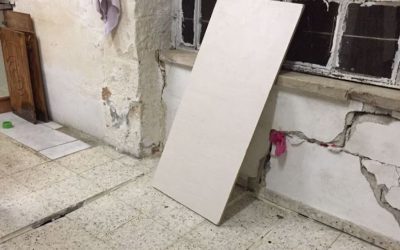
JERUSALEM – The Israeli municipality of Jerusalem issued evacuation orders for three housing apartments in the Wadi Hilweh area of the occupied East Jerusalem neighborhood of Silwan on Wednesday evening, due to fractures and cracks formed at the base of the houses, as Israeli authorities continued work on a tunnel network expected to be used to provide services to Israeli settlers.
According to the Wadi Hilweh Information Center, the houses belong to Hamed Oweida, Abed Oweida, and Suleiman Oweida.
Sixteen family members, including ten children, reside in the houses.
The Oweida family said that Israeli tunnel-digging under their homes has increased over the past three days, adding that loud noises from the digging would last for several hours, while the family could feel their houses shaking during the construction.
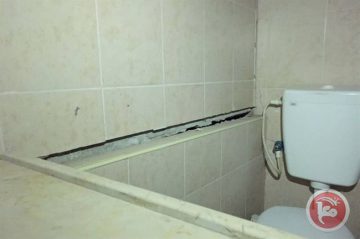
They said that the digging had caused severe damage of fractures and cracks in the walls and the bases of the houses.
The family added that they had called the Israeli police, who had then summoned a municipality team to inspect the houses. After taking photographs and inspecting the damage, an architect for the municipality decided to issue an emergency order for the families to evacuate and seal the houses, saying that it was dangerous to remain inside.
Suleiman Oweida had left his house several days ago after fractures in the walls had become more severe.
The information center said that Israeli authorities were creating a tunnel network for Israeli settlers directly under the Oweida family’s house.
Member of the Wadi Hilweh neighborhood committee Ahmad Qarrain said that the Israeli authorities began work under the neighborhood in 2007.
The residents at the time appealed to Israeli courts and were able to halt the construction under their homes for 14 months. However, Israeli courts later issued another order allowing the work to continue on the condition that the digging not endanger the lives of residents.
However, Qarrain said that the digging and work under the houses continued “without any consideration for the safety of residents,” and pointed out that the streets, walls, structures, and houses of the neighborhood have also been fractured and collapsed owing to the tunnel work.
A spokesperson for the Israeli Jerusalem municipality told Ma’an that the municipality had informed the residents that their properties were “unsound and dangerous” out of “concern for their own welfare,” while also being built “without regard for building codes or safety standards.”
The spokesperson added that “claims that the city is attempting to construct underneath this family’s structure are patently false.”
The Dangerous Liaisons of French Banks with the Israeli Occupation
CounterPunch News Service | April 6, 2017
Executive Summary
While the year 2017 marks the 50th anniversary of the Israeli occupation in the Occupied Palestinian Territories, the Israeli government’s colonization project in the West Bank and East Jerusalem has accelerated dramatically.
The very existence of Israeli settlements is illegal under international law. It is accompanied by numerous restrictions imposed on the Palestinian population, restrictions that violate their most fundamental rights and deprive them of the conditions that make a decent life possible.
The UN(1), the European Union(2) and the French government(3) have affirmed on numerous occasions and, most recently, in the major resolution of the UN Security Council of 23 December 2016: the Israeli settlements in the Occupied Palestinian Territories are not part of Israel as defined by the 1967 frontiers and are illegal under international law.
These settlements, “which do not cease to undermine a two state solution and to impose on the ground the reality of one state”(5), remain a major obstacle to any resolution of the conflict. The same Security Council resolution also requires [par. 5] that all states, ‘in their relevant dealings’, make a distinction between the territory of the state of Israel and the territories occupied since 1967.
The Israeli banking system constitutes an essential tool of the colonization project, and Israeli businesses contribute to the maintenance and development of the settlements. In this context, the principal French financial institutions, in continuing to support Israeli banks and businesses involved in the settlements, contribute indirectly to the maintenance and development of this illegal situation with respect to international law.
Five major French financial groups – BNP Paribas, Crédit Agricole, Société Générale, [the state-owned] Banque Populaire Caisse d’Epargne, AXA – manage financial holdings or hold shares in Israeli banks or businesses involved in financing settlements in the Occupied Palestinian Territories and which furnish services vital to the maintenance and development of the settlements – such as housing or factory construction, the provision of telecommunications connections or of surveillance equipment.
Added to that financial involvement, the four largest French banks – in this instance BNP Paribas, Société Générale, LCL (subsidiary of Crédit Agricole) and Natixis (investment bank subsidiary of BPCE) – have granted loans to the total of €288 million for the period 2004-2020 to the state enterprise Israel Electric Corporation (IEC) for a project for two gas-fired power plants(6), while IEC is providing electricity to the illegal settlements in the Occupied West Bank.
The French government is responsible at three levels:
1) Obligations under international law (the UN’s ‘protect, respect and remedy’ framework of its Guiding Principles, to not recognize as legitimate a situation created by a grave violation of international law, nor to aid or assist in the maintenance of this situation, and to cooperate to dismantle such situations).(7)
2) An obligation to protect against human rights violations by third parties, including businesses and banks.(8)
3) A particular obligation, as 20 per cent shareholder in Alstom [2004-06, 2014-], to apply rigorous controls when a business is state-owned or state-controlled, even when the state is a minority shareholder.(9) Alstom is the contractor for one of the two gas-fired power plants [partly financed by French banks], as noted above. [Siemens is the contractor for the other plant.]
The signatory organizations of this report have exhorted the French banks and insurance companies to conform to international principles in ceasing all financing of the Israeli colonization project. Numerous financial institutions, public and private, European and American, and pension funds(10) have already taken this step and have disengaged from Israeli entities which support the settlements, in contrast to the French financial institutions targeted in this report. To this day, no French bank has committed itself to cease financing entities which contribute to the development of settlements on Palestinian territory, despite unmistakable infringements on human rights, and in spite of undertakings with respect to human rights of the banks mentioned in this report and their adhesion to one or more directives on a voluntary basis.
The risks of new financing linked notably to the extension of the East Jerusalem light rail by Alstom(11), 20 per cent owned by the state itself, reinforces the urgency of strong commitments. It is not too late to act: the French banks must make commitments in conformity with international law and announce publicly the end of all financial support to entities that facilitate the maintenance and development of the illegal settlements in the Occupied Palestinian Territories.
The signatory organizations request:
To the French banks to:
* withdraw all financing, direct or indirect, from banks and Israeli businesses involved in the development of the settlements;
* commit themselves publicly to no longer finance such entities;
* develop a credible policy aiming to exclude from their operations all businesses involved with the settlements.
To the French state to:
* respect its international obligations, notably those resulting from violations of the imperatives of international law by Israel and those pertaining to the UN’s ‘protect, respect and remedy’ human rights framework.
* pursue all means to prevent any participation or investment of French businesses which contribute to Israeli colonization(12);
* implement the UN’s Guiding Principles with respect to businesses and human rights and to ensure that the corporations under its jurisdiction, including banks, do not prejudice the full realization of fundamental rights in France and abroad;
* supervise respect for the law relative to the duty of vigilance of parent and contracting companies.
* support, at the UN, the process for the elaboration of an international treaty on human rights and transnational corporations and other businesses.
Notes.
(1) Resolution adopted by the General Assembly on 11 December 2013: 68/82. Israeli settlements in the Occupied Palestinian Territory, including East Jerusalem, and the occupied Syrian Golan.
(2) Council of the European Union, Council Conclusions on the Middle East Peace Process, 18 January 2016.
(3) France Diplomatie, Israël/Territoires Palestiniens, Securité, 2 December 2016.
(4) UN Security Council, Resolution 2334, 23 December 2016.
(5) See Resolution 2334 preamble.
(6) Global Trade Review, Germans Back Israel Electric [Corporation], 23 February 2004.
(7) The document here cites Trading Away Peace: How Europe helps sustain illegal Israeli settlements, October 2012.
(8) According to the Guiding Principles 11 to 24 of the United Nations. Moreover, note Principle no.7: “Because the risk of gross human rights abuses is heightened in conflict-affected areas, States should help ensure that business enterprises operating in those contexts are not involved with such abuses, including by:(a) Engaging at the earliest stage possible with business enterprises to help them identify, prevent and mitigate the human rights-related risks of their activities and business relationships; [etc.]”.
(9) The Guiding Principles of the UN, and notably Principle no.4, regarding state-owned enterprises: “States should take additional steps to protect against human rights abuses by business enterprises that are owned or controlled by the State, or that receive substantial support and services from State agencies such as export credit agencies and official investment insurance or guarantee agencies, including, where appropriate, by requiring human rights due diligence. … Moreover, the closer a business enterprise is to the State, or the more it relies on statutory authority or taxpayer support, the stronger the State’s policy rationale becomes for ensuring that the enterprise respects human rights.” The UN’s ‘Working Group on the issue of human rights and transnational corporations and other business enterprises’ had its mandate extended in June 2014. The Working Group has equally highlighted the responsibility of states to take additional measures to guard against infringement on human rights by state-owned or state-controlled businesses.
(10) This is notably the case for the Norwegian government pension funds (2010), the Netherlands’ PGGM pension fund (2013), the Luxembourg FDC pension funds (2014), the Danish Danske Bank (2014) and German Deutsche Bank (2014) and the pension funds of the US Methodist Church (2016).
(11) Pertinent information became publicly available in June 2016, indicating that a commercial agreement had been signed between the Israeli government and the Israeli consortium Citypass and Alstom to extend the Jerusalem light rail network. Alstom and the French government have been contacted and advised by one of our organizations in June and September 2016, and have not denied the existence of this agreement. One might reasonably infer that this contract, of the order of €350 million, will require bank finance. [Resistance against French corporate involvement in this project has a long history.]
(12) In complementing the advice of the French Foreign Affairs Ministry, as per fn. (3).
§ From Le Liaison Dangereuses de Banques Françaises avec La Colonisation Israélienne, March 2017. The report was compiled under the auspices of the following NGOs: Al-Haq, AFPS, CCFD -Terre Solidaire, CGT, FIDH, Fair Finance France, LDH, and Union Syndicale Solidaires.
Translated by Evan Jones.
British ‘secret warfare’ unsustainable in information age – report
© eliteukforces.info
RT | April 4, 2017
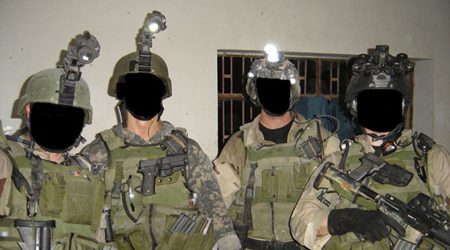
Britain’s secret war-fighting operations using special forces, drones and similar clandestine methods are folly in an age of information and public demand for accountability, according to a report by the Remote Control Project.
The think tank, run by the Oxford Research Group, examines the rise of clandestine warfare.
Its study, titled ‘All Quiet On The ISIS Front? British secret warfare in an information age,’ looks at where and how the UK is fighting wars, using means which are largely unaccountable.
The UK shields its secret activities behind a long-standing ‘no comment policy,’ which lags behind those of other modern democracies, it says.
The report points out that countries like Australia and the US often detail special forces deployment in a way which the UK does not.
“This provides reporters, and the general public, with an important opportunity to question government strategy and debate the implications of their involvement in conflicts overseas,” the authors argue.
The report also highlights that special forces operations are often only reported as a result of leaks.
The study cites numerous reports in papers like the Express and the Sun which tell selective tales of military daring in places such as Libya and Syria.
“[UK special forces] are unique in their exemption from parliamentary oversight,” the report says.
“Greater inspiration” should be drawn from increased scrutiny on spy agencies where there is “an attitude of acceptance that greater transparency is necessary in today’s world,” it adds.
The study cites the example of MI5 Director-General Andrew Parker who, in the wake of a number of recent major leaks, said: “We recognize that in a changing world we have to change too. We have a responsibility to talk about our work and explain it.”
Leaks such as those regularly carried in tabloids and via whistleblowers, the authors state, “makes the idea of blanket opacity increasingly outdated, and the benefits of maintaining such a policy should be critically examined in light of the more transparent practices of Britain’s allies.”
The report also argues that secret operations run contrary to democratic aspects of British military doctrine because, unlike normal troop deployments, they sidestep the need for a vote in Parliament.
The normal doctrine “does not capture the many elements of remote warfare, which are often considered ‘non-combat,’ supporting, or assisting roles,” the report says.
Tory MP and former soldier Crispin Blunt told RT last year it is high time for more oversight of such activities.
Blunt said at the time there is no formal parliamentary process for overseeing SAS missions and “there’s obviously an issue as to whether the intelligence and security committee would be the proper vehicle for oversight of these kinds of operations, but we are not there at the moment.”
A new war powers act proposed in the wake of the Iraq and Afghanistan campaigns could include requirements for increased democratic oversight of UK forces.
Supporters of the idea include Labour leader Jeremy Corbyn, who told the Middle East Eye in 2016: “I’m very concerned about this because [former Prime Minister] David Cameron – I imagine [Prime Minister] Theresa May would say the same – would say parliamentary convention requires a parliamentary mandate to deploy British troops. Except, and they’ve all used the ‘except,’ when special forces are involved.”
Read more:
UAE expands military presence in Africa, Mideast: Report
Press TV – May 1, 2017
The United Arab Emirates is quietly expanding its military presence into Africa and elsewhere in the Middle East, a US report says.
According to the Associated Press, the UAE has new overseas bases on the African continent after deploying expeditionary forces to Yemen and Afghanistan.
The UAE is taking part in a Saudi war on Yemen to restore a former government to power, which has killed about 12,000 people so far.
Yemeni sources have revealed that the United Arab Emirates is trying to establish control over the strategic island of Socotra in the Arabian Sea, which Yemen’s resigned president Abd Rabbuh Mansur Hadi had rented out to the Persian Gulf kingdom for nearly a century.
According to IHS Jane’s Defense Weekly, the UAE is building an airstrip on Perim or Mayun Island, a volcanic island in Yemen that sits in a waterway between Eritrea and Djibouti in the strategic Bab al-Mandab Strait.
UAE military bases in Africa
The UAE has also been building up a military presence in the Eritrean port of Assab, the US-based private intelligence firm Stratfor has said.
Satellite images show new construction at a once-deserted airfield, which Stratfor links to the UAE. It also reported development at the port and the deployment of tanks and aircraft, including warplanes, helicopters and drones.
“The scale of the undertaking suggests that the UAE military is in Eritrea for more than just a short-term logistical mission supporting operations across the Red Sea,” Stratfor said in December.
South of Eritrea, the UAE agreed with the authorities of Somalia’s breakaway northern territory of Somaliland in February to open a naval base in the port town of Berbera.
Previously, the UAE international ports operator DP World reached an agreement to manage Somaliland’s largest port nearby.
Moreover, the UAE is suspected of launching air raids in Libya and operating out of a small air base in the North African country’s east, near the Egyptian border.
The seven-state federation also deployed special forces troops in Afghanistan following the September 11, 2001 attacks to support the US-led alleged war against the Taliban.
The UAE, currently, hosts Western forces, including American and French forces, at its military bases.
The UAE has seen its military grow in recent years. Back in 2011, it confirmed working with private military contractors, including a firm reportedly tied to Erik Prince, the founder of the infamous US security firm, formerly known as Blackwater, to build up its military.
The Associated Press also cited Colombia’s media reports as saying that Colombian mercenaries were serving in the UAE’s military.
In 2014, the UAE introduced compulsory military service for all Emirati males aged between 18 and 30. The training is optional for Emirati women.
’Assad must go’ no more: US gov’t shifts priorities in Syria
RT | March 30, 2017
Washington’s priorities in Syria have changed with the new administration, and the US will no longer focus on the removal of President Bashar Assad as a condition for ending the six-year civil war, a top official said.
“Our priority is no longer to sit there and focus on getting Assad out,” Ambassador Nikki Haley told a small group of reporters on Thursday.
“Our priority is to really look at how do we get things done, who do we need to work with to really make a difference for the people in Syria.”
Earlier in the day, Secretary of State Rex Tillerson said that the future of President Assad “will be decided by the Syrian people.”
Tillerson was in Ankara meeting with his Turkish colleague Mevlut Cavusoglu. Some of their discussion involved Turkey’s support for the US-led coalition against Islamic State (IS, formerly ISIS/ISIL) in Iraq and Syria.
Since 2011, when the conflict in Syria began, Washington has insisted that “Assad must go” as the only acceptable solution for peace in the country.
The US has provided weapons and training to what it called “moderate rebels” in Syria, ostensibly so they could fight IS rather than the government.
Leaving the State Department in January, now former Secretary of State John Kerry acknowledged that the Obama administration planned to oust Assad’s government by supporting the rebels, but “that whole ball game changed” when Russia intervened in September 2015.
Turkey also intervened in Syria, launching Operation “Euphrates Shield” in August 2016. Ankara officially announced the operation’s end on Wednesday, but did not say if and when the Turkish army will withdraw from the zone it occupied in northern Syria.
Assad’s fate ‘to be decided by Syrian people,’ says Tillerson
RT | March 30, 2017
At a news conference in the Turkish capital, US Secretary of State Rex Tillerson appeared to suggest the end of Bashar Assad’s presidency was no longer a prerequisite for a way out of the Syrian crisis, in a U-turn from Washington’s long-held policy.
“I think the … longer term status of President Assad will be decided by the Syrian people,” said Tillerson at a joint conference with Turkish Foreign Minister Mevut Cavusoglu on Thursday, AFP reported.
Under President Barack Obama, the United States made Assad’s departure one of its key objectives. The Syrian armed opposition also insisted upon the longtime leader’s resignation as one of the conditions during the Astana peace talks.
Tillerson added that there were no major disagreements between Turkey and the US over the NATO allies campaigns against Islamic State (IS, formerly ISIS/ISIL).
“There’s no space between Turkey and the US and our commitment to defeat Daesh [Arabic acronym for IS], to defeat ISIS,” he said.
However, this was met with disagreement from Cavusoglu, who complained about US support for the Syrian Kurdish YPG militia, considered a terrorist group by Ankara.
“It is not good or realistic to work with a terrorist group while fighting another terrorist group,” Cavusoglu said, adding that Turkey expected “better cooperation” with the US over this issue.
Turkey said it is interested in supporting the operation to take the IS stronghold of Raqqa, but not if the Kurdish militia is involved, AP reports.
The Turkish authorities consider the YPG, or the People’s Protection Units, to be a Syrian faction of the Kurdistan Workers Party (PKK), a banned Kurdish movement that has been fighting for autonomy in southeastern Turkey since the 1980s.
Years of negotiations between the Syrian government and opposition, as well as representatives from Moscow, Washington, Tehran, and other powers, have failed to bring an end to the Syrian crisis. The Astana talks launched in January, which hoped to bring all the key sides to the negotiating table, have stalled since the Syrian opposition pulled out in mid-March.
Top French banks, insurer financing Israeli settlements: NGO
Press TV – March 29, 2017
Several human rights organizations have exposed the complicity of four major French banks and an insurance company in financing Israeli settlements in the occupied Palestinian territories.
The revelation was made in a Wednesday report titled “Dangerous Liaisons: French banks and Israeli settlements” on the website of the Paris-based International Federation for Human Rights (FIDH), an international human rights NGO with 184 member organizations from 112 countries.
The banks of BNP Paribas, Societe Generale, Credit Agricole and Groupe BPCE as well as AXA insurance firm hold shares in or are involved with Israeli banks, which are an “essential political tool in the creation of the settlements (and) finance construction,” the report read.
The five companies are further involved with businesses that help settlement development through the building of “housing, factories, the installation of telephone and internet connections, or surveillance equipment,” it added.
Additionally, the report, which was co-authored by a number of other human rights groups, including the France-Palestine Solidarity Association (AFPS), held France responsible for indirectly supporting the Israeli settlement enterprise by allowing the institutions to finance businesses involved in the construction activities.
“The French government must bring pressure to bear on the banks and insurance companies, demanding that they bring all their support to an end,” the report concluded.
Meanwhile, FIDH Vice President Maryse Artiguelong expressed frustration at the French groups’ involvement “in this illegal activity just to make a bit more money,” adding, “(They) are seeking profit at any cost.”
Moreover, Didier Fagart, an AFPS member, urged the French groups to “withdraw their money from Israeli businesses with a connection to the settlements.”
“French banks cannot say they don’t know what is going on. They must make the right decision,” Fagart said.
Emboldened by the support of US President Donald Trump’s administration, the Tel Aviv regime has given the go-ahead to the construction of many settler units in the occupied territories.
Israel’s settlement expansion defies United Nations Security Council Resolution 2334 adopted in December 2016 that condemned the settlements as a “flagrant violation of international law.
Over half a million Israelis live in over 230 settlements built since the 1967 occupation of the Palestinian territories.
The continued expansion of Israeli settlements is one of the major obstacles to the establishment of peace in the Middle East.
Featured Video

The Truth About the Trump Shootings with Ken Silva
or go to
Aletho News Archives – Video-Images
From the Archives
The Geopolitics behind the War in Yemen (I)
By Mahdi Darius NAZEMROAYA | Strategic Culture Foundation | 30.03.2015
The United States and the Kingdom of Saudi Arabia became very uneasy when the Yemenese or Yemenite movement of the Houthi or Ansarallah (meaning the supporters of God in Arabic) gained control of Yemen’s capital, Sanaa/Sana, in September 2014. The US-supported Yemenite President Abd-Rabbuh Manṣour Al-Hadi was humiliatingly forced to share power with the Houthis and the coalition of northern Yemenese tribes that had helped them enter Sana. Al-Hadi declared that negotiations for a Yemeni national unity government would take place and his allies the US and Saudi Arabia tried to use a new national dialogue and mediated talks to co-opt and pacify the Houthis.
The truth has been turned on its head about the war in Yemen. The war and ousting of President Abd-Rabbuh Manṣour Al-Hadi in Yemen are not the results of «Houthi coup» in Yemen. It is the opposite. Al-Hadi was ousted, because with Saudi and US support he tried to backtrack on the power sharing agreements he had made and return Yemen to authoritarian rule. The ousting of President Al-Hadi by the Houthis and their political allies was an unexpected reaction to the takeover Al-Hadi was planning with Washington and the House of Saudi. … continue
Blog Roll
 Aletho News
- Leaked: Britain’s Sham Conviction Of Hashim Thaci
- Seyed M. Marandi: U.S. Strike Imminent – Toward Total War in the Middle East
- Russia Voted Under Fire. Washington Is Loading the Tankers.
- 12 Things Your Oncologist Was Trained Not to Tell You
- Anthrax Attacks Paved Way for COVID-Era ‘Junk Drugs and Vaccines’
- How Real Is the Impact of Western Sanctions on Israel?
- France, You Are Guilty: How Paris Turned Western Sahara into the Maghreb’s Powder Keg
- 2025 Nature Paper Claiming Worsening Global Drought Gets RETRACTED …Heavily Flawed
- Your Milk Is Not the Problem
- The Truth About the Trump Shootings with Ken Silva
- If Americans Knew
- Salah Sarsour’s Legal Team Says DHS Has Not Met Its Burden to Prove He Is Deportable
- An analysis of tax forms by The Intercept show Kraft’s charity and LLC have donated to Friends of the IDF and AIPAC’s super PAC.
- Israeli attacks kill four Palestinians in Gaza – Daily Update
- Inside Gaza’s death trap of collapsing, bombed-out buildings
- The everyday items Israel bans from Gaza every day
- Inside the siege, the ruined buildings of Gaza – Daily Update
- Debunking The Claim That Macklemore Has A “History Of Antisemitism”
- CPJ demands release of arrested Palestinian-US journalist near Bethlehem
- Robert Kraft: The Billionaire Friend of Netanyahu Pulling The Strings Behind the Macklemore/Ed Sheeran Blow Up
- Columbia Administered Fund Gives Big Money to Pro-Israel Groups
- No Tricks Zone
- 2025 Nature Paper Claiming Worsening Global Drought Gets RETRACTED …Heavily Flawed
- New Study: ‘Global Drought Shows No Detectable Recent Acceleration Under Climate Warming’
- Economic Masterminds: German Socialists Suggest Taxing Productivity Gains Stemming From Using AI
- The South China Sea Has Not Been Cooperating With The Climate Change Narrative
- Energy Crisis: Germany Enters Heating Season With Historically Low Gas Reserve Fill Levels
- New Study: The Antarctic Ice Sheet Gained Mass From 2020-2024 Due To Staggering Snow And Ice Accumulation
- Study: Ocean Heating Rates From Thousands Of Years Ago ‘Dwarf’ Modern Ocean Heating Rates
- Climate Extremists Target, Attack Large-Scale Power Grid Infrastructure In Germany!
- New Study: Antarctic Ice Melt Has Contributed Less Than 1 Centimeter To Sea Level Rise In The Last 30 Years
- Fear Of Debate: Alarmist German Climate Scientist Calls On Mainstream Media To Discredit Skeptic Voices
 Aletho News